• Skip to primary navigation
  • Skip to main content
  • Skip to primary sidebar

Carnegie Museum of Natural History

One of the Four Carnegie Museums of Pittsburgh

  • Visit
    • Buy Tickets
    • Visitor Information
    • Exhibitions
    • Events
    • Dining at the Museum
    • Celebrate at the Museum
    • Powdermill Nature Reserve
    • Event Venue Rental
  • Learn
    • Field Trips
    • Educator Information
    • Programs at the Museum
    • Bring the Museum to You
    • Guided Programs FAQ
    • Programs Online
    • Climate and Rural Systems Partnership
  • Research
    • Scientific Sections
    • Science Stories
    • Science Videos
    • Senior Science & Research Staff
    • Museum Library
    • Science Seminars
    • Scientific Publications
    • Specimen and Artifact Identification
  • About
    • Mission & Commitments
    • Directors Team
    • Museum History
  • Tickets
  • Give
  • Shop

Botany Blogs

These blogs are written about and by our Section of Botany researchers. The herbarium at the museum which contains approximately 3,000 type specimens--specimens that define an entire plants' species. These type specimens only represent about 0.6 % of the collection.

Mason Heberling, head of the section, regularly shares herbarium specimens that have been "Collected on this day" in history.

December 9, 2017 by wpengine

Indiana, Pennsylvania: Christmas Tree Capital of the World

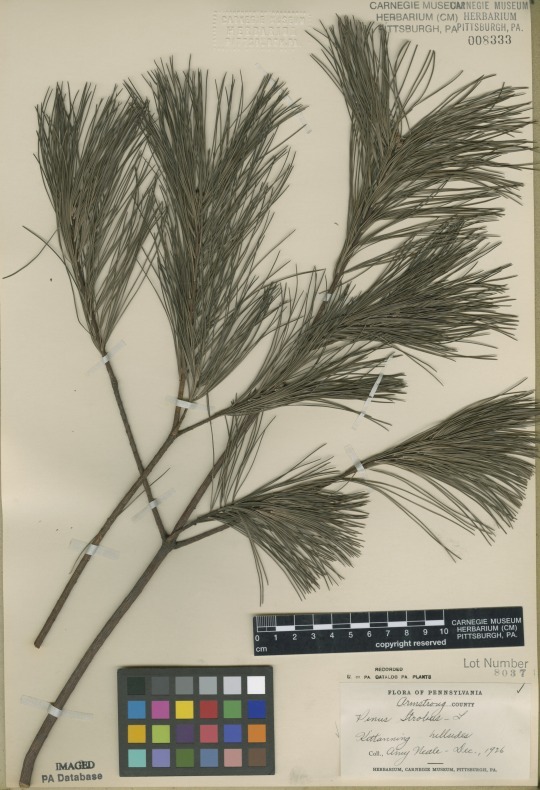
White Pine (Pinus strobus) herbarium specimen
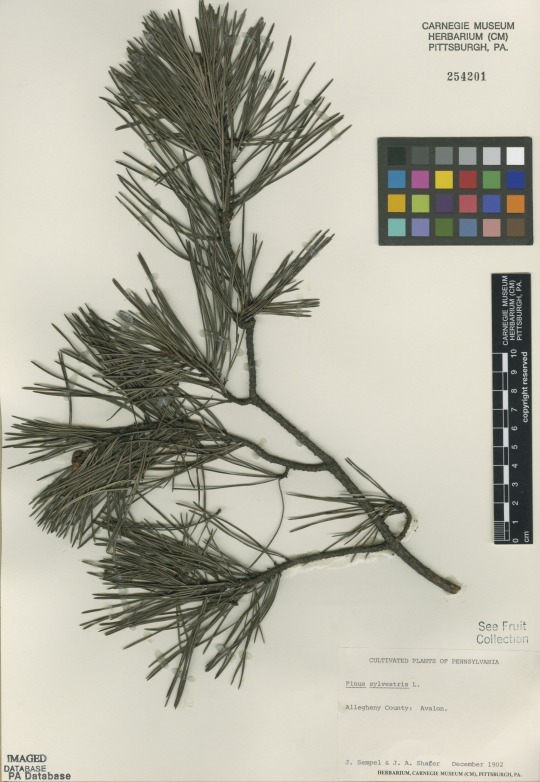
Scots Pine (Pinus sylvestris) herbarium specimen

Did you know that Pennsylvania is one of the top states for Christmas tree farms?  In fact, southwestern Pennsylvania’s very own Indiana County is known as the “Christmas Tree Capital of the World.”  According to the Indiana County Christmas Tree Growers’ Association, the title arose in 1956, when an estimated 700,000 trees were cut that year in the county.

Believe it or not, there are no Carnegie Museum specimens from Indiana County collected in the month of December.  This is not all that surprising, as most specimens aren’t collected in the winter.

These Pennsylvania specimens shown above were collected sometime in December (exact day unknown):  White Pine (Pinus strobus) in Kittanning in 1926 and Scots Pine (or “Scotch Pine”; Pinus sylvestris) from cultivation in
Avalon in 1902.  Both species are cultivated and used as decorative trees for the holidays, but less commonly than in the past. Many different evergreen conifer species are cultivated in the United States for decorative use during
the holidays. Needle length, softness, retention, color, and even scent vary by species or variety. Similarly, branching characteristics and branch strength differs by species. Plus, some species grow faster and easier than
others, which means some species are cheaper.

Before farms began cultivating trees for that purpose in the early 20th century, people just went to the woods to cut down their tree for the holidays. Some of the first Christmas tree farms in the United States started in Indiana County as early as 1918.  Many farms in the region turned their fields into Christmas tree farms as it became profitable. By 1960, more than 1 million trees were harvested per year in Indiana County alone.  The harvest in Pennsylvania has declined for several reasons, including increased popularity of artificial trees and consumer interest in Frasier fir trees (Abies fraseri; which are native to the southern Appalachians and grows slower in Pennsylvania than farms in North Carolina).  However, Pennsylvania is still among the top five states in terms of both number of working Christmas tree farms and trees harvested. According to the National Christmas Tree Association, 31,577 acres in Pennsylvania are used as Christmas tree plantations. Many of the Christmas tree lots in southwestern Pennsylvania get their trees from farms in Indiana County.


Botanists at Carnegie Museum of Natural History share pieces of the herbarium’s historical hidden collection on the dates they were discovered or collected. Check back for more!
Filed Under: Blog Tagged With: Bonnie Isaac, Botany, herbarium

December 8, 2017 by wpengine

Collected on this Day in 1928

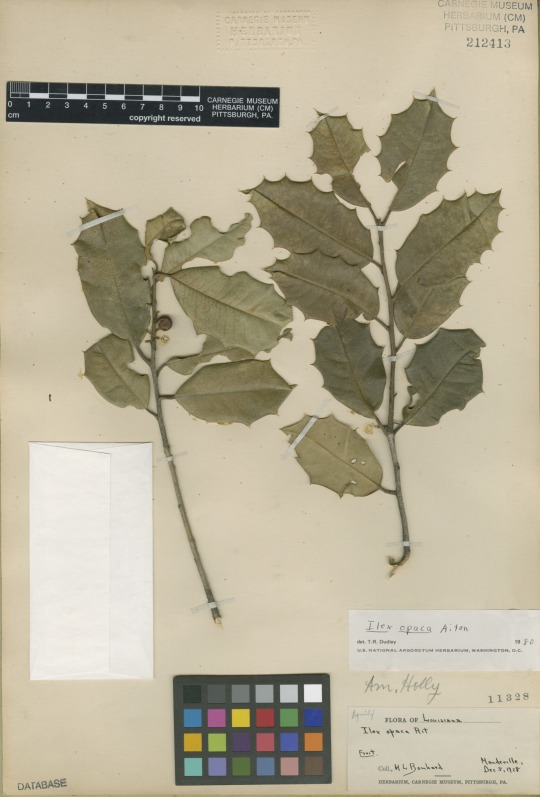
herbarium specimen of holly

Are you decking your halls with boughs of holly?  This specimen of American holly (Ilex opaca) was collected by M.L. Bomhard in Mandeville, Louisiana on December 8, 1928. The holly revered for its holiday cheer usually refers to a related European species, Ilex aquifolium, but there are native holly species in North America that are equally, if not more, cheerful.

Like most other hollies, American holly is dioecious, meaning it has male and female flowers on separate plants. Only the female plants have the characteristic bright red berries we all know and love.  American holly stands out as one of the few broadleaved evergreen trees native to the Eastern US (i.e., has green leaves during winter that are not needles). This species is near the northern edge of its range in Pennsylvania and is more common in southern states. It is listed in Pennsylvania as a species of “special concern” due to its relative rarity.

Botanists at Carnegie Museum of Natural History share pieces of the herbarium’s historical hidden collection on the dates they were discovered or collected. Check back for more!
Filed Under: Blog Tagged With: Bonnie Isaac, Botany, herbarium, Mason Heberling

December 4, 2017 by wpengine

We Are Nature: Native Plants

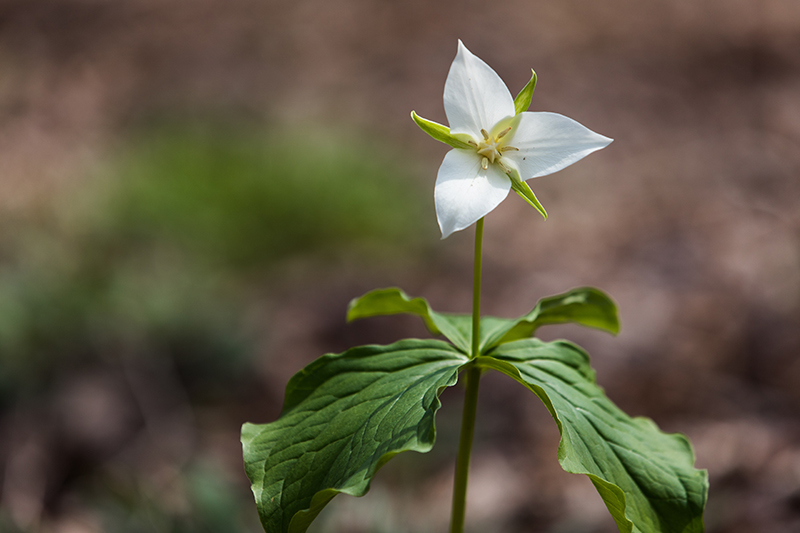
white trillium in the woods
Trillium, a native plant, photographed at Powdermill Nature Reserve

As spring inches closer and closer, there is no better time to start thinking about your garden or even planting some indoor seedlings.

One increasingly popular trend in sustainable landscaping is the planting of native gardens, featuring plants that naturally occur in your area. Starting a native garden can begin to restore biodiversity to even the most urbanized areas.

Not only are native plants good for biodiversity, they are generally low maintenance, having already adapted to your specific climate zone. They often need less watering, and their strong roots hold soil in place to prevent flooding and soil loss during heavy rains.

In western Pennsylvania, there is no shortage of native options for your garden! Pittsburgh is a Zone 6 climate, which includes black-eyed susans, milkweed, royal ferns, columbine, and more! Learn more about zone 6 native plants.


This year, we are sharing simple tips and tricks for greener living in tandem with our exhibition We Are Nature: Living in the Anthropocene, which explores the interconnected relationship between humans and our environment. A first of its kind in North America, the exhibition utilizes interactive exhibits, innovative gallery design, and specimens from our hidden collection in an unflinching exploration of the Anthropocene.

The Anthropocene is the current geological era in which humans are making a profound impact on the geological strata. While the term itself is still being debated by geologists, the museum is embracing it as a social and cultural tool for exploring the broad sum effect humans are having on the planet.

Filed Under: Blog Tagged With: biodiversity, Botany, We Are Nature, We Are Nature: Living in the Anthropocene

December 4, 2017 by wpengine

Potatoes, Sweet Potatoes, and Yams: What’s the Difference?

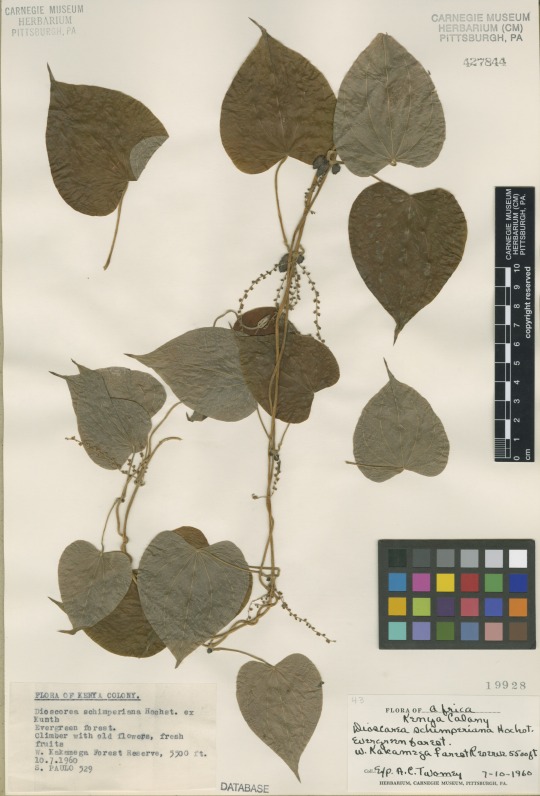
herbarium specimen of a sweet potatoe

Above: Yam specimen

What you know as yams are most likely not actually yams. In fact, your “classic” potatoes, sweet potatoes, and yams are all in different plant families. However, they all are widely cultivated for their nutritious starchy belowground plant structures called “tubers.” Tubers function as storage organs for the plants, providing energy for regrowth (the “eyes” or sprouting buds of your potatoes when they sit in your kitchen for too long).  Potatoes and yams technically have modified belowground stems (“stem tubers”) while sweet potatoes have “root tubers.”

Yam is a common name for several vine species in the genus Dioscorea (plant family: Dioscoreaceae). They are
monocots (related to grasses and lilies). Yams are widely cultivated worldwide, especially in West Africa, where 95% of the crop is harvested.  Yams can be stored for very long periods of time, making them an important crop for seasons when food is in short supply. Yam tubers can be as large as five feet long!

herbarium specimen of a yam

Above: Sweet potato specimen

Sweet potatoes refer to a vine species (Ipomoea batatas) in the morning glory family (Convolvulaceae). This species is likely what is on your Thanksgiving dinner table. In the United States and Canada, sweet potatoes are often (confusingly) referred to as “yams.” But sweet potatoes are not even closely related to yams. As such, the USDA requires any label with “yam” to also include “sweet potato.” So why are sweet potatoes sometimes confusingly called yams?  The name probably dates back to colonial times when slaves from Africa noted the similarities between some varieties of sweet potatoes to yams in Africa.

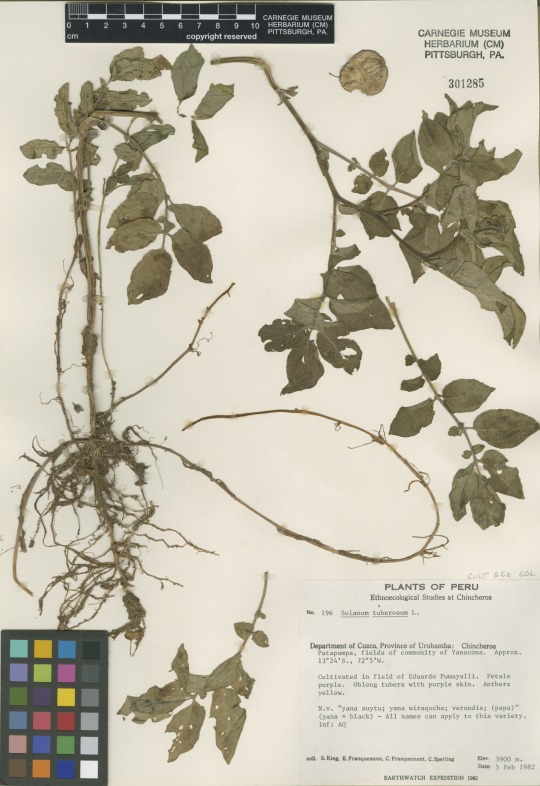
herbarium specimen of a potato, Solanum tuberosum

Above: Potato specimen

And last—the “classic” potato, Solanum tuberosum.  Potatoes belong to the nightshade family (Solanaceace), which also includes many other important crops like peppers, tomatoes, tomatillos, eggplant, tobacco, and more. Critical to the world’s food supply, potatoes are the fourth most farmed crop. Potatoes are only distantly related to sweet potatoes. They are also called “spuds,” which probably originated centuries ago from a term for a spade used to dig holes to plant potatoes. Having been cultivated for centuries, there are thousands of potato varieties worldwide. The cultivated species was domesticated from wild relative potato species in South America (Peru) 7,000–10,000 years ago. Interestingly, discoveries on the origin of potatoes was based on DNA from 200-year-old herbarium specimens!  Similarly, the origin of the Irish Potato Famine (caused by potato late blight from a fungal pathogen) was also discovered using fungal DNA extracted from 160+ year old herbarium specimens!

For more on Irish potato famine research:  http://journals.plos.org/plosone/article?id=10.1371/journal.pone.0168381

For more on origins of European potato: https://www.ncbi.nlm.nih.gov/pubmed/21632349


Botanists at Carnegie Museum of Natural History share pieces of the herbarium’s  historical  hidden collection
on the dates they were discovered or collected. Check back for more!
Filed Under: Blog Tagged With: Botany

November 17, 2017 by wpengine

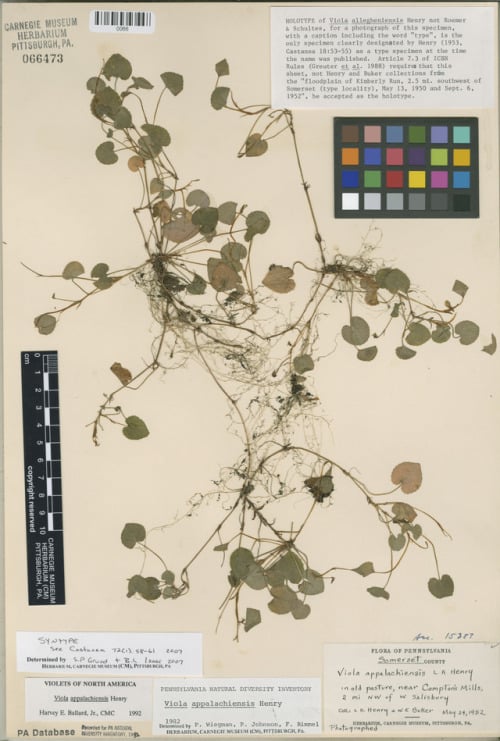
The botany sheet above is a syntype of Viola appalachiensis

herbarium specimen of Viola appalachiensis

The botany sheet above is a syntype of Viola appalachiensis, a Pennsylvania violet that was described by former Curator LeRoy K. Henry.

This year, Botanists returned to the site that this was collected in 1952 to recollect the same species.

Filed Under: Blog Tagged With: Botany, western pennsylvania

November 6, 2017 by wpengine

Collected on this Day in 1933

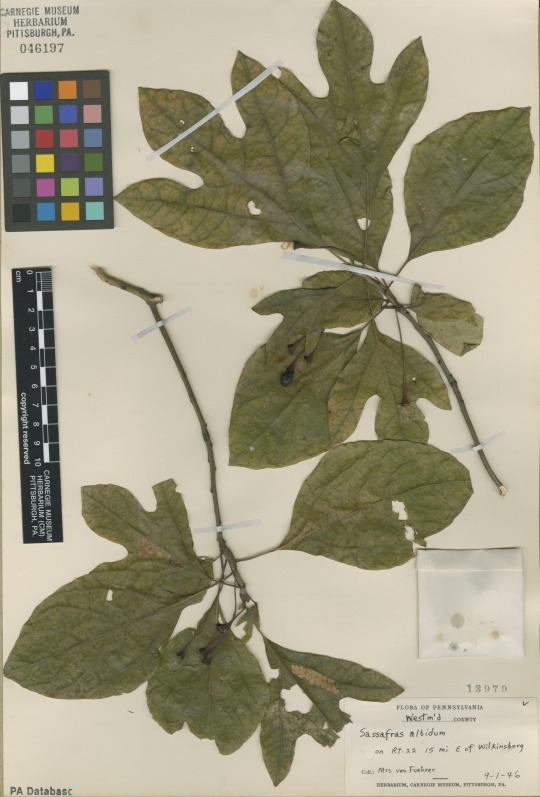
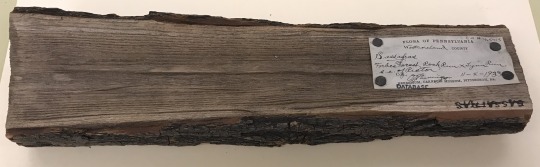
This specimen isn’t your typical herbarium specimen of Sassafras (Sassafras albidum). On November 4, 1933, this piece of sassafras wood was collected by Otto Jennings at Linn Run/Rock Run, about five miles south of Ligonier, Pennsylvania.  
It is unclear what motivated this collection, since Jennings did not normally collect wood like this. Given its bulky size, it is stored separately with the fruit collection in the herbarium.  

This specimen isn’t your typical herbarium specimen of Sassafras (Sassafras albidum). On November 4, 1933, this piece of sassafras wood was collected by Otto Jennings at Linn Run/Rock Run, about five miles south of Ligonier, Pennsylvania.

It is unclear what motivated this collection, since Jennings did not normally collect wood like this. Given its bulky size, it is stored separately with the fruit collection in the herbarium.

Sassafras is a medium-sized deciduous tree, native across eastern North America. It is easily recognized by its uniquely mitten-shaped leaves. The leaves are very aromatic when crushed in your hand, like many other species in the Laurel family (Lauraceae). They also turn a beautiful red in fall. Sassafras has long been used by humans for medicine and food, both by Native Americans and later Europeans.

Ever wonder where the root in root beer comes from?  Root beer was traditionally made from sassafras roots or bark. But, since 1960, sassafras is no longer used in commercially made root beers. The FDA has shown safrole (the aromatic oil in sassafras roots and bark) to cause liver damage and/or cancer in high doses to laboratory animals. Many commercial root beers nowadays use artificial flavors.


Ever wonder where the root in root beer comes from?  Root beer was traditionally made from sassafras roots or bark. But, since 1960, sassafras is no longer used in commercially made root beers. The FDA has shown safrole (the aromatic oil in sassafras roots and bark) to cause liver damage and/or cancer in high doses to laboratory animals. Many commercial root beers nowadays use artificial flavors.

Botanists at Carnegie Museum of Natural History share pieces of the herbarium’s historical hidden collection on the dates they were discovered or collected. Check back for more!
Filed Under: Blog Tagged With: Botany, collected on this day, Mason Heberling

  • « Go to Previous Page
  • Page 1
  • Interim pages omitted …
  • Page 17
  • Page 18
  • Page 19
  • Page 20
  • Page 21
  • Interim pages omitted …
  • Page 28
  • Go to Next Page »

sidebar

About

  • Mission & Commitments
  • Directors Team
  • Museum History

Get Involved

  • Volunteer
  • Membership
  • Carnegie Discoverers
  • Donate
  • Employment
  • Events

Bring a Group

  • Groups of 10 or More
  • Birthday Parties at the Museum
  • Field Trips

Powdermill

  • Powdermill Nature Reserve
  • Powdermill Field Trips
  • Powdermill Staff
  • Research at Powdermill

More Information

  • Image Permission Requests
  • Science Stories
  • Accessibility
  • Shopping Cart
  • Contact
  • Visitor Policies
One of the Four Carnegie Museums | © Carnegie Institute | Privacy Policy | Terms of Use | Accessibility
Rad works here logo