• Skip to primary navigation
  • Skip to main content
  • Skip to primary sidebar

Carnegie Museum of Natural History

One of the Four Carnegie Museums of Pittsburgh

  • Visit
    • Buy Tickets
    • Visitor Information
    • Exhibitions
    • Events
    • Dining at the Museum
    • Celebrate at the Museum
    • Powdermill Nature Reserve
    • Event Venue Rental
    • Gift Cards
  • Learn
    • Field Trips
    • Educator Information
    • Programs at the Museum
    • Bring the Museum to You
    • Guided Programs FAQ
    • Programs Online
    • Climate and Rural Systems Partnership
  • Research
    • Scientific Sections
    • Science Stories
    • Science Videos
    • Senior Science & Research Staff
    • Museum Library
    • Science Seminars
    • Scientific Publications
    • Specimen and Artifact Identification
  • About
    • Mission & Commitments
    • Directors Team
    • Museum History
  • Tickets
  • Give
  • Shop

Botany Blogs

These blogs are written about and by our Section of Botany researchers. The herbarium at the museum which contains approximately 3,000 type specimens--specimens that define an entire plants' species. These type specimens only represent about 0.6 % of the collection.

Mason Heberling, head of the section, regularly shares herbarium specimens that have been "Collected on this day" in history.

September 20, 2019 by wpengine

September 20, 1952: 67 Years Ago

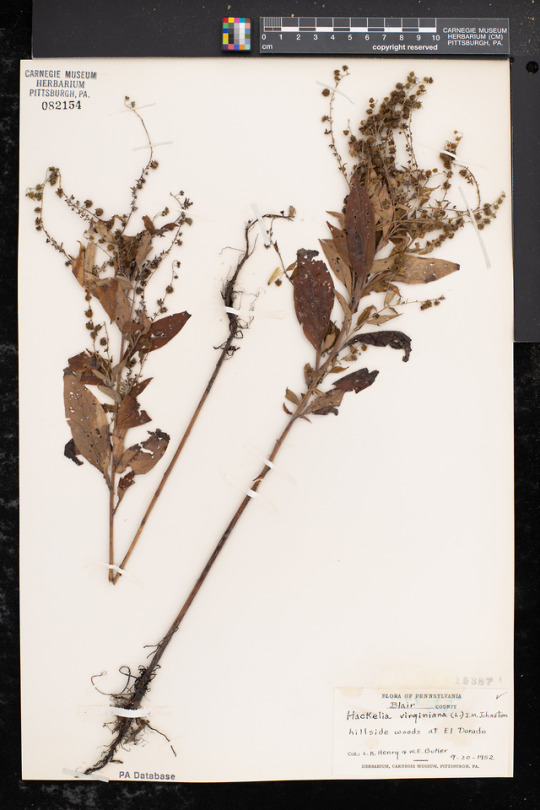
Virginia stickseed specimen

It’s fall seed dispersal time!

This specimen of Virginia stickseed (Hackelia virginiana), also interestingly called beggar’s lice, was collected on September 20, 1952 by Leroy Henry (Carnegie Museum Curator of Botany at the time) in the woods of Blair county, Pennsylvania.

The common name for this plant is quite appropriate.  The small seeds have many burs on them, making them very sticky.  And stick to your clothes with barely a touch, making them easily dispersed (unknowingly) by animals.

If you have a dog, you’ve likely pulled these out their fur in the fall!  My dog was covered in them the other day, which was both amazing and annoying at the same time.

Stickseed is in the borage family, Boraginaceae.  It has very small white flowers that resemble forget-me-not, also in the same plant family.  However, it is the fruit/seeds that are most memorable.

Find high resolution image of this Virginia stickseed specimen (and more) online here:
midatlanticherbaria.org/portal/collections/individual/index.php?occid=12253345&clid=0 
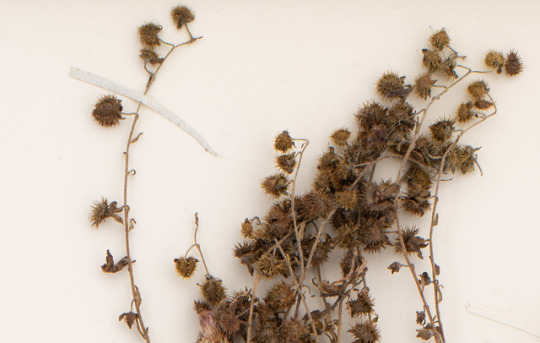
 

detail of Virginia stickseed specimen

Check back for more! Botanists at the Carnegie Museum of Natural History share digital specimens from the herbarium on dates they were collected. They are in the midst of a three-year project to digitize nearly 190,000 plant specimens collected in the region, making images and other data publicly available online. This effort is part of the Mid-Atlantic Megalopolis Project (mamdigitization.org), a network of thirteen herbaria spanning the densely populated urban corridor from Washington, D.C. to New York City to achieve a greater understanding of our urban areas, including the unique industrial and environmental history of the greater Pittsburgh region. This project is made possible by the National Science Foundation under grant no. 1801022.

Mason Heberling is Assistant Curator of Botany at the Carnegie Museum of Natural History. Museum employees are encouraged to blog about their unique experiences and knowledge gained from working at the museum.
Filed Under: Blog Tagged With: Anthropocene, Botany, collected on this day, Mason Heberling, plants

September 10, 2019 by Erin Southerland

Carnegie Museum of Natural History Researchers Detail Innovative Uses of Museum Collections for Understanding Global Change

herbarium specimen with large green leaves

Researchers from Carnegie Museum of Natural History and Michigan State University report plant specimens are being used in novel new ways that could influence future environmental policy, species conservation, and collections-based science. Specimen digitization and new data analysis technologies increase the relevance of herbaria for scientific research, education, and societal issues like climate change and invasive species. The study, titled “The Changing Uses of Herbarium Data in an Era of Global Change,” was published September 4, 2019 and is featured on the cover of the October issue of BioScience.

Nearly 390 million plant specimens are kept in over 3000 herbaria around the world, with more specimens collected each day. Plant collection is a centuries-old practice, and herbaria have long been critical resources for discovering and formally describing new species, a core function that continues today. However, collections use is expanding to provide clues about how global changes impact certain species.

The new uses of herbarium specimens documented by Mason Heberling, Assistant Curator of Botany at Carnegie Museum of Natural History, Stephen Tonsor, Director of Science at Carnegie Museum of Natural History, and Alan Prather, Associate Professor of Plant Biology at Michigan State University, illustrate the increased value of specimens and herbaria in the Anthropocene, our current era. Changing use of specimens is part of a larger trend of change in the roles of natural history museums from repositories of knowledge to active leaders in scientific research that has a direct impact on life today.

“Museum specimens are being leveraged in innovative and powerful ways that most collectors and curators couldn’t even dream of a century, or even decades, ago,” says Heberling, “Natural history collections are perhaps more relevant than ever. These specimens have important stories to tell to understand the past, present, and future of life.”

The entire study is available online.

The Changing Uses of Herbarium Data in an Era of Global Change

Abstract: Widespread specimen digitization has greatly enhanced the use of herbarium data in scientific research. Publications using herbarium data have increased exponentially over the last century. Here, we review changing uses of herbaria through time with a computational text analysis of 13,702 articles from 1923 to 2017 that quantitatively complements traditional review approaches. Although maintaining its core contribution to taxonomic knowledge, herbarium use has diversified from a few dominant research topics a century ago (e.g., taxonomic notes, botanical history, local observations), with many topics only recently emerging (e.g., biodiversity informatics, global change biology, DNA analyses). Specimens are now appreciated as temporally and spatially extensive sources of genotypic, phenotypic, and biogeographic data. Specimens are increasingly used in ways that influence our ability to steward future biodiversity. As we enter the Anthropocene, herbaria have likewise entered a new era with enhanced scientific, educational, and societal relevance.

Filed Under: Uncategorized Tagged With: Botany, herbarium, Mason Heberling, Stephen Tonsor

September 9, 2019 by wpengine

Don’t Overlook the Lichens

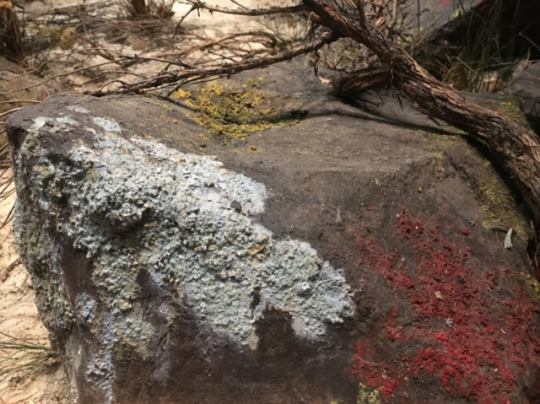
various lichen on rock

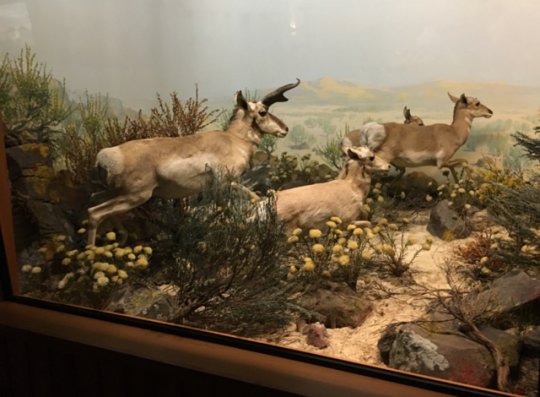
Lichens are scenery elements in many museum dioramas. Within the Pronghorn Antelope diorama in the Hall of North American Wildlife, for example, these frequently overlooked organisms coat a foreground boulder with irregular patches of gray, red, and gold.

pronghorn antelope diorama

If you approach this artfully recreated western scene with a little background information about lichens, you might find the colorful cluster of immobile organisms in the bottom right corner just as interesting as the four galloping centerpieces.

Lichens are found on every continent and estimates of their global diversity range from 13,000 to more than 17,000 species. Every lichen is a partnership of two different organisms, a fungus whose tissue provides the physical structure to support a second organism capable of photosynthesis. For most lichens the partner with the solar energy power is some form of green algae.  The fungus/algae partnership is a living arrangement in which separate identities fade while combined abilities allow for survival in locations where neither organism could live alone.

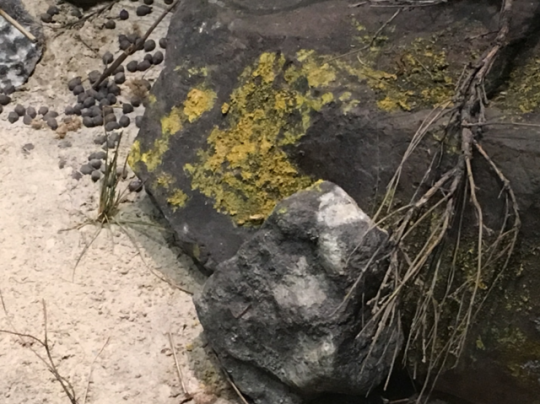
Crustose or curst-like lichen and pronghorn antelope scat.

Three distinctive growth forms provide a means for categorizing lichen. The colorful trio sharing the pronghorn antelope diorama are termed “crustose” or crust-like lichens. Lichens with a leaf-like appearance and structure are termed “foliose,” and those with shrubby upright or dangling strands are termed “fruticose.”

Because lichens absorb so much of their nourishment from the air and rainfall, they serve as living air quality indicators. By monitoring a region’s changing balance of pollution sensitive species and pollution tolerant species, a researcher can visually chart the build-up or decrease of pollutants such as sulfur dioxide and nitrogen dioxide.

For more detailed information about lichen ecology, including information about local research efforts, please visit the site maintained by Point Park University Professor Matthew Opdyke.

Patrick McShea works in the Education and Visitor Experience department of Carnegie Museum of Natural History. Museum employees are encouraged to blog about their unique experiences and knowledge gained from working at the museum.
Filed Under: Blog Tagged With: Botany, Hall of North American Wildlife, Pat McShea, Patrick McShea, plants

August 22, 2019 by wpengine

A couple of creepers: plant doppelgängers

Did you know that many plant species have doppelgängers?

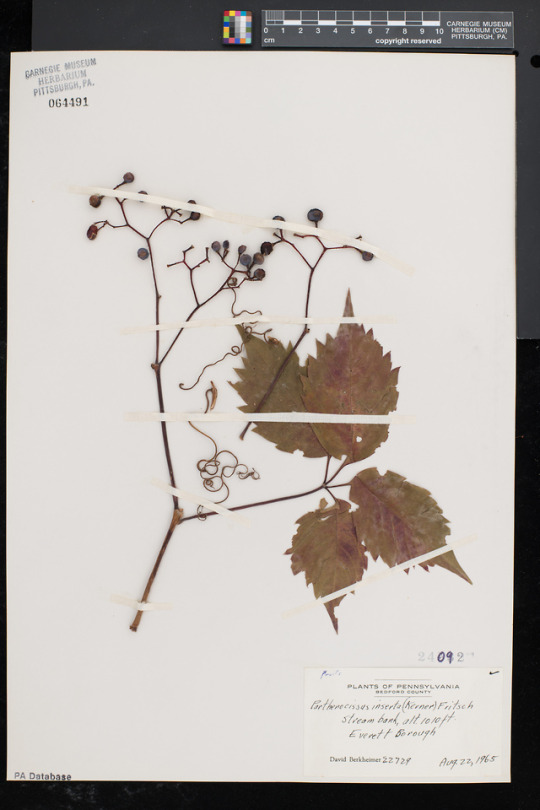
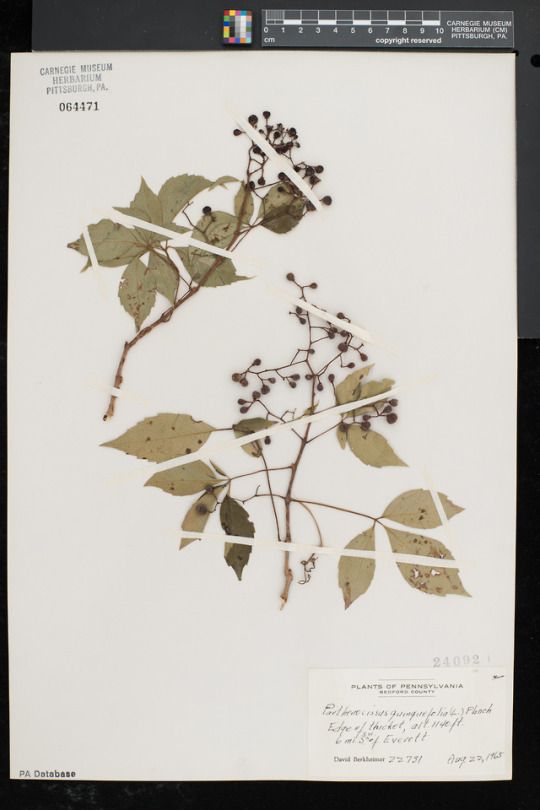
thicket creeper specimen
Virginia creeper specimen

Check out these two species, both collected at the same site on August 22, 1965 by David Berkheimer in Everett Borough (Bedford county), Pennsylvania.

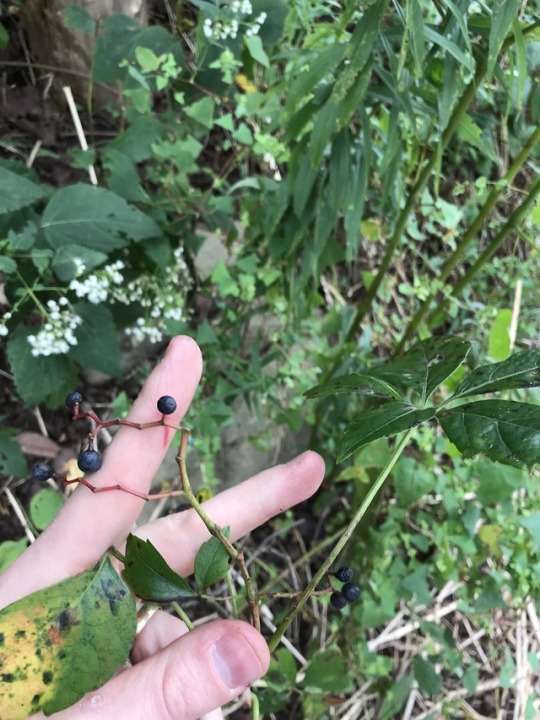
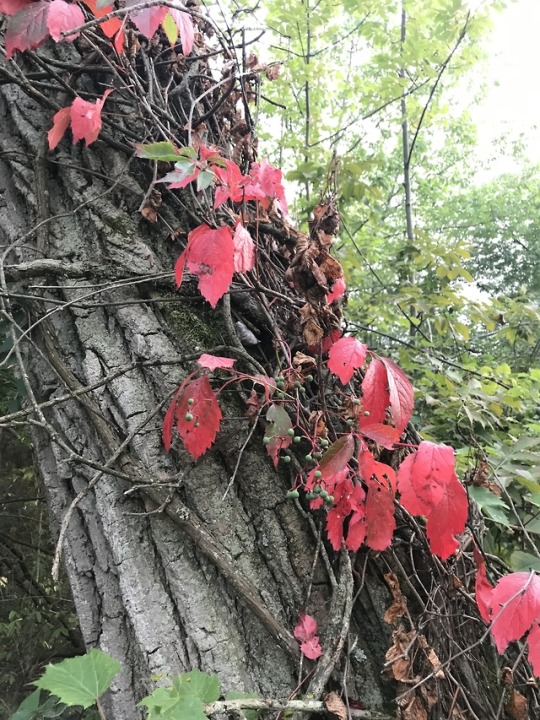
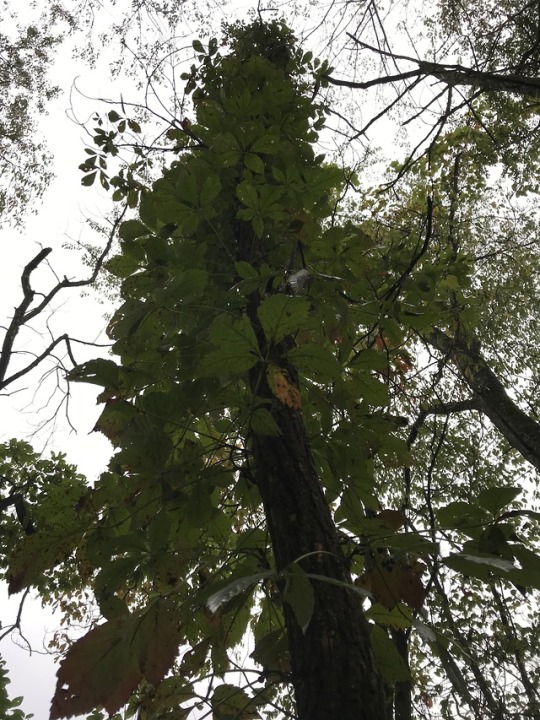
With its distinctive hand-like leaves, Virginia creeper (Parthenocissus quinquefolia) is fairly well known, or at least familiar by look to many.  It is a woody vine in the grape plant family (Vitaceae), common to forests, forest edges, and urban areas across eastern North America.  It is one of those ubiquitous but overlooked plants. The species is just about everywhere, climbing high up trees. But upon closer look, there are two similar looking species in Pennsylvania. Although less commonly recognized (though not all that uncommon to find!), thicket creeper (Parthenocissus inserta) looks very similar.  (Note: there is some confusion, with some botanists calling this species P. vitacea, but either way, there are definitely two species here).

Virginia creeper
thicket creeper

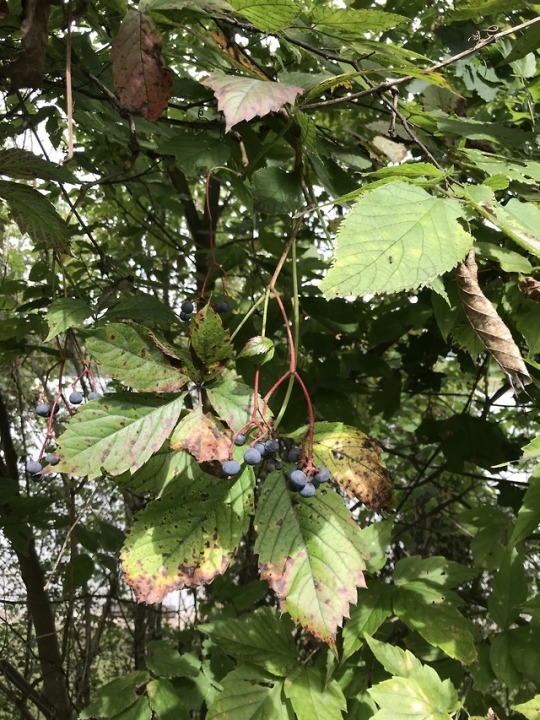
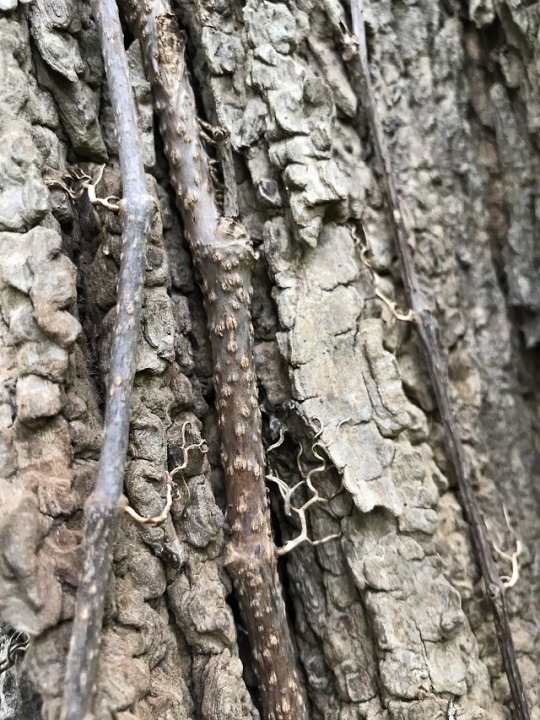
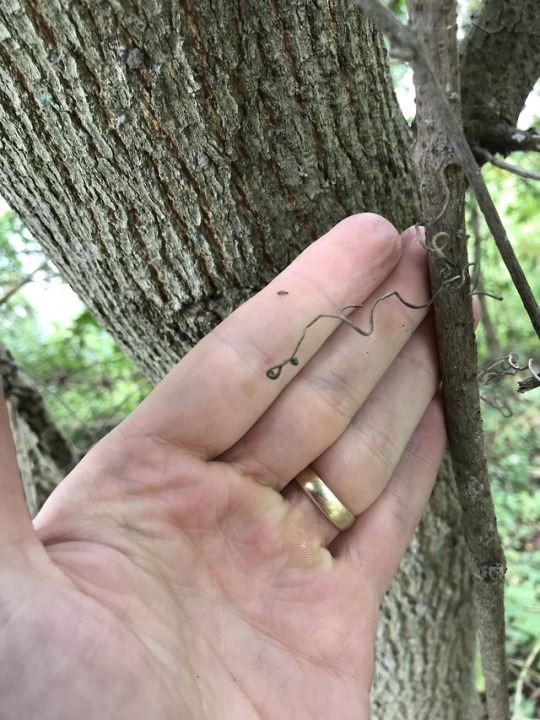
So what’s the difference? There are two easy ways to tell the difference.  First, the species have differences in their tendrils (the structures that wrap around branches, attaching the vine to the tree it is climbing).  Virginia creeper has clear adhesive, swollen disks where the tendrils attach to the tree.  In contrast, thicket creeper does not have these. (But to confuse you, they rarely do).  Second, the flowering/fruiting structures are different. Thicket creeper has branching inflorescences (stem structure with flowers/fruits), often in two main axes, with noticeably larger berries than Virginia creeper. Virginia creeper has an inflorescence that branches, often in zig-zag, random looking pattern, but most importantly – with a clear central axis.

Virginia creeper with adhesive disks
thicket creeper no adhesive disks

A couple years ago, I was confident I could pick Virginia creeper out of a line up.  But I must admit, I didn’t even know until last year there was another species that looked like Virginia creeper. It was a mind-blowing moment, and pretty much dropped everything to go exploring for the two species. I’m always curious every time I see these vines to figure out which species it is.  It turns out, thicket creeper is more common than I thought around Pittsburgh, especially along the rivers.

And keep an eye out for these species this fall, when they have developed fruits to easily tell them apart.  And on top of that, they have some of the most bright red, beautiful foliage of any plant in our area!

thicket creeper in autumn
Virginia creeper climbing up

Check out these specimens (and more!) here.

Check back for more! Botanists at the Carnegie Museum of Natural History share digital specimens from the herbarium on dates they were collected. They are in the midst of a three-year project to digitize nearly 190,000 plant specimens collected in the region, making images and other data publicly available online. This effort is part of the Mid-Atlantic Megalopolis Project (mamdigitization.org), a network of thirteen herbaria spanning the densely populated urban corridor from Washington, D.C. to New York City to achieve a greater understanding of our urban areas, including the unique industrial and environmental history of the greater Pittsburgh region. This project is made possible by the National Science Foundation under grant no. 1801022.

Mason Heberling is Assistant Curator of Botany at the Carnegie Museum of Natural History. Museum employees are encouraged to blog about their unique experiences and knowledge gained from working at the museum.
Filed Under: Blog Tagged With: Botany, Mason Heberling, plants

August 20, 2019 by wpengine

A day late, but thanks for your Impatiens!

impatiens specimen
impatiens specimen

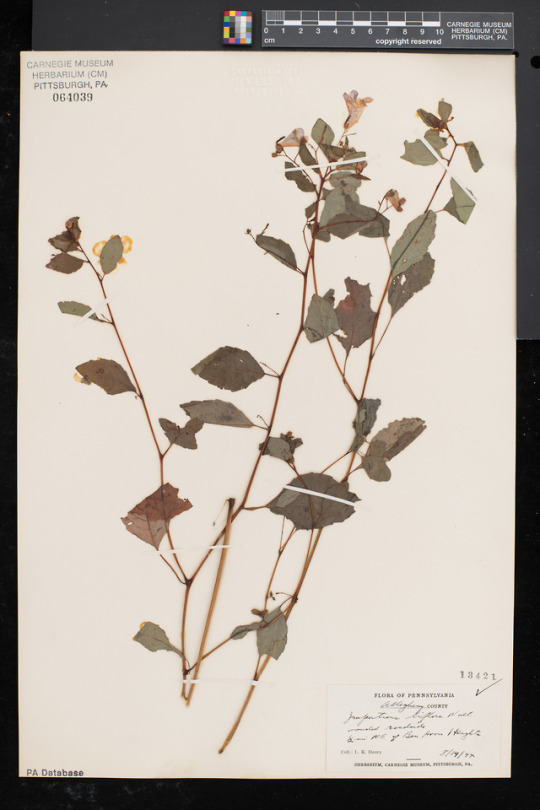
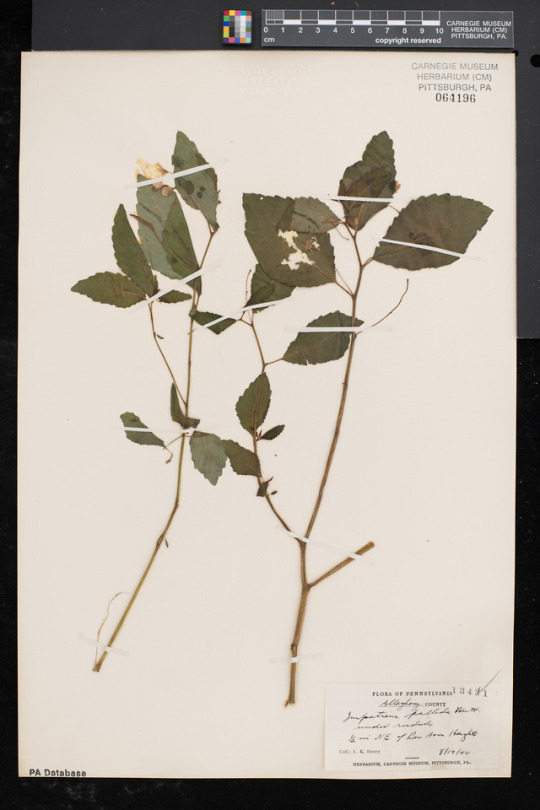

Two specimens of jewelweed, Impatiens, collected on this day (well, yesterday) by Carnegie Museum curator Leroy Henry in 1944 in Ben Avon Heights, near Pittsburgh.

There are two species of jewelweed commonly found in Pennsylvania and in relatively wet, partly shady habitats across eastern North America. They can form dense stands along wet roadside ditches at edge of woods and in floodplain forests. Henry collected both species in the same location, as they commonly grow together.

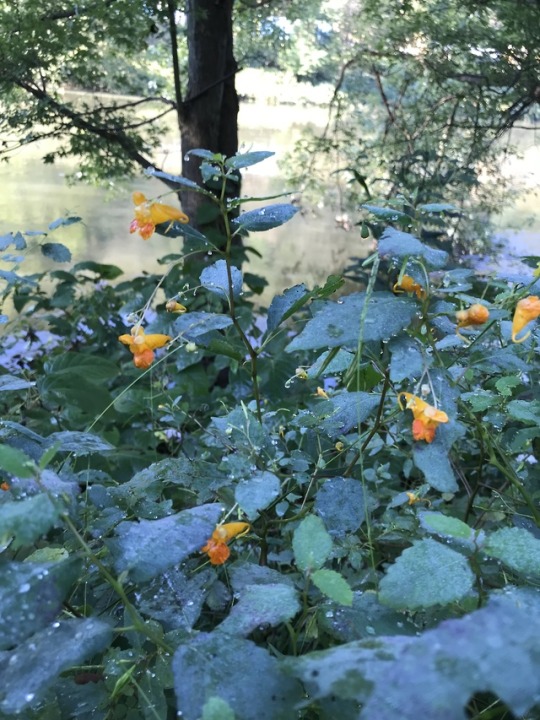
orange jewelweed

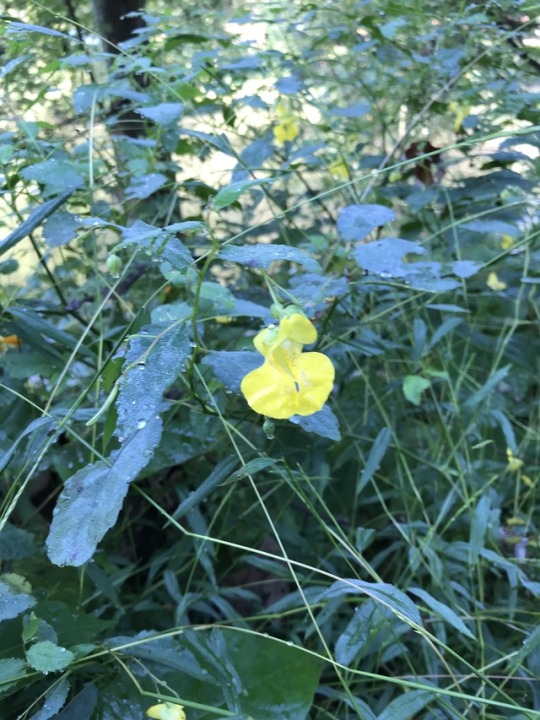
What’s the difference between these two specimens?  Though less obvious in specimen form, the most noticeable difference is flower color. Common jewelweed (Impatiens capensis), also called spotted or orange jewelweed, has orange flowers. In contrast, the flowers of yellow jewelweed (Impatiens pallida), also called pale jewelweed, are…well, yellow.  Flowers of both species have distinctive nectar spurs that jut out of the back of the flower. It is entertaining to watch bumblebees go from flower to flower in a stand of jewelweed.

yellow jewelweed

Jewelweeds are herbaceous, annual plants with juicy stems that can range in size, from short to very tall.  A widespread story is that jewelweed can treat skin irritations, and in particular, helps prevent poison ivy rash by rubbing jewelweed on skin after contact with poison ivy.  I don’t know of this being supported with data.

Jewelweed is also often called “touch-me-not” because the developed seed pods eject seeds out when touched. It can be a fun activity for kids (and adults).

Jewelweed flowers open mid-summer and the plants continue to flower until killed by autumn frost.

Jewelweed produces two types of flowers – the obvious ones with nectar spurs that are visited by bees and also, tiny inconspicuous flowers that do not open.  These small flowers are self-pollinating (cleistogamous).

Deer often eat jewelweed. A recent study found that some populations of the species that have historically received a lot of deer browsing have evolved greater tolerance to herbivory.

I’m always amazed how sensitive jewelweed leaves are to the sun. When exposed to direct sun, their leaves get very droopy. But they seem to quickly bounce back.

Impatiens commonly planted in gardens are related (in the same genus) but are not the same species.

Check out these specimens (and more!) here.

Check back for more! Botanists at the Carnegie Museum of Natural History share digital specimens from the herbarium on dates they were collected. They have embarked on a three-year project to digitize nearly 190,000 plant specimens collected in the region, making images and other data publicly available online. This effort is part of the Mid-Atlantic Megalopolis Project (mamdigitization.org), a network of thirteen herbaria spanning the densely populated urban corridor from Washington, D.C. to New York City to achieve a greater understanding of our urban areas, including the unique industrial and environmental history of the greater Pittsburgh region. This project is made possible by the National Science Foundation under grant no. 1801022.

Mason Heberling is Assistant Curator of Botany at the Carnegie Museum of Natural History. Museum employees are encouraged to blog about their unique experiences and knowledge gained from working at the museum.
Filed Under: Blog Tagged With: Botany, collected on this day, flowers, Leroy Henry, Mason Heberling, plants

August 7, 2019 by wpengine

30 years ago today: A milestone for Botany at the Carnegie Museum of Natural History

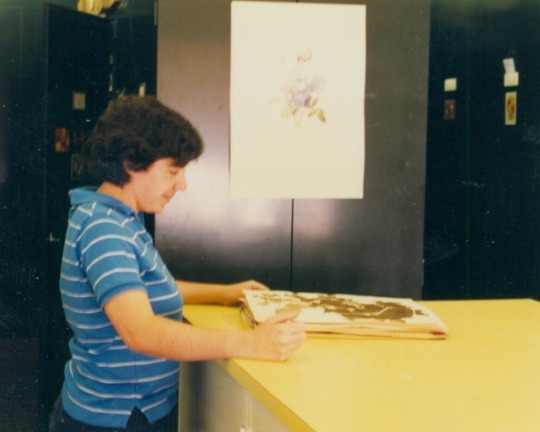
Bonnie Isaac in the museum herbarium
Bonnie in the lower herbarium at the Carnegie Museum in the early 1990s.

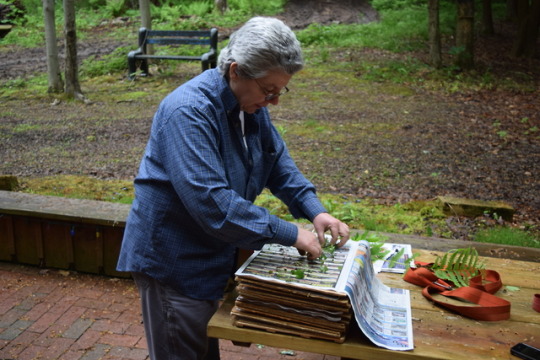
On August 7, 1989, Bonnie Isaac started at the Carnegie Museum. She was initially hired at the museum to work on a project to database the plant collection, making it searchable and therefore more useable to understand the occurrence and distribution of plants across Pennsylvania (and beyond). Since then, a lot has happened. Thirty years later, Bonnie is now Collection Manager in the Section of Botany and Co-chair of Collections.

It is no exaggeration to say Bonnie’s influence on the Section of Botany has been monumental. And continues to be.

As one of the top plant collectors over the Carnegie Museum’s 120+ year history, she has actively contributed to the growth of the herbarium, collecting several tens of thousands of specimens from across Pennsylvania and North America. These specimens now reside in herbaria across the world and are actively used by researchers around the world to make exciting discoveries.

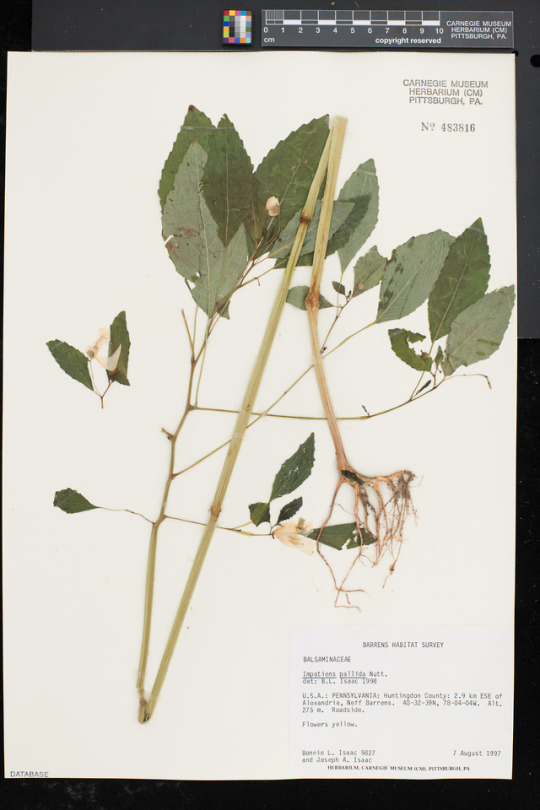
yellow jewelweed specimen collected by Bonnie Isaac and Joe Isaac
Collected on this day, eight years after she started working at the Carnegie Museum, this specimen of pale touch-me-not (aka yellow jewelweed; Impatiens pallida) was collected by Bonnie Isaac (and her spouse, Joe Isaac) on August 7, 1997 along the roadside at Neff Barrens, Huntington County, PA. Largely thanks to Bonnie, this specimen (and many more!) can be found online.

Bonnie played a pivotal role in the digitization of the Carnegie Museum herbarium, one of the first of its size to have all specimens in the entire collection with label data entered into a database and publicly available online. A huge accomplishment that took over a decade of her career to complete, the collection database has increased the research value and led to a massive increase in specimen use. The digitization of the herbarium continues today through a project facilitated by Bonnie and funded by the National Science Foundation to make high resolution digital images and georeferences (assign latitude/longitude to plot on a map) to all specimens collected in the region.

Bonnie Isaac collecting plants
Bonnie pressing plants in the field in 2017.

Although she’s humble about it, Bonnie is an incredible field botanist and leading expert on the plants of Pennsylvania, especially those rare and threatened species of conservation concern. An expert in natural history collections management and methods, Bonnie has a specialized diploma on herbarium techniques from Royal Botanic Garden, Kew, England. She has a master’s degree from Youngstown State University, where she studied the ecology and distribution of a rare species.

Bonnie’s science and botanical knowledge impacts conservation decisions. Since 2001, she has served as a member of the Vascular Plant Technical Committee of the Pennsylvania Biological Survey, serving at various times over the past decades as president and recording secretary, which advised the state in determining the status of endangered and threatened plant species. She is currently working on a project funded by the Pennsylvania Department of Conservation and Natural Resources through the Wild Resources Conservation Program, revisiting many historic sites of 10 threatened species across the state to assess their current rarity status.

Beyond the walls of the museum, Bonnie has a huge impact on botanical research in Pennsylvania and fosters a public appreciation for the role of plants in our lives and ecosystem health. She is a founding member of the “Pennsylvania Botany Symposium,” a group of committed volunteers who provide education and networking opportunities for professionals, amateurs, and students of botany, including a biennial symposium that gathers Pennsylvania botanists of all levels. Bonnie is also very active in the Botanical Society of Western Pennsylvania, one of the oldest botanical organizations in the country.  She has served as President of the organization since 2005.

And if that is not enough – she is friendly, too!

Happy work-iversary, Bonnie!

Check back for more! Botanists at the Carnegie Museum of Natural History share digital specimens from the herbarium on dates they were collected. 

Mason Heberling is Assistant Curator of Botany at the Carnegie Museum of Natural History. Museum employees are encouraged to blog about their unique experiences and knowledge gained from working at the museum.
Filed Under: Blog Tagged With: Bonnie Isaac, Botany, herbarium, plants, Section of Botany

  • « Go to Previous Page
  • Page 1
  • Interim pages omitted …
  • Page 7
  • Page 8
  • Page 9
  • Page 10
  • Page 11
  • Interim pages omitted …
  • Page 28
  • Go to Next Page »

sidebar

About

  • Mission & Commitments
  • Directors Team
  • Museum History

Get Involved

  • Volunteer
  • Membership
  • Carnegie Discoverers
  • Donate
  • Employment
  • Events

Bring a Group

  • Groups of 10 or More
  • Birthday Parties at the Museum
  • Field Trips

Powdermill

  • Powdermill Nature Reserve
  • Powdermill Field Trips
  • Powdermill Staff
  • Research at Powdermill

More Information

  • Image Permission Requests
  • Science Stories
  • Accessibility
  • Shopping Cart
  • Contact
  • Visitor Policies
Stay in the loop! Sign up for our newsletter(s).
One of the Four Carnegie Museums | © Carnegie Institute | Privacy Policy | Terms of Use | Accessibility
Rad works here logo