• Skip to primary navigation
  • Skip to main content
  • Skip to primary sidebar

Carnegie Museum of Natural History

One of the Four Carnegie Museums of Pittsburgh

  • Visit
    • Buy Tickets
    • Visitor Information
    • Exhibitions
    • Events
    • Dining at the Museum
    • Celebrate at the Museum
    • Powdermill Nature Reserve
    • Event Venue Rental
  • Learn
    • Field Trips
    • Educator Information
    • Programs at the Museum
    • Bring the Museum to You
    • Guided Programs FAQ
    • Programs Online
    • Climate and Rural Systems Partnership
  • Research
    • Scientific Sections
    • Science Stories
    • Science Videos
    • Senior Science & Research Staff
    • Museum Library
    • Science Seminars
    • Scientific Publications
    • Specimen and Artifact Identification
  • About
    • Mission & Commitments
    • Directors Team
    • Museum History
  • Tickets
  • Give
  • Shop

Bug Bonanza

May 21, 2021 by wpengine

Pittsburgh’s Moths Reflect Human Impact of Industry

by Nicholas Sauer

I began to think in earnest about industrial melanism while working at the Carnegie Museum of Natural History in 2018 when the We Are Nature exhibit was on display as part of the museum’s intensive focus on the Anthropocene. There was an unassuming corner of the exhibit devoted to the fate of the peppered moth (Biston betularia) during the Industrial Revolution. Dark-colored—melanistic—peppered moths were rare in England and Germany until the Industrial Revolution and the inevitable increase of air pollution from the burning of fossil fuels. With the rise of heavy industry, pale peppered moths began to stick out like bright specks on soot-covered vegetation. These pale moths were easy targets for hungry birds. The coal-choked environment favored the moth populations that possessed a gene for darker coloration, providing an example of natural selection at work. In recent years, scientists have located the specific gene that accounts for the darker moths and can trace the changing selection on color variation in peppered moths back to at least 1819 when the burning of coal for industrial purposes began to pick up steam in the British Isles.

In 1896, English entomologist J.W. Tutt theorized that his nation’s industrial conditions profoundly affected local moth populations. He argued that lichen on trees provided camouflage for the salt-and-pepper-colored moths. According to Tutt, industrial pollution killed off the lichen and, in turn, the pollution—soot and ash—camouflaged the darker moths, particularly the dark form of Biston betularia, f. carbonaria. It was not until the 1950s that Tutt’s theory was tested. Through a series of experiments, lepidopterist Bernard Kettlewell demonstrated that when both light and dark peppered moths (f. typica and carbonaria respectively) were released in industrially-contaminated woodlands in Birmingham and Dorset, England, birds fed on the most “conspicuous” form, f. typica, the pale moths. Kettlewell’s experiment would wind up in science textbooks for decades to come as a demonstration of natural selection.
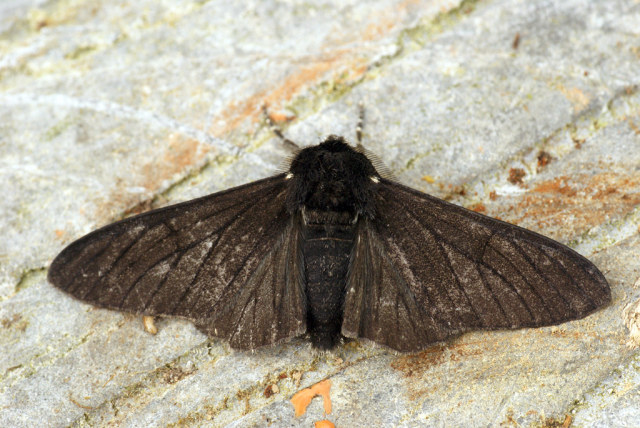
Black moth on light background.
“[1931] Peppered Moth (Biston betularia) f.carbonaria” by Bennyboymothman is licensed under CC BY 2.0

In the wake of Kettlewell’s findings, similar experiments were conducted in the United States, even in the Pittsburgh area. The scientist leading the melanism study in the Eastern United States in the 1950s, Denis Frank Owen (1931-1996), pored over the moth collections right here at the Carnegie Museum of Natural History as well as those of several other natural history museums in the Northeast and Midwest. A transplant from England at the beginning of his long career as an ecologist, Owen sought to test whether or not Kettlewell’s results would be reflected in his own data on the American side of the Atlantic. Owen’s own findings were very much like Kettlewell’s. This, of course, was unsurprising in the case of Pittsburgh considering the massive amount of pollutants that were emitted by the city’s steel mills. To get a good idea of how polluted the city was at that time, check out the two soot-stained squares that remain on the mural The Crowning of Labor on the second and third floors of CMNH’s Grand Staircase.

Owen discovered that Pittsburgh had some of the earliest records of industrial melanism in the Northeast—melanistic forms of Epimecis hortaria (or, the Tulip Tree Beauty) dating from 1922 and Biston cognataria dating from 1910. Owen posited in his research that the number of melanistic moths were increasing in the late 1950s and early 1960s, particularly in environs surrounding industrial cities like Detroit and Pittsburgh, even as far as outlying rural areas. At Westmoreland County’s Powdermill Nature Reserve, all eight of the peppered moths observed in a 1957 study were melanistic, according to Owen.

Unfortunately, records of industrial melanism were never kept as meticulously in the U.S. as they were in the U.K., so our understanding of how widespread the phenomenon was States-side is incomplete. However, since the 1970s, much more data has been collected on peppered moths in the U.S. than before. This data has reflected the implementation of clean air regulations and tracked the overall decline in the ratio of melanistic peppered moths in favor of the pale form, supporting the theory that these moth populations, either Biston betularia (f. typica or carbonaria) or their cousins, are subject to natural selection that is weighted by pollution. Biologist Bruce S. Grant has suggested that more recent data from the post-industrial era be put to greater educational use—not to supplant Kettlewell’s famous experiment, but to supplement it with more up-to-date scientific findings.

Regrettably, even in the “Post-Industrial” era following the birth of the Environmental Protection Agency (1970) and the Clean Air Act (1972), peppered moths are subject to human-exacerbated environmental threats. In the 1980s, when scientists sought an explanation for the continued presence of melanistic moths in rural eastern Pennsylvania, they instead discovered two major dangers to peppered moths and their habitat. First, so-called gypsy moths (Lymantria dispar dispar)—an invasive species introduced to the U.S. by humans in the 19th century—were rapidly defoliating the woodlands that the peppered moths called home. Secondly, the Pennsylvania Department of Forestry was spraying the area with the pesticides Dylox and Dimilin to combat Lymantria dispar and may have adversely affected the peppered moths in the process.

This example of the twin dangers of invasive species and pesticide use, in addition to the earlier instances of industrial pollution, demonstrate human beings’ profound effect on the natural world during the Anthropocene. The travails of the peppered moth are key to understanding the influence humans have on the ecosystems around them, so far as becoming even a variable in the way natural selection operates. The Pittsburgh area and the scientific collections at CMNH have played an important part in the study of industrial melanism in peppered moths and will continue to do so as the natural world responds in its way to human influence. The decline in melanistic moth numbers that correlates with cleaner air and more conscientious environmental regulations provides hope that that human influence is not uniformly negative.

Nicholas Sauer is a Gallery Experience Presenter in CMNH’s Life Long Learning Department. Museum staff, volunteers, and interns are encouraged to blog about their unique experiences and knowledge gained from working at the museum.

Works Cited

Blakemore, Erin. “New Evidence Shows Peppered Moths Changed Color in Sync with Industrial Revolution.” Smithsonian Magazine, 1 June 2016. <https://www.smithsonianmag.com/smart-news/new-evidence-peppered-moths-changed-color-sync-industrial-revolution-180959282/>.

Cook, M.L., et al. “Post Industrial Melanism in the Peppered Moth.” Science, no. 3 (Feb 7, 1986): 611. Gale In Context: College, link.gale.com/apps/doc/A4128493/CSIC?u=pitt92539&sid=CSIC&xid=56d31b9d. Accessed 17 Apr. 2021.

Grant, Bruce S. “Fine Tuning the Peppered Moth Paradigm.” Evolution 53, no. 3 (1999): 980-984.

Grant, B.S. and L.L. Wiseman. “Recent History of Melanism in American Peppered Moths.” Journal of Heredity 93, 2 (March 2002): 86-90. <https://academic.oup.com/jhered/article/93/2/86/2187377>.

Manley, Thomas R. “Temporal Trends in Frequency of Melanistic Morphs in Cryptic Moths of Rural Pennsylvania.” Journal of the Lepidopterists’ Society 42, no. 3 (1988): 213-217.

Maynard, M. and Geoffrey T. Hellman. “Comment.” The New Yorker Magazine, 13 August, 1955: 15. <https://www.newyorker.com/magazine/1955/08/13/comment-4365>.

Owen, D.F. “Industrial Melanism in North American Moths.” The American Naturalist 95, no. 883 (Jul.-Aug., 1961): 227-233. <https://www.jstor.org/stable/2458933?seq=1>. Accessed 18 April 2021.

Rudge, David Wyss. “The Role of Photographs and Films in Kettlewell’s Popularizations of the Phenomenon of Industrial Melanism.” Science and Education 12 (2003): 261-287.

Smith, David A.S. “Obituary: Denis Owen.” The Independent, 23 Oct. 1996. <https://www.independent.co.uk/news/obituaries/obituary-denis-owen-1359897.html>.

Related Content

Incredible Junk Food Diets: Creatures That Clean Up Our World

Activity: Snail Sensory Bag

Super Science Coloring Pages

Carnegie Museum of Natural History Blog Citation Information

Blog author: Sauer, Nicholas
Publication date: May 21, 2021
Share this post!

  • Share on Twitter Share on Twitter
  • Share on Facebook Share on Facebook
  • Share on Pinterest Share on Pinterest
  • Share on LinkedIn Share on LinkedIn
  • Share on Reddit Share on Reddit
  • Share via Email Share via Email

Share this post!

  • Share on Twitter Share on Twitter
  • Share on Facebook Share on Facebook
  • Share on Pinterest Share on Pinterest
  • Share on LinkedIn Share on LinkedIn
  • Share on Reddit Share on Reddit
  • Share via Email Share via Email

Filed Under: Blog Tagged With: Bug Bonanza, Nicholas Sauer, pennsylvania, Pittsburgh

May 20, 2021 by Kathleen

Super Science Activity: Snail Sensory Bag

By Emma McGeary, with scientific information provided by Dr. Tim Pearce, Curator of Collections & Head in the Section of Mollusks

This activity has a few steps, but it’s a great way to explore something really unique— the fluorescing slime of various land snails!

Dr. Pearce says that malacologists (people who specialize in the study of mollusks, like snails and slugs) aren’t sure yet as to why some snails have fluorescing slime, they have a few theories. For example, the slime of Mountain Tigersnails (Anguispira jessica), does not typically fluoresce. However, the slime produced as a defense mechanism by Mountain Tigersnails, which is a yellow-orange color, does fluoresce. With this information, Dan Dourson, a Biologist, suggested that the fluorescing slime could possibly be a way for the snails to protect themselves. If a predator saw the bright slime under the light of the moon, it could make them no longer want to prey upon the snail. Flamed Tigersnails (Anguispira alternata) have been found to have fluorescing slime as well.

Dr. Pearce also mentioned that this fluorescence may also be something not meant to be functional, but rather a “side effect” of evolution that serves little purpose. Because scientists are still searching for an answer, they have to look critically at all different kinds of possibilities.

Questions to Consider

Could the slime be a functional way to keep the snails safe? If so, when might they encounter UV light in the wild? Is the fluorescing quality of this snail slime a byproduct, or result, of evolution? If that’s the case, what evolved traits could have caused it? If you think that the fluorescent slime has nothing to do with defense or a random act of evolution, then what else could be behind the mystery? Using your knowledge of the natural world, see if you can think of explanations as you work on your own snail slime sensory bag.

Make-Your-Own Snail Sensory Bag

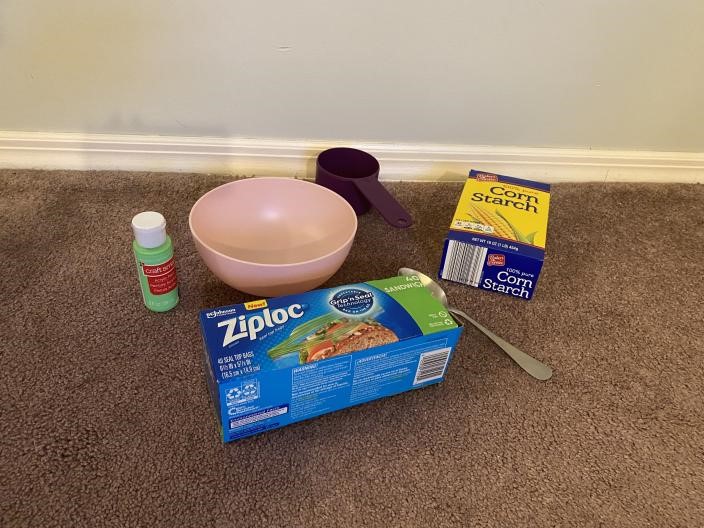
supplies to make snail slime

What You’ll Need

  • 1 Bottle (6oz) of Elmer’s Clear Glue (this type of glue works best)
  • 1.5 Teaspoons Baking Soda
  • 1.5 Teaspoons Contact Lens Solution (I’m using Bio True)
  • Bowl
  • Spoon (or another mixing utensil)
  • Sealable plastic bag
  • Food coloring or paint (optional)
  • Permanent Marketing (optional)
  • Beads (optional)
  • UV light (optional)

Directions

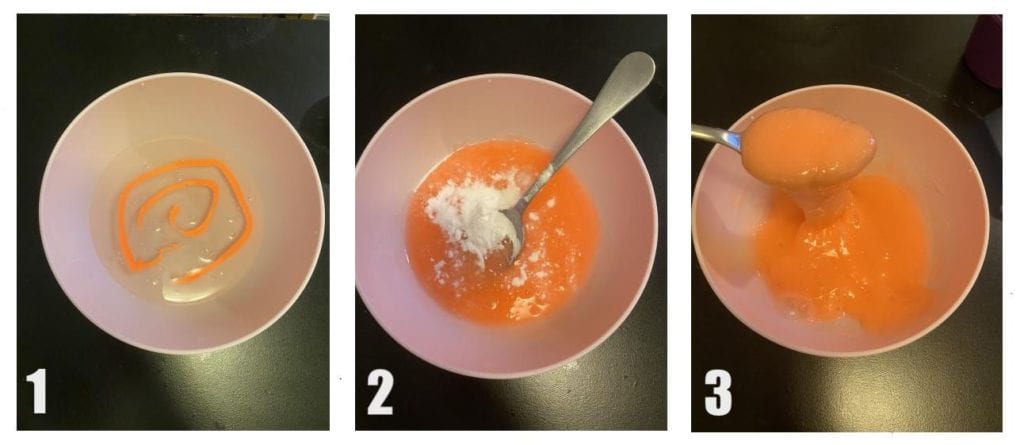
mixing slime
  1. Empty your bottle of clear glue into your bowl. If you are adding food coloring or paint, this is the best time to add it!
  2. Add your baking soda to the glue and stir.
  3. Add your contact solution and stir.
  4. You may need to knead this slime with your hands to have it become less sticky.
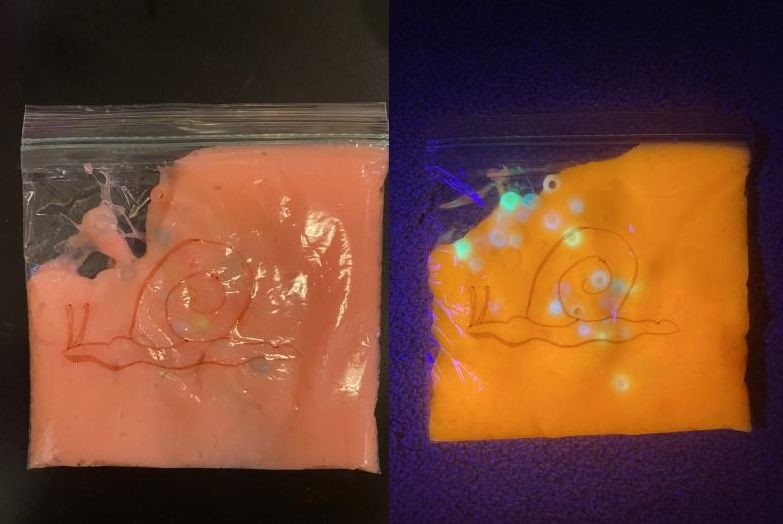
  5. Add your slime to your bag and close it. If you would like to turn this sensory bag into a sensory activity, draw a snail onto the front of the bag. Make sure the shell is large!
  6. Add your beads, if you would like. You can use your fingers to move the bead in the bag around. See if you can color in the snail shell by moving the beads into it!

I made sure to use a neon paint for this bag so that it would glow under my UV light! The beads I added were glow-in-the-dark beads, which also meant they glowed under the UV light.

The mystery of fluorescing snail slime is only one of the many things that have caught Dr. Pearce’s interest. He has also been researching their decline and disappearance throughout Northeast North America, which may be attributed to past decades of acid rain and determining the amount of Anguispira species there are on the continent as well. Dr. Pearce says that the attempt to find that number is a large collaborative effort that involves looking at the snail’s DNA and taking trips out to collect specimens. While out in the field, Dr. Pearce has also attached spools of thread to snail shells to track their movement in the wild!

finished sensory slime bag project

Sometimes, finding an answer to a scientific question can take a long time and many discussions with others. Now that you’ve learned a little more about how snail slime works and the unique type of slime that certain snails have, think about how you could put your own theories to the test, and what else you could learn about snails by observing them in their natural environment!

Of course, no discussion of snails could be complete without one of Dr. Pearce’s famous snail jokes:

What do tiger snails have that NO OTHER animal has?

Baby tiger snails!

Emma McGeary is a Gallery Experience Presenter in CMNH’s Life Long Learning Department.

Filed Under: Blog Tagged With: Bug Bonanza

May 20, 2021 by Kathleen

Super Science Coloring Pages!

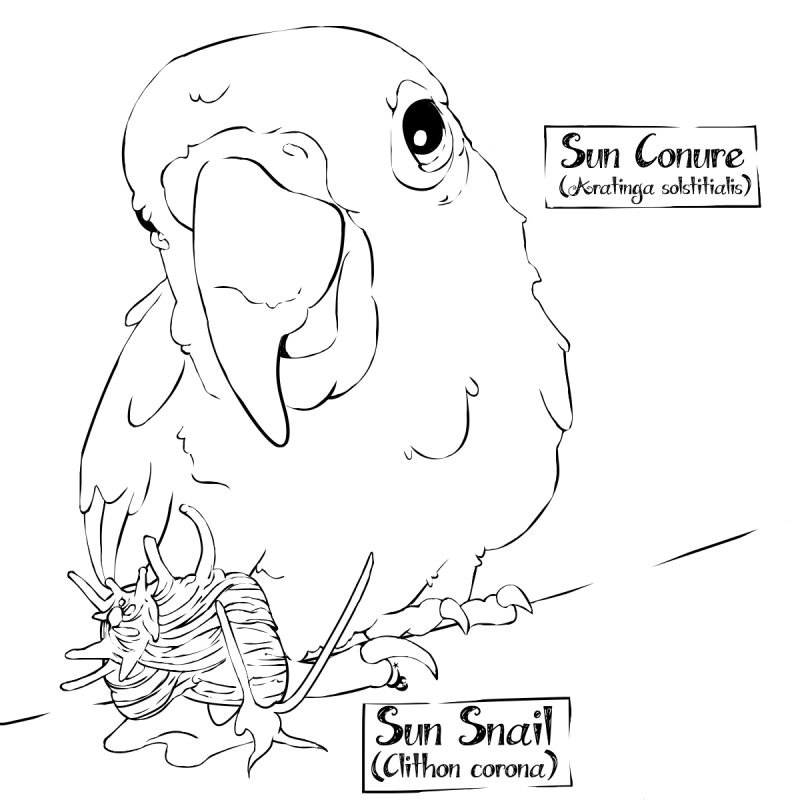
Have fun coloring images featuring animals from our living collection this week drawn by Gallery Presenter and Floor Captain, Jess Sperdute. You can meet some of the animals in the living collection during our Virtual Live Animal Encounters!

Sun Conure and Sun Snail coloring page
Download Sun Conure and Sun Snail Coloring Image
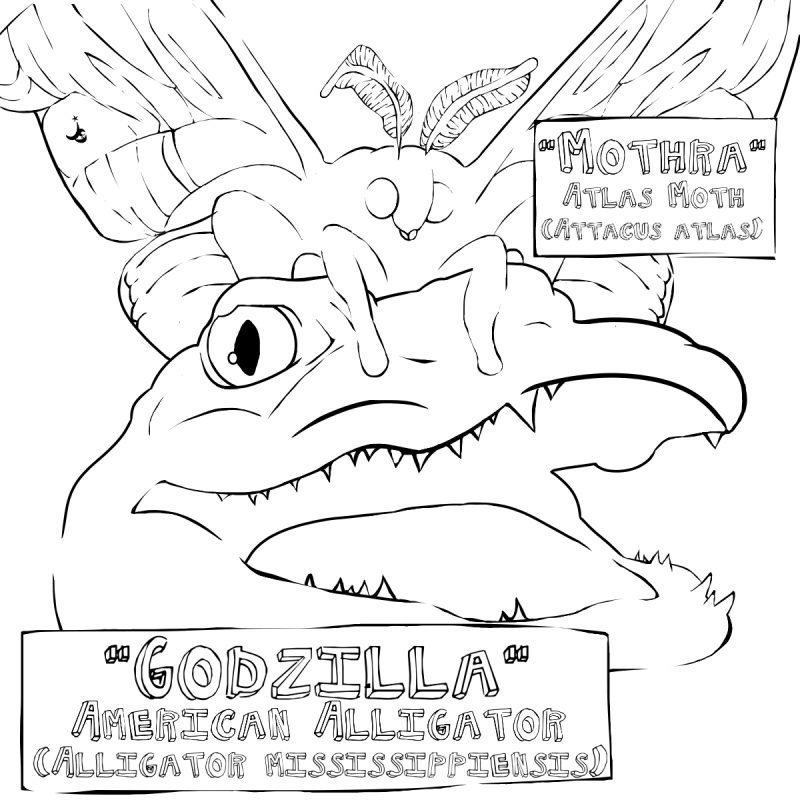
Godzilla and Mothra coloring page
Download Godzilla and Mothra Coloring Image

Filed Under: Blog, Super Science Saturday Tagged With: Bug Bonanza

May 19, 2021 by wpengine

Incredible Junk Food Diets: Creatures That Clean Up Our World

by Shelby Wyzykowski with scientific information provided by Dr. Ainsley Seago, Associate Curator of Invertebrate Zoology.

What could be more thrilling than a summer weekend trip to explore one of the most exciting metropolises in the world, New York City. It has so much to offer, way too much to experience in a mere two or three days. There’s the sights…the Statue of Liberty, the Empire State Building, and Broadway. There’s the sounds…the beeping horns of taxi cabs and the noisy, bustling, crowded sidewalks. And there’s the smells…the sweet fragrances that drift from stalls in the Flower District, the tantalizing aromas wafting from street-side food carts, and the unmistakable odor of sixty thousand hot dogs sitting under the noon day sun in Times Square. Sixty thousand hot dogs? Really?! Well, no, not really, at least not literally. But the city that never sleeps is a city that loves to eat. And with the number of people that live, work, and visit this town, enormous amounts of food can litter the streets at any given time. The battle to keep public spaces free of food waste is daunting, but humans do have some unlikely tiny allies in this unending garbage war…insects. These crews of itsy-bitsy street cleaners, along with other arthropods like spiders and millipedes, are surprisingly efficient scavengers. We undoubtedly know this thanks to the work of researchers at North Carolina State University. Their entomologists, or insect scientists, studied these mini trash disposals at work in the urban ecosystem of New York. They found that pavement ants, cockroaches, and other hungry foragers can eat 2,100 pounds of food refuse (the equivalent of 60,000 hot dogs) in one year. Now in the grand scheme of things, a ton of food is not a lot, but researchers have still taken notice. They know that diverting food waste from landfills benefits our planet. And they are experimenting to try and find innovative ways to use insects to transform edible trash into eco-friendly treasure.

macro photo of an ant holding a bit of bread
Image by cp17 from Pixabay.

Entomologists at Louisiana State University are also doing their part to make their Baton Rouge campus more environmentally responsible. They’ve collaborated with the nearby Fluker Farms, a pet supply business that sells insects as reptile food. Together they’re taking food bound for a landfill and transforming it into animal feed. But there is also a third indispensable partner in this entomological endeavor. It’s the black soldier fly, an insect that is common in the Southern United States. The larvae of the black soldier fly do one thing exceptionally well…eat. A black soldier fly larva can eat twice its own body weight in one day! During their larval stage, they consume all the food that they’ll need for the rest of their lives. The fly’s feeding frenzy results in rapid growth. They’ll grow 300% in size during their two-week larval stage. But, after these two weeks, they’ll never eat again. It would be impossible, because an adult black soldier fly has no mouth!

Before the larvae can chow down on the leftovers from the campus’s dining halls, the food scraps have to be blended into a slurry. Then the ravenous little larvae get two weeks to eat to their heart’s content. They are then sifted out of the remaining slurry. Some larvae are sold as Fluker Farms reptile food while the others return to the colony to become adults. The leftover slurry/compost mixture is then spread on the flower beds that decorate the university’s campus. In 2019 alone, 15 tons of food waste was processed this way! The joint effort between LSU’s Entomology department and Fluker Farms is helping the university to reach its goal to reduce the amount of waste the campus sends to landfills by three quarters by the year 2030.

But the LSU scientists have an even grander vision for their larvae farm and other farms like it. Black soldier fly larvae can also take the place of soy and fish meal as feed for livestock, and this helps to take the pressure off the world fisheries. With an ever-increasing world population, perhaps larvae may even become a food staple for humans someday. Food scientists at Stellenbosch University in South Africa are already using black soldier fly larvae to produce dairy-free ice cream and Vienna-style sausage. Imagine, someday, sitting down to enjoy a full seven-course dinner with larvae as a key ingredient!

Fly larvae are not the only insects that are being utilized as animal feed. Cockroaches, which are actually very fastidious, well-groomed insects, are great little amateur recyclers. They can chew down almost anything, but they can live without food for up to one month if they need to. Luckily, the roaches at the Shadong Agricultural Technology Company in Jinan, China never need to worry about going hungry. The food waste recycling plant works on a much larger scale than LSU, housing a billion cockroaches that are fed fifty tons of kitchen scraps each day. That’s the equivalent of seven adult bull elephants! The cockroaches are allowed to live out their natural lifespan. Then they are steamed, cleaned, and processed into a protein-rich, antibiotic-free livestock feed that, like larvae, can take the place of fish meal. This profitable food waste plant, as well as others like it in other Chinese cities, undoubtedly proves that insect farms can help to solve our landfill problems.

Landfill with bulldozer. Evergreen trees and gray sky in the background.
Image by Pasi Mäenpää from Pixabay.

With the success of these promising initiatives, scientists are taking things a step further and applying insects to the problem of plastic waste. It’s no secret that the many types of plastic that we use in our everyday lives are polluting the planet. Marine ecologists have even found plastic microfibers in sea ice samples from Antarctica! Some researchers, in their quest to try and help to solve our plastic problem, have made a surprising discovery; some insects are plastivores, meaning they can eat plastic! A March 2020 project at Brandon University in Canada studied the larvae of the Greater Wax Moth (a regular beehive pest) and their ability to consume LDPE, or low-density polyethylene. This type of soft plastic, which is used to make grocery bags, is one of the leading contributors to non-biodegradable waste. It can be recycled, but much of it ends up in the trash. At the landfill, LDPE breaks down and releases dangerous greenhouse gases, including methane. This is cause for concern, since greenhouse gases contribute to climate change. Brandon University researchers have been trying to figure out the exact way that these caterpillar larvae are able to digest this troublesome plastic. Their goal was to isolate and identify the specific chemical that the caterpillar uses to break down LDPE, and they got off to a promising start. The scientists found that the amount of the larvae’s gut microbes (bacteria and fungi) actually increased when fed LDPE. Their intestinal biome actually preferred it over the caterpillar’s regular natural diet of honeycomb. The larvae thrived on plastic! And they seemed to love it because LDPE has the same chemical structure (specifically, a long, open-chain hydrocarbon) as beeswax! Further research revealed that the caterpillar’s breakdown of LDPE is a complicated process that has to happen in vivo (inside their bodies). One of the waste products that the caterpillars produce when they digest LDPE is called glycol. Glycol is toxic to humans, but, fortuitously, it can be biodegraded by several common, naturally occurring bacteria. For now, recycling LDPE is still the best option. But further research into the Greater Wax Moth larva’s in vivo process of digesting plastic may prove to be fruitful.

This summer, even if you’re not able to escape for a weekend getaway to the Big Apple, you are still likely to get the opportunity to enjoy a Sunday stroll along the sidewalks of your own hometown. And if, by chance, you look down and see a line of ants diligently portioning out and carrying away a cast-off crust of bread, take a moment to stop and watch them hard at work. You can maybe even silently thank them for their Herculean efforts. If it weren’t for their help, food waste would be an environmental hazard, a threat to public health, and an additional financial burden to your city. It’s a dirty job, but somebody’s got to do it. Fortunately for us, our voracious, multi-legged little friends are ready and willing to take on the task.

Shelby Wyzykowski is a Gallery Experience Presenter in CMNH’s Life Long Learning Department. Museum staff, volunteers, and interns are encouraged to blog about their unique experiences and knowledge gained from working at the museum.

Related Content

Super Science Slugs and Bugs Coloring Pages

Natural History Discoveries

Make Snail Slime

Carnegie Museum of Natural History Blog Citation Information

Blog author: Wyzykowski, Shelby
Publication date: May 20, 2021

Share this post!

  • Share on Twitter Share on Twitter
  • Share on Facebook Share on Facebook
  • Share on Pinterest Share on Pinterest
  • Share on LinkedIn Share on LinkedIn
  • Share on Reddit Share on Reddit
  • Share via Email Share via Email

Share this post!

  • Share on Twitter Share on Twitter
  • Share on Facebook Share on Facebook
  • Share on Pinterest Share on Pinterest
  • Share on LinkedIn Share on LinkedIn
  • Share on Reddit Share on Reddit
  • Share via Email Share via Email

Filed Under: Blog Tagged With: Bug Bonanza, Invertebrate Zoology, Shelby Wyzykowski

May 16, 2020 by Kathleen

Sensory Bin Idea – Lady Bug Bin

We have a great sensory bin idea for you–create a Lady Bug themed Sensory Bin with materials you have at home!

What is a Sensory Bin?

Sensory bins are great tools for younger children or children who might have sensory processing disorders to experience some relaxed sensory learning activities. For example, a sensory bin might include textures that encourage fun or textures that you might want your child to get used to (like sand perhaps) as well as goaled learning activities, like foam letters or numbers. In this activity, we suggest including toy insects to learn more about bugs.

Make a Sensory Bin that resembles a lady bug and fill it with any red and black materials that may stimulate the senses. This craft lists red and black material examples to create a Lady Bug, but you can create any kind of bug play bin; for example, if you have mostly green things around the house or don’t like lady bugs as much, you can make a Grasshopper bin!

Needed to Make the Sensory Bin

  • 1 small/medium-sized bin
  • Scissors
  • Black & red constructions paper
  • Black and red markers
  • Black or red pipe cleaners
  • Tongs or measuring cups
  • tape

Ideas to Fill the Sensory Bin

  • Red and black dried beans or oats
  • Red and black pompoms
  • Hard pasta colored red or black
  • DIY red or black play-doh/slime
  • Red or black-colored rocks
  • Red and black-colored buttons
  • Small plastic insect toys

Fill your lady bug bin with any materials you’d like to explore. There are some red and black options listed above, but feel free to use anything you have available!

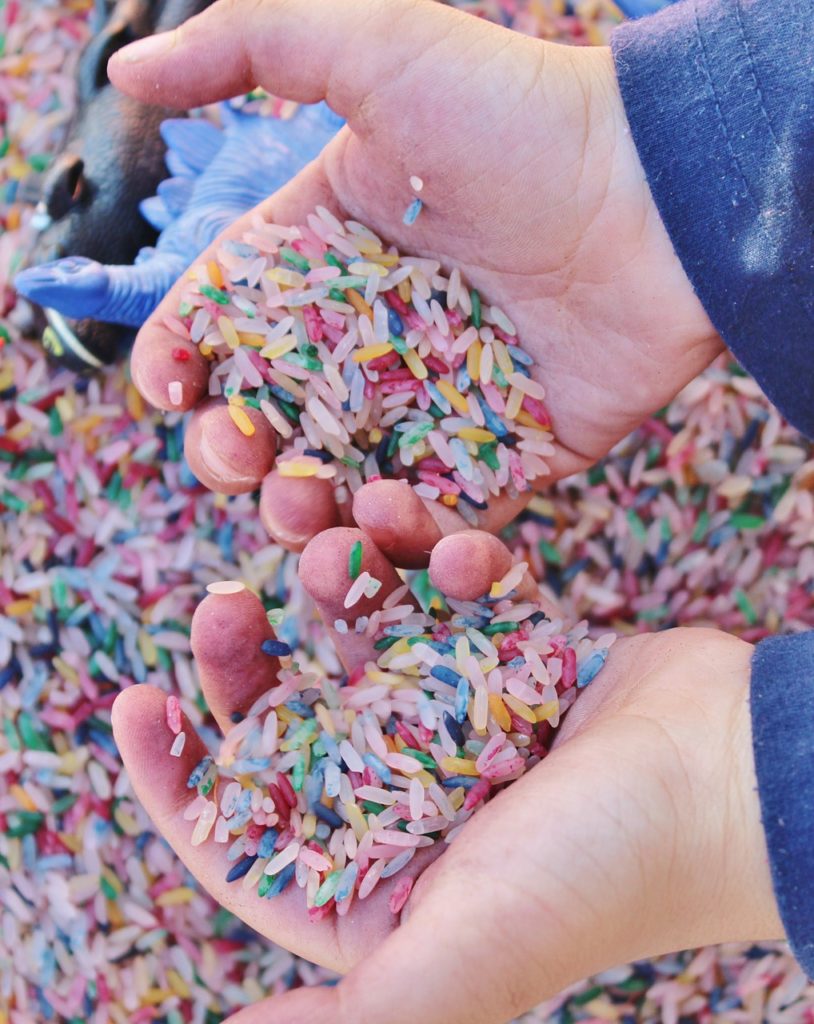
child holding rice from sensory bin in hands

Directions

  1. Using your scissors, markers, and pipe cleaners, create the 6 legs, 2 antennae, and the head of the ladybug.
  2. Tape down the antennae, legs, and head onto the small/medium-sized bin.
  3. Fill your lady bug with any of the materials listed above or substitutes as desired. You can make all items black and red to resemble a lady bug.
  4. Once your sensory bin is filled use tongs and measuring cups to help your child pick our specific materials like small plastic insects or insect toys! Get Creative and have fun with it!

We’ll be working on more sensory friendly content as soon as we can, find it on our Sensory Friendly Saturdays Page.

Sensory Friendly Saturday

For more activities to complete with your household, check our our Super Science Saturday Page.

Super Science Saturday

Filed Under: Blog Tagged With: activities, Bug Bonanza

May 15, 2020 by Kathleen

Bug Bonanza: Virtual Bug Display

Bugs from our Research Collection

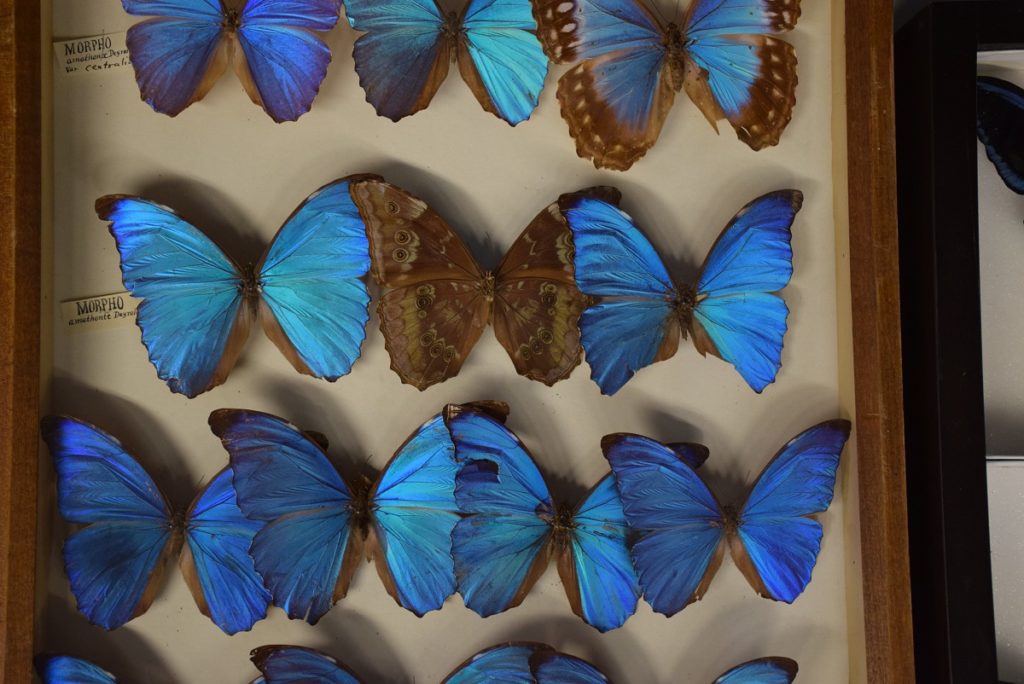
drawer of blue morpho butterflies

This is a specimen drawer of Blue Morpho butterflies from our Section of Invertebrate Zoology! This species is well known for its sexual dimorphism, which means that males and females of this species look physically different. The males of Blue Morpho butterflies are the bright blue specimens in the drawer above, and the darker brown specimen above is the female.

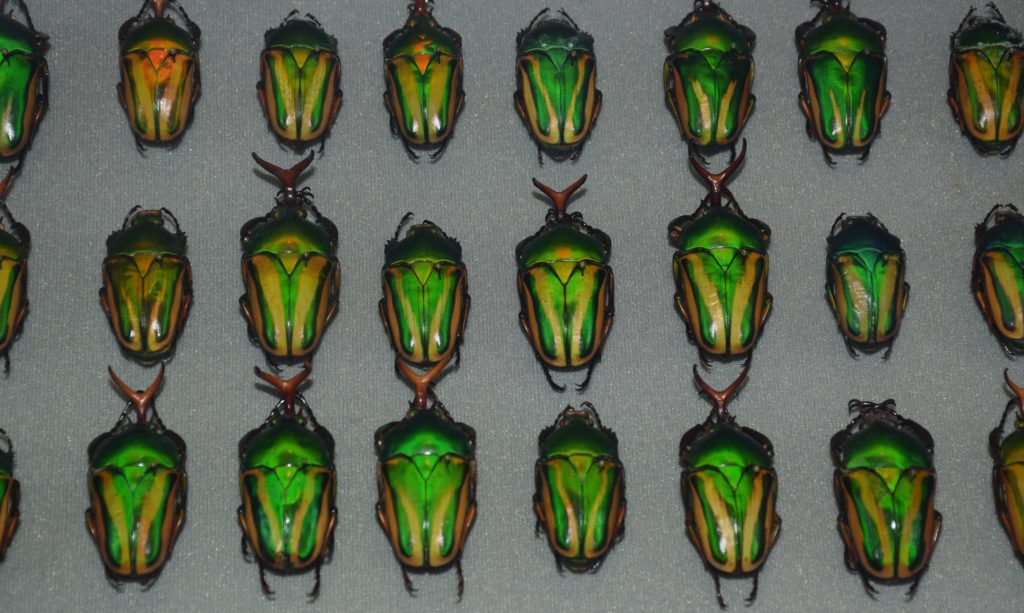
Shiny scarab beetles

This species of scarab, Eudicella gralli, which is sometimes referred to as the “Flamboyant Flower Beetle,” is on display at the museum. These scarab beetles are also sexually dimorphic, or males and females look physically different. The male scarabs in the picture above have large, Y-shaped horns that they mainly use to fight for females, while the females (look closely at the bottom right beetle) have shorter, shovel-like tusks great for digging and burrowing.

Paul Bauer preparing bug specimens

John Bauer (pictured above) was an entomologist at Carnegie Museum of Natural History for 43 years in the mid 1900s. He is pictured preparing beetle specimens, like the kind you see on display at the museum. Behind the scenes, our scientists continue to do incredible research with the hundreds of thousands more specimens they have collected and prepared since this photo was taken. Learn about some amazing ways our scientists help to share our collection with other scientists.

Bugs at Powdermill Nature Reserve

All of the photographs of the insects below were taken at Powdermill Nature Reserve, the museum’s environmental research center.

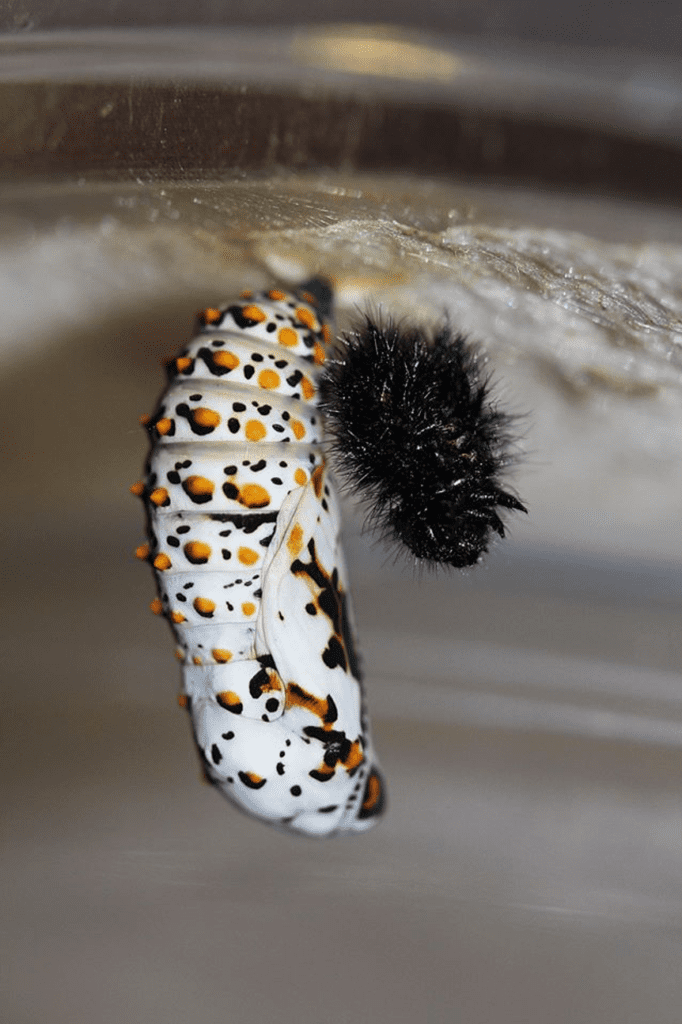
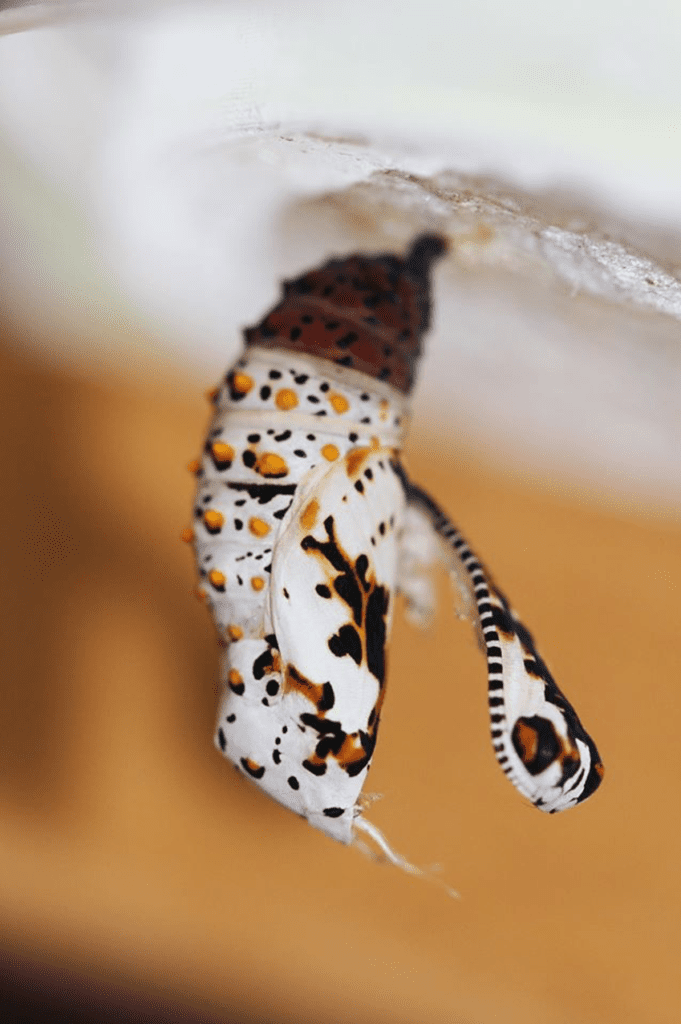
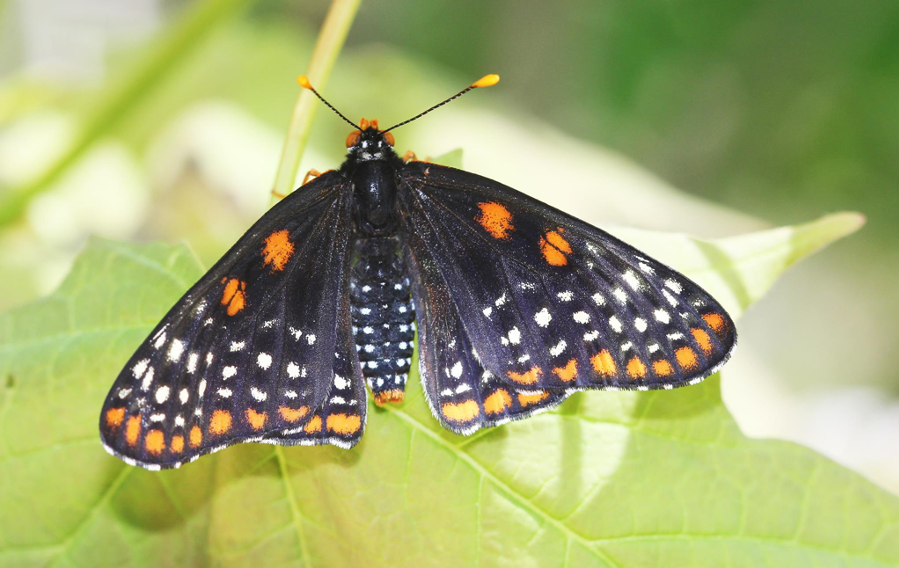
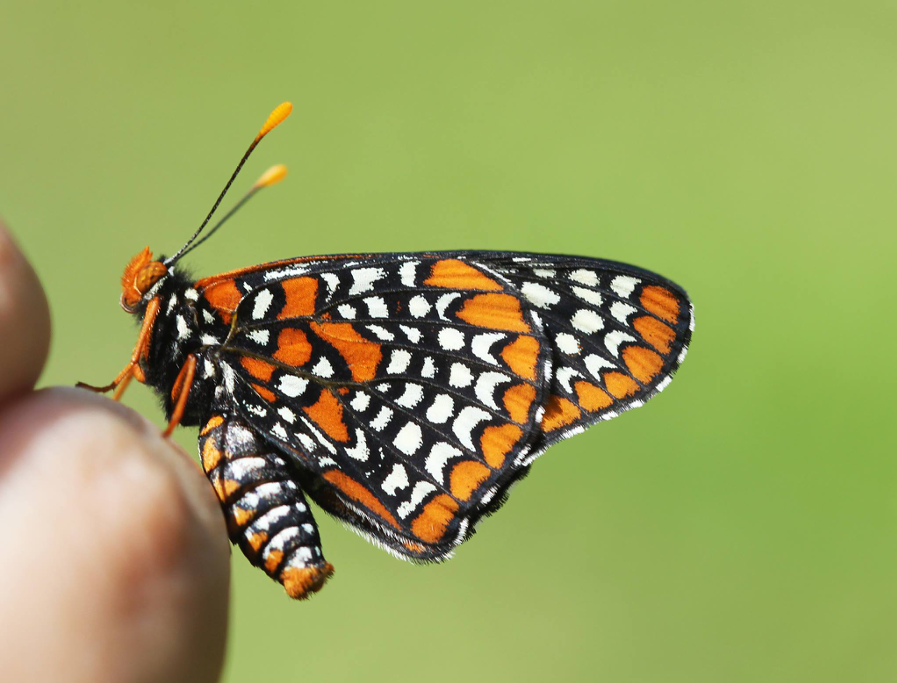
Life Stages of the Baltimore Checkerspot Butterfly

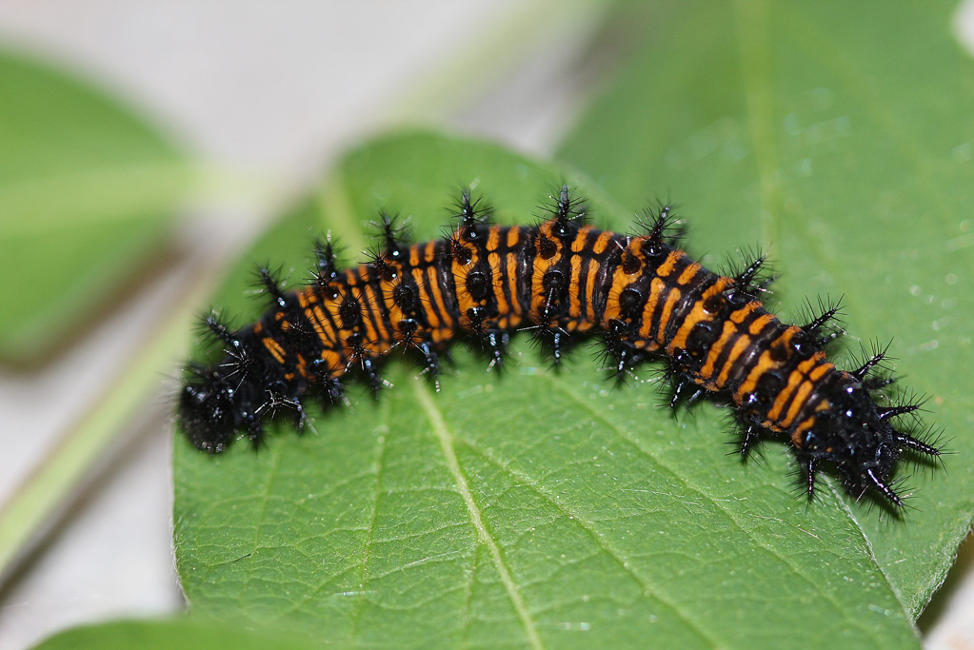
Baltimore Checkerspot Caterpillar
Caterpillar
Baltimore Checkerspot Chrysalis, with caterpillar skin
Chrysalis, with caterpillar skin
Baltimore Checkerspot chrysalis, with adult emerging
Chrysalis, with adult emerging
Baltimore Checkerspot Adult, top of wings
Baltimore Checkerspot Adult, underside of wings

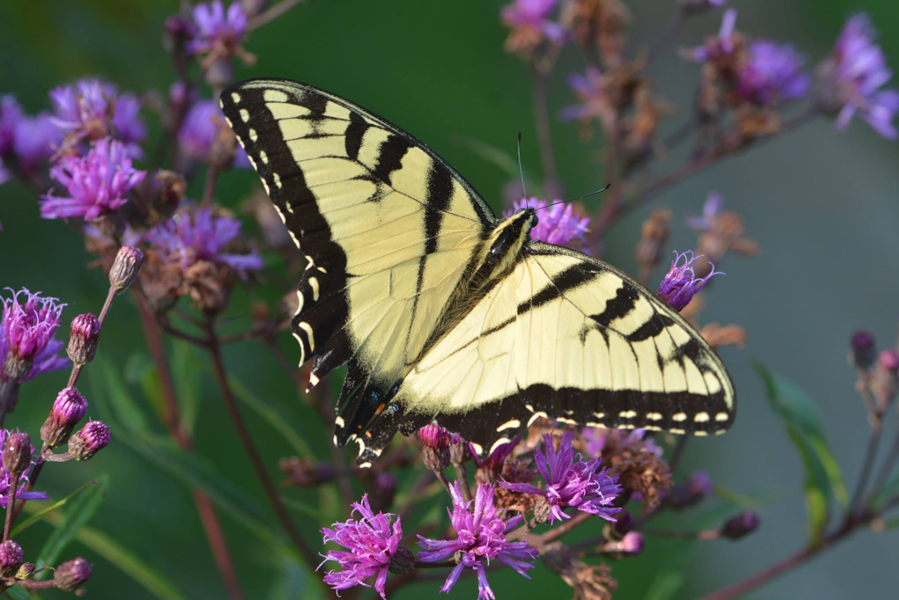
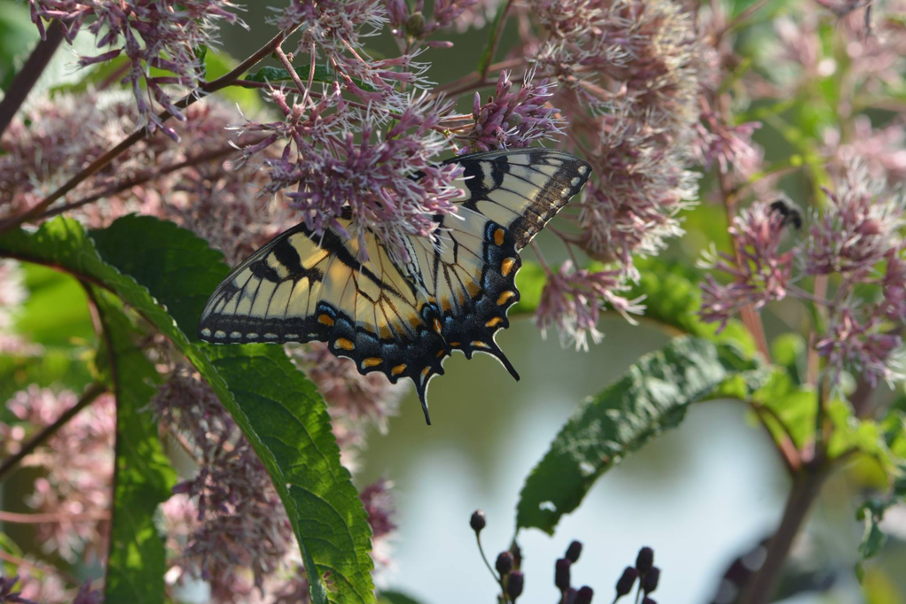
Eastern Tiger Swallowtail

The adults of this species of butterfly feed on nectar from flowers. This species is dimorphic, meaning males and females look different, with females being either black or yellow. A yellow female will look similar to a male, other than having blue spots on her hindwing. Do you think the butterflies shown here are male or female?

Eastern Swallowtail pollinating small purple flowers
Eastern Tiger Swallowtail pollinating tree flowers

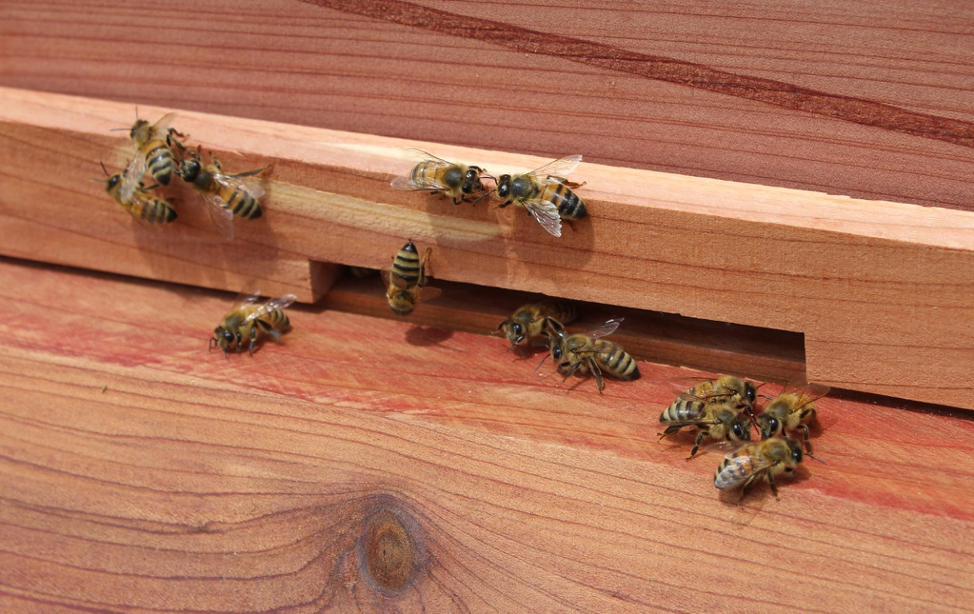
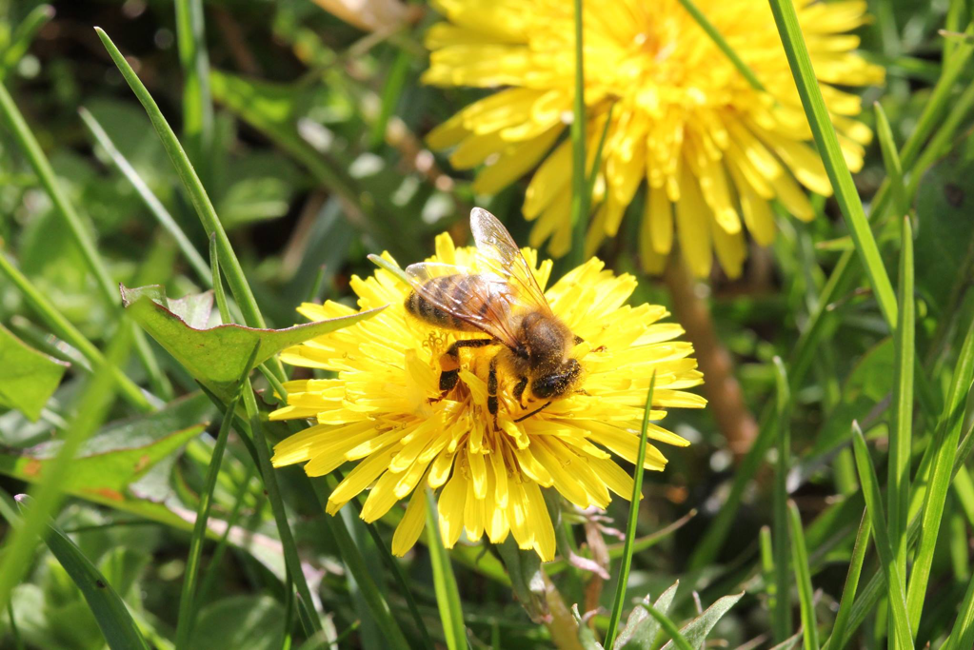
Honey Bees

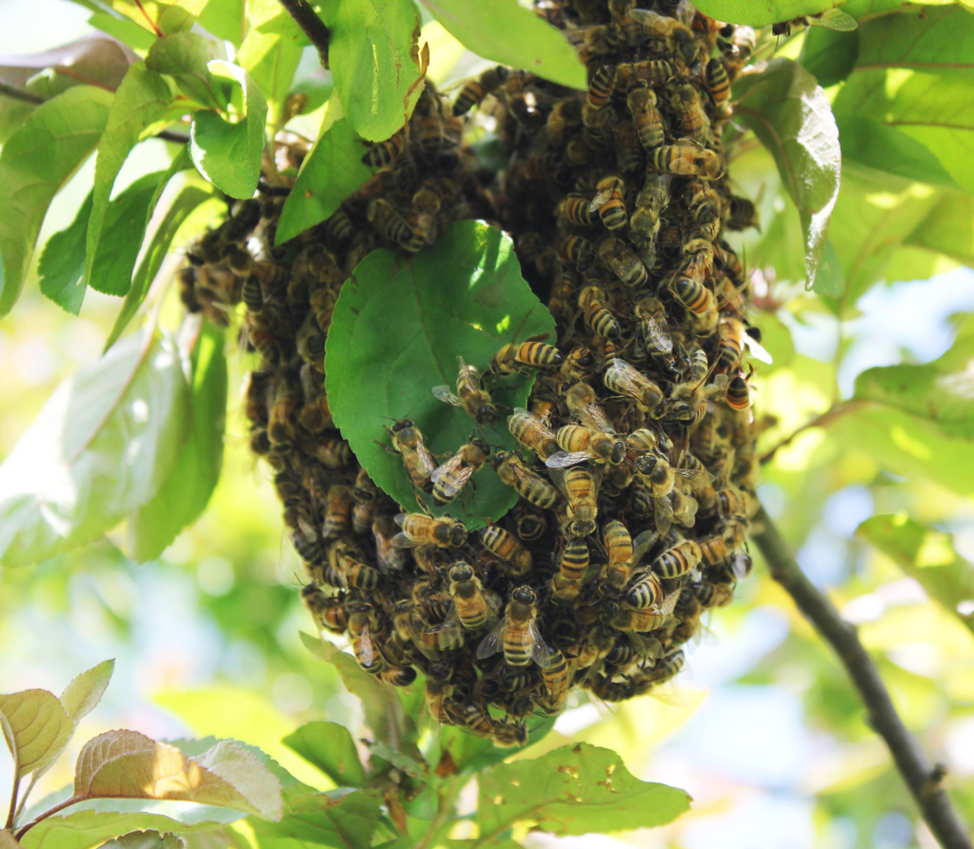
Honey Bees harvest nectar and pollen from flowering plants. They are social insects that live in large colonies. Female worker bees will fly around and gather pollen and nectar to take back to the hive, while male drones stay in the hive with the queen, who is in charge of the hive and lays all the eggs. You may see a swarm like the one shown here. If you do, please remember that it’s best to leave them alone: they are protecting their queen, and looking for a home. If the swarm is somewhere that is dangerous or inconvenient, try calling a local beekeeper to remove it safely!

Honey bees entering a man-made hive
Honey bee pollinating a dandelion
Swarm of Honey bees

Filed Under: Blog Tagged With: Bug Bonanza

  • Page 1
  • Page 2
  • Page 3
  • Go to Next Page »

sidebar

About

  • Mission & Commitments
  • Directors Team
  • Museum History

Get Involved

  • Volunteer
  • Membership
  • Carnegie Discoverers
  • Donate
  • Employment
  • Events

Bring a Group

  • Groups of 10 or More
  • Birthday Parties at the Museum
  • Field Trips

Powdermill

  • Powdermill Nature Reserve
  • Powdermill Field Trips
  • Powdermill Staff
  • Research at Powdermill

More Information

  • Image Permission Requests
  • Science Stories
  • Accessibility
  • Shopping Cart
  • Contact
  • Visitor Policies
One of the Four Carnegie Museums | © Carnegie Institute | Privacy Policy | Terms of Use | Accessibility
Rad works here logo