• Skip to primary navigation
  • Skip to main content
  • Skip to primary sidebar

Carnegie Museum of Natural History

One of the Four Carnegie Museums of Pittsburgh

  • Visit
    • Buy Tickets
    • Visitor Information
    • Exhibitions
    • Events
    • Dining at the Museum
    • Celebrate at the Museum
    • Powdermill Nature Reserve
    • Event Venue Rental
  • Learn
    • Field Trips
    • Educator Information
    • Programs at the Museum
    • Bring the Museum to You
    • Guided Programs FAQ
    • Programs Online
    • Climate and Rural Systems Partnership
  • Research
    • Scientific Sections
    • Science Stories
    • Science Videos
    • Senior Science & Research Staff
    • Museum Library
    • Science Seminars
    • Scientific Publications
    • Specimen and Artifact Identification
  • About
    • Mission & Commitments
    • Directors Team
    • Museum History
  • Tickets
  • Give
  • Shop

Education

April 19, 2022 by Erin Southerland

Wonderment Returns

by Joann Wilson

“What if one of us discovers the missing boat?” The full-voiced question arose from a group of fourth-grade students eagerly pointing to an ancient Egyptian funerary boat, a school bus-sized wooden craft over 3,800-years-old. On this frosty January morning, twenty teachers and students from a consortium of four Mercer County schools delighted in their return for in-person tours to Carnegie Museum of Natural History. The COVID-19 pandemic led to a two-year absence, a gap that Megan Shreves, a gifted student teacher at St John Paul/Kennedy Catholic School, emphasized by gently tapping a notebook bearing the date of the group’s last visit, October 2, 2019.  

Katie Olive, a gifted student teacher from Sharon School District, explained that the cultural groups presented in several museum exhibitions, including the Tlingit, Hopi, Lakota, Iroquois, Inuit, and ancient Egyptian Peoples, are also presented in their curriculum. Olive added, “The museum is a fantastic environment to learn in a hands-on setting. We love our Interpreters, year after year, because they are experts in the field!” Her comment is a near textbook recognition of the collective aspirations shared by Museum interpreters. The National Association of Interpretation defines interpretation as “a purposeful approach to communication that facilitates meaningful, relevant, and inclusive experiences that deepen understanding, broaden perspectives, and inspire engagement.” 
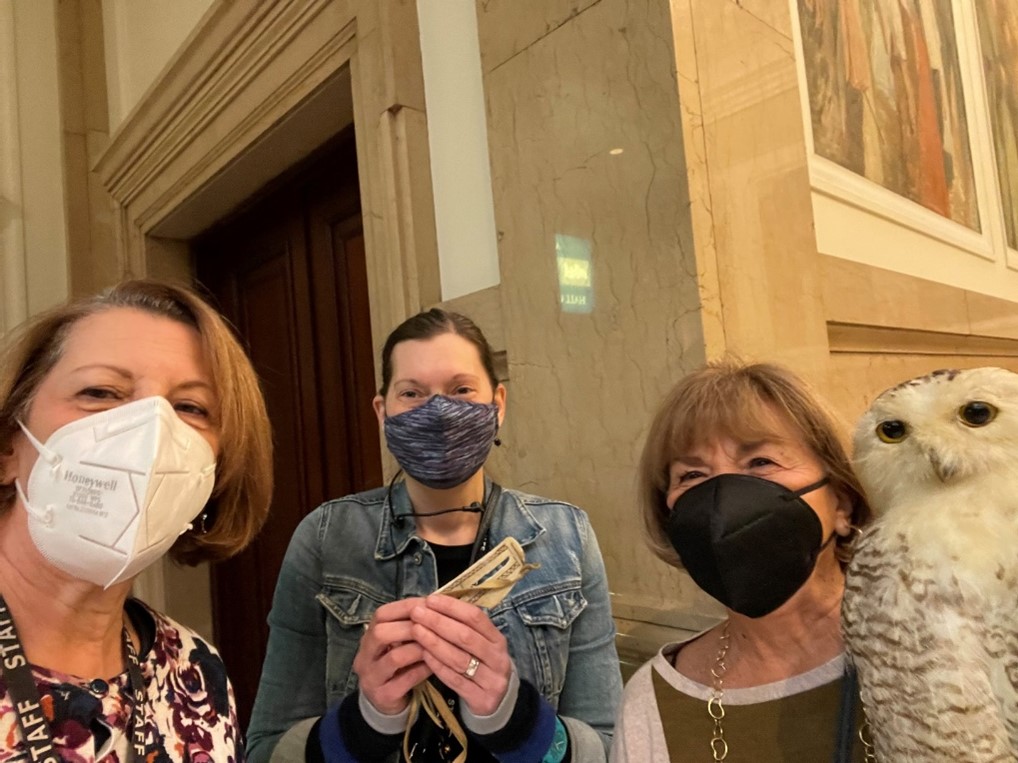
A selfie of three people in a museum.
CMNH Group Program’s Coordinator, Pat Howe, with Interpreter Joann Wilson, holding Inuit snow goggles, and Interpreter, Paula Doebler, holding long-time education collection favorite, the snowy owl. 

Pat Howe, Carnegie Museum of Natural History’s Group Program’s Coordinator, revealed that between the fall of 2021 and this visit in January 2022, the museum had welcomed back over 300 students for guided tours. Guided tours routinely include hands-on activities, observation, and inquiry.  On this day, tours also included a few moments to sketch objects inspiring fascination.
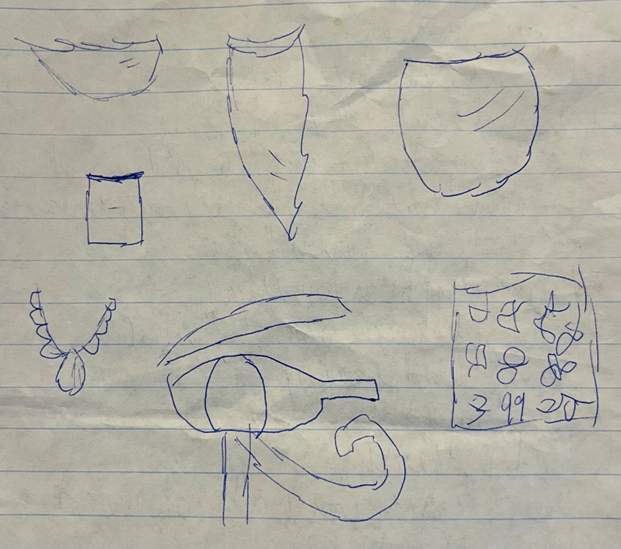
Pen sketches of ancient Egyptian artifacts by a fourth grade student.
Sharon School District student drawing from a January 2022 guided tour about daily life in ancient Egypt.

Which gets us back to that funerary boat. In 1894-1895, during excavation of the tomb of the ancient Egyptian pharaoh Senwosret III, French archeologist Jacques de Morgan discovered five, or perhaps even six, boats buried alongside the structure. However, today, the whereabouts of only four vessels are definitively known. Two boats reside at the Egyptian Museum in Cairo, one is under the stewardship of the Carnegie Museum of Natural History, and another is under the care of the Field Museum in Chicago. Perhaps one day, a student scholar will transport wonderment full circle, and unearth the story of the missing funerary boat or boats.

Thanks to Katie Olive, Sharon gifted teacher, Megan Shreves, St John/Kennedy Catholic gifted teacher, Lindsay Ramage, Hermitage gifted teacher, and June Allenbaugh, Farrell gifted teacher. Joann Wilson is an Interpreter in the Education Department at Carnegie Museum of Natural History. Museum employees blog about their unique experiences and knowledge gained from working at the museum.   

Related Content

Making Time Disappear

March Mammal Madness and Middle School Science Class

Learning From Misinterpretations

Carnegie Museum of Natural History Blog Citation Information

Blog author: Wilson, Joann
Publication date: April 14, 2022

Share this post!

  • Share on Twitter Share on Twitter
  • Share on Facebook Share on Facebook
  • Share on Pinterest Share on Pinterest
  • Share on LinkedIn Share on LinkedIn
  • Share on Reddit Share on Reddit
  • Share via Email Share via Email

Filed Under: Blog Tagged With: Education, Joann Wilson

March 31, 2022 by Erin Southerland

The Art of Making Fish Familiar

by Patrick McShea
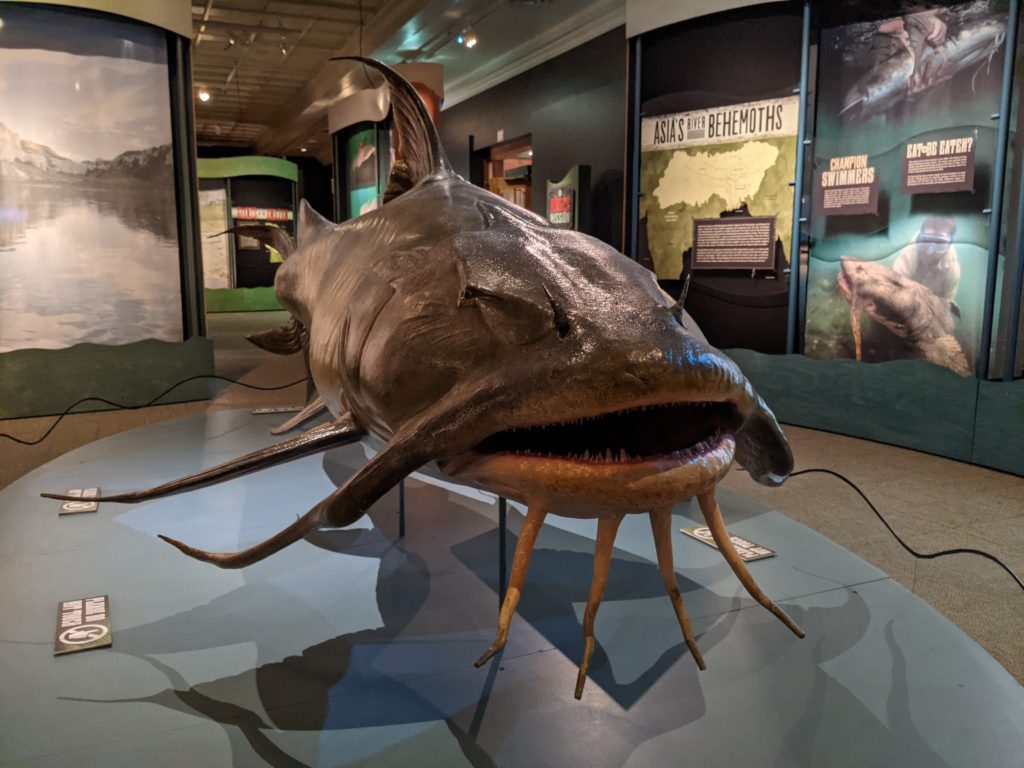
Sculpture of a monster fish in a museum exhibition

Fish in the wild are difficult to observe, even for the scientists who study them. Monster Fish: In Search of the Last River Giants, an exhibition traveled and developed by the National Geographic Society, encourages visitors to learn about this challenge from one such scientist, Dr. Zeb Hogan, host of the popular Nat Geo Wild television show.

In the exhibition, now on view in the R. P. Simmons Family Gallery until April 10, 2022, stunning life-size sculptures, evocative illustrations, and informative panels set the stage for Hogan’s appearance on several well-spaced video screens. Here, in clips with run times of a few minutes, Hogan presents on-the-water, and sometimes in-the-water, reports from six continents about conservation efforts that involve not only other scientists, but also the local people who rely on healthy fish populations for their food or livelihood.

Observing Fish in the Wild

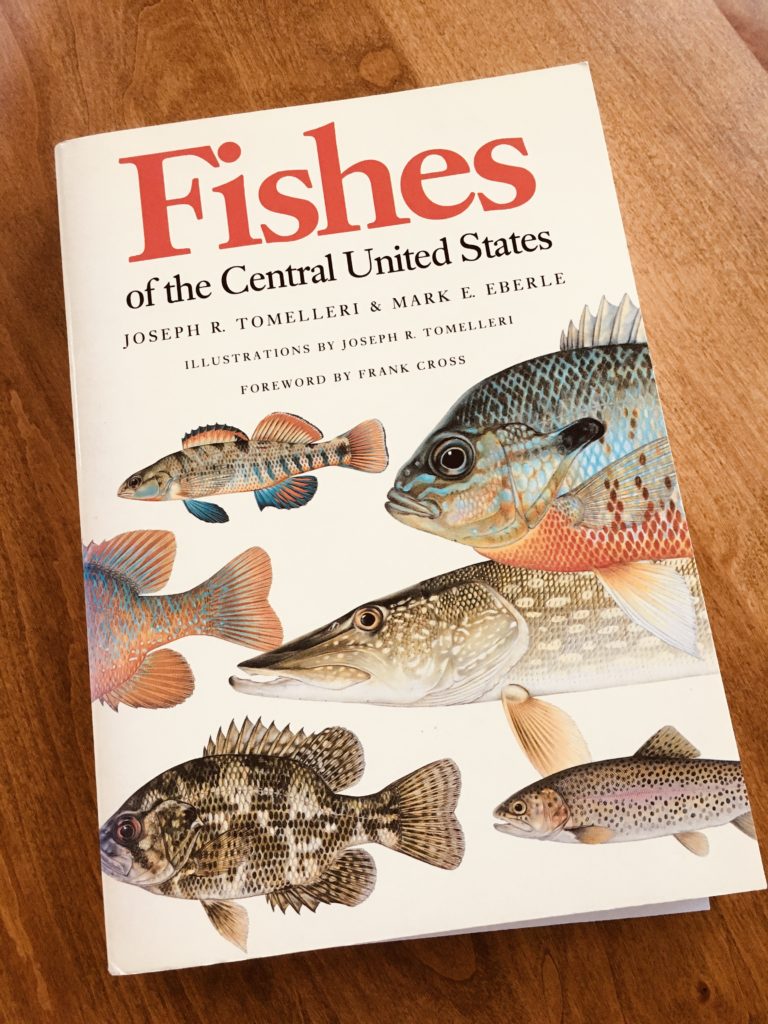
Away from the exhibition, the importance of images in sparking an interest in hard-to-observe wildlife can be noted at a scale where both the creatures involved, and the extravagance of their depictions, are much reduced. By personal example, much of my visual understanding of lesser known fish species in Pittsburgh’s rivers comes from viewing the scientifically accurate, full color, plates in Fishes of the Central United States (University Press of Kansas, 1990), a book illustrated and co-authored by Joseph R. Tomelleri.

Cover of the book "Fishes of the Central United States"

Over the past 36 years, the artist’s detailed portraits of our continent’s finned wildlife have appeared in over a thousand publications ranging from fishing magazines and field guides to outdoor clothing catalogues. Tomelleri’s career as fish artist began in Kansas in 1983 when he and other biology graduate students at Fort Hays State University wondered about the diversity of fish species in a stream that winds through the campus. The resulting student-driven investigation culminated in a publication titled, Big Creek and its Fishes, a work in which Tomelleri had responsibility for fish images. Because the full suite of physical characters that distinguish one fish species from another can rarely be captured in photographs, he used colored pencils in an attempt to accurately render every scale and fin ray.

As the artist’s attention to anatomical detail led to a professional career, his illustration process became standardized. Subjects are collected by seining, through the electrofishing techniques used by fish biologists, or by old-fashioned angling with rod and reel. A captured fish is immediately photographed to record natural colors, then depending upon size, preserved frozen or in a formalin solution that is later replaced with an ethanol solution.

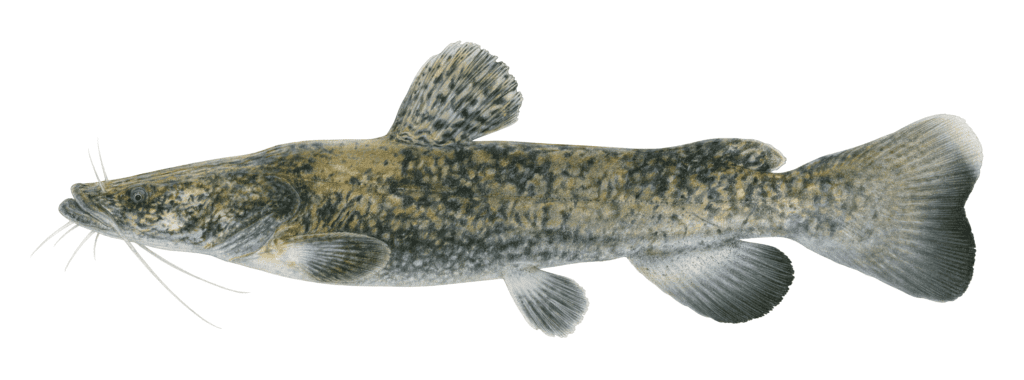
Although Tomelleri says the physical requirements for preservation have limited his experience with “monsters” to creatures three feet long or less, one species account in Fishes of the Central United States makes a case for the frightening aspects of fish that size. A description of Flathead Catfish, a species that recently brought attention to Pittsburgh’s rivers because of the enormous specimens caught and released by local anglers, includes a cautionary warning:

Flatheads breed in natural cavities of river banks, an instinct that leaves them susceptible to illegal hand fishing or “noodling.” Adept noodlers can recognize a big cat’s den by feeling the cleanly swept cavity floor and mound of silt or debris in front of the hole. One may assume that it is the bone-crushing bite of a 60-pound flathead that keeps the slightly squeamish stuck on the bank with rod and reel.

illustration of a flathead catfish
Flathead Catfish. Image credit: Joseph R. Tomelleri

Patrick McShea is an Educator at Carnegie Museum of Natural History. Museum employees are encouraged to blog about their unique experiences and knowledge gained from working at the museum.

Related Content

Fish and the Fourth of July?

Preserving Fossil Treasures: Eocene Fishes from Monte Bolca, Italy

Fish Story

Carnegie Museum of Natural History Blog Citation Information

Blog author: McShea, Patrick
Publication date: March 31, 2022

Share this post!

  • Share on Twitter Share on Twitter
  • Share on Facebook Share on Facebook
  • Share on Pinterest Share on Pinterest
  • Share on LinkedIn Share on LinkedIn
  • Share on Reddit Share on Reddit
  • Share via Email Share via Email

Filed Under: Blog Tagged With: Education, Monster Fish Exhibition, Pat McShea

March 28, 2022 by Erin Southerland

Learning From Misinterpretations

by Patrick McShea

Every job has its awkward moments, even work aiding museum visitors in their interpretation of exhibits. One memorable situation in that realm involved a father explaining skeletal bear remains to his three grade-school-aged children.

The setting was Discovery Basecamp during a busy December weekend in 2012. The exhibition had been established just two months earlier as an experiment in providing museum visitors with opportunities to examine authentic objects from the Educator Loan Collection, the enormous cross-discipline teaching collection that is managed to serve the needs of classroom teachers and other educators. In a section of well-lighted, first floor rear exhibit space, three free-standing racks of wire shelves held two dozen colorful toolboxes containing a wide range of natural history materials for visitors to examine, and the tops of five adjacent tables displayed large sturdy objects for close, hands-on inspection.

I was spending the day welcoming visitors to the space, and training a work-study student from the University of Pittsburgh and another from Carnegie Mellon University to do the same. We aimed to assist visitors in retrieving and returning toolboxes, and whenever asked, to answer questions. Listening to visitor conversations during that time was an important way to evaluate the success of the ongoing experiment. 

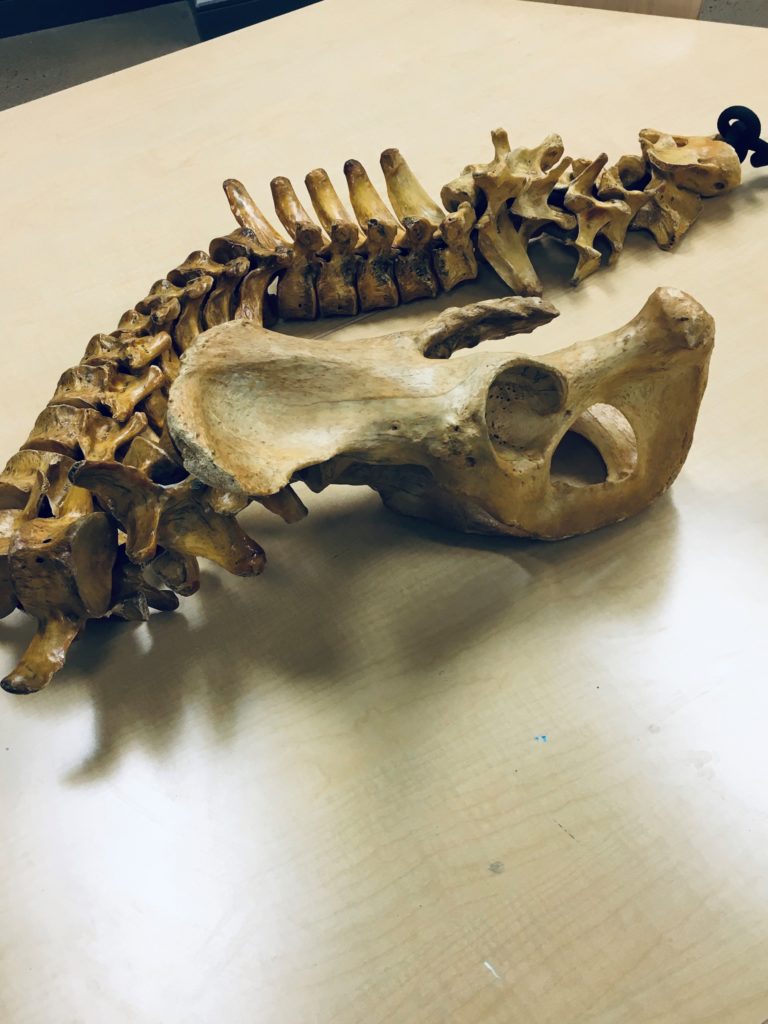
“Hey, let’s look at this,” I heard the father say as he gathered his children around a display table and picked-up one end of a yard-long, rope-linked strand of more than 20 large resin-coated vertebrae. “The tag says ‘bear,’ so let’s see if we can figure this out.” He stretched out the column on the tabletop, and moved both hands to its far end where an irregularly shaped shoebox-sized bone structure anchored the string. The structure, which was not identified on the simple paper tag, was the fused combination of the creature’s sacrum and hip bones, and the father’s unfamiliarity with mammal skeletal anatomy was immediately apparent. He mistook the bear’s butt-end for its skull, explaining to his children how the hip sockets were holes for the eyes, and that it was a shame the animal’s teeth were missing.

Bear vertebrae, sacrum, and hip bones on a table.
For anyone unfamiliar with mammal skeletal anatomy, hip sockets that once secured rounded femur heads might be confused with eye openings.

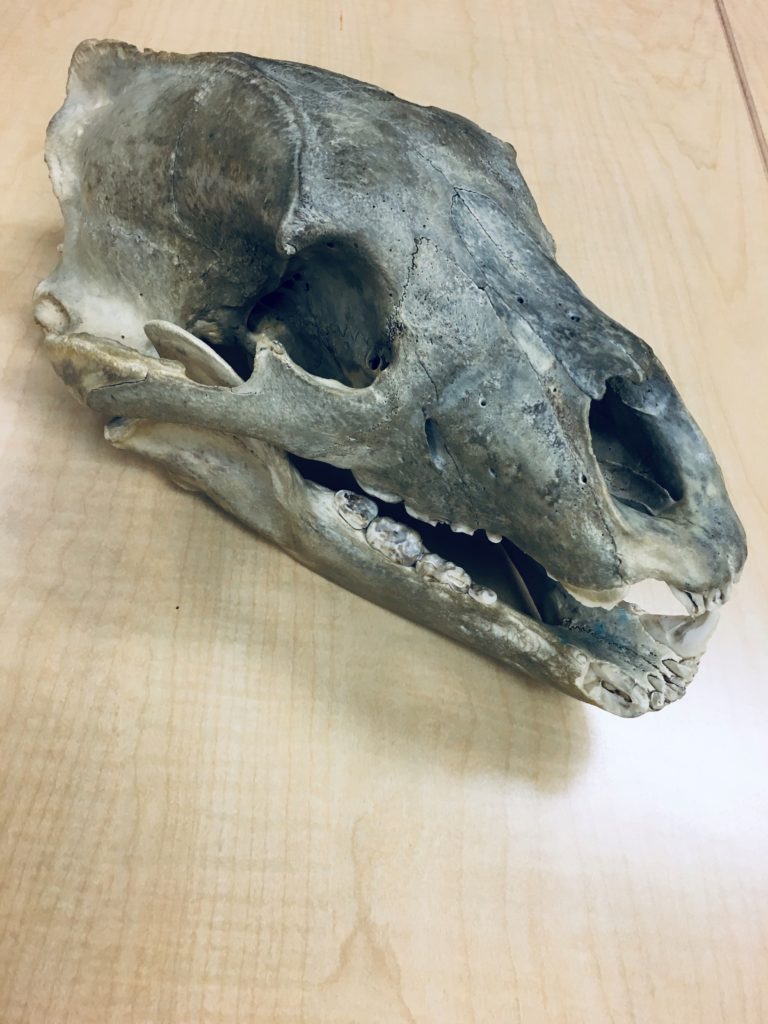
I didn’t correct him. Instead I explained to the work-study students that I’d be down in the loan program’s basement storage area for a few minutes. By the time I returned with a black bear skull, the attractions of the exhibition had pulled the family unit apart. All three children were engaged with toolboxes containing insect material, while their father was examining mineral samples on another table.

Bear skull on a table.
Discoloration and broken and missing teeth mark this American black bear jaw as a long-used teaching specimen.

I approached him holding out the bear skull and saying simply, “Our lack of labels might have caused some confusion a little earlier.” He looked at the skull, glanced back at the table with the vertebrae column, and then, to my great relief, laughed and accepted the skull from me. He called his children back to the original table, and with the skull as a visual aid, offered them a two-minute remedial lesson. I stood as far away from the table as possible.

Patrick McShea works in the Education and Visitor Experience department of Carnegie Museum of Natural History. Museum employees are encouraged to blog about their unique experiences and knowledge gained from working at the museum.

Related Content

Pitt Outreach Efforts Enriched with Museum Materials

March Mammal Madness and Middle School Science Class

African Artifacts: Back Story and Current Use

Carnegie Museum of Natural History Blog Citation Information

Blog author: McShea, Patrick
Publication date: March 28, 2022

Share this post!

  • Share on Twitter Share on Twitter
  • Share on Facebook Share on Facebook
  • Share on Pinterest Share on Pinterest
  • Share on LinkedIn Share on LinkedIn
  • Share on Reddit Share on Reddit
  • Share via Email Share via Email

Filed Under: Blog Tagged With: discovery basecamp, Education, Educator Loan Program, Pat McShea

March 10, 2022 by Erin Southerland

March Mammal Madness and Middle School Science Class

by Patrick McShea

At one suburban Pittsburgh school, the tournament bracket sheets currently generating discussions have nothing to do with basketball. Since 2013, science teacher Christian Shane has strengthened science engagement among the seventh and eighth students he teaches at North Allegheny District’s Ingomar Middle School through participation in a group learning project designed by scientists and educators that borrows its organizational structure, timing, and alliterative name from the annual NCAA Division 1 Men’s Basketball Tournament.

March Mammal Madness is clearly a take on the far better known, March Madness, the branding name for the weeks-long college tournament whose single game elimination schedule, when plotted as a chart in advance of the start date, invites fans to use their background knowledge to predict, frequently as a bet or wager, the outcome of every game.

Participants in March Mammal Madness are also asked to make far-seeing predictions, but on theoretical battle encounters involving mainly mammals rather that basketball games. The online event began in 2013 as the idea of Dr. Katie Hinde, a researcher and Associate Professor at Arizona State University. Since its early days, tournament organizers have made great efforts to raise bracket-filling decisions beyond the realm of guess work through the creation of an extensive and easy to use website that is part of the Arizona State University Library system.  

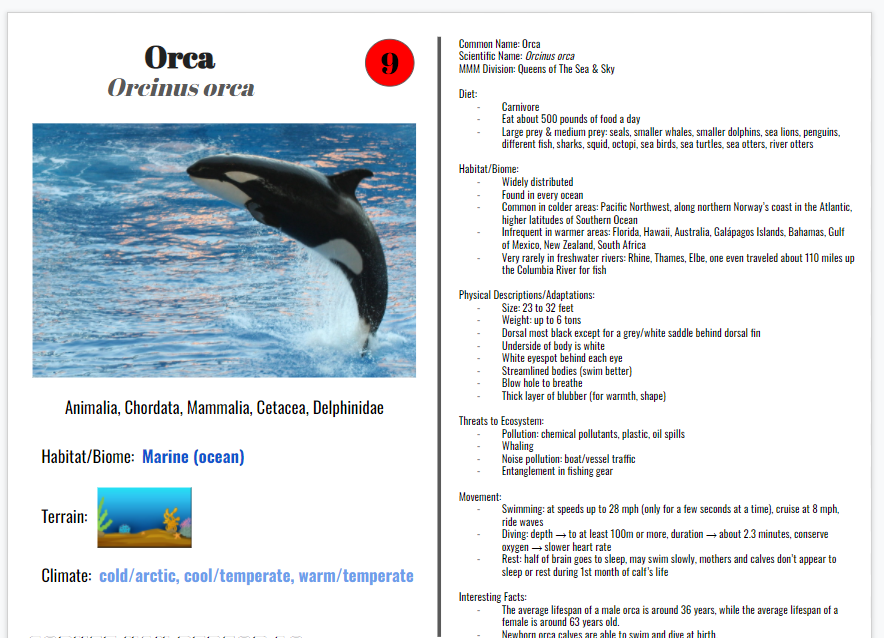
Once the creatures selected for the annual competition are announced in late February, participants of all ages and academic backgrounds can visit the site to locate a range of accurate and up-to-date information about each species. At Ingomar Middle School, Christian’s students used the site as an aid in creating a series of Animal Research Trading Cards for all 65 of this year’s combatants. In seventh grade classes, online research of some combatants, including black bear, grizzly bear, coyote, mountain lion, and beaver, was bolstered by firsthand examination of mammal skulls borrowed from the CMNH Educator Loan Collection.   

Playing card with the image of an orca and the following text: Orca Orcinus orca
Common Name: Orca Scientific Name: Orcinus orca MMM Division: Queens of The Sea & Sky
Diet:
Carnivore Eat about 500 pounds of food a day Large prey & medium prey: seals, smaller whales, smaller dolphins, sea lions, penguins, different fish, sharks, squid, octopi, sea birds, sea turtles, sea otters, river otters
Habitat/Biome:
Widely distributed Found in every ocean Common in colder areas: Pacific Northwest, along northern Norway's coast in the Atlantic, higher latitudes of Southern Ocean Infrequent in warmer areas: Florida, Hawaii, Australia, Galápagos Islands, Bahamas, Gulf of Mexico, New Zealand, South Africa Very rarely in freshwater rivers: Rhine, Thames, Elbe, one even traveled about 110 miles up the Columbia River for fish
Physical Descriptions/Adaptations:
Size: 23 to 32 feet Weight: up to 6 tons Dorsal most black except for a grey/white saddle behind dorsal fin Underside of body is white White eyespot behind each eye Streamlined bodies (swim better) Blow hole to breathe Thick layer of blubber (for warmth, shape)
Animalia, Chordata, Mammalia, Cetacea, Delphinidae
Habitat/Biome: Marine (ocean)
Threats to Ecosystem:
Pollution: chemical pollutants, plastic, oil spills Whaling Noise pollution: boat/vessel traffic Entanglement in fishing gear
Terrain:
Movement:
Swimming: at speeds up to 28 mph (only for a few seconds at a time), cruise at 8 mph, ride waves Diving: depth to at least 100m or more, duration about 2-3 minutes, conserve oxygen slower heart rate Rest: half of brain goes to sleep, may swim slowly, mothers and calves don't appear to sleep or rest during 1st month of calf's life
Climate: cold/arctic, cool/temperate, warm/temperate
Interesting Facts:
The average lifespan of a male orca is around 36 years, while the average lifespan of a female is around 63 years old. Newborn calves are able to swim and dive at birth
Orca Animal Research Trading Card

In summarizing his own recently completed bracket, Christian provides an example of an epic pinnacle encounter. “I went with the Alaska theme in picking Grizzly vs Orca, with Orca for the win! #TeamOrca.” Lest a battle example featuring two top-of-the-food-web predators gives a distorted view of the sound and fury of theoretical matches, this information from the “Frequently Asked Questions” section of the tournament website reminds participants that some matches wouldn’t make for good television:

The battles are NOT always “nature, red in tooth and claw.” Sometimes the winner “wins” by displacing the other at a feeding location, sometimes a powerful animal doesn’t attack because it is not motivated to.

Evidence that this year’s bracket has created middle school-level excitement among the scientists and educators at Carnegie Museum of Natural History arrived in a recent email reminder Curator of Mammals John Wible sent to colleagues participating in this year’s event:

Now in case you were befuddled by some of the common names used in the brackets (e.g., therapsid or pangolin) I have attached a listing of all the taxonomic names for the combatants. So for example, there are 8 species of pangolins and which one is the pangolin here . . . Smutsia gigantea, the giant pangolin from Africa.

In the first two rounds, I remind you that the location of the battle is in the home habitat of the higher seeded (with the lower number!) combatant. From round 3 on, there is one of four random environments for the battles announced before the battle.

Providing greater public insight into how scientists think about the world we all share is in fact one of the broader impacts of March Mammal Madness. Last year, in a research paper documenting the event’s development, reach, and benefits, the creative team responsible for March Mammal Madness offered this insight:

Scientists situate ourselves in the domain of data collection framed by hypotheses and predictions as we speculate about the world(s) around us. But fundamentally these are just grown-up words for ideas hewn from imagination and the creative combination of what is known to journey into the unknown. March Mammal Madness is collective, “performance science” – the stories of animals, told creatively with awe for the natural world. We celebrate species and the ecosystems they inhabit, the scientists who conduct studies, and the funders who make the research possible.  (https://elifesciences.org/articles/65066#s7)

As the March Mammal Madness tournament progresses, you’ll be able to follow some commentary from CMNH scientists and educators on Twitter @CarnegieMNH.

Teachers who would like to follow the overall tournament may also want to use #2022MMMk12 with their students for a more student-friendly twitter feed.

Patrick McShea works in the Education and Visitor Experience department of Carnegie Museum of Natural History. Museum employees are encouraged to blog about their unique experiences and knowledge gained from working at the museum.

Related Content

World Pangolin Day

March Mammal Madness 2019

Don’t Overlook the Lichens

Carnegie Museum of Natural History Blog Citation Information

Blog author: McShea, Patrick
Publication date: March 10, 2022

Share this post!

  • Share on Twitter Share on Twitter
  • Share on Facebook Share on Facebook
  • Share on Pinterest Share on Pinterest
  • Share on LinkedIn Share on LinkedIn
  • Share on Reddit Share on Reddit
  • Share via Email Share via Email

Filed Under: Blog Tagged With: Education, mammals, Pat McShea

November 4, 2021 by Erin Southerland

Pitt Outreach Efforts Enriched with Museum Materials

by Patrick McShea
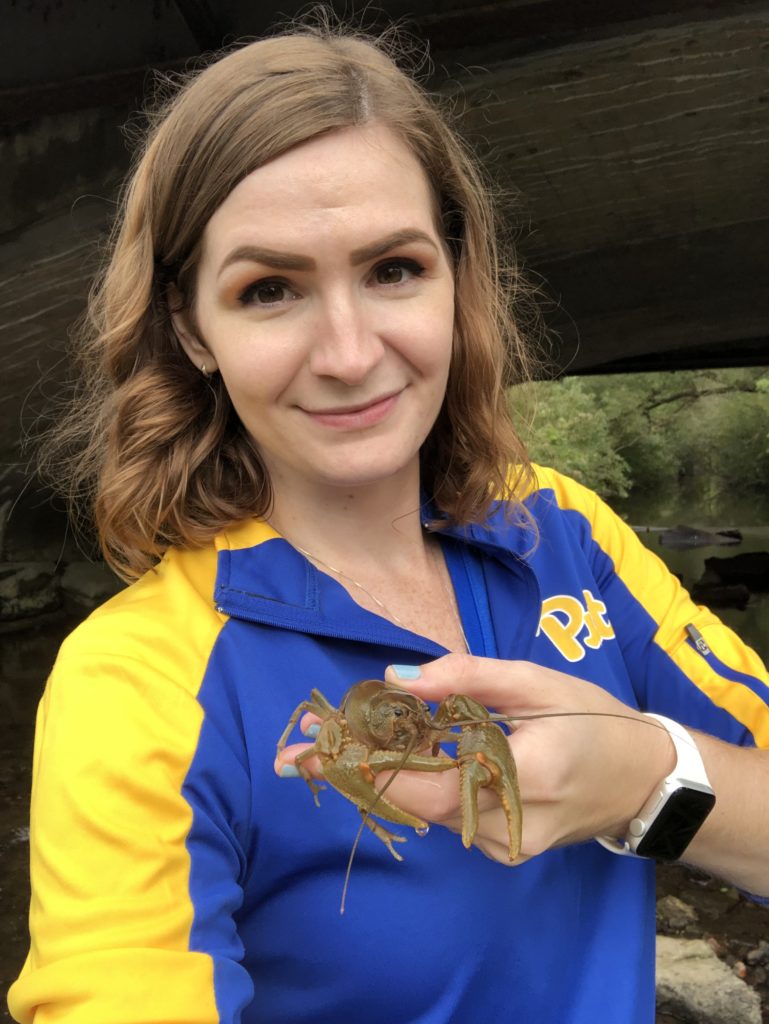
person outside holding a crawfish
Audrey Sykes

At the University of Pittsburgh’s Community Engagement Centers in the Hill District and Homewood, the field of natural history has been well represented in this year’s children’s programming because of the knowledge and enthusiasm of graduate student Audrey Sykes. While she pursues a Doctor of Education degree in Out of School Learning, Audrey also serves as Outreach Coordinator for the university’s Department of Biological Sciences. In that capacity she has repeatedly set-up shop on Saturday mornings in classroom or lab space at the Blakey Center, on Wylie Avenue, for programs broadly billed as a “STEAM Science Saturday” series for topical connections to science, technology, engineering, art, and math.

“The goal of Pitt Biology outreach is to help students further explore concepts taught in the classroom in their own neighborhood,” Audrey explains, “and most of my programs do that through bringing nature into the classroom.” Her programs are designed for students in third through fifth grade, and group sizes have varied from six to more than one hundred students. 

The West Liberty University graduate regularly utilizes materials from the museum’s Educator Loan Collection. She credits the authentic objects with “creating learning opportunities,” and her emailed requests to borrow materials often telegraph program plans. A question, months back, about the availability of a set of mammal skulls representing a carnivore, an herbivore, and an omnivore, indicated an upcoming hands-on investigation connecting tooth structure to diet. Likewise, a more recent request for wildlife-related objects to represent “seasonal cycles, nocturnal adaptations, and harvests” foretold fall programs designed to prime students to notice far more about late October than just Halloween decorations.

In considering how she coordinates her own schoolwork with the steady pace of outreach programs, Audrey concludes, “Everything I’m learning is immediately put into practice in the Outreach Program. Choosing the EdD program is one of the best decisions of my life.” Her dissertation project involves the ongoing development, evaluation, and modification of an aquatic eco-systems curriculum, titled Scales to Tails, at four rural high schools in Erie and Crawford County. Recently secured grant funding will enable an elementary version of the curriculum to also be developed. This will be received as good news by some of the participants in the STEAM Series programs at Blakey Center. Under Audrey’s guidance they’ve already tested some of the key activities.

Patrick McShea works in the Education and Visitor Experience department of Carnegie Museum of Natural History. Museum employees are encouraged to blog about their unique experiences and knowledge gained from working at the museum.

Related Content

Teaching in the Parks

Changing Seats in Changing Times

Rising Through the Educator Ranks

Carnegie Museum of Natural History Blog Citation Information

Blog author: McShea, Patrick
Publication date: November 4, 2021

Share this post!

  • Share on Twitter Share on Twitter
  • Share on Facebook Share on Facebook
  • Share on Pinterest Share on Pinterest
  • Share on LinkedIn Share on LinkedIn
  • Share on Reddit Share on Reddit
  • Share via Email Share via Email

Filed Under: Blog Tagged With: Education, Pat McShea, Pittsburgh

August 12, 2021 by wpengine

Survival of the Fishiest: Astonishing Adaptations of the Aquatic World

by Shelby Wyzykowski

For Charles Darwin, all sorts of species—from birds and large land animals to flowers and tiny invertebrates—captured his interest and encouraged him to explore the great diversity of life. After years of observation and research, he published his famous book On the Origin of Species in 1859. In it, he presented his revolutionary and controversial theory of natural selection, which is also commonly referred to as “survival of the fittest.” His theory suggested that individuals of a species are more likely to survive when they inherit traits from their parents that are best suited for their specific environment. Essentially, beneficial adaptations give an organism the greatest chance to live and carry on its genetic line. This well-known theory is in part rooted in Darwin’s early experiences with and on the ocean. In 1831, he embarked on a five-year journey on the HMS Beagle, serving as their on-board naturalist. As the crew surveyed and mapped the South American coastline, Darwin marveled at the wonder and beauty of the sea, observing and collecting surface plankton as well as theorizing how coral reefs form. Unfortunately, with no photography and limited technology, studying ocean life was difficult even in shallow water. So, in Darwin’s time, little if anything was known about life far beneath the waves. But if he were alive now, Darwin would no doubt delight in all of the incredible underwater discoveries that have been made by modern-day science. And he would more than likely be awestruck by the many amazing adaptations that sea animals employ to survive.

Aquatic Adaptations: Antarctica

Icebergs on a stormy day.
Image by Andrea Spallanzani from Pixabay.

When one thinks of an environment in which adaptation is of the utmost necessity, Antarctica may be the first spot that comes to mind. The Southern Ocean, which encircles Antarctica, is an unforgiving and inhospitable place to live. Rotating currents almost completely isolate these waters from the rest of the Earth’s much warmer seas. This keeps temperatures low…it can drop to 28.6 degrees Fahrenheit in the winter! To combat the cold, Antarctic icefish produce and carry special antifreeze proteins in their blood and body fluids. These proteins bind to ice crystals, dividing their crystalline structures and therefore inhibiting crystal growth. Without this antifreeze, microscopic ice crystals would form in their bodies, severing nerves and damaging tissues to a deadly degree. It’s an incredible adaptation, but it did not happen quickly. About 25 million years ago, the Southern Ocean, flowing around the isolated Antarctic continent, began to cool. Aquatic life in this area had to evolve the special antifreeze proteins, find some other way to adapt to the cold, or go extinct. Today, thanks to their special cold-water adaptation, icefish make up more than 90 percent of all fish species in the Antarctic!

Aquatic Adaptations: Mariana Trench

But Antarctica is not the only harsh environment that demands extreme adaptations. You’d be hard-pressed to find living conditions that are more punishing and severe than in the Mariana Trench. Located in the western Pacific, it is considered to be the deepest part of the ocean anywhere on Earth. Near the trench’s bottom, the lunar-like landscape is pitch-black, and the pressure of the freezing cold waters would instantly kill any land animal. But, amazingly, sea animals have found remarkable ways to thrive.

In most places in the trench, the temperatures are between 34 and 39 degrees Fahrenheit. This extreme cold would not be good for most animals’ bodies because it would damage their cell membranes. These membranes are of a fatty consistency and must stay liquid to function properly. The Mariana Trench’s frigid temperatures would make the fat in a land creature’s cell membranes solid like butter. But deep-sea animals have evolved in a unique way that enables them to avoid such a chilly catastrophe. They have lots of unsaturated fats in their membranes, and these kinds of fats remain liquid at low temperatures and keep their membranes loose and intact.

Besides the bone-chilling temperatures, these aquatic creatures must contend with the pulverizing pressure. Extreme pressure can have a devastating effect on a body’s proteins (these are the molecules that do much of the work in a cell). To keep their proteins healthy and working well, sea life collect tiny organic molecules called piezolytes in their cells. These piezolytes prevent water from distorting and damaging the proteins. The deeper in the ocean an animal lives, the more piezolytes they need to have in their cells. One type of piezolyte, called TMAO (Trimethlyamine-oxide), gives fish their “fishy” taste and smell. Since TMAO increases with depth, being “fishier” is crucial for survival in the deep-ocean environment!

But food is also crucial for the survival of any organism; how is it possible to hunt in a world of darkness? Sea life have found many ways to deal with the lack of light. The stout blacksmelt, for example, has giant eyes that can capture the faintest glimmer of fleeting prey. The tripod fish has such unreliable vision that it mainly relies on sensors in its pectoral fins to detect the movement of a potential meal. And the anglerfish actually emits its own light by a process known as bioluminescence. The light from their built-in “headlight” will actually attract the prey to them!

Aquatic Adaptations Near the Ocean’s Surface

Marine life that live a bit closer to the ocean’s surface have also developed ingenious ways to search for food. The Great White Shark could very well be thought of as the bloodhound of the sea. Its sense of smell is so good that it can detect one drop of blood in ten billion drops of water! But, if the prey is close enough, it need not spill one drop of blood for the Great White to detect its presence. This is because these sharks are experts in electroreception, which is the ability to detect weak electric fields in water. Unlike in air, the ability to conduct electricity in water is extremely easy. This scientific fact allows many underwater species, including Great Whites, to sense the weak electrical fields of biological sources (such as their prey). These sharks are known to react to charges of one millionth of a volt (for reference, a tiny AA battery has a mere 1.5 volts of stored energy). This acute sensitivity to electrical fields can be traced to electroreceptors in the shark’s skin. Pore openings peppered over its head receive minute electrical signals from the water and channel these signals into tubes of highly-conductive gel. Each tube ends in a bulb known as an ampulla of Lorenzini. Sensory nerves are activated in the ampulla and send the message to the shark’s brain. Their electrosensitivity is so precise that they can detect prey hiding in the sand bottom!

With such an extraordinary adaptation, Great Whites can be a formidable and terrifying predator. But sometimes even the hunter can become the hunted. If a Great White is foolish enough to go after a sick or young Bottlenose Dolphin, they might find themselves biting off more than they can chew. Living in groups called pods, dolphins have tightly-knit family groups with complex social structures. They actually have their own cultures and display positive cultural behaviors such as compassion and cooperation. So when one member of a pod is targeted as prey, the others will come to its defense and work in a coordinated effort to combat the Great White. They’ll surround the shark and attack it relentlessly. Some use their sturdy, bony snouts like battering rams and slam into the shark’s underbelly and gills, causing massive internal injuries. If the shark is lucky enough, it can make a quick escape, but pods have been known to actually kill sharks. These incidents involving selflessness and cooperation have also crossed the species barrier from time to time when pods of altruistic dolphins have come to the rescue of humans in distress. There have been many reported cases of dolphins encircling and protecting swimmers as they work to successfully fend off a shark’s persistent advances.

The altruistic and cooperative behaviors of dolphins are adaptations that exemplify the true meaning of Charles Darwin’s theory of natural selection. Believing that compassion was the key to evolutionary success, Darwin was in fact frustrated with the way many readers misinterpreted the phrase “survival of the fittest” (a term that he himself did not even coin…biologist Herbert Spencer did so in 1864). This phrase implies the use of selfishness, ruthlessness, and callousness to ensure survival. There’s certainly no denying that these actions have definitely played a part in evolution and in the realities of life. But Darwin chose to believe that sympathy, benevolence, and cooperation played even greater roles in the survival, flourishing, and evolution of a species. In the end, it’s the positive adaptive traits that determine as well as define the overall success of life on Earth.

Shelby Wyzykowski is a Gallery Experience Presenter in CMNH’s Life Long Learning Department. Museum staff, volunteers, and interns are encouraged to blog about their unique experiences and knowledge gained from working at the museum.

Related Content

Super Science Saturday: Splish Splash (August 14, 2021)

D is for Dugong

The Strange Saga of Spinosaurus, the Semiaquatic Dinosaurian Superpredator

Carnegie Museum of Natural History Blog Citation Information

Blog author: Wyzykowski, Shelby
Publication date: August 12, 2021

Share this post!

  • Share on Twitter Share on Twitter
  • Share on Facebook Share on Facebook
  • Share on Pinterest Share on Pinterest
  • Share on LinkedIn Share on LinkedIn
  • Share on Reddit Share on Reddit
  • Share via Email Share via Email

Share this post!

  • Share on Twitter Share on Twitter
  • Share on Facebook Share on Facebook
  • Share on Pinterest Share on Pinterest
  • Share on LinkedIn Share on LinkedIn
  • Share on Reddit Share on Reddit
  • Share via Email Share via Email

Filed Under: Blog Tagged With: Education, Shelby Wyzykowski, ssssplash

  • « Go to Previous Page
  • Page 1
  • Page 2
  • Page 3
  • Page 4
  • Page 5
  • Page 6
  • Interim pages omitted …
  • Page 15
  • Go to Next Page »

sidebar

About

  • Mission & Commitments
  • Directors Team
  • Museum History

Get Involved

  • Volunteer
  • Membership
  • Carnegie Discoverers
  • Donate
  • Employment
  • Events

Bring a Group

  • Groups of 10 or More
  • Birthday Parties at the Museum
  • Field Trips

Powdermill

  • Powdermill Nature Reserve
  • Powdermill Field Trips
  • Powdermill Staff
  • Research at Powdermill

More Information

  • Image Permission Requests
  • Science Stories
  • Accessibility
  • Shopping Cart
  • Contact
  • Visitor Policies
One of the Four Carnegie Museums | © Carnegie Institute | Privacy Policy | Terms of Use | Accessibility
Rad works here logo