• Skip to primary navigation
  • Skip to main content
  • Skip to primary sidebar

Carnegie Museum of Natural History

One of the Four Carnegie Museums of Pittsburgh

  • Visit
    • Buy Tickets
    • Visitor Information
    • Exhibitions
    • Events
    • Dining at the Museum
    • Celebrate at the Museum
    • Powdermill Nature Reserve
    • Event Venue Rental
  • Learn
    • Field Trips
    • Educator Information
    • Programs at the Museum
    • Bring the Museum to You
    • Guided Programs FAQ
    • Programs Online
    • Climate and Rural Systems Partnership
  • Research
    • Scientific Sections
    • Science Stories
    • Science Videos
    • Senior Science & Research Staff
    • Museum Library
    • Science Seminars
    • Scientific Publications
    • Specimen and Artifact Identification
  • About
    • Mission & Commitments
    • Directors Team
    • Museum History
  • Tickets
  • Give
  • Shop

Education

September 18, 2020 by wpengine

Western Bird, Eastern Waters

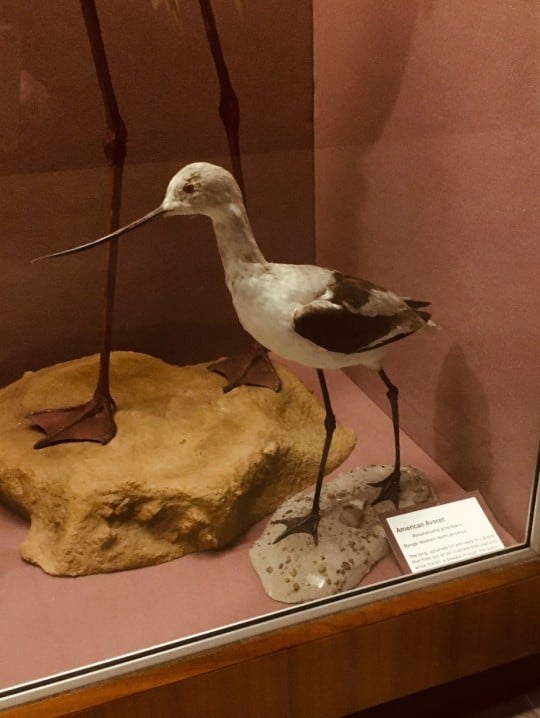
avocet taxidermy mount

If you enter Bird Hall from the Grand Staircase Balcony, the first taxidermy mount you’ll encounter is an American Avocet, an elegant species commonly associated with the shallow margins of western lakes. The life-like preserved remains of the 20-inch high, long-legged, and long-billed bird occupy the lower-right position within a display case visually dominated by a flamingo. “Adaptations for Feeding” is the comparative theme for the display’s six preserved birds, a select group the Avocet earned membership among by virtue of its long, reed-thin, and slightly up-turned bill.

The species, known to science as Recurvirostra Americana, feeds by swinging its bill scythe-like through the water to capture small invertebrates. Remarkably, on a recent evening, I was able to observe an Avocet demonstrate the technique in waters less than three miles from the museum.

American Avocet (lower left) downstream from boats moored at the South Side Marina. Credit: Amy Henrici.

On July 24, a local birder used an online forum to share a lunchtime sighting of an avocet in the shallow waters of Monongahela River near the Birmingham Bridge. The report enabled other birders to make quick plans for riverside visits, and by 7:00 p.m. I was among a handful of binocular-bearing observers who watched the bird for 30 minutes from a South Side path before it flew upstream and out of sight.

American Avocet in Monongahela waters. Credit: Amy Henrici.

In the following days I tried to retroactively enrich the firsthand observation. I read the American Avocet account on the Cornell Lab of Ornithology’s informative All About Birds website, re-read relevant passages in The Wind Birds, author Peter Matthiessen’s 1967 tribute to the diverse tribe of species collectively termed “shore birds,” and finally, made a narrowly-focused visit to Bird Hall.

Kneeling on the marble floor in front of the avocet, I was able to inspect a key physical feature that days earlier had been concealed by murky Monongahela waters – the species’ fully webbed feet. Studying anatomical details on taxidermy mounts can enhance field observations of wildlife. This statement can be something of a mantra for natural history museum educators.

Patrick McShea works in the Education and Visitor Experience department of Carnegie Museum of Natural History. Museum employees are encouraged to blog about their unique experiences and knowledge gained from working at the museum.

Related Content

Canada Goose

Teaching in a Changed World

Live Animal Encounter Practice with Mango the Sun Conure

Filed Under: Blog Tagged With: Education, Educators, Hall of Birds, Museum from Home, Pat McShea, Patrick McShea

September 4, 2020 by wpengine

Teaching in a Changed World

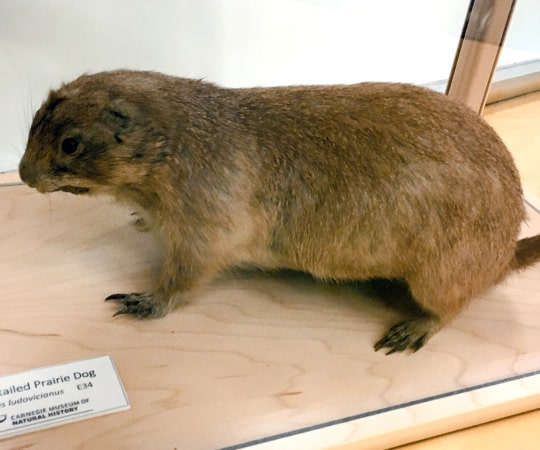
prairie dog taxidermy mount

For several years Leslie Vandegrift has used materials from the Educator Loan Collection to enhance reading lessons for kindergarten through third grade students. As the librarian for West Hills Primary School in the Armstrong School District, she’s put authentic objects to use in building vocabulary, sparking curiosity about the ideas conveyed through ever longer strands of words and sentences, and promoting the reading of all kinds of books. In the library of West Hills Primary, materials from the museum illustrating topics ranging from nocturnal animals to the wildlife discoveries of the Lewis and Clark Expeditions have helped diminish the 44 highway miles separating the two buildings.

When reached by phone a dozen days before the start of in-person classes, the 24 year veteran educator expressed concern about how the school year would proceed and whether her library could function as it did in the past. As she summarized, “The most challenging part of this new normal, is that the students will be unable to check out books for at least the first semester of school.  There is zero sharing of materials in our school building in order to keep our students as safe as possible.  It’s disheartening to engage students in new topic areas and authors, but not be able to allow them to pursue it independently.”   Student well-being was her utmost priority, and she expressed pride in knowing that was also the case for every one of her co-workers.

If the spread of COVID-19 pushes her school to on-line instruction, Leslie expressed confidence that the transition would be far smoother than what occurred across the country back in mid-March. Days of in-service training in August were devoted to mastering the intricacies and capabilities of a digital learning management platform called “Canvas,” and the first order of business after the opening day of school will be getting the students comfortable interacting with the electronic interface.

Leslie’s description of the learning platform’s flexibility leads me to remind more teachers about the Educator Loan Program’s continued importance as a resource. Materials can be borrowed to create digital products. Cell phone still images or brief videos of authentic objects can improve lessons presented on learning platforms. Your productions don’t have to meet the standards of the library displays at West Hill Primary School for learning to occur.

Patrick McShea works in the Education and Visitor Experience department of Carnegie Museum of Natural History. Museum employees are encouraged to blog about their unique experiences and knowledge gained from working at the museum.
Related Content

Cats: The Original Social Distancers

First-ever American Malacological Society Virtual Meeting

CMNH Hosts Science Bowl

Filed Under: Blog Tagged With: Education, Educator Loan Program, Educator Resources, Educators, Pat McShea, Patrick McShea

August 7, 2020 by wpengine

Cat Chat 101: The Basics of Domestic and Wild Vocalizations

Whether they are greeting you at the door, asking for a meal, or letting you know you’re interrupting their fifteenth nap of the day, most cats have no qualms about speaking up and telling you how they feel.  But, when it comes to vocalizing, your pet actually has more in common with their wild relatives than you may realize.

The way all cat species communicate is different than the methods used by humans; yet the ways they vocalize are effective and deeply significant to each other.  Vocalizing helps cats in a variety of ways—from social bonding, to showing off, and even for self-defense. Here are some of the main methods of communication of both wild and domestic cats:

Roaring and Purring

For the most part, big cats (lions, tigers, leopards, and jaguars) can roar, but they can’t purr.  Cougars and smaller cats (bobcats, ocelots, lynxes, and house cats, among others) can purr, but they can’t roar.

Purring is possible because of tightly connected links of delicate bones that run from the back of a small cat’s tongue up to the base of the skull. When a cat vibrates its larynx, or voice box, it sets the twig-like, bones called hyoid bones to resonating. The hyoid is a U-shaped bone directly above the thyroid cartilage; also known as an Adam’s Apple in humans. No one knows for sure why smaller cat species developed this ability, but one theory is that a mother’s purr helps to camouflage the mewing of her nursing kittens—thus avoiding the attention of possible predators.  If you listen to your own cat carefully, you will notice that their purr is one continuous sound that they make while breathing both in and out.

When it comes to big cats and roaring, a length of tough cartilage runs up the hyoid bones to the skull.  This tough cartilage prevents purring but gives the larynx enough flexibility to produce a full-throated, terrifying roar.  In the case of lions, their roar can easily be heard and “felt” up to five miles away—their deep roar is loud enough to almost reach a human’s pain threshold if they’re standing nearby.  Although they can’t purr, lions do have the equivalent (or, in the case of some other big cats, the equivalent of a chuff. But more on chuffing later).  Instead of purring, older lions will lowly moan and groan when socially bonding with one another, sometimes trying to drown each other out with their sounds.

Tigers are capable of roaring, but their roar sounds more like an impressively loud growl; a “growl” that can carry for almost two miles.  A tiger’s roar can serve multiple purposes.  It can be used as a warning to other tigers in their territory or serve as an invitation to potential mates.

Cheetahs are unique when it comes to vocalizations; they purr instead of roar and are in a special cat-category all their own; this is mainly because they can’t completely retract their claws like all other cats.  Instead of roaring, they emit a high-pitched sound similar to a canary’s chirp. Cheetahs chirp when they are in distress, want to attract a mate (in the case of females), and when they need to locate each other.

Growling and Hissing

If you have multiple cats in your household, then there is no doubt you have probably heard your fair share of growling and hissing.  All cats, both big and small, growl and hiss to some degree.  Whether wild or tame, it’s easy to understand the meaning of these two sounds; the cat is not a happy camper.  A growl is a raspy, guttural sound that is produced by pushing air through the cat’s vocal chords. Cats growl when they feel threatened (either by another cat or another animal), when they want to tell a pride member to back off, or to claim possession over something like dinner.  If the message hasn’t quite been received, hissing usually follows.  A hiss is created when a cat forces a short burst of air out through its arched tongue.  Some feline experts believe that cats may have developed this defensive habit by imitating snakes; mimicking another species is a survival tactic among many animals.  Hissing is primarily used as a last resort before a full-blown attack.  But this serpent-like sound can also serve other purposes, such as establishing dominance in a hierarchy or intimidating a prey animal.

Chuffing

Tigers, Jaguars, Snow Leopards, and Clouded Leopards chuff. Chuffing—also called prusten—is the equivalent of a domestic cat’s purr.  It is a low-intensity sound that a big cat will emit in short, loud bursts. To vocalize a chuff, air is blown through the nostrils while the mouth is closed, producing a breathy snort. It is typically accompanied by a head bobbing movement. It is often used between two cats as a greeting, during courting, or by a mother comforting her cubs.  Chuffing is always used as a non-aggressive signal and helps to strengthen social bonds.

Meowing

Surprisingly, meowing is not expressly reserved for domestic cats. Snow Leopards, Lion cubs, Cougars, and Cheetahs also meow. Meowing can be used to locate each other or simply a request for food or affection.

If there is more than one cat in your home, you may have noticed that domestic cats never meow at each other.  House cats use meowing as form of communication with humans and no one else (you lucky human, to have such an honor bestowed upon you).

Just in case you may be new to cat ownership and are not quite sure what your cat is trying to tell you, here is a quick cat-to-human language lesson:

·      Short meow—short and high-pitched, this just means “Hi!”

·      Multiple meows—can be a sign your cat is happy to see you or wants attention.

·      Mild-pitch meow—usually a request such as “Can I please have some food…pretty please?”

·      Drawn-out, mild-pitched “mrroooow”—is more of a demand or an early warning of aggression/fear.

·      Drawn out, low-pitch “MRRRooowww”—usually a complaint but, can also signal heightened aggression/fear. If agitated for much longer, the cat may lash out.

·      High-pitched, loud “RRRROWW!”—is reserved for pain or maximum aggression. In this state, a cat is most likely to lash out at whatever is causing the agitation, fear, or pain.

It’s never much fun in any household when, for whatever reason, your cat(s) work themselves up into such a state that you hear hissing and yowling as the fur flies.  But, when all the feline drama is over and done with and your cats have relaxed and returned to contentedly purring, appreciate the fact they took a little time to get in touch with their wild side.

Shelby Wyzykowski is a Gallery Presenter in CMNH’s Life Long Learning Department. Museum staff, volunteers, and interns are encouraged to blog about their unique experiences and knowledge gained from working at the museum.

Related Content

Cat Adoption Guide

Meowfest: DIY Cat Toy

Meowfest: Cat Whisker Activity

Filed Under: Blog Tagged With: Education, Educators, Museum from Home, Shelby Wyzykowski, Super Science Days, Super Science Meowfest

August 6, 2020 by wpengine

Cat Adoption Guide

Adding a new feline friend to your household is a process that can be both exciting and scary, especially for first-time cat owners and even the cats themselves. With so many things to consider, it can feel as though a million things could go wrong. Thankfully, there are many things you can do to make the transition as smooth as possible!

Part 1 — Before

In every case, the best way to ensure a new pet adoption goes smoothly is to prepare beforehand. If you are considering getting a cat, there are a few things you should ask yourself first:

1.     Am I ready to be responsible? While a new animal is always very exciting, remember that there is more to pet ownership than having a cuddly companion. It costs money to care for a pet its whole life; food, toys, litter, and veterinarian visits can add up. Caring for a pet, especially when you first bring them home, also takes time to ensure the transition runs smoothly. Do you have room in your budget and schedule for pet care? If you adopt a cat with special needs, will you be able to provide specific care for them?

2.     Will this addition go over well? Make sure all members of your household—including other pets—can handle the change!

3.     What do I know about caring for a cat? If you are going to be a first-time cat owner, take some time to read online about the sort of care your new friend will need. Take time to research what different needs cats may have— adopting a kitten can be different than adopting an adult or senior cat. Cats with special needs may also require different sorts of care.

Once you’ve determined that cat ownership is right for you, you can begin to prepare your home and search for your new friend! Here are a few things you can do before you bring your cat home to make the process more comfortable:

Figure out your space. Determine where you can put things like litter boxes, food, and beds. If you have other pets, make sure you can set aside a room away from them for your new cat to spend time in for the first few days. Make sure the area has enough space for their litter box, food (which should be placed away from the litter box), and areas for your new friend to hide in so that they feel safe and secure.

Determine your game plan. Who will be there when you bring your new cat home? If you have small children, it is always a good idea to remind them that your cat may need their own space for a few days before they want to come out and play. If you are a first-time pet owner, or if you’ve moved to a new area, make sure to do some research beforehand to choose what veterinarian in your area you plan to go to with your cat, and be prepared to make an appointment for soon after you have adopted your cat.

“Kitty-Proof” your home. On the day you know you will be bringing your furry friend home, make sure the area you plan to let them adjust in has no open windows, dangling or exposed electrical cords, dangerous chemicals, or delicate objects.

Part 2 — During

Remember when choosing your new family member that all cats have different personalities and needs. Are you prepared to care for a kitten, or would an adult or senior cat be a better fit for your family? Are you able to properly care for a cat with special needs? Are you looking for a cat who doesn’t mind sharing their home with other pets or children, or are you looking for just one pet?

Make sure when you’re adopting your cat that you communicate these things to the people or group you are adopting from. Often, these groups have a great understanding of their cats and can help to match you with an ideal companion. It is also important that you know the medical history of your new cat— are they spayed or neutered? Do they need to take medication? What is their vaccination history? The place you are adopting from may also be able to tell you what sort of food and treats your cat likes, which can take the guesswork out of buying their diet.

Part 3 — After

This part can often be the most stressful for both people and pet; a new space, filled with new sounds and smells, can be confusing and scary for a cat. Experts often recommend doing the following:

Set up a vet visit. It is always a good idea to take your new pet to the vet about a week after their adoption. Make an appointment with the vet of your choice and be sure to take you cat’s medical records with you.

Set a schedule. Try to feed your cat at the same time every day. A routine is a good way to make your cat feel at ease in a new space. It is normal for a cat to not eat much at first, but if you notice that they have not eaten or drank for more than a few days, contact your veterinarian.

Give them their space. Remember that area you decided to set aside for your new friend? Allowing your cat to have one area of the house to get used to and feel comfortable in can lower stress for everyone involved. If you have other pets, make sure you do not introduce them to your new cat for at least the first few days. Introducing pets can take a long time; be sure not to rush the process. Additionally, allow your cat to approach you and other people within the room when they feel comfortable doing so. It is not uncommon for your furry friend to hide for a few days in a new environment until they feel more comfortable.

Establish trust. Recognizing a friendly face can make your cat feel more at ease. Sitting on the floor and allowing your cat to get used to you and your smell can build a relationship that makes them feel comfortable. Remember to always let your cat come to you; do not chase or corner them. Speak in a soothing voice and be sure to tell your new kitty how happy you are to have them in your family!

Allow them to move at their own pace. Once your kitty has begun feeling comfortable in the space you gave them, determine how to safely allow them to explore the rest of your home. Again, make sure that the spaces your cat is in are safe for them; close your windows, make sure chemicals are out of reach, and make sure your cat cannot chew on cords or access human food that could be harmful for them.

Provide Enrichment. Many cats love to play and being active is an important part of keeping your cat happy and healthy. Provide them with plenty of toys that they can bat around, chew, pounce on, and scratch. Over time, you may start to notice which toys your cat likes best. Play time is also a good time to build a relationship with your cat— just remember not to overwhelm them. Crafting home-made toys for your cat can also be a great family activity, but remember to always use materials that are safe for a cat to play with. Many websites offer free tutorials on how to make great cat toys!

Remember that patience and respecting boundaries are two key things to ensure your new family member adjusts well to your household. Giving your cat the opportunity to take things at their own pace removes a lot of the stress that the both of you may feel. Planning ahead to make sure your cat receives quality care means that they can enjoy their new forever home to the fullest!

Emma McGeary is a Gallery Experience Presenter as well as an Outreach Educator and Animal Handler in CMNH’s Life Long Learning Department. Museum staff, volunteers, and interns are encouraged to blog about their unique experiences and knowledge gained from working at the museum.
Related Content

Meowfest: Cat Whisker Activity

Meowfest: Sabertooth Tiger

Big Cats, Big Personalities

Filed Under: Blog Tagged With: cats, Education, Educators, Emma McGeary, Museum from Home, Super Science Days, Super Science Meowfest

July 2, 2020 by wpengine

Mystery Spit

spittlebug froth on a leaf
Spittlebug froth on the stalk and leaf stem of a sneezeweed plant.

You’ve likely noticed the stuff at this time of year even if you didn’t have a ready name for it – grape-sized globs of frothy white foam on all kinds of plant stems.

The bubbles are made by the nymph stage of a large group of insects known commonly as frog hoppers, and scientifically as members of the widespread insect superfamily Cercopoidea.

Because the activity of the nymphs is so noticeable, they’ve earned their own common name – spittlebugs.

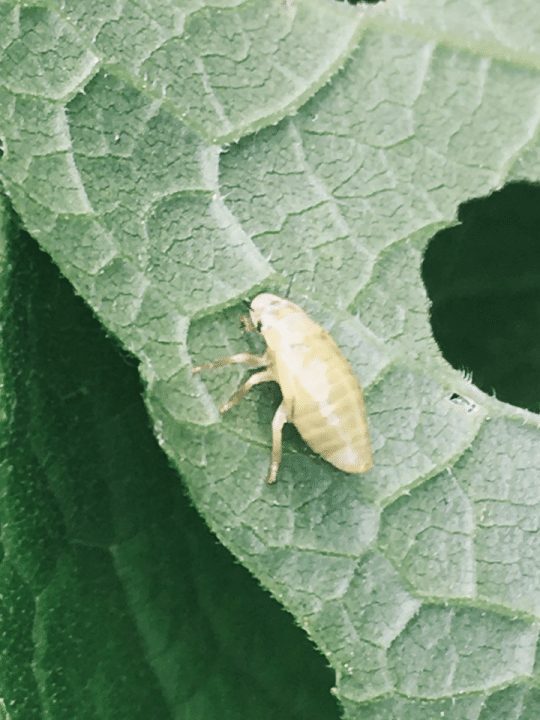
spittlebug on a leaf
A spittlebug temporarily removed from its frothy shelter.

The nymphs, which hatch in the spring from eggs laid the previous summer, are sap drinkers. They pierce plant stems to access the juices produced by the growing plant, drink deeply, and after processing vital nutrients, turn their waste stream into a protective shelter. Although spittlebug froth visually resembles spit, it contains no saliva. The bubbles are mixture of the tiny creature’s urine and a sticky fluid produced in an abdominal gland.

The frothy layer keeps the soft-bodied insects from drying out and it also serves as a predator barrier. Because spittlebugs produce urine in amounts more than 150 times their own body weight, their bubbly shelters generally offer ample protection.

Research about spittlebugs has been conducted at University of British Columbia. Information about this research, including a short video narrated by New York Times Science Writer James Gorman can be found at:  https://www.nytimes.com/2019/02/19/science/spittlebugs-bubble-home.html

Patrick McShea works in the Education and Visitor Experience department of Carnegie Museum of Natural History. Museum employees are encouraged to blog about their unique experiences and knowledge gained from working at the museum.

Related Content

Is That Snow…in June?

Fourth of July and the Firefly

Educator Spotlight: Christian Shane

Filed Under: Blog Tagged With: Education, Museum from Home, Pat McShea, Patrick McShea

June 26, 2020 by wpengine

Indiana Jones and the Rosetta Stone

Have you ever watched a film about archaeology and wondered how characters like Indiana Jones or Evelyn from The Mummy (1999) can run their fingers along a carved wall or slab, translating Egyptian hieroglyphs smoothly as they go?

The ability to read ancient Egyptian hieroglyphic writing today is all thanks to the Rosetta Stone. You may have heard of the Stone before, perhaps in the context of a popular language learning software, or you may know about the Stone itself, but do you know why it was such an incredible archaeological find?

The Rosetta Stone is a black granodiorite (similar to granite) slab standing 4 feet tall, 2 ½ feet wide, and 11 inches thick. It is part of a larger stele, a stone or wooden slab erected to commemorate occasions, act as territorial markers, or for funerary purposes. The Stone bears three blocks of text written in three different languages- Egyptian hieroglyphs, Egyptian Demotic, and Ancient Greek.

Rosetta Stone

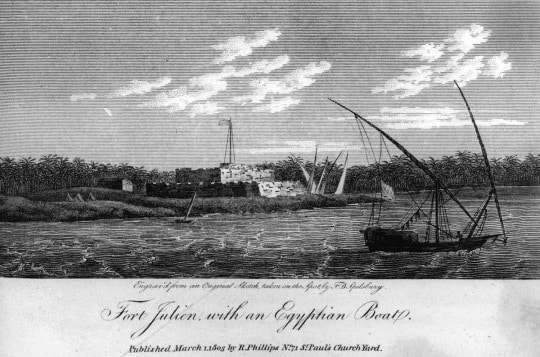
The Rosetta stone was carved during the Hellenistic period and moved at some later point. It was eventually used as construction material for a wall of Fort Julien in Rashid (or Rosetta). It was rediscovered there in 1799. While the history of its discovery is not particularly well-documented it is typically attributed to Pierre-Francis Bouchard, a French soldier on a Napoleonic campaign in Egypt. The Rosetta Stone was taken by British troops after they defeated France and transported to London. It has been on display at the British Museum since 1802.

black and white image of boat in the water

The reason the Rosetta Stone is so significant is because it was the key that unlocked our understanding of ancient Egyptian hieroglyphs, giving us a window into the ancient civilization. The text on it is pretty mundane and of no great historical significance. It is a decree (called the Decree of Memphis), outlining the achievements and good leadership of King Ptolemy, who ruled Egypt from 204-181 B.C.E. The decree was made and copied onto several stelae which were placed in temples throughout Egypt, the Rosetta Stone being just one of them. Since the discovery and eventual translation of the Rosetta Stone, several other more intact stelae inscribed with the Decree of Memphis have been found.

Ancient Greek was already well known to scholars, so the translation of that section happened fairly quickly, though unknown religious and administrative jargon delayed the process. Hubert-Pascal Ameilhon published the first translation of the Greek text in 1803. Before the discovery of the Rosetta Stone, there had been little success in translating Demotic and even less in translating hieroglyphs. Having all three languages together was an incredible resource for scholars because for the first time, they could study whether there was a direct link between the languages, and use their translation of the Ancient Greek text to translate the other languages on the stone.

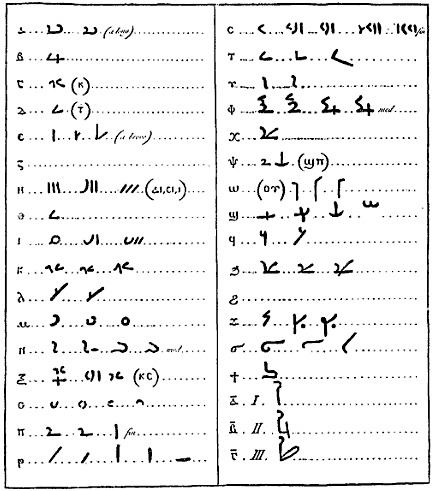
Swedish scholar Johan David Åkerblad had already been working on translating an unknown script found in Egypt. He called this script “cursive Coptic” though it did not share many similarities to Coptic, a language derived from the Greek alphabet and used in Egypt through the 17th century C.E. The language he was studying was actually Demotic, and the discovery of the Rosetta Stone aided his research. He, along with Antoine-Isaac Silvestre de Sacy, set to work translating this larger text. Having the Greek text side by side, they were able to locate where names lined up, and begin deciphering Demotic. Åkerblad proposed an alphabet of 29 letters, half of which were correct, but they failed to identify the remaining characters.

close up of the Rosetta Stone

The translation of the hieroglyphic text similarly revolved around proper names. As early as 1761, scholars believed that characters enclosed in cartouches (or ovals with a line at one end) were proper names. By sorting through the Greek text and comparing where names would most likely be Thomas Young, foreign secretary of the Royal Society of London, was able to discover phonetic characters that aligned with Greek names. This discovery was incredibly important, as Young found these phonetic characters were similar to the Demotic characters in proper names, and then further discovered about 80 other similarities between Demotic and hieroglyphic writing. This shows that Demotic is actually a mix of phonetic characters and ideograms, which is what prevented Åkerblad and Silvestre de Sacy from progressing further with their translation, they had assumed Demotic used only phonetic characters.

series of letters and symbols in various languages

In 1814, Young corresponded with Jean-François Champollion, a teacher at Grenoble who had done scholarly work on Ancient Egypt. Champollion was able to construct an alphabet of phonetic hieroglyphs, which was announced publicly on September 27th, 1822. From there, Champollion went on to develop an Ancient Egyptian grammar and hieroglyph dictionary, which was published after his death in 1832. Other scholars drew upon the work done by Åkerblad, Silvestre de Sacy, Young, and Champollion to delve deeper into the text on the Rosetta Stone and create a full translation.

Indiana Jones and the Raiders of the Lost Ark takes place more than 100 years after Champollion’s dictionary was published. We can assume that during his studies and explorations, Indy studied this dictionary, and any others that followed, giving him the ability to read Egyptian hieroglyphs at any moment. While Indiana Jones is a fictitious archaeologist and scholar, we have real scholars to thank for the fact that we can enjoy films about this character today!

Jo Tauber works in LifeLong Learning at Carnegie Museum of Natural History. Museum employees are encouraged to blog about their unique experiences and knowledge gained from working at the museum.
Filed Under: Blog Tagged With: Education, Educators, Jo Tauber, Museum from Home

  • « Go to Previous Page
  • Page 1
  • Interim pages omitted …
  • Page 6
  • Page 7
  • Page 8
  • Page 9
  • Page 10
  • Interim pages omitted …
  • Page 15
  • Go to Next Page »

sidebar

About

  • Mission & Commitments
  • Directors Team
  • Museum History

Get Involved

  • Volunteer
  • Membership
  • Carnegie Discoverers
  • Donate
  • Employment
  • Events

Bring a Group

  • Groups of 10 or More
  • Birthday Parties at the Museum
  • Field Trips

Powdermill

  • Powdermill Nature Reserve
  • Powdermill Field Trips
  • Powdermill Staff
  • Research at Powdermill

More Information

  • Image Permission Requests
  • Science Stories
  • Accessibility
  • Shopping Cart
  • Contact
  • Visitor Policies
One of the Four Carnegie Museums | © Carnegie Institute | Privacy Policy | Terms of Use | Accessibility
Rad works here logo
