• Skip to primary navigation
  • Skip to main content
  • Skip to primary sidebar

Carnegie Museum of Natural History

One of the Four Carnegie Museums of Pittsburgh

  • Visit
    • Buy Tickets
    • Visitor Information
    • Exhibitions
    • Events
    • Dining at the Museum
    • Celebrate at the Museum
    • Powdermill Nature Reserve
    • Event Venue Rental
  • Learn
    • Field Trips
    • Educator Information
    • Programs at the Museum
    • Bring the Museum to You
    • Guided Programs FAQ
    • Programs Online
    • Climate and Rural Systems Partnership
  • Research
    • Scientific Sections
    • Science Stories
    • Science Videos
    • Senior Science & Research Staff
    • Museum Library
    • Science Seminars
    • Scientific Publications
    • Specimen and Artifact Identification
  • About
    • Mission & Commitments
    • Directors Team
    • Museum History
  • Tickets
  • Give
  • Shop

Educators

September 7, 2021 by wpengine

Guiding a Local Focus On Climate Education

by Patrick McShea

During the last three days of July more than 330 educators from across the country gathered virtually to learn how to more effectively teach about a topic generating increasingly alarming headlines. The event, titled Summer Institute for Climate Change Education, operated with three principle hosts, Climate Generation, a St. Paul, Minnesota-based educational organization with a national reach, the Youth Climate Program of The Wilds Center in New York’s Adirondack State Park, and the Climate Office of NOAA, the National Oceanic and Atmospheric Administration.

On the middle day of the Institute, participants remotely joined one of a dozen sub-region programs for a more local focus on discussions, resource sharing, and reviews of potential classroom activities. Pittsburgh was the center of one such sub-region, and the host for our region’s day-long program was Katie Modic, Executive Director of a small and innovative organization known as Communitopia.
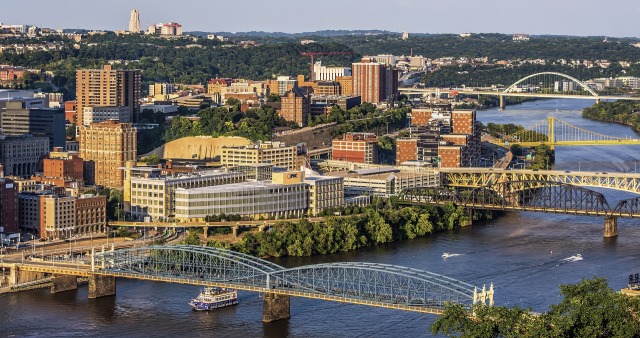
City of Pittsburgh from above showing buildings, bridges, a river, and many trees.
Image by Bruce Emmerling from Pixabay.

Communitopia is a 12-year-old organization, whose ongoing efforts to slow climate change and create healthier communities through new media and project-based campaigns have been distilled into a three-word mission statement, “Making Green Mainstream.” The 501©3 nonprofit operation is well served by the experience Katie brings to her leadership position. She is a University of Wisconsin-Madison alumni (M.S. in Education, B.A. in Spanish and Anthropology), whose work experience since graduation includes a two-year Teach for America middle school assignment along the US/Mexico border in Donna, Texas, public school teaching experience in Colorado and Florida, international teaching experience in Rotterdam, the Netherlands, and the sharing of many of her first hand learning experiences with undergraduate education students as a professor at Central College in Pella, Iowa.

In planning the day’s schedule, Katie worked with staff from both Phipps Conservatory and Botanical Gardens and Carnegie Museum of Natural History. In carrying out her role as a Zoom screen host for a territory that encompassed nearly all of Pennsylvania, she was able to direct attention to the revision of Pennsylvania’s academic standards for science as a current issue relevant in every corner of the state.

Katie’s position that the standards revision process creates an opportunity to strengthen how climate is addressed in both Science Standards and those for Environment and Ecology is outlined on Communitopia’s website. During the Summer Institute she was able to explain how her opportunity observations were largely based upon her experience in working with students at Woodland Hills High School in Pittsburgh’s eastern suburbs. When biology teacher Margeaux Everhart invited Katie to present Communitopia’ s classroom program about the local impacts of climate change, the session sparked a student-driven grassroots movement that eventually led to the Woodland Hills School District adopting a formal Climate Action Plan.

For many of the educators who participated in the Pittsburgh-based day of Summer Institute programs, watching and listening as some of those students made Zoom speaking appearances was an inspiring and empowering experience.

Patrick McShea works in the Education and Visitor Experience department of Carnegie Museum of Natural History. Museum employees are encouraged to blog about their unique experiences and knowledge gained from working at the museum.

Related Content

Expanding the Scope of Environmental Education

Getting Started: A High School Intern’s Experience in the Herp Section

Bird Architecture on Human Infrastructure

Carnegie Museum of Natural History Blog Citation Information

Blog author: McShea, Patrick
Publication date: September 7, 2021
Share this post!

  • Share on Twitter Share on Twitter
  • Share on Facebook Share on Facebook
  • Share on Pinterest Share on Pinterest
  • Share on LinkedIn Share on LinkedIn
  • Share on Reddit Share on Reddit
  • Share via Email Share via Email

Share this post!

  • Share on Twitter Share on Twitter
  • Share on Facebook Share on Facebook
  • Share on Pinterest Share on Pinterest
  • Share on LinkedIn Share on LinkedIn
  • Share on Reddit Share on Reddit
  • Share via Email Share via Email

Filed Under: Blog Tagged With: Educator Resources, Educators, Pat McShea, We Are Nature 2

August 4, 2021 by wpengine

Rising through the Educator Ranks

by Patrick McShea

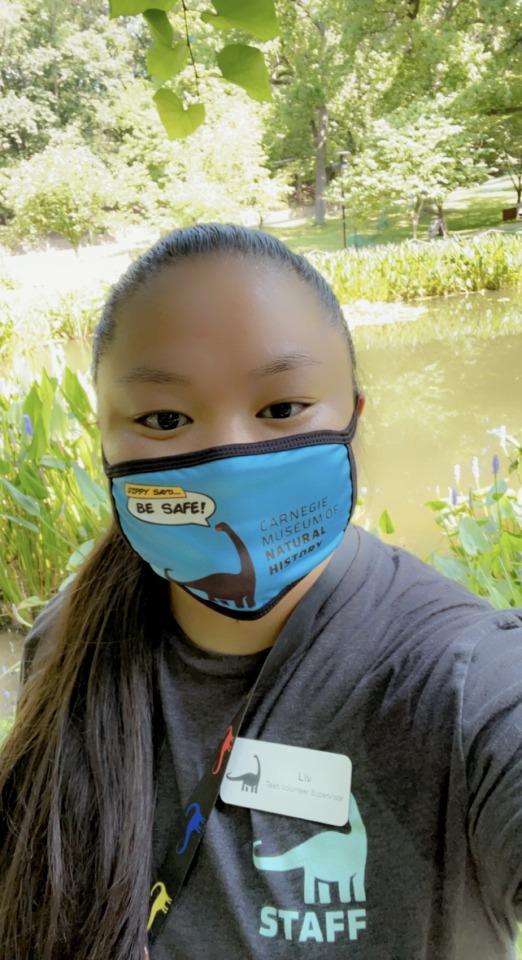
Woman wearing a mask and t-shirt with dinosaurs on them.
Olivia McNulty (Liv)

Every morning, as young participants in the museum’s summer camp and the adults accompanying them approach an outdoor sign-in table, Olivia McNulty is prepared to explain all that the coming day might hold. “I’m the first face they see, and I try to radiate positivity,” explains the recent Seton Hill University graduate, who goes by her first name’s second syllable, Liv. “I’m wearing a facemask, and checking temperatures with a handheld scanner, but I’ve also got some idea of the day’s schedule in every camp session, and I welcome questions.”

As tempting as it is to describe Liv’s comprehensive knowledge of camp operations as “second nature,” the term short-changes the unusually deep experience she brings to her current position of Senior Camp Educator. To use a baseball analogy, she is major league talent nurtured through years of development in a professional team’s multi-tiered farm system.

During the nine summers between age 5 and 13, Liv experienced camp as a camper. Due to her parents’ work schedules, an hour or two of pre-camp and post-camp care at the museum was also always part of her daily schedule. She remembers regularly experiencing “pure excitement and joy” at the museum during those long days, explaining further how she now reflects back upon her summer camp experience as an early, prolonged, and wholly positive learning intervention. “I struggled at school with a learning disability. I’m dyslexic, and at camp that was never a barrier to learning.”

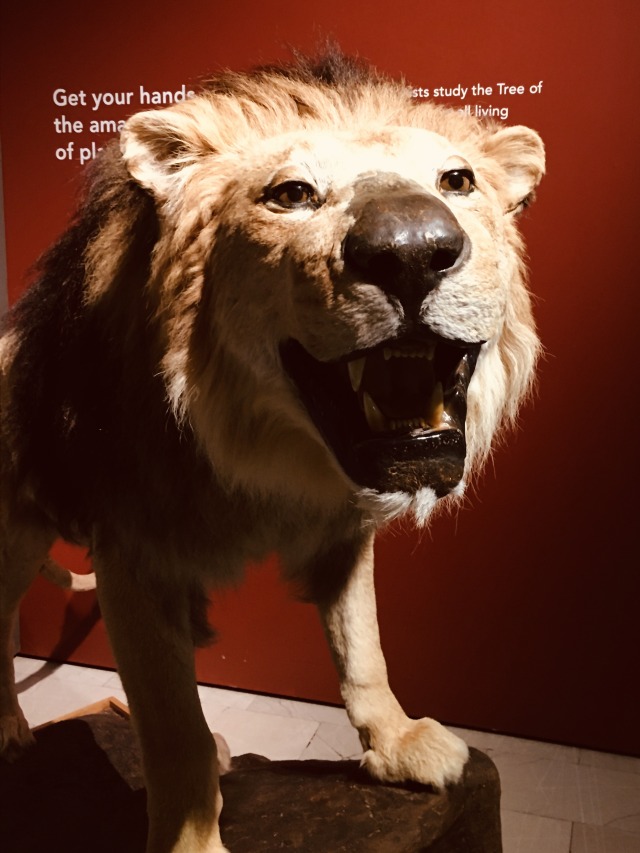
African Lion taxidermy mount
Liv cites the lion currently displayed in Discovery Basecamp as her constant visual anchor for 16 summers of camp experience.

When Liv aged-out of the camp participant demographic at age 14, she spent the next four summers as a teen volunteer with the program. “I knew how camp ran,” she explains, “and I wanted to emulate the camp counselors who had welcomed me for so many years. As a volunteer I started gravitating towards those children who had learning difficulties. I saw myself in some of their challenges and worked to support them.”

During the summer of 2018, Liv assumed broader camp responsibilities as a Museum Educator Assistant, a paid position that included some oversight of not just campers, but also teen volunteers. She summarizes the focus of each position as being complimentary, but drastically different. “For the teen volunteers the focus is fun – playing games, engaging the campers in those games. As an assistant educator your concerns involve safety and learning.”

This summer, Liv also holds the title of Teen Volunteer Supervisor. Her acknowledgement of greater responsibility is occasionally expressed in a motto, a saying now familiar to all the staff, volunteers, and campers she works with: “If we cannot be safe, we cannot have fun.” The statement of both warning and motivation seems particularly apt for these COVID times. It also contains evidence of all Liv learned as a psychology major at Seton Hill, and within an informal but highly effective summer training program at Carnegie Museum of Natural History.

Patrick McShea works in the Education and Visitor Experience department of Carnegie Museum of Natural History. Museum employees are encouraged to blog about their unique experiences and knowledge gained from working at the museum.

Related Content

Stage and Screen Sharing

Teacher Profile: Emmanuelle Wambach

Expanding the Scope of Environmental Education

Carnegie Museum of Natural History Blog Citation Information

Blog author: McShea, Patrick
Publication date: August 4, 2021

Share this post!

  • Share on Twitter Share on Twitter
  • Share on Facebook Share on Facebook
  • Share on Pinterest Share on Pinterest
  • Share on LinkedIn Share on LinkedIn
  • Share on Reddit Share on Reddit
  • Share via Email Share via Email

Share this post!

  • Share on Twitter Share on Twitter
  • Share on Facebook Share on Facebook
  • Share on Pinterest Share on Pinterest
  • Share on LinkedIn Share on LinkedIn
  • Share on Reddit Share on Reddit
  • Share via Email Share via Email

Filed Under: Blog Tagged With: Education, Educator Resources, Educators, Pat McShea

July 12, 2021 by wpengine

Interpreting Museum Exhibits Virtually

by Patrick McShea

Natural History Interpreters are a corps of educators charged with presenting the museum’s exhibits to audiences in a way that encourages the collective development of emotional and intellectual connections to the topics being discussed. During the past eight months, a small, but growing number of Interpreters have pursued this mission by guiding school groups on virtual tours of Dinosaur Armor.

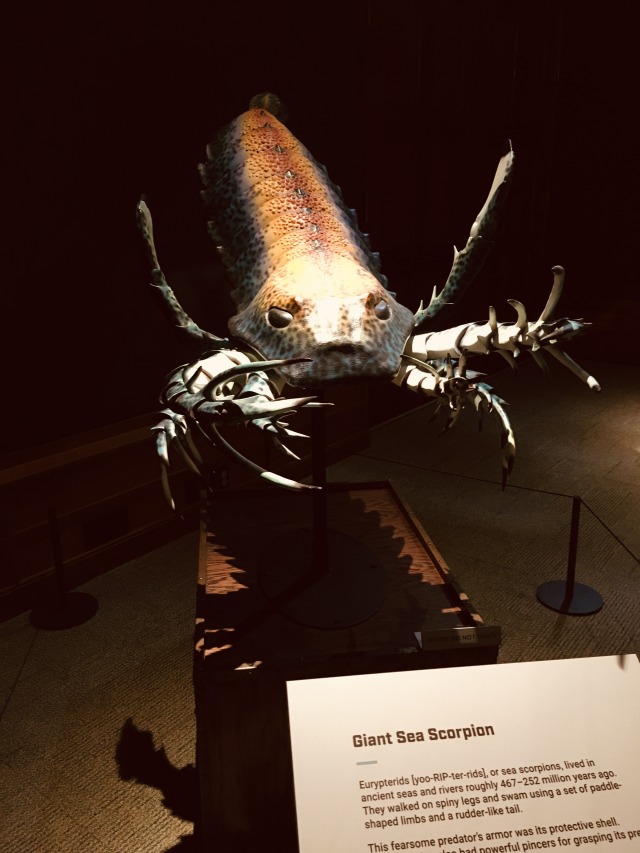
Replica giant sea scorpion museum display
Details such as the sharp claws of this sea scorpion were clearly visible to students who participated in virtual tours of Dinosaur Armor.

The visually striking objects in the world premiere exhibition retain much of their captivating power when presented over electronic screens, and cell phone cameras, when paired with hand-held stabilizer units, have proven to be fully capable of live streaming all the required video.

During the recently completed school year 54 virtual tours of Dinosaur Armor reached an estimated student audience of 3,450, with classes in first to fourth grades accounting for the greatest number of those individuals. The geographical reach of the program has been particularly impressive, with schools in 13 states participating.

The Interpreters developed a team-based strategy for delivering their presentations as cohesive interactive lessons. Standard team positions, which rotate as necessary, include a camera operator in the exhibit, an accompanying narrator who occasionally appears on camera, and a director who participates via a computer link to both provide occasional commentary and facilitate communication between the audience, camera operator, and narrator.

According to Interpreter Joann Wilson the development was an easier-said-than-done proposition. “When I started virtual tours, I thought that it would be like my old in-person tour role with a few minor adjustments.  How wrong I was!   What I have discovered after over 8 months is that although the goal is the same, how we get there is very different.”

On June 8, I had the opportunity to observe a virtual Dinosaur Armor tour for a combined pre-school and kindergarten class. My computer screen displayed the same images the children watched on a large monitor at the front of their classroom. When the colorful image of a frightening looking Eurypterid, or sea scorpion filled the screen, audience excitement was transmitted back to the Interpreter team via the “oohs” and “ahhs” of young voices. Just as the Interpreters would do for any in-person audience, they quickly transformed student curiosity into a learning experience through the careful use of questions.

Students were initially asked to describe what they observed, and their responses (“The claws are sharp.” “The eyes are big ovals.”) provided immediate feedback about the clarity of the transmission. In this case the routine compilation of student observations was remarkable because of the distance involved. The pre-school and kindergarten class was in Bali, Indonesia.

As Program Manager Mandi Lyon explains, “It was 9:30 a.m. for us in Pittsburgh, and 9:30 p.m. for them in Bali. They came back to their school in their pjs for a pajama party so they could participate in the tour together.”

In most cases, however, the same COVID-19 restrictions that led to the development of Virtual Tours also placed many students in viewing conditions far less comfortable than the classroom in Bali. Whenever a Virtual Tour served a class in a school operating under a remote learning mandate, the Interpreter team faced the challenge of engaging dozens of students watching separately from their homes.

By supplying teachers with relevant digital resources, including video clips, blog posts, and work sheets, weeks before their students participated in a Virtual Tour, the Interpreters hoped to initiate teaching partnerships that made each live 60-minute program both instructive and enjoyable. The success of such efforts is currently being accessed through the review of post-Virtual Tour evaluations, several of which included heartening testimony. One teacher noted how the virtual tour had expanded the range of possible teaching resources: “I am so excited we had the opportunity to visit through Zoom. After doing this, it seems we could reach so many places and let the students have such a varied experience in the classroom.” Another teacher was particularly pleased with a potential career thread woven into the tour: “The idea of anyone becoming a scientist was evident in your presentation.”

Outside of the formal evaluations, one wholly positive real-time measurement stands out. Several times teachers remarked that students who kept their cameras off though weeks of regular remote classes turned their cameras on to watch and participate in the Virtual Tour.

CMNH Interpreters have also provide Virtual Tours exploring Ecosystems, Ancient Egypt, and Gems and Minerals. Besides Indonesia, other particularly distant schools served by the program were in Qatar, and the U.S. Virgin Islands. Training is currently underway to expand the number of Interpreters who are able to participate on Virtual Tour teams.

The development and implementation of Virtual Tour Program was generously supported with funding from the Buncher Foundation and the Scaife Family Foundation.

Patrick McShea works in the Education and Visitor Experience department of Carnegie Museum of Natural History. Museum employees are encouraged to blog about their unique experiences and knowledge gained from working at the museum.

Related Content

Virtual Field Trips & Activities

Teacher Profile: Emmanuelle Wambach

Alaskan Brown Bears Spotlight (Video)

Carnegie Museum of Natural History Blog Citation Information

Blog author: McShea, Patrick
Publication date: July 12, 2021

Share this post!

  • Share on Twitter Share on Twitter
  • Share on Facebook Share on Facebook
  • Share on Pinterest Share on Pinterest
  • Share on LinkedIn Share on LinkedIn
  • Share on Reddit Share on Reddit
  • Share via Email Share via Email

Share this post!

  • Share on Twitter Share on Twitter
  • Share on Facebook Share on Facebook
  • Share on Pinterest Share on Pinterest
  • Share on LinkedIn Share on LinkedIn
  • Share on Reddit Share on Reddit
  • Share via Email Share via Email

Filed Under: Blog Tagged With: Education, Educator Resources, Educators, Pat McShea

July 6, 2021 by wpengine

Bird Architecture on Human Infrastructure

by Patrick McShea

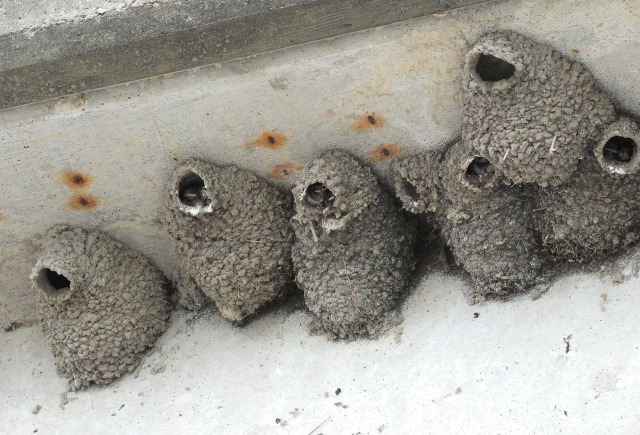
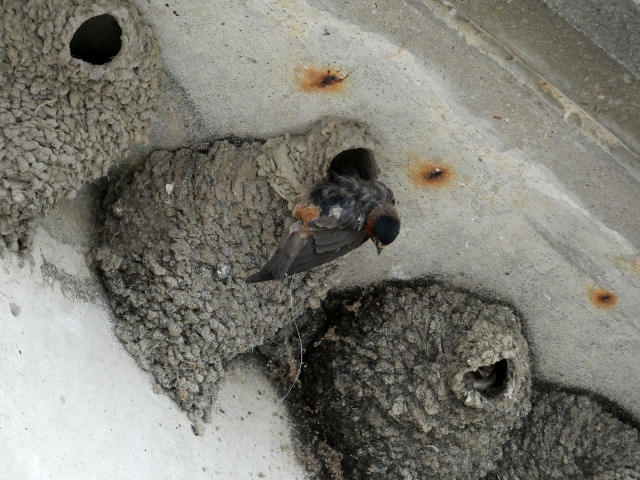
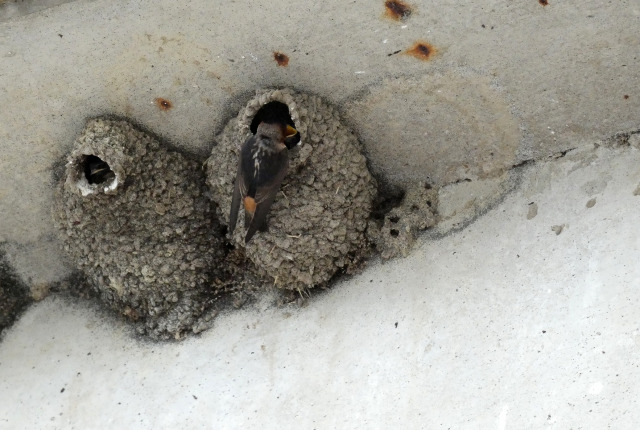
cliff swallow nests
Image credit: Amy Henrici

Cliff Swallows are potters. The gourd-shaped earthen vessels the birds construct, one tiny mouthful of mud at a time, provide shelter for their eggs and young. In Pennsylvania, and across much of the species’ current continent-wide breeding range, bridges provide favored nest sites for birds whose ancestors, until the early decades of the 1800’s, seem to have been restricted to nesting against low elevation cliffs in western mountain ranges.

The nests pictured above adhere to the concrete supports of a bridge crossing an arm of Lake Arthur in Butler County’s Moraine State Park. During field survey work leading up to the publication of the Second Atlas of Breeding Birds in Pennsylvania in 2012, bridges accounted for 44% of Cliff Swallow nest sites, barns for 33%, and churches, houses, other buildings, and dams for the balance. The species nests in colonies, and the number of nests in bridge-based colonies also far outnumbered those at other sites.

In Birds of Western Pennsylvania, a 1940 publication by W.E. Clyde Todd, then the museum’s Curator of Birds, nest descriptions are a highlight of the Cliff Swallow account.

“The type is retort-shaped, globular, with a neck springing from above and turned to open downward: a beautiful, symmetrical structure. The shape however is modified to suit the space – truncated or extended, as need requires; and where the nests are close-set, the chamber within, though pouch-like, is not truly symmetrical.”

“The nests are built of pellets of mud laid wet and retaining in the finished structure, each its smooth-rounded individuality. The walls speak of cunning and labor and of security, as does a wall of human masonry.”

cliff swallow feeding young in the nest
Image credit: Amy Henrici

On a recent early summer morning the Cliff Swallows’ incorporation of our culture’s indispensable highway architecture into their reproductive cycle made for easy and entertaining bird watching. There were hungry young in every chamber of an easily viewed eight-nest cluster. As parent birds returned regularly from insect-catching forays over the nearby lake, the entryways to the dark clay pouches were brightened by the bright yellow gaping beaks of the young.

cliff swallow hanging out of nest
Image credit: Amy Henrici

Appreciation of the beneficial match between people and birds was leavened by a sight at another nest cluster on an adjacent bridge support. When a swallow perched against a nest remained still through several feeding cycles of its neighbors, an inspection with binoculars revealed a tragic circumstance. The bird appeared to have become entangled in, and eventually strangled by discarded fishing line, eight inches of which dangled from the lifeless feathered body.

Patrick McShea works in the Education and Visitor Experience department of Carnegie Museum of Natural History. Museum employees are encouraged to blog about their unique experiences and knowledge gained from working at the museum.

Reference

Second Breeding Bird Atlas of Pennsylvania – http://www.pabirdatlas.psu.edu/

Related Content

Camouflage in Your Yard?

Do Animals Use Plastic?

Raptor Watch

Carnegie Museum of Natural History Blog Citation Information

Blog author: McShea, Patrick
Publication date: July 6, 2021

Share this post!

  • Share on Twitter Share on Twitter
  • Share on Facebook Share on Facebook
  • Share on Pinterest Share on Pinterest
  • Share on LinkedIn Share on LinkedIn
  • Share on Reddit Share on Reddit
  • Share via Email Share via Email

Share this post!

  • Share on Twitter Share on Twitter
  • Share on Facebook Share on Facebook
  • Share on Pinterest Share on Pinterest
  • Share on LinkedIn Share on LinkedIn
  • Share on Reddit Share on Reddit
  • Share via Email Share via Email

Filed Under: Blog Tagged With: Birds, Educators, Pat McShea, Science News, We Are Nature 2

June 25, 2021 by wpengine

Fish and the Fourth of July?

by Patrick McShea

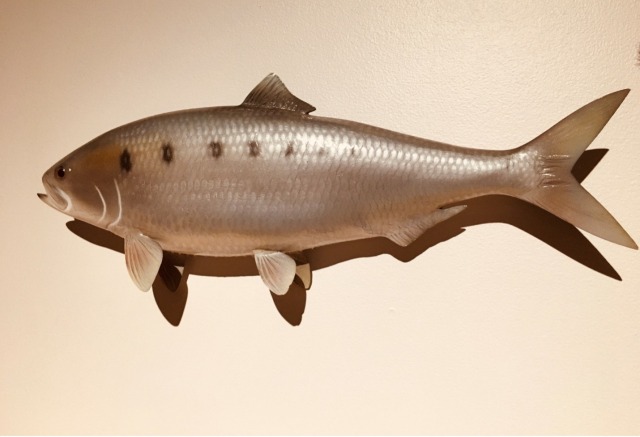
model of a shad

During the cold early months of 1778, did the outcome of the American colonies’ armed struggle for independence hinge upon a spawning run of fish up a Pennsylvania river? A 22-inch-long American shad displayed on a wall in Discovery Basecamp can serve as a focal point for consideration of this question, but many viewers will be aided by some framing background information.

In the chronology of the American Revolution, the harsh winter of 1777-1778 was notable for the British Army’s control of Philadelphia, and the encampment, some 23 miles northwest, of the opposing Continental Army, led by George Washington, at a site along the Schuylkill River known as Valley Forge.

In the more than two centuries since the United States achieved independence from Great Britain, an often repeated anecdote about the desperate conditions endured by the poorly clothed, poorly fed, and poorly sheltered soldiers at Valley Forge contends that starvation conditions were ended late in the winter by an unusually early spawning run of thousands of American shad up the Schuylkill.

American shad are an anadromous species, a term for fish that hatch in freshwater, migrate to the ocean where they spend most of their lives, and then migrate back to their natal waters to reproduce. The historic range for the species, whose Latin name, Alosa sapidissima, references its delectable flavor, encompasses western Atlantic Ocean waters bordering the east coast of Canada and the United States.

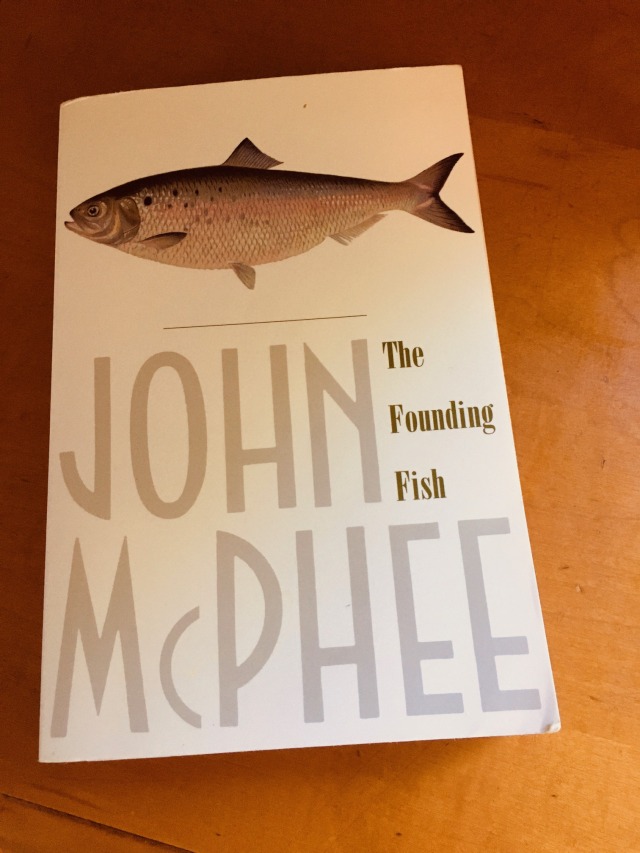
In 2002, renowned author and Princeton University professor John McPhee brought American shad to the attention of the book-reading public with the publication of The Founding Fish, a 358-page encyclopedic compilation of personal experience, firsthand reporting, historical accounts, and scientific research. (Farrar, Straus, and Giroux) The book’s title is a nod to the Valley Forge account, and in a central chapter of the same name McPhee addresses the story’s veracity by citing the research of a now retired professor of American History from Indiana University of Pennsylvania, Wayne Bodle. “When I first got in touch with Bodle, in 1998, he said that fresh shad in all likelihood were consumed by soldiers at Valley Forge in the weeks before they broke camp in June, but that the large and providently early run is a legend not supported by a single document.”

Bodle’s analysis of his research into all aspects of the Continental Army’s storied winter encampment in eastern Pennsylvania is presented in his book, The Valley Forge Winter: Civilians and Soldiers in War (The Pennsylvania University Press, 2002). Like The Founding Fish, it’s available for borrowing from Carnegie Library of Pittsburgh. If your summer reading schedule isn’t yet set, you might consider checking out either book.

Patrick McShea works in the Education and Visitor Experience department of Carnegie Museum of Natural History. Museum employees are encouraged to blog about their unique experiences and knowledge gained from working at the museum.

Related Content

Alaskan Brown Bear Spotlight

Educator Spotlight: Christian Shane

Expanding the Scope of Environmental Education

Carnegie Museum of Natural History Blog Citation Information

Blog author: McShea, Patrick
Publication date: June 25, 2021

Share this post!

  • Share on Twitter Share on Twitter
  • Share on Facebook Share on Facebook
  • Share on Pinterest Share on Pinterest
  • Share on LinkedIn Share on LinkedIn
  • Share on Reddit Share on Reddit
  • Share via Email Share via Email

Filed Under: Blog Tagged With: Education, Educators, fish, Pat McShea, Science News

May 10, 2021 by wpengine

Stage and Screen Sharing

by Patrick McShea

Social Skills Instructor Stacy Smith wanted to convey just how challenging last year’s abrupt shift to remote instruction during the COVID-19 pandemic was for The Children’s Institute of Pittsburgh. An initial challenge she had to solve was how to keep virtual learning engaging.

“Some of our students don’t even like watching TV,” Stacy said.

Not only did in-person collaborations with programs like Museum on the Move at CMNH have to be transformed into a remote experience, but the school day also had to function differently for students with unique needs. The 119-year-old organization serves more than 6,000 children each year at seven campuses across western Pennsylvania, helping to heal, teach, and empower individuals with special physical, social, and emotional needs.

Individualized instruction is the hallmark of Educational Services at The Children’s Institute, a characteristic readily apparent when Stacy recites a typical schedule for a student at the campus in Squirrel Hill.

“Morning groups of around six students last 15 to 30 minutes, and after that they would each have individual teaching sessions. They’d have individual speech, occupational therapy, physical therapy, and social skills or other ancillary classes. We work with some students to master abilities that aren’t even considered in other schools, like the balance required to simply walk in a hallway,” Stacy explained.

Museum on the Move programs provide a field trip-like role amidst such regular instruction, with museum educators using authentic materials to enrich presentations about dinosaurs, fossils, rocks and minerals, insects, and animal adaptations. Stacy cited Quintin Peacock, an educator who recently left the museum to pursue a master’s degree in education, as a particularly skilled in-person presenter in 2019 and early 2020, before the COVID pandemic forced the program into a remote, but still interactive delivery system.

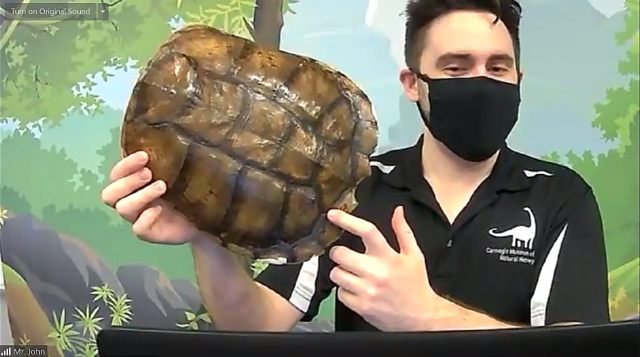
John Bitsura holds up a turtle shell during a virtual presentation.

Museum educators John Bitsura and Aaron Young received Stacy’s praise as remote delivery heroes for their dedication to The Children’s Institute’s students and willingness to innovate.

“These guys were the only outside group we had this year and we were very fortunate to have them,” she said.

While some students returned in-person this school year, for the Museum on the Move “field trips” to maintain their effectiveness in a remote format, a familiar teacher needed to be an active visual and vocal participant. Technology and screen-sharing enabled both Stacy and the CMNH team to easily participate in presenting to the students together.

“I’ve always been on with them, and it’s been really nice that they’ve been so welcoming with me being a part of their presentation,” she said.

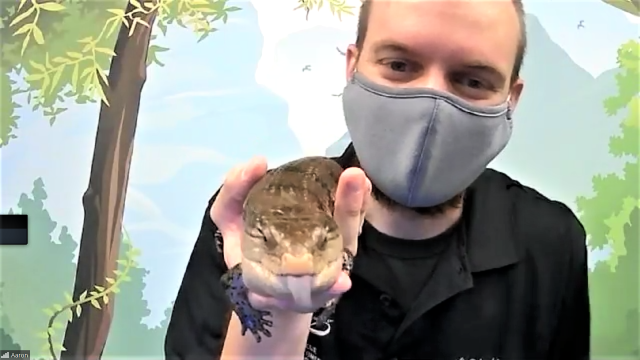
Aaron Young and Miley, a blue-tongued skink.

For the museum, the feeling is mutual. Aaron praises the radiant energy Stacy brings to the virtual programs and credits her constructive feedback with their continual improvement. John points to the solving of Zoom problems and a joint performance of a rap song about geology as key pieces of the collaboration. He also summarized this year’s efforts as creating the foundation for a wonderful partnership.

Patrick McShea works in the Education and Visitor Experience department of Carnegie Museum of Natural History. Museum employees are encouraged to blog about their unique experiences and knowledge gained from working at the museum.

Related Content

Teaching About Trees

Bring the Museum to You

Water Bears: why my yard is like the moon

Carnegie Museum of Natural History Blog Citation Information

Blog author: McShea, Patrick
Publication date: May 10, 2021

Share this post!

  • Share on Twitter Share on Twitter
  • Share on Facebook Share on Facebook
  • Share on Pinterest Share on Pinterest
  • Share on LinkedIn Share on LinkedIn
  • Share on Reddit Share on Reddit
  • Share via Email Share via Email

Share this post!

  • Share on Twitter Share on Twitter
  • Share on Facebook Share on Facebook
  • Share on Pinterest Share on Pinterest
  • Share on LinkedIn Share on LinkedIn
  • Share on Reddit Share on Reddit
  • Share via Email Share via Email

Filed Under: Blog Tagged With: Education, Educator Resources, Educators, Pat McShea

  • Page 1
  • Page 2
  • Page 3
  • Interim pages omitted …
  • Page 7
  • Go to Next Page »

sidebar

About

  • Mission & Commitments
  • Directors Team
  • Museum History

Get Involved

  • Volunteer
  • Membership
  • Carnegie Discoverers
  • Donate
  • Employment
  • Events

Bring a Group

  • Groups of 10 or More
  • Birthday Parties at the Museum
  • Field Trips

Powdermill

  • Powdermill Nature Reserve
  • Powdermill Field Trips
  • Powdermill Staff
  • Research at Powdermill

More Information

  • Image Permission Requests
  • Science Stories
  • Accessibility
  • Shopping Cart
  • Contact
  • Visitor Policies
One of the Four Carnegie Museums | © Carnegie Institute | Privacy Policy | Terms of Use | Accessibility
Rad works here logo