• Skip to primary navigation
  • Skip to main content
  • Skip to primary sidebar

Carnegie Museum of Natural History

One of the Four Carnegie Museums of Pittsburgh

  • Visit
    • Buy Tickets
    • Visitor Information
    • Exhibitions
    • Events
    • Dining at the Museum
    • Celebrate at the Museum
    • Powdermill Nature Reserve
    • Event Venue Rental
    • Gift Cards
  • Learn
    • Field Trips
    • Educator Information
    • Programs at the Museum
    • Bring the Museum to You
    • Guided Programs FAQ
    • Programs Online
    • Climate and Rural Systems Partnership
  • Research
    • Scientific Sections
    • Science Stories
    • Science Videos
    • Senior Science & Research Staff
    • Museum Library
    • Science Seminars
    • Scientific Publications
    • Specimen and Artifact Identification
  • About
    • Mission & Commitments
    • Directors Team
    • Museum History
  • Tickets
  • Give
  • Shop

Educators

April 13, 2021 by wpengine

Evidence Counts for Absent Creatures – City Nature Challenge

by Patrick McShea

Participation in the upcoming City Nature Challenge (April 30 – May 3) can range from using your phone’s camera to document a couple front yard observations, to compiling hours’ worth of observations at multiple sites during all four days of the event. Additional information about the six-county Pittsburgh Region’s efforts in this international project can be found elsewhere on the museum’s website:

City Nature Challenge (how to participate and resources)

Teaching About Local Wildlife with the City Nature Challenge

If you have a little more time available, however, a deeper working knowledge of the City Nature Challenge’s scope, limits, and purpose can be obtained by reviewing the answers the project’s organizers provide to more than a dozen frequently asked questions. One very important aspect of the project addressed in the FAQs page is the broad range of observations that can be collected, interpreted, and compiled via iNaturalist, the innovative phone app that serves as the digital engine for the City Nature Challenge (CNC).

Mud Evidence
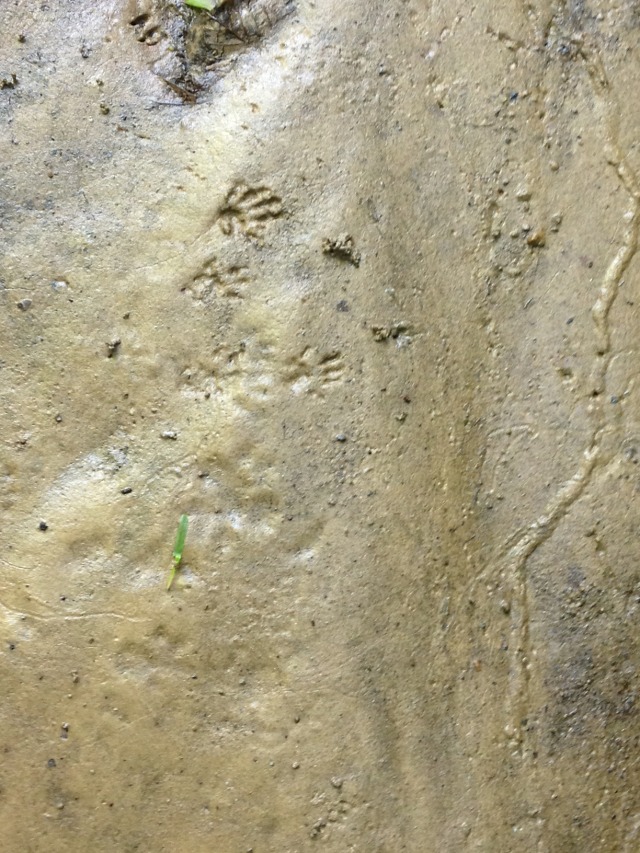
Raccoon tracks in mud.

In answer to the question, What kinds of observations should I make during the CNC? organizers suggest exactly the range of noticeable phenomena that any naturalist leading an interpretive walk would stop to point out: Any observations of WILD plants, animals, fungi, seaweed, bacteria, lichen, etc. you find in and around your city! Observations of living or dead organisms, or evidence of those organisms, like shells, tracks, scat, feathers, etc., are fine. A photo of raccoon tracks in a muddy creek edge, for example, could count in a CNC tally as evidence of the mammal’s recent passage.
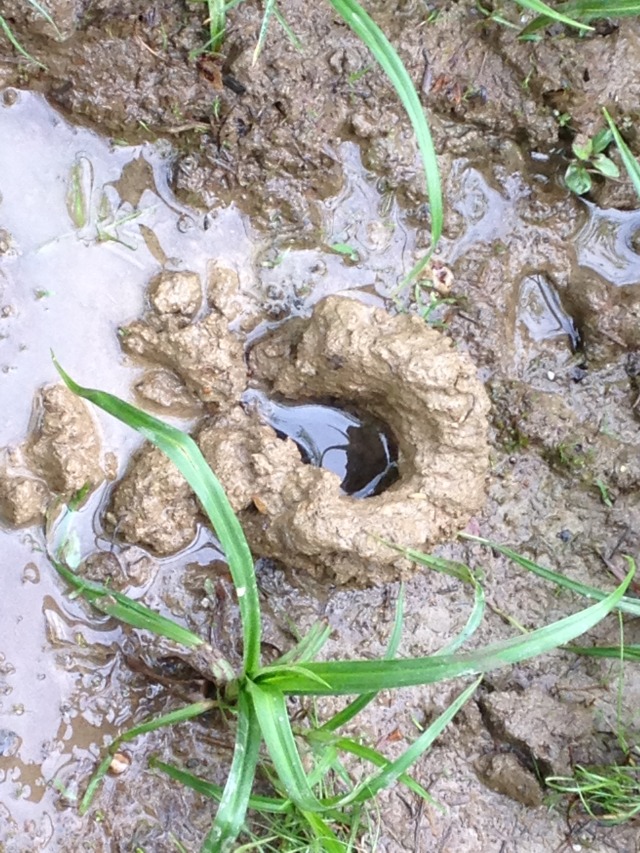
Crayfish chimney.

Another type of mud evidence indicates the presence of crayfish. In wet ground adjacent to ponds and streams, burrowing crayfish create distinctive and often fully-cylindrical mud structures above the holes they dig to reach groundwater. A photo of one of these “chimneys” documents the presence of the crustacean excavator somewhere below, but because there are multiple crayfish species in our region, further investigation would be necessary to refine such an observation to the species level.

Plants as Animal Evidence
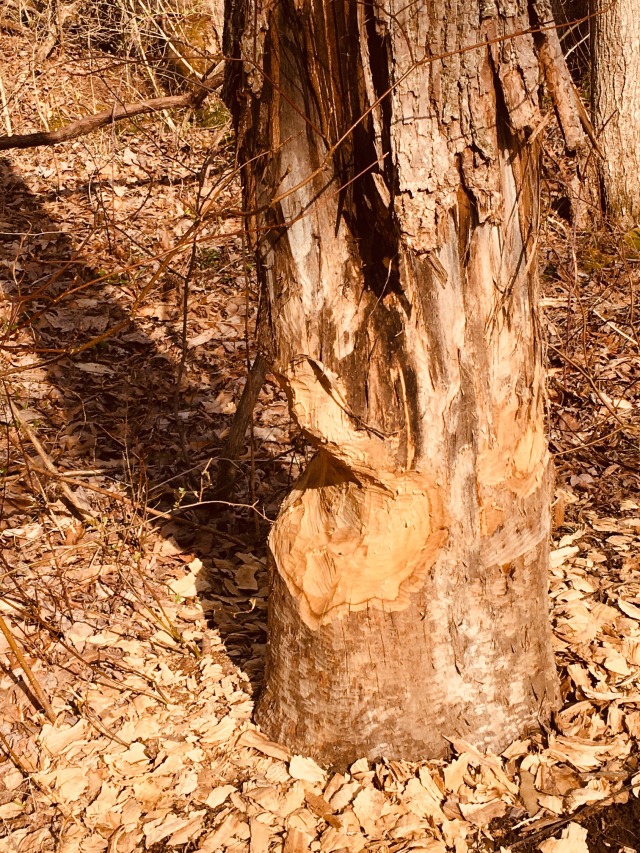
Beaver gnawed tree.

Sometimes plants can serve as animal evidence. Beavers, for example, aren’t known for appearing in cell phone camera range very often, but their activity, in the form of gnawed tree trunks and branches is easy to document along local waterways, including all three of Pittsburgh’s rivers. When photos of beaver evidence include sufficient detail to identify the impacted tree or shrub, the document becomes a “two-for-one.”
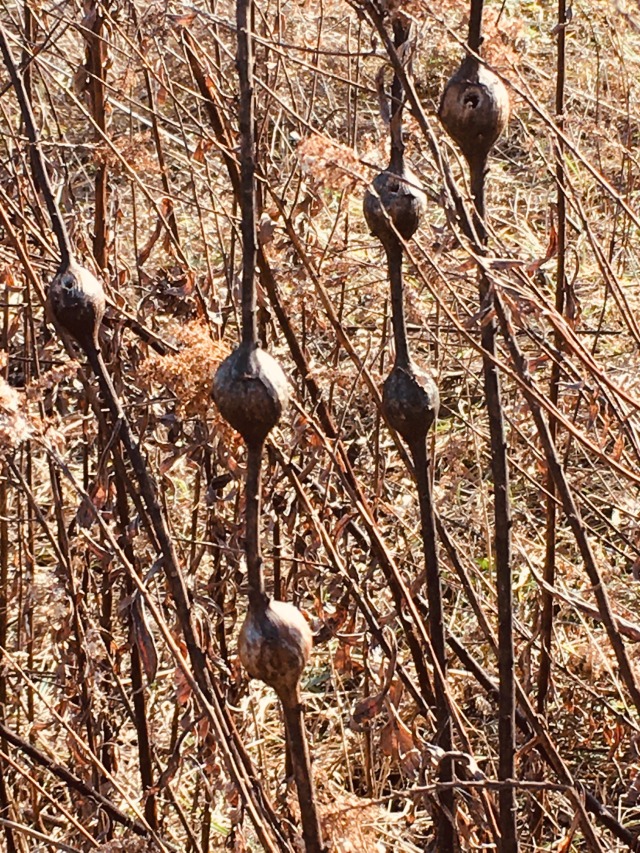
Goldenrod galls.

On higher and drier ground, amid stands of goldenrod, the deformed stalks of some plants provide evidence of a specific insect. The globular swellings, which are known as galls, are produced by the plant in reaction to the secretions of a tiny parasitic fly. Females of the goldenrod gall fly, a species know to science as Eurosta solidaginis, lay eggs at the base of goldenrod flower buds. Larvae hatched from these eggs chew into the plant stem where their secretions ultimately result in the creation of a protective winter shelter. The distinctive galls are not fully secure, however. Females of the parasitoid wasp known as Eurytoma gigantea seek out galls and their fly larvae occupants as a food source for their own larvae. Downy Woodpeckers and Black-capped Chickadees are also known to peck into galls to eat the occupants. Most of the galls in the above illustration bear evidence of such bird beak chiseling.

Patrick McShea works in the Education and Visitor Experience department of Carnegie Museum of Natural History. Museum employees are encouraged to blog about their unique experiences and knowledge gained from working at the museum.

Related Content

Cities Are Not Biological Deserts

Spring Birds in Your Backyard

A Little Harbinger of Spring…

Carnegie Museum of Natural History Blog Citation Information

Blog author: McShea, Patrick
Publication date: April 13, 2021
Share this post!

  • Share on Twitter Share on Twitter
  • Share on Facebook Share on Facebook
  • Share on Pinterest Share on Pinterest
  • Share on LinkedIn Share on LinkedIn
  • Share on Reddit Share on Reddit
  • Share via Email Share via Email

Share this post!

  • Share on Twitter Share on Twitter
  • Share on Facebook Share on Facebook
  • Share on Pinterest Share on Pinterest
  • Share on LinkedIn Share on LinkedIn
  • Share on Reddit Share on Reddit
  • Share via Email Share via Email

Filed Under: Blog Tagged With: City Nature Challenge, Education, Educators, Pat McShea

April 6, 2021 by wpengine

Ocean Lessons

by Patrick McShea

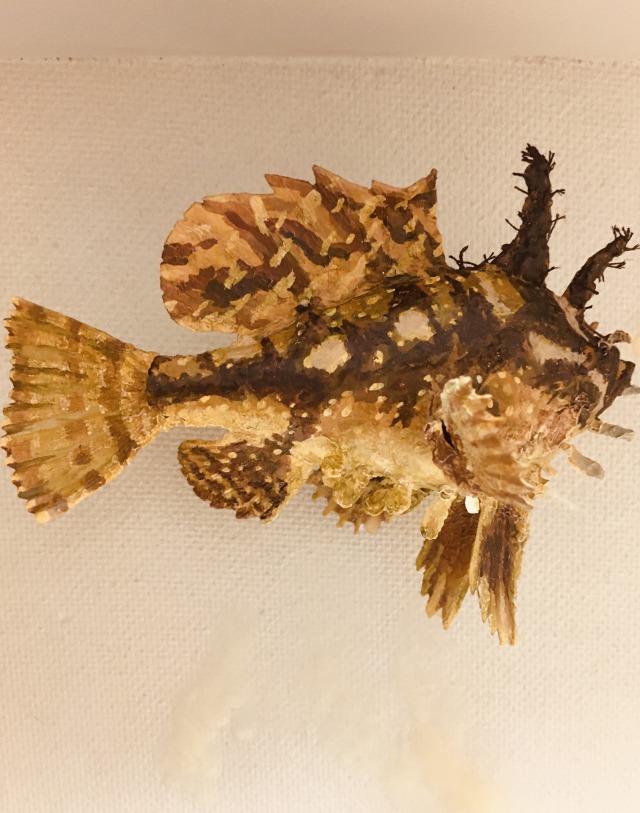
A sargassum fish taxidermy mount.

During the late winter, students and faculty at Carnegie Mellon University’s Children’s School learned about the ocean all day, every day. A five-week study of a broad topic is an annual tradition at the school, which serves pre-school and kindergarten-aged children, and operates within the university’s Psychology Department to support developmental research and the training of educators.

Coordination of the ocean lesson plan was the responsibility of Donna Perovich, a kindergarten teacher at the Children’s School for the past 24 years who has worked as an overall support educator since the advent of the COVID-19 pandemic. I learned of her efforts during the project’s planning stages when she asked to borrow ocean-related materials from the museum’s Educator Loan Collection.

Materials for Ocean Lessons from the Educator Loan Collection

The museum’s longest running outreach program is operating with a significant borrowing limitations during the pandemic: materials that cannot be cleaned, or would be damaged by repeated cleaning, are not currently available for loan. In Donna’s case the restriction meant she was able to borrow encased taxidermy mounts of several saltwater fish, plastic scale models of six different whale species, and a sea turtle shell, but not touchable examples of sea stars, sponges, sea fans, and delicate corals.

“I have a lot of seashells.” Donna explains, “Over the years I’ve been blessed with boxes of them. So, we had plenty of material for the students to touch and closely examine.” Among the museum materials she found particularly useful were the whale models. “We did a big whale measuring activity, measuring and pacing-off the lengths of different whales in the halls. Everyone developed a good sense of the size difference between species like a great blue whale and a pilot whale.”

Classroom Aquariums

Setting up and maintaining aquariums in the school’s four classrooms was among Donna’s early Ocean project tasks. The tanks featured freshwater species, two classrooms had single Betta fish, and the other two classrooms had larger tanks with mollies, tetras, and barbs. Observations of the live fish were vitally important for learning more about the movements and behavior of ocean fish. In the case of several three-year-olds, such observations also influenced their initial expectations of fish taxidermy mounts from the museum. “The aquariums had been in the classrooms for awhile before the museum materials appeared,” explains Donna, “and some of the youngest students thought the loan boxes with the fish were another aquarium.”

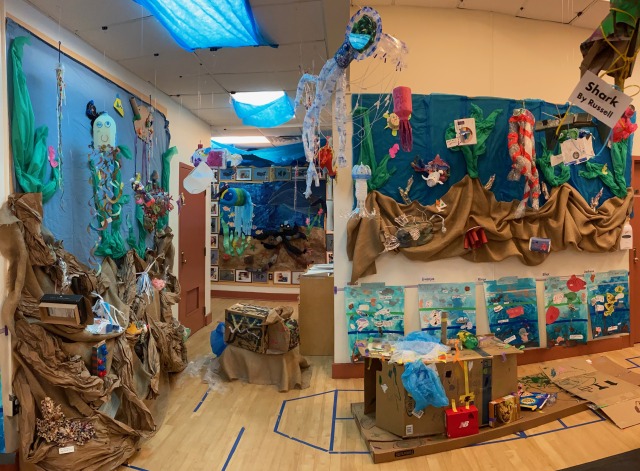
The Ocean Mural at CMU Children’s School.

Lest you think the confusion diminishes Donna’s respect for the thinking power of the children she works with, she brings up the enormous three-dimensional mural the students created to convey much of what they learned. “We had wonderful conversations where the children would be talking about things like deep ocean trenches and how reduced sunlight impacted the creatures living there. In some ways I think their brains are better able to absorb new information than our cluttered brains.”

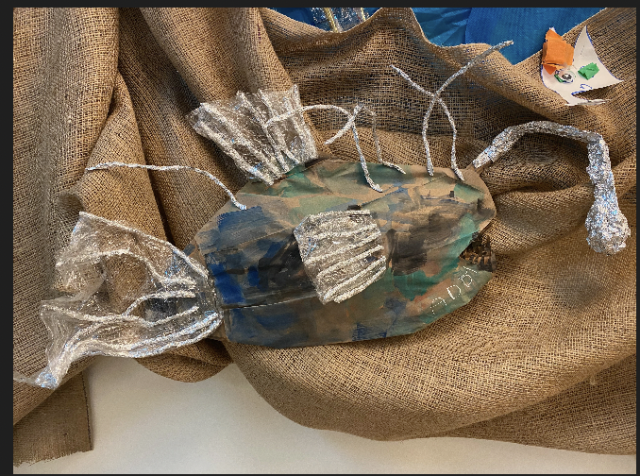
Anglerfish by Children’s School student.

Whole school study units at the Children’s School conclude with a family festival. Although the school has operated in-person with reduced capacity this year, the Ocean Family Festival was a Zoom event. The camera feeds of several event sessions focused on child-created details in the amazing mural.

Patrick McShea works in the Education and Visitor Experience department of Carnegie Museum of Natural History. Museum employees are encouraged to blog about their unique experiences and knowledge gained from working at the museum.

Related Content

Teaching in a Pandemic

Teaching about Trees

Center Court Culture Sharing

Carnegie Museum of Natural History Blog Citation Information

Blog author: McShea, Patrick
Publication date: April 6, 2021

Share this post!

  • Share on Twitter Share on Twitter
  • Share on Facebook Share on Facebook
  • Share on Pinterest Share on Pinterest
  • Share on LinkedIn Share on LinkedIn
  • Share on Reddit Share on Reddit
  • Share via Email Share via Email

Share this post!

  • Share on Twitter Share on Twitter
  • Share on Facebook Share on Facebook
  • Share on Pinterest Share on Pinterest
  • Share on LinkedIn Share on LinkedIn
  • Share on Reddit Share on Reddit
  • Share via Email Share via Email

Filed Under: Blog Tagged With: Education, Educator Loan Program, Educator Resources, Educators, ocean, Pat McShea, Patrick McShea

April 1, 2021 by wpengine

An Egg-cellent Hobby!

by Abbey Hines

When I first stumbled into writing this blog post, I had no idea what direction I wanted to take with this topic of eggs, but then I went to Carol’s house and heard her stories. It got me thinking of one of my least favorite topics as someone who studies zoology—humans. People have this unusual habit of talking. Language (particularly syntax) is one of the few characteristics that set humans apart from the rest of the animal kingdom. So please take a uniquely human journey with me as I tell you the story of Carol Megill’s eggs.

Carol and I are Gallery Experience Presenters here at the Natural History Museum; however, she’s been doing it a lot longer than I have—like 25 years longer. Before this job, Carol was a school teacher for mainly elementary grades. (She taught college for a while, too, but that’s not important to the story.) In the 1960s, a few years after she started teaching, Carol was tasked to teach a second-grade boy to read. He’d fallen behind and needed extra help that Carol was happy to give. She tutored him the whole school year and around Easter he was up to a proper reading level. As a thank you, the boy’s grandmother gifted her a blown decorated egg with a duckling inside. This was her first blown and decorated egg that would be the beginning of a collection and hobby that would change her life.

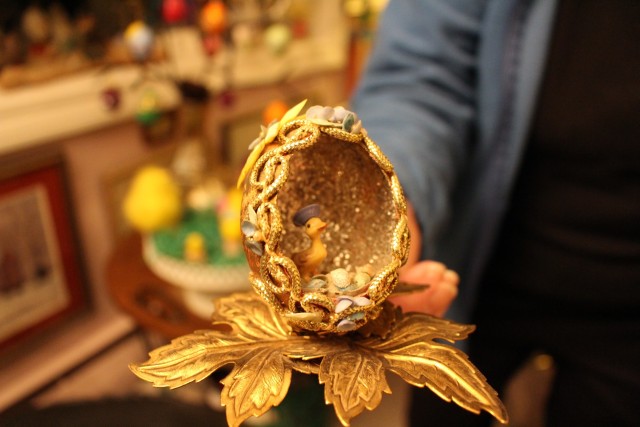
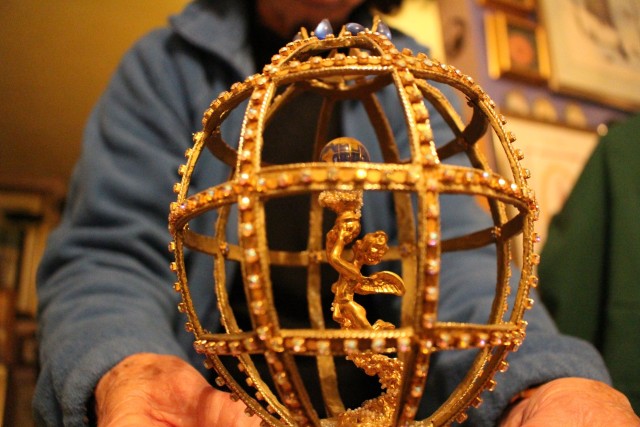
decorative gold egg with bird figurine

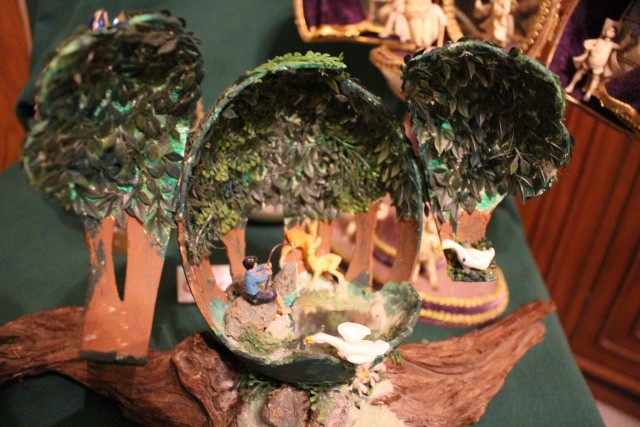
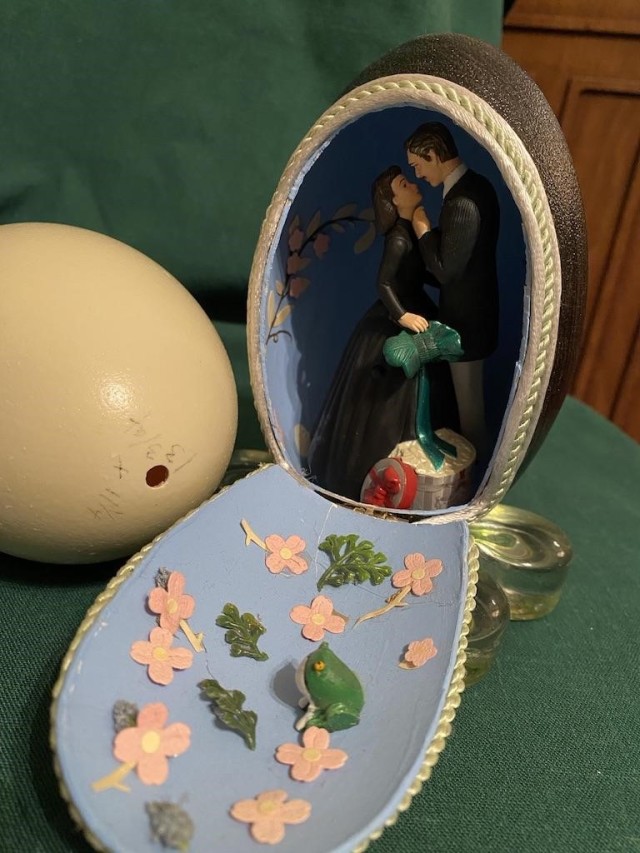
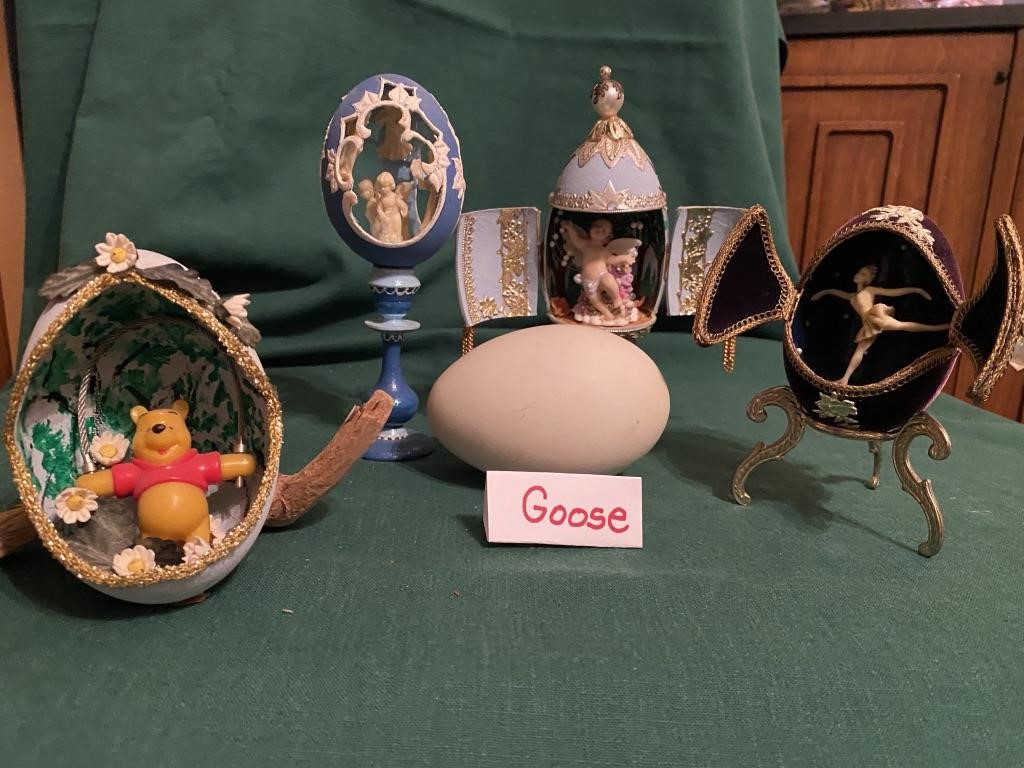
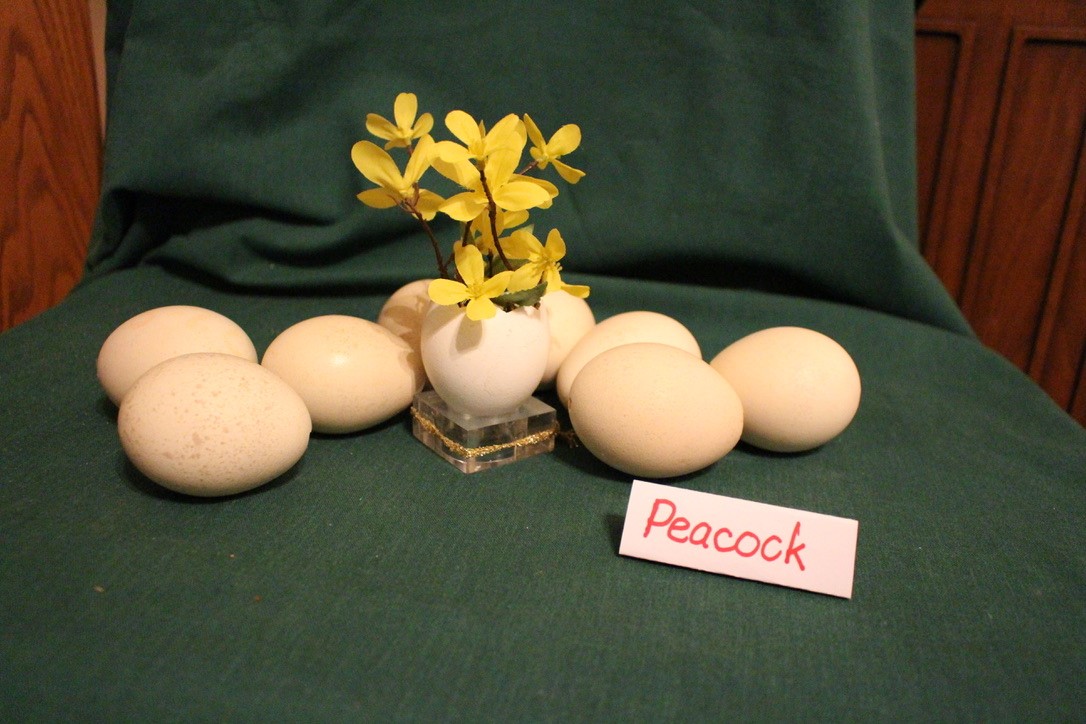
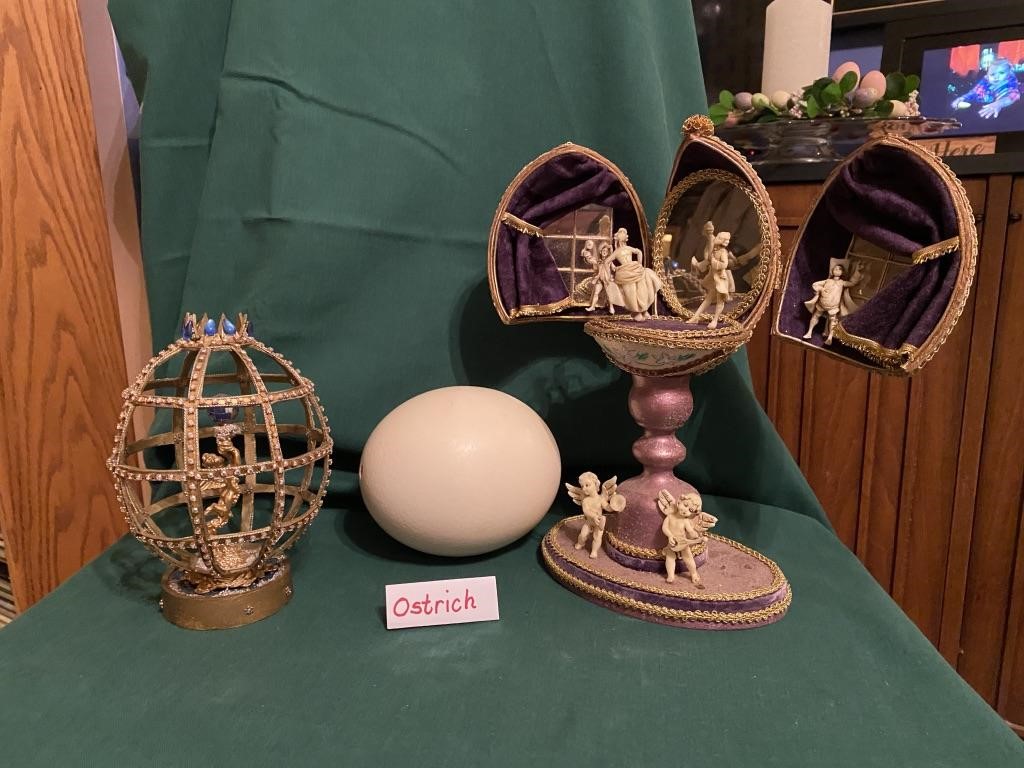
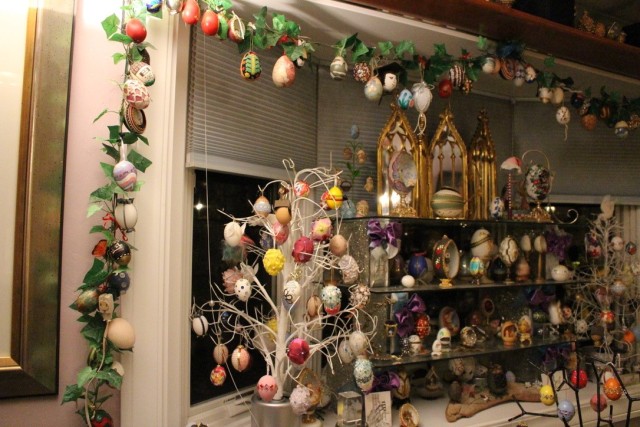
I’ve been trying to find an accurate definition of what Carol creates, but none seem fitting, so I will tell you how she makes them. She can only use certain regulation eggs due to the many proactive bird laws. Her eggs include a mix of chicken, goose, ostrich, rhea, emu, and peacock. First, she ‘blows out’ the egg by making a small hole in one end and blowing air into the cavity to empty out the albumen (whites) and the yolk. After it’s clean she can carefully cut into the shell without cracking it with a small Dremel drill. From there, it’s up to her imagination and artistic ability. They can take many forms, sometimes a scene erupts from within the eggs, a creature is formed from the egg, or it simply takes the shape of an amazing object to behold and interact with. She paints them with gold dust and glitter, adds hinges to make doors, and adds stands and scenery to transmute the egg into a stage for a story.

And the stories they tell! Each egg has its own history and Carol holds them carefully and is eager to share. Some are part of a set and belong with others, some she made to commemorate events or people, others she was trying a new technique that turned out amazing. Each is different and has a special place in the story of Carol’s eggs.

gold egg art
forest scene created from hollowed out eggs and paint
egg art of a couple looking at each other

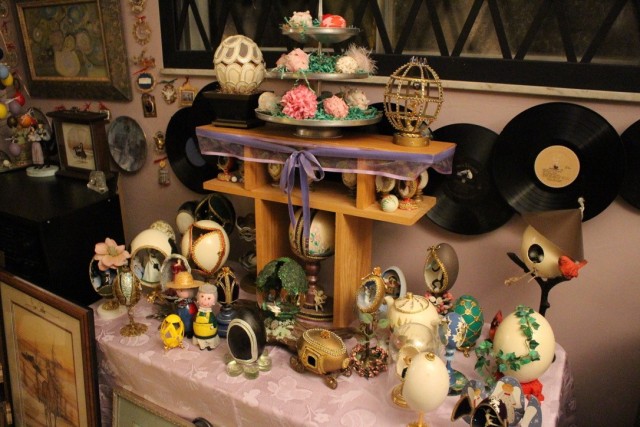
Carol told me she used to travel with her eggs to display and sell them. Then her husband, who was nothing but supportive, asked her to stop selling her art so she did, keeping her creations in their large numbers to decorate her house.

shelves of decorative eggs

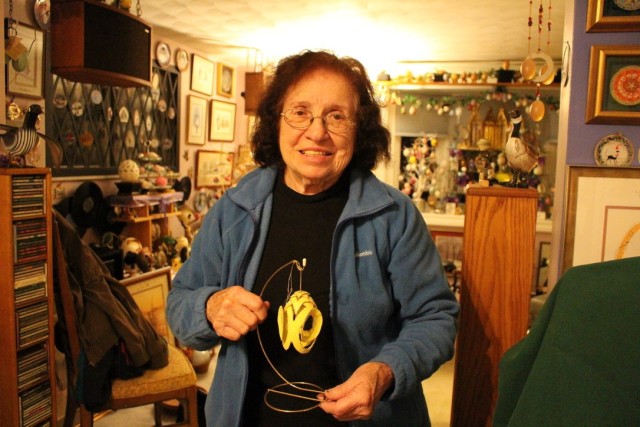
Carol says she doesn’t know how many eggs she has made over the years, but without a doubt, they are part of her amazing story as an educator, tennis player, mother and grandmother, Christian, art collector, and lovely woman.

woman holding a decorative egg
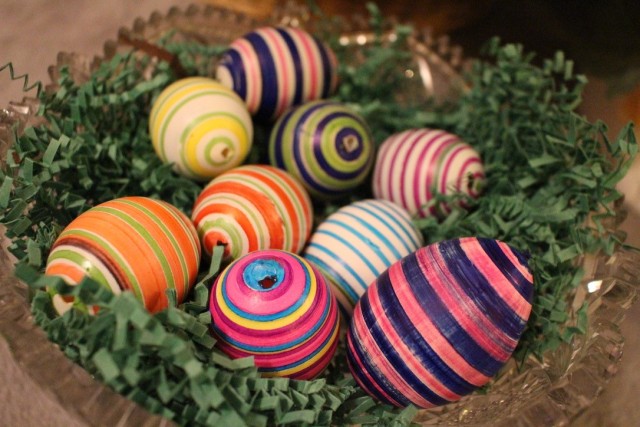
bowl of eggs decorated with stripes
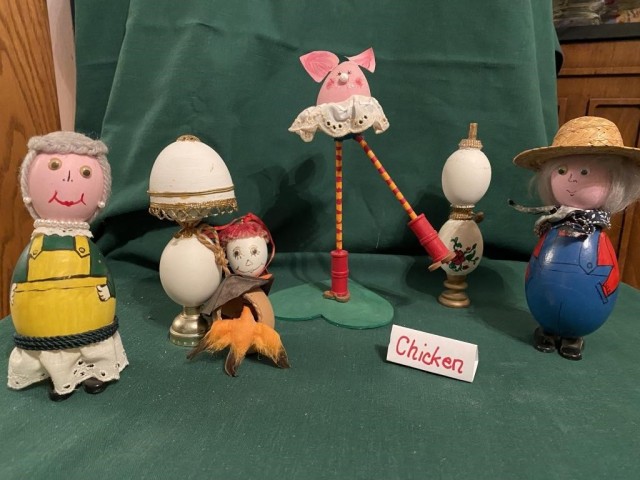
farm scene made from chicken eggs
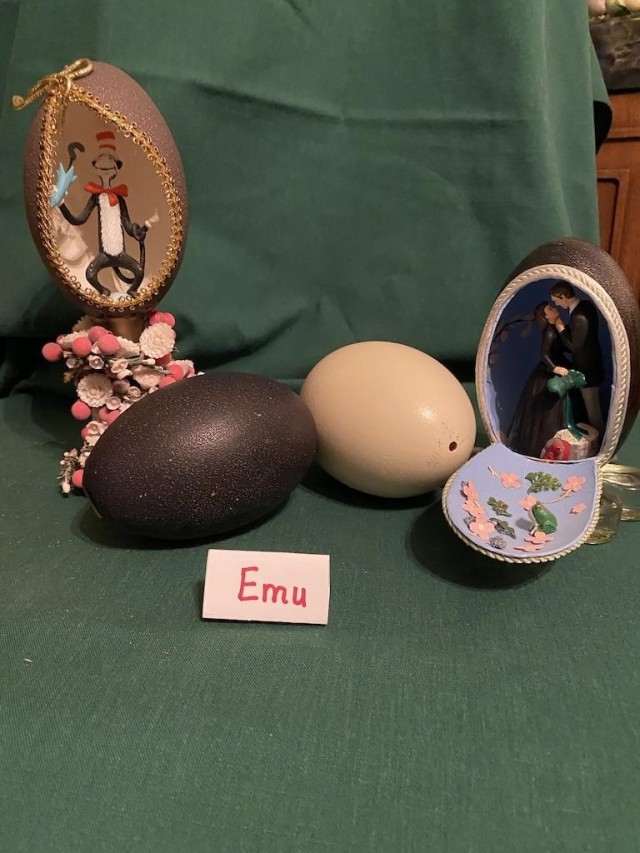
decorative emu eggs

decorative goose eggs

peacock eggs

decorative ostrich eggs

Abbey Hines and Carol Megill are Gallery Experience Presenters in CMNH’s Life Long Learning Department. Museum staff, volunteers, and interns are encouraged to blog about their unique experiences and knowledge gained from working at the museum.

Related Content

Super Science Activity: Paper Flowers

The Hunt is On! Eggs-traordinary Animals That Hide Their Eggs

Egg-cellent Egg Hunt Coloring Pages

Carnegie Museum of Natural History Blog Citation Information

Blog author: Hines, Abbey
Publication date: April 1, 2021

Share this post!

  • Share on Twitter Share on Twitter
  • Share on Facebook Share on Facebook
  • Share on Pinterest Share on Pinterest
  • Share on LinkedIn Share on LinkedIn
  • Share on Reddit Share on Reddit
  • Share via Email Share via Email

Share this post!

  • Share on Twitter Share on Twitter
  • Share on Facebook Share on Facebook
  • Share on Pinterest Share on Pinterest
  • Share on LinkedIn Share on LinkedIn
  • Share on Reddit Share on Reddit
  • Share via Email Share via Email

Filed Under: Blog Tagged With: Abbey Hines, Carol Megill, Educators, sssegghunt, Super Science Days

March 25, 2021 by wpengine

Carnegie’s Cactus: Carnegie gigantea

by Patrick McShea

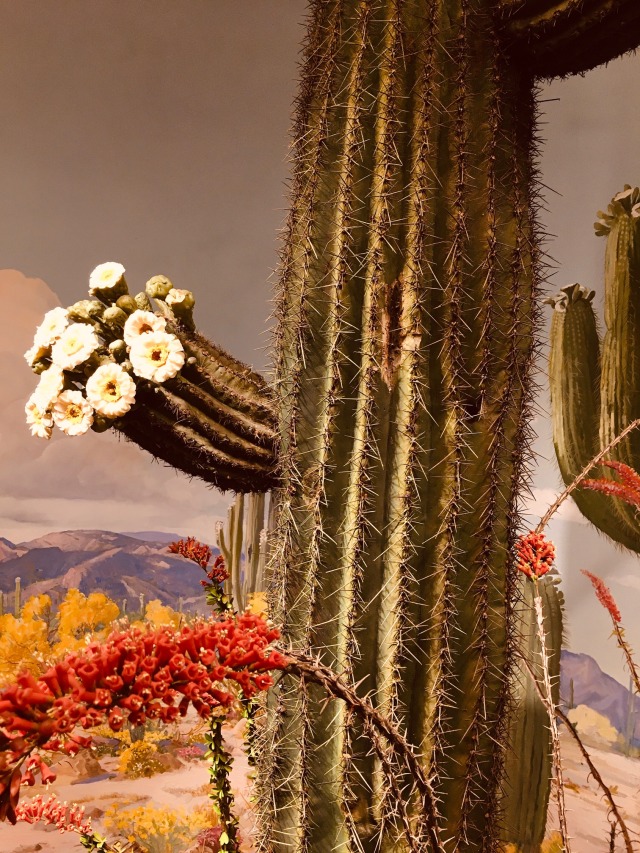
Diplodocus carnegii, a sauropod star of Dinosaurs in Their Time, is not the only large organism exhibited at Carnegie Museum of Natural History that bears the founder’s name. Within the Hall of Botany, the tree-sized saguaro cactus whose prickly form visually anchors the Sonoran Desert diorama is a species know to science as Carnegie gigantea.

Carnegie gigantea
A blooming saguaro in a diorama depicting the Sonoran Desert of southern Arizona.

The name honors Andrew Carnegie’s support, through the Carnegie Institution, for the 1903 establishment of the Desert Botanical Laboratory in Tucson, Arizona. This groundbreaking research facility, which enabled long-term studies of desert plant adaptations, was sold to the U.S. Forest Service in 1940, and later was purchased by the University of Arizona in 1956.

Today the facility is known simply as the Desert Laboratory, and visitors to its website find an immediate reference to its location on Tumamoc Hill, a site of cultural and spiritual significance to the Tohono O’odham and other Native peoples. A mission statement follows, clarifying the expanded scope of the Laboratory’s work:

The role of the Desert Laboratory is to build on the complementary strengths of culture, science, and community rooted at Tumamoc Hill and the larger Sonoran Desert to become an integrative hub of novel research, education, and outreach about how linked human and natural systems face the future of life in the desert.

Ongoing studies of the Desert Laboratory’s 5,800 saguaros fit perfectly into this mission because of the plant’s importance to the region’s Native peoples for thousands of years.

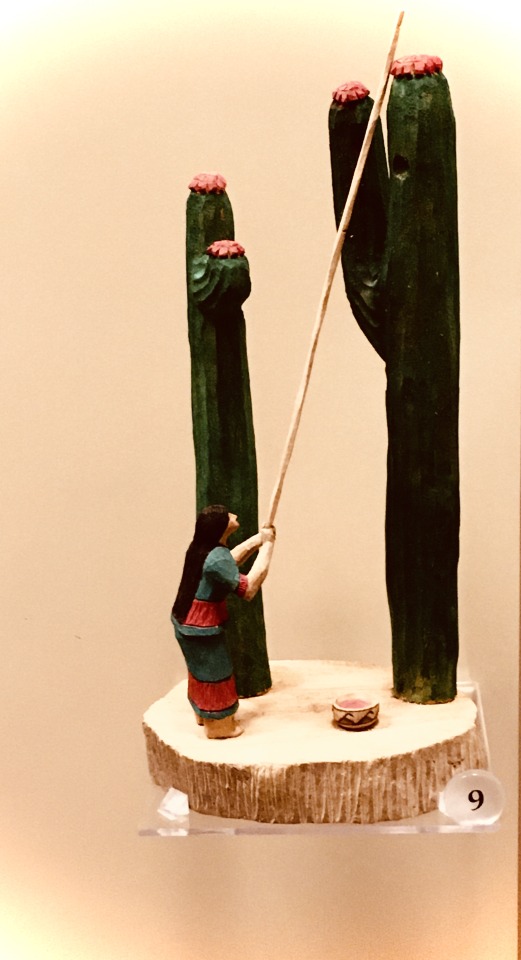
A carving depicting the saguaro harvest.

In Pittsburgh, museum visitors can learn something about the ancient connection between people and the iconic cactus by following a Hall of Botany stop with one in the Alcoa Foundation Hall of American Indians. Here, near the middle of the exhibition’s central corridor, a series of displays exploring use of plants by Native peoples includes a carving by artist Danny Flores (Tohono O’odham) that depicts the traditional harvest of saguaro fruit by Tohono O’odham women.

Consider the walk between the blooming life-sized saguaro in the Sonoran Desert diorama and the tiny carved replica to represent a spring-into-summer transition when white cactus blossoms, pollinated by bird, bat, or insect, transform into ripening red fruit.

A text panel near the model explains how gathered fruit is boiled to create a syrup which is then fermented into wine used in rituals invoking the summer rains to begin. The label also identifies the source of the specialized harvesting tool, an implement as long as a saguaro is tall. The pole is a saguaro rib, a part of the wood skeleton that once helped to hold a massive cactus upright.

Patrick McShea works in the Education and Visitor Experience department of Carnegie Museum of Natural History. Museum employees are encouraged to blog about their unique experiences and knowledge gained from working at the museum.

Related Content

Cactuses, and the Spine of Appalachia

Plant Blindness

Groundhog Architecture

Carnegie Museum of Natural History Blog Citation Information

Blog author: McShea, Patrick
Publication date: March 25, 2021

Share this post!

  • Share on Twitter Share on Twitter
  • Share on Facebook Share on Facebook
  • Share on Pinterest Share on Pinterest
  • Share on LinkedIn Share on LinkedIn
  • Share on Reddit Share on Reddit
  • Share via Email Share via Email

Share this post!

  • Share on Twitter Share on Twitter
  • Share on Facebook Share on Facebook
  • Share on Pinterest Share on Pinterest
  • Share on LinkedIn Share on LinkedIn
  • Share on Reddit Share on Reddit
  • Share via Email Share via Email

Filed Under: Blog Tagged With: Andrew Carnegie, botany hall, Educators, Museum from Home, Pat McShea

March 3, 2021 by wpengine

Pennsylvania Archaeology and You

The Pennsylvania Archaeological Council (PAC) is an organization of professional archaeologists from all over the State dedicated to education, consultation, ethics, and advocation of Pennsylvania archaeology. The PAC works to advise policy and legislative interests in the commonwealth as well as provide consultation with the Pennsylvania Department of Transportation. Anyone with a graduate degree in anthropology, archaeology, or a similar subject is encouraged to apply. Recently this membership has been expanded to include those with extensive experience and PAC has taken an interest in student membership. Check out this website for more information.

outline of the state of Pennsylvania with the letters PAC on it diagonally

For anyone interested in local archaeology, the Society for Pennsylvania Archaeology (SPA) exists alongside PAC. Anyone is welcome to join this special interest group that is made up of regional chapters. Established in 1929, the goals of SPA include; promoting the study of archaeological resources in PA, discouraging irresponsible exploration, connecting avocational and professionals, and promoting the conservation of sites, artifacts, and information. To disseminate information, the SPA facilitates one of the oldest State Archaeology Journals, Pennsylvania Archaeologist. 83 years of the publication are available for purchase on the website.

The Society for Pennsylvania Archaeology, Inc., the parent archaeological society, meets annually at announced places. Membership in the SPA is highly recommended. Dues are $30 per year for individuals. Membership entitles one to receive The Pennsylvania Archaeologist twice a year. For those interested in taking an active role, the SPA is made up of many individuals from regional chapters. I’ve decided to highlight two of those chapters in this blog. To find your regional chapter visit pennsylvaniaarchaeology.com/Chapters.htm

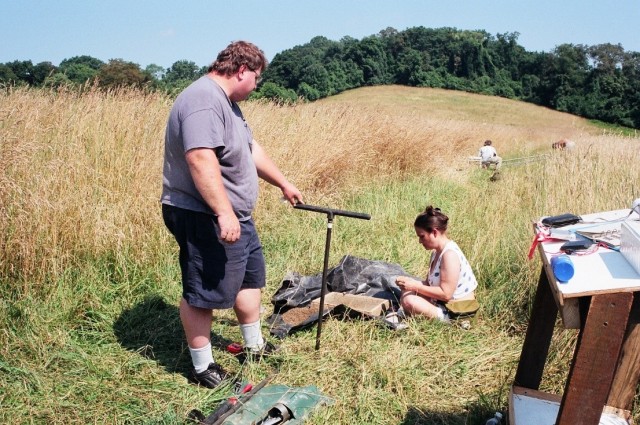
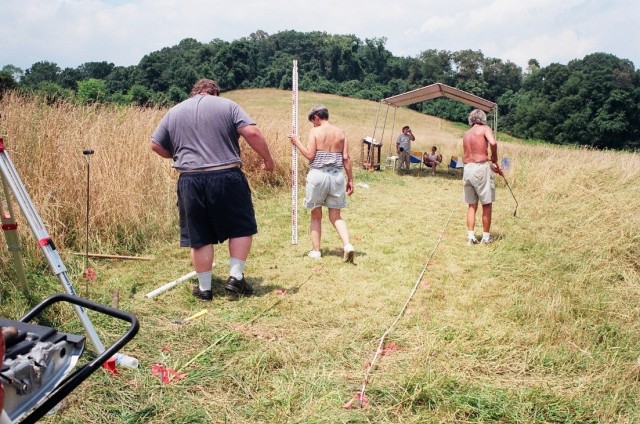
If you live in Pittsburgh, our local chapter is called Allegheny Chapter #1. We meet the first Tuesday of every month at 7:30 p.m. Due to the pandemic, this is currently done virtually. For membership information contact Amanda Valko at amanda@quemahoning.com The chapters take an active approach by conducting investigations of sites in their region. The Allegheny Chapter started working on a local site called the Hatfield site back in July of 2007. The first thing we did was set up a grid and took some geomorphology samples under the direction of Brian Fritz.

Brian Fritz and Nina Larsen examining a soil core sample at the Hatfield Site. (Photo Credit: Amanda Valko)
Setting up the grid for soil sampling. Chapter members front to back: Brian Fritz, Peggy Sinclair, Ken Fischer. Chapter members under the shade shelter: Don McGuirk, Nina Larsen. (Photo Credit: Amanda Valko)

The Allegheny Chapter is hoping to produce a report of these excavations soon. Hopefully we can get the Chapter together over the summer to work with the artifacts and start the whole report preparation process.

Southeast of Allegheny County, the Westmoreland Archaeological Society Chapter #23 used to meet on Wednesdays, but due to the pandemic are following an erratic schedule. For membership information contact Jim Barno at bar3686@calu.edu (Jim Barno is a dedicated volunteer in the section of Anthropology at CMNH.)

Chapter #23 was actively engaged in 16 years of excavation at the Console Site, which was an important Monongahela Site. They reach out to the students and faculty at the Indiana University of Pennsylvania encouraging them to become involved with the Westmoreland Archaeological Society by participating in various public events such as artifact displays and colloquiums held at the IUP campus, Fort Necessity National Battlefield, Green County Historical Society as well as local community events such the Derry Agricultural Fair.

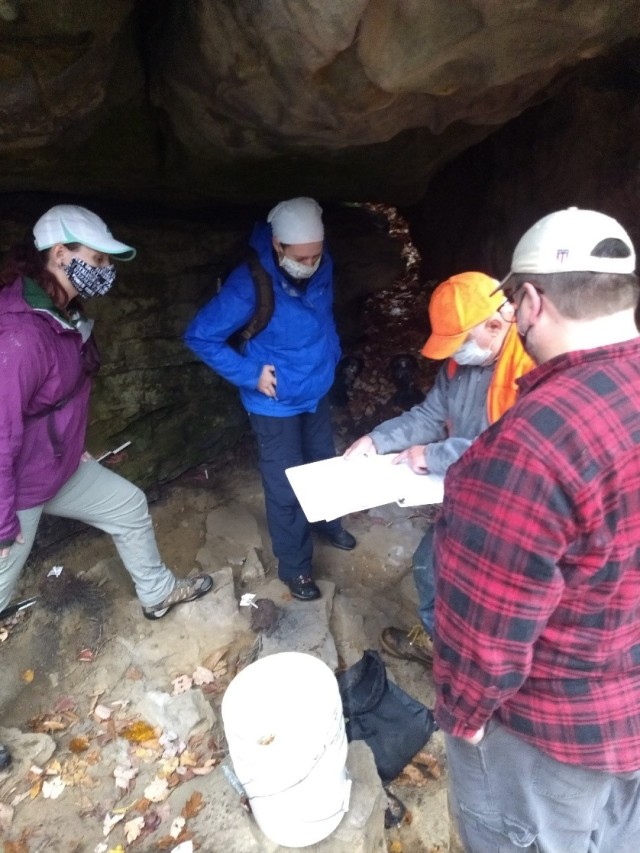
IUP students are actively involved in continuing excavations at the Bergstrom Hollow Rock Shelter Site (weather permitting). The chapter also publishes a monthly newsletter called The Trowel that has interesting archaeological subject material as well as listings of local archaeological events and now Zoom links for folks interested in these types of activities.

From the left are the following people Stephanie Zellers, Rachael Smith, Bob Oshnock, and Dr. Chadwick at the Bergstrom rock Shelter. (Photo Credit: Jim Barno)
Earth Day Event at St. Vincent College. Bob Oshnock and Dr. Lara Homsey-Messer (IUP) doing flotation. (Photo Credit: Jim Barno)

Remember to always report archaeological finds to the State Historic Preservation Office! Follow the guidelines specified in the links below.

PA SHPO/State Museum of PA: Instructions for Recording Archaeological Sites in Pennsylvania

PA State Historic Preservation Office (PA SHPO): Guidelines for Archaeological Investigations in Pennsylvania

Amy L. Covell-Murthy is Archaeology Collection Manager at Carnegie Museum of Natural History as well as a member of the SPA Allegheny Chapter 1, and a recently elected executive board member of the PAC. Museum employees are encouraged to blog about their unique experiences and knowledge gained from working at the museum.

Related Content

Archaeological Adventures in Egypt

Minecraft Lied to Me?!

Super Science Activity: Hieroglyphs

Filed Under: Blog Tagged With: Amy Covell-Murthy, archaeology, Archaeology Extravaganza, Educators, Super Science

March 3, 2021 by wpengine

Backyard Black Bird Mystery


It was a warm, almost-summer day in May 2020 when I accidentally stumbled upon an intense bird meeting. After a morning of attending online classes for school, I took a break by looking out a window that faced my neighbor’s fenced backyard. Perched on black fence posts and in the surrounding trees were a handful of crows watching a larger congregation of small black birds gathered on the ground below them.

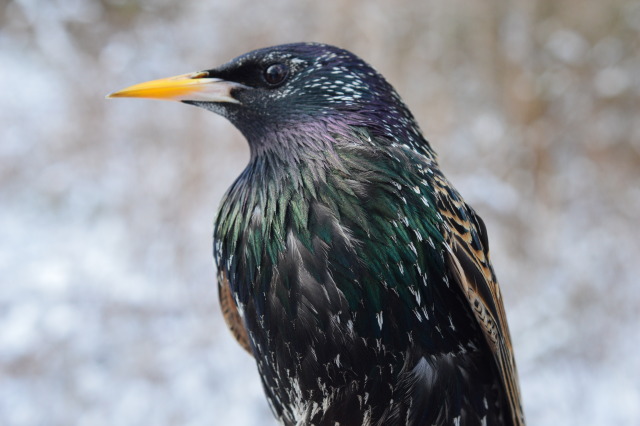
The scene was reminiscent of a playground full of children playing while under the watchful eyes of their parents. “Those must be baby crows!” was the thought that first came to mind. But something wasn’t right. I pressed my face to the window, squinting to see the smaller birds. (If my neighbors had walked into their backyard at that moment, it would have been an awkward explanation.) The birds’ beaks were bright yellow, unlike the dark beaks of the crows, and when they moved in the sunlight their feathers revealed a beautiful green and purple iridescence.

Pulling my phone out of my pocket, I Googled “black bird with yellow beak.” Up came a list of various black birds, challenging me to match my observations with screen images. The birds I saw didn’t have a patch of red and yellow on the wing like a Red-winged Blackbird, had a more slender neck than a Brewer’s Blackbird, and had a shorter tail than Common Grackle. That’s when I discovered starlings. Clicking on the image, I knew that I had the right bird. As I scrolled through associated information, I found some riveting facts about these unassuming birds.

European Starling (Sturnus vulgaris). Photo credit: Powdermill Nature Reserve, Carnegie Museum of Natural History

The European Starling gets its name because it looks like a small, four-pointed star when its stubby, triangular wings are spread out in flight. Starlings tend to travel in mixed flocks of similar-looking bird species or one giant flock called a murmuration. Some murmurations can number several thousands of birds. The seemingly perfect flight coordination of such flocks make them a wonderful spectacle to witness. However, starlings can be rather aggressive in displacing other birds in feeding and nesting situations, earning them the title of a “bully bird.” The species is not native to North America. Instead, they were introduced from Europe by Eugene Schieffelin, a William Shakespeare enthusiast. His mission was to introduce birds mentioned in William Shakespeare’s works, although starlings appear only once in Shakespeare’s Henry IV Part I. From introduction points in New York’s Central Park in 1890, starlings have spread over much of North America.

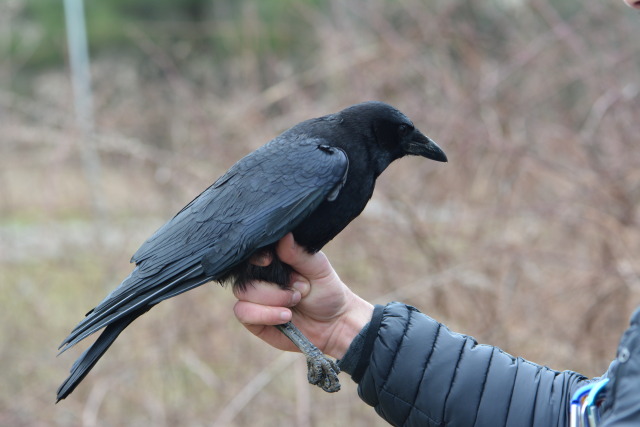
American Crow (Corvus brachyrhynchos). Photo credit: Powdermill Nature Reserve, Carnegie Museum of Natural History.

The American Crow, on the other hand, is larger, measuring around 17.5 inches in length. Unlike the starlings’ shimmers of iridescent color, crows are all black, down to their beaks and feet. These relatively large plain-looking birds are better known for their intelligence. Studies have shown that crows can identify individual people and associated threat levels, and even pass that knowledge to their offspring and flock members. For example, John Marzluff, a wildlife biologist at the University of Washington, and two students trapped, banded, and released seven crows while wearing a caveman mask, creating, for the briefly captive birds, an association of danger with the mask’s exaggerated facial features. As an experimental control, the research team also used a Dick Cheney mask for neutral non-contact encounters with the targeted birds. In the following months, volunteers wore one of the two masks while walking around campus, not bothering the crows. Those wearing the dangerous mask were scolded by the crows, while those wearing the neutral mask were not harassed. As more time passed, the number of crows that attacked the dangerous-mask-wearers increased, indicating that crows learned to recognize humans from parents and other flock members.

As for the crow and starling meeting that afternoon? An overlap in their respective diets may explain the gathering. Starlings eat insects, invertebrates, berries, fruits, and seeds, while the omnivorous diet of crows includes all those items plus small vertebrates and carrion. Perhaps the crows had been simply waiting for their turn to feast on the buffet of insects and seeds in my neighbor’s backyard. The items on the menu must have been particularly delicious that day.

Angela Wu is a Teen Volunteer in the Education Department. Museum employees, volunteers, and interns are encouraged to blog about their unique experiences and knowledge gained from working at the museum.

Works Cited

“American Crow: Identification.” All About Birds, Cornell University, 2019, www.allaboutbirds.org/guide/American_Crow/id.

BBC. 24 Apr. 2014, www.bbc.com/news/magazine-27055030. Accessed 21 Nov. 2020.

Bradford, Alina. “Facts About Crows.” Live Science, Future US, 2 May 2017, www.livescience.com/52716-crows-ravens.html. Accessed 20 Nov. 2020.

“European Starling: Life History.” All About Birds, Cornell University, 2019, www.allaboutbirds.org/guide/European_Starling/lifehistory. Accessed 20 Nov. 2020.

Nijhuis, Michelle. “UW Professor Learns Crows Don’t Forget a Face.” The Seattle Times, 26 Aug. 2008, www.seattletimes.com/seattle-news/uw-professor-learns-crows-dont-forget-a-face/. Accessed 23 Dec. 2020.

NPR. Npr, 4 Jan. 2017, www.npr.org/sections/13.7/2017/01/04/506400719/video-swooping-starlings-in-murmuration. Accessed 23 Dec. 2020.

“Starlings.” Maine Department of Inland Fisheries & Wildlife, 2020, www.maine.gov/ifw/fish-wildlife/wildlife/living-with-wildlife/avoid-resolve-conflict/starlings.html. Accessed 20 Nov. 2020.

Related Content

Ask a Scientist: Ravens and crows, what’s the difference? 

Super Science Activity: DIY Helicopter Seeds

Super Science Activity: Straw Rockets

Filed Under: Blog Tagged With: Angela Wu, Educators

  • « Go to Previous Page
  • Page 1
  • Page 2
  • Page 3
  • Page 4
  • Interim pages omitted …
  • Page 7
  • Go to Next Page »

sidebar

About

  • Mission & Commitments
  • Directors Team
  • Museum History

Get Involved

  • Volunteer
  • Membership
  • Carnegie Discoverers
  • Donate
  • Employment
  • Events

Bring a Group

  • Groups of 10 or More
  • Birthday Parties at the Museum
  • Field Trips

Powdermill

  • Powdermill Nature Reserve
  • Powdermill Field Trips
  • Powdermill Staff
  • Research at Powdermill

More Information

  • Image Permission Requests
  • Science Stories
  • Accessibility
  • Shopping Cart
  • Contact
  • Visitor Policies
Stay in the loop! Sign up for our newsletter(s).
One of the Four Carnegie Museums | © Carnegie Institute | Privacy Policy | Terms of Use | Accessibility
Rad works here logo