• Skip to primary navigation
  • Skip to main content
  • Skip to primary sidebar

Carnegie Museum of Natural History

One of the Four Carnegie Museums of Pittsburgh

  • Visit
    • Buy Tickets
    • Visitor Information
    • Exhibitions
    • Events
    • Dining at the Museum
    • Celebrate at the Museum
    • Powdermill Nature Reserve
    • Event Venue Rental
  • Learn
    • Field Trips
    • Educator Information
    • Programs at the Museum
    • Bring the Museum to You
    • Guided Programs FAQ
    • Programs Online
    • Climate and Rural Systems Partnership
  • Research
    • Scientific Sections
    • Science Stories
    • Science Videos
    • Senior Science & Research Staff
    • Museum Library
    • Science Seminars
    • Scientific Publications
    • Specimen and Artifact Identification
  • About
    • Mission & Commitments
    • Directors Team
    • Museum History
  • Tickets
  • Give
  • Shop

fossils

October 15, 2018 by wpengine

Meet The Newest Addition To The Fossil Vertebrate Collection

by Amy Henrici

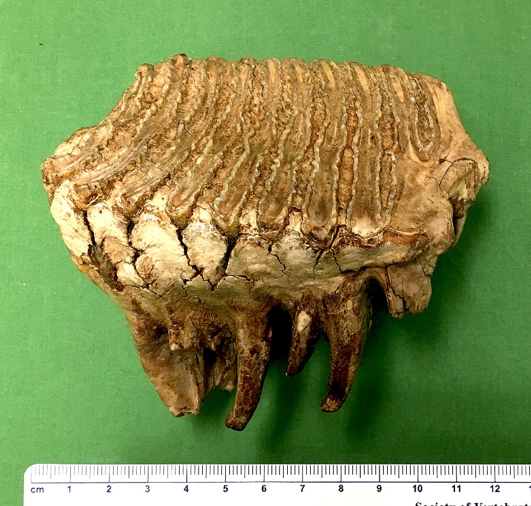
mammoth tooth from the side
The new mammoth tooth as viewed from the side. The crown, or exposed part, of the tooth is at the top, and the root is at the bottom.

The Section of Vertebrate Paleontology at Carnegie Museum of Natural History acquires fossils in a variety of ways, most commonly through field work by Section staff, exchanges with other museums, donations, or (very rarely) purchases. The most recent addition to the collection came by way of a donation.

Gary Kirsch discovered the tooth shown above in a sand-gravel bar of a central Ohio stream in 1988 while collecting sediment samples. He had set his sampling equipment on the sand-gravel bar and was moving between the bar and the stream collecting samples. During one of his many forays, Gary noticed an edge of the tooth sticking out of the bar and pulled it out. It was covered in mud, which he quickly cleaned off in the stream to reveal the beautifully preserved tooth, which he identified as that of a mammoth.

Gary recently emailed photographs of the tooth to Assistant Curator of Vertebrate Paleontology Matt Lamanna because he wanted to donate it to the museum. Acceptance of his generous offer required some research: mammoth and Asian elephant teeth are very similar, and because none of the Section staff are experts in fossils of Pleistocene (Ice Age) mammals, we reached out to Pleistocene expert Blaine Schubert at East Tennessee State University, who often uses our collection, to verify Gary’s identification. Blaine was certain that it was a mammoth tooth because an Asian elephant tooth could only have come from a zoo or circus animal, which was highly unlikely. Blaine was curious about how teeth of the two species are distinguished, so he forwarded the photographs to an elephant expert at his university, Chris Widga.
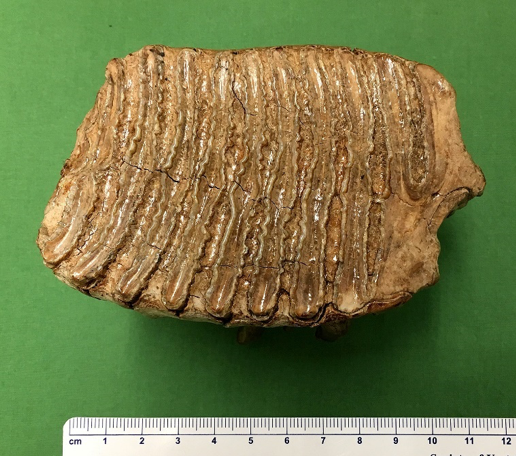
mammoth tooth from the top
The grinding (i.e., lower, occlusal) surface of the tooth, showing the fairly crenulated tooth enamel.

Chris determined that the tooth is the first (forward-most) molar from the left upper jaw, and because it has fairly crenulated enamel, that it is from a woolly mammoth (Mammuthus primigenius). Through comparison with tooth eruption and wear schedules (sequences) of modern elephants, Chris concluded that the animal was in its late teens to early 20s when it died. In the wild, modern elephants generally live to about their mid-50s, so this single specimen offers a window into mammoth mid-life.

The Section is grateful to Gary for his thoughtful donation. The specimen will be put on temporary display soon in the PaleoLab window on the first floor of the museum for public viewing.

Amy Henrici is the collection manager for the Section of Vertebrate Paleontology at Carnegie Museum of Natural History. Museum employees are encouraged to blog about their unique experiences and knowledge gained from working at the museum.
Filed Under: Blog Tagged With: Amy Henrici, fossils, ice age mammals, paleontology, Vertebrate Paleontology

September 27, 2018 by wpengine

Badwater 20: Not So Bad After All

by Lauren Raysich

small fossil

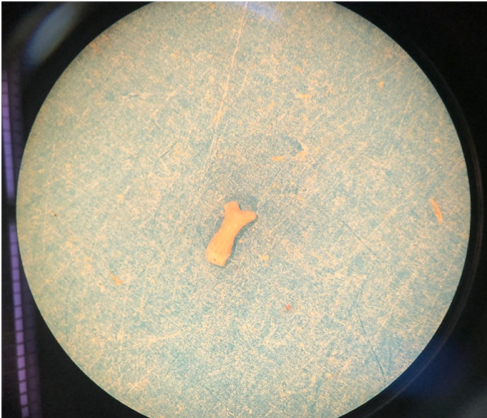
Although many people are familiar with fossilized bones of dinosaurs and other large extinct creatures, some fossils can be so small that a microscope is needed to see them. In Carnegie Museum of Natural History’s PaleoLab, volunteers like me use microscope stations to search for tiny fossils in different sediments collected from sites all over the world. Sediment from the Badwater 20 locality in Wyoming interests me more than any other. Sediment from this site dates to a time known as the Eocene Epoch. The middle of three epochs in the Paleogene Period, the Eocene lasted from 56 to 33.9 million years ago. Many fossils found from the Eocene belong to some of the oldest known members of modern mammal groups. Studying these fossils helps scientists trace the evolutionary histories of mammals we know today.

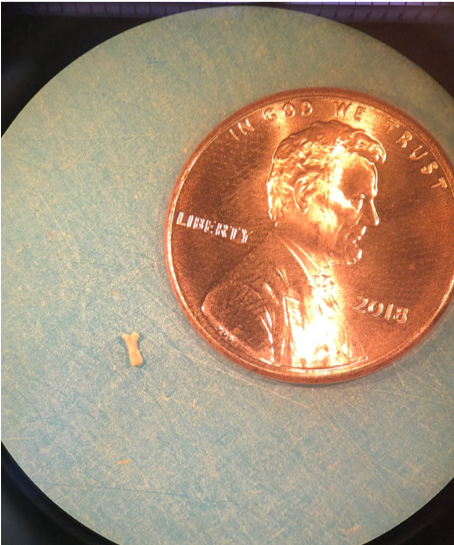
After searching through the Badwater 20 sediment for nearly two weeks, I had found only fragments of bones and teeth. Then, surprisingly, I came across a small, complete bone. It is not common to find complete fossil bones that are this tiny because they can be broken easily, whether by erosion or by being crushed by scavenging animals or water currents. Fossils are not immune to human-induced hazards either. After I found the bone, I was so excited that I accidentally dropped it on the floor of the lab and had to use a magnifying glass to relocate it! (Thankfully, it didn’t break.)

small fossil next to a penny for scale

This bone interested me more than any other because it was the first bone I’d found from the Badwater 20 site that wasn’t fractured in some way. Since the bone is so small, I figured it had to have come from a tiny mammal. Through research and the help of other museum volunteers and staff, I have concluded that this bone is a phalanx (finger or toe bone) of an Eocene rodent. The mouse-like animal to which it belonged most likely lived in a tree, a burrow, or the undergrowth more than 37 million years ago! Although, to some people, this little bone may not be as exciting as those of, say, Tyrannosaurus rex, it thus has an important story to tell in the history of life on our planet.

Lauren Raysich is an undergraduate student at the University of Pittsburgh who volunteers in the Section of Vertebrate Paleontology at Carnegie Museum of Natural History. Museum employees are encouraged to blog about their unique experiences working at the museum.

Filed Under: Blog Tagged With: fossils, Lauren Raysich, mammals, Mason Heberling, Paleolab, paleontology, Vertebrate Paleontology

September 4, 2018 by wpengine

Pebble or Jaw?

by Jay Margolis

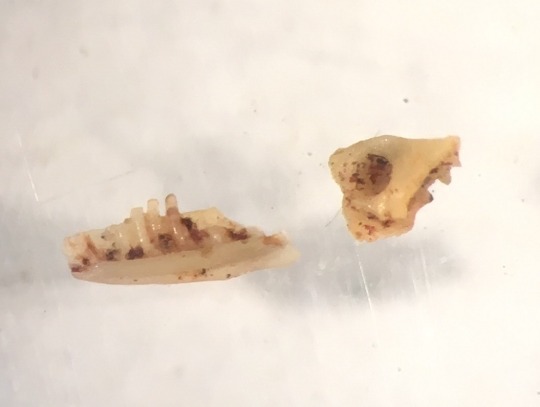
partial jawbone and bone fragment fossils

It can be difficult to find fossils when working on a microscopic scale. The partial jawbone and bone fragment above are each less than a centimeter (0.4 inches) in maximum diameter, but their small size makes them no less important to paleontologists and other researchers. Even diminutive fossils such as these can be used to help scientists determine the diet or behavior of extinct animals, as well as to piece together what kind of environment they lived in.

fossil measuring

Even with the help of microscopes, it can be hard to tell such fossils apart from the tiny rocks and sediment that they are often mixed in with. After spending a long amount of time practicing and studying, telling fossil apart from rock can become easier. However, for those who have not had as much practice, there are a few easy ways to help distinguish the two.

One of these ways is to look for striations, or organized and consistent lines. These lines are all oriented in the same direction and can be seen on the surface of some fossils as an indicator of past bone growth. Another way is to look for pores, circular holes that would be visible in a cross-section of a fossil bone. These holes indicate where blood vessels once carried nutrients throughout the bone.

Both of these textures can potentially be seen in a disorganized fashion on rocks and minerals. However, seeing these two textures together, and arranged in an orderly way, is among the best indicators that the rock you thought you were looking at is actually a fossil.

Jay Margolis is an intern from Chatham University working in the Section of Vertebrate Paleontology at the Carnegie Museum of Natural History. Museum employees are encouraged to blog about their unique experiences and knowledge gained from working at the museum.
Filed Under: Blog Tagged With: fossils, Jay Margolis, paleontology, Vertebrate Paleontology

August 27, 2018 by wpengine

The Volunteers: Can’t Live Without Them

By Albert Kollar

What makes an ideal volunteer at the Carnegie Museum of Natural History? Maybe the question should be how does one find a volunteer? For the Section of Invertebrate Paleontology, it was with luck and timing.  In 2002, I met Sam in Benedum Hall of Geology, who recently retired and was looking to learn about Pittsburgh geology and fossils. Sam with a Ph.D. in metallurgy had minored in geology in college in London. To train a volunteer without a background in fossils requires time and patience. With Sam it was easy, as he already was familiar with the scientific method. More luck and timing followed when two retired engineers Earl and Rich joined us. Our quartet was complete when Vicky arrived soon after.  By then, we recognized what type of volunteer will work for us going forward.

When the section formed the PAlS Program in 2004 we gained many more volunteers over the years.  PAlS (Patrons and lauradanae Supporters) is a section geology program that offered lectures on western Pennsylvania geology, fossil field trips, and in lab fossil workshops to the membership. We soon discovered that many PAlS members wanted to help in ways outside the museum.  We refer to these volunteers as the section’s ambassadors because they invest their time into promoting what the section and museum can offer to the region.  Some volunteers helped with financial support and collaborative projects with the Pittsburgh Geological Society, the Montour Trail Council, and the Allegheny County Parks – North Park.

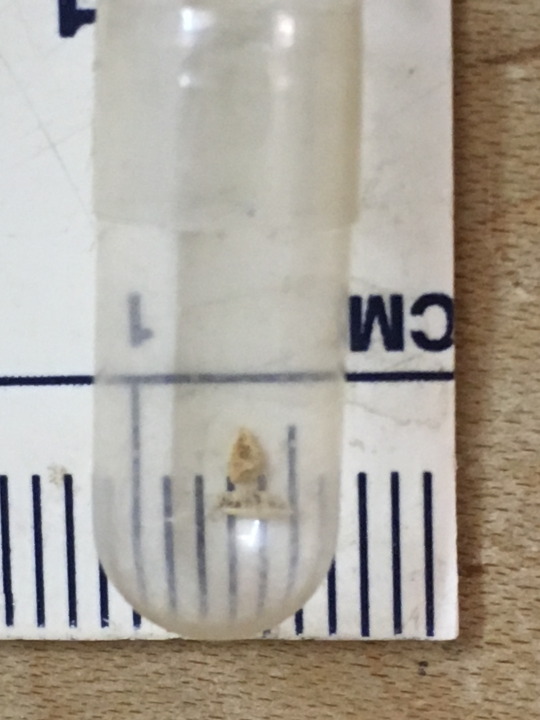
volunteers

From 2002 to 2018 the thirty-three volunteers contributed much to the section and museum.  First and foremost is their dedication to assisting with the curation of the section’s fossil groups. These include fossil corals, bryozoans, brachiopods, mollusks, ammonites, echinoderms, and gastropods. Some volunteers published peer reviewed papers based on the section’s fossils. Other worked with the section staff to publish 21 PAlS Geology Guides.  The former section curator John L. Carter and his wife Ruth provided financial support for field work and to publish the PAlS Guide No. 8, Geology and Fossils of the Tri-State Region Coloring Book Guide for school groups.

The professional backgrounds of the volunteers create knowledge that the section can use in its mission. For instance, the twenty-seven adults’ working careers varied from paleontologists and geologists, to medical doctors and a dentist, earth science teachers, teachers, museum docents, architecture historian, an author, an accountant, and a pharmacist assistant. Several of our volunteers were former graduate students with me (Dave, John, Henry and Roman) in the Department of Geology of the University of Pittsburgh. We are often referred to as Bud’s Men, in honor of the late Professor of Paleontology H.B. Rollins who was a volunteer as well.

We have had four college age volunteers who majored in geology. I am happy to report they found employment in the sciences or their chosen fields. Two high school volunteers who received their early start in fossils are doing very well. One is employed as a consultant in the health industry. The other is attending undergraduate college in Massachusetts. During the summer, she is a part-time research assistant in the section helping with our research projects.

As a final tribute here is the list of names: Bob, Bud (deceased), Chrissy, Dakota, Dan, Dave and Lauradanae, Earl, Ed, John, John and Ruth (both deceased), Harlan, Henry, Irina, J.J., Karen, Kay, Kendall, Laurie, Matt, Pam, Peter, Ray, Rich, Roman, Sam (deceased), Tamara, Tara, Thad, Valerie, Vicky, and Will. Thank you volunteers. Albert D. Kollar Section of Invertebrate Paleontology.

Albert D. Kollar is the Collection Manager in the Section of Invertebrate Paleontology at Carnegie Museum of Natural History. Museum employees are encouraged to blog about their unique experiences and knowledge gained from working at the museum.
Filed Under: Blog Tagged With: fossils, geology, invertebrate paleontology, volunteers

July 23, 2018 by wpengine

The Hidden Fossil Treasures of the Section of Invertebrate Paleontology of the Carnegie Museum of Natural History

By Albert D. Kollar

When people hear the name Invertebrate Paleontology often times they are confused what it means. Invertebrates are animals without backbones such as trilobites, lobsters, clams, snails, corals, sea urchins, and brachiopods to name a few. The term paleontology refers to fossilized animals that once lived in the geologic past. The evidence of this event is preserved in earth’s sedimentary rocks. Invertebrate fossils are found in limestones, sandstones, and shales that formed in ancient oceans, lakes and rivers during times of environmental and climate change.

Close to a million invertebrate fossil specimens are housed in the Section of Invertebrate Paleontology cabinets stored in the museum’s basement. To build a collection of 800,000 plus fossils, it takes more than a century of field collecting by section staff, exchanges with other museums from around the world, donations from our research associates and regional universities. Under special circumstances, donations are received from the general public if the fossils and the localities can be verified scientifically.

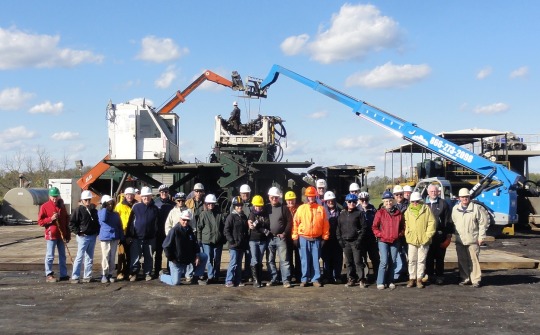
Eurypterid trackway.
Eurypterid trackway

The section’s collection strengths are based on the paleontologically, stratigraphic, and geologic interest of the section’s scientists and colleagues who work on the various invertebrate groups. The section historical strengths are in the fossil groups of trilobites, brachiopods, crustaceans’ snails, cephalopods, and the eurypterid trackway. Sometimes special fossils from the collections are placed on the museum’s exhibit floor in Benedum Hall of Geology and Dinosaurs in Their Time. For instance, one of the great regional fossils is the giant eurypterid trackway on display in Benedum Hall of Geology. The fossil track was discovered by museum scientists in 1948 in Elk County, Pennsylvania. The fossil was later named Palmichnium kosinskiorum in honor of the discoverer, James Kosinski. An in-depth geology review of the fossil site was published in the Carnegie Annals in 2016 by section staff Albert Kollar and David Brezinski.  Other Pittsburgh area fossils from the collection can be found in the Pennsylvanian Marine Diorama in Benedum Hall of Geology.

In future blogs, the section will be talking about the history of research, collection expeditions, fossils on display, the importance of volunteers in the sections and many more topics. Stay tuned.

Albert D. Kollar is the Collection Manager in the Section of Invertebrate Paleontology at Carnegie Museum of Natural History. Museum employees are encouraged to blog about their unique experiences and knowledge gained from working at the museum.
Filed Under: Blog Tagged With: Albert Kollar, fossils, invertebrate paleontology, paleontology

July 11, 2018 by wpengine

The Two-Headed Dinosaur

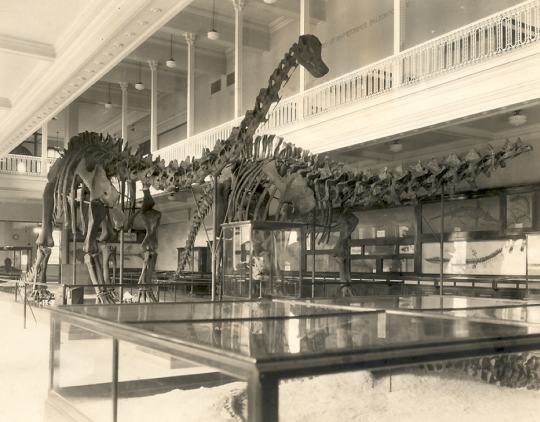
Apatosaurus is a sauropod, or long-necked plant-eating dinosaur, that lived in western North America during the late Jurassic Period roughly 150 million years ago. In the early 20th century, scientists couldn’t agree on what kind of head Apatosaurus had. No skull had ever been found attached to a neck of this dinosaur. So, when Carnegie Museum of Natural History mounted its most complete Apatosaurus skeleton in 1915, it did so without including a skull.

Apatosaurus louisae (right) as it was originally mounted in 1915, without a skull. At left is the skeleton of its relative Diplodocus carnegii.
Carnegie Museum of Natural History’s skeleton of Apatosaurus louisae (right) as it was originally mounted in 1915, without a skull. At left is the skeleton of its relative Diplodocus carnegii, better known as ‘Dippy.’ Credit: Carnegie Museum of Natural History.

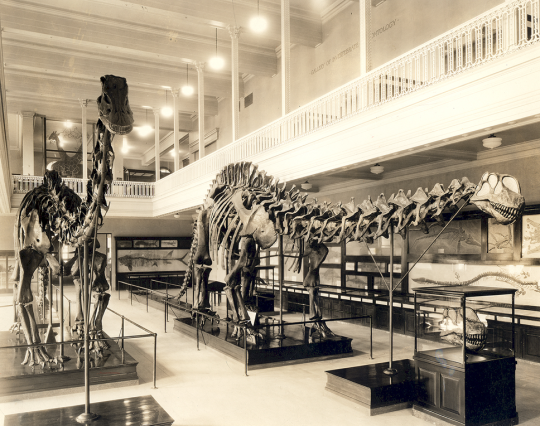
The mount stood headless until 1932, when the museum followed prevailing scientific opinion of the day and placed a blunt-snouted, broad-toothed skull on the Apatosaurus. It remained there for another 47 years.

Apatosaurus and Diplodocus skeletons
Apatosaurus (right) and Diplodocus, ca. 1932, after a skull of the blunt-snouted sauropod Camarasaurus lentus had been mounted on the Apatosaurus skeleton. Credit: Carnegie Museum of Natural History.

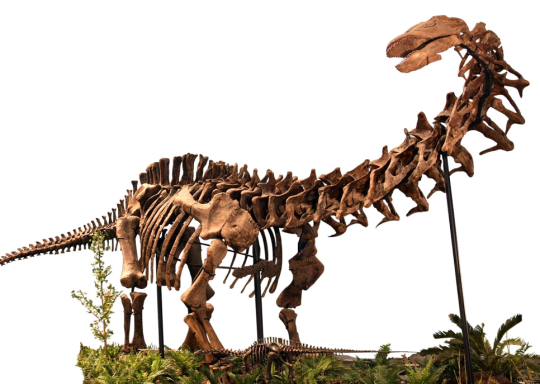
In 1978, however, Carnegie Museum of Natural History paleontologist Dave Berman and museum research associate Jack McIntosh reasoned that a very different, more Diplodocus-like skull found with the Apatosaurus skeleton back in 1910 was most probably the correct one. A subsequent discovery of a still-connected Apatosaurus skull and neck proved them correct. In 1979, the museum’s Apatosaurus louisae was finally fitted with its proper skull – more than seven decades after its discovery! It remains that way today, on public exhibit in the museum’s dinosaur gallery, Dinosaurs in Their Time.

Apatosaurus Louise
Apatosaurus as it looks today, displayed with its correct skull, which closely resembles that of its relative, Diplodocus. Credit: Melinda McNaugher, Carnegie Museum of Natural History.

Matt Lamanna is a paleontologist and the principal dinosaur researcher at Carnegie Museum of Natural History in Pittsburgh.  Museum employees are encouraged to blog about their unique experiences and knowledge gained from working at the museum.
Related Content

Ask a Scientist: What kind of dinosaur was a megaraptorid?

Mesozoic Monthly: Dreadnoughtus

The Strange Saga of Spinosaurus, the Semiaquatic Dinosaurian Superpredator

Filed Under: Blog Tagged With: dinofest, dinosaur, dinosaurs in their time, diplodocus carnegii, fossils, Matt Lamanna, Vertebrate Paleontology

  • « Go to Previous Page
  • Page 1
  • Page 2
  • Page 3
  • Page 4
  • Page 5
  • Interim pages omitted …
  • Page 8
  • Go to Next Page »

sidebar

About

  • Mission & Commitments
  • Directors Team
  • Museum History

Get Involved

  • Volunteer
  • Membership
  • Carnegie Discoverers
  • Donate
  • Employment
  • Events

Bring a Group

  • Groups of 10 or More
  • Birthday Parties at the Museum
  • Field Trips

Powdermill

  • Powdermill Nature Reserve
  • Powdermill Field Trips
  • Powdermill Staff
  • Research at Powdermill

More Information

  • Image Permission Requests
  • Science Stories
  • Accessibility
  • Shopping Cart
  • Contact
  • Visitor Policies
One of the Four Carnegie Museums | © Carnegie Institute | Privacy Policy | Terms of Use | Accessibility
Rad works here logo