• Skip to primary navigation
  • Skip to main content
  • Skip to primary sidebar

Carnegie Museum of Natural History

One of the Four Carnegie Museums of Pittsburgh

  • Visit
    • Buy Tickets
    • Visitor Information
    • Exhibitions
    • Events
    • Dining at the Museum
    • Celebrate at the Museum
    • Powdermill Nature Reserve
    • Event Venue Rental
  • Learn
    • Field Trips
    • Educator Information
    • Programs at the Museum
    • Bring the Museum to You
    • Guided Programs FAQ
    • Programs Online
    • Climate and Rural Systems Partnership
  • Research
    • Scientific Sections
    • Science Stories
    • Science Videos
    • Senior Science & Research Staff
    • Museum Library
    • Science Seminars
    • Scientific Publications
    • Specimen and Artifact Identification
  • About
    • Mission & Commitments
    • Directors Team
    • Museum History
  • Tickets
  • Give
  • Shop

fossils

November 28, 2016 by wpengine

Shifting Formations

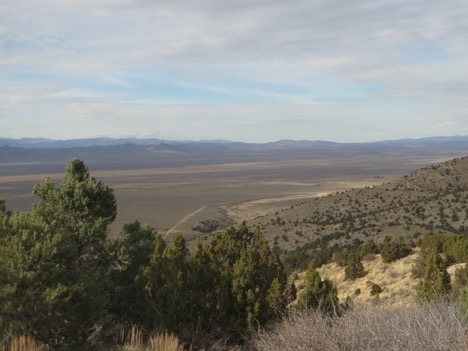
Nevada’s White River Valley from high ground in the South Egan Wilderness.

by Patrick McShea

From Elko, Nevada, the Carnegie Museum of Natural History frog fossil expedition shifted some 125 miles southeast to steep winding canyons within the South Egan Wilderness, a mountainous tract of more than 67,000 acres.

The move involved a change in the age of the rock outcrops we searched. Near Elko our efforts were confined to various associated rock layers, which geologists categorize as the Elko Formation, a thick and wide spread unit which formed some 46 – 39 million years ago during the Eocene Epoch. In the South Egan Wilderness, we explored the Sheep Pass Formation, a sequence of far older rocks which formed during the Late Cretaceous through middle Eocene Epochs some 70-46 million years ago.

Daily procedures were far different in the BLM-managed wilderness than on the outskirts of Nevada’s 15th largest city.

Instead of commuting to outcrops from a motel in Elko’s center, we hiked to rock exposures more than a mile from our simple camp site, proceeding up dry stream beds and ascending eight staircase-like water falls to reach the fossil-bearing units at elevations exceeding 6,700 feet. Evenings were cold, star-filled, and absolutely quiet but for the occasional howls and yips of coyotes.

Because a 2012 wildfire burned over 10,000 acres of sage brush, juniper, and pinyon pine, our camp area was a surreal landscape of charred trees.


Patrick McShea is a museum educator who is traveling through Nevada with Vertebrate Paleontology Collections Manager Amy Henrici to search for frog fossils. He frequently blogs about his experiences.
Filed Under: Blog Tagged With: Amy Henrici, fossils, frogs, paleontology

November 16, 2016 by wpengine

Where to Look for Fossils

Amy Henrici
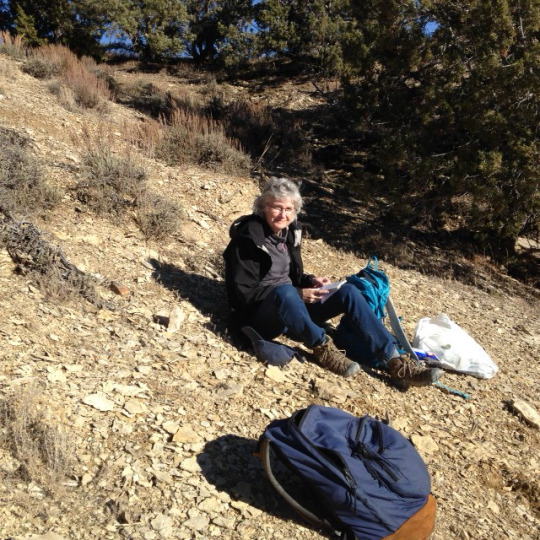
Vertebrate Paleontology Collections Manager Amy Henrici in the field.

As I travelled west from Pittsburgh to meet Carnegie Museum of Natural Hisotry Vertebrate Fossil Collection Manager Amy Henrici for a frog fossil hunting expedition in eastern Nevada, the same question was asked by each of my airplane seat mates.

“How do you know where to look for fossils?“

For the sites we planned to visit the answer was simple. Earlier written reports by geologists mapping rock formations and mineral deposits noted the occasion occurrence of fossils in certain rock layers.

Fossil searches involved locating and visiting sites where such rock layers are exposed on the surface, and then examining fragments that have eroded from these outcrops.The full process, which might stretch over decades, is an example of how published findings allow one branch of science to serve another.

As a geologist friend takes great pleasure in explaining, “Geologists let paleontologists know where fossils are in the multitude rock layers of Earth’s history, in time and in place.”


Patrick McShea is a museum educator who is traveling through Nevada with Vertebrate Paleontology Collections Manager Amy Henrici to search for frog fossils. He frequently blogs about his experiences.
Filed Under: Blog Tagged With: Amy Henrici, expedition, fossils, frogs, geology, museums, paleontology

November 14, 2016 by wpengine

Moving Day for Jane the T-Rex

Jane without head or tail

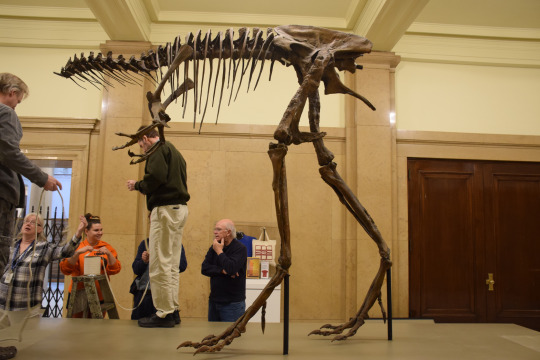
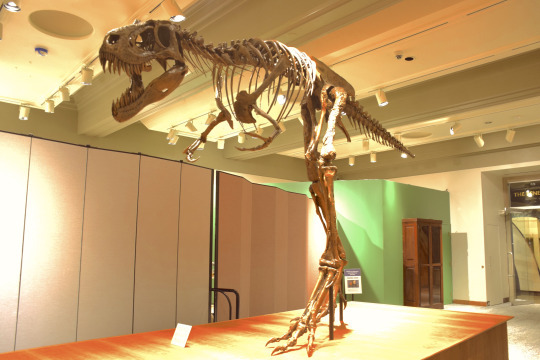
It was moving week for our juvenile Tyrannosaurus Rex Jane! She’s been living in the spine of our museum for quite sometime, but this week she was moved just a few hundred feet away into our brand new gift store, where she’ll be the center of attention.

Staff carefully disassembled Jane by removing her skull, tail, and ribcage before they wheeled her stand to it’s new location and reassembled her.

The gift store is currently undergoing renovations and will reopen later this month with three new exhibits.

the finished reconstructed T-Rex

Jane sitting pretty in her new home. 

Filed Under: Blog Tagged With: dinosaurs, fossils, paleontology, t-rex

November 8, 2016 by wpengine

Smuggled Fossil from China

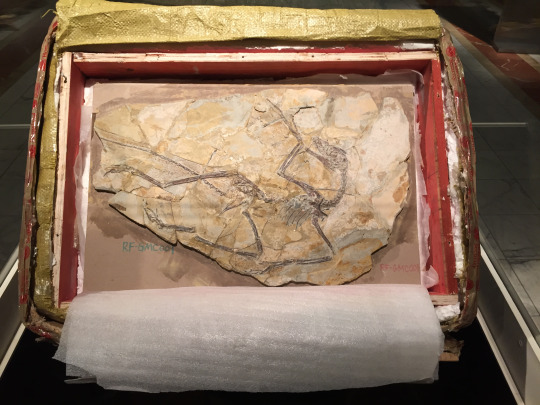
feathered dinosaur fossil of an Anchiornis huxleyi

How does a fossil that was illegally smuggled out of China end up on display in Pittsburgh?

This feathered dinosaur fossil of an Anchiornis huxleyi from the late Jurassic Period is currently at Carnegie Museum of Natural History in Pittsburgh on loan from a museum in China.

U.S. Immigration and Customs Enforcement’s Homeland Security confiscated this fossil from a dealer who tried to illegally smuggle it out of China.

Carnegie paleontologist Matt Lamanna helped Homeland Security Investigations identify the fossil as a feathered predatory dinosaur from northeastern China. It was returned in 2015, but the Chinese government loaned the fossil to the museum where it will be on display until it is returned to the Geological Museum of China in Bejiing.

Filed Under: Blog Tagged With: dinosaur, fossils

November 1, 2016 by wpengine

Frog Fossil Hunt in Nevada

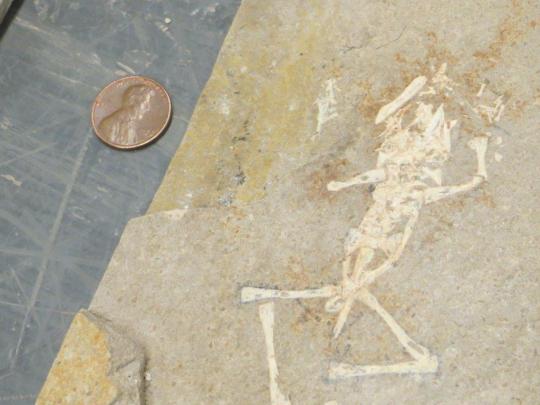
frog fossil

Frog fossil from eastern Nevada.

by Patrick McShea

Dinosaurs get all the attention, but fossils of less glamorous creatures also contribute much to our understanding of evolution and extinction. Consider frogs for example. These widely distributed amphibians first appear in the fossil record roughly 190 million years ago. Since then they have
survived numerous events, including mass extinction, changing climate, and the rearrangement
of continents through plate tectonics.

The study of how frogs adapted to changing environments over vast stretches of time is especially important today in light of dramatic declines of many frog species due to rapid climate change, habitat fragmentation, the global spread of disease, and broad changes in land use.

Frogs are not ignored in Carnegie Museum of Natural History’s Dinosaurs in Their Time.  A rectangular display case near the terminus of Diplodocus carnegeii’s exquisitely tapered tail, a cast featuring tiny frog bones from Dinosaur National Monument shares space with the holotype skull of a Jurassic crocodile.

The bones represent a species that must have sometimes dwelled in the literal shadows of sauropod dinosaurs. The species was named Rhadinosteus parvus in a scientific research paper by Amy Henrici, a paleontologist who is the collection manager for the Carnegie’s Section of Vertebrate Paleontology.

Amy has conducted research and published findings on other frog fossils, and regularly serves as a peer reviewer for the research papers of other scientists studying the frog fossils. This fall, at the annual meeting of the Society of Vertebrate Paleontology (SVP) in Salt Lake City, Amy will be presenting
information about an ongoing study of frog fossils from eastern Nevada.

My interest in her research and publications is deeper than that of an admiring co-worker. Amy and I have been married for 28 years, and several times I have worked as her field assistant. This fall, I’ll fill that
role again when she conducts post-SVP Meeting field work at two sites in eastern Nevada. As a museum educator I plan to post pictures and updates about the fossil-hunting expedition, so stay tuned! More frog posts are coming.

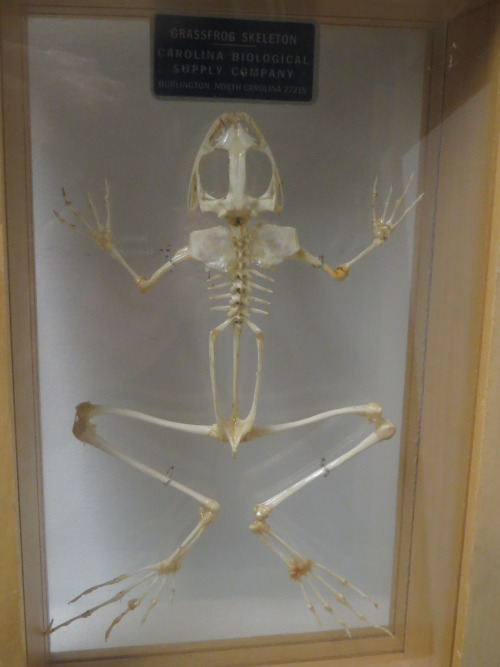
Grass frog skeleton in the CMNH teaching collection

Grass Frog skeleton in the CMNH teaching collection.

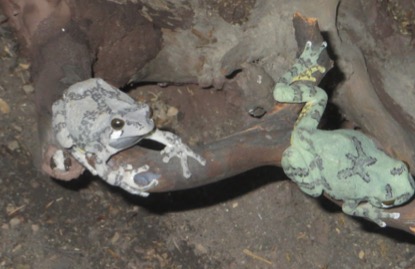
Eastern Gray Tree Frogs in the Pennsylvania Amphibians display on the Daniel G. & Carole L. Kamin T-rex Overlook

(Eastern Gray Tree Frogs in the Pennsylvania Amphibians display on the Daniel G. & Carole L. Kamin T-rex Overlook.)


Patrick McShea works in the Education and Visitor Experience department of Carnegie Museum of Natural History. Museum employees are encouraged to blog about their unique experiences of working at the museum.

Filed Under: Blog Tagged With: Amy Henrici, fossils, Patrick McShea

October 31, 2016 by wpengine

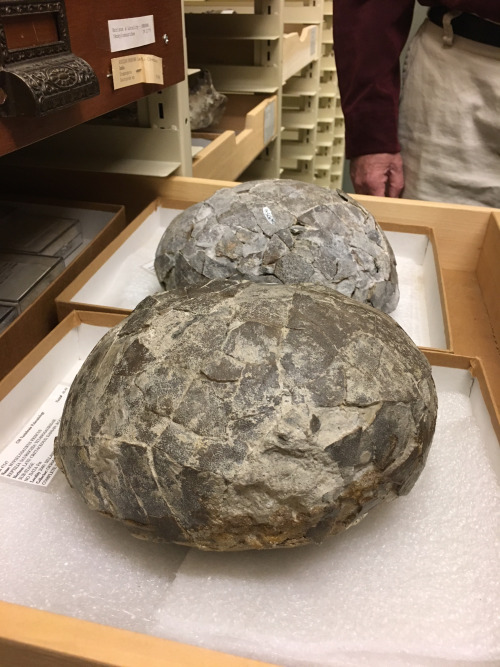
Dinosaur eggs!

dinosaur egg fossils

Dinosaur eggs! These fossilized eggs are part of Carnegie Museum of Natural History’s hidden collection in the Section of Vertebrate Paleontology.

Filed Under: Blog Tagged With: behind the scenes, collections, dinosaur eggs, dinosaurs, fossils, museums

  • « Go to Previous Page
  • Page 1
  • Interim pages omitted …
  • Page 3
  • Page 4
  • Page 5
  • Page 6
  • Page 7
  • Page 8
  • Go to Next Page »

sidebar

About

  • Mission & Commitments
  • Directors Team
  • Museum History

Get Involved

  • Volunteer
  • Membership
  • Carnegie Discoverers
  • Donate
  • Employment
  • Events

Bring a Group

  • Groups of 10 or More
  • Birthday Parties at the Museum
  • Field Trips

Powdermill

  • Powdermill Nature Reserve
  • Powdermill Field Trips
  • Powdermill Staff
  • Research at Powdermill

More Information

  • Image Permission Requests
  • Science Stories
  • Accessibility
  • Shopping Cart
  • Contact
  • Visitor Policies
One of the Four Carnegie Museums | © Carnegie Institute | Privacy Policy | Terms of Use | Accessibility
Rad works here logo