• Skip to primary navigation
  • Skip to main content
  • Skip to primary sidebar

Carnegie Museum of Natural History

One of the Four Carnegie Museums of Pittsburgh

  • Visit
    • Buy Tickets
    • Visitor Information
    • Exhibitions
    • Events
    • Dining at the Museum
    • Celebrate at the Museum
    • Powdermill Nature Reserve
    • Event Venue Rental
  • Learn
    • Field Trips
    • Educator Information
    • Programs at the Museum
    • Bring the Museum to You
    • Guided Programs FAQ
    • Programs Online
    • Climate and Rural Systems Partnership
  • Research
    • Scientific Sections
    • Science Stories
    • Science Videos
    • Senior Science & Research Staff
    • Museum Library
    • Science Seminars
    • Scientific Publications
    • Specimen and Artifact Identification
  • About
    • Mission & Commitments
    • Directors Team
    • Museum History
  • Tickets
  • Give
  • Shop

Invertebrate Zoology

September 6, 2023 by Erin Southerland

Do No Harm: Dealing with Spotted Lanternflies

by Jonathan Rice

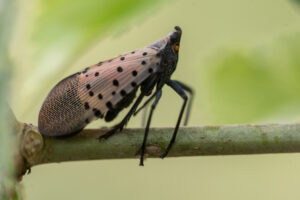
Spotted lanternflies are a “true bug,” cousins of the cicada and stink bug. Unlike our native bug species, these invasive bugs feed on a very wide variety of plants and don’t have enough native predators or parasites to keep their population in check. Their favorite food is tree-of-heaven (Ailanthus altissima), which is already widespread in our area. This means their population is exploding, and Pittsburghers are looking for ways to get rid of them. 
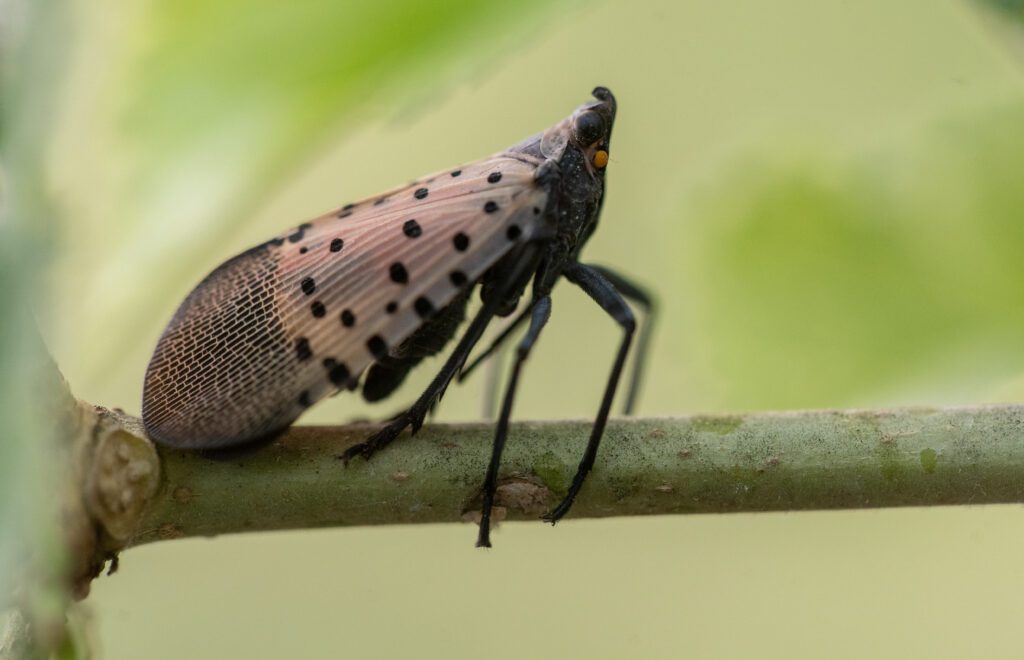
adult spotted lanternfly

There’s no special pesticide that targets the lanternflies. However, we can outsmart them. 

Spotted lanternflies display a unique behavior of climbing up tree trunks (or any other vertical surface), falling to the ground, and climbing up again. This is repeated many times throughout each stage of their life cycle.  By using this behavior to our advantage, we can trap spotted lanternflies. The best currently used traps include circle traps and oviposition traps, which corral the lanternflies so they can be contained and destroyed. You can make circle traps as a DIY project, or you can order them premade. 

Sticky traps: to stick or not to stick?

Although sticky traps (tape, sticky sheets, and glue traps) have been suggested in the past for spotted lanternfly control and are currently used by some landowners, these are extremely dangerous for birds. Sticky traps can kill many species of local birds that forage on tree trunks, including woodpeckers, nuthatches, and wrens. After the birds are stuck to the trap it becomes impossible for them to free themselves and they will die a slow and miserable death.
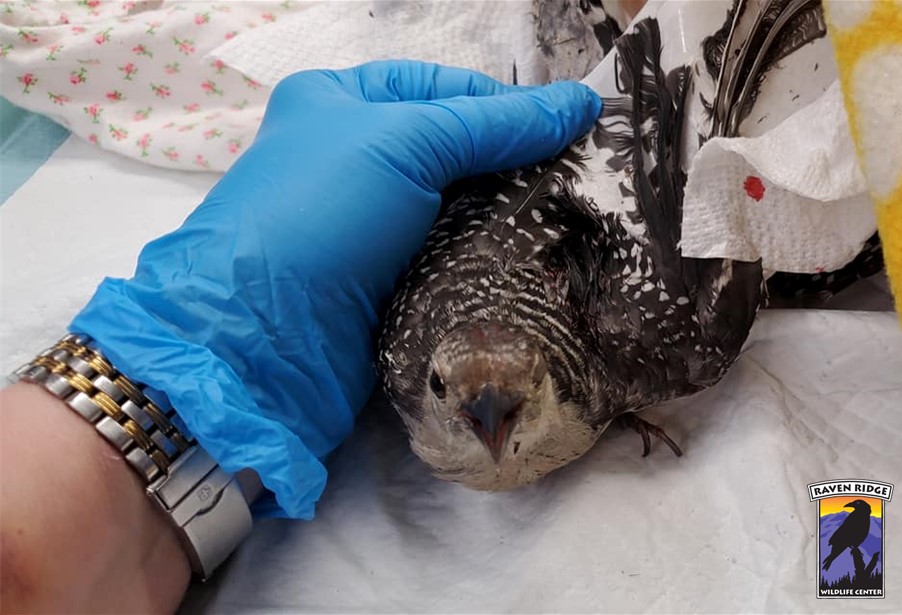
Woodpecker being treated for injuries from a sticky trap. Credit: Raven Ridge Wildlife Center.

If you find a live bird or mammal stuck to a lanternfly sticky trap, do not try to remove the bird yourself. Cover any remaining sticky areas on the trap with plastic wrap to reduce double sticking the bird (or yourself), remove the entire trap from the tree, and take it to the nearest wildlife rehabilitation center. If you must use a sticky trap, ensure it is covered with a wire mesh (hardware cloth or similar) to prevent anything larger than a lanternfly from touching it. Check sticky traps at least once a day to ensure no birds or mammals have been caught. 

Jonathan Rice is Urban Bird Conservation Coordinator at Powdermill Nature Reserve, Carnegie Museum of Natural History’s environmental research center.

Related Stories

Tracking Migratory Flight in the Northeast

A Summer Internship at Powdermill

Can’t Choose Just One: Asking an Entomologist to Name Their Favorite Native Species

Carnegie Museum of Natural History Blog Citation Information

Blog author: Rice, Jonathan
Publication date: September 6, 2023
Share this post!

  • Share on Twitter Share on Twitter
  • Share on Facebook Share on Facebook
  • Share on Pinterest Share on Pinterest
  • Share on LinkedIn Share on LinkedIn
  • Share on Reddit Share on Reddit
  • Share via Email Share via Email

Filed Under: Blog Tagged With: Anthropocene, Birds, Invertebrate Zoology, Jon Rice, liocf, Powdermill Nature Reserve, Science News

May 18, 2023 by Erin Southerland

Can’t Choose Just One: Asking an Entomologist to Name Their Favorite Native Species

by Bob Androw

I was recently asked what my favorite native species of beetle is. A seemingly simple question, but one with no simple answer. I thought first of my primary group of study, the Cerambycidae – the long-horned beetles. But with nearly 1,300 species in North America – which one? Then I pondered the scarab beetles, which I call my “mistress” group – the one I mess around with when the cerambycids aren’t looking. The week before I was asked this question, I was in southern Georgia looking for specimens of an undescribed (new to science) species of scarab beetle in the genus Serica – but while a current priority, I can’t call that my “favorite”.

Then, I remembered the species of long-horned beetle that I looked for in Georgia but did not see. Along a sandy county road, I noticed a lush stand of common elderberry, Sambucus canadensis L. that was in the early stages of blooming. I stopped to check those blooms for any flower-visiting cerambycids and was dismayed to find no insect activity – probably a result of the unusually cool and windy weather.

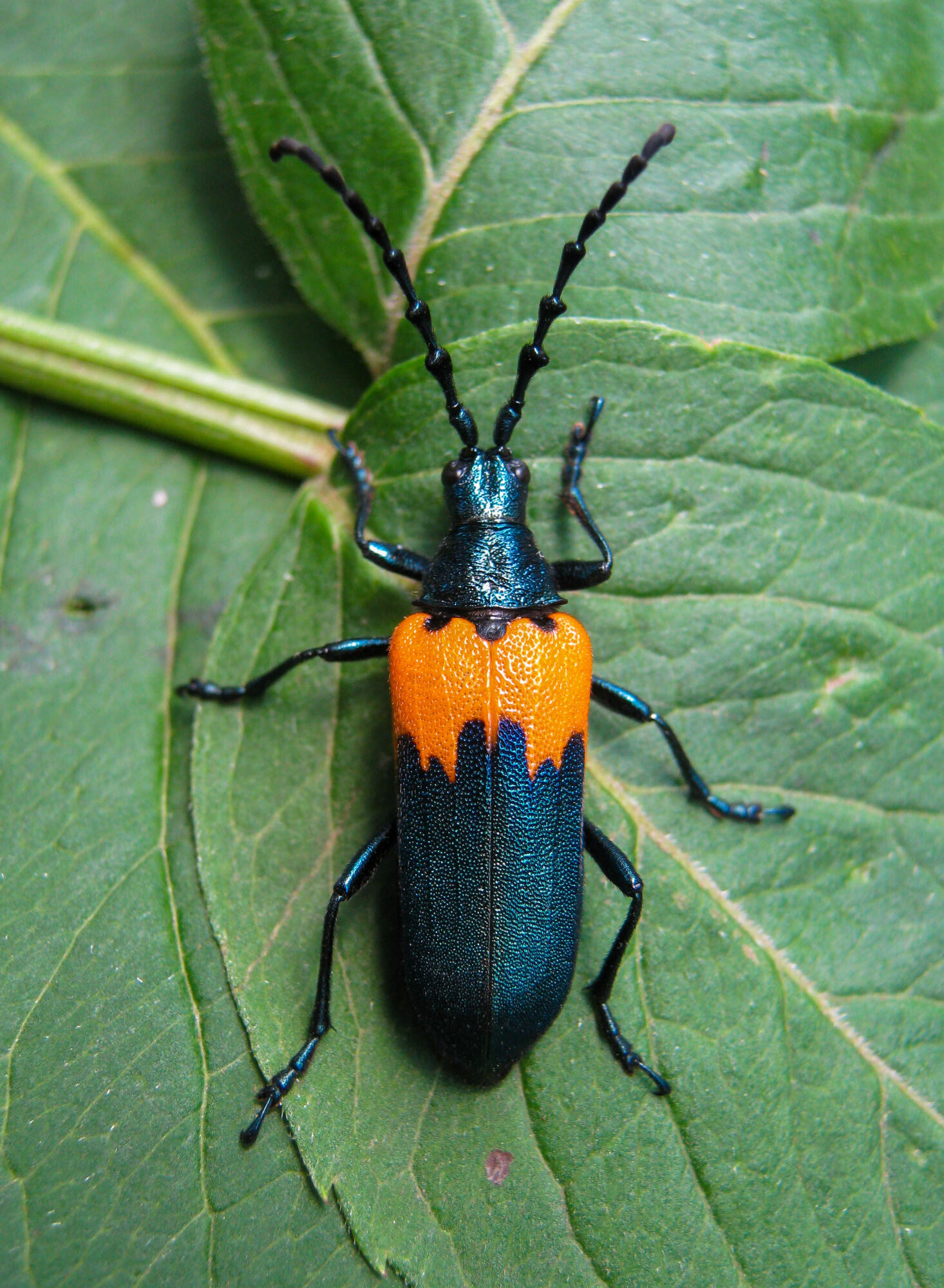
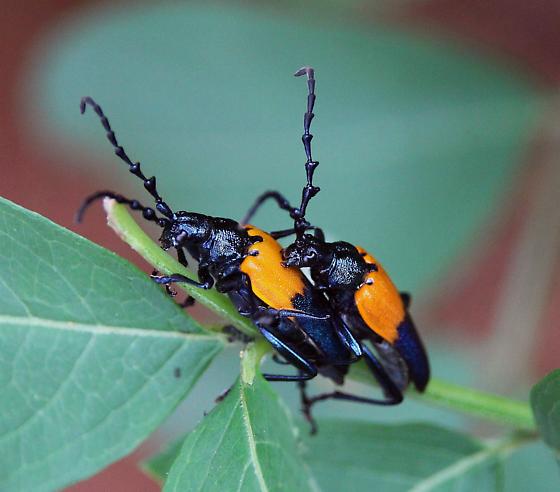
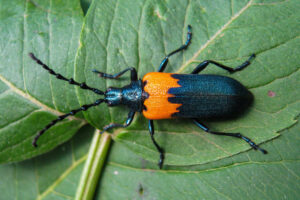
As I was examining the elderberry plants, visions of one of the eastern United States’ more aesthetic species of Cerambycidae flashed into my head – that of Desmocerus palliatus (Forster), or as it’s known by its common name, the elderberry borer. The larvae of the beetle bore in the living pith at the base of the stems. The adults are a beautiful metallic blue with the basal half of their elytra vivid orange. The beetle can be found on elderberry plants, either walking on the stems or clinging to the underside of the leaves. On hot days from May to early July, they can sometimes be found flying around the plants in search of mates. 

But, despite a thorough search by squatting low under the plants and looking upward for hiding beetles, none were seen. My timing may have been off for their flight period in that area, the unseasonably cool weather may have delayed their emergence, or there just may not be a population in that particular stand of elderberry. 

Female Desmocerus palliatus, on elderberry leaf in Lancaster County, PA.
Image from BugGuide, credit: Chris Rorabaugh, Florida.
Mating pair of Desmocerus palliatus, on elderberry in Franklin County, Missouri.
Image from BugGuide, credit: James Trager, Missouri

I think that most could agree that Desmocerus palliatus is one of the finest U.S. cerambycids and while not necessarily uncommon, it is just elusive enough to make every encounter a pleasant experience. And I guess that’s reason enough to consider it my favorite – at that moment, in that place…

Bob Androw is Collection Manager of Invertebrate Zoology at Carnegie Museum of Natural History.

Related Content

The BSF – Leveraging Our Collections and Expertise to Help Fight Invasive Species

So, Just What is a Wheel Bug?

Do No Harm: Dealing with Spotted Lanternflies

Carnegie Museum of Natural History Blog Citation Information

Blog author: Androw, Bob
Publication date: May 18, 2023

Share this post!

  • Share on Twitter Share on Twitter
  • Share on Facebook Share on Facebook
  • Share on Pinterest Share on Pinterest
  • Share on LinkedIn Share on LinkedIn
  • Share on Reddit Share on Reddit
  • Share via Email Share via Email

Filed Under: Blog Tagged With: Bob Androw, Bug Hall, Invertebrate Zoology, Science News

April 20, 2023 by

So Many Bugs!

  • Third Floor

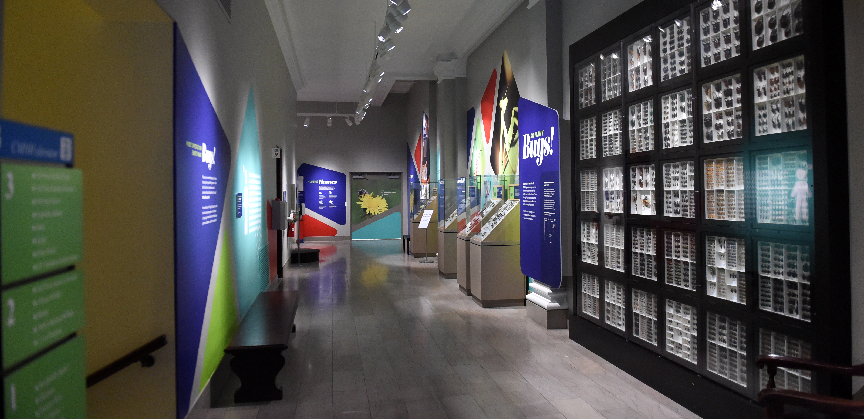
Explore Bug Hall to learn about the creatures that make up more than 80% of all life on Earth: arthropods. Compare the varied colors of butterflies, moths, and beetles. See enlarged dioramas of where bugs live. Watch a slow-motion video to understand how bugs move.

Behind the scenes, the museum’s invertebrate zoology collection houses 14 million pinned bug specimens in 30,000 drawers. Museum scientists use them in their research to better understand the world around us.

The brand new Bug Hall

Meet our Invertebrate Zoologists

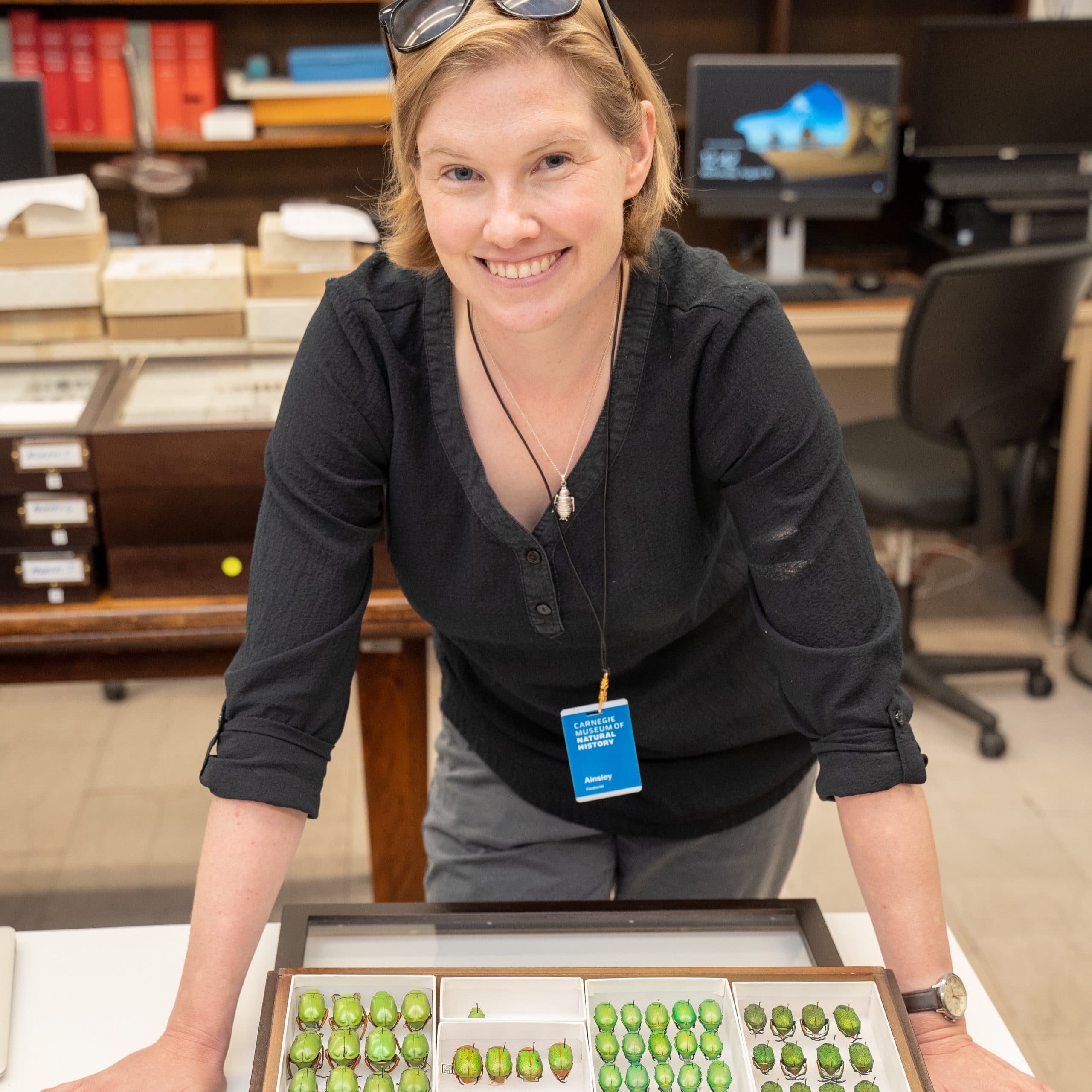
Ainsley Seago

Ainsley E. Seago, Ph.D.

Associate Curator, Invertebrate Zoology

Learn More

Fetzner, Jim

James W. Fetzner, Jr., Ph.D.

Assistant Curator

Learn More

Kevin Keegan

Kevin Keegan, Ph.D.

Collection Manager

Learn More
Bob Androw

Robert Androw, B.S.

Collection Manager

Learn More

Learn about the Invertebrate Zoology Collection at the Museum

Learn about the Section of Invertebrate Zoology

Blogs about Bugs

  • Do No Harm: Dealing with Spotted Lanternflies

    Do No Harm: Dealing with Spotted Lanternflies

    by Jonathan Rice Spotted lanternflies are a “true bug,” cousins of the cicada and stink bug. Unlike our native bug species, these …
  • Can’t Choose Just One: Asking an Entomologist to Name Their Favorite Native Species

    Can’t Choose Just One: Asking an Entomologist to Name Their Favorite Native Species

    by Bob Androw I was recently asked what my favorite native species of beetle is. A seemingly simple question, but one with …
  • Beyond the Simple Ecosystem Graphic: Teaching About Biodiversity and Pollination

    Beyond the Simple Ecosystem Graphic: Teaching About Biodiversity and Pollination

    by Pat McShea You probably remember some version of this graphic: simple line drawings linked by arrows to chart energy flow through …
  • Two Perspectives on Attending a Course on Moths and Butterflies in the Southwest

    Two Perspectives on Attending a Course on Moths and Butterflies in the Southwest

    by Kevin Keegan and Vanessa Verdecia Kevin Keegan, Collection Manager of Invertebrate Zoology (IZ), and Vanessa Verdecia, Scientific Preparator for IZ, recently …

Filed Under: Uncategorized Tagged With: bugs, insects, Invertebrate Zoology

February 3, 2023 by Erin Southerland

Beyond the Simple Ecosystem Graphic: Teaching About Biodiversity and Pollination

by Pat McShea

You probably remember some version of this graphic: simple line drawings linked by arrows to chart energy flow through an ecosystem featuring the Sun, a patch of grass, a rabbit, and a hawk or fox. During the closing minutes of a recent day-long educator workshop about biodiversity at Carnegie Museum of Natural History, two participating middle school teachers cited the pervasive textbook illustration as an educational prop they now felt comfortable moving beyond. 

Natalie Miles and Christian Shane, science teachers at North Allegheny School District’s Ingomar Middle School, expressed confidence that the seventh graders they work with would benefit from guided firsthand explorations of more complex energy flows involving various plant and invertebrate interactions. “We already teach about pollination,” explained Christian, “and with this information we can guide students on investigations right where they live.” After endorsing Christian’s comments, Natalie added a more personal note. “You’ve kept my nerdy science self fully engaged today. Thank you.”

The core experience that so captivated the pair was a carefully prepared slide presentation by museum scientist Dr. Ainsley Seago. Because the Associate Curator of Invertebrate Zoology likened her session to a sales pitch for insects, she began with what could be termed product information specific to the museum: The CMNH collection consists of approximately 16 million pinned insect specimens, representing locations all over the world, and spanning 150 years of collecting; Moths (Lepidoptera), beetles (Coleoptera), and fleas (Siphonaptera), are collection strengths, but the wide-ranging research resource also includes many groups of non-insect invertebrates. 

The ubiquity of insects and the increasing ease and accuracy of their identification through hand-held technology such as the iNaturalist smartphone app were the next topics on Ainsley’s presentation agenda. Then her core material was setup by a reminder of two different but potentially connected circumstances: 1) Pollinators and bee declines are hot topics right now. 2)Teachers of some grades and subjects need to cover ecosystems according to the PA science standards.

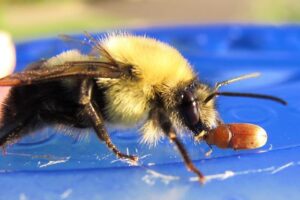
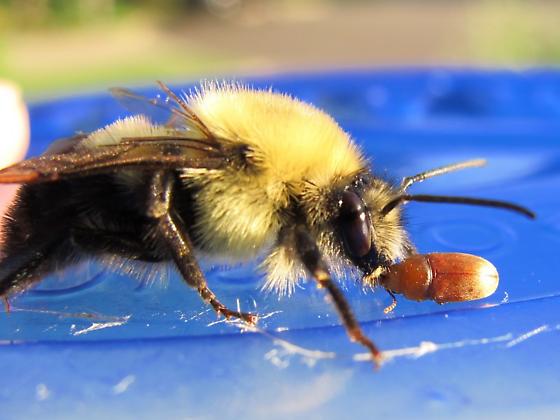
An Antherophagus species of beetle hitches a ride to its next home by attaching to a bumble bee’s tongue. Copyright © 2016 Ilona L.

What followed was refresher session on the biomechanics of pollination that moved seamlessly into enthusiastic introductions for a cast of a dozen insect and other invertebrate characters that might visit, or even inhabit, the blossom of a common wild sunflower on a late summer or early fall day. Some creatures arrived in search of pollen or nectar, others to be in the proper place to ambush and prey upon such visitors, and the most memorable, a tiny fungus beetle whose most supportive micro-habitat is the decaying detritus within bumble bee nests, to temporarily attach itself to that insect’s tongue, and hitch a ride to a new home.

Besides offering her audience alternatives to organisms favored by many textbooks, Ainsley aptly displayed what the late Dr. John Rawlins, Curator Emeritus for the museum’s Section of Invertebrate Zoology termed “bug love.” As I watched the performance from my seat as an observer in the back of the workshop classroom, I recalled something historian David McCullough wrote about Dr. Margaret B. McFarland, the University of Pittsburgh child psychologist who was a strong influencer of Fred Rogers television programs for young audiences. “What she taught, in essence, is that attitudes aren’t taught, they’re caught. If the attitude of the teacher toward the material is positive, enthusiastic, committed, and excited, the students get that.” Such transmission of attitudes also applies to older audiences.

For information about the next scheduled educator workshop, please visit our Events page. 

Related Content

Educator Spotlight: Christian Shane

Learning From Misinterpretations

Two Perspectives on Attending a Course on Moths and Butterflies in the Southwest

Carnegie Museum of Natural History Blog Citation Information

Blog author: McShea, Patrick
Publication date: February 3, 2023

Share this post!

  • Share on Twitter Share on Twitter
  • Share on Facebook Share on Facebook
  • Share on Pinterest Share on Pinterest
  • Share on LinkedIn Share on LinkedIn
  • Share on Reddit Share on Reddit
  • Share via Email Share via Email

Filed Under: Blog Tagged With: Education, Invertebrate Zoology, Pat McShea

September 13, 2022 by Erin Southerland

Two Perspectives on Attending a Course on Moths and Butterflies in the Southwest

by Kevin Keegan and Vanessa Verdecia

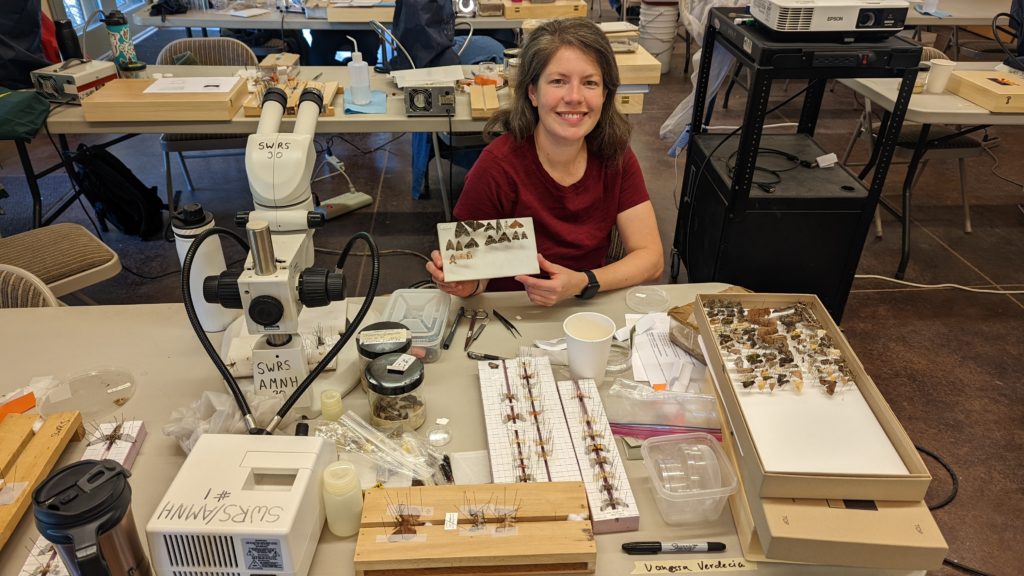
Kevin Keegan, Collection Manager of Invertebrate Zoology (IZ), and Vanessa Verdecia, Scientific Preparator for IZ, recently returned from a ten-day long crash course on moth and butterfly (Lepidoptera) taxonomy, systematics, natural history, specimen collection, and specimen preparation/curation in the beautiful Chiricahua Mountains of southeastern Arizona. The course includes both classroom time and field experiences at the American Museum of Natural History’s Southwestern Research Station.

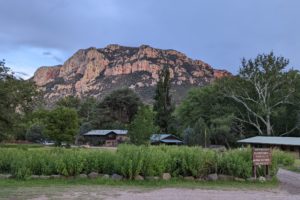
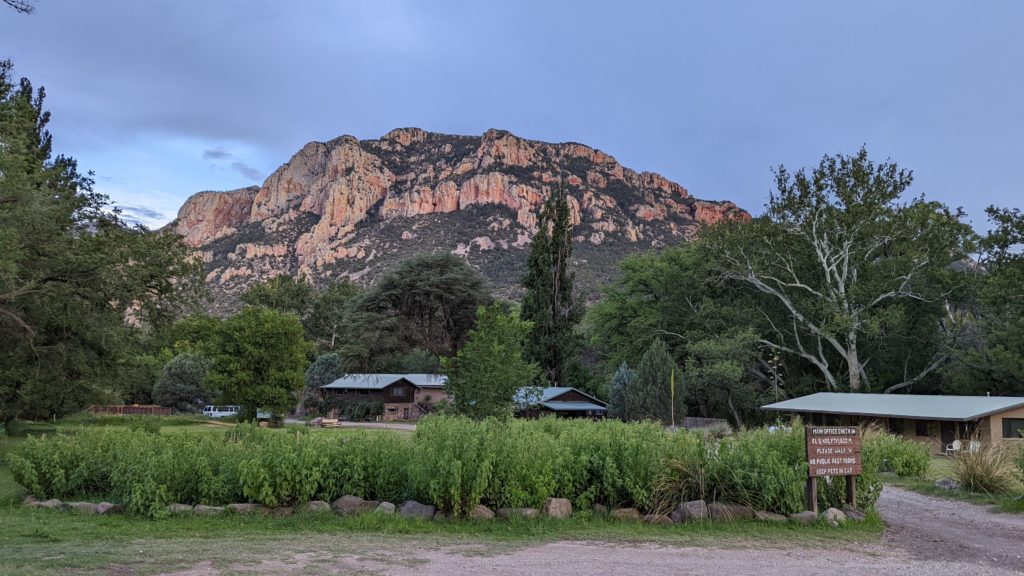
American Museum of Natural History's Southwestern Research Station

The biological richness of the setting was ideal for learning about moths and butterflies. The Chiricahuas are one of the Sky Islands of the North American desertss, a term biologists use to describe mountains that abruptly rise high enough from the surrounding territory to support wildly different habitat on their upper flanks and summit. Because each range is surrounded by lowland desert, many mountaintop animals are isolated on what are effectively islands of high elevation.

Attending the Lepidoptera Course as an Instructor

Kevin attended the program as an instructor and gave two lectures: one on the amazing ways caterpillars deceive their predators to avoid getting eaten, and another on the taxonomy/systematics, identification, diversity, and natural history of a massive group of moths collectively called the Noctuoidea or the owlet moths(there are about 40,000 described species of owlet moths in the world). 

When he wasn’t teaching, Kevin was able to collect many species of owlet moths for study and incorporation into the CMNH IZ collection. He will soon be working with these specimens in the museum’s Molecular Lab, extracting and sequencing their DNA, and adding it to a large dataset he and other owlet moth researchers around the world have built over the last decade. With this DNA data, Kevin will be able to build evolutionary trees to determine the proper placement for these species in the tree of life, a determination that will also reveal whether any of the specimens he collected are of species new to science.

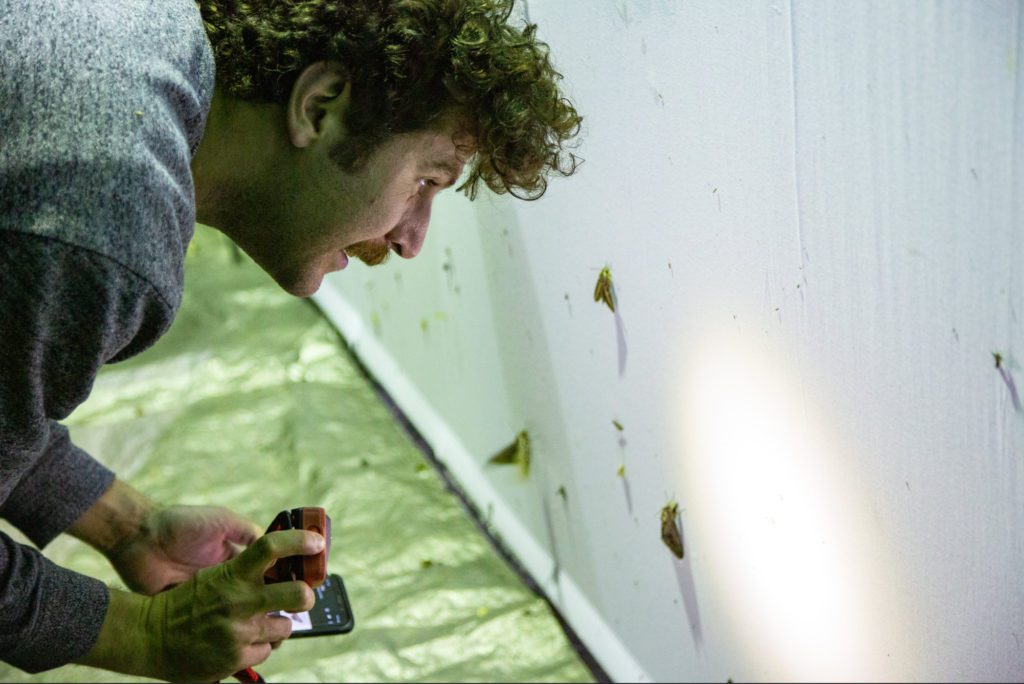
Kevin Keegan looking at moths on a light sheet. Image credit: Chris Grinter

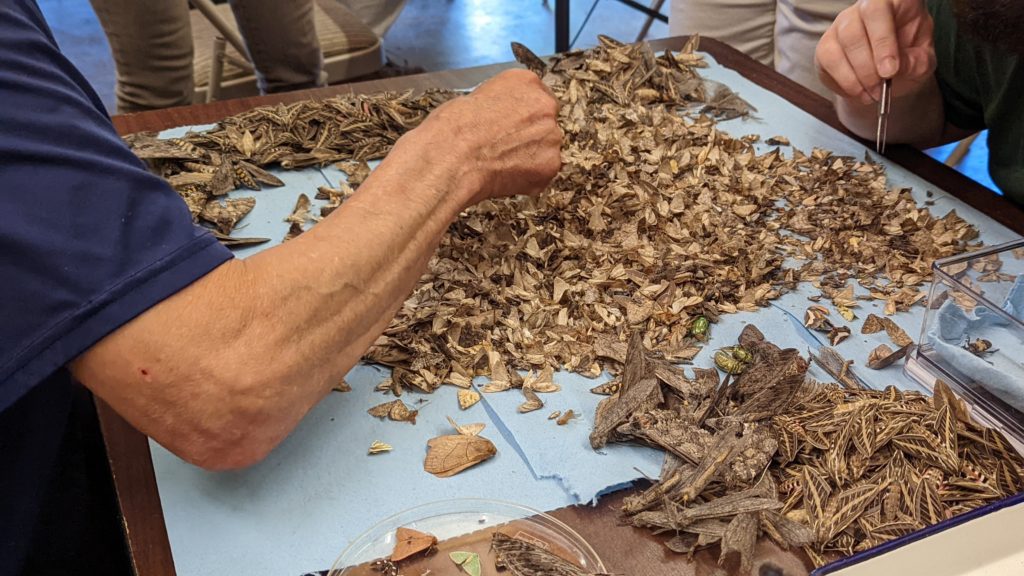
In addition to classroom time, instructors organized daytime and nighttime field experiences, including hikes to look for butterflies and caterpillars, and setting up light sheets where students could observe and collect any moths attracted to the lights. Instructors also set out traps each night to collect moths in bulk for students to identify and sort into taxonomic groups. Moths collected by these efforts were also used by students to practice preparing museum-quality specimens. 

Sorting moth specimens

Instructors and students also had plenty of time to get to know one another outside of scheduled activities. All meals were served communally in the research station dining hall, which allowed for extended conversations about moths and butterflies, biogeography, the history of lepidopterology, and numerous other topics. 

Attending the Lepidoptera Course as a Student

Vanessa Verdecia in the classroom. Image credit: Vicki Wolfe

Vanessa attended as a student and learned a lot even though she already has extensive field experience and training in specimen handling from her work at the museum. Vanessa found it wonderful to meet experts and professors from around the country who came together to teach the course. She also enjoyed the formal training and opportunity to learn how to identify different groups of moths by processing moth samples in the company of both experts and students.

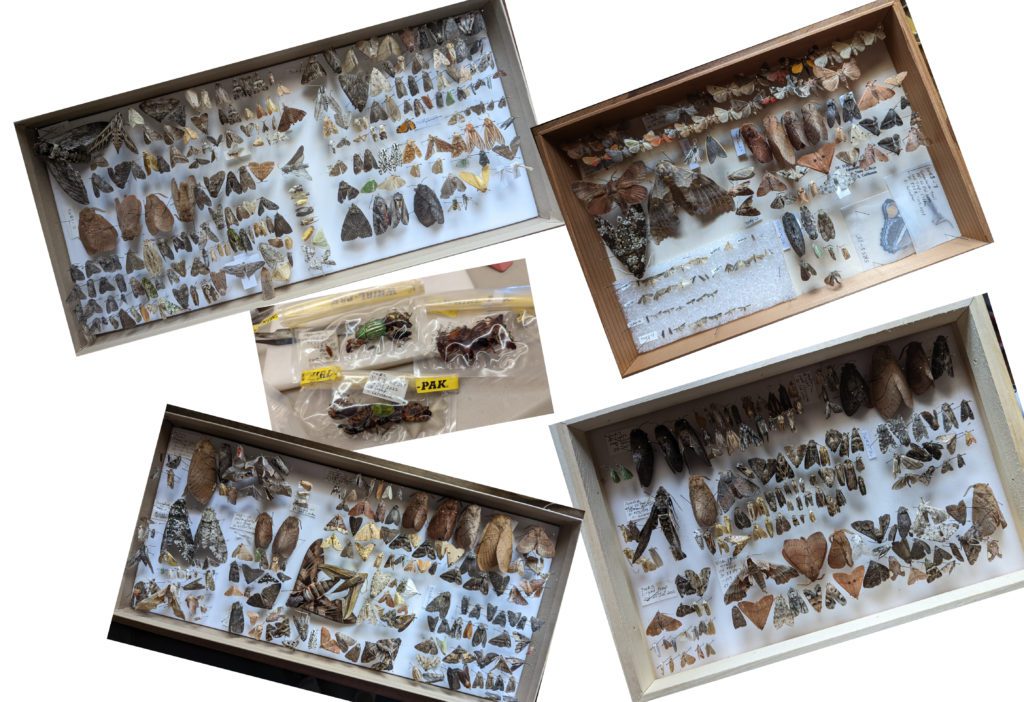
Specimens Vanessa collected for the museum. 

She brought back four boxes of moths for our IZ collection. Over the next several months she will be preparing and labeling all the specimens. Even though the course was about moths and butterflies, other groups of insects sometimes merited attention. Because the light sheets attracted many amazing beetles along with the moths, Vanessa collected two dozen small beetle specimens for the beetle experts on our staff. She also learned new techniques in spreading the wings on moths and butterflies, how to dissect specimens to be able to examine them under the microscope, and the latest information about identifying and classifying moths.

Kevin Keegan is Collection Manager and Vanessa Verdecia is Scientific Preparator for the Section of Invertebrate Zoology at Carnegie Museum of Natural History.

Related Content

Is This Butterfly Blue or Green?

Traub Flea Data Books

Working with the Type Collection

Carnegie Museum of Natural History Blog Citation Information

Blog author: Keegan, Kevin; Verdecia, Vanessa
Publication date: September 13, 2022

Share this post!

  • Share on Twitter Share on Twitter
  • Share on Facebook Share on Facebook
  • Share on Pinterest Share on Pinterest
  • Share on LinkedIn Share on LinkedIn
  • Share on Reddit Share on Reddit
  • Share via Email Share via Email

Filed Under: Blog Tagged With: Invertebrate Zoology, Kevin Keegan, Science News, Vanessa Verdecia

May 19, 2021 by wpengine

Incredible Junk Food Diets: Creatures That Clean Up Our World

by Shelby Wyzykowski with scientific information provided by Dr. Ainsley Seago, Associate Curator of Invertebrate Zoology.

What could be more thrilling than a summer weekend trip to explore one of the most exciting metropolises in the world, New York City. It has so much to offer, way too much to experience in a mere two or three days. There’s the sights…the Statue of Liberty, the Empire State Building, and Broadway. There’s the sounds…the beeping horns of taxi cabs and the noisy, bustling, crowded sidewalks. And there’s the smells…the sweet fragrances that drift from stalls in the Flower District, the tantalizing aromas wafting from street-side food carts, and the unmistakable odor of sixty thousand hot dogs sitting under the noon day sun in Times Square. Sixty thousand hot dogs? Really?! Well, no, not really, at least not literally. But the city that never sleeps is a city that loves to eat. And with the number of people that live, work, and visit this town, enormous amounts of food can litter the streets at any given time. The battle to keep public spaces free of food waste is daunting, but humans do have some unlikely tiny allies in this unending garbage war…insects. These crews of itsy-bitsy street cleaners, along with other arthropods like spiders and millipedes, are surprisingly efficient scavengers. We undoubtedly know this thanks to the work of researchers at North Carolina State University. Their entomologists, or insect scientists, studied these mini trash disposals at work in the urban ecosystem of New York. They found that pavement ants, cockroaches, and other hungry foragers can eat 2,100 pounds of food refuse (the equivalent of 60,000 hot dogs) in one year. Now in the grand scheme of things, a ton of food is not a lot, but researchers have still taken notice. They know that diverting food waste from landfills benefits our planet. And they are experimenting to try and find innovative ways to use insects to transform edible trash into eco-friendly treasure.

macro photo of an ant holding a bit of bread
Image by cp17 from Pixabay.

Entomologists at Louisiana State University are also doing their part to make their Baton Rouge campus more environmentally responsible. They’ve collaborated with the nearby Fluker Farms, a pet supply business that sells insects as reptile food. Together they’re taking food bound for a landfill and transforming it into animal feed. But there is also a third indispensable partner in this entomological endeavor. It’s the black soldier fly, an insect that is common in the Southern United States. The larvae of the black soldier fly do one thing exceptionally well…eat. A black soldier fly larva can eat twice its own body weight in one day! During their larval stage, they consume all the food that they’ll need for the rest of their lives. The fly’s feeding frenzy results in rapid growth. They’ll grow 300% in size during their two-week larval stage. But, after these two weeks, they’ll never eat again. It would be impossible, because an adult black soldier fly has no mouth!

Before the larvae can chow down on the leftovers from the campus’s dining halls, the food scraps have to be blended into a slurry. Then the ravenous little larvae get two weeks to eat to their heart’s content. They are then sifted out of the remaining slurry. Some larvae are sold as Fluker Farms reptile food while the others return to the colony to become adults. The leftover slurry/compost mixture is then spread on the flower beds that decorate the university’s campus. In 2019 alone, 15 tons of food waste was processed this way! The joint effort between LSU’s Entomology department and Fluker Farms is helping the university to reach its goal to reduce the amount of waste the campus sends to landfills by three quarters by the year 2030.

But the LSU scientists have an even grander vision for their larvae farm and other farms like it. Black soldier fly larvae can also take the place of soy and fish meal as feed for livestock, and this helps to take the pressure off the world fisheries. With an ever-increasing world population, perhaps larvae may even become a food staple for humans someday. Food scientists at Stellenbosch University in South Africa are already using black soldier fly larvae to produce dairy-free ice cream and Vienna-style sausage. Imagine, someday, sitting down to enjoy a full seven-course dinner with larvae as a key ingredient!

Fly larvae are not the only insects that are being utilized as animal feed. Cockroaches, which are actually very fastidious, well-groomed insects, are great little amateur recyclers. They can chew down almost anything, but they can live without food for up to one month if they need to. Luckily, the roaches at the Shadong Agricultural Technology Company in Jinan, China never need to worry about going hungry. The food waste recycling plant works on a much larger scale than LSU, housing a billion cockroaches that are fed fifty tons of kitchen scraps each day. That’s the equivalent of seven adult bull elephants! The cockroaches are allowed to live out their natural lifespan. Then they are steamed, cleaned, and processed into a protein-rich, antibiotic-free livestock feed that, like larvae, can take the place of fish meal. This profitable food waste plant, as well as others like it in other Chinese cities, undoubtedly proves that insect farms can help to solve our landfill problems.

Landfill with bulldozer. Evergreen trees and gray sky in the background.
Image by Pasi Mäenpää from Pixabay.

With the success of these promising initiatives, scientists are taking things a step further and applying insects to the problem of plastic waste. It’s no secret that the many types of plastic that we use in our everyday lives are polluting the planet. Marine ecologists have even found plastic microfibers in sea ice samples from Antarctica! Some researchers, in their quest to try and help to solve our plastic problem, have made a surprising discovery; some insects are plastivores, meaning they can eat plastic! A March 2020 project at Brandon University in Canada studied the larvae of the Greater Wax Moth (a regular beehive pest) and their ability to consume LDPE, or low-density polyethylene. This type of soft plastic, which is used to make grocery bags, is one of the leading contributors to non-biodegradable waste. It can be recycled, but much of it ends up in the trash. At the landfill, LDPE breaks down and releases dangerous greenhouse gases, including methane. This is cause for concern, since greenhouse gases contribute to climate change. Brandon University researchers have been trying to figure out the exact way that these caterpillar larvae are able to digest this troublesome plastic. Their goal was to isolate and identify the specific chemical that the caterpillar uses to break down LDPE, and they got off to a promising start. The scientists found that the amount of the larvae’s gut microbes (bacteria and fungi) actually increased when fed LDPE. Their intestinal biome actually preferred it over the caterpillar’s regular natural diet of honeycomb. The larvae thrived on plastic! And they seemed to love it because LDPE has the same chemical structure (specifically, a long, open-chain hydrocarbon) as beeswax! Further research revealed that the caterpillar’s breakdown of LDPE is a complicated process that has to happen in vivo (inside their bodies). One of the waste products that the caterpillars produce when they digest LDPE is called glycol. Glycol is toxic to humans, but, fortuitously, it can be biodegraded by several common, naturally occurring bacteria. For now, recycling LDPE is still the best option. But further research into the Greater Wax Moth larva’s in vivo process of digesting plastic may prove to be fruitful.

This summer, even if you’re not able to escape for a weekend getaway to the Big Apple, you are still likely to get the opportunity to enjoy a Sunday stroll along the sidewalks of your own hometown. And if, by chance, you look down and see a line of ants diligently portioning out and carrying away a cast-off crust of bread, take a moment to stop and watch them hard at work. You can maybe even silently thank them for their Herculean efforts. If it weren’t for their help, food waste would be an environmental hazard, a threat to public health, and an additional financial burden to your city. It’s a dirty job, but somebody’s got to do it. Fortunately for us, our voracious, multi-legged little friends are ready and willing to take on the task.

Shelby Wyzykowski is a Gallery Experience Presenter in CMNH’s Life Long Learning Department. Museum staff, volunteers, and interns are encouraged to blog about their unique experiences and knowledge gained from working at the museum.

Related Content

Super Science Slugs and Bugs Coloring Pages

Natural History Discoveries

Make Snail Slime

Carnegie Museum of Natural History Blog Citation Information

Blog author: Wyzykowski, Shelby
Publication date: May 20, 2021

Share this post!

  • Share on Twitter Share on Twitter
  • Share on Facebook Share on Facebook
  • Share on Pinterest Share on Pinterest
  • Share on LinkedIn Share on LinkedIn
  • Share on Reddit Share on Reddit
  • Share via Email Share via Email

Share this post!

  • Share on Twitter Share on Twitter
  • Share on Facebook Share on Facebook
  • Share on Pinterest Share on Pinterest
  • Share on LinkedIn Share on LinkedIn
  • Share on Reddit Share on Reddit
  • Share via Email Share via Email

Filed Under: Blog Tagged With: Bug Bonanza, Invertebrate Zoology, Shelby Wyzykowski

  • Page 1
  • Page 2
  • Page 3
  • Interim pages omitted …
  • Page 10
  • Go to Next Page »

sidebar

About

  • Mission & Commitments
  • Directors Team
  • Museum History

Get Involved

  • Volunteer
  • Membership
  • Carnegie Discoverers
  • Donate
  • Employment
  • Events

Bring a Group

  • Groups of 10 or More
  • Birthday Parties at the Museum
  • Field Trips

Powdermill

  • Powdermill Nature Reserve
  • Powdermill Field Trips
  • Powdermill Staff
  • Research at Powdermill

More Information

  • Image Permission Requests
  • Science Stories
  • Accessibility
  • Shopping Cart
  • Contact
  • Visitor Policies
One of the Four Carnegie Museums | © Carnegie Institute | Privacy Policy | Terms of Use | Accessibility
Rad works here logo