• Skip to primary navigation
  • Skip to main content
  • Skip to primary sidebar

Carnegie Museum of Natural History

One of the Four Carnegie Museums of Pittsburgh

  • Visit
    • Buy Tickets
    • Visitor Information
    • Exhibitions
    • Events
    • Dining at the Museum
    • Celebrate at the Museum
    • Powdermill Nature Reserve
    • Event Venue Rental
  • Learn
    • Field Trips
    • Educator Information
    • Programs at the Museum
    • Bring the Museum to You
    • Guided Programs FAQ
    • Programs Online
    • Climate and Rural Systems Partnership
  • Research
    • Scientific Sections
    • Science Stories
    • Science Videos
    • Senior Science & Research Staff
    • Museum Library
    • Science Seminars
    • Scientific Publications
    • Specimen and Artifact Identification
  • About
    • Mission & Commitments
    • Directors Team
    • Museum History
  • Tickets
  • Give
  • Shop

mollusks

September 10, 2018 by wpengine

Chasing Snails in the Great Smoky Mountains

by Tim Pearce

Looking for snails in Tennessee is rewarding because that state is third in number of species of land snails in the USA (after Hawaii and California). That large number of snail species likely results from (a) lack of glaciers for a long time, (b) lots of limestone, in which snails thrive, and (c) numerous isolated valleys that provide opportunities for speciation.

We were on the trail of the tiger snails, genus Anguispira, so that we could study their DNA in order to unravel the tangled branches of their family tree. During more than two hundred years, a couple dozen species have been named. Many of the species have distinct shells, but some species look so much alike that we suspect they are actually the same species.
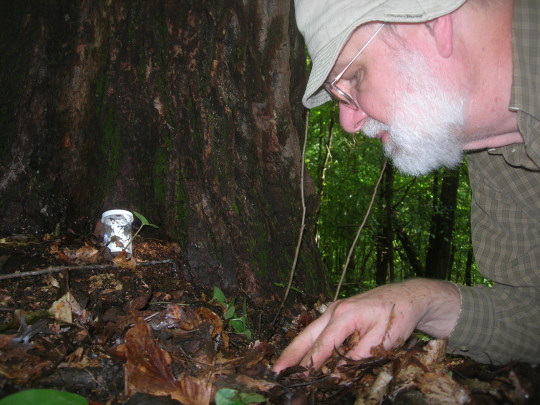
Tim Pearce looking for snails
Finding Anguispira snails near Norris Dam, Tennessee. Photo by Tim Pearce [selfie].

As we checked into our motel at the edge of the Great Smoky Mountains National Park, we navigated around two bears (rummaging in the dumpster) to get to our rooms. Our team included Reham Fathey Ali from Cairo University in Egypt, John Slapcinsky from Florida Museum, and yours truly from Carnegie Museum of Natural History. You might call us a multi-institutional collaboration.

The next day, two people from the Great Smoky Mountains National Park joined our expedition: retired ranger Keith Langdon and intern Miranda Zwingelberg. They led us to the snail research collection in a back room of the office building and we helped them out by identifying some of their snail specimens.
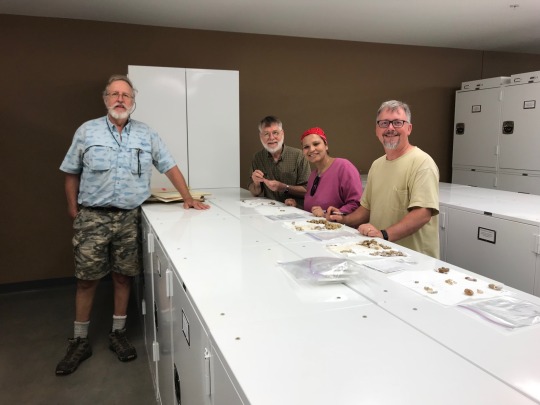
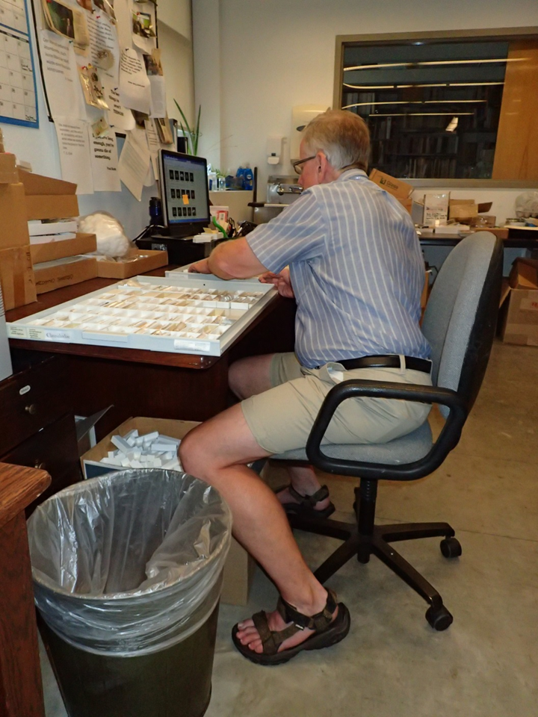
Researchers working on snail identification
Identifying snails in the research collection at the Great Smoky Mountains National Park. Photo by Miranda Zwingelberg.

Keith had previously found empty shells of Anguispira knoxensis, one of the species we needed. He took us to the very tree where he had found them. That day, we five searched for 18-person-hours and found snails of many species, but only 3 empty shells of that target species. However, we did find living snails of another form of Anguispira, which has been called Anguispira lawae.(Intriguingly, that form was named for Annie Law, a shell collector and Civil War spy in the 1800s.) We also need that form for our study, so we considered the day to be a success.
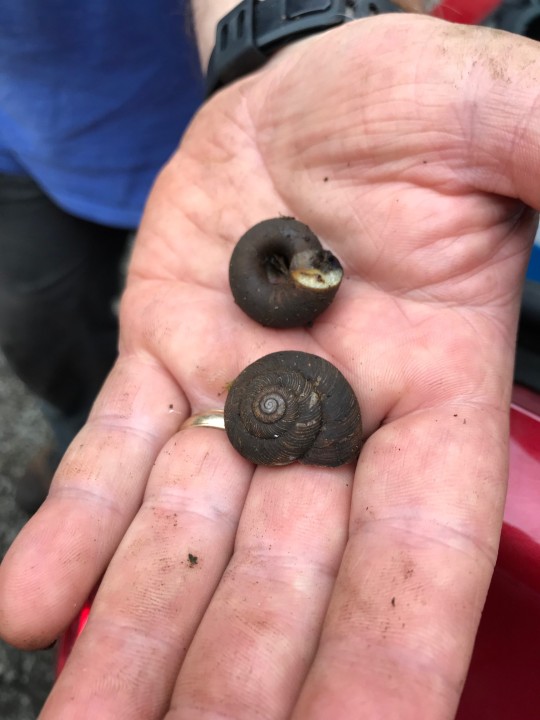
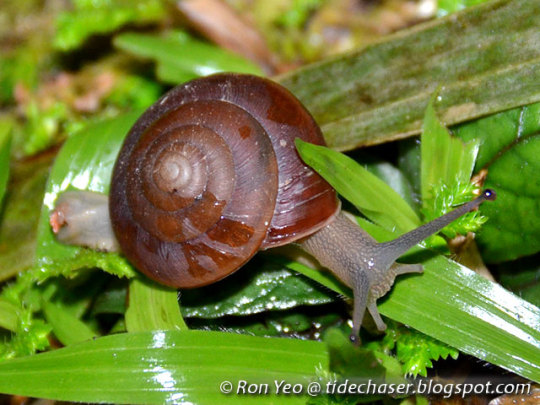
Living specimens of Anguispira rugoderma - tiger snails
Living specimens of Anguispira rugoderma. Photo by Reham Fathey Ali.

Several days later our team found living specimens of both Anguispira knoxensis and Anguispira rugoderma.We suspect they might actually be the same species. An examination of the DNA will help us decide whether those two are separate or the same species. DNA evidence plus scrutiny of existing specimens in our museums will also provide evidence for us to use in revising the Anguispira family tree.

Timothy A. Pearce, PhD, is the head of the mollusks section at Carnegie Museum of Natural History. Museum employees are encouraged to blog about their unique experiences and knowledge gained from working at the museum.
Filed Under: Blog Tagged With: expedition, mollusks, Tim Pearce

August 22, 2018 by wpengine

Extremely Rapid Evolution of Cone Snail Toxins

By Tim Pearce

Cone snails live in the sea and inject venom to paralyze their prey. Most cone snails eat worms, some eat other snails, and some catch and eat fish. They use a hypodermic dart (a modified radular tooth) to inject venom. The venom contains about 100 different peptides (short proteins) that act as neurotoxins. Each of the 600 or so species of cone snail has its own unique cocktail of peptides, with very little overlap of peptides among species, yielding >50,000 peptides among the cone snails of the world.

Cone snail venom peptides are among the most rapidly evolving protein-coding genes in animals. They evolve twice as fast as most other known proteins. The rapid evolution appears to result from extensive gene duplications that provide abundant opportunities for natural selection during predator-prey interactions [1,2].

Furthermore, cone venom peptides are one of the most highly post-translationally modified classes of gene products known. That means the peptides undergo extensive modifications after being translated from DNA, including bromination, glycosylation, and amino acid epimerization (changing from L to D, like becoming their own mirror image) [3].

The venom cocktail targets particular kinds of prey; worm-eaters have a different suite of peptides than fish eaters. At different stages of development, they can express different genes. When very young, the fish eaters are too small to eat fish, so they eat worms, then switch to fish later. Their venom cocktail changes from worm toxins to fish toxins when they switch prey.

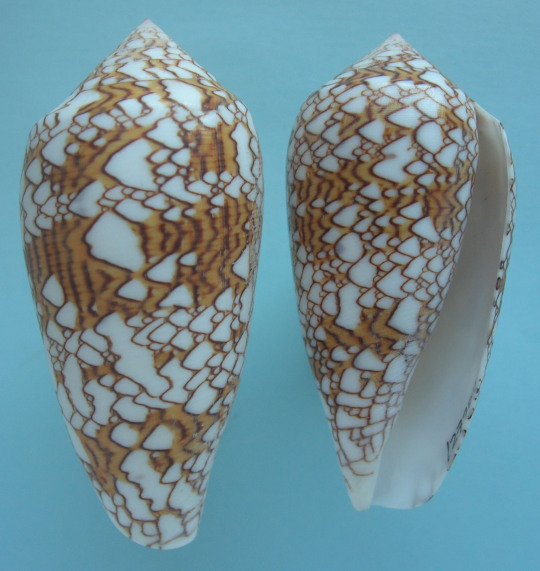
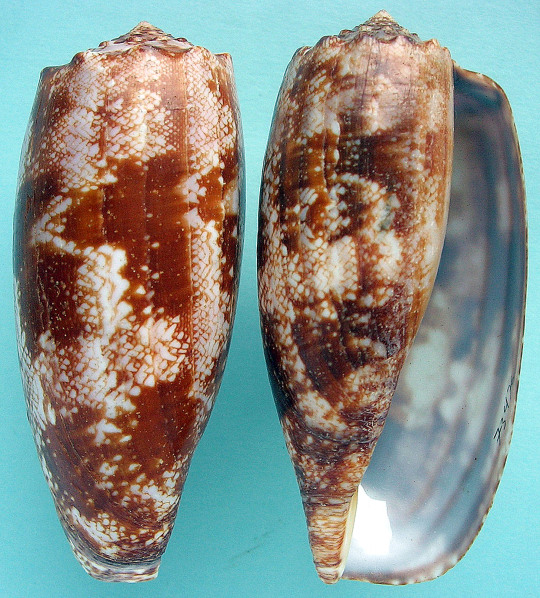
textile cone snails
Textile cone (Conus textile), a sea snail with venom powerful enough to kill humans. Specimen CM 127704, photo by Tim Pearce.

Conus magus is one of the species whose diet shifts from worms to fish as it grows. In these diet-shifting species, the shape of the radular dart changes as well – those eating worms have unbarbed darts, while those eating fish have backward pointing barbs to help keep hold of the fish [2,4,5].

Animal nerve cells contain many kinds of ion channels, whose function aids in transmitting signals along the nerve. Each cone snail peptide can target a particular kind of ion channel. The complex mixture of peptides in cone snail venom blocks many ion channels and neuron receptors in prey species. Surprisingly, many cone snail peptides act on pain targets, but it is not clear what advantage the snail would derive from numbing the prey’s pain. However, pain-killing properties are one of the reasons that cone snail venoms are of great interest to pharmaceutical companies and at least one cone snail peptide is currently used as a pain-killer in humans.

Researchers can prospect for venom peptides in the DNA of cone snail tissue snips or from museum specimens. By prospecting in DNA, they can find genes for venom peptides that are not being expressed at that particular life stage [6]. Once a useful peptide is discovered and characterized, it can be manufactured (so it doesn’t need to be milked from the snail).

Cone snails can switch rapidly between toxins for predation or toxins for defense. The toxins used by the geography cone, Conus geographus for catching prey are mostly inactive on humans, but the toxins it uses for defense are paralytic peptides that block neuromuscular receptors. Conus geographus and Conus textile are the two cone snail species known to kill humans [7].

To see videos of cone snails catching and swallowing fish, type into your internet browser: “cone snail eating.”

In addition to their beauty and amazing prey capture abilities, cone snails are remarkable for the extremely rapid evolution of their toxins, some of which show promise as useful medicines.

Timothy A. Pearce, PhD, is the head of the mollusks section at Carnegie Museum of Natural History. Museum employees are encouraged to blog about their unique experiences and knowledge gained from working at the museum.
Notes:

[1] Duda, T.F. & Palumbi, S.R. 1999. Molecular genetics of ecological diversification: Duplication and rapid evolution of toxin genes of the venomous gastropod Conus. Proceedings of the National Academy of Sciences, U.S.A., 96(12): 6820–6823.

[2] Chang, D.& Duda, T.F., Jr. 2016. Age-related association of venom gene expression and diet of predatory gastropods. BMC Evolutionary Biology, 16: 27.

[3] Buczek, O., Yoshikami, D., Bulaj, G., Jimenez, E.C. & Olivera, B.M. 2005. Posttranslational amino acid isomerization: a functionally important D-amino acid in an excitatory peptide. Journal of Biological Chemistry, 280: 4247-4253.

[4] Nybakken, J. & Perron, F. 1988. Ontogenetic change in the radula of Conus magus(Gastropoda). Marine Biology, 98(2): 239–242

[5] Nybakken, J. 1990. Ontogenetic change in the Conusradula, its form, distribution among the radula types, and significance in systematics and ecology. Malacologia, 32(1): 35-54.

[6] I suspect that post-translational effects (including introns and exons) would obscure the understanding of the final product of a peptide discovered by DNA prospecting.

[7]Dutertre, S., Jin, A.-H., Vetter, I., Hamilton, B., Sunagar, K., Lavergne, V., Dutertre, V., Fry, B.G., Antunes, A., Venter, D.J., Alewood, P.F. & Lewis, R.J. 2014. Evolution of separate predation- and defence-evoked venoms in carnivorous cone snails. Nature Communications, 5(3521): 1-9.

Filed Under: Blog Tagged With: mollusks, Tim Pearce

August 13, 2018 by wpengine

Killer Sea Snails: Cure for the Opioid Crisis?

By Tim Pearce

Carnivorous and predatory, killer cone snails (genus Conus) stun their prey by injecting peptide neurotoxins called conotoxins. These peptides are short proteins, mostly 12-30 amino acids long.

Of the approximately 600 species of cone snails, two species have killed humans: the geography cone (Conus geographus) and the textile cone (Conus textile). Those species occur in the South Pacific and Indian Oceans.

cone snails
Geography cone (Conus geographus), a sea snail with venom powerful enough to kill humans. Specimen CM 73476, photo by Tim Pearce.


Each cone snail species produces more than 100 conotoxins, with an estimated 5% overlap in conotoxins among species [1]. Although only about 0.1% of these >50,000 peptides have been characterized, many have already been recognized to have pharmaceutical uses: six for pain, three for cardiovascular issues, one for epilepsy, and one for mood.

A potentially useful medicine from the venom of fish-eating cone snails is insulin, which acts faster than human insulin [2]. The cone snail insulin is a single molecule that acts within 5 minutes. In contrast, human insulin is stored as a cluster of six insulin molecules that must separate to become active, and separation can take 60 minutes (or 15-30 minutes for modified human insulin). The cone snail uses its insulin to immobilize fish by hypoglycemic shock (caused by extremely low blood sugar), making prey easier to catch. Researchers are studying cone snail insulin for ideas to make better insulin for use in humans.

Another medicine currently used in humans is the pain killer ziconotide (Prialt). It is more powerful than morphine, not addictive, and people don’t build up a tolerance. However, it doesn’t cross the blood-brain barrier so must be injected directly into spinal fluid. The FDA approved it in 2004 for end-of-life cases (pain management). Scattered reports suggest an odd side effect: people who take Prialt hear music in their heads. Researchers continue studying ways to get the peptide across the blood-brain barrier. Success could mean an alternative to opioid drugs, and potentially a powerful tool for solving the opioid crisis.

“Better living through snails!”

Fun Fact: Sunken ships provide habitat for many undersea creatures including cone snails.

Riddle: What lies at the bottom of the ocean and twitches?

Answer: A nervous wreck!

Timothy A. Pearce, PhD, is the head of the mollusks section at Carnegie Museum of Natural History. Museum employees are encouraged to blog about their unique experiences and knowledge gained from working at the museum.
Notes:

[1] Davis, J., Jones, A. & Lewis, R.J. 2009. Remarkable inter- and intra-species complexity of conotoxins revealed by LC/MS. Peptides, 30(7): 1222-1227.

[2] Safavi-Hemamia, H., Gajewiak, J., Karanth, S., Robinson, S.D., Ueberheide, B., Douglass, A.D., Schlegel, A., Imperial, J.S., Watkins, M., Bandyopadhyay, P.K., Yandell, M., Li, Q., Purcell, A.W., Norton, R.S., Ellgaard, L. & Olivera, B.M. 2015. Specialized insulin is used for chemical warfare by fish-hunting cone snails. Proceedings of the National Academy of Sciences, 112(6): 1743-1748.

Filed Under: Blog Tagged With: Anthropocene, mollusks, Tim Pearce

July 24, 2018 by wpengine

Speculation: Glowing Snails and Jumping Genes

By Tim Pearce

Only one species of land snail is known to glow in the dark: Quantula striata, albeit very faintly. A glow organ under its chin produces yellow-green light, and the rest of the body glows very faintly. The snail occurs in some areas of Southeast Asia including Malaysia and Singapore. The snail uses the same system to glow as fireflies, two chemicals: luciferase reacts with luciferin to produce light.

Scientific papers, including those by Yata Haneda, have characterized the wavelength of the light, the interval of the flashes, which part of the body glows, and differences in glowing between juvenile and adult snails. However, none of the papers has addressed why the snails glow. Given that light production is energetically costly, there must be some evolutionary advantage to glowing. How does glowing help the snail in its daily life?

There are five known reasons that organisms glow: (1) attract mates (as in fireflies [originally for larval defense, see Branham and Wenzel 2003, Cladistics, 19:1-22]), (2) attract prey (as lures in deep sea fish), (3) attract dispersers (insects attracted to light disperse spores from glowing mushrooms), (4) escape predators (deep sea octopus create glowing clouds and slink away unnoticed), (5) burglar alarm (some ocean microorganisms glow when copepods try to eat them; the glow attracts fish that then eat the copepods).

I speculate that Quantula striata glows to escape predators.

Quantula striata, land snail that glows in the dark
Quantula striata, the only species of land snail known to glow in the dark.

Larval fireflies eat land snails and larval fireflies occur in Southeast Asia where this glow snail lives. Perhaps a glowing snail could fool a hungry firefly larva by falsely conveying that the snail is already occupied, so glowing might ward off an attack by a firefly larva. Thus, the evolutionary advantage is that glowing snails might experience less predation.

One way to test this hypothesis would be to expose glowing and non-glowing snails to larval fireflies to determine which kind of snail gets eaten more. I haven’t tried this experiment yet, because I don’t have glow snails available in my lab.

More speculation: could the genes for the light-producing system have moved from a firefly to this snail? It is a remarkable coincidence that the snail and the fireflies both produce light using the luciferin and luciferase system. What are the chances of that! One possibility is that the genes to produce luciferin and luciferase were somehow transferred from a firefly to an ancestor of the snail, then spread over time throughout the species. While such horizontal gene transfer is thought to be relatively rare, the transfer of genes from one species to another is known in single celled organisms (e.g., the spread of antibiotic resistance among bacteria species), and evidence exists that it has occurred in some multi-cellular organisms.

One way to test whether horizontal gene transfer could explain the luciferin and luciferase lighting system in Quantula striata would be to sequence the DNA of the snail and the DNA of fireflies living in Southeast Asia. If both genes for luciferin and luciferase were transferred from the firefly to the snail, there is a good chance that additional DNA on either side of those two genes was transferred as well. If additional firefly DNA exists near the luciferin and luciferase genes in the snail, that would be strong evidence that the snail’s ability to glow came from a firefly.

It could have happened!

Relevant Snail Joke: 

Q: What happened to the glow-snail that lost its glowing organ?

A: It was de-lighted.

Timothy A. Pearce, PhD, is the head of the mollusks section at Carnegie Museum of Natural History. Museum employees are encouraged to blog about their unique experiences and knowledge gained from working at the museum.
Filed Under: Blog Tagged With: land snails, mollusks, snails, Tim Pearce

July 2, 2018 by wpengine

Without Volunteers, Carnegie Museum Mollusk Collection Could Not Exist

By Charles F. Sturm and Timothy A. Pearce

Volunteer Dan Cornell helps to sort and distribute specimens to their proper places in the research collection.

Scientists from around the world converged at the joint meeting of the American Malacological Society and the Western Society of Malacologists in Honolulu for a symposium on Museums and Modern Society on 21st of June 2018. One topic covered the importance of volunteers in Museums. Our paper in the symposium, entitled, “Without volunteers, collections as we know them could not exist,” highlighted some of the myriad ways volunteers play vital roles in the section of mollusks.

Volunteers provide essential efforts in the process of acquiring, sorting specimens from matrix, identifying and updating identifications, rehousing, labeling, cataloging and databasing, distributing
(shelving), and organizing.

One example of the crucial role of volunteers is the incorporation of the extensive Aldrich collection (collected pre-1953) into our research collection. The Aldrich collection, sent to us from California,
included material from around the world and most of it was housed in non-archival boxes. Volunteers recorded locality information for each lot, re-housed the specimens in archival vials and trays, updated the nomenclature, and then distributed the specimens into the collection. In total some 17,000 lots were processed, by dedicated volunteers, over a six-year period. The specimens are now housed in their proper places in the research collection, and the information is available on the internet.

In another example, Carnegie Museum received, in 1931, a large donation from the research
of Herman Wright. This material sat unprocessed for 9 decades and over the past few years, is being curated to be more accessible to scientists. While most of the lots have locality numbers, the original data cards were lost, so the meaning of most of the locality numbers was unknown. Volunteers have recovered approximately 80% of the locality information from some lots that did have locality data with the locality numbers, from reviewing published literature, and from other sources of information such as archival records. These efforts are allowing us to incorporate this material into the collection.

Another example of the necessity of volunteers is the Pennsylvania Land Snail Atlas Project. Volunteers have helped by collecting samples from around Pennsylvania and assisting with other field collecting. Volunteers accomplished a major part of picking minute snails (mostly less than 3 mm or 1/8 inch) from leaf litter samples. Following identification and cataloging of the specimens, volunteers distributed them to their proper places in the research collection and helped upload the information to the internet. This material is readily available for study by amateur and professional naturalists. These efforts have facilitated the production of updated distribution maps of Pennsylvania land snails, as well as imperilment ranks (how rare or secure they are).

These are some of the many projects that could not have been accomplished without the vital assistance of many men and women volunteers over the years.


Teens, college students, and adults of all ages may become volunteers to support almost every department at Carnegie Museum of Natural History. Learn more about volunteering at carnegiemuseums.org.

Filed Under: Blog, Scientific Sections Tagged With: mollusks, volunteers

June 20, 2018 by wpengine

Snakes, snails, and puppy dog tails

By: Kaylin Martin, M.Sc. and Timothy A. Pearce, PhD

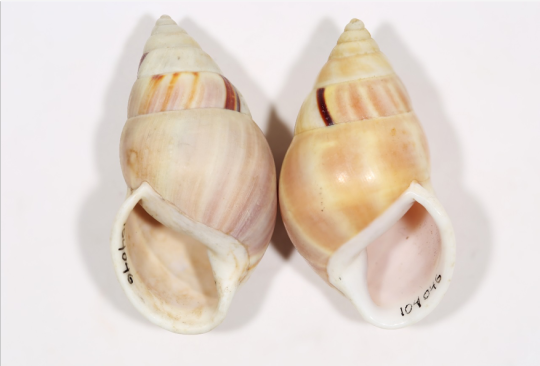
Asymmetries in nature are noteworthy because they usually mean something interesting is going on. Most snail-eating snakes in the family Pareidae are remarkable for having more teeth on the right lower jaw than on the left. The vast majority of snails worldwide coil clockwise (dextral) while, in contrast, the counter-clockwise coiling (sinistral) snails tend to be scarce, usually on the order of 1/10,000 to 1/100,000.

Sinistral (left) versus dextral (right) of shells Amphidromus inversus. CM 104046.
Sinistral (left) versus dextral (right) of shells Amphidromus inversus. CM 104046. Photo by Kaylin Martin, M.Sc., 2018.

Recent experiments demonstrate that pareid snakes are more successful at eating dextrally coiling snails, evidently because having more teeth in the right jaw helps the snake to extract the snail’s body from the shell. Upon striking a dextral snail, with the aperture on the right, the snake advances and retracts its mandibles along the snail’s forebody. The sequential movements of this mandibular walk extract the snail’s soft body from its shell. Conversely, when a pareid snake strikes a sinistrally coiled snail, it finds the snail’s aperture on the left, and consequently the snake’s stereotypical right-handed behavior is less successful at grasping the snail’s body. The asymmetry in the snake’s mandibles means that sinistrally coiled snails escape predation by these snakes more often than do dextrally coiled snails.

Could the pareid snakes be an evolutionary force that favors sinistrally coiled snails? The ranges of Pareidae and Amphidromus almost entirely overlap, both groups occurring in Southeast Asia from China to Indonesia. Quite a few other land snail species in that part of the world are known to coil sinistrally, although in most of these other genera, the whole species is sinistral, rather than showing polymorphism (showing both forms) for coiling direction. The two facts, that sinistrally coiled snails escape predation more often, and that the ranges of the predator and the prey largely overlap, both support the idea that the asymmetry in the snake’s jaw provides an evolutionary force resulting in a greater proportion of sinistral snails in Southeast Asia. This conclusion was also reached in a study by Hoso et al. (2010).

The snake Pareas carinatus and the snail Amphidromus inversus are both tree-dwelling. In controlled lab experiments, the snake is known to eat Amphidromus, as well as other genera of snails. However, we are not sure whether the snake actually eats Amphidromus inthe wild because data are scarce on Pareas diets in their natural environment. So, whether the snake could have influenced the unusual predominance of left handedness in Amphidromus species makes logical sense, but remains unresolved.

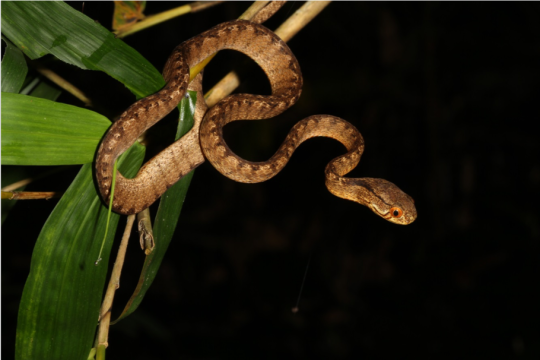
Pareas carinatus from Cat Tien, Vietnam
Pareas carinatus from Cat Tien, Vietnam.  Photo by Paul S. Freed, 2011.

Dozens of other snail eating snakes exist, for example many species in the genus Sibon throughout the tropical Americas, but their jaws do not show asymmetry, so they would not influence snail coiling direction.

We know of no other predator that is known to specialize in prey that have a particular “handedness.” Further studies on diets of pareid snakes would advance scientific understanding of specialized predator-prey interactions, ecological adaptation, and coevolution between the arboreal snakes and snails of southeast Asia.

And given that we are talking about snakes and snails, we must also mention puppy dog tails. The tails of many dogs do coil, and of those that coil, many of them coil off to the side. As judged by a survey of coiling dog tails in a Google Image search, dog tails that coil to the left or to the right appear to be about equally represented. So, puppy dog tail coiling direction also appears to be polymorphic…

Timothy A. Pearce, PhD, is the head and curator of collections of the Section of Mollusks at Carnegie Museum of Natural History. Kaylin Martin, M.Sc, is the curatorial assistant in the Section of Amphibians and Reptiles. Museum employees are encouraged to blog about their unique experiences and knowledge gained from working at the museum.
Literature Cited

Hoso, M., Kameda, Y., Wu, S.P., Asami, T., Kato, M. & Hori, M. 2010. A speciation gene for left–right reversal in snails results in anti-predator adaptation. Nature Communications, 1:133; DOI: 10.1038/ncomms1133.

Filed Under: Blog Tagged With: amphibians and reptiles, mollusks, reptiles, snails, snakes

  • « Go to Previous Page
  • Page 1
  • Interim pages omitted …
  • Page 4
  • Page 5
  • Page 6
  • Page 7
  • Page 8
  • Interim pages omitted …
  • Page 10
  • Go to Next Page »

sidebar

About

  • Mission & Commitments
  • Directors Team
  • Museum History

Get Involved

  • Volunteer
  • Membership
  • Carnegie Discoverers
  • Donate
  • Employment
  • Events

Bring a Group

  • Groups of 10 or More
  • Birthday Parties at the Museum
  • Field Trips

Powdermill

  • Powdermill Nature Reserve
  • Powdermill Field Trips
  • Powdermill Staff
  • Research at Powdermill

More Information

  • Image Permission Requests
  • Science Stories
  • Accessibility
  • Shopping Cart
  • Contact
  • Visitor Policies
One of the Four Carnegie Museums | © Carnegie Institute | Privacy Policy | Terms of Use | Accessibility
Rad works here logo
