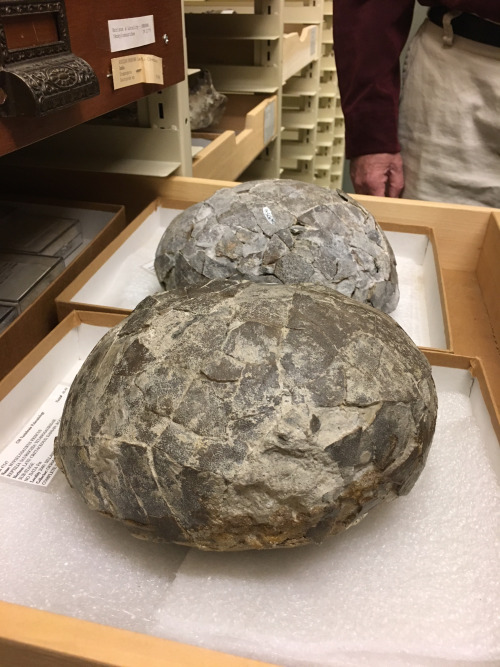
Dinosaur eggs! These fossilized eggs are part of Carnegie Museum of Natural History’s hidden collection in the Section of Vertebrate Paleontology.
Carnegie Museum of Natural History
One of the Four Carnegie Museums of Pittsburgh
Dinosaur eggs! These fossilized eggs are part of Carnegie Museum of Natural History’s hidden collection in the Section of Vertebrate Paleontology.
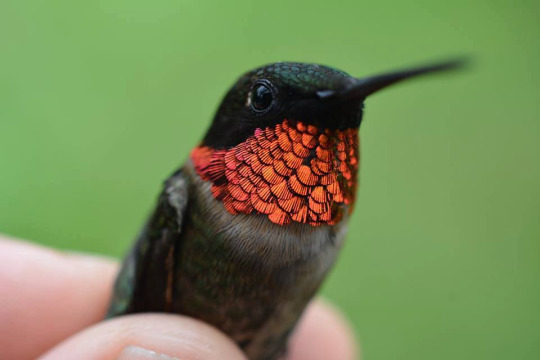
Each week, staff at Powdermill Nature Reserve staff posts stunning,
high-resolution photos of birds that land in their nets on their Facebook page.
The photos show detailed characteristics of local birds, like the
subtle coloring of a Common Yellowthroat or the sharp beak of a Pine
Siskin, that are hard to see as they fly above.
Powdermill is Carnegie Museum of Natural History’s environmental
research center in Rector Pa, where thousands of birds are identified, banded,
and released each year. As they band, research staffers often snap pictures
that highlight the huge variety of different birds flying through Western
Pennsylvania’s skies.
One favorite is the Ruby-throated hummingbird, which has
iridescent, fuchsia feathers on its neck that abut a dark green heads and long
black beak.
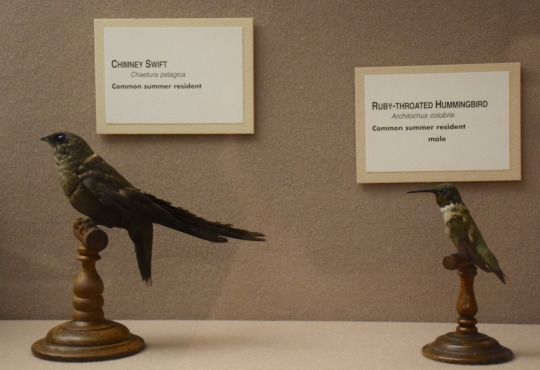
Comparing the Powdermill pictures to Bird Hall in the museum
is an interesting exercise. For example, Powdermill’s high resolution pictures let
you appreciate each and every line of the hummingbird’s bright feathers. But in
the museum, to see a taxidermy mount of a ruby throated humming bird
helps you grasp the miniscule size of these little birds that don’t often grow
larger than 3.5 inches.
Powdermill’s pictures and Bird Halls specimens work
in tandem to encourage us to pause and consider tiny players in our huge
local ecosystem, helping us all foster a little more appreciation for the
natural world.
by Patrick McShea
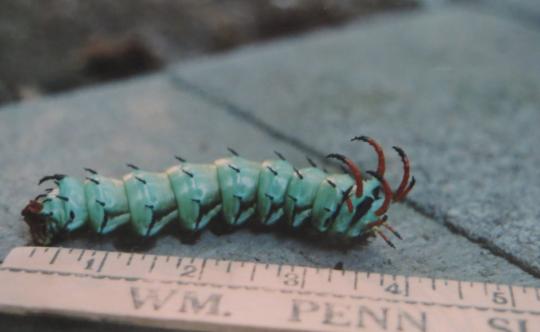
The first grade teacher who provided this picture didn’t realize how much it revealed about her skill in conveying scientific principles. She was more concerned about finding answers for her students’ pressing questions.
The photo and an attached note accompanied a box of preserved insect materials returned to the museum’s loan program one early November day. “A little girl found the ‘creature’ in this picture! She put it in a container and in three days it spun a hard black cocoon, also about four inches long. WHAT IS IT??? And what will
come out of the cocoon???”
Answers were quickly supplied. The mysterious creature was a caterpillar known as a hickory horned devil, the larval stage of the moth bearing the scientific name Citheronia regalis, and the common names regal moth and royal walnut moth. The caterpillars are harmless to touch, but as noted in the USDA Forest Service
publication, Caterpillars of Eastern Forests, hickory horned devils are the “largest and most formidable appearing eastern forest insect.”
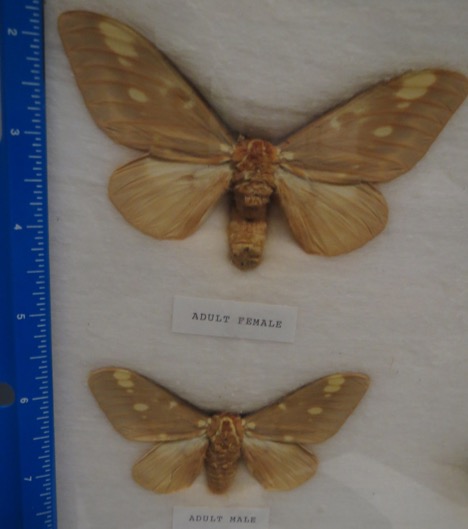
The teacher’s next loan of museum materials included preserved specimens of regal moths (above), and a note praising the use of a ruler as a scale bar in the caterpillar photo. First grade is not too early to learn the importance of making objective measurements when sharing first hand observations, even when the subject is a frightening looking caterpillar.
Pittsburgh teachers looking to learn more about our loan program can visit our website. Schools can have unlimited access to the museum’s loan collection for $200 a year.
Patrick McShea works in the Education and Visitor Experience department of Carnegie Museum of Natural History. Museum employees are encouraged to blog about their unique experiences and knowledge gained from working at the museum.
by Laurie Giarratani
How will you use science, technology, and community to improve lives and shape the future? Join the Climate and Urban Systems Partnership (CUSP), along with innovators from across the country, to test ideas with hands-on experiments and demonstrations in the exhibit hall of the White House Frontiers conference – open to the public from 10 a.m. – 11 a.m. on Thursday, October 13 at Alumni Hall at the University of Pittsburgh.
CUSP is a national project, funded by the National Science Foundation, coordinated locally by Carnegie Museum of Natural History, that aims at changing climate conversations in urban settings. More info about CUSP at http://www.cuspproject.org.

Laurie Giarratani is the Director of Education at Carnegie Museum of Natural History.
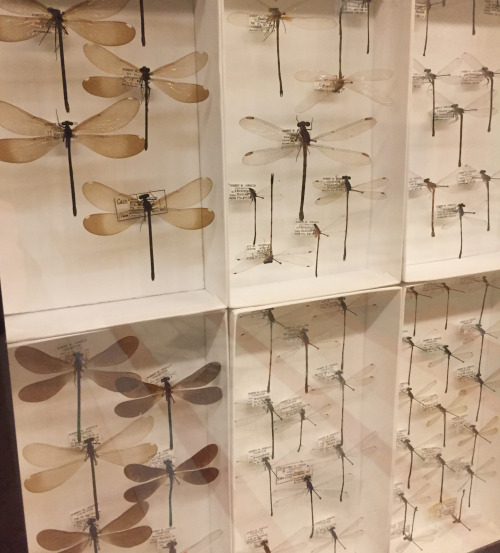
Specimens from the Surdick collection on display near our Grand Staircase.
by Kathleen Bodenlos
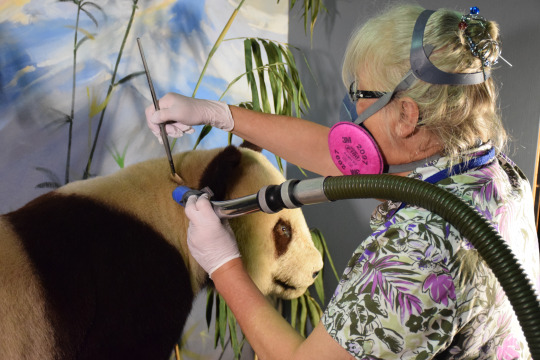
Gretchen Anderson is a conservator at Carnegie Museum of Natural History. She is restoring a panda diorama that will be prominently placed in our newly renovated gift shop. (Stay tuned for more on the gift shop in the next few weeks).
Here are 5 surprising things about conservation of a diorama.
1. Less is more: Use as few chemicals as possible
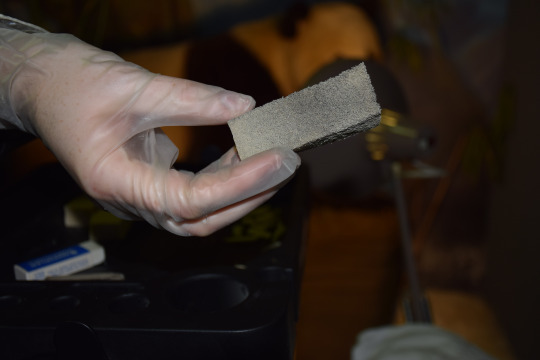
2. Some conservationists also do a little restoration on paint
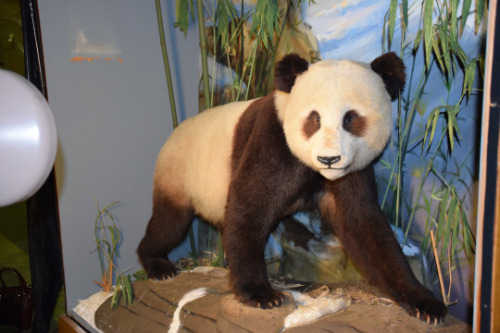
3. Move ‘em up and head ’em out—RAWHIDE!
Kathleen Bodenlos is the Director of Marketing at Carnegie Museum of Natural History. Museum employees are encouraged to write about their unique experiences.
