• Skip to primary navigation
  • Skip to main content
  • Skip to primary sidebar

Carnegie Museum of Natural History

One of the Four Carnegie Museums of Pittsburgh

  • Visit
    • Buy Tickets
    • Visitor Information
    • Exhibitions
    • Events
    • Dining at the Museum
    • Celebrate at the Museum
    • Powdermill Nature Reserve
    • Event Venue Rental
  • Learn
    • Field Trips
    • Educator Information
    • Programs at the Museum
    • Bring the Museum to You
    • Guided Programs FAQ
    • Programs Online
    • Climate and Rural Systems Partnership
  • Research
    • Scientific Sections
    • Science Stories
    • Science Videos
    • Senior Science & Research Staff
    • Museum Library
    • Science Seminars
    • Scientific Publications
    • Specimen and Artifact Identification
  • About
    • Mission & Commitments
    • Directors Team
    • Museum History
  • Tickets
  • Give
  • Shop

nature

August 1, 2018 by wpengine

Black Bears at Powdermill

By Andrea Kautz

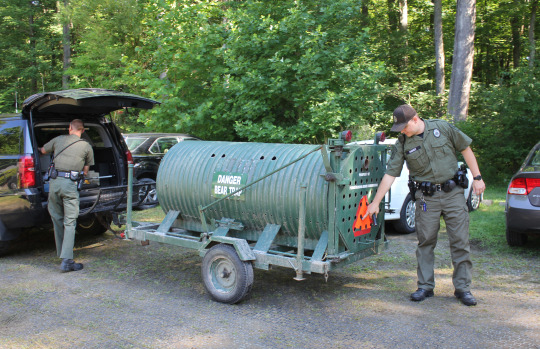
Recently, the PA Game Commission brought a black bear to Powdermill to release in the nearby state forest. It was a healthy, 300-pound male that was relocated because it was becoming a nuisance on a farm more than 30 miles away. Powdermill staff were grateful to have the opportunity to watch as the game wardens sedated and tagged the animal before release. The bear received two ear tags and a lip tattoo for identification. A small milk tooth was extracted which will be used later to determine his age. An infected claw was treated, but otherwise he appeared to be in good health.
Game Wardens arrive at Powdermill
Game Wardens Barron (left) and Harvey (right) arrive at Powdermill with the trap, which is on wheels for easy transport.

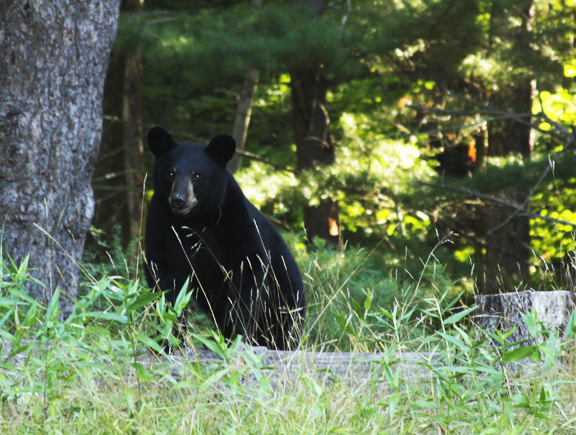
The Game Commission estimates the Pennsylvania bear population to be thriving at around 20,000 individuals. Compared to neighboring states, Pennsylvania black bears breed earlier and have more cubs. Bear populations are managed through seasonal harvesting, although only about 2% of those receiving permits are successful hunting a bear. In 2017, the largest bear taken was a 707-pound male from Monroe County!
black bear in Pennsylvania
American black bear. Photo credit: George Pankewytch

Hopefully, this male will find another place to call home, but relocating these animals can be tricky as they have a very good sense of direction and can cover long distances. At this time last year, one radio-collared male walked from Johnstown to Grove City to Pittsburgh, then east along the turnpike and up through the Laurel Highlands and back to Johnstown in about a month.  We give special thanks to the game commission for putting so much effort into maintaining a healthy population of bears that can live in harmony with humans and ensuring that Pennsylvania can continue to be a supportive environment for these spectacular beasts.

Andrea Kautz is a Research Entomologist at Carnegie Museum of Natural History’s Powdermill Nature Reserve. Museum employees are encouraged to blog about their unique experiences and knowledge gained from working at the museum.
Filed Under: Blog Tagged With: Andrea Kautz, conservation, mammals, nature, Powdermill, Powdermill Nature Reserve

July 27, 2018 by wpengine

The Very Hungry Promethea Caterpillars

by Vanessa Verdecia

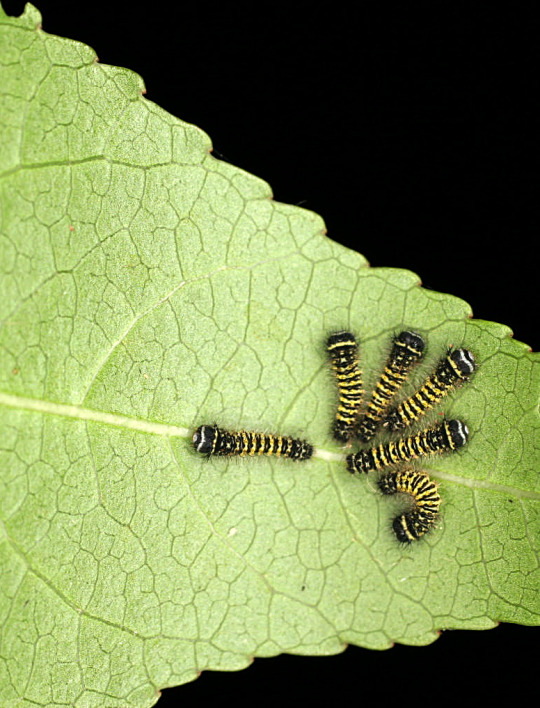
promethea moth eggs

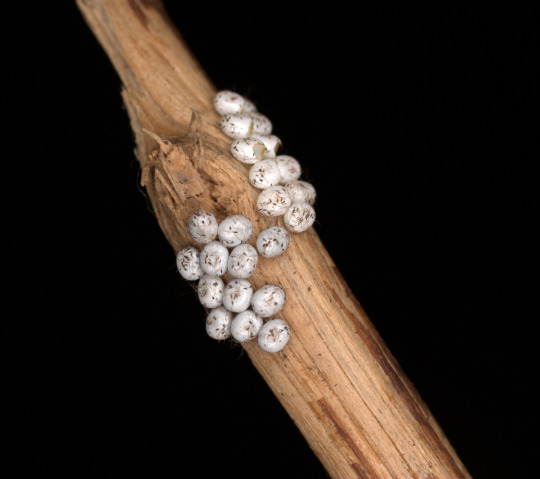
These Promethea Moth (Callosamia promethea) eggs were laid in clusters by a single female parent.  When the caterpillars first hatched they measured approximately 3mm in length and as the caterpillars grew, they shed their skin and molted through a series of stages referred to as instars.  Each one of these instars varies in appearance.  Early instars are gregarious and remain together on the underside of the leaves.  

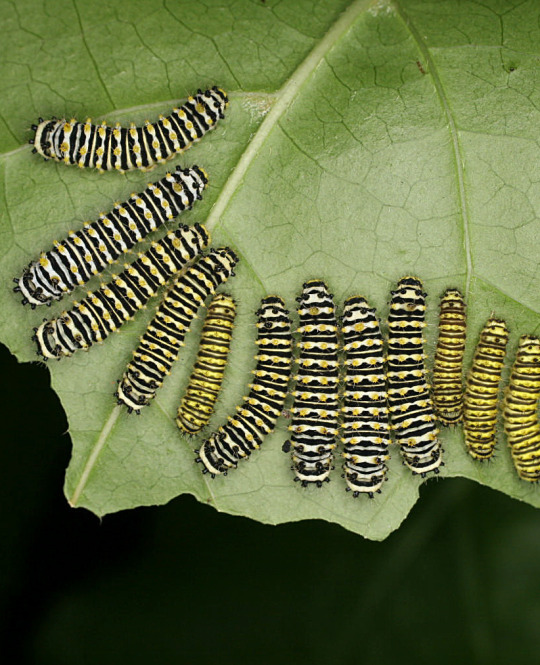
promethea moth caterpillars

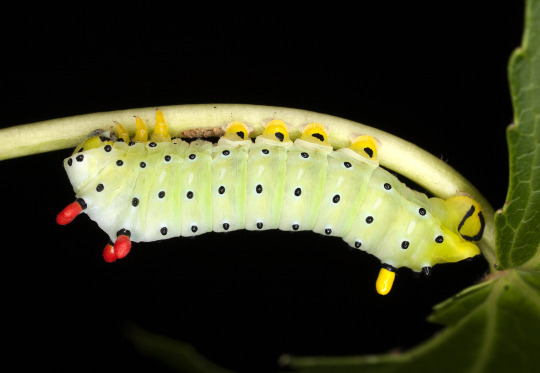
In the earlier instars the Promethea Moth caterpillars have a black and yellow banded appearance.  In contrast to these earlier stages, the body of the last instar caterpillars are pale green and they are recognized by the protruding, bright red knobs that are located on the thoracic region as well as the yellow knob found on the eighth abdominal segment.  The final instar caterpillars in this culture measured up to 4.5cm in length in a resting position, but they can measure up to 6cm when active and stretched out.

promethea moth caterpillar

The Promethea Moth is a member of the family Saturniidae, a group known as the Giant Silkworm moths. In this group of moths, the mouth parts are reduced and the digestive tract is absent, which means they do not feed as adults.  Most caterpillar species are big eaters, but in families like Saturniidae, the adult moths rely heavily on all the energy stored while eating in the larval stages.

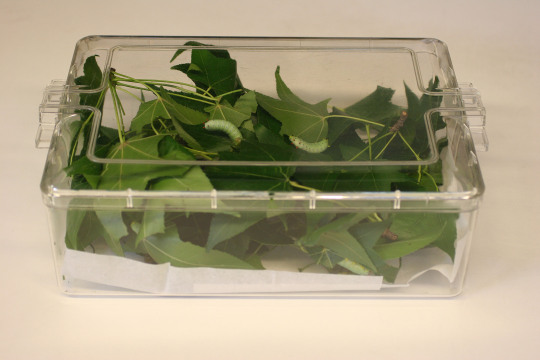
Raising caterpillars in the lab is a labor of love.  Caterpillars depend on having fresh food and a clean environment that is created by housing the live caterpillars in plastic chambers that help preserve the moisture in the leaves.  This culture was reared on sweet gum, but Promethea Moth caterpillars will feed on many different trees.  The caterpillars hatched on 8-June-2018 and some of the specimens in the final instars were seen spinning their cocoons on 17-July-2018.

caterpillars on sweet gum

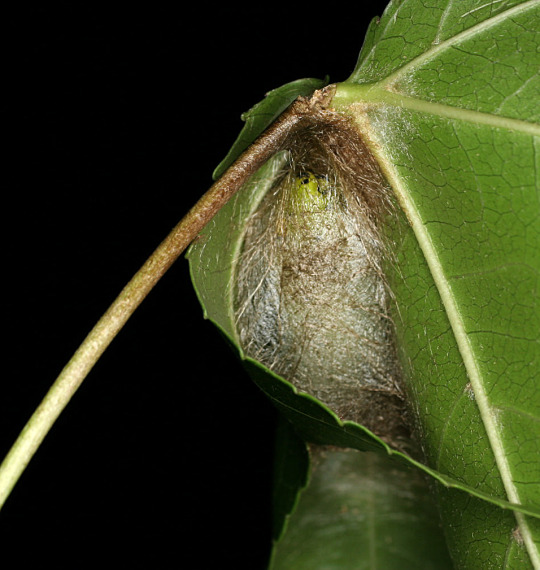
The caterpillars produce silk on a leaf and the petiole and spin a cocoon with the leaf wrapped around it. After the caterpillars spin their cocoons, they will enter the pupal stage and overwinter until the late spring or early summer of 2019, however, a partial second generation in the summer is known to occur in Pennsylvania.  Cocoons attached to the hostplant by the silk can be seen in the winter when all the other leaves have fallen.

cocoon

Vanessa Verdecia is a collection assistant in the museum’s Invertebrate Zoology Section. Museum employees are encouraged to blog about their unique experiences and knowledge gained from working at the museum.
Filed Under: Blog Tagged With: caterpillars, Invertebrate Zoology, moths, nature, research, Vanessa Verdecia

July 26, 2018 by wpengine

Before Powdermill Nature Reserve

By Bonnie Isaac

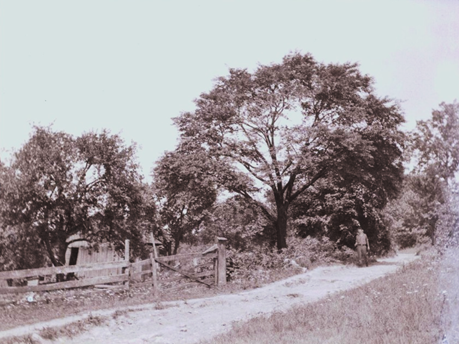
black and white photo of a dirt road and trees

While looking through some images in the archives in the section of Botany I came across this image from July 23, 1923 taken by Gus Link Jr. about 3 miles south of Rector, PA.  There is a good chance that this property later became part of our Powdermill Nature Reserve.

The museum began acquiring properties in 1956 to form Powdermill Nature Reserve. I wonder if the museum folks were out there surveying the area with a nature reserve in mind? What foresight the museum had to acquire properties that have over the past 60 plus years become a beautiful place for research.

In 1923 Gustav Link Jr. was an assistant preparator in Zoology for the natural history museum. Gus Link Jr. worked for the museum from 1912 to 1960.

Bonnie Isaac is the Collection Manager in the Section of Botany. Museum employees are encouraged to blog about their unique experiences and knowledge gained from working at the museum.
Filed Under: Blog Tagged With: Botany, conservation, museum history, nature, Powdermill, Powdermill Nature Reserve

July 10, 2018 by wpengine

Adult Flycatcher

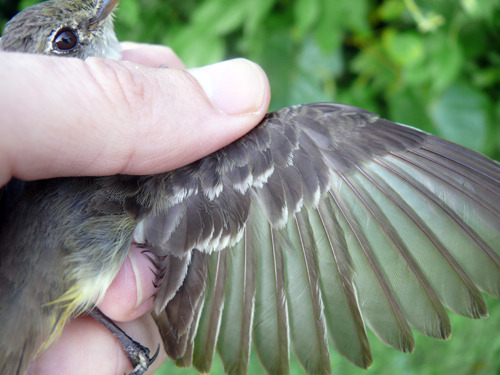
Adult Flycatcher

This adult Flycatcher undergoes the pre-basic molt of the wintering grounds. These adults can be readily identified by their white bars and wear on the feather tips.


Powdermill Nature Reserve’s avian research center is part of Carnegie Museum of Natural History’s biological research station in Rector, Pennsylvania.  The research center operates a bird banding station, conducts bioacoustical research, and performs flight tunnel analysis with the goal of reducing window collisions.


Filed Under: Blog Tagged With: avian research, bird banding, birding, Birds, nature, parc, Powdermill, Powdermill Nature Reserve, research

July 10, 2018 by wpengine

Acadian Flycatcher

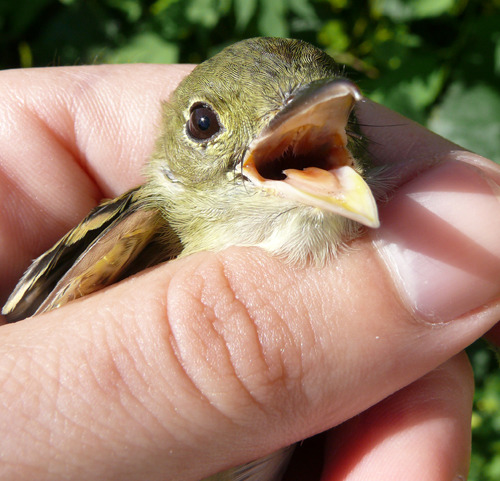
acadian flycatcher

This Flycatcher has a pale yellow mouth lining.


Powdermill Nature Reserve’s avian research center is part of Carnegie Museum of Natural History’s biological research station in Rector, Pennsylvania.  The research center operates a bird banding station, conducts bioacoustical research, and performs flight tunnel analysis with the goal of reducing window collisions.


Filed Under: Blog Tagged With: avian research, avian research center, bird banding, Birds, nature, parc, Powdermill, Powdermill Nature Reserve, research

July 10, 2018 by wpengine

How Birds Breathe with their Butts

by Chase D. Mendenhall

The avian respiratory system is the most efficient in the animal kingdom, which explains how birds get enough oxygen to power flight, even at high altitudes where oxygen is scarce. A key feature that makes avian respiration special is the fact that they have static lungs and breath unidirectionally by breathing with air sacs throughout their body instead of diaphragms common in other land animals.

When a bird draws in a breath of air, it travels through the nares (or nostrils) down the trachea into a series of posterior air sacs located in the thorax and rump—in their butts. When a bird exhales that same breath, it does not leave the body as it does with mammals but rather moves into the lung where oxygen is absorbed and carbon dioxide expelled. When a bird inhales for the second time, that same breath of air moves from the lungs into the anterior air sacs. The second and last exhalation is when the stale air leaves the bird’s body through the nares.

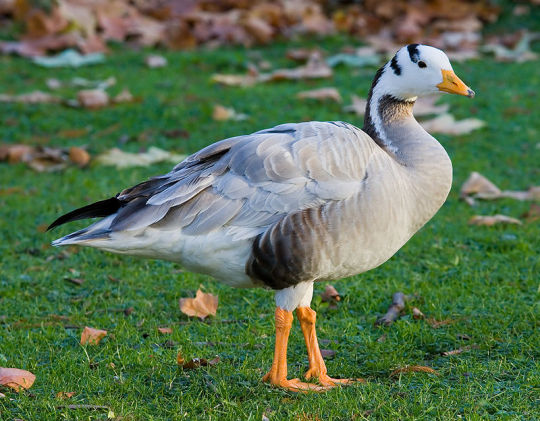
Every breath a bird takes requires two breathing cycles to complete a single breath, making the air passing through the lung unidirectional and always fresh and full of oxygen. Bird lungs are small and rigid, with the gas exchange region of their anatomy organized into a series of parallel tubes that bring deoxygenated blood into the lung at the opposite direction the air is flowing. This “counter-current” gas exchange is efficient and unique to bird lungs and partly enables species, such as the Bar-headed Goose (Anser indicus), to fly over the summit of Mt. Everest without issue. Human explorers, on the other hand, struggle for fresh air at 29,029 feet above sea level because mammalian lungs never expel all the stale air during exhalation, making mammalian explorers long for the ability to use their butts to breath continuous fresh air like the birds.


Chase Mendenhall is Assistant Curator of Birds, Ecology, and Conservation at Carnegie Museum of Natural History. Museum employees are encouraged to blog about their unique experiences and knowledge gained from working at the museum.
Filed Under: Blog Tagged With: birding, Birds, Chase Mendenhall, nature

  • « Go to Previous Page
  • Page 1
  • Page 2
  • Page 3
  • Page 4
  • Page 5
  • Go to Next Page »

sidebar

About

  • Mission & Commitments
  • Directors Team
  • Museum History

Get Involved

  • Volunteer
  • Membership
  • Carnegie Discoverers
  • Donate
  • Employment
  • Events

Bring a Group

  • Groups of 10 or More
  • Birthday Parties at the Museum
  • Field Trips

Powdermill

  • Powdermill Nature Reserve
  • Powdermill Field Trips
  • Powdermill Staff
  • Research at Powdermill

More Information

  • Image Permission Requests
  • Science Stories
  • Accessibility
  • Shopping Cart
  • Contact
  • Visitor Policies
One of the Four Carnegie Museums | © Carnegie Institute | Privacy Policy | Terms of Use | Accessibility
Rad works here logo