• Skip to primary navigation
  • Skip to main content
  • Skip to primary sidebar

Carnegie Museum of Natural History

One of the Four Carnegie Museums of Pittsburgh

  • Visit
    • Buy Tickets
    • Visitor Information
    • Exhibitions
    • Events
    • Dining at the Museum
    • Celebrate at the Museum
    • Powdermill Nature Reserve
    • Event Venue Rental
    • Gift Cards
  • Learn
    • Field Trips
    • Educator Information
    • Programs at the Museum
    • Bring the Museum to You
    • Guided Programs FAQ
    • Programs Online
    • Climate and Rural Systems Partnership
  • Research
    • Scientific Sections
    • Science Stories
    • Science Videos
    • Senior Science & Research Staff
    • Museum Library
    • Science Seminars
    • Scientific Publications
    • Specimen and Artifact Identification
  • About
    • Mission & Commitments
    • Directors Team
    • Museum History
  • Tickets
  • Give
  • Shop

Blogs from our Scientific Researchers

Carnegie Museum of Natural History is home to active research and vast scientific collections. Our scientific researchers regularly contribute to the blog at the museum.

June 16, 2020 by wpengine

The Mineralogy of Ice Cream

by Travis Olds

Have you ever made ice cream at home?

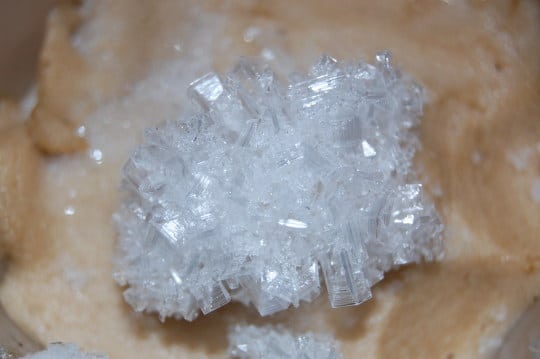
You may have noticed that homemade ice cream has a different texture than what you buy at the grocery store or get at an ice cream shop. Homemade ice cream can taste “grainy” with a coarse texture, unlike the creamy Ben and Jerry’s from the store. This is because ice crystals in homemade ice cream are usually much larger than the ice cream made by professionals.

close up of ice crystals
“Ice Crystals”by glenngurley is licensed under CC BY-NC-SA 2.0

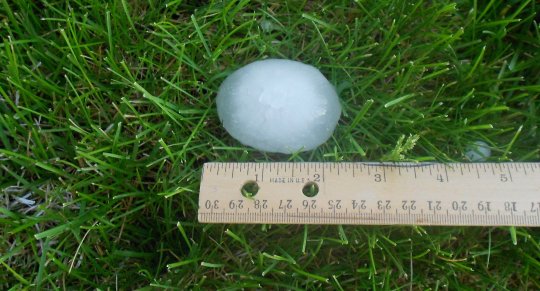
This is where mineralogy comes in. In nature, large mineral crystals take time to grow, sometimes growing for up to 100,000 years or more! The same is true for ice and snow, which happen to be minerals too. The shape and size of snow crystals that fall from the sky are controlled intricately by the outside air temperature, relative humidity, and time. Snowflakes are usually largest when they spend a long time in the air and at temperatures a bit below the freezing point, near 15 °F. At colder temperatures, the crystals grow quickly and are smaller. Fortunately, we won’t be seeing snow for a while, however, summer can bring even larger balls of ice from the sky! During thunderstorms, hail stones can grow VERY large (up to 15 cm or nearly 6 inches in diameter), sometimes spending up to 30 minutes swirling around updrafts in the icy and rainy conditions within storm clouds.

two-inch piece of hail next to ruler in the grass

To make a smooth and creamy ice cream, companies like Ben and Jerry’s use freezers cooled to very cold temperatures, -40 °F, that quickly freezes the cream thereby producing tiny ice crystals. Ice cream prepared at home is made with a salty mixture of ice and water that can reach nearly -5 °F, but at this temperature the ice crystals grow more slowly and larger. When the crystal size reaches about 50 micrometers, roughly the width of a human hair, your mouth senses the coarse texture.

Three steps you can take to make creamier ice cream at home:

1.     Use a higher fat content by adding more cream. More fat will “spread” out water molecules in the cream, creating more nucleation sites, or growth places, for ice and smaller crystals.

2.     Using crushed ice, instead of ice cubes, will bring the ice/salt mixture to a lower temperature. Also, pre-chilling the cream and sugar before placing it in the salt bath will help speed up freezing, producing smaller crystals.

3.     Use “dry ice,” or frozen carbon dioxide, available at many grocery stores, for even lower temperatures and faster crystallization. But be careful, dry ice should only be used with proper gloves and under adult supervision.

Travis Olds is Assistant Curator of Minerals at Carnegie Museum of Natural History. Museum employees are encouraged to blog about their unique experiences working at the museum.

Related Content

Hip and “Trashy” Ice Cream

What Do Minerals and Drinking Water Have To Do With Each Other?

Thanksgiving and Nutritional Mineralogy

Carnegie Museum of Natural History Blog Citation Information

Blog author: Olds, Travis
Publication date: June 16, 2020

Share this post!

  • Share on Twitter Share on Twitter
  • Share on Facebook Share on Facebook
  • Share on Pinterest Share on Pinterest
  • Share on LinkedIn Share on LinkedIn
  • Share on Reddit Share on Reddit
  • Share via Email Share via Email

Share this post!

  • Share on Twitter Share on Twitter
  • Share on Facebook Share on Facebook
  • Share on Pinterest Share on Pinterest
  • Share on LinkedIn Share on LinkedIn
  • Share on Reddit Share on Reddit
  • Share via Email Share via Email

Filed Under: Blog Tagged With: gems and minerals, Hillman Hall of Minerals and Gems, Museum from Home, Science News, Section of Minerals, Travis Olds

June 15, 2020 by wpengine

What Do Minerals and Drinking Water Have to Do With Each Other?

In the same way scientists discover new plant or animal species, new minerals are usually found by exploring new places with hard work and determination, but also sometimes by pure chance and luck. In fact, you do not need to be a scientist to make exciting discoveries. You do need, however, to follow the basic steps of the scientific method when doing any research: (1) first ask a question you are interested in; (2) research that question; (3) develop a hypothesis; (4) test it; (5) analyze the data your tests generate; (6) draw conclusions; (7) and communicate the results.

When describing a new mineral, mineralogists like me gather a slew of analytical data about the atomic arrangement, chemical makeup, and optical and physical properties to completely characterize the mineral. The data we gather is recorded and accessible, so that when others find similar crystals the analytical data for those specimens can be compared. Allowing your findings to be further tested and improved, or even shown to be wrong, forms the foundation of all fields of science and medicine.

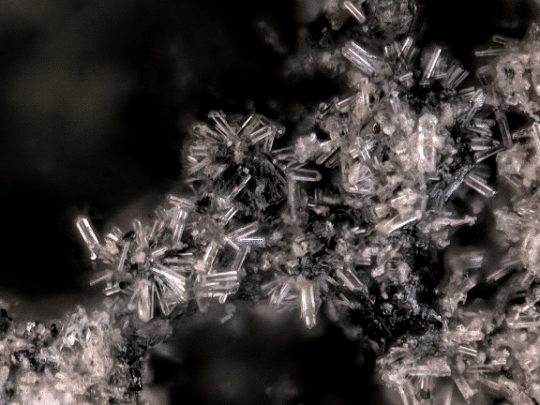
tiny hydroxylpyromorphite crystals
A microscope image of tiny transparent crystals of hydroxylpyromorphite from the Copps mine, Marenisco, Gogebic County, Michigan. Field of view is 0.45 mm. 

I recently gathered analytical data for the new mineral hydroxylpyromorphite, a mineral with a mouthful for a name, but one that is extremely important to removing toxic lead from drinking water. Hydroxylpyromorphite is a lead phosphate mineral, and part of a larger group of minerals with related crystal structures (the arrangements of atoms) called the apatite group. Our bones and teeth are made of apatite, calcium phosphate, and the natural processes that move this critical building block throughout our bodies are disrupted when exposed to lead, potentially causing brain damage and other diseases. Lead is especially dangerous to children, and to prevent lead poisoning, water treatment plants often add phosphate to the water supply. Under the right conditions, phosphate grabs strongly onto lead atoms, forming hydroxylpyromorphite and removing it from the water. Until our description, the crystal structure of this mineral was unknown. Now that we understand the crystal structure, the information can be used by others to develop better techniques or processes that reduce lead in drinking water.

Travis Olds is Assistant Curator of Minerals at Carnegie Museum of Natural History. Museum employees are encouraged to blog about their unique experiences working at the museum.

Filed Under: Blog Tagged With: gems and minerals, Hillman Hall of Minerals and Gems, Museum from Home, Science News, Section of Minerals, Travis Olds

June 12, 2020 by wpengine

The inequity of summer heat

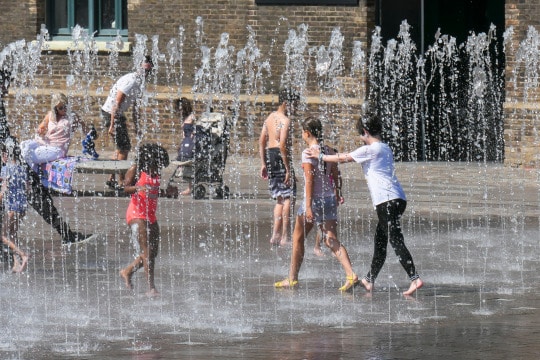
photo of kids playing in a fountain

Ah, summertime! In Pittsburgh, after months of cold, grey days, the warm temperatures and sunshine bring a collective sigh of relief. Plants are roaring back, coloring the world green. Animals are out and about singing and foraging; people are picnicking, barbequing, gardening. Life feels abundant. But summer can quickly become oppressive, even deadly, if it gets too hot. Extreme heat is among the deadliest weather-related phenomena in the US, and cities are most at risk for this hazard.

The concentration of impervious surfaces and low-rise buildings in cities raises temperatures significantly, creating what is termed the urban heat island effect. Temperatures in a single urban area can vary as much as 18 F depending on the density of the grey stuff (buildings, sidewalks, roadways, and parking lots) relative to the green stuff (trees, parks). The urban heat island effect also interacts with global climate change. Rising temperatures due to emissions of heat-trapping gases from the extraction and burning of fossil fuels is making urban communities increasingly vulnerable to extreme heat. And like so many other pressing issues in the early summer of 2020, namely the coronavirus pandemic and police violence, extreme heat is experienced inequitably.

In the US, communities of color and resource limited communities are both disproportionately exposed and sensitive to extreme heat. One recent study explores this climate inequity and its relationship to the historic racially discriminating housing policy, called ‘redlining’. In an analysis published in the journal Climate in January 2020, Jeremy Hoffman, Chief Scientist at the Science Museum in Virginia, and colleagues ask: “do historical policies of redlining help to explain current patterns of exposure to intra-urban heat in US cities? and how do these patterns vary by geographic location of cities?” As the study describes, in the 1930s, redlining distinguished neighborhoods that were considered “best” (outlined in green) and “hazardous” (outlined in red) for investment by the Home Owner’s Loan Corporation, a federally funded program. Categorization on a scale from A (best) to D (hazardous) was based largely on racial makeup. The program prioritized white neighborhoods for economic investment and access to credit. While the practice ended in 1968 with passage of the Fair Housing Act, its legacy has persisted in structuring the social-economic and ecological landscape of US cities today. The study examines the pattern of land surface temperatures in cities today in relation to historic housing policy.

The results for 108 urban areas in the United States can be explored in an open access article, and also shared through an explorable map. Overall, Hoffman and colleagues found that yes, for 94% of US cities, historical policies of redlining track surface land temperatures. Historically redlined neighborhoods are about 5 degrees F warmer on average today than historically greenlined neighborhoods. While temperature patterns within a city are complex and influenced by microclimates and other factors, the authors argue that the heat burden in redlined neighborhoods has been aggravated by housing policy. Redlined neighborhoods have significantly fewer trees, and an abundance of public highway projects and large building projects that create especially high asphalt to vegetation ratios.

Examining the map of the analysis in Pittsburgh, shows a complex relationship between redlining and land surface temperature, part of which I would guess reflects our extremely variable topography and a complex history of shifting neighborhood demographics associated with the boom and bust of the steel industry. I encourage you to investigate the results yourself.

Hoffman’s research demonstrates how structural inequities and institutional racism in the US affects people’s differential experience with the Anthropocene. Anthropocene challenges, like global warming and global pandemics, reveal the coupled dynamics among human social-economic-political systems and ecological-climate systems. They reveal the way that discriminatory race-based policies from the past animate the present. The experience of the pandemic, the experience of summer heat, the experience of poor air quality, the experience of police violence, the list goes on, are not evenly felt across communities. In the US, research shows time and time again that low resource communities and communities of color are disproportionately suffering. In the processes of doing sustainability and adaptation to address the Anthropocene, the work of undoing injustice is essential. In the case of increasing urban heat, as cities adapt, an important research and practice will involve work to ensure greening policies undo racial discriminatory neighborhood investing practices, while also ensuring protection from gentrification and displacement.

Putting research into practice, Hoffman in his role at the Science Museum of Virginia, is collaborating with youth community organization, Groundwork RVA, to build solutions to urban heat that are both low-cost and high impact. At CMNH’s Center for Anthropocene Studies we are inspired and motivated by the role that museums are playing in empowering communities to understand global change and build social equity and resilience.

Nicole Heller is Curator of Anthropocene Studies at the Carnegie Museum of Natural History. Museum employees are encouraged to blog about their unique experiences working at the museum.

Filed Under: Blog Tagged With: Anthropocene, Anthropocene Living Room, Anthropocene Section, Anthropocene Studies, Museum from Home, Nicole Heller, Science News

June 11, 2020 by wpengine

Behind the Scenes with the Baron de Bayet and L. W. Stilwell Collection, Part 1:  Crossing the Atlantic with a Boatload of Fossils

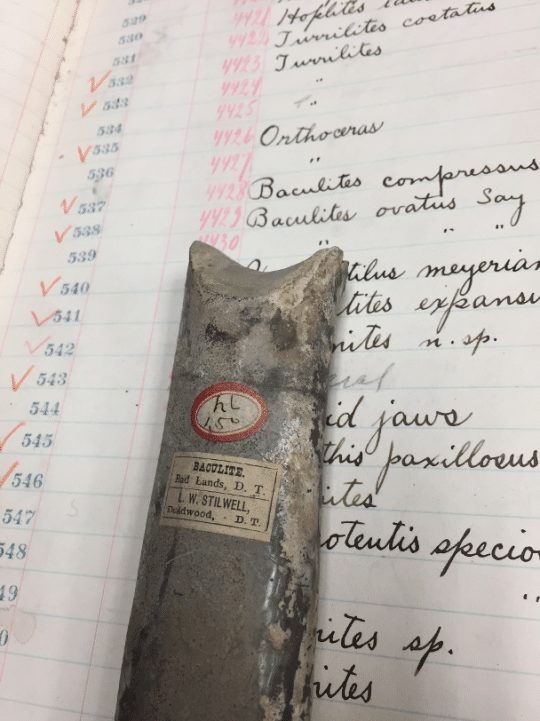
Figure 1:  Baculites fossil from the Bayet Collection with L. W. Stilwell label.

Why did a wealthy European baron seek out a Dakota Territories fossil dealer in the winter of 1889?    This post is the first of a four-part series on renowned 19th century fossil collectors Baron de Bayet of Brussels and Lucien W. Stilwell, and their connection to the Carnegie Museum of Natural History.  Bayet assembled one of the great private fossil collections in Europe.  In 1903, Andrew Carnegie bought the 130,000-fossil collection and had it shipped from the Port of Antwerp in Belgium across the Atlantic to the United States.  The purchase garnered headlines in newspapers across Europe and in the United States and launched Carnegie’s fledgling museum onto the world stage.  Thanks to the archival materials purchased by Carnegie as part of the Bayet deal, the relationship between Baron de Bayet and Lucien W. Stilwell provides a glimpse into how the Carnegie Museum of Natural History and other institutions built their collections.   In part one, we consider what forces may have prompted Bayet to assemble a large collection of fossils in the first place.

The Pathway to Fossil Collecting Travelled Through the Principles of Stratigraphy and Geology

From the late 17th century until the early 19th century, collecting fossils was a hobby of gentlemen farmers and naturalists.  Some of these collectors developed fundamental principles of geology and stratigraphy through observations and deductive reasoning, as to how rock layers, or strata, are formed, fully earning credentials as scientists.  For example, in the 17th century physician Nicolaus Steno’s (1638 – 1686) observed simple patterns in strata during his walks through the hills of northern Italy.  The four Laws of Stratigraphy he proposed are the law of superposition, the law of original horizontality, the law of cross-cutting relationships, and the law of lateral continuity.

The principles of stratigraphy were later interpreted by James Hutton (1726-1797), a Scottish geologist, to formulate his Doctrine of Uniformitarianism in 1785.  This line of thinking assumed that the same natural laws and processes that currently operate in the universe had always operated in the universe and applied everywhere in the universe.  Hutton’s Uniformitarianism included the gradualistic concept that “the present is the key to the past”.  

William ‘strata’ Smith (1769 – 1835), considered the Father of Stratigraphy was a geologist and engineer who uncovered fossils from strata as he worked to build a water canal from Oxfordshire, England to the Thames River at London.  In 1815 he made the first color geologic map of England, Wales, and part of Scotland, a document that developed from his identification of strata based on fossil taxa within the rock layers.  His careful tracking suggested that fossil organisms, both faunas and floras, recorded in each geologic formation succeed one another in a definite and recognizable order, a principle summarized as the law of faunal succession.  

Smith’s map led, in 1822, to geologists William Conybeare and William Phillips naming the Carboniferous Period for the younger (coal beds) and older (limestones) boundaries respectively for this ancient unit of geologic time.  Because a single time period could not rest alone in any record of Earth history, the pioneering work of Conybeare and Phillips, Smith, Hutton, and Steno led eventually to the establishment of the Geologic Time Scale, a framework of three unimaginably long Eras, the Paleozoic, Mesozoic, and Cenozoic, for studying the evolution of life as preserved in the fossil and rock record over Earth’s 4.6-billion-year history.  Within the Geologic Time Scale the Carboniferous Period is one of seven periods of the 290 million years that represent the Paleozoic Era.

As these principles of geology grew in acceptances, Charles Lyell (1769 -1875) an English field geologist who traveled extensively throughout Europe and North America, wrote a three-volume Principles of Geology (1830 – 1833), a work that Charles Darwin read during his Voyage of the Beagle (1831 – 1836).  Darwin’s Theory of Evolution as written in his The Origin of Species by Means of Natural Selection – or the Preservation of Favored Races in the Struggle for Life circa 1859, was influenced by the geology and stratigraphy ideas put forth in the Principles of Geology.

Museums Emerged

Amateur fossil collectors such as Stilwell and Bayet perhaps recognized opportunities to supply and acquire fossils to satisfy demand for fossils by museums and universities across Europe and the United States.  The first museum to become established in Europe was the Muséum national d’histoire naturelle in Paris, France in 1793, followed by the Museum für Naturkunde Berlin in 1810.   Museums in Belgium, London and Austria followed.

In the United States, the Lewis and Clark Expedition (1804 – 1806), mandated by President Thomas Jefferson, was the first U.S. government expedition to explore the unknown territory of the Louisiana Purchase in search of minerals, fossils, and indigenous artifacts.  Co-led by Merriweather Lewis (1774 – 1809) and William Clark (1770 – 1838), the expedition collections were deposited at the Academy of Natural Sciences of Philadelphia, now known as the Academy of Natural Sciences of Drexel University.  Soon, other university museums came into existence such as “The Louis Agassiz Museum of Comparative Zoology”, of Harvard University in 1859, and the Peabody Museum of Natural History at Yale University in 1866.   The United States government established the Smithsonian Museum of Natural History in 1866.  Before long, private institutions such as the American Natural History Museum in New York City, the Field Museum of Chicago, and Carnegie Museum appeared on the scene.

As museums hired scientific staff, rivalries between experts at different institutions developed.  By the 1870’s, paleontologists Edward Drinker Cope, of the Academy of Natural Sciences in Philadelphia, and O.C. March, of the Peabody Museum at Yale University, began a two-decade competition to outdo each other in a battle to collect and name as many vertebrate fossils as possible.  Their exploits are often referred to as “the Bone Wars” (Rea 2001).    In 1874, O. C. Marsh arrived in the Dakota Territories.   Word of the exotic sea creatures from the Western Interior Seaway and mammals from the Oligocene Period reached Europe, leading the Baron de Bayet to contact Lucien W. Stilwell for his assistance in acquiring “one of every species and variety.”

Next:  Lucien W. Stilwell arrives in Deadwood Dakota Territories, a town known for gold, gambling and lawlessness.  

Joann Wilson is volunteer with the Section of Invertebrate Paleontology and Albert Kollar is Collections Manager for the Section of Invertebrate Paleontology.  Museum staff, volunteers, and interns are encouraged to blog about their unique experiences and knowledge gained from working at the museum.

Filed Under: Blog Tagged With: Albert Kollar, invertebrate paleontology, Joann L. Wilson, Museum from Home, Science News

June 11, 2020 by wpengine

Fungi make minerals and clean polluted water along the way!

Fungi are all around in the environment. For example, the mold that invades wet basements, the mushrooms that we cook with, and the yeast that people use to make bread, wine, and beer are all members of the fungal kingdom. Fungi are also essential parts of natural ecosystems, breaking down complex carbon compounds like dead leaves or bark and returning nutrients to the soil. In addition to all this, many fungi are also extremely tolerant of polluted environments and can transform pollutants from highly toxic dissolved forms to less or non-toxic solid forms.

photo of biominerals being formed by fungus
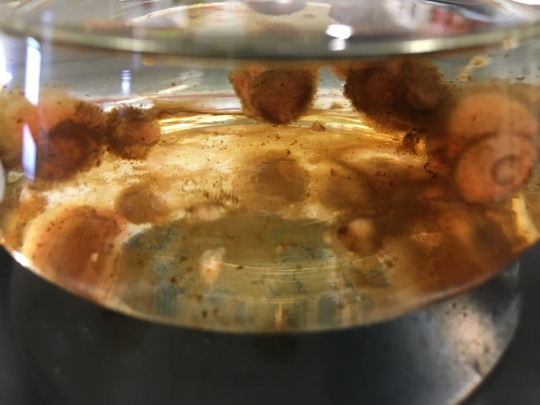
Biominerals being formed in a flask by fungus, Paraconiothyrium sporulosum (pink color is Se(0) biominerals and brown color is Mn oxides).

Between 2016 and 2018, as a postdoctoral fellow at the University of Minnesota, I led a small research team in an investigation of how common soil fungi responded to two environmental pollutants, manganese (Mn) and selenium (Se). Our study, published in the journal Environmental Science & Technology, was entitled, A fungal-mediated cryptic selenium cycle mediated by manganese biominerals. For our study we used two different species of fungi from the lab’s culture collection, a resource that contains microbes isolated from natural and polluted environments all over the US. Both elements investigated are micronutrients and important in small amounts, but can be harmful at high concentrations, such as in coal mine drainage where they are highly abundant.

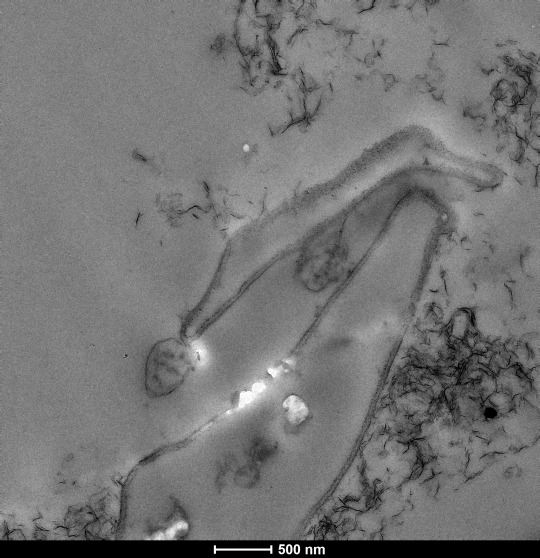
Two fungal cells surrounded by Mn oxides (thin black rods) and elemental Se (black circle) biominerals imaged using a transmission electron microscope.

We knew that under certain circumstances the fungi make biominerals, a subset of solid minerals formed through biological activity. So, we designed an experiment to track the fate of the pollutants during fungal growth. What we observed was that the fungi did, in fact, turn dissolved forms of our targeted elements into solid biominerals. Using a variety of geochemical techniques including a high-powered electron microscope, we identified manganese oxide and elemental selenium biominerals formed side-by-side, indicating that they can coexist in natural environments. The Mn oxides also seemed to recycle some of the Se back to dissolved forms, which is exciting because this transformation indicates there is a cryptic, or ‘hidden’ part of the natural Se cycle that was previously unknown. We are now working on follow-up engineering experiments using these same fungi to see if they can effectively remediate different types of contaminated wastewaters. We’re hopeful that these fungi can offer low-cost, low-input alternative remediation solutions for a wide variety of environmental clean-up applications. In the meantime, we’re also studying other biominerals that our fungi make and collecting new biomineral-forming fungi.

Carla Rosenfeld is the new Assistant Curator of Earth Sciences at Carnegie Museum of Natural History. Museum employees are encouraged to blog about their unique experiences and knowledge gained from working at the museum.

Article citation:

Rosenfeld, C.E, Sabuda, M.C., Hinkle, M.A.G., James, B.R., Santelli, C.M. A fungal mediated cryptic selenium cycle linked with manganese biominerals. Environmental Science and Technology 54(6): 3570-3580 doi:10.1021/acs.est.9b06022

Filed Under: Blog Tagged With: Anthropocene Living Room, Carla Rosenfeld, Earth Sciences, gems and minerals, Hillman Hall, Hillman Hall of Minerals and Gems, Museum from Home, Science News, Section of Minerals

June 10, 2020 by wpengine

The Bromacker Project Part V: Orobates pabsti, Pabst’s Mountain Walker

New to this series? Read The Bromacker Fossil Project Part I, Part II, Part III, and Part IV. 

In 1995, my first year of field work at the Bromacker quarry, Stuart Sumida discovered a fossil that we initially thought was that of the amphibian Seymouria, based on the size and shape of the exposed vertebrae. This tentative identification made sense, because before our collaboration began, Thomas Martens had discovered in the Bromacker a skull of Seymouria, a creature known from localities in the USA. Months later, while I was preparing the specimen, Dave Berman and I realized the fossil wasn’t Seymouria, and that it belonged to the same unnamed animal that Thomas had collected a partial skeleton of before our collaboration began.

image of orobates pabsti
Specimen of Orobates pabsti collected in the 1995 field season. We determined that it is a juvenile. Photo by Dave Berman.

In the 1998 field season I discovered a third specimen, which is by far the most spectacular fossil that I have ever discovered. I found it towards the end of the field season when I pried up a piece of rock from the quarry floor. Upon turning over the rock piece, I saw an articulated foot preserved in it. I couldn’t believe my eyes! I knew that at the Bromacker if an articulated foot was found, the rest of the articulated skeleton should be attached to it. The problem was, we didn’t know if I had discovered a front or a hind foot, so we weren’t sure how the specimen was oriented in the quarry and whether it penetrated the nearby rock wall. Dave carefully lifted another piece of rock and thought the bones exposed in it were part of the shoulder girdle. Unfortunately, closer examination revealed that it was a piece of skull roof—another lobotomy—but, lacking x-ray vision, this is how we find fossil bone at the Bromacker. The good news was that the fossil specimen appeared to parallel the quarry wall.

image
A film crew from the regional MDR television station visited us early on the day of my discovery to interview Dave and Thomas. The discovery was made after they left, so Thomas immediately notified them. They returned and recorded a reenactment of my discovery. The piece of rock I am holding contains the foot. The rest of the fossil lies in the low mound of rocks in front of me. Photo by Dave Berman, 1998.
image
Dave and Stuart finish plastering the block. The red flag is a north arrow to indicate the orientation of the block in the quarry. Photo by the author, 1998.

Dave, Stuart, Thomas, then-graduate student Richard Kissel (University of Toronto, Mississauga), and I named the animal Orobates pabsti, which is from the Greek “oros,” meaning mountain, and “bates,” meaning walker, in reference to the Bromacker fossil environment being an intermontane basin. “Pabsti” is in honor of Professor Wilhelm Pabst for his pioneering work on the Bromacker fossil trackways.

We determined that Orobates is very closely related to Diadectes, and like Diadectes, was herbivorous. Orobates differs from Diadectes and other diadectomorphs in the group Diadectidae in a number of features, some of which are as follows: spade-shaped cheek teeth that are oriented on the jaw at an angle of 30–40° to the jaw line, rather than being close to 90°; narrower and shorter vertebral spines; 26 vertebrae between the head and hip (Diadectes has 21); proportions and shapes of individual toe bones; and digit (finger or toe) length.

image of orobates pabsti
Holotype specimen of Orobates pabsti, the specimen collected in 1998. If a series of specimens exists of a new species, then the specimen that best represents the species is designated as the holotype. If only one specimen is known, it becomes the holotype by default. Photo by Dave Berman.

The Bromacker has long been famous for its exquisitely preserved fossil trackways. Identification of the particular fossil animal that made a given trackway is almost always very difficult, because body fossils often lack completely preserved hands and feet and typically are not found in association with trackways. As a result, trackways are given their own set of names, called ichnotaxa (“ichno” means track or footprint), which are typically referred to major groups of animals instead of individual species. The Bromacker is unique, however, because nearly completely preserved body fossils occur in a rock unit above the trackways, indicating they are very nearly contemporaneous. Five ichnotaxa are known from the Bromacker, and one of them, Ichniotherium, has been attributed to Diadectidae.

image
A large slab of rock being inspected for trackways shortly after it was unearthed in the commercial rock quarry. The polygonal patterns in the rock are mudcracks. Photo by the author.

Graduate student and trackway expert Sebastian Voigt (now Director at Urweltmuseum GEOSKOP, Burg Lichtenberg, Germany) often visited us at the Bromacker. In 2000, a time when Diadectes was the only known Bromacker diadectid, Sebastian and his advisor Hartmut Haubold (now emeritus at Martin Luther University Halle-Wittenberg, Germany) proposed that Ichniotherium cottae made two track types, designated as A and B, that differed according to the speed at which the trackmakers moved. This contrasted previous studies that proposed three species of Ichniotherium at the Bromacker.

Once the skeletal anatomy of Orobates became known, Sebastian realized that there were two species of Ichniotherium, and they were made by Diadectes and Orobates, respectively. He invited Dave and me to co-author a paper to present this hypothesis. We supplied Sebastian with information about skeletal differences between Diadectes and Orobates, and Sebastian used these data to firmly establish that Diadectes made Ichniotherium cottae (type B) tracks and Orobates was the trackmaker of trackways formerly identified as I.sphaerodactylum (aka I. cottae type A). Even though the makers of the trackways are now known, the ichnotaxon names are still used when referring to the trackways.

image
Photographs of trackways of Ichniotherium sphaerodactylum made by Orobates pabsti (top) and Ichniotherium cottae made by Diadectes absitus (bottom). Modified from Voigt (2007).

In Diadectes, the fifth digit of the hind foot is relatively shorter than it is in Orobates, which can be seen in the tracks of I. cottae and I. sphaerodactylum, respectively. Furthermore, in I. cottae trackways, the hind foot track overlaps the track of the front foot, whereas in I. sphaerodactylum the hind foot track typically doesn’t overlap the front foot track. This is because Diadectes has less vertebrae between the head and hip (21 vertebrae) than Orobates (26 vertebrae) does.

image
Front and hind foot track pair of Ichniotherium sphaerodactylum. Track made by the front foot is above the hind foot track. Digits 1–5 indicated. Modified from Voigt, 2007.
image
Front and hind foot track pair of Ichniotherium cottae. Track made by the front foot is above the hind foot track. Digits 1–5 indicated. Notice that the hind foot track overlaps the front foot track. Drawings are of different specimens than the one photographed. Modified from Voigt, 2007.

A cast of the holotype skeleton of Orobates pabsti is exhibited in the Fossil Frontiers display case in Carnegie Museum of Natural History’s Dinosaurs in Their Time exhibition. Be sure to look for it once the museum re-opens. And stay tuned for my next post, which will feature the amphibian Seymouria sanjuanensis.

For those of you who would like to learn more about Orobates, you can access the abstract here or contact Amy Henrici here. The publication on the track-trackmaker association can be found here.

Amy Henrici is Collection Manager in the Section of Vertebrate Paleontology at Carnegie Museum of Natural History. Museum staff, volunteers, and interns are encouraged to blog about their unique experiences and knowledge gained from working at the museum.

Keep Reading

The Bromacker Fossil Project Part VI: Seymouria sanjuanensis, the Tambach Lovers

Filed Under: Blog Tagged With: Amy Henrici, Museum from Home, Science News, Section of Vertebrate Paleontology, The Bromacker Fossil Project, Vertebrate Paleontology

  • « Go to Previous Page
  • Page 1
  • Interim pages omitted …
  • Page 34
  • Page 35
  • Page 36
  • Page 37
  • Page 38
  • Interim pages omitted …
  • Page 43
  • Go to Next Page »

sidebar

About

  • Mission & Commitments
  • Directors Team
  • Museum History

Get Involved

  • Volunteer
  • Membership
  • Carnegie Discoverers
  • Donate
  • Employment
  • Events

Bring a Group

  • Groups of 10 or More
  • Birthday Parties at the Museum
  • Field Trips

Powdermill

  • Powdermill Nature Reserve
  • Powdermill Field Trips
  • Powdermill Staff
  • Research at Powdermill

More Information

  • Image Permission Requests
  • Science Stories
  • Accessibility
  • Shopping Cart
  • Contact
  • Visitor Policies
One of the Four Carnegie Museums | © Carnegie Institute | Privacy Policy | Terms of Use | Accessibility
Rad works here logo