• Skip to primary navigation
  • Skip to main content
  • Skip to primary sidebar

Carnegie Museum of Natural History

One of the Four Carnegie Museums of Pittsburgh

  • Visit
    • Buy Tickets
    • Visitor Information
    • Exhibitions
    • Events
    • Dining at the Museum
    • Celebrate at the Museum
    • Powdermill Nature Reserve
    • Event Venue Rental
    • Gift Cards
  • Learn
    • Field Trips
    • Educator Information
    • Programs at the Museum
    • Bring the Museum to You
    • Guided Programs FAQ
    • Programs Online
    • Climate and Rural Systems Partnership
  • Research
    • Scientific Sections
    • Science Stories
    • Science Videos
    • Senior Science & Research Staff
    • Museum Library
    • Science Seminars
    • Scientific Publications
    • Specimen and Artifact Identification
  • About
    • Mission & Commitments
    • Directors Team
    • Museum History
  • Tickets
  • Give
  • Shop

Section of Botany

July 29, 2020 by wpengine

Collected on this Day in 1966: Santa Clauses

Christmas in July…”Santa Claus” floating in the air.

(Or I guess, technically Boxing Day in July, if that’s a thing.)
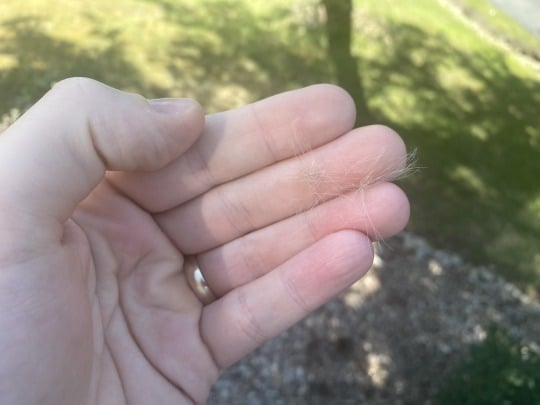
thistle seed fluff "Santa Claus" in hand

Make a wish!

Have you ever seen fluff floating by in the air, especially in late July, early August? Kids love chasing the fluff around, often referring to them as “Santas” or “Santa Clauses.”  You catch it, make a wish, and let them go again, floating away.
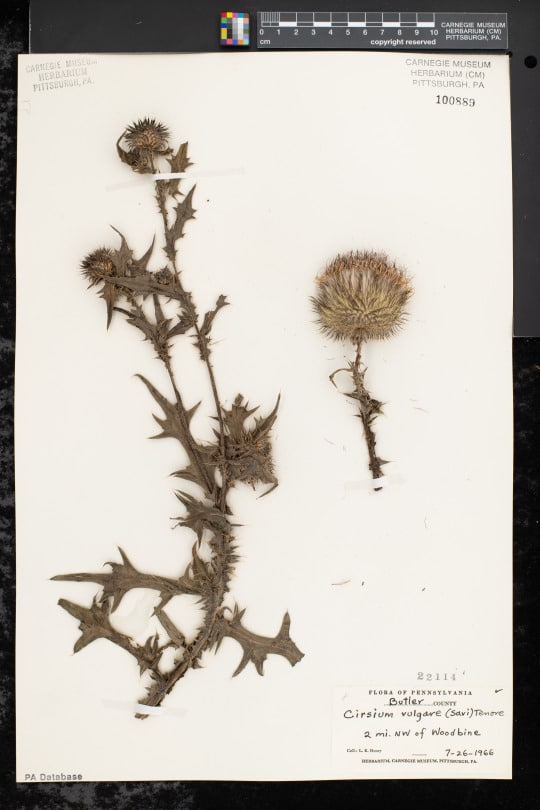
dried thistle specimen on herbarium sheet

These are seeds!  Most likely thistle seeds, like this specimen here.  Or other seeds that have similar “fluff”-like structures.  The botanical term for this “fluff” is pappus.  Pappus is a modified part of flowers in many species in the sunflower family, Asteraceae (think dandelion).  These structures help the seed disperse in the wind, floating away in the breeze, carrying the seed far away.  If you’ve tried to catch them, you know they float away in the air very easily. The seeds are small, and often times have already disconnected from the pappus when you catch them.
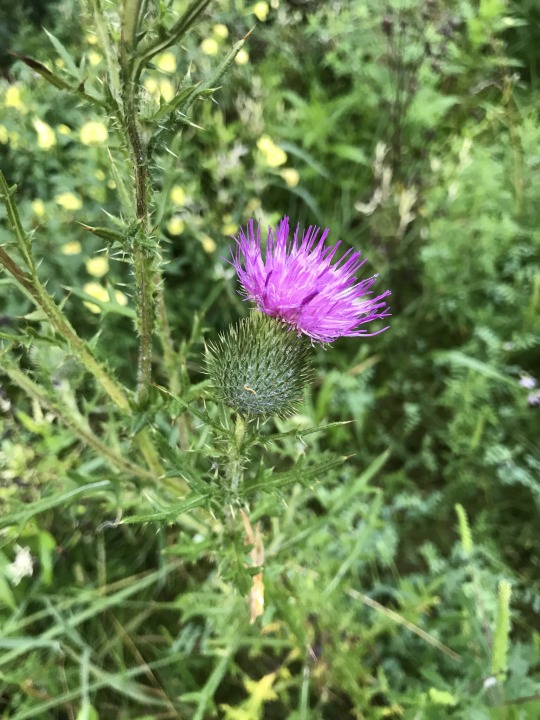
thistle

Check out the “Santa Claus” pappus on this specimen of bull thistle (Cirsium vulgare), collected on July 26, 1966 by Leroy Henry near Woodbine (Butler county), Pennsylvania.  Leroy Henry was a botany curator at the Carnegie Museum.  All species in the genus Cirsium are known as “thistles.”  They have distinctive spiny leaves and stems, with even more distinctive purple flower heads. There are native thistles, but many are introduced. Thistles are common in disturbed areas, and in and around agricultural fields across the country.  Bull thistle is native in Europe and Western Asia, but widely introduced across the world, including North America.  It is the national flower of Scotland, but the species is considered invasive in many places.

Keep an eye out for thistles, and “Santa Clauses.”  Don’t forget to make a wish.

Find this bull thistle specimens here.

Check back for more! Botanists at the Carnegie Museum of Natural History share digital specimens from the herbarium on dates they were collected. They are in the midst of a three-year project to digitize nearly 190,000 plant specimens collected in the region, making images and other data publicly available online. This effort is part of the Mid-Atlantic Megalopolis Project (mamdigitization.org), a network of thirteen herbaria spanning the densely populated urban corridor from Washington, D.C. to New York City to achieve a greater understanding of our urban areas, including the unique industrial and environmental history of the greater Pittsburgh region. This project is made possible by the National Science Foundation under grant no. 1801022.

Mason Heberling is Assistant Curator of Botany at Carnegie Museum of Natural History. Museum employees are encouraged to blog about their unique experiences and knowledge gained from working at the museum.
Related Content

Tulips in June?!

What’s So Special About Poinsettias?

Collected on this Day in 1984: Tobacco

Filed Under: Blog Tagged With: botany hall, collected on this day, Hall of Botany, Mason Heberling, Museum from Home, Science News, Section of Botany

June 9, 2020 by wpengine

Our Eureka Moment!

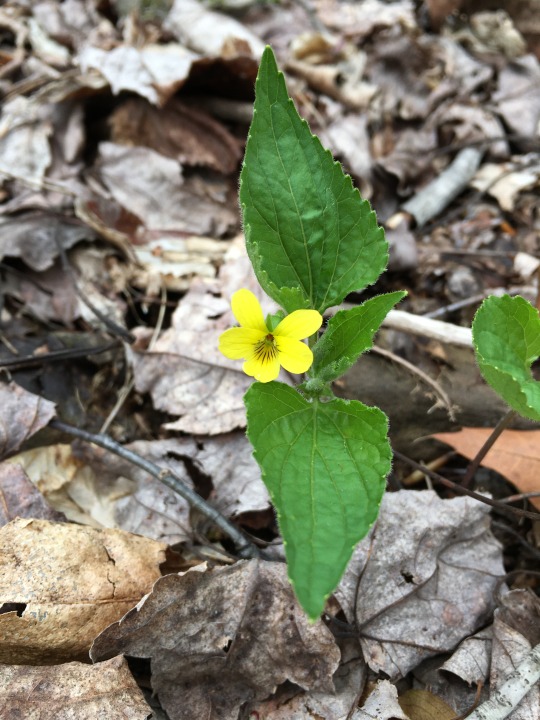
photo of viola glaberrima

Searching for rare or endangered plants has become a passion for me. It’s always exciting to find something that hasn’t been seen by very many people. It’s also special when I can share these finds with someone close to me who cares as much about them as I do. I am rather lucky in that my husband, Joe, is also a botanist and shares my passion for finding rare plants. Our household pursuit has even become a bit competitive. I will freely admit, when Joe spots a rare plant first, there is some jealousy intermingled with my excitement that we were in the right place at the right time.

For the last couple of years, we have been on a quest to find Viola glaberrima, a yellow violet last seen in Pennsylvania in 1920, May 30, 1920, to be exact.

I’ve pressed my friend Harvey Ballard, a professor at Ohio University and a renowned Violet expert, for details about habitats to investigate, the characteristics that distinguish the plant from other violets, and any tidbits I could glean to help us find this elusive plant. At least a dozen of my emails to Harvey involved questions about information I’d found in other sources relating to the plant commonly called the smooth yellow violet.

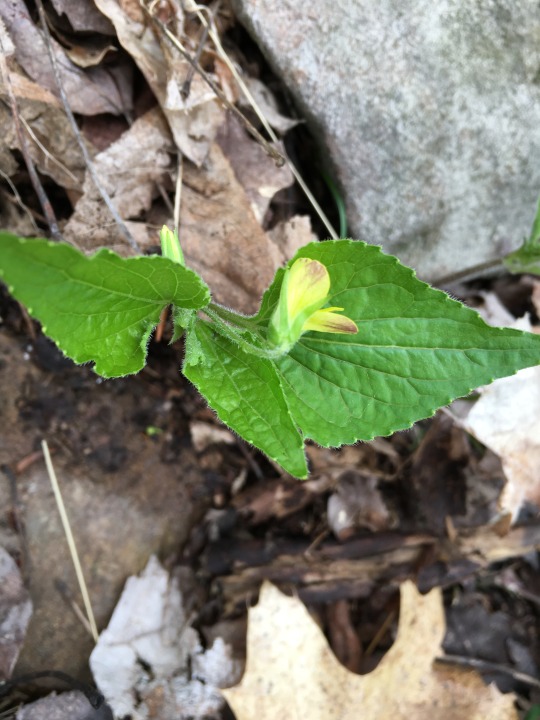
In all honesty, I was suspicious that this violet ever grew in Pennsylvania, even going so far as questioning Harvey about whether he had correctly identified one of the historic specimens. In many ways Viola glaberrima resembles other yellow violets. Pennsylvania has about 30 different kinds of violets, five of which are yellow. The other yellow stemmed violets known to occur in the Commonwealth are usually many stemmed with stems that more-or-less lay down on the ground. These other violets also have either heart shaped or what are termed hastate shaped leaves, that is leaves with outlines reminiscent of a spear point with two points protruding from its base. Many of the plants in this group have flowers that are yellow on the front and back. Some of these flowers develop purple coloring on the back of the petals with age. The violet we’ve been searching for has a single, upright stem with cuneate or wedge-shaped leaves and always has purple on the back of the petals.

Harvey served as a coach for our search for Viola glaberrima, and in doing so he did much more than advise us to look on moist wooded slopes. Many floras list our target plant as merely a variety of Viola tripartita, a flower commonly known as the threepart violet. Harvey assured us that Viola glaberrima is a good species in its own right, and provided additional motivation by making a prediction. He told us that if we found it in the field we would have a “Eureka” moment, because the species is visibly different from the other yellow violets.

Historically, the smooth yellow violet was collected 5 or 6 times in Pennsylvania. The earliest collection is pretty vague, “Mercersburg Pa. in 1845.” The other collections aren’t any more precise. One collection from 1900 is from somewhere “between Ruffsdale and Jacobs Creek in Westmoreland County.” There are two collections from the area of Hillside, PA collected in 1907 and again in 1909. The site we felt we had the best chance of relocating this difficult to find violet was Killarney Park in Fayette County. This seemed to be the most precise locality and the most recent. In May of 1920 Otto Jennings of Carnegie Museum fame and Ernest Gress, a student of Jennings who later worked for the Pennsylvania Department of Agriculture, both collected this violet at this location on the same day. Killarney Park, established in 1909, was a popular place for folks to get out of town and have a picnic or a reunion. It featured a dance hall, lakes for boating, picnic grounds and overnight accommodations. With a stop on the Indian Creek Valley Railroad, the park was easily accessible to rail travelers.

The park property changed hands a few times over the years. Its name changed in 1926 and again in 1939, and it was eventually sold in 1941 to the Christian Church of Somerset for use as a summer camp. Thus, the current name of Camp Christian came into being. In June of 2016, Joe and I spent some time at Camp Christian helping guide field trips for the Botanical Society of America, Northeast Section Joint Field Meeting. I got to know the manager of Camp Christian and told him about the rare violet that had last been collected there. June was a little late, the violets were pretty much done blooming. We looked around for the violet without any luck, but the manager invited us to come back and look anytime. Last year, 2019, we spent parts of two days looking around the property again for the little yellow violet that seemed so elusive.

Most of the violets had already gone to fruit at the time of our 2019 visit, which coincided with the historic collection calendar date of May 30. This year, we visited earlier in May, found many violets blooming, and checked thousands of them without finding a smooth yellow violet.

photo of viola glaberrima showing underside of petals

So, in the process of doing field work and looking for other rare plants, it became a habit for us to look for what seemed to be mythical yellow gems. During a field work day in Indiana County on May 16, while cutting up over a hill to take a shorter route back to the car, we came upon a small patch of yellow violets that were different than any we had seen before. They had single stems, with lance shaped leaves and purple coloring on the backs of the petals. There was no denying that this violet was different than any we had seen before. The plants fit all the characteristics that Harvey had so patiently described for us over the many e-mails. This was finally our promised “Eureka” moment.

Begrudgingly I’ll admit that Joe was first to spot it. (He walks faster than I do.) Of course, Harvey was one of the first people I contacted, I sent him several photographs and to my delight we received the following response: “Hi Bonnie and Joe, YOU NAILED IT!!! You found Viola glaberrima! What a great find! It is likely rare and sporadic along that mountain range. Congratulations. Big ice cream sundaes for you!” How did Harvey know I love ice cream sundaes?

I would love to say this was a “Eureka “moment 100 years in the making, but it was only 99 years and 351 days.

Bonnie Isaac is the Collection Manager in the Section of Botany. Museum staff, volunteers, and interns are encouraged to blog about their unique experiences and knowledge gained from working at the museum.
Related Posts and Videos

Rediscovering Viola glaberrima (Video)

How Do You Preserve a Giant Pumpkin?

Hidden Treasure of Pittsburgh Found

Carnegie Museum of Natural History Blog Citation Information

Blog author: Isaac, Bonnie
Publication date: June 9, 2020

Share this post!

  • Share on Twitter Share on Twitter
  • Share on Facebook Share on Facebook
  • Share on Pinterest Share on Pinterest
  • Share on LinkedIn Share on LinkedIn
  • Share on Reddit Share on Reddit
  • Share via Email Share via Email

Filed Under: Blog Tagged With: Bonnie Isaac, Botany, Hall of Botany, Museum from Home, Science News, Section of Botany

June 8, 2020 by wpengine

Is that snow…in June?

Collected on this Day in 1942

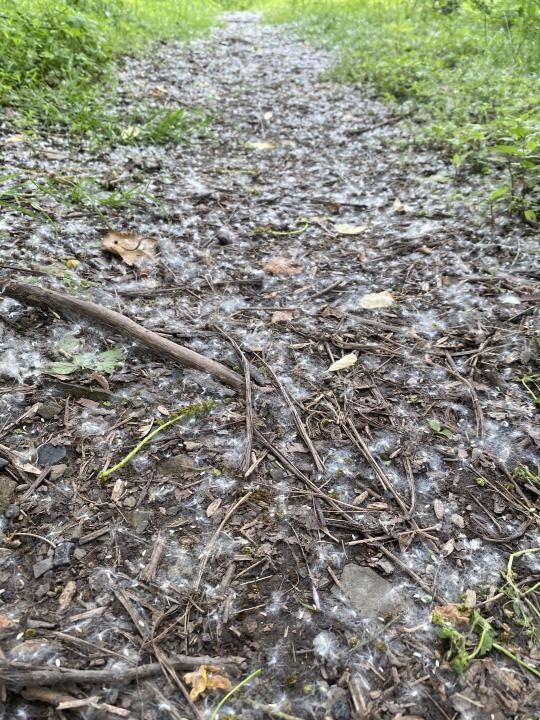
cottonwood seeds covering an outdoor trail

It can’t be snow, right? It’s summer!  Maybe that is cotton falling from the sky?  Well, kind of!  It is cottonwood seeds!

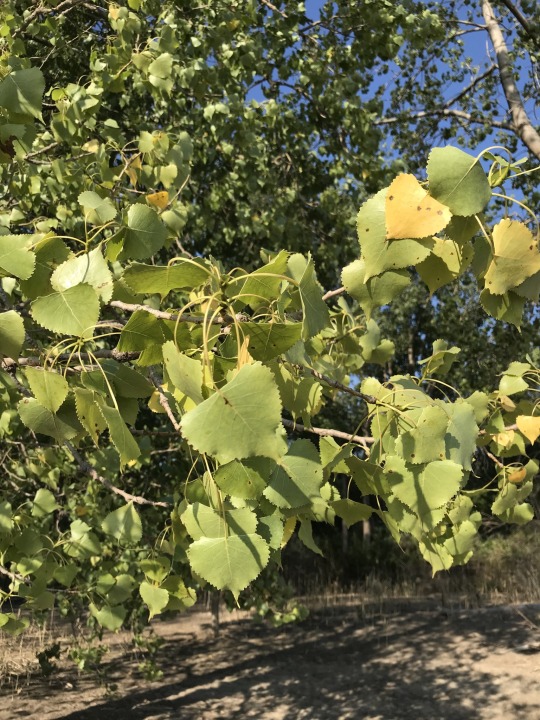
Perhaps you’ve seen little cotton-like white particles falling from the sky in early summer, especially around Pennsylvania’s rivers or lakes. It is a common site along the dunes of Presque Isle, for example, and in areas along southwestern PA’s rivers.  Aptly named, Eastern cottonwood (Populus deltoides) is a native tree found across the eastern United States that produces seeds that fall from high up in the canopy, attached to cotton-like strands.  These fibers act like mini-parachutes and allow the wind to widely distribute the seeds.

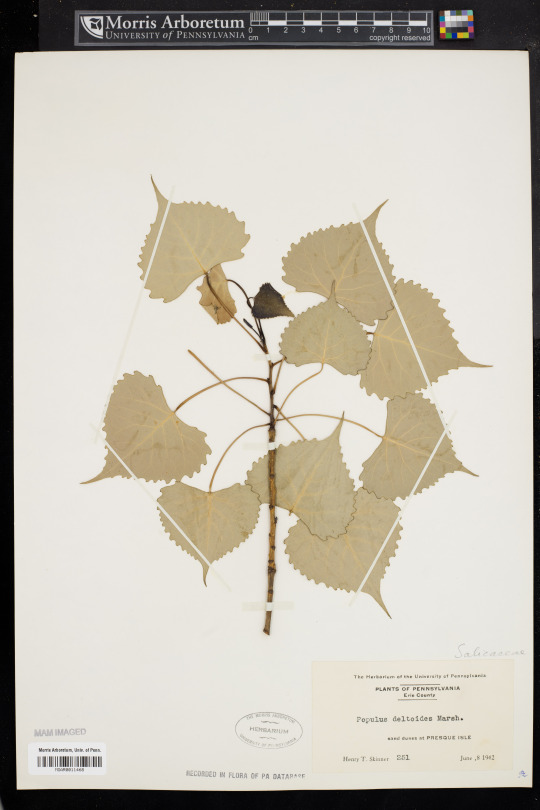
cottonwood herbarium sheet

This specimen of Eastern cottonwood was collected by Henry T. Skinner on June 8, 1942 on the sand dunes of Presque Isle, Erie. You might notice this specimen is not from the Carnegie Museum herbarium like most of these posts. But instead, this specimen is held at the Morris Arboretum (part of the University of Pennsylvania). Now that museum collections are being digitized, we can search for species of interest, or plants collected from certain places or by certain people, or more…that’s the power of specimen digitization.  The Mid-Atlantic Megalopolis Project, funded by the National Science Foundation, is digitizing nearly a million specimens across our region, including Carnegie Museum specimens.  This makes our collections all the more powerful, combining all specimens collected in the region and making them accessible to scientists and the public alike.

Find this and more Eastern cottonwood specimens from Presque Isle here.

photo of cottonwood

Check back for more! Botanists at the Carnegie Museum of Natural History share digital specimens from the herbarium on dates they were collected. They are in the midst of a three-year project to digitize nearly 190,000 plant specimens collected in the region, making images and other data publicly available online. This effort is part of the Mid-Atlantic Megalopolis Project (mamdigitization.org), a network of thirteen herbaria spanning the densely populated urban corridor from Washington, D.C. to New York City to achieve a greater understanding of our urban areas, including the unique industrial and environmental history of the greater Pittsburgh region. This project is made possible by the National Science Foundation under grant no. 1801022.

Mason Heberling is Assistant Curator of Botany at Carnegie Museum of Natural History. Museum employees are encouraged to blog about their unique experiences and knowledge gained from working at the museum.
Filed Under: Blog Tagged With: collected on this day, Hall of Botany, Mason Heberling, Museum from Home, Science News, Section of Botany

June 8, 2020 by wpengine

Tulips in June?!

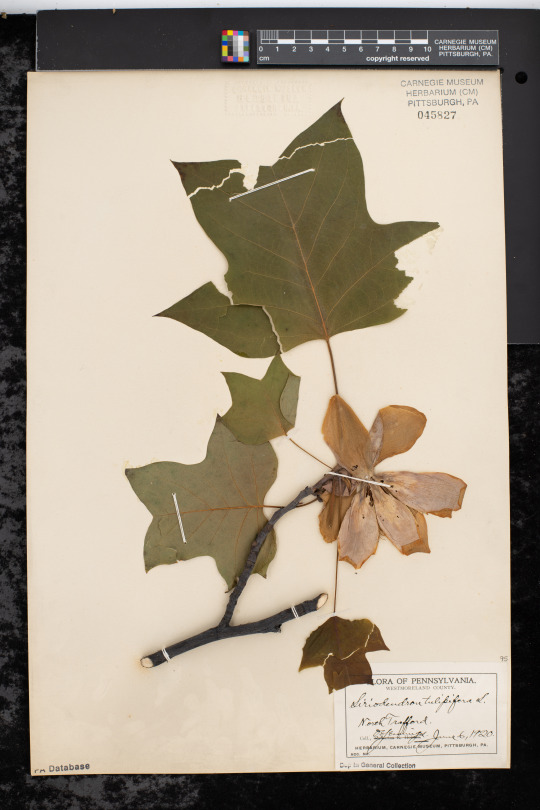
tulip tree specimen sheet

Collected on this Day in 1920

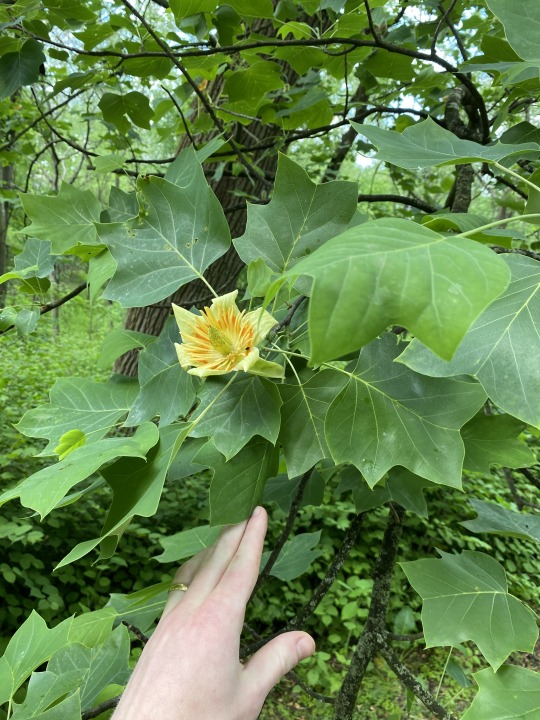
Your tulips may be long gone as spring has faded, but tulip trees are in full force! Although it’s hard to catch a glimpse of them way up in the canopy, tulip tree flowers are just as stunning. Completely unrelated to tulips, Liriodendron tulipifera (called tulip tree, tulip poplar, or sometimes yellow poplar) is named such because its leaves have a distinctive shape reminiscent of tulips.

photo of tulip trees with flower

Found across eastern North America, Tulip trees are one the tallest and fast-growing trees native to Pennsylvania, growing up to nearly 200 feet tall! Tulip trees are relatively shade intolerant and therefore are especially common in young forests (early successional). However, the species can still be found in older forests too. Its tall straight trunks can be impressive, and its wood is widely used by woodworkers, who often refer to it as “poplar.” The tree is not related to true poplars (Populusspecies), which are in the willow family, Salicaceae. Tulip trees are a member of the magnolia family (Magnoliaceae). This beautiful specimen was collected on June 6, 1920 near Trafford, Pennsylvania by Otto Jennings. Jennings was an influential botany curator at the museum for many years.

Find this stunning specimen here.

Check back for more! Botanists at the Carnegie Museum of Natural History share digital specimens from the herbarium on dates they were collected. They are in the midst of a three-year project to digitize nearly 190,000 plant specimens collected in the region, making images and other data publicly available online. This effort is part of the Mid-Atlantic Megalopolis Project (mamdigitization.org), a network of thirteen herbaria spanning the densely populated urban corridor from Washington, D.C. to New York City to achieve a greater understanding of our urban areas, including the unique industrial and environmental history of the greater Pittsburgh region. This project is made possible by the National Science Foundation under grant no. 1801022.

Mason Heberling is Assistant Curator of Botany at Carnegie Museum of Natural History. Museum employees are encouraged to blog about their unique experiences and knowledge gained from working at the museum.
Filed Under: Blog Tagged With: collected on this day, Hall of Botany, Mason Heberling, Museum from Home, Science News, Section of Botany

May 29, 2020 by wpengine

Plants with bladders?

Collected on this Day in 1940

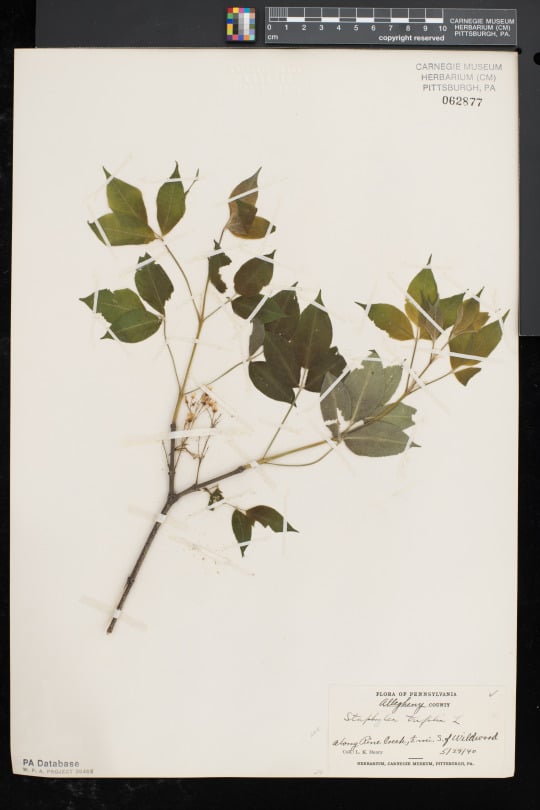
bladdernut specimen on herbarium sheet

This specimen was collected on May 29, 1940 by Leroy Henry along Pine Creek, north of Wildwood outside of Pittsburgh. Leroy Henry was a mycologist (studied fungi) and botanist who was curator at Carnegie Museum from 1937-1973.

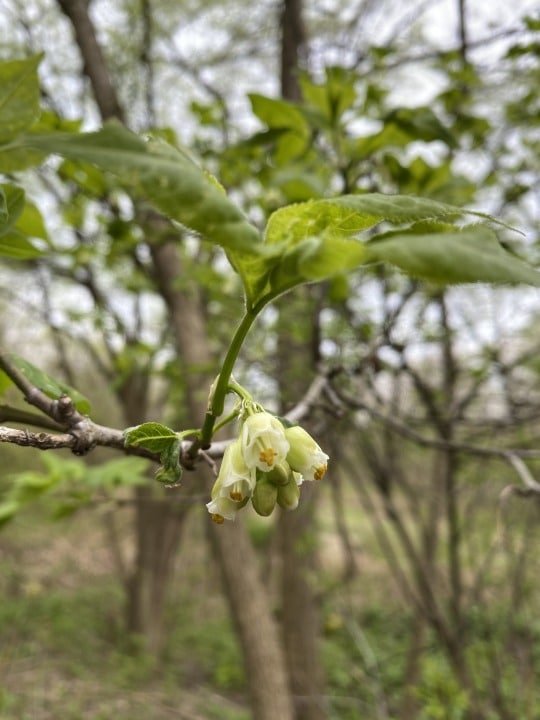
bladdernut flowers
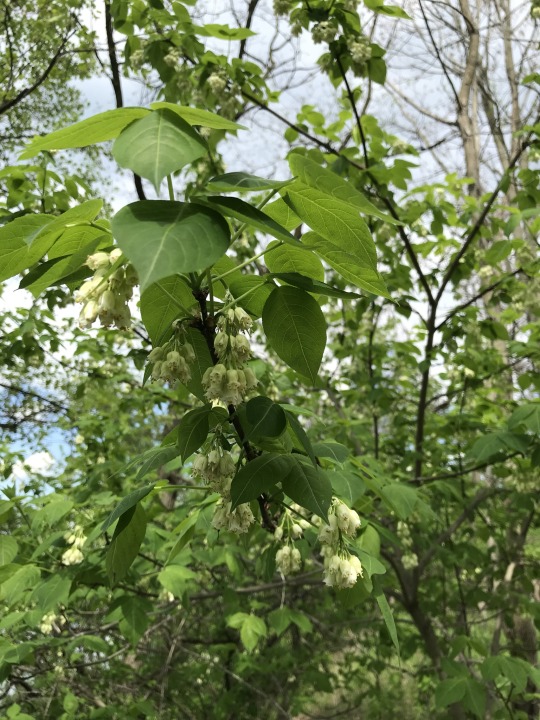
bladdernut flowers

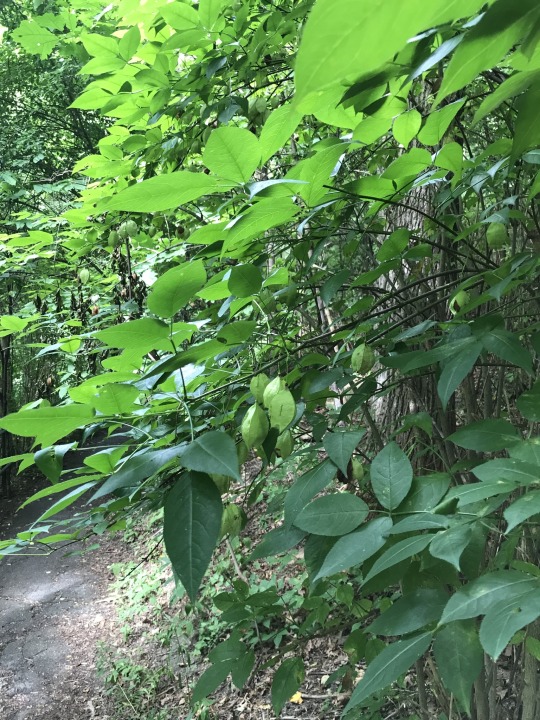
Aptly called “bladdernut” (Staphylea trifolia), this charismatic native understory shrub produces clusters of white flowers in the spring. These dangling flowers develop into striking bladder-like fruit. In each “bladder” pouch are seeds. These fruit often persist through fall and some linger through winter, though the plant is leafless.

bladdernut fruit

Bladdernut has a wide range across eastern North America, and can be found in relatively undisturbed forests in our area, often forming thickets.

Find this specimen here.

Check back for more! Botanists at the Carnegie Museum of Natural History share digital specimens from the herbarium on dates they were collected. They are in the midst of a three- year project to digitize nearly 190,000 plant specimens collected in the region, making images and other data publicly available online. This effort is part of the Mid-Atlantic Megalopolis Project (mamdigitization.org), a network of thirteen herbaria spanning the densely populated urban corridor from Washington, D.C. to New York City to achieve a greater understanding of our urban areas, including the unique industrial and environmental history of the greater Pittsburgh region. This project is made possible by the National Science Foundation under grant no. 1801022.

Mason Heberling is Assistant Curator of Botany at Carnegie Museum of Natural History. Museum employees are encouraged to blog about their unique experiences and knowledge gained from working at the museum.
Filed Under: Blog Tagged With: collected on this day, Hall of Botany, Mason Heberling, Museum from Home, Science News, Section of Botany

May 20, 2020 by wpengine

Many ways to be a forest wildflower

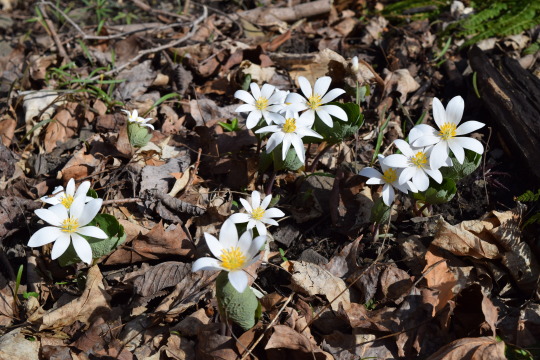
photo of flowers with white petals and yellow centers

What exactly is a wildflower? Well, that depends who you ask!

Wildflowers in the broadest sense are any flowering plants growing naturally outside of gardens.  These could include trees, shrubs, and non-woody (herbaceous) plants. However, most people tend to think of herbaceous plants with showy blooms. Wildflowers are present all year long, but they are exceptionally noticeable during the spring. For most plants, spring is a time of new growth. Our landscape blossoms with new life, both figuratively and literally.

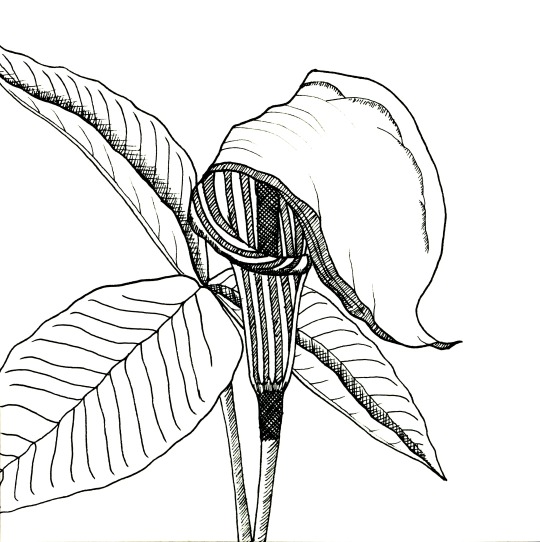
Arisaema drawing by Allison Heberling.

I can state without reservation that scientists in the Section of Botany love wildflowers of all types, sizes, shapes, colors, and smells. I have fallen in love with forest wildflowers. My research is largely focused on wildflower diversity in the understory in our woods, which is collectively known as the herbaceous layer. Though comprised of plants of diminutive size, the collective role of the herbaceous layer in forest ecosystems is immense.  In fact, this layer comprises the most plant diversity in forests, ranging from two to ten times more species than in the overstory!

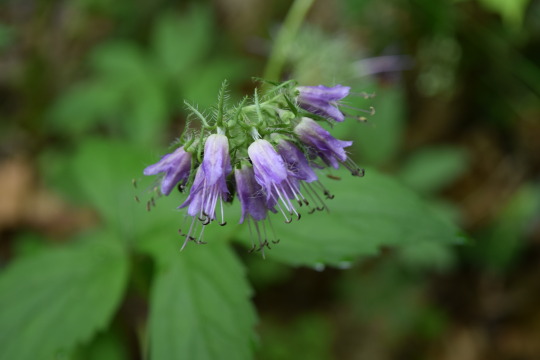
photo of purple wildflowers

Forest wildflowers in our deciduous forests have diverse strategies, all of which depend upon the timing of when leaves and flowers are produced. Most fit into one of three categories based upon their growth strategy. “Spring ephemerals” include plants that produce leaves and flower early in the spring, completing their aboveground activity before being shaded out by trees. “Summer-greens” include plants that produce leaves and flower just before or around when overstory tree canopies begin to produce leaves. These plants keep their leaves late into summer.  Finally, other species have leaves year-round and can legitimately be termed “evergreen.”

Mason Heberling is Assistant Curator of Botany at Carnegie Museum of Natural History. Museum employees are encouraged to blog about their unique experiences and knowledge gained from working at the museum.
Filed Under: Blog Tagged With: Hall of Botany, Mason Heberling, Museum from Home, Section of Botany

  • « Go to Previous Page
  • Page 1
  • Page 2
  • Page 3
  • Go to Next Page »

sidebar

About

  • Mission & Commitments
  • Directors Team
  • Museum History

Get Involved

  • Volunteer
  • Membership
  • Carnegie Discoverers
  • Donate
  • Employment
  • Events

Bring a Group

  • Groups of 10 or More
  • Birthday Parties at the Museum
  • Field Trips

Powdermill

  • Powdermill Nature Reserve
  • Powdermill Field Trips
  • Powdermill Staff
  • Research at Powdermill

More Information

  • Image Permission Requests
  • Science Stories
  • Accessibility
  • Shopping Cart
  • Contact
  • Visitor Policies
One of the Four Carnegie Museums | © Carnegie Institute | Privacy Policy | Terms of Use | Accessibility
Rad works here logo