• Skip to primary navigation
  • Skip to main content
  • Skip to primary sidebar

Carnegie Museum of Natural History

One of the Four Carnegie Museums of Pittsburgh

  • Visit
    • Buy Tickets
    • Visitor Information
    • Exhibitions
    • Events
    • Dining at the Museum
    • Celebrate at the Museum
    • Powdermill Nature Reserve
    • Event Venue Rental
    • Gift Cards
  • Learn
    • Field Trips
    • Educator Information
    • Programs at the Museum
    • Bring the Museum to You
    • Guided Programs FAQ
    • Programs Online
    • Climate and Rural Systems Partnership
  • Research
    • Scientific Sections
    • Science Stories
    • Science Videos
    • Senior Science & Research Staff
    • Museum Library
    • Science Seminars
    • Scientific Publications
    • Specimen and Artifact Identification
  • About
    • Mission & Commitments
    • Directors Team
    • Museum History
  • Tickets
  • Give
  • Shop

Section of Botany

May 19, 2020 by wpengine

Joining the iNaturalist Team!

Carnegie Museum of Natural History has promoted participation in the Pittsburgh City Nature Challenge for the past three years. Because I live outside the six-county “Challenge” region, I decided to help the best way I know how, by participating, as time permits, in the identification phase of the iNaturalist-based project.

Although publicity about the City Nature Challenge tends to focus on the value of participants documenting the diversity of life around them by taking pictures and submitting them via the iNaturalist app, the proper identification of submitted images is critically important.

My normal carpool commute time to the museum is usually a little over an hour. So, I decided that what would normally be my commute time to work would become my iNaturalist identification time. This process proved to be enlightening in several ways.  First was the digital proof that a lot of people in the Pittsburgh region are interested in the outdoors. That is a good thing! Second, was the ample evidence that people of all ages got involved in a project that can potentially help me and other scientists track what is going on in the outdoors. Also, a good thing. Submitted images can help us track phenology, the timing of recurring events such as plant blooming or fruiting.
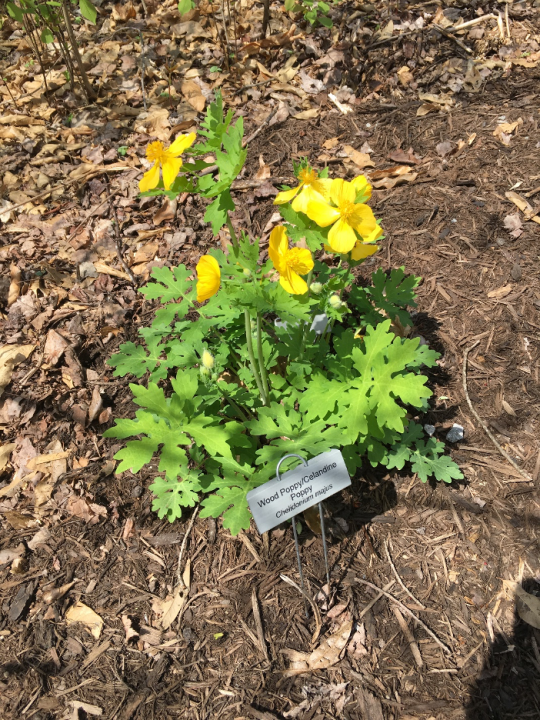
Photo of Stylophorum diphyllum mislabeled as Chelidonium majus in a native plant garden. Credit: BL Isaac

We can also use iNaturalist records for distribution studies. For instance, there is a “native” plant known as the woods-poppy (Stylophorum diphyllum) that we don’t have any records of from natural populations in the Commonwealth of Pennsylvania. There are nine documented Pennsylvania specimens in herbaria that I am aware of. Only one of those is older than I am.  The locality data on it is very vague and suspect as to whether it is really from Pennsylvania. (“Probably near Zelienople” is a far from precise location.) The other eight specimens are all known to be from cultivated populations. These specimens are from only three counties. State botanists have been discussing and debating this plant for several decades. It is native in Ohio and west, but is it native in Pennsylvania? There are now nearly 300 observations of woods-poppy (Stylophorum diphyllum) from across Pennsylvania on iNaturalist.

What is going on here? Have botanists just been overlooking this thing for decades?  Is it escaping from cultivated populations?  I know that it is being sold in native plant nurseries, so are folks just buying it and planting it out and about?  I do know that we need to get out and get some of these populations documented. Maybe by visiting some of the sites we can postulate why this plant that wasn’t seen in Pennsylvania for centuries is now popping up everywhere.

I have also learned that there is plenty of room for educating people on the importance of knowing how to identify plants.  It is almost scary the number of people (it doesn’t take many) who have trouble identifying poison ivy. There are also plenty of problems with identifying common backyard plants.  I have been active the last few years with plant identification workshops, and there is certainly a need for more of these. I’ll continue to learn as I continue to help identifying plants for the City Nature Challenge while I “commute” to work. I’m eager to see what other mysteries may pop up that pique my curiosity about the world around us.

Bonnie Isaac is the Collection Manager in the Section of Botany. Museum staff, volunteers, and interns are encouraged to blog about their unique experiences and knowledge gained from working at the museum.

Related Content

City Nature Challenge

City Nature Challenge Recap

The City Nature Challenge Family Experience

Carnegie Museum of Natural History Blog Citation Information

Blog author: Isaac, Bonnie
Publication date: May 19, 2020
Share this post!

  • Share on Twitter Share on Twitter
  • Share on Facebook Share on Facebook
  • Share on Pinterest Share on Pinterest
  • Share on LinkedIn Share on LinkedIn
  • Share on Reddit Share on Reddit
  • Share via Email Share via Email

Share this post!

  • Share on Twitter Share on Twitter
  • Share on Facebook Share on Facebook
  • Share on Pinterest Share on Pinterest
  • Share on LinkedIn Share on LinkedIn
  • Share on Reddit Share on Reddit
  • Share via Email Share via Email

Filed Under: Blog Tagged With: Bonnie Isaac, botany hall, City Nature Challenge, iNaturalist, Section of Botany

May 15, 2020 by wpengine

Going Digital for Nature

The Section of Botany continues to make progress on our NSF funded Mid-Atlantic Megalopolis digitization project. This massive three-year effort involves the creation of a searchable database of nearly a million herbarium specimens from thirteen institutions within the urban corridor stretching from New York City to Washington, D.C. 

Although the imaging portion of the project has come to a screeching halt with no access to the specimens and the camera, work continues with the processing and posting of existing images. Since 2018, when the Museum became involved in this project, critical work has been masterfully handled by Curatorial Assistant Sarah Williams. Please check out our collection and their images at midatlanticherbaria.org.

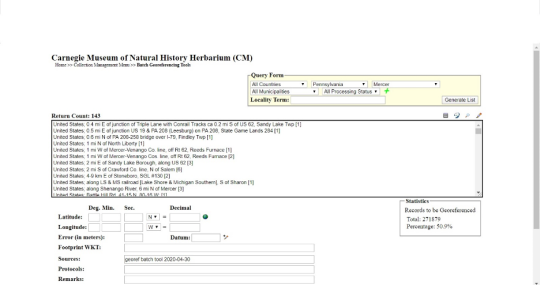
Despite all work being performed away from the museum since March 14, great strides have been made in getting specimens georeferenced. This term refers to the electronic pairing of the historic recorded location for each collected plant with an established system of geographic ground coordinates. In an effort to keep this project on schedule, I have spent about half my time working on it, adding over 7000 images to our Symbiota portal and georeferencing over 3800 specimens.

Screenshot of georeferencing portal for CM specimens.

With more images going up almost every day, the georeferencing problems have become easier to find and fix. In addition to being able to see the specimen and its label, it is also possible to query where the collector was on a given day. So not only can we see if the data was possibly mistyped or misread, we can also check to see if the locality is within the known range for each species collected. All this associated information makes for fun sleuthing projects. With almost half of our specimens currently georeferenced, I am also currently working on fixing problems with localities that map outside of the geopolitical unit to which they were assigned.

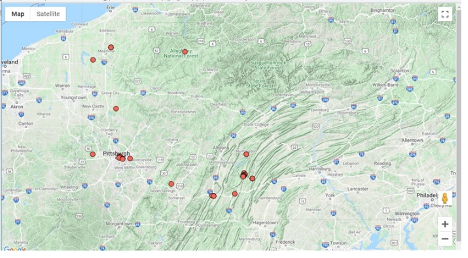
Screenshot of Pennsylvania locations with collections by former Botany Curator, Dr. Dorothy Pearth.

Georeferencing has become a bit of an obsession for a few of our volunteers and me because it combines history, plant collecting, and old maps into one big bundle. I must sometimes watch that I don’t go down some historical wormholes while looking for some very obscure place names. Some sets of georeferenced specimens have also added insights into the habits of some former Carnegie staff and volunteers and the haunts they liked to visit. I now know which collectors were precise in their collecting locality descriptions and which were more likely to stick to roadsides. We had at least one former curator who preferred to make localities vague when they were near parks and another who seemed to favor collecting where roads crossed streams. Fun times were had by all electronic explorers, or at least by me, and I’m learning a lot in the process.

Bonnie Isaac is the Collection Manager in the Section of Botany at Carnegie Museum of Natural History. Museum staff, volunteers, and interns are encouraged to blog about their unique experiences and knowledge gained from working at the museum.

Filed Under: Blog Tagged With: Bonnie Isaac, Botany, botany hall, Section of Botany

May 13, 2020 by wpengine

Spring is in the Air, Botanists are in the Field

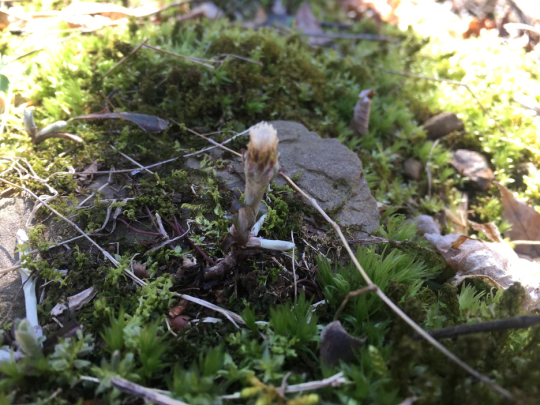
Antennaria solitaria in Ryerson Station State Park. Photo: BL Isaac.

With the arrival of warmer weather, botanists stop dreaming about what plants will be blooming and get out and look. CMNH botanists managed to make an early spring trip to the southwestern corner of Pennsylvania, visiting Ryerson Station State Park in Greene County. At Ryerson, we found some of the more common spring flowering species along with some non-native invasive species. While collecting more than a dozen plants as current vouchers for ongoing phenology comparisons with older specimens, we also visited a known site for a Pennsylvania proposed Endangered plant species, the single headed pussy-toes, or Antennaria solitaria.

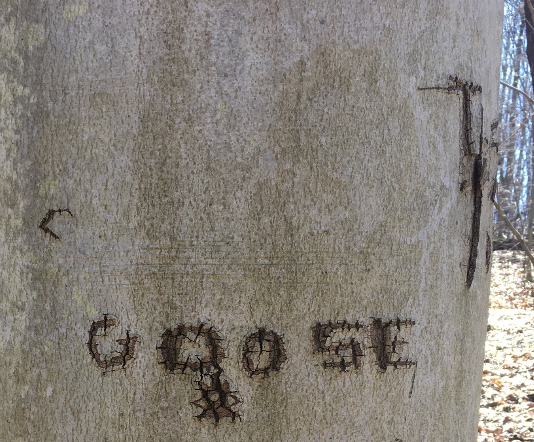
While out and about, I am always interested to see how well plants that have been labeled are identified. Over the years I have found some gross misidentifications on signs along trails. Last year I visited a boy scout camp that had a tree trail with over half of the trees misidentified. I found an especially egregious label along one of the trails in Ryerson Station State Park. This one was not on a park sign but was placed there by some misguided soul. What is obviously a beech tree (Fagus grandifolia) is clearly labeled as a goose (Branta canadensis). Evidently there were no scientific editors around when this mislabeling abuse took place by someone who not only can’t tell the forest for the trees but can’t tell a tree from a bird.

Beech tree in Ryerson Station State Park. Photo: BL Isaac.

All silliness aside, as spring moved along important field work stalled. With visits to Yellow Creek State Park and Cook Forest State Park in the works, we were notified by the Bureau of State Parks that all scientific permit holders must suspend collecting in the parks until further notice. So, our state park project, which has been running since 2017, was temporarily suspended due to the COVID-19 pandemic.

Collecting restrictions were lifted weeks later, however, we have missed one of the most important seasons for our long-term state park phenology study. With our 10-year plan in place it may be another decade before we can collect to evaluate Yellow Creek State Park flora. Hopefully we can double up on parks next year, so we won’t have to wait another 10 years to get these parks involved in our phenology project.

Bonnie Isaac is the Collection Manager in the Section of Botany. Museum employees are encouraged to blog about their unique experiences and knowledge gained from working at the museum.

Filed Under: Blog Tagged With: Bonnie Isaac, Botany, Hall of Botany, Museum from Home, Section of Botany

August 7, 2019 by wpengine

30 years ago today: A milestone for Botany at the Carnegie Museum of Natural History

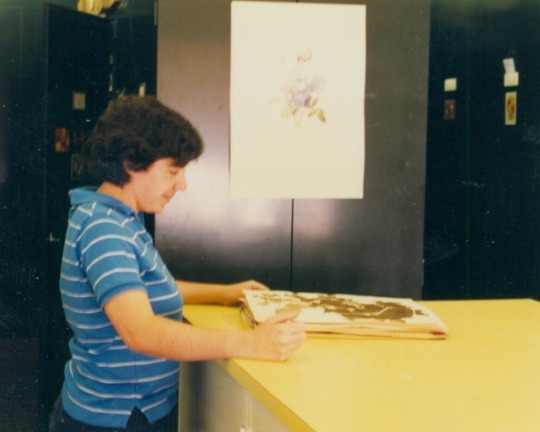
Bonnie Isaac in the museum herbarium
Bonnie in the lower herbarium at the Carnegie Museum in the early 1990s.

On August 7, 1989, Bonnie Isaac started at the Carnegie Museum. She was initially hired at the museum to work on a project to database the plant collection, making it searchable and therefore more useable to understand the occurrence and distribution of plants across Pennsylvania (and beyond). Since then, a lot has happened. Thirty years later, Bonnie is now Collection Manager in the Section of Botany and Co-chair of Collections.

It is no exaggeration to say Bonnie’s influence on the Section of Botany has been monumental. And continues to be.

As one of the top plant collectors over the Carnegie Museum’s 120+ year history, she has actively contributed to the growth of the herbarium, collecting several tens of thousands of specimens from across Pennsylvania and North America. These specimens now reside in herbaria across the world and are actively used by researchers around the world to make exciting discoveries.

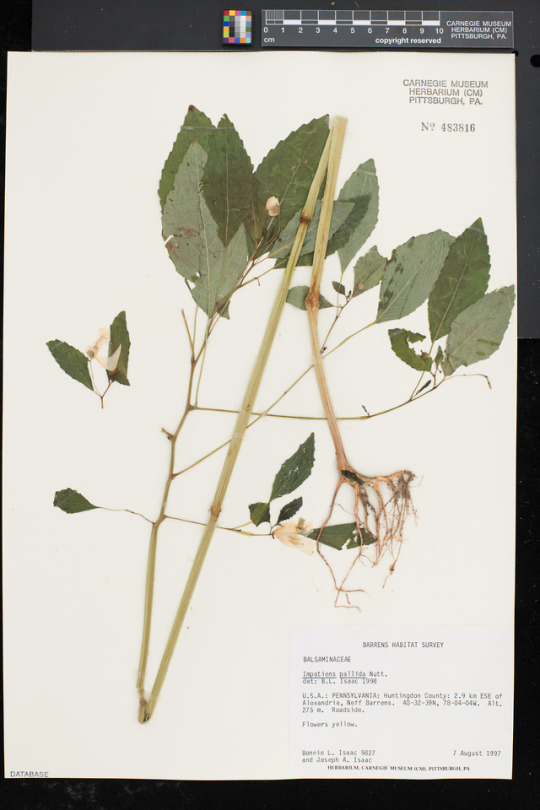
yellow jewelweed specimen collected by Bonnie Isaac and Joe Isaac
Collected on this day, eight years after she started working at the Carnegie Museum, this specimen of pale touch-me-not (aka yellow jewelweed; Impatiens pallida) was collected by Bonnie Isaac (and her spouse, Joe Isaac) on August 7, 1997 along the roadside at Neff Barrens, Huntington County, PA. Largely thanks to Bonnie, this specimen (and many more!) can be found online.

Bonnie played a pivotal role in the digitization of the Carnegie Museum herbarium, one of the first of its size to have all specimens in the entire collection with label data entered into a database and publicly available online. A huge accomplishment that took over a decade of her career to complete, the collection database has increased the research value and led to a massive increase in specimen use. The digitization of the herbarium continues today through a project facilitated by Bonnie and funded by the National Science Foundation to make high resolution digital images and georeferences (assign latitude/longitude to plot on a map) to all specimens collected in the region.

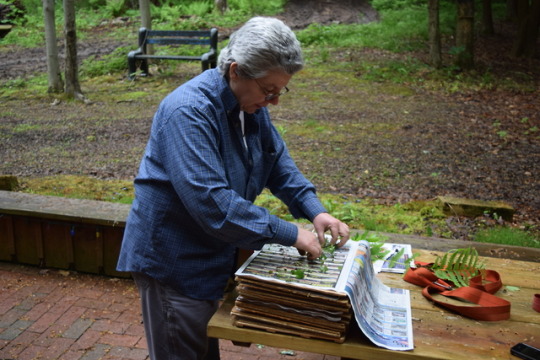
Bonnie Isaac collecting plants
Bonnie pressing plants in the field in 2017.

Although she’s humble about it, Bonnie is an incredible field botanist and leading expert on the plants of Pennsylvania, especially those rare and threatened species of conservation concern. An expert in natural history collections management and methods, Bonnie has a specialized diploma on herbarium techniques from Royal Botanic Garden, Kew, England. She has a master’s degree from Youngstown State University, where she studied the ecology and distribution of a rare species.

Bonnie’s science and botanical knowledge impacts conservation decisions. Since 2001, she has served as a member of the Vascular Plant Technical Committee of the Pennsylvania Biological Survey, serving at various times over the past decades as president and recording secretary, which advised the state in determining the status of endangered and threatened plant species. She is currently working on a project funded by the Pennsylvania Department of Conservation and Natural Resources through the Wild Resources Conservation Program, revisiting many historic sites of 10 threatened species across the state to assess their current rarity status.

Beyond the walls of the museum, Bonnie has a huge impact on botanical research in Pennsylvania and fosters a public appreciation for the role of plants in our lives and ecosystem health. She is a founding member of the “Pennsylvania Botany Symposium,” a group of committed volunteers who provide education and networking opportunities for professionals, amateurs, and students of botany, including a biennial symposium that gathers Pennsylvania botanists of all levels. Bonnie is also very active in the Botanical Society of Western Pennsylvania, one of the oldest botanical organizations in the country.  She has served as President of the organization since 2005.

And if that is not enough – she is friendly, too!

Happy work-iversary, Bonnie!

Check back for more! Botanists at the Carnegie Museum of Natural History share digital specimens from the herbarium on dates they were collected. 

Mason Heberling is Assistant Curator of Botany at the Carnegie Museum of Natural History. Museum employees are encouraged to blog about their unique experiences and knowledge gained from working at the museum.

Filed Under: Blog Tagged With: Bonnie Isaac, Botany, herbarium, plants, Section of Botany

May 16, 2019 by wpengine

A Lot to be Fascinated By in the Herbarium

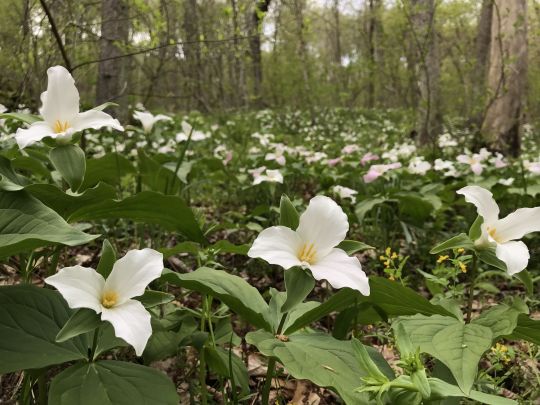
wildflowers in the woods

Are you fascinated by plants? Fascination of Plants Day is upon us (don’t worry, we didn’t know it was a thing either, but agree celebration is in order!). As you might guess, we in the Section of Botany at the Carnegie Museum of Natural History are definitely into any and all things plants. Plants are inextricable from our daily lives and play critical roles in our environment.  Plus, they are just pretty cool, too. Amid chirping birds or a lion chasing a gazelle, they might be easy to overlook, but they are well worth your attention. From the sidewalk cracks in front of the museum to a remote tropical rainforest, there is a lot to celebrate.

With over half a million plant specimens in the Carnegie Museum herbarium, we have a lot to be fascinated by. Botanists here at the museum and across the world are making new discoveries about plants through these collections. On this 5th annual Fascination of Plants Day, I’d like to share some exciting new work in our collection – extracting fungal DNA from herbarium specimen roots collected over a hundred years ago.

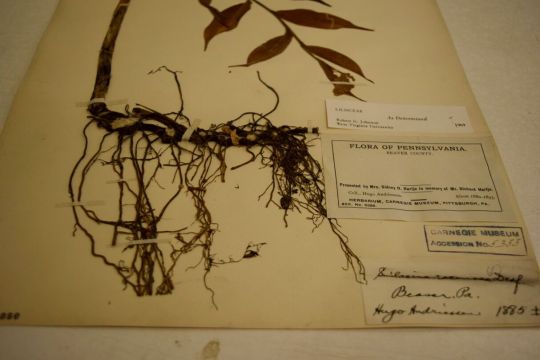
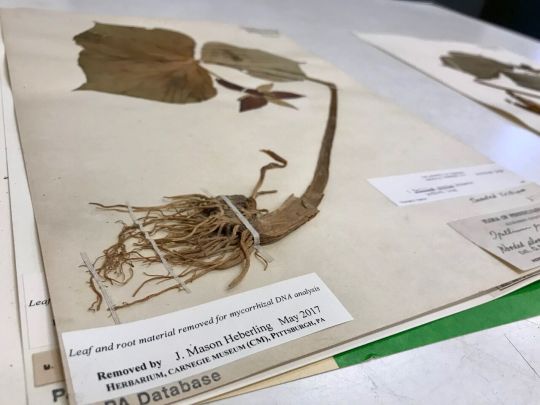
plant specimen with long roots on herbarium sheet

Unexpected inspiration often comes from looking at old specimens in new ways. Museum specimens were collected for many different reasons. The uses of specimens are many, and recently, being used in new ways.  Museum specimens have a lot to tell us. If we look.

Recently, I became fascinated by something often ignored – roots on herbarium specimens. Why do herbarium specimens have roots?

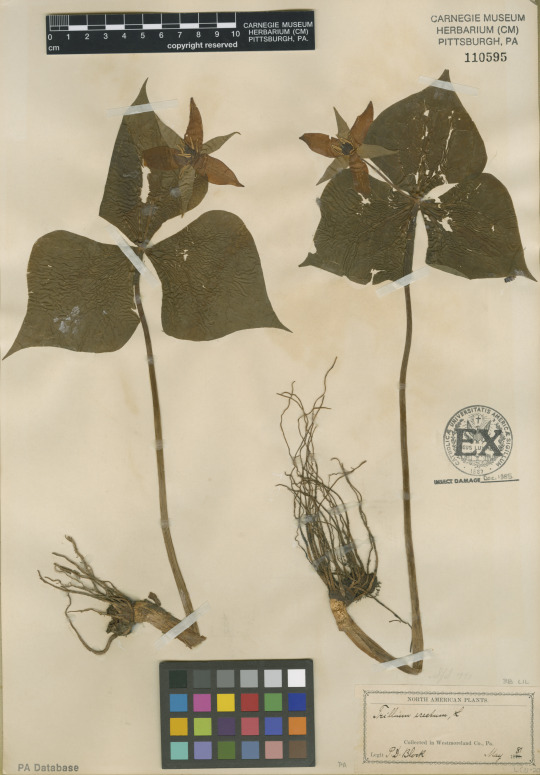
dried plant specimen on herbarium sheet

It is standard practice for botanists to collect the entire plant when possible.  Of course, that isn’t possible for a huge tree, but many plants can fit nicely on an herbarium sheet, roots and all. And  not only do many specimens have roots, but they have soil too.

For some plants, roots can be very helpful for identification. But for the most part, roots on herbarium specimens have not been generally used. But what can 100-year-old roots tell us?

With this new fascination with herbarium specimen roots, I contacted  Dr. David Burke, a microbial ecologist and expert in belowground forest ecology at the Holden Arboretum in Kirkland, Ohio. David studies belowground microbial soil communities and their interactions with plant roots. Nearly 75% of all flowering plant species form close relationships with mycorrhizal fungi. Many plant species in our forests across the eastern United States rely upon these mycorrhizal fungi to obtain water and nutrients necessary for growth. In return, the fungi get food (sugars) from the plant.

herbarium sheet of dried flower with roots

Can herbarium specimen roots tell us about relationships between mycorrhizal fungi and plants?  And perhaps more importantly: Have human activities affected these plant-fungal relationships over the past century?

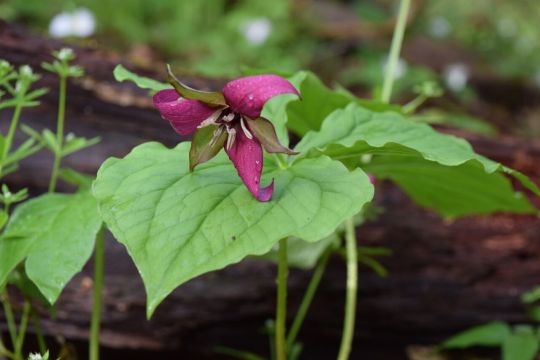
David Burke had not extracted fungal DNA from herbarium specimen roots, but he was eager to try. (In fact, to our knowledge, no one had done this with herbarium specimen roots before.)  We sampled roots from herbarium specimens of four common forest wildflowers collected in western Pennsylvania between 1881 to 2008. These species included some favorites familiar in our area: red trillium, large-flowered trillium, false Solomon’s seal, and jack-in-the-pulpit.

red-purple flower in the woods

David was able to extract and sequence fungal DNA from plant roots as old as 137 years old! We published our results in a special issue on belowground botany in Applications in Plant Sciences. You can read the full study here.  While there is still much to be done, we showed that museum collections across the world hold enormous potential to provide new insights in the basic belowground biology of plants. They can also help us understand how human activities may affect the web of life in overlooked ways.

Herbarium specimen roots have a lot to tell us about the past, present, and future of our forests in the Anthropocene. And that is fascinating!

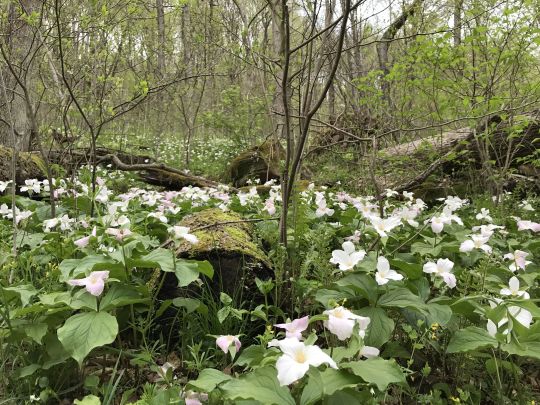
woods with many spring wildflowers in bloom

Mason Heberling is Assistant Curator of Botany at the Carnegie Museum of Natural History. Museum employees are encouraged to blog about their unique experiences and knowledge gained from working at the museum.

Filed Under: Blog Tagged With: Botany, Hall of Botany, herbarium, Mason Heberling, plants, Section of Botany

  • « Go to Previous Page
  • Page 1
  • Page 2
  • Page 3

sidebar

About

  • Mission & Commitments
  • Directors Team
  • Museum History

Get Involved

  • Volunteer
  • Membership
  • Carnegie Discoverers
  • Donate
  • Employment
  • Events

Bring a Group

  • Groups of 10 or More
  • Birthday Parties at the Museum
  • Field Trips

Powdermill

  • Powdermill Nature Reserve
  • Powdermill Field Trips
  • Powdermill Staff
  • Research at Powdermill

More Information

  • Image Permission Requests
  • Science Stories
  • Accessibility
  • Shopping Cart
  • Contact
  • Visitor Policies
Stay in the loop! Sign up for our newsletter(s).
One of the Four Carnegie Museums | © Carnegie Institute | Privacy Policy | Terms of Use | Accessibility
Rad works here logo