• Skip to primary navigation
  • Skip to main content
  • Skip to primary sidebar

Carnegie Museum of Natural History

One of the Four Carnegie Museums of Pittsburgh

  • Visit
    • Buy Tickets
    • Visitor Information
    • Exhibitions
    • Events
    • Dining at the Museum
    • Celebrate at the Museum
    • Powdermill Nature Reserve
    • Event Venue Rental
  • Learn
    • Field Trips
    • Educator Information
    • Programs at the Museum
    • Bring the Museum to You
    • Guided Programs FAQ
    • Programs Online
    • Climate and Rural Systems Partnership
  • Research
    • Scientific Sections
    • Science Stories
    • Science Videos
    • Senior Science & Research Staff
    • Museum Library
    • Science Seminars
    • Scientific Publications
    • Specimen and Artifact Identification
  • About
    • Mission & Commitments
    • Directors Team
    • Museum History
  • Tickets
  • Give
  • Shop

We Are Nature 2

September 21, 2021 by wpengine

Lights Out for Birds

by Patrick McShea

As innately land-bound creatures, our comprehension of what goes on in the sky above us is limited. These short-comings are compounded when the sky grows dark. Our disconnection with what amounts to be an adjacent, but largely inaccessible ecosystem, presents a challenge to the organizers of a seasonal project to protect migrating songbirds.

Enormous numbers of birds pass over the Pittsburgh region each year during migration, northbound in the spring, and southbound in the fall. These passages occur during the night, and bright lighting can disorient the migrants’ finely-tuned sense of navigation, sometimes resulting in disabling or fatal window collisions. Lights Out Pittsburgh, is a voluntary program that encourages building owners and tenants to minimize this problem by turning off as much internal and external lighting as possible, nightly from midnight to 6:00 a.m. between September 1 and November 15.

This fall, a group of organizations that includes the Building Owners and Managers Association of Pittsburgh, BNY Mellon, BirdSafe Pittsburgh, Carnegie Museum of Natural History, Pittsburgh Downtown Partnership, and the National Aviary announced their participation in the project. Long term, the sustainability of light reduction efforts will require greater appreciation of sky as ecosystem. To that end an essay in Vesper Flights, Helen Macdonald’s 2020 collection of nature writing and personal memoir, provides essential background information.
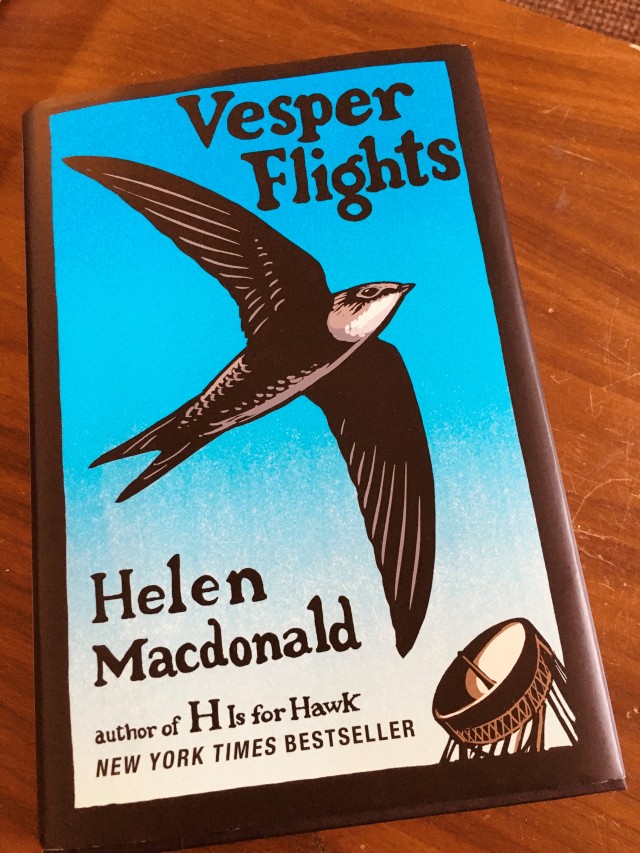
Cover of the book Vesper Flights by Helen Macdonald

In “High-Rise” the English naturalist, with Cornell Lab of Ornithology researcher Andrew Farnsworth as her guide, presents the 86th floor observation deck of Empire State Building as a portal for viewing a tiny slice of the northbound spring bird migration high above Manhattan. As Macdonald explains, by referencing the work of another researcher, the lofty vantage point is “a realm where the distinction between city and countryside has little or no meaning at all.”

From Vesper Flights by Helen Macdonald, Grove Press, 2020:

For every larger bird I see, thirty or more songbirds pass over. They are very small. Watching their passage is almost too moving to bear. They resemble stars, embers, slow tracer fire. Even through binoculars those at higher altitudes are tiny, ghostly points of light. I know that they have loose-clenched toes tucked to their chests, bright eyes, thin bones and a will to fly north that pulls them onward night after night. Most of them spent yesterday in central or southern New Jersey before ascending into darkness.

There are, of course, opportunities to make firsthand observations of the passage of migrating songbirds without a skyscraper as viewing platform. As night-flying migrants descend to lower altitudes just before dawn, their presence, numbers, and rough directional movement can be detected from quiet ground-level positions by listening for an irregular cadence of one and two syllable tweets and chips.

In a mid-Twentieth Century essay designed to guide parents in presenting the wonder of nature to their children, the renowned environmentalist Rachel Carson reflected upon this audio evidence of bird migration.

From The Sense of Wonder by Rachel Carson, Harper & Row, 1984 (a renewed copyright from 1956):

I never hear these calls without a wave of feeling that is compounded of many emotions – a sense of lonely distances, a compassionate awareness of small lives controlled and directed by forces beyond volition or denial, a surging wonder at the sure instinct for route and direction that so far has baffled human efforts to explain it.

Some dark early morning this fall, if you’re able to listen to the calls of descending migrants over the background buzz of crickets and the hum of traffic, you’re likely to become a stronger supporter of Lights Out Pittsburgh.

Patrick McShea works in the Education and Visitor Experience department of Carnegie Museum of Natural History. Museum employees are encouraged to blog about their unique experiences and knowledge gained from working at the museum.

Related Content

Bird Architecture on Human Infrastructure

Milestones at Powdermill’s Banding Lab

Teaching About Trees

Carnegie Museum of Natural History Blog Citation Information

Blog author: McShea, Patrick
Publication date: September 21, 2021
Share this post!

  • Share on Twitter Share on Twitter
  • Share on Facebook Share on Facebook
  • Share on Pinterest Share on Pinterest
  • Share on LinkedIn Share on LinkedIn
  • Share on Reddit Share on Reddit
  • Share via Email Share via Email

Share this post!

  • Share on Twitter Share on Twitter
  • Share on Facebook Share on Facebook
  • Share on Pinterest Share on Pinterest
  • Share on LinkedIn Share on LinkedIn
  • Share on Reddit Share on Reddit
  • Share via Email Share via Email

Filed Under: Blog Tagged With: Birds, birdsafe pittsburgh, Pat McShea, Science News, We Are Nature 2

September 7, 2021 by wpengine

Guiding a Local Focus On Climate Education

by Patrick McShea

During the last three days of July more than 330 educators from across the country gathered virtually to learn how to more effectively teach about a topic generating increasingly alarming headlines. The event, titled Summer Institute for Climate Change Education, operated with three principle hosts, Climate Generation, a St. Paul, Minnesota-based educational organization with a national reach, the Youth Climate Program of The Wilds Center in New York’s Adirondack State Park, and the Climate Office of NOAA, the National Oceanic and Atmospheric Administration.

On the middle day of the Institute, participants remotely joined one of a dozen sub-region programs for a more local focus on discussions, resource sharing, and reviews of potential classroom activities. Pittsburgh was the center of one such sub-region, and the host for our region’s day-long program was Katie Modic, Executive Director of a small and innovative organization known as Communitopia.

City of Pittsburgh from above showing buildings, bridges, a river, and many trees.
Image by Bruce Emmerling from Pixabay.

Communitopia is a 12-year-old organization, whose ongoing efforts to slow climate change and create healthier communities through new media and project-based campaigns have been distilled into a three-word mission statement, “Making Green Mainstream.” The 501©3 nonprofit operation is well served by the experience Katie brings to her leadership position. She is a University of Wisconsin-Madison alumni (M.S. in Education, B.A. in Spanish and Anthropology), whose work experience since graduation includes a two-year Teach for America middle school assignment along the US/Mexico border in Donna, Texas, public school teaching experience in Colorado and Florida, international teaching experience in Rotterdam, the Netherlands, and the sharing of many of her first hand learning experiences with undergraduate education students as a professor at Central College in Pella, Iowa.

In planning the day’s schedule, Katie worked with staff from both Phipps Conservatory and Botanical Gardens and Carnegie Museum of Natural History. In carrying out her role as a Zoom screen host for a territory that encompassed nearly all of Pennsylvania, she was able to direct attention to the revision of Pennsylvania’s academic standards for science as a current issue relevant in every corner of the state.

Katie’s position that the standards revision process creates an opportunity to strengthen how climate is addressed in both Science Standards and those for Environment and Ecology is outlined on Communitopia’s website. During the Summer Institute she was able to explain how her opportunity observations were largely based upon her experience in working with students at Woodland Hills High School in Pittsburgh’s eastern suburbs. When biology teacher Margeaux Everhart invited Katie to present Communitopia’ s classroom program about the local impacts of climate change, the session sparked a student-driven grassroots movement that eventually led to the Woodland Hills School District adopting a formal Climate Action Plan.

For many of the educators who participated in the Pittsburgh-based day of Summer Institute programs, watching and listening as some of those students made Zoom speaking appearances was an inspiring and empowering experience.

Patrick McShea works in the Education and Visitor Experience department of Carnegie Museum of Natural History. Museum employees are encouraged to blog about their unique experiences and knowledge gained from working at the museum.

Related Content

Expanding the Scope of Environmental Education

Getting Started: A High School Intern’s Experience in the Herp Section

Bird Architecture on Human Infrastructure

Carnegie Museum of Natural History Blog Citation Information

Blog author: McShea, Patrick
Publication date: September 7, 2021

Share this post!

  • Share on Twitter Share on Twitter
  • Share on Facebook Share on Facebook
  • Share on Pinterest Share on Pinterest
  • Share on LinkedIn Share on LinkedIn
  • Share on Reddit Share on Reddit
  • Share via Email Share via Email

Share this post!

  • Share on Twitter Share on Twitter
  • Share on Facebook Share on Facebook
  • Share on Pinterest Share on Pinterest
  • Share on LinkedIn Share on LinkedIn
  • Share on Reddit Share on Reddit
  • Share via Email Share via Email

Filed Under: Blog Tagged With: Educator Resources, Educators, Pat McShea, We Are Nature 2

July 23, 2021 by wpengine

Eating Shipworms to Save the World

by Timothy A. Pearce

Shipworms, which bore into the wood of ships and the pilings of docks have been a menace to mariners for centuries. Recently, however, some sustainable food advocates are pointing to the disreputable creatures as a key to feeding the growing human population.

Black and white illustration of a shipworm.
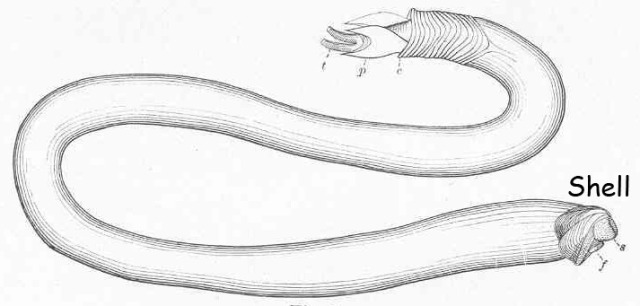
Figure 1. Body of a shipworm showing the tiny shell at the lower right. Image from Wikimedia Commons taken from Goode (1884).

Surprisingly, shipworms are not worms at all, but are a type of clam in the family Teredinidae whose bivalved shells have been reduced to small rasp-like structures at one end of a worm-like body (Fig. 1). Some shipworms grow exceptionally fast, reaching 30 cm (12 inches) in six months. The small shells, which are roughly 5% of the creature’s body length, function as excavators. The shipworm uses the tiny pair to dig into wood, forming a burrow to protect its soft body, and digesting the excavated bits of wood as food. Symbiotic bacteria in the clam’s gills provide the necessary enzymes to digest the wood.

wood damaged by shipworms
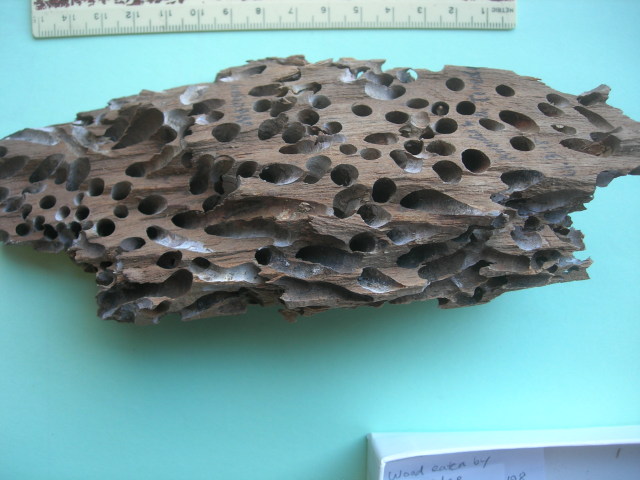
Figure 2. Wood bored by the shipworm Lyrodus pedicellatus. Image by T.A. Pearce.

Sailors and stevedores (dock workers) have battled shipworms over the centuries because the holes created by the tiny mollusks weaken the wood, eventually causing ships to sink and docks to collapse (Fig. 2). Consequently, instead of causing yawns, these boring mollusks caused people to take notice. And while the shipworms’ wood-eating regime continues to plague sea-faring people who rely upon wooden vessels, other people are now taking note for a culinary reason.

From baddy to buddy, from scourge to supper, shipworms are undergoing a reputation transformation. As we look to the future, we see staring back at us both the hungry, growing human population and the threat of climate change. We understand the need to produce more food sustainably, including more protein, while reducing our greenhouse gas emissions. As an alternative to methane-belching cattle, some experts have advised eating sustainable protein sources such as insects and shipworms.

Among the advantages of shipworms as food are their exceptionally fast growth, their ability to thrive on a diet of waste wood or sustainable microalgae, and their high protein and omega-3 fatty acids content. (Willer & Aldridge 2020).

Today, shipworms are eaten primarily in parts of southeast Asia. But because they show great promise as a sustainable protein source, they are being considered for aquaculture to help feed the growing human population. In the not-so-distant future, you might be spicing up your meals by including (not so) boring clams!

Keep clam and carry on.

Timothy A. Pearce is the head of the Section of Mollusks at Carnegie Museum of Natural History. Museum employees are encouraged to blog about their unique experiences and knowledge gained from working at the museum.

Literature Cited

Goode, G.B. 1884. Fisheries and Fishery Industries of the United States: Section I, Natural History of Useful Aquatic Animals, Plates. Washington, DC: Government Printing Office.

Willer, D.F. & Aldridge, D.C. 2020. From pest to profit—the potential of shipworms for sustainable aquaculture. Frontiers in Sustainable Food Systems, 4: 575416. doi: 10.3389/fsufs.2020.575416

Related Content

Cuttlefish Pass Marshmallow Test

Vampire Squid: Cutest Dracula

Ask a Scientist: How did snails evolve from living in water to living on land?

Carnegie Museum of Natural History Blog Citation Information

Blog author: Pearce, Timothy A.
Publication date: July 23, 2021

Share this post!

  • Share on Twitter Share on Twitter
  • Share on Facebook Share on Facebook
  • Share on Pinterest Share on Pinterest
  • Share on LinkedIn Share on LinkedIn
  • Share on Reddit Share on Reddit
  • Share via Email Share via Email

Share this post!

  • Share on Twitter Share on Twitter
  • Share on Facebook Share on Facebook
  • Share on Pinterest Share on Pinterest
  • Share on LinkedIn Share on LinkedIn
  • Share on Reddit Share on Reddit
  • Share via Email Share via Email

Filed Under: Blog Tagged With: mollusks, Science News, Tim Pearce, We Are Nature 2

July 6, 2021 by wpengine

Bird Architecture on Human Infrastructure

by Patrick McShea

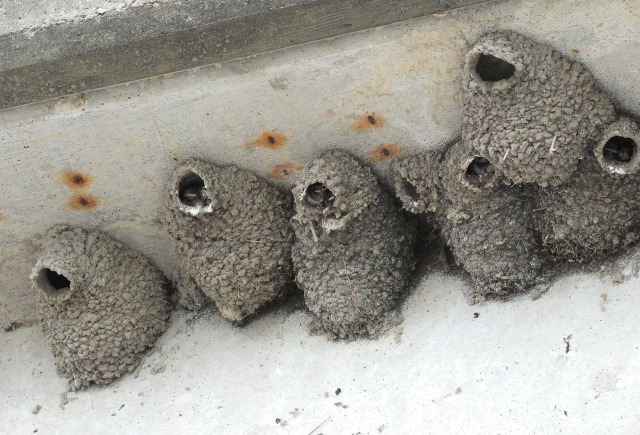
cliff swallow nests
Image credit: Amy Henrici

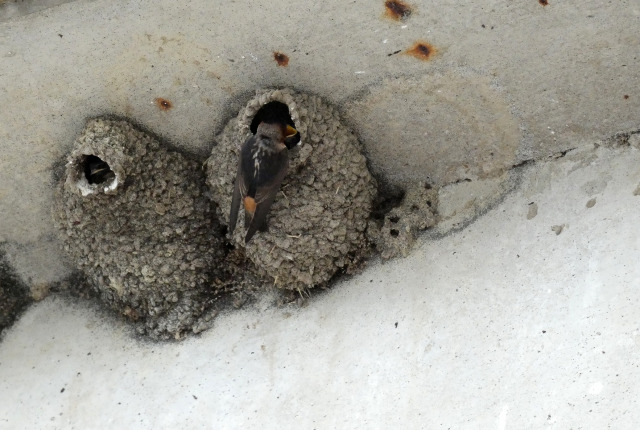
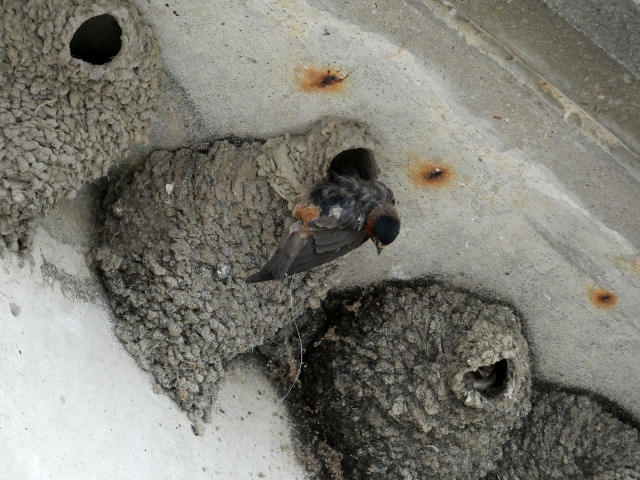
Cliff Swallows are potters. The gourd-shaped earthen vessels the birds construct, one tiny mouthful of mud at a time, provide shelter for their eggs and young. In Pennsylvania, and across much of the species’ current continent-wide breeding range, bridges provide favored nest sites for birds whose ancestors, until the early decades of the 1800’s, seem to have been restricted to nesting against low elevation cliffs in western mountain ranges.

The nests pictured above adhere to the concrete supports of a bridge crossing an arm of Lake Arthur in Butler County’s Moraine State Park. During field survey work leading up to the publication of the Second Atlas of Breeding Birds in Pennsylvania in 2012, bridges accounted for 44% of Cliff Swallow nest sites, barns for 33%, and churches, houses, other buildings, and dams for the balance. The species nests in colonies, and the number of nests in bridge-based colonies also far outnumbered those at other sites.

In Birds of Western Pennsylvania, a 1940 publication by W.E. Clyde Todd, then the museum’s Curator of Birds, nest descriptions are a highlight of the Cliff Swallow account.

“The type is retort-shaped, globular, with a neck springing from above and turned to open downward: a beautiful, symmetrical structure. The shape however is modified to suit the space – truncated or extended, as need requires; and where the nests are close-set, the chamber within, though pouch-like, is not truly symmetrical.”

“The nests are built of pellets of mud laid wet and retaining in the finished structure, each its smooth-rounded individuality. The walls speak of cunning and labor and of security, as does a wall of human masonry.”

cliff swallow feeding young in the nest
Image credit: Amy Henrici

On a recent early summer morning the Cliff Swallows’ incorporation of our culture’s indispensable highway architecture into their reproductive cycle made for easy and entertaining bird watching. There were hungry young in every chamber of an easily viewed eight-nest cluster. As parent birds returned regularly from insect-catching forays over the nearby lake, the entryways to the dark clay pouches were brightened by the bright yellow gaping beaks of the young.

cliff swallow hanging out of nest
Image credit: Amy Henrici

Appreciation of the beneficial match between people and birds was leavened by a sight at another nest cluster on an adjacent bridge support. When a swallow perched against a nest remained still through several feeding cycles of its neighbors, an inspection with binoculars revealed a tragic circumstance. The bird appeared to have become entangled in, and eventually strangled by discarded fishing line, eight inches of which dangled from the lifeless feathered body.

Patrick McShea works in the Education and Visitor Experience department of Carnegie Museum of Natural History. Museum employees are encouraged to blog about their unique experiences and knowledge gained from working at the museum.

Reference

Second Breeding Bird Atlas of Pennsylvania – http://www.pabirdatlas.psu.edu/

Related Content

Camouflage in Your Yard?

Do Animals Use Plastic?

Raptor Watch

Carnegie Museum of Natural History Blog Citation Information

Blog author: McShea, Patrick
Publication date: July 6, 2021

Share this post!

  • Share on Twitter Share on Twitter
  • Share on Facebook Share on Facebook
  • Share on Pinterest Share on Pinterest
  • Share on LinkedIn Share on LinkedIn
  • Share on Reddit Share on Reddit
  • Share via Email Share via Email

Share this post!

  • Share on Twitter Share on Twitter
  • Share on Facebook Share on Facebook
  • Share on Pinterest Share on Pinterest
  • Share on LinkedIn Share on LinkedIn
  • Share on Reddit Share on Reddit
  • Share via Email Share via Email

Filed Under: Blog Tagged With: Birds, Educators, Pat McShea, Science News, We Are Nature 2

June 7, 2021 by wpengine

Expanding the Scope of Environmental Education

by Patrick McShea

Black man in a white collared shirt standing in front of a wooden door indoors.

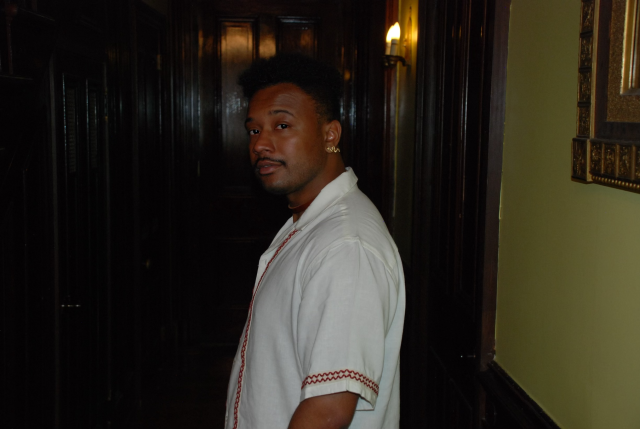
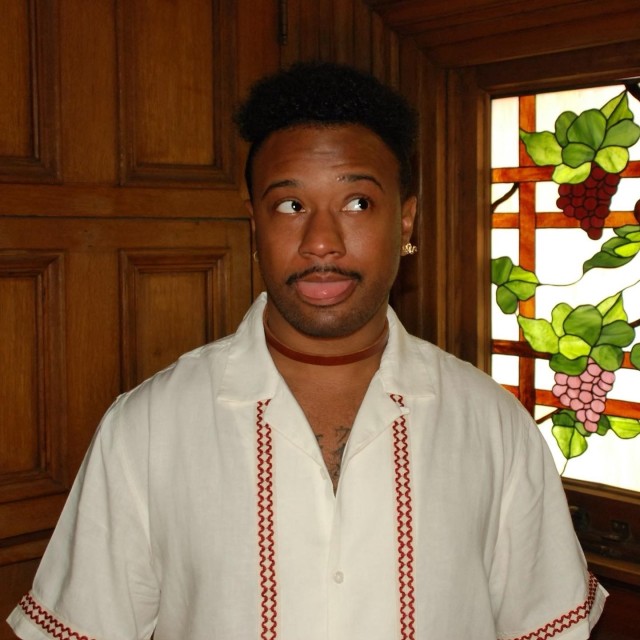
Seven years after he graduated from Allegheny College with a degree in Environmental Studies, Will Tolliver Jr. accepted responsibility for teaching some aspects of that discipline at the 206-year-old liberal arts institution. As an adjunct professor, he presented an overview of environmental education’s foundations and its intersection with anti-bias and anti-racist education for 22 juniors and seniors during a recent semester-long course. As a Pittsburgh native, Will brought a hometown focus to some course work at the Meadville college by leading his students in developing lesson plans for Hilltop Urban Farm, an eight-year-old initiative that is transforming 108 acres of the former St. Clair Village housing complex into a national model of community food production.

“I think the relatively short interval between being a student and being a teacher worked to my advantage.” Will explains. “The course was taught remotely because of the pandemic, and during this time of continued civic and social unrest. l was mindful of the students’ situations, concerned about elements effecting their mental health and well-being that were beyond the bounds of the course.”

Will’s out-of-school experience prepared him well for the challenge. His resume includes current work as a consultant to the Public Broadcasting Service, and various teaching, training, grant-writing, and administrative roles for the Pittsburgh Parks Conservancy, Pennsylvania Association for the Education of the Young Child, Grow Pittsburgh, and the Children’s Museum of Pittsburgh. During each phase of his career CMNH helped Will to use authentic objects in his public presentations by providing him with a toolbox of touchable objects including feathers, mammal skulls, preserved plants, and fossils.

If there’s a theme to date in Will’s career, it might be expanding the vocabulary of the people he engages. He explains his first professional challenge, as a Pittsburgh Parks Conservancy naturalist, as “closing the word gap” for three- to five-year-old children in the city’s Homewood neighborhood. In a grant-supported program called “Buzzword Pittsburgh,” he used storytelling, play, guided hikes, songs, and museum objects to explore the meanings of individual words and build vocabulary related to science, math, art, and even local plants and wildlife.

Expanding the working environmental education vocabulary of college students in 2021 involved a greater level of sharing. As Will summarizes, “I wanted to be that better teacher, who covered the core principles and ideas, but also honestly shared what it has been like for me as a Black man working in this field.” His students explored the undeniable connections between environmental health and social justice. Their understanding of the history and importance of such collaborative community initiatives as Hilltop Urban Farm, for example was tied to understanding potentially new terms like urban food deserts, and red-lined neighborhoods.

Patrick McShea works in the Education and Visitor Experience department of Carnegie Museum of Natural History. Museum employees are encouraged to blog about their unique experiences and knowledge gained from working at the museum.

Related Content

Stage and Screen Sharing

Pittsburgh’s Moths Reflect Environmental Impacts of Industry

Teaching About Local Wildlife with the City Nature Challenge

Carnegie Museum of Natural History Blog Citation Information

Blog author: McShea, Patrick
Publication date: June 7, 2021

Share this post!

  • Share on Twitter Share on Twitter
  • Share on Facebook Share on Facebook
  • Share on Pinterest Share on Pinterest
  • Share on LinkedIn Share on LinkedIn
  • Share on Reddit Share on Reddit
  • Share via Email Share via Email

Share this post!

  • Share on Twitter Share on Twitter
  • Share on Facebook Share on Facebook
  • Share on Pinterest Share on Pinterest
  • Share on LinkedIn Share on LinkedIn
  • Share on Reddit Share on Reddit
  • Share via Email Share via Email

Filed Under: Blog Tagged With: Education, Educator Loan Program, Educator Resources, Pat McShea, We Are Nature 2

June 4, 2021 by wpengine

Collected on this Day in 1982: One specimen isn’t always enough!

Archiving biological variation.

by Mason Heberling

Flowering trillium in the woods

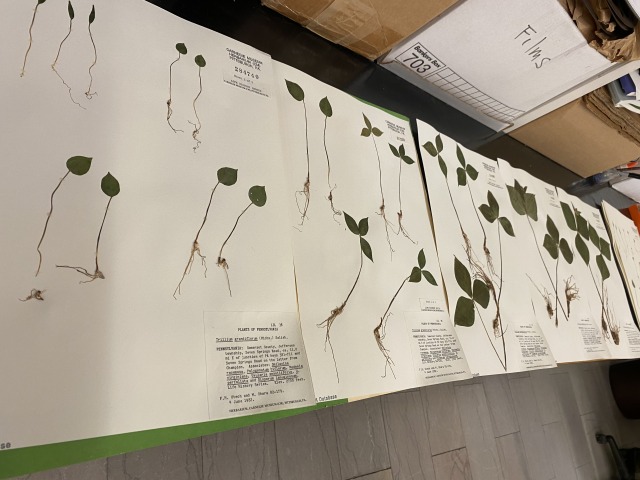
Five herbarium sheets with specimens of trillium on them arranged with the smallest leaves on the left and largest on the right.

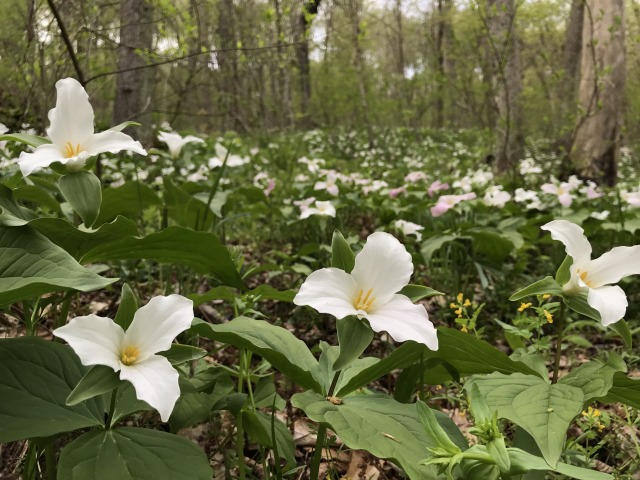
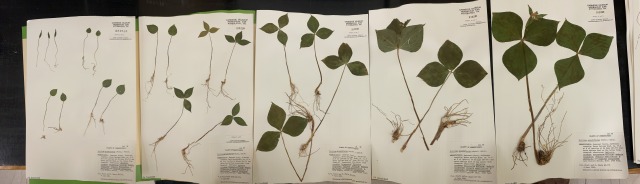
This specimen is not a specimen but a set of five specimens! Same species (large flowered trillium, Trillium grandiflorum). Same site (in Somerset county, PA). All collected on same date (June 4, 1982) by Frederick H. Utech and Masashi Ohara.

We know that one specimen of every species is not enough. Having many specimens of many species, across many sites, and through time are necessary to document what organisms lived where, when, how far species ranges extend, and how these change through time. We study these specimens to understand biodiversity and biodiversity change across many scales.

But why collect that many vouchers of the same species, from the same site, on same date? One reason might be to send “duplicate” vouchers to other herbaria, both to help other collections expand their holdings, to get expert opinions on identification, and/or to protect against (unlikely but very possible) damage that may happen in one herbarium (like fire, flood, insect damage – oh my!).

But that isn’t what happened here. All specimens are stored together at Carnegie Museum of Natural History.

Voucher series of trillium herbarium specimen sheets.

So why? Well, it is simple, but quite genius, really. Utech and Ohara collected a “life history” voucher series. That is, these specimens each show different stages of the species’ development from small cotyledon-bearing seedlings just germinating above ground, to one leaved plants, to small to large three leaved juvenile trilliums that have not yet flowered, to large adult plants with flowers.

Utech and Ohara, along with Shoichi Kawano, pioneered this method of collecting and advocated for its importance in a 1984 essay in the Journal of Phytogeography and Taxonomy. Historically, plant specimens are collected with a major specific purpose in mind – to document the plant was there at a given time. To do that, botanists of course collect specimens that are best for identification, such that others can verify the species. For most species, that means plants tend to be collected when they are adults and reproductive (with flowers and/or fruits). Specimens without reproductive organs (called “vegetative” specimens) are generally viewed as less useful for this purpose and often avoided.

But Utech and others found that this standard approach, though useful for some research, did not cut it for their work. As organismal biologists studying the life history, ecology, and life cycle of species, they found many species were not well represented in herbarium collections.

Many species, like trillium, have distinct life stages from seedling to juvenile to adult. Many species form overwintering leaves or juvenile leaves that differ dramatically, even unrecognizably, from “typical” adult specimens.

So there’s good reasons to collect across life history and across individuals within a population. Biological collections are all about archiving biodiversity in its many forms, whether across deep time with fossils, across species, within species, or even within populations at a specific site.

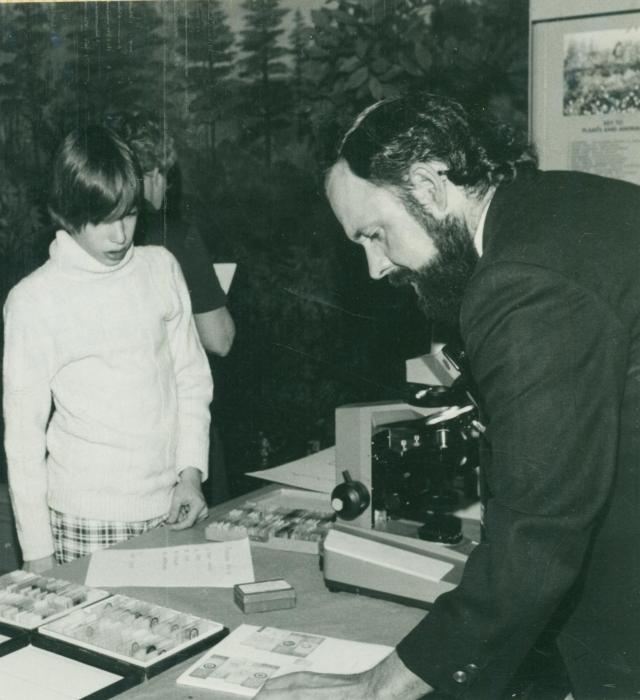
Man at a table of plant specimens talking to a child about them.
Dr. Frederick H. Utech, past curator at Carnegie Museum, at a member’s night in 1979.

Dr. Utech (1943-2021) was a curator at the museum from 1976 until 1999. He was then a research botanist at the nearby Hunt Institute for Botanical Documentation until his retirement in 2011, notably contributing to three volumes of the Flora of North America project. More than 23 thousand specimens in the Carnegie Museum herbarium were collected by him. Dr. Utech passed away earlier this year but his legacy lives on. You can find his obituary here.

Inspired by the method of life history series and the need for new perspectives in the way we collect, CMNH Botany staff are working to promote and expand these ideas. We are presenting some of these ideas at the Society of Herbarium Curators annual meeting later this summer.

Find many more specimens (24,662 to be exact!) collected by Dr. Utech (including other life history series vouchers) here.

Check back for more! Botanists at the Carnegie Museum of Natural History share digital specimens from the herbarium on dates they were collected. They are in the midst of a three-year project to digitize nearly 190,000 plant specimens collected in the region, making images and other data publicly available online. This effort is part of the Mid-Atlantic Megalopolis Project (mamdigitization.org), a network of thirteen herbaria spanning the densely populated urban corridor from Washington, D.C. to New York City to achieve a greater understanding of our urban areas, including the unique industrial and environmental history of the greater Pittsburgh region. This project is made possible by the National Science Foundation under grant no. 1801022.

Mason Heberling is Assistant Curator of Botany at Carnegie Museum of Natural History. Museum employees are encouraged to blog about their unique experiences and knowledge gained from working at the museum.

Related Content

Collected On This Day: September 6

Ask a Scientist: How do you find rare plants?

Do Plants Have Lips? No, But One Genus Sure Looks Like it Does!

Carnegie Museum of Natural History Blog Citation Information

Blog author: Heberling, Mason
Publication date: June 4, 2021

Share this post!

  • Share on Twitter Share on Twitter
  • Share on Facebook Share on Facebook
  • Share on Pinterest Share on Pinterest
  • Share on LinkedIn Share on LinkedIn
  • Share on Reddit Share on Reddit
  • Share via Email Share via Email

Share this post!

  • Share on Twitter Share on Twitter
  • Share on Facebook Share on Facebook
  • Share on Pinterest Share on Pinterest
  • Share on LinkedIn Share on LinkedIn
  • Share on Reddit Share on Reddit
  • Share via Email Share via Email

Filed Under: Blog Tagged With: Botany, collected on this day, Mason Heberling, plants, Science News, We Are Nature 2

  • « Go to Previous Page
  • Page 1
  • Page 2
  • Page 3
  • Page 4
  • Page 5
  • Page 6
  • Go to Next Page »

sidebar

About

  • Mission & Commitments
  • Directors Team
  • Museum History

Get Involved

  • Volunteer
  • Membership
  • Carnegie Discoverers
  • Donate
  • Employment
  • Events

Bring a Group

  • Groups of 10 or More
  • Birthday Parties at the Museum
  • Field Trips

Powdermill

  • Powdermill Nature Reserve
  • Powdermill Field Trips
  • Powdermill Staff
  • Research at Powdermill

More Information

  • Image Permission Requests
  • Science Stories
  • Accessibility
  • Shopping Cart
  • Contact
  • Visitor Policies
One of the Four Carnegie Museums | © Carnegie Institute | Privacy Policy | Terms of Use | Accessibility
Rad works here logo