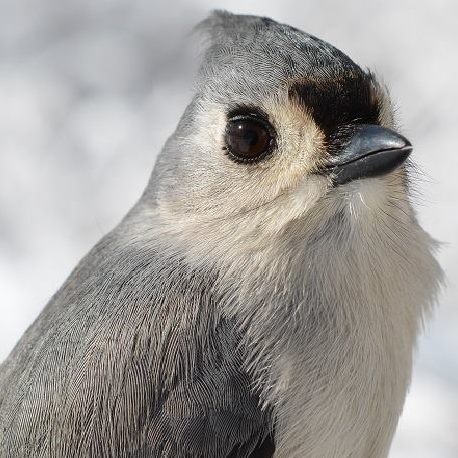
A Tufted Titmouse photographed this winter at Powermill Nature Reserve
Carnegie Museum of Natural History
One of the Four Carnegie Museums of Pittsburgh
A Tufted Titmouse photographed this winter at Powermill Nature Reserve
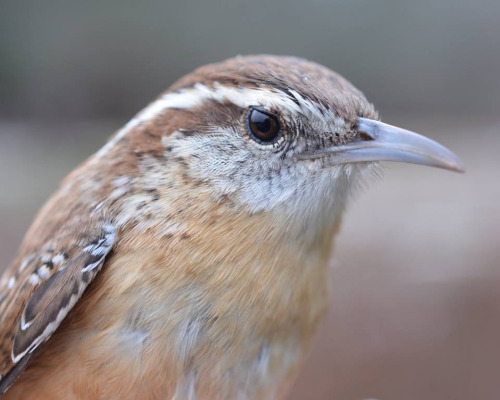
Researchers banded this Carolina Wren in February at Powdermill Nature Reserve.
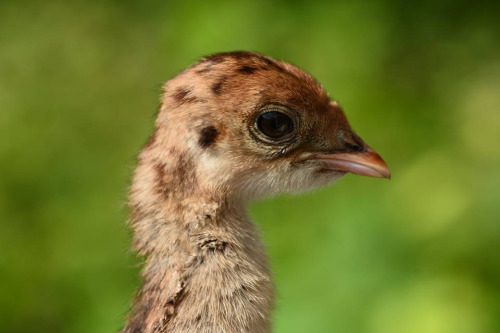
Happy Thanksgiving from Carnegie Museum of Natural History! This cute little turkey poult was photographed at our environmental research center Powdermill Nature Reserve.
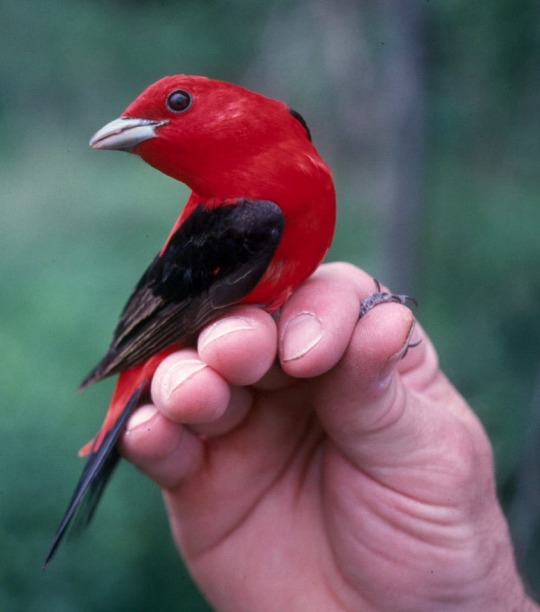
How are songbirds in western Pennsylvania adapting to climate change?
Fairly well according to Carnegie Museum of Natural History researchers Molly McDermott and Luke DeGroote, who observed adaptations in a recent paper titled “Global Change Biology.” Their work was covered in Anthropocene Magazine and referenced on NPR’s Science Friday this month.
Using 53 years’ worth of data collected at Powdermill Nature Reserve, Carnegie Museum of Natural History’s environmental research center in Rector Pa., DeGroote and McDermott observed that several species of songbirds have adapted their breeding cycles to warmer weather and earlier springs.
“I think of it as a very hopeful note. We can think of it as mother nature’s resilience, giving us a chance to be doing everything else we could be doing to help birds,” freelance writer Brandon Keim said on Science Friday about his Anthropocene Magazine article on McDermott and DeGroote’s paper.
However, DeGroote says that despite the note of optimism, there’s also an underlying word of caution.
“Because there is a disconnect between plant phenology and migratory timing, there may come a time when birds are no longer able to continue to ‘catch up’ after arrival by breeding earlier,” DeGroote said.
You can read the Anthropocene article or listen to Science Friday, where the segment featuring the research is about three minutes into the full episode at (89:21 to -86:53).
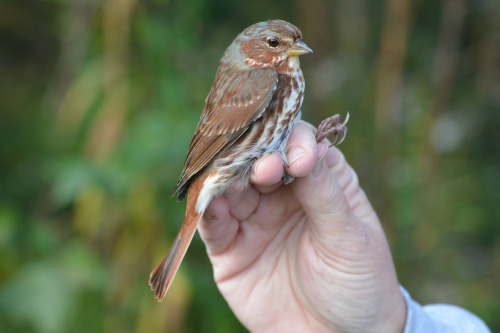
A foxy sparrow banded at Powdermill Nature Reserve, Carnegie Museum of Natural History’s environmental research center.
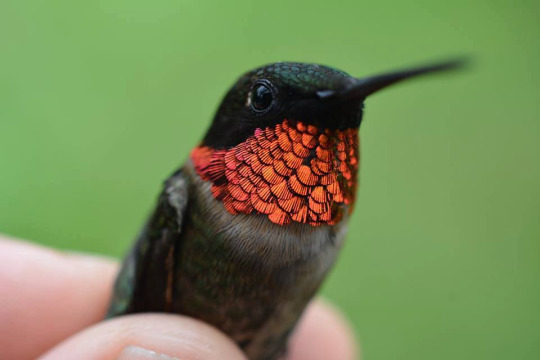
Each week, staff at Powdermill Nature Reserve staff posts stunning,
high-resolution photos of birds that land in their nets on their Facebook page.
The photos show detailed characteristics of local birds, like the
subtle coloring of a Common Yellowthroat or the sharp beak of a Pine
Siskin, that are hard to see as they fly above.
Powdermill is Carnegie Museum of Natural History’s environmental
research center in Rector Pa, where thousands of birds are identified, banded,
and released each year. As they band, research staffers often snap pictures
that highlight the huge variety of different birds flying through Western
Pennsylvania’s skies.
One favorite is the Ruby-throated hummingbird, which has
iridescent, fuchsia feathers on its neck that abut a dark green heads and long
black beak.
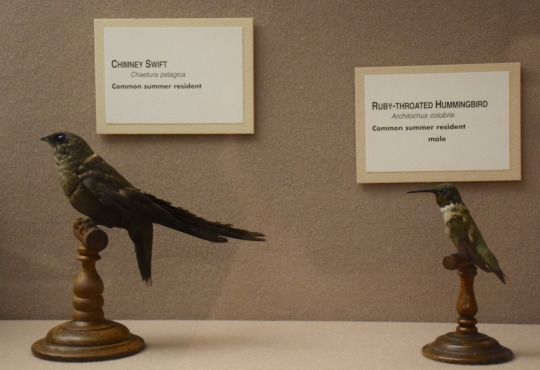
Comparing the Powdermill pictures to Bird Hall in the museum
is an interesting exercise. For example, Powdermill’s high resolution pictures let
you appreciate each and every line of the hummingbird’s bright feathers. But in
the museum, to see a taxidermy mount of a ruby throated humming bird
helps you grasp the miniscule size of these little birds that don’t often grow
larger than 3.5 inches.
Powdermill’s pictures and Bird Halls specimens work
in tandem to encourage us to pause and consider tiny players in our huge
local ecosystem, helping us all foster a little more appreciation for the
natural world.