• Skip to primary navigation
  • Skip to main content
  • Skip to primary sidebar

Carnegie Museum of Natural History

One of the Four Carnegie Museums of Pittsburgh

  • Visit
    • Buy Tickets
    • Visitor Information
    • Exhibitions
    • Events
    • Dining at the Museum
    • Celebrate at the Museum
    • Powdermill Nature Reserve
    • Event Venue Rental
    • Gift Cards
  • Learn
    • Field Trips
    • Educator Information
    • Programs at the Museum
    • Bring the Museum to You
    • Guided Programs FAQ
    • Programs Online
    • Climate and Rural Systems Partnership
  • Research
    • Scientific Sections
    • Science Stories
    • Science Videos
    • Senior Science & Research Staff
    • Museum Library
    • Science Seminars
    • Scientific Publications
    • Specimen and Artifact Identification
  • About
    • Mission & Commitments
    • Directors Team
    • Museum History
  • Tickets
  • Give
  • Shop

Powdermill Nature Reserve

August 5, 2016 by wpengine

Other Milkweed-Loving Insects

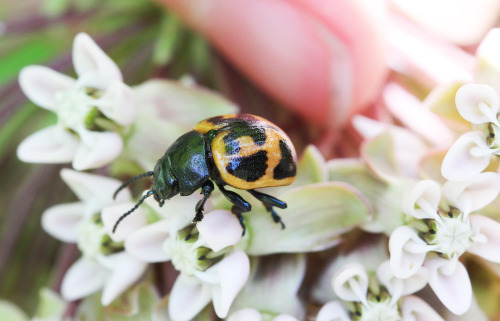
Milkweed Leaf Beetle (Labidomera clivicollis)

 by Andrea Kautz

Milkweed is in bloom and it’s not only the monarchs that love it!

We are all familiar with the striped caterpillars that rely on milkweed as a food source and the beautiful orange butterflies they become, but lots of other insects utilize milkweed in a similar way.

A quick inspection of the Common Milkweed (Asclepias syriaca) blooming near Powdermill Nature Reserve’s nature center parking lot reveals three different milkweed specialists pictured: the Milkweed Leaf Beetle (Labidomera clivicollis), the Large Milkweed Bug (Oncopeltus fasciatus), and the Milkweed Longhorn Beetle (Tetraopes tetrophthalmus).

The next time you come across a milkweed plant, see if you can find any of these guys hanging out; they are all quite attractive!
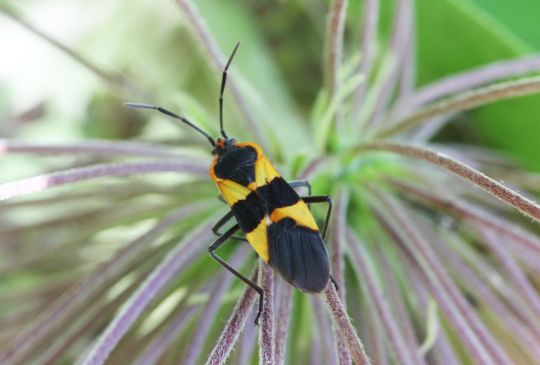
bug
The Large Milkweed Bug (Oncopeltus fasciatus)

Andrea Kautz is a research entomologist at Carnegie Museum of Natural History’s Powdermill Nature Reserve. Museum employees are encouraged to blog about their unique experiences and knowledge gained from working for the museum.
Filed Under: Blog Tagged With: bugs, insects, pennsylvania

August 4, 2016 by wpengine

Photo Traps in Conservation

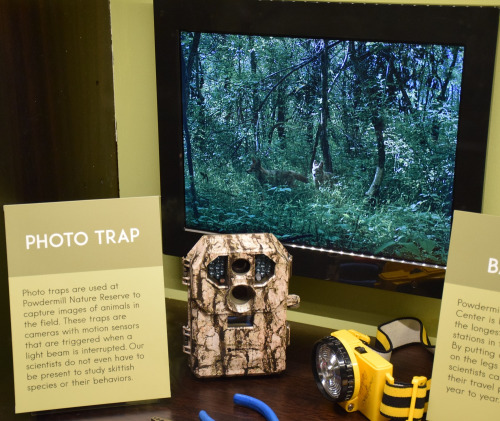
Photo Trap Display

by  Patrick McShea

In the Hall of North American Wildlife at Carnegie Museum of Natural History, there’s a display of field
research tools that includes a 14-inch screen that continually shows still images of  bobcats, black bears, and
other seldom seen residents of Powdermill Nature Reserve, the museum’s environmental research center. The images were collected in photo traps, sturdy programmable cameras with shutters triggered by motion or heat sensors.

A photo trap unit rests adjacent to the screen with its lights, lens, and sensors facing outward. The compactness
of the camouflage-patterned device contrasts with enormous contributions such cameras are currently making in wildlife conservation studies. Single cameras can collect photographic evidence of rarely seen species at a low financial cost and with minimal disturbance of the targeted creatures. Arrays of strategically placed cameras can be used to calculate population densities and chart individual territories.

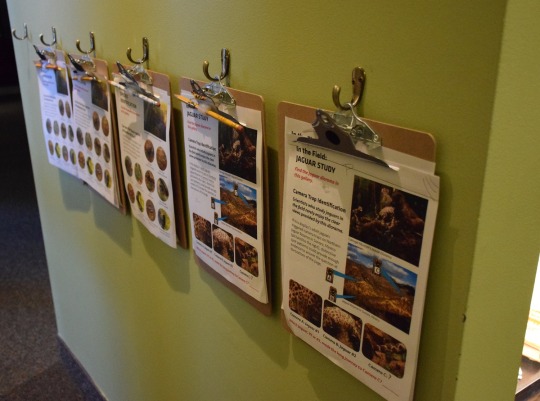
Around the corner from the display a clipboard-mounted activity sheet invites visitors to try their skill at interpreting photo trap evidence at the nearby Jaguar diorama.

clipboards hanging on the wall with activity sheets

For anyone interested in how photo traps are documenting the
continued presence jaguars and ocelots in the American southwest, the US Fish
and Wildlife Service maintains a site of spotted cat images.

Patrick McShea works in the Education and Visitor Experience department of Carnegie Museum of Natural History. Museum employees are encouraged to blog about their unique experiences of working at the museum.

Filed Under: Blog Tagged With: conservation, fieldwork, Hall of North American Wildlife, Patrick McShea

June 7, 2016 by wpengine

Cicadas at Powdermill

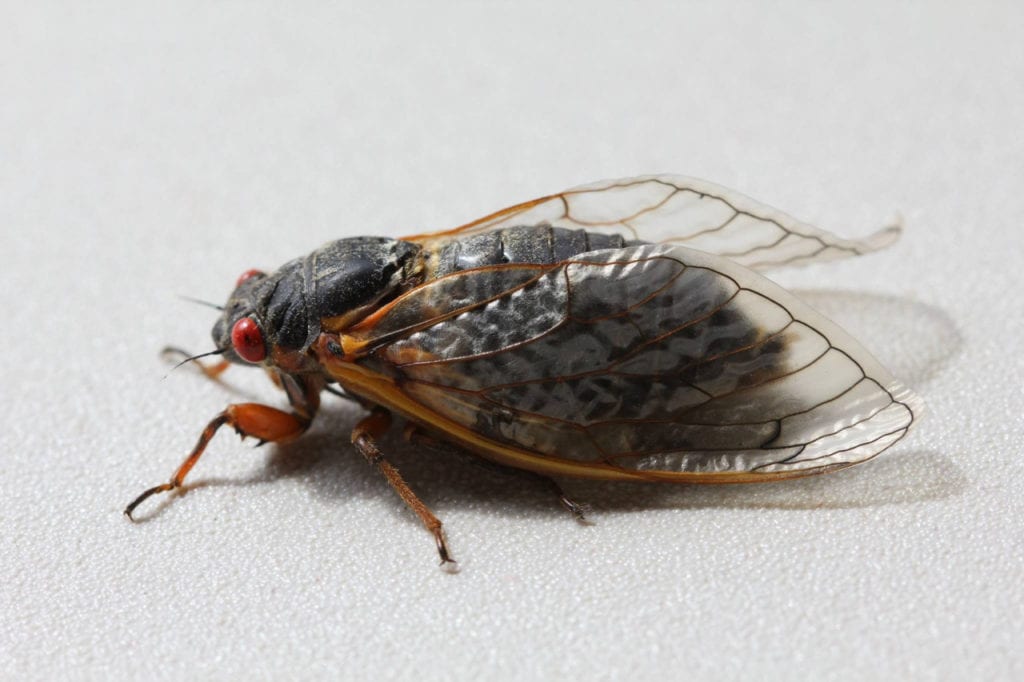
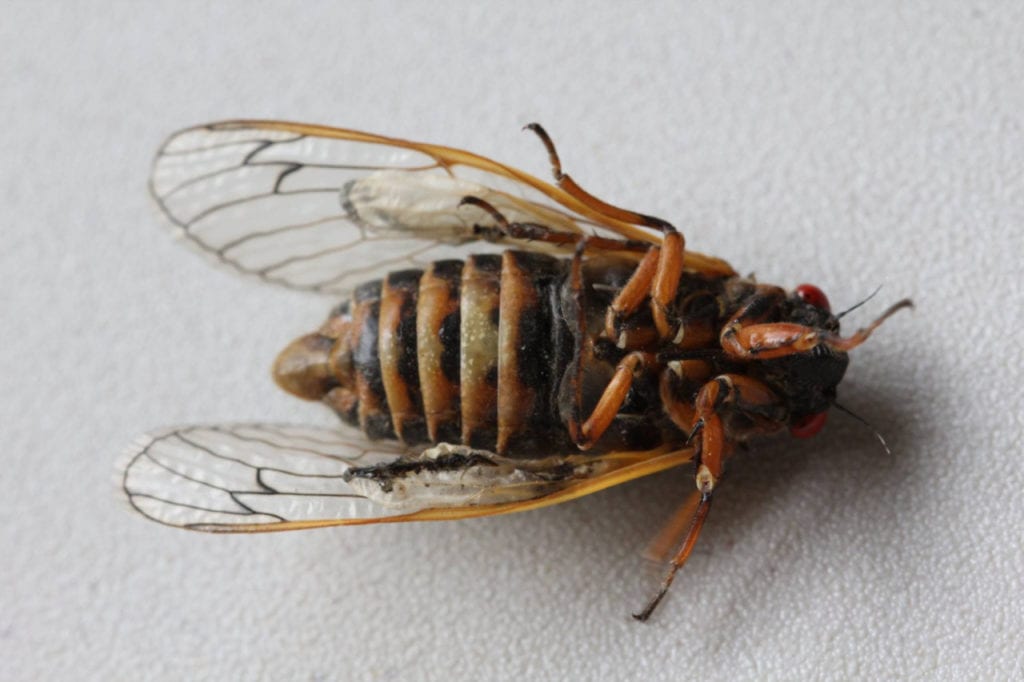
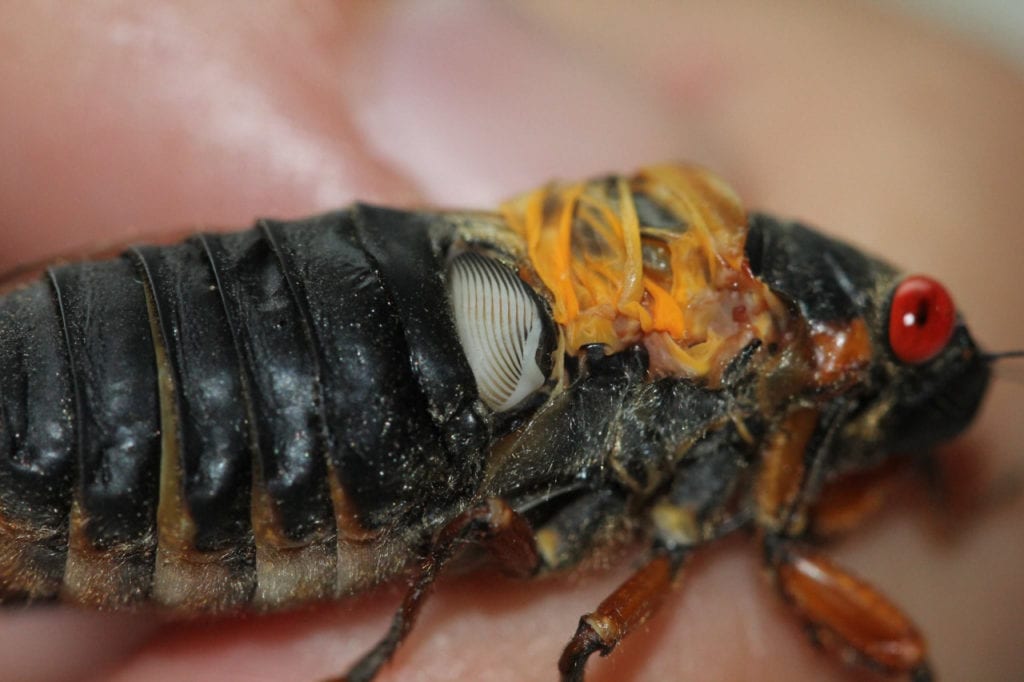
Cicada insect close up Cicada insect Cicada insect on its back

The cicadas are here! Staff at Powdermill Nature Reserve, Carnegie Museum of Natural History’s environmental research center, posted these up-close photos of this 17-year cicada and some more information about it last week.

“This specimen in particular is Magicicada septendecim, indicated by the broad orange stripes on the underside of the abdomen. It is also a male, because of the tymbals located near the base of the wings on each side. These organs are what the males use to make a loud buzzing sound to attract females. When many males sing together, it can be quite deafening!

This cicada has spent seventeen long years underground as a wingless nymph, feeding off of the juices from plant roots. In the year of its emergence, it waits until the soil temperature in its underground tunnel reaches 64 degrees, and then climbs up out of the ground (often onto a tree trunk or other surface) for its final molt into adulthood.”

Have the cicadas come to your neighborhood? Report your sightings at Magicicada.org, where you can also find much more additional information about periodical cicadas!

Filed Under: Blog Tagged With: insects, Pittsburgh, Powdermill, Powdermill Nature Reserve, western pennsylvania

May 18, 2016 by wpengine

Flow to Pittsburgh

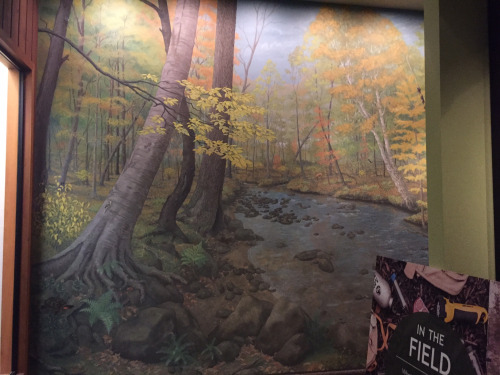
mural of a stream

by Patrick McShea

The scene in a new mural on the second floor of Carnegie Museum of Natural History is a fall morning at Powdermill Nature Reserve, the museum’s field research station which is located some 55 miles southeast of Pittsburgh.

The view is upstream along Powdermill Run, just below the place where the stream absorbs the flow of a tributary known as White Oak Run. These waters, gathered from a portion the western slope of Laurel Ridge, eventually flow through Pittsburgh. Their path to the city, a vertical descent of some 650 feet via the meanders of Loyalhanna Creek, the Kiskiminitas, and Allegheny River, is nearly twice the length of the highway route.

As a vital element of the forested landscape, the stream provides a focal point for considering the diverse life forms supported on Powdermill Nature Reserve’s 2,200 acres.

The artists who created the mural paid careful attention to vegetation, depicting specific trees, shrubs, and grasses. They also populated the scene with a variety of creatures. The closer you study the mural the more living details you’ll notice.

See how many plants and animals you can locate and identify, then make plans to visit Powdermill Nature Reserve at any season of the year.

Curious about Powdermill? Visit on June 4 for the annual public day!

Patrick McShea works in the Education and Visitor Experience department of Carnegie Museum of Natural History. Museum employees are encouraged to blog about their unique experiences and knowledge gained from working at the museum.

Filed Under: Blog Tagged With: conservation, nature, Patrick McShea, Pittsburgh, Powdermill, water

April 19, 2016 by wpengine

In Defense of Dandelions

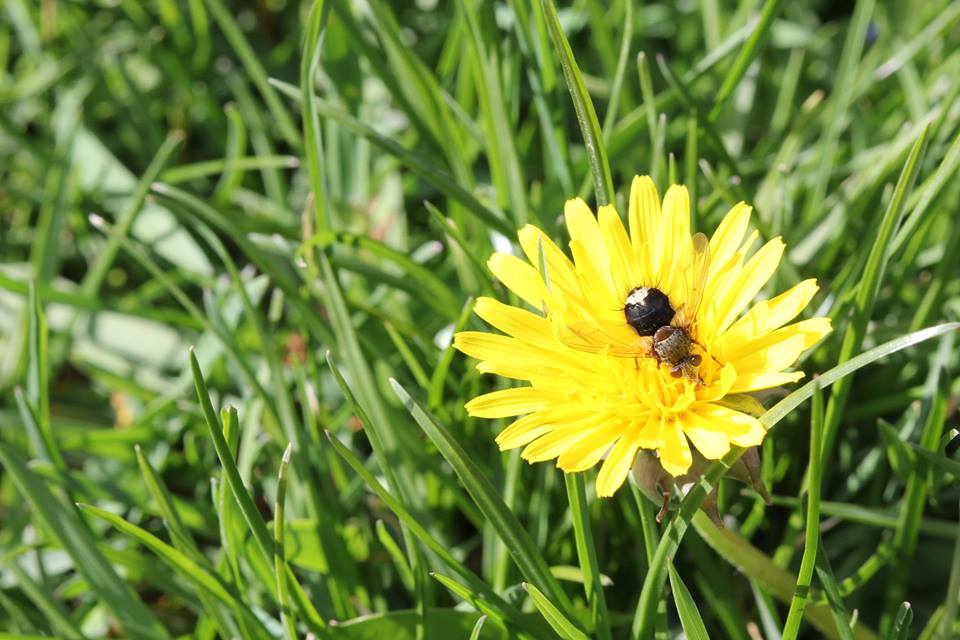
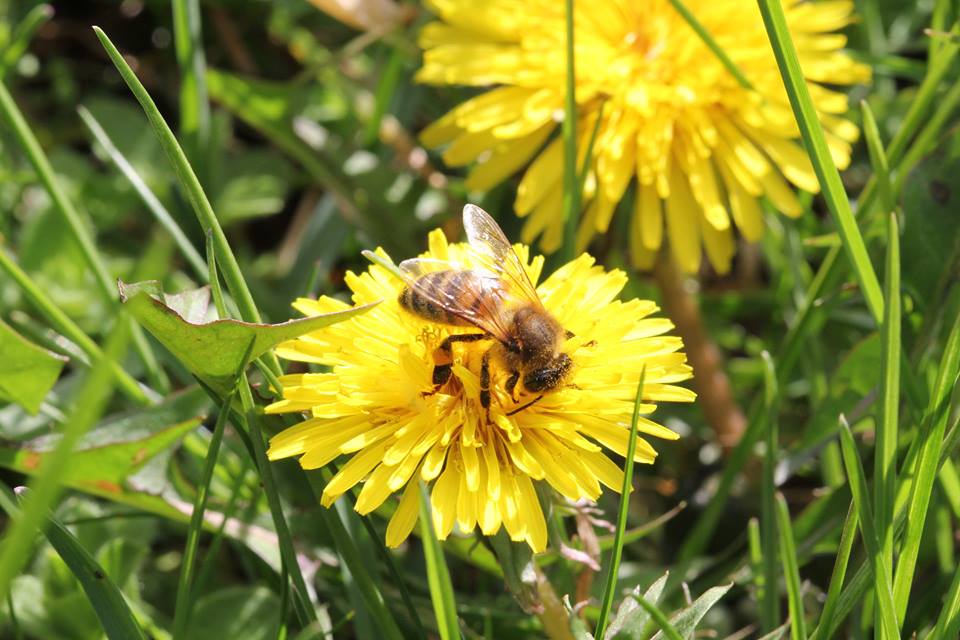
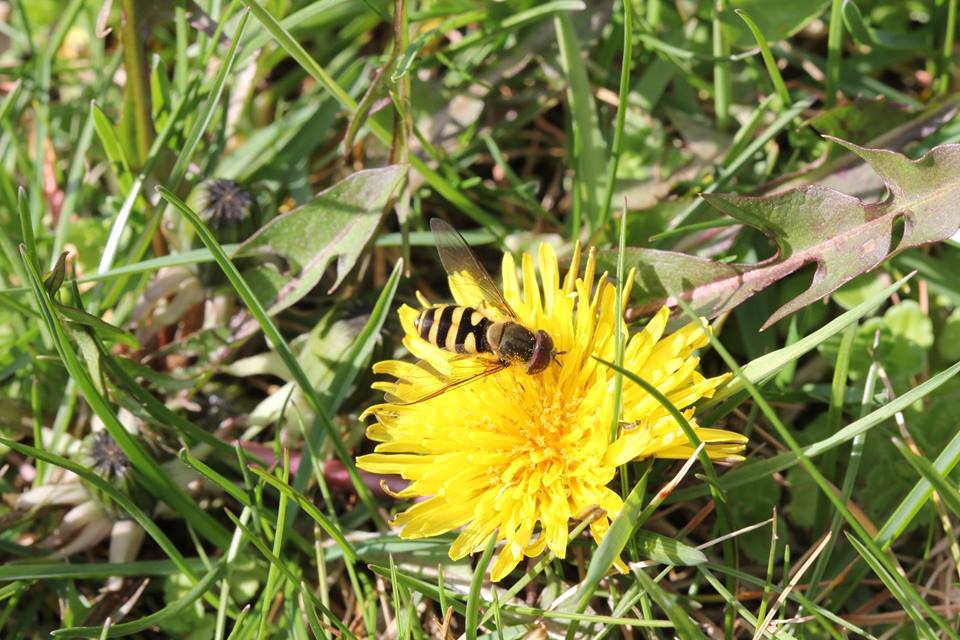
Dandelion in the grass Dandelion with honey bee Dandelion with insect
by Andrea Kautz

Dandelions are surely one of the most detested weeds out there, but if you go out on a sunny spring day, you will notice a variety of insects visiting the bright yellow flowers for nectar and pollen.

This is an important early-season food source for many pollinators including bees and flower-visiting flies like the ones pictured here, visiting dandelions in front of Carnegie Museum of Natural History’s environmental research center– Powdermill Nature Reserve–one afternoon last week.

Without flowering weeds like dandelions, our lawns turn into large pollinator food deserts, so maybe we can learn to put up with them.

After all, they are beautiful!

Andrea Kautz is a research entomologist at Carnegie Museum of Natural History’s Powdermill Nature Reserve. Museum employees are encouraged to blog about their unique experiences and knowledge gained from working for the museum.
Filed Under: Blog Tagged With: conservation, gardening

February 10, 2016 by wpengine

Powdermill Nature Reserve

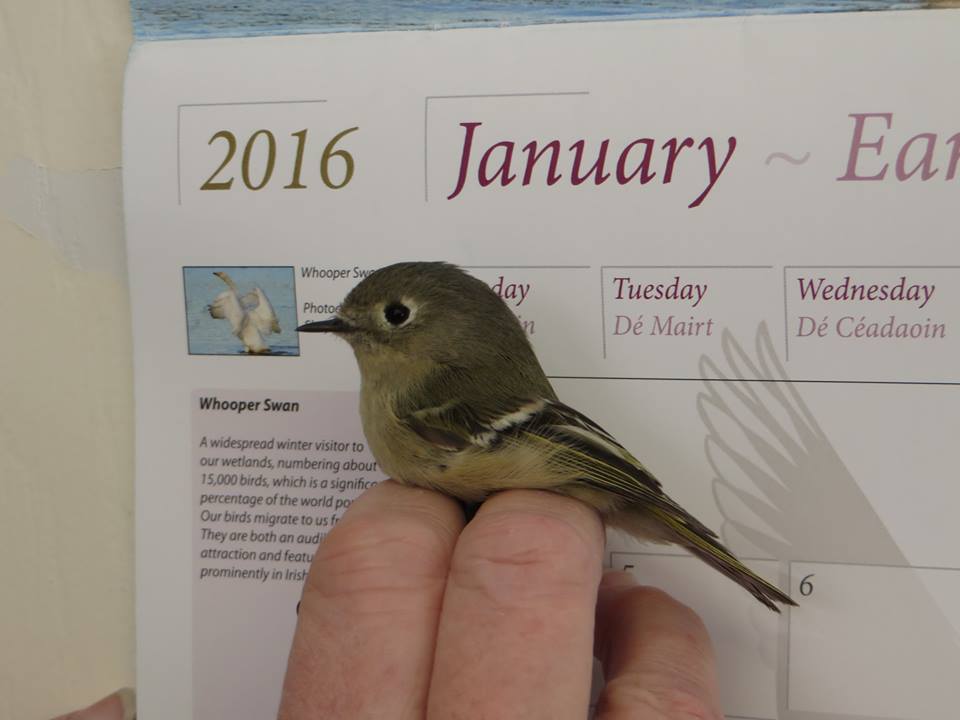
Ruby-crowned Kinglet bird
“Our nets are like a box of chocolate, you never know what you’re going to get.
Our January morsel: a Ruby-crowned Kinglet.
The only other time we’ve ever caught a Ruby-crowned Kinglet in January was in 1993 when 2 were banded, one which was re-caught 2 more times. Our lovely lady was first banded in late October and re-caught twice in November, last on November 21st.
We’re looking forward to finding more goodies in our nets this year, but we’ll pass on the cordials please.”

Filed Under: Visitor Info Tagged With: Birds

  • « Go to Previous Page
  • Page 1
  • Page 2
  • Page 3
  • Page 4

sidebar

About

  • Mission & Commitments
  • Directors Team
  • Museum History

Get Involved

  • Volunteer
  • Membership
  • Carnegie Discoverers
  • Donate
  • Employment
  • Events

Bring a Group

  • Groups of 10 or More
  • Birthday Parties at the Museum
  • Field Trips

Powdermill

  • Powdermill Nature Reserve
  • Powdermill Field Trips
  • Powdermill Staff
  • Research at Powdermill

More Information

  • Image Permission Requests
  • Science Stories
  • Accessibility
  • Shopping Cart
  • Contact
  • Visitor Policies
One of the Four Carnegie Museums | © Carnegie Institute | Privacy Policy | Terms of Use | Accessibility
Rad works here logo