• Skip to primary navigation
  • Skip to main content
  • Skip to primary sidebar

Carnegie Museum of Natural History

One of the Four Carnegie Museums of Pittsburgh

  • Visit
    • Buy Tickets
    • Visitor Information
    • Exhibitions
    • Events
    • Dining at the Museum
    • Celebrate at the Museum
    • Powdermill Nature Reserve
    • Event Venue Rental
  • Learn
    • Field Trips
    • Educator Information
    • Programs at the Museum
    • Bring the Museum to You
    • Guided Programs FAQ
    • Programs Online
    • Climate and Rural Systems Partnership
  • Research
    • Scientific Sections
    • Science Stories
    • Science Videos
    • Senior Science & Research Staff
    • Museum Library
    • Science Seminars
    • Scientific Publications
    • Specimen and Artifact Identification
  • About
    • Mission & Commitments
    • Directors Team
    • Museum History
  • Tickets
  • Give
  • Shop

wpengine

September 13, 2021 by wpengine

A Deeper Look at Dioramas

by Suzanne McLaren

On the second floor at Carnegie Museum of Natural History a visitor can see dioramas showing wildlife found in both North America and Africa. Often a visitor is drawn close to an exhibit by the taxidermy mount of a large mammal that is the diorama’s most prominent feature. The animal is posed as it would appear in its natural surroundings. The art and science of world class taxidermy can lead a visitor to focus only on what appears to be the main subject of the diorama. However, that would be unfortunate. In nearly every example on the second floor, the staff has gone to great lengths to include so much more. The next time you visit, look at different types of plants, birds, reptiles, amphibians and even insects and mollusks that share the habitat.
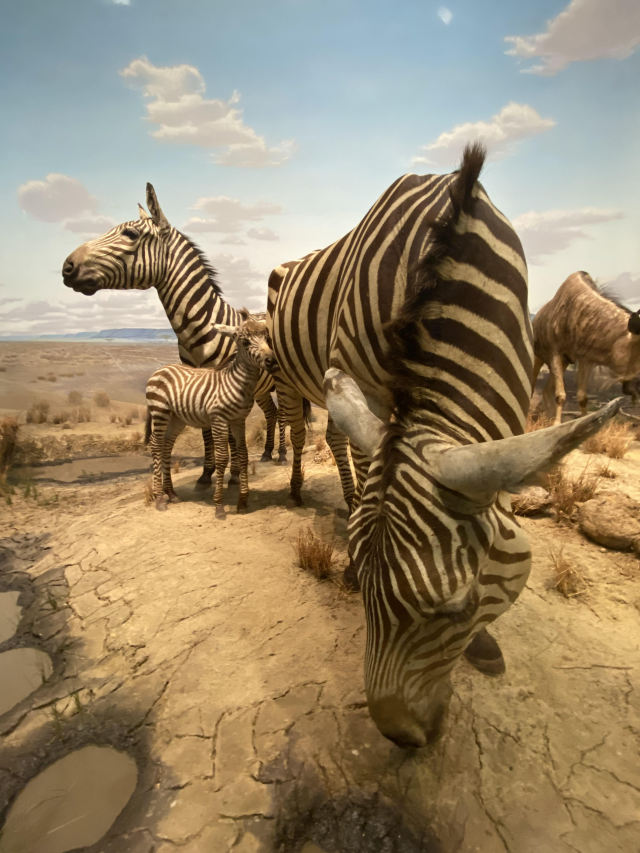
Taxidermy zebras in a museum display

Some of the earliest Carnegie Museum dioramas exhibits, crafted by taxidermist Frederic S. Webster, have depicted locations unfamiliar to the average visitor of his day. Webster was sent to locations around North America to observe, sketch, plan and collect for the construction of dioramas that could bring the essence of those environments home to Pittsburgh. Subsequent generations of Carnegie Museum exhibit and scientific staff have followed that same general process. In many cases, one can look at a diorama and realize that the scene represents an identifiable location. Whether that location is Yellowstone National Park in Wyoming, Masai Mara National Reserve in Kenya, or Powdermill Nature Reserve in Westmoreland County, Pennsylvania, the construction of a new diorama can take years of planning and months of construction to complete.
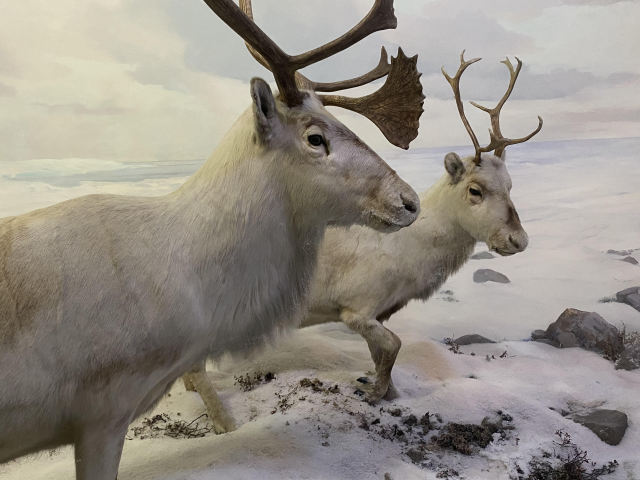
taxidermy caribou in a snowy museum display

If you can join us at Carnegie Museum of Natural History for Super Science Saturday on September 25th, Curator John Wible and Collection Manager Sue McLaren from the Section of Mammals will be on hand to talk about mammals and share stories about some of their favorite dioramas.
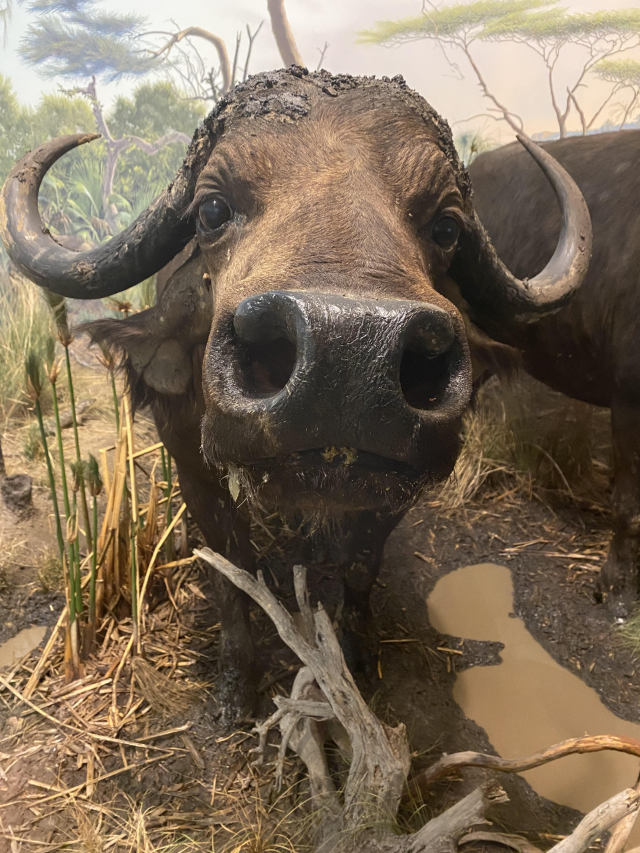
close up of an animal's face in a museum diorama

Suzanne McLaren is the Collection Manager in the Section of Mammals at Carnegie Museum of Natural History. Museum employees are encouraged to share their unique experiences from working at the museum.

Related Content

D is for Dugong

Doubly Dead: Taxidermy Challenges in Museum Dioramas

Sympathy for the Devil

Carnegie Museum of Natural History Blog Citation Information

Blog author: McLaren, Suzanne
Publication date: September 13, 2021
Share this post!

  • Share on Twitter Share on Twitter
  • Share on Facebook Share on Facebook
  • Share on Pinterest Share on Pinterest
  • Share on LinkedIn Share on LinkedIn
  • Share on Reddit Share on Reddit
  • Share via Email Share via Email

Share this post!

  • Share on Twitter Share on Twitter
  • Share on Facebook Share on Facebook
  • Share on Pinterest Share on Pinterest
  • Share on LinkedIn Share on LinkedIn
  • Share on Reddit Share on Reddit
  • Share via Email Share via Email

Filed Under: Blog Tagged With: mammals, Science News, ssstakeover, Sue McLaren

September 10, 2021 by wpengine

Milestones at Powdermill’s Banding Lab

by Annie Lindsay

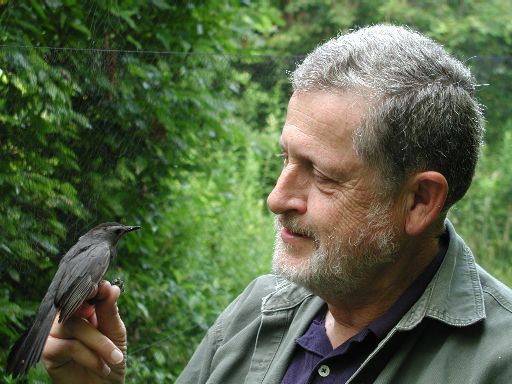
On the morning of July 11, 2001, Powdermill’s bird banding crew knew that was the day they’d catch the program’s 500,000th banding record (which includes new birds and recaptured birds). With only 10 birds to go, each person on the field crew guessed what species #500,000 would be, then set out on a net round together. As we checked each net, our eager anticipation grew with each bird we extracted. It turned out that I, a young, green banding intern, guessed correctly: number 500,000 was a Gray Catbird, a very common species at Powdermill during the breeding season, and a charismatically sassy species that endears itself to many banders and birders.

Man holding a bird outside.
Bob Leberman, founder of Powdermill’s bird banding program, with the 500,000th banding record, a Gray Catbird, caught and banded on July 11, 2001.

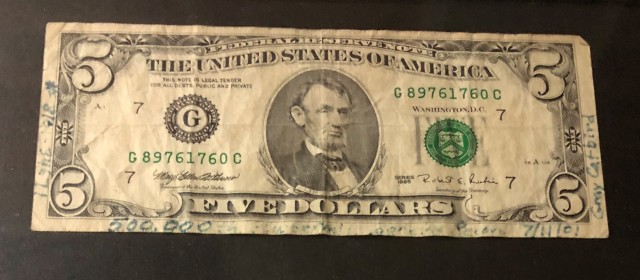
We released #500,000, celebrated with sparkling grape juice, then continued the banding day with a demonstration for children attending Powdermill’s summer camp. The catbird was made famous in the local newspaper, and because we’d each wagered a dollar on our guesses, I earned a $5 bill with the catbird’s band number on it for correctly guessing the species. That year marked the 40th anniversary of Powdermill’s banding program, and another milestone about two months prior: the 400,000th new bird banded.

Over the next two decades, the number of birds banded continued to creep up. Before spring migration this year, we determined that we needed just over 5,000 birds to reach 800,000 banding records. The countdown was on, and by mid-summer we knew that we could expect to reach that number by early- to mid-August, perfect timing to celebrate the banding program’s 60th anniversary.

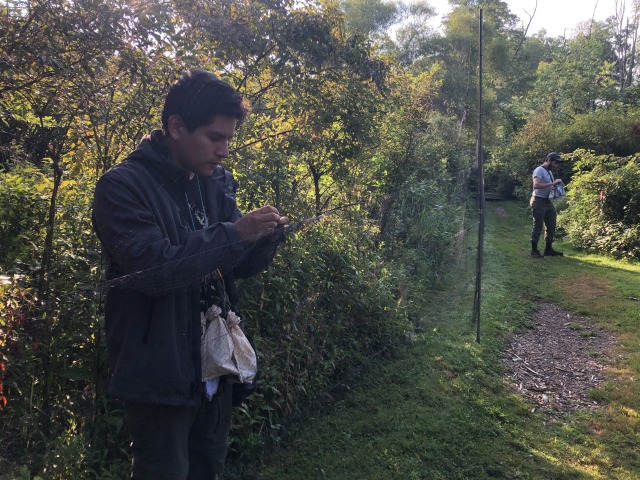
The morning of August 6 was the day! With 45 birds to go after banding on August 5, we knew 800,000 was within sight. We opened the nets at 5:50 a.m., but the first two net checks yielded surprisingly fewer birds than we expected. At the 7:50 a.m. net check, we still had 20 birds to go, and given the pace of the morning we assumed The Bird wouldn’t be caught until the following round, so the banding crew set out in different directions to clear the nets. About five minutes later our long-term volunteer and colleague, Nick, radioed back to say that he had 11 birds in the second set of nets he was checking! The nets in the other directions had only a few birds, so we all converged on Nick’s location, and the final countdown began with five birds to go.

Two people outside removing birds from mist nets.
Kevin Chumpitaz and Nick Liadis, part of Powdermill’s banding crew, extracting birds #799,993 and #799,994.

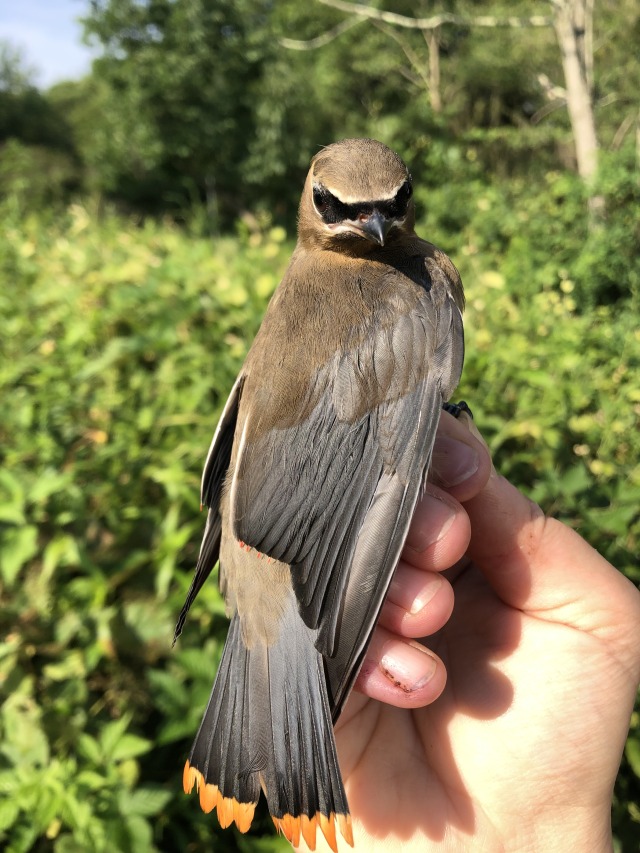
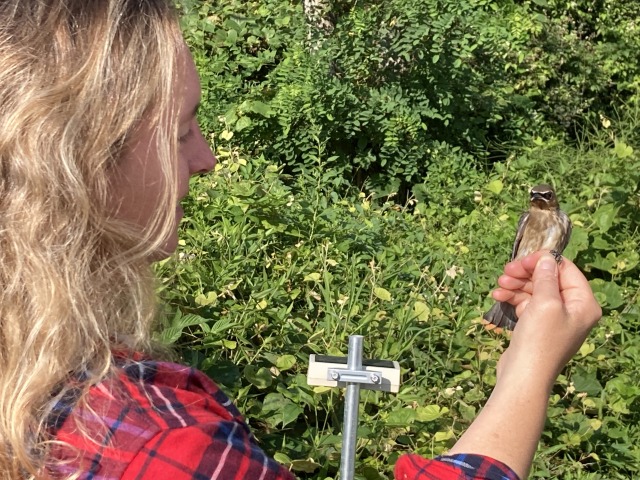
The next three sets of nets were empty, but Long Lane, a series of nine nets connected in a long line, delivered a Black-and-White Warbler, a Black-throated Green Warbler, a Gray Catbird, and a Canada Warbler. With number 800,000 just ahead, Mallory, PARC’s Motus and banding assistant, called back to the rest of us, “It’s here!” Our milestone bird was a young Cedar Waxwing, a species that is quite common at Powdermill during the migration and breeding seasons, and often is spotted in nomadic flocks during the winter.

Cedar Waxwing held in a hand outside
Powdermill’s 800,000th banding record, a young Cedar Waxwing, caught and banded on August 6, 2021.

Just beyond the waxwing was another Gray Catbird, which concluded the net round. We all made our way back to the lab where we banded the celebrity waxwing, recorded the usual data (age, sex, measurements, and mass), snapped a few photos and a quick video, and then released the bird.

Based on the waxwing’s plumage, we know that it hatched this summer, and it displayed an interesting plumage characteristic that is relatively common in young waxwings in southwest Pennsylvania. Cedar Waxwings have a yellow terminal band on their tails, but if an individual eats invasive honeysuckle berries while feathers are growing, the pigment from the berries, called rhodoxanthin, is incorporated into the yellow parts of the growing feathers. Honeysuckle berries are plentiful at Powdermill, and are ripe when young Cedar Waxwings are still in the nest and growing their first set of feathers. If they’re fed these berries, their tails have an orange tail band instead of the normal yellow! Adult waxwings molt when the berries are no longer ripe, so their tails have a yellow stripe. This phenomenon is a great example of how introduced plants can affect their environment.

Woman holding a bird outside
Annie Lindsay with the 800,000th banding record.

In keeping with previous milestones at Powdermill, #800,000 is a common species: Cedar Waxwing is the sixth most banded species at Powdermill, with over 24,000 of them banded in our 60-year history. We often like to attach meaning to notable events, and Cedar Waxwings lend themselves to this one in particular: the aberration in tail stripe pigmentation was described by Powdermill banders in a paper published in 1992, and the species was a favorite of the founder of Powdermill’s bird banding program, Bob Leberman.

Five-dollar bill with writing on the edges commemorating the 500,000th bird banding record at Powdermill.
The commemorative $5 bill for guessing correctly what species the 500,000th banding record would be.

I still have the $5 bill with #500,000’s band number on it, and feel honored to have been part of both milestones at Powdermill. The crew didn’t place bets on what species #800,000 might be, but several had guesses, and I was sure it would be another catbird. Cedar Waxwing was an excellent surprise, and we’re all looking forward to #900,000 and #1,000,000 in the coming years!

Annie Lindsay is the Bird Banding Program Manager at Carnegie Museum of Natural History’s Powdermill Nature Reserve. Museum employees are encouraged to blog about their unique experiences and knowledge gained from working at the museum.

Related Content

What Is Bird Banding?

Cedar Waxwing: Banding Record 800,000

Behind the Scenes…A Life in the Details

Carnegie Museum of Natural History Blog Citation Information

Blog author: Lindsay, Annie
Publication date: September 10, 2021

Share this post!

  • Share on Twitter Share on Twitter
  • Share on Facebook Share on Facebook
  • Share on Pinterest Share on Pinterest
  • Share on LinkedIn Share on LinkedIn
  • Share on Reddit Share on Reddit
  • Share via Email Share via Email

Share this post!

  • Share on Twitter Share on Twitter
  • Share on Facebook Share on Facebook
  • Share on Pinterest Share on Pinterest
  • Share on LinkedIn Share on LinkedIn
  • Share on Reddit Share on Reddit
  • Share via Email Share via Email

Filed Under: Blog Tagged With: Annie Lindsay, bird banding, Birds, Powdermill Nature Reserve

September 7, 2021 by wpengine

Guiding a Local Focus On Climate Education

by Patrick McShea

During the last three days of July more than 330 educators from across the country gathered virtually to learn how to more effectively teach about a topic generating increasingly alarming headlines. The event, titled Summer Institute for Climate Change Education, operated with three principle hosts, Climate Generation, a St. Paul, Minnesota-based educational organization with a national reach, the Youth Climate Program of The Wilds Center in New York’s Adirondack State Park, and the Climate Office of NOAA, the National Oceanic and Atmospheric Administration.

On the middle day of the Institute, participants remotely joined one of a dozen sub-region programs for a more local focus on discussions, resource sharing, and reviews of potential classroom activities. Pittsburgh was the center of one such sub-region, and the host for our region’s day-long program was Katie Modic, Executive Director of a small and innovative organization known as Communitopia.

City of Pittsburgh from above showing buildings, bridges, a river, and many trees.
Image by Bruce Emmerling from Pixabay.

Communitopia is a 12-year-old organization, whose ongoing efforts to slow climate change and create healthier communities through new media and project-based campaigns have been distilled into a three-word mission statement, “Making Green Mainstream.” The 501©3 nonprofit operation is well served by the experience Katie brings to her leadership position. She is a University of Wisconsin-Madison alumni (M.S. in Education, B.A. in Spanish and Anthropology), whose work experience since graduation includes a two-year Teach for America middle school assignment along the US/Mexico border in Donna, Texas, public school teaching experience in Colorado and Florida, international teaching experience in Rotterdam, the Netherlands, and the sharing of many of her first hand learning experiences with undergraduate education students as a professor at Central College in Pella, Iowa.

In planning the day’s schedule, Katie worked with staff from both Phipps Conservatory and Botanical Gardens and Carnegie Museum of Natural History. In carrying out her role as a Zoom screen host for a territory that encompassed nearly all of Pennsylvania, she was able to direct attention to the revision of Pennsylvania’s academic standards for science as a current issue relevant in every corner of the state.

Katie’s position that the standards revision process creates an opportunity to strengthen how climate is addressed in both Science Standards and those for Environment and Ecology is outlined on Communitopia’s website. During the Summer Institute she was able to explain how her opportunity observations were largely based upon her experience in working with students at Woodland Hills High School in Pittsburgh’s eastern suburbs. When biology teacher Margeaux Everhart invited Katie to present Communitopia’ s classroom program about the local impacts of climate change, the session sparked a student-driven grassroots movement that eventually led to the Woodland Hills School District adopting a formal Climate Action Plan.

For many of the educators who participated in the Pittsburgh-based day of Summer Institute programs, watching and listening as some of those students made Zoom speaking appearances was an inspiring and empowering experience.

Patrick McShea works in the Education and Visitor Experience department of Carnegie Museum of Natural History. Museum employees are encouraged to blog about their unique experiences and knowledge gained from working at the museum.

Related Content

Expanding the Scope of Environmental Education

Getting Started: A High School Intern’s Experience in the Herp Section

Bird Architecture on Human Infrastructure

Carnegie Museum of Natural History Blog Citation Information

Blog author: McShea, Patrick
Publication date: September 7, 2021

Share this post!

  • Share on Twitter Share on Twitter
  • Share on Facebook Share on Facebook
  • Share on Pinterest Share on Pinterest
  • Share on LinkedIn Share on LinkedIn
  • Share on Reddit Share on Reddit
  • Share via Email Share via Email

Share this post!

  • Share on Twitter Share on Twitter
  • Share on Facebook Share on Facebook
  • Share on Pinterest Share on Pinterest
  • Share on LinkedIn Share on LinkedIn
  • Share on Reddit Share on Reddit
  • Share via Email Share via Email

Filed Under: Blog Tagged With: Educator Resources, Educators, Pat McShea, We Are Nature 2

September 3, 2021 by wpengine

Pitfall Traps: Fieldwork Surprises

by Amanda K. Martin

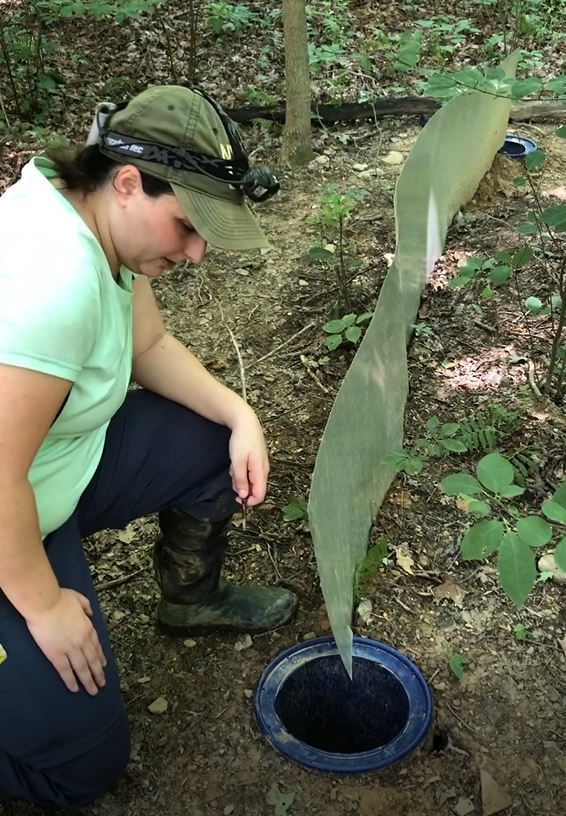
Powdermill Nature Reserve is home to a wide variety of creatures whose presence remains undetected by most human visitors. One way that scientists can explore the animal diversity of an area is by a method called pitfall trapping (Fig. 1A). For research into the Reserve’s amphibian diversity, I was part of a small team who placed pairs of 5-gallon buckets in the ground 8 feet apart, with their rims at surface level. We then set up a low metal fence between each pair of buckets (Fig 1A). Animals moving along the forest floor who encountered the fence would generally follow the barrier, to the left or to the right, and fall into one of our traps.

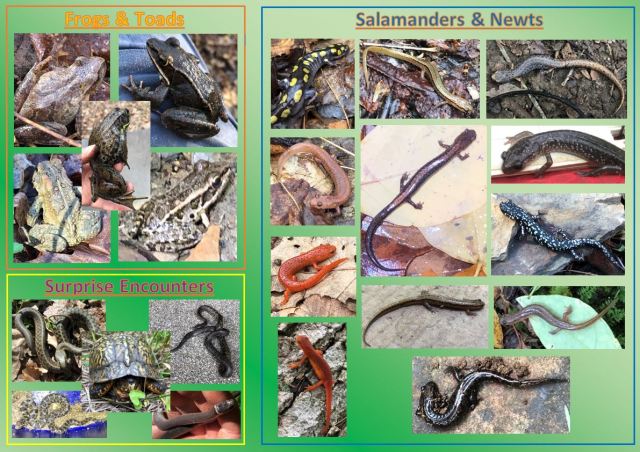
We checked our pitfall traps every morning during the study period, noting which species we had captured, along with their size and weight, before releasing them unharmed. As an amphibian study our trapping targets were frogs, toads, salamanders, and newts, and we were successful in documenting their presence. Across ten sample periods of ten days each, we captured 1,962 individual amphibians representing 17 different species! (Fig. 1B)

Woman looking into a pitfall trap in the woods.
Fig 1A: Dr. Martin inspecting a pitfall trap array for captured amphibians. Photo by P. DeQueiroz.
College of reptile and amphibian photos.
Fig. 1B: Species diversity from captures in traps along with a few surprise reptilian encounters.

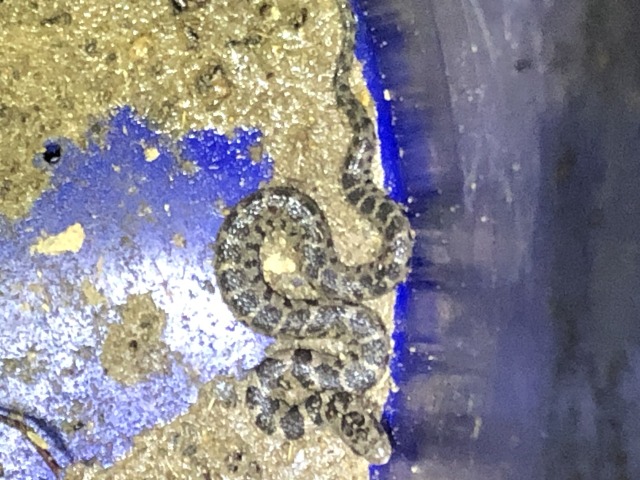
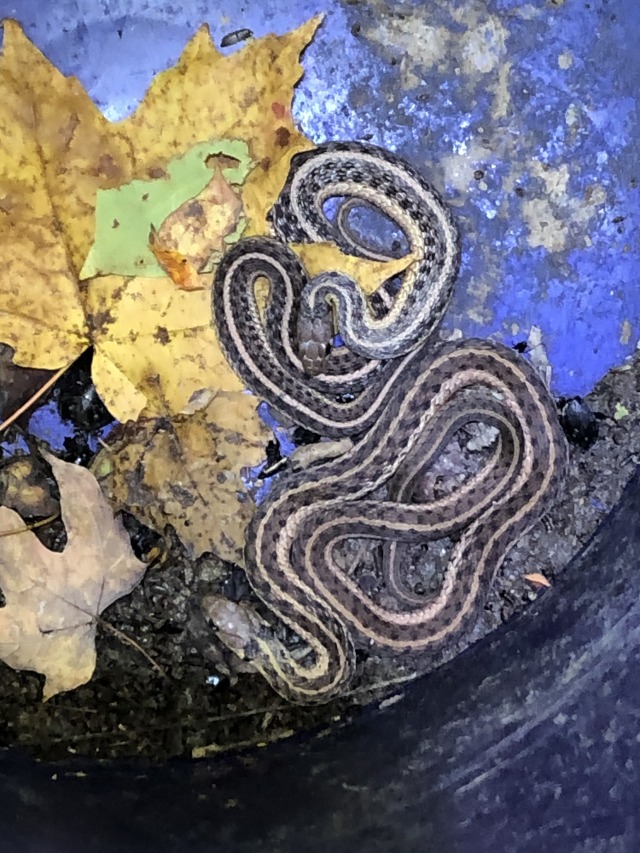
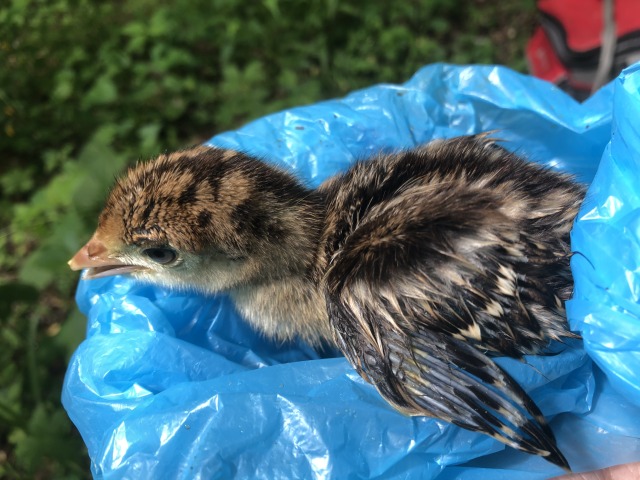
Pitfall traps also capture non-target species, called by-catch, a term that give little indication of the surprising encounters some of these creatures create. Normally I see a wide variety of invertebrate species when I check my traps, including millipedes, large beetles, spiders, crayfish, and even moths. Additionally, this year we captured a Northern water snake (Nerodia sipedon; Fig. 2A) and four eastern garter snakes (Thamnophis sirtalis; Fig. 2B). More surprisingly, one trap briefly detained a fledging Wild Turkey (Meleagris gallopavo, Fig. 2C)!

Northern water snake in a pitfall trap.
Eastern garter snake in a pitfall trap.
Fledgling turkey.
Fig. 2: Captured snakes and a surprise avian, Northern Water (A), Eastern Garter (B), and a fledgling turkey (C).

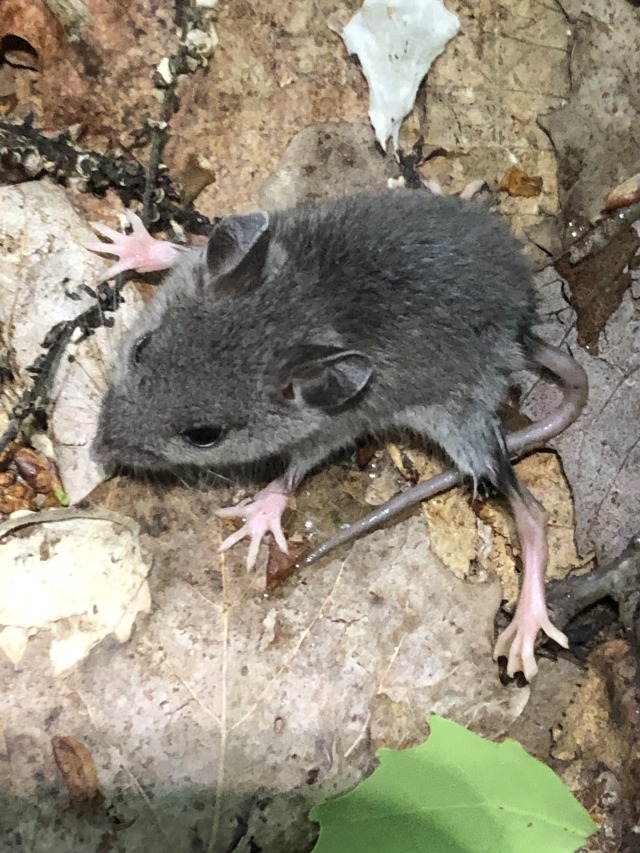
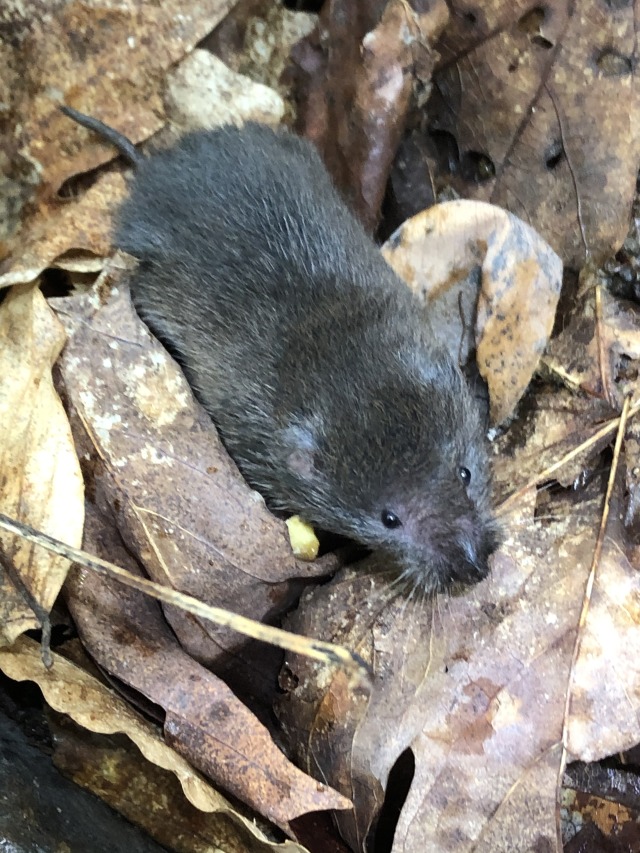
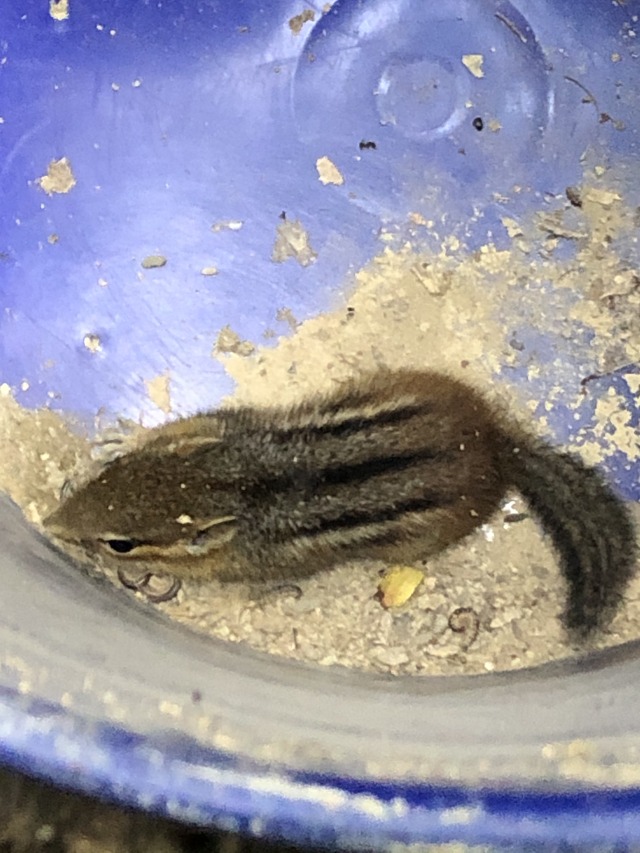
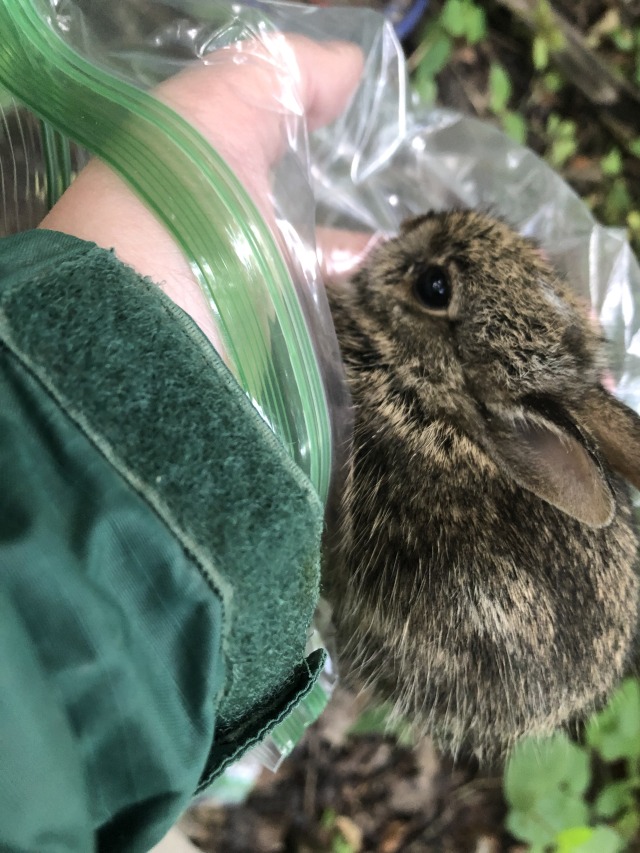
Our study’s pitfall trap by-catch also included several different mammals that scurry across the forest floor: We caught different species of mice (Fig. 3A), shrews, voles (Fig. 3B), and on single occasions a chipmunk (Fig. 3C), mole, or even an opossum! Our traps contained moist sponges to provide water for these small mammals, along with small sections of PVC pipe for shelter. We also found that anchoring a jute string to the bucket edge overhang, with knots tied every 50 – 60 mm, reduced small mammal by-catch. The string provided a means for small mammals to climb up to the ground surface and escape on their own—except for a tiny eastern cottontail rabbit (Fig. 3D), which was safely released after we encountered it.

Mouse on leaf litter.
Vole on leaf litter.
Chipmunk in a pitfall trap.
Bunny in a human hand.
Fig. 3: Small mammal encounters with a mouse (A), vole (B), chipmunk ©, and a bunny (D).

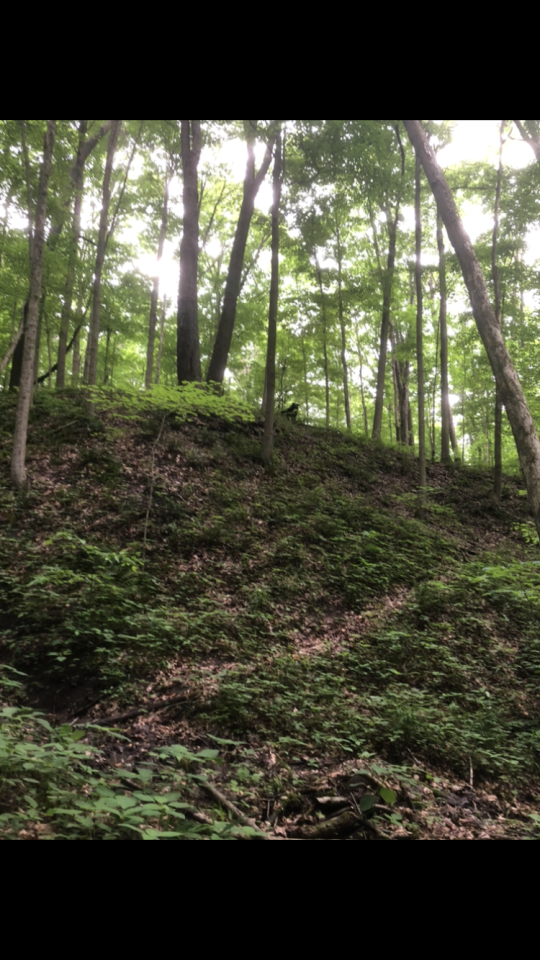
In addition to encounters with the animals caught in our pitfalls, the time we spent checking the traps provided opportunities to observe other wildlife passing through the forest. On one occasion while my field assistant and I were measuring an Allegheny dusky salamander (Desmognathus ochrophaeus) we heard a loud noise. When we both looked up a wooded slope in the direction of the sound we were shocked to see a black bear (Ursus americanus) approaching. I took a quick photo (Fig. 4), released the salamander, and we cautiously watched the bear come down the hill and walk off. The incident was nerve-wracking in the moment, but very exciting in retrospect! Also, while relaxing outside my cabin one day after a long fieldwork session, I was lucky enough to spot a bobcat walking past —a great bonus to spending so much time in the forest!

Forested area with a black bear in the distance.
Fig. 4: A surprise black bear encounter while checking pitfall traps.

All research was conducted under approved permits. Photos by A.K. Martin.

Amanda K. Martin is the Rea Postdoctoral Fellow in the Section of Amphibians and Reptiles. Museum employees are encouraged to blog about their unique experiences and knowledge gained from working at the museum.

Related Content

How To Catch 311 Amphibians in 10 Days

The Search for the Near Threatened Green Salamander, Aneides aeneus

Overwintering for Amphibians and Reptiles

Carnegie Museum of Natural History Blog Citation Information

Blog author: Martin, Amanda K.
Publication date: September 3, 2021

Share this post!

  • Share on Twitter Share on Twitter
  • Share on Facebook Share on Facebook
  • Share on Pinterest Share on Pinterest
  • Share on LinkedIn Share on LinkedIn
  • Share on Reddit Share on Reddit
  • Share via Email Share via Email

Filed Under: Blog Tagged With: Amanda Martin, amphibians and reptiles, Science News

August 27, 2021 by wpengine

Fossil Matrix Under the Microscope

by Pat McShea

Museum visitors who approach the broad window of PaleoLab encounter an array of large fossilized bones. If not for the pair of microscope workstations positioned against the lab’s right wall, it would be easy to misinterpret the enormous jaws, ribs, vertebrae, and limb bones as evidence of a size bias in the science of vertebrate paleontology.

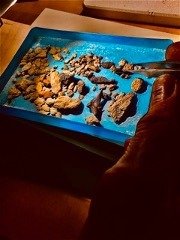
fossil matrix on a sorting tray
A scoop of fossil-bearing matrix on a sorting tray.

Small fossils have certainly made mighty contributions to our understanding of life during ancient time periods. Such fossils, which include loose teeth, small bones, and bone fragments, are the primary focus of some paleontological research. In other projects, where considerably larger fossilized creatures are the focus of study, the fossils of smaller creatures add information about species diversity, food webs, and even the climate conditions of ancient ecosystems. The sorting of fossil-bearing matrix that occurs under PaleoLab’s microscopes ensures that important discoveries will continue to occur.

The term matrix refers to the natural rock surrounding a fossil. In the case of fossil bones encased in rock, the matrix consists of the loose sediments that originally buried the bones, sediments that were later transformed into rock over long stretches of time by the pressure of other sediment layers deposited above them. When fossil-bearing rock layers erode, however, and loosened fossils are transported by water, wind, or other forces, the unconsolidated mix of surrounding materials in which the fossils eventually settle is also termed matrix.

In the field, paleontologists sometimes collect and screen loose matrix on site, using water to both separate floatable bits of plant debris and wash away soil, then sun-drying the resulting sludge for later screening. In the case of the matrix currently being sorted in PaleoLab, material eroded from a more than 50 million-year-old rock unit near Meridian, Mississippi was collected in bulk by CMNH paleontologists and brought back to Pittsburgh for washing and drying at the museum.

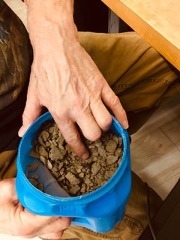
Container of fossil matrix with a person holding it.
Unsorted fossil-bearing matrix.

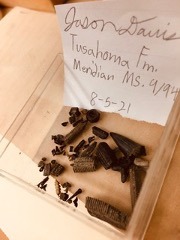
During a recent visit to PaleoLab, Scientific Preparator Dan Pickering pulled two containers from a shelf as “before” and “after” sorting examples. In the “before” container, a quart-sized plastic jug that once held ground coffee, a black, dime-sized shark tooth resting atop similar-sized irregular gray rock fragments hinted at the possible rewards for future sorting efforts. The considerably smaller and lighter “after” container bore not just an array of small marine fossils, including shark teeth and skate tooth plate fragments, but also the name and working notes of the sorter, CMNH volunteer Jason Davis.

fossils in a clear plastic container with a paper label
Fossils picked from matrix, with volunteer Jason Davis’ notes revealing that the material is from the lowermost Eocene (~55 million-year-old) Tuscahoma Formation of Mississippi.

Dan termed the recent finds typical for the current operation, but he also noted a now decades-old exciting discovery in matrix screened from a different, but adjacent Mississippi rock unit. In a scientific paper published in 1991, then-CMNH paleontologists K. Christopher Beard and Alan R. Tabrum described a tooth and jaw fragment from an early primate. The fossil was the first record of an early Eocene mammal in eastern North America, and because of its association with well-studied marine fossils, the find helped to better calibrate existing separate biochronologies of terrestrial and marine fossils.

Patrick McShea works in the Education and Visitor Experience department of Carnegie Museum of Natural History. Museum employees are encouraged to blog about their unique experiences and knowledge gained from working at the museum.

Related Content

The Bromacker Fossil Project Part III: Fossil Preparation

Pebble or Jaw?

Mesozoic Monthly: Nemicolopterus

Carnegie Museum of Natural History Blog Citation Information

Blog author: McShea, Patrick
Publication date: August 27, 2021

Share this post!

  • Share on Twitter Share on Twitter
  • Share on Facebook Share on Facebook
  • Share on Pinterest Share on Pinterest
  • Share on LinkedIn Share on LinkedIn
  • Share on Reddit Share on Reddit
  • Share via Email Share via Email

Share this post!

  • Share on Twitter Share on Twitter
  • Share on Facebook Share on Facebook
  • Share on Pinterest Share on Pinterest
  • Share on LinkedIn Share on LinkedIn
  • Share on Reddit Share on Reddit
  • Share via Email Share via Email

Filed Under: Blog Tagged With: Paleolab, paleontology, Pat McShea

August 24, 2021 by wpengine

Bringing Light to Dark Places

by Suzanne Mills

“May it be a light to you in dark places, when all other lights go out.” ― J.R.R. Tolkien, The Fellowship of the Ring

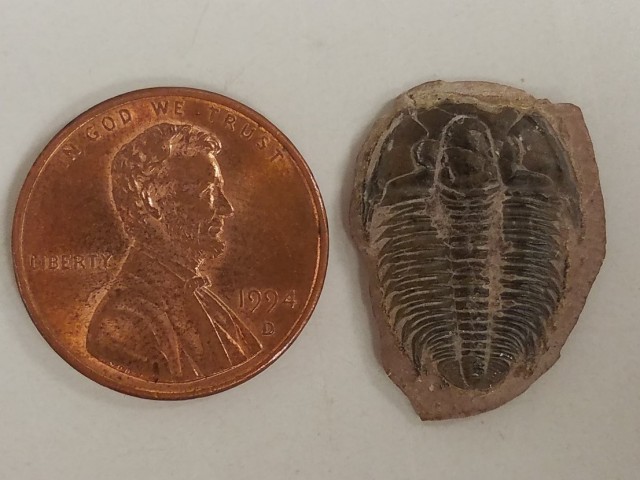
“Elrathia kingi,” the small square of paper declares. Regal yet a bit mysterious, the Latin name on the museum-issue label conjures Tolkien. From an unlidded box small enough to hold a wedding ring, I remove a chalky gray pebble. Its minute weight slides easily through my fingers; it seems as inconsequential as a penny. But it is not hard to see what gives this iota of stone its value. As if sculpted in bas-relief, a pair of tiny eyes peek out of a crescent-shaped head. Thin ridges of a segmented body, symmetrically paired about two fine center lines, taper to a tail. Each detail is delicately edged in violet. It is a fossil trilobite, an extinct relative of the horseshoe crab.

Penny next to a trilobite fossil, both are approximately the same size.
The trilobite Elrathia kingi.

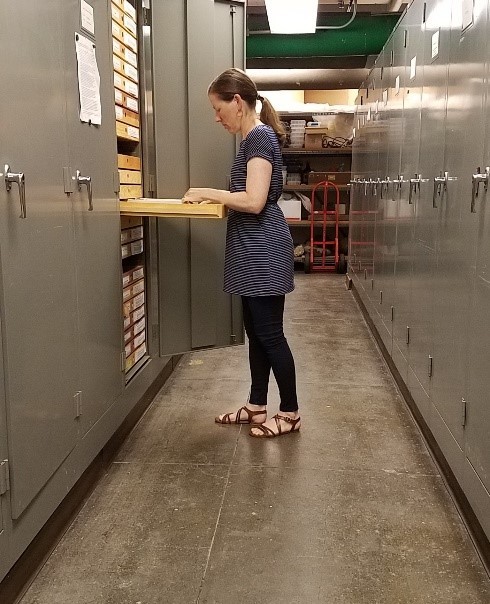
But she is a humble beauty who lives a secret life. She is found behind the scenes in the Section of Invertebrate Paleontology (IP). In the fluorescent-lit museum basement, Elrathia kingi idles quietly in a long drawer with dozens of equally elegant companions. It is just one of thousands of drawers shelved in rows upon rows of gray metal cabinets. The cabinets stand silently at attention, protecting their specimens from dust, light, and heat while awaiting further orders.

More than 800,000 fossil marine organisms call the IP lab home. Collected from all over the world, they range in age from several thousand to almost a billion years old. Four thousand of these specimens have been featured in over 400 peer-reviewed publications. But others have never been studied in detail and hold valuable “dark data,”¹ ² undocumented information useful for studies about extinction³ and climate change.⁴ These data are central to the future advance of the science of paleontology and geology.⁵

Woman looking through a drawer in a large cabinet.
Suzanne Mills working with the collections.

As a part-time Collection Assistant, I help bring this “dark data” to light. My main tools are a laptop and a microscope. When I examine a trilobite, or fossil “bug,” under the microscope, I look for characteristics that verify the biological classification, based on what is written on the fossil’s label. Further information recorded on the label about the geologic layer and location where it was found helps to validate the scientific value. I verify all this information in professional peer-reviewed publications. Finally, I enter the data I glean into a new digital database and develop charts and graphs to summarize it. This is the beginning of highlighting the IP collection’s “dark data.”

The task of bringing more than three-quarters of a million IP specimens to light is daunting. My colleagues and I bow our heads to that number and acknowledge that it is far more than a life’s work. But we persist, hoping to help the world see the value of Elrathia kingi and her ancient ocean companions, one fossil at a time.

Suzanne Mills is a Collection Assistant in the Section of Invertebrate Paleontology at Carnegie Museum of Natural History. Museum employees are encouraged to blog about their unique experiences and knowledge gained from working at the museum.

Citations:

1. California Academy of Sciences. 2018. Scientists quantify the vast and valuable finds stored on museum shelves: Quantifying “dark data” in fossil collections is a call to arms; heralds a digital revolution. ScienceDaily. https: /www.sciencedaily.com/releases/2018/09/180920102122.htm (accessed July 21, 2021)

2. Thiers, Barbara, John Bates, Andrew C, Bentley, Linda S, Ford, David Jennings, Anna K, Monfils, Jennifer M, Zaspel, James P, Collins, Manzour Hernando Hazbón, and Jyotsna L, Pandey. 2021. Implementing a Community Vision for the Future of Biodiversity Collections. BioScience, Volume 71, Issue 6, June. Pages 561–563.  https://doi.org/10.1093/biosci/biab036 (accessed July 23, 2021)

3. Casey, M. M., E. E. Saupe, and B. S. Lieberman. 2021. The effects of geographic range size and abundance on extinction during a time of “sluggish” evolution. Paleobiology, 47:54-67.

4. Lawing, A. M. 2021. The geography of phylogenetic paleoecology: integrating data and methods to better understand biotic response to climate change. Paleobiology, 47:178-197.

5. The Unique role of the Curator in Palaeontology. Special Papers in Palaeontology, 22, 7-15.

Special thanks to Albert Kollar and Joann Wilson for their insightful comments.

Related Content

Smoking Fossils

The Giant Eurypterid Trackway

Ask a Scientist: What is a trilobite?

Carnegie Museum of Natural History Blog Citation Information

Blog author: Mills, Suzanne
Publication date: August 24, 2021

Share this post!

  • Share on Twitter Share on Twitter
  • Share on Facebook Share on Facebook
  • Share on Pinterest Share on Pinterest
  • Share on LinkedIn Share on LinkedIn
  • Share on Reddit Share on Reddit
  • Share via Email Share via Email

Share this post!

  • Share on Twitter Share on Twitter
  • Share on Facebook Share on Facebook
  • Share on Pinterest Share on Pinterest
  • Share on LinkedIn Share on LinkedIn
  • Share on Reddit Share on Reddit
  • Share via Email Share via Email

Filed Under: Blog Tagged With: invertebrate paleontology, paleontology, Science News, Suzanne Mills

  • « Go to Previous Page
  • Page 1
  • Page 2
  • Page 3
  • Page 4
  • Interim pages omitted …
  • Page 206
  • Go to Next Page »

sidebar

About

  • Mission & Commitments
  • Directors Team
  • Museum History

Get Involved

  • Volunteer
  • Membership
  • Carnegie Discoverers
  • Donate
  • Employment
  • Events

Bring a Group

  • Groups of 10 or More
  • Birthday Parties at the Museum
  • Field Trips

Powdermill

  • Powdermill Nature Reserve
  • Powdermill Field Trips
  • Powdermill Staff
  • Research at Powdermill

More Information

  • Image Permission Requests
  • Science Stories
  • Accessibility
  • Shopping Cart
  • Contact
  • Visitor Policies
One of the Four Carnegie Museums | © Carnegie Institute | Privacy Policy | Terms of Use | Accessibility
Rad works here logo