
• Skip to primary navigation
  • Skip to main content
  • Skip to primary sidebar

Carnegie Museum of Natural History

One of the Four Carnegie Museums of Pittsburgh

  • Visit
    • Buy Tickets
    • Visitor Information
    • Exhibitions
    • Events
    • Dining at the Museum
    • Celebrate at the Museum
    • Powdermill Nature Reserve
    • Event Venue Rental
  • Learn
    • Field Trips
    • Educator Information
    • Programs at the Museum
    • Bring the Museum to You
    • Guided Programs FAQ
    • Programs Online
    • Climate and Rural Systems Partnership
  • Research
    • Scientific Sections
    • Science Stories
    • Science Videos
    • Senior Science & Research Staff
    • Museum Library
    • Science Seminars
    • Scientific Publications
    • Specimen and Artifact Identification
  • About
    • Mission & Commitments
    • Directors Team
    • Museum History
  • Tickets
  • Give
  • Shop

wpengine

February 29, 2016 by wpengine

Discoverers Expedition Vilcabamba: The First Helicopter Flight

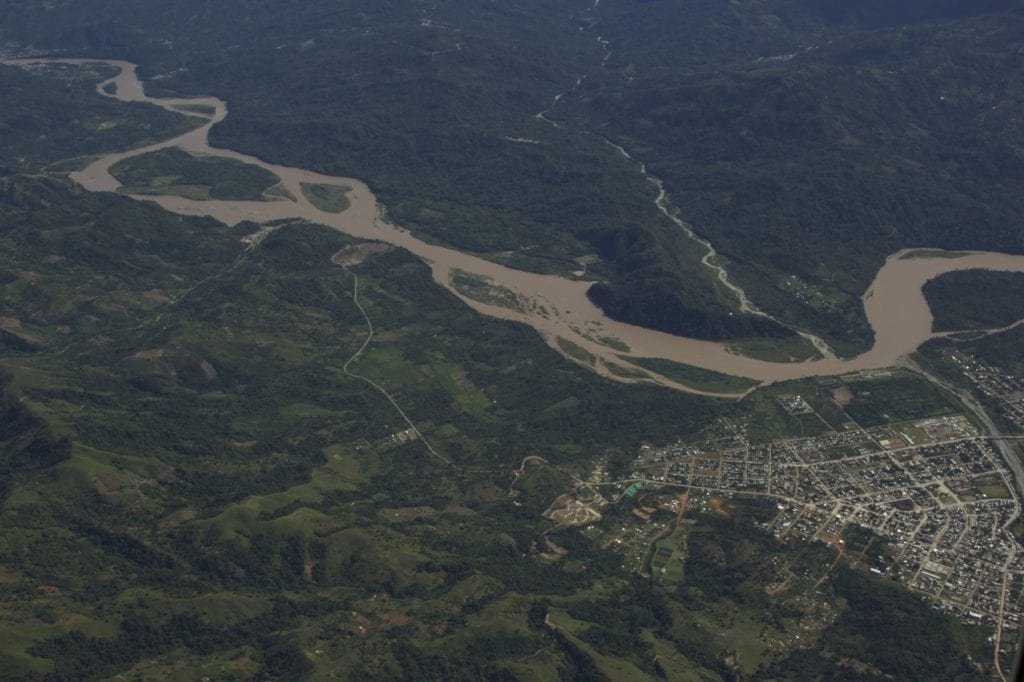
The town of Pichari at the shore of the Apurimac River. (Photo Maira Duarte).
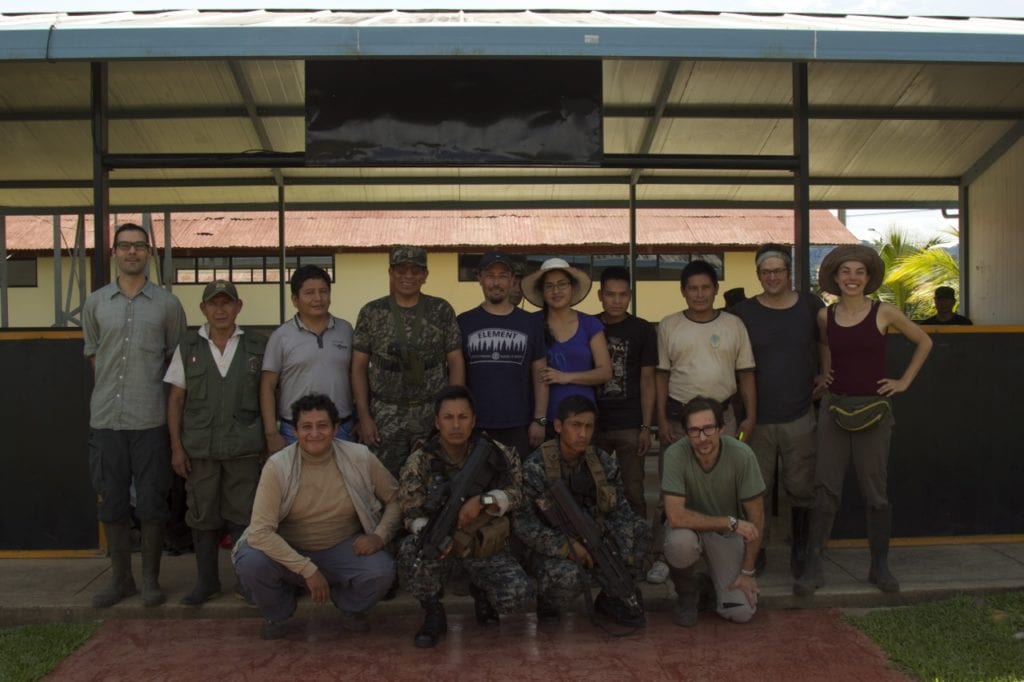
Right before our flight, the team poses with the General in command of the Special Commando of VRAEM. (Photo Maira Duarte).
Unloading the helicopter after a failed attempt to land into the heart of Vilcabamba. (Photo Maira Duarte).
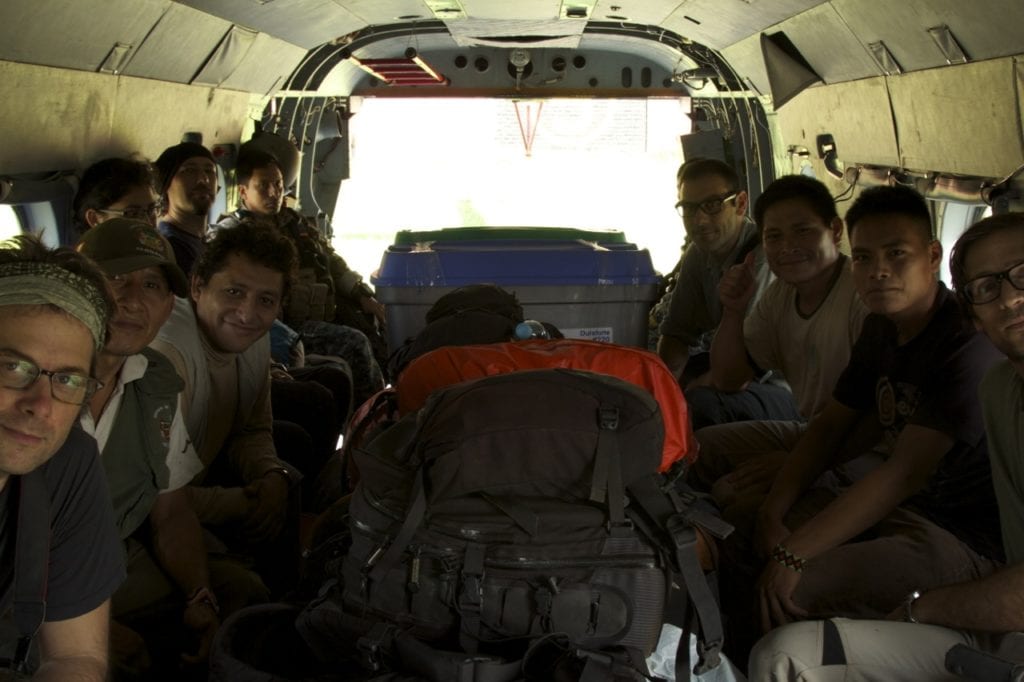
The whole team and two accompanying officers of the special forces inside the helicopter in our way to Vilcabamba. (Photo Maira Duarte).
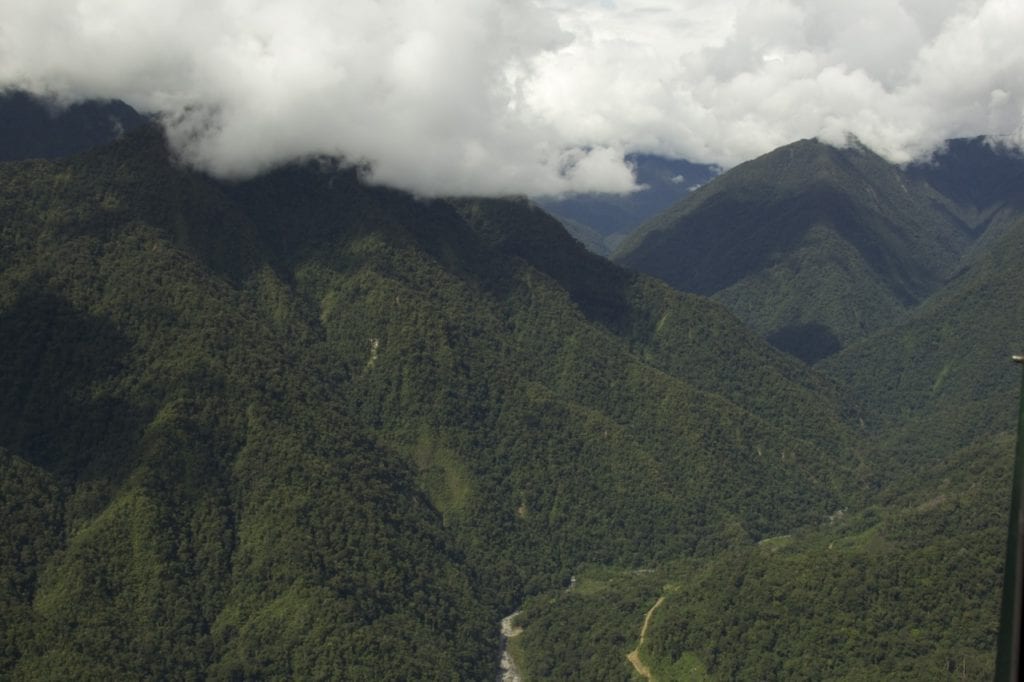
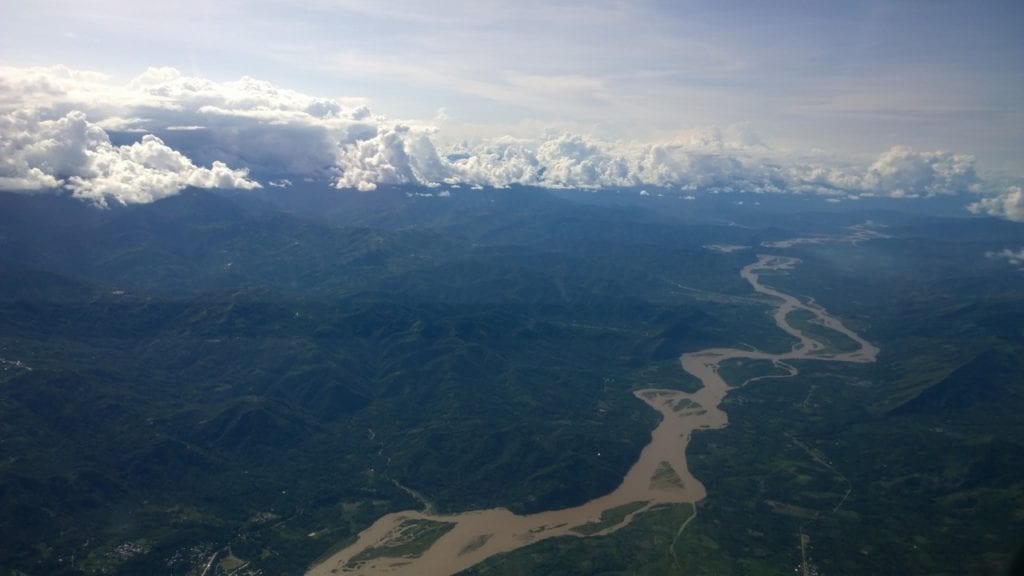
A view of the Pichari river valley and the clouds beyond which lies the area where we want to land. (Photo Maira Duarte).
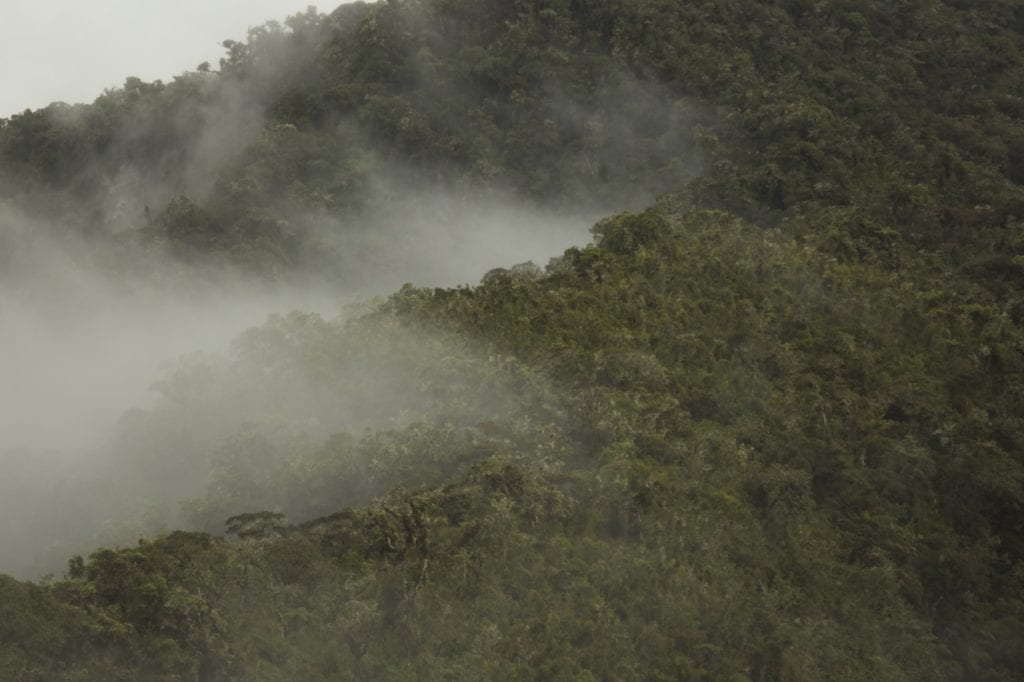
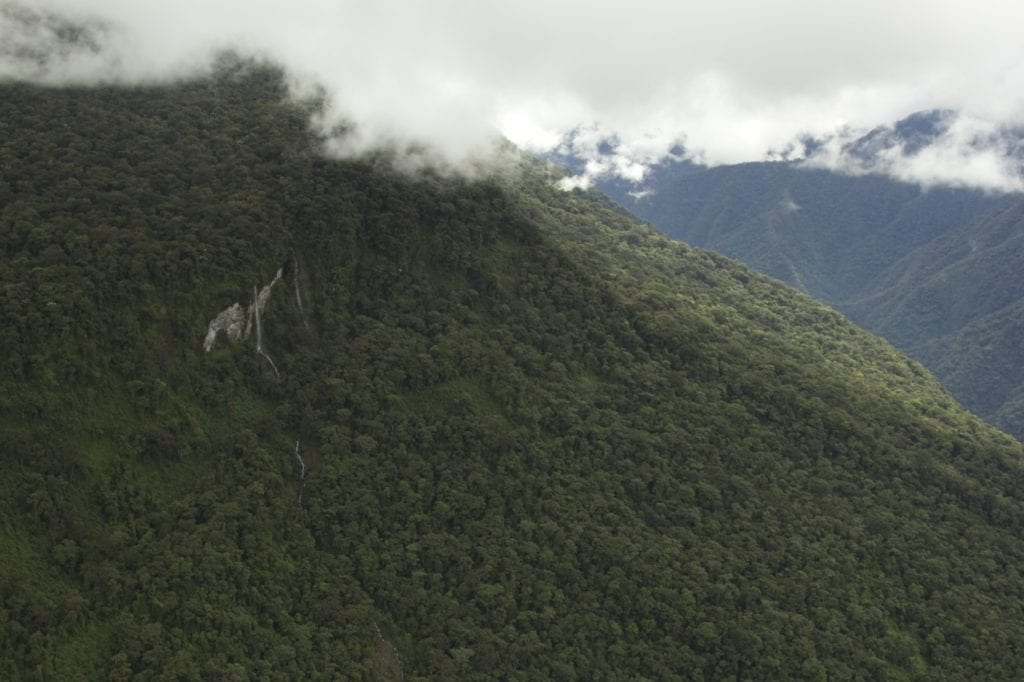
Waterfalls drain the wet cloud forests of Vilcabamba (Photo Maira Duarte).
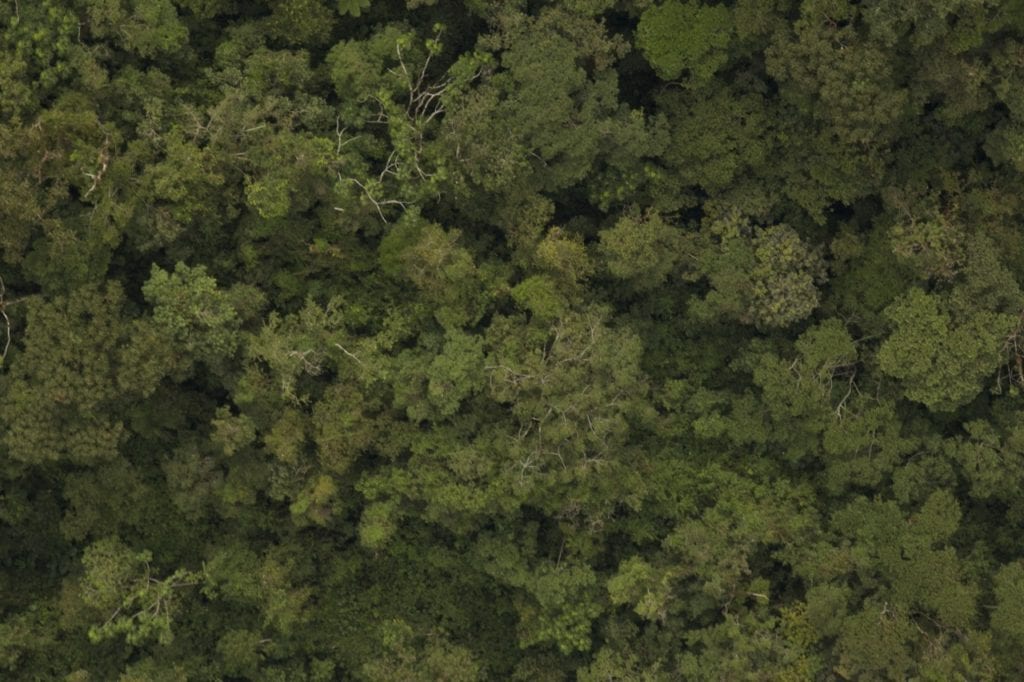
Vilcabamba forests from above. (Photo Maira Duarte).
The Apurimac valley meandering between the Andes and Vilcabamba. (Photo Juan C. Chaparro).

On Monday February 22, the expedition team flew from Pichari to the highest area of Vilcabamba on a military helicopter provided by the Special Commando of VRAEM. Although the weather conditions prevented us from landing, we enjoyed a majestic landscape of untouched forests, sharp ridges, waterfalls, and the huge Amazon rivers.

José Padial and his team of researchers are traveling in the remote Vilcabamba mountains of Peru in the pursuit of biodiversity research. He blogs and sends photos as often as possible capturing his expedition along the way.
Filed Under: Blog Tagged With: expedition, forests

February 28, 2016 by wpengine

Discoverers Expedition Vilcabamba 2016: Herps

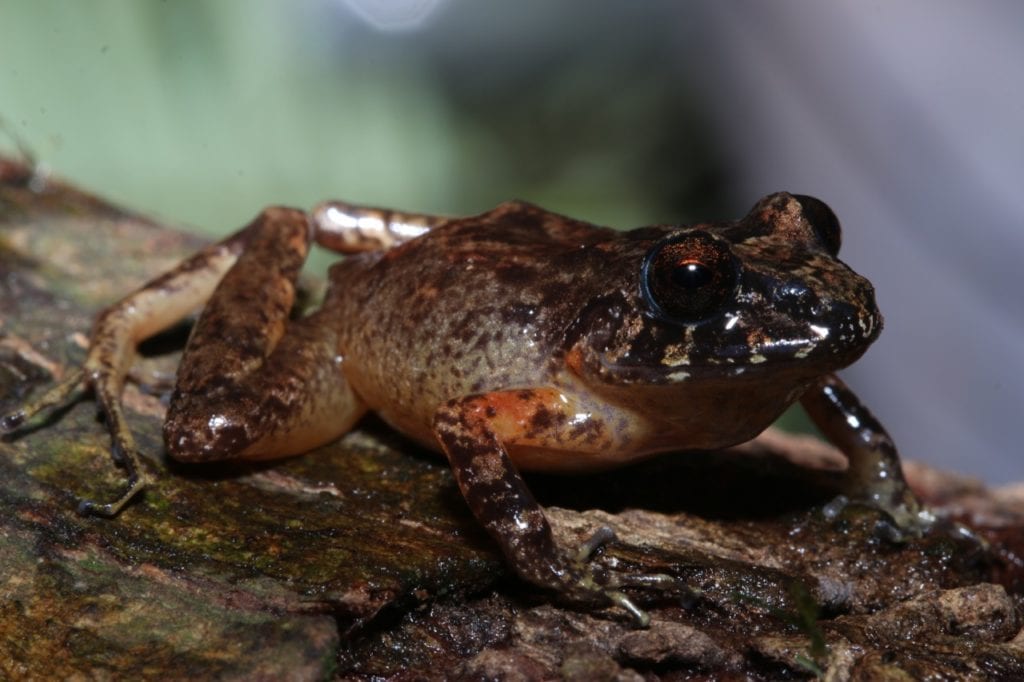
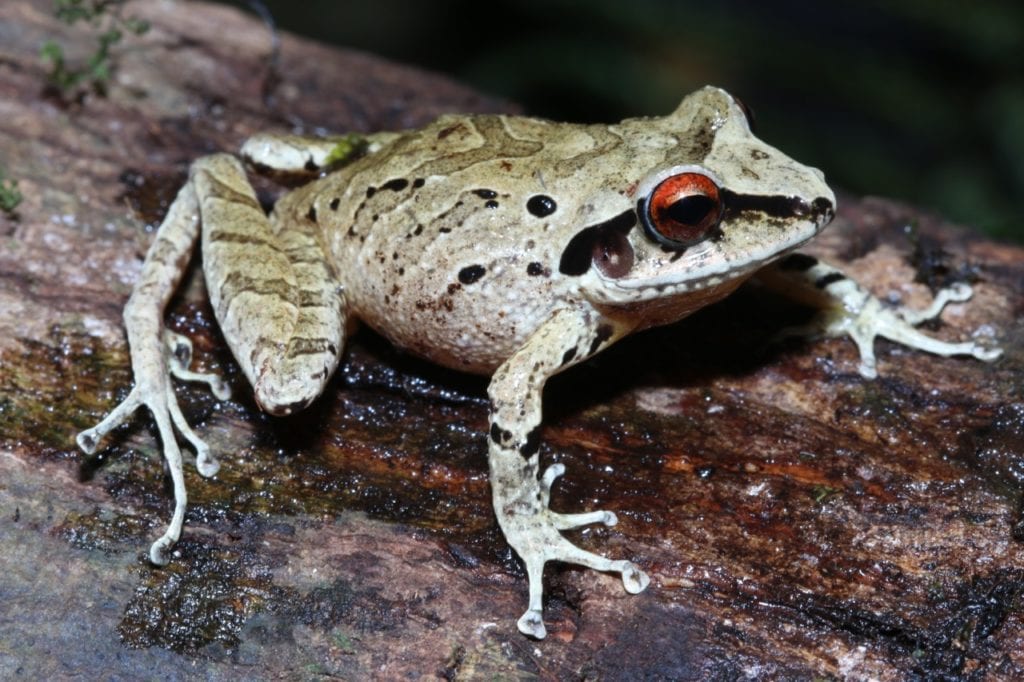
A new species of Pristimantis from the cloud forests of Vilcabamba. (Photo Giussepe Gagliardi).
A new species of Oreobates that inhabits the forest of Vilcabamba at above ca. 2,500 m (ca. 8,200 ft.). (Photo Giussepe Gagliardi).
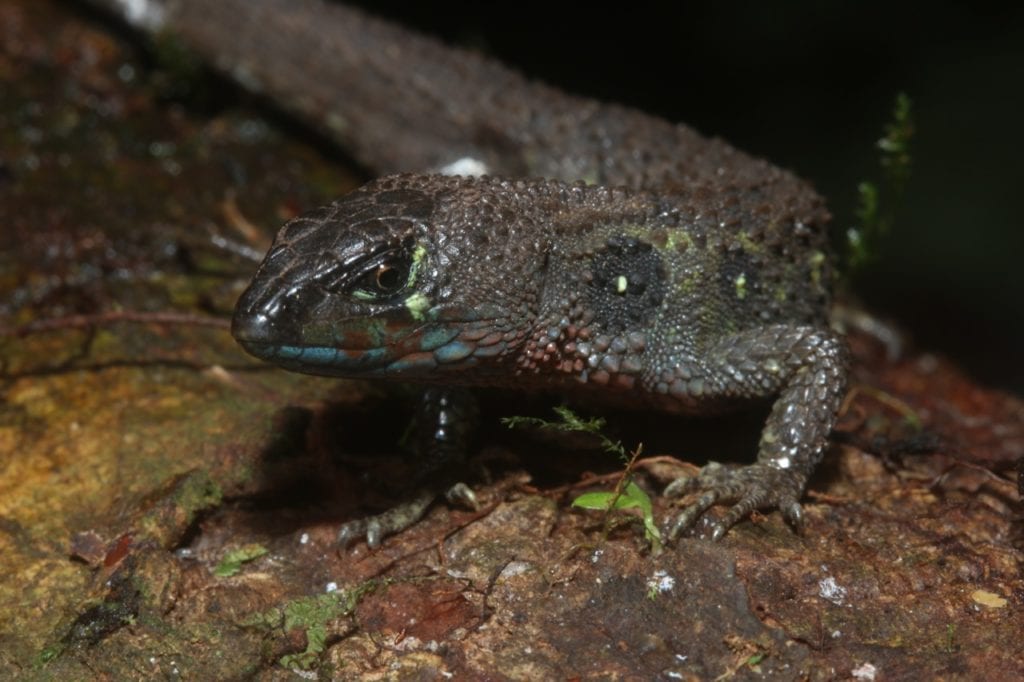
A male of Potamites montanus, a beautiful aquatic lizard that was recently discovered from an area near Vilcabamba at low elevations. (Photo Giussepe Gagliardi).
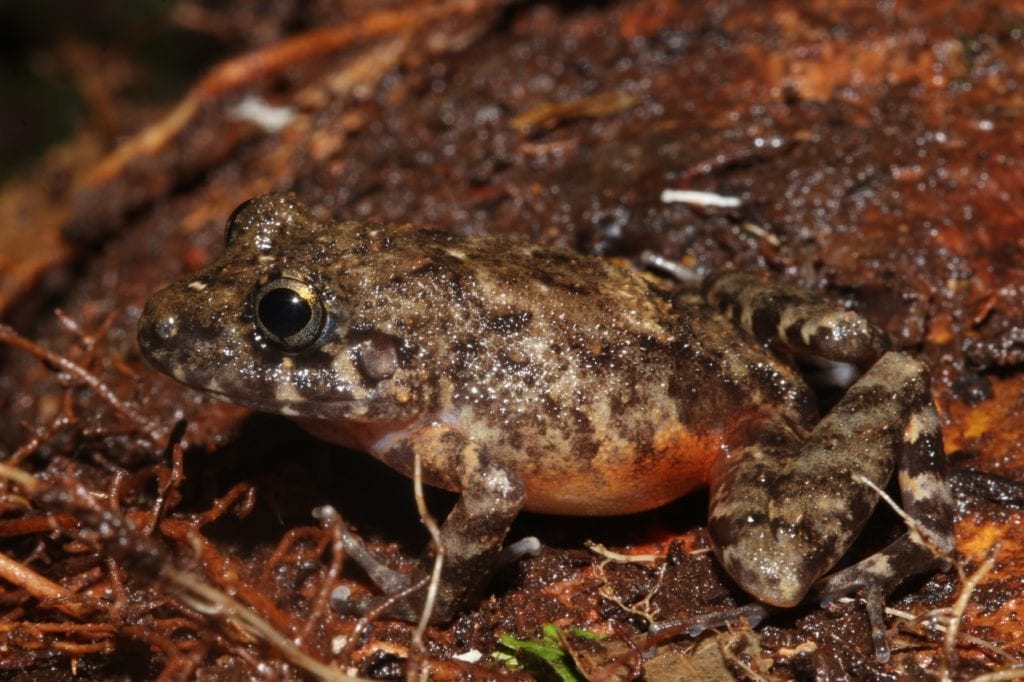
Oreobates lehri, a species discovered and named by Padial, Chaparro and others and so far only known for Vilcabamba. (Photo Giussepe Gagliardi).

We may have found at least 10 new species of amphibians and reptiles; however, pertinent comparisons with museums specimens and detailed analyses of the anatomy, mating call, and or DNA, will be required to analyze species diversity using collected samples. In no other expedition have we found so many new species.

José Padial and his team of researchers are traveling in the remote Vilcabamba mountains of Peru in the pursuit of biodiversity research. He blogs and sends photos as often as possible capturing his expedition along the way

Filed Under: Blog Tagged With: amphibian, biodiversity, fieldwork, frogs, new species, reptiles

February 27, 2016 by wpengine

Discoverers Expedition Vilcabamba 2016

A view of the neighborhood from our hotel room in Pichari. (Photo Maira Duarte).
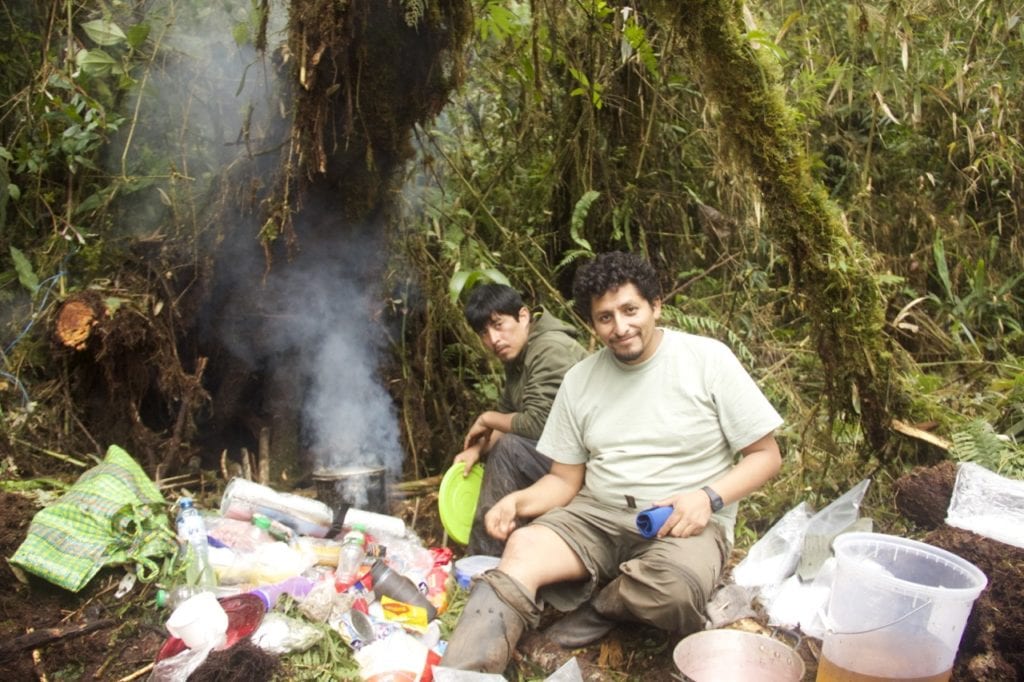
Herpetologists Roberto Gutiérrez and Victor Vargas organizing food and lighting the camp fire at Camp 4 (2760 m, 9,055 ft). (Photo Santiago Castroviejo).
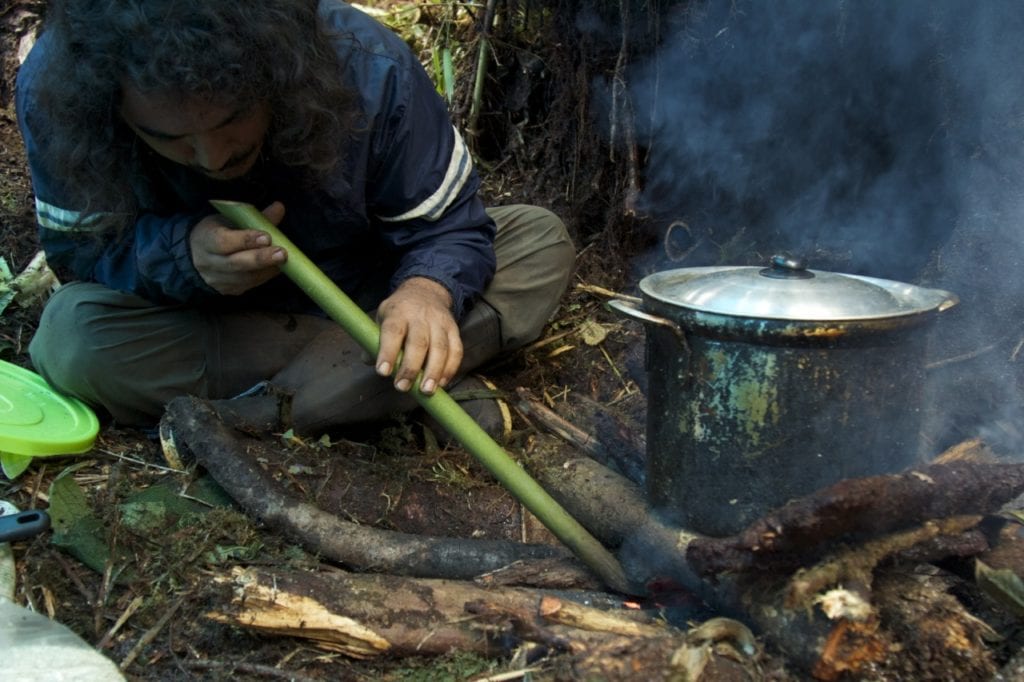
The hyper-humid conditions at Camp 4 (2760 m, 9,055 ft) make lightning a fire a difficult task. Here, Giussepe Gagliardi tries a traditional technique consisting in blowing through a bamboo cane. (Photo Santiago Castroviejo).
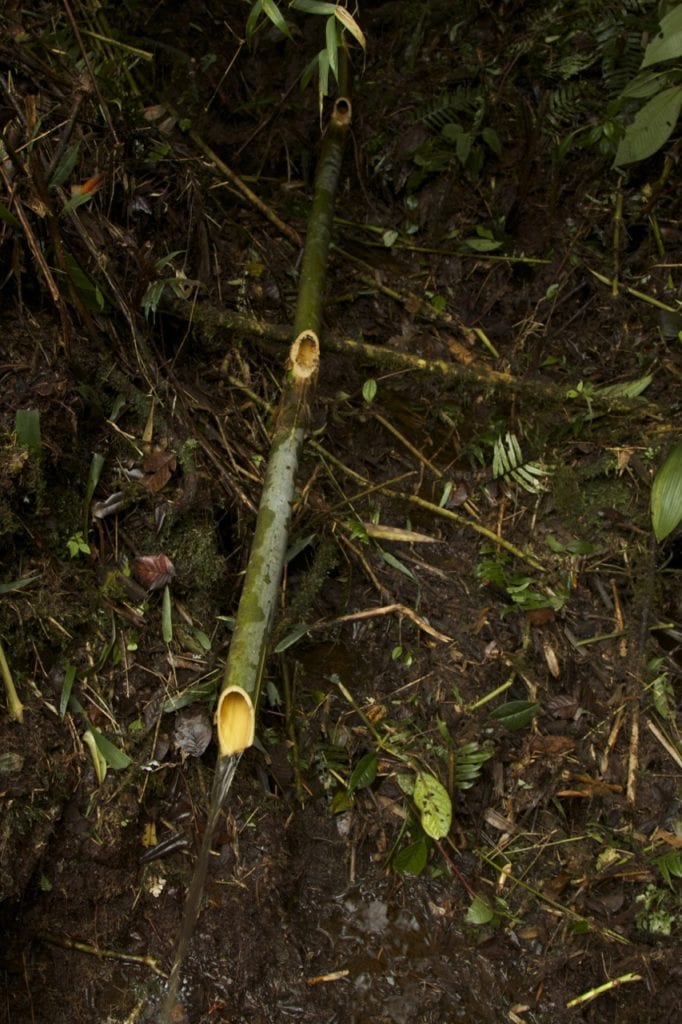
A luxury, our water source at Camp 4, just a few meters away from our tents and kitchen. (Photo Maira Duarte).
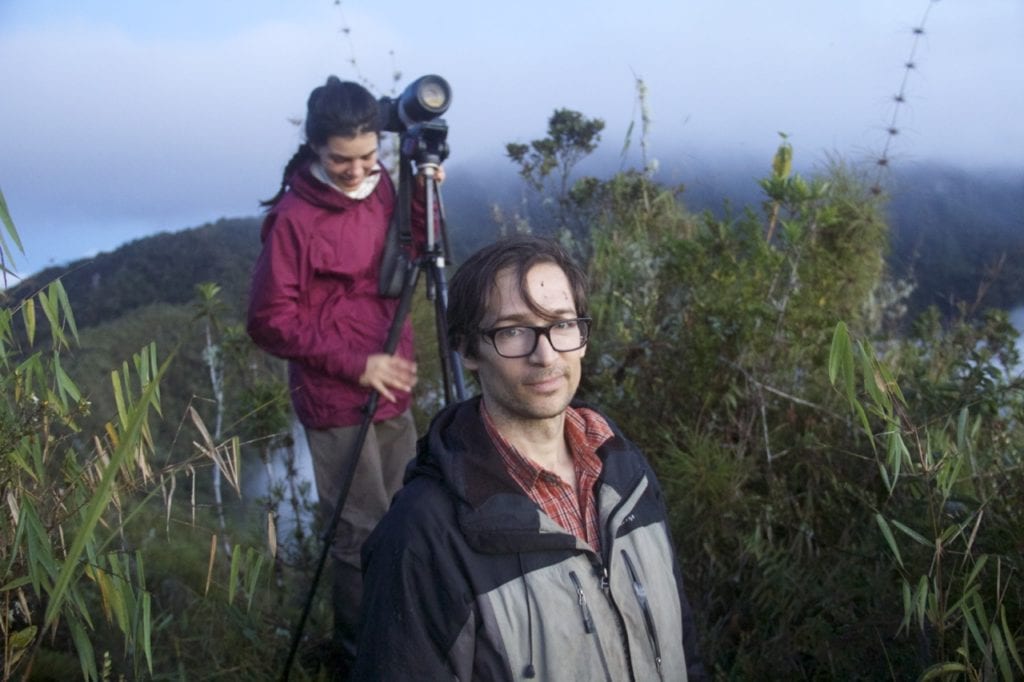
Journalist Andy Isaacson and herpetologists Dr. Santiago Castroviejo taking pictures from the ridge during one rare moment when the sky was clear. (Photo José Padial).
José Padial and Maira Duarte filming and taking pictures on the ridge at 2,850 m (ca. 9,300 ft). (Photo Santiago Castroviejo).
Journalist Andy Isaacson and José Padial on their descent from Camp 4 to Camp 1 on Friday Feb. 19th. (Photo Maira Duarte).
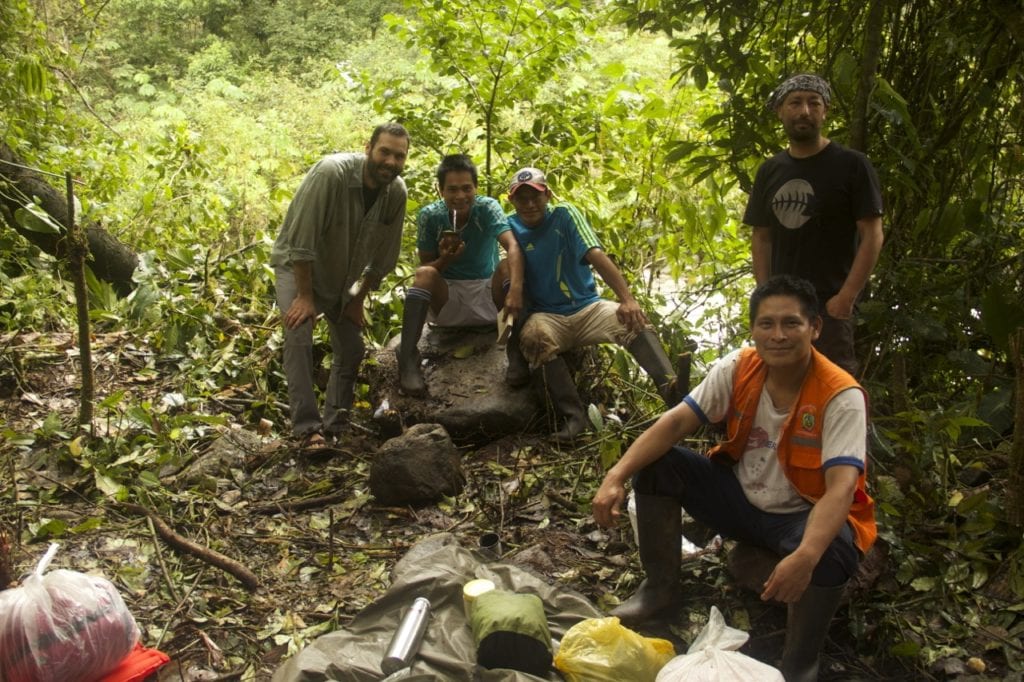
Good mood at Camp 1, after hiking down for nine hours. (Photo Giussepe Gagliardi).
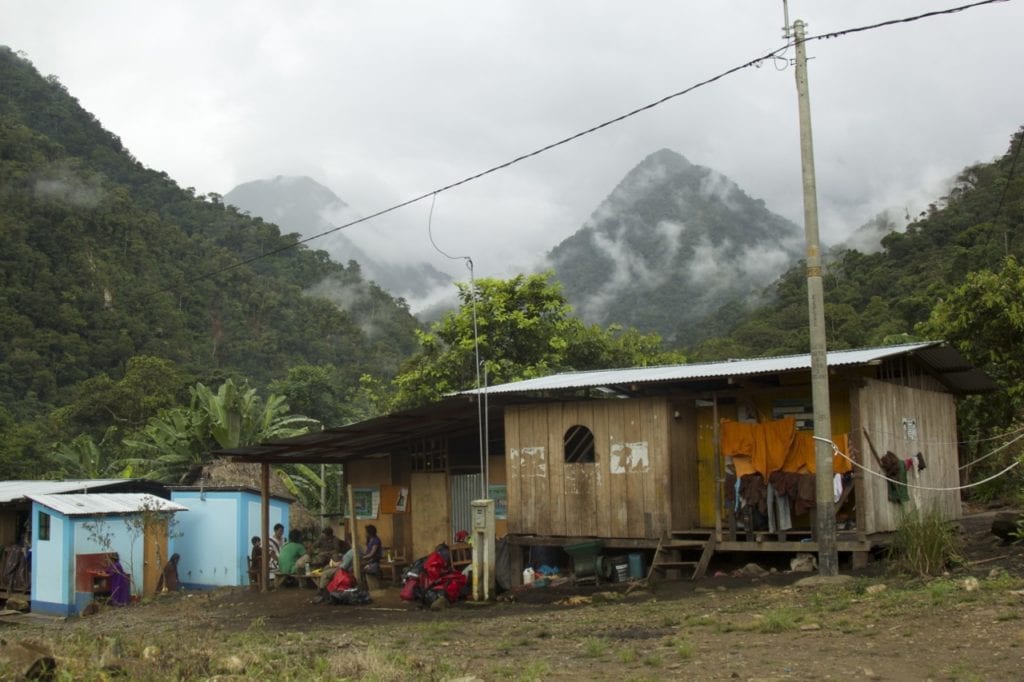
The Ashaninka community of Marontuari, the last outpost before reaching Pichari, with the ridge we descended, covered in clouds, on the background (the one on the left). (Photo Maira Duarte).
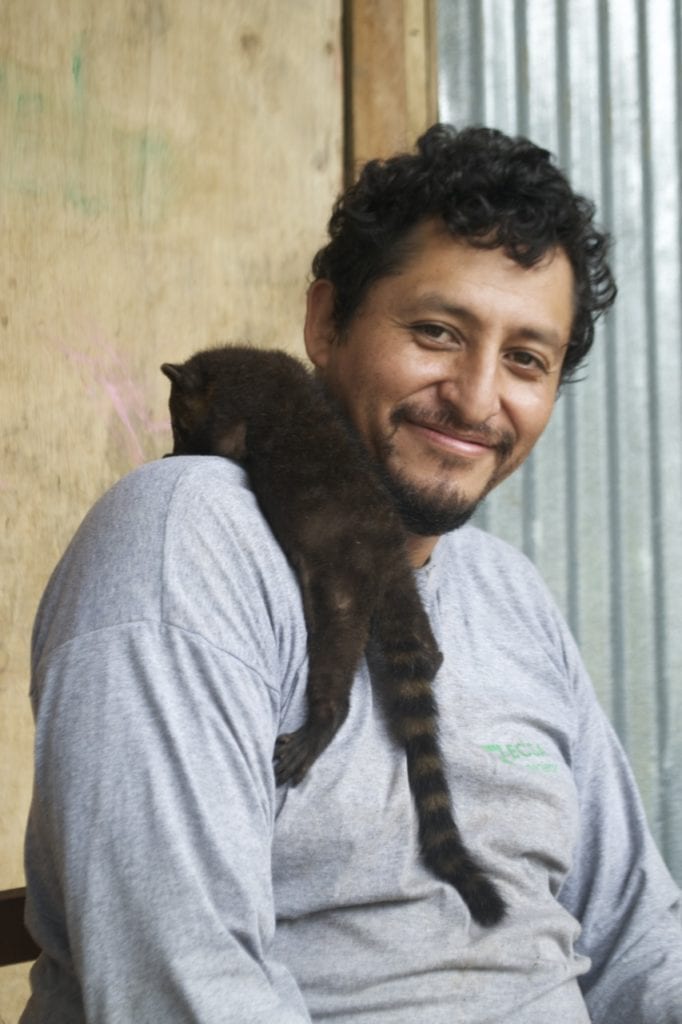
At Marontuari, Roberto Gutierrez plays with a baby coati. (Photo Santiago Castroviejo).

José Padial and his team of researchers are traveling in the remote Vilcabamba mountains of Peru in the pursuit of biodiversity research. He blogs and sends photos as often as possible capturing his expedition along the way.
 

Filed Under: Blog Tagged With: expedition, research, water

February 24, 2016 by wpengine

Discoverers Expedition Vilcabamba: Pichari

February 23, 2016

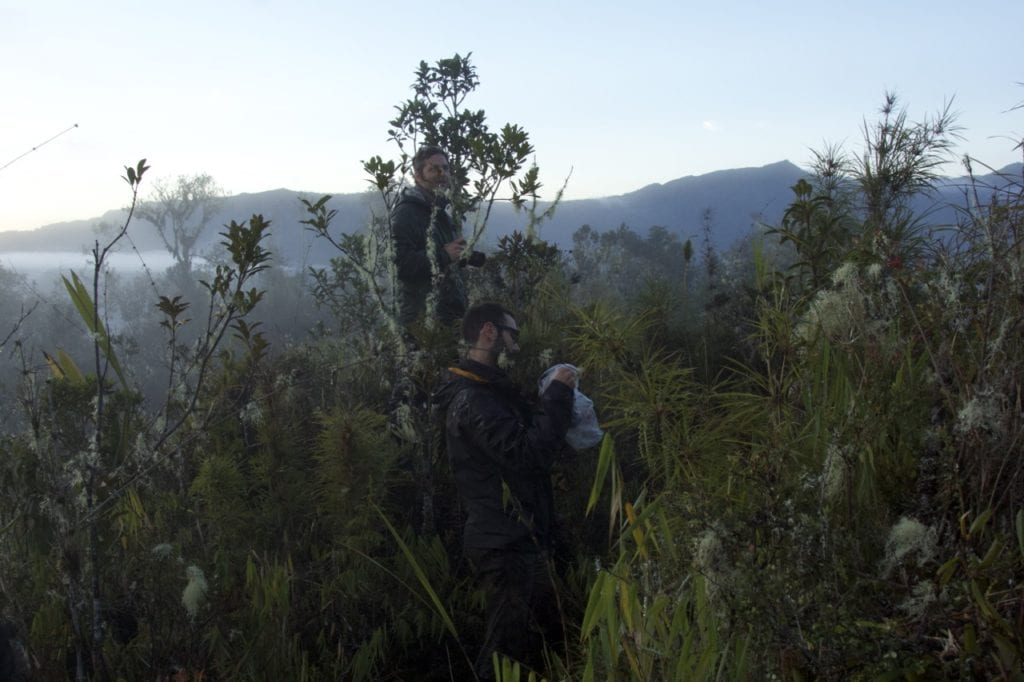
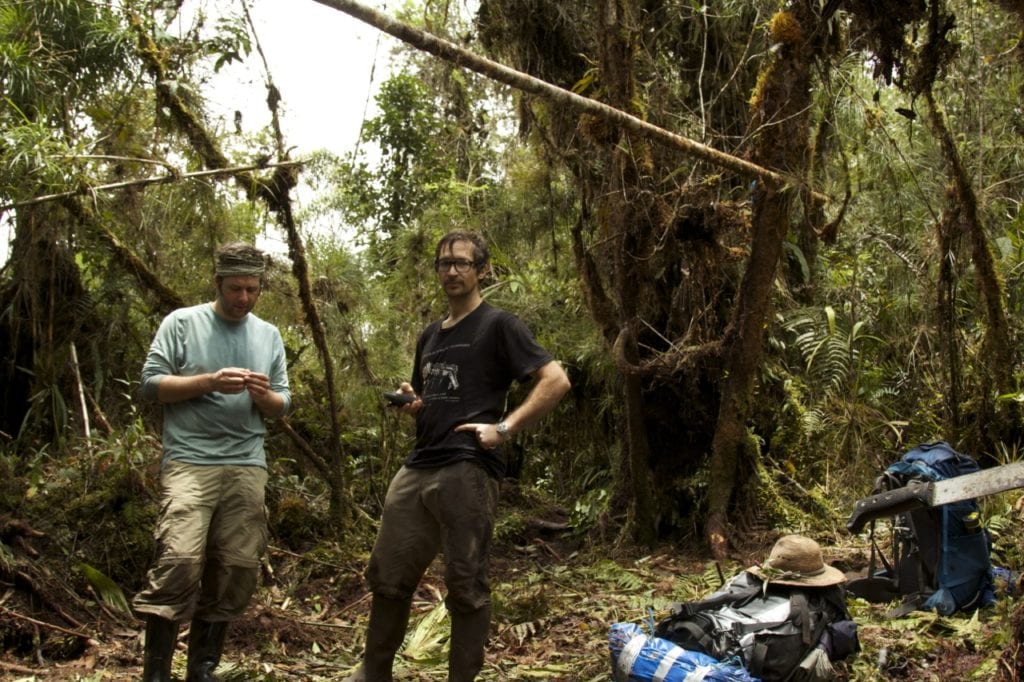
We are back in the town of Pichari. During the last week we opened a track along a zigzagging ridge and reached 2850 m. We moved from Camp 2 to Camp 4, stopping for a couple of nights at the small and muddy Camp 3. We spent our last days surveying a hyper-humid forest above 2500 m, before starting our descent on the morning of Feb 19th. We reached Pichari last Saturday, February 20th, at night. We were exhausted, but very happy for what we had accomplished.

During three weeks we have surveyed in detail all forested environments of the area: humid montane forests, cloud and elfin forests, and the bushy vegetation that grows on the upper part of upper ridges–known as “ceja de montaña” (mountain eyebrow). We have found many new and known species of amphibians and reptiles unique to each of these environments and made observations on their natural history. We also photographed and recorded them–for most species this is the first time they have been observed, photographed, or recorded in video or audio.

But the expedition is not over yet. Today we got into a ‘Mil M-17’ helicopter and flew from Pichari toward a point at 3800 m on the central and highest part of Vilcabamba, within Otishi National Park. Unfortunately, dense clouds prevented us from landing at our destination. Strong winds, heavy clouds, and electric storms are almost a constant on the upper part of Vilcabamba–During the three weeks we’ve been living on a ridge that leads to the upper part of Vilcabamba, only one evening was the sky open enough for us to have a clear view of the highest part of Vilcabamba.

In a few hours, at dawn, we will be at the headquarters of VRAEM’s Special Commando, waiting for our friendly military crew and for the right climatic conditions for us to fly again. A clear or even a partly clear sky is all we hope for as we are ready to go to bed after preparing our equipment.

I would like to take the opportunity to express our most sincere thanks to the authorities of the Peruvian organizations CODEVRAEM and SERNANP for supporting the Discoverers Expedition to Vilcabamba, and to the personnel of CEVRAEM military base for providing a crew, flying time, and an helicopter.

The Ridge

For three weeks, the team has been opening a track along a ridge from 1,200 (4,000 ft.) m elevation to 2,850 m (9,300 ft.), and surveying all the forested environments found along this altitudinal gradient.

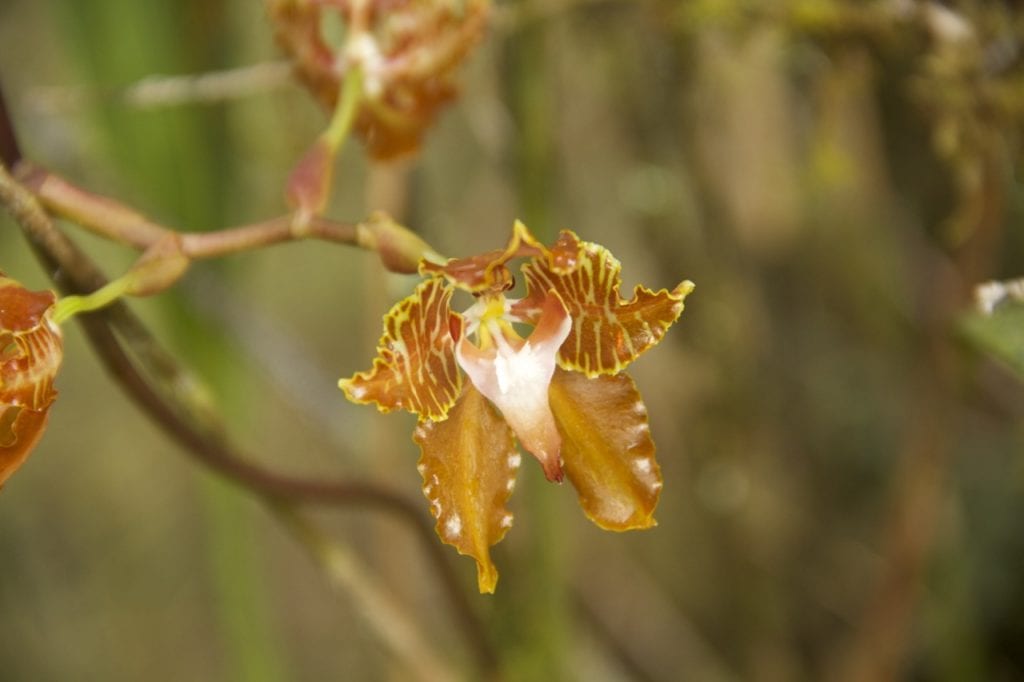
One more example of the great diversity of forms, shapes, and colors of the many species of orchids found along the ridge. (Photo Santiago Castroviejo).
One more example of the great diversity of forms, shapes, and colors of the many species of orchids found along the ridge. (Photo Santiago
Castroviejo).
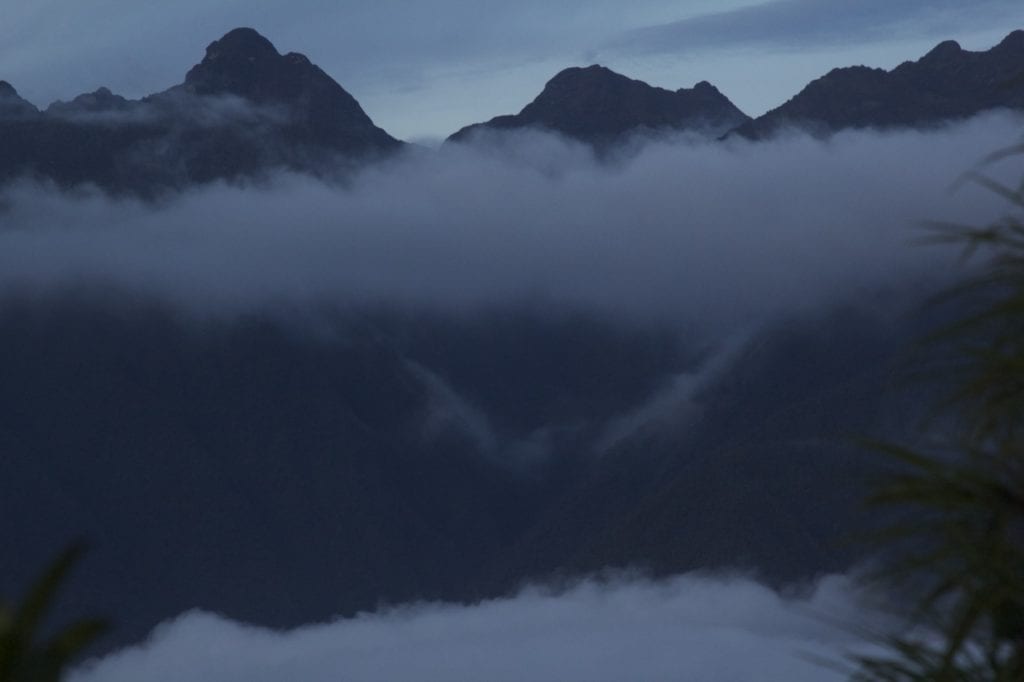
Our first view of the highest peaks of Vilcabamba at dusk from the ridge at 2,850 m near Camp 4. The highest peaks, still unnamed, project themselves beyond 4,100 m in elevation (ca. 13,400 ft). (Photo Jose Padial).
The cloudy, zigzagging ridge followed by our trail near Camp 4 at 2,850 m (ca. 9,300 ft). (Photo Jose Padial).
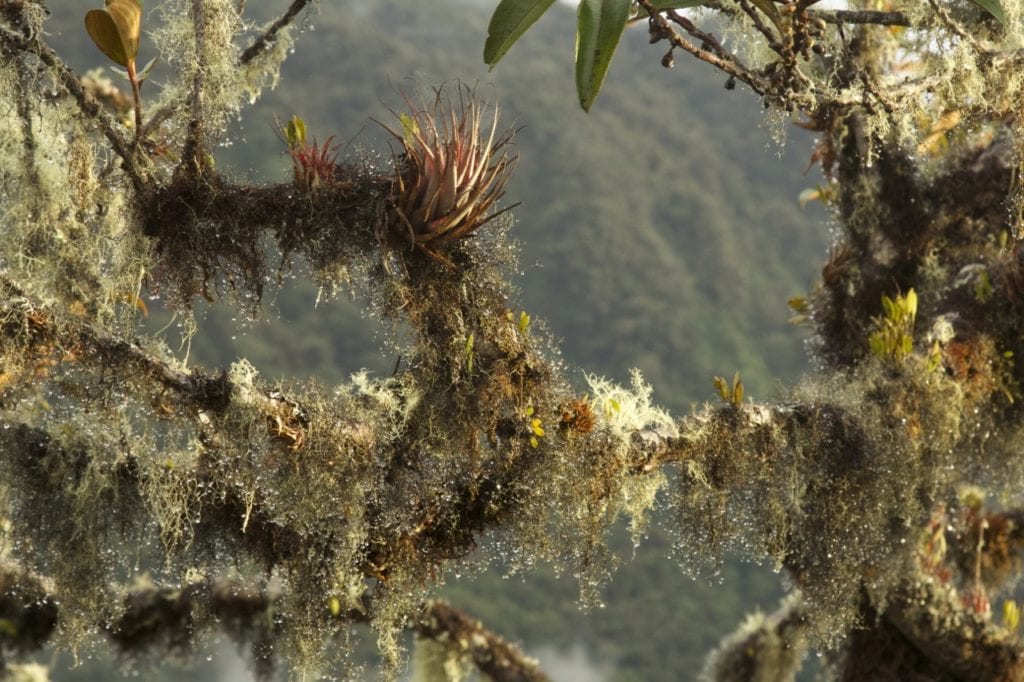
Lichens, mosses, and bromeliads, and orchids, cover every tiny bit of tree branches of the elfin forest along the ridge. (Photo Jose Padial).
Lichens, mosses, and bromeliads, and orchids, cover every tiny bit of
tree branches of the elfin forest along the ridge. (Photo Jose Padial).
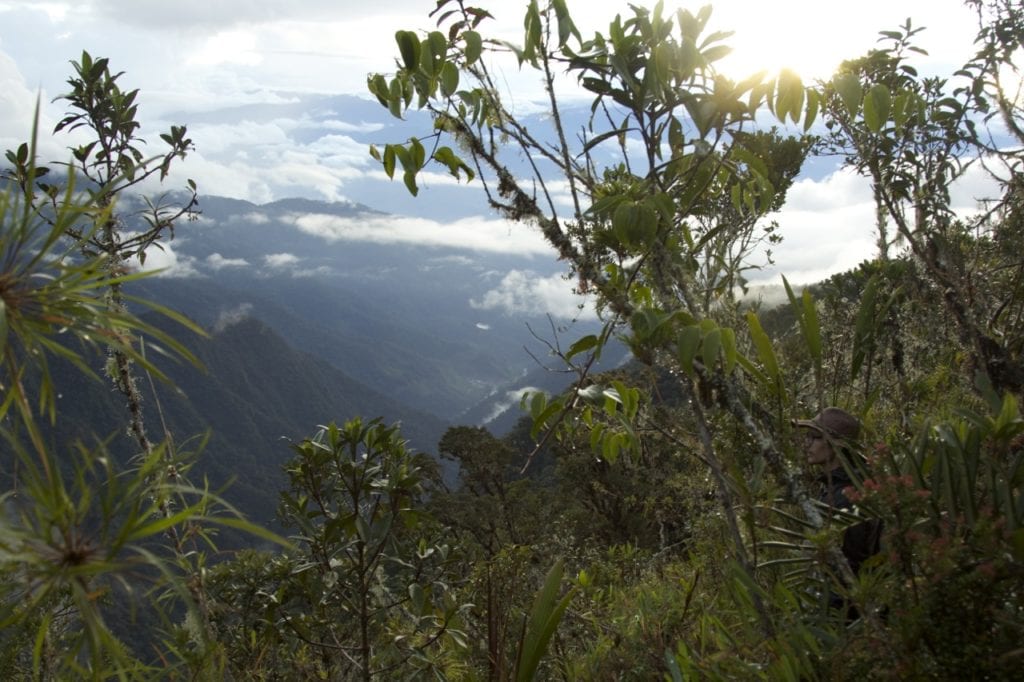
José Padial amongst the rich and bushy vegetation of the “ceja de montaña” (mountain eyebrow). (Photo Maira Duarte).
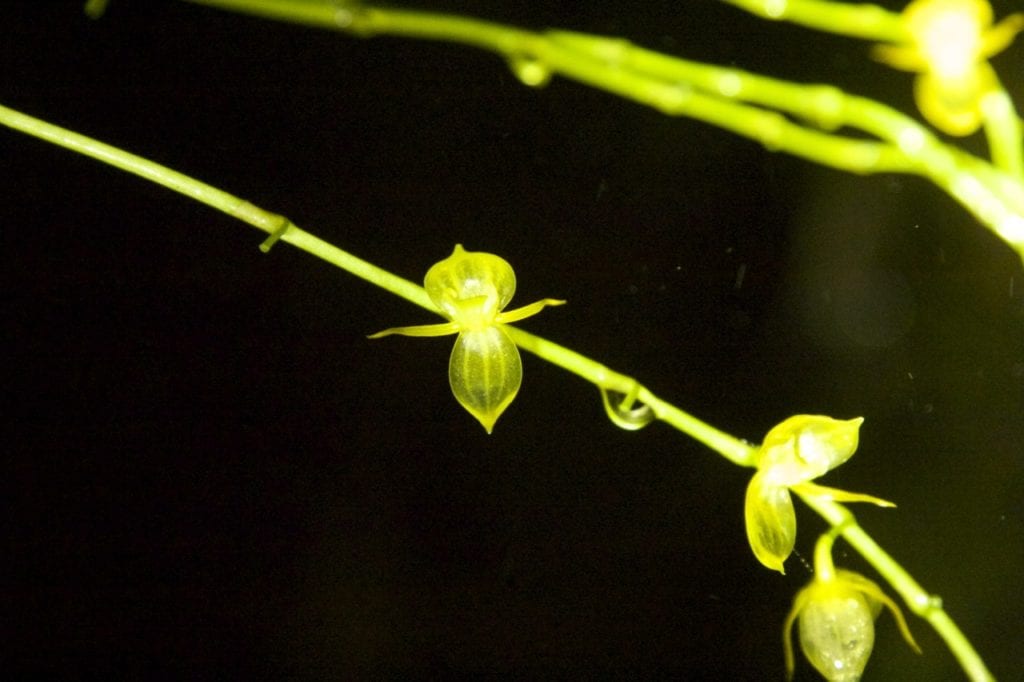
Transparent orchids, jewels in the forest. (Photo Maira Duarte).

Filed Under: Blog Tagged With: biodiversity, Botany, expedition, frogs

February 24, 2016 by wpengine

Snail eating snails: two species become one

Two land snails Land snail
by Timothy Pearce

The land snail family Haplotrematidae is widespread in North America. They are omnivorous, eating other snails as well as plants. Western North America hosts most (16 of 18) species of this family that occur in the
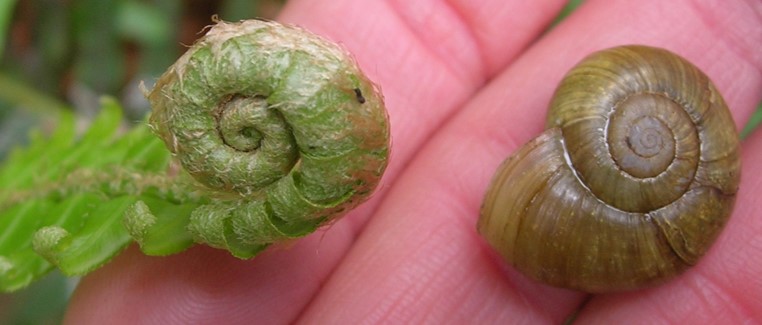
United States and Canada. Some species are found under sword ferns where they might gain protection by mimicking fern fiddleheads (see figure of Haplotrema vancouverense beside a fiddlehead).

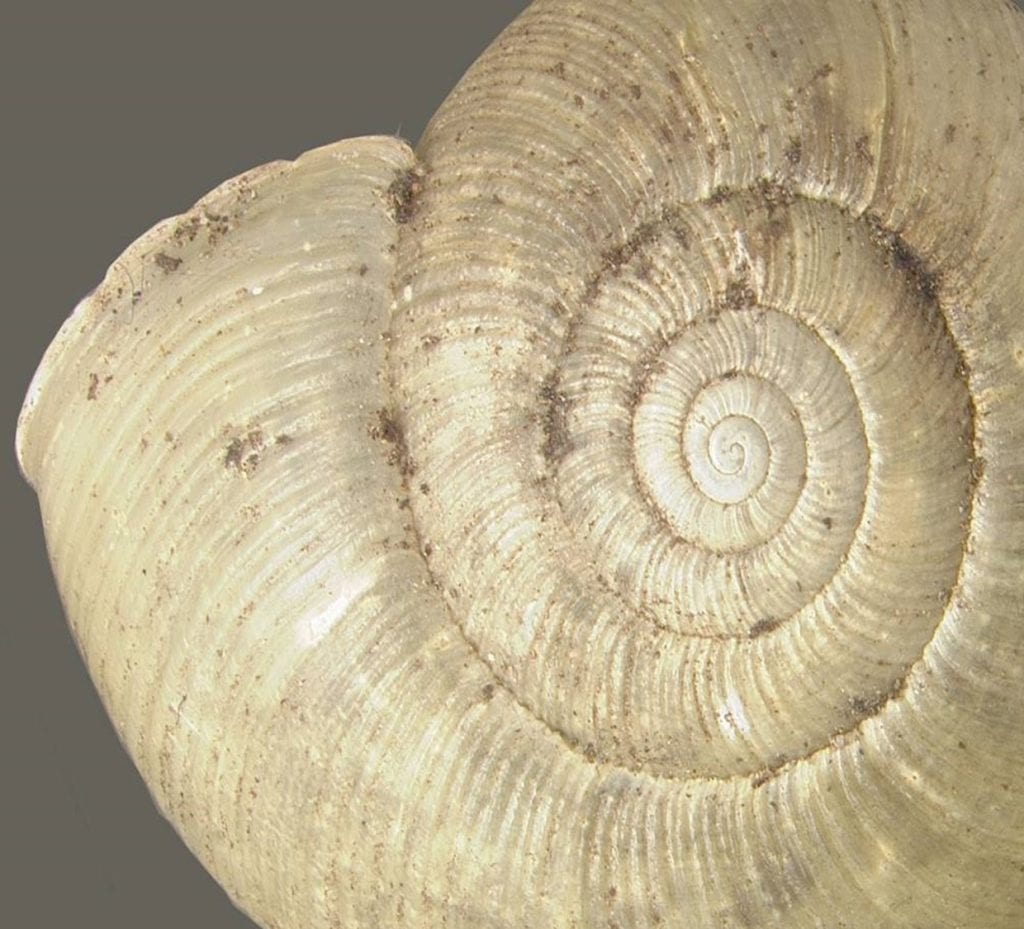
Two related species, Ancotrema hybridum and Ancotrema sportella, are sometimes difficult to separate. Their beautiful shell sculpture includes ridges radiating outward like bicycle spokes, and finer spiral grooves cutting across the tops of the ridges, looking like beads (see figure of Ancotrema with beaded sculpture). The beaded sculpture extends to the end of growth in A. sportella, but the sculpture becomes smooth on the last, largest whorl in A. hybridum. They are easy to tell apart until you find one that is smooth on only half, or a quarter, of the last whorl.

Two things made us suspect that they might really be one species. First, some shells were difficult to classify. Second, the ranges of both species coincide from northern California to Alaska.

To address whether they are two species or one, we examined 311 museum specimens. If they are two species, we expected to see a two-humped curve (bimodality) in amount of smooth sculpture on the last whorl. We expected
many specimens without smooth sculpture at the end, many specimens with smooth sculpture on the entire last whorl, and very few specimens having smooth sculpture on just half the last whorl.

Instead, we saw continuous variation, with no hint of bimodality. That result is consistent with their really being one species. Furthermore, we discovered on every shell the sculpture became smooth around whorl number 5. If shell growth stopped before whorl 5, then it resembled A. sportella. If it grew beyond whorl 5 before becoming adult, then it gained the smoother sculpture of A. hybridum.

Next, we looked for reproductive differences. When new species arise, reproductive structures are sometimes the first to change. These changes might help individuals to recognize the correct mate. We found no consistent differences in the reproductive parts.

These (and most land snails) are hermaphrodites (one individual is both male and female), so we know we were not looking at male – female differences. Also, we knew we had adults only because the upper lip dips
downward at the end of growth, so we were not comparing adult – juvenile features.

Finding continuous variation in the feature traditionally used for separating the two species, no differences in the reproductive parts, coincidental geographical ranges, and discovering that the sculpture always
diminished about whorl 5, all led us to conclude that they are one species. A. sportella was named first, so by the law of priority, that is the name we will use.

Scientists get more glory for naming new species, not sinking a name as we did here, but this taxonomic cleanup work is important, too.

For more details, please review Pearce, T.A. & Fields, M.C. 2015. Shell and genital morphology fails to separate Ancotrema hybridum (Ancey, 1888) and A. sportella (Gould, 1846) (Gastropoda: Haplotrematidae). Malacologia, 59(1): 21-32.

Tim Pearce is assistant curator of mollusks at the Carnegie Museum of Natural History. He studies ecology and systematics of land snails.

Filed Under: Blog Tagged With: mollusks, snails, Tim Pearce

February 20, 2016 by wpengine

What’s in a name?

Galeopterus variegatus (flying lemur)
by John Wible

Once discovered, every organism on Earth ends up with a formal scientific name in addition to an informal common name. Sometimes those informal common names are used for more than one organism, such as squirrel or fox. That is why scientists give different squirrels and foxes formal scientific names so that the animals can be distinguished.

The scientific name, usually Latin or Greek derived, may tell us something. For example, Tyrannosaurus
rex
is Greek for ‘terrible lizard’ and Latin for ‘king.’ Common names are embedded in cultural traditions, have long histories, and may be downright confusing. Bat is one of my favorite examples. How did a flying mammal get to be called a bat? Isn’t a bat a piece of sports equipment in baseball and cricket? The Germans have a much better common name, Fliedermaus, which translates to ‘flying mouse.’

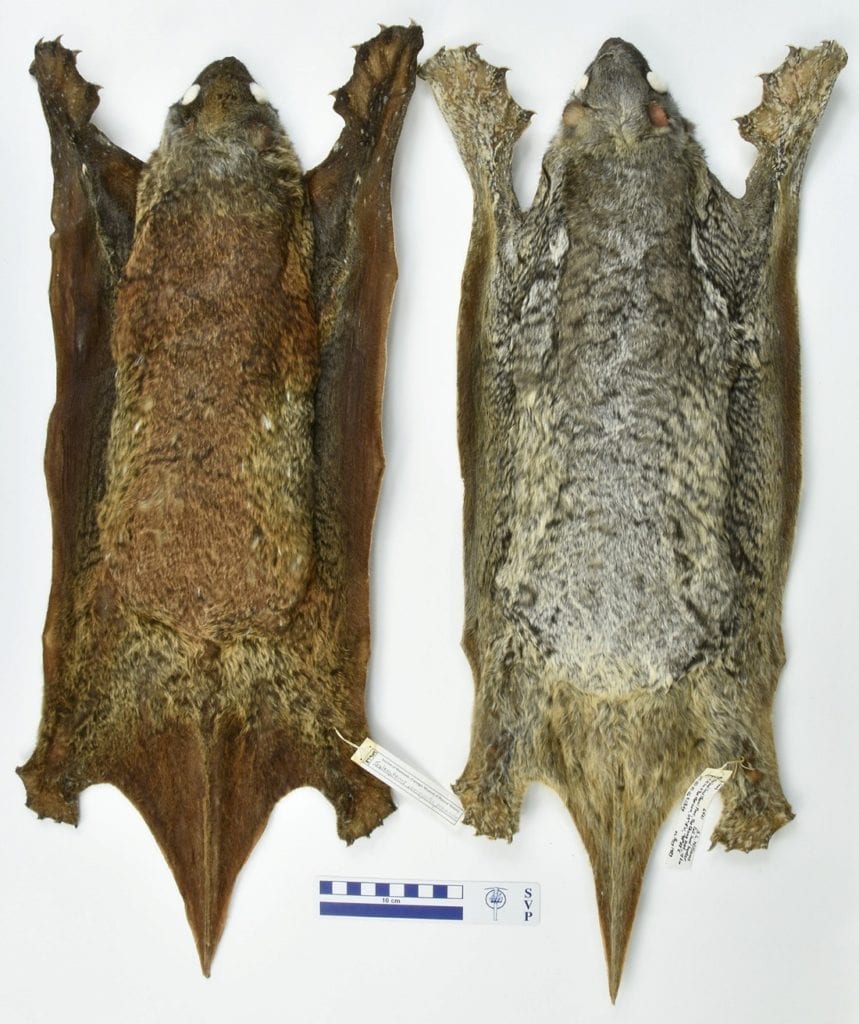
The cat-sized mammals pictured here are colorfully distinct male (left) and female (right) of the same species, with a scientific name of Galeopterus variegatus and with a very misleading common name … flying lemur. First, it does not fly! Instead, it glides, using its wing membrane to parachute between trees. Second, it is not a lemur! Lemurs are primates from Madagascar. Galeopterus variegatus is from Southeast Asia and is one of two species in the smallest mammalian order, Dermoptera, itself a very cool name that means ‘skin-wing’ in Greek. Luckily, the flying lemur has another common name, colugo, which doesn’t mean anything to me, although it may be a piece of sports equipment somewhere else.

John Wible, Ph.D. is Curator of Mammals. He studies the evolutionary history of mammals and lives in a house full of them, some human (wife and two sons) and some non-human (cats, rabbits, and guinea pigs).

Filed Under: Blog

  • « Go to Previous Page
  • Page 1
  • Interim pages omitted …
  • Page 203
  • Page 204
  • Page 205
  • Page 206
  • Go to Next Page »

sidebar

About

  • Mission & Commitments
  • Directors Team
  • Museum History

Get Involved

  • Volunteer
  • Membership
  • Carnegie Discoverers
  • Donate
  • Employment
  • Events

Bring a Group

  • Groups of 10 or More
  • Birthday Parties at the Museum
  • Field Trips

Powdermill

  • Powdermill Nature Reserve
  • Powdermill Field Trips
  • Powdermill Staff
  • Research at Powdermill

More Information

  • Image Permission Requests
  • Science Stories
  • Accessibility
  • Shopping Cart
  • Contact
  • Visitor Policies
One of the Four Carnegie Museums | © Carnegie Institute | Privacy Policy | Terms of Use | Accessibility
Rad works here logo