• Skip to primary navigation
  • Skip to main content
  • Skip to primary sidebar

Carnegie Museum of Natural History

One of the Four Carnegie Museums of Pittsburgh

  • Visit
    • Buy Tickets
    • Visitor Information
    • Exhibitions
    • Events
    • Dining at the Museum
    • Celebrate at the Museum
    • Powdermill Nature Reserve
    • Event Venue Rental
    • Gift Cards
  • Learn
    • Field Trips
    • Educator Information
    • Programs at the Museum
    • Bring the Museum to You
    • Guided Programs FAQ
    • Programs Online
    • Climate and Rural Systems Partnership
  • Research
    • Scientific Sections
    • Science Stories
    • Science Videos
    • Senior Science & Research Staff
    • Museum Library
    • Science Seminars
    • Scientific Publications
    • Specimen and Artifact Identification
  • About
    • Mission & Commitments
    • Directors Team
    • Museum History
  • Tickets
  • Give
  • Shop

wpengine

April 29, 2021 by wpengine

Water Bears: why my yard is like the moon

by Tim Pearce

Water bears, also known as tardigrades or moss piglets, are microscopic animals, famous for being cute and nearly indestructible. Looking a bit like the Michelin Man with eight claw-tipped legs, they can survive extreme highs and lows of temperature and pressure, and ionizing radiation. They are among the few animal groups that can completely dry up into suspended animation, a process called anhydrobiosis, and tardigrades can survive dried up for decades. Tardigrades have even survived in outer space (see “Tardigrade” in Wikipedia for more amazing feats).

Large ones can be 1 mm (1/25 inch) long, but most species are less than half that long. They live in many environments, and can often be found in moss and lichen. I even saw some tardigrades digesting the waste stream during an open house at ALCOSAN, Pittsburgh’s sewage treatment plant.

To practice for the 2021 City Nature Challenge, I looked for tardigrades in my back yard. I scraped up a bit of moss, shook it in some water, and then examined the settled material under a microscope. Within a few minutes, I had found the tardigrade illustrated here! I also saw nematodes and rotifers, two other common microscopic organisms. I just checked iNaturalist, and no tardigrades have been reported from Pittsburgh, so mine will be the first!
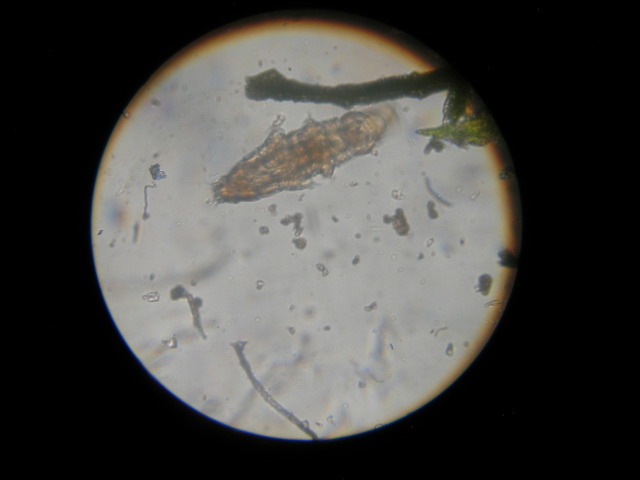
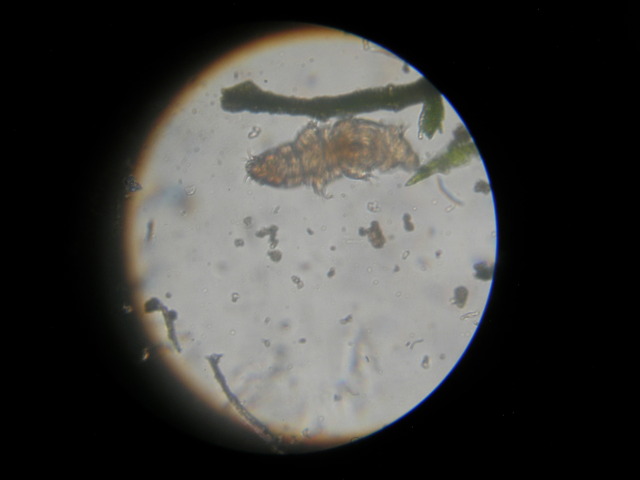
image of a tardigrade
Two shots of the tardigrade from my back yard in Squirrel Hill, Pittsburgh, 20 Apr 2021. Head is to the right. Animal is 0.6 mm long.

How does finding tardigrades make my yard like the moon? You might remember in 2019 an Israeli lunar probe crashed on the moon. Part of its payload was dehydrated tardigrades, which evidently have been scattered across a section of the lunar surface. My yard is like the moon because they both have tardigrades!

Examining the world of the small can yield big contributions. I encourage you to participate in the City Nature Challenge, and pay attention to tiny things.

Tim Pearce is the head of the mollusks section at Carnegie Museum of Natural History. Museum employees are encouraged to blog about their unique experiences and knowledge gained from working at the museum.

Related Content

Naturally Pittsburgh: Big Rivers and Steep Wooded Slopes

Go For a Color Walk

Evidence Counts for Absent Creatures – City Nature Challenge

Carnegie Museum of Natural History Blog Citation Information

Blog author: Pearce, Timothy
Publication date: April 29, 2021
Share this post!

  • Share on Twitter Share on Twitter
  • Share on Facebook Share on Facebook
  • Share on Pinterest Share on Pinterest
  • Share on LinkedIn Share on LinkedIn
  • Share on Reddit Share on Reddit
  • Share via Email Share via Email

Filed Under: Blog Tagged With: City Nature Challenge, mollusks, Science News, Tim Pearce

April 27, 2021 by wpengine

Naturally Pittsburgh: Big Rivers and Steep Wooded Slopes

by Patrick McShea

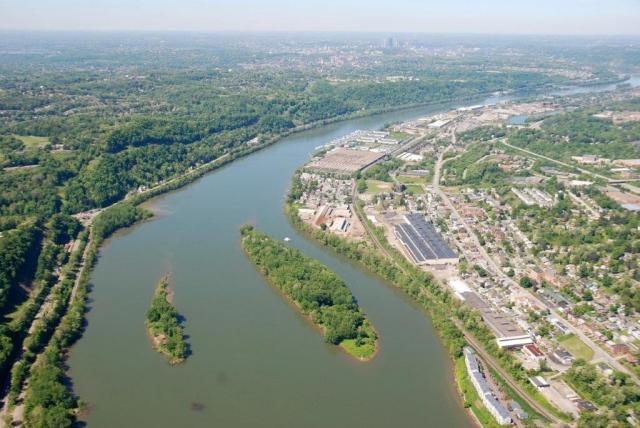
Pittsburghers are accustomed to seeing their hometown visually portrayed with its river-hemmed Downtown as a focal point. If your goal is to understand how the city’s geographical position in the greater landscape of southwestern Pennsylvania influences its wildlife and plant cover, images from different perspectives are useful.

Nine Mile Island, left, and Sycamore Island, right, in the lower Allegheny River. Photo credit: Allegheny Land Trust.

The picture above offers a bird’s eye view down the Allegheny River at a point nine miles upstream from the 325-mile-long waterway’s confluence with the Monongahela River. That much-photographed merge point, which creates the Ohio River, can be spatially located in the frame’s right-of-center background by the hazy blur of Downtown’s tallest buildings. The eye movement required to locate the spot involves tracing steep left-bank wooded bluffs from suburban Penn Hills and along the Pittsburgh neighborhoods of Lincoln-Lemington, Highland Park, and Morningside.

This simple exercise has relevance to the upcoming City Nature Challenge (CNC) for the visual attention it brings to the paired Pittsburgh physical features that keep nature in continual view here – our river system and the steep wooded hillsides carved by these big winding waterways and their tributaries.

Corridors Support Biodiversity

Both features create habitat corridors that serve to enrich the city’s biodiversity. The pair of Bald Eagles with a long record of nesting success on a wooded Monongahela River hillside in Pittsburgh’s Hays neighborhood are the most prominent evidence of this phenomena. Some of the fish they feed their young at this time of year can be regarded as additional evidence.

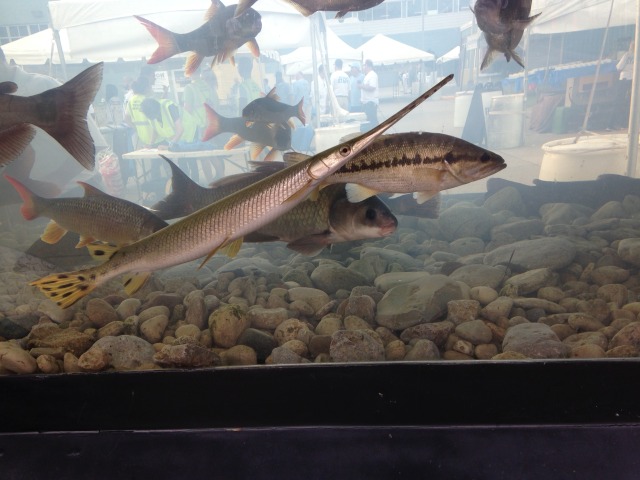
Pittsburgh fish displayed in tank set-up by the Ohio River Valley Water Sanitation Commission.

Many of the organisms supported by Pittsburgh’s wooded and flowing water corridors do not, however, lend themselves to the photo-documentation of the CNC. Some notable tree specimens and spring wildflower stands are found on high inaccessible ledges, river visits by diverse forms of waterfowl occur more frequently in the winter rather than the spring, and the predictability of the dozens fish species found in Pittsburgh’s waters challenges even the anglers who pursue them.

Importance of Incomplete Survey

The solution to this dilemma, as you record CNC observations and interpret the collective results, is simply to regard this important citizen science initiative as necessarily incomplete. In a recent BioScience paper co-authored by Nicole Heller, Curator of Anthropocene Studies at CMNH, analysis of urban biodiversity studies from all over the world pointed to the importance of enhancing public engagement and environmental stewardship. That is something that can certainly happen this year between April 30 and May 3, in a City Nature Challenge that recognizes some unavoidable bio-survey gaps.

Patrick McShea works in the Education and Visitor Experience department of Carnegie Museum of Natural History. Museum employees are encouraged to blog about their unique experiences and knowledge gained from working at the museum.

Citations for research paper:

“The Biological Deserts Fallacy: Cities in Their Landscapes Contribute More than We Think to Regional Biodiversity,” BioScience, Volume 71, Issue 2, February 2021, Pages 148–160,

Erica N Spotswood, Erin E Beller, Robin Grossinger, J Letitia Grenier, Nicole E Heller, Myla F J Aronson, The Biological Deserts Fallacy: Cities in Their Landscapes Contribute More than We Think to Regional Biodiversity, BioScience, Volume 71, Issue 2, February 2021, Pages 148–160, https://doi.org/10.1093/biosci/biaa155

Related Content

Go For a Color Walk

Teaching About Local Wildlife with the City Nature Challenge

Evidence Counts for Absent Creatures – City Nature Challenge

Carnegie Museum of Natural History Blog Citation Information

Blog author: McShea, Patrick
Publication date: April 27, 2021

Share this post!

  • Share on Twitter Share on Twitter
  • Share on Facebook Share on Facebook
  • Share on Pinterest Share on Pinterest
  • Share on LinkedIn Share on LinkedIn
  • Share on Reddit Share on Reddit
  • Share via Email Share via Email

Share this post!

  • Share on Twitter Share on Twitter
  • Share on Facebook Share on Facebook
  • Share on Pinterest Share on Pinterest
  • Share on LinkedIn Share on LinkedIn
  • Share on Reddit Share on Reddit
  • Share via Email Share via Email

Filed Under: Blog Tagged With: biodiversity, City Nature Challenge, Educator Resources, Pat McShea, Pittsburgh

April 26, 2021 by wpengine

Go For a Color Walk

by Jenise Brown

City Nature Challenge (April 29-May 2, 2022) is coming soon! Going for a “color walk” is one fun and easy way to participate no matter where you live.

What is a color walk you might ask? Each time you go for a walk, pick a single color—maybe green, white, red, pink, yellow. As you are out, keep your color in mind and look for it in the wild, noting plants, animals, and fungi that you see. When you find one (or evidence of one that you can’t see!), take a picture, and upload it to iNaturalist.

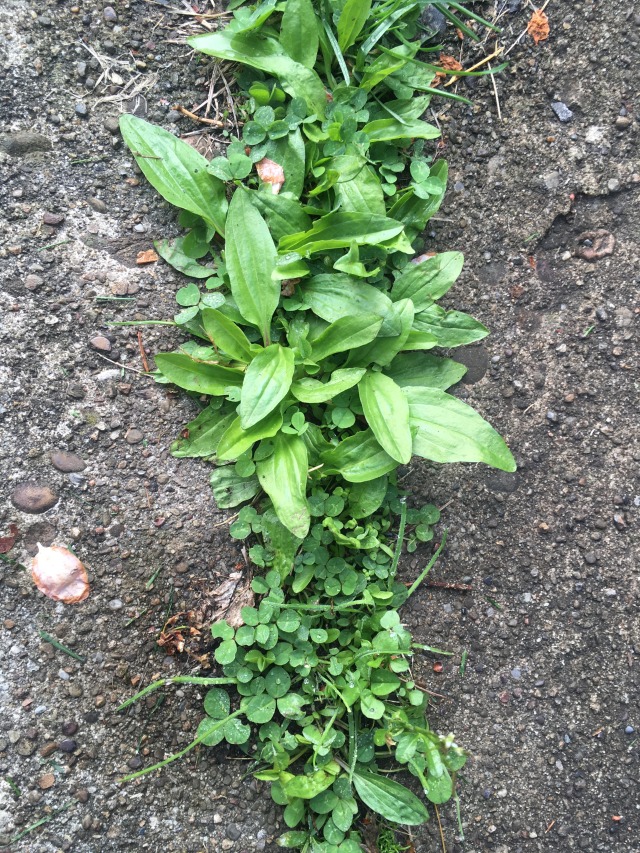
You’ll start to notice patterns among things you see in the color you’ve chosen, and you can make some hypotheses about the observations for each color, like what species you are likely to see in certain areas. Lots of plants are green, so a green color walk might help us to notice all of the plants that are around us, even in places like cracks in the sidewalk. Because the City Nature Challenge occurs during a season when Pittsburgh still experiences cold weather, this is probably the easiest color to find. In fact plants were the most common observations in Pittsburgh during the City Nature Challenge in 2020, with 9 of the top 10 observations being plants.

various green plants growing from a sidewalk crack
Look at the variety of green plants in this sidewalk crack!
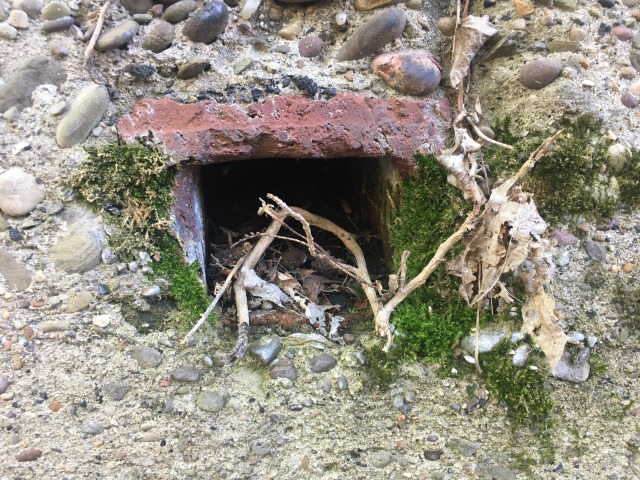
green plants growing on rock
Don’t forget to look for small patches of green in unexpected places.

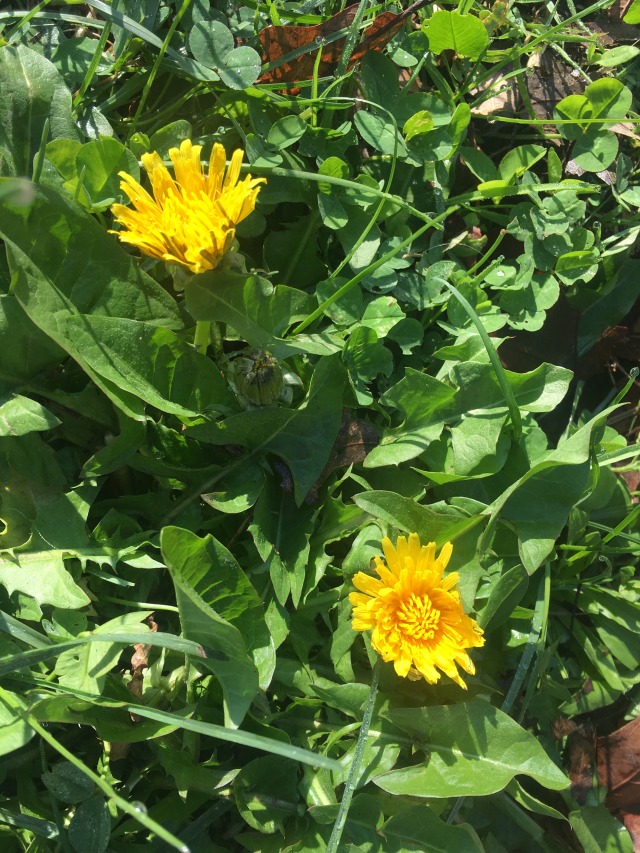
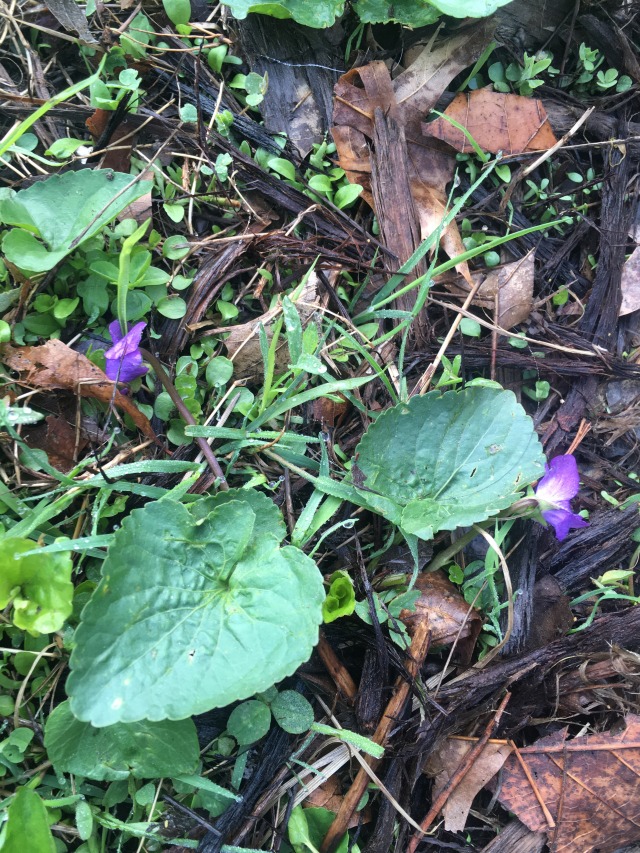
Yellow and purple are common colors in early spring flowers and might potentially switch your focus to exclusively flowering plants or even insects. City Nature Challenge tallies both the number of observations made and the species observed. Choosing one of these colors may help you to notice new and different species that you previously overlooked.

two yellow dandelions
This dandelion flower is one of the earliest yellows of the season.
two violets among leaves and sticks
Don’t miss violets! They have both both broad green leaves and small purple flowers.

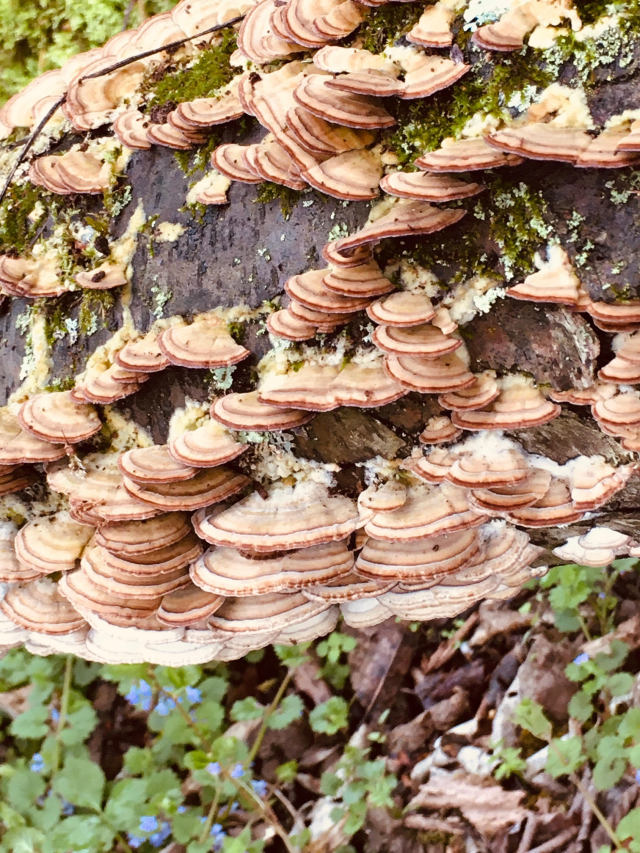
Don’t forget about the less flashy, but still abundant fungi. Orange, white, or even brown might help you to notice them growing on trees, dead wood, soil, and rocks. An added element to help find more fungi is to look for and pick up fallen branches and inspect stumps. You can read more about urban fungi observations in this NY Times article.

mushrooms and lichen growing on a log

There’s no need to leave the city or even go to a park to have a great color walk! You can plan a route near where you live and repeat it multiple times, picking a different color each time. You might be surprised by all of the things you never noticed before right in your own neighborhood!

Jenise Brown is a Museum Educator with Carnegie Museum of Natural History. Museum staff, volunteers, and interns are encouraged to blog about their unique experiences and knowledge gained from working at the museum.

Related Content

Reading Results: CNC Final Phase 2021

Field Guides: An Introduction

Water Bears: Why My Yard Is Like the Moon

Carnegie Museum of Natural History Blog Citation Information

Blog author: Brown, Jenise
Publication date: April 26, 2021

Share this post!

  • Share on Twitter Share on Twitter
  • Share on Facebook Share on Facebook
  • Share on Pinterest Share on Pinterest
  • Share on LinkedIn Share on LinkedIn
  • Share on Reddit Share on Reddit
  • Share via Email Share via Email

Filed Under: Blog Tagged With: City Nature Challenge, Education, Educator Resources, Jenise Brown

April 23, 2021 by wpengine

University of Michigan Helps Solve Century Old Fossil Mystery – Part 1: Stearns and Bayet. The Dispute

by Joann Wilson and Albert Kollar

“I am reluctantly, arriving at the opinion, that I am the victim of an imposition for which I hold you responsible.” –Frederick Stearns in a letter to Ernest Bayet, March 27, 1889

Frederick Stearns, date unknown. Permission of the University of Michigan Stearns Collection.

In 1903, Andrew Carnegie purchased the world-famous Bayet fossil collection for the Carnegie Museum. Since that time some invertebrates in the massive 130,000 specimen collection have been thoroughly studied, but the documents that arrived with the fossil shipment remained largely unexamined. Reasons for this neglect are understandable. The collection’s accompanying letters, lists, journals, and other documents were written primarily in French, German, and Italian, and in what has been described as “an impenetrable hand.”

Translation of the documents into English was a critical step in making them better known to researchers and the public. As part of Albert Kollar’s multiyear project to restudy the invertebrate portion of the Bayet Collection, that difficult task is ongoing thanks to volunteer Lucien Schoenmakers, a resident of the Netherlands.

The translated documents bring some life to the people behind the famous fossils, and our series begins with one of them, Frederick Stearns.

Which gets us back to the letter excerpted above. One wonders what Ernest Bayet thought in the spring of 1889 when he opened it. Bayet, who would become secretary to the cabinet of Leopold II, and Frederick Stearns of Detroit, Michigan, a retired pharmaceutical executive, business owner, and renowned fossil collector, had settled on a sizable trade deal. Stearns was to send over “1000 species of fossils” from the United States. In return, Bayet was to ship “5500 species of shells.”

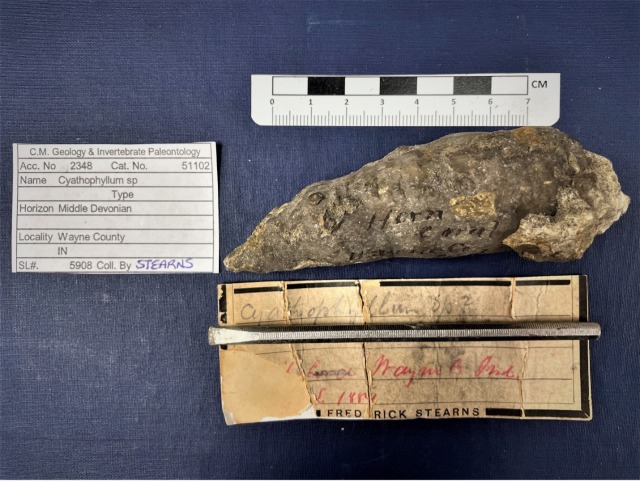
One of the Frederick Stearns fossils in the Bayet Collection at the Carnegie Museum of Natural History: Horn Coral, Cyathophyllum, CM# 51102. On the bottom is an original Frederick Stearns label that survived crossing the Atlantic Ocean twice.

Stearns had shipped his lot of fossils, but by spring of 1889, he had yet to receive a shipment from Bayet. Fuming, he wrote, “to obtain legal redress through the advice of the American Minister at Brussels. Failing in this I stand ready to spend 2500 francs or even 5000 francs if necessary, to advertise you, and your way of doing things to the Scientific World. In doing which I shall at least have the satisfaction of check mating any similar future operations of the sort with other persons as credulous of your honor and integrity.” In current figures, Stearns was willing to spend $15,000-$30,000.

Stearns ended, “with this for warning, I subscribe myself indignantly etc.” After this letter, no more correspondence is known to exist between the two men. Did Bayet send his lot? As part of Albert’s project to investigate the individuals behind the Bayet Collection, we wondered, was it possible to solve this mystery over a century later?

Research into Stearns revealed that he collected more than fossils and shells. Carol Stepanchuk, Collection Outreach Program Coordinator for the Stearns Collection of Musical Instruments at the University of Michigan, provided a valuable starting point. With her guidance, and a hunch that Stearns may have left his other collections to the University of Michigan, we reached out across the Ann Arbor campus to Jennifer Bauer, Research Museum Collection Manager at the University’s Museum of Paleontology. Jennifer added Taehwan Lee, the museum’s Mollusk Collection Manager, to the search. After many months, our story has a happy ending. Jennifer and Taehwan located over 5000 specimens in the U-M collections, donated by Frederick Stearns, with “Bayet” as collector. Thanks to museum collections records and the amazing team at U-M, we now know that Ernest Bayet did send his shells!

In Part 2 of our series, we will take a look at the unusual path that brought Frederick Stearns into contact with Ernest Bayet and fossil collecting. As John Carter, former Curator of the Section of Invertebrate Paleontology at Carnegie Museum of Natural history, once wrote about the Bayet Collection, “The best measure of the worth of this treasure trove, however, is not its size but its uniqueness. Many of the individual collections, all made in the nineteenth century, are essentially irreplaceable, because similar specimens from the same collecting localities are no longer available.”

Many thanks to the generous contributions of Carol Stepanchuk, Collection Outreach Coordinator for the U-M Stearns Collection of Musical Instruments, Joseph Gascho, Associate Professor at the U-M School of Music and Director of the Stearns Collection of Musical Instruments, Jennifer Bauer, Research Collection Manager at the U-M Museum of Paleontology, Taehwan Lee, Mollusk Collection Manager at the U-M Zoology Museum and volunteer Lucien Schoenmakers for meticulous language translation.

Joann Wilson is an Interpreter for the Education Department at Carnegie Museum of Natural History and Albert Kollar is Collections Manager for the Section of Invertebrate Paleontology. Museum employees are encouraged to blog about their unique experiences and knowledge gained from working at the museum.

Related Content

Behind the Scenes with the Baron de Bayet and L.W. Stilwell Collection, Part 1: Crossing the Atlantic with a Boatload of Fossils

Mary Anning: For the Love of the Blue Lias

Carnegie’s Cactus

Carnegie Museum of Natural History Blog Citation Information

Blog author: Wilson, Joann; Kollar, Albert
Publication date: April 23, 2021

Share this post!

  • Share on Twitter Share on Twitter
  • Share on Facebook Share on Facebook
  • Share on Pinterest Share on Pinterest
  • Share on LinkedIn Share on LinkedIn
  • Share on Reddit Share on Reddit
  • Share via Email Share via Email

Share this post!

  • Share on Twitter Share on Twitter
  • Share on Facebook Share on Facebook
  • Share on Pinterest Share on Pinterest
  • Share on LinkedIn Share on LinkedIn
  • Share on Reddit Share on Reddit
  • Share via Email Share via Email

Filed Under: Blog Tagged With: Albert Kollar, invertebrate paleontology, Joann Wilson, Science News

April 20, 2021 by wpengine

An Illuminating Tale of Tracking Turtles

by Amanda K. Martin

*All research was conducted under approved permits from by IACUC, ODNR, and Metroparks. Do not try this at home with local wildlife. Photos by A. Martin unless noted otherwise.

Where do eastern box turtles go? When I started my graduate schooling in Dr. Karen Root’s lab at Bowling Green State University in Ohio, I was quite intrigued by this question. To address it, I conducted a study of box turtle movements in the Oak Openings Region, the distinctive landscape of oak savannas, woodlands, and wet prairies that stretches across seven counties in Northwest Ohio and Southeast Michigan.

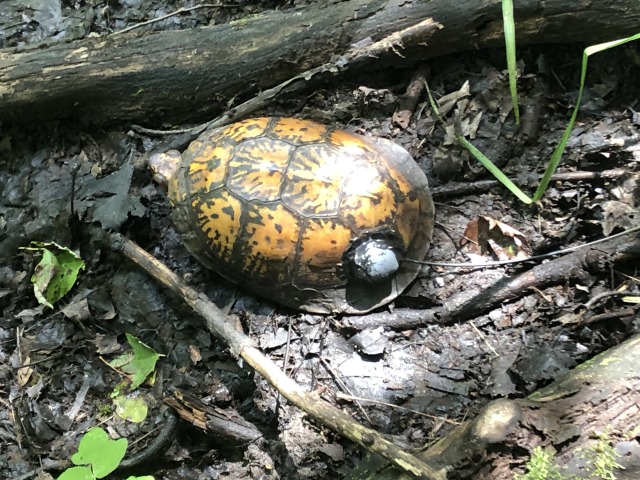
A method called radio telemetry was vital to my work. I walked around under the forest canopy searching for individuals (female or male) and whenever I found one, typically sitting still on the ground, I would pick it up while wearing gloves. In order to track its movements, I attached a radio transmitter onto the carapace (upper shell) using a special type of glue (Fig. 1A). After about a month of searching, I was able to track box turtles at two locations in the Toledo Metroparks system, six individuals in Oak Openings Preserve, and three individuals in Secor Metroparks.

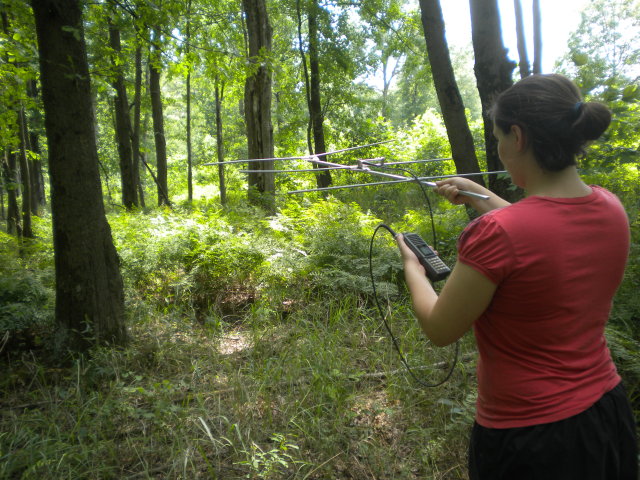
Two to three times a week, I would travel to these local parks and track each turtle using a silver three-pronged antenna and attached receiver. This portable combination detects the signal frequency produced by the transmitter on the tagged turtles, generating a “beeping” sound as it receives the electronic pulse. Guided by “beeps” I could re-find each turtle within an hour (Fig. 1B) depending on how dense the forest understory was. If I walked in the wrong direction, the noise would fade away and become quieter, but as I moved closer to the turtle’s location, the “beeping” sound would get louder and more frequent until I reached the turtle. Sometimes I would walk right past an individual sitting quietly in the leaf litter or under a log as their shell is often highly camouflaged to blend with the sunlit and shadowed patterns of a forest floor. One nice aspect of tracking box turtles with radio telemetry is that they do not run away very quickly, so they are easy to follow!

turtle on the ground among sticks and leaves
woman holding an antenna and receiver in the woods
Fig. 1A (top) and Fig. 1B (bottom): A box turtles with a transmitter (A) tracked by A. Martin using radio telemetry (antenna and receiver; B) in Oak Openings Region, Ohio, USA. Photo by S. Martin (B).

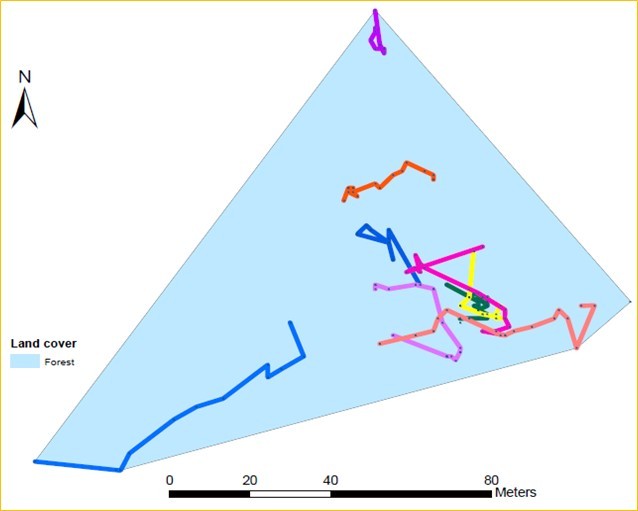
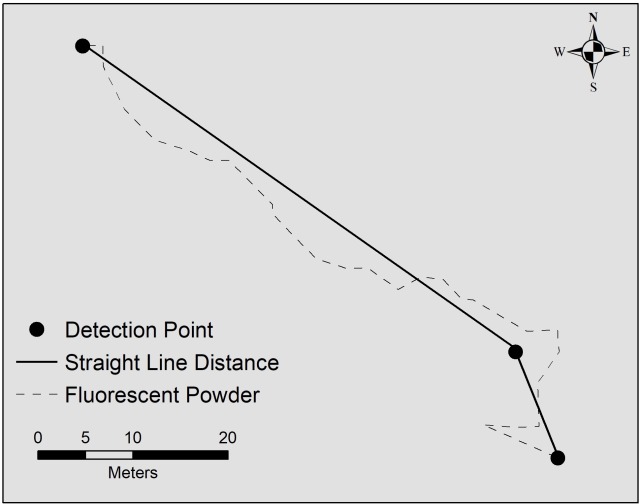
Radio telemetry is an excellent method for re-locating individuals, and provides a snapshot of where the individual is at a given time. With long-term tracking over the active season (mid-March to early November), researchers can better understand movements within a turtle’s home range, the area the animal regularly travels to meet its daily requirements, including food, shelter, and thermoregulation. Home ranges are estimated by drawing an outline around the outermost locations where a turtle was detected throughout the year, and assuming that the individual uses the area inside this boundary (Fig. 2A). Each time a turtle was found, I recorded the GPS coordinates of its location, and could then measure how far the turtle traveled by drawing a straight line between each location point. However, turtles may not always travel in a straight line, but rather follow an indirect route between detection points (Fig. 2B), so this method likely underestimates actual travel distance.

blue diagram showing box turtle home range
diagram showing box turtle distance traveled
Fig. 2A (top) and Fig. 2B (bottom): Box turtle home range (blue area) with daily movements (each color represents one day of travel) using fluorescent powder (A) and an example of an estimated distance traveled (solid black straight line) and actual distance traveled (dotted black curvier line) between location points (black circles; B).

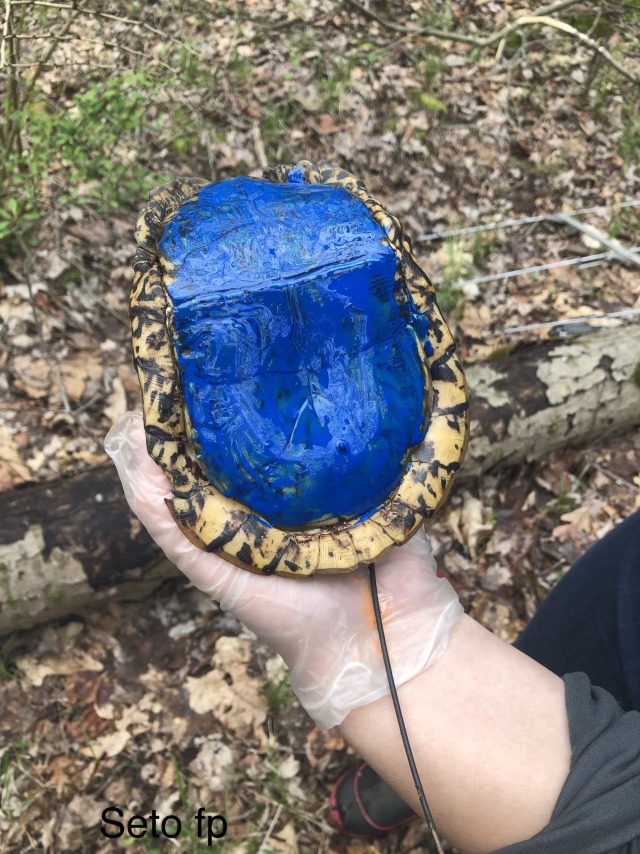
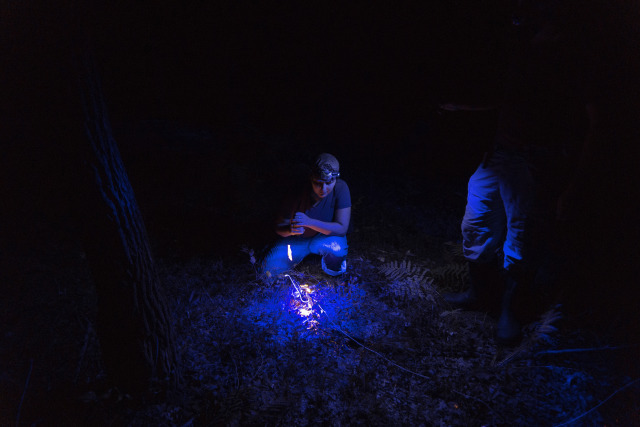
A research technique involving fluorescent powder can produce a far more accurate picture of daily box turtle movements. Non-toxic fluorescent powder is applied to the turtle’s plastron (underside; Fig. 3A) which then leaves a distinct trail as the turtle travels throughout its environment. At night, with the use of an ultraviolet light (Fig. 3B) these trails can then be illuminated, traced, and mapped. Since box turtles tend to travel near or over the same pathways, and because individual home ranges frequently overlap, multiple powder colors are required for some tracking studies.

I used multiple colors (red, blue, yellow, orange) for different days and individuals. The results of my tracking work using this technique demonstrated that box turtles traveled 32 meters per day, with females traveling slightly less than males, and that 95% of movements were less than 6 meters.

box turtle held in a person's hand
two people at night in the forest illuminated by blue light
woman with a ruler in the forest
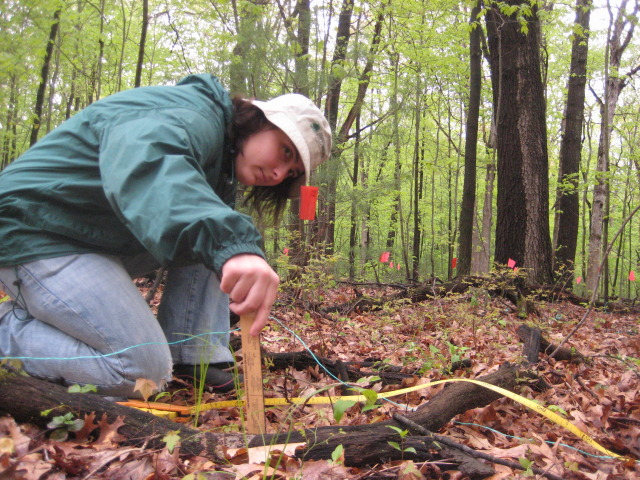
Fig. 3A (top), Fig. 3B (middle), and Fig. 3C (bottom): A freshly painted plastron of a male box turtle (A), A. Martin with a field assistant illuminating the fluorescent powder trail with an ultraviolet light (B, photo by A. Kappler), and A. Martin measuring leaf litter along a box turtle’s pathway (C).

Tracking animals with fluorescent powder is more laborious than radio telemetry but demonstrates fine scale movement patterns not detected by radio telemetry. The frequent use of short movements, for example, is likely related to thermoregulation requirements (the need to move in and out of cool, shady patches), or encounters with multiple obstacles ranging from small to large logs, dense shrubs, and trees. Radio telemetry provides an estimation of home range size, while fluorescent powder tracking provides details on how that home range is utilized. In tandem, these research tools can provide important information on habitat use for local land managers, who can facilitate preservation of these reptiles.

For more information on this project, including data on eastern garter snake movements, check out Chapter 4 of my dissertation.

Amanda K. Martin is a Post-doctoral Researcher in Section of Amphibians and Reptiles. Museum employees are encouraged to blog about their unique experiences and knowledge gained from working at the museum.

Related Content

Turtle Bottoms

A Wood Turtle at Powdermill

Ask a Scientist: How does climate change affect turtle behavior?

Carnegie Museum of Natural History Blog Citation Information

Blog author: Martin, Amanda K.
Publication date: April 20, 2021

Share this post!

  • Share on Twitter Share on Twitter
  • Share on Facebook Share on Facebook
  • Share on Pinterest Share on Pinterest
  • Share on LinkedIn Share on LinkedIn
  • Share on Reddit Share on Reddit
  • Share via Email Share via Email

Share this post!

  • Share on Twitter Share on Twitter
  • Share on Facebook Share on Facebook
  • Share on Pinterest Share on Pinterest
  • Share on LinkedIn Share on LinkedIn
  • Share on Reddit Share on Reddit
  • Share via Email Share via Email

Filed Under: Blog Tagged With: Amanda Martin, amphibians and reptiles, herpetology, Science News

April 14, 2021 by wpengine

Who is the bigger fool – the fool or the fool that falls for it?

by Stevie Kennedy-Gold

The start of April only means one thing – pranks galore thanks to April Fools Day! Ok, ok, I realize that’s not necessarily true as April also marks that spring has sprung, many small critters are emerging from their hibernations, and we celebrate, among other things, Earth Day and Arbor Day. But we can all agree that April usually starts with a load of laughs, some fibs, and some fools. In the animal kingdom, however, fooling isn’t regulated to one day. In fact, many amphibians and reptiles rely on their ability to fool both predators and prey to survive.

Masters of Disguise

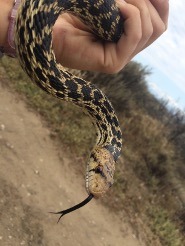
Fig. 1: Because of the large blotches on their backs, people often confuse the nonvenomous gopher snakes with venomous rattlesnakes. Gopher snakes play into this confusion, however, by imitating rattlesnake behaviors.

One of the oldest tricks in the book when it comes to fooling another is to transform to look like someone, or something, else. Although herpetofauna lack access to theatrical wardrobes teeming with makeup and outfits, they evolved behaviors and physical attributes that allow them to imitate other things. The gopher snake (Pituophis catenifer, Fig. 1), for instance, is a totally harmless colubrid species found across the western and middle United States and into Canada. They are beautiful animals, having splotches of gold, reddish-brown, and black along their bodies, and, due to these colorations, are often mistaken for rattlesnakes. What’s more, when spooked, gopher snakes tend to flatten their heads, coil into a strike position, and quickly sway their tails to and fro, a rattlesnake imitation that includes a realistic sound component when it occurs in dry grass. Most snakes are solitary animals and prefer to avoid conflict and avoid expending energy in get-away attempts, so scaring away potential predators through imitation is preferred over fighting and biting. Often times, this imitation works, and potential predators leave the gopher snake alone.

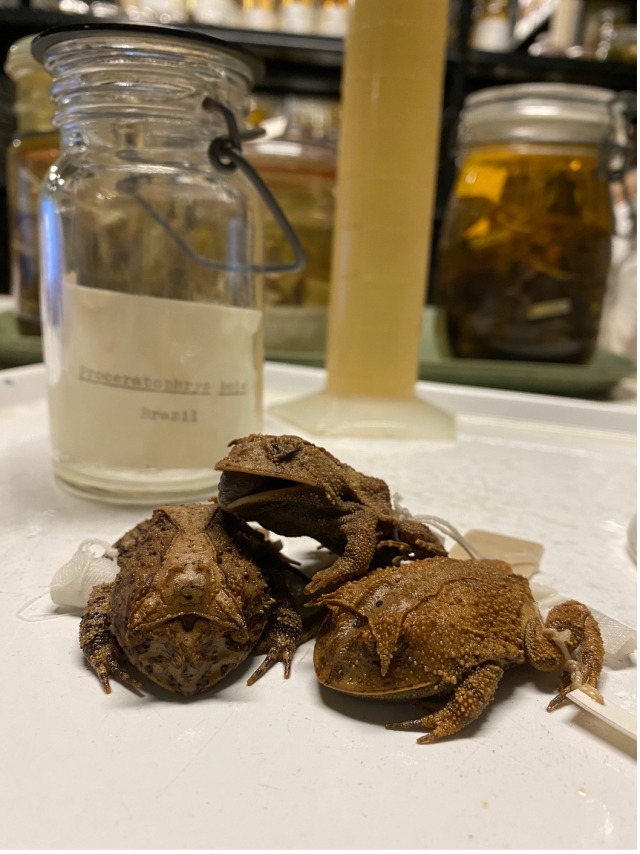
three horned frog specimens on a white tray with glass jars in the background
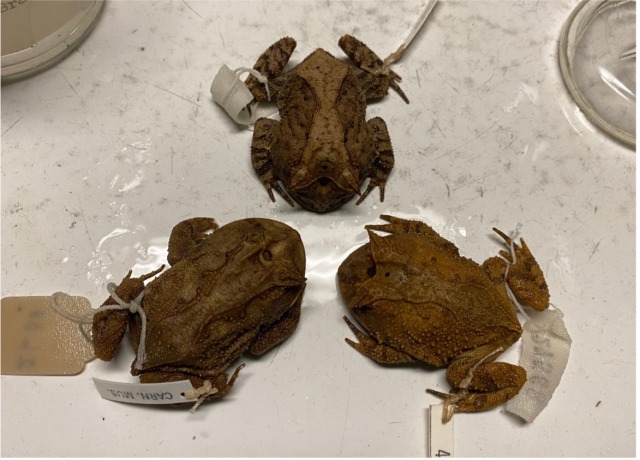
Fig. 2: Smooth horned frog (Proceratophrys boiei) specimens in the collection. Although the points above their eyes have been distorted due to preservation, it is clear to see how these frogs used their coloration, patterning, and morphological features to blend into leaf litter on the forest floor.

Predictably, snakes are not the only masters of disguise. Many frog species have unique morphological features that allow them to resemble other items in nature. The dark brown coloration and the points above the eyes of the smooth horned frog (Proceratophrys boiei) give it the appearance of a leaf (Fig. 2), allowing it to blend seamlessly into the forest floor and enabling it to both evade predators and ambush prey. Similarly, the entirely aquatic Suriname toad (Pipa pipa) looks like a dead leaf in the water due to its brown coloration and flattened body. Unless you’re an omnivore that prefers dead, low-nutrition leaves, the imitation tactics of these frogs improves their chances of survival and fools any prey items not clever enough to see past their disguises.

Deceptive Practices

Not all imitations are meant to help an animal blend in. Sometimes, imitations serve “nefarious” intents. Although not apparent to an outside observer, alligator snapping turtles (Macrochelys temminckii) have a sneaky tactic to lure prey directly into their mouth. The tongues of these turtles evolved a vestigial piece of flesh, called a lingual lure, to protrude from the tip. Alligator snapping turtles will sit on the bottom of lakes and rivers and open their powerful jaws to reveal this pink bit of flesh. They then move the lingual lure around to make it look like a tasty worm, fooling unsuspecting fish right into their giant maws.

Spider-tailed horned vipers (Pseudocerastes urarachnoides), a species endemic to Iran, employ a similar tactic, albeit far more noticeably to the casual observer. Admittedly, the common name of this animal gives away the punch line, but, nonetheless, this species of viper evolved to have a unique tail. Much like how a rattlesnakes’ rattle is made of modified scales, the spider-tailed horned viper’s tail scales evolved so that the last few scales bulge out into a small bubble and the scales leading up to that bulge are heavily keeled, or ridged. While keeled scales are common in most species in the Viperidae family, the keeling on these tail scales is extremely exaggerated, making the scales look like long spikes, or even legs. When you combine the long, keeled scales with the large, posterior bulge, the tail of a spider-tailed horned viper actually looks like a spider! With the snakes speckled coloration allowing it to blend into surrounding rocks and a solid tail wiggle performance, the snake’s tail looks like a tasty spider lunch to unsuspecting birds… which then become lunch for the snake. Imitation is the best form of flattery… or maybe a reliable way to fill your belly!

Now You See Me, Now You Don’t

Whereas some reptiles and amphibians are the masters of disguise, allowing them to hide from predators or to lure unsuspecting prey, other herps use subtler bodily alterations to fool potential prey, predators, and even conspecifics (animals of the same species). Take, for example, color changes. Chameleons often come to mind at any mention of lizard color changes, but it is actually a misconception that chameleons perfectly blend into their surroundings, mimicking every leaf and twig in the background. In truth, chameleons and many other lizard species change colors to improve thermoregulation and to communicate with conspecifics – males signaling to females that they’re ready to mate, or relying on darker colors to demonstrate aggression. There are, however, some species of frogs that do lighten or darken their hue to blend into their surroundings. The gray treefrog (Hyla versicolor) is present across most of the eastern and middle United States and, as its name implies, is an arboreal species. Because it spends its time among green leaves and gray-brown tree trunks and branches, the gray treefrog has evolved the ability to change its body coloration so it can blend in perfectly with the substrate upon which it perches. If it is on a bright green leaf, the frog will shift to a green hue. Upon landing on a mossy rock or a lichen-crusted tree trunk, the frog will change to a more gray, blotched hue instead. One second, you can see the animal perfectly and, in the next, it has completely melted away into its surroundings.

Leaving Something Behind

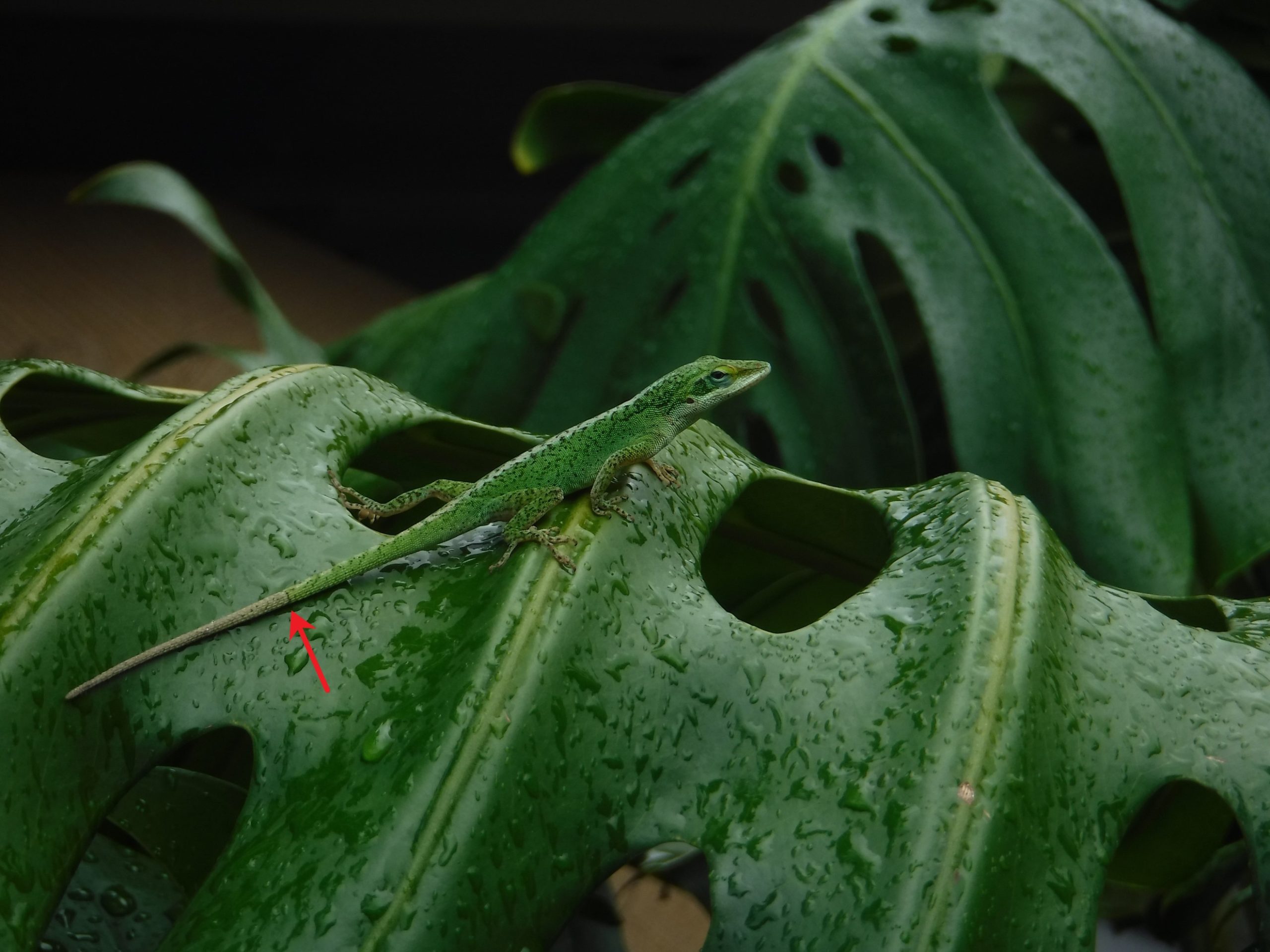
Other herpetofauna use more exuberant tactics to evade capture. Unlike the camouflage-wielding gray treefrog, many lizard and salamander species will self-autotomize their tails to avoid being eaten. In these instances, the herp has already been seen (or, worse, caught by a herpetologist!) and needs a quick getaway. Running away without a distraction means that the predator will likely give chase and possibly capture the lizard or salamander. However, by self-autotomizing – or breaking off – their tails, these animals increase their chances of escaping. This drastic tactic is effective because the tail continues to wriggle around and move once detached from the animals’ body, making it a tasty and easy to grab meal! Many predators become distracted by the tail, leaving the lizard or salamander free to make its escape. Interestingly, this behavior is not strictly regulated to predator attacks. I witnessed a prolonged aggressive battle between two male western fence lizards (Sceloporus occidentalis), where one male lost his tail and, instead of leaving it to writhe on the ground and eventually decompose, the lizard (attempted) to make a hasty, grapple-filled retreat from the other male, all while holding his detached tail in his mouth! Although this seems morbid, it’s actually quite clever – tails require a lot of energy and resources to make, but then the appendage stores energy in the form of meat and fat. This male fence lizard was likely keeping hold of his old tail so that he could later consume it and regain those resources. And, don’t worry, most salamander and lizard species can regrow their autotomized tails (Fig. 3), an ability that many herpetologists take advantage of when we need tissue for genetic studies.

Fig. 3: Example of tail loss and regrowth in a female Anolis carolinensis (green anole). The red arrows points at the old break point, and you can see how the tail color differs in the new growth.

The list of herpetofaunal imitators and imposters, pranksters and fibbers goes on and on. Although these disguises and imitations aren’t meant to make other animals giggle and laugh as our April Fool’s Day pranks often do, these tactics allow these reptiles and animals to live another day, evade unwanted attention, or snag a tasty meal. But, at the end of the day, it really does beg the question… who is the bigger fool – the fool or the fool that falls for it?

Stevie Kennedy-Gold is the collection manager for the Section of Amphibians and Reptiles at Carnegie Museum of Natural History. Museum employees are encouraged to blog about their unique experiences and knowledge gained from working at the museum.

Related Content

Ask a Scientist: What is an Alcohol House?

Evidence Counts for Absent Creatures – City Nature Challenge

Introducing Matt Brandley, the Herpetology Collection’s New Science Communicator and Research Associate

Carnegie Museum of Natural History Blog Citation Information

Blog author: Kennedy-Gold, Stevie
Publication date: April 14, 2021

Share this post!

  • Share on Twitter Share on Twitter
  • Share on Facebook Share on Facebook
  • Share on Pinterest Share on Pinterest
  • Share on LinkedIn Share on LinkedIn
  • Share on Reddit Share on Reddit
  • Share via Email Share via Email

Share this post!

  • Share on Twitter Share on Twitter
  • Share on Facebook Share on Facebook
  • Share on Pinterest Share on Pinterest
  • Share on LinkedIn Share on LinkedIn
  • Share on Reddit Share on Reddit
  • Share via Email Share via Email

Filed Under: Blog Tagged With: amphibians and reptiles, Science News, Stevie Kennedy-Gold

  • « Go to Previous Page
  • Page 1
  • Interim pages omitted …
  • Page 7
  • Page 8
  • Page 9
  • Page 10
  • Page 11
  • Interim pages omitted …
  • Page 206
  • Go to Next Page »

sidebar

About

  • Mission & Commitments
  • Directors Team
  • Museum History

Get Involved

  • Volunteer
  • Membership
  • Carnegie Discoverers
  • Donate
  • Employment
  • Events

Bring a Group

  • Groups of 10 or More
  • Birthday Parties at the Museum
  • Field Trips

Powdermill

  • Powdermill Nature Reserve
  • Powdermill Field Trips
  • Powdermill Staff
  • Research at Powdermill

More Information

  • Image Permission Requests
  • Science Stories
  • Accessibility
  • Shopping Cart
  • Contact
  • Visitor Policies
Stay in the loop! Sign up for our newsletter(s).
One of the Four Carnegie Museums | © Carnegie Institute | Privacy Policy | Terms of Use | Accessibility
Rad works here logo