• Skip to primary navigation
  • Skip to main content
  • Skip to primary sidebar

Carnegie Museum of Natural History

One of the Four Carnegie Museums of Pittsburgh

  • Visit
    • Buy Tickets
    • Visitor Information
    • Exhibitions
    • Events
    • Dining at the Museum
    • Celebrate at the Museum
    • Powdermill Nature Reserve
    • Event Venue Rental
    • Gift Cards
  • Learn
    • Field Trips
    • Educator Information
    • Programs at the Museum
    • Bring the Museum to You
    • Guided Programs FAQ
    • Programs Online
    • Climate and Rural Systems Partnership
  • Research
    • Scientific Sections
    • Science Stories
    • Science Videos
    • Senior Science & Research Staff
    • Museum Library
    • Science Seminars
    • Scientific Publications
    • Specimen and Artifact Identification
  • About
    • Mission & Commitments
    • Directors Team
    • Museum History
  • Tickets
  • Give
  • Shop

wpengine

April 13, 2021 by wpengine

Evidence Counts for Absent Creatures – City Nature Challenge

by Patrick McShea

Participation in the upcoming City Nature Challenge (April 30 – May 3) can range from using your phone’s camera to document a couple front yard observations, to compiling hours’ worth of observations at multiple sites during all four days of the event. Additional information about the six-county Pittsburgh Region’s efforts in this international project can be found elsewhere on the museum’s website:

City Nature Challenge (how to participate and resources)

Teaching About Local Wildlife with the City Nature Challenge

If you have a little more time available, however, a deeper working knowledge of the City Nature Challenge’s scope, limits, and purpose can be obtained by reviewing the answers the project’s organizers provide to more than a dozen frequently asked questions. One very important aspect of the project addressed in the FAQs page is the broad range of observations that can be collected, interpreted, and compiled via iNaturalist, the innovative phone app that serves as the digital engine for the City Nature Challenge (CNC).

Mud Evidence
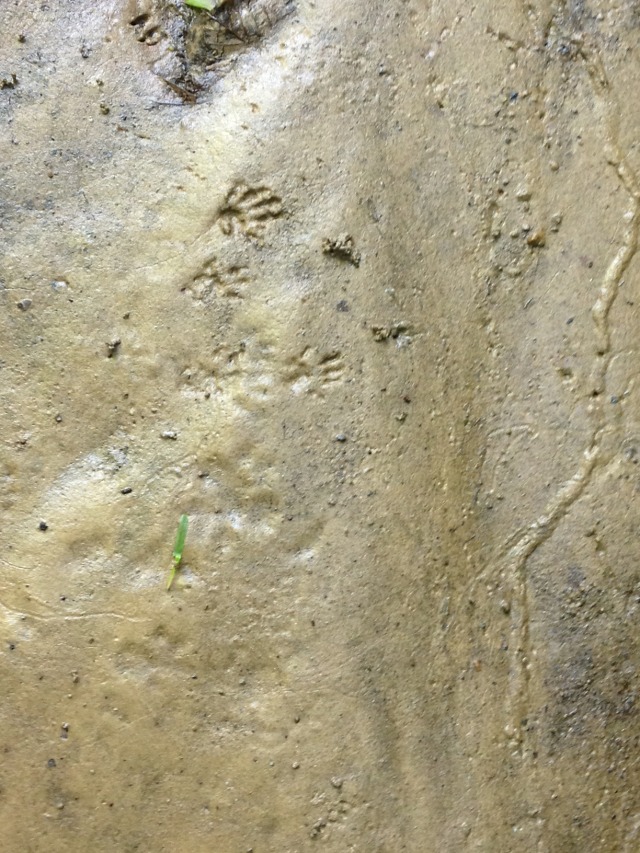
Raccoon tracks in mud.

In answer to the question, What kinds of observations should I make during the CNC? organizers suggest exactly the range of noticeable phenomena that any naturalist leading an interpretive walk would stop to point out: Any observations of WILD plants, animals, fungi, seaweed, bacteria, lichen, etc. you find in and around your city! Observations of living or dead organisms, or evidence of those organisms, like shells, tracks, scat, feathers, etc., are fine. A photo of raccoon tracks in a muddy creek edge, for example, could count in a CNC tally as evidence of the mammal’s recent passage.
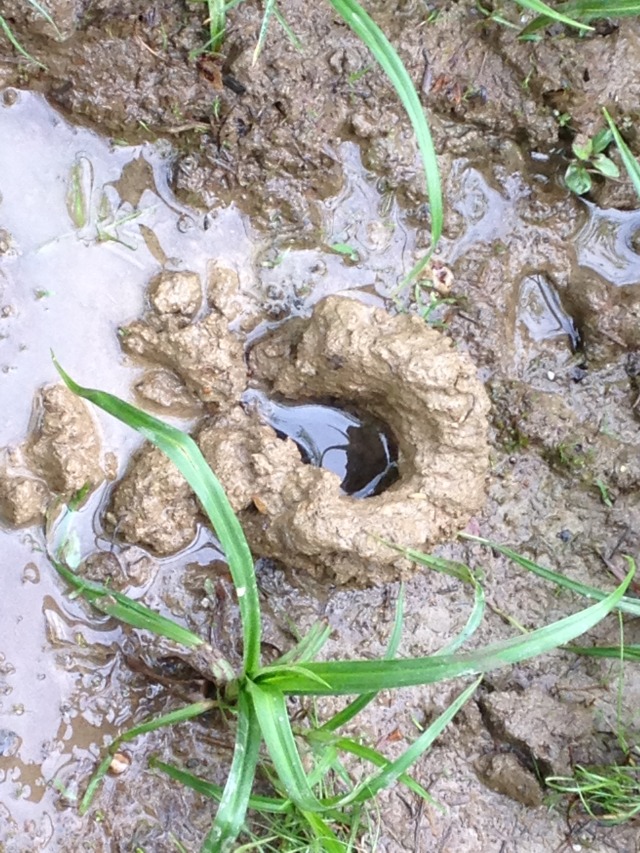
Crayfish chimney.

Another type of mud evidence indicates the presence of crayfish. In wet ground adjacent to ponds and streams, burrowing crayfish create distinctive and often fully-cylindrical mud structures above the holes they dig to reach groundwater. A photo of one of these “chimneys” documents the presence of the crustacean excavator somewhere below, but because there are multiple crayfish species in our region, further investigation would be necessary to refine such an observation to the species level.

Plants as Animal Evidence
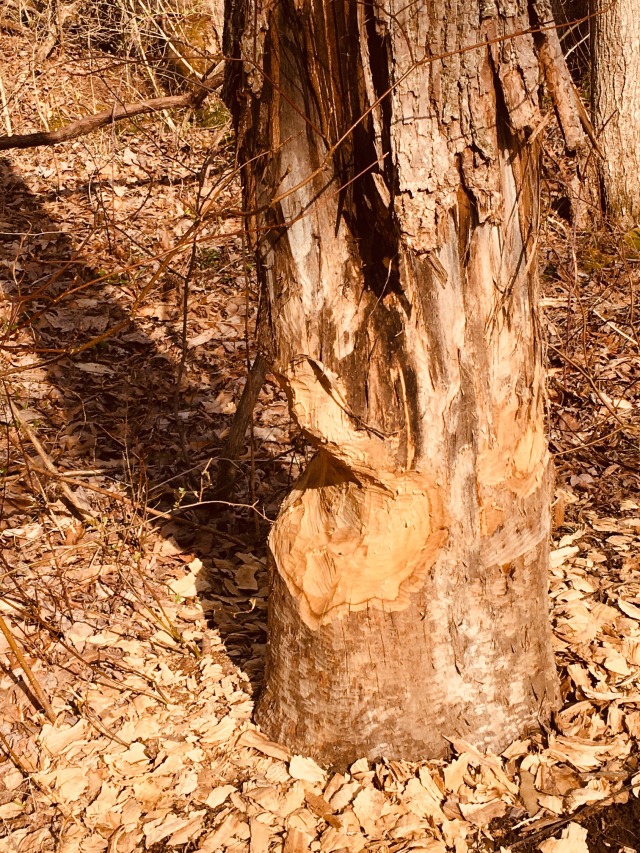
Beaver gnawed tree.

Sometimes plants can serve as animal evidence. Beavers, for example, aren’t known for appearing in cell phone camera range very often, but their activity, in the form of gnawed tree trunks and branches is easy to document along local waterways, including all three of Pittsburgh’s rivers. When photos of beaver evidence include sufficient detail to identify the impacted tree or shrub, the document becomes a “two-for-one.”
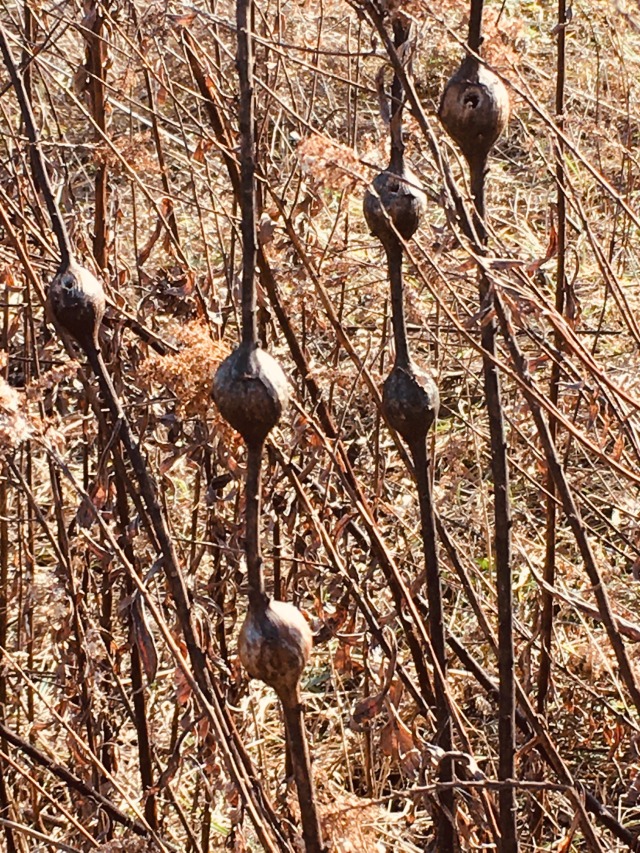
Goldenrod galls.

On higher and drier ground, amid stands of goldenrod, the deformed stalks of some plants provide evidence of a specific insect. The globular swellings, which are known as galls, are produced by the plant in reaction to the secretions of a tiny parasitic fly. Females of the goldenrod gall fly, a species know to science as Eurosta solidaginis, lay eggs at the base of goldenrod flower buds. Larvae hatched from these eggs chew into the plant stem where their secretions ultimately result in the creation of a protective winter shelter. The distinctive galls are not fully secure, however. Females of the parasitoid wasp known as Eurytoma gigantea seek out galls and their fly larvae occupants as a food source for their own larvae. Downy Woodpeckers and Black-capped Chickadees are also known to peck into galls to eat the occupants. Most of the galls in the above illustration bear evidence of such bird beak chiseling.

Patrick McShea works in the Education and Visitor Experience department of Carnegie Museum of Natural History. Museum employees are encouraged to blog about their unique experiences and knowledge gained from working at the museum.

Related Content

Cities Are Not Biological Deserts

Spring Birds in Your Backyard

A Little Harbinger of Spring…

Carnegie Museum of Natural History Blog Citation Information

Blog author: McShea, Patrick
Publication date: April 13, 2021
Share this post!

  • Share on Twitter Share on Twitter
  • Share on Facebook Share on Facebook
  • Share on Pinterest Share on Pinterest
  • Share on LinkedIn Share on LinkedIn
  • Share on Reddit Share on Reddit
  • Share via Email Share via Email

Share this post!

  • Share on Twitter Share on Twitter
  • Share on Facebook Share on Facebook
  • Share on Pinterest Share on Pinterest
  • Share on LinkedIn Share on LinkedIn
  • Share on Reddit Share on Reddit
  • Share via Email Share via Email

Filed Under: Blog Tagged With: City Nature Challenge, Education, Educators, Pat McShea

April 7, 2021 by wpengine

Cities are Not Biological Deserts

by Nicole Heller

Cities are increasingly important in organizing the experience of people and their interactions with nature. In 1950 there were 2.5 billion people on Earth and 30% lived in cities. Today, there are 7.5 billion people and 55% live in cities. By 2050, there will be an estimated 9.5 billion and 68% will live in cities.

Generally, cities are not good places for other critters to live. The abundance of pavement, buildings, traffic, pollution, pesticides, herbicides, and other hazards make cities really hard places for plants and animals to survive and breed. From a conservation science perspective, cities have long been considered dead spaces, or biological deserts. But more recently researchers are paying more attention to nature in cities. One reason for their interest involves people’s need for nature. Study after study confirms the basic biophilia hypothesis, that people want to associate with nature; they are happier and healthier when they are near plants and animals in their daily lives.

Berlin is recognized as a city that works for people and biodiversity due to its high percentage of green space, variety of habitats, and thoughtful regional planning. Photo by Filipe Varela on Unsplash.

Cities have also drawn the attention of researchers because of some really exciting things are happening within their limits, such as growing populations of peregrine falcons , sightings of rare birds using cities parks during annual migrations, and even discoveries of new species not previously known to science. While cities are overall negative for biodiversity, recent research findings raise important questions: Can human cities be good for non-humans too? Can urban wildlife include a broader spectrum of creatures beyond the common city-adapted species like European sparrows, pigeons, and black rats? What about species special or unique to the regions in which cities are located? How can we make cities work for biodiversity?

A few years ago I posed these questions along with colleagues from the Resilient Landscape program at the San Francisco Estuary Institute. We wanted to learn if there were general lessons that could be distilled from recent and ongoing research projects about what kinds of species can benefit from cities and if so how might city planners utilize this information to prioritize actions that would help cities contribute positively to the resilience of regional biodiversity, or at least do more to diminish the negative impacts.

Earlier this year, some of our findings were published open source in the journal Bioscience, The Biological Deserts Fallacy: Cities in Their Landscapes Contribute More than We Think to Regional Biodiversity, byErica N Spotswood, Erin E Beller, Robin Grossinger, J Letitia Grenier, Nicole E Heller, Myla F J Aronson.

The study, which includes citations from dozens of regional research projects around the world, identifies five pathways by which cities can help regional biodiversity. “Cities can benefit some species by releasing them from threats in the larger landscape, increasing regional habitat heterogeneity, acting as migratory stopovers, enhancing regional genetic diversity and providing selective forces for species to adapt to future conditions under climate change (e.g., a phenomenon we are calling preadapting species to climate change), and enabling and bolstering public engage­ment and stewardship.”

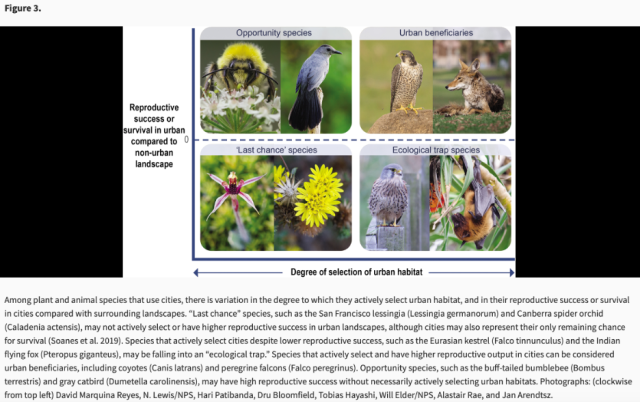
Each of these pathways is described in greater detail in the study. Four categories of species commonly utilize urban habitat, with varying degrees of success, and the study explores examples of how specific species in specific places demonstrate these five pathways.

screen grab of a figure from a paper with birds and flowers

Overall, the role of cities in supporting landscape-scale biodiversity is an understudied area of research. As cities continue to grow in number and size, human populations rise, and climate change continues, paying attention to the experience of other critters, and how we can make space for them to survive and thrive in anthropogenic habitats, will be more important than ever. This research identifies opportunities to reconcile cities with biodiversity. Opportunities exist to learn more about the unique resources that cities can provide, which specific types of species can take advantage of these resources, and how this information can be incorporated into city plans for parks and green spaces. The San Francisco Estuary Institute has begun this applied work in their report Making Nature’s City, which presents a science-based framework for increasing biodiversity in cities.

What excites me are possibilities if we really try. For the most part cities have been developed with little or no concern for biodiversity. Often people think that humans and nature just can’t coexist. What if city planners and conservation professionals start applying these lessons from ecology more broadly and work together with citizens to deliberately steward biodiversity in cities? How abundant and rich with diverse life could cities become? How happy would that make humans? I wonder. And I am hopeful.

If you are interested in urban nature, you can help to measure its diversity by participating in the museum’s upcoming City Nature Challenge. You never know what you may find in our city. Our combined observations, coupled with the museum’s collections and records, will provide important benchmarks to help track how local species are doing as the region keeps growing and changing in the 21st century.

Full Article Citation

The Biological Deserts Fallacy: Cities in Their Landscapes Contribute More than We Think to Regional Biodiversity By ERICA N. SPOTSWOOD , ERIN E. BELLER, ROBIN GROSSINGER, J. LETITIA GRENIER, NICOLE E. HELLER, AND MYLA F. J. ARONSON BioScience, Volume 71, Issue 2, February 2021, Pages 148–160, https://doi.org/10.1093/biosci/biaa155

Nicole Heller is Curator of Anthropocene Studies at the Carnegie Museum of Natural History. Museum employees are encouraged to blog about their unique experiences working at the museum.

Related Content

Teaching About Local Wildlife with the City Nature Challenge

Air Quality and Urban Gardening

Introducing the Anthropocene Living Room

Carnegie Museum of Natural History Blog Citation Information

Blog author: Heller, Nicole
Publication date: April 7, 2021

Share this post!

  • Share on Twitter Share on Twitter
  • Share on Facebook Share on Facebook
  • Share on Pinterest Share on Pinterest
  • Share on LinkedIn Share on LinkedIn
  • Share on Reddit Share on Reddit
  • Share via Email Share via Email

Share this post!

  • Share on Twitter Share on Twitter
  • Share on Facebook Share on Facebook
  • Share on Pinterest Share on Pinterest
  • Share on LinkedIn Share on LinkedIn
  • Share on Reddit Share on Reddit
  • Share via Email Share via Email

Filed Under: Blog Tagged With: Anthropocene, City Nature Challenge, Nicole Heller, Science News, We Are Nature 2

April 7, 2021 by wpengine

Teaching About Local Wildlife with the City Nature Challenge

by Patrick McShea

Join the Challenge April 25-28, 2025

The sixth-grade student took the time to study a taxidermy mount from multiple angles before she approached with a question. “Is that Raticate?” she asked, pointing back at the lifelike preserved muskrat that had drawn her across the school cafeteria to the table promoting museum resources.

Raticate, she explained to my quizzical look, is a Pokémon creature. When she held up her phone, I conceded a striking resemblance between the cartoon-like beast filling the small screen and the sleek-furred stuffed rodent a few feet away. I then explained how the preserved muskrat represents a very real and relatively common mammal, one that in some seasons might be observable in the cattail-edged margins of Schenley Park’s Panther Hollow Lake, a location within a mile of where we stood.

The event, 14 months ago, was an evening meeting of a parent’s council at Pittsburgh Science and Technology Academy. Although I spoke with dozens of parents during my two-hour visit, the information exchange with the student remains a clear memory because it reinforced a research paper I read days earlier.

A study published in 2002 found primary school students in the United Kingdom knew far more about Pokémon creatures than they knew about local wildlife. (Why conservationists should heed Pokémon. Balmford A, Clegg L, Coulson T, Taylor, Science 29 Mar 2002) If the study’s findings remain valid nearly twenty years later, museum strategies to counter them have become more innovative, collaborative, and purposeful. The primary example of these ongoing efforts is an upcoming event known as the City Nature Challenge.

What is the City Nature Challenge?

The City Nature Challenge (CNC), coming up April 25–28, 2025, is an international effort for people to document plants and wildlife in metropolitan areas across the globe. (The Pittsburgh Region’s six county territory for the CNC includes Allegheny, Armstrong, Beaver, Butler, Westmoreland, and Washington Counties.) The event is a bioblitz-style competition with cities competing on several measurable fronts, including the number of participants, the sum total of recorded observations, and the total number of identified species. The technology enabling broad participation and accurate data compilation in this vast observational effort is the free app, iNaturalist, utilized through the same common device by which I first glimpsed Raticate, a smartphone.

iNaturalist and City Nature Challenge History

iNaturalist, originally developed as the Master’s Final Project of Nathan Agrin, Jessica Kline, and Ken-ichi Ueda at University of California at Berkeley’s School of information, is now a joint initiative of the California Academy of Sciences and the National Geographic Society. As the initiative’s website explains, “iNaturalist is an online social network of people sharing biodiversity information to help each other learn about nature.”

The City Nature Challenge also has California roots, beginning in 2016 as a Los Angeles versus San Francisco contest by citizen science staff at the Natural History Museum of Los Angeles County and California Academy of Sciences. These two institutions continue to as the principal organizers for the global effort, and in 2021, more than 400 cities across the globe are expected to participate in the competition.

2021 marked the fourth consecutive year for Carnegie Museum of Natural History to serve as one of CNC’s city organizer agencies. Partner organizers for 2021 were the Pittsburgh Parks Conservancy and the Pennsylvania Alliance of Environmental Educators. An online workshop for teachers and other educators to promote student participation in early March helped groups get an early start and a regularly updated web page contains current information about the event.

How to Participate in City Nature Challenge

If spending some time later this spring documenting the plants, animals, and fungi sounds interesting, please visit our City Nature Challenge page to learn how you can participate with the museum in the Pittsburgh region. We offer resources for educators, groups, and individuals interested in the annual bioblitz.

After the April 25–28 documentation phase, comes a vital second phase to the CNC that you might be able to support: identification of the photographed species. The identifications will be crowd-sourced through the online community April 29–May 1 still using the iNaturalist app. 

Patrick McShea works in the Education and Visitor Experience department of Carnegie Museum of Natural History. Museum employees are encouraged to blog about their unique experiences and knowledge gained from working at the museum.

Related Content

Spring Birds in Your Backyard

Collected on This Day in 1998: Common Chickweed

Joining the iNaturalist Team!

Carnegie Museum of Natural History Blog Citation Information

Blog author: McShea, Patrick
Publication date: April 7, 2021

Share this post!

  • Share on Twitter Share on Twitter
  • Share on Facebook Share on Facebook
  • Share on Pinterest Share on Pinterest
  • Share on LinkedIn Share on LinkedIn
  • Share on Reddit Share on Reddit
  • Share via Email Share via Email

Filed Under: Blog Tagged With: City Nature Challenge, Education, Educator Resources, Pat McShea, Patrick McShea

April 6, 2021 by wpengine

Ocean Lessons

by Patrick McShea

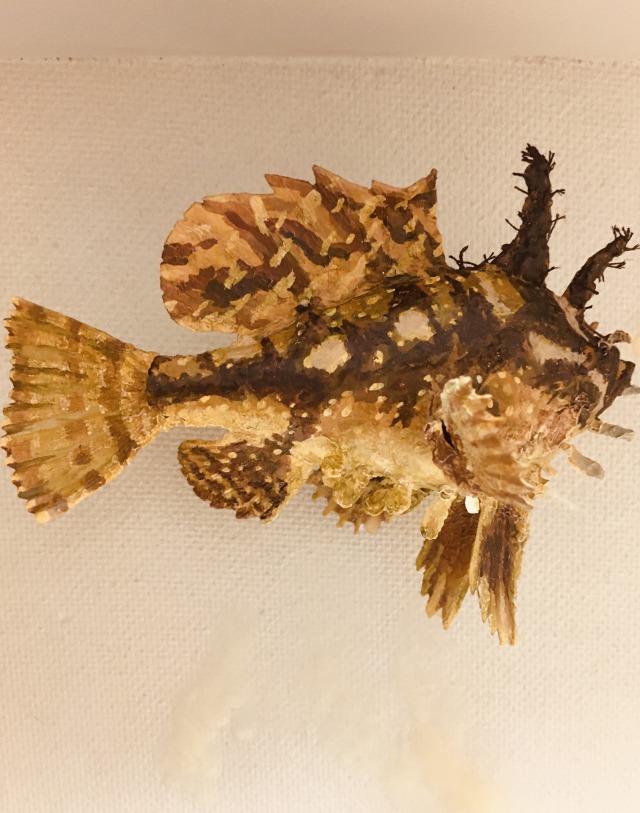
A sargassum fish taxidermy mount.

During the late winter, students and faculty at Carnegie Mellon University’s Children’s School learned about the ocean all day, every day. A five-week study of a broad topic is an annual tradition at the school, which serves pre-school and kindergarten-aged children, and operates within the university’s Psychology Department to support developmental research and the training of educators.

Coordination of the ocean lesson plan was the responsibility of Donna Perovich, a kindergarten teacher at the Children’s School for the past 24 years who has worked as an overall support educator since the advent of the COVID-19 pandemic. I learned of her efforts during the project’s planning stages when she asked to borrow ocean-related materials from the museum’s Educator Loan Collection.

Materials for Ocean Lessons from the Educator Loan Collection

The museum’s longest running outreach program is operating with a significant borrowing limitations during the pandemic: materials that cannot be cleaned, or would be damaged by repeated cleaning, are not currently available for loan. In Donna’s case the restriction meant she was able to borrow encased taxidermy mounts of several saltwater fish, plastic scale models of six different whale species, and a sea turtle shell, but not touchable examples of sea stars, sponges, sea fans, and delicate corals.

“I have a lot of seashells.” Donna explains, “Over the years I’ve been blessed with boxes of them. So, we had plenty of material for the students to touch and closely examine.” Among the museum materials she found particularly useful were the whale models. “We did a big whale measuring activity, measuring and pacing-off the lengths of different whales in the halls. Everyone developed a good sense of the size difference between species like a great blue whale and a pilot whale.”

Classroom Aquariums

Setting up and maintaining aquariums in the school’s four classrooms was among Donna’s early Ocean project tasks. The tanks featured freshwater species, two classrooms had single Betta fish, and the other two classrooms had larger tanks with mollies, tetras, and barbs. Observations of the live fish were vitally important for learning more about the movements and behavior of ocean fish. In the case of several three-year-olds, such observations also influenced their initial expectations of fish taxidermy mounts from the museum. “The aquariums had been in the classrooms for awhile before the museum materials appeared,” explains Donna, “and some of the youngest students thought the loan boxes with the fish were another aquarium.”

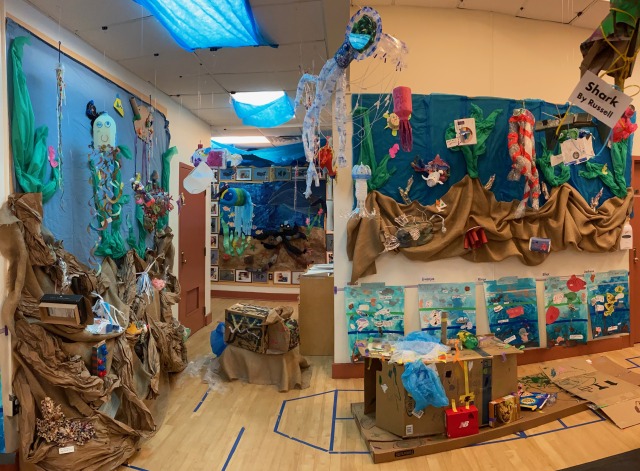
The Ocean Mural at CMU Children’s School.

Lest you think the confusion diminishes Donna’s respect for the thinking power of the children she works with, she brings up the enormous three-dimensional mural the students created to convey much of what they learned. “We had wonderful conversations where the children would be talking about things like deep ocean trenches and how reduced sunlight impacted the creatures living there. In some ways I think their brains are better able to absorb new information than our cluttered brains.”

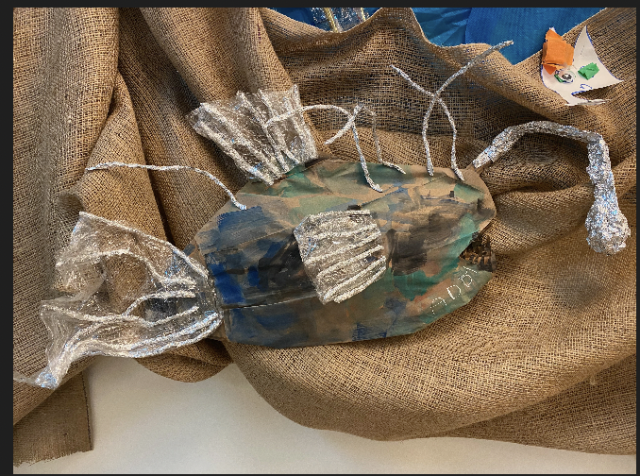
Anglerfish by Children’s School student.

Whole school study units at the Children’s School conclude with a family festival. Although the school has operated in-person with reduced capacity this year, the Ocean Family Festival was a Zoom event. The camera feeds of several event sessions focused on child-created details in the amazing mural.

Patrick McShea works in the Education and Visitor Experience department of Carnegie Museum of Natural History. Museum employees are encouraged to blog about their unique experiences and knowledge gained from working at the museum.

Related Content

Teaching in a Pandemic

Teaching about Trees

Center Court Culture Sharing

Carnegie Museum of Natural History Blog Citation Information

Blog author: McShea, Patrick
Publication date: April 6, 2021

Share this post!

  • Share on Twitter Share on Twitter
  • Share on Facebook Share on Facebook
  • Share on Pinterest Share on Pinterest
  • Share on LinkedIn Share on LinkedIn
  • Share on Reddit Share on Reddit
  • Share via Email Share via Email

Share this post!

  • Share on Twitter Share on Twitter
  • Share on Facebook Share on Facebook
  • Share on Pinterest Share on Pinterest
  • Share on LinkedIn Share on LinkedIn
  • Share on Reddit Share on Reddit
  • Share via Email Share via Email

Filed Under: Blog Tagged With: Education, Educator Loan Program, Educator Resources, Educators, ocean, Pat McShea, Patrick McShea

April 2, 2021 by wpengine

A Little Harbinger of Spring…

by Bob Androw

As I begin to write this, it’s early March, the sun is shining, the temperature outside is climbing over 50°F and I’m starting to think… “I need to go look for some deer poop!”

As an entomologist, I’ve developed a mental calendar not based on seasons or months… but rather on what species of insects are likely to be out and about on any given day of the year. Once summer arrives, the specificity disappears and it just becomes a question of whether it’s a “good bug day” or not – based entirely on the weather and my chances of prying myself out of the museum (or the house, in these new times) to go somewhere and chase them.

During autumn, the onset of wet weather and cooling temperatures gradually reduces the number of active insects. Like most organisms, I tend to head for shelter from the outside environment, settling indoors to wait out the winter. Of course, winter is time for “bug work” as well – but rather than hunting living specimens, time is dedicated to catching up on the lab work set aside during ‘collecting’ season. This entails pinning and labeling specimens collected earlier in the year, performing identifications, data-basing specimen records, and working on manuscripts.

But then there’s spring – that pivotal period that influences one to keep checking the weather forecast, hoping for warming days. This seemingly never-arriving season focuses one’s attention on how fast the last snow is melting off. It’s a time that has me searching for signs of plant shoots breaking the soil surface and tree buds exhibiting tiny slivers of green to announce the upcoming burst of foliage.

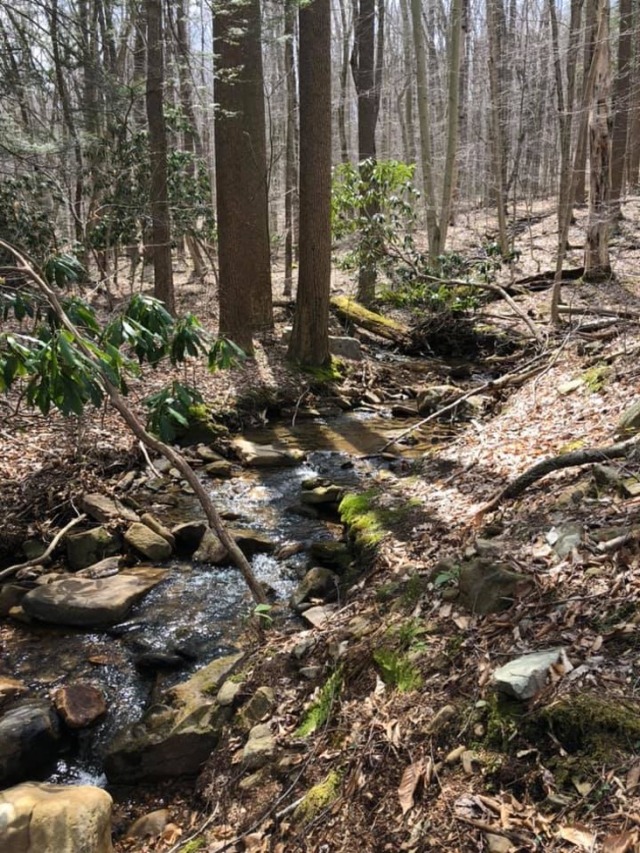
Hardwood forest habitat in late winter at Powdermill Nature Reserve in the Laurel Highlands of Pennsylvania. Image courtesy of the Powdermill Nature Reserve Facebook page.

Once these signs converge to indicate spring is just around the corner – it’s time to test the theory that winter is finally ending by – you got it! – going to look for deer poop!

Now, don’t get me wrong – deer regularly poop all year round – which is good for them – but during the first warm days of spring – or more accurately the warmest days of late winter – a little beetle becomes active and begins its own search for deer dung.

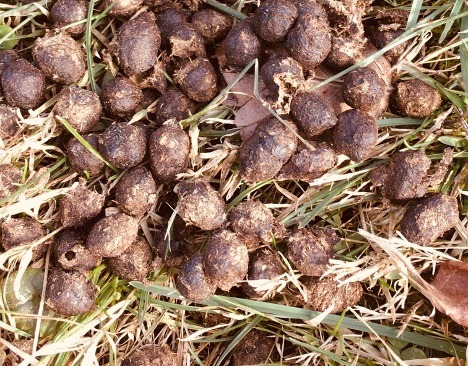
A typical pile of deer dung. The pellet in the lower left corner shows a hole created by a feeding beetle.

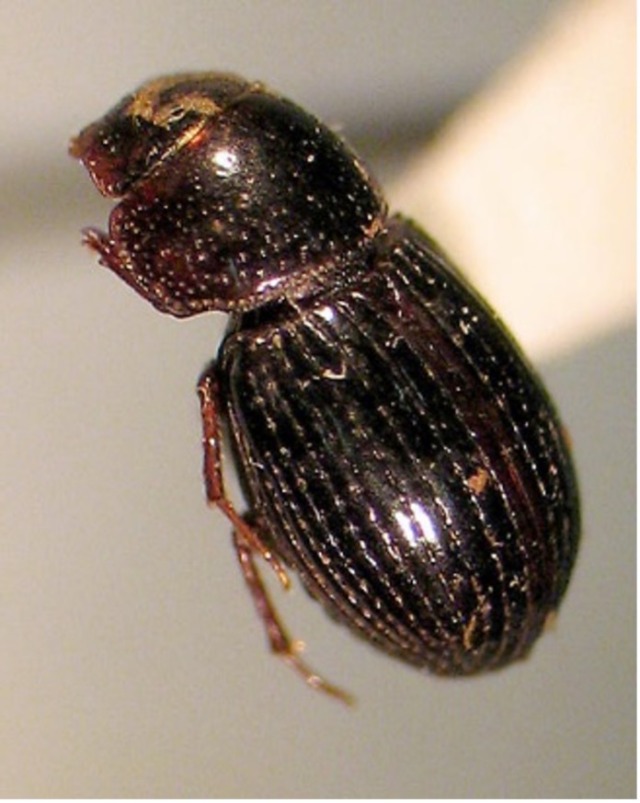
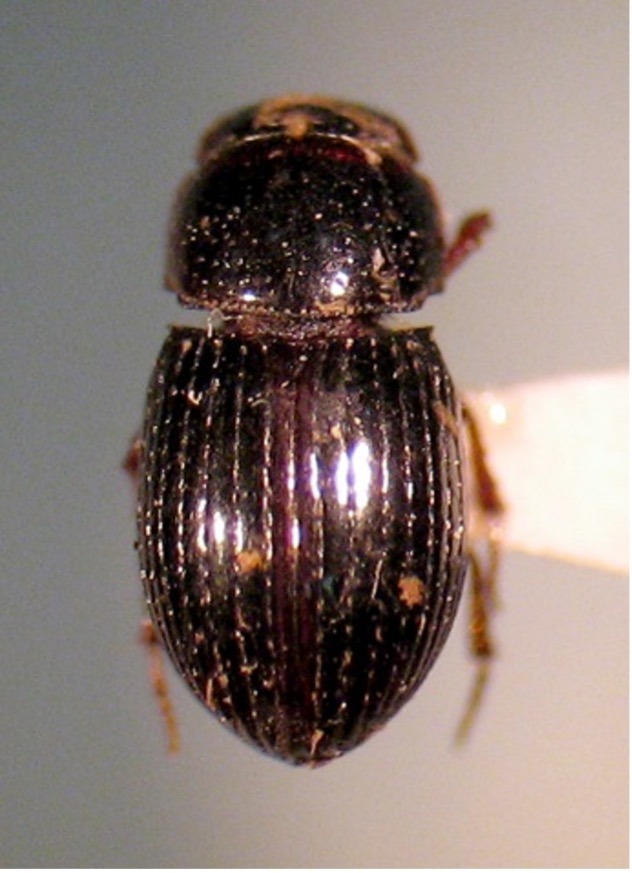
The species Dialytellus tragicus (Schmidt, 1916) is a mere 3mm in length and one of only two species in the genus Dialytellus. My favorite location to search for it is the museum’s field research station, Powdermill Nature Reserve, in the Laurel Highlands. Dialytellus tragicus is found in forested areas of the northeastern United States, but is sporadic in distribution and never seems to be overly common. The other species in the genus, Dialytellus dialytoides (Fall, 1907), is more widely distributed in the eastern states, much more common, and is taken frequently in pitfall traps. The genus Dialytellus is a member of the large subfamily Aphodiinae in the large family Scarabaeidae, the scarab beetles.

The Aphodiinae is a diverse group of small to tiny beetles, with over 400 species occurring in the United States and Canada. Nearly all of them are specialists on animal dung for feeding as adults and for provisioning their larvae with food. Many are considered ‘generalists’ which means they will utilize whatever dung they find – from cattle, horses, deer, pigs, dogs, and even humans (Oh, there are some stories to tell there…). Some species dig tunnels in the soil under dung and create brood chambers where they lay eggs on dung brought down from the source on the ground surface, but most lay eggs directly in the dung and the larvae develop within.

A fair number of aphodiine species are ‘specialists’, utilizing dung from only certain species of animals. In the Great Plains region of the U.S., the group reaches its greatest diversity of species for North America, with most species being obligate associates with prairie dogs, living in the burrows and feeding in the dung ‘middens’ that the resident prairie dogs create. In the Pacific Northwest, aphodiines are often associated with the burrows of marmots. In the Southeast, many species are associated only with pocket gophers, while a few have evolved to live only in the nests of squirrels, or packrats, feeding on decaying nest materials. Some of these specialized beetles have even evolved to live in ant nests, feeding on plant detritus in the ants’ garbage heaps.

beetle specimen
Dialytellus tragicus (Schmidt, 1916). Specimen data: PENNSYLVANIA: Westmoreland County, Powdermill Nature Reserve, 15 March 2003, in deer dung, R. Androw, coll. Image from BugGuide.net, courtesy of Blaine Mathison, Salt Lake City, Utah.

Dialytellus tragicus is able to pull me out of the house and into the woods in late winter on an annual search first for piles of deer dung, and then if lucky, beetles. The beetles can be found inside the deer dung pellet, which means the search entails splitting dung pellets to find the precious one with a beetle inside. Thankfully, deer dung is dry and hard and has little odor, so the process is less offensive than it sounds. Still, I would guess that laying on one’s side in the leaves, splitting pellets with a forceps as if they were little coconuts with prizes inside, isn’t a common way to celebrate the onset of Spring – no Facebook group for us folks!

Most specimens that I have collected have been found during the middle two weeks of March, always on days where the temperatures have been over 50°F for at least the preceding three days. It takes a few days of warmer weather to get the beetles up and moving. I’ve learned that searching for them later in the year – say mid-April – never produces specimens of D. tragicus, but instead produces numerous specimens of another aphodiine, the extremely abundant generalist, Oscarinus rusicola (Melsheimer, 1845). Circumstantial evidence would suggest that as D. tragicus evolved alongside O. rusicola in eastern forests of North America it shifted its period of activity to earlier in the season to avoid competition for resources with the more abundant O. rusicola.

By the end of February of any normal year, the urge to get out of the house and into the woods starts to become irresistible, but the insects are more patient – waiting for the perfect number of degree-days to become active. Knowing this little beetle is out there early – and is not necessarily easy to find – provides the perfect impetus to shake off the winter dust and go out to look for it. In a year like the one we’ve all suffered through, this little beetle is even more appreciated as an excuse to rouse and get moving again.

Bob Androw is a Collection Manager for Invertebrate Zoology. Museum employees are encouraged to blog about their unique experiences and knowledge gained from working at the museum.

Related Content

So, Just What is a Wheel Bug?

Do No Harm: Dealing with Spotted Lanternflies

The BSF – Leveraging Our Collections and Expertise to Help Fight Invasive Species

Carnegie Museum of Natural History Blog Citation Information

Blog author: Androw, Bob
Publication date: April 2, 2021

Share this post!

  • Share on Twitter Share on Twitter
  • Share on Facebook Share on Facebook
  • Share on Pinterest Share on Pinterest
  • Share on LinkedIn Share on LinkedIn
  • Share on Reddit Share on Reddit
  • Share via Email Share via Email

Filed Under: Blog Tagged With: Bob Androw, Invertebrate Zoology, Science News

April 1, 2021 by wpengine

An Egg-cellent Hobby!

by Abbey Hines

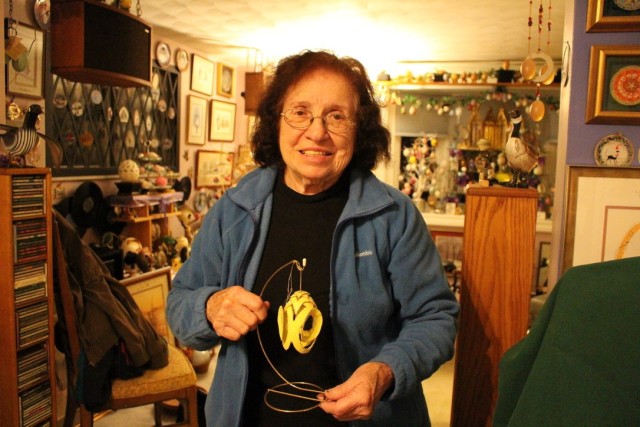
When I first stumbled into writing this blog post, I had no idea what direction I wanted to take with this topic of eggs, but then I went to Carol’s house and heard her stories. It got me thinking of one of my least favorite topics as someone who studies zoology—humans. People have this unusual habit of talking. Language (particularly syntax) is one of the few characteristics that set humans apart from the rest of the animal kingdom. So please take a uniquely human journey with me as I tell you the story of Carol Megill’s eggs.

Carol and I are Gallery Experience Presenters here at the Natural History Museum; however, she’s been doing it a lot longer than I have—like 25 years longer. Before this job, Carol was a school teacher for mainly elementary grades. (She taught college for a while, too, but that’s not important to the story.) In the 1960s, a few years after she started teaching, Carol was tasked to teach a second-grade boy to read. He’d fallen behind and needed extra help that Carol was happy to give. She tutored him the whole school year and around Easter he was up to a proper reading level. As a thank you, the boy’s grandmother gifted her a blown decorated egg with a duckling inside. This was her first blown and decorated egg that would be the beginning of a collection and hobby that would change her life.

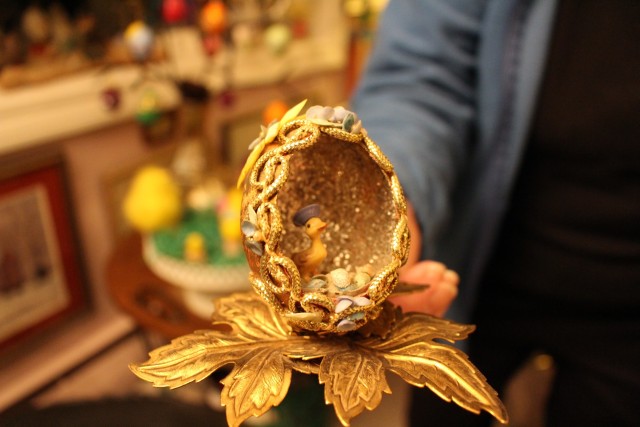
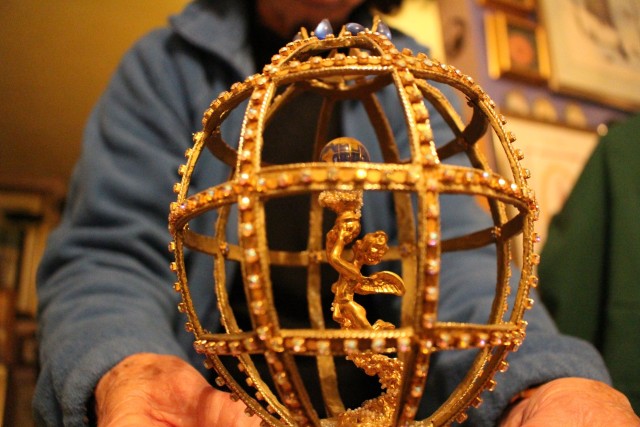
decorative gold egg with bird figurine

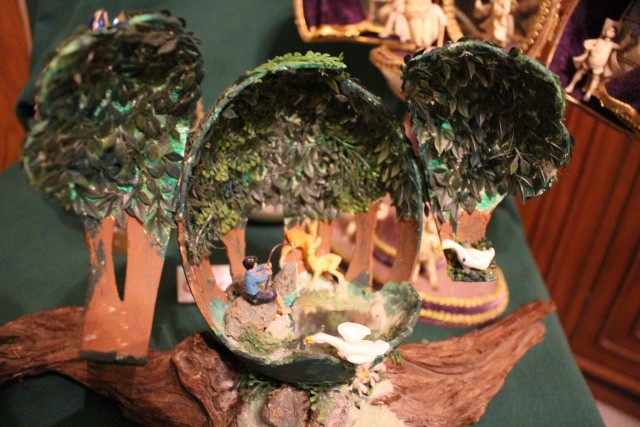
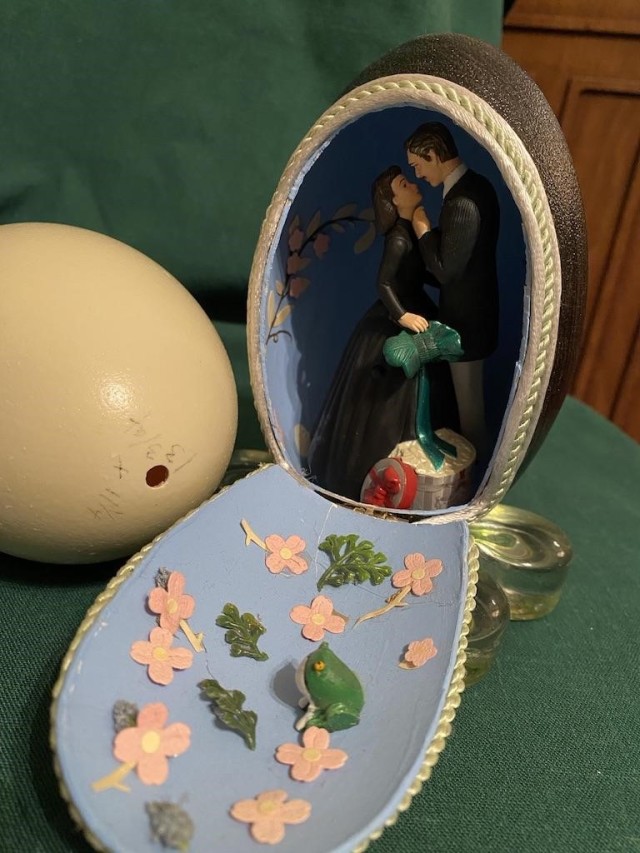
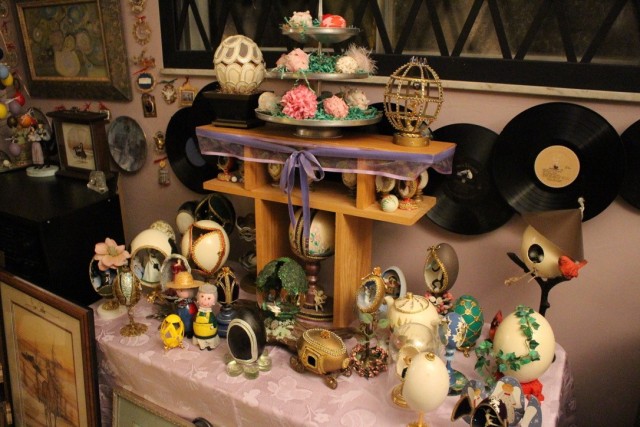
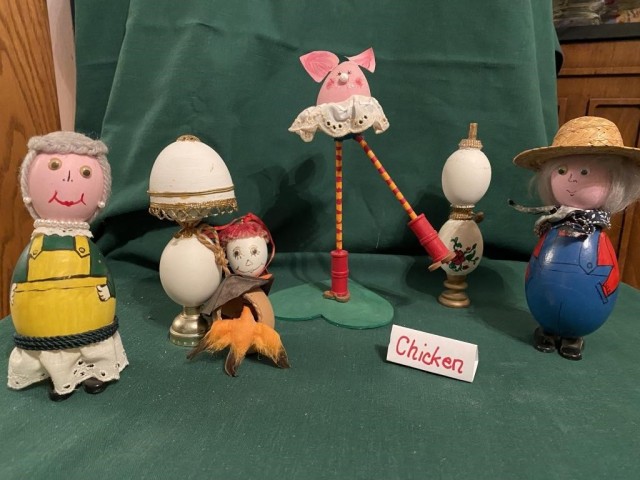
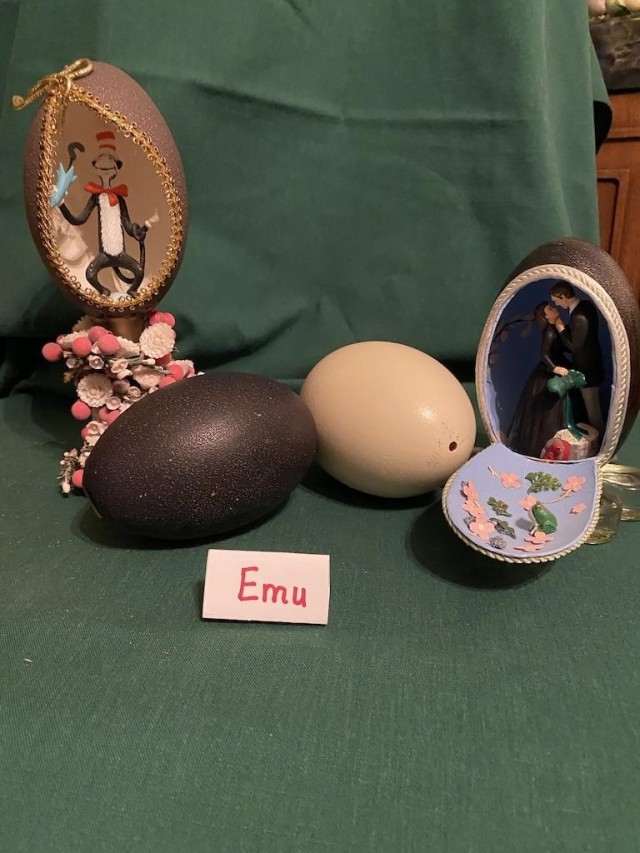
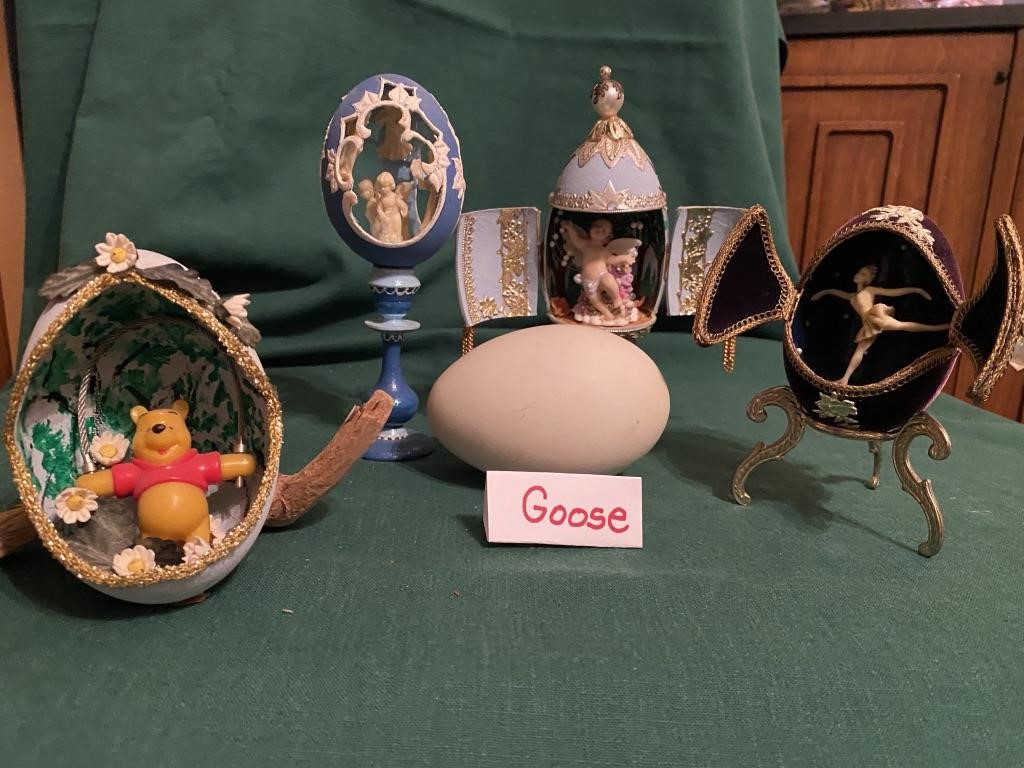
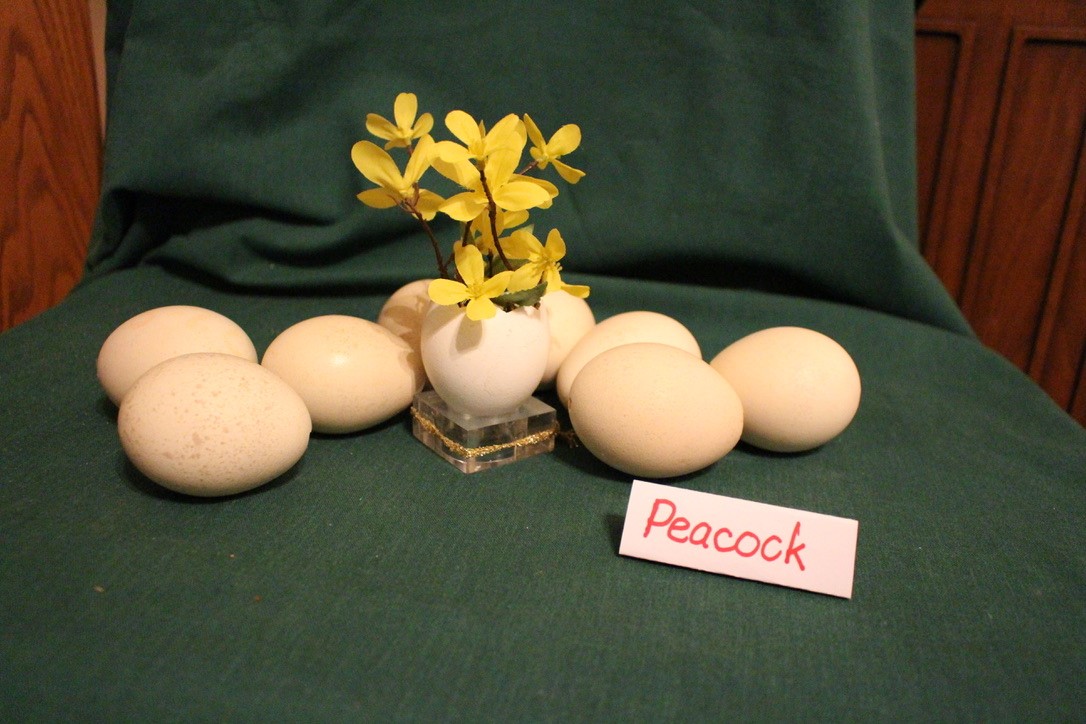
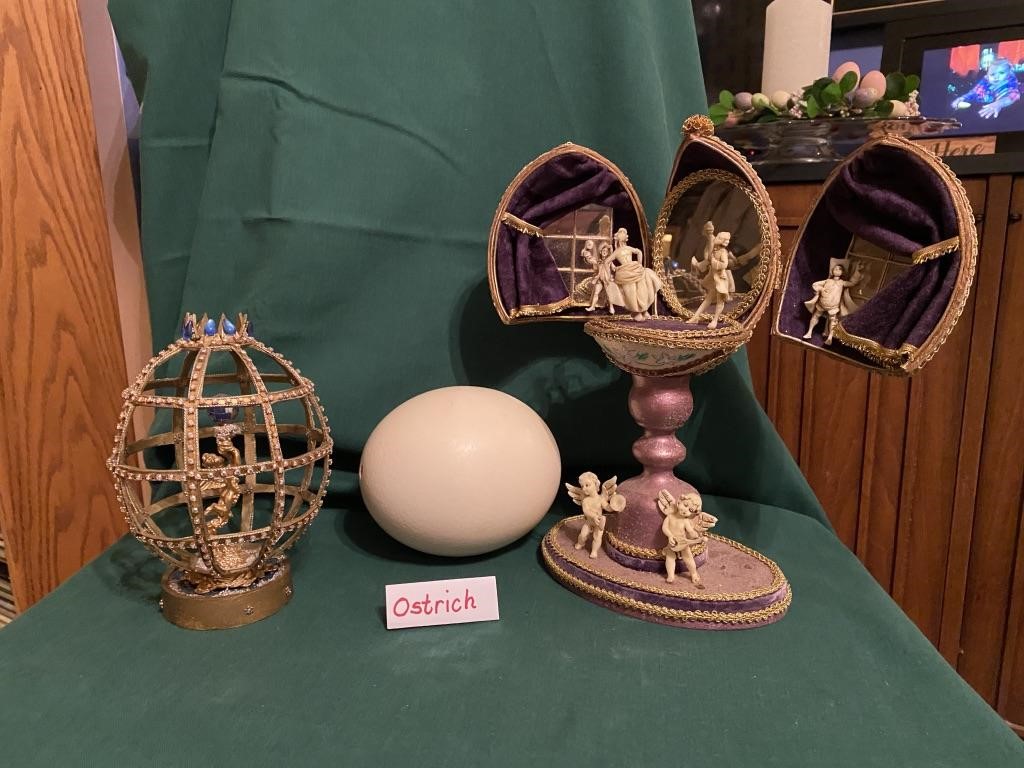
I’ve been trying to find an accurate definition of what Carol creates, but none seem fitting, so I will tell you how she makes them. She can only use certain regulation eggs due to the many proactive bird laws. Her eggs include a mix of chicken, goose, ostrich, rhea, emu, and peacock. First, she ‘blows out’ the egg by making a small hole in one end and blowing air into the cavity to empty out the albumen (whites) and the yolk. After it’s clean she can carefully cut into the shell without cracking it with a small Dremel drill. From there, it’s up to her imagination and artistic ability. They can take many forms, sometimes a scene erupts from within the eggs, a creature is formed from the egg, or it simply takes the shape of an amazing object to behold and interact with. She paints them with gold dust and glitter, adds hinges to make doors, and adds stands and scenery to transmute the egg into a stage for a story.

And the stories they tell! Each egg has its own history and Carol holds them carefully and is eager to share. Some are part of a set and belong with others, some she made to commemorate events or people, others she was trying a new technique that turned out amazing. Each is different and has a special place in the story of Carol’s eggs.

gold egg art
forest scene created from hollowed out eggs and paint
egg art of a couple looking at each other

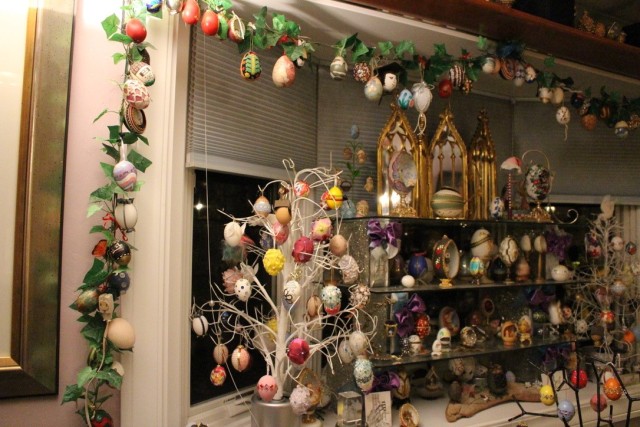
Carol told me she used to travel with her eggs to display and sell them. Then her husband, who was nothing but supportive, asked her to stop selling her art so she did, keeping her creations in their large numbers to decorate her house.

shelves of decorative eggs

Carol says she doesn’t know how many eggs she has made over the years, but without a doubt, they are part of her amazing story as an educator, tennis player, mother and grandmother, Christian, art collector, and lovely woman.

woman holding a decorative egg
bowl of eggs decorated with stripes
farm scene made from chicken eggs
decorative emu eggs

decorative goose eggs

peacock eggs

decorative ostrich eggs

Abbey Hines and Carol Megill are Gallery Experience Presenters in CMNH’s Life Long Learning Department. Museum staff, volunteers, and interns are encouraged to blog about their unique experiences and knowledge gained from working at the museum.

Related Content

Super Science Activity: Paper Flowers

The Hunt is On! Eggs-traordinary Animals That Hide Their Eggs

Egg-cellent Egg Hunt Coloring Pages

Carnegie Museum of Natural History Blog Citation Information

Blog author: Hines, Abbey
Publication date: April 1, 2021

Share this post!

  • Share on Twitter Share on Twitter
  • Share on Facebook Share on Facebook
  • Share on Pinterest Share on Pinterest
  • Share on LinkedIn Share on LinkedIn
  • Share on Reddit Share on Reddit
  • Share via Email Share via Email

Share this post!

  • Share on Twitter Share on Twitter
  • Share on Facebook Share on Facebook
  • Share on Pinterest Share on Pinterest
  • Share on LinkedIn Share on LinkedIn
  • Share on Reddit Share on Reddit
  • Share via Email Share via Email

Filed Under: Blog Tagged With: Abbey Hines, Carol Megill, Educators, sssegghunt, Super Science Days

  • « Go to Previous Page
  • Page 1
  • Interim pages omitted …
  • Page 8
  • Page 9
  • Page 10
  • Page 11
  • Page 12
  • Interim pages omitted …
  • Page 206
  • Go to Next Page »

sidebar

About

  • Mission & Commitments
  • Directors Team
  • Museum History

Get Involved

  • Volunteer
  • Membership
  • Carnegie Discoverers
  • Donate
  • Employment
  • Events

Bring a Group

  • Groups of 10 or More
  • Birthday Parties at the Museum
  • Field Trips

Powdermill

  • Powdermill Nature Reserve
  • Powdermill Field Trips
  • Powdermill Staff
  • Research at Powdermill

More Information

  • Image Permission Requests
  • Science Stories
  • Accessibility
  • Shopping Cart
  • Contact
  • Visitor Policies
Stay in the loop! Sign up for our newsletter(s).
One of the Four Carnegie Museums | © Carnegie Institute | Privacy Policy | Terms of Use | Accessibility
Rad works here logo