• Skip to primary navigation
  • Skip to main content
  • Skip to primary sidebar

Carnegie Museum of Natural History

One of the Four Carnegie Museums of Pittsburgh

  • Visit
    • Buy Tickets
    • Visitor Information
    • Exhibitions
    • Events
    • Dining at the Museum
    • Celebrate at the Museum
    • Powdermill Nature Reserve
    • Event Venue Rental
  • Learn
    • Field Trips
    • Educator Information
    • Programs at the Museum
    • Bring the Museum to You
    • Guided Programs FAQ
    • Programs Online
    • Climate and Rural Systems Partnership
  • Research
    • Scientific Sections
    • Science Stories
    • Science Videos
    • Senior Science & Research Staff
    • Museum Library
    • Science Seminars
    • Scientific Publications
    • Specimen and Artifact Identification
  • About
    • Mission & Commitments
    • Directors Team
    • Museum History
  • Tickets
  • Give
  • Shop

January 13, 2023 by

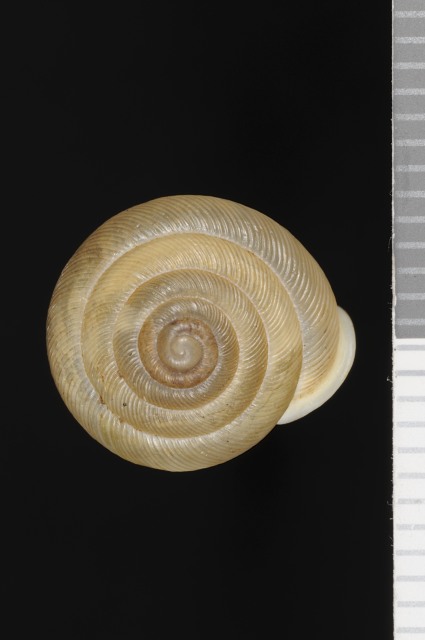
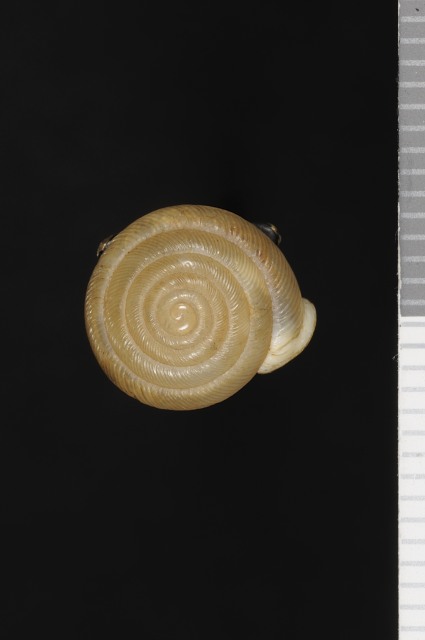
Triodopsis hopetonensis

Image Usage Information

  • The Academy of Natural Sciences of Philadelphia
  • CC BY-NC 4.0 DEED
  • For additional information about this specimen: Gary Rosenberg (rosenberg.ansp@drexel.edu)

Family: Polygyridae

Common name: Magnolia Threetooth

Discovery: Shuttleworth, 1852

Identification

Width: 11-13 mm
Height: 5.5-6.5 mm
Whorls: 5+

The three-toothed Triodopsis hopetonensis has a medium-sized, tongue-shaped parietal denticle, a thick, rounded tooth on the peristome, and a small basal tooth upon a buttress. Compared with T. fallax, the narrow umbilicus is not deep and the teeth are more widely spaced. The depressed-globose outer shell has close radial striae. Its central spire is somewhat pronounced.

Ecology

This snail prefers moderately damp habitats, and often occurs in large numbers. It may be found in woodland, in open grassy areas, and very commonly in urban settings (Hubricht, 1985). It can also be seen near salt or brackish water (Pilsbry, 1940).

Taxonomy

Other names for T. hopetonensis include Helix hopetonensis, H. tridentata, H. t. var. ephabus, Polygyra hopetonensis, P. h. var. charlestonensis, and Triodopsis fallax hopetonensis.

Distribution

Triodopsis hopetonensis is widespread throughout the southeastern United States, stretching as far north as Maryland and west to Louisiana, especially along the coast. In Virginia it lives on the southeastern shore and Piedmont.

Conservation

NatureServe Global Rank: G4G5
NatureServe State Rank: S3S4
January 13, 2023 by

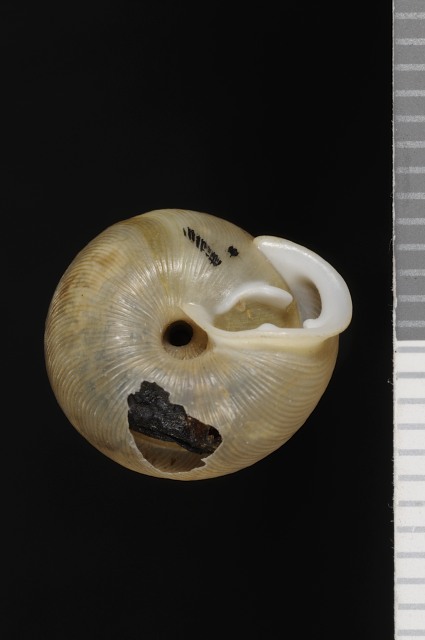
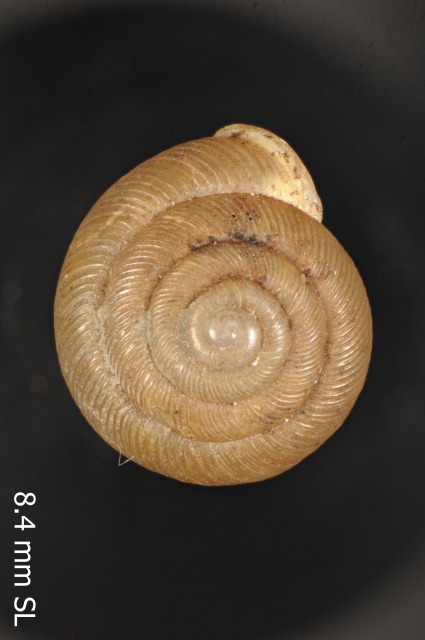
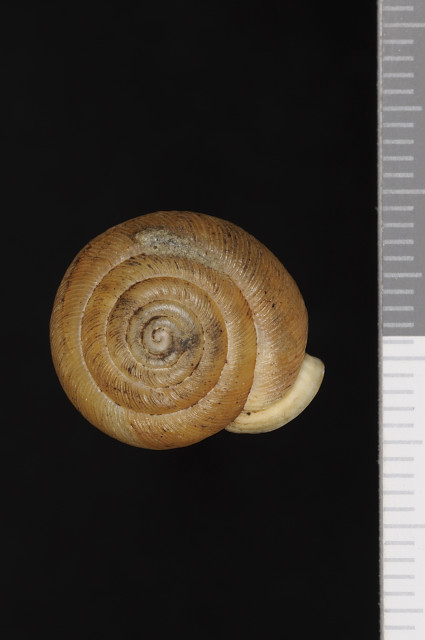
Triodopsis fraudulenta

Image Usage Information

  • The Academy of Natural Sciences of Philadelphia
  • CC BY-NC 4.0 DEED
  • For additional information about this specimen: Gary Rosenberg (rosenberg.ansp@drexel.edu)

Family: Polygyridae

Common name: Baffled Threetooth

Discovery: Pilsbry, 1894

Identification

Width: 14.5-16.5 mm
Height: 7-9 mm
Whorls: 6+

The tightly-coiled whorls of Triodopsis fraudulenta end in a mild descent at the aperture, which has a widely-reflected lip. Radial striae are regularly spaced on the body whorl, and the open umbilicus (wider than that of T. fallax) is covered in tiny papillae. The squared-off tooth on the outer lip is recessed in the aperture. The parietal tooth is long, high, and straight, and the basal tooth is small and blunt. Though similar, the shell of T. fraudulenta is not as depressed as that of T. tridentata.

Ecology

This snail lives in leaf litter on the ground surface in both “duff” and “turf” habitats. In addition to being found in leaves and around logs in wooded, hilly areas, it is also sometimes found in grassy places such as roadsides and meadows (Hubricht, 1985).

Taxonomy

T. fraudulenta has also been known as Polygyra tridentata fraudulenta.

Distribution

Triodopsis fraudulenta is a central Appalachian Mountain endemic, found from central Pennsylvania to western Virginia (Hubricht, 1985). In Virginia it inhabits the western mountains.

Conservation

NatureServe Global Rank: G4
NatureServe State Rank: S3
Virginia’s wildlife action plan: Tier IV

January 13, 2023 by

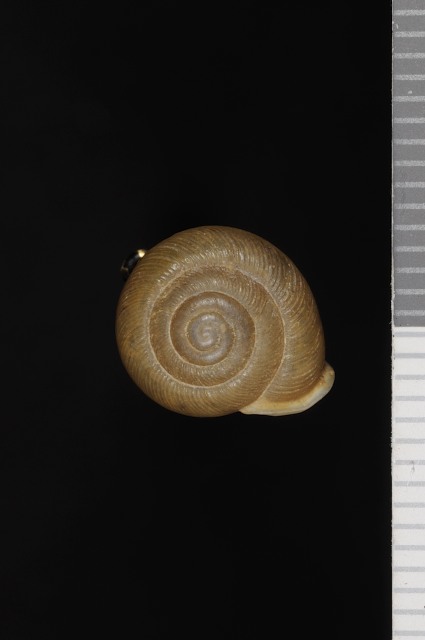
Triodopsis fallax

Image Usage Information

  • The Academy of Natural Sciences of Philadelphia
  • CC BY-NC 4.0 DEED
  • For additional information about this specimen: Gary Rosenberg (rosenberg.ansp@drexel.edu)

Family: Polygyridae

Common name: Mimic Threetooth

Discovery: Say, 1825

Identification

Width: 11-13 mm
Height: 7-9 mm
Whorls: 5+

The narrow umbilicus of Triodopsis fallax may have a dome-like or cone-shaped spire, and is covered in tiny papillae (Pilsbry, 1940). The aperture has three distinct lobes separated by two obtuse angles on either side of the basal lip. The parietal tooth, slightly boomerang-shaped as seen from below, protrudes towards the bluff-shaped tooth on the outer lip. The narrow, blunt basal tooth rises abruptly from its base.

Ecology

This snail prefers open habitats. It typically inhabits clearings, meadows, and the verges of roads and railroad tracks (Hubricht, 1985).

Taxonomy

Previous names for T. fallax include: Helix fallax, H. introferens, Polygyra fallax, Triodopsis introferens, and T. i. var. minor.

Triodopsis fallax affinis or Triodopsis affinis is a designation given to an apparent hybrid between this species and T. alabamensis (Hubricht, 1954; 1985), and is a name no longer formally recognized.

Distribution

Triodopsis fallax is a snail of the Ridge-and-Valley. It primarily occupies the eastern portion of the Middle Atlantic, from Pennsylvania in the north to Georgia in the south.

Conservation

NatureServe Global Rank: G5
NatureServe State Rank: S4

January 13, 2023 by

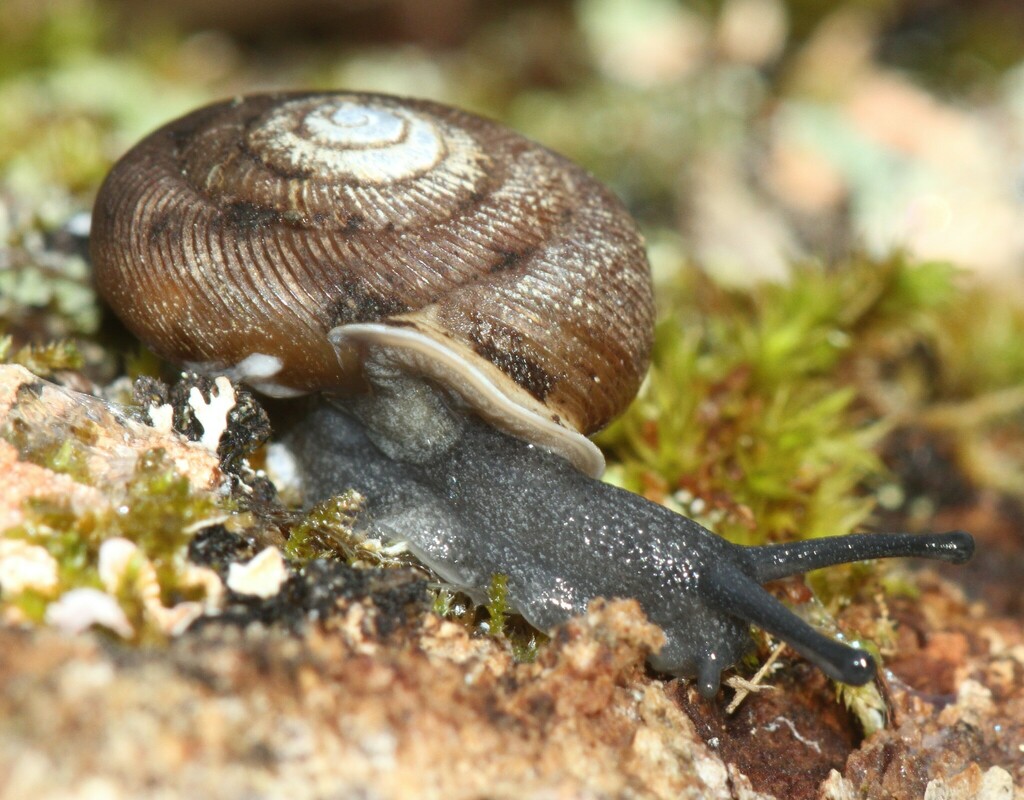
Triodopsis burchi

Image Usage Information

  • The Academy of Natural Sciences of Philadelphia
  • CC BY-NC 4.0 DEED
  • For additional information about this specimen: Gary Rosenberg (rosenberg.ansp@drexel.edu)

Family: Polygyridae

Common name: Pittsylvania Threetooth

Discovery: Hubricht, 1950

Identification

Width: 7.5-15+ mm
Height: 4.0-7.5 mm
Whorls: 4+

The shell of Triodopsis burchi has a low, cone-shaped spire. The three denticles in the aperture are weak or may be absent. When they are present, a small, cone-like tooth can be found on both the upper and basal lips, and the parietal tooth is short. The final whorl does not descend in front and is guttered behind the flat, reflected lip. While the earlier whorls are smooth, the final two whorls have fine radial striae. There are no spiral lines. It is much smaller and more glossy than Triodopsis tennesseensis (Hubricht, 1950).

Ecology

This snail prefers oak forests and may be found on mountainsides and in ravines under logs and leaf litter (Hubricht 1985).

Taxonomy

Taxonomic work looking at this animal’s proteins and reproductive anatomy suggests that it is unique in its genus (Emberton, 1988). Triodopsis burchi has also been known as T. tennesseensis burchi.

Distribution

Triodopsis burchi is known only from West Virginia, North Carolina and the middle counties of Virginia, where it is listed as a vulnerable species.

Conservation

NatureServe Global Rank: G3
NatureServe State Rank: S3
Virginia’s wildlife action plan: Tier IV

January 13, 2023 by

Triodopsis anteridon

Image Usage Information

  • Waynevand
  • CC BY-NC 4.0 DEED
  • Additional information about this specimen

Family: Polygyridae

Common name: Carter Threetooth

Discovery: Pilsbry, 1940

Identification

Width: 10.5-13.0 mm
Height: 6-7 mm
Whorls: 5+

Triodopsis anteridon’s shell has three denticles or “teeth” in the aperture, like many of its genus. The whorls of its shell gradually increase in size and – excepting the smooth nuclear whorl – are covered with regularly-spaced radial striae. The shell surface around the open umbilicus and behind the flat, reflected lip is covered in tiny bumps. The small, blunt teeth on the basal and outer lips of the aperture rise abruptly from their bases. The large parietal tooth is slightly curved towards the palatal edge of the aperture and has a slight dip in its lower edge.

Ecology

Triodopsis anteridon may be found on wooded hillsides and in ravines, in and around leaf litter and logs (Hubricht 1985).

Taxonomy

Taxonomic work suggests this animal is a close relative of Triodopsis tridentata (Emberton, 1988). It has also been known as Triodopsis rugosa anteridon.

Distribution

This animal is a globally-restricted native to the central Appalachian Mountains of West Virginia and the westernmost counties of Virginia.

Conservation

NatureServe Global Rank: G3
NatureServe State Rank: S2S3
Virginia’s wildlife action plan: Tier III

January 13, 2023 by

Triodopsis alabamensis

Image Usage Information

  • The Academy of Natural Sciences of Philadelphia
  • CC BY-NC 4.0 DEED
  • For additional information about this specimen: Gary Rosenberg (rosenberg.ansp@drexel.edu)

Family: Polygyridae

Common name: Alabama Threetooth

Discovery: Pilsbry, 1902

Identification

Width: 11-12 mm
Height: 5-7 mm
Whorls: 6+

The low, dome-shaped shell of Triodopsis alabamensis has whorls that are very closely coiled around an open umbilicus. The final whorl of the shell descends, so at the aperture it is attached to the previous whorl about a third of the way down from the top. The periphery of the aperture is dish-shaped, with the top edge in a nearly horizontal plane. The shell has three teeth, like many of its genus, with a pronounced and somewhat curved parietal tooth on the body whorl. The palatal lip tooth is bent inward.

Ecology

This snail prefers pine or oak forests, and is usually found in leaf litter and around logs (Coney et al, 1982; Hubricht, 1985).

Taxonomy

T. alabamensis has also been known as Polygyra alabamensis, P. vannostrandi alabamensis, and Triodopsis vannostrandi alabamensis.

Distribution

T. alabamensis inhabits the southern Appalachian Mountains of Alabama, South Carolina, Georgia, Tennessee, and Virginia (Hubricht, 1985). Virginia’s population is an apparent disjunct in Pittsylvania County (though not reported in Hubricht, 1950).

Conservation

NatureServe Global Rank: G4
NatureServe State Rank: SNR

  • « Go to Previous Page
  • Page 1
  • Interim pages omitted …
  • Page 8
  • Page 9
  • Page 10
  • Page 11
  • Page 12
  • Interim pages omitted …
  • Page 53
  • Go to Next Page »

sidebar

About

  • Mission & Commitments
  • Directors Team
  • Museum History

Get Involved

  • Volunteer
  • Membership
  • Carnegie Discoverers
  • Donate
  • Employment
  • Events

Bring a Group

  • Groups of 10 or More
  • Birthday Parties at the Museum
  • Field Trips

Powdermill

  • Powdermill Nature Reserve
  • Powdermill Field Trips
  • Powdermill Staff
  • Research at Powdermill

More Information

  • Image Permission Requests
  • Science Stories
  • Accessibility
  • Shopping Cart
  • Contact
  • Visitor Policies
One of the Four Carnegie Museums | © Carnegie Institute | Privacy Policy | Terms of Use | Accessibility
Rad works here logo