• Skip to primary navigation
  • Skip to main content
  • Skip to primary sidebar

Carnegie Museum of Natural History

One of the Four Carnegie Museums of Pittsburgh

  • Visit
    • Buy Tickets
    • Visitor Information
    • Exhibitions
    • Events
    • Dining at the Museum
    • Celebrate at the Museum
    • Powdermill Nature Reserve
    • Event Venue Rental
    • Gift Cards
  • Learn
    • Field Trips
    • Educator Information
    • Programs at the Museum
    • Bring the Museum to You
    • Guided Programs FAQ
    • Programs Online
    • Climate and Rural Systems Partnership
  • Research
    • Scientific Sections
    • Science Stories
    • Science Videos
    • Senior Science & Research Staff
    • Museum Library
    • Science Seminars
    • Scientific Publications
    • Specimen and Artifact Identification
  • About
    • Mission & Commitments
    • Directors Team
    • Museum History
  • Tickets
  • Give
  • Shop

January 13, 2023 by

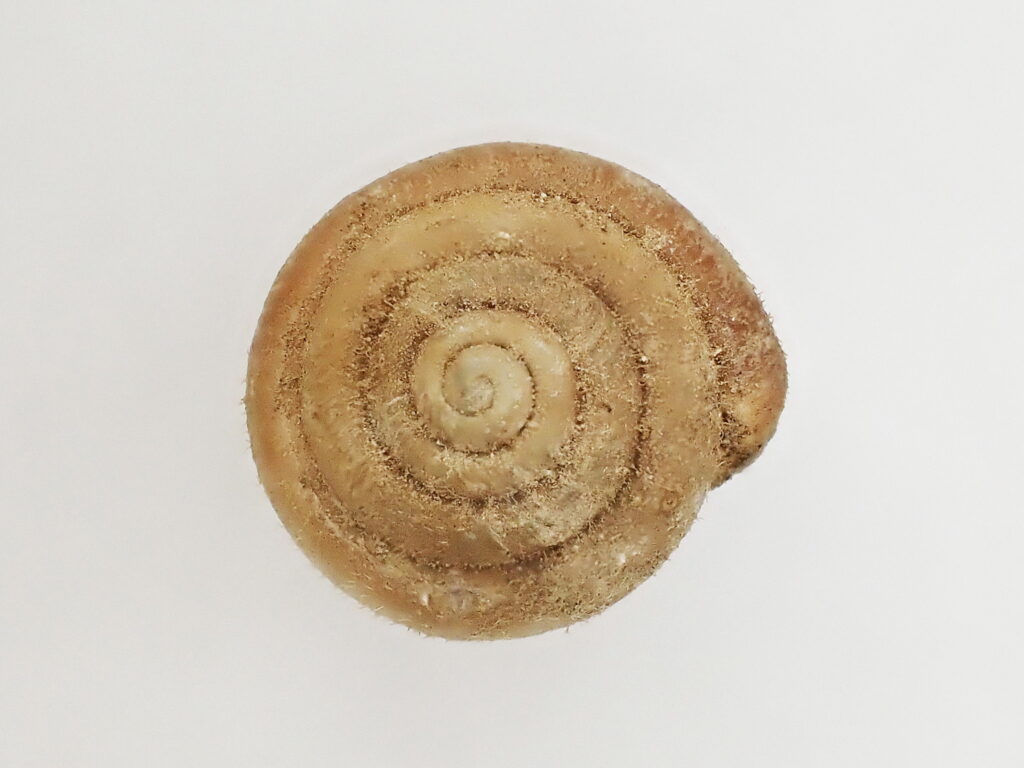
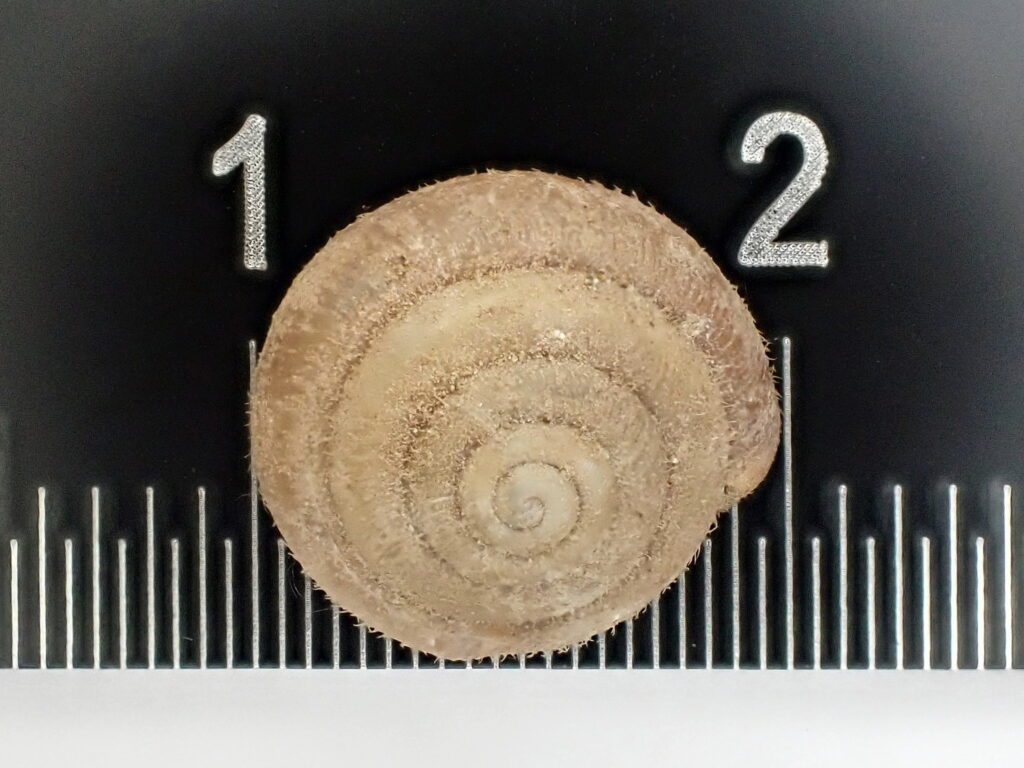
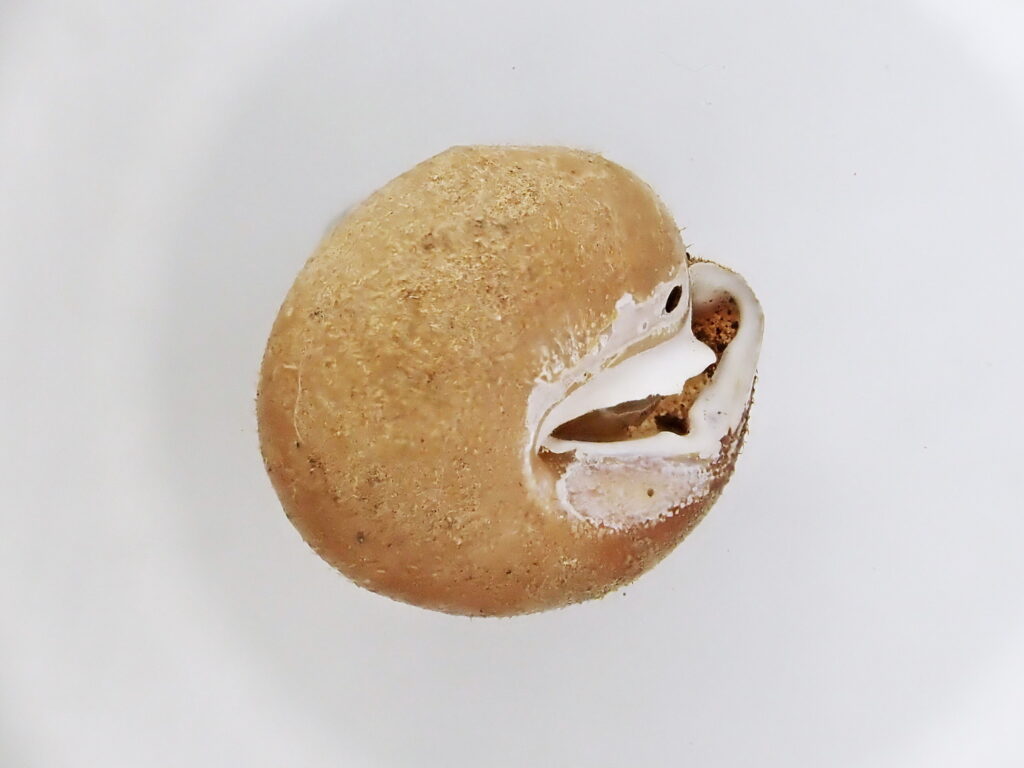
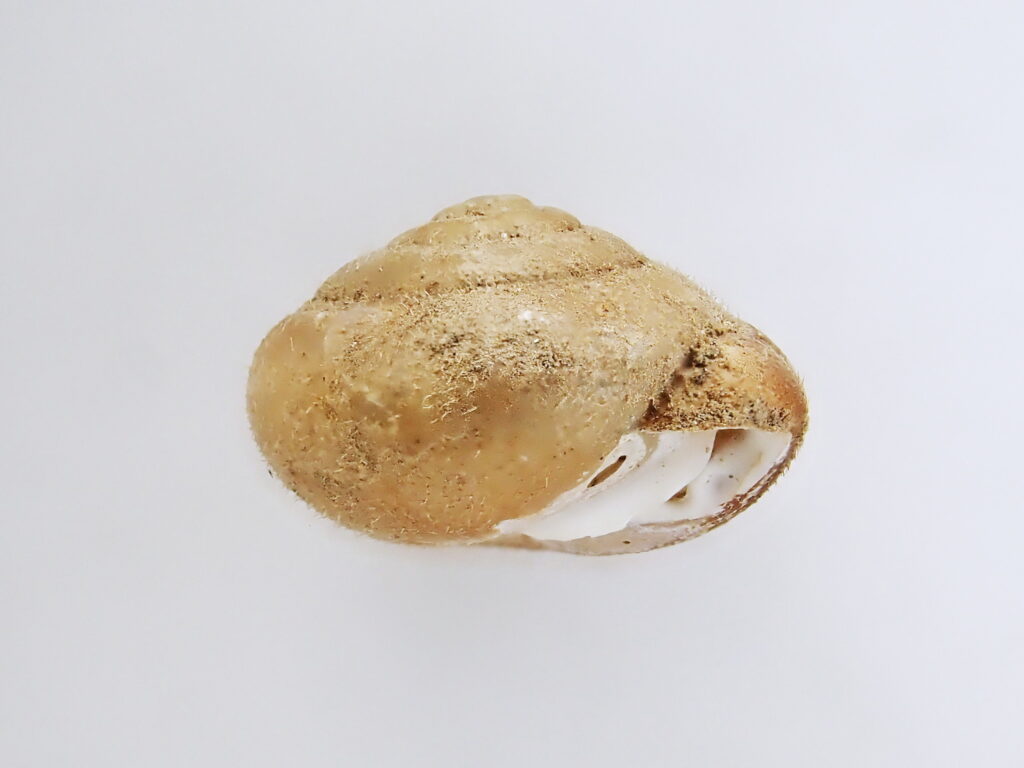
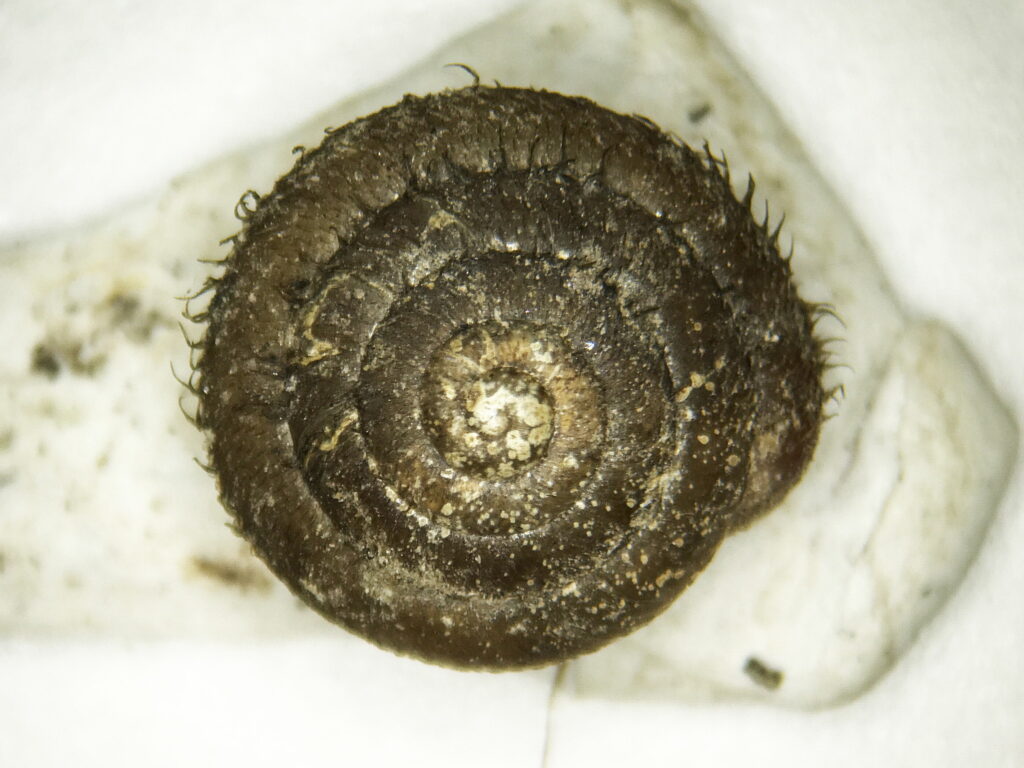
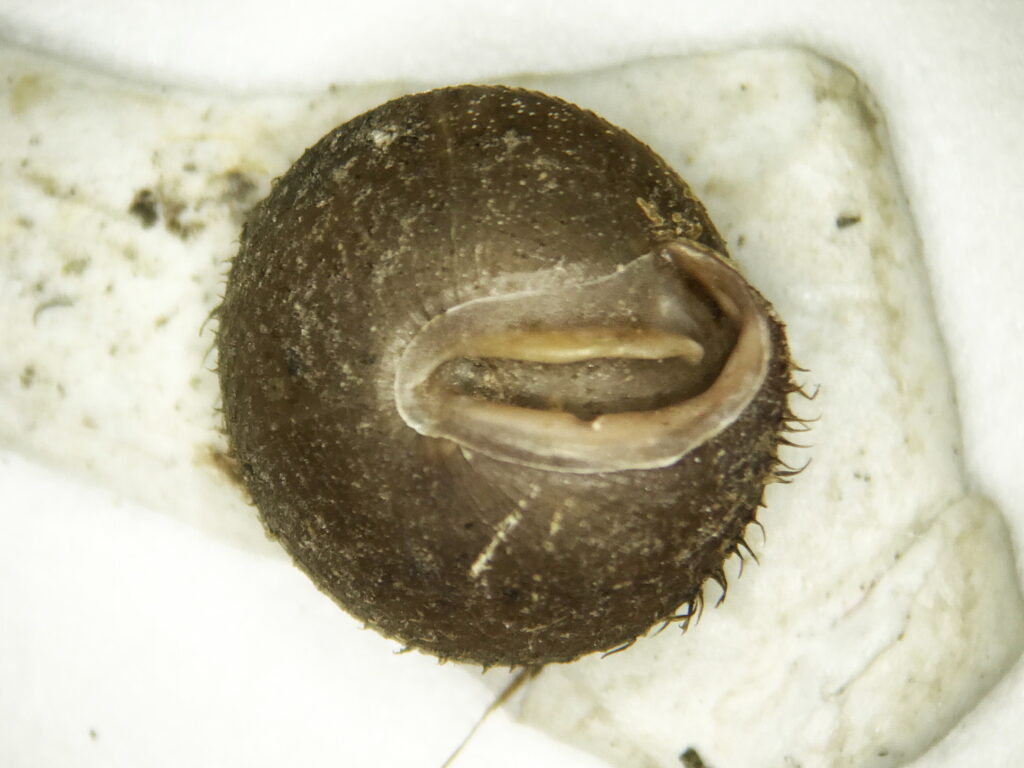
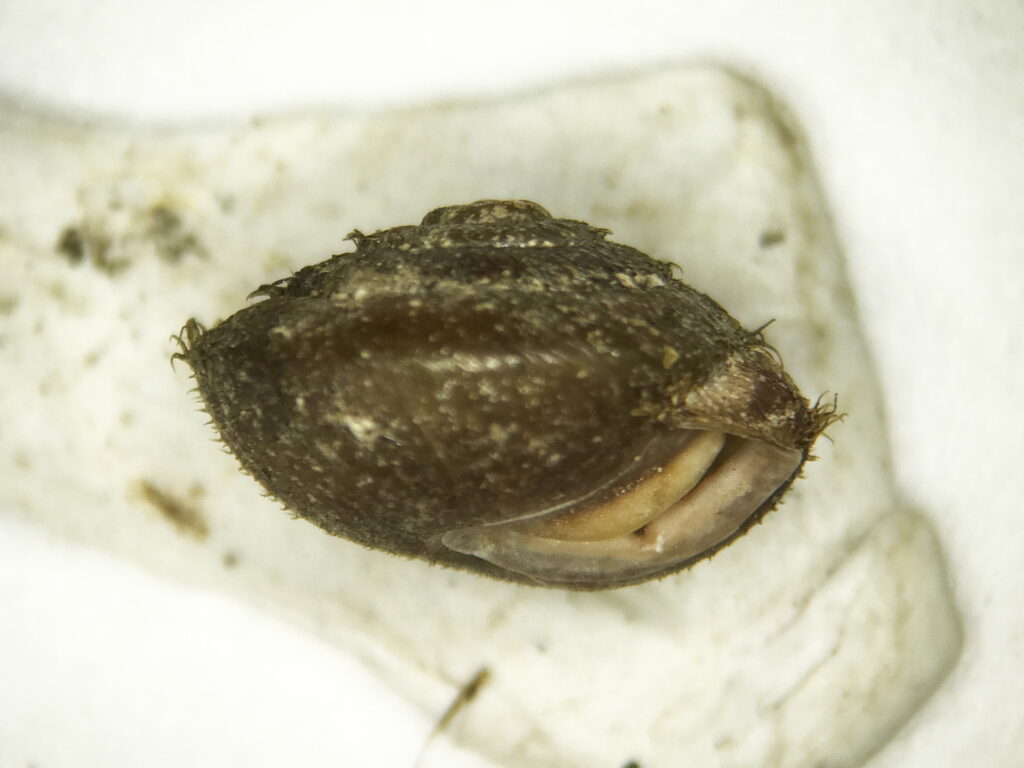
Stenotrema edvardsi

Image Usage Information

  • David Lang
  • CC BY-NC 4.0 DEED
  • Additional information about this specimen

Family: Polygyridae

Common name: Ridge-and-Valley Slitmouth

Discovery: Bland, 1856

Identification

Width: 7-8 mm
Height: 4.5-5.5 mm
Whorls: 5+

The somewhat flattened, lens-shaped shell of Stenotrema edvardsi is angular at the periphery. The pattern of processes upon the shell of this animal is distinctive – with small, hairlike radial ridges on the upper surface, and short hairs at the periphery. The parietal tooth is low and long, and does not project as far as the basal lip. The basal notch is small and there is only a shallow interdenticular sinus.

Ecology

This animal prefers rocky wooded areas (Hubricht, 1985), and may be found in leaf litter and around logs and other features.

Taxonomy

Synonyms for S. edvardsi include: Helix edvardsi, Polygyra edwardsi, Stenotrema edvardsi, and S. edwardsii.

Distribution

Stenotrema edvardsi inhabits the Appalachian Mountains from Pennsylvania in the north to Georgia in the south (Pilsbry, 1940; Hubricht, 1985). In Virginia it may be found primarily in the western counties.

Conservation

NatureServe Global Rank: G4G5
NatureServe State Rank: S3S4

January 13, 2023 by

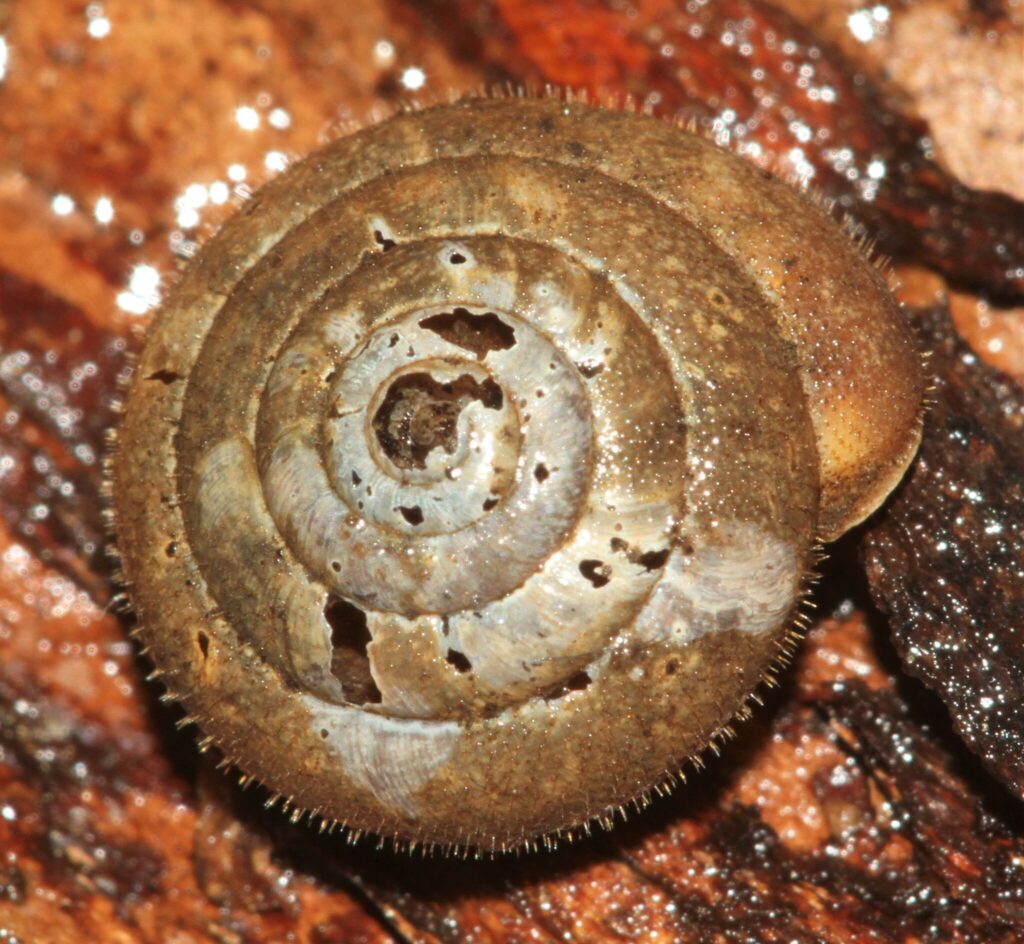
Stenotrema burringtoni

placeholder

Family: Polygyridae

Common name: none

Discovery: Grimm, 1971

Identification

Width: 8.4 mm
Height: 5.5 mm
Whorls: 5

Stenotrema burringtoni has a small depressed-globose shell, covered densely in short hairs and having quite a narrow aperture. The shell is imperforate and colored a pale cinnamon-brown. The parietal lamella is relatively wide and sinuous, curving into the interdenticular sinus. The basal lip is wide and thickened, with a relatively deep notch.

In this species the fulcrum, an interior lamella near the columella, is stout and pointed downward or slightly to the right. Its base can sometimes be seen through the shell. In S. hirsutum the fulcrum is more frail and pointed to the left, its parietal tooth less sinuous and less pronounced, its basal notch more shallow, and its hairs less dense.

Ecology

Though known from few sites, Stenotrema burringtoni is apparently a calciphile, found in limestone talus or rubble.

Taxonomy

This species was submerged within S. hirsutum by Hubricht (1974), but it consistently differs from S. hirsutum in aperture and fulcrum shape. There are no synonyms.

Distribution

The range of Stenotrema burringtoni is uncertain as it has not been long-recognized as a species distinct from S. hirsutum.  It does appear to be globally restricted, reported by Grimm (1971) from one Highland county site and found in recent work by the author in Alleghany County.

Conservation

NatureServe Global Rank: G5Q (in error)
NatureServe State Rank: SNR

January 13, 2023 by

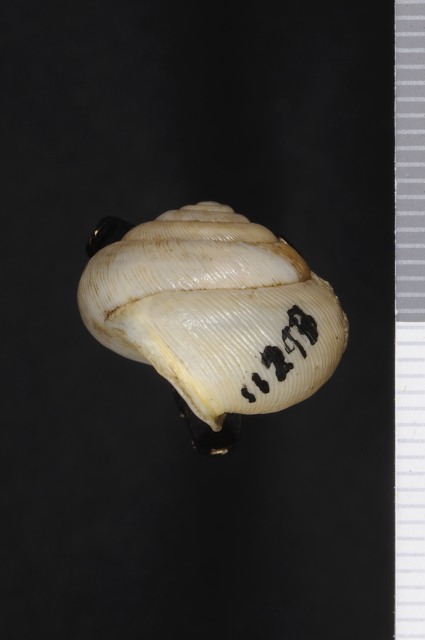
Stenotrema barbatum

Image Usage Information

  • David Lang
  • CC BY-NC 4.0 DEED
  • Additional information about this specimen

Family: Polygyridae

Common name: Bristled Slitmouth

Discovery: G.H. Clapp, 1904

Identification

Width: 8-11 mm
Height: 5.5-7.0 mm tall
Whorls: 5+

Tiny processes or “hairs” cover the shell of Stenotrema barbatum, which has a very narrow aperture. In side view its parietal lamella or “tooth” is quite evident, and the final whorl of its shell is angled high on the side, giving it the ap­pearance of having “shoulders.” Its hairs are relatively coarse and its shell a bit larger than some of its close relatives. Like other slitmouths it has a covered umbilicus.

Ecology

Stenotrema barbatum can be found under logs and leaf litter. In most areas it frequents wooded areas near or on floodplains; in West Virginia and Pennsylvania it prefers more upland sites (Hubricht, 1985).

Taxonomy

Stenotrema barbatum has also been known as Stenotrema barbata, S. hirsutum barbatum, and Polygyra (Stenotrema) barbata.

Distribution

This is typically a Midwestern and mid-Atlantic forest species, ranging from Minnesota and Kansas to the north and west, to Alabama, the Carolinas, and Massachusetts in the east. In Virginia it is found in scattered locations on the coast and south-central counties.

Conservation

NatureServe Global Rank: G5
NatureServe State Rank: S3S4

January 13, 2023 by

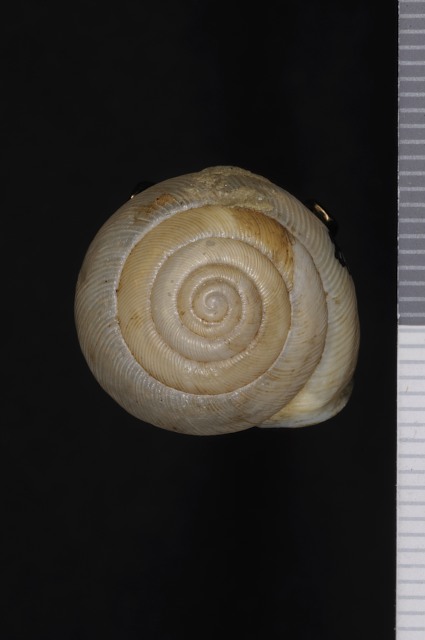
Stenotrema altispira

Image Usage Information

  • Waynevand
  • CC BY-NC 4.0 DEED
  • Additional information about this specimen

Family: Polygyridae

Common name: Highland Slitmouth

Discovery: Pilsbry, 1894

Identification

Width: 8.5-11 mm
Height: 6.5-8 mm
Whorls: 5+

The thin shell of Stenotrema altispira is beehive-shaped, with short, stiff hairs on the lower whorls. The shell is a bit taller than other slitmouth snails. The aperture is very narrow, with a long, slender parietal tooth. A slight indentation can be seen in the basal lip. The umbilicus is imperforate.

Ecology

It lives at higher elevations, in leaf litter and woody debris (Hubricht, 1985). In the Great Smoky Mountains S. altispira is found in various hardwood forest habitats (Dourson & Dourson, 2006).

Taxonomy

Synonyms for S. altispira include: Polygyra altispira, P. hirsuta altispira, and Stenotrema hirsutum.

Distribution

Stenotrema altispira is only known from the mountains of Virginia, Tennessee and North Carolina. In Virginia it is reported only in Grayson and Smyth Counties.

Conservation

NatureServe Global Rank: G3
NatureServe State Rank: S1
Virginia’s wildlife action plan: Tier II

January 13, 2023 by

Patera pennsylvanica

Image Usage Information

  • The Academy of Natural Sciences of Philadelphia
  • CC BY-NC 4.0 DEED
  • For additional information about this specimen: Gary Rosenberg (rosenberg.ansp@drexel.edu)

Family: Polygyridae

Common name: Proud Globelet

Discovery: Greene, 1827

Identification

Width: 15-20 mm
Height: 10.2-15 mm
Whorls: 5.5-6

The shell of Patera pennsylvanica is nearly round, only a bit depressed heliciform. The top edge of the aperture points abruptly downward and is only slightly reflected. The right side of aperture is angular, not as rounded as in other Patera species. The shell is imperforate with no teeth, its whorls are tightly coiled, and the color is light tan to yellowish-olive. Transverse striae are well-developed and spiral striae is always present and a strong feature. This species is similar to Patera appressa but lacks a parietal denticle, has a higher spire, and the last whorl strongly descends at the aperture (Grimm et al., 2009).

Ecology

Patera pennsylvanica is usually found on wooded hillsides or in ravines, under leaf litter, or under rocks as well as grassy hillsides (Hubricht, 1985). In West Virginia it has been found on limestone slopes and can be fairly common in mature stands of sugar maple. It is also found in open road cuts and grassy areas along abandoned railroad beds, suggesting that it may have “hitchhiked” to those locations on railroad cars or automobiles.

Taxonomy

The true phylogenic position of Patera pennsylvanica is unclear. It could be a member of the Patera clade, or a unique relict of an isolated, look-alike genus within the Mesodontini tribe (Emberton, 1991). Synonyms include Mesodon pennsylvanicus, Helix pennsylvanicus, Helix pennsylvanica, and Polygyra pennsylvanica.

Distribution

This is a native snail of the central-eastern United States including Illinois, Indiana, Kentucky, Missouri, Michigan, and Ohio, as well as Ontario, Canada. In the Northeast it is known only from Pennsylvania and West Virginia.

Conservation

NatureServe Rank: G3. NatureServe State Ranks: Pennsylvania (S1), West Virginia (S2). This species is uncommon in the Northeast states in which it occurs.

January 13, 2023 by

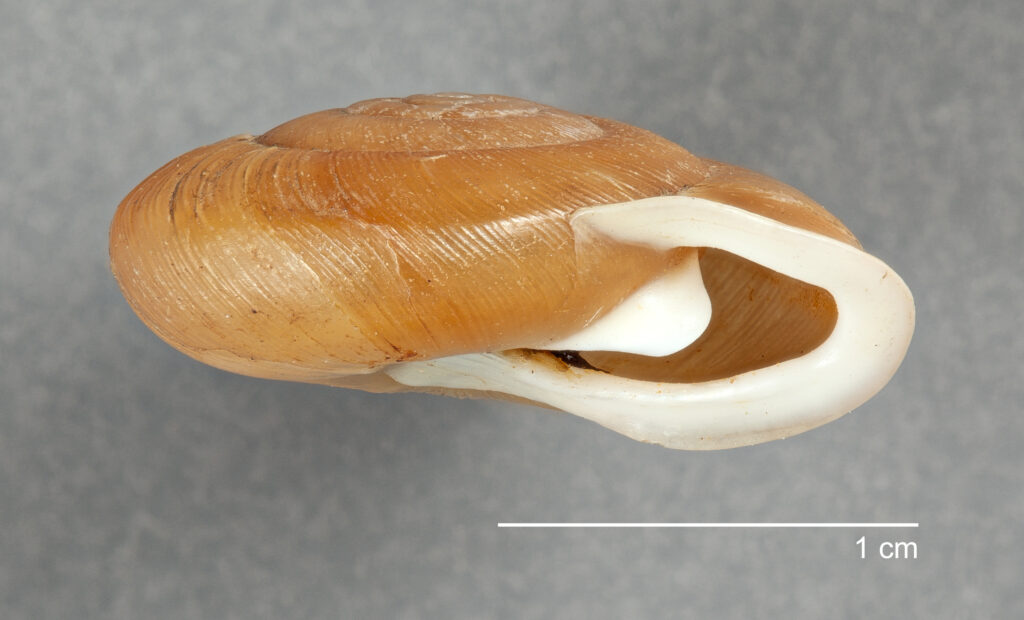
Patera panselenus

  • Field Museum of Natural History
  • CC BY-NC 3.0 DEED
  • Field Museum Copyright Information
  • For additional information about this specimen, please contact: Rüdiger Bieler, Curator (rbieler@fieldmuseum.org)

Family: Polygyridae

Common name: Virginia Bladetooth

Discovery: Hubricht, 1976

Identification

Width: 17 – 21 mm
Height: 8.0 – 9.5 mm
Whorls: 5+

The depressed shell of Patera panselenus is usually a cryptic grey or brownish color. Rounded, radial ribs cover the shell, more weakly on the inner whorls. These ribs are intersected by regularly-spaced spiral lirae. The oval aperture is constricted behind the white, reflected lip. A single, curved tooth is found on the parietal wall and the basal lip bears a slight lamina. The umbilicus is closed.

Ecology

This snail lives on steep slopes and along small runs in mature forest, and is strongly associated with rock outcrops and talus (Hotopp, 2006). It is an expert climber of rock surfaces, and may be found adhered high upon rock faces or beneath overhangs when aestivating during summer dry spells. Patera panselenus may be found among sandstone, shale, and limestone, and colonies of a dozen or more scattered individuals have been observed in northern West Virginia.

Taxonomy

Patera panselenus has also been known as Mesodon panselenus.

Distribution

Patera panselenus is a southern Appalachian Mountain endemic. Though it may be common where it occurs, the range of P. panselenus is concentrated in 22 counties mainly in southern West Virginia and nearby Virginia and Kentucky. It is reported from Buchanan, Dickenson, and Wise Counties in Virginia (Hubricht, 1985). Virginia specimens of Patera perigrapta, a more southerly species, are probably P. panselenus.

Conservation

NatureServe Global Rank: G3
NatureServe State Rank: S2
Virginia’s wildlife action plan: Tier III

  • « Go to Previous Page
  • Page 1
  • Interim pages omitted …
  • Page 10
  • Page 11
  • Page 12
  • Page 13
  • Page 14
  • Interim pages omitted …
  • Page 53
  • Go to Next Page »

sidebar

About

  • Mission & Commitments
  • Directors Team
  • Museum History

Get Involved

  • Volunteer
  • Membership
  • Carnegie Discoverers
  • Donate
  • Employment
  • Events

Bring a Group

  • Groups of 10 or More
  • Birthday Parties at the Museum
  • Field Trips

Powdermill

  • Powdermill Nature Reserve
  • Powdermill Field Trips
  • Powdermill Staff
  • Research at Powdermill

More Information

  • Image Permission Requests
  • Science Stories
  • Accessibility
  • Shopping Cart
  • Contact
  • Visitor Policies
One of the Four Carnegie Museums | © Carnegie Institute | Privacy Policy | Terms of Use | Accessibility
Rad works here logo