• Skip to primary navigation
  • Skip to main content
  • Skip to primary sidebar

Carnegie Museum of Natural History

One of the Four Carnegie Museums of Pittsburgh

  • Visit
    • Buy Tickets
    • Visitor Information
    • Exhibitions
    • Events
    • Dining at the Museum
    • Celebrate at the Museum
    • Powdermill Nature Reserve
    • Event Venue Rental
    • Gift Cards
  • Learn
    • Field Trips
    • Educator Information
    • Programs at the Museum
    • Bring the Museum to You
    • Guided Programs FAQ
    • Programs Online
    • Climate and Rural Systems Partnership
  • Research
    • Scientific Sections
    • Science Stories
    • Science Videos
    • Senior Science & Research Staff
    • Museum Library
    • Science Seminars
    • Scientific Publications
    • Specimen and Artifact Identification
  • About
    • Mission & Commitments
    • Directors Team
    • Museum History
  • Tickets
  • Give
  • Shop

January 13, 2023 by

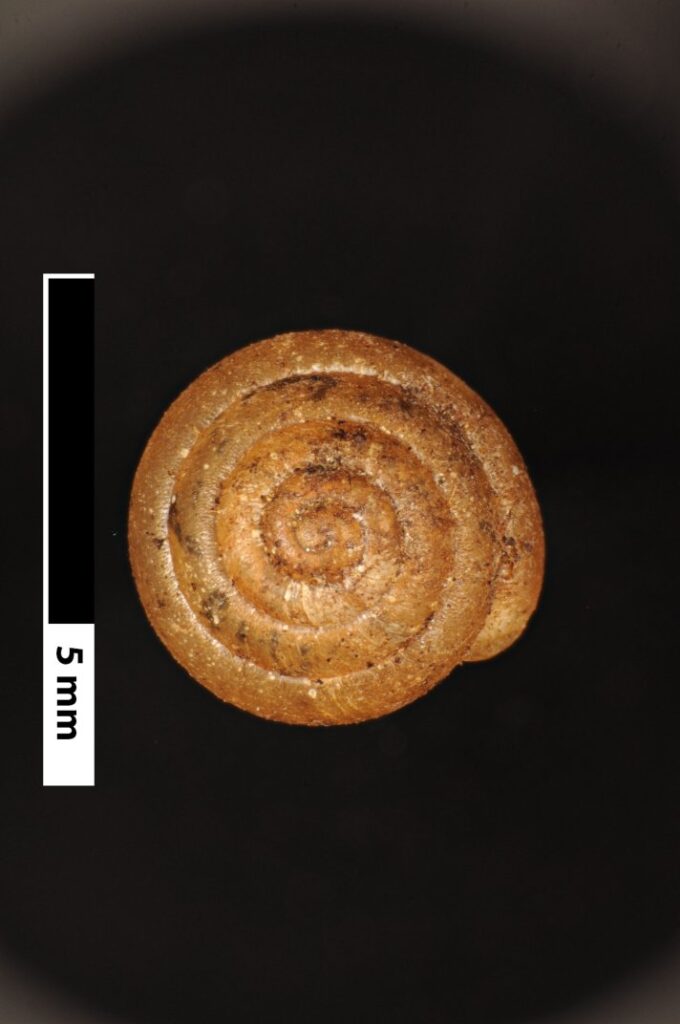
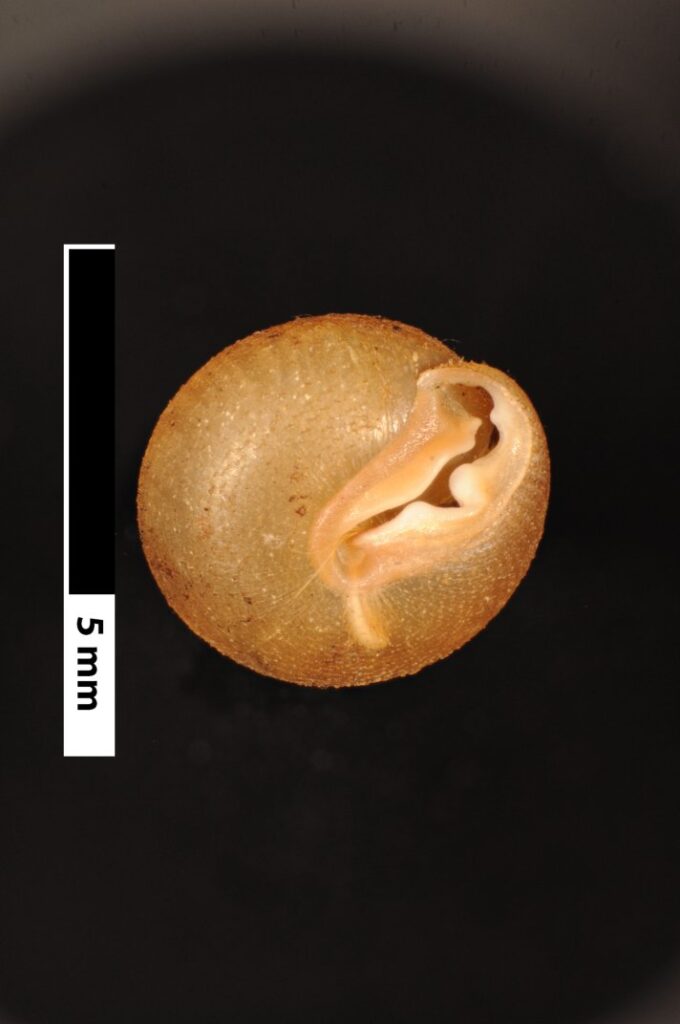
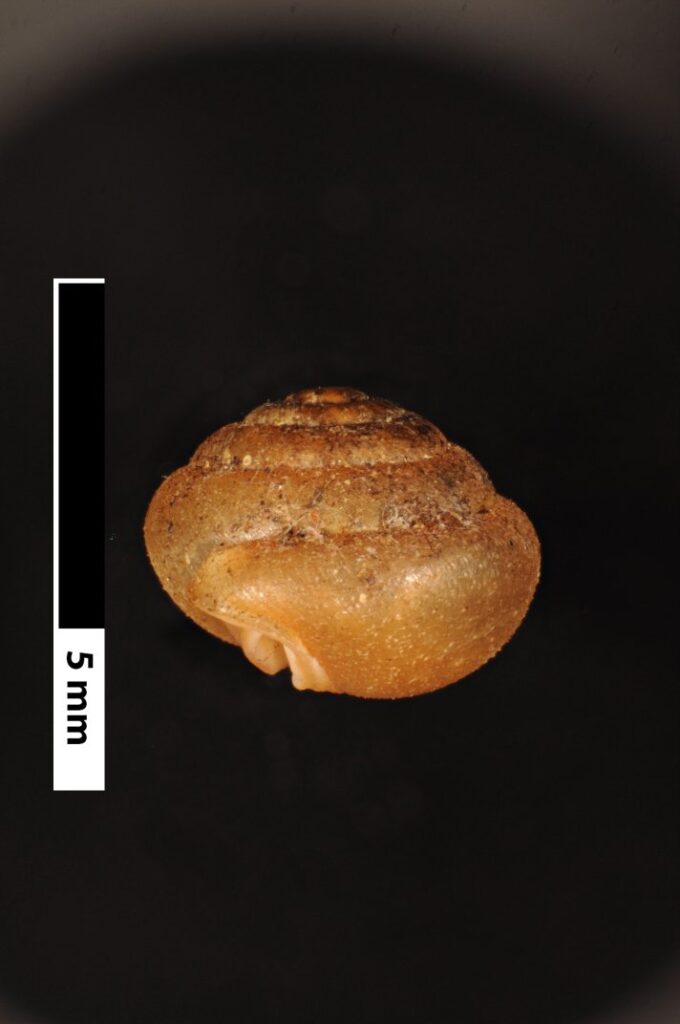
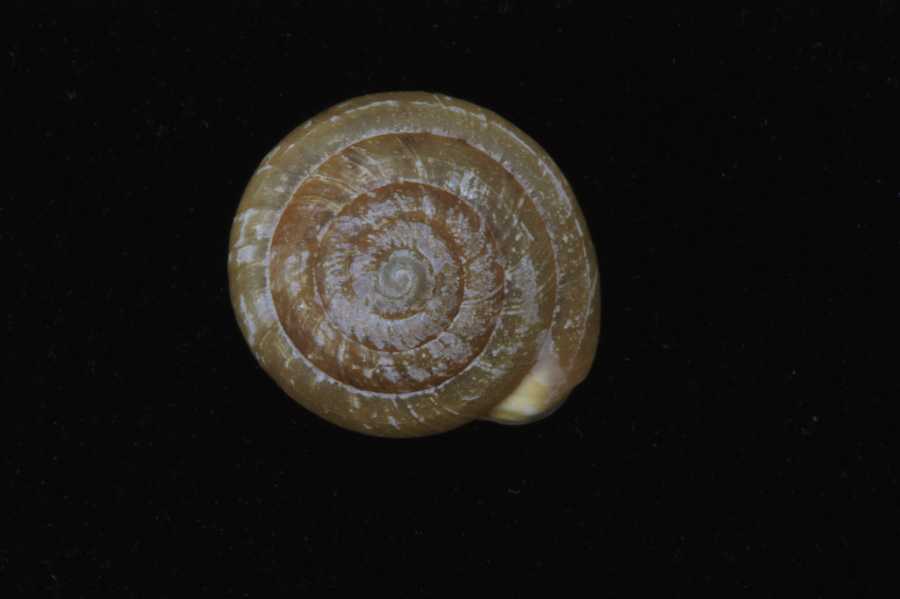
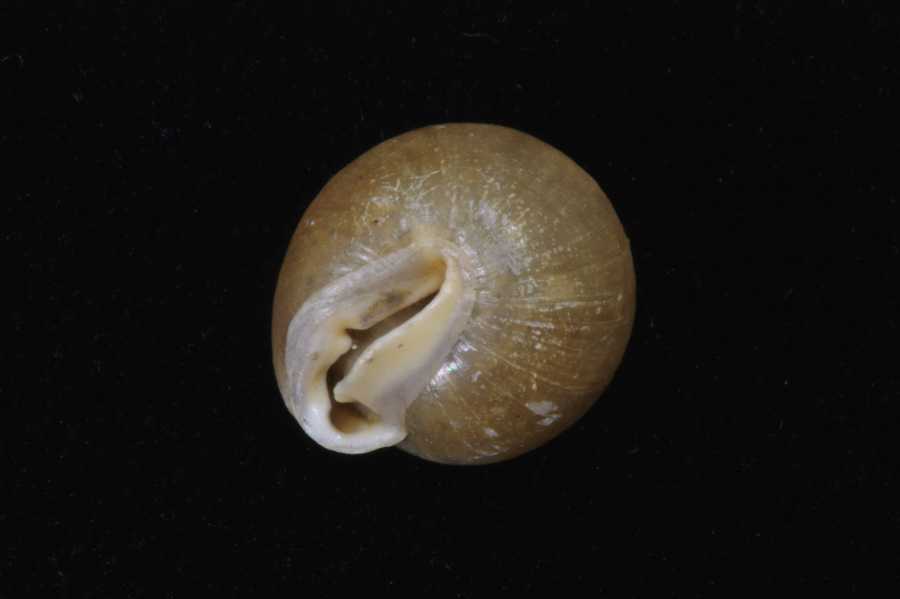
Stenotrema stenotrema

Image Usage Information

  • Chicago Academy of Sciences, Malacology Collection
  • CC BY-NC-SA 3.0 DEED
  • Additional information about this specimen

Family: Polygyridae

Common name: Inland Slitmouth

Discovery: Pfeiffer, 1842

Identification

Width: 7.5-11.0 mm
Height: 5.5-8.0 mm
Whorls: 5+

The shell of Stenotrema stenotrema has a depressed globe shape and is covered in short hairs. The slit-like aperture has a high, curved parietal tooth and the straight basal lip is notched near the middle. It is usually a bit larger than its close relative S. hirsutum.

Ecology

This species can be found in a variety of habitats, especially in hilly, wooded areas and in ravines (Hubricht, 1985). In Tennessee it has a mild affinity for woody debris, steep slopes, and oak-hickory-sugar maple forests (Coney et al, 1982).

Taxonomy

Synonyms for S. stenotrema include Helix hirsuta, H. stenotrema, Polygyra stenotrema, P. s. nuda, P. s. seminuda, P. (Stenotrema) voluminosa, Stenostoma convexa, Stenotrema convexa, and S. stenotremum.

Distribution

Stenotrema stenotrema has a wide range that extends throughout much of the Midwest and southeastern United States, as far north as Ohio and Illinois, west to eastern Oklahoma and Texas, and as far south as the Gulf Coast (Pilsbry, 1940; Hubricht, 1985). In Virginia it occurs in the western and northern parts of the state, but is absent from the coast and piedmont.

Conservation

NatureServe Global Rank: G5
NatureServe State Rank: S4
January 13, 2023 by

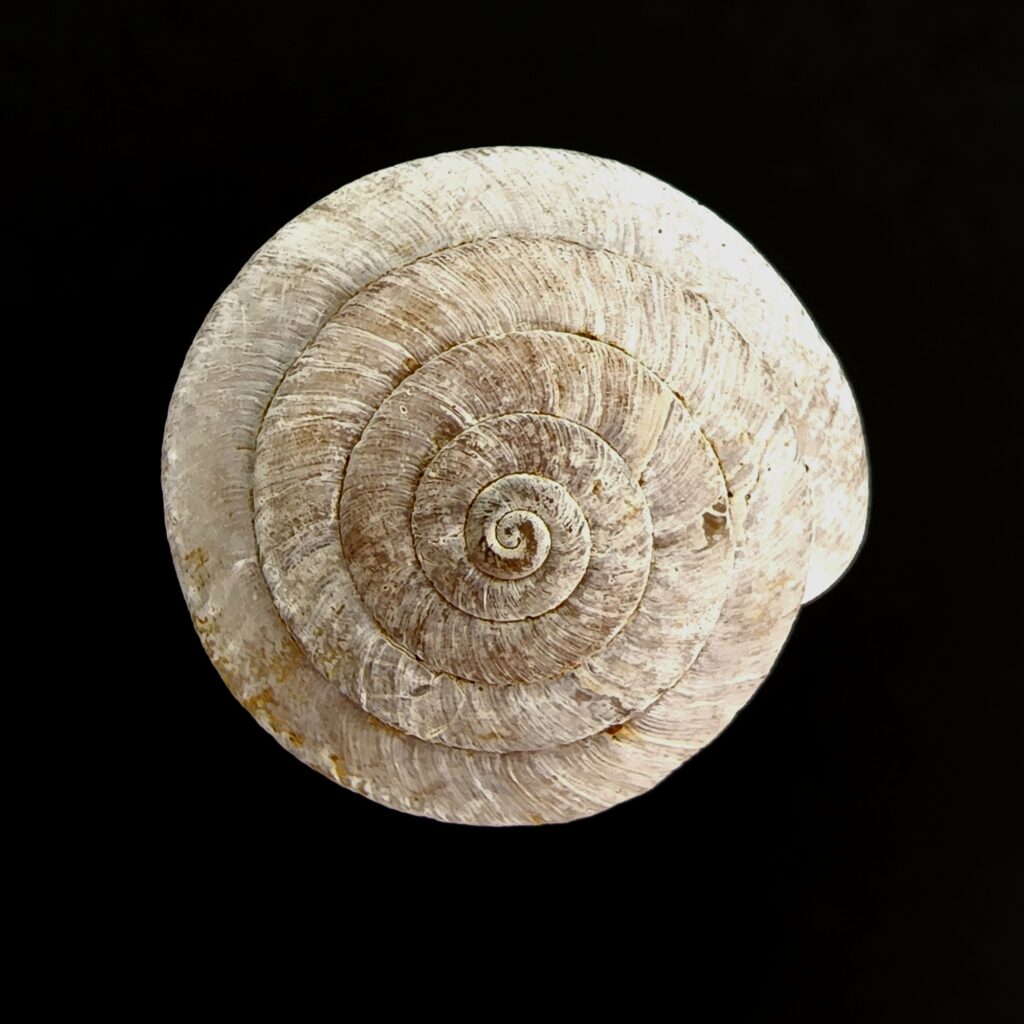
Stenotrema spinosum

Image Usage Information

  • John Whitmore
  • CC BY-NC 4.0 DEED
  • Additional information about this specimen

Family: Polygyridae

Common name: Carinate Slitmouth

Discovery: Lea, 1830

Identification

Width: 11.5-14.5 mm
Height: 5.0-6.5 mm
Whorls: 5+

The smooth shell of Stenotrema spinosum is lens-like, with a very sharp, angular periphery. Very weak spiral striae may be seen on the base (Pilsbry, 1940). The aperture is straight and the notch in the basal lip is so slight as to be almost invisible. The long, curved parietal tooth leans toward the basal lip and is high in the middle.

Ecology

This animal can be found around logs in calcium-rich wooded areas (Hubricht, 1985).

Taxonomy

Synonyms for S. spinosum are Carocolla spinosa, Helix spinosa, Polygyra spinosa, and Stenotrema spinosum.

Distribution

Stenotrema spinosum occupies the southeastern United States, from Mississippi and Alabama in the south, to the western counties of Virginia in the north. It is reported in Virginia only from the southwestern counties.

Conservation

NatureServe Global Rank: G4
NatureServe State Rank: S2
Virginia’s wildlife action plan: Tier III

January 13, 2023 by

Stenotrema simile

Family: Polygyridae

Common name: Bear Creek Slitmouth

Discovery: Grimm, 1971

Identification

Width: ~9.3 mm
Height: ~6.7 mm
Whorls: 5+

The shell of Stenotrema simileis pill-shaped, subglobose, with a closed umbilicus. It is well-armored, with a narrow, reflected aperture and covered with bristles. Shell color varies from cinnamon brown to olive (Grimm, 1971). Its fulcrum, an internal denticle sometimes visible through the base, is shorter and its basal notch more pronounced than in the similar-looking S. hirsutum. There isa knob-like tooth on the peripheral side of the basal notch (Grimm, 1971). Coarse granulations on the embryonic whorl are another diagnostic character.

Ecology

Stenotrema simile inhabits cool wet woods and ravines, and tends to be found at lower population densities than S. hirsutum (Grimm, 1971). It is found under leaf litter and woody debris on rugged hillsides (Grimm, 1971; Hubricht, 1985).

Taxonomy

There are no synonyms.

Distribution

Stenotrema simile is a Central Appalachian Mountain endemic known only from western Maryland and eastern West Virginia. While it is spread over several counties it is little-reported.

Conservation

NatureServe Rank: G2, Imperiled.
NatureServe State Ranks: Maryland, SU, Status Unknown; West Virginia, SNR, Not Ranked.

January 13, 2023 by

Stenotrema pilula

Image Usage Information

  • The Academy of Natural Sciences of Philadelphia
  • CC BY-NC 4.0 DEED
  • For additional information about this specimen: Gary Rosenberg (rosenberg.ansp@drexel.edu)

Family: Polygyridae

Common name: Pygmy Slitmouth

Discovery: Pilsbry, 1900

Identification

Width: 5.5-6.5mm wide
Height: 4-5mm tall
Whorls: 5+ whorls

This species has a shell typical of the rounded and hairy slitmouth snails, except that it is quite small. The long parietal tooth is sinuous, and may be slightly hooked as it bends into the interdenticular sinus. The basal lip has a median notch with teeth on both sides and a blunt outer, palatal, tooth. Scale-like sculpture covers the last whorl of the shell, especially at the base.

Ecology

Preferring dry wooded slopes, Stenotrema pilula can be found under logs and in leaf litter (Hubricht, 1985).

Taxonomy

Stenotrema pilula has also been known as Polygyra hirsuta pilula and P. pilula.

Distribution

It is unlikely that S. pilula lives in Virginia. It inhabits the southern Appalachian Mountains in Tennessee, North Carolina, Alabama, and Georgia. It is reported for Virginia in NatureServe Explorer (2013), but not reported for the state by Pilsbry (1940) or Hubricht (1985). We did not encounter museum records for this animal, and there are no Virginia Dept. of Game & Inland Fisheries records (S. Roble, pers. comm., 2013).

Conservation

NatureServe Global Rank: G3/G4
NatureServe State Rank: S1
Virginia’s wildlife action plan: Tier III

January 13, 2023 by

Stenotrema macgregori

  • Field Museum of Natural History
  • CC BY-NC 3.0 DEED
  • Field Museum Copyright Information
  • For additional information about this specimen, please contact: Rüdiger Bieler, Curator (rbieler@fieldmuseum.org)

Family: Polygyridae

Common name: Fraudulent Slitmouth

Discovery: Dourson, 2011

Identification

Width: 8-10 mm
Whorls: 5-6

The shell of this snail is pill-shaped and imperforate. The parietal tooth is long, the basal notch shallow, and the interdenticular notch almost non-existent. Within the shell aperture is a short fulcrum. Short stiff “hairs” upon the periostracum sparsely cover the outer surface. The shell is smaller than S. stenotrema and has a slightly wider aperture (Dourson, 2011).

Ecology

In eastern Kentucky, Stenotrema macgregori lives in leaf litter in richer, mid-elevation forests of Pine Mountain on the Virginia border (Dourson, 2011). It is absent from more acid hemlock stands, rhododendron patches, and ridgetops.

Taxonomy

There are no synonyms for this recently-described species.

Distribution

Although this species has not yet been reported in Virginia, it may well be found in the western counties abutting Kentucky.

Conservation

January 13, 2023 by

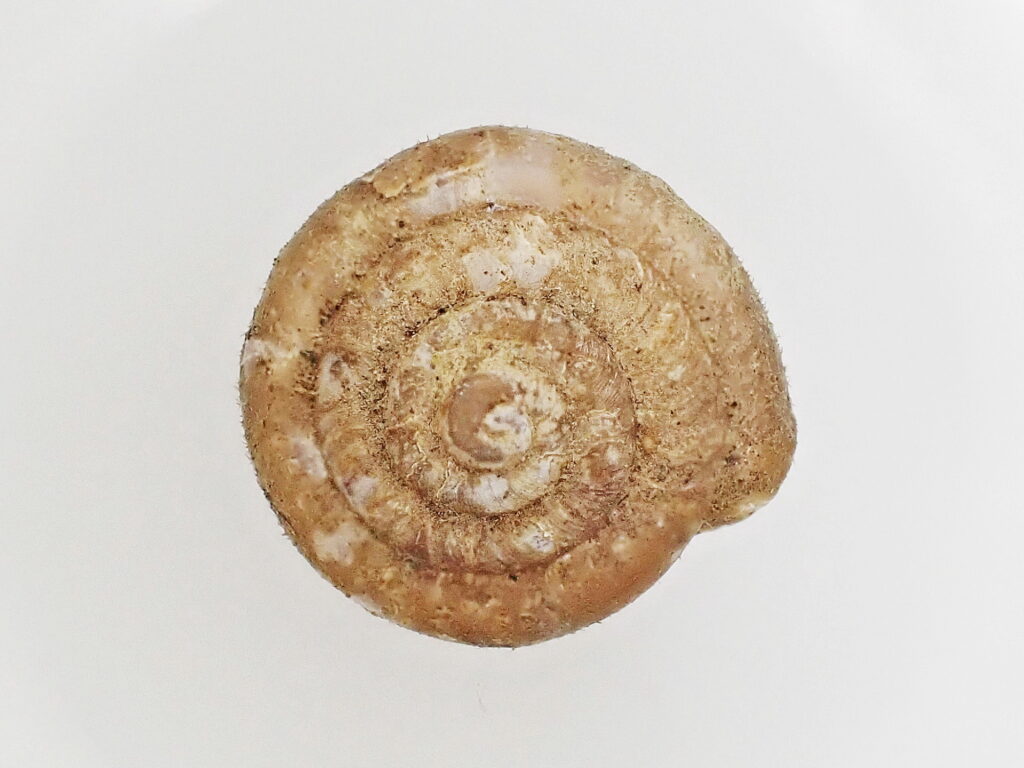
Stenotrema hirsutum

Image Usage Information

  • David Lang
  • CC BY-NC 4.0 DEED
  • Additional information about this specimen

Family: Polygyridae

Common name: Hairy Slitmouth

Discovery: Say, 1817

Identification

Width: 6.5-9.5 mm
Height: 4-6 mm
Whorls: 5+

This species has a small rounded shell, covered in short hairs and having a narrow aperture. Stenotrema hirsutum is generally smaller and rounder than its relative S. barbatum. Its hairs are finer and the aperture a tiny bit wider. In side view the parietal lamella of S. hirsutum is not pronounced. The short hairs of its shell usually trap debris and spider webs. In the field this species has the appearance of a basswood seed.

Ecology

Stenotrema hirsutum is a shy animal that favors complex ground structure for its habitat. It may be found in leaf litter, under logs and sometimes among vine-covered rock talus. It is normally quite patchy in its distribution, perhaps owing to the distribution of structure. It appears to prefer somewhat richer soils, and in Michigan appeared to be strongly calciphilic (Lee, 1952). There is some discrepancy about its habitat preferences in the literature, with Hubricht (1985) stating that it prefers drier habitats and Lee (1952) that it prefers damp.

Taxonomy

Synonyms for S. hirsutum include: Helix hirsuta, H. porcina, Polygyra hirsuta, P. h. nana, and P. h. yarmouthensis.

Distribution

Stenotrema hirsutum is a snail of Appalachian Mountain forests from Georgia, north to southern Michigan and northeast into the Berkshires of Massachusetts. It may be found across most of Virginia, but is absent from the southeast Atlantic Coast.

Conservation

NatureServe Global Rank: G5
NatureServe State Rank: S4

  • « Go to Previous Page
  • Page 1
  • Interim pages omitted …
  • Page 9
  • Page 10
  • Page 11
  • Page 12
  • Page 13
  • Interim pages omitted …
  • Page 53
  • Go to Next Page »

sidebar

About

  • Mission & Commitments
  • Directors Team
  • Museum History

Get Involved

  • Volunteer
  • Membership
  • Carnegie Discoverers
  • Donate
  • Employment
  • Events

Bring a Group

  • Groups of 10 or More
  • Birthday Parties at the Museum
  • Field Trips

Powdermill

  • Powdermill Nature Reserve
  • Powdermill Field Trips
  • Powdermill Staff
  • Research at Powdermill

More Information

  • Image Permission Requests
  • Science Stories
  • Accessibility
  • Shopping Cart
  • Contact
  • Visitor Policies
Stay in the loop! Sign up for our newsletter(s).
One of the Four Carnegie Museums | © Carnegie Institute | Privacy Policy | Terms of Use | Accessibility
Rad works here logo