• Skip to primary navigation
  • Skip to main content
  • Skip to primary sidebar

Carnegie Museum of Natural History

One of the Four Carnegie Museums of Pittsburgh

  • Visit
    • Buy Tickets
    • Visitor Information
    • Exhibitions
    • Events
    • Dining at the Museum
    • Celebrate at the Museum
    • Powdermill Nature Reserve
    • Event Venue Rental
    • Gift Cards
  • Learn
    • Field Trips
    • Educator Information
    • Programs at the Museum
    • Bring the Museum to You
    • Guided Programs FAQ
    • Programs Online
    • Climate and Rural Systems Partnership
  • Research
    • Scientific Sections
    • Science Stories
    • Science Videos
    • Senior Science & Research Staff
    • Museum Library
    • Science Seminars
    • Scientific Publications
    • Specimen and Artifact Identification
  • About
    • Mission & Commitments
    • Directors Team
    • Museum History
  • Tickets
  • Give
  • Shop

January 13, 2023 by

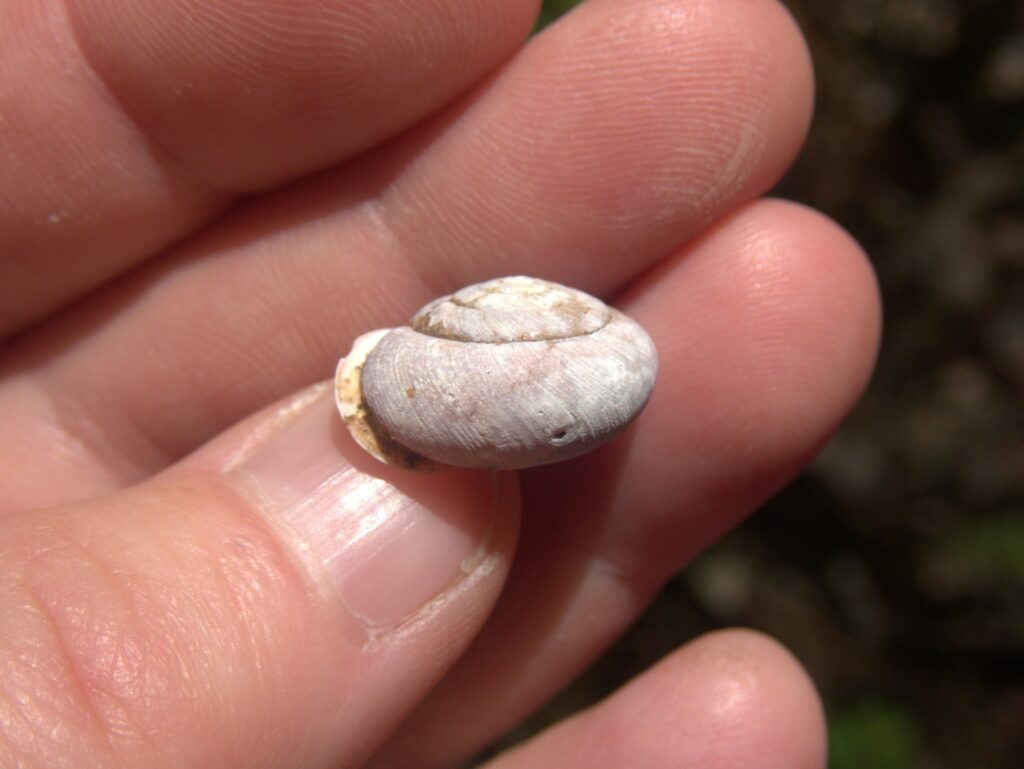
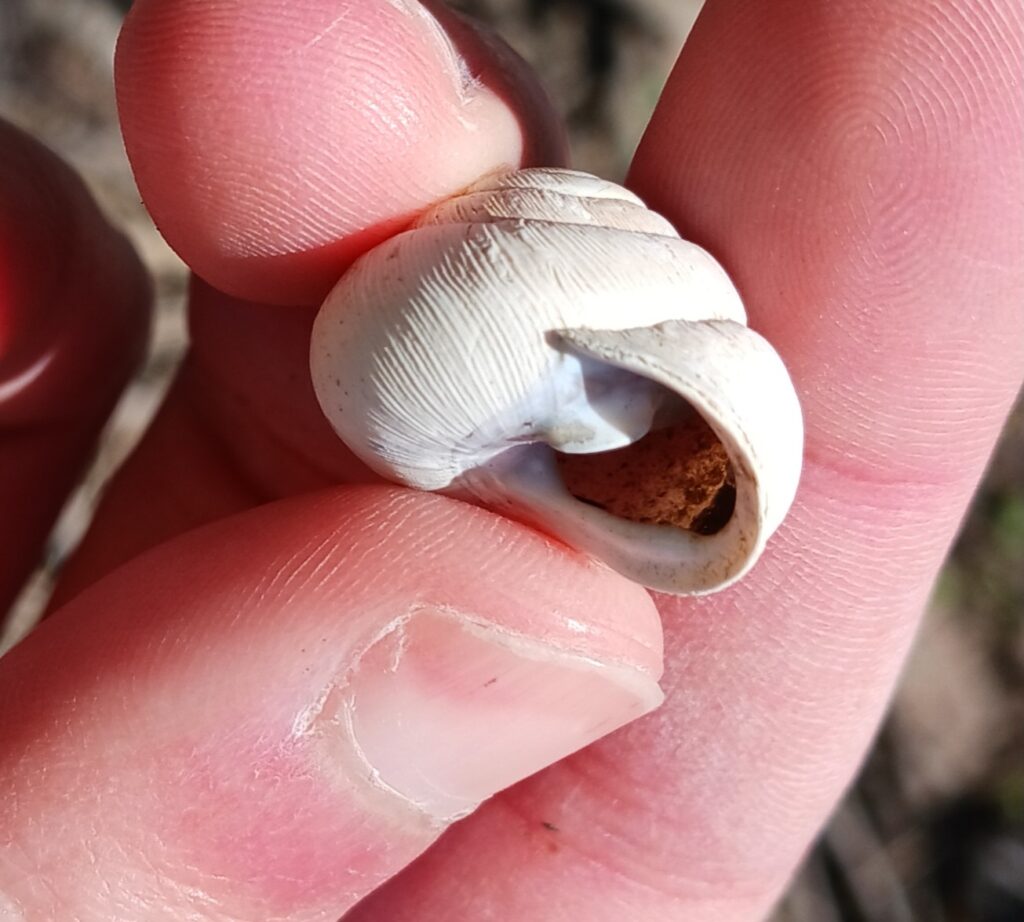
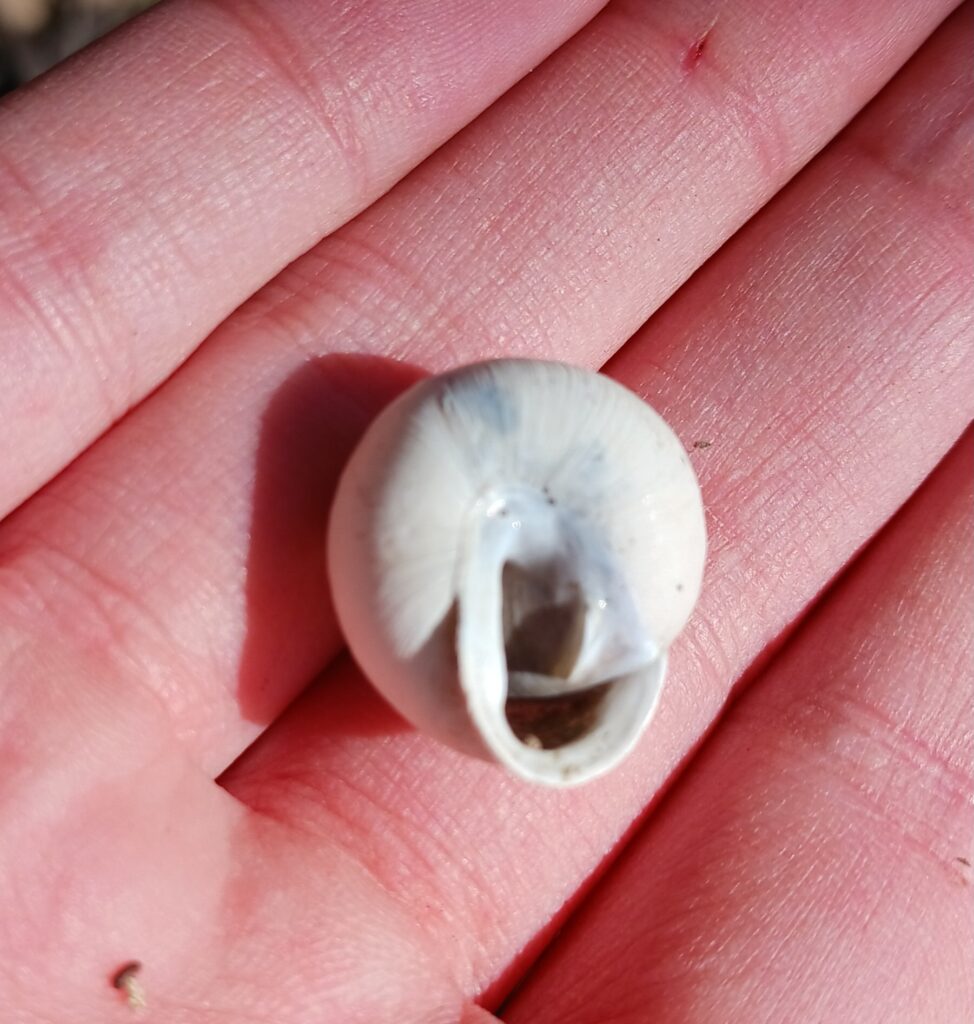
Millerelix plicata

placeholder

Family: Polygyridae

Common name: Cumberland Liptooth

Discovery: Say, 1821

Identification

Width: 5.5-5.7 mm
Height: 2.8-3.1 mm
Whorls: 5+

This animal’s shell is striking for its heavily-guarded aperture. The shell is a flattened heliciform shape, with a wide lip that is deflected toward the base (Pilsbry, 1940). The lip is contiguous with a strong parietal tooth, nearly filling the aperture. There are two irregularly-shaped teeth set within the outer lip. The umbilicus in early stages is perforate, but expands widely in the final whorl. The shell is sculptured with rib-striae and a few “hairs” behind the lip and in the umbilicus.

Ecology

This land snail is a calcium-lover found in leaf litter on dry wooded slopes and cedar glades (Hubricht, 1985). In Tennessee this species diverged from parts of Hubricht’s habitat characterization – it was significantly associated with leaf litter habitat, very steep slopes, and oak-poplar stands (Coney et al, 1982). Its numbers increased with increasing soil moisture, slope and soil pH, and there was an affinity for rich, old forest.

Taxonomy

Synonyms for Millerelix plicata include Daedalochila plicata and Polygyra plicata.

Distribution

Daedalochila plicata is an east-side snail of the southern Appalachians, found from Alabama and Georgia north to southern Ohio (Hubricht, 1985). In Virginia it is reported only from Lee County in the far southwest.

Conservation

NatureServe Global Rank: G4, Apparently Secure
NatureServe State Rank: Virginia, S1S3, Critically Imperiled to Vulnerable
Virginia’s wildlife action plan: Tier III
January 13, 2023 by

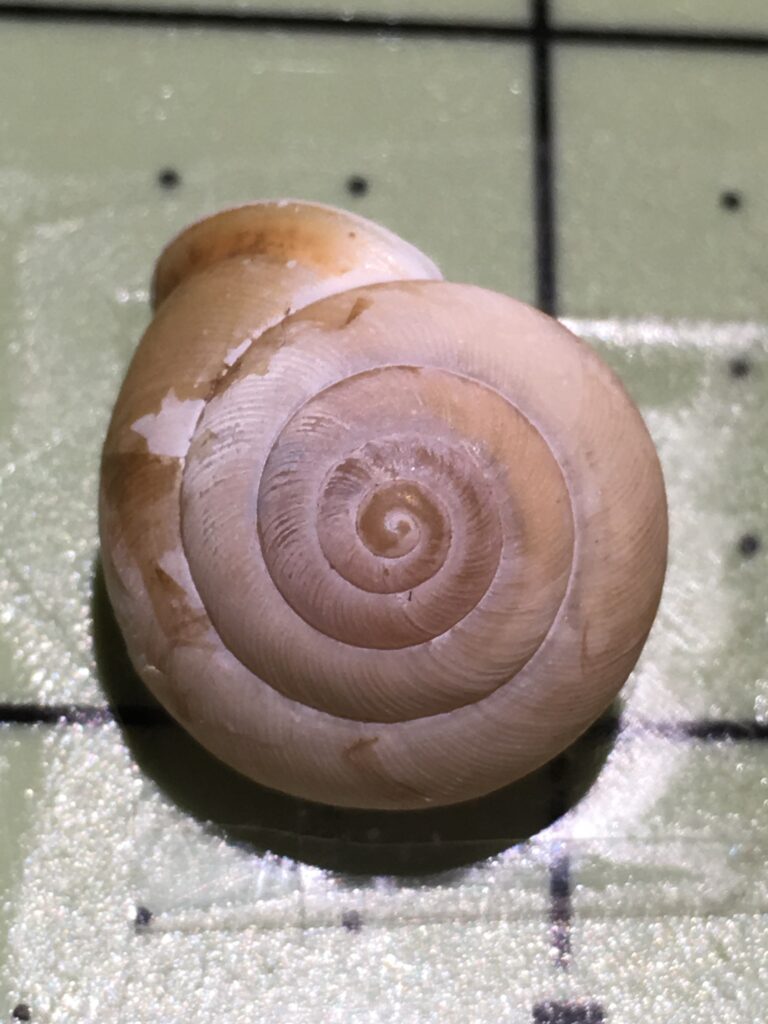
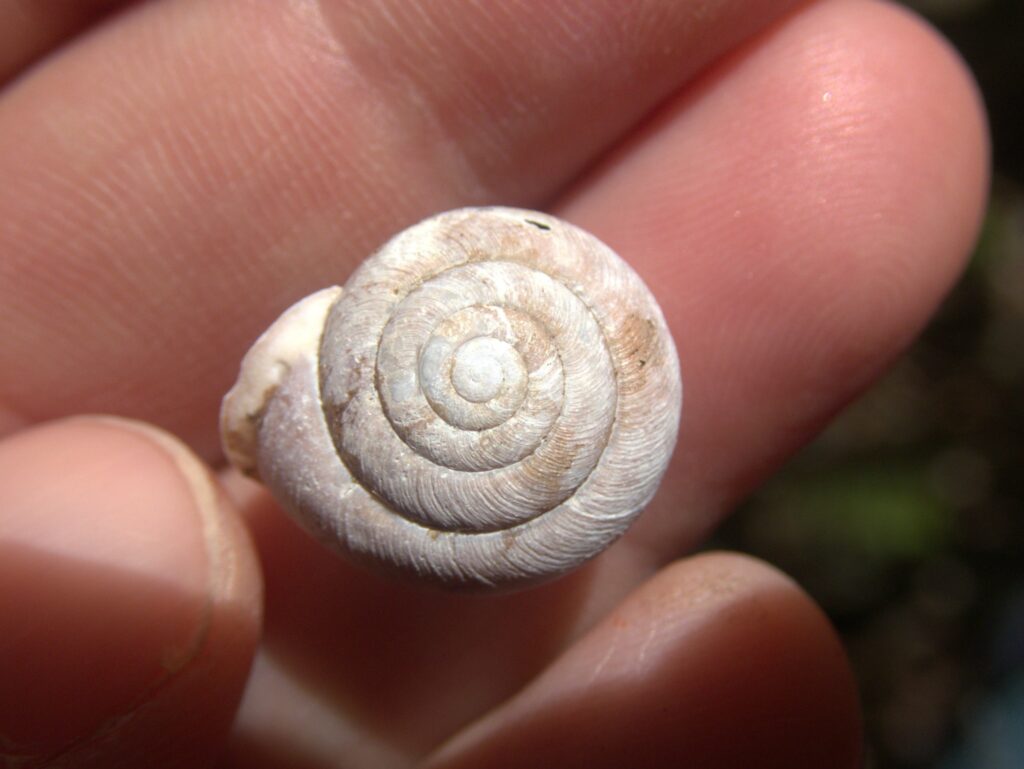
Mesodon zaletus

Image Usage Information

  •  Tina Marie Camp Scheff
  • CC BY-NC 4.0 DEED
  • Additional information about this specimen

Family: Polygyridae

Common name: Toothed Globe

Discovery: A. Binney, 1837

Identification

Width: 24-27 mm
Height: 17-25 mm
Whorls: 5+

This snail’s shell is the largest of those that have a single parietal tooth (on the body whorl). That lamella can be quite small. The shell of Mesodon zaletus is relatively rounded and sturdy. The aperture lip is reflected and the umbilicus is closed. It is apparently a long-lived species and older shells may be whitish, especially at the apex, having lost the brown outer coating called the periostracum.

Ecology

Mesodon zaletus is a denizen of cool hardwood or mixed forests, often inhabiting steep slopes, especially along rivers. It may be found in leaf litter and occasionally in moss. Some of these animals can reach high elevations, living up to 5,000’ (Hubricht, 1985). In Tennessee, it has been associated with limestone areas in late-successional forests (Coney et al., 1982).

Taxonomy

Synonyms for M. zaletus include: Helix albolabris var. unidentata, H. exoleta, H. zaleta, Mesodon andrewsi, M. exoleta, and Polygyra zaleta.

Distribution

The range of M. zaletus extends from New York, southern Ontario and Michigan, to east Texas and northern Alabama. In Virginia this snail is found in the western counties on the West Virginia and Kentucky border.

Conservation

NatureServe Global Rank: G5, Secure
NatureServe State Rank: Pennsylvania, S4S5, Apparently Secure; Virginia, S3S4, Vulnerable to Apparently Secure; otherwise unlisted in Northeastern States.

January 13, 2023 by

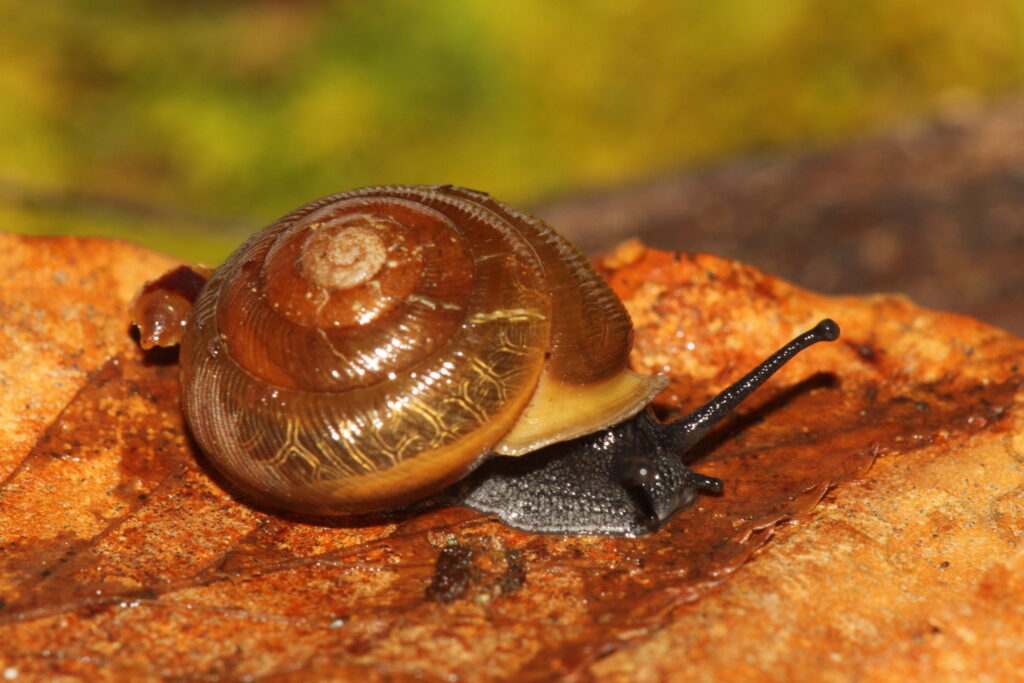
Mesodon thyroidus

Image Usage Information

  • serracaris
  • CC BY-NC 4.0 DEED
  • Additional information about this specimen

Family: Polygyridae

Common name: White-lip Globe

Discovery: Say, 1816

Identification

Width: 17-28 mm
Height: 11-18 mm
Whorls: 5+

This snail’s rounded shell is a bit smaller and thinner than the largest Polygyrids, and it has a unique umbilicus. Its reflected lip partly covers this opening, leaving a slit-like gap. It often has a small parietal tooth, but this tooth is sometimes absent, even within entire populations (which may be mistakenly named as the, possibly spurious, Mesodon clausus), so it is a poor character for identification.

Ecology

M. thyroidus can be patchy in occurrence, found on richer soils at lower elevations along river floodplains, wetlands, and limestone ledges. It is occasionally found in cultivated gardens and in meadows (Hubricht, 1985), and is believed to eat mainly fungi (Wolf & Wolf, 1939). In Virginia this species was found in various oak and maple habitats (Burch, 1956).

In Illinois, overwintering M. thyroidus developed a relatively thin and clear epiphragm, and oriented aperture-up, partially buried in soil (Blinn, 1963). They became active during brief periods of warm weather. Summer activity of this species was in the vicinity of fragmented log mold. Most individuals matured in two years. The growth of immature M. thyroidus was suppressed by adults of the same species in a field cage experiment, apparently through resource competition (Pearce, 1997).

Taxonomy

Synonyms for this species include Helix thyroidus, H. thyroides, H. t. var. pulchella, Mesodon leucodon, M. thyroides, Polygyra thyroidus, and P. thyroides.

Distribution

Mesodon thyroidus is widely distributed in the south, midwestern and eastern United States. It is found in most Virginia counties. The putative species Mesodon clausus may be depauperate specimens of M. thyroidus lacking the parietal lamella, and therefore a potential synonym.

Conservation

NatureServe Global Rank: G5, Secure

January 13, 2023 by

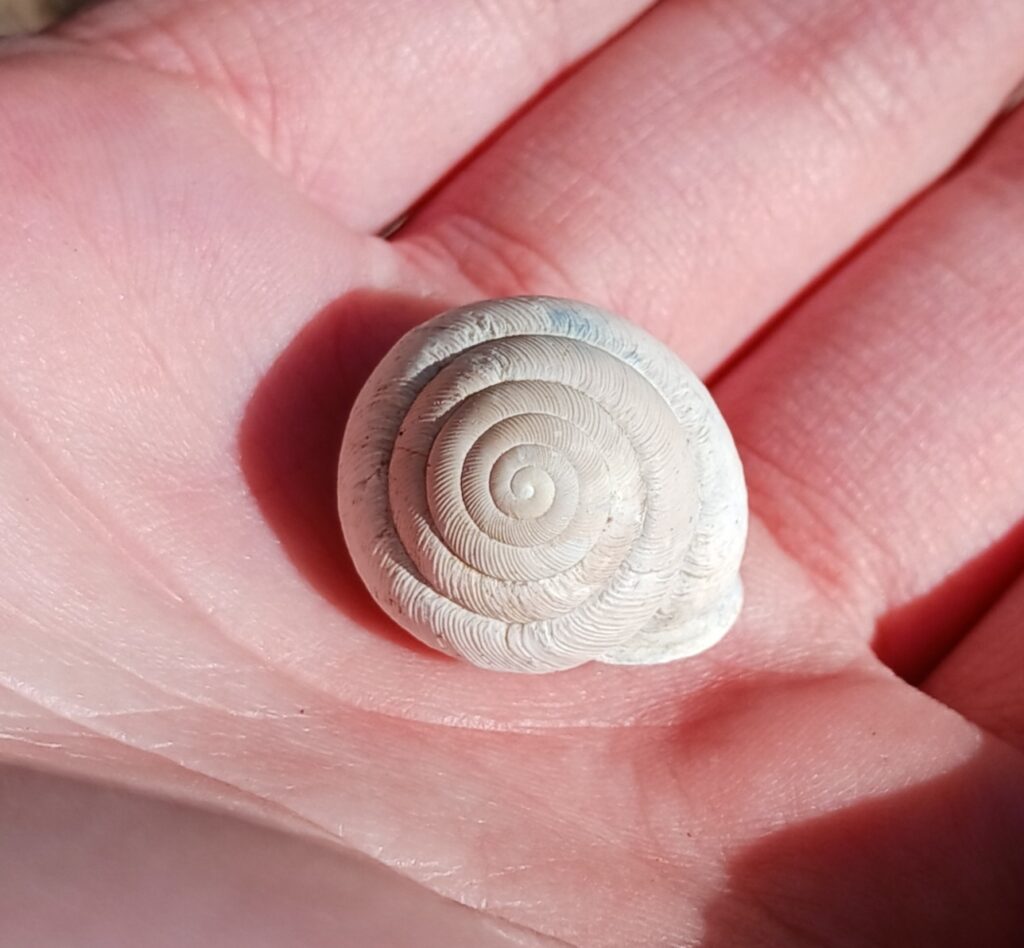
Mesodon normalis

Image Usage Information

  • Waynevand
  • CC BY-NC 4.0 DEED
  • Additional information about this specimen

Family: Polygyridae

Common name: Grand Globe

Discovery: Pilsbry, 1900

Identification

Width: 32-34 mm
Height: 24.5-26.5 mm
Whorls: 5+

This animal’s shell is similar to that of Mesodon andrewsae except that it is much larger. Its shell is thin, though not as thin as that of M. andrewsae. The reflected lip is broad and flat, and the shell is often yellow-ish on the back side of the lip. A single wide, bump-like tooth can frequently be found on the columellar margin of the aperture. The animal is dark-colored.

Ecology

Mesodon normalis is typically found on soils that are not rich. It lives in ravines and on mountainsides, and can be found at altitudes of up to 5,000’ (Hubricht 1985). At two sites in North Carolina these animals were found to live at densities of 4 to 18/m2, estimated from capture-recapture data (Foster and Stiven, 1994).

In a laboratory experiment with North Carolina animals, this species demonstrated age-dependent reproductive output, with older snails producing more clutches with fewer eggs, and younger snails producing fewer, larger clutches (Foster and Stiven, 1994). “Young” snails were those with intact periostraca (the shell’s protein coat), and “old” snails had pitted and flaked periostraca. Clutch sizes for 23 snails ranged from one to 101 eggs.

Taxonomy

There remains some taxonomic uncertainty about the distinction between M. andrewsae and the more widespread southeastern species M. normalis (Pilsbry, 1900; previously M. andrewsae normalis). Mesodon normalis has also been known as: Helix albolabris var. maxima, Mesodon andrewsae normalis, M. andrewsi, Polygyra andrewsae normalis, and P. normalis.

Distribution

Mesodon normalis can be found in the southern Appalachian Mountains from Virginia to Alabama. In Virginia it is found in the western counties only.

Conservation

NatureServe Global Rank: G5, Secure
NatureServe State Rank: Virginia, S4, Apparently Secure

January 13, 2023 by

Mesodon mitchellianus

Image Usage Information

  • Waynevand
  • CC BY-NC 4.0 DEED
  • Additional information about this specimen

Family: Polygyridae

Common name: Sealed Globelet

Discovery: I. Lea, 1839

Identification

Width: 15.0- 17.5 mm
Height: 11.5- 13.0 mm
Whorls: 5+

This species has a small, very rounded, thin shell.  Its shell has no teeth and its umbilicus is closed, covered by the lip callus. The periphery of the aperture is rounded and reflected.

Ecology

Mesodon mitchellianus prefers turf habitats. It may be found in meadows, roadsides and floodplains (Hubricht, 1985).

Taxonomy

Mesodon mitchellianus has also been known as: Helix mitchelliana, Mesodon mitchelliana, and Polygyra mitchelliana.

Distribution

This Mid­western native ranges from southern Michigan and eastern Indiana east to the Appalachian mountains of eastern Kentucky, North Carolina (Emberton, 1991), and Virginia. An anomalous report from Westmoreland County may be an introduction.

Conservation

NatureServe Global Rank: G4, Apparently Secure
NatureServe State Rank: Pennsylvania, S2, Imperiled; Virginia, S4, Apparently Secure; West Virginia, S2, Imperiled; unranked in other Northeast states.

January 13, 2023 by

Mesodon elevatus

Image Usage Information

  • Alexander Geragotelis
  • CC BY-NC 4.0 DEED
  • Additional information about this specimen

Family: Polygyridae

Common name: Proud Globe

Discovery: Say, 1821

Identification

Width: 20-26 mm
Height: 14-20 mm tall
Whorls: 6+

The shell of Mesodon elevatus is among the tallest of the globe-shaped snails. The shell is sturdy and somewhat small compared to others in its genus. Its whorls are tightly coiled and the aperture may be flat or slightly concave at the basal lip. It has a pronounced tooth and a subtle lamella on the lower edge of the reflected lip (Pilsbry, 1940). The snail is light-colored.

Ecology

Mesodon elevatus is apparently a calciphile, and in Tennessee it was found in small numbers on moderately-sloping, limestone sites, at low elevations (Coney et al, 1982). It may also be found on river bluffs (Hubricht, 1985).

Taxonomy

Mesodon elevatus has also been known as: Helix elevata, H. knoxvillina, H. tennesseensis, Mesodon elevata, Polygyra elevata, and P. elevatus.

Distribution

This snail is a Midwestern native, ranging from Michigan and New York (where it is introduced) in the north, south to Alabama, west to Oklahoma and east to Virginia and North Carolina. In Virginia this species lives in the southwestern counties. Several scattered museum records are in need of verification.

Conservation

NatureServe Global Rank: G5, Secure
NatureServe State Rank: Virginia, S2, Imperiled; not ranked in other Northeastern states
Virginia’s wildlife action plan: Tier IV

  • « Go to Previous Page
  • Page 1
  • Interim pages omitted …
  • Page 12
  • Page 13
  • Page 14
  • Page 15
  • Page 16
  • Interim pages omitted …
  • Page 53
  • Go to Next Page »

sidebar

About

  • Mission & Commitments
  • Directors Team
  • Museum History

Get Involved

  • Volunteer
  • Membership
  • Carnegie Discoverers
  • Donate
  • Employment
  • Events

Bring a Group

  • Groups of 10 or More
  • Birthday Parties at the Museum
  • Field Trips

Powdermill

  • Powdermill Nature Reserve
  • Powdermill Field Trips
  • Powdermill Staff
  • Research at Powdermill

More Information

  • Image Permission Requests
  • Science Stories
  • Accessibility
  • Shopping Cart
  • Contact
  • Visitor Policies
One of the Four Carnegie Museums | © Carnegie Institute | Privacy Policy | Terms of Use | Accessibility
Rad works here logo