• Skip to primary navigation
  • Skip to main content
  • Skip to primary sidebar

Carnegie Museum of Natural History

One of the Four Carnegie Museums of Pittsburgh

  • Visit
    • Buy Tickets
    • Visitor Information
    • Exhibitions
    • Events
    • Dining at the Museum
    • Celebrate at the Museum
    • Powdermill Nature Reserve
    • Event Venue Rental
    • Gift Cards
  • Learn
    • Field Trips
    • Educator Information
    • Programs at the Museum
    • Bring the Museum to You
    • Guided Programs FAQ
    • Programs Online
    • Climate and Rural Systems Partnership
  • Research
    • Scientific Sections
    • Science Stories
    • Science Videos
    • Senior Science & Research Staff
    • Museum Library
    • Science Seminars
    • Scientific Publications
    • Specimen and Artifact Identification
  • About
    • Mission & Commitments
    • Directors Team
    • Museum History
  • Tickets
  • Give
  • Shop

January 13, 2023 by

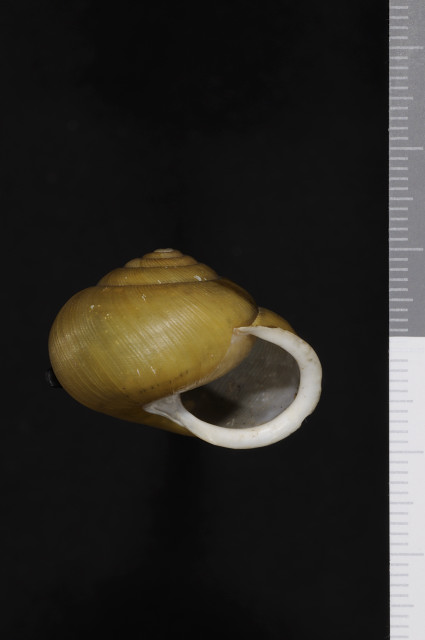
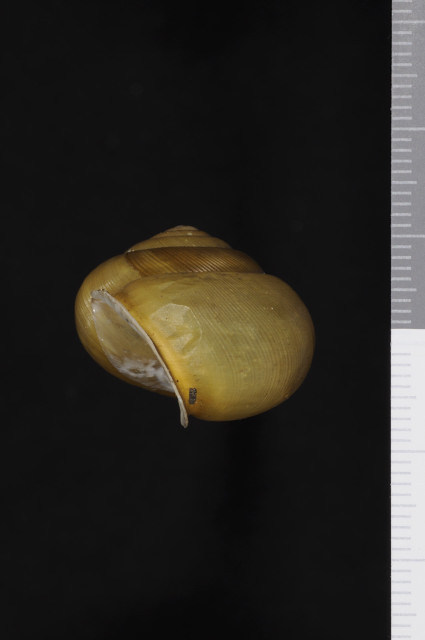
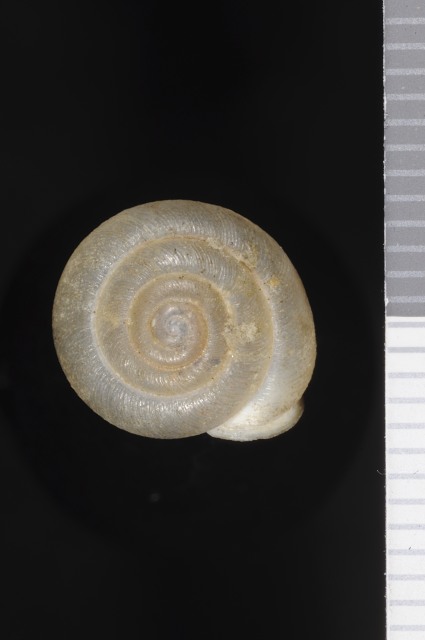
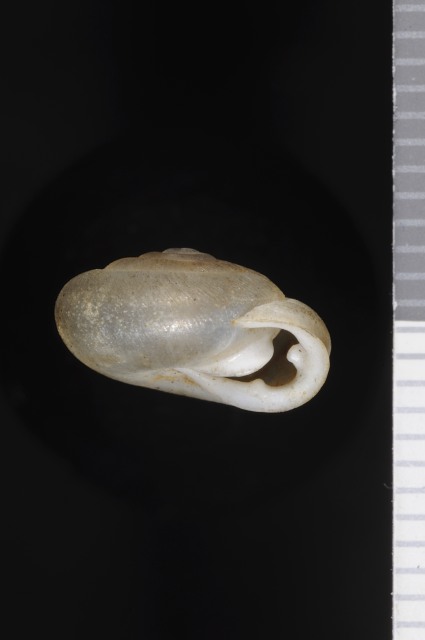
Mesodon clausus

  • Field Museum of Natural History
  • CC BY-NC 3.0 DEED
  • Field Museum Copyright Information
  • For additional information about this specimen, please contact: Rüdiger Bieler, Curator (rbieler@fieldmuseum.org)

Family: Polygyridae

Common name: Yellow Globelet

Discovery: Say, 1821

Identification

Width: 13.6 – 18.0 mm
Height: 10 – 13 mm
Whorls: 5+

This snail has a globe-shaped shell, and a slit-like umbilicus partly covered by the reflected peristome. There are no teeth in the aperture. The shell surface is finely and closely striate. The shell is very similar to that of M. thyroidus, though usually smaller and lacking a parietal tooth. Mesodon clausus may be a spurious description of M. thyroidus colonies living in calcium-poor habitats, resulting in smaller toothless shells.

Ecology

Like M. thyroidus this snail is patchy in distribution, and often along river floodplains and wetlands.

Taxonomy

Emberton (1991) found a close relationship between M. clausus and M. thyroidus but claimed a small shift in reproductive anatomy and allozymes. Synonyms for this species include Mesodon clausa, Helix clausa, H. ingallsi, H. jugallsiana, Triodopsis thyroidus edentula, Polygyra clausa.

Distribution

Mesodon clausus is distributed in the southern, midwestern and eastern United States, sympatric with the range of M. thyroidus. It is reported in western Virginia counties.

Conservation

NatureServe Global Rank: G5, Secure
Virginia’s wildlife action plan: Tier IV
January 13, 2023 by

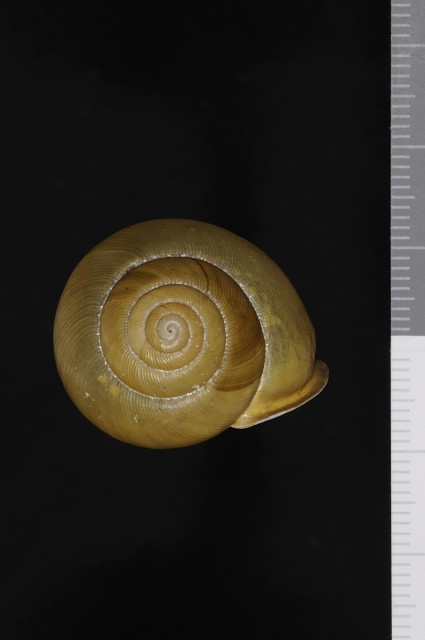
Mesodon andrewsae

Image Usage Information

  • The Academy of Natural Sciences of Philadelphia
  • CC BY-NC 4.0 DEED
  • For additional information about this specimen: Gary Rosenberg (rosenberg.ansp@drexel.edu)

Family: Polygyridae

Common name: Balsam Globe

Discovery: W.G. Binney, 1879

Identification

Width: 21-25 mm
Height: 15-18 mm
Whorls: 5+

The shell of Mesodon andrewsae is rounded and extremely thin, with tiny radial striae. The final whorl is very large in comparison to the others, and it alone comprises about half of the snail’s overall size. There are typically no denticles in the wide, slightly reflected aperture, although some forms may have a small parietal tooth. It is typically an olive-green color, though some forms are reddish, or may have a reddish band above the periphery (Hubricht, 1985).

Ecology

Mesodon andrewsae inhabits high mountains above 2,000’.

Taxonomy

Synonyms for M. andrewsae include: Mesodon andrewsae intermedius, M. andrewsi, and Polygyra andrewsae.

Distribution

This southern Appalachian Mountain endemic was previously reported from West Virginia to Tennessee and North Carolina (Hubricht, 1985).West Virginia records may represent an undescribed species that is a bit lower and glossier than more southerly M. andrewsae (Dourson, 2015). In Virginia, M. andrewsae is found in only a few southwestern counties. However, in the Great Smoky Mountains the former subspecies M. a. altivagus has been elevated to species level (Emberton, 1991), so it is unclear whether its current range still includes these southernmost counties. In fact, there remains uncertainty about the distinction between M. andrewsae and M. altivagus (Emberton, 1991), and between M. andrewsae and the more widespread southeastern species M. normalis (Pilsbry, 1900; previously M. andrewsae normalis).

In Virginia, Mesodon andrewsae is reported only from Grayson and Smith Counties.

Conservation

NatureServe Global Rank: G3, Vulnerable
NatureServe State Rank: Virginia, S1, Critically Imperiled; West Virginia, SNR, not ranked
Virginia’s wildlife action plan: Tier II

January 13, 2023 by

Lobosculum pustuloides

Image Usage Information

  • Howard Horne
  • CC BY-NC 4.0 DEED
  • Additional information about this specimen

Family: Polygyridae

Common name: Tiny Liptooth

Discovery: Bland, 1858

Identification

Width:  5.0-5.5 mm
Height: 2.5-2.7 mm
Whorls: 4-5

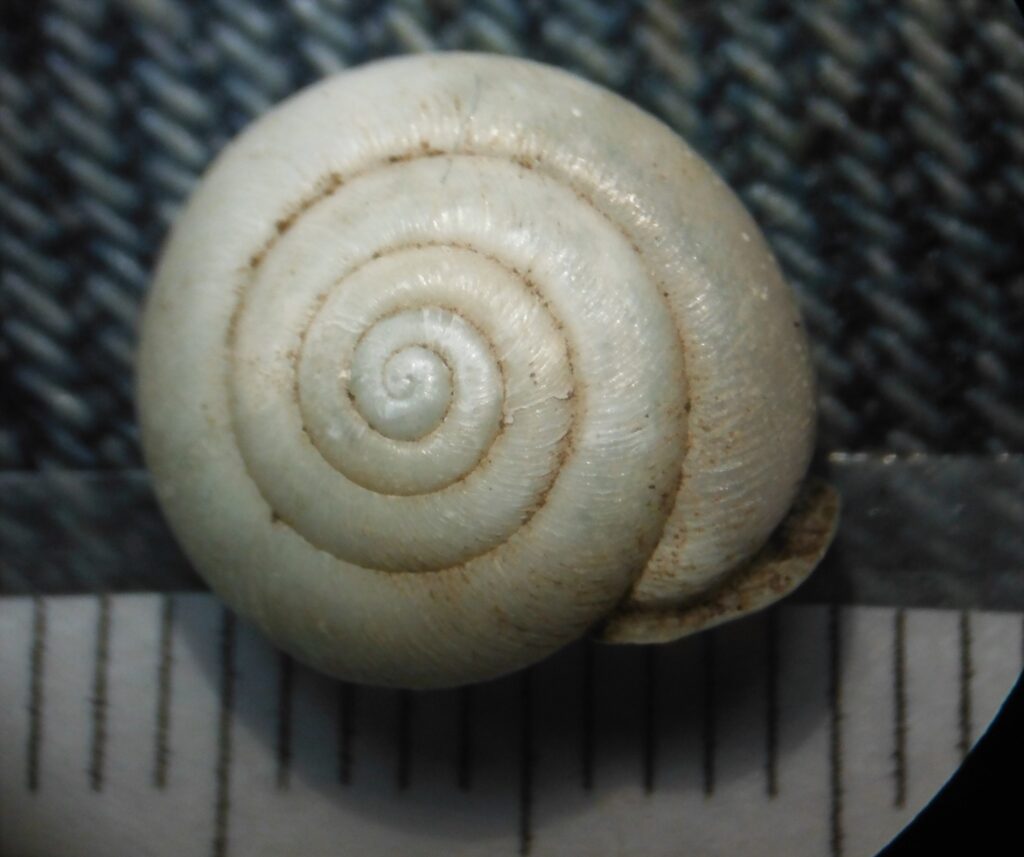
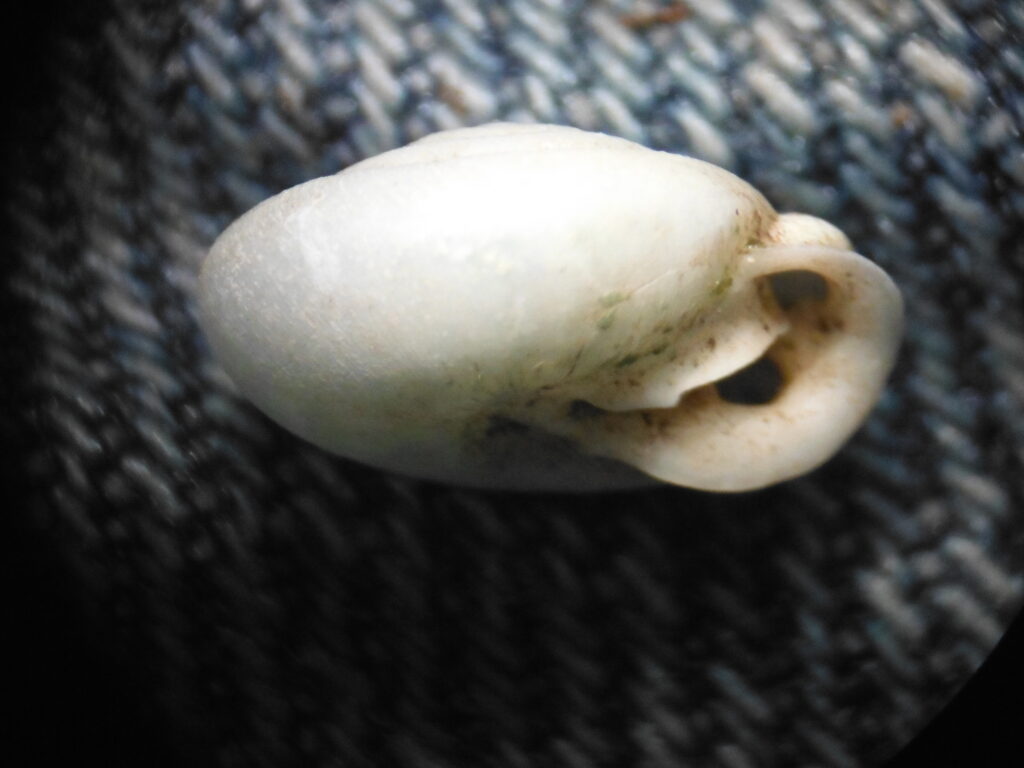
The shell of Lobosculum pustuloides is heliciform with a heavily-guarded aperture. The apex is low and the umbilicus is large and open. The denticles in the aperture are three: a blade-like parietal tooth, a pointed basal tooth upon a buttress, and a palatal lamella with a tooth upon the lower end. The effect is that of a notch in the outer lip. Sparse “hairs” adorn the periostracum.

Ecology

This animal lives among leaf litter, logs, or rocks in calcium-rich habitats (Hubricht, 1985).

Taxonomy

Synonyms for L. pustuloides are Polygyra pustuloides, Helix pustula, H. pustuloides, P. pustuloides.

Distribution

Lobosculum pustuloides is a Southeastern native, found from Florida and Mississippi, north to Kentucky and Virginia. In Virginia, specimens are reported only for Tazewell and Pittsylvania Counties. Maryland museum records warrant scrutiny.

Conservation

NatureServe Global Rank: G4, Apparently Secure.
Virginia’s wildlife action plan: Tier III

January 13, 2023 by

Inflectarius rugeli

Image Usage Information

  • Barb Graham
  • CC BY-NC 4.0 DEED
  • Additional information about this specimen

Family: Polygyridae

Common name: Deep-tooth Shagreen

Discovery: Shuttleworth, 1852

Identification

Width: 11-15 mm
Height: 7-9 mm
Whorls: 5+

This animal has a very constricted aperture, with large teeth almost blocking the small opening. The parietal tooth is strong and curved; the tooth on the outer lip is recessed; and the small basal tooth is somewhat pointed. The lip is heavily reflected, and guttered behind. The umbilicus of this low, heliciform shell is closed.

The shell of Inflectarius rugeli is covered in a microscopic scale-like sculpture, as others in its genus. These scales follow the pattern of the radial striae, but may be worn down in older shells. The live animal is gray above, paler below.

Ecology

This animal can be found under leaf litter, logs and other features on wooded hills (Coney et al, 1982; Hubricht, 1985).

Taxonomy

Synonyms for I. rugeli include Helix rugeli, Mesodon rugeli, Polygyra rugeli, and Triodopsis rugeli.

Distribution

Inflectarius rugeli lives in the southern Appalachian Mountains, from southern Illinois and West Virginia south to Alabama. In Virginia it occurs only in the far western counties.

Conservation

NatureServe Global Rank: G5
NatureServe State Rank: Virginia, S3S4, Vulnerable to Apparently Secure; West Virginia, SNR, Not Ranked.

January 13, 2023 by

Inflectarius kalmianus

  • Field Museum of Natural History
  • CC BY-NC 3.0 DEED
  • Field Museum Copyright Information
  • For additional information about this specimen, please contact: Rüdiger Bieler, Curator (rbieler@fieldmuseum.org)

Family: Polygyridae

Common name: Brown Globelet

Discovery: Hubricht, 1965

Identification

Width: 9.0-15.0 mm
Height: 6.0-10.5 mm
Whorls: 4.5+

The shell of Inflectarius kalmianus is small and globe-shaped. It has a narrow, partly covered, or “rimate,” umbilicus. Unlike many of its genus, the shell lacks a microsculpture of hairs or scales and there are no teeth in the aperture.

Ecology

This animal frequents open, grassy places such as meadows. It may also be found in banks of kudzu vines (Hubricht, 1985).

Taxonomy

Inflectarius kalmianus has also been known as Mesodon kalmianus.

Distribution

The Brown Globelet is an Appalachian endemic reported only from eastern Tennessee and Kentucky, and far southwestern Virginia.

Conservation

NatureServe Global Rank: G3, Vulnerable.
NatureServe State Rank: Virginia, S1S3, Critically Imperiled to Vulnerable.
Virginia’s wildlife action plan: Tier II

January 13, 2023 by

Inflectarius inflectus

Image Usage Information

  • The Academy of Natural Sciences of Philadelphia
  • CC BY-NC 4.0 DEED
  • For additional information about this specimen: Gary Rosenberg (rosenberg.ansp@drexel.edu)

Family: Polygyridae

Common name: Shagreen

Discovery: Say, 1821

Identification

Width: 9.5- 12.0 mm
Height: 5.0- 7.5 mm
Whorls: 4+

The shell of Inflectarius inflectus is depressed and imperforate. Its outer lip is reflected, creating a gutter behind it on the final whorl. It has three teeth in the aperture, a long parietal tooth, a short, blunt and slightly recessed palatal tooth, and narrow basal tooth. The shell is a bit larger and the basal tooth is more visible than in its congener I. rugeli.

Ecology

Inflectarius inflectus can be found in many habitats. Look for it under leaf litter, logs and rocks in wooded areas, under railroad ties, on roadsides, in gardens and even under trash in urban areas (Hubricht, 1985). In Tennessee, it has been associated particularly with wet soils of higher acidity (Coney et al, 1982) although a wider analysis found no preference in soil base status for this species (Nekola, 2010).

Taxonomy

Inflectarius inflectus has also been known as Helix clausa, H. inflecta, H. (Triodopsis) inflexa, Mesodon inflectus, Polygyra inflecta, P. i. var. media, P. herberti, Triodopsis inflecta, and Xolotrema clausa.

Distribution

This widespread central and southern US snail ranges from southern Michigan, as far west as Oklahoma and Texas, and as far south as Louisiana and Florida. In Virginia it is found only in the western counties. Some range-edge museum records, for upstate New York especially, need verification.

Conservation

NatureServe Global Rank: G5
NatureServe State Rank: Pennsylvania, S2, Imperiled; Maryland, unranked; New York, unranked; Virginia, S3, Vulnerable; West Virginia, SNR, unranked.

  • « Go to Previous Page
  • Page 1
  • Interim pages omitted …
  • Page 13
  • Page 14
  • Page 15
  • Page 16
  • Page 17
  • Interim pages omitted …
  • Page 53
  • Go to Next Page »

sidebar

About

  • Mission & Commitments
  • Directors Team
  • Museum History

Get Involved

  • Volunteer
  • Membership
  • Carnegie Discoverers
  • Donate
  • Employment
  • Events

Bring a Group

  • Groups of 10 or More
  • Birthday Parties at the Museum
  • Field Trips

Powdermill

  • Powdermill Nature Reserve
  • Powdermill Field Trips
  • Powdermill Staff
  • Research at Powdermill

More Information

  • Image Permission Requests
  • Science Stories
  • Accessibility
  • Shopping Cart
  • Contact
  • Visitor Policies
Stay in the loop! Sign up for our newsletter(s).
One of the Four Carnegie Museums | © Carnegie Institute | Privacy Policy | Terms of Use | Accessibility
Rad works here logo