• Skip to primary navigation
  • Skip to main content
  • Skip to primary sidebar

Carnegie Museum of Natural History

One of the Four Carnegie Museums of Pittsburgh

  • Visit
    • Buy Tickets
    • Visitor Information
    • Exhibitions
    • Events
    • Dining at the Museum
    • Celebrate at the Museum
    • Powdermill Nature Reserve
    • Event Venue Rental
  • Learn
    • Field Trips
    • Educator Information
    • Programs at the Museum
    • Bring the Museum to You
    • Guided Programs FAQ
    • Programs Online
    • Climate and Rural Systems Partnership
  • Research
    • Scientific Sections
    • Science Stories
    • Science Videos
    • Senior Science & Research Staff
    • Museum Library
    • Science Seminars
    • Scientific Publications
    • Specimen and Artifact Identification
  • About
    • Mission & Commitments
    • Directors Team
    • Museum History
  • Tickets
  • Give
  • Shop

January 13, 2023 by

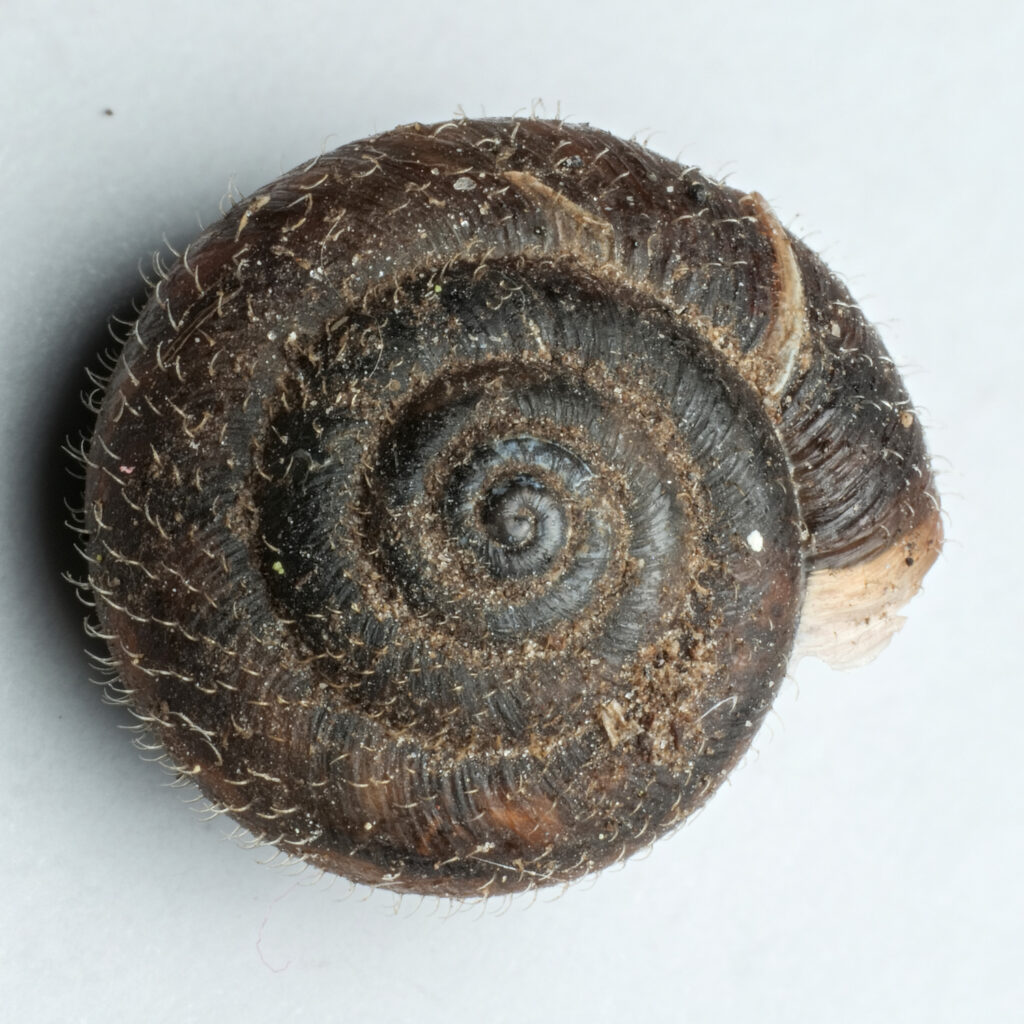
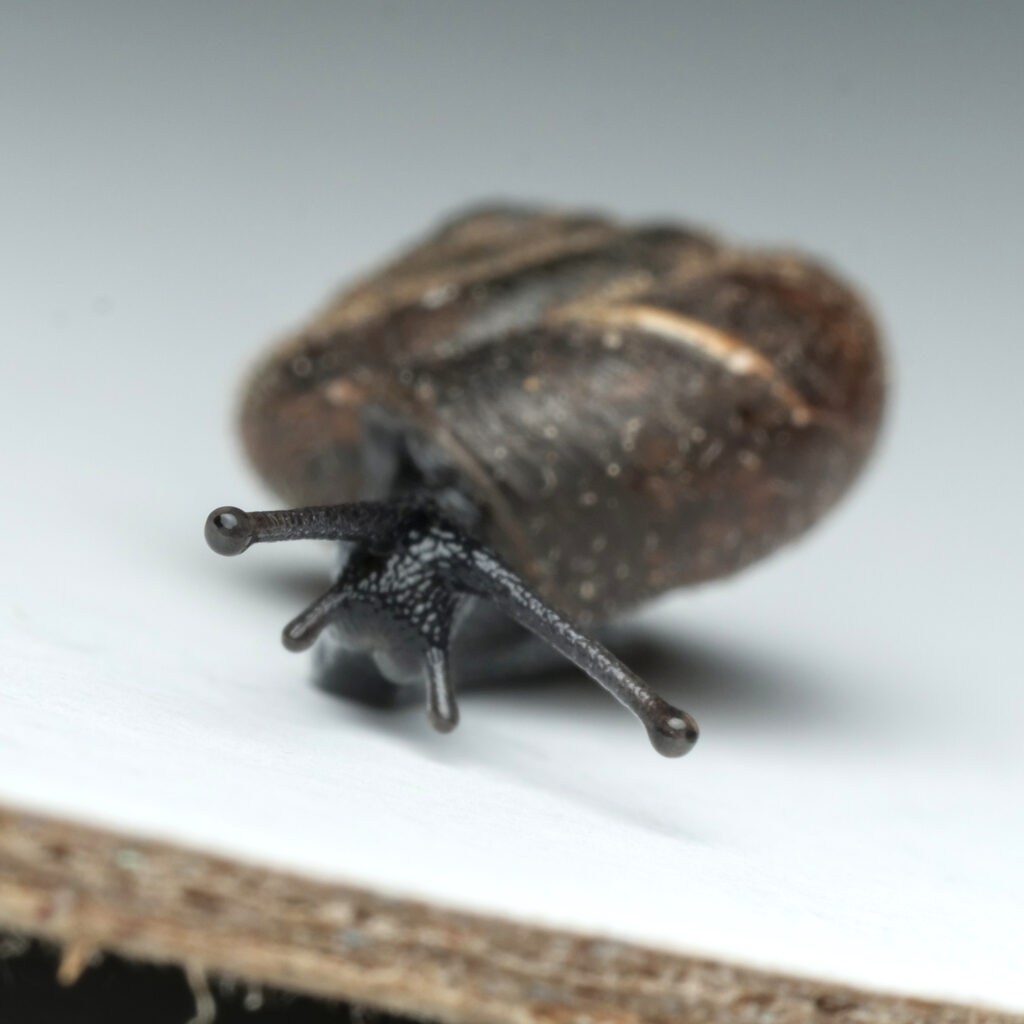
Trochulus hispidus

Image Usage Information

  • Cédric Mondy
  • CC BY-NC 4.0 DEED
  • Additional information about this specimen

Family: Hygromiidae

Common name: Hairy Helicellid Snail

Discovery: Linnaeus, 1758

Non-native

Identification

Width: 5-12 mm
Height: 5-6 mm
Whorls: 6-7

This snail varies in shape and sculpture depending upon habitat. Hairy, rounder shells with deep sutures are found in damp shady places, while more flattened, less hairy shells with shallow sutures are found in dry habitats (Kerney and Cameron, 1979; Anderson, 2016). Shells may be light to dark brown. The umbilicus is open. The hairs – processes that are part of the shell’s protein coat – are short and curved, and may be worn off many shells. There is a low, transverse barrier in the final whorl near the aperture, most noticeable basally. The animal is gray, lighter below.

Ecology

Trochulus hispidus is found most commonly in damp, shady, weedy places in Europe (Anderson, 2016). In laboratory observations, this species can reproduce at 1-2 years, at any time during their active season (Proćków and Kuźnik-Kowalska, 2016). They are short-lived, with approximately ¼ living past 300 days, and are immature for most of their lifespan (Proćków and Kuźnik-Kowalska, 2016).

Taxonomy

Synonyms are Trichia hispida, Hygromia hispida, Trichia concinna, Fruticicola hispida.

Distribution

This European snail has found a foothold in the rich farmland of central NY and scattered other locations in the Northeastern US and southeastern Canada.

Conservation

NatureServe Global Rank: G5, Apparently secure.
January 13, 2023 by

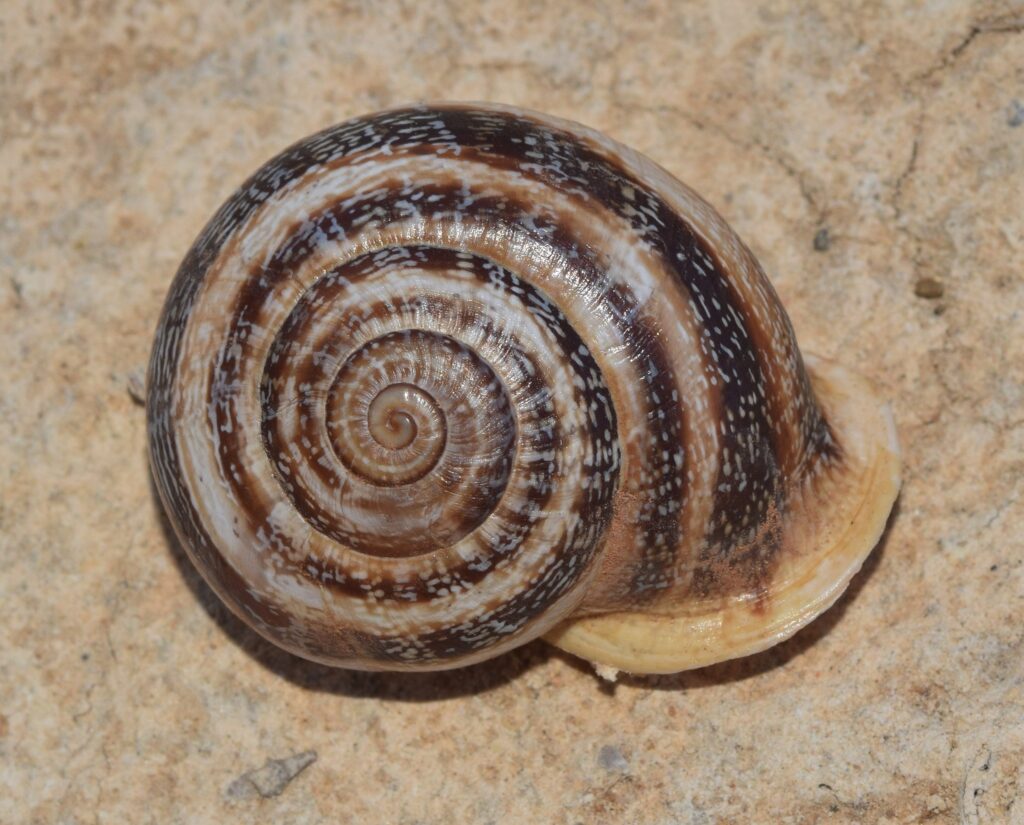
Otala lactea

Image Usage Information

  • faluke
  • CC BY-NC 4.0 DEED
  • Additional information about this specimen

Family: Helicidae

Common name:  Milk Snail

Discovery: Müller, 1774

Non-native

Identification

Width: 33-39 mm
Height: 20-25 mm
Whorls: 5

Otala lactea is heliciform, with a moderately reflected lip. It has broken reddish-brown spiral color bands and well-developed transverse striae. Inside and at the lip, this snail’s aperture is strongly colored dark brown. The columellar part of the rim is broadened and appears to have a small tooth. The columellar tooth and lip color separates Otala lactea from its close relative O. punctata. The live animal is pale – yellowish or gray all over.

Ecology

Otala lactea is a non-native species considered a minor plant pest (Cowie et al., 2009), with federal and some state regulations. Native to North Africa and Spain, its typical habitat is rocky heath or steppe (in White-McLean, 2011). It is a nocturnal foliage feeder (in White-McLean, 2011).

Shells of this edible snail have been found at a Roman archaeological site in Morocco, demonstrating its long use as a food source (in Hogan, 2007). It is currently cultivated as a delicacy and is considered to be tastier than Helix aspersa, the more commonly known edible snail. Otala lactea is one of the snails that is known to employ calcareous “love darts” during mating courtship.

Taxonomy

Synonyms include Helix ahmarina Mabille, 1883, H. canariensis Mousson, 1872,Helix jacquemetana Mabille, 1883, Helix lactea, and Iberus alonensis.

Distribution

A native of Europe and parts of North Africa, this snail has been introduced to the United States. In the Northeast it has been documented in Maryland, New York, Pennsylvania, and Virginia.

Conservation

NatureServe Rank: G5, Apparently secure.

January 13, 2023 by

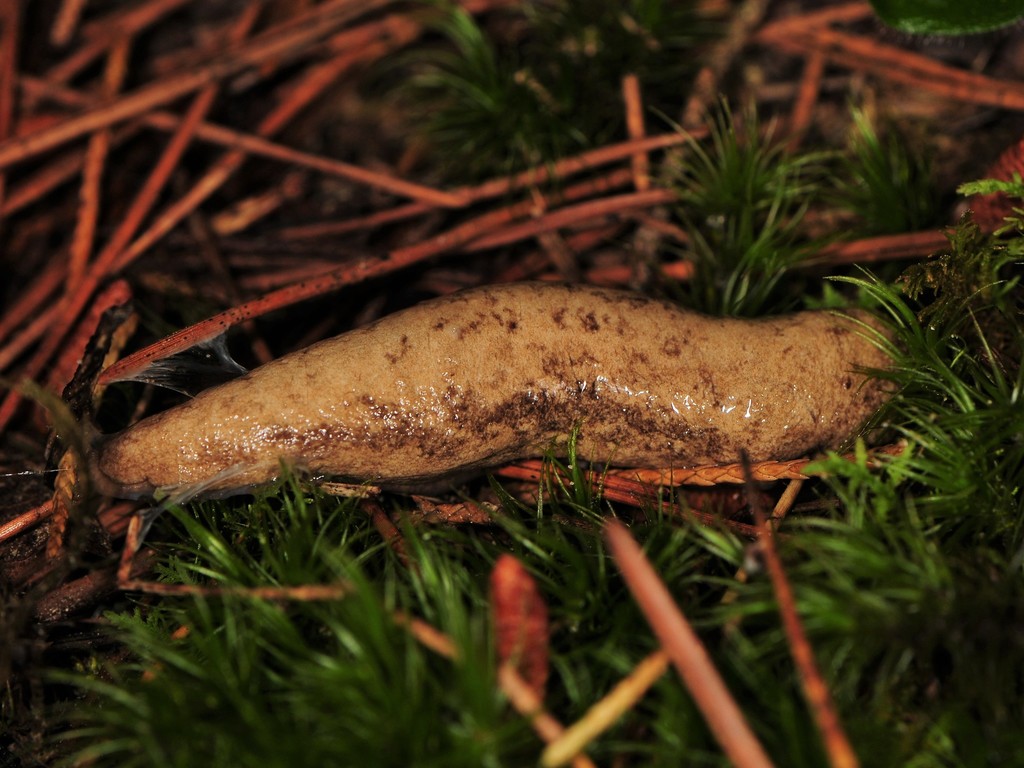
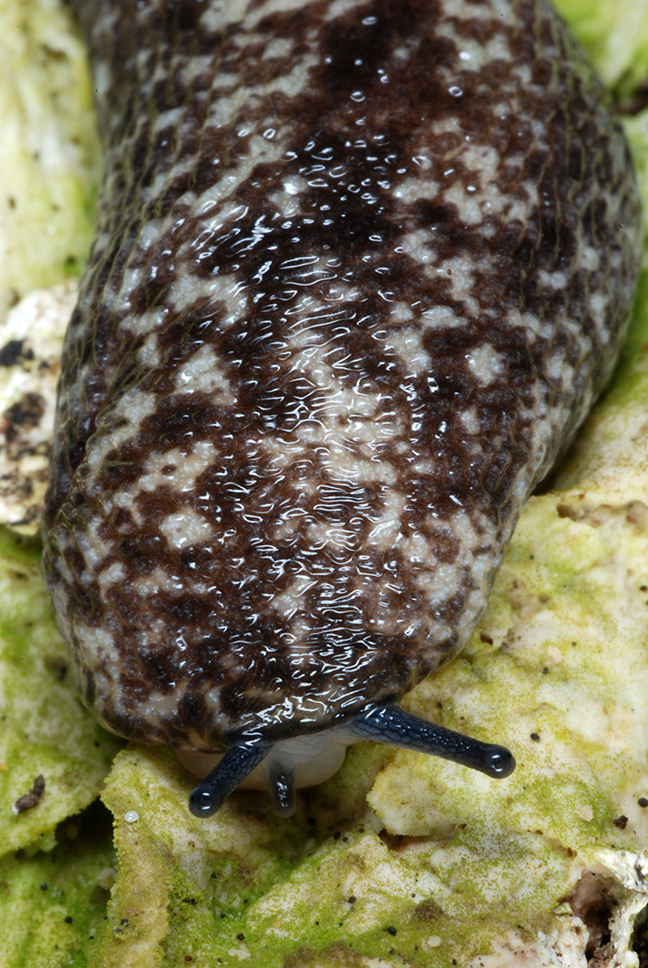
Philomycus virginicus

Image Usage Information

  • Jason M Crockwell,
  • CC BY-NC-ND 4.0 DEED
  • Additional information about this specimen

Family: Philomycidae

Common name: Virginia Mantleslug

Discovery: Hubricht, 1953

Identification

Length: 50-100 mm

Philomycus virginicus is a large slug with a mantle that covers the entire dorsal surface. The mantle is tan to tan-grey and usually mottled with small spots of darker brown. These spots usually coalesce to form a broad central band and two narrower lateral bands. In addition to the lateral bands the coalesced spots form about ten thin chevron shaped bands that run from the center band forward to each lateral band. Other than the chevron shaped bands this species appears very similar to Philomycus togatus. The reproductive system is equipped with a dart sac containing a short wide dart.

Ecology

This animal is found in upland hardwood forests on mountains above about 700 meters (2,300 feet) elevation in the southern Appalachian Mountains. They aestivate under loose bark and rotting logs.

Taxonomy

There are no known synonyms.

Distribution

Philomycus virginicus is distributed from north-central Virginia to Tennessee and west to eastern Kentucky. In Virginia the species is found from the Blue Ridge through the Ridge and Valley.

Conservation

NatureServe Global Rank: G3
NatureServe State Rank: S3
Virginia’s wildlife action plan: Tier III

January 13, 2023 by

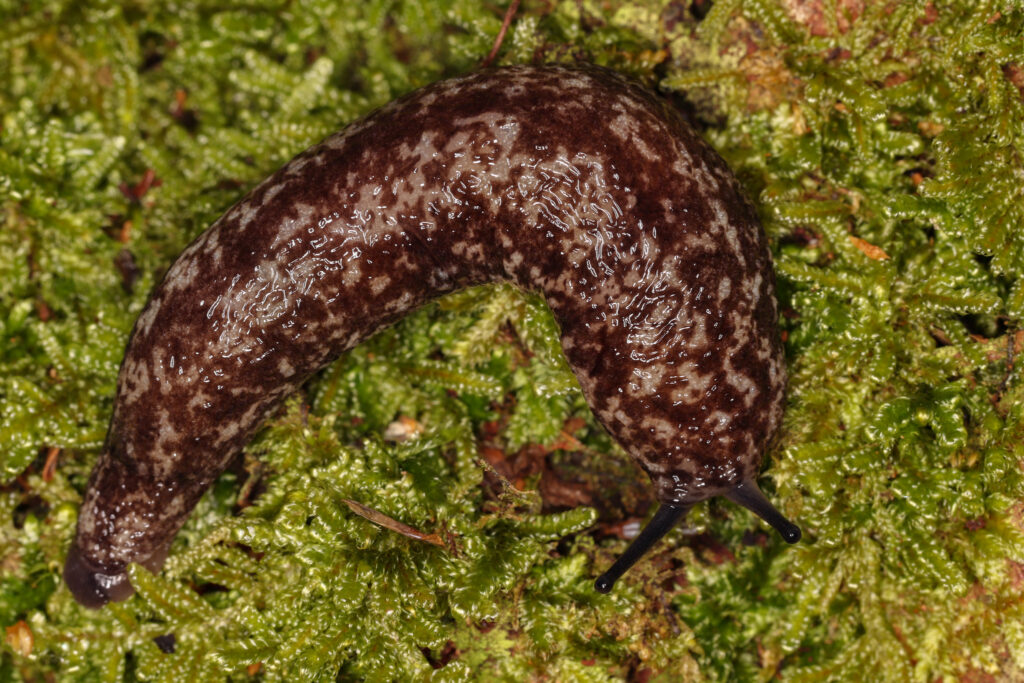
Philomycus venustus

Image Usage Information

  • Jason M Crockwell
  • CC BY-NC-ND 4.0 DEED
  • Additional information about this specimen

Family: Philomycidae

Common name: Brown-spotted Mantleslug

Discovery: Hubricht, 1953

Identification

Length: 50-100 mm

Philomycus venustus is a large slug with a mantle that covers the entire dorsal surface. The mantle is pale tan to tan-grey and usually mottled with large dark brown to brown-black spots. These spots coalesce to form an irregular central band and two lateral bands running along the edge of each side of the mantle. In addition to the lateral bands the large spots form chevron shaped bands that run from the center band forward to each lateral band. The reproductive system is equipped with a dart sac containing a short wide dart.

Ecology

This species is common in upland hardwood forests to about 1800 meters (5,900 feet) in the southern Appalachian Mountains. They are often observed feeding on fungi and lichens at night and during wet weather and they aestivate under loose bark and rotting logs. These slugs produce white defense mucous when irritated.

Taxonomy

Unpublished DNA sequence data suggests that Philomycus venustus may be a complex of several high-elevation species. This complex requires further taxonomic work to clarify species relationships.

Distribution

Philomycus venustus is distributed from eastern West Virginia to South Carolina. In Virginia the species is primarily found in the extreme southwestern part of the state.

Conservation

NatureServe Global Rank: G4
NatureServe State Rank: S3

January 13, 2023 by

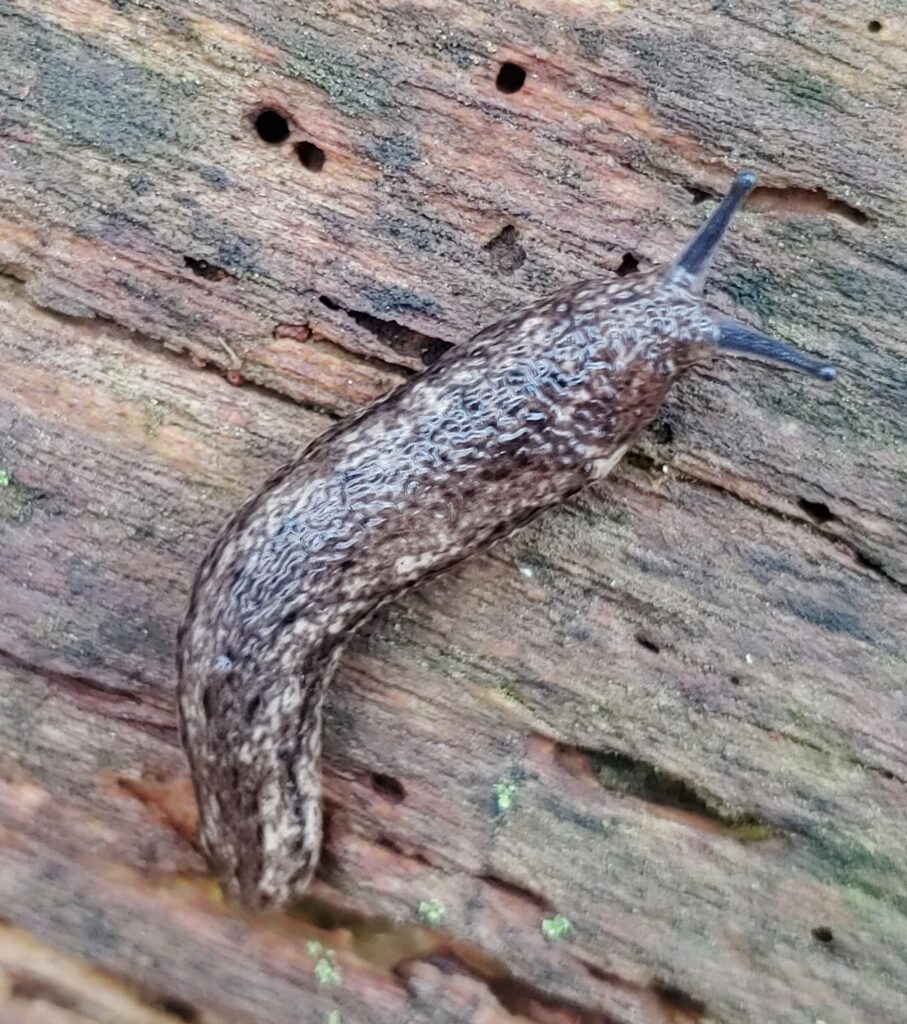
Philomycus togatus

Image Usage Information

  • pilgrim123
  • CC BY-NC 4.0 DEED
  • Additional information about this specimen

Family: Philomycidae

Common name: Toga Mantleslug

Discovery: Gould, 1841

Identification

Length: 50-80 mm

Philomycus togatus is a large slug with a mantle that covers the entire dorsal surface. The mantle is tan to tan-grey and usually mottled with small spots of darker brown. These spots usually coalesce to form a central band and two bands running along the lateral edge of each side of the mantle. However, mantle color pattern is highly variable in this species. Some individuals lack the small darker spots and are uniform tan or grey. The reproductive system is equipped with a dart sac containing a short wide dart.

Ecology

This species is common in upland hardwood forests from the piedmont to about 1200 meters (4,000 feet) in the Appalachian Mountains. They are often observed feeding on fungi and lichens at night and during wet weather, and they aestivate under loose bark and rotting logs. These slugs produce yellow to orange defense mucous when irritated.

Taxonomy

Unpublished DNA sequence data suggests that Philomycus batchi Branson, 1968 and Philomycus bisdosus Branson, 1968 are synonyms of Philomycus togatus (Gould, 1840). This complex requires further taxonomic work to clarify species relationships.

Distribution

Philomycus togatus is distributed from Maine to northeastern Alabama with a disjunct population in southern Mississippi and Louisiana. In Virginia the species is primarily found on the Piedmont and Ridge and Valley.

Conservation

NatureServe Global Rank: G5
NatureServe State Rank: S4

January 13, 2023 by

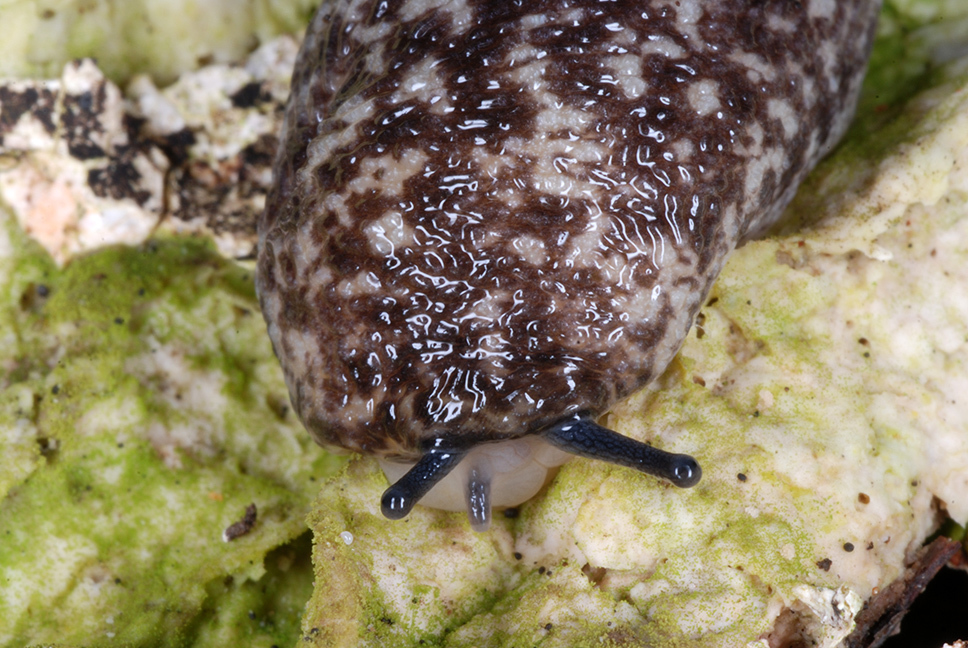
Philomycus flexuolaris

Image Usage Information

  • Brad Walker
  • CC BY-NC 4.0 DEED
  • Additional information about this specimen

Image Usage Information

  • Douglas Goldman
  • CC BY-NC 4.0 DEED
  • Additional information about this specimen

Family: Philomycidae

Common name: Winding Mantleslug

Discovery: Rafinesque, 1820

Identification

Length: 50-100 mm

Philomycus flexuolaris is a large slug with a mantle that covers the entire dorsal surface. The mantle is tan to grey and usually mottled with large spots of darker brown. These spots often coalesce to form three indistinct bands, one central band and two bands running along each side of the mantle. The reproductive system is equipped with a dart sac containing a short wide dart.

Ecology

This species is common in upland hardwood forests up to about 1,500 meters (5,000 feet) in the Appalachian Mountains. They are often observed feeding on fungi and lichens at night and during wet weather, and they aestivate under loose bark and rotting logs. This species produces a pale yellow defense mucous when irritated.

During humid weather, Philomycus flexuolaris is often found on logs, snags, or tree trunks well above the ground, to 15m or more (Hotopp, pers obs). Red Maple, American Beech, and other smooth-barked trees often bear slug “feeding tracks” – lighter-colored traces upon the gray algae that coat tree bark.

Taxonomy

There are no known synonyms.

Distribution

Philomycus flexuolaris is distributed from Quebec to northeastern Georgia. In Virginia the species is primarily found in the Ridge and Valley region of the extreme southwestern part of the state.

Conservation

NatureServe Global Rank: G5
NatureServe State Rank: S4

  • « Go to Previous Page
  • Page 1
  • Interim pages omitted …
  • Page 14
  • Page 15
  • Page 16
  • Page 17
  • Page 18
  • Interim pages omitted …
  • Page 53
  • Go to Next Page »

sidebar

About

  • Mission & Commitments
  • Directors Team
  • Museum History

Get Involved

  • Volunteer
  • Membership
  • Carnegie Discoverers
  • Donate
  • Employment
  • Events

Bring a Group

  • Groups of 10 or More
  • Birthday Parties at the Museum
  • Field Trips

Powdermill

  • Powdermill Nature Reserve
  • Powdermill Field Trips
  • Powdermill Staff
  • Research at Powdermill

More Information

  • Image Permission Requests
  • Science Stories
  • Accessibility
  • Shopping Cart
  • Contact
  • Visitor Policies
One of the Four Carnegie Museums | © Carnegie Institute | Privacy Policy | Terms of Use | Accessibility
Rad works here logo