• Skip to primary navigation
  • Skip to main content
  • Skip to primary sidebar

Carnegie Museum of Natural History

One of the Four Carnegie Museums of Pittsburgh

  • Visit
    • Buy Tickets
    • Visitor Information
    • Exhibitions
    • Events
    • Dining at the Museum
    • Celebrate at the Museum
    • Powdermill Nature Reserve
    • Event Venue Rental
    • Gift Cards
  • Learn
    • Field Trips
    • Educator Information
    • Programs at the Museum
    • Bring the Museum to You
    • Guided Programs FAQ
    • Programs Online
    • Climate and Rural Systems Partnership
  • Research
    • Scientific Sections
    • Science Stories
    • Science Videos
    • Senior Science & Research Staff
    • Museum Library
    • Science Seminars
    • Scientific Publications
    • Specimen and Artifact Identification
  • About
    • Mission & Commitments
    • Directors Team
    • Museum History
  • Tickets
  • Give
  • Shop

January 13, 2023 by

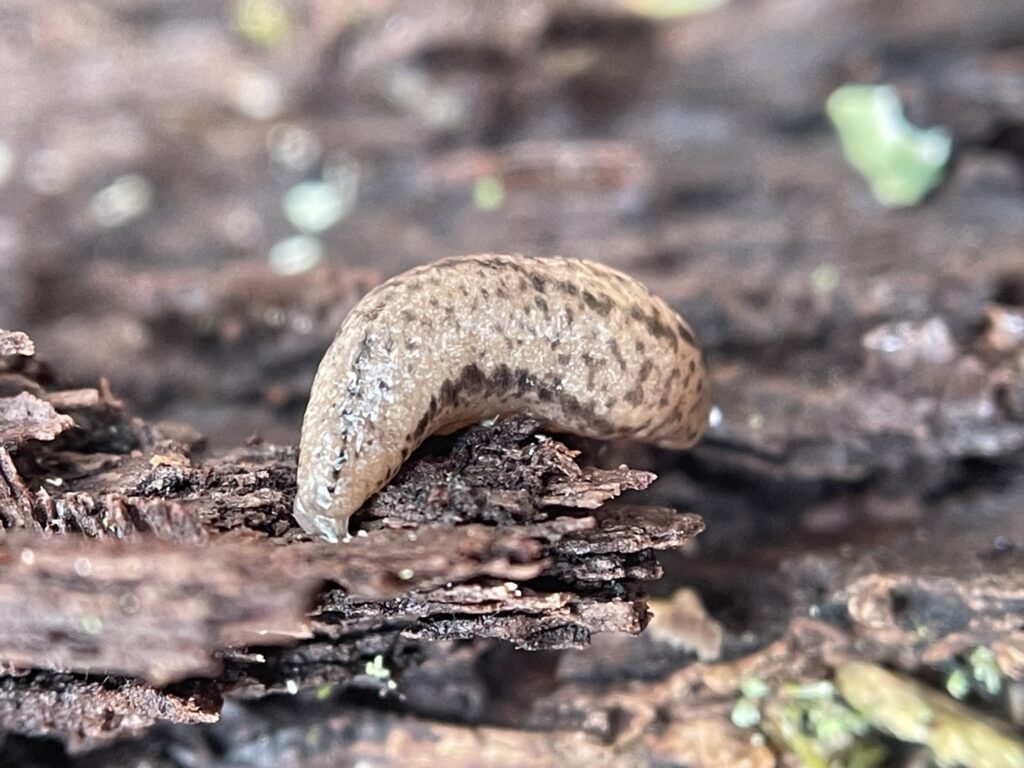
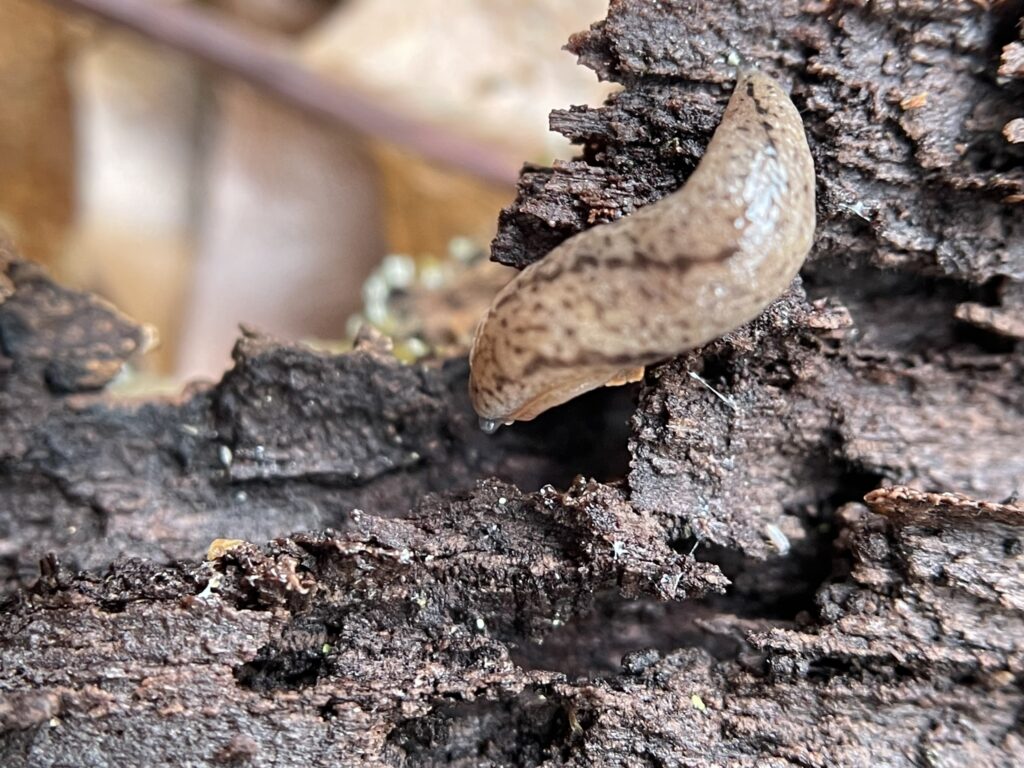
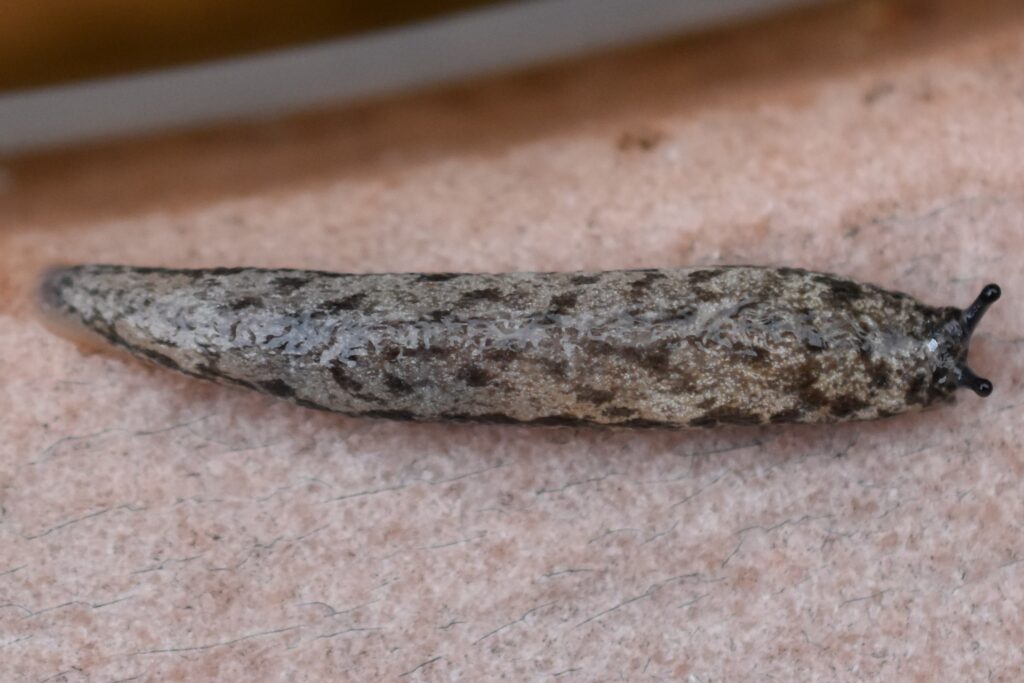
Pallifera megaphallica

Family: Philomycidae

Common name: Woody Mantleslug

Discovery: Grimm, 1961

Identification

Length: 13-19 mm (preserved)

Like all philomycids, the entire body of Pallifera megaphallica is covered by mantle. Itis a small slug very similar in appearance to P. fosteri. The mantle color is light tan with scattered dark gray spots, converging into one broken longitudinal line along the mid-dorsum and one broken blackish longitudinal line on each side. The tentacles are gray. There may be some or no brownish color on the anterior foot fringe.

Pallifera megaphallica may be distinguished from P. fosteri by the presence of a mid-dorsal line and by differences in the genitalia (e.g. much longer penis; Grimm, 1961).

Ecology

This species occurs in forests, valleys, along water bodies, in swamps, and on roadsides. Individuals may be found in wet leaves or on logs.

This slug has an annual lifecycle. Adults are seen in winter and spring (Grimm, 1961).

Taxonomy

Hubricht (1985) synonymized P. megaphallica with P. fosteri. Its taxonomic status is not certain.

Distribution

This species has been found in Mid-Atlantic and Southeast coastal states down to Florida. In the Northeast, they have been recorded from Maryland (several counties) and Virginia (Fairfax Co.). 

Conservation

NatureServe Global Rank: G5, Apparently secure.
January 13, 2023 by

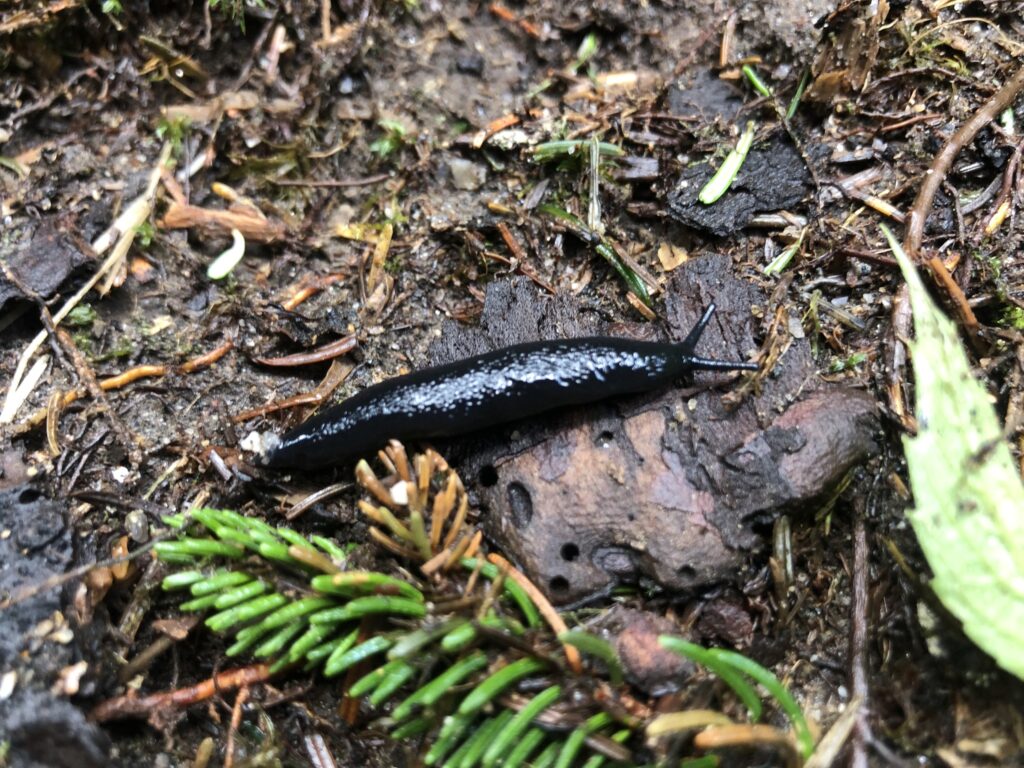
Pallifera hemphilli

Image Usage Information

  •  Virginia Hamilton
  • CC BY-NC 4.0 DEED
  • Additional information about this specimen

Image Usage Information

  • gman122
  • CC BY-NC 4.0 DEED
  • Additional information about this specimen

Family: Philomycidae

Common name: Black Mantleslug

Discovery: W.G. Binney, 1885

Identification

Length: 25-30 mm

Pallifera hemphilli is an average-sized Pallifera that like other philomycids has a mantle that covers the entire dorsal surface of the animal. The mantle is uniform slate grey-black on its dorsal surface and there are no flecks or spots. The color fades to dark grey along the lateral margins of the foot.The reproductive system is not equipped with a dart sac. The center of the jaw has 4 ribs, while the edges are smooth.

Ecology

This species appears to be restricted to elevations above 1500 meters in several isolated spruce-fir forests. If these populations represent a single species or several similar species as is the case with other spruce-fir restricted snails has not been studied and Pallifera hemphilli like its congeners needs taxonomic work.

Taxonomy

This species has no known synonyms.

Distribution

Pallifera hemphilli is restricted to the southern Appalachian Mountains from southwestern Virginia south along the mountains bordering North Carolina and Tennessee. A single Michigan record (Pilsbry, 1940) was not verified by Hubricht (1985) and appears to be a misidentification. In Virginia the species is restricted to the Mount Rogers area.

Conservation

NatureServe Global Rank: G4
NatureServe State Rank: S1
Virginia’s wildlife action plan: Tier II

January 13, 2023 by

Pallifera fosteri

Image Usage Information

  •  Joe MacIndewar
  • CC BY-NC 4.0 DEED
  • Additional information about this specimen

Family: Philomycidae

Common name: Foster Mantleslug

Discovery: F.C. Baker, 1939

Identification

Length: 15-25 mm

Pallifera fosteri is an average sized Pallifera, which like other philomycids has a mantle that covers the entire dorsal surface of the animal. The mantle background color is creamy-tan, often slightly darker brownish on the dorsal surface. This pattern is overlain with larger black spots. The black spots sometimes coalesce forming a central and/or two lateral bands that run the length of the mantle. The reproductive system is not equipped with a dart sac. The center of the jaw usually has four or five large ribs, although this number can vary from 3 to 6 ribs, and the margins are smooth.

Ecology

This species occurs in a wide variety of habitats from floodplain forests to upland hardwood forests where it is found in leaf litter and under logs, from the coastal plain up to about 1500 meters elevation in both old growth and secondary forests. This species wide habitat use and extreme morphological variation suggest it may be a species complex. In fact, the entire genus is in need of taxonomic revision. Therefore, our current understanding of species ranges and habitat requirements may be too general for accurate conservation rank assessments.

Taxonomy

This species has no known synonyms.

Distribution

Pallifera fosteri is widely distributed from Michigan to Florida and west to Missouri. In Virginia, the species is widespread, occurring from the Coastal Plain the Ridge and Valley.

Conservation

NatureServe Global Rank: G5
NatureServe State Rank: S4

January 13, 2023 by

Pallifera dorsalis

Image Usage Information

  • Thomas Everest
  • CC BY-NC 4.0 DEED
  • Additional information about this specimen

Family: Philomycidae

Common name: Pale Mantleslug

Discovery: A. Binney, 1842

Identification

Length: 6.5-15 mm

Pallifera dorsalis is an average-sized Pallifera that has a mantle that covers the entire dorsal surface of the animal, like all other philomycids. The mantle is pale tannish-grey sometimes with a bluish cast. The background is overlain with small greyish-black spots and flecks that tend to coalesce to form a single central band down the length of the mantle. Without ample light and some magnification the mottling and band can be difficult to see.

The edge of the anterior of the foot is often stained with red similar to Pallifera ohioensis, which may be a synonym. The reproductive system is not equipped with a dart sac. The jaw has 7 ribs that taper in size with the largest in the center and the edges of the jaw are smooth.

Ecology

This species is usually found in leaf litter, in both old-growth and secondary upland hardwood forests. These small slugs are difficult to find and difficult to properly preserve for study, and the entire genus is in need of taxonomic revision.

Taxonomy

There are no synonyms.

Distribution

Pallifera dorsalis is widely distributed from Ontario to northern North Carolina. In Virginia, the species is abundant in the southwestern counties of the state in both the Piedmont and Ridge and Valley. It also occurs in most western counties of Maryland and it is likely the species occurs in the intervening mountains of northeastern Virginia.

Conservation

NatureServe Global Rank: G5
NatureServe State Rank: S4

January 13, 2023 by

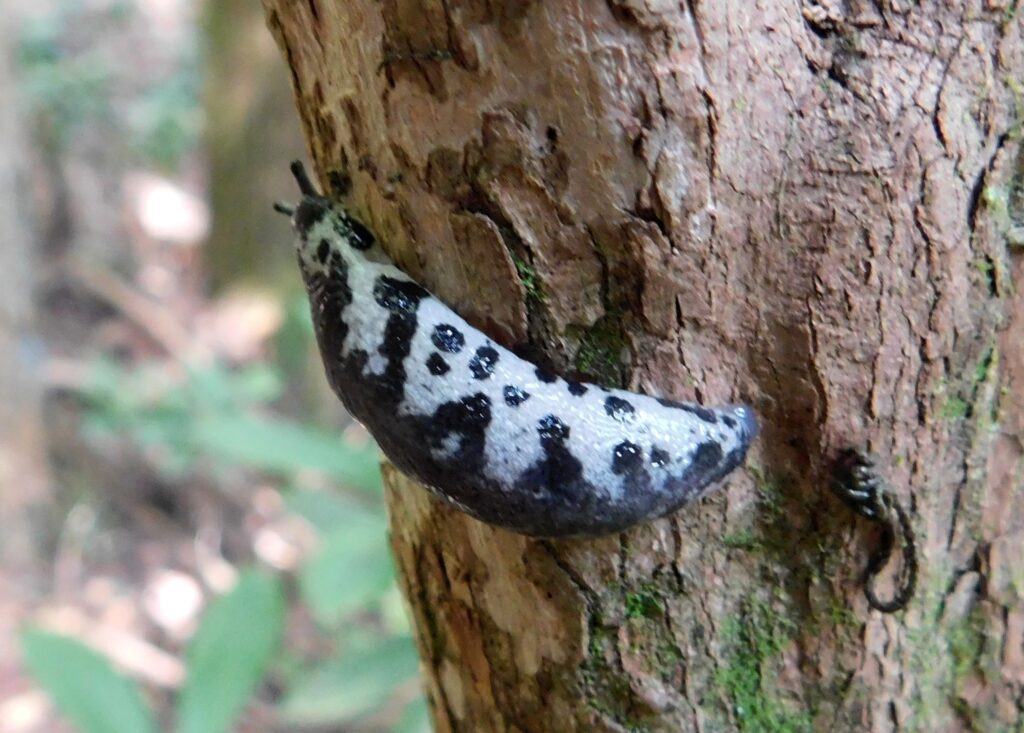
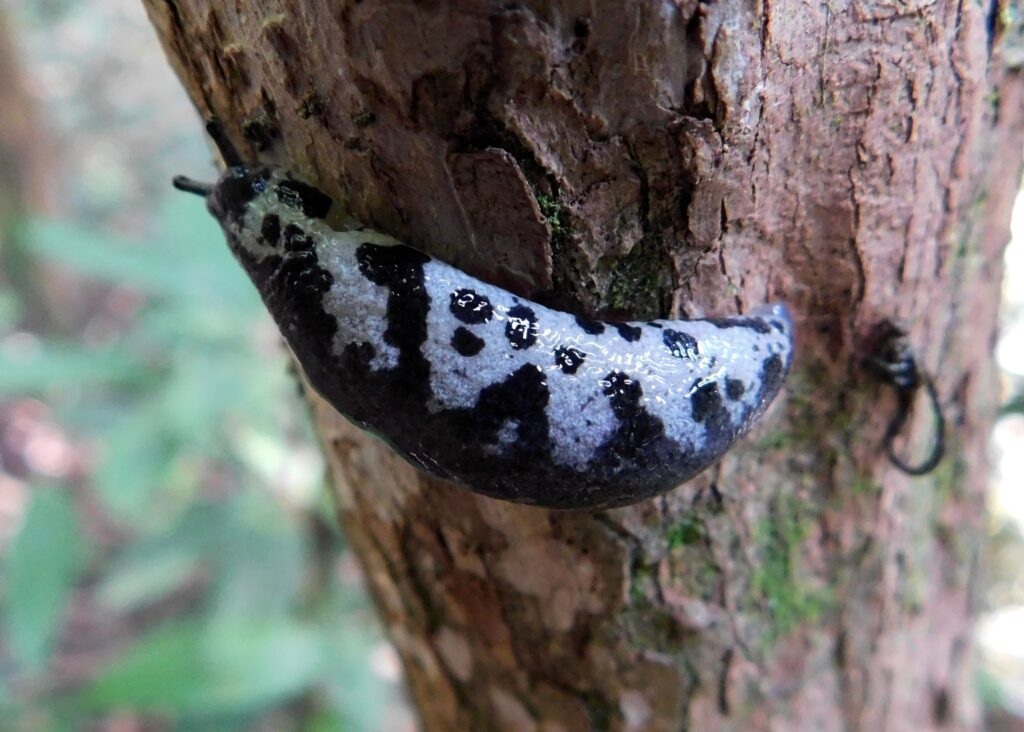
Megapallifera wetherbyi

Image Usage Information

  • Holly Taylor
  • CC BY-NC 4.0 DEED
  • Additional information about this specimen

Family: Philomycidae

Common name: Blotchy Mantleslug

Discovery: W.G. Binney, 1874

Identification

Length: 40-80 mm

Megapallifera wetherbyi is a large slug with a mantle that covers the entire dorsal surface. The mantle is light whitish-grey with much darker mottling of dark grey brown spots. These spots usually coalesce to form about ten chevron shaped bands that run from the center of the mantle slightly forward on both sides to the mantle edge. These bands sometimes merge along the center of the mantle forming a central band but they do not normally form lateral bands. The mantle pattern is highly variable but clearer and more striking than that of Megapallifera mutabilis. Like other Megapallifera and Pallifera there is no dart present in the reproductive system.

Ecology

This species is found in rocky forests in coves, river bluffs, ravines and sinks, usually on rocky soils where they are often observed crawling on smooth bark trees and rocks at night and during wet weather. These slugs aestivate under loose bark, in tree holes and between rocks.

Taxonomy

This species has no synonyms.

Distribution

Megapallifera wetherbyi is restricted to the Cumberland Mountains and Cumberland Plateau from eastern Kentucky to northeastern Alabama. In Virginia this species is usually found only is the extreme southwestern part of the state, along the border with Kentucky. This species is not often collected and, until recently, museum records documenting the species range were sparse. Recent collecting suggests this species is restricted to the Cumberland Escarpment, where it is fairly common and widespread.

Conservation

NatureServe Global Rank: G2/G3
NatureServe State Rank: Virginia S1?, possibly Critically Imperiled
Virginia’s wildlife action plan: Tier II

January 13, 2023 by

Megapallifera mutabilis

Image Usage Information

  • Ramóna Molnár
  • CC BY-NC 4.0 DEED
  • Additional information about this specimen

Family: Philomycidaae

Common name: Changeable Mantleslug

Discovery: Hubricht, 1951

Identification

Length: 60-100 mm

Megapallifera mutabilis is a large slug with a mantle that covers the entire dorsal surface. The mantle is tan to tan-grey with irregular mottling of slightly darker brown spots. These spots usually coalesce to form two bands near the lateral edges of the mantle as well as spots or broken bands bordering the center of the mantle. The lateral and central bands are sometimes connected by poorly defined chevron shaped bands that run slightly forward from the center band to the lateral band. The mantle pattern is more variable and less clearly-defined than that of Megapallifera wetherbyi. Like other Megapallifera and Pallifera (and unlike Philomycus) there is no “dart” to aid reproduction.

Ecology

This slug is found in a wide variety of habitats – from upland forests to anthropogenic habitats – where they are often observed crawling on smooth-barked trees at night and during wet weather. These slugs aestivate under loose bark, and in moist depressions and holes in trees, where they often aggregate in groups of several individuals. This species probably feeds on the fungus, algae, and lichens found on wood and stones (Hubricht, 1985).

Megapallifera mutabilis is among the most arboreal of terrestrial mollusks. In the Northeast during damp weather this slug can be found feeding upon the thin film of algae high on tree trunks or snags, often out of reach (Hotopp, pers obs).

Taxonomy

There are no known synonyms.

Distribution

Megapallifera mutabilis is a widespread species that is found throughout eastern North America from Ontario to near the Gulf Coast west to eastern Texas. This species is found throughout Virginia from the coastal plain to the ridge and valley.  However, because of the difficulty in identifying philomycid slugs, distribution records are widely scattered.

Conservation

NatureServe Global Rank: G5

  • « Go to Previous Page
  • Page 1
  • Interim pages omitted …
  • Page 16
  • Page 17
  • Page 18
  • Page 19
  • Page 20
  • Interim pages omitted …
  • Page 53
  • Go to Next Page »

sidebar

About

  • Mission & Commitments
  • Directors Team
  • Museum History

Get Involved

  • Volunteer
  • Membership
  • Carnegie Discoverers
  • Donate
  • Employment
  • Events

Bring a Group

  • Groups of 10 or More
  • Birthday Parties at the Museum
  • Field Trips

Powdermill

  • Powdermill Nature Reserve
  • Powdermill Field Trips
  • Powdermill Staff
  • Research at Powdermill

More Information

  • Image Permission Requests
  • Science Stories
  • Accessibility
  • Shopping Cart
  • Contact
  • Visitor Policies
One of the Four Carnegie Museums | © Carnegie Institute | Privacy Policy | Terms of Use | Accessibility
Rad works here logo