• Skip to primary navigation
  • Skip to main content
  • Skip to primary sidebar

Carnegie Museum of Natural History

One of the Four Carnegie Museums of Pittsburgh

  • Visit
    • Buy Tickets
    • Visitor Information
    • Exhibitions
    • Events
    • Dining at the Museum
    • Celebrate at the Museum
    • Powdermill Nature Reserve
    • Event Venue Rental
    • Gift Cards
  • Learn
    • Field Trips
    • Educator Information
    • Programs at the Museum
    • Bring the Museum to You
    • Guided Programs FAQ
    • Programs Online
    • Climate and Rural Systems Partnership
  • Research
    • Scientific Sections
    • Science Stories
    • Science Videos
    • Senior Science & Research Staff
    • Museum Library
    • Science Seminars
    • Scientific Publications
    • Specimen and Artifact Identification
  • About
    • Mission & Commitments
    • Directors Team
    • Museum History
  • Tickets
  • Give
  • Shop

Blogs about the Anthropocene

Scientists use fossils and other traces to understand how the planet changed over time. In the past these changes were caused by forces like volcanic eruptions and shifts in oceans currents. Now there’s a new force of nature shaping the planet: humans. The effects on air, land, and water are significant enough that scientists propose we are a new geological time – the Anthropocene – or age of Humans.

These blogs are about the many facets of human impact on the Earth, documenting this new age.

May 28, 2019 by wpengine

Bird Watching Bonus

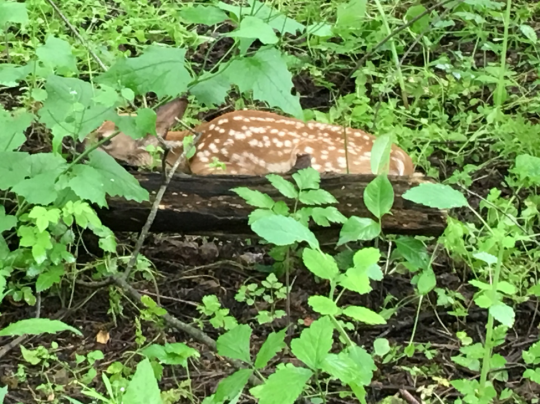
fawn in the woods in Boyce Park

The fawn sighting was a bird-watching hike bonus. The days-old creature rested barely three feet off a Boyce Park hiking trail, motionless but fully awake, amidst rotting wood and spring green vegetation.

I quickly snapped a picture and moved along, confident a wary doe was just out of sight in the nearby tangle of spice bush and wild grapevine. Hours later, I found the image’s juxtaposition of two seemingly healthy young organisms could be interpreted as evidence of a forest’s ill health.

The plant partially concealing the fawn’s head is garlic mustard (Alliaria petiolata), an invasive species capable of proliferation into stands dense enough to choke out native understory plants and tree seedlings. Because white-tailed deer find garlic mustard unpalatable, the plan’s presence in the landscape results in higher, and often unsustainable browsing rates of native plants.

Patrick McShea works in the Education and Visitor Experience department of Carnegie Museum of Natural History. Museum employees are encouraged to blog about their unique experiences and knowledge gained from working at the museum.

Filed Under: Blog Tagged With: Anthropocene, Pat McShea

May 9, 2019 by wpengine

Honey Bees Hunt Bargains, Bumble Bees Go Gourmet

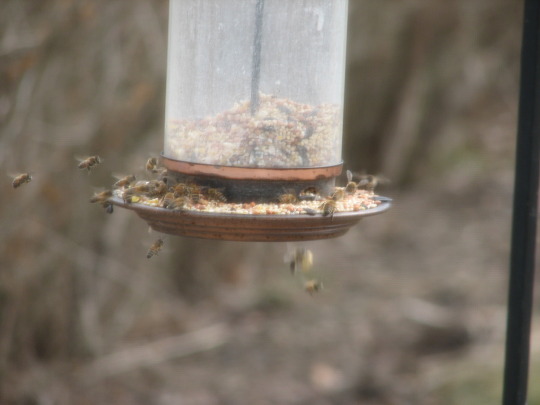
It is rewarding to receive questions and reports from people who turn to the staff at Powdermill Nature Reserve for information on nature in our area. Usually, we have a pretty good idea of what people are asking about, but once in a while visitors ask about something completely new to us. Last year, a visitor asked why he saw honey bees on his bird feeder in great numbers. The feeder was only stocked with bird seed. What were the bees doing?  We had no explanation. Recently, in the February 2019 issue of NY Conservationist, we read the answer. Mr. Gary Ennis provided a photo of the same phenomenon, and had the same question. According to beekeeper Bob Henke, during shipping and handling the seeds rub against each other and produce a fine powder similar to pollen, and the honey bees collect it as if it were pollen.

bees at a bird feeder
Photo credit: Gary Ennis.

But, why don’t we see other bees doing this?  Why are there no bumble bees on the feeder?  Bumble bees and other native bees sample the world one scout at a time, each bee making her own decisions. Researchers at Penn State showed that bumble bees monitor the nutritional value of the pollen they take, trying to keep an appropriate balance of protein versus lipids (fats, oils, and waxes.) If a certain plant produces pollen that has little lipid, then the bumble bee will favor pollen that is richer in lipids on future trips. This effort to balance their diet means that they specifically vary the pollen they harvest. It is as if they go to the grocery store and take a few items from the vegetable section, and a few from the dairy section, and a few from the bakery, creating a balanced plate on a daily basis.

On the other hand, honey bees are well-known for their ability to recruit to a good food source, and marshal large numbers of workers to harvest nectar or pollen. If an experienced scout finds a tree in bloom, she will recruit her sisters to that tree. They will go to that site directly without sampling other flowers on the way, and then return for another load, and another, and another.  This form of shopping is more like discovering that the grocery has potatoes on sale, and then buying 100 pounds of potatoes. Of course, a different scout will find a different resource, and she will recruit workers to harvest that in great numbers. As the weeks go by, the bees collect many different kinds of pollen, providing a broad selection for the nurse bees to feed the larvae. If we collect the separate loads of pollen from each returning bee: we see that each bee collected only one kind of pollen (all the same color), but different bees collected different pollen (many colors among the separate loads.)

pollen
Photo Credit: Jodi Gertz

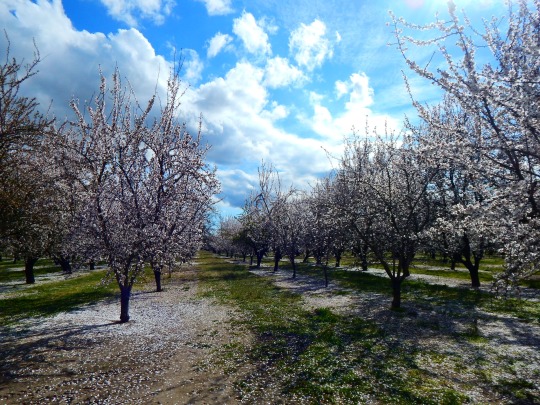
Aside from the importance of recruiting, the scout honey bees also make some effort to balance their diet, particularly regarding the important fatty acids, omega-3 and omega-6. Work by Hebrew University in Jerusalem has shown that if these nutrients are not eaten in an appropriate ratio, the bees learn poorly and do not remember what they learn. For example, bees with adequate omega-3 in their diets are much better at learning to associate an odor with a food reward compared to bees with no omega-3. Further, the bees with good nutrition remember what they learned the next day, whereas those with a poor diet forget. We are only just appreciating what this means for bee pollination of large monoculture crops. When the 1.2 million acres of almonds are in bloom in California, about 3 million commercial bee hives are there to pollinate them for several weeks. During this time, almond pollen is all the bees will get. Almond pollen has almost no omega-3 fatty acids. When these poor bees are moved to other sites, how long will it take them to learn what flowers are good, and will they remember?

almond orchard in bloom

Thanks to NY Conservationist for allowing us to reprint the photo and retell the bird feeder story.

John Wenzel is the Director at Powdermill Nature Reserve, Carnegie Museum of Natural History’s environmental research center. Museum employees are encouraged to blog about their unique experiences and knowledge gained from working at the museum.
Filed Under: Blog Tagged With: Anthropocene, bees, John Wenzel, Powdermill Nature Reserve

May 1, 2019 by wpengine

What’s in the Rivers?

We all know that Pittsburgh has three rivers – it’s one of the first things you learn about Pittsburgh!  There’s the Allegheny, the Monongahela, and the two rivers meet to form the Ohio River. But have you ever wondered what kinds of creatures might be lurking beneath the three rivers’ surfaces?  

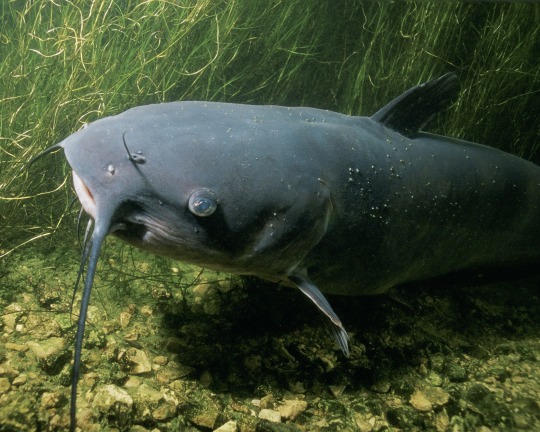
A channel catfish sits on the floor of a river.

Three Rivers Thrive

The three rivers are currently home to almost 70 different species of fish! Some of the most common fish found in the rivers are:

-Smallmouth Bass

-Rock Bass

-Muskellunge

-Channel Catfish

-Flathead Catfish

-Freshwater Drums

-Sauger

-Common Carp

You may have heard of a few of these before – bass and catfish are well known fish – but did you know that some of these watery creatures can grow to be more than 3 feet in length?  A flathead catfish, for example, can grow to be more than three and a half feet long and can weigh more than 40 pounds!  That’s crazy!

Fish Flourish

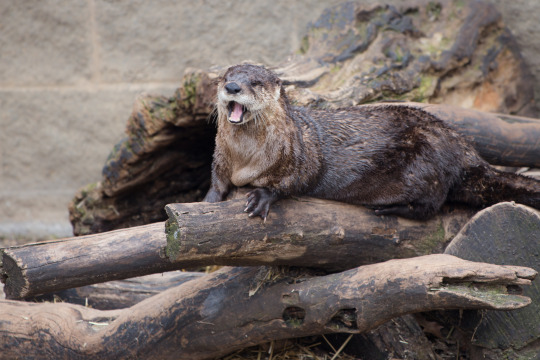
When the rivers flourish and are filled with fish, they draw predators such as bald eagles and ospreys to the Pittsburgh area.  In the 1970s, work began to restore the water quality of the three rivers back to good health.  Since then, as the waters have become less polluted, more diverse fish have been found in the rivers and streams of Western Pennsylvania – allowing other aquatic creatures to thrive, like river otters.

A river otter at the Pittsburgh Zoo sits on a log.

Keeping Pittsburgh Clean

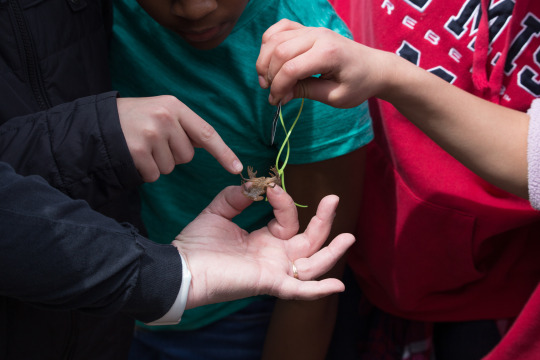
We’ve made a lot of progress in cleaning our rivers during the past 50 years.  However, there is still quite a lot of work to be done.  One way to keep track of the progress we’ve made is by monitoring the water quality of streams and watersheds in the Pittsburgh area. Allegheny College’s Creek Connections is an organization that works with Pittsburgh-area schools to monitor the health of local water sources.  For more information on Creek Connections’ work you can visit https://sites.allegheny.edu/creekconnections/.

Students working with Allegheny College’s Creek Connections inspect a crayfish found in a local stream.

You Otter Be Kidding Me

Because of pollution and environmental destruction, the river otter population in Western Pennsylvania was almost extinct in the 1900s.  To help, conservationists spent years working on rebuilding habitats and cleaning the rivers before finally reintroducing river otters to the Pittsburgh area in 1982.  Since then, river otters have continued to reclaim their habitat along the three rivers.

Explore nature together.  Visit Nature 360 for activities and information.

Blog post by Melissa Cagan. 

Filed Under: Blog Tagged With: Anthropocene, fish, Melissa Cagan, Nature 360, Pittsburgh

April 19, 2019 by wpengine

More Info: Steel City Nature Challenge on the Blog: Here We Go Pittsburgh!

City Nature Challenge 2019 logo

Ever wondered what wildlife is thriving in your city?  One way to learn about what is in your backyard is to team up with other people to explore nature through the City Nature Challenge!  The competition has been running since 2016, beginning in California, and growing into an international event. This year people will be participating from Antarctica to India!

We Need Your Help!

Your challenge is to look around and take pictures of as many types of plants, animals, and fungi as you can in four days!  Cities around the world are competing with each other to see who can log the most observations on iNaturalist (a free online and mobile application) – and we want Pittsburgh to have its best year yet!  This year, the City Nature Challenge takes place in two stages: the first part is April 26 – April 29 and the second part is April 30 – May 5. We’re calling for anyone in the Allegheny, Butler, Washington, Armstrong, Beaver, and Westmoreland counties to put their exploring hats on and help us identify the wildlife in our area!

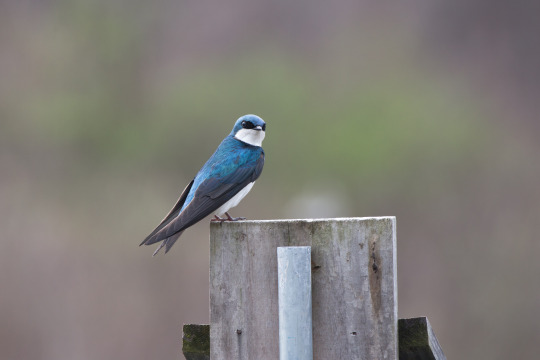
bird on a post
Spring is a great time to go outside and look for wildlife!

Three Simple Steps

All you need to remember to participate are these steps:

1.    Find Wildlife!

2.    Take Pictures!

3.    Share your Findings on iNaturalist!

Stage One: April 26 – April 29

Take a picture of every wild plant or animal you find, even if it’s something you see every day!  Only photos taken during this period of time will count for the Challenge. Last year the City Nature Challenge had over 420,000 observations – can we get even more this year?

Places to look for wildlife: your backyard, local parks, hiking trails, gardens.

Stage Two: April 30 – May 5

Identify what you’ve found and explore others’ observations!  You can confirm other people’s identifications or suggest a different identification.  If you receive two confirmations for a picture you’ve shared, you’ve got yourself a research grade identification!  Cool!

How Do I Use iNaturalist?

Below are two videos to help you navigate iNaturalist.  The first will explain how you can upload observations onto iNaturalist for stage one.  The second will show you how you can identify others’ observations during stage two.

Stage One: Uploading Observations

Stage Two: Identify and Confirm Observations

image has text at the top that says City Nature Challenge is Organized By, underneath the text are logos for California Academy of Sciences and Natural History Museum of Los Angeles County

Explore nature together.  Visit Nature 360 for activities and information.

Blog post by Melissa Cagan.

Filed Under: Blog Tagged With: Anthropocene, City Nature Challenge, iNaturalist, Melissa Cagan, Nature 360, Pittsburgh

April 17, 2019 by wpengine

Defeating Thanos and his Malthusian Mission of Population Control

Thomas Robert Malthus penned an essay on population growth in 1798 that mathematically demonstrated the relationship between food and human population. Malthus argued that whenever food supply increases, population rapidly grows to eliminate the abundance resulting in perpetual human suffering unless we control human population. From bacteria growing in a petri dish to lynx feeding on hares, Malthus’ essays on the principle of population are essential tools to ecologists forecasting population changes relative to resources. Malthus’ ideas also greatly influenced the early architects of the theory of evolution and sparked a great deal of debate on the improvement of society, birth rates, and forced sterilization. In fact, Malthus’ work is usually taught with care in today’s classrooms and museums because of its role in the development of eugenics and policies that violate human rights.

Malthus died almost 200 years ago, but his legacy continues to appear in debates on sustainability and to inspire apocalyptic plots in science and popular culture. One of the best-known Malthusians was Charles Dickens’ character Ebenezer Scrooge, a miserable old man who suggested that the poor ought to perish sooner rather than later to “decrease the surplus population.” Another example is Aldous Huxley’s novel Brave New World, which was based on a society where people were mass produced using in vitro technology to precisely control the population and people wear their contraception on so called “Malthusian belts.” And, today, Malthus’ latest incarnation comes as the supervillain Thanos in Avengers: Endgame, the next film from the Marvel Cinematic Universe. Over the course of many films, we follow Thanos on a Malthusian mission to wipe out half of all living things to achieve a “perfect balance” in the universe and to eliminate suffering caused by limited resources, a hard choice requiring Thanos’ strong will.

Thanos action figure
Credit: Krikkiat / Shutterstock.com

Despite the fact that wildlife populations repeatedly demonstrate Malthus’ principles of resources and population growth followed by population crashes, nearly all predictions of human suffering forecasted by Malthusians have been proven wrong. The world has generally gotten better with less human suffering as quality of life rises every year since Malthus’ first predictions. For decades apocalyptic predictions by biologists who studied butterflies and bacteria have not been realized because there was no way to account for the innovative abilities of human beings. We humans have radically altered our population and quality of life with inventions like vaccines and chemical fertilizers. Of course, population size and growth underlie nearly every measure of environmental impact in existence, but our ingenuity as a species has tended to prevent human suffering at the apocalyptic scales predicted by Malthusians.

When it comes to innovation for solving big problems caused by human population size and growth, like climate change and extinction, diversity matters. Unlike the world Malthus knew 200 years ago, the source pool for innovative solutions consists of over 7 billion people and includes women, people of color, and others who have been historically suppressed. Diversity leads to more creative and more novel solutions to problems; this has been proven in ecosystems with high amounts of biodiversity, companies with diverse workforces, and, maybe, diverse teams of superheroes defeating Thanos. In the upcoming battle for balance in the Marvel Cinematic Universe, diversity in numbers may be their greatest strength. Is diversity in numbers our greatest strength for solving our biggest problems, like climate change and extinctions?

female Avengers action figures
Credit: Krikkiat / Shutterstock.com

As far as decent ways to balance birth and death on our finite planet, the best strategy seems to be liberating girls and women around the world. In fact, family size shrinks, and quality of life almost always improves when girls are allowed to go to school, when women are allowed to earn money, and when contraceptives are available. Equity for women worldwide sounds like something we can all support regardless of our current planetary boundaries.

Chase Mendenhall is Assistant Curator of Birds, Ecology, and Conservation at Carnegie Museum of Natural History. Museum employees are encouraged to blog about their unique experiences and knowledge gained from working at the museum.
Filed Under: Blog Tagged With: Anthropocene, Chase Mendenhall, ecology, Thomas Robert Malthus

April 16, 2019 by Erin Southerland

Carnegie Museums of Art and Natural History to Host Catherine Chalmers, Acclaimed Artist and Photographer

Artist and photographer Catherine Chalmers

Carnegie Museums of Art and Natural History announce “Catherine Chalmers: The Arts of Living in the Anthropocene” to be held on Thursday, May 16 at 5:30 in the CMOA Theater. Artist and photographer Catherine Chalmers will join Curator of Photography Dan Leers and Anthropocene Curator Dr. Nicole Heller to discuss Chalmers’ art practice and award-winning short film Leafcutters, currently featured in Carnegie Museum of Natural History’s Anthropocene Living Room.

Chalmers’ work examines life in the Anthropocene, the proposed name of the current geological epoch when humans have become the dominant planetary force, restructuring earth system processes as well as the diversity and abundance of life.  The Anthropocene calls into question the idea that nature and culture are separated. Similarly, Chalmers’ work blurs the line between natural history and art. She writes in her Artist Statement at CatherineChalmers.com, “My work is at the intersection of art, science and nature.  I do extensive research for each of my long-term, multimedia projects and a direct engagement with the natural world is central to what I do.”

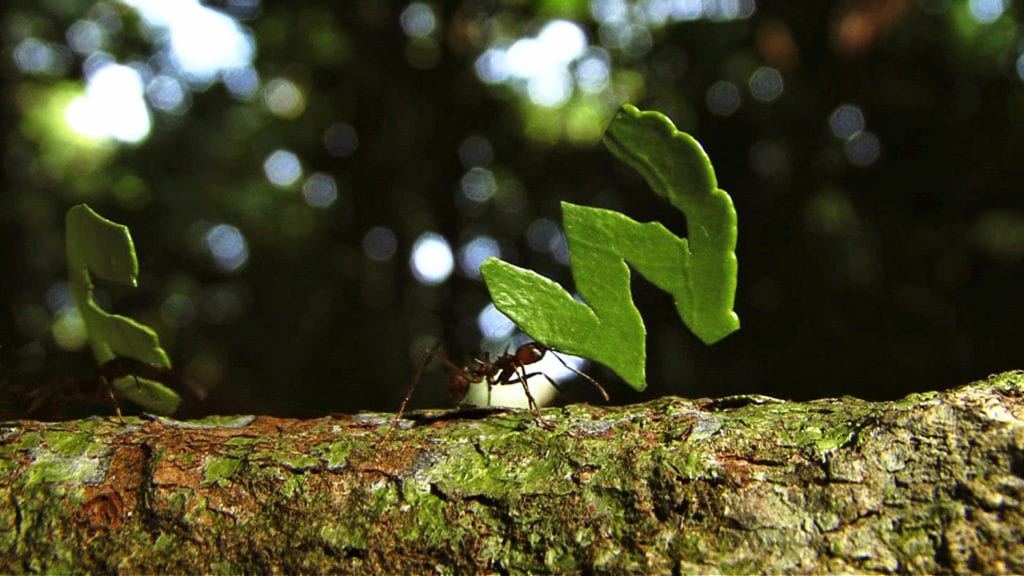
Still from the short film Leafcutters.

Nicole Heller, curator of the Anthropocene Living Room, says, “I chose Chalmers as our first Anthropocene artist to feature because her visually rich and beautiful film takes the viewer into the intimate and busy world of the leafcutter ants, new world ants in genus Atta, famous for their symbiotic fungal gardens. Chalmers’ art practice demonstrates a subtle but vital response to the Anthropocene crisis, namely the importance of multispecies collaboration and paying close attention. I love the way this piece, by showing the collective work of millions of social ants, invites comparisons to the collective impact of billions of human beings in the Anthropocene.”

With her art practice, Chalmers joins an established legacy of artists who turn their lens on the role of humanity within the natural world. Her work prompts questions about how to live in a culture so defined by the division between people and their natural surroundings.

“For nearly the past twenty years, Chalmers has created photographs and videos that raise awareness about environmental concerns in a whimsical and visually stunning manner,” says Dan Leers, Curator of Photography. “Leafcuttersreveals uncanny parallels between ants and humans to encourage viewers to contemplate their own relationship to the surrounding world.”

Carnegie Museum of Natural History adopted the Anthropocene as a major new theme for scientific research and visitor engagement in 2017 and appointed Nicole Heller as the world’s first Curator of the Anthropocene. TheAnthropocene Living Room, opened in 2019, showcases contemporary Anthropocene science, art, and related literature. The content of the gallery, both scientific and artistic, evolves in response to community interest and current events. As a transdisciplinary cultural and scientific concept, with deep relevance to all sectors of society and knowledge, the Anthropocene is a fertile subject for ongoing collaboration among the Carnegie Museums of Pittsburgh and the region’s scientific and cultural organizations. The museum is excited to plan future collaborations that examine this concept through the collision of natural history science, contemporary art exhibitions, and community conversation.

Tickets to “Catherine Chalmers: The Arts of Living in the Anthropocene” are $10 for adults, $5 for members, and free for students. Get tickets and more information at carnegiemnh.org.

Catherine Chalmers holds a B.S. in Engineering from Stanford University and an M.F.A. in Painting from the Royal College of Art in London.  She has exhibited her artwork around the world, including MoMA P.S.1; MASSMoCA; Kunsthalle Vienna; Today Art Museum, Beijing; among others.  Her work has appeared in a variety of publications, including theNew York Times, Washington Post, ArtNews and Artforum.  She has been featured on PBS, CNN, NPR, and the BBC.  Two books have been published on her work: FOOD CHAIN (Aperture 2000) and AMERICAN COCKROACH (Aperture 2004).  Her video “Safari” received a Jury Award (Best Experimental Short) at SXSW Film Festival in 2008.  In 2010 Chalmers received a Guggenheim Fellowship and in 2015 she was awarded a Rauschenberg Residency.  In 2018 she created a course called Art & Environmental Engagement and taught it spring quarter at Stanford University.  Her video “Leafcutters” won Best Environmental Short at the 2018 Natourale Film Festival in Wiesbaden, Germany and in 2019 it won the Gil Omenn Art & Science Award at the Ann Arbor Film Festival. She lives in New York City.


Filed Under: Uncategorized Tagged With: Anthropocene, Anthropocene Living Room

  • « Go to Previous Page
  • Page 1
  • Interim pages omitted …
  • Page 6
  • Page 7
  • Page 8
  • Page 9
  • Page 10
  • Interim pages omitted …
  • Page 16
  • Go to Next Page »

sidebar

About

  • Mission & Commitments
  • Directors Team
  • Museum History

Get Involved

  • Volunteer
  • Membership
  • Carnegie Discoverers
  • Donate
  • Employment
  • Events

Bring a Group

  • Groups of 10 or More
  • Birthday Parties at the Museum
  • Field Trips

Powdermill

  • Powdermill Nature Reserve
  • Powdermill Field Trips
  • Powdermill Staff
  • Research at Powdermill

More Information

  • Image Permission Requests
  • Science Stories
  • Accessibility
  • Shopping Cart
  • Contact
  • Visitor Policies
One of the Four Carnegie Museums | © Carnegie Institute | Privacy Policy | Terms of Use | Accessibility
Rad works here logo