• Skip to primary navigation
  • Skip to main content
  • Skip to primary sidebar

Carnegie Museum of Natural History

One of the Four Carnegie Museums of Pittsburgh

  • Visit
    • Buy Tickets
    • Visitor Information
    • Exhibitions
    • Events
    • Dining at the Museum
    • Celebrate at the Museum
    • Powdermill Nature Reserve
    • Event Venue Rental
    • Gift Cards
  • Learn
    • Field Trips
    • Educator Information
    • Programs at the Museum
    • Bring the Museum to You
    • Guided Programs FAQ
    • Programs Online
    • Climate and Rural Systems Partnership
  • Research
    • Scientific Sections
    • Science Stories
    • Science Videos
    • Senior Science & Research Staff
    • Museum Library
    • Science Seminars
    • Scientific Publications
    • Specimen and Artifact Identification
  • About
    • Mission & Commitments
    • Directors Team
    • Museum History
  • Tickets
  • Give
  • Shop

Blogs about Birds

Birds are incredibly important to Carnegie Museum of Natural History. The museum's Section of Birds contains nearly 190,000 specimens of birds. The most important of these are the 555 holotypes and syntypes. The Section of Birds staff also cares for approximately 196 specimens of extinct birds as well as specimens of many rare species collected decades—if not more than a century—ago.

February 3, 2017 by wpengine

Preventing Window Collisions

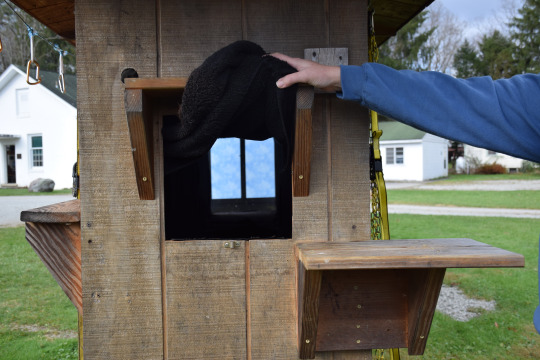
testing tunnel for bird and window collisions

Birds cannot see clear glass, and as a result it is estimated that up to 1 billion birds are killed by window collisions each year.

To help curb the problem, researchers at Powdermill are using this bird flight tunnel to safely test bird responses to different types of glass designed to be visible to birds.

Researchers test glass visibility by gently placing birds in one end of the tunnel. At the other end are two different types of glass panes. The bird chooses its “exit,” revealing to researchers what glass they can see and what glass they cannot see.

Before the birds hit the glass, a net gently stops them, and they are released.

If you see a dead or injured bird near a building or glass façade, contact BirdSafe Pittsburgh, who is gathering data on window collisions. For more information about found birds, visit BirdSafe Pittsburgh’s website.
Filed Under: Blog Tagged With: Birds, Powdermill, Powdermill Nature Reserve

January 30, 2017 by wpengine

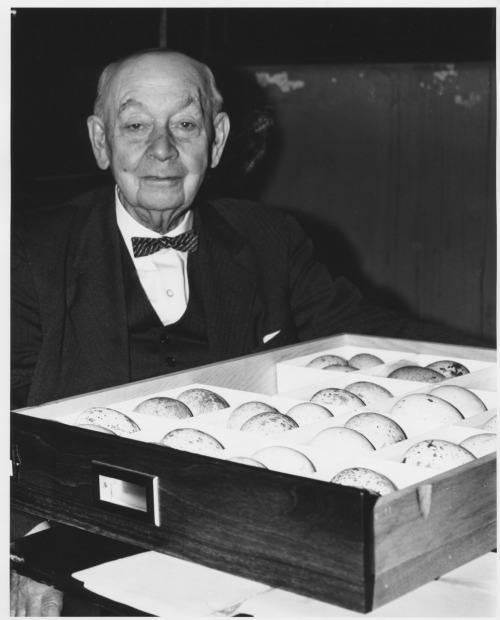
W.E. Clyde Todd

W.E. Clyde Todd, curator of Ornithology 1914-1945 at Carnegie Museum of Natural History


Filed Under: Blog Tagged With: Birds, eggs, museum history

January 18, 2017 by wpengine

Baltimore Orioles in Pittsburgh

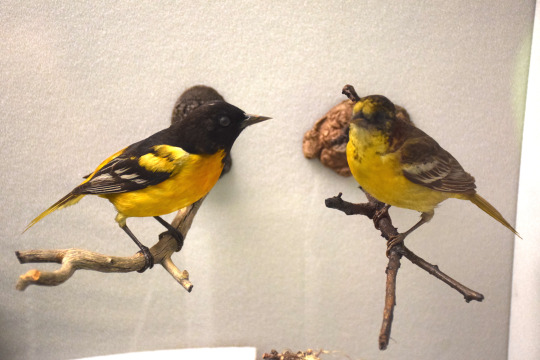
taxidermy mounts of Baltimore Orioles (Icterus galbula)

These taxidermy mounts of Baltimore Orioles (Icterus galbula) in Bird Hall show the differences in coloring between males and females, or sexual dimorphism.

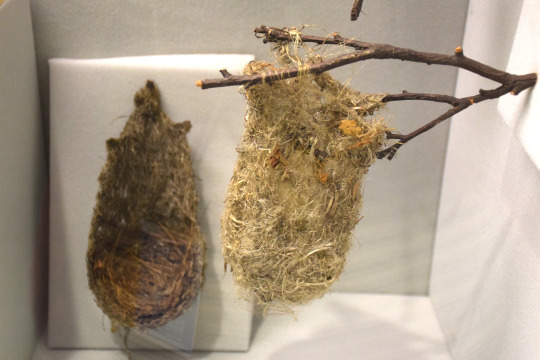
These birds are known for their brightly colored plumage and their sock-shaped nests that hang from branches, which are on display just below.

Oriole nests

Baltimore Orioles’ whistling songs are one of the first heard in spring in eastern North American forests.

They prefer dark-colored, ripe fruit. They eat by piercing fruit with their beaks, which reflexively open to allow them to easily access what is inside.

Filed Under: Blog Tagged With: bird hall, Birds

January 17, 2017 by wpengine

H Is for Hawk

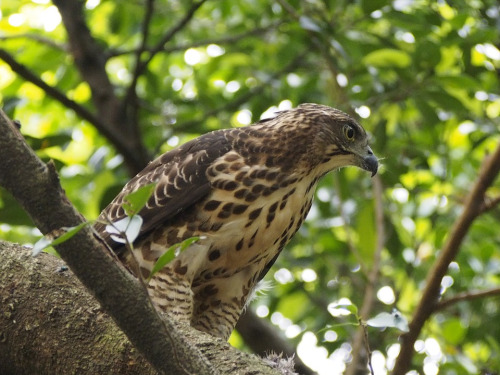
Hawk

It’s not an untouched wilderness like a mountaintop, but a ramshackle wildness in which people and the land have conspired to strangeness.”
― Helen Macdonald, “H Is for Hawk”

“H is for Hawk” author and naturalist Helen Macdonald will speak at Carnegie Music Hall on January 30. This Pittsburgh Arts & Lectures talk is sponsored by Carnegie Museum of Natural History.

Filed Under: Blog Tagged With: Birds

December 22, 2016 by wpengine

Ruth Trimble

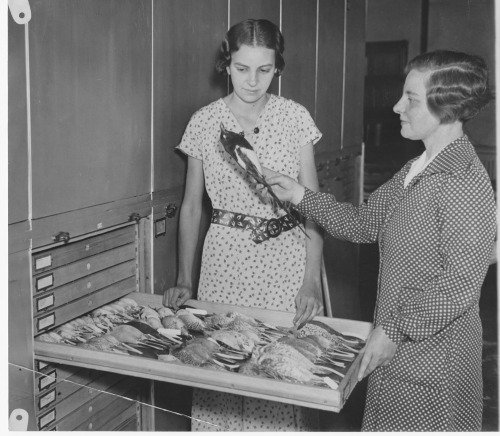
Ruth Trimble holding a bird skin from a specimen drawer

Pictured above holding a bird study skin is Ruth Trimble, a scientist who served as an assistant curator of Ornithology at Carnegie Museum of Natural History from 1934-1940. Trimble wrote the following in her book “The Bird Collection of the Carnegie Museum,” published in 1936.

Although the bird collection of the Carnegie Museum is not among the oldest of American collections, it has the distinction of being among the largest. Listing American collections according to their size we find Carnegie in fourth place, with approximately one hundred and ten thousand specimens, representing about one-fourth of the known species of birds in the world.”

“No munificent gifts of large private collections have increased our store, and no spectacular million-dollar expeditions, such as have contributed to the history of our sister institutions, have come our way. It would seem that the bird department of Carnegie Museum, much after the fashion of its founder, whose name it bears, has lifted itself by its own boot-straps.”

Filed Under: Blog Tagged With: Birds

December 21, 2016 by wpengine

Art in Bird Hall

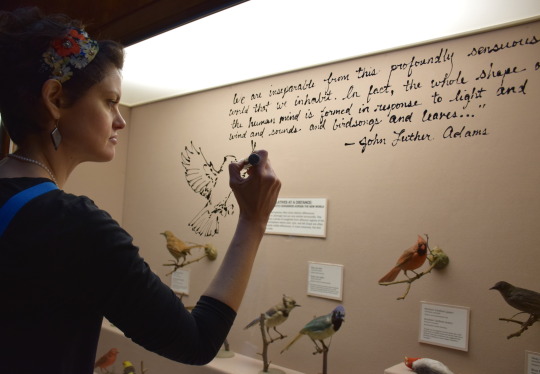
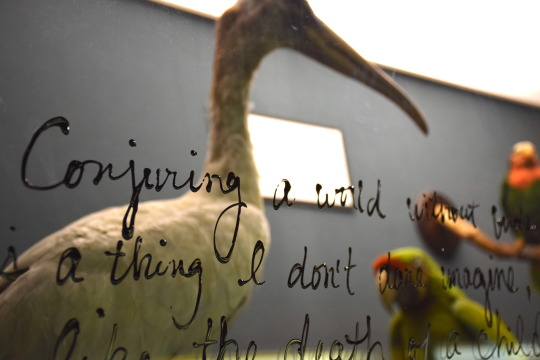
Ashley Cecil writing poetry on glass in front of bird taxidermy
poetry written on glass in front of stork

If you walk through Bird Hall this month, you might notice that there are more than just specimens on display.

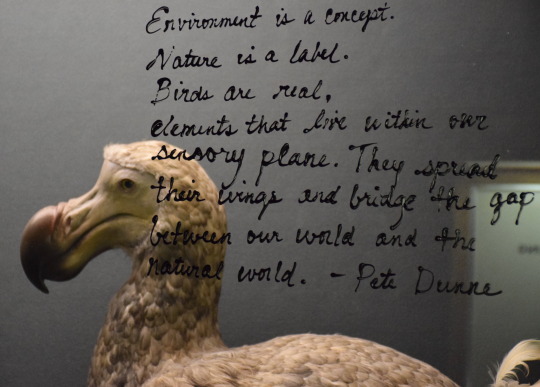
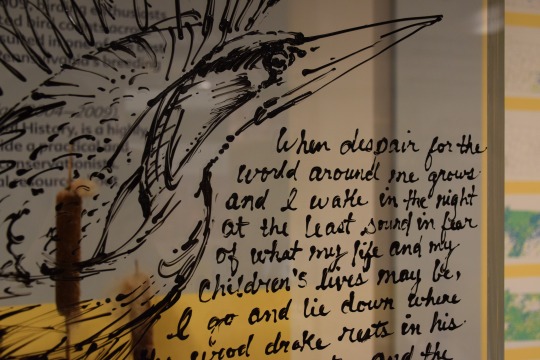
Artist in Residence Ashley Cecil has been drawing birds and writing poems, song lyrics, and quotes about birds, conservation, and nature on the glass displays cases that hold hundreds of specimens. Ashley worked with museum scientists who shared quotes and works of art that inspired them to enter their fields and study birds.

There are poems by Emily Dickinson and Wendell Berry, lyrics by John Lennon and Paul McCartney, and quotes from famous ornithologists. One case features a line from a Dickinson poem…

“I hope you love birds too. It is economical. It saves going to heaven.”


Ashley Cecil is the artist in residence at Carnegie Museum of Natural History. Through her residence at the museum, Ashley is creating art inspired by nature and exploring the nexus of art and science.

poem written on glass in front of dodo replica
drawing of a bird on glass

Filed Under: Blog Tagged With: art, bird hall, Birds

  • « Go to Previous Page
  • Page 1
  • Interim pages omitted …
  • Page 16
  • Page 17
  • Page 18
  • Page 19
  • Page 20
  • Go to Next Page »

sidebar

About

  • Mission & Commitments
  • Directors Team
  • Museum History

Get Involved

  • Volunteer
  • Membership
  • Carnegie Discoverers
  • Donate
  • Employment
  • Events

Bring a Group

  • Groups of 10 or More
  • Birthday Parties at the Museum
  • Field Trips

Powdermill

  • Powdermill Nature Reserve
  • Powdermill Field Trips
  • Powdermill Staff
  • Research at Powdermill

More Information

  • Image Permission Requests
  • Science Stories
  • Accessibility
  • Shopping Cart
  • Contact
  • Visitor Policies
One of the Four Carnegie Museums | © Carnegie Institute | Privacy Policy | Terms of Use | Accessibility
Rad works here logo