• Skip to primary navigation
  • Skip to main content
  • Skip to primary sidebar

Carnegie Museum of Natural History

One of the Four Carnegie Museums of Pittsburgh

  • Visit
    • Buy Tickets
    • Visitor Information
    • Exhibitions
    • Events
    • Dining at the Museum
    • Celebrate at the Museum
    • Powdermill Nature Reserve
    • Event Venue Rental
    • Gift Cards
  • Learn
    • Field Trips
    • Educator Information
    • Programs at the Museum
    • Bring the Museum to You
    • Guided Programs FAQ
    • Programs Online
    • Climate and Rural Systems Partnership
  • Research
    • Scientific Sections
    • Science Stories
    • Science Videos
    • Senior Science & Research Staff
    • Museum Library
    • Science Seminars
    • Scientific Publications
    • Specimen and Artifact Identification
  • About
    • Mission & Commitments
    • Directors Team
    • Museum History
  • Tickets
  • Give
  • Shop

Blogs about Birds

Birds are incredibly important to Carnegie Museum of Natural History. The museum's Section of Birds contains nearly 190,000 specimens of birds. The most important of these are the 555 holotypes and syntypes. The Section of Birds staff also cares for approximately 196 specimens of extinct birds as well as specimens of many rare species collected decades—if not more than a century—ago.

November 28, 2016 by wpengine

Songbirds and Climate Change

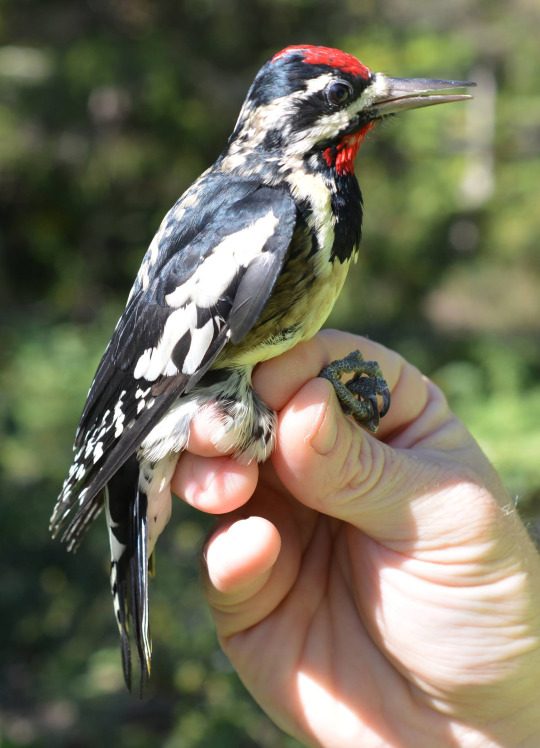
song bird being held by a researcher
How are songbirds in western Pennsylvania adapting to climate change?

Fairly well according to Carnegie Museum of Natural History researchers Molly McDermott and Luke DeGroote, who observed adaptations in a recent paper titled “Global Change Biology.” Their work was covered in Anthropocene Magazine and referenced on NPR’s Science Friday this month.

Using 53 years’ worth of data collected at Powdermill Nature Reserve, Carnegie Museum of Natural History’s environmental research center in Rector Pa., DeGroote and McDermott observed that several species of songbirds have adapted their breeding cycles to warmer weather and earlier springs.

“I think of it as a very hopeful note. We can think of it as mother nature’s resilience, giving us a chance to be doing everything else we could be doing to help birds,” freelance writer Brandon Keim said on Science Friday about his Anthropocene Magazine article on McDermott and DeGroote’s paper.

However, DeGroote says that despite the note of optimism, there’s also an underlying word of caution.

“Because there is a disconnect between plant phenology and migratory timing, there may come a time when birds are no longer able to continue to ‘catch up’ after arrival by breeding earlier,” DeGroote said.

You can read the Anthropocene article or listen to Science Friday, where the segment featuring the research is about three minutes into the full episode at (89:21 to -86:53).
Filed Under: Blog Tagged With: adaptation, Birds, climate change, global warming

November 7, 2016 by wpengine

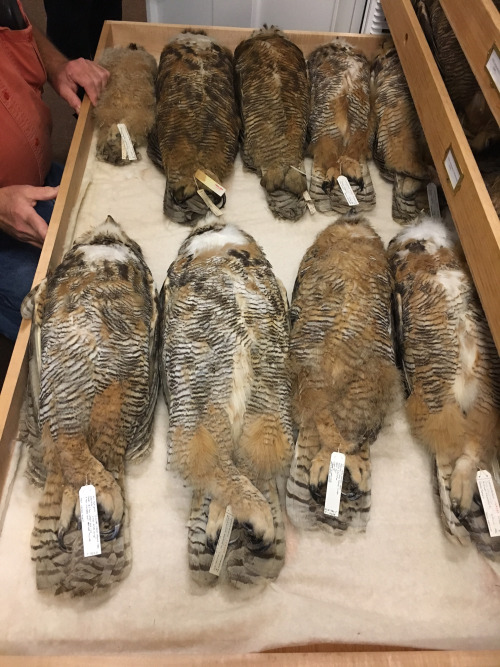
Owl study skins

owl study skins

Owl study skins from Carnegie Museum of Natural History’s hidden collection.

Our Section of Birds cares for nearly 195,000 specimens of birds, including  555 holotypes and syntypes.

Filed Under: Blog Tagged With: Birds, nature, owls

October 26, 2016 by wpengine

Comparing Pictures to Mounts

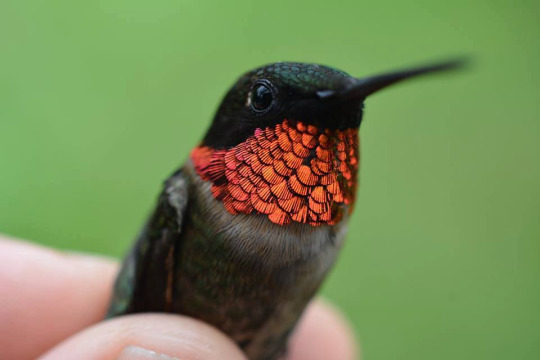
ruby throated hummingbird
The Ruby-throated hummingbird, which has iridescent, fuchsia feathers on its neck, a dark green head, and a long black beak.

Each week, staff at Powdermill Nature Reserve staff posts stunning,
high-resolution photos of birds that land in their nets on their Facebook page.

The photos show detailed characteristics of local birds, like the
subtle coloring of a Common Yellowthroat or the sharp beak of a Pine
Siskin, that are hard to see as they fly above.

Powdermill is Carnegie Museum of Natural History’s environmental
research center in Rector Pa, where thousands of birds are identified, banded,
and released each year. As they band, research staffers often snap pictures
that highlight the huge variety of different birds flying through Western
Pennsylvania’s skies.

One favorite is the Ruby-throated hummingbird, which has
iridescent, fuchsia feathers on its neck that abut a dark green heads and long
black beak.

Comparing the Powdermill pictures to Bird Hall in the museum
is an interesting exercise. For example, Powdermill’s high resolution pictures let
you appreciate each and every line of the hummingbird’s bright feathers. But in
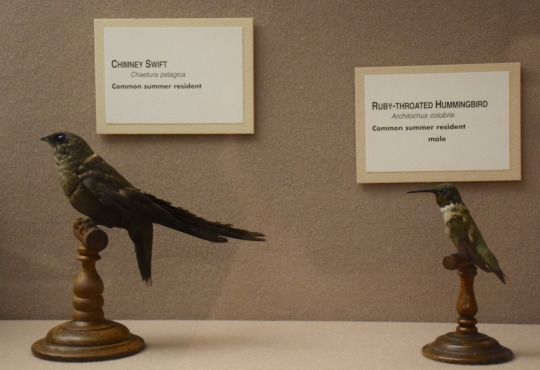
the museum, to see a taxidermy mount of a ruby throated humming bird
helps you grasp the miniscule size of these little birds that don’t often grow
larger than 3.5 inches.

Powdermill’s pictures and Bird Halls specimens work
in tandem to encourage us to pause and consider tiny players in our huge
local ecosystem, helping us all foster a little more appreciation for the
natural world.

taxidermied birds
Specimens on display in Bird Hall at Carnegie Museum of Natural History

Filed Under: Blog Tagged With: avian research, bird hall, Birds, museums, Pittsburgh, Powdermill

October 24, 2016 by wpengine

Fall Bird Banding at Powdermill

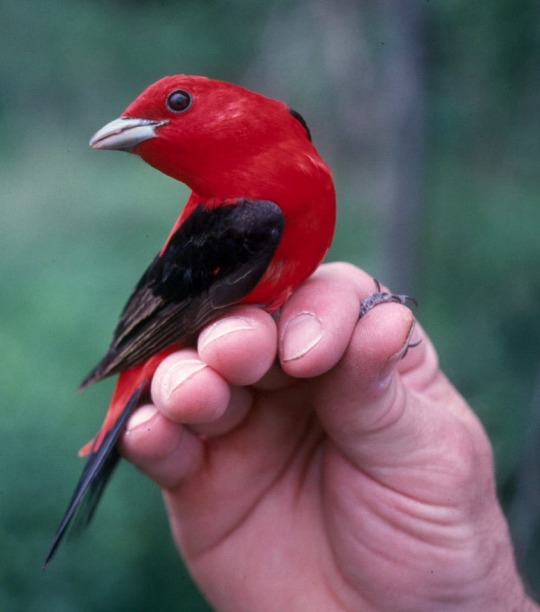
bird banding at Powdermill Nature Reserve

Fall is an exciting and busy time for our avian researchers at Powdermill Nature Reserve, Carnegie Museum of Natural History’s environmental research center in Rector Pennsylvania.

As birds migrate south, thousands fly through Powdermill, where they are identified, banded, and studied before they continue their long journey to their winter nesting grounds.

Researchers band anything from worm-eating Warblers to brightly colored purple finches in their nets each year.

This fall alone, more than 4,000 birds representing 150+ species have been studied and banded since September. Researchers catch the birds in specially designed mist nets that are cast each morning before dawn. Caught birds are carefully transported to a banding station, where they are identified, measured, and given a small band issued through the US Geological Survey.  Bands provide information for other researchers and don’t affect the birds flight, nesting, or eating habits.

Above all else, the well being of every bird is Powdermill’s top priority at all times. The entire banding process takes less than a minute, and the vast majority of birds are actually quite calm during their short visit at the banding station.

But why band birds at all?

The fundamental goal of bird banding has always been to record the age, sex, wing length, fat deposits, and body mass of captured species as a way of monitoring, year to year, how avian populations are faring in the wild.

Banding gives us insight into many things like the life cycles and longevity of birds, habitat use, and how disease and environmental toxins are affecting wild bird populations.

Want to learn more? You can see monthly and annual banding summaries online or follow Powdermill Nature Reserve on Facebook for weekly updates and stunning pictures.

Filed Under: Blog Tagged With: avian research, bird banding, Birds, nature, parc, Powdermill, research

September 18, 2016 by wpengine

Artist in residence

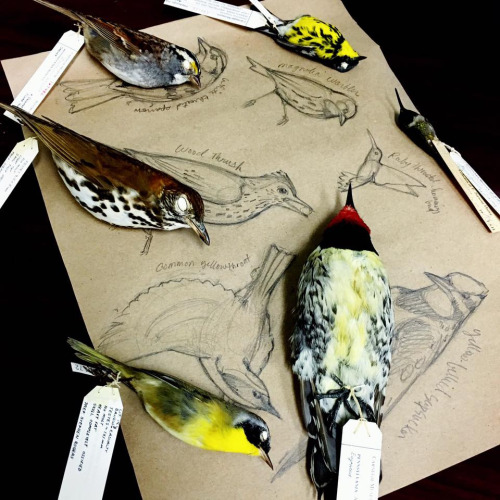
Study skins of birds with their drawings

Carnegie Museum of Natural History’s artist in residence Ashley Cecil brought these study skins from our collection back to life with her drawings that she’ll later paint in full color.  These six species of birds are often injured or killed when they collide with glass windows in urban areas where buildings and structures invade their flight space.

Carnegie Museum of Natural History is one of eight organizations who have joined the partnership BirdSafe Pittsburgh,which works to research and reduce bird-glass collisions in urban communities.

Filed Under: Blog Tagged With: art, Birds, conservation, Pittsburgh

August 20, 2016 by wpengine

Young Green Heron

A young green heron

A young green heron banded at Powdermill Nature Reserve, the environmental research center of Carnegie Museum of Natural History.

Filed Under: Blog Tagged With: bird banding, Birds, nature, Pittsburgh, Powdermill

  • « Go to Previous Page
  • Page 1
  • Interim pages omitted …
  • Page 17
  • Page 18
  • Page 19
  • Page 20
  • Go to Next Page »

sidebar

About

  • Mission & Commitments
  • Directors Team
  • Museum History

Get Involved

  • Volunteer
  • Membership
  • Carnegie Discoverers
  • Donate
  • Employment
  • Events

Bring a Group

  • Groups of 10 or More
  • Birthday Parties at the Museum
  • Field Trips

Powdermill

  • Powdermill Nature Reserve
  • Powdermill Field Trips
  • Powdermill Staff
  • Research at Powdermill

More Information

  • Image Permission Requests
  • Science Stories
  • Accessibility
  • Shopping Cart
  • Contact
  • Visitor Policies
Stay in the loop! Sign up for our newsletter(s).
One of the Four Carnegie Museums | © Carnegie Institute | Privacy Policy | Terms of Use | Accessibility
Rad works here logo