• Skip to primary navigation
  • Skip to main content
  • Skip to primary sidebar

Carnegie Museum of Natural History

One of the Four Carnegie Museums of Pittsburgh

  • Visit
    • Buy Tickets
    • Visitor Information
    • Exhibitions
    • Events
    • Dining at the Museum
    • Celebrate at the Museum
    • Powdermill Nature Reserve
    • Event Venue Rental
    • Gift Cards
  • Learn
    • Field Trips
    • Educator Information
    • Programs at the Museum
    • Bring the Museum to You
    • Guided Programs FAQ
    • Programs Online
    • Climate and Rural Systems Partnership
  • Research
    • Scientific Sections
    • Science Stories
    • Science Videos
    • Senior Science & Research Staff
    • Museum Library
    • Science Seminars
    • Scientific Publications
    • Specimen and Artifact Identification
  • About
    • Mission & Commitments
    • Directors Team
    • Museum History
  • Tickets
  • Give
  • Shop

Blogs about Birds

Birds are incredibly important to Carnegie Museum of Natural History. The museum's Section of Birds contains nearly 190,000 specimens of birds. The most important of these are the 555 holotypes and syntypes. The Section of Birds staff also cares for approximately 196 specimens of extinct birds as well as specimens of many rare species collected decades—if not more than a century—ago.

March 9, 2022 by Erin Southerland

Pittsburgh Launches Spring 2022 Lights Out Program to Protect Migratory Birds

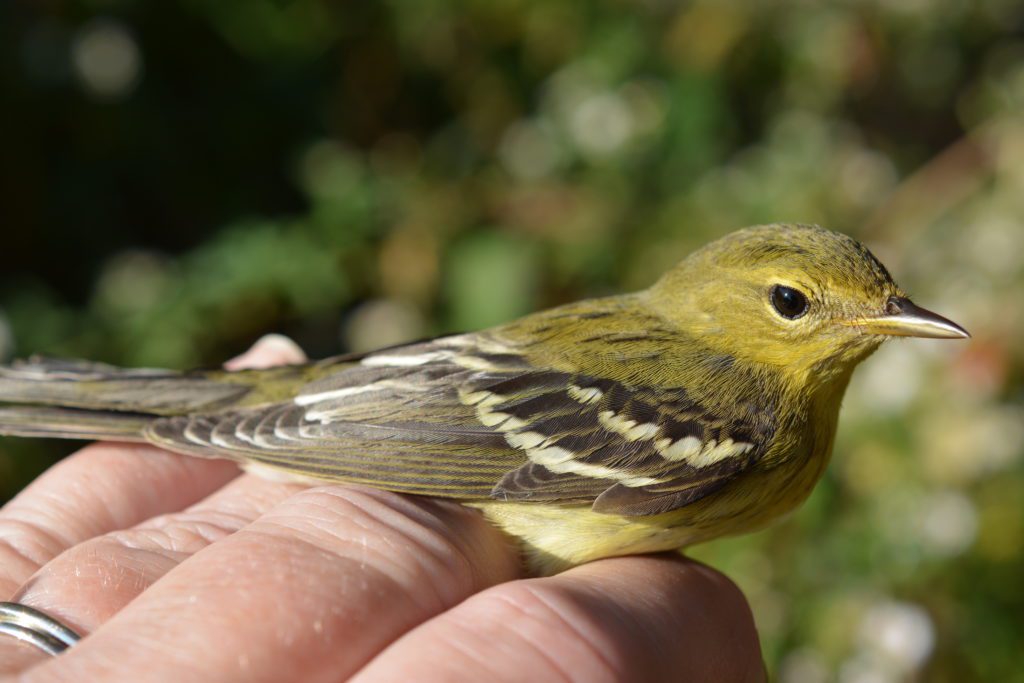
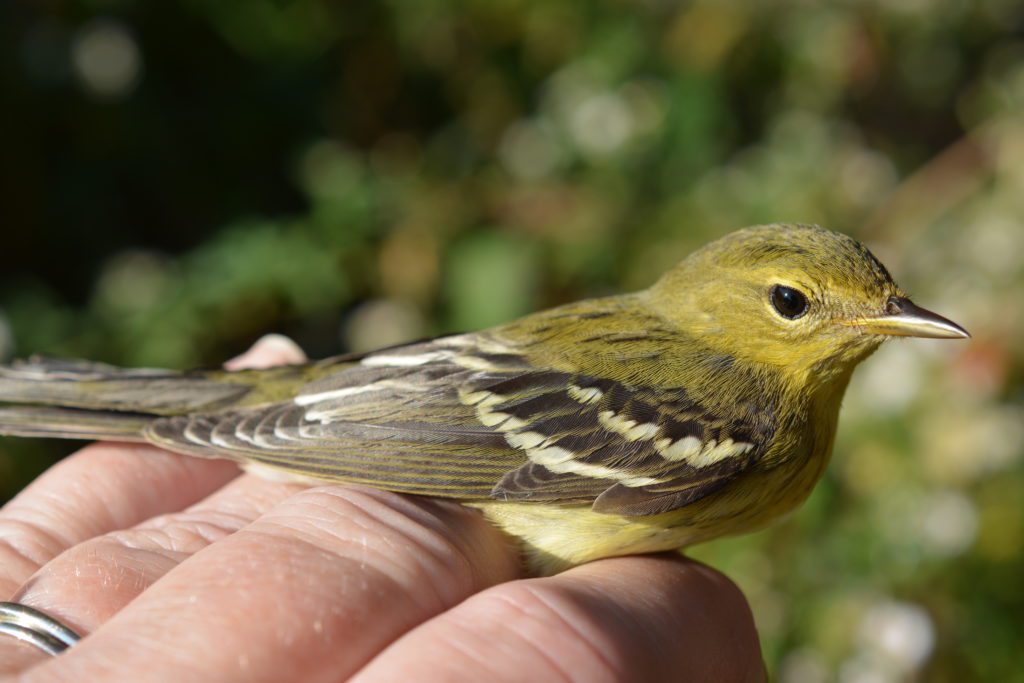
Yellow, gray, and white bird on a hand outdoors.
Blackpoll Warbler

Carnegie Museum of Natural History’s BirdSafe Pittsburgh program announces the Spring 2022 Lights Out Pittsburgh campaign. Lights Out Pittsburgh, an endeavor launched in September 2021 by BNY Mellon, the Building Owners and Managers Association of Pittsburgh, Carnegie Museum of Natural History, the National Aviary, and Pittsburgh Downtown Partnership, encourages owners of businesses and homes to turn off lights during peak migration hours, reducing bird window collisions and disorientation caused by artificial light in the night sky. Lights Out Pittsburgh seeks to build on the momentum of its successful fall campaign that recruited 75 buildings to join the movement. 
 
More than 100,000 birds pass over the Pittsburgh region each year during fall and spring migrations, and research indicates that window collisions and disorientation brought about by bright lights are leading causes of bird fatalities. Lights Out Pittsburgh invites partners to join a growing national community of businesses and residences by turning off as much internal and external building light as possible—particularly in upper floors and lobbies—during the hours between midnight and 6 a.m. from March 15 to May 31. 
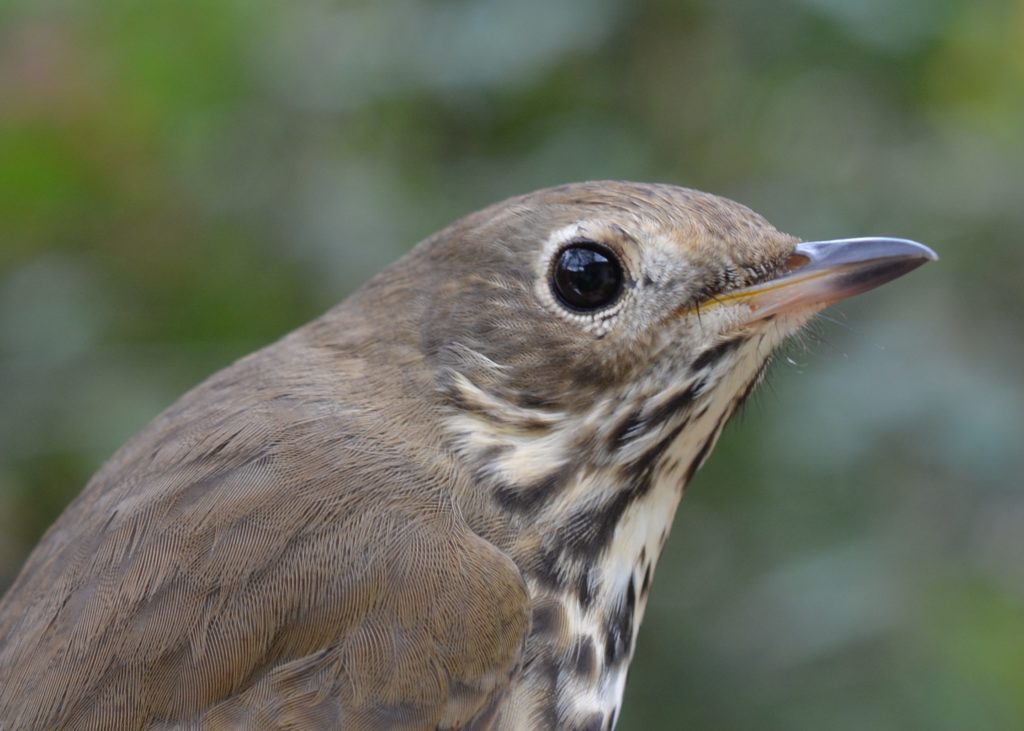
Close up of a pale brown bird with a black and white striped throat.
Hermit Thrush

“Bringing a Lights Out program to Pittsburgh last fall culminated a long-time professional goal,” said Jonathan Rice, Urban Bird Conservation Coordinator at Carnegie Museum of Natural History and manager of BirdSafe Pittsburgh. “Now it’s time to build on that. Eight years of research has shown us where birds collide in our city. This Lights Out program is the first step in making Pittsburgh a safer place for birds stopping over during migration, or who live here year-round.”
 
Lights Out Pittsburgh‘s Spring 2022 campaign will mitigate avian fatalities as migratory birds head to their summer destinations. BNY Mellon, Carnegie Mellon University, Carnegie Science Center, Eleven Stanwix, House Building, Law & Finance Building, Point Park University, Union Trust Building, United Steelworkers’ Building, 100 Ross, 20 Stanwix, 600 Waterfront, and other buildings have pledged to turn off unnecessary lighting from midnight to 6 a.m. Others can join by visiting birdsafepgh.org. 
 
“I am proud that BNY Mellon initiated this movement in the city of Pittsburgh,” said Christina Bencho of BNY Mellon. “Each year it becomes increasingly important that we use our reach, market influence, and resources to support environmental, social, and governance (ESG) issues. As one of the largest building owners in the city, this is a topic we felt passionate about moving forward.”
 
Since 2014, BirdSafe Pittsburgh has coordinated volunteers to monitor key neighborhoods during migration periods, collecting data documenting bird fatalities and providing care to birds with injuries caused by window collisions. BirdSafe Pittsburgh will document the Lights Out initiative’s progress on reducing bird mortalities.
 
The collaborative effort to save birds on their migratory journeys continues to grow as businesses and residents join the pledge to turn off unnecessary lights from midnight to 6 a.m. during peak seasonal migration periods. All are welcome and encouraged to participate. For more information about the Pittsburgh area Lights Out initiative or volunteering for BirdSafe Pittsburgh, visit birdsafepgh.org.

###

BNY Mellon is a global investments company dedicated to helping its clients manage and service their financial assets throughout the investment lifecycle. Whether providing financial services for institutions, corporations or individual investors, BNY Mellon delivers informed investment and wealth management and investment services in 35 countries. As of June 30, 2021, BNY Mellon had $45.0 trillion in assets under custody and/or administration, and $2.3 trillion in assets under management. BNY Mellon can act as a single point of contact for clients looking to create, trade, hold, manage, service, distribute or restructure investments. BNY Mellon is the corporate brand of The Bank of New York Mellon Corporation (NYSE: BK). Additional information is available on www.bnymellon.com. Follow us on Twitter @BNYMellon or visit our newsroom at www.bnymellon.com/newsroom for the latest company news.

About BOMA Pittsburgh – Since 1919, the Building Owners & Managers Association of Pittsburgh has been helping owners and managers of commercial real estate maintain safe, efficient properties in Western PA. We do this through state and local advocacy, fostering professional connections through networking events, organizing members to serve in the local community, and training the next generation of commercial real estate leaders. BOMA Pittsburgh is proudly Federated with BOMA International, and our members operate over 31 million square feet of commercial real estate. 

Carnegie Museum of Natural History, one of the four Carnegie Museums of Pittsburgh, is among the top natural history museums in the country. It maintains, preserves, and interprets an extraordinary collection of millions of objects and scientific specimens used to broaden understanding of evolution, conservation, and biodiversity. Carnegie Museum of Natural History generates new scientific knowledge, advances science literacy, and inspires visitors of all ages to become passionate about science, nature, and world cultures. More information is available by calling 412.622.3131 or by visiting the website, https://carnegiemnh.org.

About the National Aviary – The one and only National Aviary celebrates 70 years of saving birds and protecting habitats in 2022. Located on Pittsburgh’s historic Northside since its founding in 1952, the National Aviary is home to 500 birds representing more than 150 diverse species from around the world, many of them threatened or endangered in the wild. The National Aviary’s large walk-through habitats create an intimate, up-close interaction between visitors and free-flying birds, including opportunities to hand-feed and to meet many species rarely found in zoos. Hours of operation are 10:00 a.m. – 5:00 p.m. daily except for Tuesdays. For tickets and more information visit aviary.org.

About the Pittsburgh Downtown Partnership The Pittsburgh Downtown Partnership (PDP) is a dynamic, nonprofit organization comprised of business and community leaders, property owners, civic organizations, foundations, and residents who provide energy, vision, and advocacy for Downtown Pittsburgh. Working collaboratively with its partners, the PDP strives to create a positive Downtown experience for residents, workers and visitors alike. The PDP’s strategic initiatives include clean and safe services, transportation, and economic development and advocacy. For more information, visit www.DowntownPittsburgh.com, follow us on Twitter at http://twitter.com/downtownpitt and “like” us on Facebook. 
Filed Under: Press Release Tagged With: Birds, birdsafe pittsburgh, Luke DeGroote, Science News

February 22, 2022 by Erin Southerland

Fall 2021 Lights Out Pittsburgh Overview

by Jon Rice
Yellow bird held in a hand outdoors.

Why Lights Out Pittsburgh?

Over the past eight years, scientists from Powdermill Nature Reserve have conducted research in Downtown Pittsburgh, working with the generous help of the public to determine where and when birds collide with windows and other building surfaces. During this time, we have determined what building parameters make the structures deadlier to birds. Meanwhile, at Powdermill Nature Reserve, research on avian perception of glass has identified and tested products that can deter birds from colliding with windows. Outside of these research efforts, one major factor related to window collisions demands more attention – light pollution.

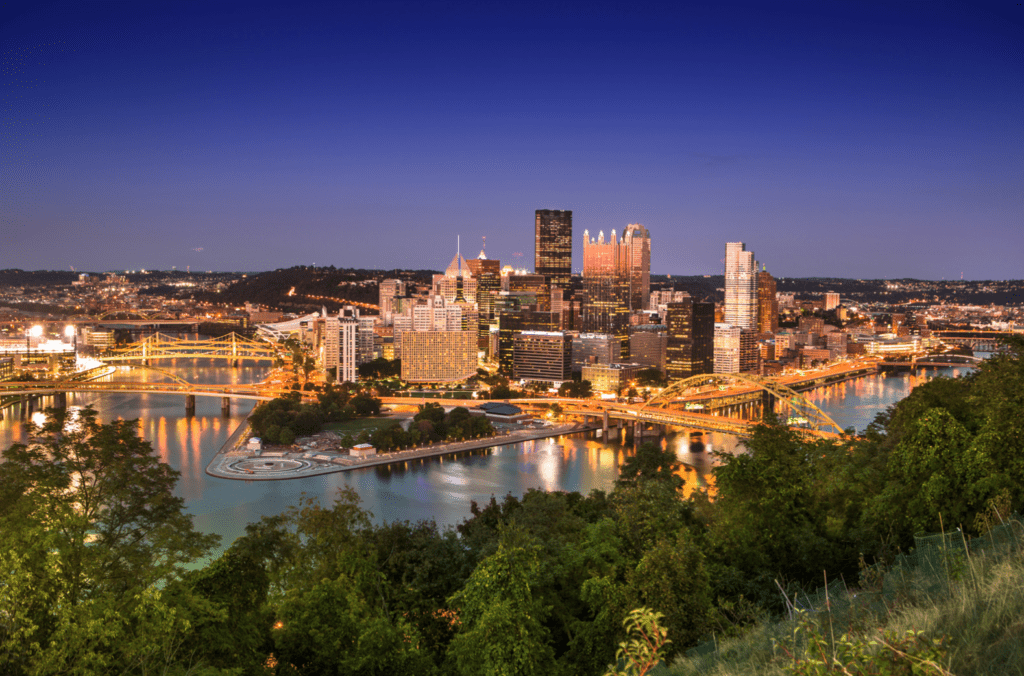
Pittsburgh skyline at night with lights on.

As birds migrate at night, using the moon and stars to navigate, they can become disoriented by light pollution coming from the ground surface below them. The source is often large cities, but urban sprawl and suburban areas can be just as detrimental. Disoriented birds are drawn out of the sky into these areas, often ending their migratory flight for the night, when otherwise they would continue flying. It’s at this stage, when migrating birds are close to the ground and moving among buildings, that a large percentage of window collisions occur.

Dark Sky Ordinances and Lights Out Pittsburgh

Many cities around the world have begun developing dark sky ordinances to reduce light pollution for multiple reasons, including public health, improved potential for astronomical observations, and wildlife conservation. The City of Pittsburgh created such an ordinance in August of 2021. At the same time, Carnegie Museum of Natural History was approached by the National Aviary at Pittsburgh and the Building Owners and Managers Association (BOMA) with a proposal to start a local Lights Out initiative.  A program modeled after existing ones in Philadelphia and several Ohio cities was developed with the input and aid of BOMA, whose participation ensured representation for the owners and managers of some of the city’s largest buildings.

Pittsburgh skyline with lights off during Lights Out Pittsburgh.

Skyscrapers aren’t the only buildings participating in the program. Residential homes, apartment buildings, and other low-rise buildings are also encouraged to participate in the Lights Out initiative. To participate, all one must do is turn out unnecessary external lights from midnight to 6:00 a.m. between March 15 and May 31, then again between September 1 and November 15. These weeks-long intervals are the peak spring and fall avian migration periods.

Fall 2021 Lights Out Results

In the first week of our Fall 2021 Lights Out campaign, 18 buildings signed up. Five were residential homes in the area, and 13 were large commercial buildings in Downtown Pittsburgh, including Point Park University, BNY Mellon Center and Client Service Center, and several PNC Downtown properties. Over the next month an additional 35 participants joined. In total, 73 buildings began participating in the fall migration period, and we are hopeful participation will grow in the upcoming spring season from March 15 to May 31.

To learn more about how you can get involved or participate in Lights Out Pittsburgh visit our website birdsafepgh.org or email us at birdsafepgh@gmail.com.

Jon Rice is the Urban Bird Conservation Coordinator at Carnegie Museum of Natural History’s Powdermill Nature Reserve. Museum employees are encouraged to blog about their unique experiences and knowledge gained from working at the museum.

Related Content

Bird Safe Glass Installed at Carnegie Museums

60 Years, One Bird at a Time

World Pangolin Day: February 19, 2022

Carnegie Museum of Natural History Blog Citation Information

Blog author: Rice, Jon
Publication date: February 22, 2022

Share this post!

  • Share on Twitter Share on Twitter
  • Share on Facebook Share on Facebook
  • Share on Pinterest Share on Pinterest
  • Share on LinkedIn Share on LinkedIn
  • Share on Reddit Share on Reddit
  • Share via Email Share via Email

Filed Under: Blog Tagged With: Birds, birdsafe pittsburgh, Carnegie Museum of Natural History, Jon Rice, Powdermill Nature Reserve, Science News, We Are Nature 2

November 5, 2021 by Erin Southerland

60 Years, One Bird at a Time

by Mary Shidel, with special thanks to Pam Curtin, for her detailed history of the Powdermill Bird Banding Program
small bird held in a hand

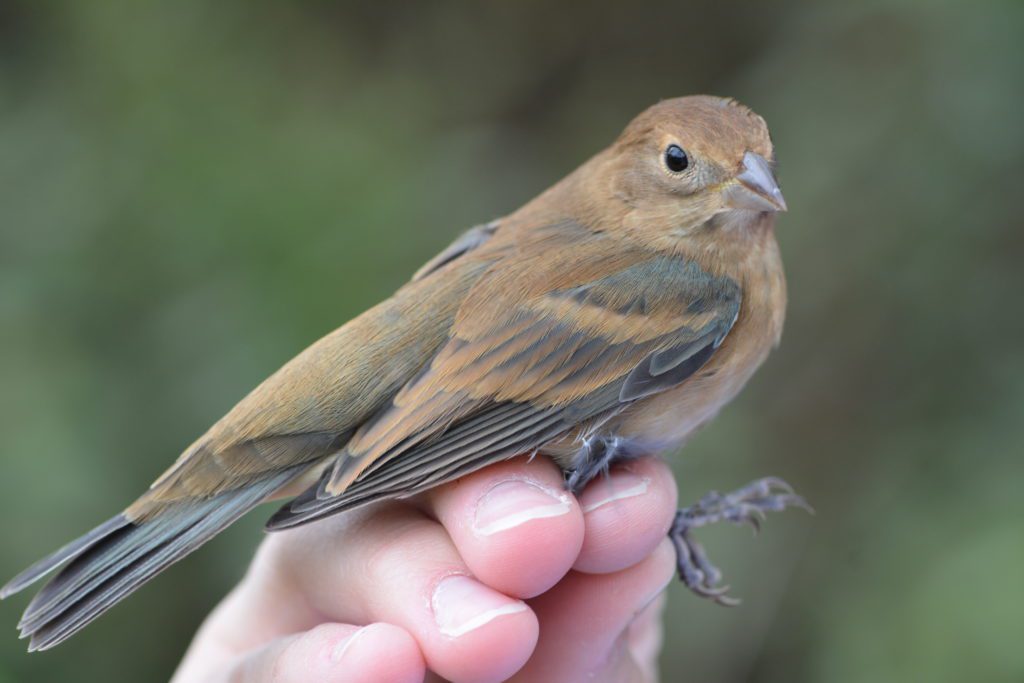
On June 18, 1961, a small brown bird with hints of blue on its wings and tail left its shrubby perch or perhaps its nest and flew into a soft nylon net. Little did this Indigo Bunting know that she would be the first data point in a long history of bird banding at the Powdermill Nature Reserve. Bob Leberman carefully extracted the bunting from the net, placed it in a bag for transport, then attached a small, almost weightless metal band to her leg, and collected data for age, sex, wing length and mass. Within minutes she was out flitting through the vegetation foraging for food. This same process has continued for 60 years, one bird at a time—capture, band, collect data, and release. 

man using a scale on a table

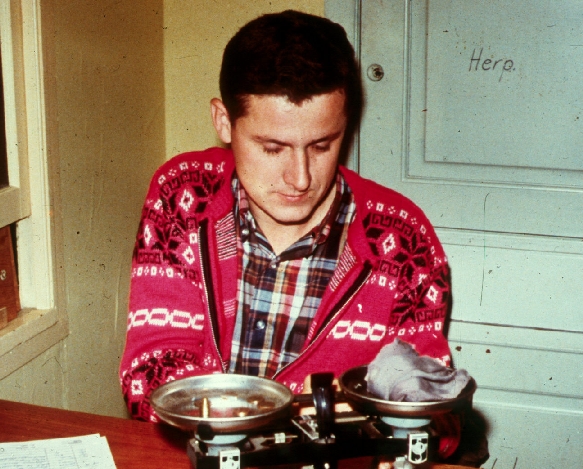
Powdermill Nature Reserve is the biological field station of Carnegie Museum of Natural History. In 1961, Bob Leberman, who had experience banding birds in Erie and near his hometown of Meadville, Pennsylvania, was hired by the museum’s director, Dr. Graham Netting, to establish a banding program at the Nature Reserve. Over the first decade or so the program evolved as Bob experimented with net sizes and placement, and honed skills and techniques for ageing and sexing that are still widely used today. In September 1961, a large pond was constructed and christened “Crisp Pond” after the village that used to exist nearby, and in 1975 two smaller ponds were added with shallower habitat for wading birds. 

white building  with tall evergreen trees behind it

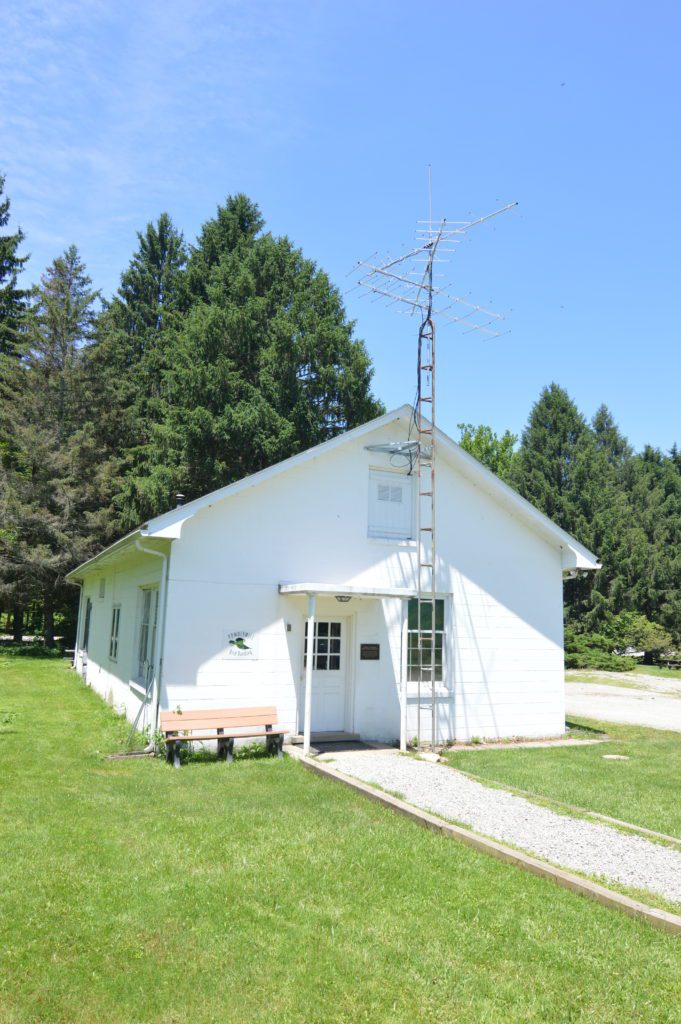
In the early days, Bob banded from mid-March to mid-November. It wasn’t until 1974, when a permanent residence was established at the reserve for him, that Bob became the first person in the country to band year-round. By 1970, as Bob’s research expanded, a nearby garage and service building were repurposed into a laboratory and office space for the Banding Program.

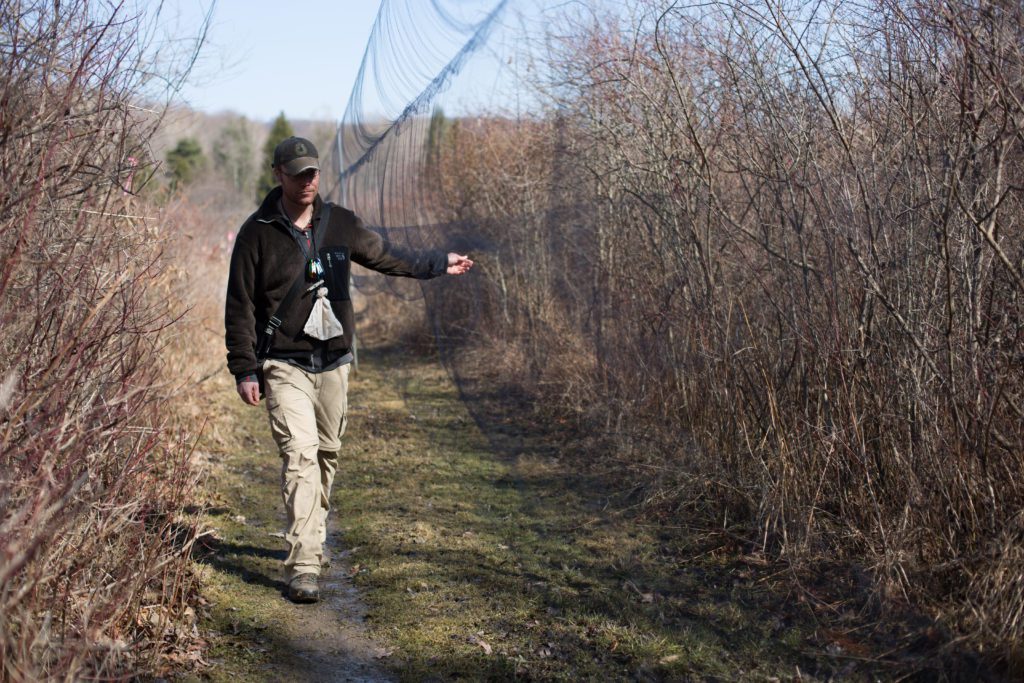
A 1967 publication of the Carnegie Museum notes that “one of the most valuable assets” of Powdermill Bird Banding is the “considerable effort made to keep data consistent and comparable.” This is still true sixty years later. Just as Bob did in the early days, nets are opened one half hour before sunrise and checked every forty minutes (or adjusted if necessary due to weather conditions). Nets are kept in the same exact location from year to year, and net lanes are trimmed frequently to keep the vegetation surrounding the nets in an early successional state rather than just letting the forest overtake the banding area. 

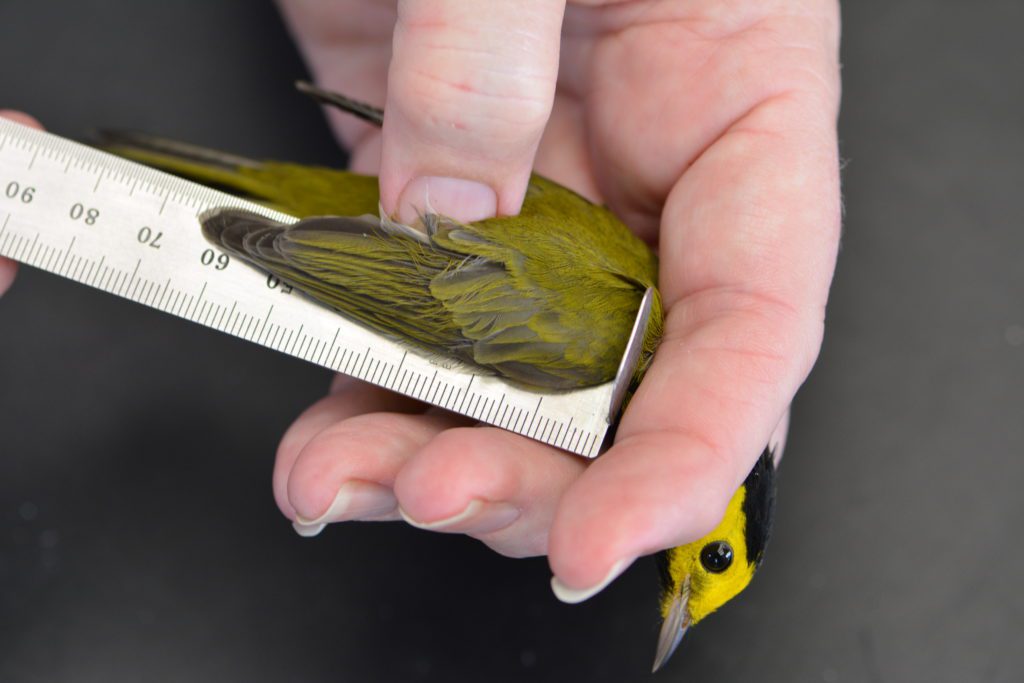
close up of measuring a bird's wing

Data consistency and integrity is also still paramount at the banding lab. Over the years, very few people have held the “bander in charge” position, and those collecting the data work closely to calibrate measurements and methods. Amazingly, of the 800,000 records now in the banding database, Bob Leberman, who retired in 2004, collected the data for almost half! In 1983, Bob Mulvihill, whose connection to the banding program began as a volunteer four years earlier, joined Bob Leberman as Powdermill’s second full-time bander. Through the efforts of both “Bobs” the program grew and expanded.  In 2004, in a recognition of ongoing research projects beyond the scope of the bird banding program, the lab was renamed “Powdermill Avian research Center,” a name frequently abbreviated as PARC.

The number of people who have supported the banding program in small and great ways over the years is much too vast to name here, but the program could never have grown and flourished without the thousands of volunteer hours and strong support from the staff at both Carnegie Museum of Natural History and Powdermill Nature Reserve. Generous funding from private donors and foundations over the years has extended the influence of PARC both nationally and globally.     

person walking next to a mist net

Today, PARC is under the direction of Lucas DeGroote, Avian Research Coordinator, with Annie Lindsay, Banding Program Manager, directing day-to-day operations at the Banding Lab. Countless avenues of research focus on finding new ways to help birds. Each banding day, Annie and her staff will be opening nets before sunrise, checking the nets every forty minutes, and safely collecting and measuring the birds, growing the database and avian knowledge, one bird at a time. 

And so the tradition continues…

Mary Shidel is a Banding Assistant at Powdermill Nature Reserve, Carnegie Museum of Natural History’s environmental research center. Museum employees blog about their unique experiences and knowledge gained from working at the museum.

Related Content

What is Bird Banding?

Milestones at Powdermill’s Banding Lab

Spring Birds in Your Backyard

Carnegie Museum of Natural History Blog Citation Information

Blog author: Shidel, Mary
Publication date: November 5, 2021

Share this post!

  • Share on Twitter Share on Twitter
  • Share on Facebook Share on Facebook
  • Share on Pinterest Share on Pinterest
  • Share on LinkedIn Share on LinkedIn
  • Share on Reddit Share on Reddit
  • Share via Email Share via Email

Filed Under: Blog Tagged With: bird banding, Birds, Mary Shidel, parc, Powdermill Nature Reserve

October 20, 2021 by Erin Southerland

It Isn’t Easy Being Different

by Stephen P. Rogers
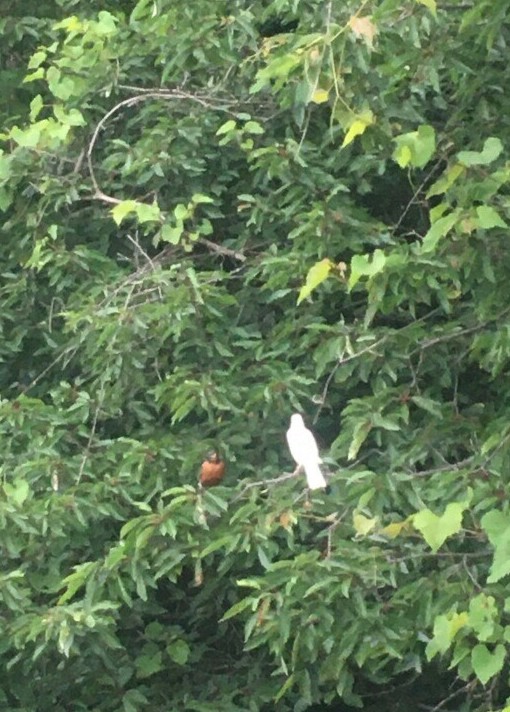
White bird and a robin in a tree

In nature there is always variation among individuals. In fact, the ability of an organism’s genes to pass along variation to a subsequent generation accounts for how species evolve. When enough variation develops among a group of individuals that are in some way isolated from other similar individuals, a new species might evolve. Often, however, a variation leads to such a unique set of features that the individual does not survive long enough to reproduce.

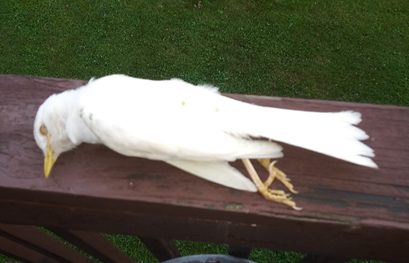
In June, I received a call from a person named Joseph who enjoys watching birds near his home in Plum Borough. He and a neighbor had been watching an albino American Robin in the field behind their apartment complex for a few days. One afternoon three standard colored Robins began harassing this albino and chased it rapidly towards the field’s wooded edge. When Joseph heard a ‘thunk’ as the bird hit a poplar tree, he put on his boots to search for it.  After some effort he found the bird, unfortunately dead. He called the National Aviary to report his find, and a representative he spoke with forwarded his number to me. I visited Joseph to retrieve the rare specimen, and he later sent me pictures of the living bird as well as an immediate post-mortem image showing pink eyes, a feature which designates the creature as a true albino.

albino American Robin laying on its side outdoors

Adding the Albino Robin to the Museum Collection

I contacted Annie Lindsay, Powdermill Nature Reserve’s Banding Program Manager, to ask if she had ever seen an albino at the museum’s field research station. She had not, but reported some encounters with birds bearing leucistic feathers. The term refers to feathers without pigment. Sometimes birds who lose individual feathers when they are not molting replace a lost colored feather with one that is white. I have seen this phenomenon in some birds I have prepared. I have also occasionally prepared birds with leucism, a condition caused by a genetic mutation that results in a partial reduction of color in a bird’s plumage, resulting certain areas white and other areas the typical colors of the species.

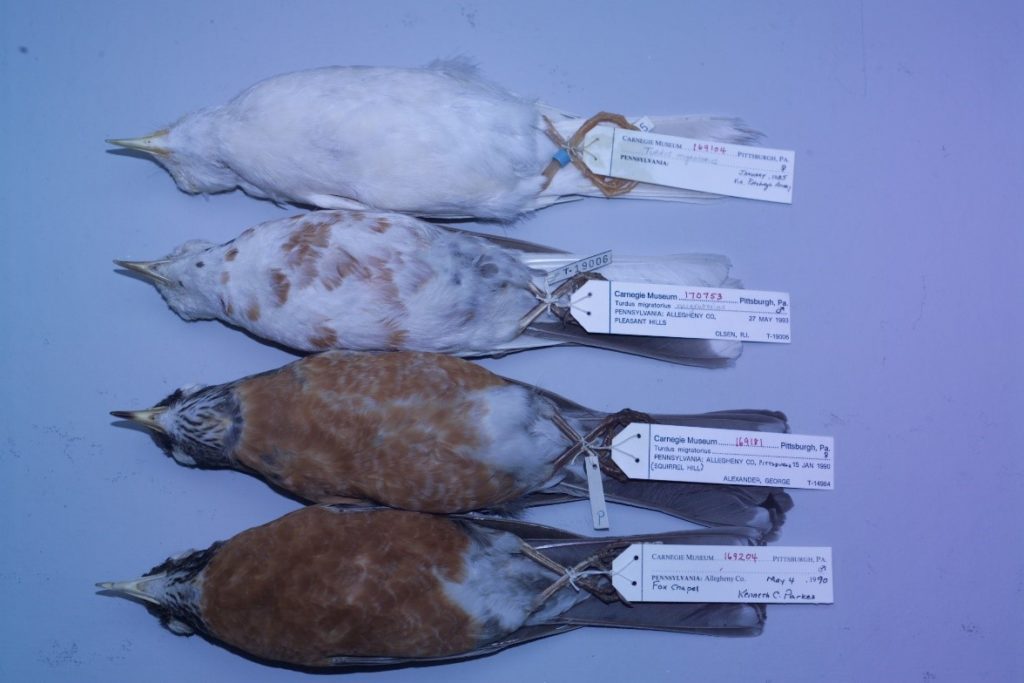
Among the American Robins in the CMNH collection we have an example of both a full albino and a leucistic individual. Both are pictured below alongside a male and female robin in normal coloration. The leucistic bird had been watched for three years before it was found dead. This lifespan can be interpreted as evidence that other robins must have accepted its’ coloration.

Four study skins of American Robins

All of these birds are from the Pittsburgh area, a region which has been the primary source of birds added to the collection for many years. Typical collection addition situations involved vigilant bird watchers who found a bird that had been hit by a car (one of these individuals) or had been found dead near a window. Over the past 40 years I’ve transformed thousands of such feathered accident victims into museum specimens for current and future scientific studies. During this time, I’ve noticed a trend. If a person finds a dead bird, they may or may not contact the museum to see if we want the specimen. However, if it appears to be extra colorful, or rare by distribution, or in the case of the Plum Borough robin, albino, they may make a special effort to reach out to Carnegie Museum of Natural History. The albino American Robin is still in a museum freezer awaiting preparation. Perhaps it may become a taxidermy specimen rather than a study skin.

Stephen P. Rogers is Collection Manager in the Section of Birds at Carnegie Museum of Natural History. Museum employees are encouraged to blog about their unique experiences and knowledge gained from working at the museum.

Related Content

Halloween and Birds

Lights Out for Birds

Turkeys

Carnegie Museum of Natural History Blog Citation Information

Blog author: Rogers, Stephen P.
Publication date: October 21, 2021

Share this post!

  • Share on Twitter Share on Twitter
  • Share on Facebook Share on Facebook
  • Share on Pinterest Share on Pinterest
  • Share on LinkedIn Share on LinkedIn
  • Share on Reddit Share on Reddit
  • Share via Email Share via Email

Filed Under: Blog Tagged With: Birds, Science News, Stephen Rogers

September 21, 2021 by wpengine

Lights Out for Birds

by Patrick McShea

As innately land-bound creatures, our comprehension of what goes on in the sky above us is limited. These short-comings are compounded when the sky grows dark. Our disconnection with what amounts to be an adjacent, but largely inaccessible ecosystem, presents a challenge to the organizers of a seasonal project to protect migrating songbirds.

Enormous numbers of birds pass over the Pittsburgh region each year during migration, northbound in the spring, and southbound in the fall. These passages occur during the night, and bright lighting can disorient the migrants’ finely-tuned sense of navigation, sometimes resulting in disabling or fatal window collisions. Lights Out Pittsburgh, is a voluntary program that encourages building owners and tenants to minimize this problem by turning off as much internal and external lighting as possible, nightly from midnight to 6:00 a.m. between September 1 and November 15.

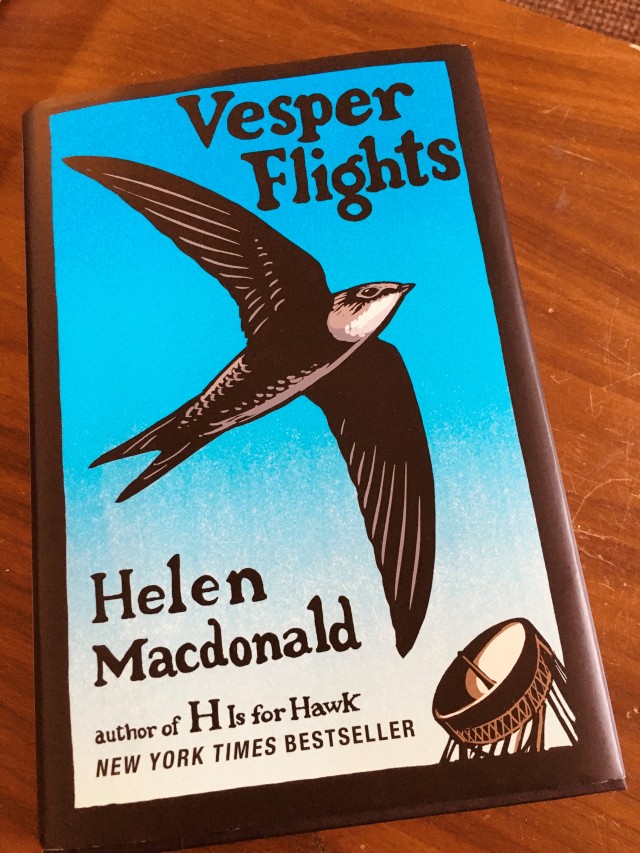
This fall, a group of organizations that includes the Building Owners and Managers Association of Pittsburgh, BNY Mellon, BirdSafe Pittsburgh, Carnegie Museum of Natural History, Pittsburgh Downtown Partnership, and the National Aviary announced their participation in the project. Long term, the sustainability of light reduction efforts will require greater appreciation of sky as ecosystem. To that end an essay in Vesper Flights, Helen Macdonald’s 2020 collection of nature writing and personal memoir, provides essential background information.

Cover of the book Vesper Flights by Helen Macdonald

In “High-Rise” the English naturalist, with Cornell Lab of Ornithology researcher Andrew Farnsworth as her guide, presents the 86th floor observation deck of Empire State Building as a portal for viewing a tiny slice of the northbound spring bird migration high above Manhattan. As Macdonald explains, by referencing the work of another researcher, the lofty vantage point is “a realm where the distinction between city and countryside has little or no meaning at all.”

From Vesper Flights by Helen Macdonald, Grove Press, 2020:

For every larger bird I see, thirty or more songbirds pass over. They are very small. Watching their passage is almost too moving to bear. They resemble stars, embers, slow tracer fire. Even through binoculars those at higher altitudes are tiny, ghostly points of light. I know that they have loose-clenched toes tucked to their chests, bright eyes, thin bones and a will to fly north that pulls them onward night after night. Most of them spent yesterday in central or southern New Jersey before ascending into darkness.

There are, of course, opportunities to make firsthand observations of the passage of migrating songbirds without a skyscraper as viewing platform. As night-flying migrants descend to lower altitudes just before dawn, their presence, numbers, and rough directional movement can be detected from quiet ground-level positions by listening for an irregular cadence of one and two syllable tweets and chips.

In a mid-Twentieth Century essay designed to guide parents in presenting the wonder of nature to their children, the renowned environmentalist Rachel Carson reflected upon this audio evidence of bird migration.

From The Sense of Wonder by Rachel Carson, Harper & Row, 1984 (a renewed copyright from 1956):

I never hear these calls without a wave of feeling that is compounded of many emotions – a sense of lonely distances, a compassionate awareness of small lives controlled and directed by forces beyond volition or denial, a surging wonder at the sure instinct for route and direction that so far has baffled human efforts to explain it.

Some dark early morning this fall, if you’re able to listen to the calls of descending migrants over the background buzz of crickets and the hum of traffic, you’re likely to become a stronger supporter of Lights Out Pittsburgh.

Patrick McShea works in the Education and Visitor Experience department of Carnegie Museum of Natural History. Museum employees are encouraged to blog about their unique experiences and knowledge gained from working at the museum.

Related Content

Bird Architecture on Human Infrastructure

Milestones at Powdermill’s Banding Lab

Teaching About Trees

Carnegie Museum of Natural History Blog Citation Information

Blog author: McShea, Patrick
Publication date: September 21, 2021

Share this post!

  • Share on Twitter Share on Twitter
  • Share on Facebook Share on Facebook
  • Share on Pinterest Share on Pinterest
  • Share on LinkedIn Share on LinkedIn
  • Share on Reddit Share on Reddit
  • Share via Email Share via Email

Share this post!

  • Share on Twitter Share on Twitter
  • Share on Facebook Share on Facebook
  • Share on Pinterest Share on Pinterest
  • Share on LinkedIn Share on LinkedIn
  • Share on Reddit Share on Reddit
  • Share via Email Share via Email

Filed Under: Blog Tagged With: Birds, birdsafe pittsburgh, Pat McShea, Science News, We Are Nature 2

September 10, 2021 by wpengine

Milestones at Powdermill’s Banding Lab

by Annie Lindsay

On the morning of July 11, 2001, Powdermill’s bird banding crew knew that was the day they’d catch the program’s 500,000th banding record (which includes new birds and recaptured birds). With only 10 birds to go, each person on the field crew guessed what species #500,000 would be, then set out on a net round together. As we checked each net, our eager anticipation grew with each bird we extracted. It turned out that I, a young, green banding intern, guessed correctly: number 500,000 was a Gray Catbird, a very common species at Powdermill during the breeding season, and a charismatically sassy species that endears itself to many banders and birders.

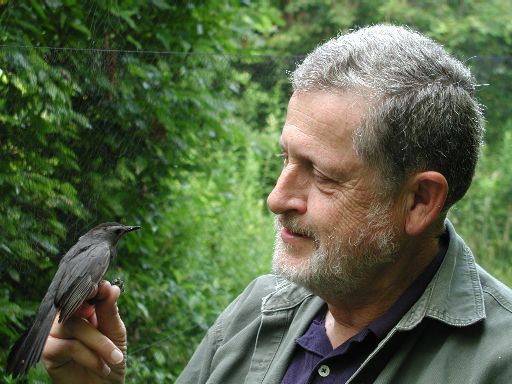
Man holding a bird outside.
Bob Leberman, founder of Powdermill’s bird banding program, with the 500,000th banding record, a Gray Catbird, caught and banded on July 11, 2001.

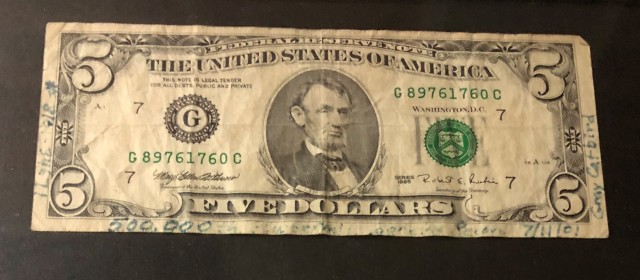
We released #500,000, celebrated with sparkling grape juice, then continued the banding day with a demonstration for children attending Powdermill’s summer camp. The catbird was made famous in the local newspaper, and because we’d each wagered a dollar on our guesses, I earned a $5 bill with the catbird’s band number on it for correctly guessing the species. That year marked the 40th anniversary of Powdermill’s banding program, and another milestone about two months prior: the 400,000th new bird banded.

Over the next two decades, the number of birds banded continued to creep up. Before spring migration this year, we determined that we needed just over 5,000 birds to reach 800,000 banding records. The countdown was on, and by mid-summer we knew that we could expect to reach that number by early- to mid-August, perfect timing to celebrate the banding program’s 60th anniversary.

The morning of August 6 was the day! With 45 birds to go after banding on August 5, we knew 800,000 was within sight. We opened the nets at 5:50 a.m., but the first two net checks yielded surprisingly fewer birds than we expected. At the 7:50 a.m. net check, we still had 20 birds to go, and given the pace of the morning we assumed The Bird wouldn’t be caught until the following round, so the banding crew set out in different directions to clear the nets. About five minutes later our long-term volunteer and colleague, Nick, radioed back to say that he had 11 birds in the second set of nets he was checking! The nets in the other directions had only a few birds, so we all converged on Nick’s location, and the final countdown began with five birds to go.

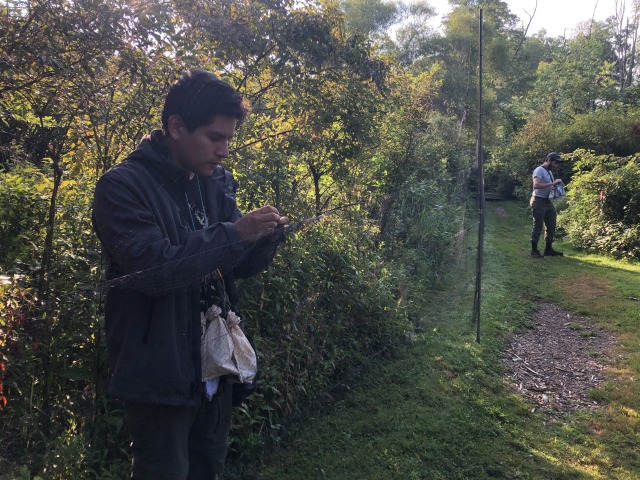
Two people outside removing birds from mist nets.
Kevin Chumpitaz and Nick Liadis, part of Powdermill’s banding crew, extracting birds #799,993 and #799,994.

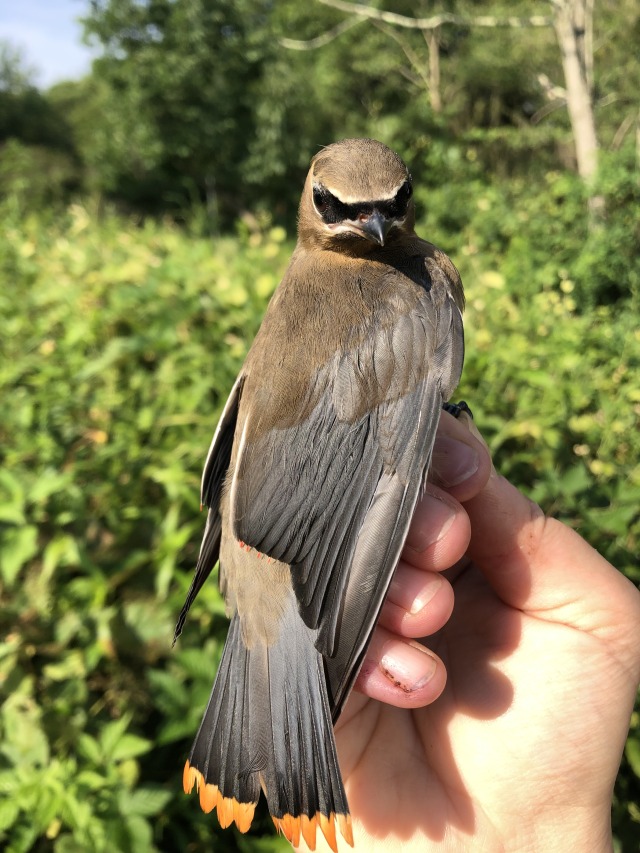
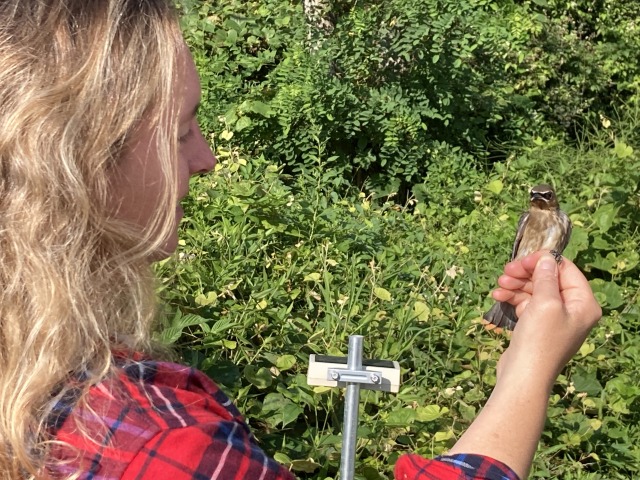
The next three sets of nets were empty, but Long Lane, a series of nine nets connected in a long line, delivered a Black-and-White Warbler, a Black-throated Green Warbler, a Gray Catbird, and a Canada Warbler. With number 800,000 just ahead, Mallory, PARC’s Motus and banding assistant, called back to the rest of us, “It’s here!” Our milestone bird was a young Cedar Waxwing, a species that is quite common at Powdermill during the migration and breeding seasons, and often is spotted in nomadic flocks during the winter.

Cedar Waxwing held in a hand outside
Powdermill’s 800,000th banding record, a young Cedar Waxwing, caught and banded on August 6, 2021.

Just beyond the waxwing was another Gray Catbird, which concluded the net round. We all made our way back to the lab where we banded the celebrity waxwing, recorded the usual data (age, sex, measurements, and mass), snapped a few photos and a quick video, and then released the bird.

Based on the waxwing’s plumage, we know that it hatched this summer, and it displayed an interesting plumage characteristic that is relatively common in young waxwings in southwest Pennsylvania. Cedar Waxwings have a yellow terminal band on their tails, but if an individual eats invasive honeysuckle berries while feathers are growing, the pigment from the berries, called rhodoxanthin, is incorporated into the yellow parts of the growing feathers. Honeysuckle berries are plentiful at Powdermill, and are ripe when young Cedar Waxwings are still in the nest and growing their first set of feathers. If they’re fed these berries, their tails have an orange tail band instead of the normal yellow! Adult waxwings molt when the berries are no longer ripe, so their tails have a yellow stripe. This phenomenon is a great example of how introduced plants can affect their environment.

Woman holding a bird outside
Annie Lindsay with the 800,000th banding record.

In keeping with previous milestones at Powdermill, #800,000 is a common species: Cedar Waxwing is the sixth most banded species at Powdermill, with over 24,000 of them banded in our 60-year history. We often like to attach meaning to notable events, and Cedar Waxwings lend themselves to this one in particular: the aberration in tail stripe pigmentation was described by Powdermill banders in a paper published in 1992, and the species was a favorite of the founder of Powdermill’s bird banding program, Bob Leberman.

Five-dollar bill with writing on the edges commemorating the 500,000th bird banding record at Powdermill.
The commemorative $5 bill for guessing correctly what species the 500,000th banding record would be.

I still have the $5 bill with #500,000’s band number on it, and feel honored to have been part of both milestones at Powdermill. The crew didn’t place bets on what species #800,000 might be, but several had guesses, and I was sure it would be another catbird. Cedar Waxwing was an excellent surprise, and we’re all looking forward to #900,000 and #1,000,000 in the coming years!

Annie Lindsay is the Bird Banding Program Manager at Carnegie Museum of Natural History’s Powdermill Nature Reserve. Museum employees are encouraged to blog about their unique experiences and knowledge gained from working at the museum.

Related Content

What Is Bird Banding?

Cedar Waxwing: Banding Record 800,000

Behind the Scenes…A Life in the Details

Carnegie Museum of Natural History Blog Citation Information

Blog author: Lindsay, Annie
Publication date: September 10, 2021

Share this post!

  • Share on Twitter Share on Twitter
  • Share on Facebook Share on Facebook
  • Share on Pinterest Share on Pinterest
  • Share on LinkedIn Share on LinkedIn
  • Share on Reddit Share on Reddit
  • Share via Email Share via Email

Share this post!

  • Share on Twitter Share on Twitter
  • Share on Facebook Share on Facebook
  • Share on Pinterest Share on Pinterest
  • Share on LinkedIn Share on LinkedIn
  • Share on Reddit Share on Reddit
  • Share via Email Share via Email

Filed Under: Blog Tagged With: Annie Lindsay, bird banding, Birds, Powdermill Nature Reserve

  • « Go to Previous Page
  • Page 1
  • Page 2
  • Page 3
  • Page 4
  • Page 5
  • Page 6
  • Interim pages omitted …
  • Page 20
  • Go to Next Page »

sidebar

About

  • Mission & Commitments
  • Directors Team
  • Museum History

Get Involved

  • Volunteer
  • Membership
  • Carnegie Discoverers
  • Donate
  • Employment
  • Events

Bring a Group

  • Groups of 10 or More
  • Birthday Parties at the Museum
  • Field Trips

Powdermill

  • Powdermill Nature Reserve
  • Powdermill Field Trips
  • Powdermill Staff
  • Research at Powdermill

More Information

  • Image Permission Requests
  • Science Stories
  • Accessibility
  • Shopping Cart
  • Contact
  • Visitor Policies
One of the Four Carnegie Museums | © Carnegie Institute | Privacy Policy | Terms of Use | Accessibility
Rad works here logo