• Skip to primary navigation
  • Skip to main content
  • Skip to primary sidebar

Carnegie Museum of Natural History

One of the Four Carnegie Museums of Pittsburgh

  • Visit
    • Buy Tickets
    • Visitor Information
    • Exhibitions
    • Events
    • Dining at the Museum
    • Celebrate at the Museum
    • Powdermill Nature Reserve
    • Event Venue Rental
    • Gift Cards
  • Learn
    • Field Trips
    • Educator Information
    • Programs at the Museum
    • Bring the Museum to You
    • Guided Programs FAQ
    • Programs Online
    • Climate and Rural Systems Partnership
  • Research
    • Scientific Sections
    • Science Stories
    • Science Videos
    • Senior Science & Research Staff
    • Museum Library
    • Science Seminars
    • Scientific Publications
    • Specimen and Artifact Identification
  • About
    • Mission & Commitments
    • Directors Team
    • Museum History
  • Tickets
  • Give
  • Shop

Blogs about Birds

Birds are incredibly important to Carnegie Museum of Natural History. The museum's Section of Birds contains nearly 190,000 specimens of birds. The most important of these are the 555 holotypes and syntypes. The Section of Birds staff also cares for approximately 196 specimens of extinct birds as well as specimens of many rare species collected decades—if not more than a century—ago.

August 13, 2021 by wpengine

Magnificent Frigatebirds: The Flying Pirates of the Caribbean

by Nicholas Sauer

Fish and other aquatic animals aren’t the only ones who go splish-splash is an ocean biome. Let’s not forget our feathered friends, the birds. Today, we’ll be taking a closer look at one of the most conspicuous of all seabirds, the Magnificent Frigatebird (fregata magnificens), also known as the Man o’ War Bird.
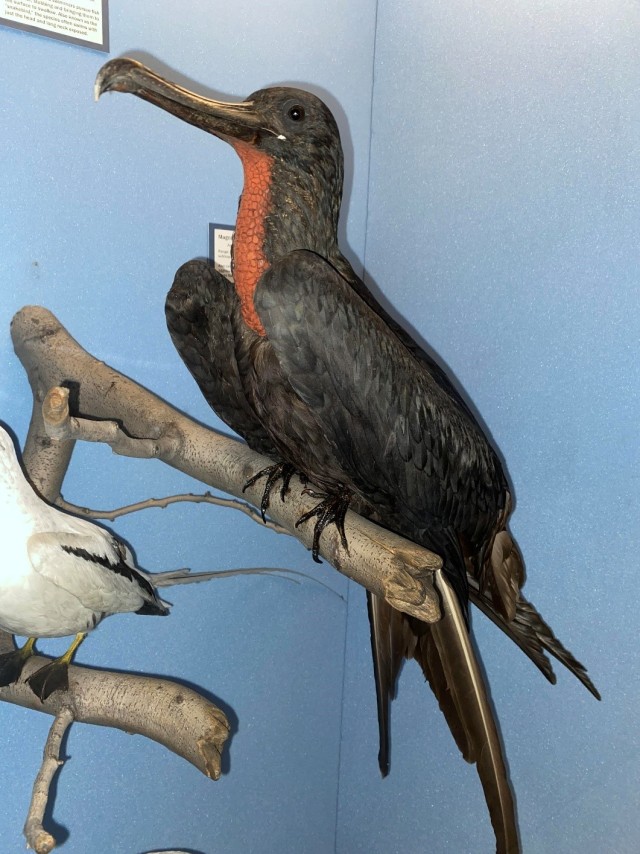
Frigatebird taxidermy mount in a museum
Did you know the museum has a frigatebird on display in Bird Hall?

These birds primarily live and breed on the islands of the Caribbean having been observed by scientists and bird watchers on the Marquesas Keys and Dry Tortugas. They are also found nesting on human-made structures like pier pilings from Texas’s Galveston Bay to the Atlantic coast of southern Florida. Frigatebirds make both the Atlantic and Pacific Oceans their home, flying on occasion over the isthmus of Panama. In fact, Magnificent Frigatebirds are able to remain airborne for up to a month and a half over their watery environs without the need to land. Some frigatebirds even adapt their hunting and flying practices to specific wind patterns that will allow them to travel and forage more efficiently.

The species is well-suited for such a lifestyle with a wingspan averaging 7.5 feet and a lengthy forked tail which maximizes their aerodynamic abilities. If you ever catch sight of a Magnificent Frigatebird from the shoreline you will see that this species is a stark example of sexual dimorphism. The female is covered in dark brown or black feathers and has a white breast and underbelly. The males are entirely black with a bright red throat pouch which they inflate like a balloon for mating purposes. To attract a mate, the males, often perched together among mangrove trees, will inflate their throat pouches, and then raise and vibrate their wings, calling out with guttural shrieks. When a female chooses a mate, the male takes on the responsibility of finding sticks to build a platform-like nest. He brings these materials to the female who then typically builds the nest on her own. Figatebirds live in colonies, but these communities are by no means free of strife. Both parents incubate a single egg between them each mating season and feed their young after it has hatched. It is paramount that the mother and father maintain vigilance over their nest. At least one parent must be present, or otherwise fellow members of the colony will prey on their neighbors’ eggs and newborns. After twenty to twenty-four weeks the juvenile is able to fly for itself. However, another sixteen weeks will elapse before the young frigatebird reaches full maturity and the mother feeds it for the last time.

Magnificent frigatebirds feed on flying fish, tuna, squid, jellyfish, and crustaceans. As opportunistic feeders they aren’t picky about their dietary choices. Interestingly enough, when hunting they never swim or float on the surface of the water. When swooping down to catch aquatic prey, they confine themselves to surface-dwellers, specifically life that resides in the top inch of water, that is, the epipelagic or “sunlight” zone.

Sometimes frigatebirds will dispense with hunting and foraging altogether and let other birds do the work. They are what scientists describe as “kleptoparasitic.” In other words, they are pirates stealing food literally from the mouths of other birds. Frigatebirds use their intimidating size, ferocious bill, and acrobatic flight abilities to wrest fish from the mouths of almost any bird they can, from seagulls to blue-footed boobies and even brown pelicans. Either that, or they force the weaker birds to regurgitate their prey during midair skirmishes. In these battles, the frigatebird often bites and tears at the target bird’s tail feathers until the victim submits to highway robbery. The frigatebird then catches their target’s lunch before it drops back into the sea. This strategy helps the frigatebird conserve energy and minimize risk while hunting and also gives the bird its extravagant name. Like the pirate ships and British navy man o’ wars of history and myth, the Magnificent Frigatebird prowls the tropics and takes what it likes by a show of force. These beautiful but fierce seabirds demonstrate the intricate adaptions—flying on specific winds and the use of kleptoparasitism—necessary for a creature to thrive in an environment divided between land and sea.

Nicholas Sauer is a Gallery Experience Presenter in CMNH’s Life Long Learning Department. Museum staff, volunteers, and interns are encouraged to blog about their unique experiences and knowledge gained from working at the museum.

References

De Monte, Silvia et al. “Frigatebird behaviour at the ocean-atmosphere interface: integrating animal behaviour with multi-satellite data.” Journal of the Royal Society, Interface 9, no.77 (2012): 3351-8.

Kaufman, Ken. “Magnificent Frigatebird.” National Audubon Society. Accessed 29 July 2021. <https://www.audubon.org/field-guide/bird/magnificent-frigatebird>.

“Layers of the Ocean.” National Weather Service: National Oceanic and Atmospheric Administration. Accessed 29 July 2021. <https://www.weather.gov/jetstream/layers_ocean>.

Osorno, J.L., et al. “Kleptoparasitic Behavior of the Magnificent Frigatebird: Sex Bias and Success.” The Condor 94 (1992): 692-698. <https://sora.unm.edu/sites/default/files/journals/condor/v094n03/p0692-p0698.pdf>.

Stittleburg, Vicki and Maria Hart. “Magnificent Frigatebird.” Houston Audubon Society. 2021. <https://houstonaudubon.org/birding/gallery/magnificent-frigatebird.html>.

Related Content

Survival of the Fishiest: Astonishing Adaptations of the Aquatic World

Super Science Saturday: Splish Splash (August 14, 2021)

Ocean Lessons

Carnegie Museum of Natural History Blog Citation Information

Blog author: Sauer, Nicholas
Publication date: August 13, 2021
Share this post!

  • Share on Twitter Share on Twitter
  • Share on Facebook Share on Facebook
  • Share on Pinterest Share on Pinterest
  • Share on LinkedIn Share on LinkedIn
  • Share on Reddit Share on Reddit
  • Share via Email Share via Email

Share this post!

  • Share on Twitter Share on Twitter
  • Share on Facebook Share on Facebook
  • Share on Pinterest Share on Pinterest
  • Share on LinkedIn Share on LinkedIn
  • Share on Reddit Share on Reddit
  • Share via Email Share via Email

Filed Under: Blog Tagged With: Birds, Nicholas Sauer, ssssplash

July 6, 2021 by wpengine

Bird Architecture on Human Infrastructure

by Patrick McShea

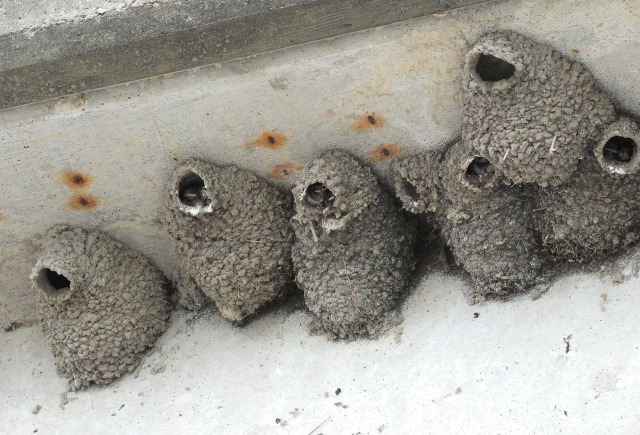
cliff swallow nests
Image credit: Amy Henrici

Cliff Swallows are potters. The gourd-shaped earthen vessels the birds construct, one tiny mouthful of mud at a time, provide shelter for their eggs and young. In Pennsylvania, and across much of the species’ current continent-wide breeding range, bridges provide favored nest sites for birds whose ancestors, until the early decades of the 1800’s, seem to have been restricted to nesting against low elevation cliffs in western mountain ranges.

The nests pictured above adhere to the concrete supports of a bridge crossing an arm of Lake Arthur in Butler County’s Moraine State Park. During field survey work leading up to the publication of the Second Atlas of Breeding Birds in Pennsylvania in 2012, bridges accounted for 44% of Cliff Swallow nest sites, barns for 33%, and churches, houses, other buildings, and dams for the balance. The species nests in colonies, and the number of nests in bridge-based colonies also far outnumbered those at other sites.

In Birds of Western Pennsylvania, a 1940 publication by W.E. Clyde Todd, then the museum’s Curator of Birds, nest descriptions are a highlight of the Cliff Swallow account.

“The type is retort-shaped, globular, with a neck springing from above and turned to open downward: a beautiful, symmetrical structure. The shape however is modified to suit the space – truncated or extended, as need requires; and where the nests are close-set, the chamber within, though pouch-like, is not truly symmetrical.”

“The nests are built of pellets of mud laid wet and retaining in the finished structure, each its smooth-rounded individuality. The walls speak of cunning and labor and of security, as does a wall of human masonry.”

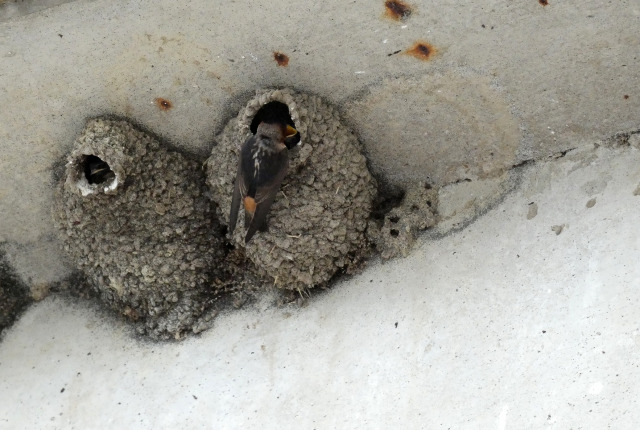
cliff swallow feeding young in the nest
Image credit: Amy Henrici

On a recent early summer morning the Cliff Swallows’ incorporation of our culture’s indispensable highway architecture into their reproductive cycle made for easy and entertaining bird watching. There were hungry young in every chamber of an easily viewed eight-nest cluster. As parent birds returned regularly from insect-catching forays over the nearby lake, the entryways to the dark clay pouches were brightened by the bright yellow gaping beaks of the young.

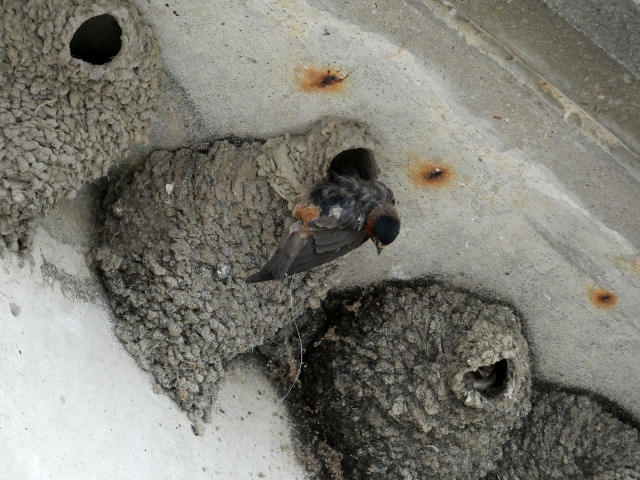
cliff swallow hanging out of nest
Image credit: Amy Henrici

Appreciation of the beneficial match between people and birds was leavened by a sight at another nest cluster on an adjacent bridge support. When a swallow perched against a nest remained still through several feeding cycles of its neighbors, an inspection with binoculars revealed a tragic circumstance. The bird appeared to have become entangled in, and eventually strangled by discarded fishing line, eight inches of which dangled from the lifeless feathered body.

Patrick McShea works in the Education and Visitor Experience department of Carnegie Museum of Natural History. Museum employees are encouraged to blog about their unique experiences and knowledge gained from working at the museum.

Reference

Second Breeding Bird Atlas of Pennsylvania – http://www.pabirdatlas.psu.edu/

Related Content

Camouflage in Your Yard?

Do Animals Use Plastic?

Raptor Watch

Carnegie Museum of Natural History Blog Citation Information

Blog author: McShea, Patrick
Publication date: July 6, 2021

Share this post!

  • Share on Twitter Share on Twitter
  • Share on Facebook Share on Facebook
  • Share on Pinterest Share on Pinterest
  • Share on LinkedIn Share on LinkedIn
  • Share on Reddit Share on Reddit
  • Share via Email Share via Email

Share this post!

  • Share on Twitter Share on Twitter
  • Share on Facebook Share on Facebook
  • Share on Pinterest Share on Pinterest
  • Share on LinkedIn Share on LinkedIn
  • Share on Reddit Share on Reddit
  • Share via Email Share via Email

Filed Under: Blog Tagged With: Birds, Educators, Pat McShea, Science News, We Are Nature 2

March 24, 2021 by wpengine

Spring Birds in Your Backyard

by Annie Lindsay

On spring mornings that I’m not banding birds, I like to sit on my back porch with my binoculars, watching for movement at the edge of the woods behind my house, keeping my ears tuned in to songs and short, usually high-pitched, chip and contact notes. On mornings following a night of heavy migration, small flocks of mixed species often move through the trees, feeding on insects as they refuel for the next stage of migration. These flocks often have warblers, thrushes, tanagers, grosbeaks, or sparrows foraging in their own niches: warblers tend to be in mid- to high-canopy, whereas thrushes stay low and sparrows are often on the ground.

Occasionally, I’ll stand outside in a quiet, dark spot just before dawn and listen for the soft, high-pitched flight calls of migrants settling into habitat after a night of flying. I’m an avid birder: I love to see both new and familiar birds, and watch the species that use my yard and favorite birding patches.

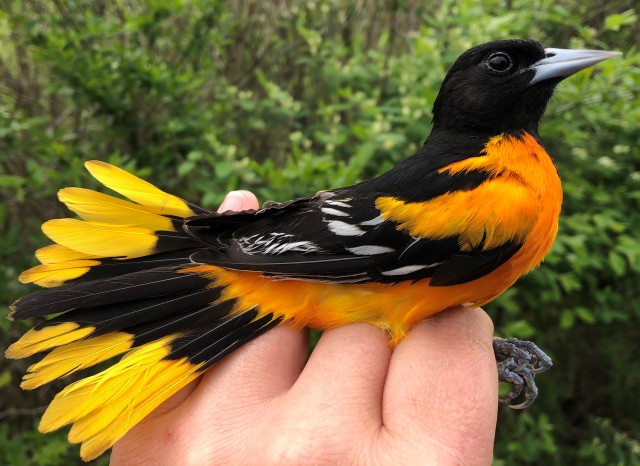
Baltimore Orioles arrive in southwest PA by mid-to late-April. Providing fresh orange halves on spikes can bring them to your feeders from spring through fall migration.

Last year, many people discovered birding. We spent much of the spring working from home, perhaps gazing out of our windows at our bird feeders or backyard plants, and for the first time noticed birds that we didn’t know existed or didn’t realize visited our yards. The opportunity to learn about the diversity of birds in our area and develop a passion for watching them was a bright spot (both literally and metaphorically!) in an otherwise difficult year. The seasons progressed, and now we once again eagerly anticipate the arrival of beautiful and colorful migratory songbirds. Let’s explore common spring backyard birds in southwest Pennsylvania and how to attract and find them!

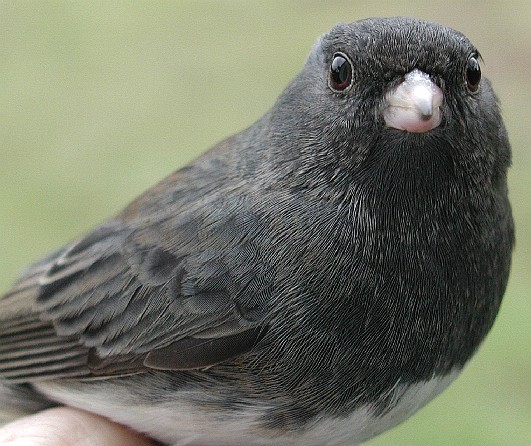
Dark-eyed Juncos are a species we usually associate with winter in southwest PA. They start singing in March, then do an elevational migration up the nearby mountains.

Each year, as the temperature warms, migratory birds move through our area in search of their breeding grounds. Although arrival timing is a bit variable between years due to annual variation in weather patterns, there is a predictable progression of species, so we know what to expect next relative to what we’ve already seen. The first, and often most conspicuous, to arrive are Red-winged Blackbirds and Common Grackles, usually in late February. They are followed by “peenting” American Woodcocks in early March, Eastern Phoebes in mid-March, and kinglets peaking in late-March. Keep your eyes to the sky any time you’re outdoors during these early spring weeks to watch for migrating waterfowl and raptors.

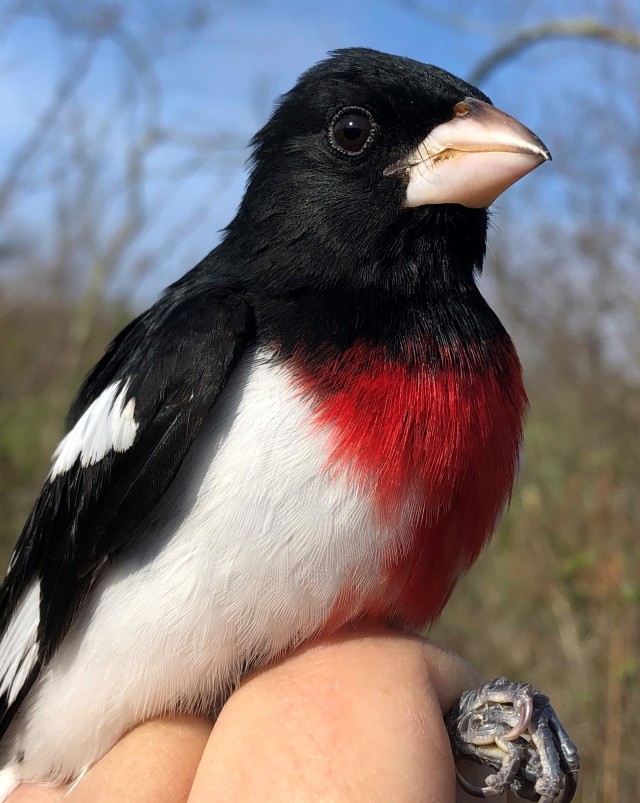
Rose-breasted Grosbeaks readily visit feeders with black oil sunflower seeds or safflower seeds usually in early- to mid-May before moving off into the forest to set up breeding territories.

By April, more songbirds, including vireos, swallows, early warblers, Blue-gray Gnatcatcher (a tiny bird with a wheezy song), House Wren, and the fan favorite, Gray Catbird make their way through our region, many remaining here to set up their breeding territories. In May, the migration floodgates open and some of the most brilliantly plumaged birds we’ve ever seen, like Baltimore Oriole, Rose-breasted Grosbeak, Ruby-throated Hummingbird, Scarlet Tanager, Indigo Bunting, and several warblers, may visit our yards and feeders, along with the less flashy, but equally beautiful, sparrows and thrushes.

Orioles readily come to feeders with orange halves, especially during migration, and seed-eating species like grosbeaks, buntings, and sparrows often visit feeders with sunflower or other seeds (or, in the case of many sparrows, clean up seeds on the ground under feeders!). Hummingbirds come to feeders with nectar (four parts water to one part white sugar, please avoid using food dyes or commercial nectar that has been dyed red). Most of these species are insectivorous, especially during spring migration, and are often observed picking things like caterpillars, midges, and spiders from foliage.

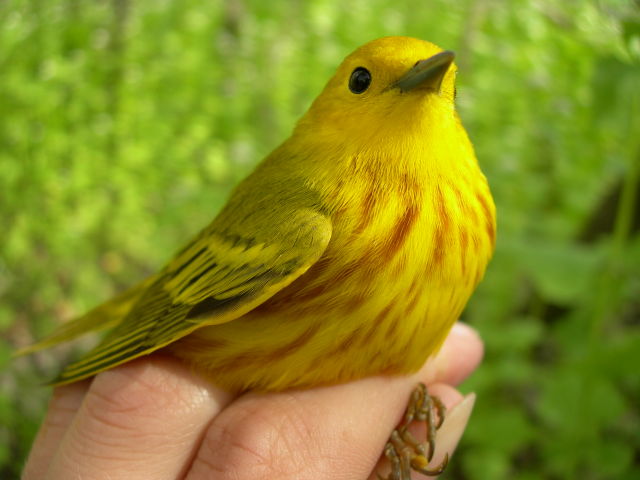
Yellow Warblers are often recognized by their signature “sweet sweet I’m so sweet!” song. You may see them flitting through small woody plants like dogwoods as they forage for caterpillars.

In addition to the migratory species that we see and hear in the spring, many birds that are year-round residents also frequent our yards. Black-capped and Carolina Chickadees, Tufted Titmice, White-breasted Nuthatches, Carolina Wrens, five species of woodpeckers (Downy, Hairy, Red-bellied, Pileated, and Northern Flicker, plus two more if we’re lucky – Red-headed Woodpecker and Yellow-bellied Sapsucker), and the colorful American Goldfinch, Northern Cardinal, and Eastern Bluebird mix with migratory birds. Most of these species visit bird feeders filled with sunflower or safflower seeds (chickadees, titmice, cardinals, nuthatches, woodpeckers), suet (woodpeckers, wrens), nyjer seed (finches), and mealworms (bluebirds, titmice, chickadees).

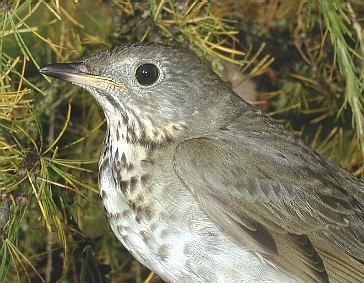
Gray-cheeked Thrushes are cryptic and secretive, but can be found skulking on the forest floor in mid- to late-May before they continue northward migration. They have a beautiful, flutey song and a distinctive call note.

One of the best ways to attract birds to your yard is planting native trees, shrubs, wildflowers, and other plants. Native plants are hosts for a high diversity of insects, especially during their larval stages, and provide nutritious seeds and fruit, all of which are important food resources for birds. These plants are also valuable as cover for safety and nest sites. Although often overlooked, a source of clean, fresh water, as simple as a bird bath or as complex as a pond with a bubbler or waterfall, can make your yard especially attractive to birds. And one of the easiest and most popular ways to attract birds for close viewing is providing bird food in clean, safe feeders. I recommend visiting your local bird feeding specialty store.

You may see all of the birds mentioned in this blog in your yard, but this is a non-exhaustive list and you may even see something unexpected. Visiting a local birding hotspot with complex and diverse habitats is certainly worth the effort as well. Birding these spots several times throughout the season will reward you with an impressive list and will boost your knowledge of natural history. The combination of a good pair of binoculars and a field guide with identification tips, range maps, and text about habitat is one of the best ways to maximize your birding, whether at home or in the field.

Please visit CMNH’s blog page to find bird ID tips and field guide recommendations.

The Audubon Society put together a great guide to the best binoculars at various price ranges.

You can put your bird observation skills to good use (or further develop those skills) by participating this spring in a broad survey of local wildlife and plants called the City Nature Challenge. The observation portion of this event is April 30 – May 3.

Annie Lindsay is the Bird Banding Program Manager at Carnegie Museum of Natural History’s Powdermill Nature Reserve. Museum employees are encouraged to blog about their unique experiences and knowledge gained from working at the museum.

Related Content

The Christmas Bird Count During an Irruption Year

Wind and Migration

Bird Banding with a Crew of One

Carnegie Museum of Natural History Blog Citation Information

Blog author: Lindsay, Annie
Publication date: March 24, 2021

Share this post!

  • Share on Twitter Share on Twitter
  • Share on Facebook Share on Facebook
  • Share on Pinterest Share on Pinterest
  • Share on LinkedIn Share on LinkedIn
  • Share on Reddit Share on Reddit
  • Share via Email Share via Email

Share this post!

  • Share on Twitter Share on Twitter
  • Share on Facebook Share on Facebook
  • Share on Pinterest Share on Pinterest
  • Share on LinkedIn Share on LinkedIn
  • Share on Reddit Share on Reddit
  • Share via Email Share via Email

Filed Under: Blog Tagged With: Annie Lindsay, Birds, City Nature Challenge, Powdermill Nature Reserve, Science News

March 11, 2021 by wpengine

Winter Wanderers On a Water Tower

On a late January afternoon, as I used binoculars to count roosting vultures on a water tower in a northern Pittsburgh suburb, the question of a friend and colleague echoed in my head. “What personal experience helped convince you that our climate is changing?”

Taiji Nelson, Senior Program Manager for the museum’s Climate and Rural Systems Partnership (CRSP), asked that question months earlier to begin a workshop session for educators about effectively engaging audiences in climate change discussions. He then spent 15 minutes fielding firsthand accounts from participants about extreme weather events, the spread of tree diseases, and the sudden appearance of previously unknown garden pests. When my vulture count reached double figures I silently vowed, “Next time Taiji’s going to hear about these birds.”

The birds, 17 Turkey Vultures and two Black Vultures, were the highlight of the three hours my wife Amy and I spent hiking and birdwatching. Black Vultures were a species we’d never before seen in western Pennsylvania. We’d frequently observed Turkey Vultures in the spring, summer, and fall, but our winter sightings of the species had been spotty. During the previous four winters we spotted a few Turkey Vultures who appeared to be spending the season in the Pittsburgh area instead of migrating further south. Before then, our year’s first sightings of these large soaring birds always occurred under mid-March skies.

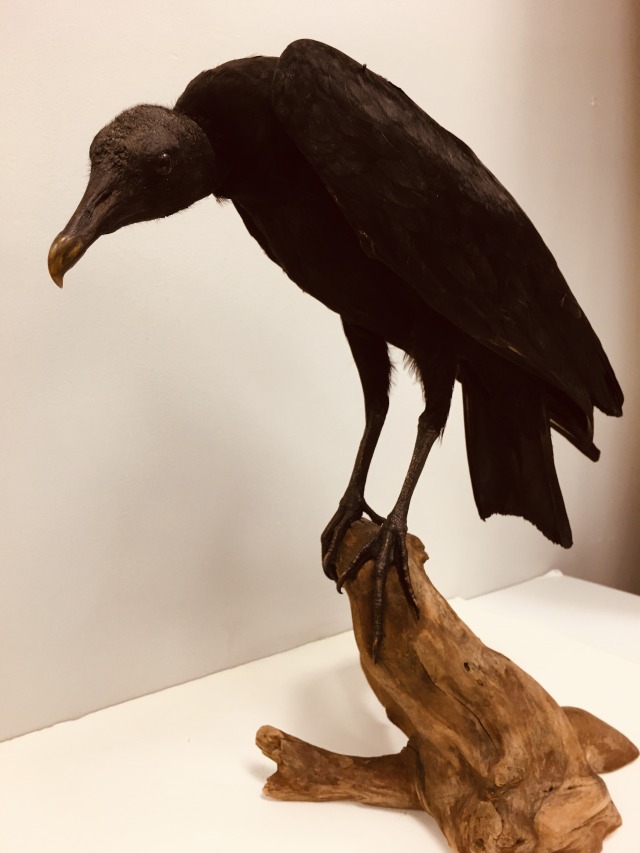
Black Vulture taxidermy mount.
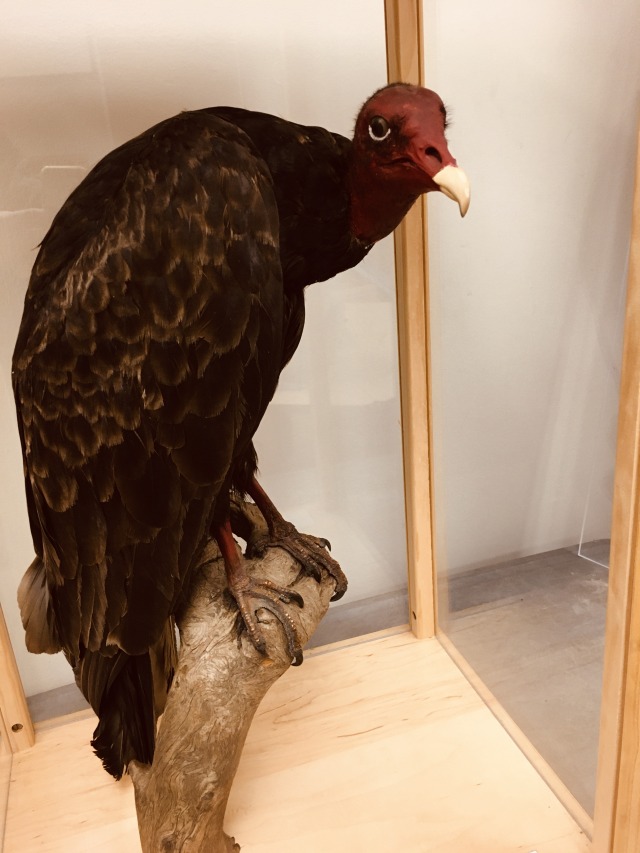
Turkey Vulture taxidermy mount.

Both species are scavengers who play vital roles in cleaning-up the carcasses of other animals in fields, forests, and along roadsides. Their slow, but steady northward range extension across eastern North America during the past four decades can be attributed to an increase in available food in the form of road-killed wildlife, the diminishing residues of DDT in regional food webs, and even a greater public acceptance of their presence. Warmer temperatures associated with global climate change have also played a role in the movement.

In a now 10-year-old essay on the All About Birds website of the Cornell Lab of Ornithology, author Jack Connor argues that a long term view of vulture movements suggests climate change contributed to a gradual, but for those paying attention, a certainly noticeable northward expansion.

“At each step the first vagrant birds were seen in spring and summer over a period of a year or two, a handful of nests were found a few years later, and soon, only 20 or 30 years after the first rarities appeared, the species had taken up permanent residency in an area where once it could not be found.”

One of the Black Vultures on the tower was not a completely anonymous wanderer. A rectangular red tag about twice the size of a playing card was affixed to its wing, and with the aid of a spotting scope, the figures H 73 could be clearly seen. Some internet searching by Amy, and the email response to her formal sighting report, established a previous, if only temporary, residency for the bird in the area around Martinsburg, West Virginia. The eastern panhandle town is home to the 167th Airlift Wing of the West Virginia Air National Guard, a unit that since 2018 has been working with the US Department of Agriculture in a study of Black Vulture movements aimed at reducing aviation hazards.

For more information about the Climate and Rural Systems Partnership, check out Carnegie Magazine.

Patrick McShea works in the Education and Visitor Experience department of Carnegie Museum of Natural History. 

Related Content

Backyard Black Bird Mystery

Teacher Profile: Emmanuelle Wambach

Ask a Scientist: Ravens and crows, what’s the difference? 

Carnegie Museum of Natural History Blog Citation Information

Blog author: McShea, Patrick
Publication date: March 11, 2021

Share this post!

  • Share on Twitter Share on Twitter
  • Share on Facebook Share on Facebook
  • Share on Pinterest Share on Pinterest
  • Share on LinkedIn Share on LinkedIn
  • Share on Reddit Share on Reddit
  • Share via Email Share via Email

Filed Under: Blog Tagged With: Birds, Pat McShea, wintertide

February 9, 2021 by Erin Southerland

Surprising Study Reveals that Common Potoo Bird Is Migratory

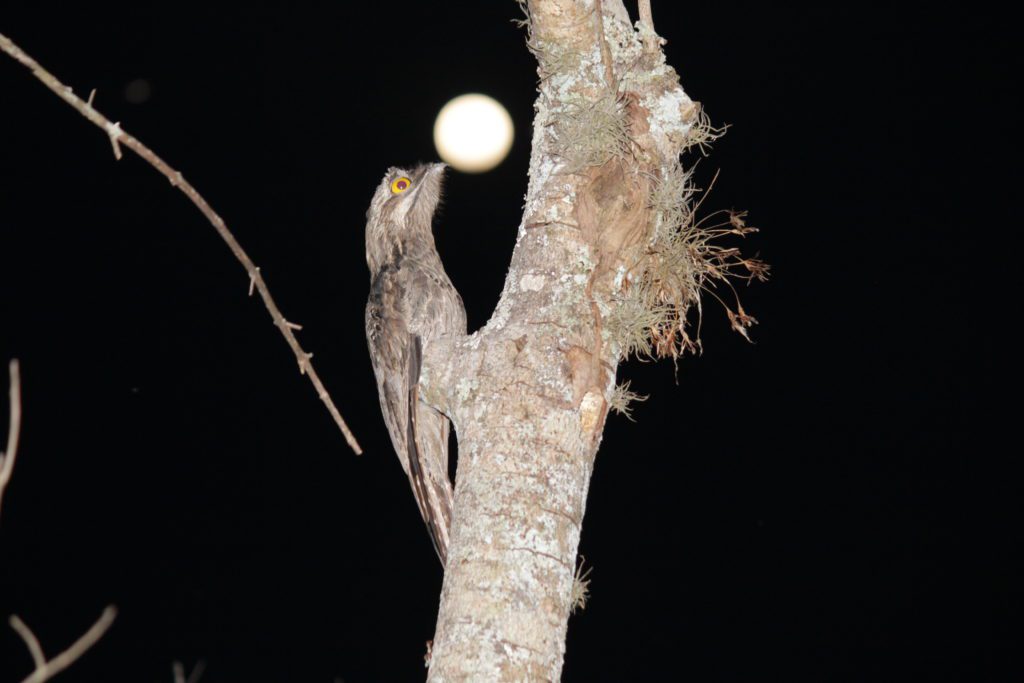
Common Potoo, Nyctibius griseus 
© Fernando Cipriani
A team of scientists from Carnegie Museum of Natural History’s Powdermill Nature Reserve and Museu de Microbiologia do Instituto Butantan in Brazil recently documented migratory movements by a large and charismatic bird species long thought to be sedentary across its extensive South American range. The species under study, the Common Potoo, known scientifically as Nyctibius griseus, is an abundant, cryptically colored, nocturnal bird found in open woodland and savannah habitat from Nicaragua south to Uruguay and northern Argentina. The research findings, which were published in Ibis, the International Journal of Avian Studies, represent the first time any species of Potoos have been shown to migrate.
 
According to Luke DeGroote, research coordinator at the Powdermill Avian Research Center, and the publication’s lead author, the lack of previous knowledge about the species’ seasonal movements is both surprising and understandable—surprising because the charismatic bird is popular among the public and understandable because the species is effectively camouflaged when at rest.
 
As DeGroote explained in a blog post summarizing the study’s findings: “Their plumage, structure and posture allow them to masquerade as broken branches or stumps; a feat they sometimes attempt in the open, bold as brass on fenceposts and bottles. Notches in their eyelids allow them to watch intruders with eyes closed or nearly so.”
 
The role of citizen science in the study is of particular significance. The research largely charted movement of Common Potoos southward on the continent to a temperate zone in the austral (Southern Hemisphere) summer to breed, and then their return to a more equatorial area (such as the Amazon) in the austral winter. Much of the data documenting the movements of Common Potoos came from eBird, an online reporting system coordinated by the Cornell Lab of Ornithology and the National Audubon Society, and WikiAves, a similar Brazilian public domain resource.
 
As DeGroote explains, “Data from citizen scientists is becoming more robust and could allow scientists to uncover more hidden migrations, habitat requirements, status and trends to conserve birds within South America.”
About Powdermill Nature Reserve
Powdermill Nature Reserve, the environmental research center of Carnegie Museum of Natural History, has been dedicated to its mission of research, education, and conservation for more than 50 years. It is a place for scientists, for students, and for families who are interested in the natural world. The Powdermill bird migration research program is home to the one of the longest continually running bird banding stations in the United States. A wide variety of public education programs serve children and adults. Researchers from around the world conduct diverse long- and short-term scientific studies in herpetology, botany, invertebrate zoology, and ornithology. The Powdermill Avian Research Center (PARC) is part of Powdermill Nature Reserve.

Filed Under: Press Release Tagged With: Birds, Luke DeGroote, Powdermill Nature Reserve

February 8, 2021 by wpengine

A Taste for Metal

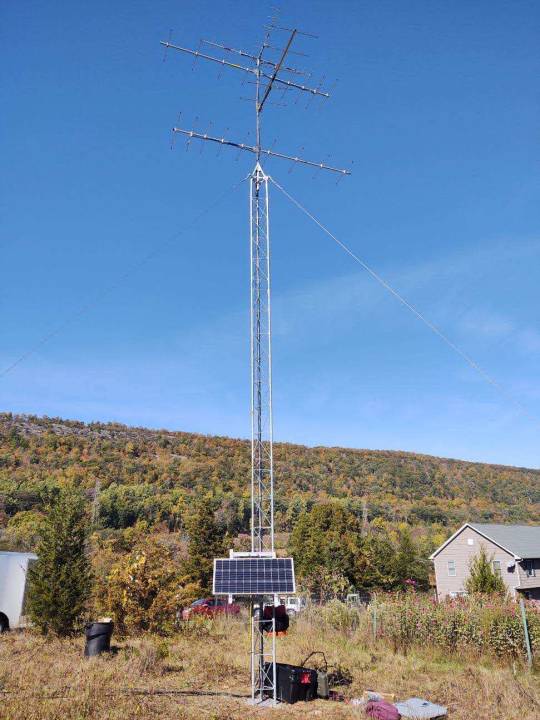
Motus tower in a field with a hill behind it

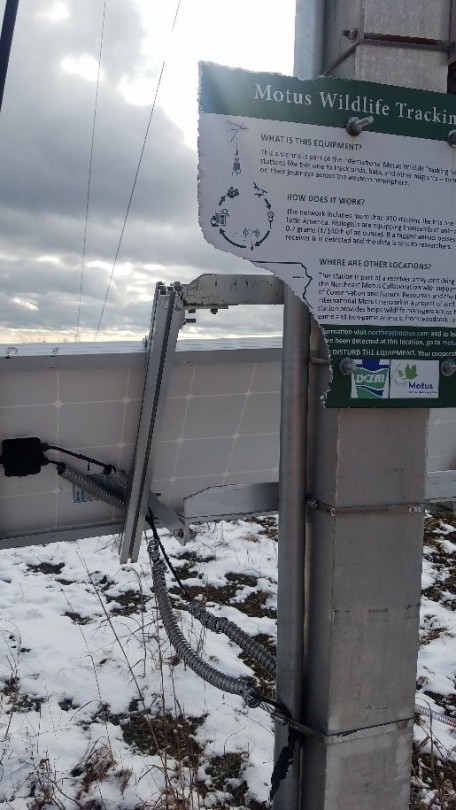
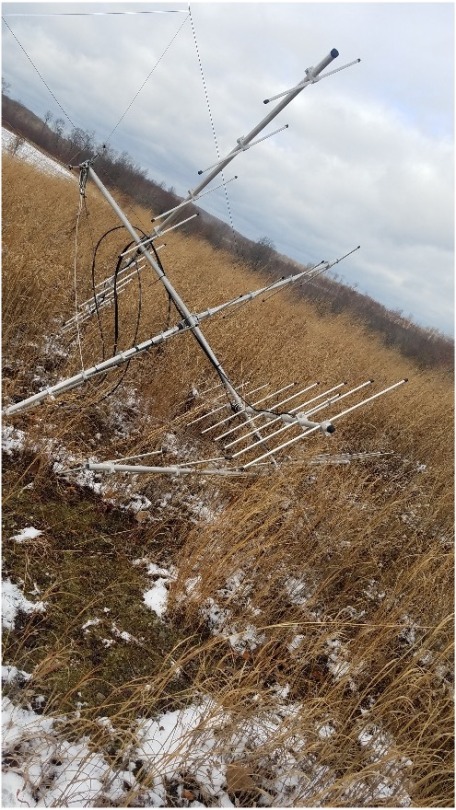
Powdermill Nature Reserve researchers are using radio technology to track songbirds marked with grain-of-rice-sized nanotags as they migrate North and South through our region each year. Tracking these birds requires a network of automated radio receiving stations, termed Motus stations, tuned to listen for nanotags affixed to the birds under study as they fly by. Motus is Latin for movement. The name serves to acknowledge the importance of tracking animal movement in ecological studies. The same Motus stations that track songbirds also track nano tagged bats, butterflies, or dragonflies.

Over 100 of these Motus Stations have been installed in the Northeast US with over 30 in Western Pennsylvania alone. These stations have tracked songbirds as they travel from Canada to Central and South America, providing critical data for researchers to make discoveries about migratory behavior, stop over site importance, and impacts of weather events on migration of birds, bats, and insects.

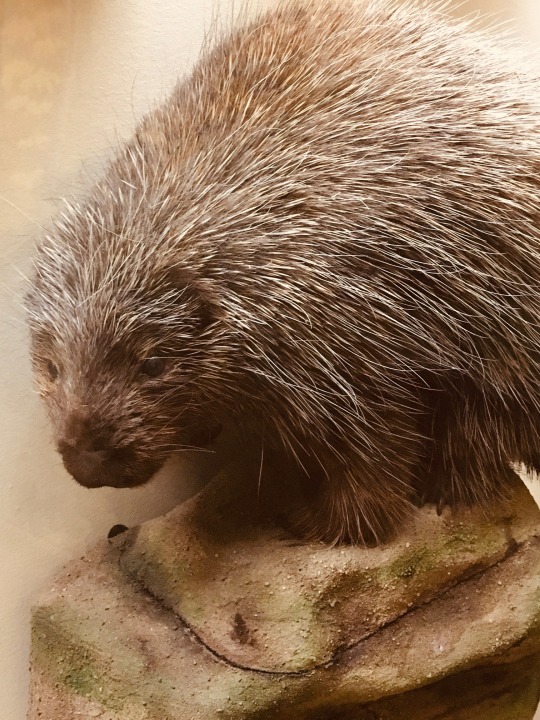
Porcupine taxidermy mount.

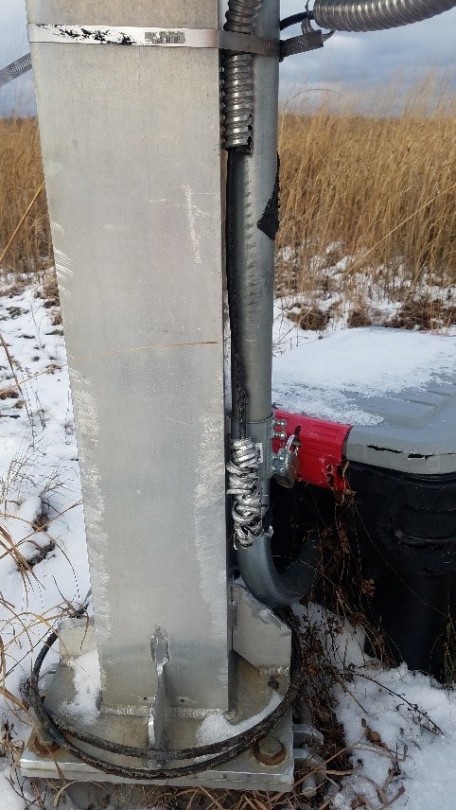
Maintaining these stations often requires fixing issues related to wind, snow, or ice, but one station on a State Game Land here in Western PA has been regularly decommissioned by porcupines! The local porcupines detect salt in the metals used to construct the station and can’t help but chew through all manner of equipment. On three recent occasions, destroyed equipment had to be replaced after the porcupines chewed through plastic boxes, flexible metal tubing, steel turnbuckles, aluminum informational signs, solar panels, coaxial cabling, and even the steel tower itself!

detail of Motus station with part of the sign on it missing
detail of damaged Motus tower
fallen Motus tower in a field with snow

Plans have been made to tear down the station and rebuild it to be “porky proof.” To do this a different structure will be used to hold the equipment well off the ground, and anti-climb baffles will be attached to keep the porcupines from getting to the equipment.

Jon Rice is the Urban Bird Conservation Coordinator at Carnegie Museum of Natural History’s Powdermill Nature Reserve. Museum employees are encouraged to blog about their unique experiences and knowledge gained from working at the museum.

Related Content

Bird Safe Glass Installed at Carnegie Museums

Keeping Birds Safe with GIS and Citizen Science

Before Powdermill Nature Reserve

Filed Under: Blog Tagged With: Birds, Jon Rice, Science News

  • « Go to Previous Page
  • Page 1
  • Interim pages omitted …
  • Page 3
  • Page 4
  • Page 5
  • Page 6
  • Page 7
  • Interim pages omitted …
  • Page 20
  • Go to Next Page »

sidebar

About

  • Mission & Commitments
  • Directors Team
  • Museum History

Get Involved

  • Volunteer
  • Membership
  • Carnegie Discoverers
  • Donate
  • Employment
  • Events

Bring a Group

  • Groups of 10 or More
  • Birthday Parties at the Museum
  • Field Trips

Powdermill

  • Powdermill Nature Reserve
  • Powdermill Field Trips
  • Powdermill Staff
  • Research at Powdermill

More Information

  • Image Permission Requests
  • Science Stories
  • Accessibility
  • Shopping Cart
  • Contact
  • Visitor Policies
One of the Four Carnegie Museums | © Carnegie Institute | Privacy Policy | Terms of Use | Accessibility
Rad works here logo