• Skip to primary navigation
  • Skip to main content
  • Skip to primary sidebar

Carnegie Museum of Natural History

One of the Four Carnegie Museums of Pittsburgh

  • Visit
    • Buy Tickets
    • Visitor Information
    • Exhibitions
    • Events
    • Dining at the Museum
    • Celebrate at the Museum
    • Powdermill Nature Reserve
    • Event Venue Rental
    • Gift Cards
  • Learn
    • Field Trips
    • Educator Information
    • Programs at the Museum
    • Bring the Museum to You
    • Guided Programs FAQ
    • Programs Online
    • Climate and Rural Systems Partnership
  • Research
    • Scientific Sections
    • Science Stories
    • Science Videos
    • Senior Science & Research Staff
    • Museum Library
    • Science Seminars
    • Scientific Publications
    • Specimen and Artifact Identification
  • About
    • Mission & Commitments
    • Directors Team
    • Museum History
  • Tickets
  • Give
  • Shop

Botany Blogs

These blogs are written about and by our Section of Botany researchers. The herbarium at the museum which contains approximately 3,000 type specimens--specimens that define an entire plants' species. These type specimens only represent about 0.6 % of the collection.

Mason Heberling, head of the section, regularly shares herbarium specimens that have been "Collected on this day" in history.

December 10, 2018 by wpengine

Peppermint: A Hybrid Herb for the Holidays

by Mason Heberling
gingerbread man cookie and candy canes

When in candy cane form, it is easy to forget where the flavor came from.  Peppermint (Mentha x piperita) is actually a hybrid between two other mint species, water mint (Mentha aquatica) and spearmint (Mentha spicata).  It is commonly grown for food as well as for use as a medicinal herb.  It is also well known to escape garden settings and spread aggressively.  Like other mints, this species is in the plant family Lamiaceae, which includes many strongly scented kitchen herbs.  Members of the mint family are well recognized by their unique flowers and characteristically square stems.
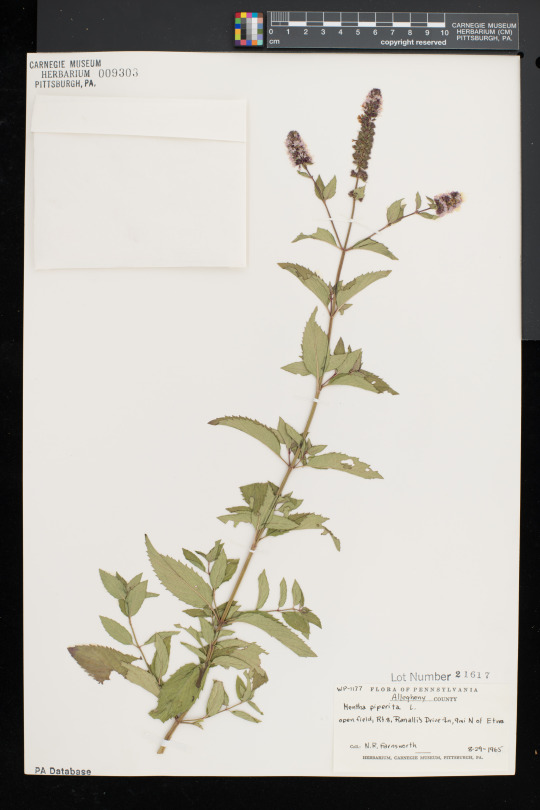
peppermint specimen

This peppermint specimen was collected on August 29, 1965 by Norman R. Farnsworth in an open field at Ranalli’s Drive-In, eight miles north of Etna off Route 8, outside of Pittsburgh, PA.

Farnsworth (1930-2011) received his PhD from the University of Pittsburgh, where he researched medicinal plants.  He was an influential professor and researcher in the field of pharmacognosy (study of medicinal drugs derived from plants).  He was a founding member of the American Society of Pharmacognosy.

The Carnegie Museum herbarium includes 1,108 specimens collected by Farnsworth.  Each specimen is recognizable, with an envelope attached to each sheet that includes a typed description of the results of chemical screenings he did on the specimen.

Check back for more! Botanists at the Carnegie Museum of Natural History share digital specimens from the herbarium on dates they were collected. They have embarked on a three-year project to digitize nearly 190,000 plant specimens collected in the region, making images and other data publicly available online. This effort is part of the Mid-Atlantic Megalopolis Project (mamdigitization.org), a network of thirteen herbaria spanning the densely populated urban corridor from Washington, D.C. to New York City to achieve a greater understanding of our urban areas, including the unique industrial and environmental history of the greater Pittsburgh region. This project is made possible by the National Science Foundation under grant no. 1801022.  

This specimen image is publicly available.

Mason Heberling is Assistant Curator of Botany at Carnegie Museum of Natural History. Museum employees are encouraged to blog about their unique experiences and knowledge gained from working at the museum.

Related Content

Collected on Christmas Eve 1883: Mistletoe

Indiana, Pennsylvania: Christmas Tree Capital of the World

Collected on This Day in 1934: European larch

Carnegie Museum of Natural History Blog Citation Information

Blog author: Heberling, Mason
Publication date: December 10, 2018
Share this post!

  • Share on Twitter Share on Twitter
  • Share on Facebook Share on Facebook
  • Share on Pinterest Share on Pinterest
  • Share on LinkedIn Share on LinkedIn
  • Share on Reddit Share on Reddit
  • Share via Email Share via Email

Filed Under: Blog Tagged With: Botany, Christmas, collected on this day, Mason Heberling, plants

November 26, 2018 by wpengine

It’s my flower, and I’ll fruit when I want to

by Andrea Kautz

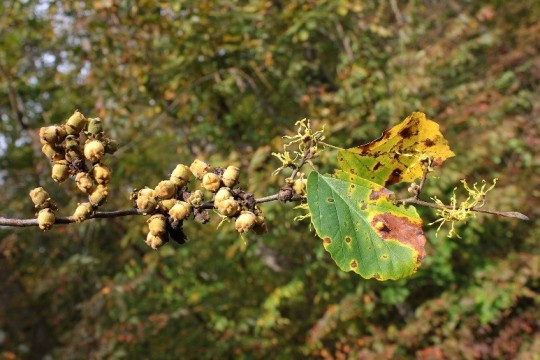
Witch hazel branch with fruits and flowers together

At this point in the year, there aren’t many blooms to be seen on a crisp hike through the woods. However, now is the perfect time to find Common witch hazel (Hamamelis virginiana) both flowering and fruiting!

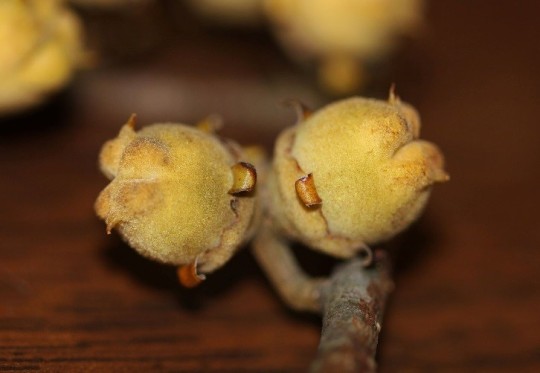
witch hazel fruits
Witch hazel fruits

Hamamelis, from the Greek words meaning “together” and “fruit,” refers to the presence of fruits and flowers at the same time. The velvety fruits you see on witch hazel at this time of year are actually from the flowers that bloomed a year ago. Once ripe, the fruit pops open and the shiny black seeds are forcibly ejected up to 30 feet away! This method of seed dispersal gives the witch hazel another common name, snapping hazelnut. The plant is medically useful for problems of the digestive tract, insect bites, minor burns, skin irritation, or colds and fevers.

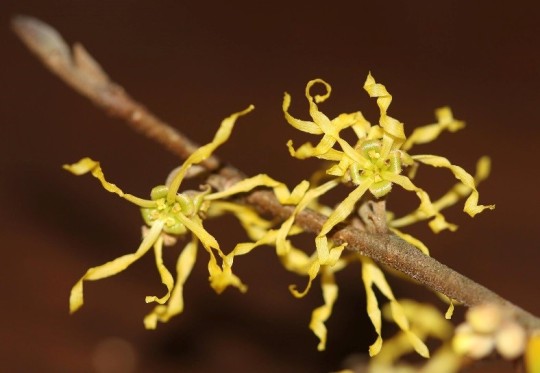
witch hazel flowers
Witch hazel flowers

While this species of witch hazel is one of the last woodland plants to bloom, the Chinese species of witch hazel is one of the first of the year to bloom in late winter, making this delightful group of plants a real rule-breaker! Be sure to keep an eye out for the curly yellow petals of the witch hazel flower on your next fall or winter hike!

Andrea Kautz is a Research Entomologist at Carnegie Museum of Natural History’s Powdermill Nature Reserve. Museum employees are encouraged to blog about their unique experiences and knowledge gained from working at the museum.

Filed Under: Blog Tagged With: Andrea Kautz, Botany, plants, Powdermill

November 26, 2018 by wpengine

Potatoes, Sweet Potatoes, and Yams: What’s the Difference?

by Mason Heberling

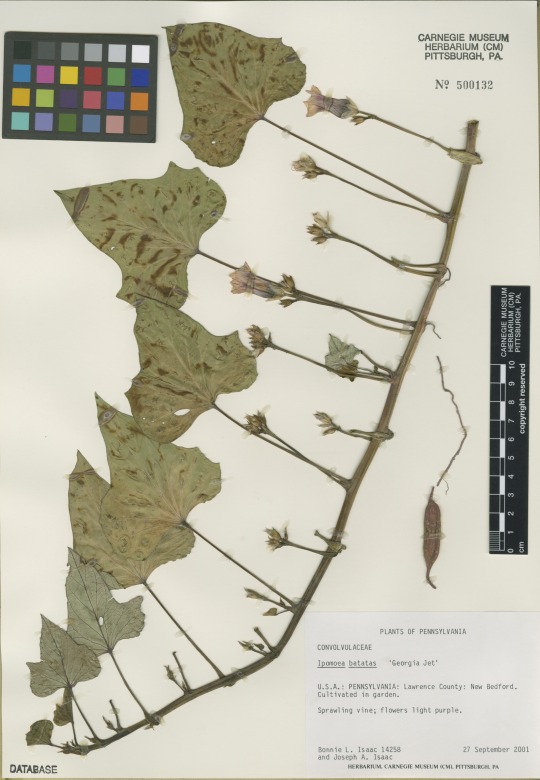
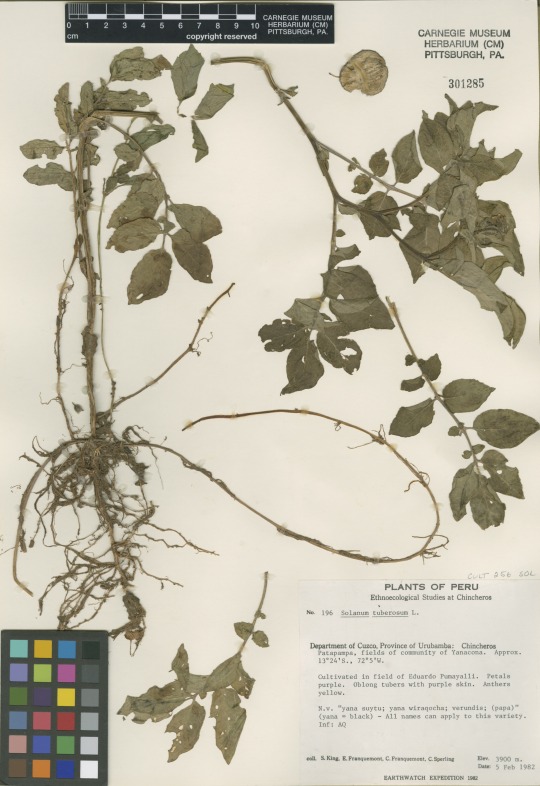
specimens of potatoes, sweet potatoes, and yams

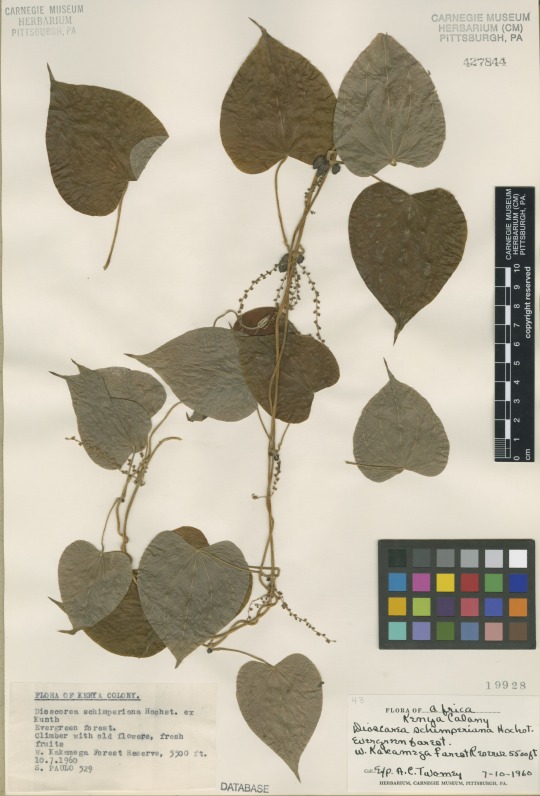
What you know as yams are most likely not actually yams.  In fact, your “classic” potatoes, sweet potatoes, and yams are all in different plant families. However, they all are widely cultivated for their nutritious starchy belowground plant structures called “tubers.” Tubers function as storage organs for the plants, providing energy for regrowth (the “eyes” or sprouting buds of your potatoes when they sit in your kitchen for too long).  Potatoes and yams technically have modified belowground stems (“stem tubers”) while sweet potatoes have “root tubers.”

yam specimen
Yam

Yam is a common name for several vine species in the genus Dioscorea (plant family: Dioscoreaceae).  They are monocots (related to grasses and lilies). Yams are widely cultivated worldwide, especially in West Africa, where 95% of the crop is harvested.  Yams can be stored for very long periods of time, making them an important crop for seasons when food is in short supply.  Yam tubers can be as large as five feet long!

sweet potato specimen
Sweet potato

Sweet potatoes refer to a vine species (Ipomoea batatas) in the morning glory family (Convolvulaceae).  This species is likely what is on your Thanksgiving dinner table.  In the United States and Canada, sweet potatoes are often (confusingly) referred to as “yams.”  But sweet potatoes are not even closely related to yams.  As such, the USDA requires any label with “yam” to also include “sweet potato.”  So why are sweet potatoes sometimes confusingly called yams?!  Well, this naming probably dates back to colonial times when slaves from Africa noted the similarities between some varieties of sweet potatoes to yams in Africa.

potato specimen
Potato

And last – the “classic” potato, Solanum tuberosum.  Potatoes belong to the nightshade family (Solanaceace), which also includes many other important crops like peppers, tomatoes, tomatillos, eggplant, tobacco, and more.  Critical to the world’s food supply, potatoes are the fourth most farmed crop.  Potatoes are only distantly related to sweet potatoes.  They are also called “spuds,” which probably originated centuries ago from a term for a spade used to dig holes to plant potatoes. Having been cultivated for centuries, there are thousands of potato varieties worldwide.  The cultivated species was domesticated from wild relative potato species in South America (Peru) 7,000 – 10,000 years ago.  Interesting note: discoveries on the origin of potatoes was based on DNA from 200-year-old herbarium specimens!  Similarly, the origin of the Irish Potato Famine (caused by potato late blight from a fungal pathogen) was also discovered using fungal DNA extracted from 160+ year old herbarium specimens!

For more on Irish potato famine research.  

For more on origins of European potato.

Mason Heberling is Assistant Curator of Botany at Carnegie Museum of Natural History. Museum employees are encouraged to blog about their unique experiences and knowledge gained from working at the museum.

Botanists at the Carnegie Museum of Natural History share digital specimens from the herbarium on dates they were collected. They have embarked on a three-year project to digitize nearly 190,000 plant specimens collected in the region, making images and other data publicly available online. This effort is part of the Mid-Atlantic Megalopolis Project (mamdigitization.org), a network of thirteen herbaria spanning the densely populated urban corridor from Washington, D.C. to New York City to achieve a greater understanding of our urban areas, including the unique industrial and environmental history of the greater Pittsburgh region. This project is made possible by the National Science Foundation under grant no. 1801022.  

Related Content

Callery Pear from October 11, 1979

Thanksgiving and Nutritional Mineralogy

Carnegie Museum of Natural History Blog Citation Information

Blog author: Heberling, Mason
Publication date: November 26, 2018

Share this post!

  • Share on Twitter Share on Twitter
  • Share on Facebook Share on Facebook
  • Share on Pinterest Share on Pinterest
  • Share on LinkedIn Share on LinkedIn
  • Share on Reddit Share on Reddit
  • Share via Email Share via Email

Filed Under: Blog Tagged With: Botany, Mason Heberling, plants

November 16, 2018 by wpengine

Collected on This Day in 1884: Beech Drops

by Mason Heberling

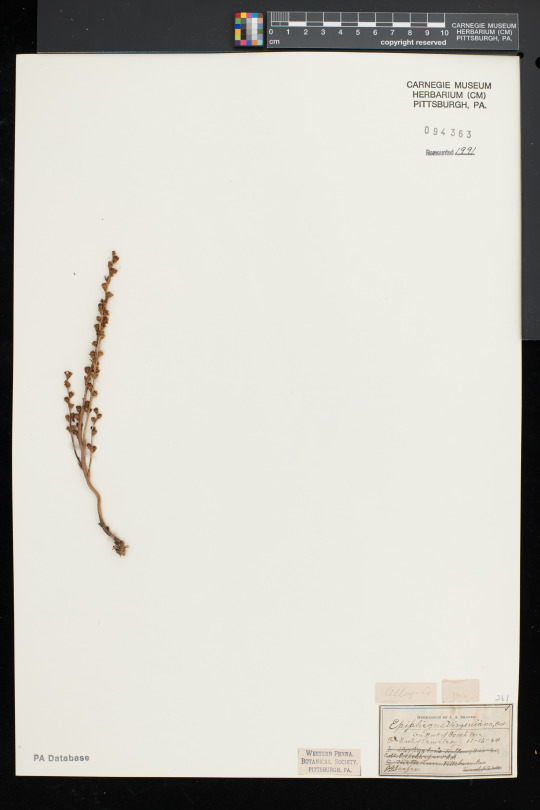
beech drops specimen

Not all plants have leaves.  Beech drops (Epifagus virginiana) is one such example.

This specimen was collected on November 16, 1884 growing on the root of a beech tree (Fagus grandifolia) at the back of a cemetery in Allegheny county. The specimen was collected by John Shafer, who a decade later became the first curator of botany at the Carnegie Museum of Natural History.

Beech drops is a parasitic plant – rather than having leaves to photosynthesize, the species produces root-like structures (called haustorium) that parasitizes roots of beech trees.

The genus “Epifagus” refers to this parasitism on beech (“epi”= upon; “fagus” = beech).

Beech drops are in the  broomrape family (Orobanchaceae), which is comprised mostly of parisitic plants.

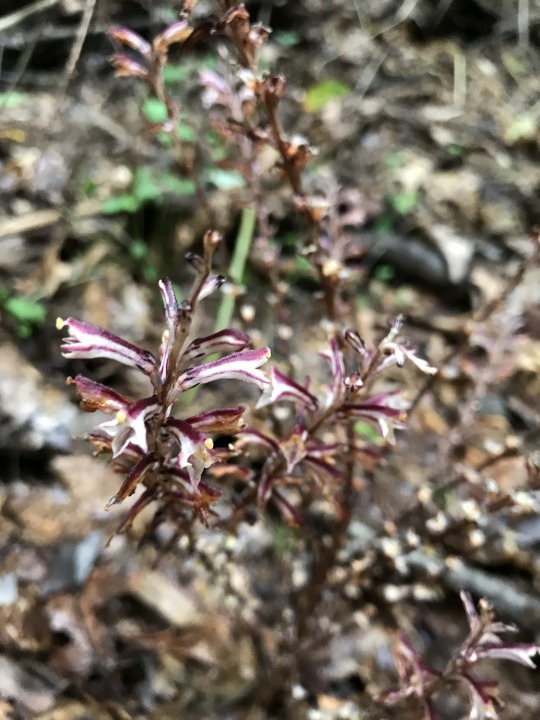
Check out the beautiful, distinctive purple and white flowers in late summer to autumn.

beech drop flowers
Beech drop flowers.  Photo taken on September 12, 2018 at Riddle Run, Springdale, Pennsylvania.

Mason Heberling is Associate Curator of Botany at Carnegie Museum of Natural History.

Botanists at the Carnegie Museum of Natural History share digital specimens from the herbarium on dates they were collected. They have embarked on a three-year project to digitize nearly 190,000 plant specimens collected in the region, making images and other data publicly available online. This effort is part of the Mid-Atlantic Megalopolis Project (mamdigitization.org), a network of thirteen herbaria spanning the densely populated urban corridor from Washington, D.C. to New York City to achieve a greater understanding of our urban areas, including the unique industrial and environmental history of the greater Pittsburgh region. This project is made possible by the National Science Foundation under grant no. 1801022.  

Filed Under: Blog Tagged With: Botany, collected on this day, flowers, Mason Heberling, plants

November 12, 2018 by wpengine

Pennsylvania Botany 2018

by Bonnie Isaac

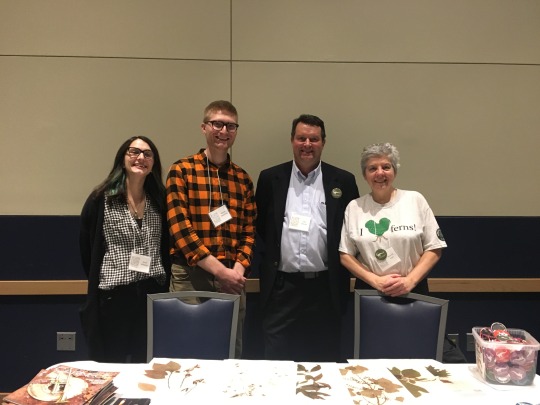
Carnegie Museum of Natural History (CMNH) was well represented at PA Botany 2018. The 4th Biennial Pennsylvania Botany Symposium took place on November 2nd and 3rd at the Penn Stater Hotel and Conference Center. CMNH staff were there in full force.  PNR Director John Wenzel, Post-Doctoral Fellow Mason Heberling, Botany Collection Manager Bonnie Isaac, and Botany Curatorial Assistant Sarah Williams attended in addition to over 200 other people. This event features a day of workshops followed by a day of presentations. CMNH Botany folks were involved in both the workshops and the symposium talks. Williams & Isaac assisted workshop leaders, Heberling was a student in one of the workshops, and Wenzel was a symposium speaker.  CMNH Botany volunteer Joe Isaac was the instructor for the workshop for Botanical Consultants.

Curatorial Assistant Sarah Williams, Post-Doctoral Fellow Mason Heberling, PNR Director John Wenzel and Botany Collection Manager Bonnie Isaac at CMNH Table in the Exhibitor hall at PA Botany 2018.

John Wenzel’s presentation highlighted some of the exciting things going on at Powdermill Nature Reserve and CMNH integrating botany and technology. John showed the crowd some of the cool techniques developed at PNR for forest study using drones and computer simulation of trees as well as introducing them to the new AR Perpetual Garden App available for free in app stores. This app helps people learn about the effects of the deer population on an environment. It shows how the forest should look compared to how the forest looks when deer are over abundant. The app features Woodland In Balance vs. Woodland Out of Balance Scenarios along with dialogue to explain the differences and why they differ.

CMNH Botany has been active in this event since its inception in 2012. We hope to see more people attend this conference on plants and how important they are.  You can find more information for this conference and other plant related items at PABotany.org.

Bonnie Isaac is the Collection Manager in the Section of Botany. Museum employees are encouraged to blog about their unique experiences and knowledge gained from working at the museum.

Filed Under: Blog Tagged With: Bonnie Isaac, Botany, John Wenzel, Mason Heberling, plants, Powdermill Nature Reserve, Sarah Williams

October 12, 2018 by wpengine

New England Aster – Aren’t you glad you Aster?

by Bonnie Isaac

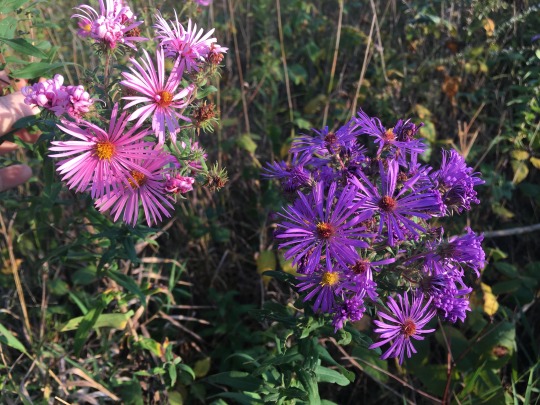
New England Aster

Fall is typically the time of year when we think plants are getting ready for winter. Think of trees changing colors and losing their leaves. Actually, some plants are just beginning to come into their own at this time of year.  The New England Aster is at its prime bloom now.  The purple, or sometimes pink, ray flowers are a spectacular sight along our open roadsides and fields.

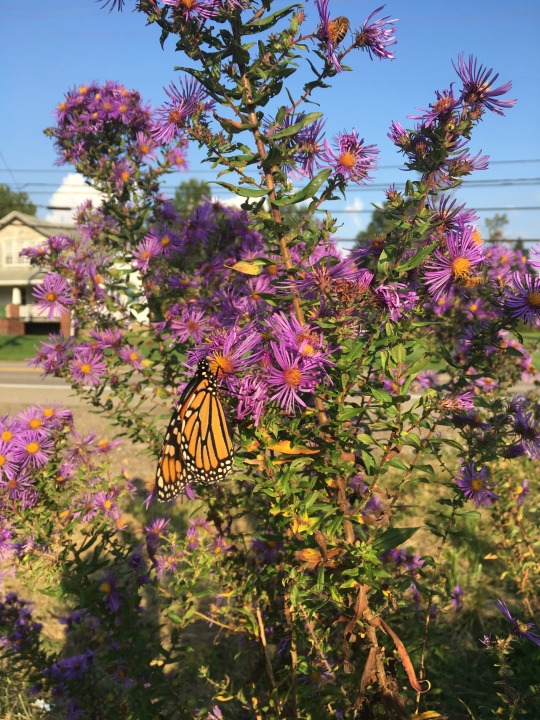
Monarch butterfly on New England Aster

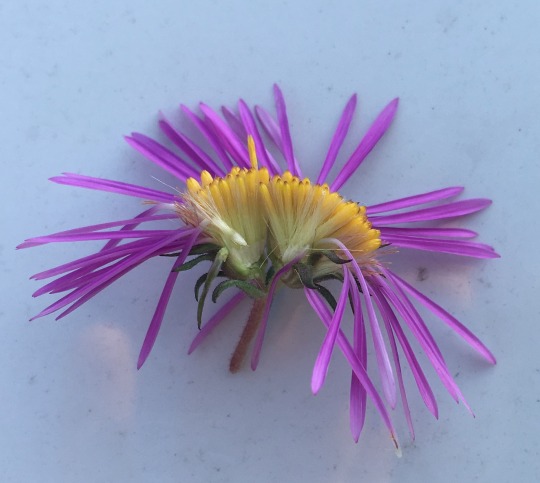
New England Aster is common across Pennsylvania and is known from almost all counties in the commonwealth. This beautiful plant is a member of the Aster family which is commonly called the Composite family.  This family is called the composite family because the flower heads are made up of many small flowers (florets) close together composing what looks like one larger flower.

detail of New England Aster florets


Next time you look at a dandelion, daisy, or sunflower, look closely. You can see many florets. Flowers, like the New England Aster, that bloom late in the year, are very important sources of nectar for bees and butterflies.

Bonnie Isaac is the Collection Manager in the Section of Botany. Museum employees are encouraged to blog about their unique experiences and knowledge gained from working at the museum.

Filed Under: Blog Tagged With: Bonnie Isaac, Botany, flowers, pennsylvania, plants

  • « Go to Previous Page
  • Page 1
  • Interim pages omitted …
  • Page 11
  • Page 12
  • Page 13
  • Page 14
  • Page 15
  • Interim pages omitted …
  • Page 28
  • Go to Next Page »

sidebar

About

  • Mission & Commitments
  • Directors Team
  • Museum History

Get Involved

  • Volunteer
  • Membership
  • Carnegie Discoverers
  • Donate
  • Employment
  • Events

Bring a Group

  • Groups of 10 or More
  • Birthday Parties at the Museum
  • Field Trips

Powdermill

  • Powdermill Nature Reserve
  • Powdermill Field Trips
  • Powdermill Staff
  • Research at Powdermill

More Information

  • Image Permission Requests
  • Science Stories
  • Accessibility
  • Shopping Cart
  • Contact
  • Visitor Policies
Stay in the loop! Sign up for our newsletter(s).
One of the Four Carnegie Museums | © Carnegie Institute | Privacy Policy | Terms of Use | Accessibility
Rad works here logo