• Skip to primary navigation
  • Skip to main content
  • Skip to primary sidebar

Carnegie Museum of Natural History

One of the Four Carnegie Museums of Pittsburgh

  • Visit
    • Buy Tickets
    • Visitor Information
    • Exhibitions
    • Events
    • Dining at the Museum
    • Celebrate at the Museum
    • Powdermill Nature Reserve
    • Event Venue Rental
    • Gift Cards
  • Learn
    • Field Trips
    • Educator Information
    • Programs at the Museum
    • Bring the Museum to You
    • Guided Programs FAQ
    • Programs Online
    • Climate and Rural Systems Partnership
  • Research
    • Scientific Sections
    • Science Stories
    • Science Videos
    • Senior Science & Research Staff
    • Museum Library
    • Science Seminars
    • Scientific Publications
    • Specimen and Artifact Identification
  • About
    • Mission & Commitments
    • Directors Team
    • Museum History
  • Tickets
  • Give
  • Shop

Botany Blogs

These blogs are written about and by our Section of Botany researchers. The herbarium at the museum which contains approximately 3,000 type specimens--specimens that define an entire plants' species. These type specimens only represent about 0.6 % of the collection.

Mason Heberling, head of the section, regularly shares herbarium specimens that have been "Collected on this day" in history.

February 4, 2019 by Erin Southerland

Botanists Use Data Collected by Thoreau to Uncover Unexpected Effects of Climate Change

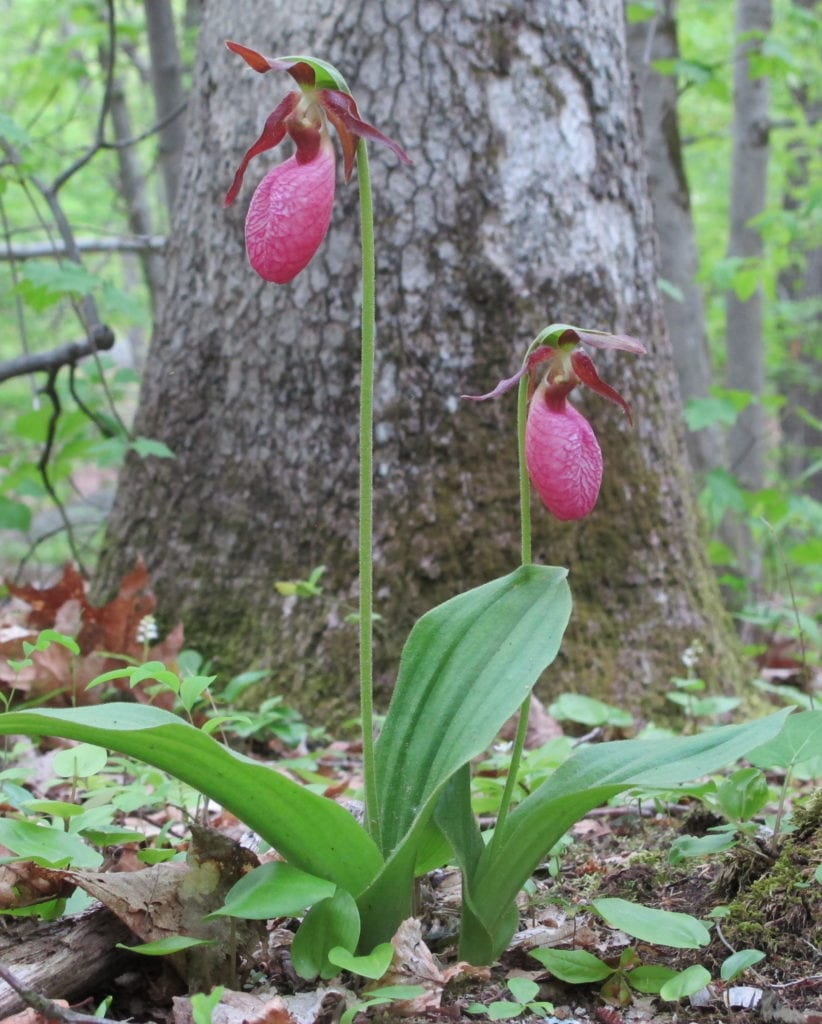
pink slipper orchid

A new study featuring historical observations collected by the philosopher and author Henry David Thoreau, combined with new observations, shows that spring wildflowers may face challenges in a warming climate. Researchers at Carnegie Museum of Natural History, Boston University, University of Maine, Syracuse University, and University of Tennessee, Knoxville recently published the study in the scientific journal, Ecology Letters,revealing that understory wildflowers are less responsive to climate change than the trees above them.

Conservation biologists Richard Primack and Caitlin McDonough MacKenzie at Boston University approached Mason Heberling, Assistant Curator of Botany at Carnegie Museum of Natural History, with scientific observations initiated by Thoreau in Concord, Massachusetts in the 1850s. The data includes tree and wildflower leaf out dates measured for 37 separate years between 1852 to 2018.

Primarily as a result of human activities, temperatures in Concord have warmed by 3 degrees Celsius over the past century. Over this same time period, tree and wildflower leaf out dates have shifted significantly.

“Wildflowers are now leafing out about one week earlier than 160 years ago, but the trees are leafing out two weeks earlier. Understory wildflowers need the sunny conditions before the trees leaf out for their energy budgets, but we didn’t know how a shadier spring would affect these plants on the ground,” says Caitlin McDonough MacKenzie.

The research team compared Thoreau’s observations to photosynthetic data collected by Heberling, and Susan Kalisz, at the University of Tennessee, Knoxville, in a forest in Fox Chapel, Pennsylvania, near Pittsburgh, as part of a multi-year field experiment. Heberling adapted these measurements to calculate how temperature-driven shifts in trees leafing out has impacted wildflowers from Thoreau’s time until now.

The combined analysis shows that small differences in the responses of wildflowers versus trees to a warming climate could be harming wildflower abundance and flowering already, with greater effects in coming years.

“Combining our work from Pittsburgh with Thoreau’s data revealed an overlooked, yet critical, implication of how our changing climate is affecting native wildflowers beloved by so many people, right here at home,” says Mason Heberling.

As the climate warms, the window of time between wildflower emergence and tree leaf out will likely shorten, leaving wildflowers less time to photosynthesize in the spring. Current climate models predict a 2.5 to 4.5 degrees Celsius temperature increase in the northeastern U.S. by 2080, potentially more than double the temperature increase we have seen over the past century. What does this mean for the future of forests and wildflowers? Further studies are ongoing, but we may see fewer wildflowers in the future.

Read the full paper in Ecology Letters.

Heberling, J.M., McDonough MacKenzie, C., Fridley, J.D., Kalisz, S. & Primack, R.B. 2019. Phenological mismatch with trees reduces wildflower carbon budgets. Ecology Letters, in press. doi: 10.111/ele.13224 https://onlinelibrary.wiley.com/doi/10.1111/ele.13224

Richard Primack, a co-author of the study, will be speaking at Carnegie Museum of Natural History on Monday, February 11that noon as part of the R.W. Moriarty Science Seminar series. R.W. Moriarty Science Seminars are free and open to the public.

 This research was partly based upon work supported by the National Science Foundation under Awards No. DBI-1612079 to M. Heberling, and DEB-1457531 and DEB-144552 to S. Kalisz. Any opinions, findings, and conclusions or recommendations expressed in this material are those of the author(s) and do not necessarily reflect the views of the National Science Foundation.
 

Filed Under: Press Release Tagged With: Botany, Mason Heberling

January 22, 2019 by wpengine

Fruit and Nut Trees Need Chill Time in the Winter

By Bonnie Isaac

It’s cold outside! There is snow on the ground. How could this possibly be good for plants?

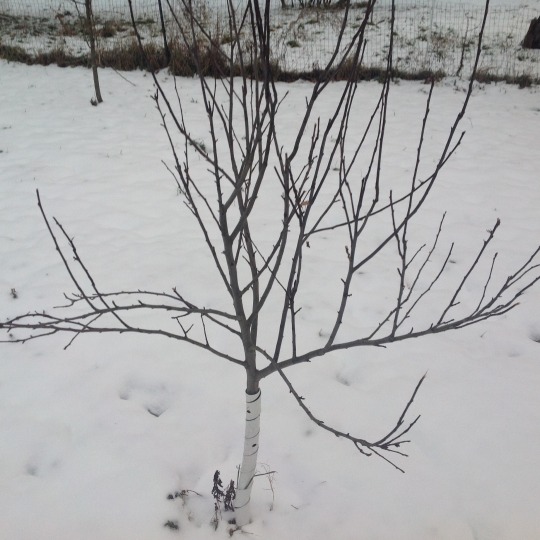
dwarf apple tree in the snow
A dwarf apple tree gettin’ its chill on! Photo credit: Joe Isaac

Many of our fruit and nut trees require a cold period to produce fruit. Without cold this winter, we won’t have fruit this fall.  If our fruit trees don’t get enough cold, then the flower buds may not open in the spring.  If the flower buds don’t open, they can’t get pollinated. If pollination doesn’t occur, then fruit doesn’t set. It’s an important cycle that is necessary for our food supply, especially if you like fruits and nuts. Apples, pears, plums, peaches, cherries, almonds, and walnuts all require varying amounts of chill time to set fruit.

Chill hours are the minimum amount of cold a tree needs before it will break dormancy. These trees then need a warm period to follow the chill. If it gets warm too soon or the chill requirement is met early, plants may break dormancy too soon, adding risk of a freeze or frost damage. The amount of fruit a tree sets will be affected if there is a late frost or an early warm spell. There is a delicate balance in nature which determines whether we get fruit or not. So, let’s not grumble about the cold outside. Enjoy it! I, for one, really like fruits and nuts.  I’ll be nestling all snug in my bed with visions of plums dancing in my head because I know the cold is necessary if I want to enjoy fruit this summer and fall.

Bonnie Isaac is the Collection Manager in the Section of Botany. Museum employees are encouraged to blog about their unique experiences and knowledge gained from working at the museum.

Filed Under: Blog Tagged With: Bonnie Isaac, Botany, botany hall, plants, Winter, wintertide

December 31, 2018 by wpengine

Expanding the value of herbarium specimens with citizen science app, iNaturalist

By Mason Heberling

Biological collections are at the heart of the natural history museum. Biological collections are large and diverse, with specimens of shells, bugs, birds, fossils, bones, plants, and more. They were collected anywhere from the sidewalk in front of the museum this past spring to a remote jungle on the other side of the world a century ago.

Each of the roughly 22 million objects at the Carnegie Museum of Natural History have valuable scientific stories to tell. Knowledge derived from museum specimens motivate or inform nearly every aspect of museum practice. Specimens are used directly in museum exhibitions and programming. Specimens are sources of scientific data, used by researchers both at the museum and across the world to understand the past, present, and future of life. And these specimens continue to be used in new and innovative ways to inform us about the world and the impact of humans in the Anthropocene.

Collecting from nature for admiration and study is an ancient practice, with plant collecting among the oldest. The oldest known collection of plants, known as an herbarium (plural: herbaria), dates to 16thcentury Italy!

But specimen collecting is not a dated practice; it is not just something botanists used to do. Plant collecting remains to this day an active and necessary part of botanical science. With over half a million plant specimens, the Carnegie Museum herbarium is not stagnant.  Our collection continues to grow. New specimens are collected and added to the herbarium each year, expanding the scope of the collection and therefore its scientific and societal relevance. In fact, in the recent era of rapid environmental change, new collections are all the more important.

Despite the continued importance of this practice, the standard process for collecting new specimens has change remarkably little through time. Major changes in collection practices include the use of GPS coordinates and to a lesser extent, specific sampling methods for genetic analyses.

In the Section of Botany, Bonnie Isaac (Collections Manager) and I are developing innovative ways to maximize the future use of our collections. One way we are doing this is by linking our collections to the popular citizen science platform, iNaturalist (inaturalist.org). iNaturalist is a free resource available online or as a mobile app that allows users to record biodiversity observations. We are using iNaturalist in the field and in the herbarium to facilitate new collections and expand the research value of specimens.

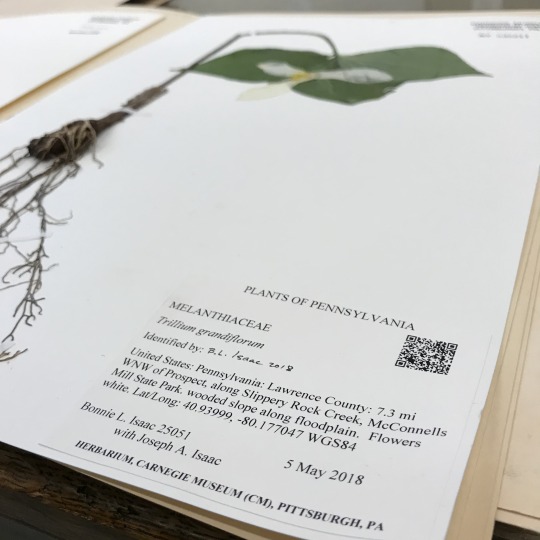
Herbarium specimen of large flowered trillium (Trillium grandiflorum) with QR code on label
Herbarium specimen of large flowered trillium (Trillium grandiflorum) with QR code on label that directs researchers to the associated iNaturalist observation, including images of the plant in the wild.

Before collecting a specimen, we take images in the field of the specimen in real life. These images are uploaded to iNaturalist, including other data such as date, time, location, and species identification. Other iNaturalist users can also contribute directly through verifying the identity of the specimen or making other comments.

Back in the herbarium, we export this information from iNaturalist to create unique herbarium labels for each specimen. We are using QR codes to link the specimens to the online iNaturalist observation. These QR codes can be read by most mobile devices. Among other information, the iNaturalist observation account online permanently links images from the field to the physical specimens in the herbarium.

What color were the flower petals? What was the size of the plant? Did it have a unique pattern on the bark?  What was the branching pattern? These questions and more can be asked to place herbarium specimens in a more complete context.

We envision a future where researchers can go through the herbarium with a mobile device such as a tablet or smart phone, scan QR codes on specimens, and be immediately directed to images of the specimen in the field.

Our article outlining this approach is available for free online:

Heberling, J. M., and B. L. Isaac. 2018. iNaturalist as a tool to expand the research value of museum specimens. Applications in Plant Sciences 6(11): e1193.  https://bsapubs.onlinelibrary.wiley.com/doi/epdf/10.1002/aps3.1193

Mason Heberling is Assistant Curator of Botany at the Carnegie Museum of Natural History.


Check back for more! Botanists at the Carnegie Museum of Natural History have embarked on a three-year project to digitize nearly 190,000 plant specimens collected in the region, making images and other data publicly available online. This effort is part of the Mid-Atlantic Megalopolis Project (mamdigitization.org), a network of thirteen herbaria spanning the densely populated urban corridor from Washington, D.C. to New York City to achieve a greater understanding of our urban areas, including the unique industrial and environmental history of the greater Pittsburgh region. This project is made possible by the National Science Foundation under grant no. 1801022. Any opinions, findings, and conclusions or recommendations expressed in this material are those of the author(s) and do not necessarily reflect the views of the National Science Foundation.
Filed Under: Blog Tagged With: Bonnie Isaac, Botany, Hall of Botany, herbarium, iNaturalist, Mason Heberling, plants

December 20, 2018 by wpengine

Collected on this Day in 1990: Poinsettia

by Mason Heberling
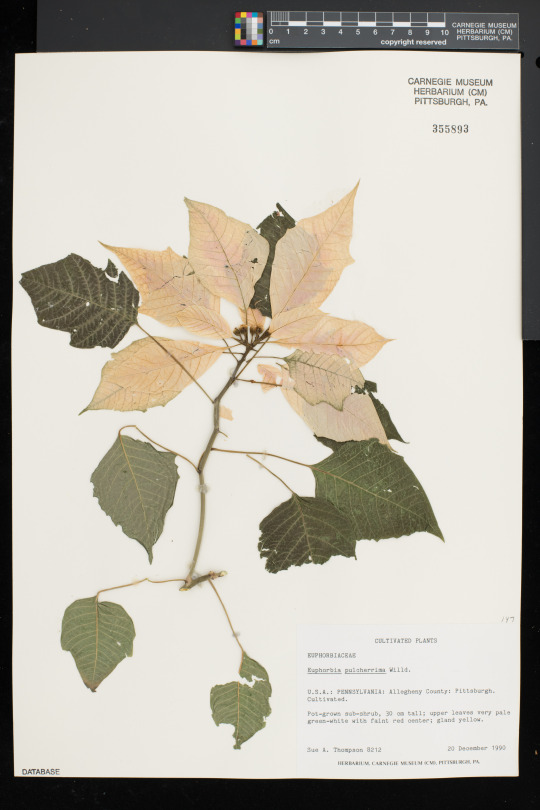
poinsettia specimen

This poinsettia specimen was collected on December 20, 1990 by Sue Thompson from a potted plant in Pittsburgh.  Poinsettia (Euphorbia pulcherrima) are native to Mexico, but now widely cultivated.

Look closely at the colorful “flowers” of poinsettia.  Upon close inspection, you’ll notice that those bright red or white (or otherwise colorful) structures are not flower petals, but specialized leaves called “bracts.”  The actual flowers are yellow and quite tiny.  The brightly colored bracts function to attract pollinators to the flowers.

Poinsettias are an excellent example of a “short-day” plant. (Or, more accurately, a “long-night” plant.)  That means that as the length of darkness at night increases, a complex process begins that signals flowering and the production of pigments in the bracts.

Poinsettias are woody perennials –  meaning you don’t need to throw them away after the holidays!  However, to flower again for next season, it takes some effort. They must experience days with less than 12 hours of daylight for 8-10 weeks straight.  That means you must provide the plant with 13-16 hours of complete darkness (uninterrupted!) in order for it to flower for December.  This may take some commitment to remember to put it in a dark closet each day, but well worth the effort.  Or just enjoy the green foliage year after year as it grows larger.

Check back for more! Botanists at the Carnegie Museum of Natural History share digital specimens from the herbarium on dates they were collected. They have embarked on a three-year project to digitize nearly 190,000 plant specimens collected in the region, making images and other data publicly available online. This effort is part of the Mid-Atlantic Megalopolis Project (mamdigitization.org), a network of thirteen herbaria spanning the densely populated urban corridor from Washington, D.C. to New York City to achieve a greater understanding of our urban areas, including the unique industrial and environmental history of the greater Pittsburgh region. This project is made possible by the National Science Foundation under grant no. 1801022.  

This specimen image is now publicly available online.

Mason Heberling is Assistant Curator of Botany at Carnegie Museum of Natural History. Museum employees are encouraged to blog about their unique experiences and knowledge gained from working at the museum.

Related Content

Collected on This Day in 1934: European larch

Indiana, Pennsylvania: Christmas Tree Capital of the World

Collected on Christmas Eve 1883: Mistletoe

Carnegie Museum of Natural History Blog Citation Information

Blog author: Heberling, Mason
Publication date: December 20, 2018

Share this post!

  • Share on Twitter Share on Twitter
  • Share on Facebook Share on Facebook
  • Share on Pinterest Share on Pinterest
  • Share on LinkedIn Share on LinkedIn
  • Share on Reddit Share on Reddit
  • Share via Email Share via Email

Filed Under: Blog Tagged With: Botany, botany hall, collected on this day, Mason Heberling, plants

December 17, 2018 by wpengine

Collected in 1840: Holly

By Mason Heberling

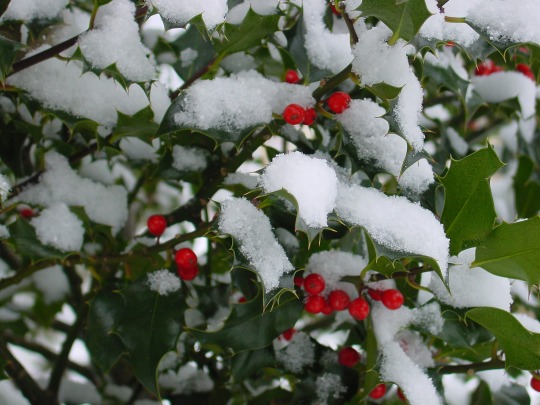
holly plant in snow

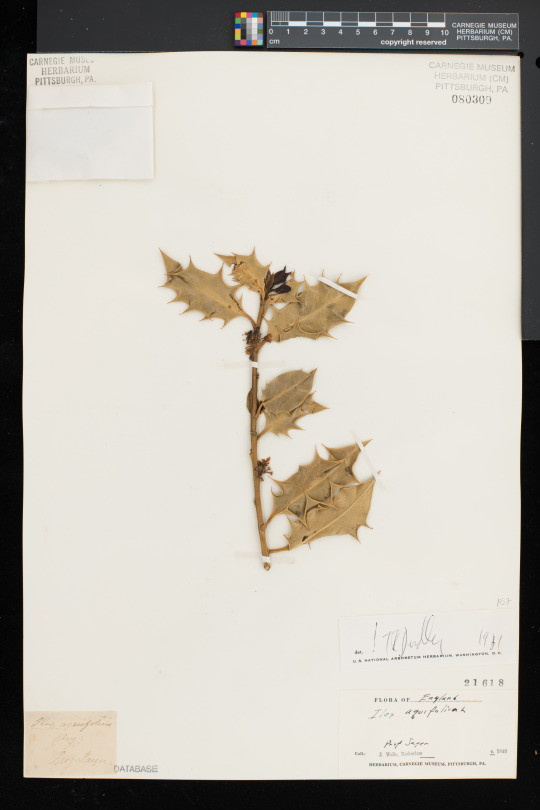
Are you decking your halls with boughs of holly? Probably not holly from 178 years ago! This holly specimen (Ilex aquifolia) was collected in 1840 in England.  I think the label says it was collected by “Prof. Sager,” but it is hard to read!

holly specimen

How did it end up at the Carnegie Museum herbarium?  This specimen was part of the private herbarium of Jacob Wolle, who was the grandfather of William J. Holland, one of the first directors of the Carnegie Museum of Natural History (from 1901-1922). The CM herbarium has 2,514 specimens from Wolle’s collection, dating as far back as 1819!

Find this specimen online.

Also, find nearly 400 other holly specimens collected in Pennsylvania, just digitized and now online!

Check back for more! Botanists at the Carnegie Museum of Natural History share digital specimens from the herbarium on dates they were collected. They have embarked on a three-year project to digitize nearly 190,000 plant specimens collected in the region, making images and other data publicly available online. This effort is part of the Mid-Atlantic Megalopolis Project (mamdigitization.org), a network of thirteen herbaria spanning the densely populated urban corridor from Washington, D.C. to New York City to achieve a greater understanding of our urban areas, including the unique industrial and environmental history of the greater Pittsburgh region. This project is made possible by the National Science Foundation under grant no. 1801022.  

Filed Under: Blog Tagged With: Botany, Mason Heberling, plants

December 12, 2018 by wpengine

Fraser Fir

by Mason Heberling
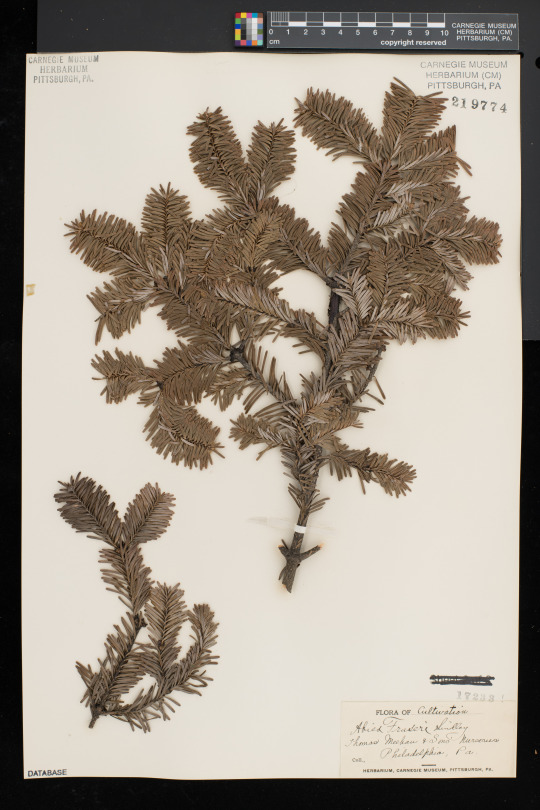
Frasier fir specimen

Collected on some day, probably between 101-122 years ago.

Around 25-30 million cut trees are sold each year in the United States for the holidays. The popularity of certain species for this use has changed through time.  Many different evergreen conifer species are cultivated in the US for decorative use during the holidays.  Needle length, softness, retention, color, and even scent vary by species or variety. Similarly, branching characteristics and branch strength differs by species. Plus, some species grow faster and easier than others, which means some species are cheaper.

This specimen of Fraser fir (Abies fraseri) was collected in Philadelphia at the Thomas Meehan & Sons Nursery.  The person who collected this specimen and the date of collection are unknown.  Thomas Meehan immigrated to the United States from England in 1848 and started a landscaping business.  With his three sons, he started the Thomas Meehan & Sons Nursuries in 1896.  The nursery was unique in that it specialized in native trees and shrubs, unlike most nurseries that focused on European and Asian varieties (still very common today).  The nursery closed in 1916.

Fraser fir is currently one of the most popular Christmas trees.  It is known for its dark green color, soft needles, stiff branches (great for hanging heavy ornaments), and has good needle retention.  Unfortunately, native to the Southern Appalachians, Fraser fir isn’t the easiest to grow in Pennsylvania.

Before farms began cultivating trees for that purpose in the early 20th century, people just went to the woods to cut down their tree for the holidays.   Some of the earliest Christmas tree farms in the US started in Indiana County, PA as early as 1918.  Many farms in the region turned their fields into Christmas tree farms as it became profitable. By 1960, more than 1 million trees were harvested per year in Indiana County alone.  The harvest in Pennsylvania has declined for several reasons, including increased popularity of artificial trees and consumer interest in Frasier fir trees (grows slower in PA than farms in North Carolina).  However, Pennsylvania is still among the top five states in terms of both number of working Christmas tree farms and trees harvested. According to the National Christmas Tree Association, 31,577 acres in Pennsylvania are used as Christmas tree plantations. Many of the Christmas tree lots in southwestern PA get their trees from farms in Indiana county.

Check back for more! Botanists at the Carnegie Museum of Natural History share digital specimens from the herbarium on dates they were collected. They have embarked on a three-year project to digitize nearly 190,000 plant specimens collected in the region, making images and other data publicly available online. This effort is part of the Mid-Atlantic Megalopolis Project (mamdigitization.org), a network of thirteen herbaria spanning the densely populated urban corridor from Washington, D.C. to New York City to achieve a greater understanding of our urban areas, including the unique industrial and environmental history of the greater Pittsburgh region. This project is made possible by the National Science Foundation under grant no. 1801022.  

This specimen image is now online and publicly available here.

Mason Heberling is Assistant Curator of Botany at Carnegie Museum of Natural History. Museum employees are encouraged to blog about their unique experiences and knowledge gained from working at the museum.

Related Content

A Perfect Mineral for the Christmas Season

Ask a Scientist: What makes poinsettias so special?

Collected on Christmas Eve 1883: Mistletoe

Carnegie Museum of Natural History Blog Citation Information

Blog author: Heberling, Mason
Publication date: December 12, 2018

Share this post!

  • Share on Twitter Share on Twitter
  • Share on Facebook Share on Facebook
  • Share on Pinterest Share on Pinterest
  • Share on LinkedIn Share on LinkedIn
  • Share on Reddit Share on Reddit
  • Share via Email Share via Email

Filed Under: Blog Tagged With: Botany, collected on this day, Mason Heberling, plants

  • « Go to Previous Page
  • Page 1
  • Interim pages omitted …
  • Page 10
  • Page 11
  • Page 12
  • Page 13
  • Page 14
  • Interim pages omitted …
  • Page 28
  • Go to Next Page »

sidebar

About

  • Mission & Commitments
  • Directors Team
  • Museum History

Get Involved

  • Volunteer
  • Membership
  • Carnegie Discoverers
  • Donate
  • Employment
  • Events

Bring a Group

  • Groups of 10 or More
  • Birthday Parties at the Museum
  • Field Trips

Powdermill

  • Powdermill Nature Reserve
  • Powdermill Field Trips
  • Powdermill Staff
  • Research at Powdermill

More Information

  • Image Permission Requests
  • Science Stories
  • Accessibility
  • Shopping Cart
  • Contact
  • Visitor Policies
Stay in the loop! Sign up for our newsletter(s).
One of the Four Carnegie Museums | © Carnegie Institute | Privacy Policy | Terms of Use | Accessibility
Rad works here logo