• Skip to primary navigation
  • Skip to main content
  • Skip to primary sidebar

Carnegie Museum of Natural History

One of the Four Carnegie Museums of Pittsburgh

  • Visit
    • Buy Tickets
    • Visitor Information
    • Exhibitions
    • Events
    • Dining at the Museum
    • Celebrate at the Museum
    • Powdermill Nature Reserve
    • Event Venue Rental
  • Learn
    • Field Trips
    • Educator Information
    • Programs at the Museum
    • Bring the Museum to You
    • Guided Programs FAQ
    • Programs Online
    • Climate and Rural Systems Partnership
  • Research
    • Scientific Sections
    • Science Stories
    • Science Videos
    • Senior Science & Research Staff
    • Museum Library
    • Science Seminars
    • Scientific Publications
    • Specimen and Artifact Identification
  • About
    • Mission & Commitments
    • Directors Team
    • Museum History
  • Tickets
  • Give
  • Shop

Botany Blogs

These blogs are written about and by our Section of Botany researchers. The herbarium at the museum which contains approximately 3,000 type specimens--specimens that define an entire plants' species. These type specimens only represent about 0.6 % of the collection.

Mason Heberling, head of the section, regularly shares herbarium specimens that have been "Collected on this day" in history.

September 14, 2018 by wpengine

Collected on this day in 1989

by Mason Heberling

You can get see plants from all over the world without ever leaving the herbarium. Herbaria are powerful resources that enable research that would otherwise not be possible, comparing plant species collected from across the world, at different times of year.
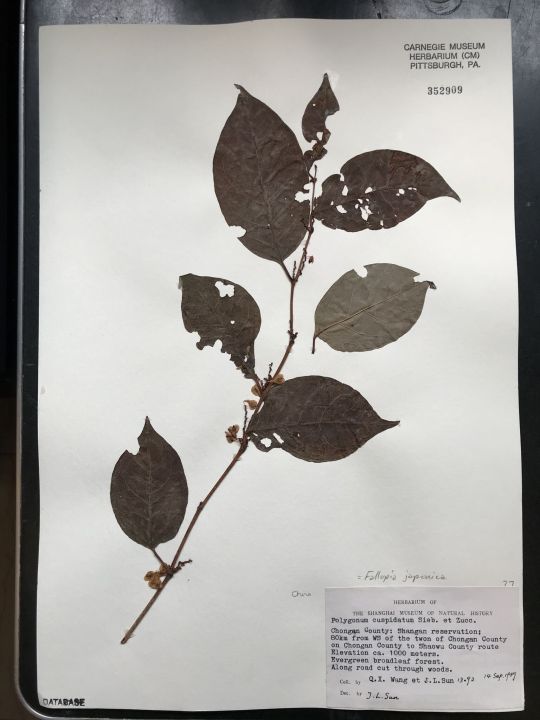
Japanese knotweed specimen

This specimen of Japanese knotweed (Fallopia japonica, formerly known as Polygonum cuspidatum) was collected in China on Sept 14, 1989 by Q.X. Wang and J.L. Sun.

Even if you’ve never been to East Asia, this species might be familiar to you.  Although native to China, Japan, and Korea, Japanese knotweed is now common across much of the temperate world, including the United States and Europe. In Pittsburgh, Japanese knotweed (and related introduced knotweed species) form dense stands along rivers, streams, and roadsides.
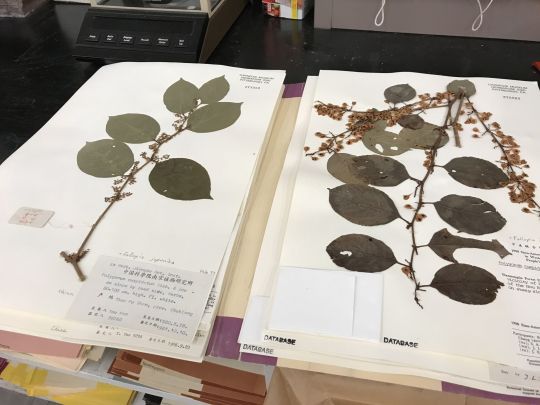
Japanese knotweed specimens

Specimens collected from both the native and introduced ranges can be compared to better understand plant invasions. For example, do invasive species look the same in their home range?

Although Collected On This Day posts tend to be biased towards specimens collected in Pennsylvania, the Carnegie Museum of Natural History herbarium includes specimens from many countries around the world. In fact, about one-third of the 530,000+ specimens are from outside the United States.
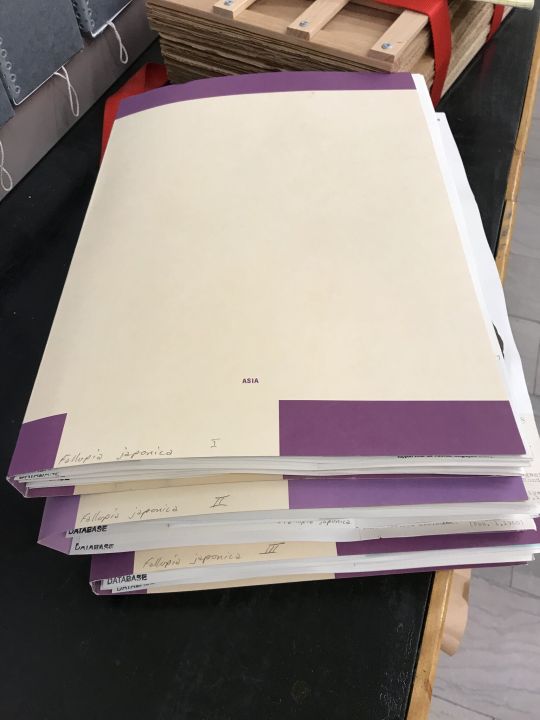
folders filled with Japanese knotweed specimens
47 of the 96 specimens of Japanese knotweed in the Carnegie Museum of Natural History’s herbarium were collected outside of the United States.

How do these species from far away regions end up at the Carnegie Museum?  Many are from expeditions from botanists affiliated with the museum – much in the same way locally collected specimens become part of the collection.  But many others are obtained through exchange with other herbaria.  Many plant collectors often collect duplicate specimens to send to several herbaria.  Most herbaria have exchange programs, where specimens (usually duplicates) are exchanged between institutions.  This practice functions to build the collection to include new species and specimens.  But it also has an important function to safeguard the future of the data.  In the case of damage (such as pest outbreaks or even fire, in the recent devastating case at the Museu Nacional in Brazil), having specimens spread across several institutions helps ensure the future of specimens.
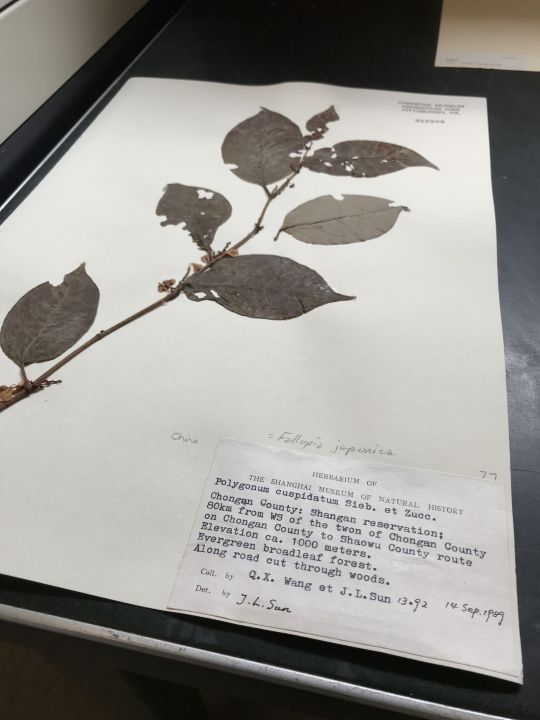
Japanese knotweed

Note the label on this specimen shows this specimen was at one time associated with the herbarium of the Shanghai Museum of Natural History.

Botanists at the Carnegie Museum of Natural History share digital specimens from the herbarium on dates they were collected. They have embarked on a three-year project to digitize nearly 190,000 plant specimens collected in the region, making images and other data publicly available online. This effort is part of the Mid-Atlantic Megalopolis Project (mamdigitization.org), a network of thirteen herbaria spanning the densely populated urban corridor from Washington, D.C. to New York City to achieve a greater understanding of our urban areas, including the unique industrial and environmental history of the greater Pittsburgh region. This project is made possible by the National Science Foundation under grant no. 1801022.
Filed Under: Blog Tagged With: Bonnie Isaac, Botany, collected on this day, herbarium, Mason Heberling

September 7, 2018 by wpengine

Collected on This Day in 2016: Japanese Stiltgrass

by Mason Heberling

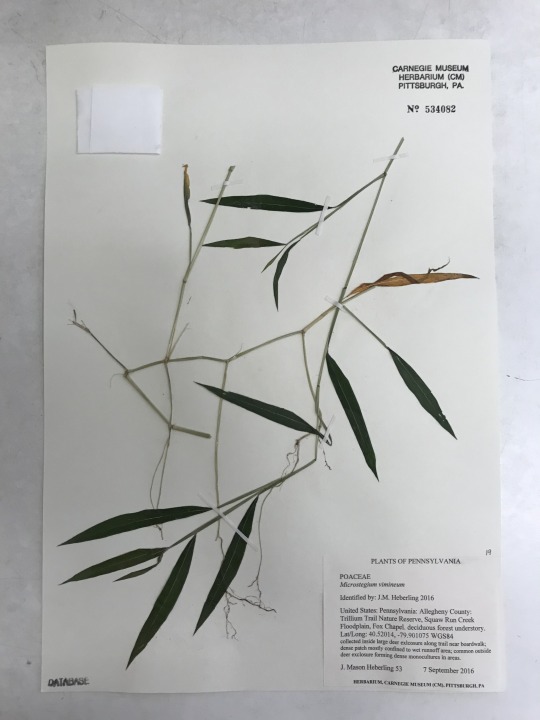
Japanese Stiltgrass specimen

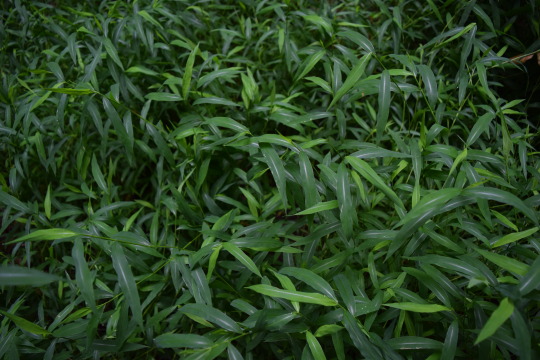
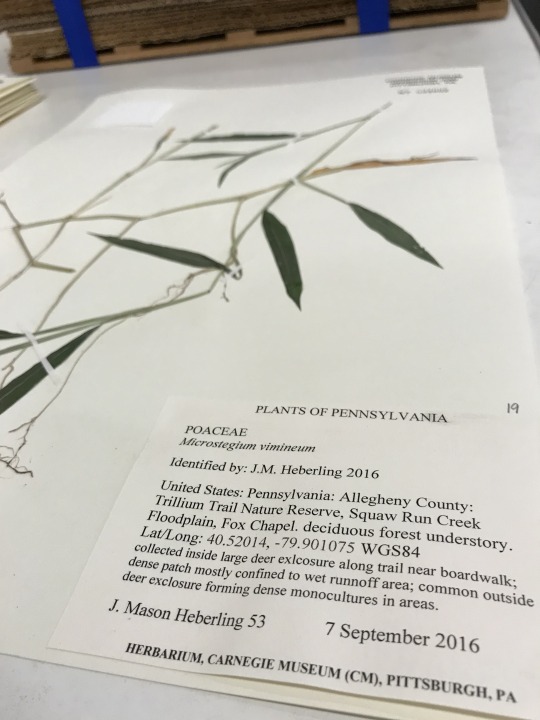
It is now a common plant in forests across Pennsylvania, but it wasn’t always.  This specimen of Japanese stiltgrass (Microstegium vimineum) was collected on September 7, 2016 by Mason Heberling (me!) at Trillium Trail, Fox Chapel, PA.  Native to East Asia, Japanese stiltgrass is an annual grass that is said to have first been introduced accidentally to Knoxville, Tennessee around 1919, used as packing material for porcelain dishes from China.  It has since become a major invasive species, spreading across forests of Eastern North America.  It is commonly found along trails, forest roads, and floodplains.  It has been shown to be facilitated by deer overabundance.  A recent study of unconventional gas well pads (such as “fracking”) in Pennsylvania by Penn State researchers found that recent hydraulic fracturing activities facilitates stiltgrass invasion (Barlow et al., 2017 Journal of Environmental Management).  Japanese stiltgrass is especially common in disturbed moist forests, where available light in the understory is higher.  Therefore, it often carpets the forest floor in disturbed forests.  High densities of deer have also been shown to facilitate stiltgrass invasions.  In fact, much of this research was done at Trillium Trail by Susan Kalisz (then at University of Pittsburgh, now at University of Tennessee Knoxville).  They used fences to exclude deer and found that stiltgrass was not present in fenced plots, but abundant when deer were allowed access. The Kalisz lab actively remains at Trillium Trail.

Japanese Stiltgrass specimen
Once  you  learn  to  recognize  this  grass,  you  are  likely  to  see  it  everywhere  in  forests  and  forest  edges  in  Western  Pennsylvania.  It  is  especially  obvious  in  the  Fall,  when  it  flowers  and  has  reached  its  peak  growth.  Note  the  faint  white  line  along  the  center  of  the  leaf  blades.

Although collected only two years ago, I was surprised to find that this specimen was the oldest Japanese stiltgrass specimen collected in Allegheny county!  There is a chance it had been collected earlier and exists in another herbarium. It was said to be uncommon (possibly absent) at Trillium Trail until 2002.

Japanese Stiltgrass
Microstegium  vimineum  carpeting  the  forest  floor  outside  deer  fences  at  Trillium  Trail.

What will our forests look like in another 10 years?  Herbarium specimens are important, verifiable sources to document our changing flora.  And ultimately, help conserve our flora.

Mason Heberling is a Postdoctoral Research Fellow in the Section of Botany at the Carnegie Museum of Natural History. Museum employees are encouraged to blog about their unique experiences working at the museum.

Filed Under: Blog Tagged With: Anthropocene, Botany, collected on this day, herbarium, Mason Heberling

September 6, 2018 by wpengine

Collected on This Day: September 6

by Mason Heberling

September 6, 1952: 66 years ago

…and recollected September 6, 2018

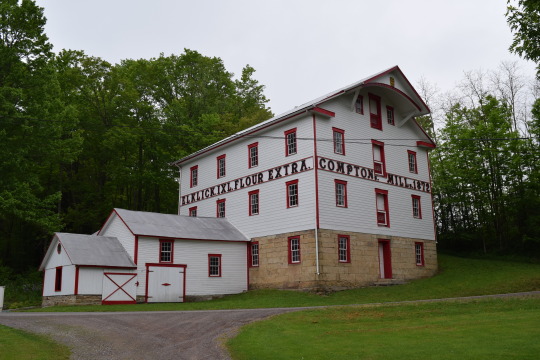
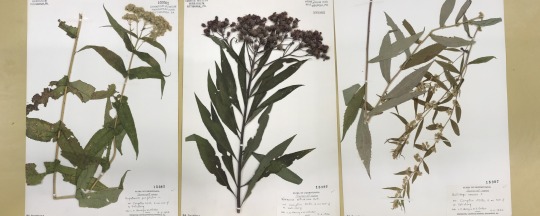
These specimens (and more) were collected on September 6, 1952 near Compton’s Mills (near Salisbury, PA, Somerset County) by Leroy Henry and Werner Buker. Henry was a long time Curator of Botany at the museum (1937-1973), and Buker was a math teacher at Perry High School, who was also a very active botanist at the museum.  Collectively, they collected nearly 50,000 specimens in the Carnegie Museum herbarium!

These specimens are part of a larger project ongoing in the Section of Botany at the Carnegie Museum.  Starting last year, we are revisiting historic sites across Western Pennsylvania, where former botanists have collected.  We are revisiting these sites in order to record and monitor biological change in the Anthropocene.  Are the same species present? (local extinction or persistence) Are new species present? (newly introduced invasive species)

We are also recollecting specimens from these historic sites to compare specimens collected decades to a century ago, to those collected today. For example, how are species affected by climate change? Are species flowering earlier? How are plant communities affected by invasive species and introduced pests? These are just a few of the many questions that can be answered.

Compton's Mills

With generous permission of the current landowner, we are able to recollect specimens at Compton’s Mills. Compton’s Mills is a site of a family-run historic grist/flour mill built in 1872 on the foundation of an even earlier mill. We have done some recollections at this site last spring, including specimens of the endemic Appalachian violet (Viola appalachiensis).  Compton’s Mills is also of special importance, as specimens collected from this site were used by Leroy Henry to formally describe species new to science (known as “type” specimens).  Read about our recollection in Spring 2017.

This year we are revisiting in the late summer/early fall.

With data from Compton’s Mills, in addition to repeatedly revisiting other sites across Western Pennsylvania, we will be able to document and understand a century of past, present, and future impacts of humans on the landscape– a hallmark of the Anthropocene.  Some of our first recollections were featured in the We Are Nature exhibition.  Although this exhibition recently ended, specimens from this project will remain on display in the Hall of Botany.

wildflower specimens

The wildflower specimens pictured here are welcomed signs of late summer and fall (left to right): common boneset (Eupatorium perfoliatum), tall ironweed (Vernonia altissima), wreath goldenrod (Solidago caesia).

Mason Heberling is a Postdoctoral Research Fellow in the Section of Botany at the Carnegie Museum of Natural History. Museum employees are encouraged to blog about their unique experiences working at the museum.

Filed Under: Blog Tagged With: Botany, collected on this day, Mason Heberling, pennsylvania, plants, western pennsylvania

August 24, 2018 by wpengine

Celebrating the weed that engulfed western Pennsylvania?

by Mason Heberling

Knotweed Festival balloons

A few weekends ago, I went to the 7th annual Knotweed Festival in Blairsville, about 40 miles east of Pittsburgh in Indiana County.  Aside from reading a brief advertisement, I knew little about the festival before going. But, given I study non-native plant invasions, I had to go to a celebration named after a local weed that is a focus of my research! And this invader is one of the most aggressive and widespread ones in western Pennsylvania – Japanese knotweed.

Native to East Asia, Japanese knotweed (Fallopia japonica) is a large herbaceous perennial that was first introduced to the U.S. in the late 1800s as an ornamental.  As its name suggests, it eventually spread well outside of gardens to become a major nuisance. More troubling, the spread of the species displaces native vegetation and disrupts the natural function of the ecosystem.  The plant has thick hollow stems that somewhat resemble bamboo, although they are not related (knotweed is in the buckwheat family, Polygonaceae; bamboo in the grass family, Poaceae).  Knotweed spreads through persistent below-ground structures called rhizomes (below-ground stems), as well as by seed.  Small fragments of rhizomes can be washed downstream and easily establish, often forming dense stands along Pittsburgh’s many streams and rivers. Knotweed is among the most economically and ecologically problematic invasive plants in Pennsylvania.

So, why name a community festival after this invasive plant?!  Despite the dislike for the plant, the community of Blairsville named the festival partly as a tongue-in-cheek sentiment for the plant that has taken over the landscape and partly to recognize the weed as embedded into the local culture. The nearby Conemaugh River that runs throughs Blairsville has been transformed by this non-native species, completely covering the banks with stands so dense they completely block the view of the river along the community recreational trail.

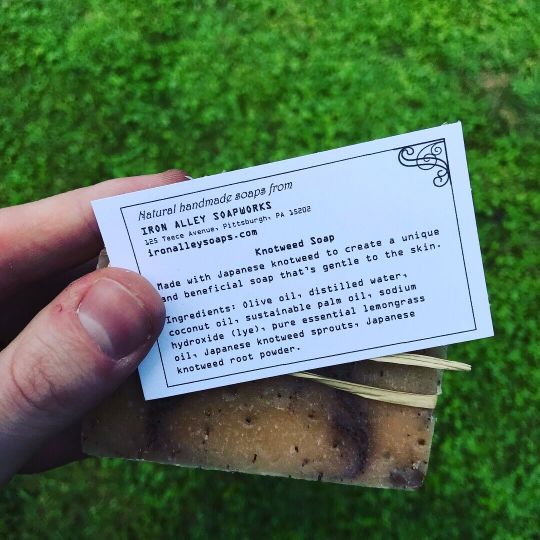
My family and I had a great time at the festival, visiting local craft and food vendors, listening to musicians and other entertainment, seeing a monarch butterfly display, and even a parade. I even bought soap made from the rhizomes and stems of knotweed collected by the river.

knotweed soap
Soap for sale at the Knotweed Festival made from young knotweed stems and rhizomes.

At first, I had mixed feelings about naming a festival after an aggressive invasive plant known to cause ecological harm. On one hand, it embraces the nature around us – whether we like it or not, non-native plants are part of the landscape around us. The global movement of plants is one of the defining features of the Anthropocene, the current era of pervasive human influence on the environment and Earth’s systems. But, on the other hand, naming a festival after an invasive species normalizes plant invasions and perhaps even embraces the change to the landscape as a good thing.  Despite my initial mixed feelings, I think the festival is a great community gathering that has the potential to raise awareness about the presence of the invasive plant in our community, its ecological effects, and in turn, nature around us (native and non-native).

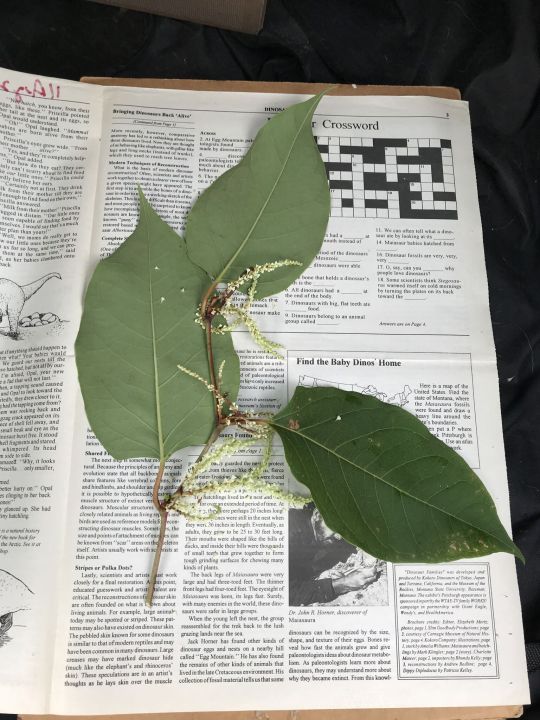
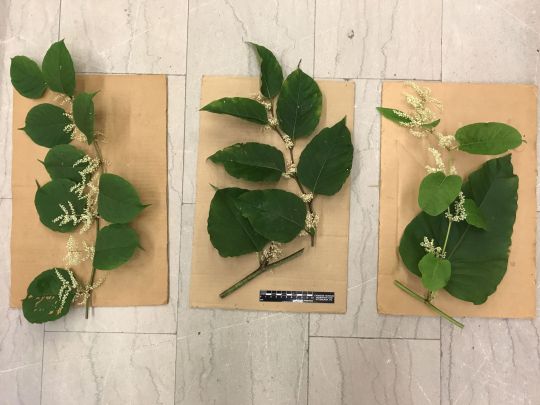
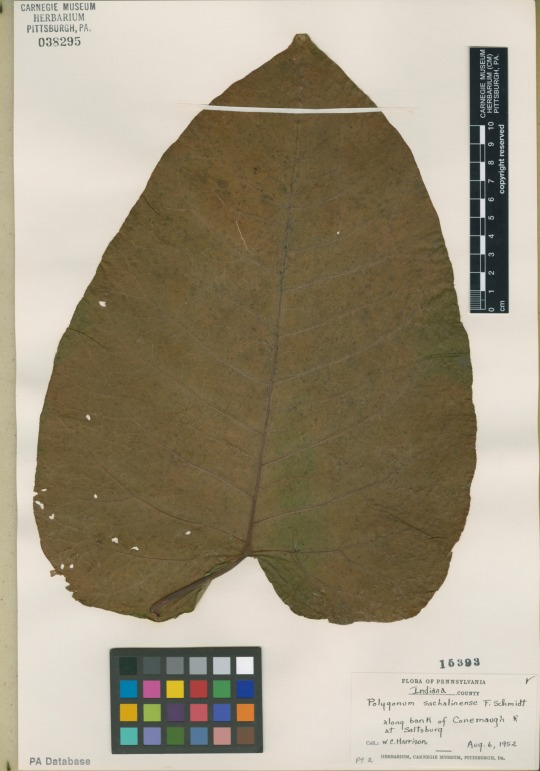
It turns out there is more than one species of invasive knotweed in western PA: Japanese knotweed (Fallopia japonica), Giant knotweed (Fallopia sachalinensis), and a hybrid between the two species, Bohemian knotweed (Fallopia xbohemica).  The hybrid was only recognized in the past several decades and likely originated when these two species “met” after they were introduced in Europe.  The three species are visually similar.  Giant knotweed can be distinguished by its large (usually much larger than your hand), heart-shaped leaves. Japanese knotweed and the hybrid Bohemian knotweed are much more difficult to distinguish, with much variation in leaf shape.  Japanese knotweed tends to be rounder in shape, while the Bohemian knotweed is intermediate between the other two species in leaf shape and size.  The leaf hairs are sometimes the only definitive identifying feature.

While I was at the Knotweed Festival, I collected some knotweed specimens for the Carnegie Museum of Natural History’s herbarium. Along the Conemaugh River in Blairsville, I collected both the Giant knotweed and Bohemian knotweed (the hybrid).  But, I did not find any Japanese knotweed. (I suspect my knotweed soap is actually made from Giant knotweed, after all.)

Bohemian knotweed
Bohemian knotweed specimen collected at the Knotweed Festival.

fresh knotweed specimens
Last year, I found all three knotweed species growing together at the same site near the Allegheny River and Barking Slopes Conservation Area, near New Kensington/Plum, PA.  Left to right: Japanese knotweed (Fallopia japonica), Bohemian knotweed (Fallopia xbohemica), Giant knotweed (Fallopia sachalinensis).

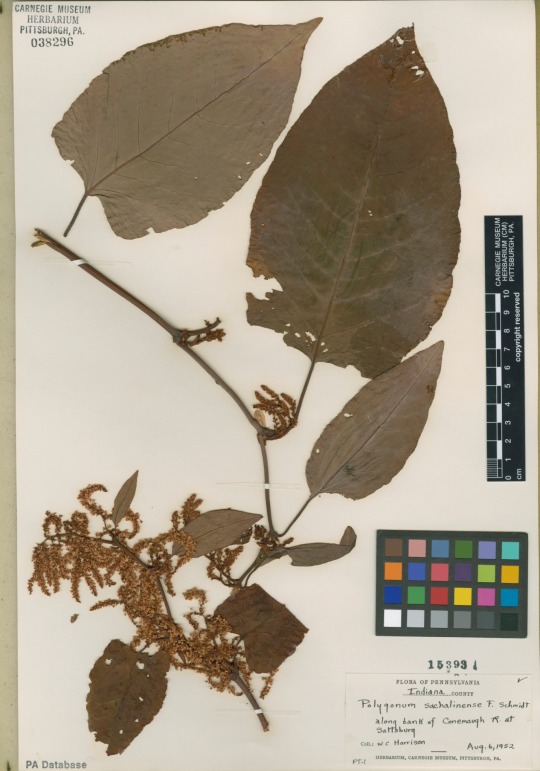
The earliest herbarium specimens from Indiana County were collected in 1952 along the Conemaugh River in Saltsburg (not far from Blairsville).  Interestingly, these specimens were of Giant knotweed and Bohemian knotweed – the same species I collected.

knotweed specimen
 

knotweed specimen
The two earliest specimens of knotweed recorded in Indiana County, collected in Saltsburg on August 6, 1952.  I recently recollected these same species not far from the same site, 66 years later.

Keep an eye out for knotweed.  If you live in western PA, chances are that you see it every day!

Mason Heberling is a Postdoctoral Research Fellow in the Section of Botany at the Carnegie Museum of Natural History. Museum employees are encouraged to blog about their unique experiences working at the museum.

Filed Under: Blog Tagged With: Botany, Mason Heberling, plants

August 13, 2018 by wpengine

Plant Specimen Images Now Online

By Bonnie Isaac

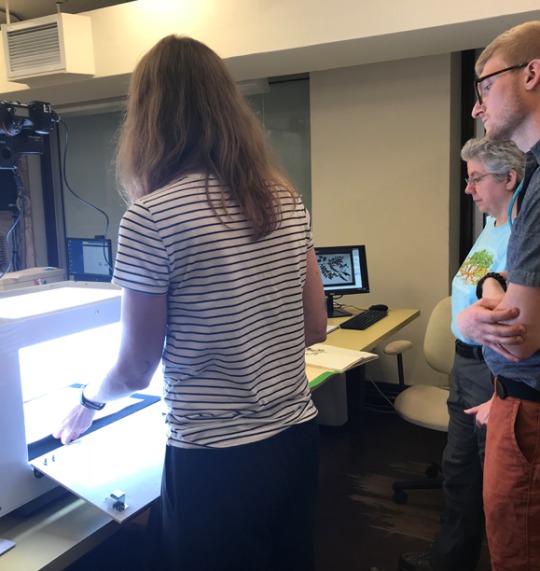
Anne Barber training Botany staff Mason Heberling and Bonnie Isaac to use the new imaging station
Anne Barber training Mason Heberling and Bonnie Isaac to use the new imaging station for our NSF grant.


Anne Barber, the Research Project Coordinator for the Mid-Atlantic Megalopolis TCN recently came to Pittsburgh to train the Botany staff (Bonnie Isaac, Mason Heberling, and Sarah Williams) to use our new imaging equipment.  We spent a day and a half learning how to image our specimens and get them up on the Mid-Atlantic Herbaria portal. We are now up and running and images of our specimens are making it to the internet.

We will be photographing the specimens from Pennsylvania, Delaware, New Jersey, New York, Maryland, and D.C. for this project. These images will be added to the portal for the mid-Atlantic region over the next three years.  You can search our specimen database to find out what specimens we have or watch for the images of these specimens to start appearing.

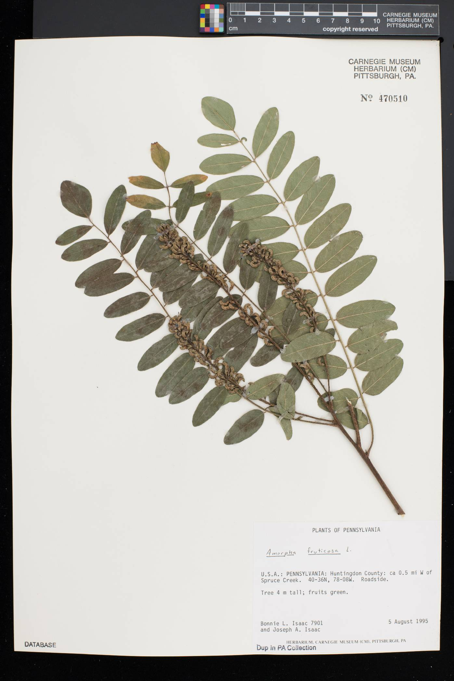
What was the lucky specimen to be first imaged and added to the portal?  Just by chance, it was a specimen that I collected in Huntingdon County back in 1995.

Amorpha fruticosa specimen
Amorpha fruticosa specimen from Pennsylvania collected by Bonnie Isaac, first specimen imaged with the new imaging station.


Bonnie Isaac is the Collection Manager in the Section of Botany. Museum employees are encouraged to blog about their unique experiences and knowledge gained from working at the museum.

Filed Under: Blog Tagged With: Bonnie Isaac, Botany, plants

July 26, 2018 by wpengine

Before Powdermill Nature Reserve

By Bonnie Isaac

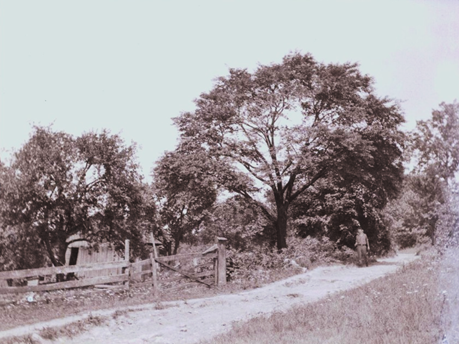
black and white photo of a dirt road and trees

While looking through some images in the archives in the section of Botany I came across this image from July 23, 1923 taken by Gus Link Jr. about 3 miles south of Rector, PA.  There is a good chance that this property later became part of our Powdermill Nature Reserve.

The museum began acquiring properties in 1956 to form Powdermill Nature Reserve. I wonder if the museum folks were out there surveying the area with a nature reserve in mind? What foresight the museum had to acquire properties that have over the past 60 plus years become a beautiful place for research.

In 1923 Gustav Link Jr. was an assistant preparator in Zoology for the natural history museum. Gus Link Jr. worked for the museum from 1912 to 1960.

Bonnie Isaac is the Collection Manager in the Section of Botany. Museum employees are encouraged to blog about their unique experiences and knowledge gained from working at the museum.

Filed Under: Blog Tagged With: Botany, conservation, museum history, nature, Powdermill, Powdermill Nature Reserve

  • « Go to Previous Page
  • Page 1
  • Interim pages omitted …
  • Page 13
  • Page 14
  • Page 15
  • Page 16
  • Page 17
  • Interim pages omitted …
  • Page 28
  • Go to Next Page »

sidebar

About

  • Mission & Commitments
  • Directors Team
  • Museum History

Get Involved

  • Volunteer
  • Membership
  • Carnegie Discoverers
  • Donate
  • Employment
  • Events

Bring a Group

  • Groups of 10 or More
  • Birthday Parties at the Museum
  • Field Trips

Powdermill

  • Powdermill Nature Reserve
  • Powdermill Field Trips
  • Powdermill Staff
  • Research at Powdermill

More Information

  • Image Permission Requests
  • Science Stories
  • Accessibility
  • Shopping Cart
  • Contact
  • Visitor Policies
One of the Four Carnegie Museums | © Carnegie Institute | Privacy Policy | Terms of Use | Accessibility
Rad works here logo