• Skip to primary navigation
  • Skip to main content
  • Skip to primary sidebar

Carnegie Museum of Natural History

One of the Four Carnegie Museums of Pittsburgh

  • Visit
    • Buy Tickets
    • Visitor Information
    • Exhibitions
    • Events
    • Dining at the Museum
    • Celebrate at the Museum
    • Powdermill Nature Reserve
    • Event Venue Rental
    • Gift Cards
  • Learn
    • Field Trips
    • Educator Information
    • Programs at the Museum
    • Bring the Museum to You
    • Guided Programs FAQ
    • Programs Online
    • Climate and Rural Systems Partnership
  • Research
    • Scientific Sections
    • Science Stories
    • Science Videos
    • Senior Science & Research Staff
    • Museum Library
    • Science Seminars
    • Scientific Publications
    • Specimen and Artifact Identification
  • About
    • Mission & Commitments
    • Directors Team
    • Museum History
  • Tickets
  • Give
  • Shop

Botany Blogs

These blogs are written about and by our Section of Botany researchers. The herbarium at the museum which contains approximately 3,000 type specimens--specimens that define an entire plants' species. These type specimens only represent about 0.6 % of the collection.

Mason Heberling, head of the section, regularly shares herbarium specimens that have been "Collected on this day" in history.

May 22, 2017 by wpengine

Collected on this Day in 2006

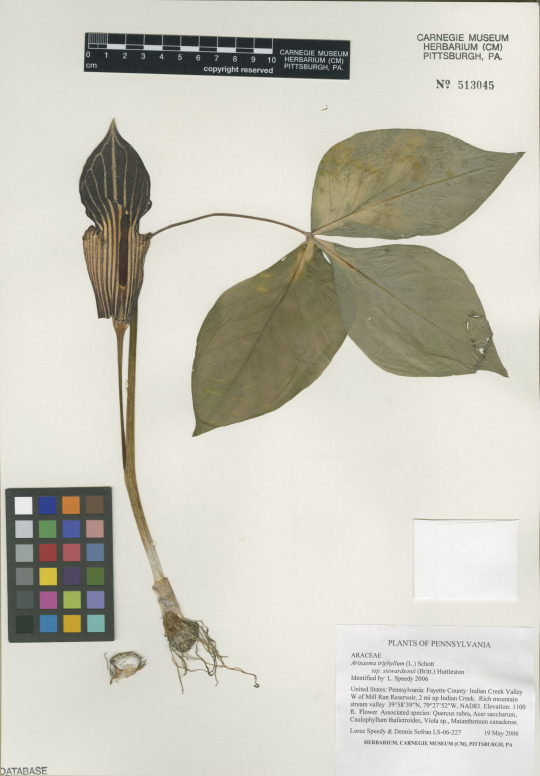
Herbarium specimen of jack-in-the-pulpit

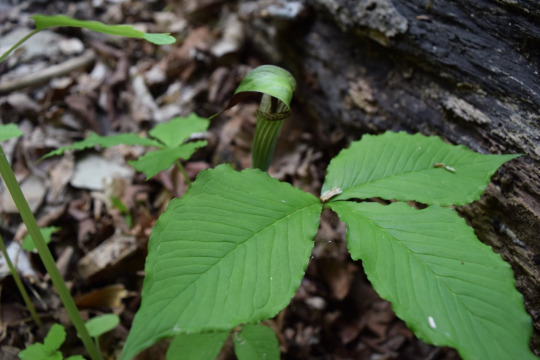
Collected on May 19, 2006, this specimen was found by Loree Speedy in a stream valley near the Mill Run Reservoir in Fayette County, Pennsylvania. This charismatic species (Arisaema triphyllum) is known as jack-in-the-pulpit and is native to forests of the eastern United States.

Its common name comes from its flowering structure—a distinctive hooded structure (spathe) that looks like a pulpit and the flowers (spadix) that resemble “Jack,” the minister standing within. This flower structure is shared among members of the arum family (Araceae; members often called aroids), which includes the popular houseplants known as peace lilies.

The natural history of jack-in-the-pulpits is fascinating. For starters, individual plants can be male or female, and the gender can switch from year to year! This species has intrigued botanists for decades and has been used as a study system to understand the ecology and evolution of plant sex expression. Larger plants tend to have female flowers, but the exact size is dependent on environmental conditions and genetics of a given population. Jack-in-the-pulpit has calcium oxalate in its leaves that can irritate skin and is poisonous to ingest.

It is generally avoided by deer. However, recent research from the lab of Susan Kalisz—a research associate at the museum—has shown that deer overabundance negatively affects the growth of this species. While it is rarely eaten by deer, they affect other environmental conditions, such as light levels and soil conditions.
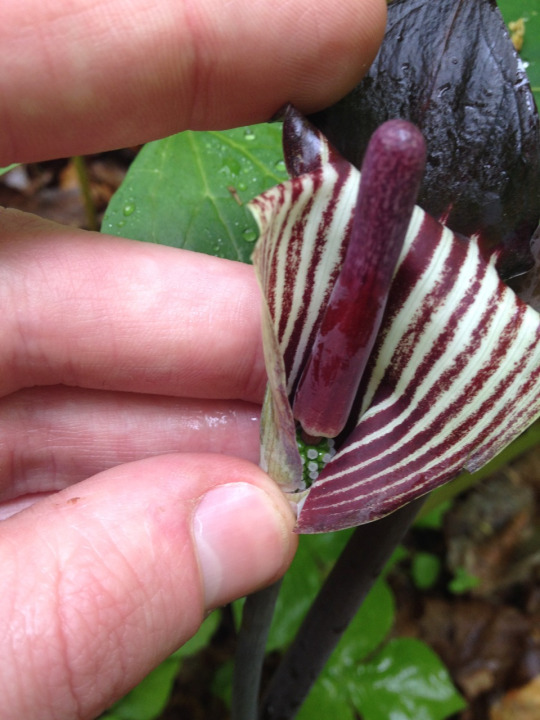
jack-in-the-pulpit in bloom
leaves from jack-in-the-pulpit plant

Botanists at Carnegie Museum of Natural History share pieces of the herbarium’s historical hidden collection on the dates they were discovered or collected. Check back for more!
Filed Under: Blog Tagged With: Botany, Mason Heberling

May 15, 2017 by wpengine

Happy Mother’s Day

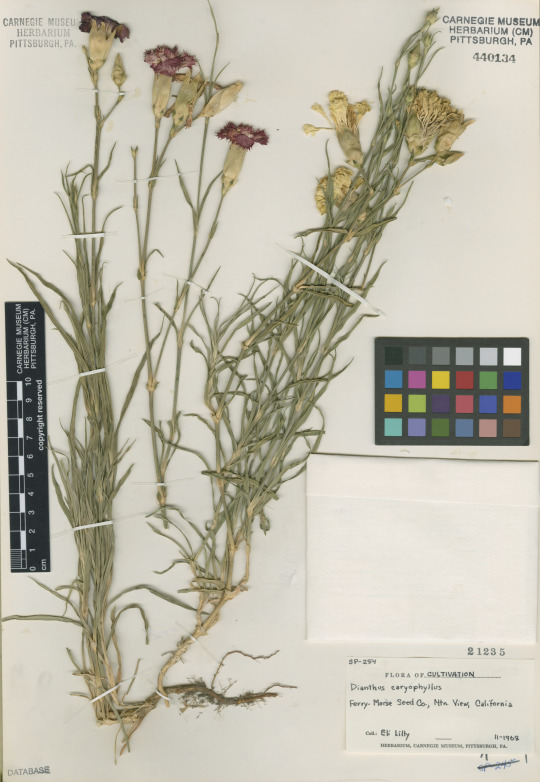
a carnation specimen (Dianthus caryophyllus)

Collected in 1908 (the first year Mother’s Day was celebrated!), this specimen was grown in cultivation at the former western headquarters for the Ferry-Morse Seed Company in Mountain View, California. The white carnation was chosen as a Mother’s Day symbol by Anna Jarvis, the holiday’s founder, because they were her mother’s favorite. Carnations remain closely associated with Mother’s Day in the United States. White carnations traditionally symbolize the memory of mothers who have died, and colored carnations honor living mothers. The carnation, or Dianthus caryophyllus, is probably native to the Mediterranean, but its native range is obscured by at least 2,000 years of cultivation. There are over 27,000 named cultivars of Dianthus species.


Botanists at Carnegie Museum of Natural History share pieces of the herbarium’s historical hidden collection on the dates they were discovered or collected. Check back for more!
Filed Under: Blog Tagged With: Botany, Mother's day

May 15, 2017 by wpengine

Collected on this Day in 2001

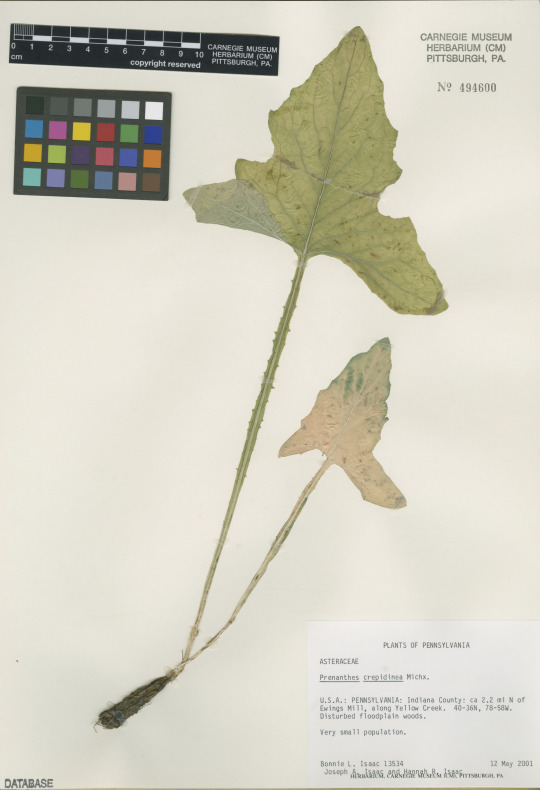
Herbarium specimen of Prenanthes crepidinea (nodding rattlesnake root)

Collected on May 12, 2001, this specimen was found in Indiana County by Bonnie Isaac, along with her family Joe and Hannah Isaac. Bonnie is the collection manager in the Section of Botany at the museum and an expert on the plants of Pennsylvania. Research for her master’s degree focused on the ecology and distribution of this species, Prenanthes crepidinea (nodding rattlesnake root).

Of conservation concern and endangered in some states, this species is native to rich woods and wet areas in north-central United States, including western Pennsylvania. Bonnie discovered that young plants emerge early in the spring, often before the canopy fully leafs out, and die back by the end of June. Few larger, older individuals persist and send up a flowering stalk August through November. The species is monocarpic, meaning that once a plant gets enough energy to flower (which may take several years), it blooms once and then dies. Her research informs conservation efforts to locate new populations of this uncommon species, finding that the best time to spot it is in early spring, before young plants disappear for the season. This specimen of a young, nonflowering plant serves as a voucher specimen that provides verifiable documentation of this population and for use in future research.


Botanists at Carnegie Museum of Natural History share pieces of the herbarium’s historical hidden
collection on the dates they were discovered or collected. Check back for more!
Filed Under: Blog Tagged With: Bonnie Isaac, Botany, Mason Heberling

May 11, 2017 by wpengine

Poisonous, Venomous, Toxin

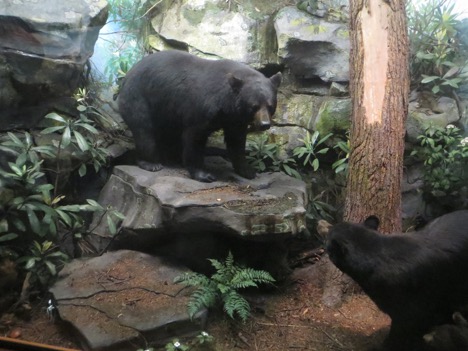
a diorama depicting American black bears

by Patrick McShea

With the opening for The Power of Poison just weeks away, museum educators have been re-examining familiar displays for connections to our summer blockbuster exhibition’s major themes. This self-study process produced some surprising results. For example, a diorama depicting American black bears in a rocky corner of the Allegheny National
Forest is a good place to review meanings for the terms poisonous, venomous, and toxin. The bears in this scenario become mere directional reference points for locating a relevant supporting cast.

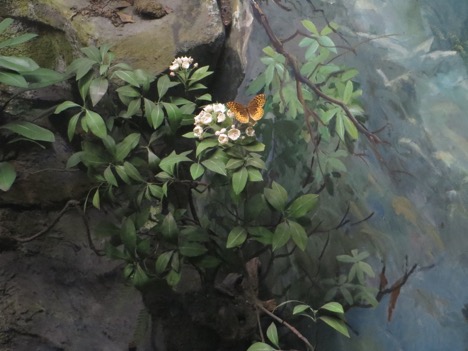
blooming mountain laurel shrub

A blooming mountain laurel shrub is rooted in a rock crevice just beyond the rump of the smaller adult bear. The plant, Pennsylvania’s official state flower, is poisonous, meaning that it contains substances that create undesirable interference with another organism’s physiological processes. All parts of mountain laurel are poisonous if ingested. The chemical culprits are two toxins, or specific molecular compounds, known as andromedotoxin and arbutin.

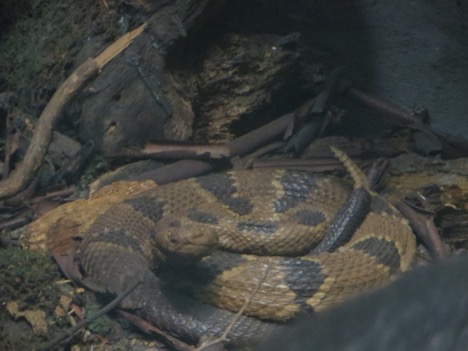
eastern timber rattlesnake

A bear’s width beneath the mountain laurel, an eastern timber rattlesnake lies coiled on a level rock. This ambush predator is one of three venomous snake species native to Pennsylvania. The modifier indicates amazing adaptations for capturing prey—the ability to produce, store, and inject venom, or poisonous fluids, in a lightning fast strike.

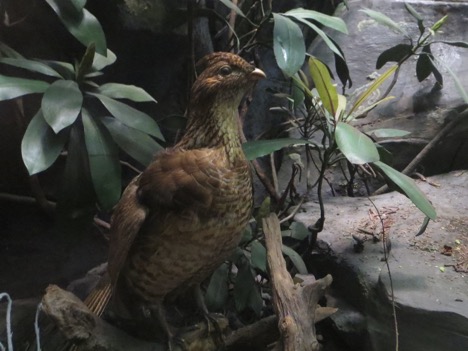
ruffed grouse taxidermy

In the diorama’s far left foreground a ruffed grouse, Pennsylvania’s official state bird, perches warily on a worn stump.  In discussions of poisons, the species merits an historical footnote. Accounts of people being poisoned after eating ruffed grouse from the 19th century linked symptoms to the bird’s diet of mountain laurel buds during periods of heavy snow cover.  When regulations ended winter grouse hunts, poisoning reports sharply declined.

When The Power of Poison is on display (May 27–September 4, 2017), exhibits throughout the museum with poison connections will be marked with distinctive tags.   The summer blockbuster exhibition itself is an immersive
experience that lets you venture down a jungle path or step into fairytale on a journey through science, history, and literature to explore poison’s power in the natural world.


Patrick McShea works in the Education and Visitor Experience department of Carnegie Museum of Natural History. Museum employees are encouraged to blog about their unique experiences of working at the museum.

Filed Under: Blog Tagged With: Botany, Patrick McShea, poisonus

May 11, 2017 by wpengine

Collected on this Day in 1950

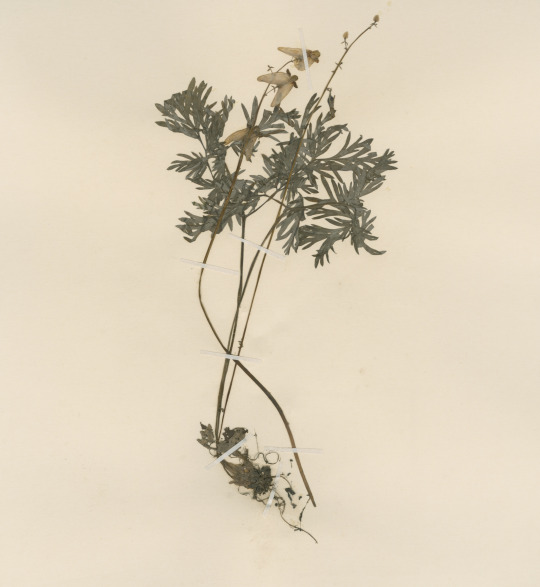
Dutchman’s breeches specimen pressed and dried

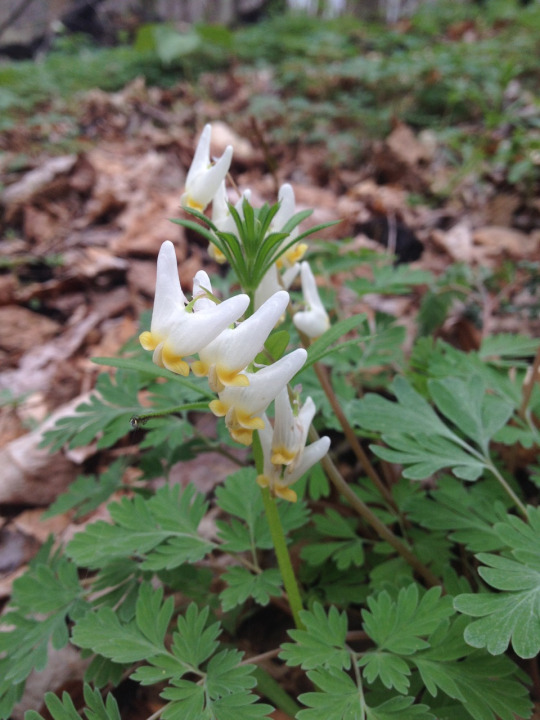
Collected on May 6, 1950, this specimen was found in by Werner E. Buker. Buker was a math teacher at Perry High School in Pittsburgh and a long-time affiliate with the museum and the Botanical Society of Western Pennsylvania. This spring ephemeral has a great name—Dutchman’s breeches (Dicentra cucullaria). The white flowers look like little pants hung out on a line to dry. Bumblebees get nectar from this plant with the help of a long proboscis (tongue-like appendage). Native Americans are said to have used the dry bulbs of this species as a blood purifier, spring tonic, and to treat syphilis. However, it contains alkaloids that are poisonous if eaten in large quantities and can cause skin irritation. It has been found to induce trembling, vomiting, and convulsions in cows that wandered into the forest in early spring looking for food.

Dutchman’s breeches flower

Botanists at Carnegie Museum of Natural History share pieces of the herbarium’s historical hidden collection on the dates they were discovered or collected. Check back for more!
Filed Under: Blog Tagged With: Botany, Mason Heberling

May 2, 2017 by wpengine

Collected on this Day in 1845

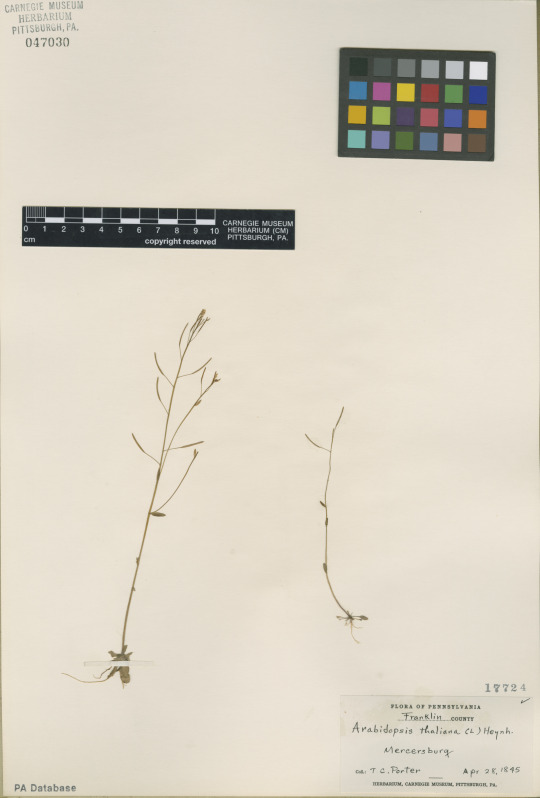
mouse-ear cress, a weed in the mustard family

Collected on April 28, 1845, this specimen was found in Mercersburg, Pennsylvania (Franklin County) by Thomas Conrad Porter. Porter (1822-1901) was a botanist associated with the herbarium at what is now the Academy of Natural Sciences of Drexel University in Philadelphia.

This plant might not seem like anything to write home about, but it is well known by most scientists. Arabidopsis thaliana (mouse-ear cress) has played, and continues to play, a huge role in plant biology research. This weed in the mustard family (Brassicaceae) is native to Europe and Asia and has been widely introduced to the United States.

Because of its small genome (fully sequenced 16 years ago), rapid life cycle (Germination to reproducing adult takes only six weeks!), mutant genotypes, and a long history of genetic research, this species has become an important model organism for cellular, molecular, evolutionary, agricultural, and even ecological studies. It is the international “lab rat” for plant science.

It was discovered in Germany in the 1500s, but did not really become famous as a model organism for research until 1943—nearly 100 years after this specimen was collected!


Botanists at Carnegie Museum of Natural History share pieces of the herbarium’s historical hidden collection on the dates they were discovered or collected. Check back for more!
Filed Under: Blog Tagged With: Botany, Mason Heberling

  • « Go to Previous Page
  • Page 1
  • Interim pages omitted …
  • Page 22
  • Page 23
  • Page 24
  • Page 25
  • Page 26
  • Interim pages omitted …
  • Page 28
  • Go to Next Page »

sidebar

About

  • Mission & Commitments
  • Directors Team
  • Museum History

Get Involved

  • Volunteer
  • Membership
  • Carnegie Discoverers
  • Donate
  • Employment
  • Events

Bring a Group

  • Groups of 10 or More
  • Birthday Parties at the Museum
  • Field Trips

Powdermill

  • Powdermill Nature Reserve
  • Powdermill Field Trips
  • Powdermill Staff
  • Research at Powdermill

More Information

  • Image Permission Requests
  • Science Stories
  • Accessibility
  • Shopping Cart
  • Contact
  • Visitor Policies
Stay in the loop! Sign up for our newsletter(s).
One of the Four Carnegie Museums | © Carnegie Institute | Privacy Policy | Terms of Use | Accessibility
Rad works here logo