• Skip to primary navigation
  • Skip to main content
  • Skip to primary sidebar

Carnegie Museum of Natural History

One of the Four Carnegie Museums of Pittsburgh

  • Visit
    • Buy Tickets
    • Visitor Information
    • Exhibitions
    • Events
    • Dining at the Museum
    • Celebrate at the Museum
    • Powdermill Nature Reserve
    • Event Venue Rental
  • Learn
    • Field Trips
    • Educator Information
    • Programs at the Museum
    • Bring the Museum to You
    • Guided Programs FAQ
    • Programs Online
    • Climate and Rural Systems Partnership
  • Research
    • Scientific Sections
    • Science Stories
    • Science Videos
    • Senior Science & Research Staff
    • Museum Library
    • Science Seminars
    • Scientific Publications
    • Specimen and Artifact Identification
  • About
    • Mission & Commitments
    • Directors Team
    • Museum History
  • Tickets
  • Give
  • Shop

diorama

February 20, 2019 by wpengine

Doubly Dead: Taxidermy Challenges in Museum Dioramas

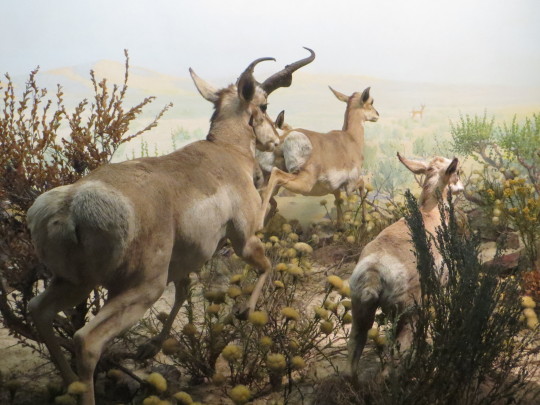
pronghorn antelope diorama

A visit to the wildlife dioramas at Carnegie Museum of Natural History is an opportunity to repeatedly admire the illusions created by teams of skilled taxidermists. None of the featured creatures are alive, but many of them appear to have just paused. Some, such as the pronghorn antelope, pictured above, even seem to be frozen in motion.

In several three-dimensional scenes, where the animal subjects are predators or scavengers, the taxidermists involved in creating the exhibit faced another challenge – presenting the preserved remains of a dead animal as a dead animal. The task, as the somewhat gory details in the pictures below attest, is undoubtedly more difficult than it sounds.
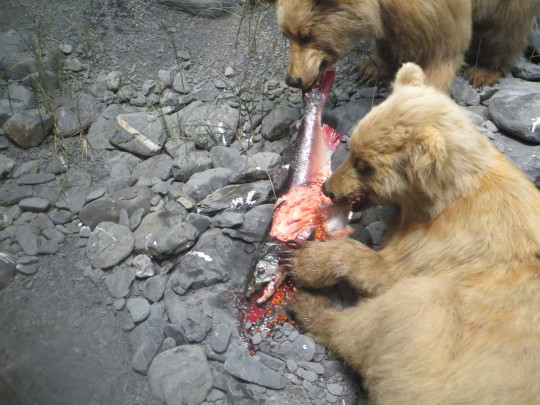
brown bear eating salmon taxidermy diorama

A dead salmon is front and center in the Alaskan Brown Bear diorama, and the pink flesh the cubs are consuming doesn’t look much different than what’s available at supermarket fish counters.
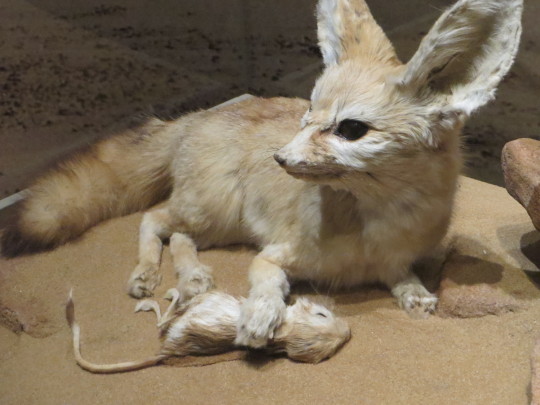
fennec fox and jerboa taxidermy

In the Hall of African Wildlife there’s no blood visible on the Lesser Egyptian Jerboa under fennec’s paw. The curled position of the prey’s feet and back legs indicate the struggle with the big-eared fox is over.
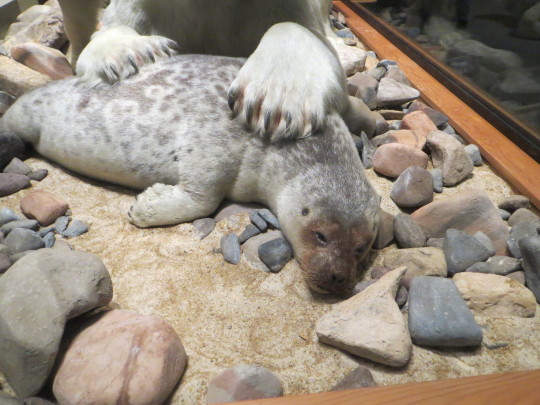
seal taxidermy under paw of polar bear taxidermy

In creating life-like mounts, taxidermists use glass eyes of the proper shape, size, and color.  The glass eyes appear to have lost their luster for the seal that serves as a prey detail in a Polar Bear diorama.
bull elk with large birds in diorama

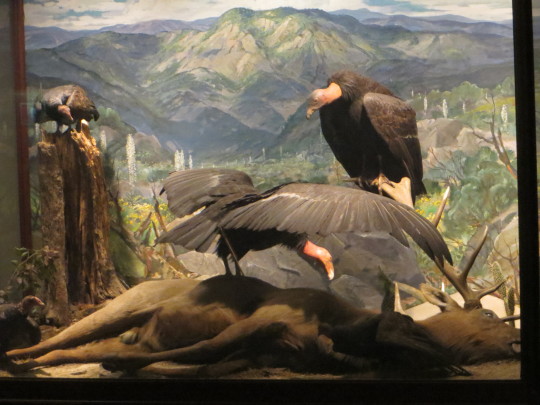
In one of the oldest dioramas within the Hall of North American Wildlife, the centerpiece presence of a dead bull elk indicates the role of both California Condors and Turkey Vultures as scavengers.
detail of bull elk taxidermy

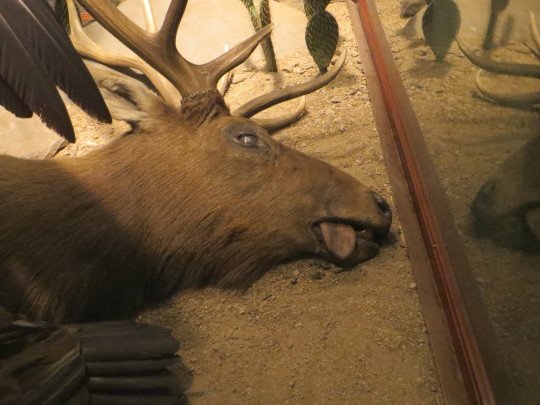
Taxidermy details that indicate the elk’s browsing days are over include dull eyes and a lolling tongue. The tricks of taxidermists are important when they help to explain the role of predators and scavengers, the bedrock biological principle of life from death.

Patrick McShea works in the Education and Visitor Experience department of Carnegie Museum of Natural History. Museum employees are encouraged to blog about their unique experiences and knowledge gained from working at the museum.
Filed Under: Blog Tagged With: diorama, Hall of African Wildlife, Hall of North American Wildlife, mammals, Pat McShea, Patrick McShea, taxidermy

December 10, 2018 by wpengine

Snow White Bird Search

winter mammal diorama

by Patrick McShea

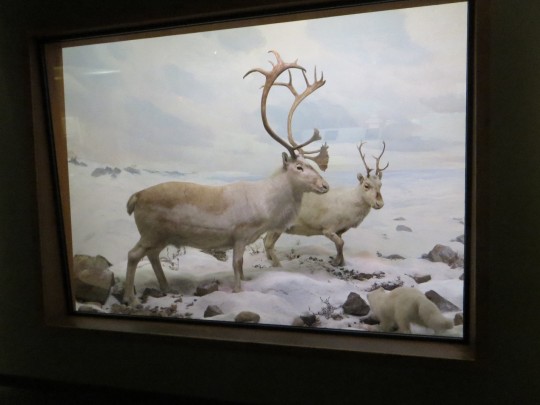
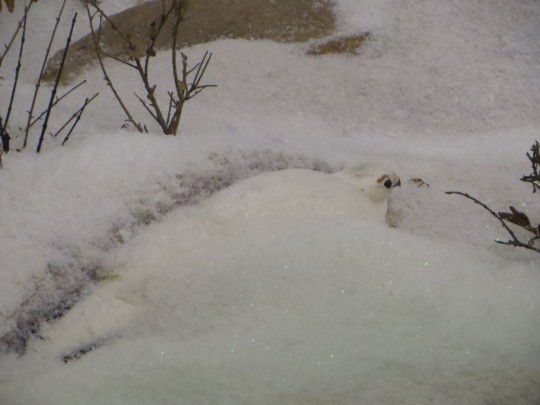
Visitors who read the descriptive label at the snowiest diorama in the Hall of North American Wildlife are presented with a visual challenge. Under the title, Arctic animals don their winter whites, the interpretive text lists four species within the exhibit displaying  protective coloration: Caribou, Arctic Fox, Collared Lemming, and Willow Ptarmigan.

The first two species are impossible to miss. If you center yourself in front of the three-dimensional scene, an Arctic fox crouches a few feet from your right knee, and a caribou pair so dominate the view that the concealment value of their pale coats is not fully apparent until you notice faint images of a larger herd painted into the backdrop horizon.

arctic fox

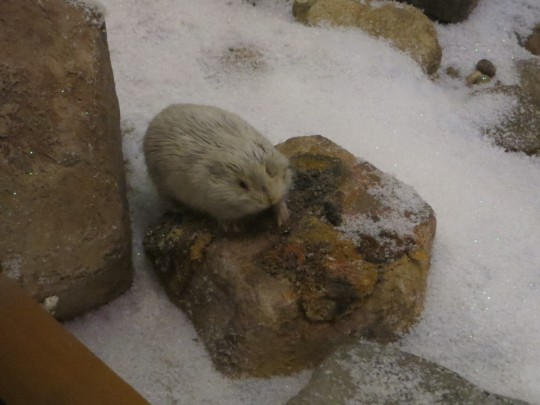
A quick search of the foreground perimeter is all that’s necessary to locate a collared lemming (above) but finding the willow ptarmigan requires determined effort. This member of the bird family that also includes pheasants, grouse and turkeys, undergoes a near complete annual color change. Willow ptarmigan trade their largely brown summer plumage for snow white winter feathers.

bird in the snow

The birds also utilize the insulating properties of snow, sometimes roosting as much as a foot below the surface. The resting place for the willow ptarmigan in the diorama isn’t that deep, but even with the aid of the above picture it can take some searching to locate.

Patrick McShea works in the Education and Visitor Experience department of Carnegie Museum of Natural History. Museum employees are encouraged to blog about their unique experiences and knowledge gained from working at the museum.
Filed Under: Blog Tagged With: diorama, Patrick McShea, Winter

June 19, 2018 by wpengine

Fast Cat and Invisible Insects

by Patrick McShea

Gazelles diorama

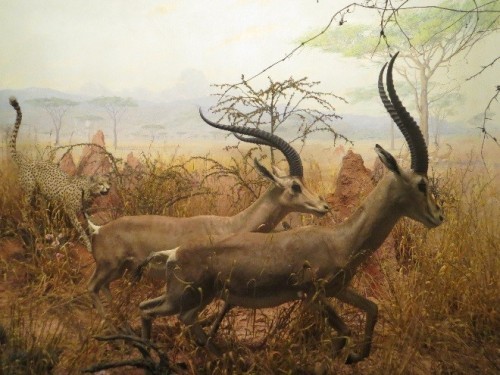
An argument can be made that one of the more interesting features within this diorama are the reddish earthen mounds framing the scene.

These irregular soil towers are termite mounds, the product of coordinated efforts by thousands of tiny social insects to create safe and stable living conditions. Mound-building termites are the master architects of the animal world. If they and their shelters were magically changed to our size and scale, their mounds would stretch upward as high as a 180 story building!

Within the thick walls of a termite mound air circulates through a network of channels to both cool the structure on hot days and warm it on cool days.

From hidden positions below ground and within their distinctive towers, termites exert tremendous influence over the landscape. By physically mixing various soils and their own wastes during the mound’s construction and as part of structure’s maintenance, the colony’s thousands of tiny insects improve the fertility of the savannah.

Herbivores such as the Grant’s gazelles featured in this diorama are attracted to the richer plant growth on the resulting islands of fertility. Cheetahs and other carnivores follow the plant eaters.

Patrick McShea works in the Education and Visitor Experience department of Carnegie Museum of Natural History. Museum employees are encouraged to blog about their unique experiences and knowledge gained from working at the museum.
Filed Under: Blog Tagged With: diorama

December 13, 2016 by wpengine

Botany Hall Dioramas in Context

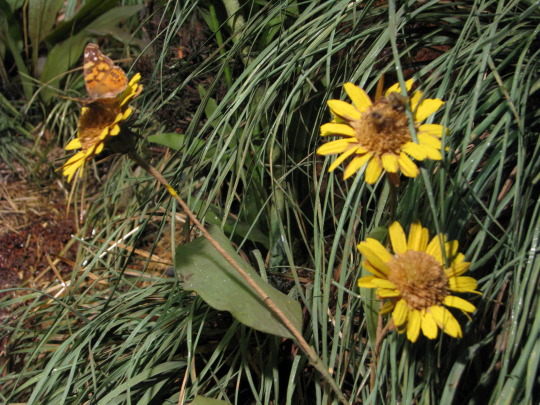
yellow flowers in grass
Details of a diorama found in Carnegie Museum of Natural History’s Botany Hall.
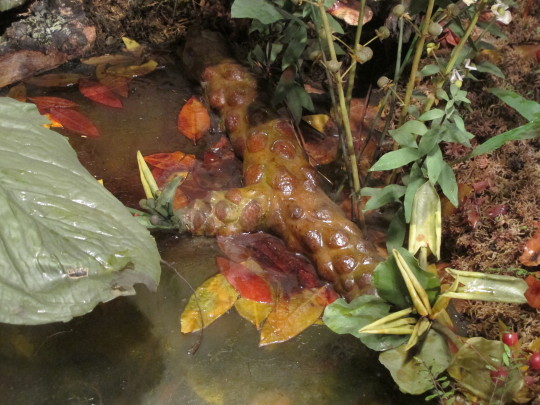
botany diorama close up
Details of a diorama found in Carnegie Museum of Natural History’s Botany Hall.

by Aisling Quigley and Colleen O’Reilly, University of Pittsburgh

What is the role of crafted objects in the exchange of scientific knowledge? How might we describe the authority of scientific displays without obscuring their culturally-specific artistic origins? How can natural history museums make the histories of objects in their collection visible to viewers? Can digital infrastructures offer new solutions?

As part of our graduate work at the University of Pittsburgh, we are creating an online exhibition that explores these issues in relation to the Carnegie Museum of Natural History’s Botany Hall, bringing it into contact with objects from other institutions, and positioning it as a focal point for interdisciplinary expert knowledge.

Botany Hall is situated in a corner of the second floor of the Carnegie Museum of Natural History, accessible through the Hall of North American Wildlife. Inside, seven window dioramas dating from the 1930s through the 1970s depict seven different biomes of the United States.

In each, a richly painted curved wall supports a highly detailed three-dimensional scene, in which every individual leaf, stem, insect wing, and bit of moss is hand-crafted and botanically accurate. This form of art and scientific display has a long history, and involves specific visual strategies that create an immersive experience for viewers. The backgrounds extend beyond the window frames, allowing the viewer the impression they are looking into another fully articulated world.

The artists paid special attention to the places where the two-dimensional meets the three-dimensional, and employed certain visual devices to make a seamless transition and enhance illusion, such as carefully placed plants or rocks, play with light and shadow, and the repetition of specimens. The exhibition team designed these dioramas based on a complex network of intersecting criteria.

They prioritized fidelity to what would be found in nature, the creation of a complete and representative picture of a particular biome, and the presentation of a harmonious aesthetic. The achieved effect speaks to a yearning for a version of nature that can be harnessed and dominated by human eyes and hands. Each
diorama was conceived as a unified whole, in which all parts work together, both aesthetically and as a natural environment.

Our exhibition will be a research project on Botany Hall itself and will also represent a new way for audiences to learn about natural history museum display. Over the coming months we will be digging in archives, examining objects, conducting workshops, and seeking out collaborations.

Ultimately, visitors to our online space will be able to get various perspectives on Botany Hall, compare the dioramas with objects in other collections, and find out about their history. We will combine our backgrounds in art history and information science to explore how formal concerns intertwine with scientific ones and to look at creative ways of contextualizing the information contained within these objects.

We will explore the interdisciplinary goals that drive the creation of educational objects for natural history museums, and the implications of the material presence of these objects in museum collections over time.

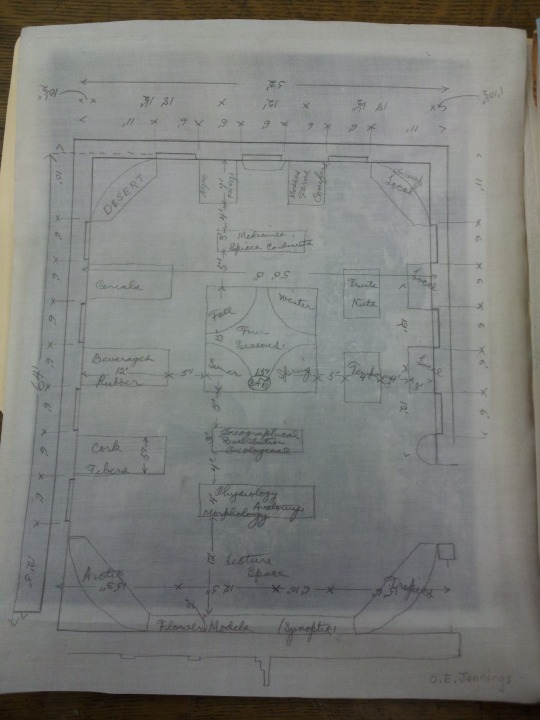
architectural drawing of Botany Hall
A diagram of Botany Hall
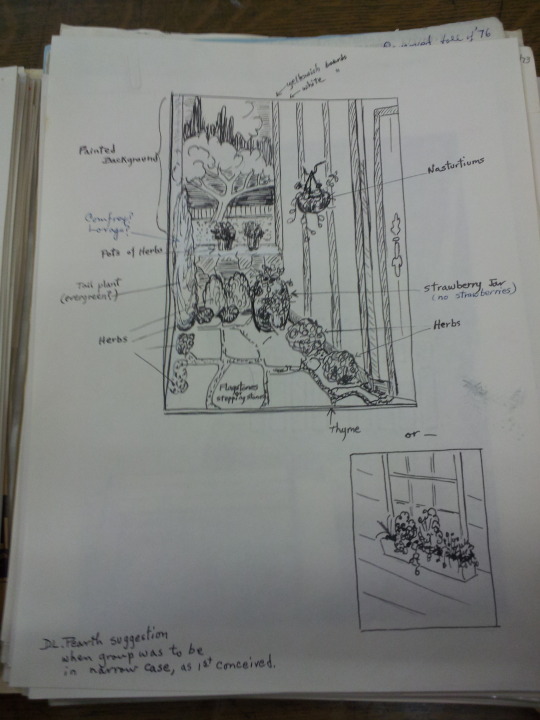
drawing of a diorama in botany hall
A Botany Hall exhibit diagram

Filed Under: Blog Tagged With: Botany, botany hall, diorama

October 3, 2016 by wpengine

5 Surprising Conservation Facts

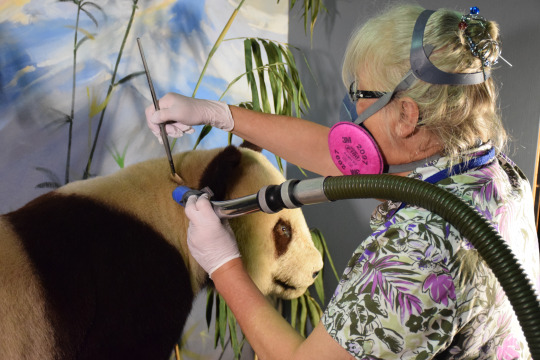
cleaning a panda diorama

by Kathleen Bodenlos

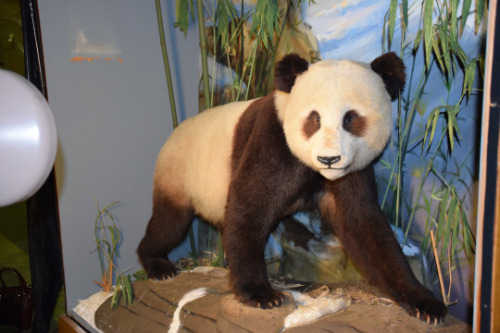
Gretchen Anderson is a conservator at Carnegie Museum of Natural History. She is restoring a panda diorama that will be prominently placed in our newly renovated gift shop. (Stay tuned for more on the gift shop in the next few weeks).

Here are 5 surprising things about conservation of a diorama.
1. Less is more: Use as few chemicals as possible

  • Soot sponges, water, and vacuums are the top
    choices in lieu of harsh chemicals. Water is one of the most powerful solvents!
  • Gretchen begins with a fan brush and a HEPA (high-efficiency particulate air filter) vacuum to remove as much dust and arsenic traces as possible.
  • She is wearing a protective face mask and gloves to protect herself from any arsenic that might be stirred up.
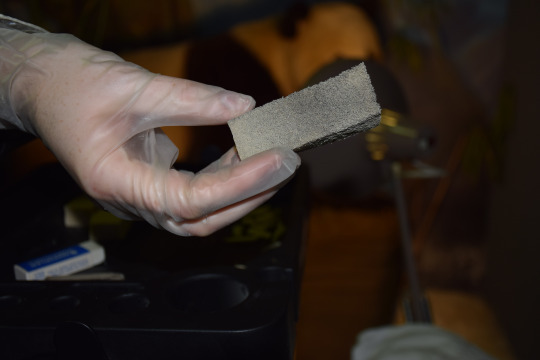
  • Soot sponges are a rubber sponge designed to absorb soot and are used dry. Another handy tool is a makeup sponge. A make-up sponge is used when just a little tiny bit of water is needed to move the dirt.
  • Particulate dust (dust, dirt and soot) is extremely damaging to museum collections. It is best to remove it.
sponge covered in dust

2. Some conservationists also do a little restoration on paint

  •  When in doubt go lighter to match a color
  • Think impressionism and mottle with several colors if possible. A good example is the natural colors on a rock.
restored panda diorama

3. Move ‘em up and head ’em out—RAWHIDE!

  • For many older dioramas, the skin of the animal is literally a raw hide. They are often treated with arsenic to keep the hide from becoming infested with insects and being eaten/damaged
  • Mercury, and other pesticides were also used to prevent insect attack on some museum collections.
  • A sealed exhibit case helps to keep the diorama safe from damage. Dust and insects are kept out. If there are any pesticides inside the case these are kept in – protecting the public.
  • Plant material
    ·  Not all of it is fake. Some of the actual plant materials are painted to make them look alive
    ·  Even a non-expert can discern what is fake and what is real upon close examination
  •  Save money—use less
    ·  When washing clothes the soap is to keep dirt from settling back on clothes
    ·  Agitation and water are the real cleaner
    ·  Use 1/3 less soap and your clothes will be clean
    and you will ensure that all the soap is removed which will help protect your
    skin

Kathleen Bodenlos is the Director of Marketing at Carnegie Museum of Natural History. Museum employees are encouraged to write about their unique experiences.

Filed Under: Blog Tagged With: behind the scenes, Collection Care and Conservation, conservation, diorama, gift shop, Gretchen Anderson, museums, Pittsburgh

September 5, 2016 by wpengine

Even on our warmest and muggiest days

crocodile on display in the coal forest diorama at Carnegie Museum of Natural History
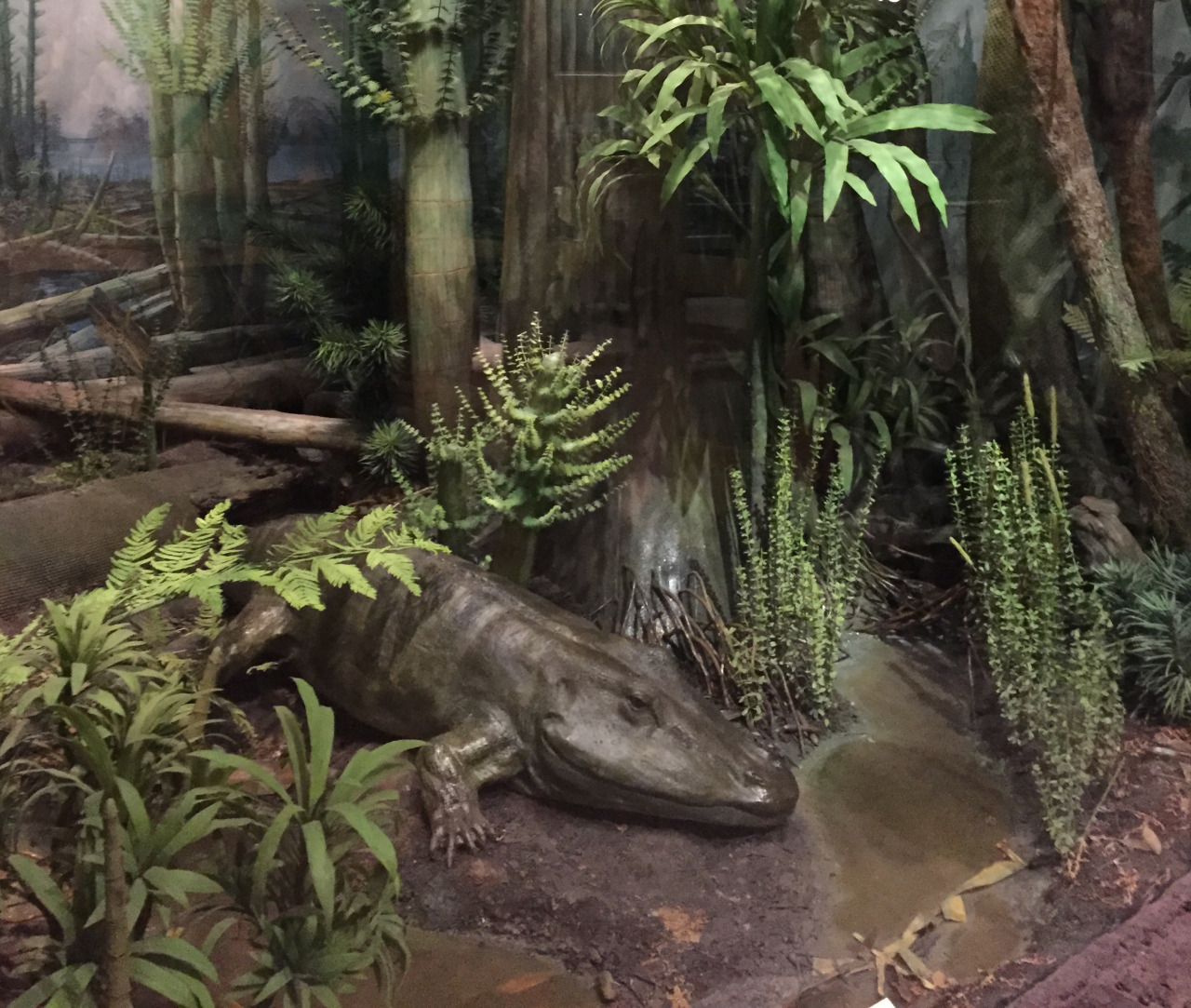
A Pennsylvania coal forest diorama on display in Carnegie Museum of Natural History.

Even on our warmest and muggiest days, it’s hard to imagine Pennsylvania ever looked like this coal forest diorama.

Giant cockroaches, dragonflies, and centipedes shared the area we now call home with huge amphibians like the Eryops, which is pictured above.

Oddly, there were no birds in those ancient forests. They wouldn’t evolve for another 100 million years!

Filed Under: Blog Tagged With: diorama, pennsylvania

  • Page 1
  • Page 2
  • Page 3
  • Go to Next Page »

sidebar

About

  • Mission & Commitments
  • Directors Team
  • Museum History

Get Involved

  • Volunteer
  • Membership
  • Carnegie Discoverers
  • Donate
  • Employment
  • Events

Bring a Group

  • Groups of 10 or More
  • Birthday Parties at the Museum
  • Field Trips

Powdermill

  • Powdermill Nature Reserve
  • Powdermill Field Trips
  • Powdermill Staff
  • Research at Powdermill

More Information

  • Image Permission Requests
  • Science Stories
  • Accessibility
  • Shopping Cart
  • Contact
  • Visitor Policies
One of the Four Carnegie Museums | © Carnegie Institute | Privacy Policy | Terms of Use | Accessibility
Rad works here logo