• Skip to primary navigation
  • Skip to main content
  • Skip to primary sidebar

Carnegie Museum of Natural History

One of the Four Carnegie Museums of Pittsburgh

  • Visit
    • Buy Tickets
    • Visitor Information
    • Exhibitions
    • Events
    • Dining at the Museum
    • Celebrate at the Museum
    • Powdermill Nature Reserve
    • Event Venue Rental
  • Learn
    • Field Trips
    • Educator Information
    • Programs at the Museum
    • Bring the Museum to You
    • Guided Programs FAQ
    • Programs Online
    • Climate and Rural Systems Partnership
  • Research
    • Scientific Sections
    • Science Stories
    • Science Videos
    • Senior Science & Research Staff
    • Museum Library
    • Science Seminars
    • Scientific Publications
    • Specimen and Artifact Identification
  • About
    • Mission & Commitments
    • Directors Team
    • Museum History
  • Tickets
  • Give
  • Shop

Educator Resources

May 19, 2021 by wpengine

Reading Results: CNC Final Phase

by Patrick McShea

Whether you participated in the recent City Nature Challenge (CNC) or not, the results of the Pittsburgh Region’s broadest annual citizen science biological survey might be of interest.

The visually rich and geographically referenced compilation is a record of 1,219 different species of free-living plants, animals, and fungi documented, via the iNaturalist phone app, by 446 observers within six southwestern Pennsylvania counties during four mid-spring days. It’s a site where anyone with an interest in local natural history can spend a lot of time exploring.

Participation in Pittsburgh’s 2021 CNC was 16% lower than during the 2020 event, a reduction resulting in a similar-sized decline in total observations, yet only a 10% drop in the total number of different organisms documented. This year’s event was held April 30 – May 3, nearly a full week later in the spring than the 2020 CNC, a modification that might have increased the likelihood for some organisms to be observed.
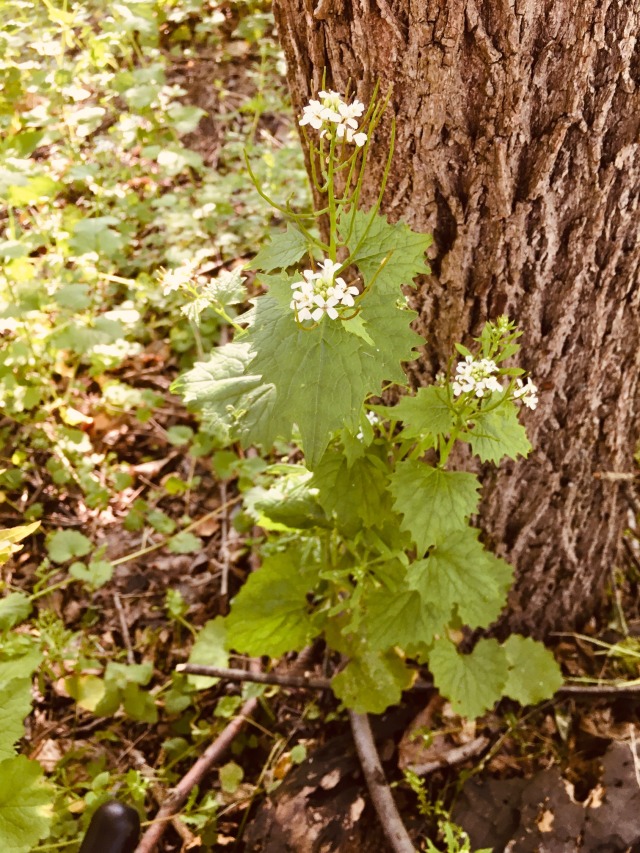
A flowering garlic mustard plant growing at the base of a black walnut tree.

Garlic mustard (Alliaria petiolata), a highly invasive plant introduced to North America in the mid-1800s for its herbal value and erosion control properties, was the most commonly documented organism, accounting for 98 of the Pittsburgh Region’s 7,045 total observations. On the results page, where visitors can further explore every documented species, there’s information to be gleaned beyond the common and scientific names of each entry. Far down the rankings, for example, all four images of organ-pipe mud-dauber nest chambers show the wasp-build tubes attached to human-built walls, and both seal salamander images appear to be illuminated by flashlight or headlamp.
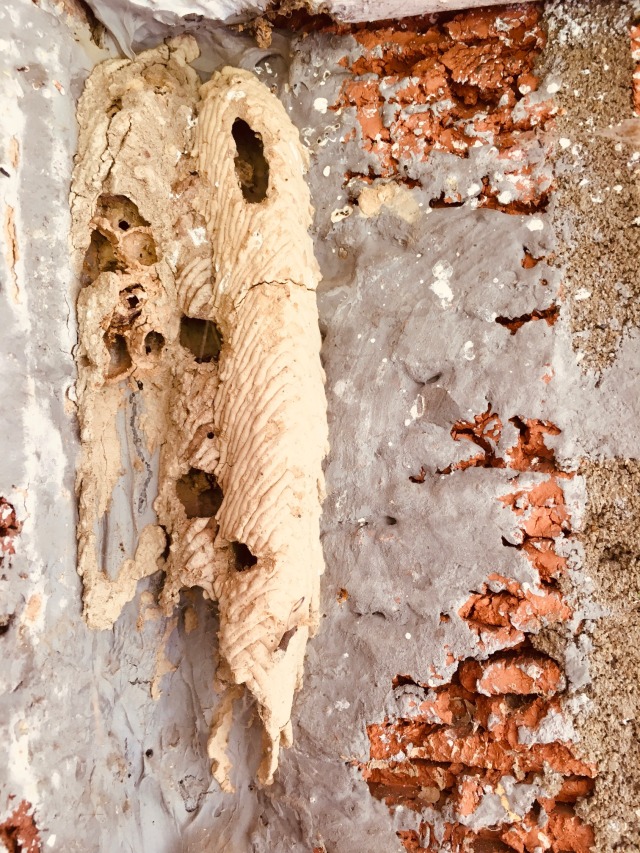
Tubular nests built by the organ pipe mud dauber, a wasp species that preys upon spiders.

As a category, plants, and frequently their blossoms, account for over half the total species documented. Birds, which included some migrants passing through the Pittsburgh region, led the vertebrate class with 111 species documented. Mammals followed with 21 documented species, and documented species for amphibians and reptiles numbered 16 and 13, respectively. 197 species of insects were documented, as were 137 species of fungi.

Participation levels are also carefully recorded in the results, with CMNH’s own Mason Heberling, Assistant Curator of Botany, leading the pack with 403 recorded observations of 208 different species. He explains his level of activity as a response to the scientifically sound parameters established by the CNC organizers. “Because it is roughly the same time each year, I have made a habit of going back to the same several sites each year, mostly ones that are convenient and nearby to me, and ironically, ones I don’t often get to as much as I wish I could.  I do that with hopes of after going back to the same handful of sites around the same time, year after year, we can look at year-to-year and longer-term differences.”

And CMNH’s own Bonnie Isaac, Collection Manager in Botany, was among 397 identifiers who contributed time and background knowledge during a critical six-day second phase of the CNC to review and identify the observations of other participants. In fact, Bonnie identified 872 observations during the challenge. Within the operations of the iNaturalist app, observations with GPS coordinates that are identified by two separate reviewers are termed “Research Grade,” meaning they can contribute to the data sets of future studies. Nearly 54% of the Pittsburgh Region’s CNC observations earned the research grade mark this year, a very slight increase over last year’s mark.

Through the CNC and other citizen science survey projects, the contributions of observers and identifiers enables the powerful image recognition software of the iNaturalist platform to increasingly transform our phones into broad spectrum field guides. As you scroll and click through this year’s CNC results it’s also worth reflecting upon what is both gained and lost through a digital interface.

In a 2015 New York Times essay titled Identification Please, naturalist Helen Macdonald pays homage to the low-tech field guide by first calling out their flaws:

Out in the field, birds and insects are often seen briefly, at a distance, in low light or half-obscured by foliage; they do not resemble the tabular arrangements of paintings in guides, where similar species are brought together on a plain background on the same page, all facing one way and bathed in bright, shadowless light so they may be easily compared.

She later explains the great value of field guides in preparing our eyes and minds for what we hope to observe:

Field guides made possible the joy of encountering a thing I already knew but had never seen before.

Patrick McShea works in the Education and Visitor Experience department of Carnegie Museum of Natural History. Museum employees are encouraged to blog about their unique experiences and knowledge gained from working at the museum.

Related Content

Cities are Not Biological Deserts

Naturally Pittsburgh: Big Rivers and Steep Wooded Slopes

Water Bears: Why My Yard is Like the Moon

Carnegie Museum of Natural History Blog Citation Information

Blog author: McShea, Patrick
Publication date: May 19, 2021
Share this post!

  • Share on Twitter Share on Twitter
  • Share on Facebook Share on Facebook
  • Share on Pinterest Share on Pinterest
  • Share on LinkedIn Share on LinkedIn
  • Share on Reddit Share on Reddit
  • Share via Email Share via Email

Share this post!

  • Share on Twitter Share on Twitter
  • Share on Facebook Share on Facebook
  • Share on Pinterest Share on Pinterest
  • Share on LinkedIn Share on LinkedIn
  • Share on Reddit Share on Reddit
  • Share via Email Share via Email

Filed Under: Blog Tagged With: City Nature Challenge, Education, Educator Resources, Pat McShea, Science News

May 10, 2021 by wpengine

Stage and Screen Sharing

by Patrick McShea

Social Skills Instructor Stacy Smith wanted to convey just how challenging last year’s abrupt shift to remote instruction during the COVID-19 pandemic was for The Children’s Institute of Pittsburgh. An initial challenge she had to solve was how to keep virtual learning engaging.

“Some of our students don’t even like watching TV,” Stacy said.

Not only did in-person collaborations with programs like Museum on the Move at CMNH have to be transformed into a remote experience, but the school day also had to function differently for students with unique needs. The 119-year-old organization serves more than 6,000 children each year at seven campuses across western Pennsylvania, helping to heal, teach, and empower individuals with special physical, social, and emotional needs.

Individualized instruction is the hallmark of Educational Services at The Children’s Institute, a characteristic readily apparent when Stacy recites a typical schedule for a student at the campus in Squirrel Hill.

“Morning groups of around six students last 15 to 30 minutes, and after that they would each have individual teaching sessions. They’d have individual speech, occupational therapy, physical therapy, and social skills or other ancillary classes. We work with some students to master abilities that aren’t even considered in other schools, like the balance required to simply walk in a hallway,” Stacy explained.

Museum on the Move programs provide a field trip-like role amidst such regular instruction, with museum educators using authentic materials to enrich presentations about dinosaurs, fossils, rocks and minerals, insects, and animal adaptations. Stacy cited Quintin Peacock, an educator who recently left the museum to pursue a master’s degree in education, as a particularly skilled in-person presenter in 2019 and early 2020, before the COVID pandemic forced the program into a remote, but still interactive delivery system.

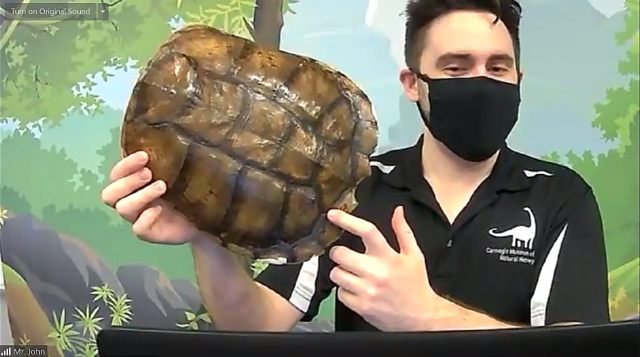
John Bitsura holds up a turtle shell during a virtual presentation.

Museum educators John Bitsura and Aaron Young received Stacy’s praise as remote delivery heroes for their dedication to The Children’s Institute’s students and willingness to innovate.

“These guys were the only outside group we had this year and we were very fortunate to have them,” she said.

While some students returned in-person this school year, for the Museum on the Move “field trips” to maintain their effectiveness in a remote format, a familiar teacher needed to be an active visual and vocal participant. Technology and screen-sharing enabled both Stacy and the CMNH team to easily participate in presenting to the students together.

“I’ve always been on with them, and it’s been really nice that they’ve been so welcoming with me being a part of their presentation,” she said.

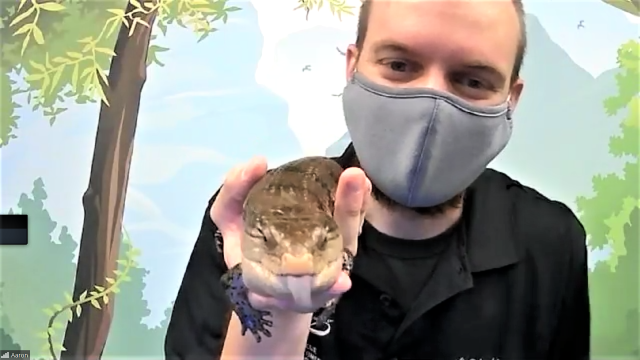
Aaron Young and Miley, a blue-tongued skink.

For the museum, the feeling is mutual. Aaron praises the radiant energy Stacy brings to the virtual programs and credits her constructive feedback with their continual improvement. John points to the solving of Zoom problems and a joint performance of a rap song about geology as key pieces of the collaboration. He also summarized this year’s efforts as creating the foundation for a wonderful partnership.

Patrick McShea works in the Education and Visitor Experience department of Carnegie Museum of Natural History. Museum employees are encouraged to blog about their unique experiences and knowledge gained from working at the museum.

Related Content

Teaching About Trees

Bring the Museum to You

Water Bears: why my yard is like the moon

Carnegie Museum of Natural History Blog Citation Information

Blog author: McShea, Patrick
Publication date: May 10, 2021

Share this post!

  • Share on Twitter Share on Twitter
  • Share on Facebook Share on Facebook
  • Share on Pinterest Share on Pinterest
  • Share on LinkedIn Share on LinkedIn
  • Share on Reddit Share on Reddit
  • Share via Email Share via Email

Share this post!

  • Share on Twitter Share on Twitter
  • Share on Facebook Share on Facebook
  • Share on Pinterest Share on Pinterest
  • Share on LinkedIn Share on LinkedIn
  • Share on Reddit Share on Reddit
  • Share via Email Share via Email

Filed Under: Blog Tagged With: Education, Educator Resources, Educators, Pat McShea

April 27, 2021 by wpengine

Naturally Pittsburgh: Big Rivers and Steep Wooded Slopes

by Patrick McShea

Pittsburghers are accustomed to seeing their hometown visually portrayed with its river-hemmed Downtown as a focal point. If your goal is to understand how the city’s geographical position in the greater landscape of southwestern Pennsylvania influences its wildlife and plant cover, images from different perspectives are useful.

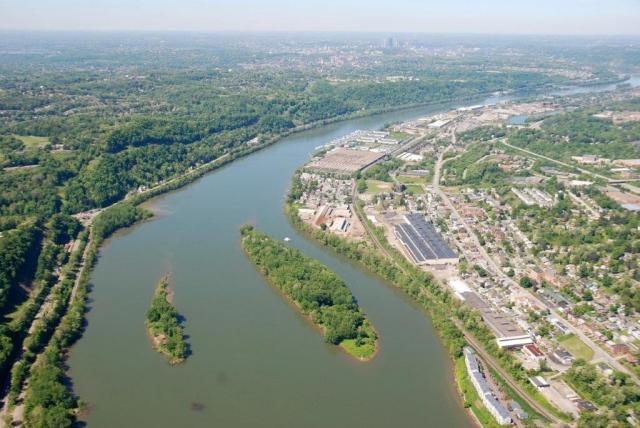
Nine Mile Island, left, and Sycamore Island, right, in the lower Allegheny River. Photo credit: Allegheny Land Trust.

The picture above offers a bird’s eye view down the Allegheny River at a point nine miles upstream from the 325-mile-long waterway’s confluence with the Monongahela River. That much-photographed merge point, which creates the Ohio River, can be spatially located in the frame’s right-of-center background by the hazy blur of Downtown’s tallest buildings. The eye movement required to locate the spot involves tracing steep left-bank wooded bluffs from suburban Penn Hills and along the Pittsburgh neighborhoods of Lincoln-Lemington, Highland Park, and Morningside.

This simple exercise has relevance to the upcoming City Nature Challenge (CNC) for the visual attention it brings to the paired Pittsburgh physical features that keep nature in continual view here – our river system and the steep wooded hillsides carved by these big winding waterways and their tributaries.

Corridors Support Biodiversity

Both features create habitat corridors that serve to enrich the city’s biodiversity. The pair of Bald Eagles with a long record of nesting success on a wooded Monongahela River hillside in Pittsburgh’s Hays neighborhood are the most prominent evidence of this phenomena. Some of the fish they feed their young at this time of year can be regarded as additional evidence.

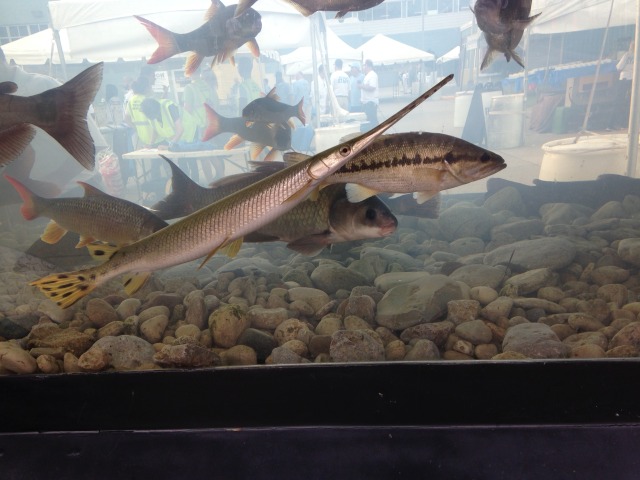
Pittsburgh fish displayed in tank set-up by the Ohio River Valley Water Sanitation Commission.

Many of the organisms supported by Pittsburgh’s wooded and flowing water corridors do not, however, lend themselves to the photo-documentation of the CNC. Some notable tree specimens and spring wildflower stands are found on high inaccessible ledges, river visits by diverse forms of waterfowl occur more frequently in the winter rather than the spring, and the predictability of the dozens fish species found in Pittsburgh’s waters challenges even the anglers who pursue them.

Importance of Incomplete Survey

The solution to this dilemma, as you record CNC observations and interpret the collective results, is simply to regard this important citizen science initiative as necessarily incomplete. In a recent BioScience paper co-authored by Nicole Heller, Curator of Anthropocene Studies at CMNH, analysis of urban biodiversity studies from all over the world pointed to the importance of enhancing public engagement and environmental stewardship. That is something that can certainly happen this year between April 30 and May 3, in a City Nature Challenge that recognizes some unavoidable bio-survey gaps.

Patrick McShea works in the Education and Visitor Experience department of Carnegie Museum of Natural History. Museum employees are encouraged to blog about their unique experiences and knowledge gained from working at the museum.

Citations for research paper:

“The Biological Deserts Fallacy: Cities in Their Landscapes Contribute More than We Think to Regional Biodiversity,” BioScience, Volume 71, Issue 2, February 2021, Pages 148–160,

Erica N Spotswood, Erin E Beller, Robin Grossinger, J Letitia Grenier, Nicole E Heller, Myla F J Aronson, The Biological Deserts Fallacy: Cities in Their Landscapes Contribute More than We Think to Regional Biodiversity, BioScience, Volume 71, Issue 2, February 2021, Pages 148–160, https://doi.org/10.1093/biosci/biaa155

Related Content

Go For a Color Walk

Teaching About Local Wildlife with the City Nature Challenge

Evidence Counts for Absent Creatures – City Nature Challenge

Carnegie Museum of Natural History Blog Citation Information

Blog author: McShea, Patrick
Publication date: April 27, 2021

Share this post!

  • Share on Twitter Share on Twitter
  • Share on Facebook Share on Facebook
  • Share on Pinterest Share on Pinterest
  • Share on LinkedIn Share on LinkedIn
  • Share on Reddit Share on Reddit
  • Share via Email Share via Email

Share this post!

  • Share on Twitter Share on Twitter
  • Share on Facebook Share on Facebook
  • Share on Pinterest Share on Pinterest
  • Share on LinkedIn Share on LinkedIn
  • Share on Reddit Share on Reddit
  • Share via Email Share via Email

Filed Under: Blog Tagged With: biodiversity, City Nature Challenge, Educator Resources, Pat McShea, Pittsburgh

April 26, 2021 by wpengine

Go For a Color Walk

by Jenise Brown

City Nature Challenge (April 29-May 2, 2022) is coming soon! Going for a “color walk” is one fun and easy way to participate no matter where you live.

What is a color walk you might ask? Each time you go for a walk, pick a single color—maybe green, white, red, pink, yellow. As you are out, keep your color in mind and look for it in the wild, noting plants, animals, and fungi that you see. When you find one (or evidence of one that you can’t see!), take a picture, and upload it to iNaturalist.

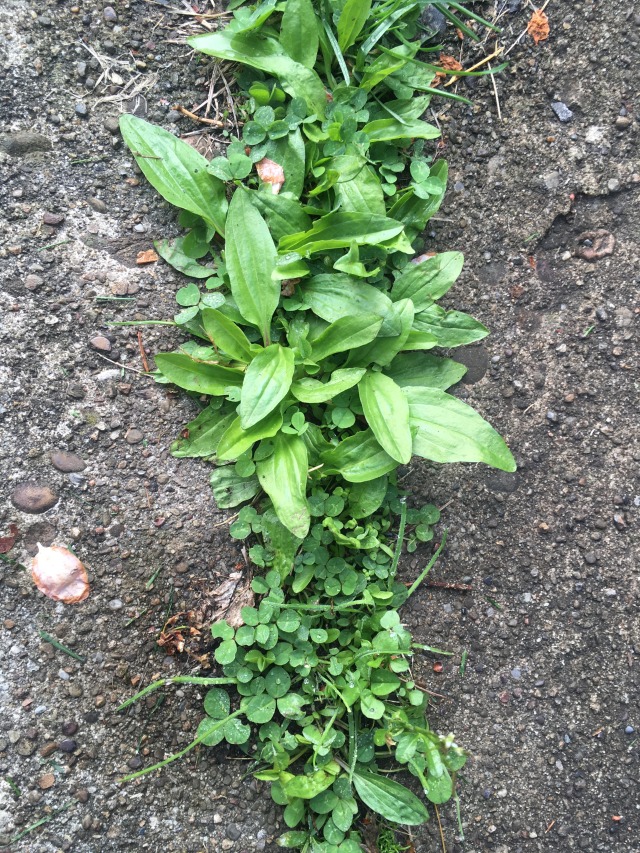
You’ll start to notice patterns among things you see in the color you’ve chosen, and you can make some hypotheses about the observations for each color, like what species you are likely to see in certain areas. Lots of plants are green, so a green color walk might help us to notice all of the plants that are around us, even in places like cracks in the sidewalk. Because the City Nature Challenge occurs during a season when Pittsburgh still experiences cold weather, this is probably the easiest color to find. In fact plants were the most common observations in Pittsburgh during the City Nature Challenge in 2020, with 9 of the top 10 observations being plants.

various green plants growing from a sidewalk crack
Look at the variety of green plants in this sidewalk crack!
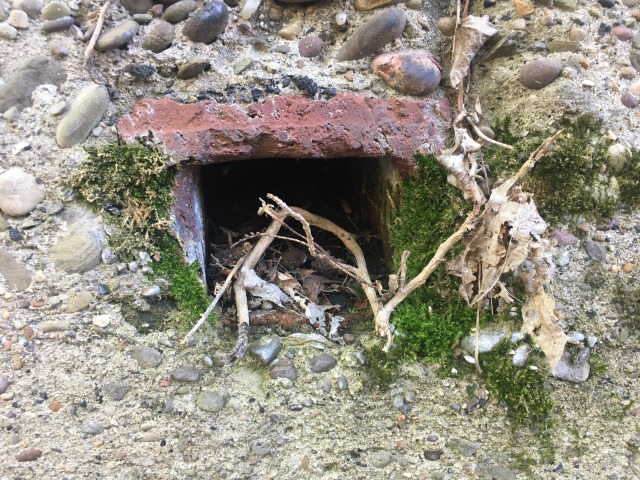
green plants growing on rock
Don’t forget to look for small patches of green in unexpected places.

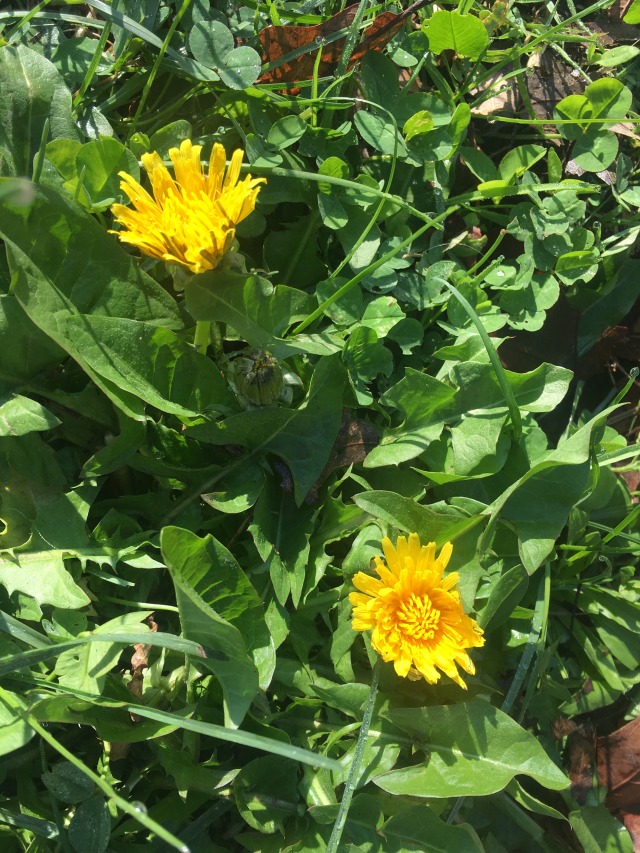
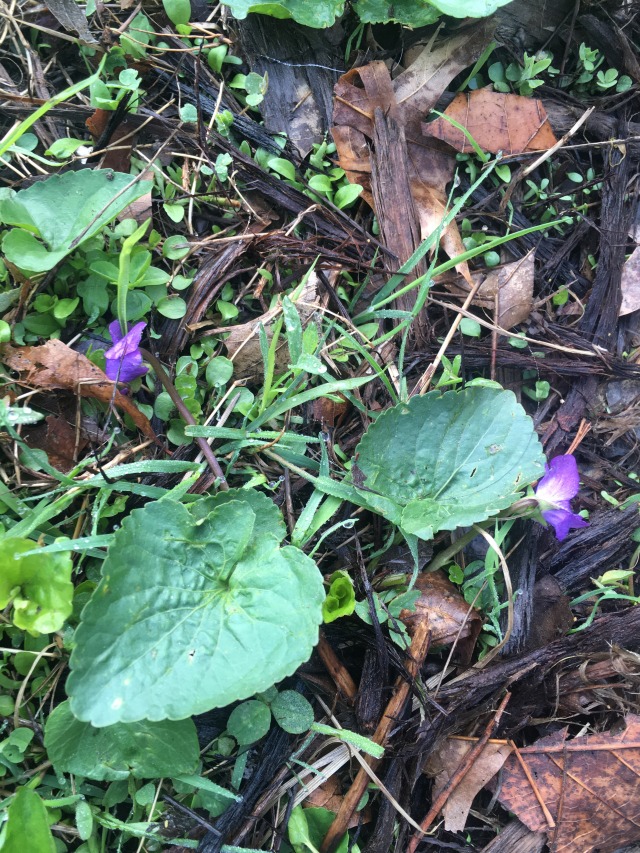
Yellow and purple are common colors in early spring flowers and might potentially switch your focus to exclusively flowering plants or even insects. City Nature Challenge tallies both the number of observations made and the species observed. Choosing one of these colors may help you to notice new and different species that you previously overlooked.

two yellow dandelions
This dandelion flower is one of the earliest yellows of the season.
two violets among leaves and sticks
Don’t miss violets! They have both both broad green leaves and small purple flowers.

Don’t forget about the less flashy, but still abundant fungi. Orange, white, or even brown might help you to notice them growing on trees, dead wood, soil, and rocks. An added element to help find more fungi is to look for and pick up fallen branches and inspect stumps. You can read more about urban fungi observations in this NY Times article.

mushrooms and lichen growing on a log

There’s no need to leave the city or even go to a park to have a great color walk! You can plan a route near where you live and repeat it multiple times, picking a different color each time. You might be surprised by all of the things you never noticed before right in your own neighborhood!

Jenise Brown is a Museum Educator with Carnegie Museum of Natural History. Museum staff, volunteers, and interns are encouraged to blog about their unique experiences and knowledge gained from working at the museum.

Related Content

Reading Results: CNC Final Phase 2021

Field Guides: An Introduction

Water Bears: Why My Yard Is Like the Moon

Carnegie Museum of Natural History Blog Citation Information

Blog author: Brown, Jenise
Publication date: April 26, 2021

Share this post!

  • Share on Twitter Share on Twitter
  • Share on Facebook Share on Facebook
  • Share on Pinterest Share on Pinterest
  • Share on LinkedIn Share on LinkedIn
  • Share on Reddit Share on Reddit
  • Share via Email Share via Email

Filed Under: Blog Tagged With: City Nature Challenge, Education, Educator Resources, Jenise Brown

April 7, 2021 by wpengine

Teaching About Local Wildlife with the City Nature Challenge

by Patrick McShea

Join the Challenge April 25-28, 2025

The sixth-grade student took the time to study a taxidermy mount from multiple angles before she approached with a question. “Is that Raticate?” she asked, pointing back at the lifelike preserved muskrat that had drawn her across the school cafeteria to the table promoting museum resources.

Raticate, she explained to my quizzical look, is a Pokémon creature. When she held up her phone, I conceded a striking resemblance between the cartoon-like beast filling the small screen and the sleek-furred stuffed rodent a few feet away. I then explained how the preserved muskrat represents a very real and relatively common mammal, one that in some seasons might be observable in the cattail-edged margins of Schenley Park’s Panther Hollow Lake, a location within a mile of where we stood.

The event, 14 months ago, was an evening meeting of a parent’s council at Pittsburgh Science and Technology Academy. Although I spoke with dozens of parents during my two-hour visit, the information exchange with the student remains a clear memory because it reinforced a research paper I read days earlier.

A study published in 2002 found primary school students in the United Kingdom knew far more about Pokémon creatures than they knew about local wildlife. (Why conservationists should heed Pokémon. Balmford A, Clegg L, Coulson T, Taylor, Science 29 Mar 2002) If the study’s findings remain valid nearly twenty years later, museum strategies to counter them have become more innovative, collaborative, and purposeful. The primary example of these ongoing efforts is an upcoming event known as the City Nature Challenge.

What is the City Nature Challenge?

The City Nature Challenge (CNC), coming up April 25–28, 2025, is an international effort for people to document plants and wildlife in metropolitan areas across the globe. (The Pittsburgh Region’s six county territory for the CNC includes Allegheny, Armstrong, Beaver, Butler, Westmoreland, and Washington Counties.) The event is a bioblitz-style competition with cities competing on several measurable fronts, including the number of participants, the sum total of recorded observations, and the total number of identified species. The technology enabling broad participation and accurate data compilation in this vast observational effort is the free app, iNaturalist, utilized through the same common device by which I first glimpsed Raticate, a smartphone.

iNaturalist and City Nature Challenge History

iNaturalist, originally developed as the Master’s Final Project of Nathan Agrin, Jessica Kline, and Ken-ichi Ueda at University of California at Berkeley’s School of information, is now a joint initiative of the California Academy of Sciences and the National Geographic Society. As the initiative’s website explains, “iNaturalist is an online social network of people sharing biodiversity information to help each other learn about nature.”

The City Nature Challenge also has California roots, beginning in 2016 as a Los Angeles versus San Francisco contest by citizen science staff at the Natural History Museum of Los Angeles County and California Academy of Sciences. These two institutions continue to as the principal organizers for the global effort, and in 2021, more than 400 cities across the globe are expected to participate in the competition.

2021 marked the fourth consecutive year for Carnegie Museum of Natural History to serve as one of CNC’s city organizer agencies. Partner organizers for 2021 were the Pittsburgh Parks Conservancy and the Pennsylvania Alliance of Environmental Educators. An online workshop for teachers and other educators to promote student participation in early March helped groups get an early start and a regularly updated web page contains current information about the event.

How to Participate in City Nature Challenge

If spending some time later this spring documenting the plants, animals, and fungi sounds interesting, please visit our City Nature Challenge page to learn how you can participate with the museum in the Pittsburgh region. We offer resources for educators, groups, and individuals interested in the annual bioblitz.

After the April 25–28 documentation phase, comes a vital second phase to the CNC that you might be able to support: identification of the photographed species. The identifications will be crowd-sourced through the online community April 29–May 1 still using the iNaturalist app. 

Patrick McShea works in the Education and Visitor Experience department of Carnegie Museum of Natural History. Museum employees are encouraged to blog about their unique experiences and knowledge gained from working at the museum.

Related Content

Spring Birds in Your Backyard

Collected on This Day in 1998: Common Chickweed

Joining the iNaturalist Team!

Carnegie Museum of Natural History Blog Citation Information

Blog author: McShea, Patrick
Publication date: April 7, 2021

Share this post!

  • Share on Twitter Share on Twitter
  • Share on Facebook Share on Facebook
  • Share on Pinterest Share on Pinterest
  • Share on LinkedIn Share on LinkedIn
  • Share on Reddit Share on Reddit
  • Share via Email Share via Email

Filed Under: Blog Tagged With: City Nature Challenge, Education, Educator Resources, Pat McShea, Patrick McShea

April 6, 2021 by wpengine

Ocean Lessons

by Patrick McShea

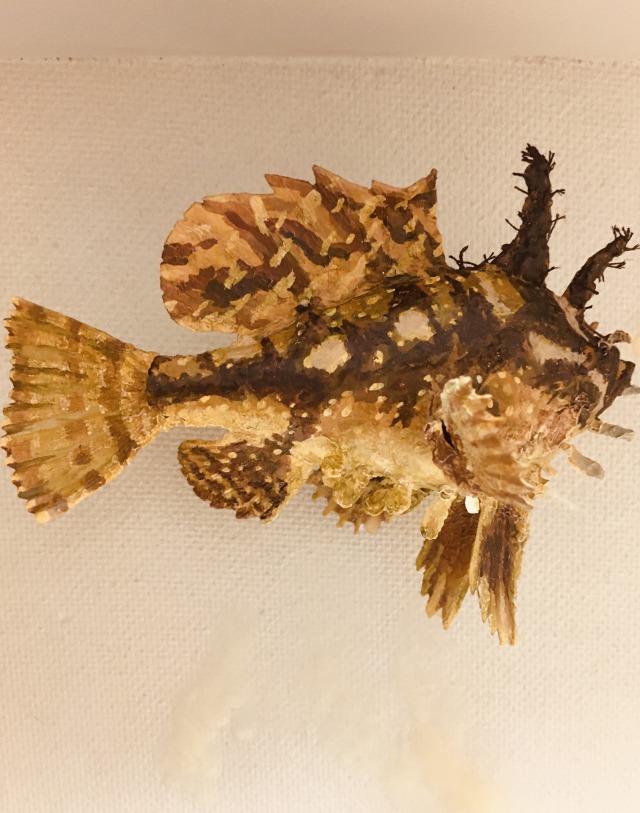
A sargassum fish taxidermy mount.

During the late winter, students and faculty at Carnegie Mellon University’s Children’s School learned about the ocean all day, every day. A five-week study of a broad topic is an annual tradition at the school, which serves pre-school and kindergarten-aged children, and operates within the university’s Psychology Department to support developmental research and the training of educators.

Coordination of the ocean lesson plan was the responsibility of Donna Perovich, a kindergarten teacher at the Children’s School for the past 24 years who has worked as an overall support educator since the advent of the COVID-19 pandemic. I learned of her efforts during the project’s planning stages when she asked to borrow ocean-related materials from the museum’s Educator Loan Collection.

Materials for Ocean Lessons from the Educator Loan Collection

The museum’s longest running outreach program is operating with a significant borrowing limitations during the pandemic: materials that cannot be cleaned, or would be damaged by repeated cleaning, are not currently available for loan. In Donna’s case the restriction meant she was able to borrow encased taxidermy mounts of several saltwater fish, plastic scale models of six different whale species, and a sea turtle shell, but not touchable examples of sea stars, sponges, sea fans, and delicate corals.

“I have a lot of seashells.” Donna explains, “Over the years I’ve been blessed with boxes of them. So, we had plenty of material for the students to touch and closely examine.” Among the museum materials she found particularly useful were the whale models. “We did a big whale measuring activity, measuring and pacing-off the lengths of different whales in the halls. Everyone developed a good sense of the size difference between species like a great blue whale and a pilot whale.”

Classroom Aquariums

Setting up and maintaining aquariums in the school’s four classrooms was among Donna’s early Ocean project tasks. The tanks featured freshwater species, two classrooms had single Betta fish, and the other two classrooms had larger tanks with mollies, tetras, and barbs. Observations of the live fish were vitally important for learning more about the movements and behavior of ocean fish. In the case of several three-year-olds, such observations also influenced their initial expectations of fish taxidermy mounts from the museum. “The aquariums had been in the classrooms for awhile before the museum materials appeared,” explains Donna, “and some of the youngest students thought the loan boxes with the fish were another aquarium.”

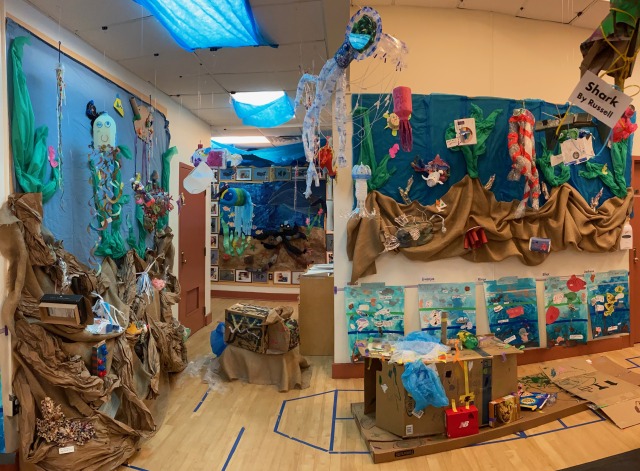
The Ocean Mural at CMU Children’s School.

Lest you think the confusion diminishes Donna’s respect for the thinking power of the children she works with, she brings up the enormous three-dimensional mural the students created to convey much of what they learned. “We had wonderful conversations where the children would be talking about things like deep ocean trenches and how reduced sunlight impacted the creatures living there. In some ways I think their brains are better able to absorb new information than our cluttered brains.”

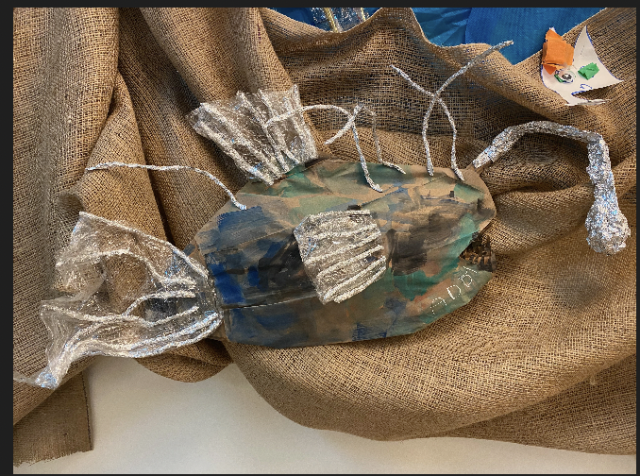
Anglerfish by Children’s School student.

Whole school study units at the Children’s School conclude with a family festival. Although the school has operated in-person with reduced capacity this year, the Ocean Family Festival was a Zoom event. The camera feeds of several event sessions focused on child-created details in the amazing mural.

Patrick McShea works in the Education and Visitor Experience department of Carnegie Museum of Natural History. Museum employees are encouraged to blog about their unique experiences and knowledge gained from working at the museum.

Related Content

Teaching in a Pandemic

Teaching about Trees

Center Court Culture Sharing

Carnegie Museum of Natural History Blog Citation Information

Blog author: McShea, Patrick
Publication date: April 6, 2021

Share this post!

  • Share on Twitter Share on Twitter
  • Share on Facebook Share on Facebook
  • Share on Pinterest Share on Pinterest
  • Share on LinkedIn Share on LinkedIn
  • Share on Reddit Share on Reddit
  • Share via Email Share via Email

Share this post!

  • Share on Twitter Share on Twitter
  • Share on Facebook Share on Facebook
  • Share on Pinterest Share on Pinterest
  • Share on LinkedIn Share on LinkedIn
  • Share on Reddit Share on Reddit
  • Share via Email Share via Email

Filed Under: Blog Tagged With: Education, Educator Loan Program, Educator Resources, Educators, ocean, Pat McShea, Patrick McShea

  • « Go to Previous Page
  • Page 1
  • Page 2
  • Page 3
  • Page 4
  • Page 5
  • Go to Next Page »

sidebar

About

  • Mission & Commitments
  • Directors Team
  • Museum History

Get Involved

  • Volunteer
  • Membership
  • Carnegie Discoverers
  • Donate
  • Employment
  • Events

Bring a Group

  • Groups of 10 or More
  • Birthday Parties at the Museum
  • Field Trips

Powdermill

  • Powdermill Nature Reserve
  • Powdermill Field Trips
  • Powdermill Staff
  • Research at Powdermill

More Information

  • Image Permission Requests
  • Science Stories
  • Accessibility
  • Shopping Cart
  • Contact
  • Visitor Policies
One of the Four Carnegie Museums | © Carnegie Institute | Privacy Policy | Terms of Use | Accessibility
Rad works here logo