• Skip to primary navigation
  • Skip to main content
  • Skip to primary sidebar

Carnegie Museum of Natural History

One of the Four Carnegie Museums of Pittsburgh

  • Visit
    • Buy Tickets
    • Visitor Information
    • Exhibitions
    • Events
    • Dining at the Museum
    • Celebrate at the Museum
    • Powdermill Nature Reserve
    • Event Venue Rental
  • Learn
    • Field Trips
    • Educator Information
    • Programs at the Museum
    • Bring the Museum to You
    • Guided Programs FAQ
    • Programs Online
    • Climate and Rural Systems Partnership
  • Research
    • Scientific Sections
    • Science Stories
    • Science Videos
    • Senior Science & Research Staff
    • Museum Library
    • Science Seminars
    • Scientific Publications
    • Specimen and Artifact Identification
  • About
    • Mission & Commitments
    • Directors Team
    • Museum History
  • Tickets
  • Give
  • Shop

Educators

October 13, 2020 by wpengine

Booseum: Vampires!

Vampires, creatures of folklore that feed on the lifeforce of the living, have long fascinated us. Many cultures have their own version of how vampires behave and are repelled by many different things. Modern vampires in movies, TV shows, and books have some similar main characteristics—let’s explore some interesting or common beliefs about vampires and where they may have come from.

Garlic

It’s a common belief that garlic repels vampires, but did you know that some of that belief is grounded in fact? Garlic, specifically the chemical compound allicin inside garlic, is a powerful antibiotic. Some European beliefs around vampires stated they were created by a disease of the blood, so a powerful antibiotic would “kill” a vampire.

An actual disorder of the blood, porphyria, may also be an origin for this belief: porphyria can cause those who suffer from it to look pale and even make their teeth look bigger because their gums shrink. Garlic makes these symptoms worse, so people with porphyria would often avoid it—making others around them believe they were vampires.

Mirrors

Vampires avoiding mirrors is a more recent belief— the first known reference to this is from Bram Stoker’s Dracula, which was published in 1897. But why wouldn’t a vampire show a reflection?

There are a few reasons that this belief may exist. Mirrors were traditionally backed with silver (and some still are today). Silver was commonly believed to repel evil spirits, possibly because it has antimicrobial properties; so, much like garlic, the healing properties may be what was supposed to scare off a vampire.

Another reason that suspected vampires may have avoided mirrors is because of the changes to their appearance from diseases commonly confused with vampirism, porphyria and rabies. People afflicted with these diseases may have avoided looking in a mirror for that reason, causing others to assume that “vampires” avoid mirrors.

Counting

Why does Count von Count, a vampire, teach us how to count on Sesame Street? It comes from a European belief that vampires are compelled to count spilled seeds or grains. Some Slavic coastal towns also believed that vampires would count the holes in a fishing net. It was common practice to scatter seeds outside the entrances to a home (or drape fishing nets over them). Some Chinese myths say that a vampire must count every grain if they come across a bag of rice. A vampire would stop to count, delaying them until sun-up, and we all know that vampires don’t do well in sunlight.

A common seed used was mustard seed, which was also known as eye of newt!
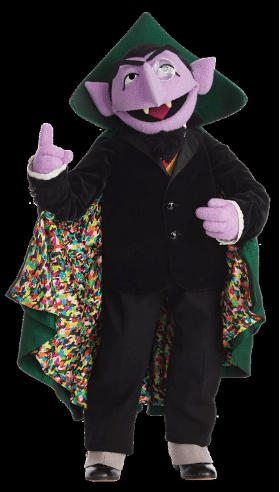
Count von Count from Sesame Street

Now that we’ve learned a little about fictional vampires, let’s explore some real-world vampires!

Vampire Ground Finch

The Galapagos Islands are home to many unique and unusual species, so the vampire ground finch fits in well. This species of sharp-beaked finch lives on Darwin and Wolf Islands, and like most other finches it feeds primarily on seeds. However, seeds can sometimes be a limited resource, so vampire ground finches supplement their diet by eating small amounts of nutrient-rich blood from Nazca or blue-footed boobies.

It is believed that this behavior developed because the finches were first eating ticks from the bodies of other birds, which steadily transitioned into them eating small amounts of blood. Believe it or not, the other birds don’t seem to mind the vampire ground finches doing this, and don’t try to stop them!
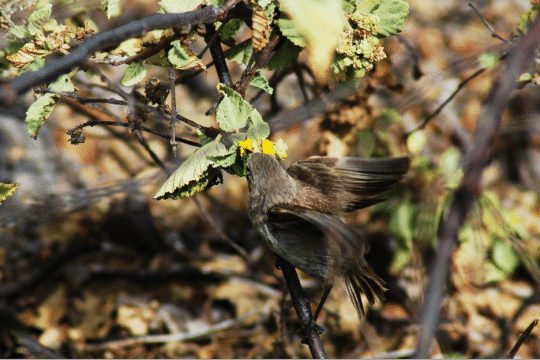
vampire ground finch on a branch

Vampire Bats

There are three species of bats that survive by exclusively feeding on the blood of other animals- the common vampire bat, the hairy-legged vampire bat, and the white-winged vampire bat. All three species are found in Central and South America.

Like other bats, they hunt at night and rely on echolocation to find their prey, which is typically sleeping livestock, like cows. Vampire bats use their sharp teeth to make a little cut and then lap up the blood. It doesn’t hurt the animal they’re feeding from, in fact most animals don’t even notice it happening and stay asleep! These bats occasionally try to feed off humans, but it is very rare.
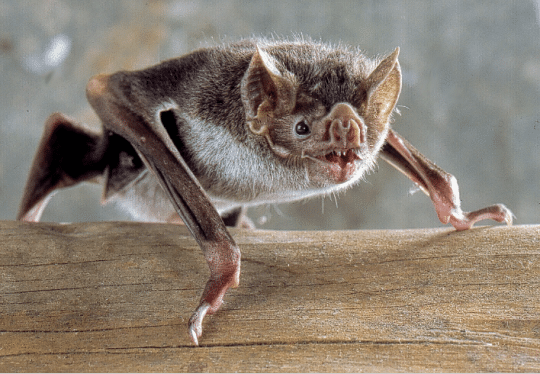
vampire bat

Mosquitos & Ticks

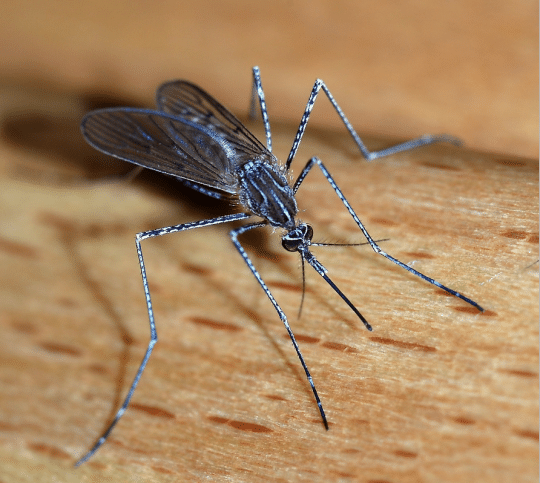
We’ve all felt the aftermath of an itchy mosquito bite! Mosquitos feed on blood from humans and other animals, but it’s only female mosquitos that eat blood. Female mosquitos need the protein from blood to produce eggs, and male mosquitos don’t so they feed on plant nectar.

Ticks drink the blood of both warm and cold-blooded animals, latching on and feeding slowly over several days. They can fast for a long time between meals, but do need to feed on blood as they progress through the stages of their life cycle.

Neither mosquitos nor ticks (or any other blood eating insects) eat enough blood to be dangerous to humans. The biggest danger is that these insects can carry diseases, so make sure to properly care for and clean any insect bites, and see a doctor if necessary!
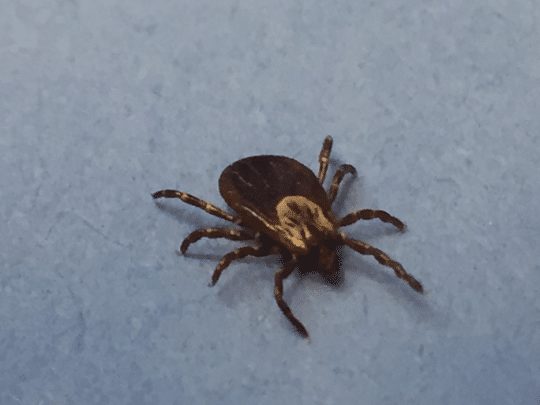
close up of a tick
close up of a mosquito

Jo Tauber is the Gallery Experience Coordinator for CMNH’s Life Long Learning Department, as well as the official Registrar for the Living Collection. Museum staff, volunteers, and interns are encouraged to blog about their unique experiences and knowledge gained from working at the museum.

Related Content

Booseum: Spooky Coloring Pages
Jurassic Days: Cookie Excavation

Scientist Takeover Activity: DIY Field Kit

Filed Under: Blog Tagged With: booseum, Educator Resources, Educators, halloween, Jo Tauber, Super Science Days

October 13, 2020 by wpengine

Invasion of the Leaf Galls!

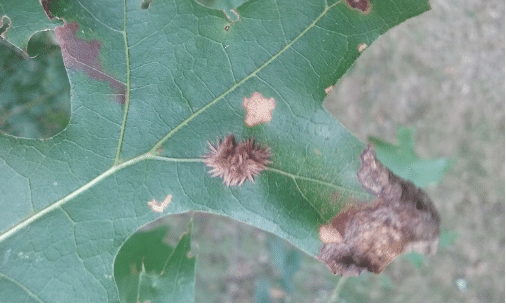
Happy Gall-oween! Mwah-hahaha! Prepare yourselves for the silent invasion of the leaf galls! Over the summer and into the early fall, you may have seen something very strange happening to the oak trees of Southwestern Pennsylvania. Small, furry growths, brown or orange in color, have been appearing on oak leaves. If you haven’t seen them, imagine a Tribble from Star Trek, but in miniature size growing directly on the leaves of a shady oak.

These are leaf galls—but they aren’t an alien lifeform nor a devastating tree blight. They are the product of a fascinating chemical reaction.

Early in the spring, just as the oak trees are beginning to bud, gall wasps (from the family Cynipidae) lay their eggs on the brand-new leaves. These creatures—smaller than a fruit fly and lacking the ability to sting—might also lay their eggs on the twigs of the trees or on the stems of goldenrod. Once the wasp eggs hatch, the larvae begin to eat the leaf on which they were deposited. This is when things get interesting: when the chemicals in the larvae’s saliva mingle with the plant hormones in the leaf, the gall begins to form. Depending on the drop site and the species of gall wasp (there are over 700 species in the United States alone that target oaks), the appearance of the gall will be different. For instance, when the eggs hatch on a branch or twig and begin their feast, the gall will have a dense, spherical appearance. This is the specific kind of gall that gives the phenomenon its name: “galla” means “oak-apple” in Latin.  Some leaf galls might take on the shape of tiny brown flying saucers as they did in Jefferson and Forest Counties in recent years. Some other galls have the appearance of spindly red fingers or peppers protruding from the leaf. The variety of tree and leaf galls are, in a word, kaleidoscopic.

While there is great variation in the physical appearance and structure of leaf galls, they each serve a shared purpose. The chemicals that the larvae secrete as they “chew” stimulate the leaf into creating a gall for shelter and sustenance. The gall is a protective, nutrient-providing dome over the developing larvae. While the galls sometimes interrupt the process of photosynthesis and cause some leaf browning and curling, they won’t kill the tree itself. The gall wasp is a mostly benign parasite. By mid-October, the wasp-bearing galls will fall from, or with, their leaves. The next spring, the surviving wasps will emerge from the soil.

leaf galls on green leaf

Some years, this new generation will breed sexually. Other years, it will be entirely female and reproduce asexually. That is, through parthenogenesis, the same process that the dinosaurs in the original Jurassic Park reproduce. Remember Dr. Malcolm’s famous “life finds a way” monologue? Galls are misunderstood by the general public because they perceive the phenomenon as a nuisance and eyesore. Scientists warn against treating infested trees with pesticide or scraping off the galls. Such actions would do more harm than good to the trees. Instead of being an unnerving menace, the gall wasp is an awe-inspiring example of how one animal uses its surrounding ecosystem—without excessive harm—to ensure that its kind will perpetuate itself safely and successfully.  Furthermore, the weirdly wonderful shapes and designs of the leaf gall demonstrate that nature isn’t just useful but also beautiful.  It’s that beauty that makes this seemingly bizarre invader more than a seasonal annoyance.

Nicholas Sauer is a Natural History Interpreter and Gallery Experiences Presenter at the Carnegie Museum of Natural History. Museum employees are encouraged to blog about their unique experiences and knowledge gained from working at the museum.

Related Content

Booseum: Spooky Coloring Pages

Booseum: Make Snail Slime

Scientist Takeover: Invertebrate Zoology Specimens

Filed Under: Blog Tagged With: booseum, Educator Resources, Educators, Nicholas Sauer, Super Science Days

October 5, 2020 by wpengine

Changing Seats in Changing Times

desk with cloth mask and hand sanitizer

If only classroom seating changes were the biggest disruption facing teachers and students this fall. During a recent interview Ellen Sanin, Post-Secondary Coordinator for St. Anthony School Programs, mentioned the switch from group tables to tray tables as an example of a physical COVID-19 adjustment. Within the pair of classrooms at Duquesne University’s Fisher Hall that serve as her home base, the flexibility of individual seating allows for social distancing. Like every other teacher, the far bigger adjustment she’s currently dealing with involves the drastic reduction in enrichment opportunities for her students.

At eight locations in the Pittsburgh area, St. Anthony School Programs offer inclusive education for students age 5 -21 with primary diagnosis of Autism Spectrum Disorder, Down Syndrome, and Intellectual Disabilities. At the Duquesne University site where she has worked for the past five years, Ellen is responsible for teaching gym, technology skills, and job preparedness to 29 students between the ages of 18 and 21.

Although the disruptions she and her students faced in the wake of the mid-March lock down are hard to imagine, Ellen’s summary of the turbulent time is understated. “Like everyone else, we went to remote learning, but with a population with particular challenges to using the technology – some who can’t read, and some who are nonverbal.” This fall, in-person teaching has resumed, with instruction for three of her students restricted to on-line.

In former years, post-secondary students and instructors in the St. Anthony Program routinely visited as many as 20 different Pittsburgh sites as part of job preparedness training. Current COVID-19 restrictions, Ellen explained, have reduced these field trip destinations to a handful of locations on the Duquesne University campus, the Allegheny County Court House, and a life skills and home skills training apartment in Squirrel Hill. “We made regular visits to Carnegie Library locations, but libraries, like lots of other places are operating under new guidelines.”

Because Ellen in also a veteran museum educator, with deep experience teaching summer camp programs, the interview closed with a question about her insight into parallels between the students she works with on a daily basis and those she has taught during summer. “The main difference is age, of course, but the similarities in interests are remarkable. One of my current students is fascinated with dinosaurs. He would have loved being in a dinosaur class.”

Patrick McShea works in the Education and Visitor Experience department of Carnegie Museum of Natural History. Museum employees are encouraged to blog about their unique experiences and knowledge gained from working at the museum.

Related Content

Harriet Tubman Was a Naturalist

When Perspective Meets Research

Frontier History Wizards

Filed Under: Blog Tagged With: Educator Resources, Educators, Pat McShea, Patrick McShea

September 18, 2020 by wpengine

Western Bird, Eastern Waters

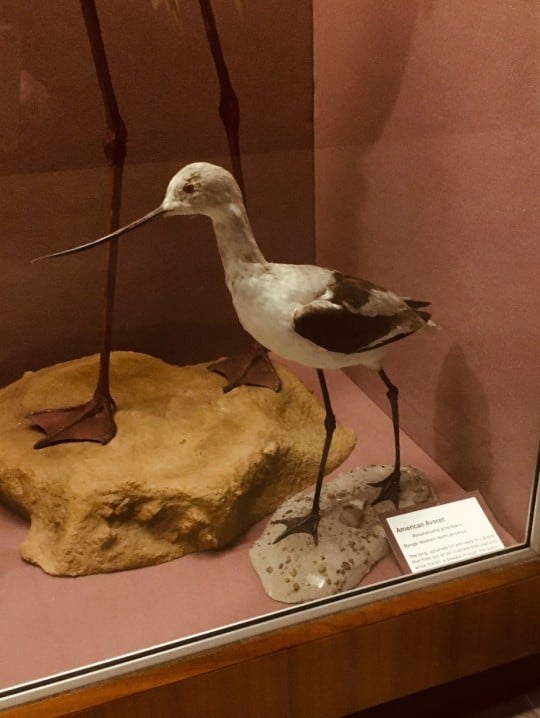
avocet taxidermy mount

If you enter Bird Hall from the Grand Staircase Balcony, the first taxidermy mount you’ll encounter is an American Avocet, an elegant species commonly associated with the shallow margins of western lakes. The life-like preserved remains of the 20-inch high, long-legged, and long-billed bird occupy the lower-right position within a display case visually dominated by a flamingo. “Adaptations for Feeding” is the comparative theme for the display’s six preserved birds, a select group the Avocet earned membership among by virtue of its long, reed-thin, and slightly up-turned bill.

The species, known to science as Recurvirostra Americana, feeds by swinging its bill scythe-like through the water to capture small invertebrates. Remarkably, on a recent evening, I was able to observe an Avocet demonstrate the technique in waters less than three miles from the museum.

American Avocet (lower left) downstream from boats moored at the South Side Marina. Credit: Amy Henrici.

On July 24, a local birder used an online forum to share a lunchtime sighting of an avocet in the shallow waters of Monongahela River near the Birmingham Bridge. The report enabled other birders to make quick plans for riverside visits, and by 7:00 p.m. I was among a handful of binocular-bearing observers who watched the bird for 30 minutes from a South Side path before it flew upstream and out of sight.

American Avocet in Monongahela waters. Credit: Amy Henrici.

In the following days I tried to retroactively enrich the firsthand observation. I read the American Avocet account on the Cornell Lab of Ornithology’s informative All About Birds website, re-read relevant passages in The Wind Birds, author Peter Matthiessen’s 1967 tribute to the diverse tribe of species collectively termed “shore birds,” and finally, made a narrowly-focused visit to Bird Hall.

Kneeling on the marble floor in front of the avocet, I was able to inspect a key physical feature that days earlier had been concealed by murky Monongahela waters – the species’ fully webbed feet. Studying anatomical details on taxidermy mounts can enhance field observations of wildlife. This statement can be something of a mantra for natural history museum educators.

Patrick McShea works in the Education and Visitor Experience department of Carnegie Museum of Natural History. Museum employees are encouraged to blog about their unique experiences and knowledge gained from working at the museum.

Related Content

Canada Goose

Teaching in a Changed World

Live Animal Encounter Practice with Mango the Sun Conure

Filed Under: Blog Tagged With: Education, Educators, Hall of Birds, Museum from Home, Pat McShea, Patrick McShea

September 4, 2020 by wpengine

Teaching in a Changed World

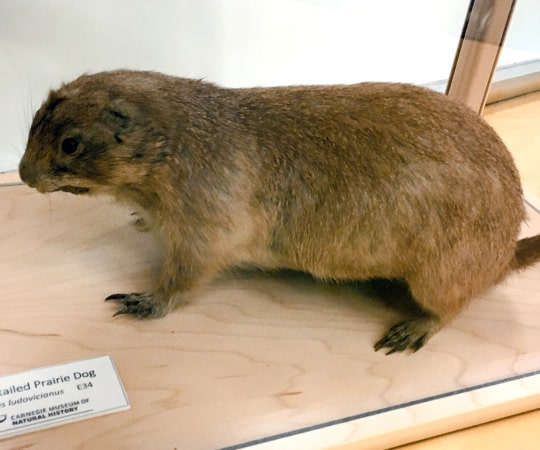
prairie dog taxidermy mount

For several years Leslie Vandegrift has used materials from the Educator Loan Collection to enhance reading lessons for kindergarten through third grade students. As the librarian for West Hills Primary School in the Armstrong School District, she’s put authentic objects to use in building vocabulary, sparking curiosity about the ideas conveyed through ever longer strands of words and sentences, and promoting the reading of all kinds of books. In the library of West Hills Primary, materials from the museum illustrating topics ranging from nocturnal animals to the wildlife discoveries of the Lewis and Clark Expeditions have helped diminish the 44 highway miles separating the two buildings.

When reached by phone a dozen days before the start of in-person classes, the 24 year veteran educator expressed concern about how the school year would proceed and whether her library could function as it did in the past. As she summarized, “The most challenging part of this new normal, is that the students will be unable to check out books for at least the first semester of school.  There is zero sharing of materials in our school building in order to keep our students as safe as possible.  It’s disheartening to engage students in new topic areas and authors, but not be able to allow them to pursue it independently.”   Student well-being was her utmost priority, and she expressed pride in knowing that was also the case for every one of her co-workers.

If the spread of COVID-19 pushes her school to on-line instruction, Leslie expressed confidence that the transition would be far smoother than what occurred across the country back in mid-March. Days of in-service training in August were devoted to mastering the intricacies and capabilities of a digital learning management platform called “Canvas,” and the first order of business after the opening day of school will be getting the students comfortable interacting with the electronic interface.

Leslie’s description of the learning platform’s flexibility leads me to remind more teachers about the Educator Loan Program’s continued importance as a resource. Materials can be borrowed to create digital products. Cell phone still images or brief videos of authentic objects can improve lessons presented on learning platforms. Your productions don’t have to meet the standards of the library displays at West Hill Primary School for learning to occur.

Patrick McShea works in the Education and Visitor Experience department of Carnegie Museum of Natural History. Museum employees are encouraged to blog about their unique experiences and knowledge gained from working at the museum.

Related Content

Cats: The Original Social Distancers

First-ever American Malacological Society Virtual Meeting

CMNH Hosts Science Bowl

Filed Under: Blog Tagged With: Education, Educator Loan Program, Educator Resources, Educators, Pat McShea, Patrick McShea

August 24, 2020 by wpengine

Armored Advantage

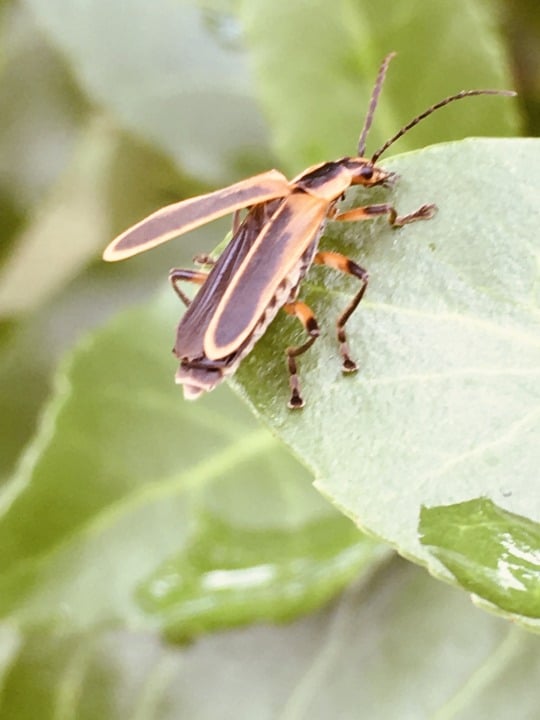
A folded hindwing of this lightning bug is visible beneath a raised forewing.

As adaptations go, the hardened forewings of beetles have a long track record of success. The paired structures, known as elytra (or singularly as elytron), don’t contribute significant aerodynamic advantage to beetle flight. Because they protect the delicate hindwings under all other circumstances, however, elytra help to ensure the capability of flight whenever it’s necessary.

Evidence for the survival advantages conveyed by the wing covers is impressive. The order Coleoptera, the scientific category of beetles, contains more than 380,000 named and described species, a figure that represents nearly a quarter of currently known animal species.

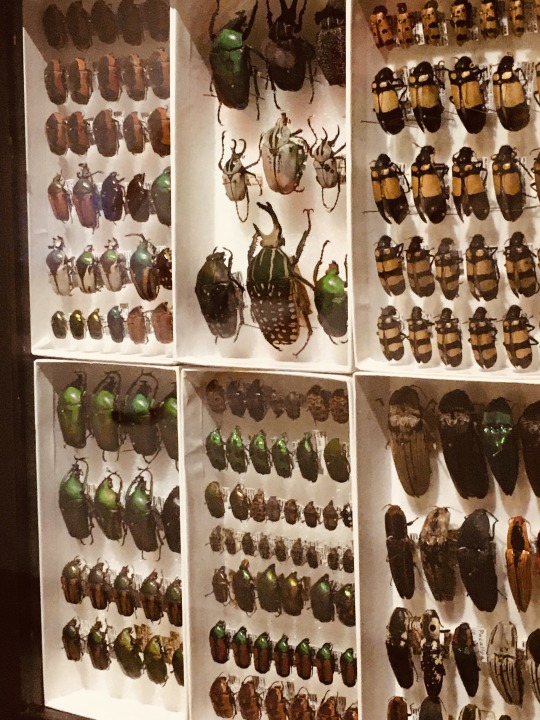
In Dinosaur Armor, the world premiere exhibition occupying the R. P. Simmons Family Gallery for the next 10 months, a colorful array of preserved beetles illustrates the insects’ built-in shield adaptation.

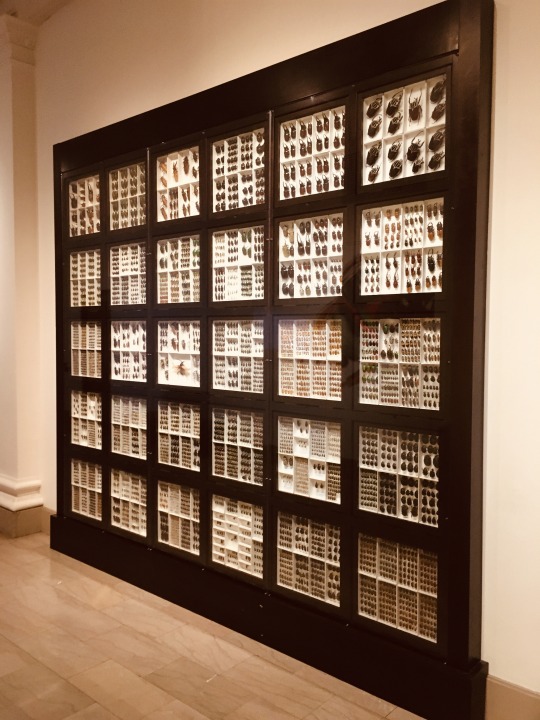
wall of beetle specimens

Visitors interested in elytra can visually study a far larger and more diverse beetle display just outside the Dinosaur Armor exit. Here hundreds of curated specimens from the scientific collection have been arranged in a wall-sized display.

detail of beetle specimens on display

Collectively and individually, this mass of pinned beetles serves to reinforce an unstated theme of Dinosaur Armor: functional exterior armor does not necessarily preclude natural beauty.

Patrick McShea works in the Education and Visitor Experience department of Carnegie Museum of Natural History. Museum employees are encouraged to blog about their unique experiences and knowledge gained from working at the museum.

Related Content

Dinosaur Armor Behind the Scenes

Red Bug Bonus

Jurassic Days: Mighty Mosasaur

Filed Under: Blog Tagged With: beetles, Dinosaur Armor, Educators, Pat McShea, Patrick McShea

  • « Go to Previous Page
  • Page 1
  • Interim pages omitted …
  • Page 3
  • Page 4
  • Page 5
  • Page 6
  • Page 7
  • Go to Next Page »

sidebar

About

  • Mission & Commitments
  • Directors Team
  • Museum History

Get Involved

  • Volunteer
  • Membership
  • Carnegie Discoverers
  • Donate
  • Employment
  • Events

Bring a Group

  • Groups of 10 or More
  • Birthday Parties at the Museum
  • Field Trips

Powdermill

  • Powdermill Nature Reserve
  • Powdermill Field Trips
  • Powdermill Staff
  • Research at Powdermill

More Information

  • Image Permission Requests
  • Science Stories
  • Accessibility
  • Shopping Cart
  • Contact
  • Visitor Policies
One of the Four Carnegie Museums | © Carnegie Institute | Privacy Policy | Terms of Use | Accessibility
Rad works here logo