• Skip to primary navigation
  • Skip to main content
  • Skip to primary sidebar

Carnegie Museum of Natural History

One of the Four Carnegie Museums of Pittsburgh

  • Visit
    • Buy Tickets
    • Visitor Information
    • Exhibitions
    • Events
    • Dining at the Museum
    • Celebrate at the Museum
    • Powdermill Nature Reserve
    • Event Venue Rental
    • Gift Cards
  • Learn
    • Field Trips
    • Educator Information
    • Programs at the Museum
    • Bring the Museum to You
    • Guided Programs FAQ
    • Programs Online
    • Climate and Rural Systems Partnership
  • Research
    • Scientific Sections
    • Science Stories
    • Science Videos
    • Senior Science & Research Staff
    • Museum Library
    • Science Seminars
    • Scientific Publications
    • Specimen and Artifact Identification
  • About
    • Mission & Commitments
    • Directors Team
    • Museum History
  • Tickets
  • Give
  • Shop

mammals

September 17, 2018 by wpengine

C is for Cats

by Sarah Shelley and John Wible

We don’t want to start a big fight about cats versus dogs, but here in the Section of Mammals at Carnegie Museum of Natural History we are officially cat people! There are pros and cons to both as pets, but for us the pros for cats outweigh the litterbox scooping and hairballs. When we see dog owners with those bags inverted on their hands to pick up … we are happy we are cat people.

Meet Our Cats
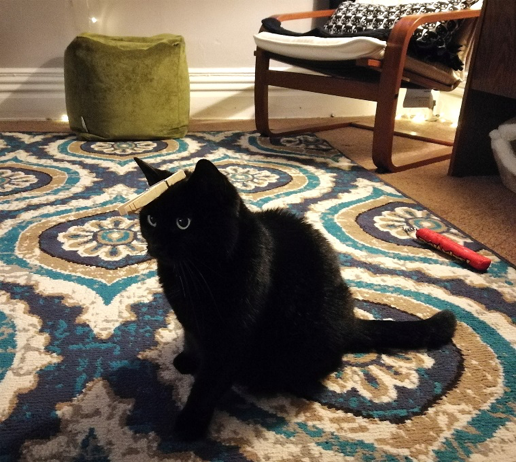
black cat with clothespin

This is Roux, Sarah’s cat. Her favorite toy is a clothespin, despite all the expensive ones that Sarah buys for her. Roux thinks it is a hat. She is nine years-old and all black apart from her face full of white whiskers.
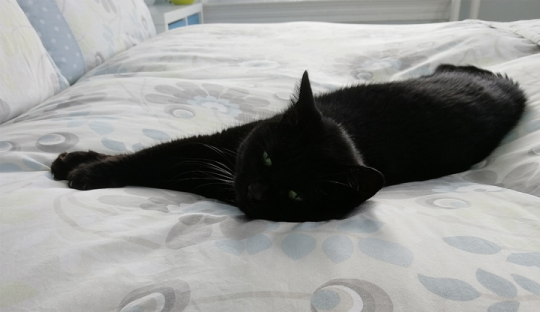
black cat on a blanket

Whiskers or vibrissae, to use their technical term, are very thick hairs that are highly sensitive. Although cats have great eyesight for distance, movement, and night vision, they are short-sighted, which means they don’t see well what is right in front of them. The whiskers counteract their short-sightedness.

Cats don’t just have whiskers on their faces. They also have them on the inside of their front legs. The function of these is less obvious, but they likely aid in climbing and hunting.
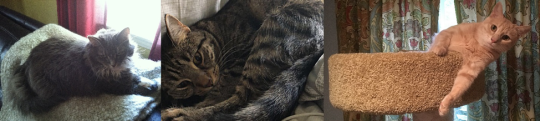
three cats

Another fun fact? A group of cats is called a clowder. This is John’s cat clowder: Boots, Bela, and Phoenix. All three are rescues. Boots is the oldest, but we really don’t know how old she is. Bela and Phoenix are two, although not sisters.

Boots rules the kitchen and really likes to rub against bags or boxes on the kitchen counter. She is using scent glands on the side of her face to mark what is hers. Cats often do this to their owners when they return home to make them smell familiar again. They don’t just have scent glands on their faces. Amongst the other places are the pads on their paws, which helps explain their kneading behavior.
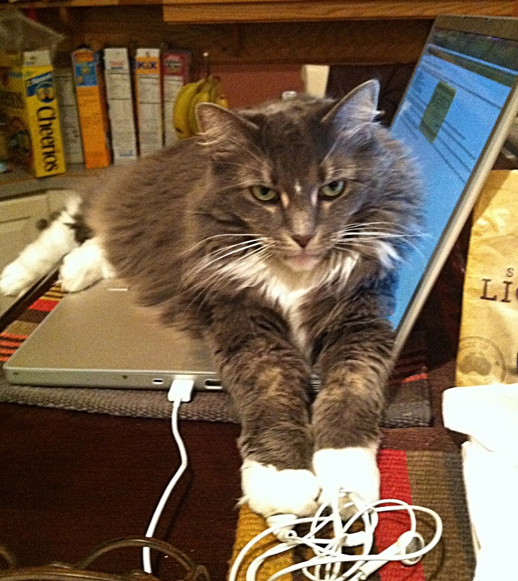
gray and white cat on a laptop

Why is Boots sitting on the computer? She is keeping an eye on the mouse.

Bela is a bit of a weirdo, perched on a box of peaches. It does not look very comfortable. She is a tabby, actually a mackerel tabby, which is not a specific cat breed, but a distinctive coat pattern. The word tabby comes from Attabiyah, a neighborhood in Baghdad, Iraq, which is famous for a type of silk. Tabbies got their name because their striped coats resemble the wavy patterns in the Attabiyah silk.

Did you know that domestic cats are not the only cats that like boxes? Check out this video of big cats playing in boxes.
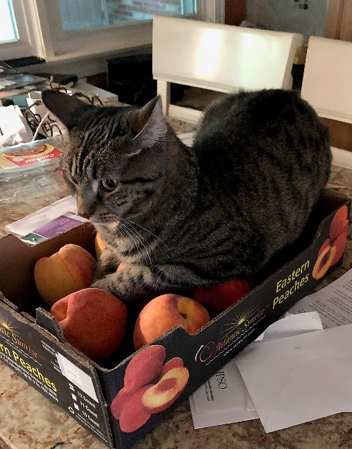
tabby cat in a box of peaches

If you think Bela is weird, check out where Phoenix likes to chill. Is this what they mean by curiosity killing the cat or a cool cat? (Don’t worry, she didn’t stay in the fridge too long.)

orange cat in the fridge

She parked herself with the lettuce and not the ice cream and it’s no wonder why: cats don’t taste sweetness. But they do have an extra sensory organ that humans don’t have, called the vomeronasal organ. This paired organ sits in the floor of the nasal cavity and is connected to the oral cavity by ducts located behind the incisor teeth. To get a particular odor into the vomeronasal organ, cats make a funny face called the Flehmen response where they open their mouth, wrinkle their lips, and stop breathing, as demonstrated by Roux. The vomeronasal organ is for pheromone perception.
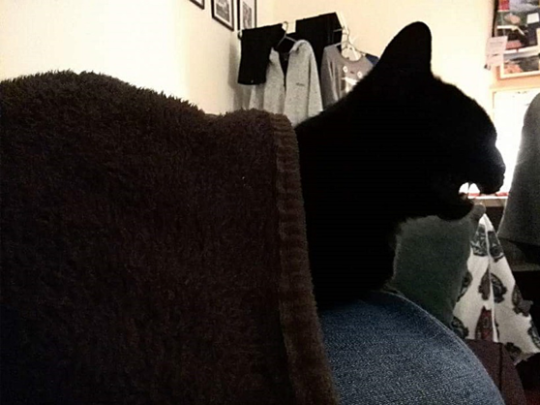
black cat

So, here’s a mammalogy joke: what do you call a cat that just ate a mallard? A duck-filled fatty puss!

Sarah Shelley is a postdoctoral research fellow and John Wible is Curator in the Section of Mammals at the Carnegie Museum of Natural History. Museum employees are encouraged to blog about their unique experiences working at the museum.
Filed Under: Blog Tagged With: cats, mammals, Sarah Shelley

August 27, 2018 by wpengine

B is for Beaver (sticks)

by Sarah Shelley

The Section of Mammals at the Carnegie Museum of Natural History houses nearly 130,000 specimens. As a fairly recent hire in the section, I have spent the last six months familiarizing myself with the contents of the boxes, drawers and jars and the many delights they contain. Just recently, Curator of Mammals, John Wible, and I were rummaging through one of the older cabinets in the section. In these cabinets are boxes containing old exhibit specimens including skulls sliced in half, some pelts and even some jars of owl pellets containing rodent bones.

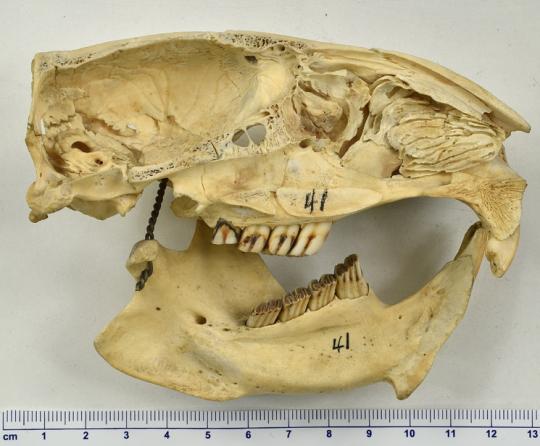
Sliced beaver skull
Sliced beaver skull

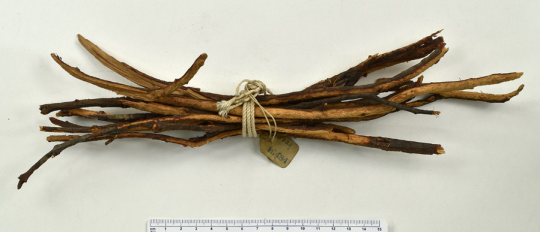
In one of the drawers my eyes fell upon a small bundle of sticks. I picked them up, somewhat bemused.

‘What are these?’ I asked.

‘Those are beaver sticks.’ Replied John.

small beaver sticks
A bundle of (small) beaver sticks

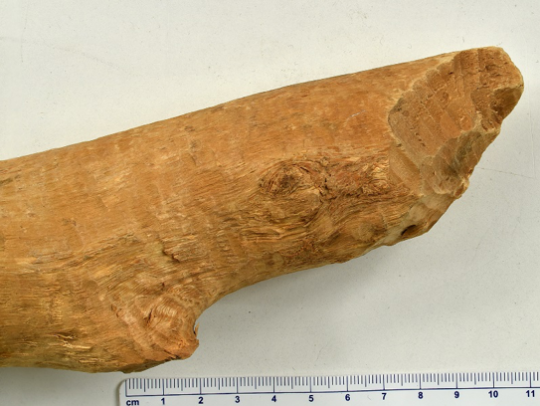
And sure enough, upon closer inspection, it was possible to see small gnaw marks on the sticks. We continued our rummaging and in the next drawer found another bundle of larger sticks.

‘And those are big beaver sticks.’

big beaver stick
A big beaver stick with gnaw marks

Beavers are large, semiaquatic rodents. There are two living species, the North American beaver (Castor canadensis) and the slightly larger Eurasian beaver (Castor fiber). During the Ice Age there was even a giant beaver (Castoroides) that was about two meters long and thought to weigh approximately 100 kg (four times more than the average living beaver).

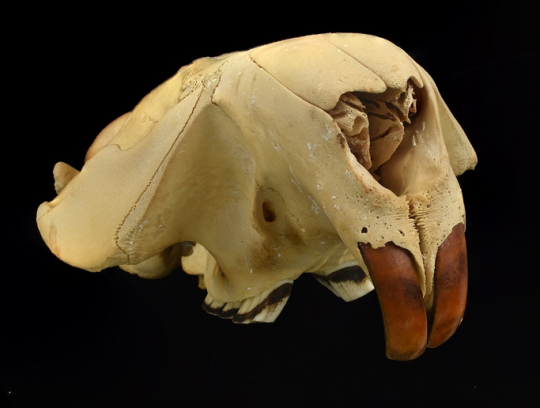
Beavers use sticks and logs to dam rivers and build their dens, known as ‘lodges.’ They use their enlarged front incisors to break down plants and trees. Their front teeth grow continuously and are stained red by an iron pigment that serves to strengthen the tooth enamel against wear.

North American beaver skull
A North American beaver (Castor canadensis) skull showing its enlarged front incisor teeth

Sarah Shelley is a postdoctoral research fellow in the Section of Mammals at the Carnegie Museum of Natural History. Museum employees are encouraged to blog about their unique experiences working at the museum.
Filed Under: Blog Tagged With: mammals, Sarah Shelley

August 14, 2018 by wpengine

Whale Bone Bench

By Pat McShea

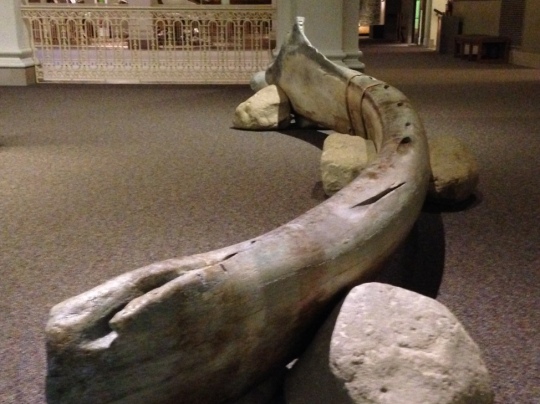
whale bone bench

An unusual bench within the Hall of North American Wildlife inspires grand scale thinking.

If you sit upon a level-topped portion of the nearly 20-foot-long great blue whale lower jaw, it’s easy to imagine your seat’s travel history as part of a living ocean-dwelling giant.

Jaw bone sitters now have much more to consider because of Information shared by the curator of fossil marine mammals at the Smithsonian Institution’s National Museum of Natural History.

In a recent essay in The New York Times titled, Wrap Your Mind Around a Whale, paleobiologist Nick Pyenson discusses evolutionary forces that limit whale size.

For great blue whales, Pyenson explains, jaw size reflects a delicate balance. These enormous mammals, whose total body length has been known to reach 109 feet, must be able to close their jaws rapidly enough to capture moving prey. They also must gain enough calories from each gulp to make-up for energy spent powering the required muscle movements.

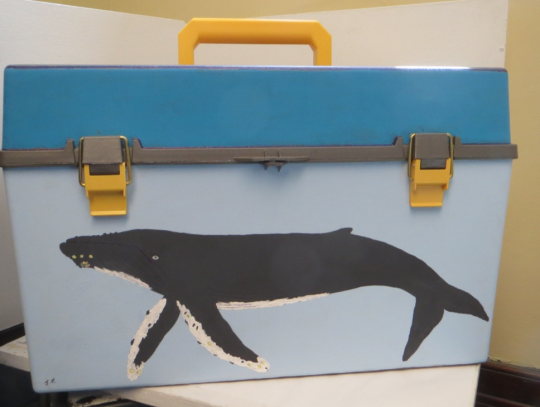
whales toolbox

For any museum visitors who require visual and tactile assistance to imagine how the bone bench was once part of a swimming creature, a stop in Discovery Basecamp is recommended.

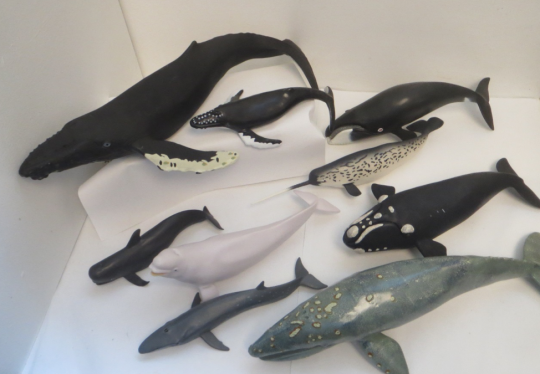
plastic whale models

Although there’s not a great blue whale replica in the Whales Toolbox, examining the plastic models of eight featured species is a good way to begin learning about whale diversity.

Patrick McShea works in the Education and Visitor Experience department of Carnegie Museum of Natural History. Museum employees are encouraged to blog about their unique experiences and knowledge gained from working at the museum.

Filed Under: Blog Tagged With: mammals

August 13, 2018 by wpengine

A is for Aardvark

By John Wible

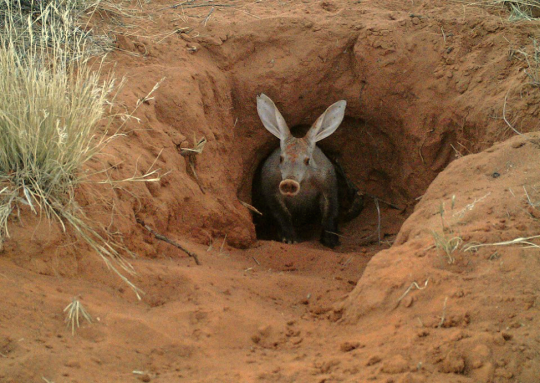
aardvark
Photo by Louise Joubert, SanWild Wildlife Sanctuary

Upon encountering this unusual digging mammal, South African colonists dubbed it aardvark, which is Afrikaans for earth pig or groundhog. With an adult weight of 90 to 150 pounds they dwarf our Western Pennsylvanian groundhog and additionally look nothing like it! Aardvarks (Orycteropus afer) are solitary, nocturnal mammals, which means they live alone and are active almost exclusively at night. They have powerful forelimbs and very sharp, robust front claws perfect for digging large burrows and into the nests of their food prey: ants and termites. Their nostrils, which are vertical slits, can be closed completely and have a fringe of thick hairs that helps to keep soil out while they are rooting for food. They have poor eyesight but a phenomenally keen sense of smell. In fact, aardvarks have the highest number of olfactory turbinal bones of any mammal; these are the fine, scroll-like bones in the nasal cavity that are covered by olfactory epithelium for sense of smell. And given those long rabbit-like ears, they also have a keen sense of hearing. Yet, aardvarks are for the most part silent, using hearing to find prey and avoid predators and not to find each other.

Aardvarks were thought to be related to other myrmecophagous (ant-eating) mammals, namely the South American anteaters and Old World pangolins. However, analysis of their DNA groups aardvarks with other very different looking African mammals in a clade of unlikely bedfellows called Afrotheria, which includes elephants, hyraxes, sengis or elephant shrews, golden moles, and tenrecs, along with manatees and dugongs. Consequently, the dietary and digging adaptations of aardvarks have evolved independently of those in the South American anteaters and pangolins. The earliest aardvark fossils are from African and are roughly 20 million years old. They did expand into southern Europe and into Asia as far east as Pakistan, but today are confined to sub-Saharan Africa in habitats that provide ants, termites, and water. Thankfully, their conservation status is currently of a non-threatened status.

John Wible, PhD, is the curator of the Section of Mammals at Carnegie Museum of Natural History. John’s research is focused on the tree of life of mammals, understanding the evolutionary relationships between living and extinct taxa, and how the mammalian fauna on Earth got to be the way it is today. He uses his expertise on the anatomy of living mammals to reconstruct the lifeways of extinct mammals. John lives with his wife and two sons in a house full of cats and rabbits in Ross Township.

Filed Under: Blog Tagged With: John Wible, mammals

August 1, 2018 by wpengine

Black Bears at Powdermill

By Andrea Kautz

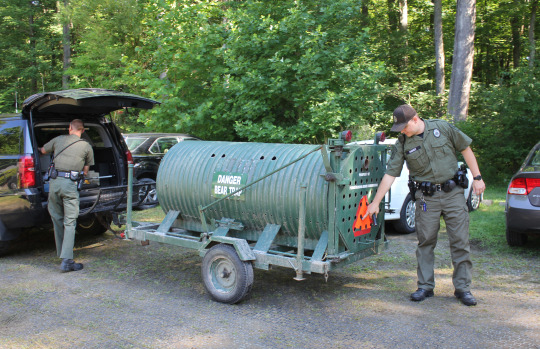
Recently, the PA Game Commission brought a black bear to Powdermill to release in the nearby state forest. It was a healthy, 300-pound male that was relocated because it was becoming a nuisance on a farm more than 30 miles away. Powdermill staff were grateful to have the opportunity to watch as the game wardens sedated and tagged the animal before release. The bear received two ear tags and a lip tattoo for identification. A small milk tooth was extracted which will be used later to determine his age. An infected claw was treated, but otherwise he appeared to be in good health.

Game Wardens arrive at Powdermill
Game Wardens Barron (left) and Harvey (right) arrive at Powdermill with the trap, which is on wheels for easy transport.

The Game Commission estimates the Pennsylvania bear population to be thriving at around 20,000 individuals. Compared to neighboring states, Pennsylvania black bears breed earlier and have more cubs. Bear populations are managed through seasonal harvesting, although only about 2% of those receiving permits are successful hunting a bear. In 2017, the largest bear taken was a 707-pound male from Monroe County!

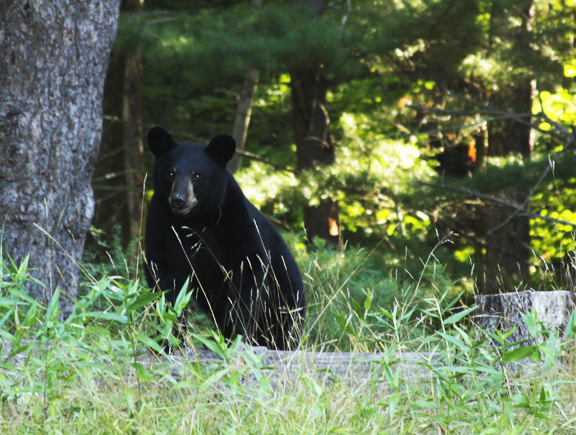
black bear in Pennsylvania
American black bear. Photo credit: George Pankewytch

Hopefully, this male will find another place to call home, but relocating these animals can be tricky as they have a very good sense of direction and can cover long distances. At this time last year, one radio-collared male walked from Johnstown to Grove City to Pittsburgh, then east along the turnpike and up through the Laurel Highlands and back to Johnstown in about a month.  We give special thanks to the game commission for putting so much effort into maintaining a healthy population of bears that can live in harmony with humans and ensuring that Pennsylvania can continue to be a supportive environment for these spectacular beasts.

Andrea Kautz is a Research Entomologist at Carnegie Museum of Natural History’s Powdermill Nature Reserve. Museum employees are encouraged to blog about their unique experiences and knowledge gained from working at the museum.

Filed Under: Blog Tagged With: Andrea Kautz, conservation, mammals, nature, Powdermill, Powdermill Nature Reserve

July 23, 2018 by wpengine

Giant Sable Antelope

By Lisa Miriello

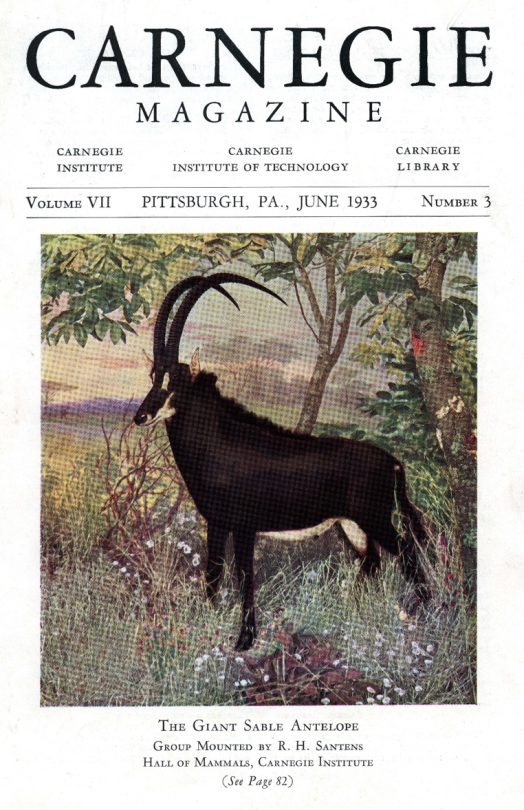
Carnegie magazine cover with giant sable antelope

In 1930, New York publisher Ralph Pulitzer recruited Rudyerd Boulton, the Carnegie Museum of Natural History’s ornithologist, to accompany him to the Portuguese colony of Angola in search of the Giant Sable Antelope. Few American zoologists had explored this region of Africa but Boulton had traveled there in 1925 with the American Museum of Natural History and his knowledge of the territory was invaluable to the Pulitzer party.

Hippotragus niger variani was named as a new subspecies less than fifteen years before the Pulitzer expedition and interest in the scientific community, as well as with big game hunters, grew rapidly. Portuguese authorities soon created new game laws to help protect this rare and impressive animal. Never numerous, today the Giant Sable is critically endangered, threatened by habitat loss, civil war, and poachers. Active conservation efforts continue, but population estimates indicate there are less than a hundred mature individuals, found only in Angola’s Cangandala National Park and the Luando Nature Reserve.

The Carnegie Museum of Natural History is one of only a handful of museums in the country where specimens of the Giant Sable have been preserved. The male collected by Pulitzer was expertly prepared by renowned taxidermy artist R. H. Santens and is exhibited on the museum’s second floor.

Lisa Miriello is the scientific preparator in the Section of Mammals at the Carnegie Museum of Natural History. Museum employees are encouraged to blog about their unique experiences and knowledge gained from working at the museum.

Filed Under: Blog Tagged With: Carnegie Magazine, Hall of African Wildlife, Lisa Miriello, mammals, Section of Mammals

  • « Go to Previous Page
  • Page 1
  • Interim pages omitted …
  • Page 5
  • Page 6
  • Page 7
  • Page 8
  • Page 9
  • Interim pages omitted …
  • Page 11
  • Go to Next Page »

sidebar

About

  • Mission & Commitments
  • Directors Team
  • Museum History

Get Involved

  • Volunteer
  • Membership
  • Carnegie Discoverers
  • Donate
  • Employment
  • Events

Bring a Group

  • Groups of 10 or More
  • Birthday Parties at the Museum
  • Field Trips

Powdermill

  • Powdermill Nature Reserve
  • Powdermill Field Trips
  • Powdermill Staff
  • Research at Powdermill

More Information

  • Image Permission Requests
  • Science Stories
  • Accessibility
  • Shopping Cart
  • Contact
  • Visitor Policies
Stay in the loop! Sign up for our newsletter(s).
One of the Four Carnegie Museums | © Carnegie Institute | Privacy Policy | Terms of Use | Accessibility
Rad works here logo