• Skip to primary navigation
  • Skip to main content
  • Skip to primary sidebar

Carnegie Museum of Natural History

One of the Four Carnegie Museums of Pittsburgh

  • Visit
    • Buy Tickets
    • Visitor Information
    • Exhibitions
    • Events
    • Dining at the Museum
    • Celebrate at the Museum
    • Powdermill Nature Reserve
    • Event Venue Rental
    • Gift Cards
  • Learn
    • Field Trips
    • Educator Information
    • Programs at the Museum
    • Bring the Museum to You
    • Guided Programs FAQ
    • Programs Online
    • Climate and Rural Systems Partnership
  • Research
    • Scientific Sections
    • Science Stories
    • Science Videos
    • Senior Science & Research Staff
    • Museum Library
    • Science Seminars
    • Scientific Publications
    • Specimen and Artifact Identification
  • About
    • Mission & Commitments
    • Directors Team
    • Museum History
  • Tickets
  • Give
  • Shop

mammals

December 3, 2018 by wpengine

Gift from Underground

By Patrick McShea

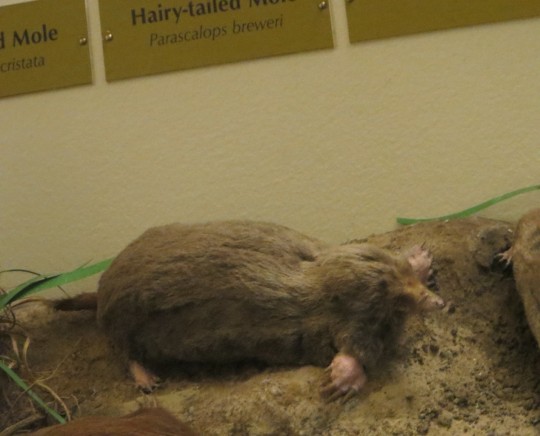
Hairy-tailed Mole in the Hall of North American Wildlife

Do wild creatures ever participate in gift giving? Their very presence can be thought of as a gift, of course. Think only of what the chorus of bird song adds to a spring dawn, or how a trotting red fox transforms a frost white meadow.

One spring morning more than a decade ago, however, I found something in the freshly churned soil of a mole hill that I’ve come to regard as a kind of peace offering gift. As I used my right foot to spread the damp earth flat, a sliver of pale gray flashed briefly in the otherwise peanut butter colored pile. Bending down to investigate, I found an irregularly-shaped, quarter-sized piece of chert that a quick spit wash and pants wipe revealed to be the lower portion of an arrowhead.
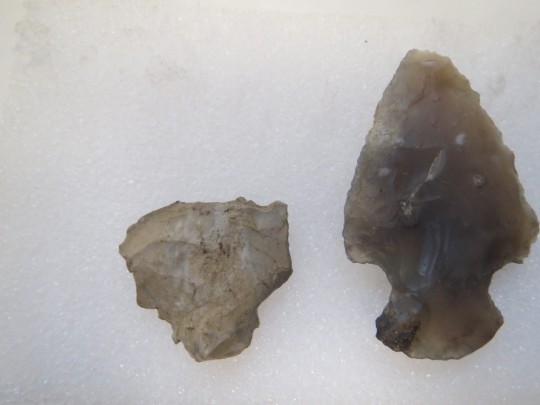
Stone point fragment next to an intact point

The broken artifact was certainly an unintentional gift, mere tunnel debris to be pushed skyward by the shovel-like front paws and sharply pointed nose of the creature who last encountered it. For me, however, the tool fragment has become a magical kind of time capsule, holding without revealing information about its ancient creator, its use, and eventual breakage.

Since that morning I’ve looked patiently but without success for the arrowhead’s other half in every mole hill I’ve smoothed out. I’ve also spent a lot of time wondering about what the arrowhead maker called the unusual mammal whose tunnel making is the basis for our acquaintance.

Patrick McShea works in the Education and Visitor Experience department of Carnegie Museum of Natural History. Museum employees are encouraged to blog about their unique experiences and knowledge gained from working at the museum.
Filed Under: Blog Tagged With: mammals, Patrick McShea

December 3, 2018 by wpengine

Tribute to Otto Epping

By Suzanne McLaren and Stephen Rogers

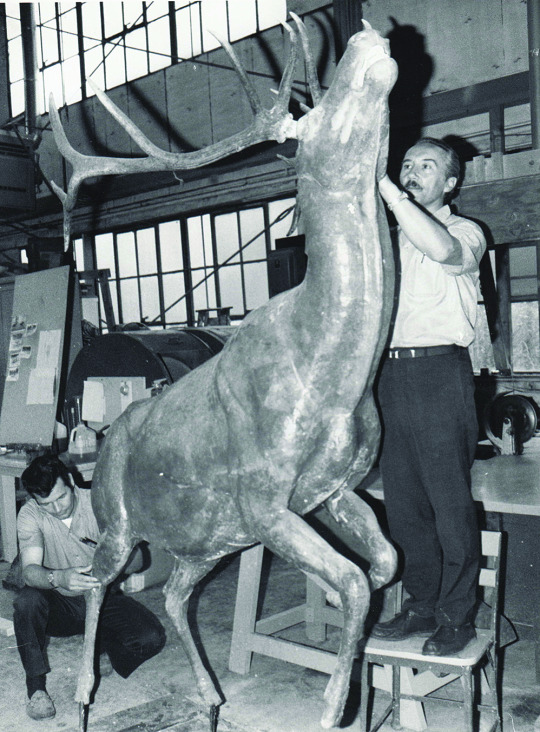
We recently received word about the passing of former Carnegie Museum of Natural History Taxidermist Otto Epping at the age of 90 in Winchester, Virginia.  In 1964, Otto Epping came to work in the Museum’s Exhibit department as a preparator and within a year his title had become ‘taxidermist.’

Otto Epping working on mammal taxidermy

Over the next 17 years, he completed many projects and with his passing, Otto leaves behind a legacy of well-crafted taxidermy that has now been enjoyed by several generations of visitors to Carnegie Museum of Natural History.

Not long after he arrived at the museum, a series of small dioramas were created, featuring some of Epping’s taxidermy, his wife Christine’s work on the plants in the foreground, and background paintings by Ottmar von Fuehrer or C. E. Smith.  Among these dioramas is a snow leopard currently on view in the Museum Store.  Individual mounts by Epping were used in the taxidermy areas of the “M is for Museum” exhibit as well as other displays that augment traveling, temporary shows that come to the Museum.

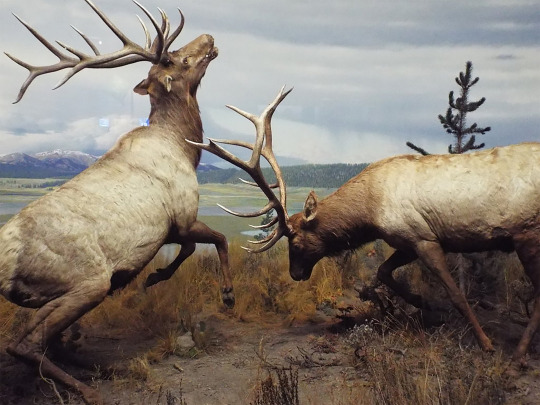
Some of Otto Epping’s craftsmanship can also be found in permanent displays on the second floor.   His first large project was the elk diorama, which occupies the entire east end of the Hall of North American Wildlife.

elk diorama

This exhibit draws the visitor in with two male elk sparring for mates in the foreground and the Hayden Valley of Yellowstone National Park behind them.  If you have ever been to Yellowstone, you might recognize this exact location as a place where you can stop for an expansive view of the Valley.

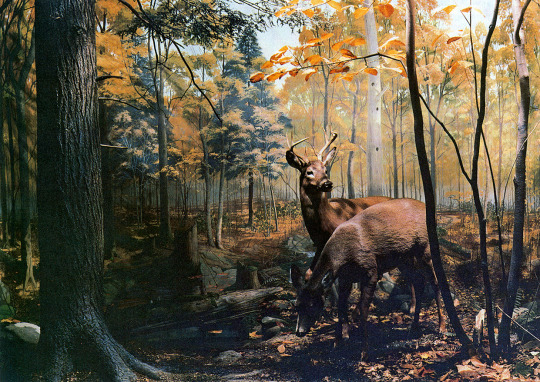
Epping collaborated with fellow taxidermist Ed McGuire on a display that depicts a male and female white-tailed deer on an October morning at the Museum’s Powdermill Nature Reserve.

deer diorama

In this diorama, the male is alert to the presence of another male somewhere just out of view.  Well-done taxidermy captures an aspect of behavior that a viewer would expect to see in nature.  Take a close look the next time you are in the Hall of North American Wildlife.  Does this exhibit capture a vision that you have seen in Penn’s Woods?

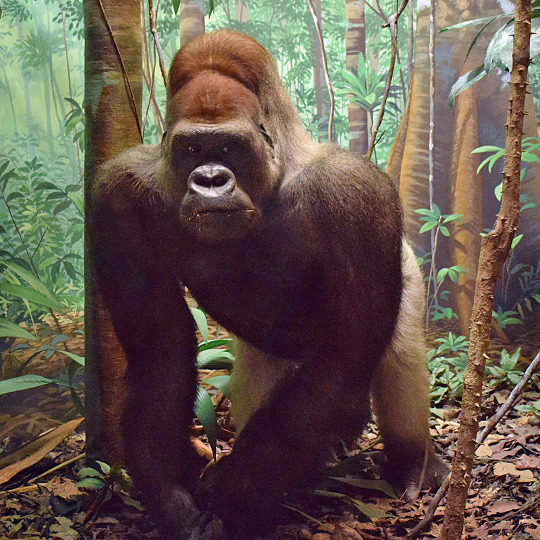
Perhaps the most well-known of Epping’s taxidermy mounts is the adult male Lowland Gorilla found in the tropical forest section of the Hall of African Wildlife.

gorilla diorama

This silver-back had been a popular attraction at the Pittsburgh Zoo for nearly 15 years.  When he died in 1981, “George” was offered to the Museum and we quickly agreed to make him part of our planned changes in African Hall.  Epping collaborated with Danny Oplinger, using a method developed by renowned Field Museum taxidermist Leon Walters, to realistically portray the bare flesh and sparsely dispersed hairs on the face and feet of this primate. The final result is a world class rendering of a species that has always been a challenge for taxidermists.

Suzanne McLaren is the collection manager for the Section of Mammals and Stephen Rogers is the collection manager for the Section of Amphibians & Reptiles Carnegie Museum of Natural History. Museum employees are encouraged to blog about their unique experiences and knowledge gained from working at the museum.
Filed Under: Blog Tagged With: African Wildlife, mammals, taxidermy

November 20, 2018 by wpengine

Risk Assessment, or how to keep your collection intact

By Gretchen Anderson, Conservator, and  Suzanne B. McLaren, Chair of Collections

What are the risks to a museum’s collection?  

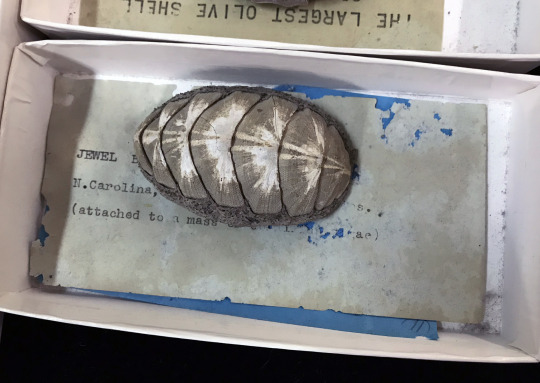
specimen in a box with partially eaten label

Figure 1: The risks of damage are varied. This photograph illustrates the potential risk of loss of data. The label has been partially eaten by silverfish, damaging not only the paper but ingesting the all-important data about this specific specimen.  

The museum is currently engaged in a two-year Risk Assessment process funded by a grant from the Institute of Museum and Library Services (IMLS). We are reviewing a spectrum of potential risks to our collections. This includes everything from fire and water damage to earthquake and pest damage that could affect the Museum’s more than twenty million specimens and objects, both behind the scenes and on exhibit.

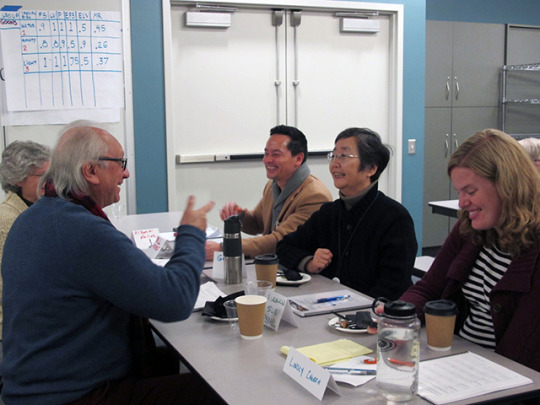
Forty staff members from across the museum attended a weeklong workshop led by our consultant, Rob Waller of Protect Heritage, who has been refining a model of how to quantify risks for more than twenty-five years. This was meant to get us all on the same page when we begin to focus on our individual collections.  The workshop offered everyone a chance to see and talk about their individual collections. For most of us, we call this fun. This gave each of us an appreciation for risks to distinct types of collection material. The risk for stone and metal will be quite different than the risk for organic material like birds and plants.

researchers around a table

Figure 2: Curators, collection managers, curatorial assistants, educators, exhibits staff, engineers, maintenance and security staff attended the workshop.

researchers looking at computer

Figure 3: The workshop had several days of small group interaction. Here Vertebrate Paleontology Collection Technician Linsly Church, Anthropology Collection Manager Deborah Harding, Collection Associate Marion Burgwin and Minerals Collection Manager Debra Wilson discuss definitions of risk.

We hired Collection Associate Marion Burgwin to work with various staff members on gathering quantitative information on risk from each collection. Collections are divided into twenty-nine units, based on scientific discipline, preservation type and primary use. For example, the Bird collection has four units: study skins & skeletons, nests & eggs, taxidermy, and fluid collections. It is detailed and tedious work – but Marion also gets to see all the cool collections.

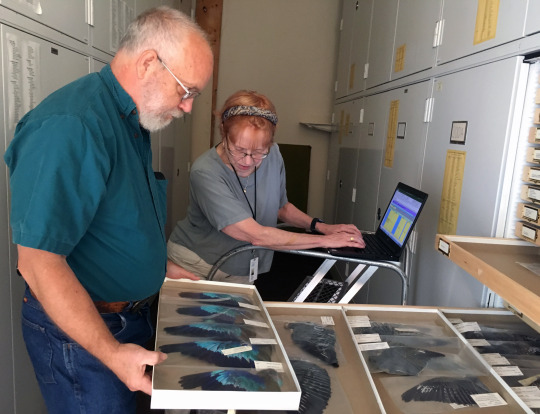
researchers looking at specimens

Figure 4: Birds Collection Manager Steve Rogers and Collection Associate Marion Burgwin viewing a collection of bird wings. Burgwin is entering the data directly into the Preservation Heritage Data Base.

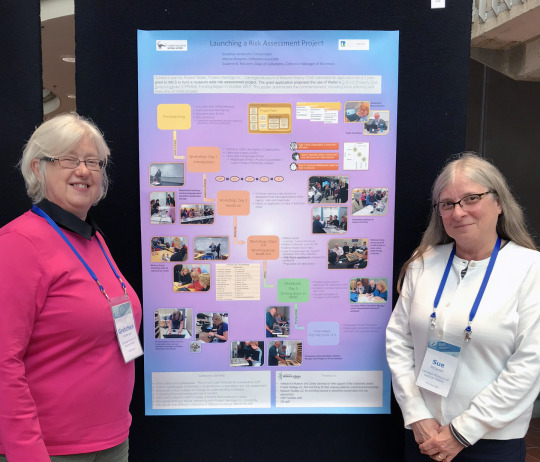
Nearly one year into the project, Conservator Gretchen Anderson and Chair of Collections Suzanne McLaren had the good fortune to present the project and network with colleagues at the annual conference of the Society for the Preservation of Natural History Collections in New Zealand.  Sharing information like this is an important aspect of the support we receive from agencies like IMLS.

two researchers and their poster

Figure 5: McLaren and Anderson with the Risk Assessment poster at the 2018 SPNHC annual conference, Dunedin New Zealand.  

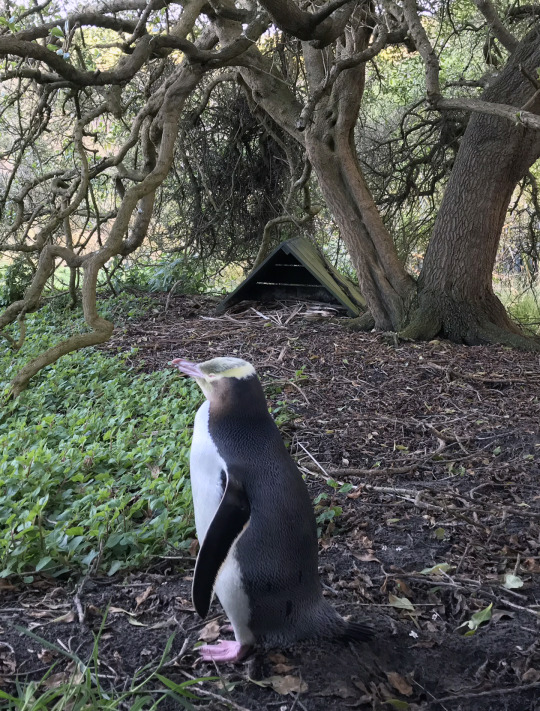
yellow-eyed penguin

Figure 6: A New Zealand native  – a highly endangered yellow-eyed penguin.


Gretchen Anderson is a conservator and the head of the Section of Conservation and Suzanne McLaren is the collection manager for the Section of Mammals at Carnegie Museum of Natural History. Museum employees are encouraged to blog about their unique experiences and knowledge gained from working at the museum.
Filed Under: Blog Tagged With: Collection Care and Conservation, Gretchen Anderson, mammals, Suzanne McLaren

October 23, 2018 by wpengine

E is for Echidna

by John Wible

The Naming

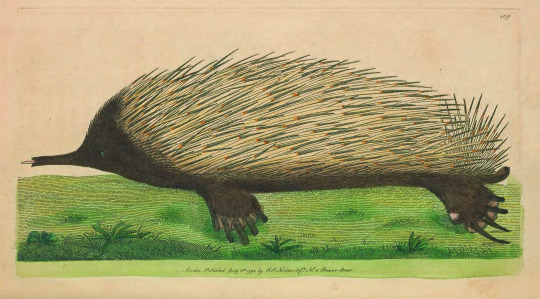
En route to Tahiti in 1792, a ship put into Adventure Bay at Bruny Island off the coast of Tasmania, where the captain’s log made the first written account of an animal that was covered in thick, sharp quills with a pointy bill and small mouth. The ship was the H.M.S. Bounty and the captain was none other than William Bligh. In the same year, a specimen from New Holland (Australia) arrived in the natural history department of the British Museum in London where it was formally described by assistant keeper George Shaw. Shaw conceived of this animal as a cross between an Old World porcupine and a South American giant anteater. He named it Myrmecophaga aculeata, a new species in the same genus as the giant anteater, Myrmecophaga tridactyla, and called it by the common name porcupine anteater; its formal name translates to spiny anteater. The animal, about a foot in length, had been found amid an ant hill. Shaw’s account included the first image of the porcupine anteater.

drawing of a porcupine anteater

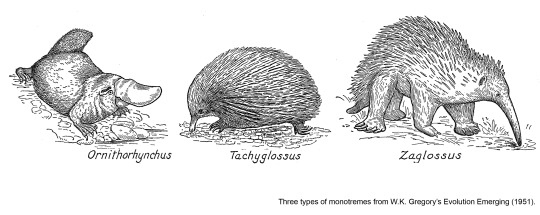
A bewildering number of generic and specific names were applied to the porcupine anteater over the next two decades, reflecting changing views about its taxonomy. The common thread was a realization that this animal had little to do with the South American anteater and, therefore, could not remain as a species of that animal’s genus. Moreover, a second bizarre mammal from New Holland was described by George Shaw in 1799, the duck-billed platypus, Ornithorhynchus anatinus. Most authors recognized a kinship between these two odd forms. Today, we know them to be two types of monotremes or egg-laying mammals.

One of the generic names given to the porcupine anteater was Echidna, proposed by the famous French comparative anatomist Georges Cuvier in 1797. In Greek mythology, Echidna was a hideous, flesh-eating monster with the top half of a beautiful woman and the body of a fearsome snake; Echidna was mother of many other infamous monsters, including Cerberus and Sphinx. For the porcupine anteater, this name was meant to reflect the animal’s mixture of reptilian and mammalian characteristics. However, the generic name Echidna was already occupied, having been given to a moray eel in 1788. So, by the rule of priority, it could not be used for the porcupine anteater. The name Tachyglossus, meaning rapid tongue for the speed with which it ingests ants, was proposed by Johann Karl Wilhelm Illiger of the zoological museum in Berlin in 1811. Thus, was born the formal moniker of Tachyglossus aculeatus for the porcupine anteater. Cuvier’s echidna stuck as the generally recognized common name. A refinement to the common name came later with the description in 1876 of a second kind of echidna from New Guinea. This larger form with an even longer snout was ultimately called Zaglossus, meaning great tongue. These two types have become known as the short-beaked and long-beaked echidnas, which perhaps is unfortunate as we usually think of birds having a beak and there is nothing beaky about the flesh-covered echidna snout.

drawing of three different monotremes

A final word on the spiny anteater as an alternative common name. This should only be applied to the single species of short-beaked echidna, Tachyglossus aculeatus, found today throughout Australia, Tasmania, and southeastern New Guinea, as it is a true eater of ants and termites, projecting its tongue 7 inches into nests to feed. The three species of the long-beaked echidnas, two of which are critically endangered, are primarily earthworm eaters. They use their long, pointy snouts to probe through soil and extend their tongue only about an inch to get their prey. They do have an amazing adaptation to catching worms: the anterior third of the tongue has a deep groove with three rows of backwardly directed, sharp, keratinous spines. When the mouth is opened, the groove opens; the worm is maneuvered into this groove; and when the tongue is retracted, the groove is tightly closed around the worm. Instead of spiny anteaters, let’s just call them fearsome spiny wormeaters!

John Wible is Curator in the Section of Mammals at the Carnegie Museum of Natural History. Museum employees are encouraged to blog about their unique experiences working at the museum.

Filed Under: Blog Tagged With: John Wible, mammals

October 10, 2018 by wpengine

D is for Dugong

The dugong is a marine mammal related to the manatee. Dugongs and manatees are members of the order Sirenia, which in turn is included in a larger group called Afrotheria. Also included in Afrotheria are elephants, hyraxes, aardvarks, elephant shrews, golden moles, and tenrecs. The dugong feeds on seagrasses and other shallow vegetation found within 1-5 meters of water in the Indian Ocean and the western Pacific. It is a docile animal, like land-based grazing mammals such as cows and sheep.

A single baby is born underwater and surfaces immediately to get its first breath. A baby will ride on its mother’s back as she submerges to feed and rises to the surface to breathe when she does. Observation shows that dugongs come to the surface about every three minutes. A female may produce milk for her young for up to 18 months, but babies begin to eat vegetation by three months of age.

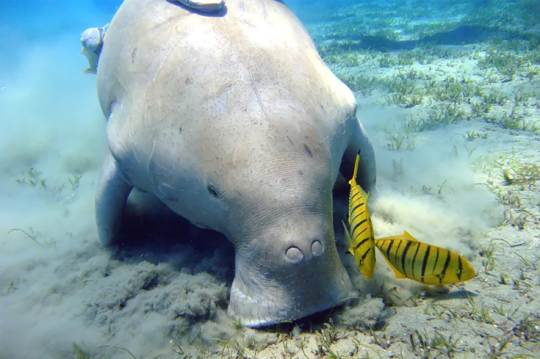
dugong swimming
Photo credit: Julien Willem/Wikimedia Commons

Dugongs have numerous adaptions to marine life, including the modification of its front limbs as flippers and the complete loss of hind limbs. Unlike the manatee’s paddle-like tail, a dugong’s tail looks like that of a dolphin. The lungs are elongated as are the kidneys, which are important to helping the animal cope with living in seawater. Observation of wild populations indicates that dugongs may live up to 70 years.  However, a female only gives birth every 3–7 years, so premature deaths can have a significant impact on the stability of the population.

Sharks are the dugong’s main natural enemy although large groups of dugongs occasionally have been observed driving a shark away after an attempted attack. However, dugongs are more often found alone, in pairs or in small groups. Killer whales have also been observed feeding on dugong. For many years, the dugong was hunted as a source of leather, meat, and oil. Now, humans pose the largest threat due to loss of seagrass habitat and the impact of fishing where dugong become caught in nets and cannot surface to breathe.

Coastal populations from the Red Sea south to Madagascar, and east to India and Southeast Asia have fallen dramatically in recent decades. Now, the largest populations, by far, are in the waters surrounding Australia where most research on this species takes place. Many countries have passed laws protecting the dugong, but various body parts are used in traditional medicine, making poaching problematic and protection especially difficult because of the ocean environment. Many different cultures assign a variety of special powers to the dugong. Fascination with dugongs can be found throughout time, from a 5,000-year old cave drawing found in Malaysia to inclusion in Cabinets of Curiosity beginning in the Renaissance. The dugong is thought to be the inspiration of the mythological mermaid, hence the name Sirenia for its order. In fact, the name dugong is from the Malay word for “lady of the sea.”

Sue McLaren is the Collection Manager in the Section of Mammals and Chair of Collections for Carnegie Museum of Natural History. She lives on the Northside with her husband Andy. Museum employees are encouraged to share their unique experiences from working at the museum. 

Related Content

F is for Fox

Sympathy for the Devil

Ask a Scientist: What is it like to discover a new species?

Filed Under: Blog Tagged With: mammals, Sue McLaren

September 27, 2018 by wpengine

Badwater 20: Not So Bad After All

by Lauren Raysich

small fossil

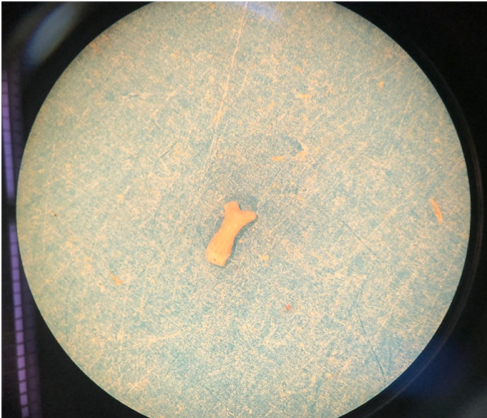
Although many people are familiar with fossilized bones of dinosaurs and other large extinct creatures, some fossils can be so small that a microscope is needed to see them. In Carnegie Museum of Natural History’s PaleoLab, volunteers like me use microscope stations to search for tiny fossils in different sediments collected from sites all over the world. Sediment from the Badwater 20 locality in Wyoming interests me more than any other. Sediment from this site dates to a time known as the Eocene Epoch. The middle of three epochs in the Paleogene Period, the Eocene lasted from 56 to 33.9 million years ago. Many fossils found from the Eocene belong to some of the oldest known members of modern mammal groups. Studying these fossils helps scientists trace the evolutionary histories of mammals we know today.

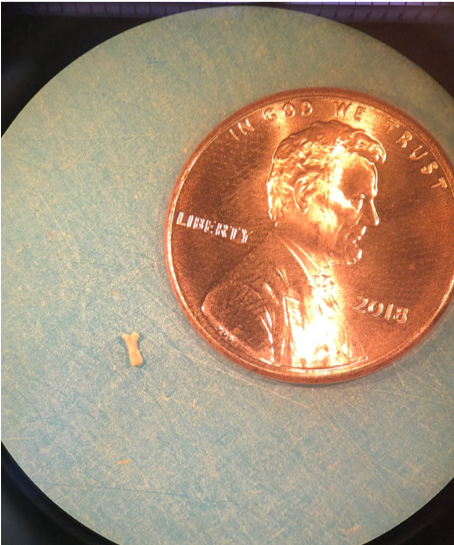
After searching through the Badwater 20 sediment for nearly two weeks, I had found only fragments of bones and teeth. Then, surprisingly, I came across a small, complete bone. It is not common to find complete fossil bones that are this tiny because they can be broken easily, whether by erosion or by being crushed by scavenging animals or water currents. Fossils are not immune to human-induced hazards either. After I found the bone, I was so excited that I accidentally dropped it on the floor of the lab and had to use a magnifying glass to relocate it! (Thankfully, it didn’t break.)

small fossil next to a penny for scale

This bone interested me more than any other because it was the first bone I’d found from the Badwater 20 site that wasn’t fractured in some way. Since the bone is so small, I figured it had to have come from a tiny mammal. Through research and the help of other museum volunteers and staff, I have concluded that this bone is a phalanx (finger or toe bone) of an Eocene rodent. The mouse-like animal to which it belonged most likely lived in a tree, a burrow, or the undergrowth more than 37 million years ago! Although, to some people, this little bone may not be as exciting as those of, say, Tyrannosaurus rex, it thus has an important story to tell in the history of life on our planet.

Lauren Raysich is an undergraduate student at the University of Pittsburgh who volunteers in the Section of Vertebrate Paleontology at Carnegie Museum of Natural History. Museum employees are encouraged to blog about their unique experiences working at the museum.
Filed Under: Blog Tagged With: fossils, Lauren Raysich, mammals, Mason Heberling, Paleolab, paleontology, Vertebrate Paleontology

  • « Go to Previous Page
  • Page 1
  • Interim pages omitted …
  • Page 4
  • Page 5
  • Page 6
  • Page 7
  • Page 8
  • Interim pages omitted …
  • Page 11
  • Go to Next Page »

sidebar

About

  • Mission & Commitments
  • Directors Team
  • Museum History

Get Involved

  • Volunteer
  • Membership
  • Carnegie Discoverers
  • Donate
  • Employment
  • Events

Bring a Group

  • Groups of 10 or More
  • Birthday Parties at the Museum
  • Field Trips

Powdermill

  • Powdermill Nature Reserve
  • Powdermill Field Trips
  • Powdermill Staff
  • Research at Powdermill

More Information

  • Image Permission Requests
  • Science Stories
  • Accessibility
  • Shopping Cart
  • Contact
  • Visitor Policies
Stay in the loop! Sign up for our newsletter(s).
One of the Four Carnegie Museums | © Carnegie Institute | Privacy Policy | Terms of Use | Accessibility
Rad works here logo