• Skip to primary navigation
  • Skip to main content
  • Skip to primary sidebar

Carnegie Museum of Natural History

One of the Four Carnegie Museums of Pittsburgh

  • Visit
    • Buy Tickets
    • Visitor Information
    • Exhibitions
    • Events
    • Dining at the Museum
    • Celebrate at the Museum
    • Powdermill Nature Reserve
    • Event Venue Rental
    • Gift Cards
  • Learn
    • Field Trips
    • Educator Information
    • Programs at the Museum
    • Bring the Museum to You
    • Guided Programs FAQ
    • Programs Online
    • Climate and Rural Systems Partnership
  • Research
    • Scientific Sections
    • Science Stories
    • Science Videos
    • Senior Science & Research Staff
    • Museum Library
    • Science Seminars
    • Scientific Publications
    • Specimen and Artifact Identification
  • About
    • Mission & Commitments
    • Directors Team
    • Museum History
  • Tickets
  • Give
  • Shop

mammals

October 22, 2019 by wpengine

Bright Flying Mammal

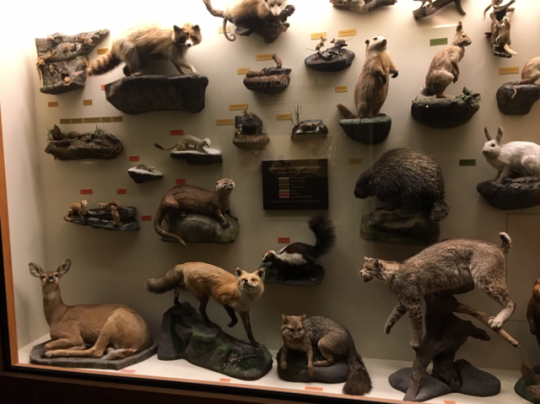
museum display of mammals found in Pennsylvania
Mammals of Pennsylvania within the Hall of North American Wildlife

Can you name our region’s most colorful mammal? If the question was asked in front of the museum’s Mammals of Pennsylvania display, many people would choose the red fox near the center of the exhibit’s floor-level row.

Five feet above fox, and just inches from the tip of a raccoon’s tail, a far smaller, but equally bright alternate exists in the form of a gliding eastern red bat.
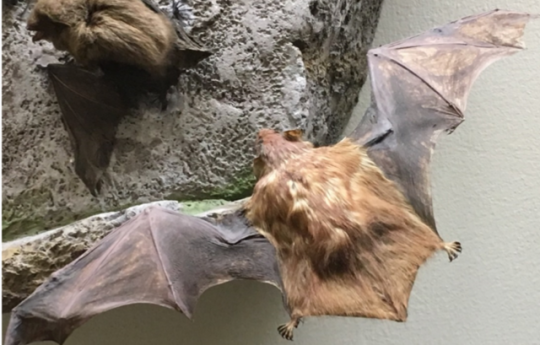
Eastern red bat
Eastern Red Bat, known to science as Lasiurus borealis

In color, red bat fur ranges from golden brown to bright rusty orange, with males typically sporting brighter shades than females. The bright fur coats of this widespread insect-eating species provide surprisingly effective camouflage when the bats are at rest. Red bats are tree bats, a term that indicates the species’ preference for spending daylight hours roosting within the foliage of deciduous and sometimes evergreen trees.
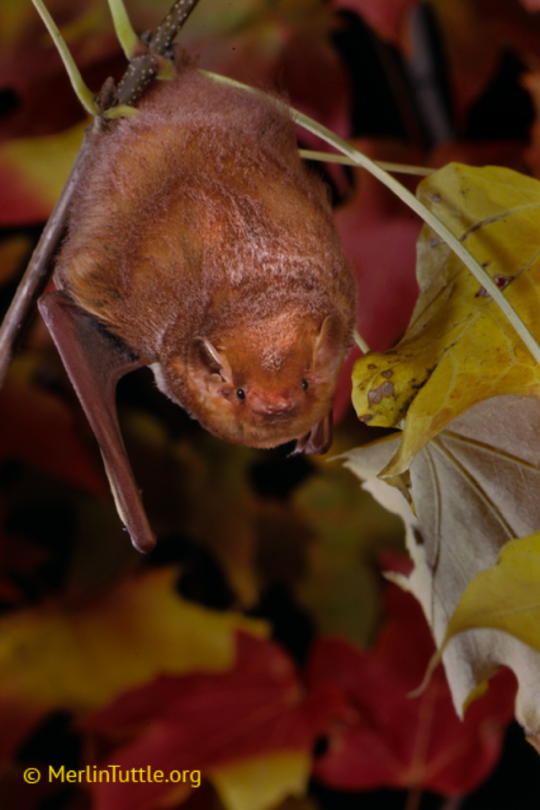
Eastern red bat
Eastern Red Bat

With wings folded, they hang upside-down from the grip of a single foot, looking, to casual observers, like dead leaves or pine cones.

Red Bats have so far escaped the devastating effects of white-nose syndrome, a fungal disease that since 2007 has caused mortality rates as high as 90% at hibernation sites of many other bat species. Remarkably, on fall migration flights to southern portions of their North American range, red bats have been known to cross long stretches of territory with flocks of migrating birds.

For more information about eastern red bats, please check the species account prepared by Bat Conservation International.

For information about the vital ecosystem contributions of the world’s 1,300 bat species please visit Merlin Tuttle’s Bat Conservation.

Patrick McShea works in the Education and Visitor Experience department of Carnegie Museum of Natural History. Museum employees are encouraged to blog about their unique experiences and knowledge gained from working at the museum.
Filed Under: Blog Tagged With: Education, Hall of North American Wildlife, mammals, Pat McShea, Patrick McShea

April 15, 2019 by wpengine

Holy Vibrissae Batman!

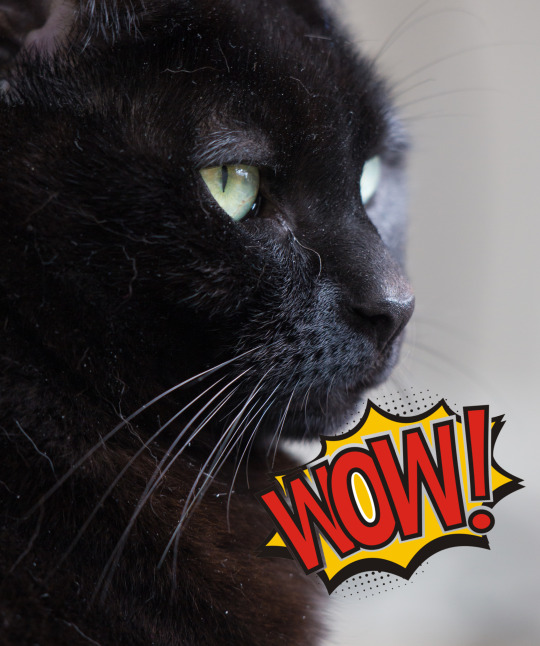
black cat face with the word wow in comic book lettering

Boom! Pow! When you think of superheroes, who do you think of? Wonder Woman? Black Panther? Batman? Well, did you know that there’s a superhero you’ve likely met that might even live in your house? It’s a bird! It’s a plane! No, it’s a cat! Yup, that’s right…cats have superpowers!

My Feline Senses Are Tingling

Cats can “see” what’s around them even in the dark, detect predators, and almost always land on their feet. How can cats do this? All of these superpowers are helped by a kind of radar you’ve seen right on their face – whiskers! Whiskers, also called vibrissae, are long, thick hairs that are packed with “super” nerves and are sensitive enough to detect even the slightest movements of air. At the end of each vibrissa is an organ which tells the cat about the position of its body and legs, helping them move stealthily and react quickly.

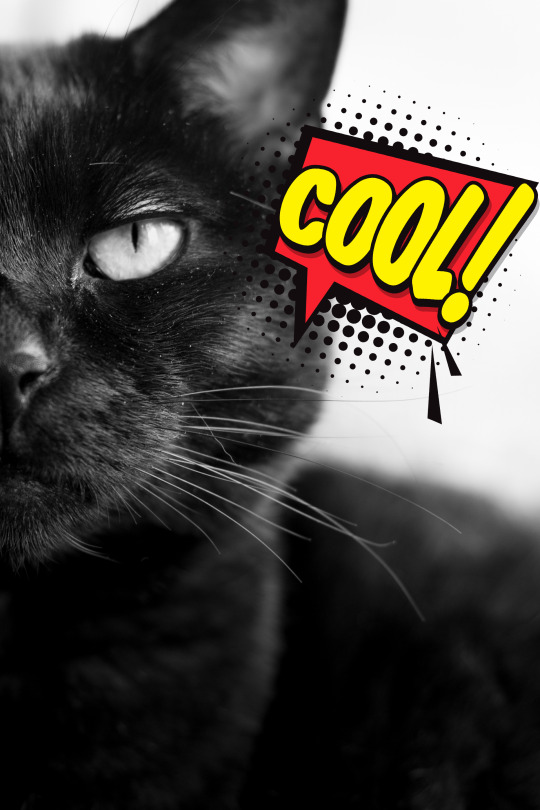
black cat face with the word cool in comic book lettering

Mind Reading

Vibrissae on a cat can also act as a “cat-signal” to let people know what that cat is feeling. When a cat is relaxed, its whiskers will mostly be still and at rest. One “cat-signal” to watch out for are whiskers that are bunched together and lying flat on the cat’s face. In this case, the cat is telling you “back off” or “I’m scared” so you should give that cat some space – you don’t want that cat to “hulk out” on you! You can also tell when a cat is going into hunter-mode when its whiskers are pointed slightly forward.

Rule Number One

If you are the sidekick to a super-cat at home, you must remember one thing: never cut or trim your cat’s whiskers. Cutting a cat’s whiskers will leave them scared and disoriented. Whiskers can be shed and grown back naturally. So don’t mess with a cat’s whiskers! Hands off!

Secret Weapon

Did you know that cats have whiskers in places other than their nose? It’s true! Cats have whiskers above their eyes (like very long eyebrows), on their chin, and even on the back of their front legs! Whiskers on the back of a cat’s front legs help with catching and trapping prey. These vibrissae tell the cat whether their prey is struggling or trying to escape. It’s their secret weapon!

Imagine you could have the superpower of anything in nature. What power would you choose?

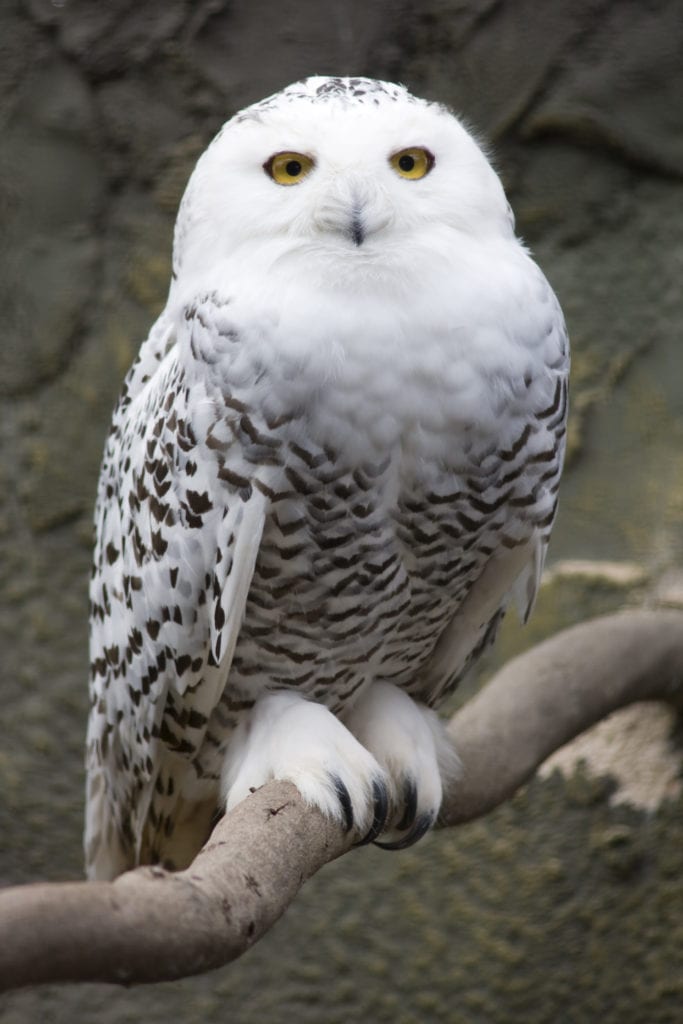
snowy owl

Night Vision

Owls can see well in the dark thanks to sensitive retinal rods and a layer of tissue in their eyes that reflects light.  An owl’s eyes are so big, they can even take up 3% of its body weight!

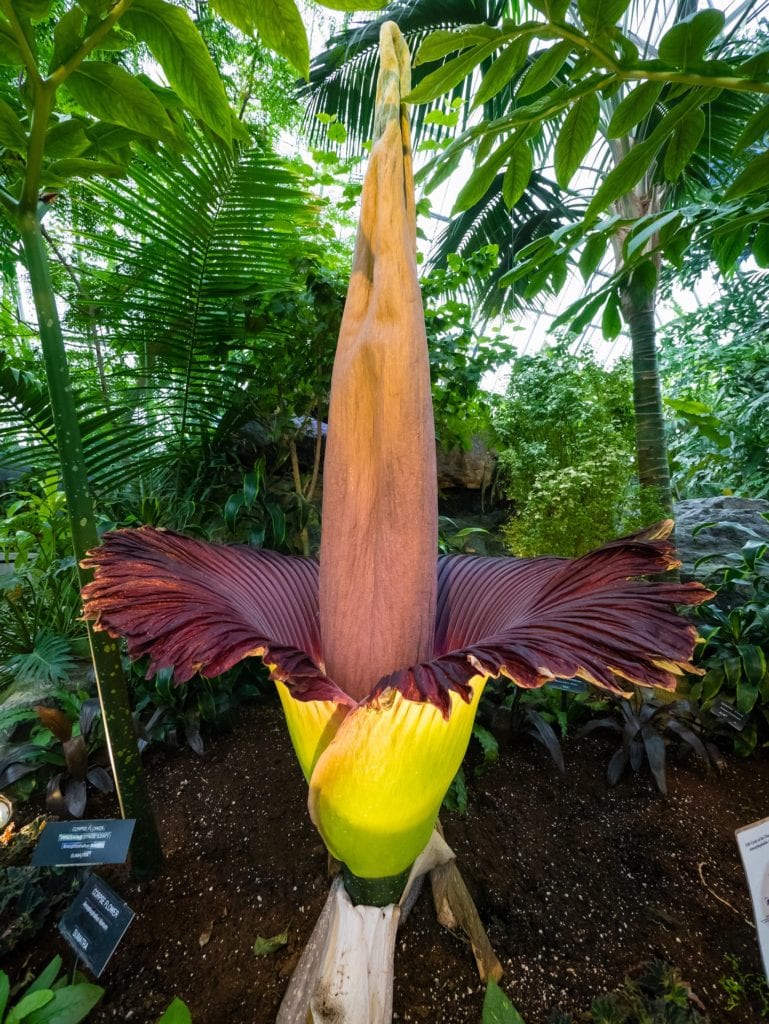
Corpse Flower

Super-Smell

This absurd-looking plant is known by a dramatic name – the corpse flower.  The reason for this name is the extremely foul odor that the flower emits when it blooms, which smells like a rotting corpse.

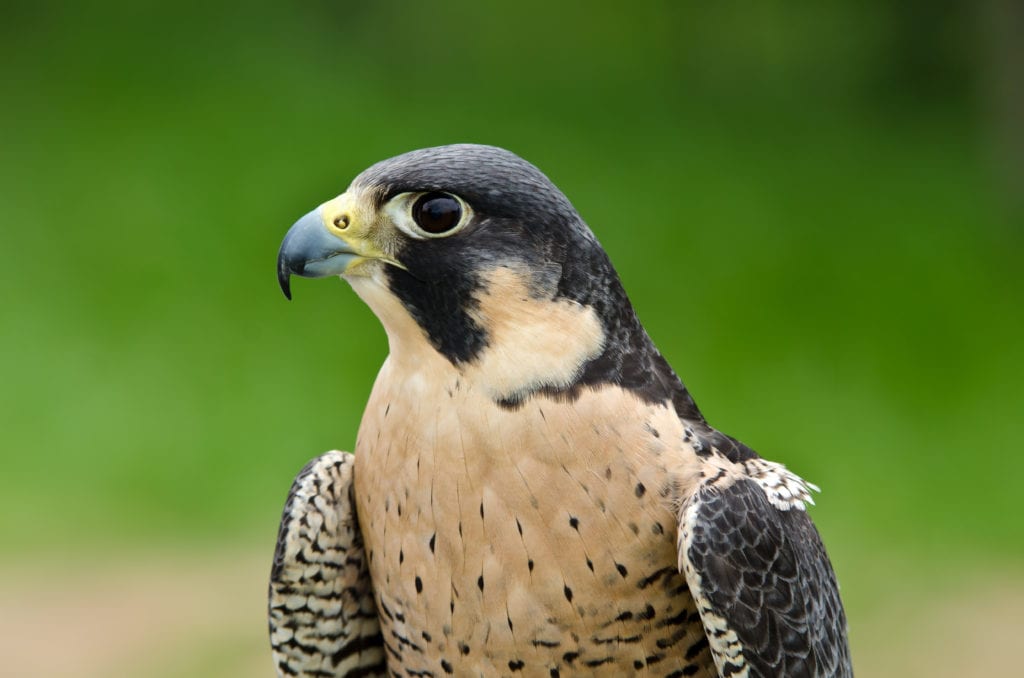
Peregrine Falcon

Lightning Speed

Peregrine Falcons are the world’s fastest animal.  They can reach speeds of over 200 mph when going into a dive, making them especially deadly predators.

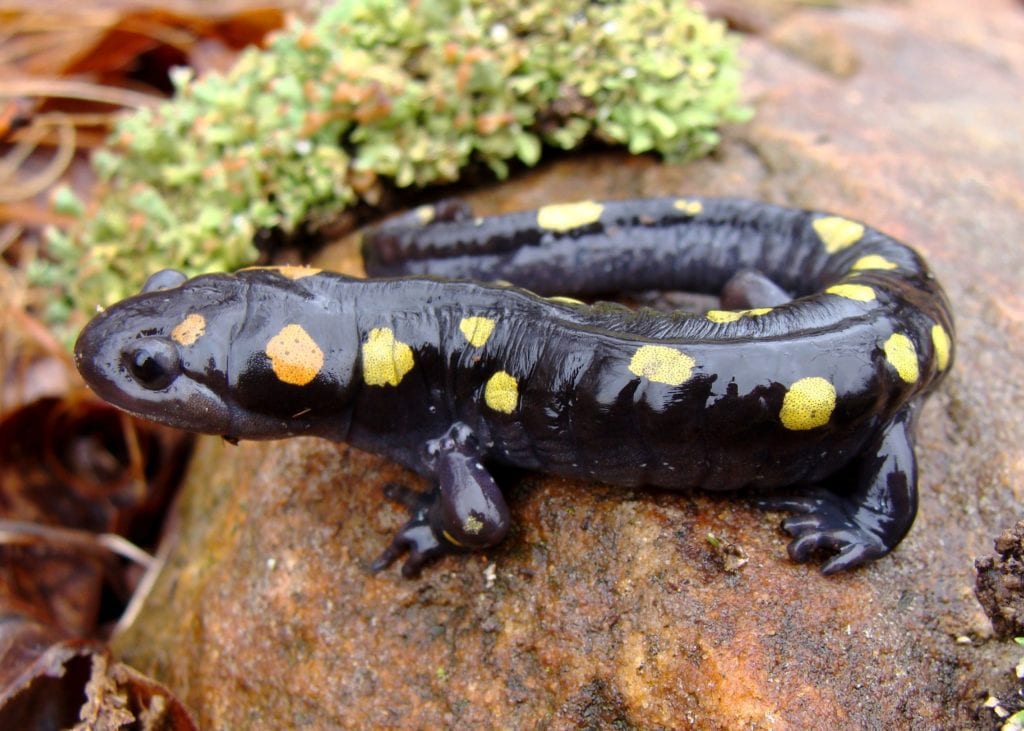
salamander

Regeneration

Did you know that salamanders can regrow entire limbs and even organs?  A salamander might even sacrifice a tail or limb as a defense mechanism, knowing it can regrow it once the salamander gets to safety.

Explore nature together.  Visit Nature 360 for activities and information.

Blog post by Melissa Cagan.

Filed Under: Blog Tagged With: cats, mammals, Melissa Cagan, Nature 360

March 19, 2019 by wpengine

March Mammal Madness Update

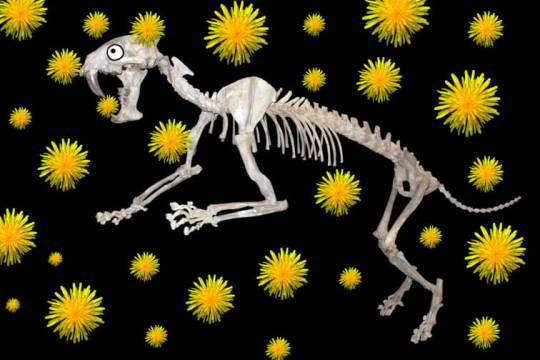
sabertooth cat fossil on black background with yellow dandelions

It’s time to break out the big cats.

Last night’s matches pitted various “cats” against each other, although some cats were only cats in name (for example, the catfish and antlion).

Our most anticipated match had a nimravid (a fossil false sabertooth cat) versus a dandelion. We weren’t sure if the nimravid would only be fossilized bones and stand little chance against the dandelion, or if the nimravid would come to life and be allergic to dandelions. So when the contest began, the nimravid was alive but it began sneezing and as a by-product bit down decapitating the fearsome dandelion. If you fancy seeing a real nimravid, there is one on display in Cenozoic Hall at the Carnegie Museum of Natural History.

For more details on this year’s tournament, click here.

Blog post courtesy of the Section of Mammals. 

Filed Under: Blog Tagged With: Age of Mammals, Cenozoic Hall, fossils, mammals, paleontology, Section of Mammals, Vertebrate Paleontology

March 15, 2019 by wpengine

March Mammal Madness

In case you missed it, March Mammal Madness has already started! What you may say is that?

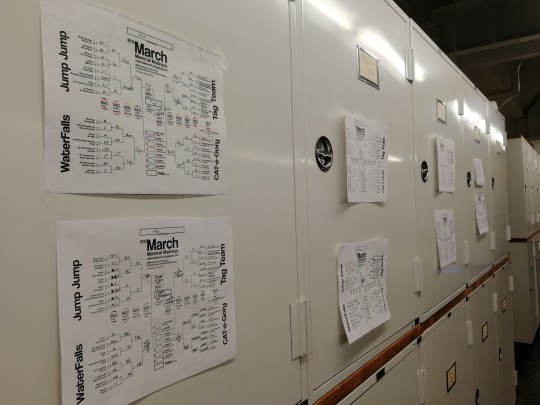
As an alternative to College Basketball’s March Madness, Dr. Katie Hinde, currently at Arizona State University, began a bracket tournament that pits mammals against one another and sometimes other odd creatures.

The Section of Mammals is very excited about this year’s tournament with all staff members having made their predictions. Three of us have picked the Bengal tiger as the ultimate champion, one has the small spotted cat shark, and two others have chosen tag teams (coyote & badger on the one hand and batfly and gammaproteobacteria on the other).

For more details on this year’s tournament, click here.

march mammal madness brackets hung up on a wall

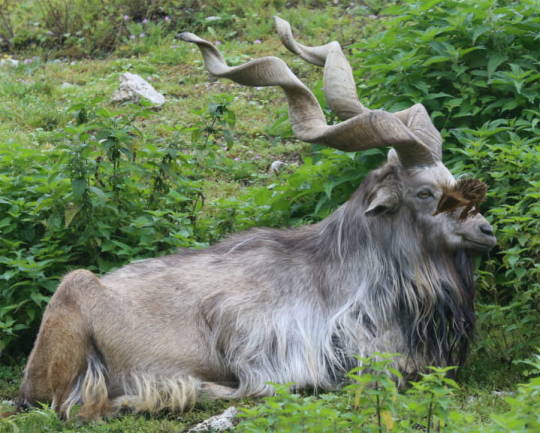
The only repercussion so far is that our lunch time includes a certain amount of trash talk. One of the upsets in the first round was the streaked tenrec defeating the markhor (a small hedgehog-like mammal versus a large screw-horned goat). The markhor had the advantage of size and home turf, but the tenrec won by poking the markhor in the face with its quills.

photo of tenrec and markhor

John Wible is Curator in the Section of Mammals at the Carnegie Museum of Natural History. Museum employees are encouraged to blog about their unique experiences working at the museum.

Filed Under: Blog Tagged With: mammals, March Mammal Madness, Sarah Shelley

February 20, 2019 by wpengine

Doubly Dead: Taxidermy Challenges in Museum Dioramas

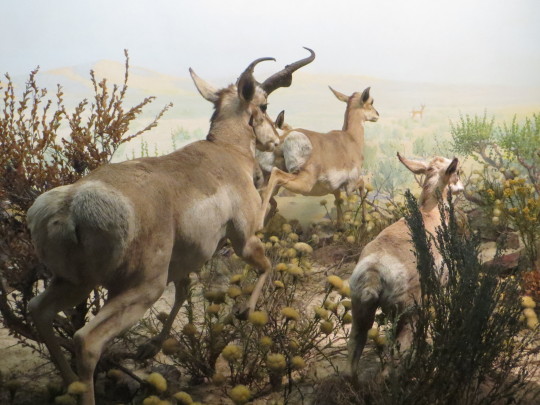
pronghorn antelope diorama

A visit to the wildlife dioramas at Carnegie Museum of Natural History is an opportunity to repeatedly admire the illusions created by teams of skilled taxidermists. None of the featured creatures are alive, but many of them appear to have just paused. Some, such as the pronghorn antelope, pictured above, even seem to be frozen in motion.

In several three-dimensional scenes, where the animal subjects are predators or scavengers, the taxidermists involved in creating the exhibit faced another challenge – presenting the preserved remains of a dead animal as a dead animal. The task, as the somewhat gory details in the pictures below attest, is undoubtedly more difficult than it sounds.

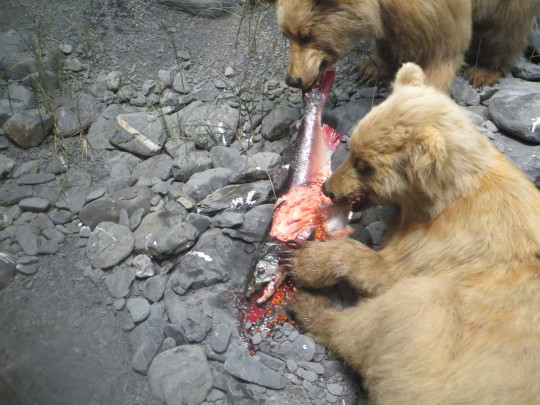
brown bear eating salmon taxidermy diorama

A dead salmon is front and center in the Alaskan Brown Bear diorama, and the pink flesh the cubs are consuming doesn’t look much different than what’s available at supermarket fish counters.

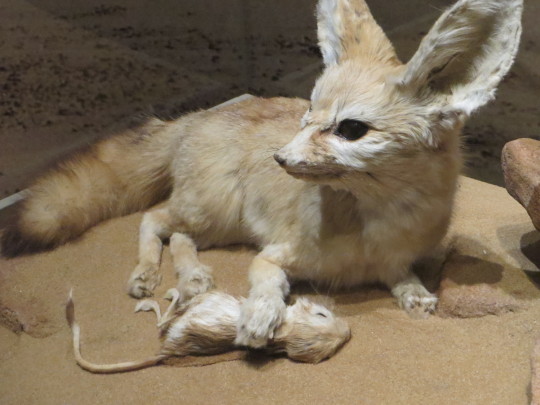
fennec fox and jerboa taxidermy

In the Hall of African Wildlife there’s no blood visible on the Lesser Egyptian Jerboa under fennec’s paw. The curled position of the prey’s feet and back legs indicate the struggle with the big-eared fox is over.

seal taxidermy under paw of polar bear taxidermy

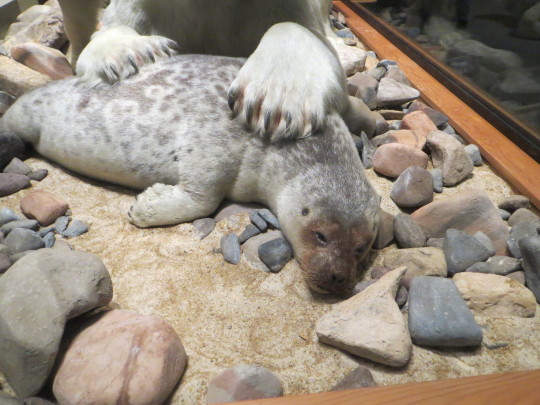
In creating life-like mounts, taxidermists use glass eyes of the proper shape, size, and color.  The glass eyes appear to have lost their luster for the seal that serves as a prey detail in a Polar Bear diorama.

bull elk with large birds in diorama

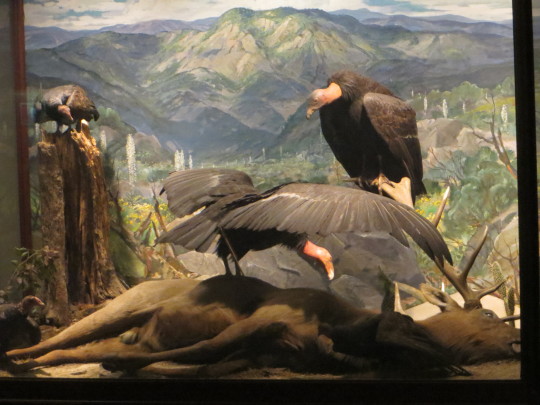
In one of the oldest dioramas within the Hall of North American Wildlife, the centerpiece presence of a dead bull elk indicates the role of both California Condors and Turkey Vultures as scavengers.

detail of bull elk taxidermy

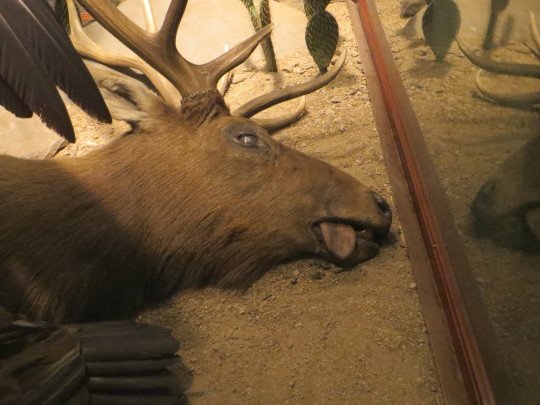
Taxidermy details that indicate the elk’s browsing days are over include dull eyes and a lolling tongue. The tricks of taxidermists are important when they help to explain the role of predators and scavengers, the bedrock biological principle of life from death.

Patrick McShea works in the Education and Visitor Experience department of Carnegie Museum of Natural History. Museum employees are encouraged to blog about their unique experiences and knowledge gained from working at the museum.
Filed Under: Blog Tagged With: diorama, Hall of African Wildlife, Hall of North American Wildlife, mammals, Pat McShea, Patrick McShea, taxidermy

December 18, 2018 by wpengine

Are Santa’s Reindeer Real Mammals?

by Suzanne B. McLaren

Yes! Reindeer are real mammals. In fact, reindeer are the same species as caribou (Rangifer tarandus). The species is widespread throughout northern parts of the Northern Hemisphere. In North America, the wild subspecies are called “caribou.” In Eurasia, both wild and domesticated animals are called reindeer.

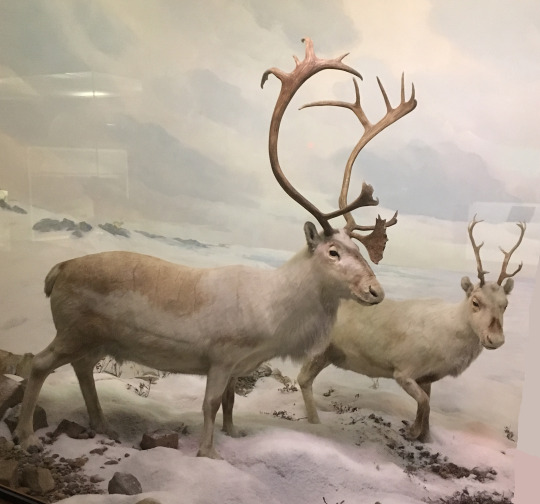
The First Nations People of Canada have depended upon caribou in the same way that tribes of the North American plains depended upon the bison – for meat, and as a source of clothing and various household goods cleverly derived from the animal’s bones, tendons, horns, and fur. However, there was never an attempt to domesticate the animals in North America. In parts of Eurasia, people began to domesticate reindeer about 2,000 years ago. The domesticated animals have evolved to be shorter and stockier than the wild animals. North American subspecies of caribou by contrast, are about as large an elk. There are several subspecies found in Canada, such as the barren-ground caribou living in the tundra, which is known to migrate as much as 800 miles from one seasonal feeding ground to another. At Carnegie Museum of Natural History, visitors can observe the barren-ground caribou and the mountain caribou in dioramas that show their natural habitats in the Hall of North American Wildlife. There is additional information about caribou in Polar World: Wykoff Hall of Arctic Life.

Barren-ground caribou in snow diorama
Barren-ground caribou in snow, Hall of North American Wildlife
Mountain caribou diorama
Mountain caribou, Hall of North American Wildlife

The domesticated reindeer of Eurasia are herded by people living in Arctic regions. These reindeer provide food, clothing, and even shelter for the people with whom their lives are intertwined. Clement Moore’s famous story, ‘Twas the Night Before Christmas’ was written in 1837 at a time when the people of Lapland, in northern Finland, would have been using reindeer to draw large sleighs or sledges, just as other people might use horses.

Unlike other members of the deer family, both male and female caribou and/or reindeer have antlers during part of the year. Large bucks begin developing antlers in March. The antlers of adult males may reach lengths of three to four feet and will be dropped by early November. Young males develop much smaller racks, which are occasionally retained as long as the following February. The antlers of adult females are of similar size to those of young males. A doe will begin to develop her antlers in June and carry them until the following April or May. Timing of antler loss in females usually coincides with the birth of their young. Based on this timing, it is clear that Santa’s reindeer must either be young males or adult females rather than adult males, because the larger males do not have antlers by Christmas time!

Reindeer can move at different speeds from the most common slow trot to a rapid gallop that can reach speeds of up to forty-nine miles per hour over short bursts. A unique characteristic of this animal is a clicking sound that is made by tendons moving over bones in the feet. They are excellent swimmers but have never been known to fly.

Suzanne B. McLaren is the Collection Manager in the Section of Mammals at Carnegie Museum of Natural History. She lives on the Northside with her husband Andy. Museum employees are encouraged to share their unique experiences from working at the museum.
Related Content

A Perfect Mineral for the Christmas Season

A Deeper Look at Dioramas

Snow White Bird Search

Carnegie Museum of Natural History Blog Citation Information

Blog author: McLaren, Suzanne B.
Publication date: December 18, 2018

Share this post!

  • Share on Twitter Share on Twitter
  • Share on Facebook Share on Facebook
  • Share on Pinterest Share on Pinterest
  • Share on LinkedIn Share on LinkedIn
  • Share on Reddit Share on Reddit
  • Share via Email Share via Email

Filed Under: Blog Tagged With: Christmas, Hall of North American Wildlife, mammals, Polar World, Sue McLaren

  • « Go to Previous Page
  • Page 1
  • Interim pages omitted …
  • Page 3
  • Page 4
  • Page 5
  • Page 6
  • Page 7
  • Interim pages omitted …
  • Page 11
  • Go to Next Page »

sidebar

About

  • Mission & Commitments
  • Directors Team
  • Museum History

Get Involved

  • Volunteer
  • Membership
  • Carnegie Discoverers
  • Donate
  • Employment
  • Events

Bring a Group

  • Groups of 10 or More
  • Birthday Parties at the Museum
  • Field Trips

Powdermill

  • Powdermill Nature Reserve
  • Powdermill Field Trips
  • Powdermill Staff
  • Research at Powdermill

More Information

  • Image Permission Requests
  • Science Stories
  • Accessibility
  • Shopping Cart
  • Contact
  • Visitor Policies
Stay in the loop! Sign up for our newsletter(s).
One of the Four Carnegie Museums | © Carnegie Institute | Privacy Policy | Terms of Use | Accessibility
Rad works here logo