• Skip to primary navigation
  • Skip to main content
  • Skip to primary sidebar

Carnegie Museum of Natural History

One of the Four Carnegie Museums of Pittsburgh

  • Visit
    • Buy Tickets
    • Visitor Information
    • Exhibitions
    • Events
    • Dining at the Museum
    • Celebrate at the Museum
    • Powdermill Nature Reserve
    • Event Venue Rental
  • Learn
    • Field Trips
    • Educator Information
    • Programs at the Museum
    • Bring the Museum to You
    • Guided Programs FAQ
    • Programs Online
    • Climate and Rural Systems Partnership
  • Research
    • Scientific Sections
    • Science Stories
    • Science Videos
    • Senior Science & Research Staff
    • Museum Library
    • Science Seminars
    • Scientific Publications
    • Specimen and Artifact Identification
  • About
    • Mission & Commitments
    • Directors Team
    • Museum History
  • Tickets
  • Give
  • Shop

Pat McShea

November 12, 2025 by Erin Southerland

Making Sense of Fossils from a Maryland Cave: A Carnegie Contribution

by Pat McShea
cave bear skeleton mount
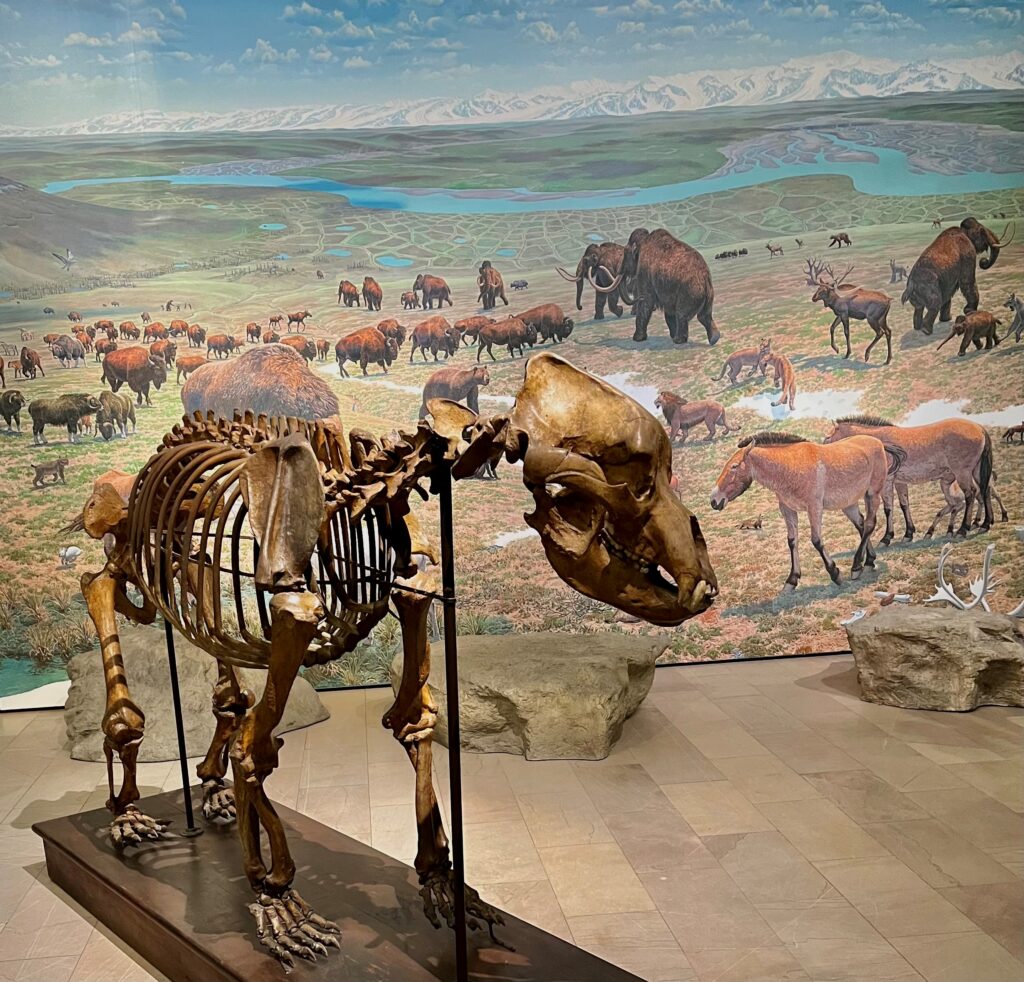
In Cenozoic Hall the mounted skeleton of a Cave Bear from France lends perspective to a backing mural of large Ice Age mammals. Many of the museum’s Ice Age fossils were found closer to home, including some from a cave outside Cumberland, Maryland.

For paleontologists who specialize in interpreting fossil evidence from the Pleistocene, deposits in some Appalachian caves offer windows into the period of the past commonly referred to as the Ice Age. A recent Smithsonian Scholarly Press publication summarizing the discovery, collection, preparation, and interpretation of fossils from a cave in western Maryland strongly supports the window-into-the-past metaphor. The 305-page volume, a product of eleven co-authors, bears the long descriptive title, Middle Pleistocene Cumberland Bone Cave Local Fauna, Allegeny County, Maryland: A Systematic Revision and Paleoecological Interpretation of the Irvingtonian, Middle Appalachians, USA. Remarkably, this chronicle of fossil collecting expeditions mounted by five different organizations over more than a century is dedicated to John Edward Guilday, a Curator at Carnegie Museum of Natural History from 1951 until 1982, and the field crew of museum staff and volunteers who for decades assisted his research efforts.

The collective nature of knowledge presented in the publication makes the dedication particularly appropriate. The fauna list for the site’s vertebrate fossils alone includes 109 creatures ranging in size from mole to mastodon, and the deposition of these remains, over a period of several thousand years, happened more than 700,000 years ago. Deciphering information from such a rich fossil assemblage requires a detailed understanding of other fossil-rich caves, and Guilday’s deep knowledge of findings from sinkholes in Pennsylvania and caves in Tennessee, Kentucky, Virginia, and West Virginia, enabled him to recognize and interpret evidence for such past regional events as range extensions and contractions for various species and repeated changes in climate.
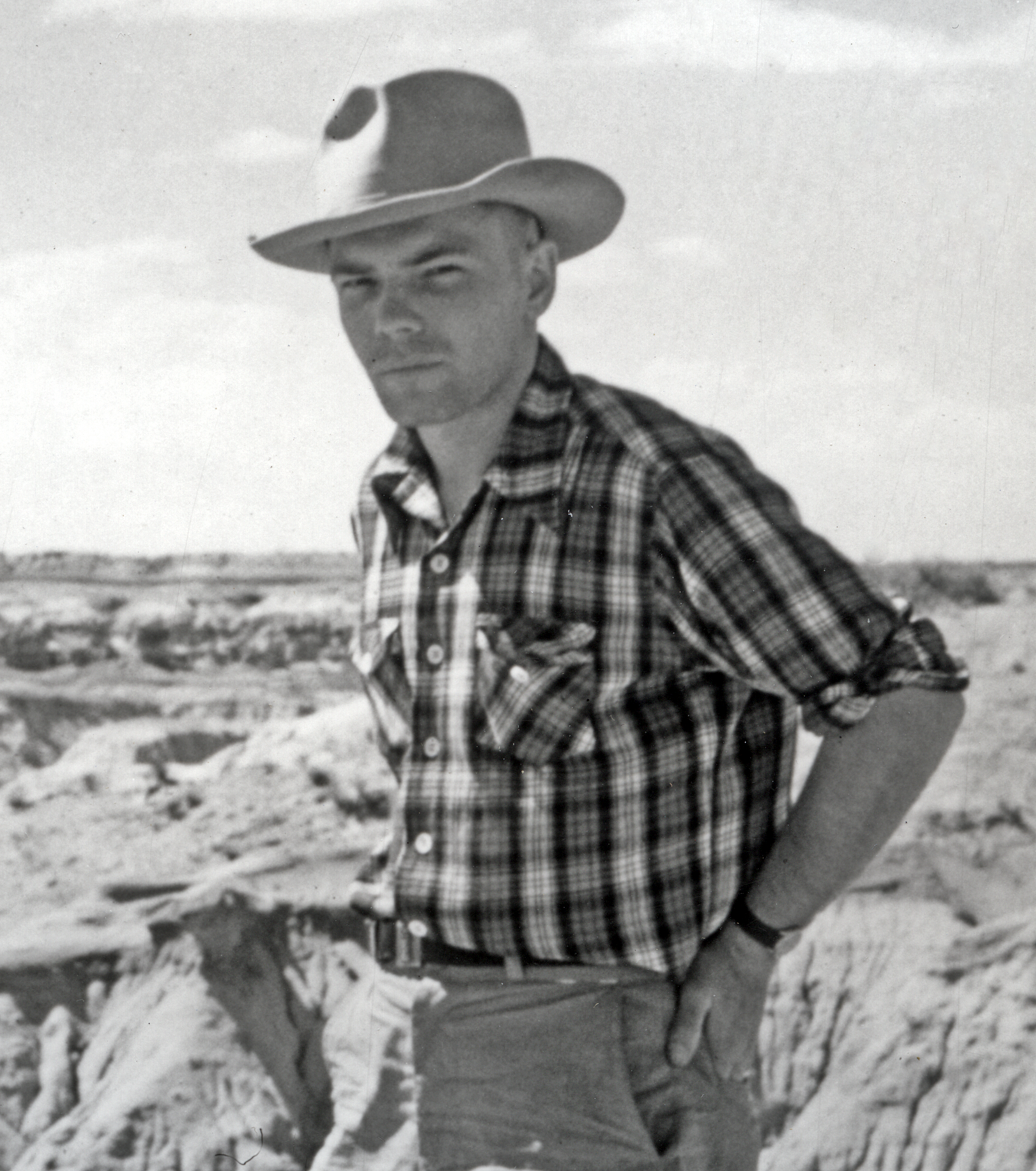
black and white photo of John Guilday
John Edward Guilday in an undated photograph by his wife Alice Guilday.

 The inclusion of the Carnegie Museum field crew in the dedication is particularly apt because Guilday never visited Cumberland Bone Cave or many other sites he studied. His life and career, which included serving in a battle-tested US Army infantry unit during World War II, were immeasurably altered in 1952 when at the age of twenty-seven he contracted polio. The virus tremendously reduced his strength, necessitating the periodic use of an iron lung in his home for the rest of his life. Guilday’s visits to the halls and offices of his established workplace were rare during the next three decades, but with the ceaseless assistance of his wife Alice, the creation of a functional paleo lab in the basement of the couple’s home, and the physical and intellectual contributions of a tireless field crew, he earned a reputation as one of the research strengths of Carnegie Museum of Natural History.

In making a thorough case for the importance of Cumberland Bone Cave to our understanding of past mid-Appalachian environments, the new publication also realistically presents much of the paleontological work at the site as a salvage operation. Little is known with certainty about how the cave, a multi-chambered cavity within a limestone ridge a few miles northwest of Cumberland, was discovered or explored. The story of its recognition as a fossil site is, however, well documented. Beginning in 1910, the Western Maryland Railroad cut a passage for a new line of tracks through the cave-bearing limestone ridge, destroying a significant portion of the subterranean feature. In 1912, when fossilized bone found among excavated rubble was presented to a paleontologist in Washington, D.C. at what is now the National Museum of Natural History, Smithsonian Institution, professional fossil collecting efforts were quickly organized. 

black and white photo of cave entrance
View of cave entrance on the south side of the railroad cut from the north side. Source: 1913 photograph by Raymond William Armbruster, Smithsonian Institution Archives.

A well-illustrated 15-page chapter chronologically profiles the subsequent paleontological investigations of still intact cave chambers, including the intermittent work by a Carnegie Museum of Natural History team between 1964 and 2006. The summary hints at the physical challenges of work in the cave’s tight quarters, notes the cooperation of the railroad company on several occasions when heavy equipment was required for excavation, and emphasizes the current importance of determining exactly where, within this railroad bisected site, particular crews collected fossils. This tally of organized human efforts, along with later chapters listings the fossils collected from the site, raises the very same question that puzzled dozens of investigating paleontologists: How did the remains of such a varied set of ancient creatures come to be deposited in Cumberland Bone Cave?

The author team presents three scenarios. 1) For creatures such as bats, bears, wolves, and peccaries, who used portions of the cave for dens or hibernation chambers, a natural death within their shelter could have eventually led to fossilization. 2) Vertical fissures connecting cave chambers to the ground surface above them functioned as pit traps, occasionally capturing creatures unlikely to otherwise visit the cave. 3) In actions ranging from roosting owls coughing-up pellets of vole bones to wolves bringing larger prey to waiting pups, predators who relied upon the cave for shelter repeatedly brought prey remains into the system.  A fourth scenario, involving bones washed into the cave, was rejected because recovered fossils lack evidence of water wear and sand and gravel are absent in cave matrix. 

The publication’s clarity in explaining ancient deposition and other complex puzzles related to Cumberland Bone Cave will hopefully serve an audience outside Pleistocene Paleontology. The physical labor, disciplined thought, and wide sharing of information outlined in the narrative and referenced in a 23-page biography, make the work a landmark example for any teacher or student interested in the methods of science. Fortunately, the publication is widely available. Copies can be electronically downloaded for free from Smithsonian Institution Scholarly Press.
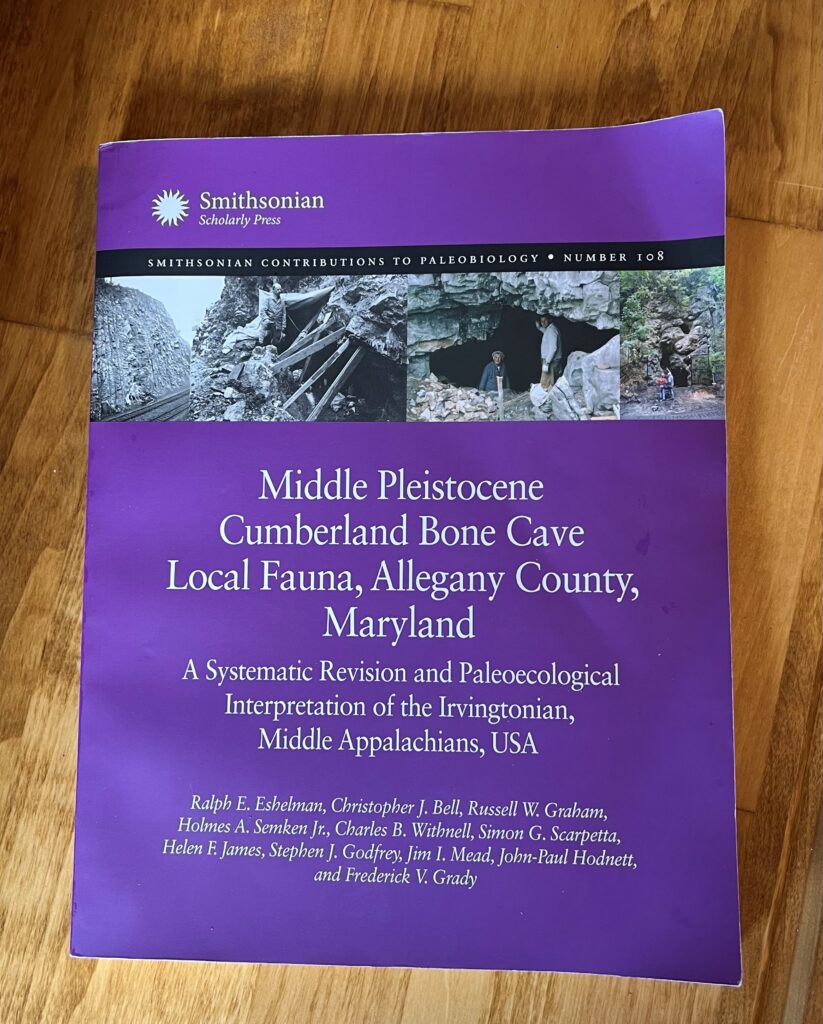
cover of a book about Cumberland Bone Cave

Cumberland Bone Cave is no longer an active research site, but the fenced entrance of its main entrance draws the attention of bicyclists passing near the four-mile mark of the 150-mile Great Allegheny Passage trail. 

Pat McShea is Educator Emeritus at Carnegie Museum of Natural History.

Related Content

Hunting for Fossil Frogs in Wyoming

Type Specimens: What are they and why are they important?

Uprooted: Inside the Museum’s New Exhibition on Invasive Plants

Published November 12, 2025

Filed Under: Blog Tagged With: fossils, paleontology, Pat McShea, Science News

August 25, 2025 by Erin Southerland

Uprooted: Inside the Museum’s New Exhibition on Invasive Plants
by Patrick McShea
museum label comparing grains of rice to seeds
An Uprooted display compares seed production differences between native and invasive plants.

Plants travel across time and territory as seeds. The movement of seeds, each one a tiny embryo packaged with stored food in a protective coating, can generally be attributed to one of five forces – gravity, wind, flowing water, spring-like ejection from the parent plant, or transport by animals, whether deliberately or accidentally. 

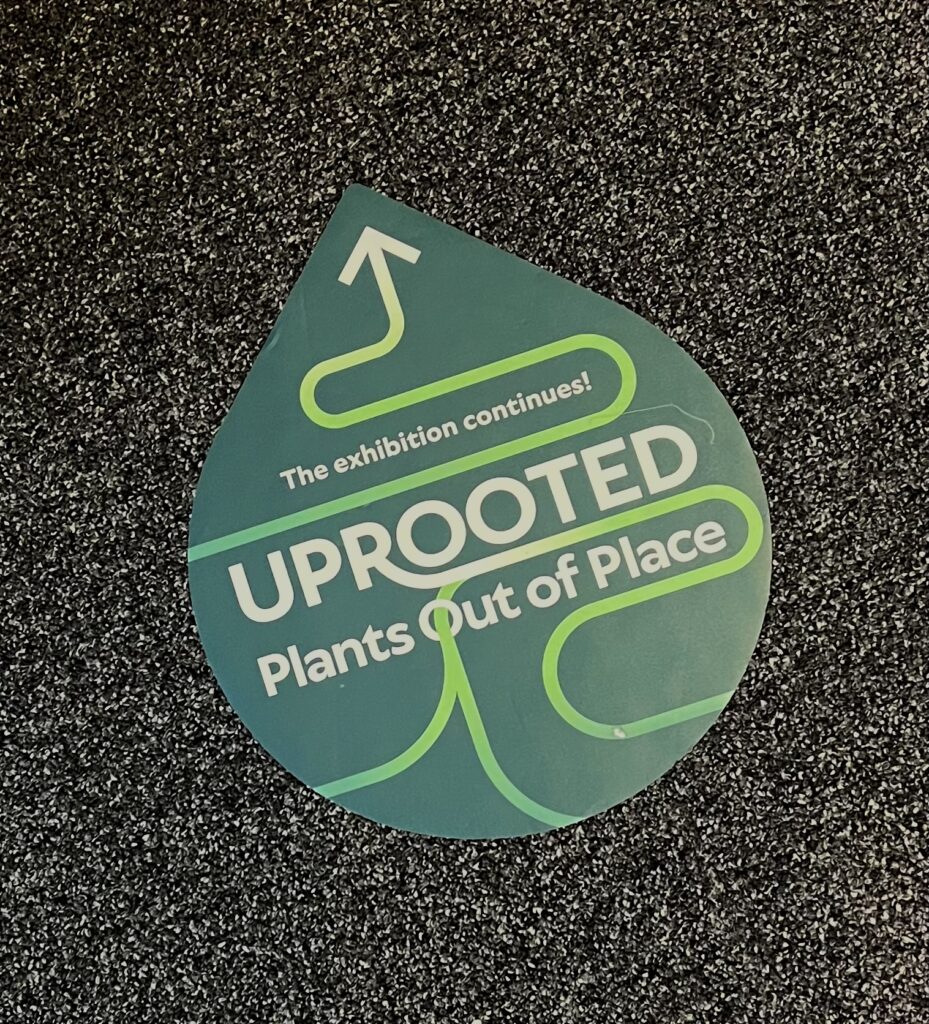
In Uprooted: Plants Out of Place, the new exhibition examining invasive plants from multiple perspectives, seed dispersal by humans, a subset of the fifth force, receives attention for its landscape altering impact. The exhibition occupies two sites within the museum, the Hall of Botany, and the third-floor balcony above Kamin Hall of Dinosaurs. In between, floor-mounted exhibition emblems serve as wayfinding guides between the sites. Visitors who follow these raindrop-shaped directional aids should consider the short walk and elevator ride or stair climb to represent the frequently unnoticed journeys by a whole category of organisms we mistakenly consider to be rooted and immobile.

Uprooted exhibition logo on carpet
The Uprooted emblem guides visitors between the exhibition’s two locations.

Just inside the entry to the Hall of Botany, an exhibition panel for Uprooted provides a definition of “native” that is crucial to understanding issues related to invasive plants. Plants don’t buy houses, but they do have ‘home’ ranges where they have grown for a long period of time. We call plants found in their home ranges native. Visual examples can greatly aid in the comprehension of a new term, and here the surrounding life-sized dioramas depicting plants native to Pennsylvania woodlands, Lake Erie beach margins, Florida swamp land, the Sonoran Desert, and an alpine meadow on Mount Ranier, provide tremendous, and frequently colorful, reinforcement.

On the same panel, below the bold-faced clarification, Passengers, not drivers, visitors are presented with another key definition: Introduced plants that cause harm to the environment or humans around them are called invasive species. Four such invasive species and their attendant problems are profiled in nearby free-standing displays that feature preserved plant material in the form of herbarium sheets, maps documenting invasive plant establishment and rapid expansion, examples of a single plant’s seed production, and explanations of why each was brought, as seed, cuttings, root stock, or whole plant, to our region of the world. Three of the species were deliberately introduced here because of perceived potential benefits. Callery pear (Pyrus calleryana) was introduced because of its beautiful flowers. Multiflora rose (Rosa multiflora) was a favored root stock for grafting and hedgerow creation. Garlic mustard (Alliaria petiolata) was valued as a culinary and medicinal herb. Stiltgrass (Microstegium vimnea), the fourth profiled plant, was introduced accidentally during an early 20th Century period when large quantities of the whole plant, including seedheads, served as disposable protective packaging for porcelain shipped from Asia.

Uprooted label on diorama glass

In sharing the stiltgrass story in the Hall of Botany, Uprooted makes powerful use of the unique space. On the left edge of the diorama that has depicted early summer beneath the canopy of a mature hemlock/northern hardwood forest for over 50 years, visitors will find a suggestion for a scene altering exercise. Imagine stiltgrass growing in this forest for several years – what would it look like? Would it be very different from what you see now? Because the information below this thought prompt notes the tendency of stiltgrass to choke out wildflowers and tree seedlings by forming dense mats, an initial mental alteration of the diorama scene might simply involve a drastic change in the look of the forest floor. However, for visitors who first study details in the meticulously recreated landscape and notice such details as the ovenbird standing just in front of its distinctive domed nest (lower right front corner), the sense of loss will be compounded. 

ovenbird in a diorama

A more hopeful and action-oriented approach awaits visitors on the third-floor balcony section of Uprooted. Here a video loop briefly introduces people from three local organizations working to mitigate the negative impacts of invasive plants, an interactive panel guides visitors to make informed purchases from plant nurseries, and an array of plant portraits by Japanese photographer Koichi Watanabe summarizes his study of conflicting cultural perspectives surrounding the plant known to science as Reynoutria japonica and locally termed Japanese knotweed. In the text panel explaining his approach, Watanabe provides a quote that is a fitting summary for this innovative exhibition: When people move, plants move with them.

Patrick McShea is Educator Emeritus at Carnegie Museum of Natural History.

Related Content

What’s in a Name? Japanese Knotweed or Itadori

City Nature Challenge: Noticing Invasive Plants
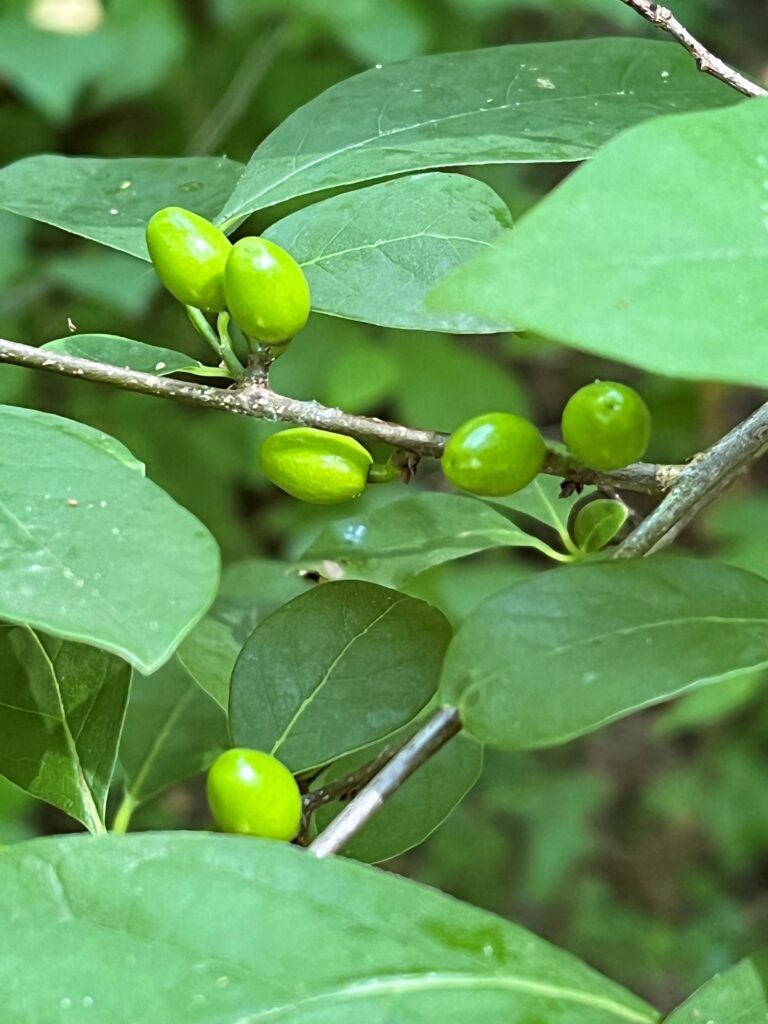
Collected On This Day: Callery Pear from October 11, 1979

Filed Under: Blog Tagged With: Pat McShea, Science News, Uprooted

June 14, 2024 by Erin Southerland

Life Lessons from Dead Birds

by Pat McShea

The title of this post, “Life Lessons from Dead Birds,” is a phrase I use to summarize my long career as an educator at Carnegie Museum of Natural History. For more than 38 years I managed what is now called the Learning Collection, an enormous assemblage of artifacts, rocks, minerals, fossils, and preserved plants and animals, all dedicated to regional educational use through loans to teachers and other educators. The bird-focus of the summary phrase reflects both the numerous avian materials in the Learning Collection and my preference to use some of those items whenever I had the opportunity to work with students. 

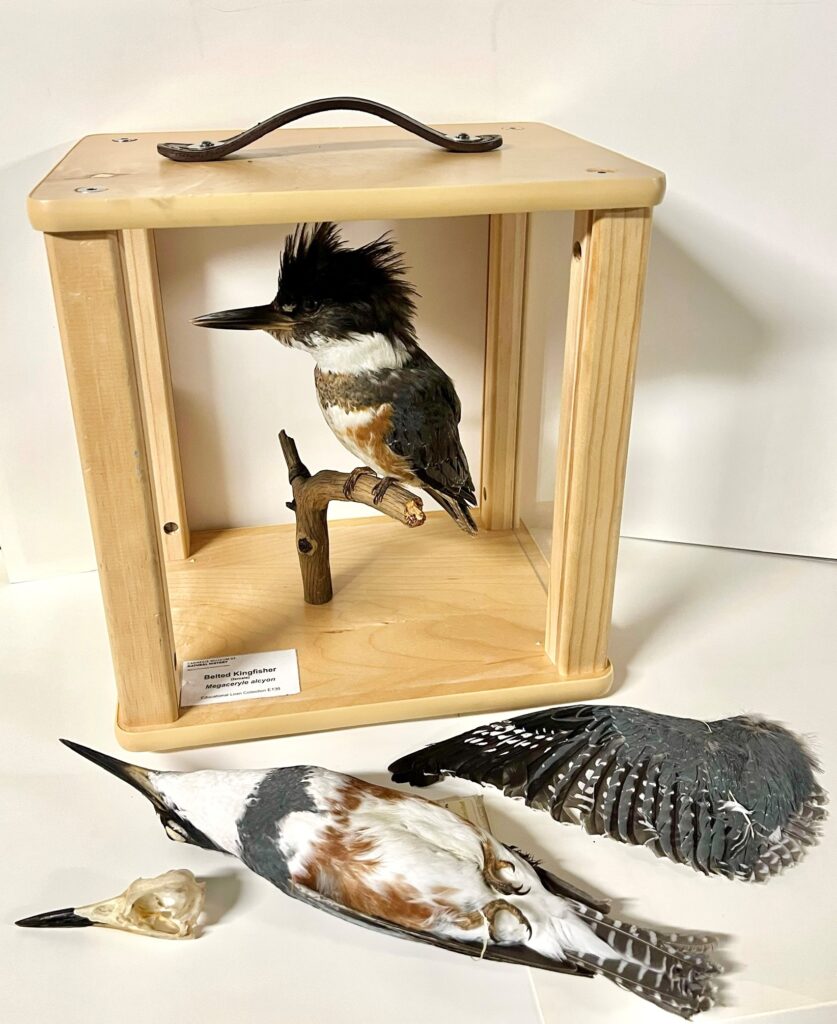
belted kingfisher taxidermy mount study skin, wing, and skull
Belted Kingfisher physical materials in the Learning Collection include a taxidermy mount, study skin, spread wing, and skull. 

There was reasoning behind my bird bias. For natural history topics as narrowly focused as physical feeding adaptations, and as wide ranging as energy flow through ecosystems, bird examples provided students, elementary, middle, or high school level, with the chance to make their own topically relevant observations using common bird species around their school grounds, neighborhoods, and homes. My earliest presentations, however, taught me how important it was to address questions from the audience about the unique instructional materials. 

The students’ questions never seemed like accusations. Whether the setting was a classroom, an auditorium, or a park pavilion, when I stood before them bearing the preserved remains of a once living bird, they simply wanted to know about my connection to the creature’s death. My denials varied with the specimen in-hand. For the spread wing of a hawk, or the skull of an owl, touchable objects that require occasional replacement because of wear from repeated examinations, I’d explain the specimen’s provenance as salvaged material from road-killed or window-killed wildlife.  

“Birds and other wildlife have accidents, and sometimes already dead animals are donated to the museum. Permits and regulations are involved, and as a museum educator, my role in the process is to store the bodies in a freezer until they can be prepared for educational purposes.” 

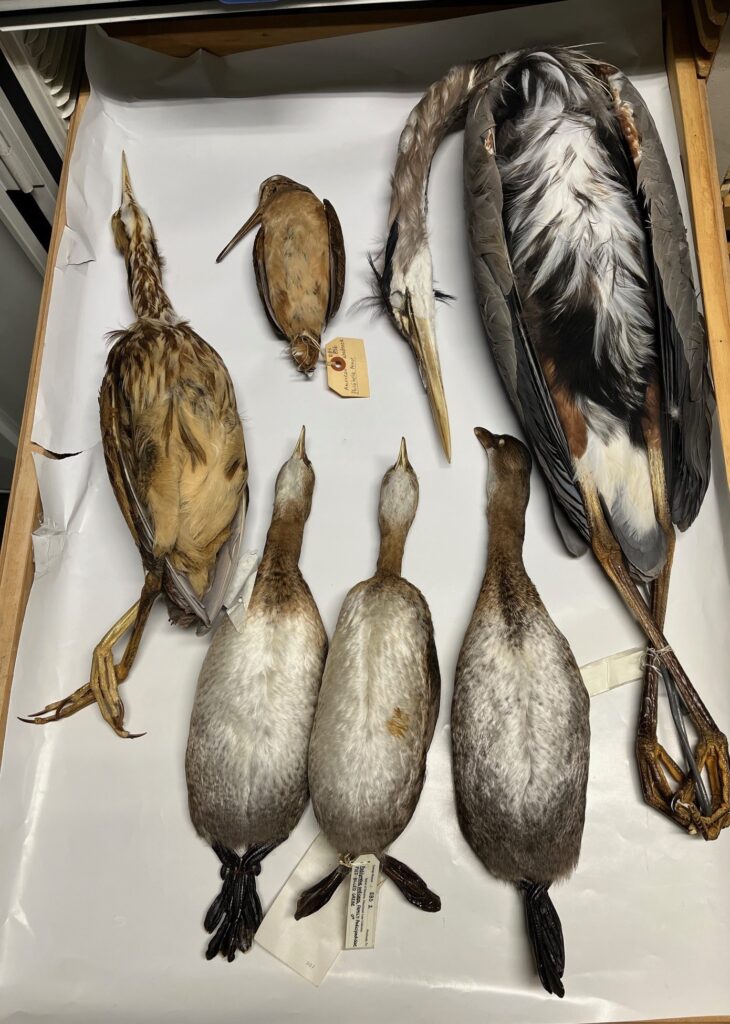
A Learning Collection storage drawer holds six bird study skins. Clockwise, Great Blue Heron, Pied-billed Grebe (3), American Bittern, and American Woodcock. 

When presentations involved life-like, full body taxidermy mounts, I was able to cite far longer periods of personal separation. These birds are encased in portable display boxes with clear acrylic sides, and when I held them up, I drew the students’ attention to the creature’s pose.  

“This bird appears ready to feed or to fly, and it’s been holding that position since long before I began working at the museum. I don’t know how it died, but I can share some information about how it has been preserved.” A gory summary followed, compressing into a few sentences, hours of meticulous work with scalpels, wire, pins, and a bird skin with every feather still attached to its outer surface. “The feathers are real, and the beak, along with some skull bones and leg bones, are still in place. All the body parts that would decay were removed long ago – the eyes, the brain, every internal organ, the muscle tissues. The eyes were replaced with glass replicas, of the proper size, shape, and color, and the skin, with feathers in place, was fitted over a custom-made form shaped just like the bird’s body.” 

On some occasions, exploration of a presentation’s main topic was even further delayed because student inquiries shifted from the circumstances behind the authentic wildlife materials to their very purpose. “Why use animal remains at all?” I recall a student once asking.  

My attempts to answer such questions came to include a quote from the late Dr. John E. Rawlins, former Curator of the museum’s Section of Invertebrate Zoology, about the critically important reasons for scientific collections to be created, maintained, and expanded. “Specimens are similar to books in libraries, because they are volumes of information that may be re-examined and reaffirmed,” Dr. Rawlins wrote, “But specimens are much more informative than books, because the content of a book is acquired in full by a single type of observation, reading. By contrast, the information content of a specimen is acquired by diverse methods of observation, many of which have not been applied to most specimens, and some of which have not yet been devised or even dreamed of.” 

In advocating for the use of similar materials as educational tools, I expressed my hope that their current encounter with selected bird specimens might spark interest in, and even build empathy for, the populations of various wild bird species. As an example of this process, I cited personal experience. Before working at the museum, I was a Volunteer Naturalist at Beechwood Farms Nature Reserve, the headquarters for the Audubon Society of Western Pennsylvania. My first encounter with a bird study skin (the rigid, cotton-stuffed, and eyeless form traditional in scientific collections) occurred during a training session there, when a Pied-billed Grebe specimen was the focus of a presentation. As the study skin was carefully passed among the dozen participants, we were encouraged to examine the bird’s lobed toes, a physical feature that provided hints about the creature’s aquatic lifestyle. 

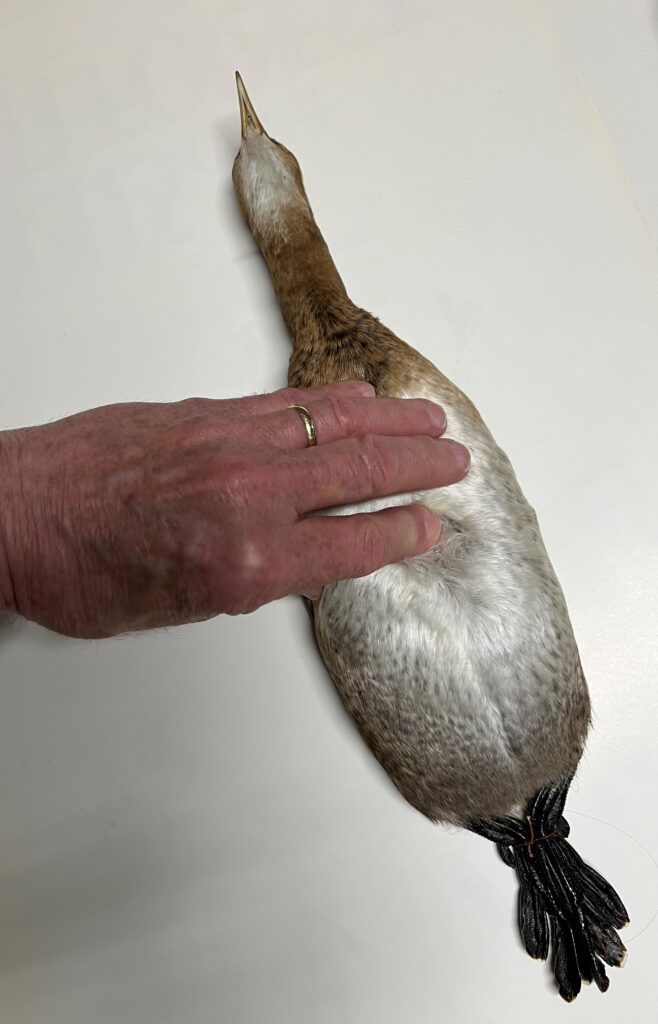
In carefully examining the study skin of a Pied-billed Grebe, you can learn about the dense down insulation of this aquatic bird. 

On sections of the lower Allegheny, I had observed single Pied-billed Grebes at least a dozen times during winter months, floating placidly just off sections of wooded riverbank, and making regular, 30-second dives beneath the surface. When the study skin reached me, I dutifully examined its toes, but I also used an index finger to gently part the dense pale breast feathers to reveal a layer of much denser gray down beneath them. In that moment, the specimen provided information, different than a photograph or written account, about how the birds I observed on the icy Allegheny stayed warm. This tactile specimen-centered encounter convinced me that preserved bird remains can enhance observations of the species’ more numerous living kin. During the years I managed the Learning Collection this was among the most important concepts I promoted. 

Pat McShea is an Educator at Carnegie Museum of Natural History.

Related Content

Ruffed Grouse or Scarlet Tanager: Debating the Pennsylvania State Bird

What’s Up With the Dead Birds?

Tracking Migratory Flight in the Northeast

Carnegie Museum of Natural History Blog Citation Information

Blog author: McShea, Pat
Publication date: June 14, 2024

Share this post!

  • Share on Twitter Share on Twitter
  • Share on Facebook Share on Facebook
  • Share on Pinterest Share on Pinterest
  • Share on LinkedIn Share on LinkedIn
  • Share on Reddit Share on Reddit
  • Share via Email Share via Email

Filed Under: Blog Tagged With: Birds, Pat McShea

December 29, 2023 by Erin Southerland

Happy Retirement, Pat McShea!

If you’ve read our blog before today, you have almost certainly encountered the work of Museum Educator Pat McShea. Pat has written more than 125 blog posts over the past seven years and in 2020 took on the role of editor. Pat is retiring today, and we couldn’t think of a more fitting tribute than a blog post. His work has only changed our blog for the better and we are so grateful for all the time and effort he has put in over the years. 

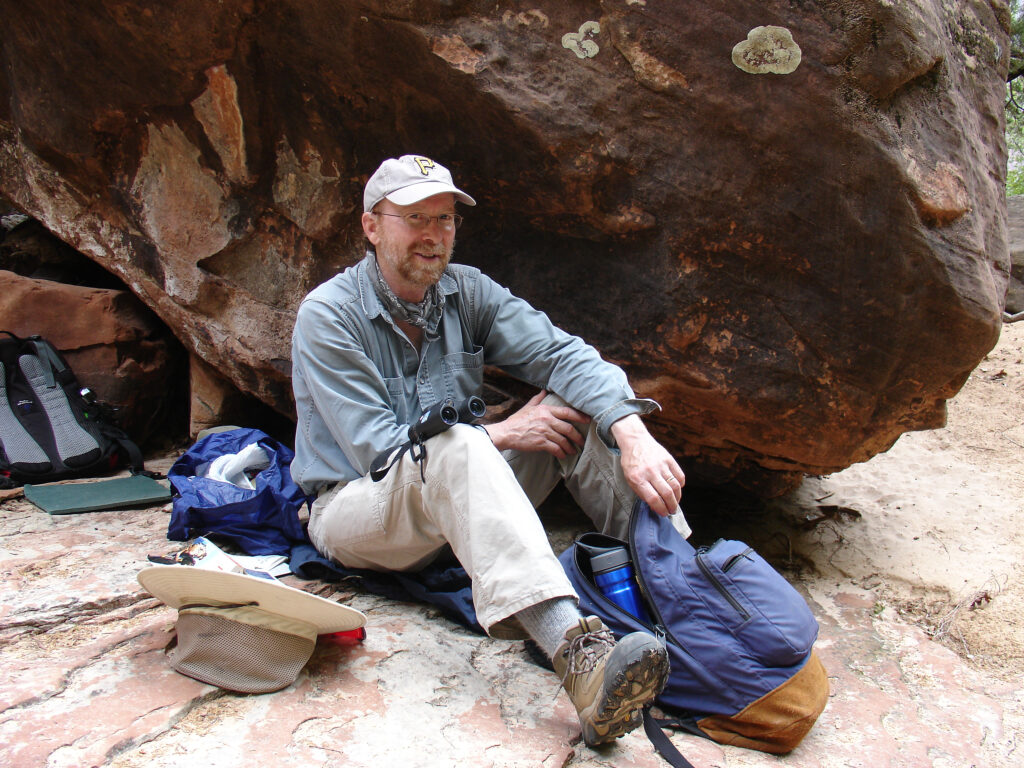
Pat McShea sitting next to a boulder with binoculars on his lap and hiking gear (backpack, hat, jacket) scattered around him.
Zion National Park, 2013.

The earliest post tagged with Pat’s name was published in February 2016 and is called Blue Fleece Jacket. It links field work to life in Pittsburgh with a piece of clothing – a blue fleece jacket. And that’s fitting because one of Pat’s great skills is connecting. Whether it’s scientific topics, people, or random ideas, if there’s a relevant connection, Pat can find it and will share it. 

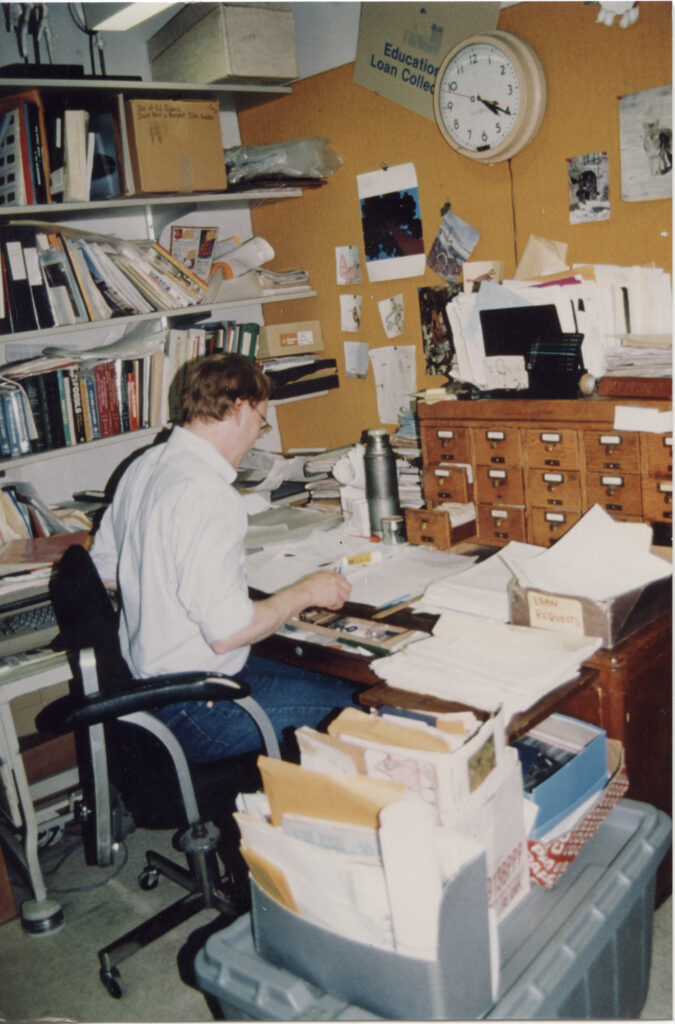
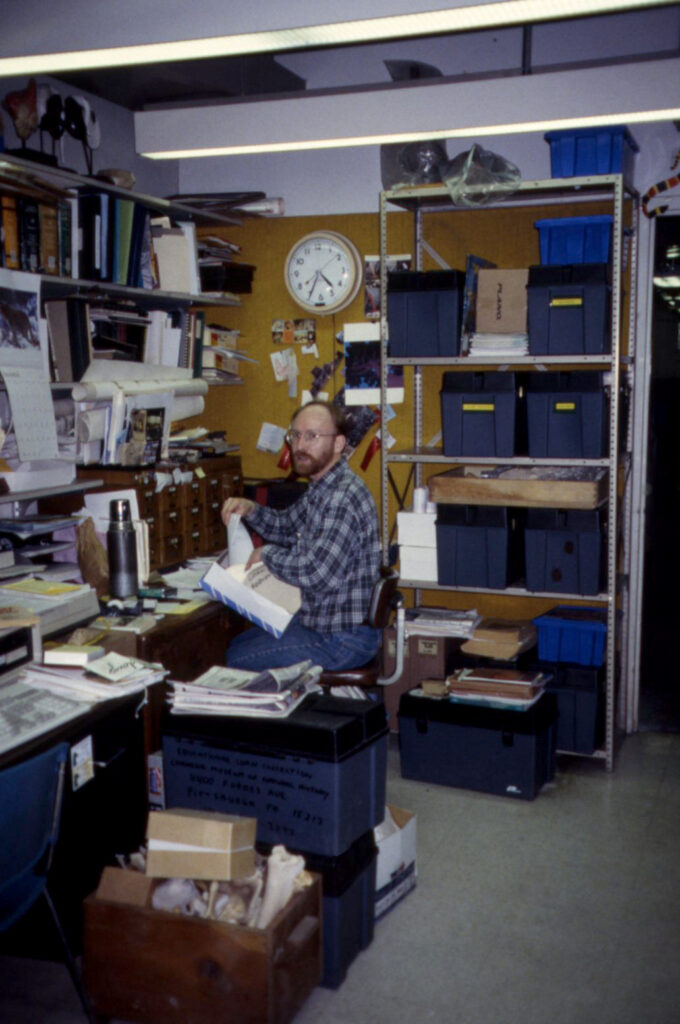
But Pat has done so much more than write for and edit this blog. His primary role is as Program Officer for the Learning Collection (known for many years as the Educator Loan Collection). He was hired in 1985 as a part-time assistant for the Learning Collection and shortly thereafter as part-time gift shop staff. He took over full-time management of the Learning Collection in 1986. He has loaned items to thousands of teachers, librarians, naturalists, park rangers, artists, and home school parents over the years, and in the process has created lasting relationships while giving learners who might never make it to the museum the opportunity to engage with natural history. 

Pat and his wife Amy Henrici, Collection Manager of Vertebrate Paleontology, are retiring and the museum won’t be the same without them. They are both kind, generous with their time and knowledge, and always a joy to talk to. We will miss them!  

Memories and Stories 

Pat has made a significant impact on the museum community and beyond. When asked the best advice he can share with his education colleagues, he quoted poet and author Mary Oliver: “Pay attention.” And it’s clear from the stories collected below that when Pat is around, people pay attention. Please note, there are many, many people who could contribute here; this is a small sampling of Pat’s impact. 

“Pat has always guided students of all ages (myself included) to observe the traits and behaviors of plants and animals first; then later discover their names. In the fast-paced world of “what is this/that?” Pat shows us that if we slow down and focus our attention, we will begin to discover the amazing intricate details of our natural world and be better suited to tell stories about what we observe.” -Joe Stavish, Director of Education at Tree Pittsburgh (former senior environmental educator at Powdermill Nature Reserve) 

“I met Pat in the winter of 1984-85 [I think] through a mutual friend, relying on his outdoor expertise to buy my first cross country skis at a shop in Shadyside where he worked. I hired him in October 1985 to be my part time assistant in the Educator Loan Collection – mostly moving all the heavy cases around for me. So I was his first supervisor, but also his last(!), because he was hired full-time as head of the collection when I decided not to return from maternity leave in May 1986. 

My son Paul felt like he grew up at the museum as I worked on various freelance projects there, due largely because Pat always made time to share with him interesting info and the occasional cast-off from the collection. Coming full circle, when Paul was a high school senior, Pat took him on and mentored him for a weeks-long senior project.  

Always kind, always the educator, always radiating gentle humor – that’s Pat McShea!” – Laura Beattie, Program Specialist for The Leonard S. Mudge Environmental Education Program, 1981-1985, then Program Specialist for the Educational Loan Collection 1985-1986, freelancer for the museum from 1986-1996 

Pat McShea working at a desk
In the Learning Collection office.

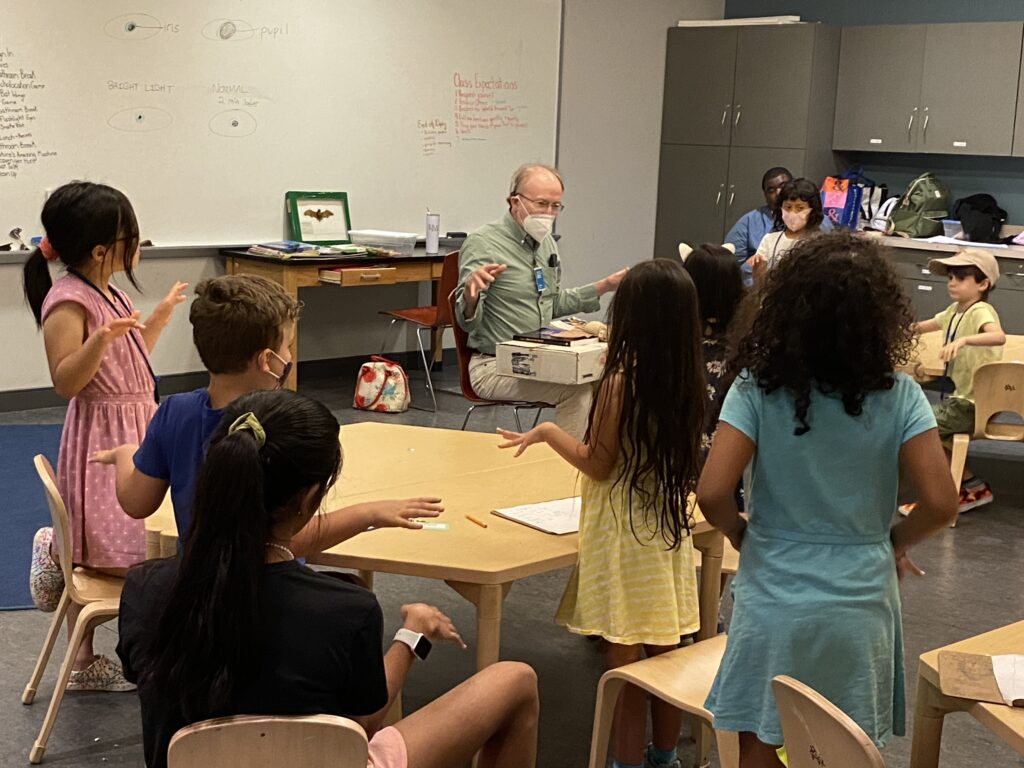
“One of the most enduring lessons that Pat has shared with us is to be more curious and less afraid. This wisdom came to light secondhand from a 5-year-old summer camper who, in an end-of-camp reflection, was asked by their camp instructor what was most memorable about their time at camp. They said it was the day that Mr. Pat came to teach about bees, and explained that when he is afraid of something it makes him feel better to ask questions about it. During the camp visit, Pat spoke to a common concern that prevents many people from looking more closely at insects: fear. By making space to talk about feelings, then inviting all kinds of questions, Pat helped all of the campers learn something new. As a colleague, Pat models curiosity in the face of scary subject matter all the time. It’s been essential for the projects on climate change education that he’s worked on over the last 15 years. During the Covid-19 pandemic, this philosophy was essential. Even as we planned for his retirement, Pat has provided reassuring answers to our many questions about how to manage the Learning Collection – most importantly that the curiosity of the educators and students has always pointed the way and will continue to do so.” – Laurie Giarratani, Director of Learning and Community 

“I think ALL of the time about the lasting impact that Pat had on both young learners and adult staff when he encouraged a group of 5-year-old summer campers who were expressing some fear and anxiety about bees to lean into curiosity when they find themselves scared of something (because when you ask questions and learn more, it’s usually going to calm your fears).  That moment (maybe 5 years ago now?!) was the genesis of the ongoing summer camp mantra of “more curious = less afraid.” -Breann Thompson, Associate Director, Learning and Community Programs  

Pat McShea presenting to a group of kids in a classroom
Pat McShea teaching a group of summer campers about bats.

“One of Pat’s talents that made him so successful in his job is his ability to absorb information quickly. When I was getting my Master’s in Geology at the University of Pittsburgh, Pat would help me study for tests by quizzing me. I can still remember him asking me for the eight or so characteristics of deep-sea sediments. As I was slowly trying to come up with the list, I realized that Pat didn’t have to check my notes to see if I was correct, because he already had memorized the information ahead of me. Pat thus acquired considerable knowledge about geology while helping me study for tests.” – Amy Henrici, Collection Manager of Vertebrate Paleontology (and Pat’s wife) 

“Pat is a naturalist poet who reminds us that every hike promises revelations around every corner, as long as we’re patient and observant. After encountering Pat’s words and work, you don’t look at the world with the same eyes. In the words of Norman MacClean, it’s a world with dew still on it. 

Pat, thank you for reminding so many of us that it’s a world with dew still on it waiting for us to make our own discoveries.” – Sloan MacRae, Director of Marketing and Communications

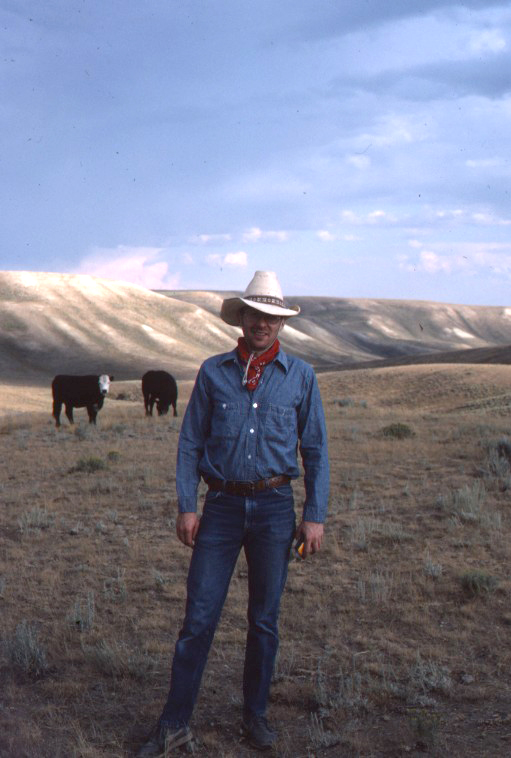
Pat McShea outdoors in a field with cows and hills in the background
Wyoming, 1982.

“It’s impossible to talk about Pat without noting his incredible generosity. He doesn’t just learn and retain information – he eagerly shares it, without fail, with friends, family, colleagues, visitors, learners, everyone. He observes, he listens, he remembers, and he follows up. When a colleague marvels over something he’s written, or remembers a special moment when Pat sought them out to share something, or receives a word of encouragement from Pat during a hard time, that’s the magic of Pat McShea. He’s the most genuine, generous person, and we are all better for working and learning alongside him.” – Jessica Romano, Museum Education Writer

“So one random week last year, Pat KEPT repeating the fact to me that the Haudenosaunee people waited until their corn plants were the size of a squirrel’s ear before planting the beans.  

Over and over and over again. It was really odd but I pushed it out of my brain.  

That was a mistake.  

When he was leading his workshop at the start of the next week, he got out a piece of corn, made a remark about how plants, animals, and natural cycles all tie together. He turns to me and goes “JOHN!  When did the Haudenosaunee plant their beans!?”   

He’s all smiles. He KNOWS I’ve got this. He’s trained me for this.  

And I completely utterly flopped. No idea. Brain blank. No lights on. The hamster is gone and all that’s left is a goldfish flopping around.  

So this madman pulls out a taxidermy of a squirrel. I don’t know where it came from, probably summoned it out of the Aether.  

He holds it up in front of me and goes “a SQUIRREL’S EAR, John!  Come on!!” and everyone starts laughing.” – John Bitsura, Offsite Program Manager 

Pat McShea at his desk
In the Learning Collection office.

“Pat’s retirement represents the loss of a significant voice for Carnegie Museum of Natural History. Contemplating the museum’s future without Pat led me to revisit some of his blogs on the web. One of my personal favorites is “A Gorilla For Our Imagination”. It relates the back story of the silverback male lowland gorilla in the Hall of African Wildlife, “George” who died of natural causes at the Pittsburgh Zoo in 1979. Pat wrote that the important role of this taxidermy ‘is as an educational tool capable of holding eye contact, and thereby encouraging contemplation. In staring contests that the glass-eyed mount never loses, the gorilla represents all its wild kind, the entire population of our planet’s largest primates, close relative of modern humans, and a group whose continued existence is increasingly threatened by illegal hunting, habitat loss, and disease.’ Pat’s insightful words speak volumes about the museum’s exhibits.” – John Wible, Curator of Mammals 

“I worked with Pat McShea in education at the Carnegie Museum of Natural History for ten years and continued to work with him for the next twenty years while using “his” amazing educational loan collection and other resources he provided in my classroom. The museum and community were lucky to have Pat in education for many years because he took a wonderful program like the loan collection and made it even better. Adjectives that describe Pat include kind, inquisitive, kind, helpful, kind, smart, kind, organized, kind, dependable, fun, and did I mention kind? If you are around Pat, it is guaranteed that you will learn something and I would say that a lot of what I know about wildlife and nature is because of Pat. Knowing him and working with him made me a better teacher. He loves the natural world and all the creatures in it and shares his knowledge in many creative ways. (He also makes the best Irish soda bread you will ever taste!)” – Linda Vitale, Natural history docent and teacher from 1983-1993, Museum on the Move volunteer until 2020 

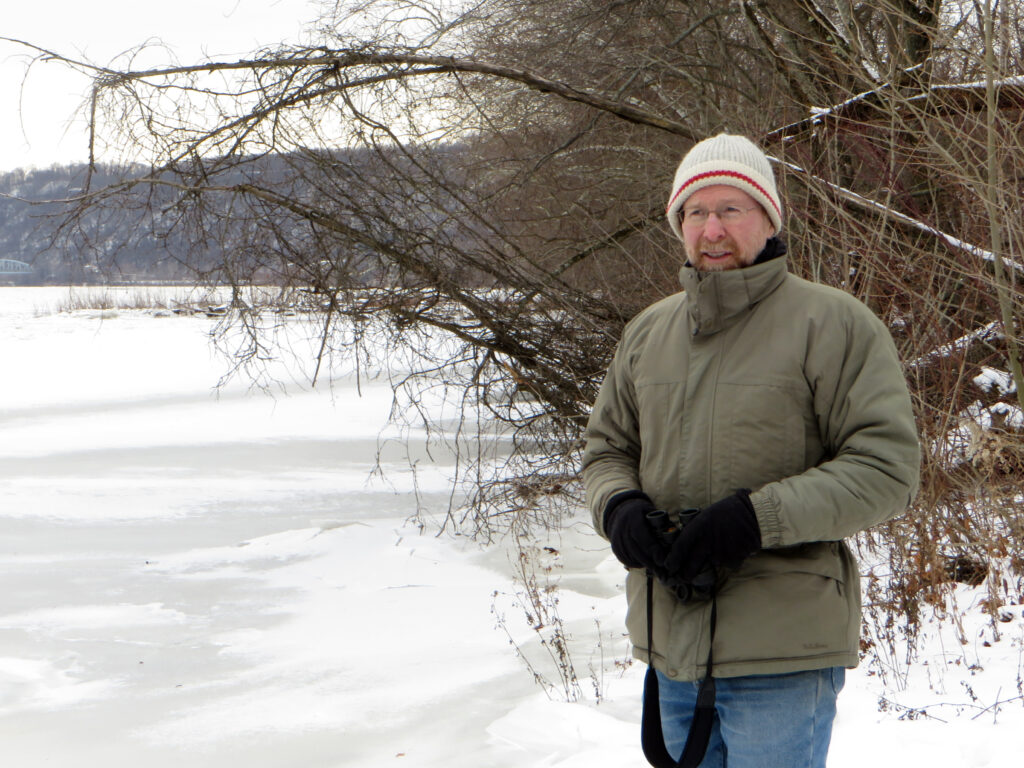
Pat McShea next to an icy river
Allegheny River, 2015.

“Pat’s wealth of knowledge has been invaluable to us as the Allegheny County Park Rangers. His dedication and passion for education shows in everything he does. From suggesting loan materials to use for a specific program to sharing educational resources and articles, Pat has made an immense impact on all of our staff members. I think it is shown best by the number of seasonal Park Rangers who move on from being Rangers but continue to use the loan collection and Pat’s expertise at other positions. It has been an honor and a privilege to be able to work with Pat.” – Elise Cupps, Education & Outreach Coordinator at Allegheny County Parks 

“Amidst the museum’s larger than life history, exhibits, collections and research, Pat’s attention has always been for the learner’s engagement with some aspect of what the climate, plants, animals, and humans might be doing in any season. For example, when working on tabletop exhibits about climate change, Pat noticed that people like to find their homes on maps. He connected that interest to a phenomenon that he and Amy were seeing on their drive to and from work, the morning exodus of crows from the city and evening return of the noisy birds in their dark flocks. He made a climate connection to the urban heat island effect that makes city roosts especially desirable. Given their daily flight patterns, numbers and vocal presence, Pat figured a small prompt “Where have you noticed crows?” might help people become curious about the connection. The regional map, combined with a heat map, crow specimen from ed loan collection and some fun stories about how crows roost and who gets the lower, poopy branches of the trees, came together as a prototype activity in Basecamp where Pat continued to observe people’s responses and chat with those who wanted to share.  

His quiet, thoughtful approach to finding openings for thinking like a naturalist, being inspired by nature around us, and drawing on museum resources, are treasured memories of my time at CMNH. An email in the morning from Pat, with a quote, article of interest, or photo causes me to pause and reflect on Pat’s awe for nature and his constant desire to understand what inspires others. Can’t wait to see how this continues in his future endeavors!” – Mary Ann Steiner, Research Associate with the Climate Rural Systems Partnership (CRSP)  

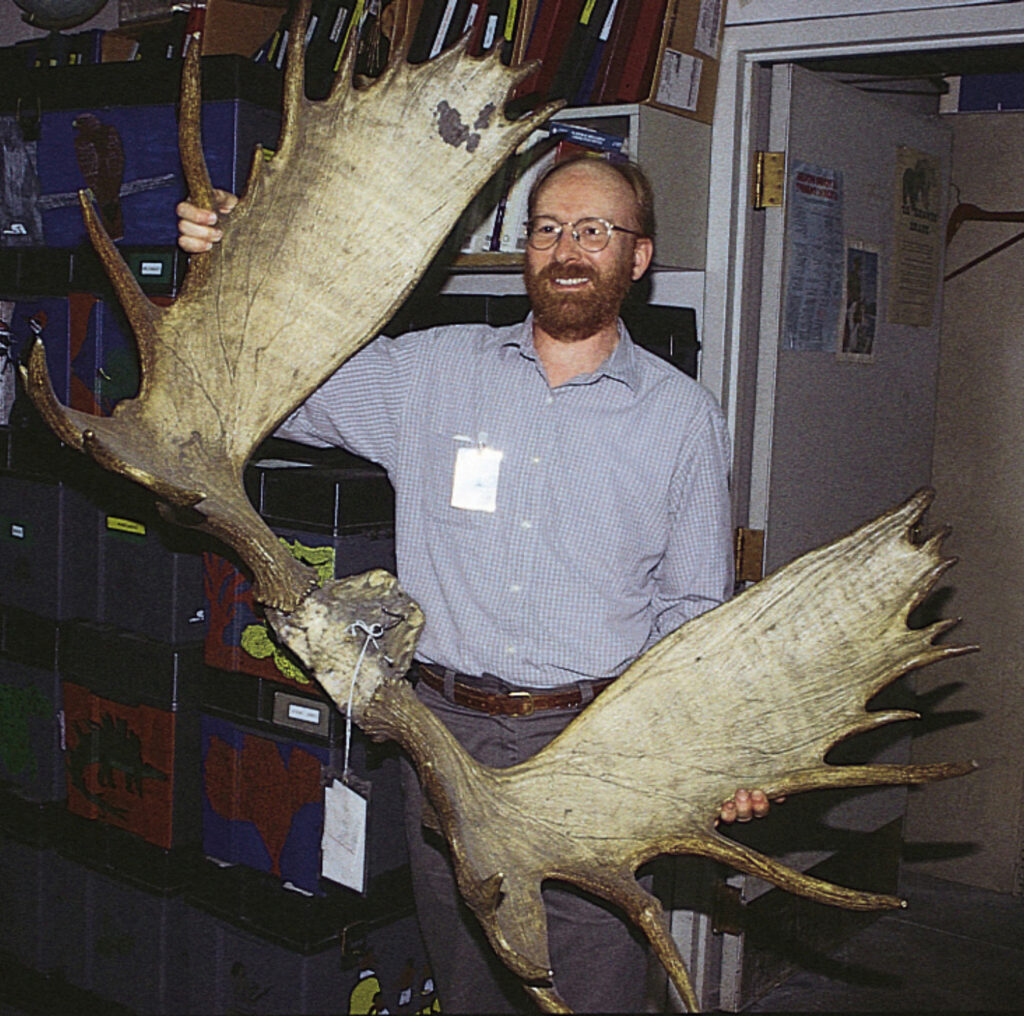
Pat McShea holding large antlers

“I was asked to share something about Pat from the time I worked with him, which was through 1999 when I left CMNH. If there were dramatic or funny stories to tell, I’ve forgotten them. This, however, attests to Pat’s character. He isn’t one to look for ways to draw attention. He’s steady, reliable, always helpful, generous in sharing his knowledge, and appreciated by educators throughout the area and staff throughout the Carnegie. This was true when I worked with Pat and I’m sure it continued. Oh yes, there was that time when I was greeted with a life-sized human skeleton model at my desk when I arrived at work on my 40th birthday. Quite a sight, courtesy of Pat!” – Judi Bobenage, former Chair of the Division of Education 

“As Pat held up the miniscule mink skull, I knew this lesson would be ‘gold’ for my students. It’s rare to find professional development in the Life Sciences that’s so engaging, informative, and relevant, and Pat’s class on identifying and studying mammal bones sparked a lesson which I still use with my middle school students every year! Though he’s leaving CMNH, Pat’s passions for all things outdoors will live on in classrooms around the Pittsburgh area and beyond. Thanks for all you’ve done, Pat. You will be missed!” – Christian Shane, North Allegheny educator 

Blog Highlights  

If you’re looking to read more of Pat’s own words, here are a few of our favorite blog posts he’s written. Happy reading!  

Learning From Misinterpretations
We Get Questions: Climate Change, Hope, and Action
Building Birding Skills
Echoes of Freedom in an Owl’s Call
Sharing a City Park With a Resident Reptile
Holiday Stowaway: Northern Saw-whet Owl

Carnegie Museum of Natural History Blog Citation Information

Blog author: Carnegie Museum of Natural History
Publication date: December 29, 2023

Share this post!

  • Share on Twitter Share on Twitter
  • Share on Facebook Share on Facebook
  • Share on Pinterest Share on Pinterest
  • Share on LinkedIn Share on LinkedIn
  • Share on Reddit Share on Reddit
  • Share via Email Share via Email

Filed Under: Blog Tagged With: Education, Pat McShea

December 1, 2023 by Erin Southerland

Birds in “Twelve Days of Christmas”: a Museum Search

by Patrick McShea

The Twelve Days of Christmas

When a traditional song about Christmas gifts reaches young ears, the centuries-old lyrics naturally prompt questions. If you’ve been on the receiving end of inquiries such as “What’s a partridge?”, a museum visit can provide identity information for the abundance of birds mentioned in the “Twelve Days of Christmas.”

Although the birds cited below aren’t precise matches for European species of the song, locating these feathered references can renew your own appreciation for what might be an overly familiar tune. 

Inspiration and informational reference for the re-interpretation of several exhibits comes from a 2018 American Ornithological Society blog post by Bob Montgomerie, an evolutionary biologist at Queens University in Kingston, Ontario. Dr. Montgomerie’s post is titled “Three French Hens.”

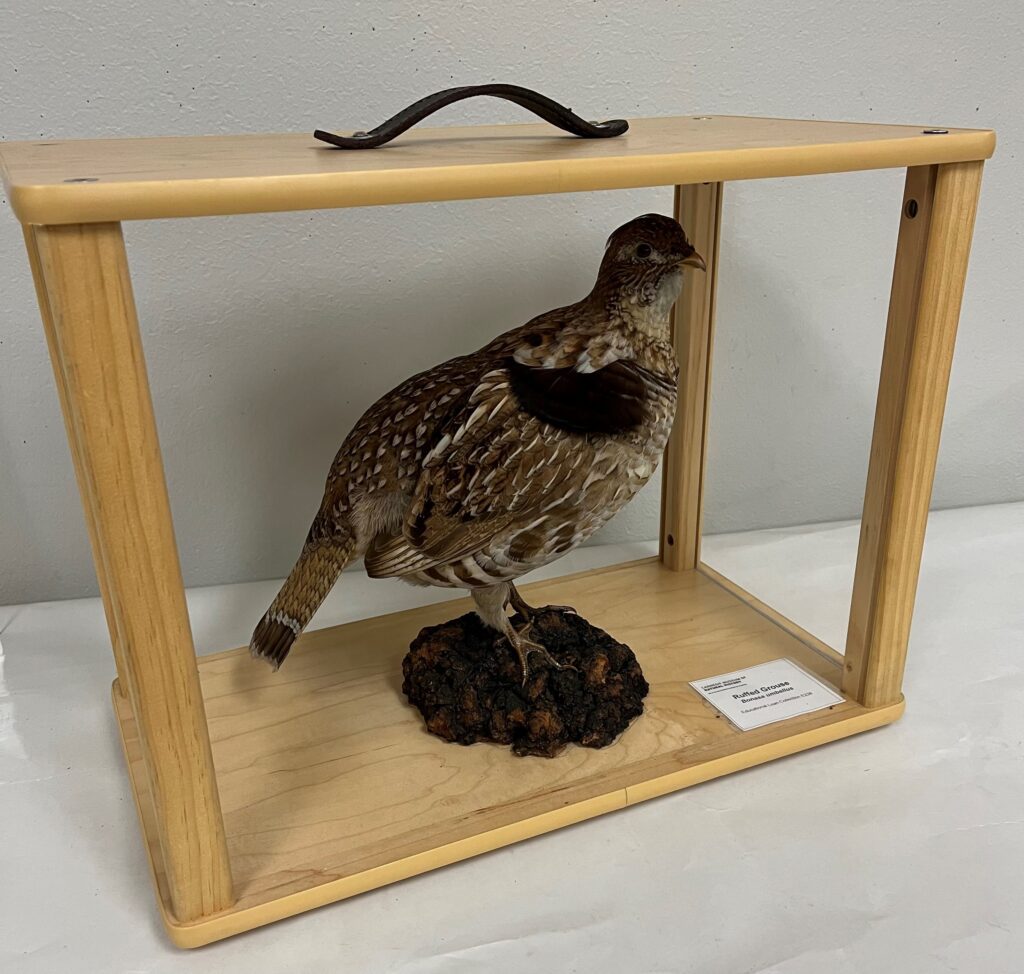
A Partridge in a Pear Tree

Ruffed Grouse taxidermy mount in Discovery Basecamp.

In Pennsylvania, the Ruffed Grouse has reigned as state bird since 1931. The species’ collective value to Pennsylvania residents includes the gamebird’s historic importance as a food source and its current role as the focus of much upland sport hunting. The bird referenced in the song might well have been the Red-legged Partridge, a European species known to science as Alectoris rufa, however, the Ruffed Grouse is a decent substitute because the bird, which is known to perch in trees occasionally, is routinely called “partridge” in Maine and other portions of the northeast.

Two Turtle Doves 

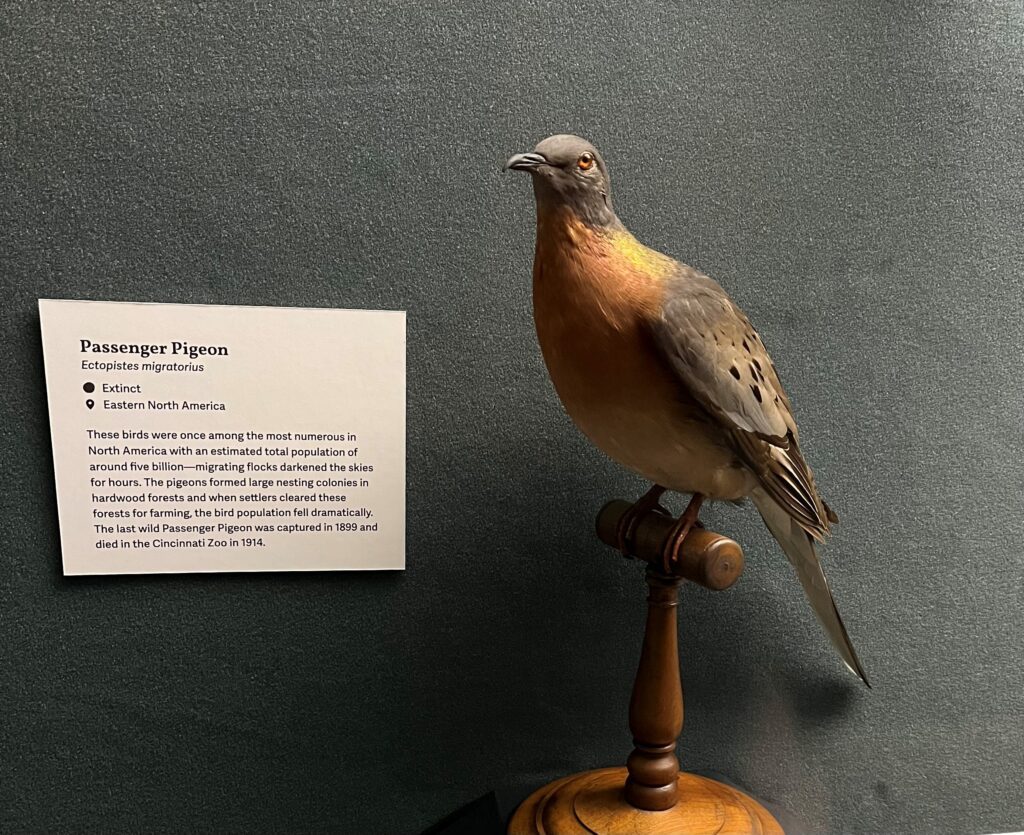
Passenger Pigeon taxidermy mount in Bird Hall

The European Turtle Dove, Streptopelia turtur, is a member of the bird family of doves and pigeons known as Columbidae. Generally, the smaller species in the family are called doves, and the larger species ae called pigeons. The Passenger Pigeon is the most notable family member on display at the museum. 

Passenger Pigeons were once so abundant in eastern North America that flocks darkened the skies for hours when the birds migrated to access seasonal feeding areas and nesting sites. 

Sustainable use of the birds by humans did not continue into the 19th Century. By mid-century, Passenger Pigeons became an unregulated commodity in the rapidly expanding American economy, with the country’s growing railroad network and parallel telegraph system providing unprecedented means for sharing word of flock locations, transporting hunters to those sites, and shipping harvested birds to distant markets.

Three French Hens

The song reference is to a specific breed of domestic chicken. There are no domestic chickens on display in the museum, but the species is usually well-represented in the food selections offered within the building’s dining areas. Some scientists have speculated that our current reliance on domestic chickens as a global source of protein for human consumption might someday leave deposits of chicken bones as an identifying mark of the Anthropocene, a proposed name for the current geologic age, viewed as the period during which human activity has been the dominant influence on climate and the environment.

Four Calling Birds

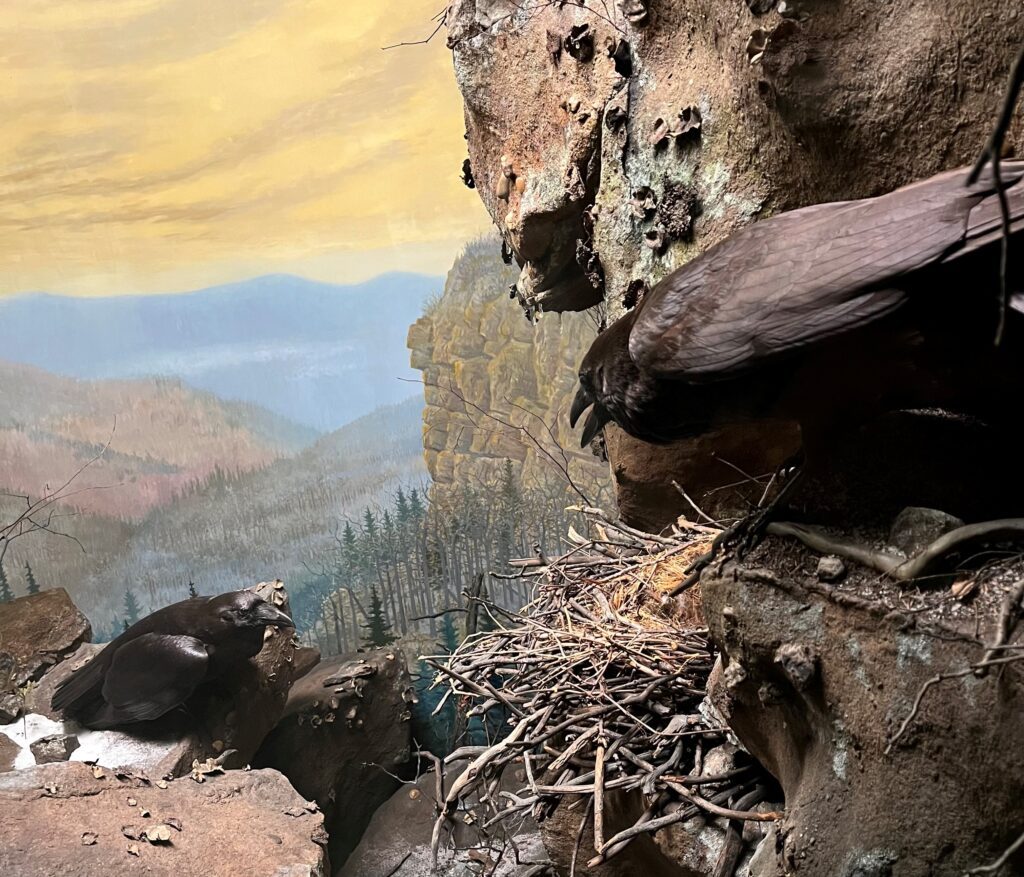
Northern Raven taxidermy mount in a diorama of its habitat

If we use the cited author’s research finding, (The original ‘colly bird’ was the Eurasian Blackbird (Turdus merula) as ‘colly’ meant ‘black’ as in ‘coaly,’ and is why border collies bear that name.) the Northern Ravens in an Art of the Diorama display can fill this slot. Another candidate is the American Crow, a species frequently observed passing over the museum building at dusk during winter evenings, heading to local roosts in scattered flocks that number in the thousands. Ornithologists explain the birds’ collective behavior as taking advantage of a “heat island effect,” a base temperature in a city that is five or more degrees warmer than the surrounding countryside. 

Five Golden Rings

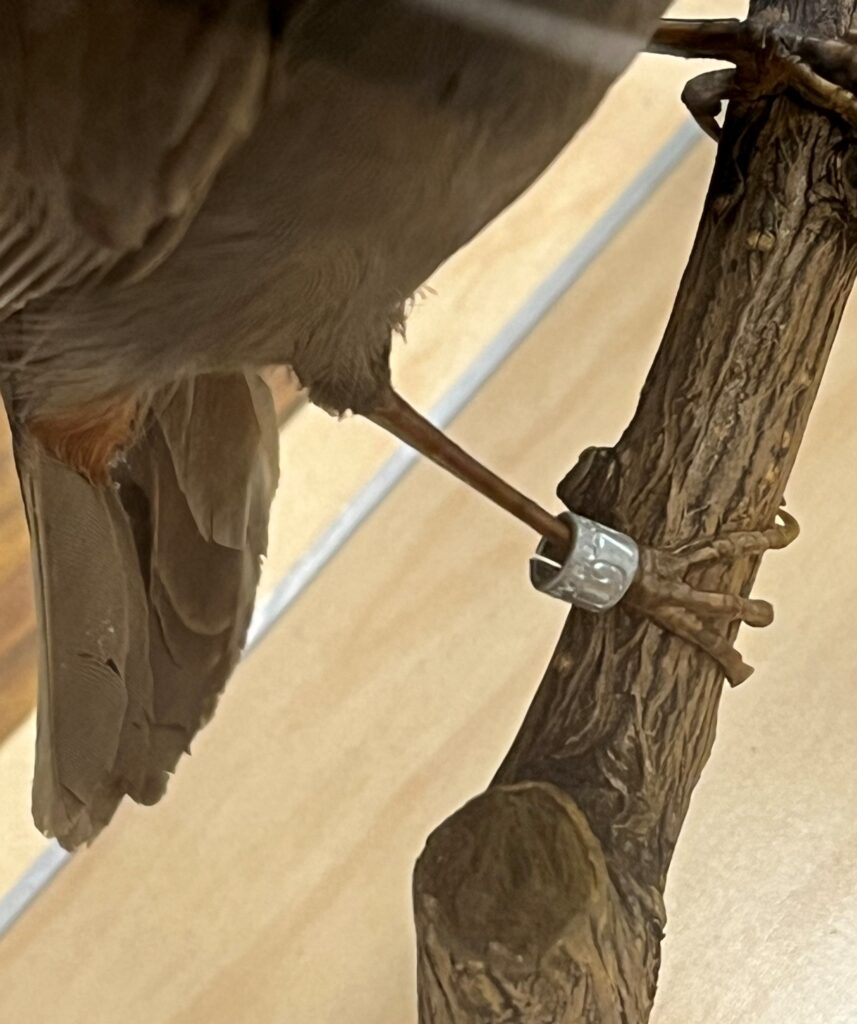
Close-up of a bird band on bird taxidermy mount

“Five golden rings” might also have a bird connection. Dr. Montgomerie’s post mentions both Gold Finches and Ring-necked Pheasants as possible references, but the museum’s long history of bird banding at Powdermill Nature Reserve, the location of Powdermill Avian Research Center (PARC), allows a different approach. Bird banding is a research practice that involves capturing wild birds, marking them with numbered leg bands, and releasing them unharmed. In some parts of the world this centuries’ old effort to verify bird movements through recovered birds is called “ringing.” It is admittedly a stretch between gold rings and aluminum bands, but for a close look at the latter, check the tabletops in Discovery Basecamp for an encased taxidermy mount of a Gray Catbird bearing one of the lightweight markers on its right leg.

Six Geese A-laying

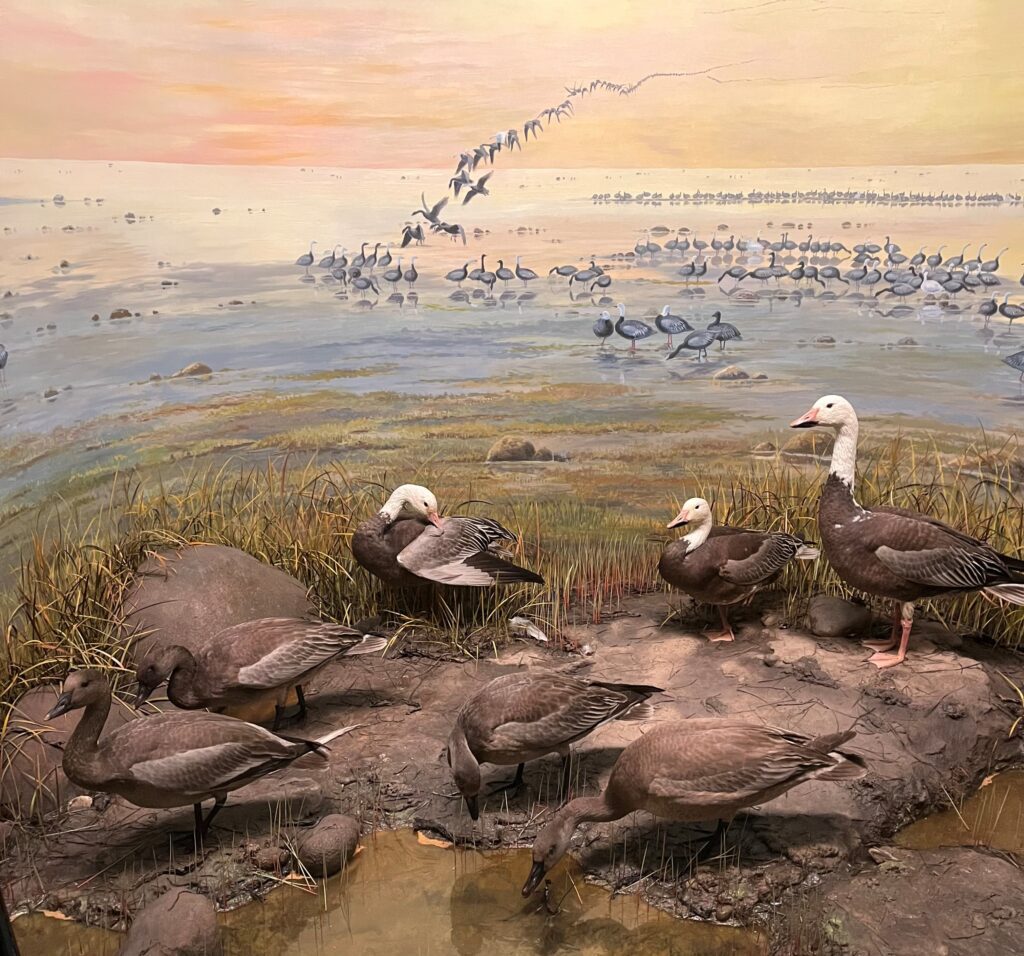
goose taxidermy mounts in a museum diorama

Although the lyric refers to a domestic variety, a scene focused on an enormous gathering of a wild species in The Art of the Diorama demonstrates the eventual outcome of “geese a-laying” – more geese. Here Blue Geese, a variety of Snow Geese with dark plumage, are shown gathering near James Bay in preparation for a continent-crossing migration. The dark-headed geese in the foreground are young of the year, the most recent product of “Snow Geese a-laying.”

Seven Swans A-swimming

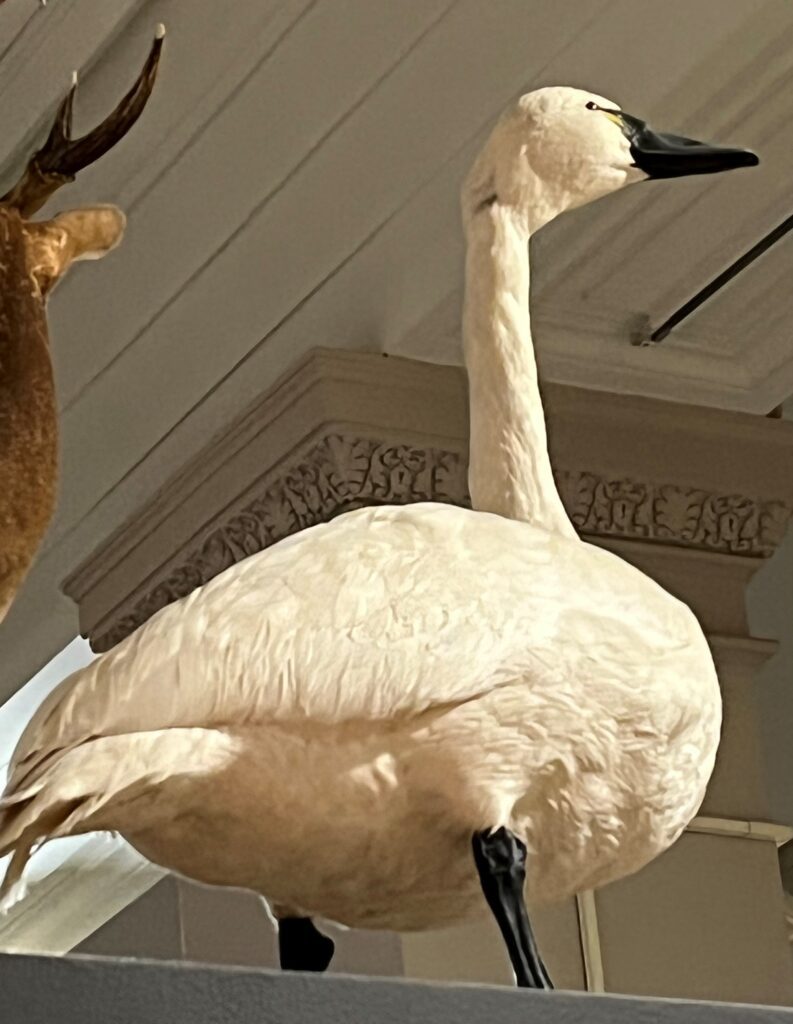
taxidermy mount of a tundra swan

A lone Tundra Swan watches over Discovery Basecamp from a high perch. Thousands of these birds fly, rather than swim, across Pennsylvania spring and fall during seasonal migrations between Arctic nesting grounds and wintering territory along the Chesapeake Bay. Their fall passage over western Pennsylvania, announced by flock calls some people describe as “like the baying of distant hounds,” generally occurs between mid-November and early December.

Patrick McShea is an Educator at Carnegie Museum of Natural History.

Related Content

Collected On Christmas Eve 1883: Mistletoe

2022 Rector Christmas Bird Count Results

A Perfect Mineral for the Christmas Season

Carnegie Museum of Natural History Blog Citation Information

Blog author: McShea, Patrick
Publication date: December 1, 2023

Share this post!

  • Share on Twitter Share on Twitter
  • Share on Facebook Share on Facebook
  • Share on Pinterest Share on Pinterest
  • Share on LinkedIn Share on LinkedIn
  • Share on Reddit Share on Reddit
  • Share via Email Share via Email

Filed Under: Blog Tagged With: Birds, Christmas, Education, Holidays, Pat McShea, Science News

November 10, 2023 by Erin Southerland

A Tree Pittsburgh Biocube  

by Patrick McShea

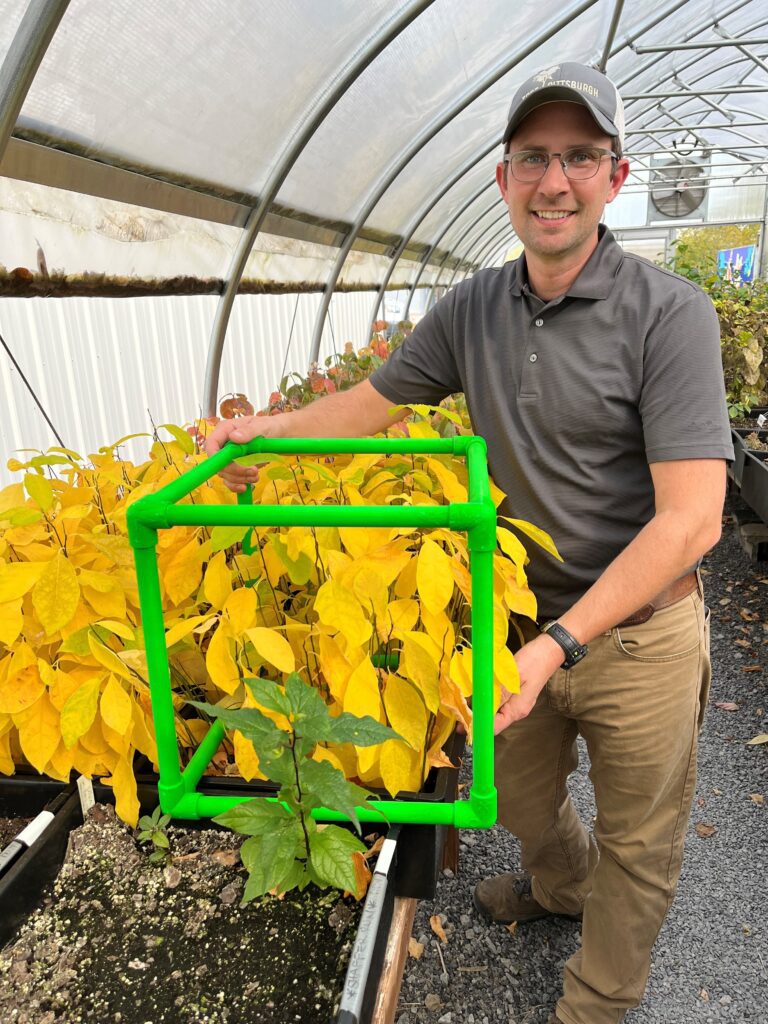
On a late October afternoon, Joe Stavish, Director of Education for Tree Pittsburgh, uses a biocube in one of the organization’s greenhouses to show off the golden fall foliage of northern spicebush saplings. If the cube could accompany one of these native shrubs when it’s planted in a local park as part of forest understory restoration, the open-sided green frame might document a surprising variety of wildlife.

During the early weeks of spring, northern spicebush again adds bright color to forest landscapes when its leafless branches bear tiny gold flowers whose nectar and pollen provides critical nourishment for a host of native bees. Close attention to blossom visitors within the biocube could lead to the documentation of dozens of insect species at this stage. 

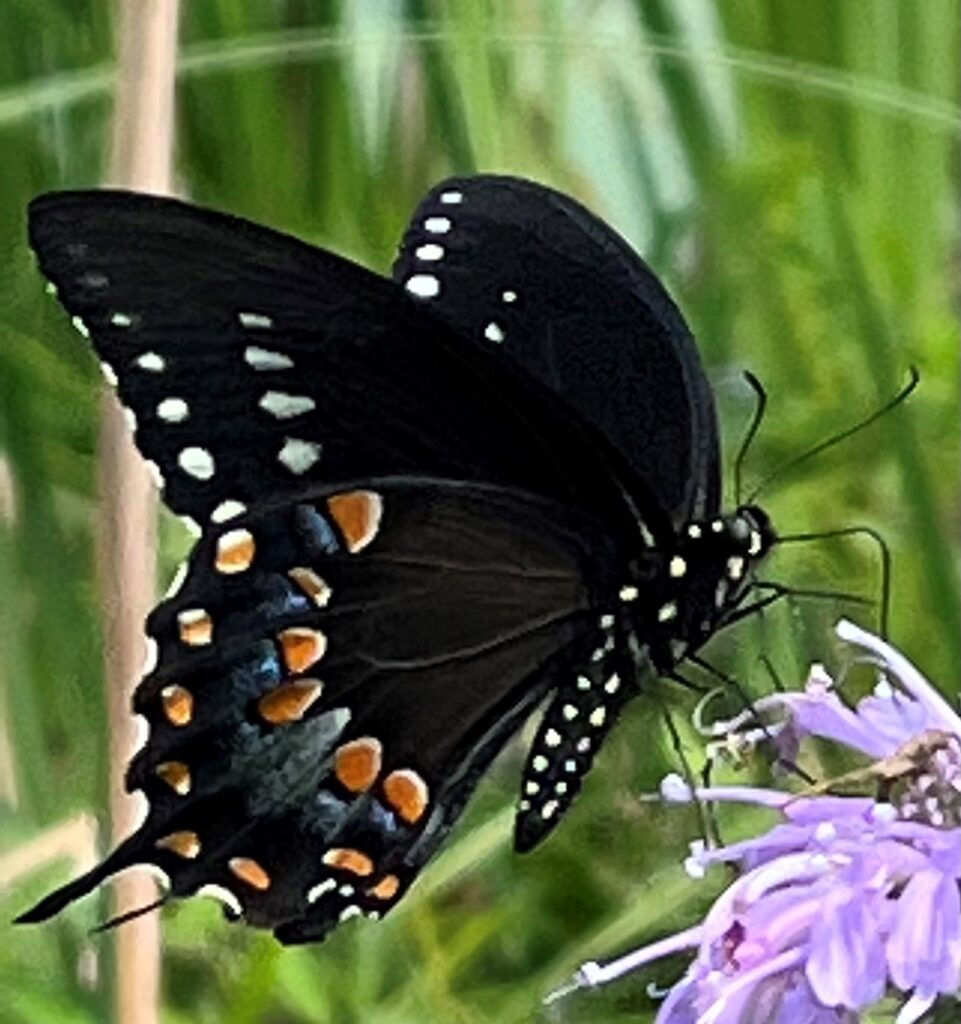
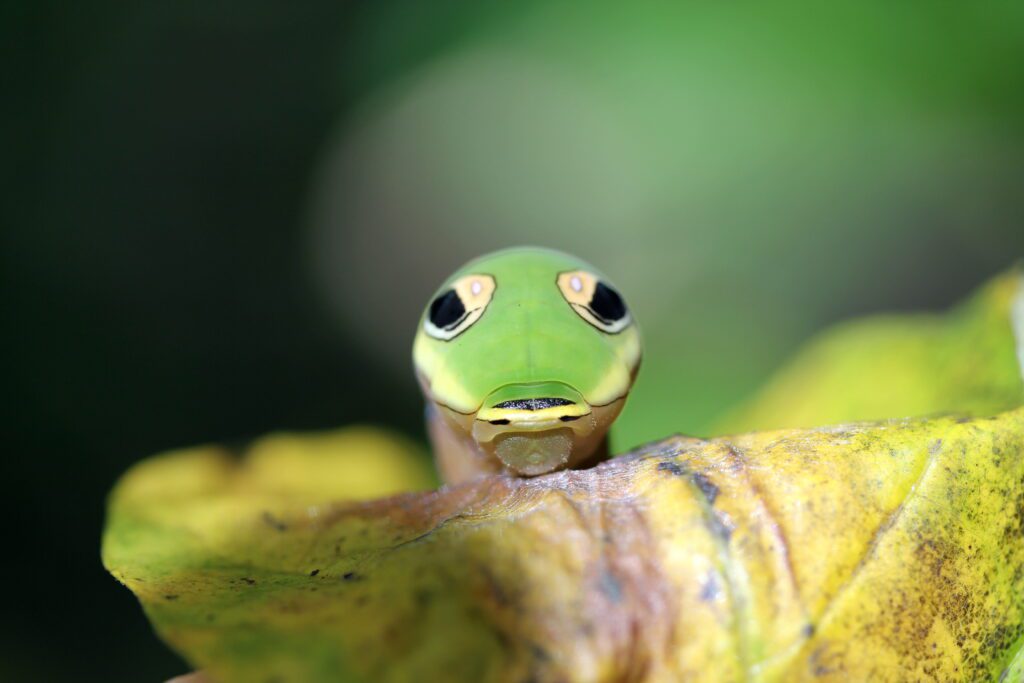
Early spring observations might also detect what appears to be a narrow, two-inch-long dead leaf attached to one of the shrub’s twigs. This is the over-wintering chrysalis of the spicebush swallowtail, a butterfly whose caterpillars are known to favor the spicebush leaves as a food source. After the plant is fully leafed, observation of spicebush foliage within the biocube might produce a sighting of the caterpillar’s distinctive fifth instar or larval stage. 

The broad head of the caterpillar at this stage sports two false eye spots, markings that might provide some predator protection by contributing to an overall visual impression of a small alert snake. 

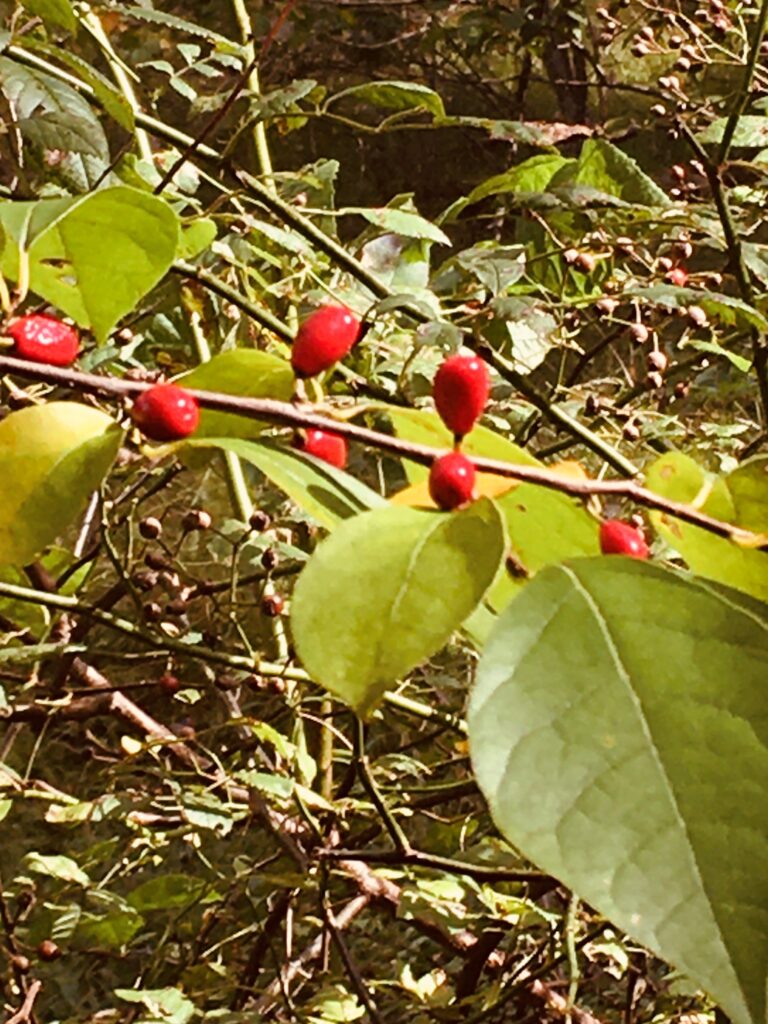
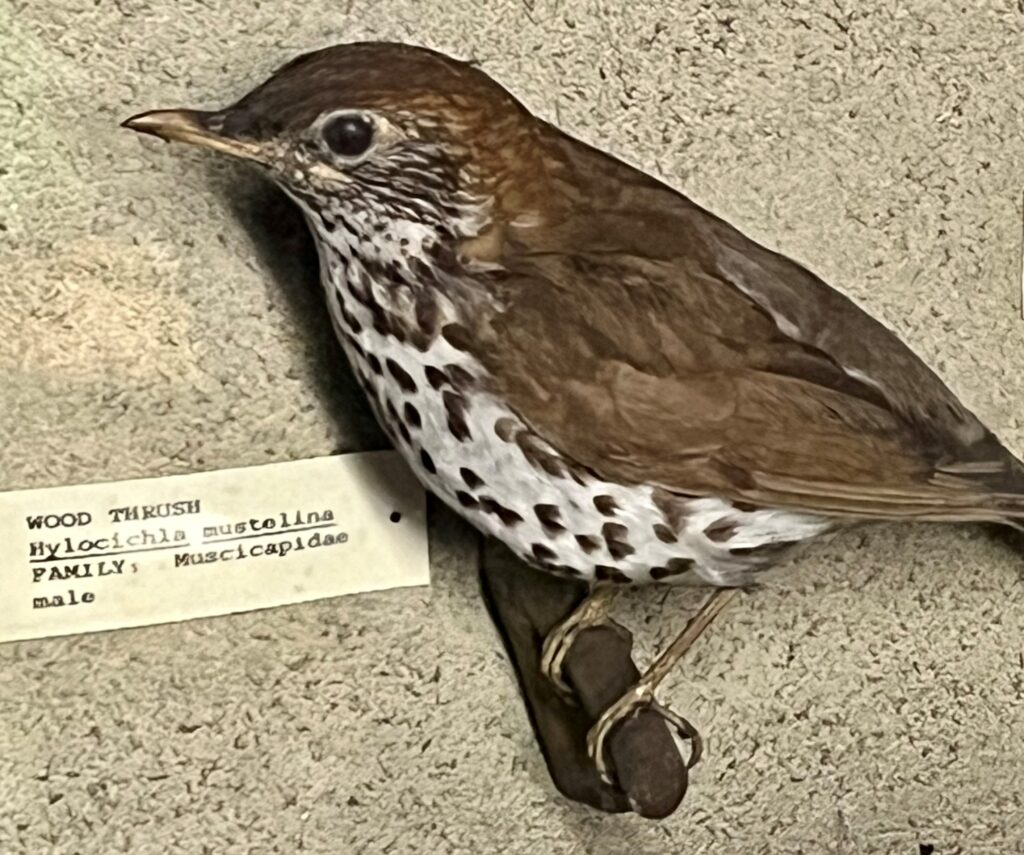
In late summer and early fall, when the ripening of the plant’s fruit is signaled by a green to red color change, the biocube would likely have some avian visitors. The ripened fruits are an important seasonal food source for Wood Thrush and other migrating songbirds. In actions that would likely occur outside the bounds of the biocube, these birds contribute to overall health of northern spicebush in our forests by spreading the plants’ seeds in their droppings.

Patrick McShea is an Educator at Carnegie Museum of Natural History.

Related Content

Life in One Cubic Foot

How-to Make a Biocube

Teaching About Trees

Carnegie Museum of Natural History Blog Citation Information

Blog author: McShea, Patrick
Publication date: November 10, 2023

Share this post!

  • Share on Twitter Share on Twitter
  • Share on Facebook Share on Facebook
  • Share on Pinterest Share on Pinterest
  • Share on LinkedIn Share on LinkedIn
  • Share on Reddit Share on Reddit
  • Share via Email Share via Email

Filed Under: Blog Tagged With: Education, liocf, Pat McShea

  • Page 1
  • Page 2
  • Page 3
  • Interim pages omitted …
  • Page 14
  • Go to Next Page »

sidebar

About

  • Mission & Commitments
  • Directors Team
  • Museum History

Get Involved

  • Volunteer
  • Membership
  • Carnegie Discoverers
  • Donate
  • Employment
  • Events

Bring a Group

  • Groups of 10 or More
  • Birthday Parties at the Museum
  • Field Trips

Powdermill

  • Powdermill Nature Reserve
  • Powdermill Field Trips
  • Powdermill Staff
  • Research at Powdermill

More Information

  • Image Permission Requests
  • Science Stories
  • Accessibility
  • Shopping Cart
  • Contact
  • Visitor Policies
One of the Four Carnegie Museums | © Carnegie Institute | Privacy Policy | Terms of Use | Accessibility
Rad works here logo