• Skip to primary navigation
  • Skip to main content
  • Skip to primary sidebar

Carnegie Museum of Natural History

One of the Four Carnegie Museums of Pittsburgh

  • Visit
    • Buy Tickets
    • Visitor Information
    • Exhibitions
    • Events
    • Dining at the Museum
    • Celebrate at the Museum
    • Powdermill Nature Reserve
    • Event Venue Rental
    • Gift Cards
  • Learn
    • Field Trips
    • Educator Information
    • Programs at the Museum
    • Bring the Museum to You
    • Guided Programs FAQ
    • Programs Online
    • Climate and Rural Systems Partnership
  • Research
    • Scientific Sections
    • Science Stories
    • Science Videos
    • Senior Science & Research Staff
    • Museum Library
    • Science Seminars
    • Scientific Publications
    • Specimen and Artifact Identification
  • About
    • Mission & Commitments
    • Directors Team
    • Museum History
  • Tickets
  • Give
  • Shop

Pat McShea

July 17, 2023 by Erin Southerland

Tracking Migratory Flight in the Northeast

by Patrick McShea
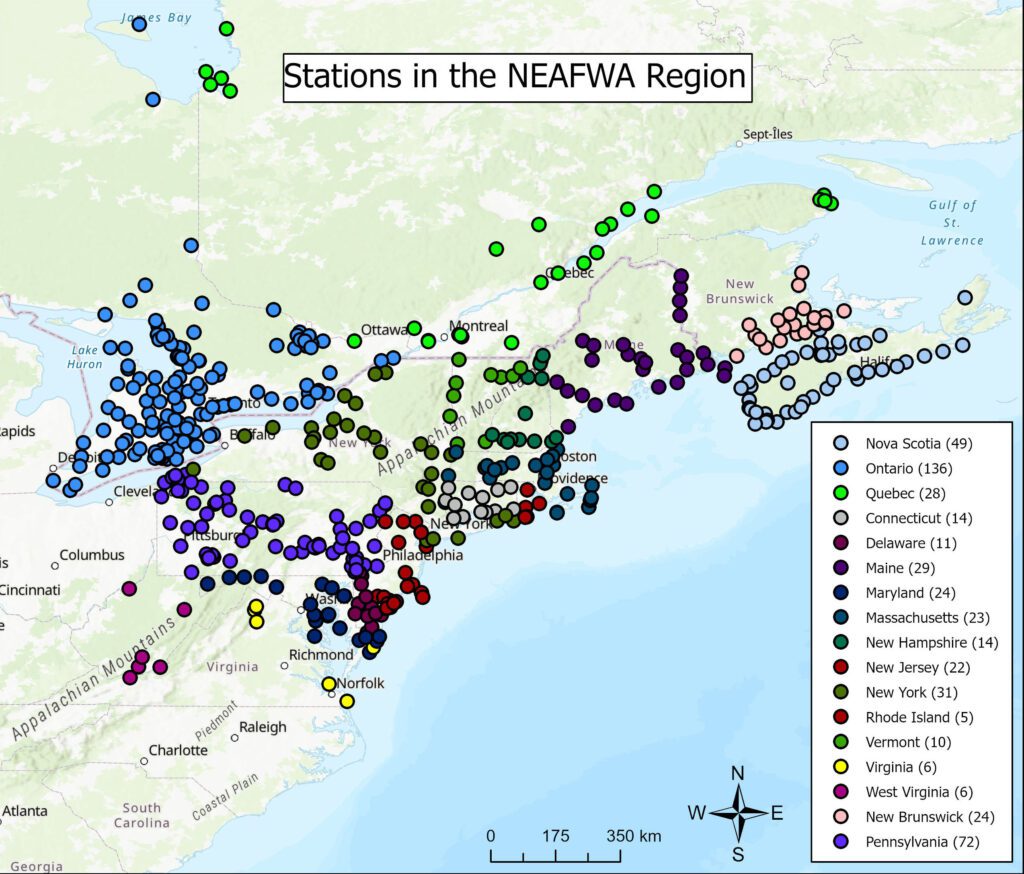
Map of northeastern US and southeastern Canada with dots representing Motus stations in the Northeast Association of Fish and Wildlife Agencies region

Explanations of networks benefit from maps or other graphic representations of linked participants. In the case of a recent bulletin describing regional growth within the international research network known as the Motus Wildlife Tracking System, the inclusion of a map helps ground updated information about the program to the landscape.

The collaborative effort, known informally as simply Motus, a Latin word for movement, was founded by the bird conservation organization, Birds Canada in 2014, and has grown to involve hundreds of partners among scientific and educational institutions, government agencies, and independent researchers.

The ground-breaking work of Motus involves the use of automated radio telemetry to track the migratory movements of free-flying birds, bats, and insects. After an animal under study is safely captured, fitted with a highly miniaturized transmitter, known as a nanotag, and released, the creature’s flight movements are electronically detected and recorded whenever it passes within nine miles of strategically placed antennas mounted on low, just-above-tree-canopy-height receiving stations.

Carnegie Museum of Natural History is a Motus partner through the work of staff at its Powdermill Avian Research Center who have installed 136 receiving stations from western Maryland through Maine and continue to monitor 50 receiving stations from southwestern Pennsylvania up through western New York along the Adirondack Mountains. 

Although Motus stations are in place across the Western Hemisphere landmass from Nunavut, Canada, to southern Chile, the world’s densest concentration of them is found in the thirteen U.S. states and five Canadian provinces that make up the network’s Northeast Collaboration. The 504 tower sites in this territory represent one third of the global total, and since 2017 have logged more than 170 million nanotag detections. This tracking has involved more than 4,700 tagged individuals of 147 species of birds contributing vital information to 194 different research projects.

Ongoing maintenance and technological upgrades will be necessary for the Northeast Motus Network to continue generating research findings that inform conservation initiatives. As Jon Rice, the Museum’s Urban Bird Conservation Coordinator explains, “As this network reports findings for museum research into both the survivorship of window collisions and stopover behavior for species of greatest conservation need, it simultaneously supports ongoing research for countless other projects in the western hemisphere. The real power of this technology isn’t captured by the map. It’s our ability to help our neighbors using the same resources we are using to perform our own novel research.”

Patrick McShea is an Educator at Carnegie Museum of Natural History.

Related Content

A Taste for Metal

Milestones at Powdermill’s Banding Lab

Ruffed Grouse or Scarlet Tanager: Debating the Pennsylvania State Bird

Carnegie Museum of Natural History Blog Citation Information

Blog author: McShea, Patrick
Publication date: July 17, 2023
Share this post!

  • Share on Twitter Share on Twitter
  • Share on Facebook Share on Facebook
  • Share on Pinterest Share on Pinterest
  • Share on LinkedIn Share on LinkedIn
  • Share on Reddit Share on Reddit
  • Share via Email Share via Email

Filed Under: Blog Tagged With: Birds, Jon Rice, parc, Pat McShea, Powdermill Nature Reserve, Science News

July 7, 2023 by Erin Southerland

Ruffed Grouse or Scarlet Tanager: Debating the Pennsylvania State Bird

by Pat McShea

Should a wildlife species representing a state reflect the creature’s abundance within the designated boundaries? Where state birds are concerned, the topic is now wide open for discussion because of an enlightening article in the spring issue of Living Bird, the quarterly publication of the Cornell Lab of Ornithology. 

In “What if the State Birds Were Determined by Data?” authors Matt Smith, an applications programmer for the Lab’s Macaulay Library, and Marc Devokaitis, associate editor for Living Bird, make a strong case for the “thought experiment” of revising such symbols. They trace the current arrangement to a campaign by the General Federation of Women’s Clubs in the 1920s that eventually resulted in a designated “bird of honor” for all 50 states, the District of Columbia, and the 13 provinces and territories of Canada.

Chief among the current system’s deficiencies are birds earning honors for multiple states. The Northern Cardinal, for example, holds the revered position in seven states, creating a red bird belt stretching westward from North Carolina and Virginia across West Virginia, Ohio, Kentucky, Indiana, and Illinois.

As remedy, Smith and Devokaitis suggest a more scientific selection process based upon millions of community science observation records in eBird, the vast and easily accessible electronic archive of bird sightings managed by Cornell Lab of Ornithology. Examination of this enormous data set, when paired with analysis of satellite-generated land-cover maps, reveals how the biogeographical conditions in many states favor the well-being of particular species. Selecting such species for recognition not only produces unique state bird designations, but also directs public attention to the ecosystem that supports the honored birds.

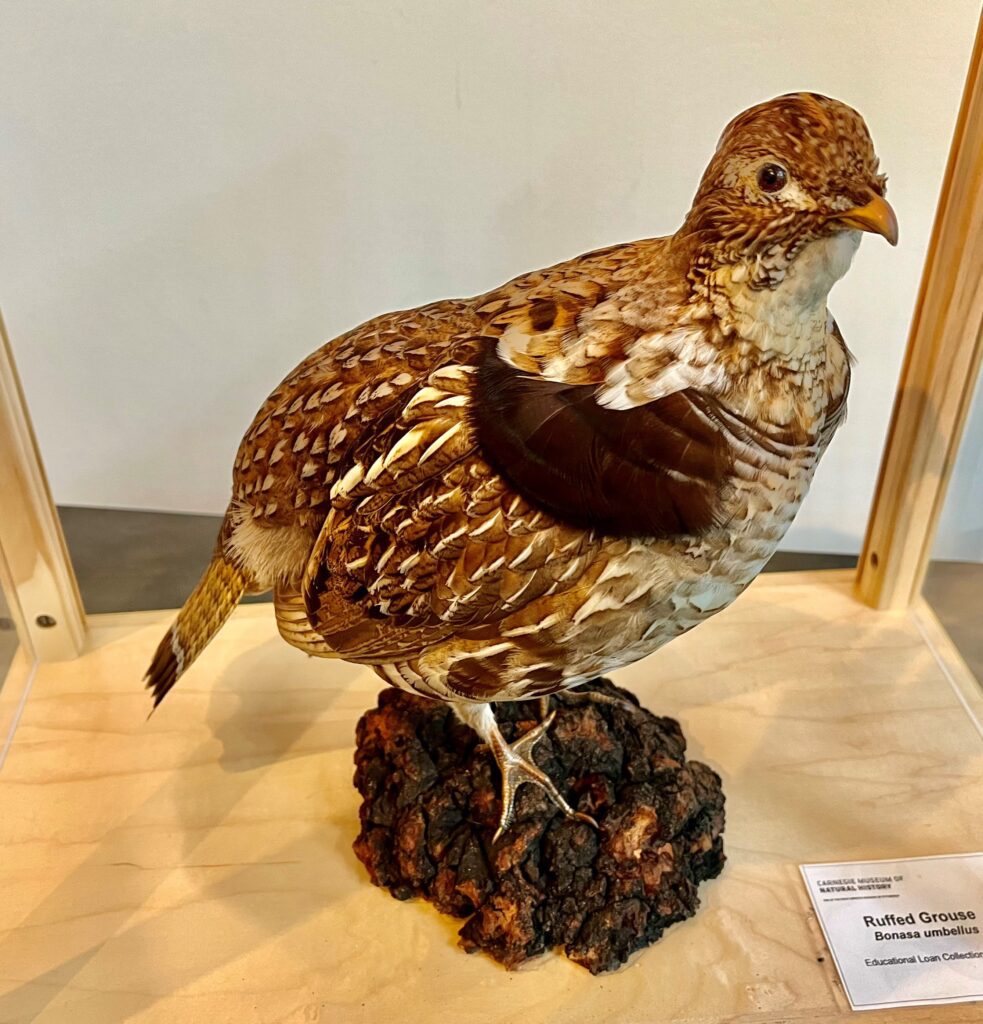
Here in Pennsylvania, where the Ruffed Grouse has reigned as our state bird since 1931, such data driven recommendations might seem unnecessary. No other state so honors the Ruffed Grouse, and the species’ collective value to Pennsylvania residents includes the gamebird’s historic importance as a food source and its current role as the focus of much upland sport hunting. 

ruffed grouse taxidermy mount
Ruffed Grouse taxidermy mount.

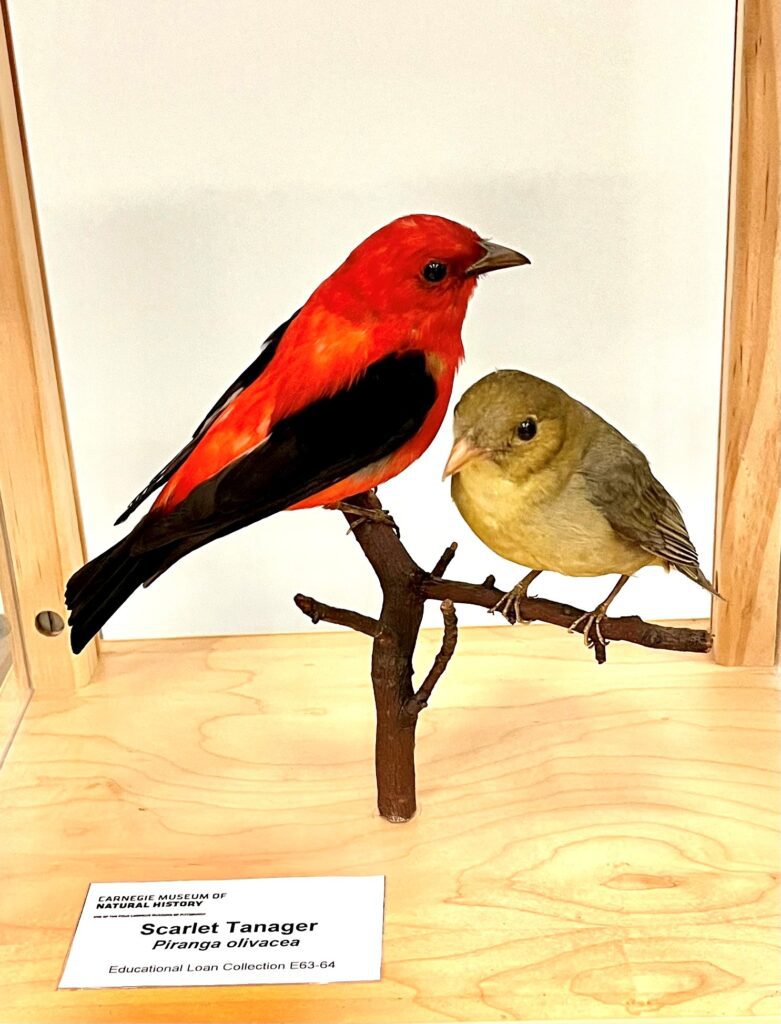
In a challenge to this status quo, documented observations and land cover conditions point to a smaller and brighter bird for state honors, the Scarlet Tanager. Pennsylvania, according to the reasoning behind the nomination, supports a greater breeding population of these songbirds than any other state. 

taxidermy mount of two scarlet tanagers
Pair of Scarlet Tanagers.

The species, whose descriptive name is an apt description of the male bird in breeding plumage, could certainly attract advocates. In All About Birds, the Cornell Lab of Ornithology’s encyclopedic online reference, the nominee’s description begins with its pure visual appeal: Male Scarlet Tanagers are among the most blindingly gorgeous birds in an eastern forest in summer, with blood-red bodies set off by jet-black wings and tail. Viewing expectations are quickly tempered by subsequent sentences, which, after noting the dark-winged female’s otherwise yellowish-green plumage, and the species overall preference for high tree canopies, recommends using the birds’ distinctive call as an aid to visually locate them. 

Whenever circumstances make it possible for such advice to be followed, there is great potential for the development of more ardent Scarlet Tanager fans. Gabi Hughes, Environmental Educator for the Audubon Society of Western Pennsylvania, recalls a spring when a male Scarlet Tanager would reliably sing from the woods just beyond the suburban Pittsburgh middle school campus where she was leading bird-focused activities with seventh grade students. By her estimate, over the course of multiple small group hikes, at least 80 seventh grade students saw and heard the bird, a creature introduced to them as a spring and summer resident of their neighborhood who had recently returned from wintering grounds as distant as Bolivia.

For Ruffed Grouse fans, declining populations, a trend attributable to reductions in the mixed forest stage habitat across Pennsylvania, as well as the species’ susceptibility to West Nile Virus, might be of far greater concern than a revision of symbolic honor. As a fallback position, Ruffed Grouse backers might even cite the specific wording of the relevant 1931 statute, making their case that “state game bird” should be regarded differently than “state bird.”

Pat McShea is an Educator at Carnegie Museum of Natural History.

Related Content

Building Birding Skills

Bird Architecture on Human Infrastructure

Why Do the King Penguins in Bird Hall Look So Different from Each Other?

Carnegie Museum of Natural History Blog Citation Information

Blog author: McShea, Patrick
Publication date: July 7, 2023

Share this post!

  • Share on Twitter Share on Twitter
  • Share on Facebook Share on Facebook
  • Share on Pinterest Share on Pinterest
  • Share on LinkedIn Share on LinkedIn
  • Share on Reddit Share on Reddit
  • Share via Email Share via Email

Filed Under: Blog Tagged With: Birds, Pat McShea, Science News

June 15, 2023 by Erin Southerland

Wolverine: Status Check For a Tournament Champion

by Pat McShea
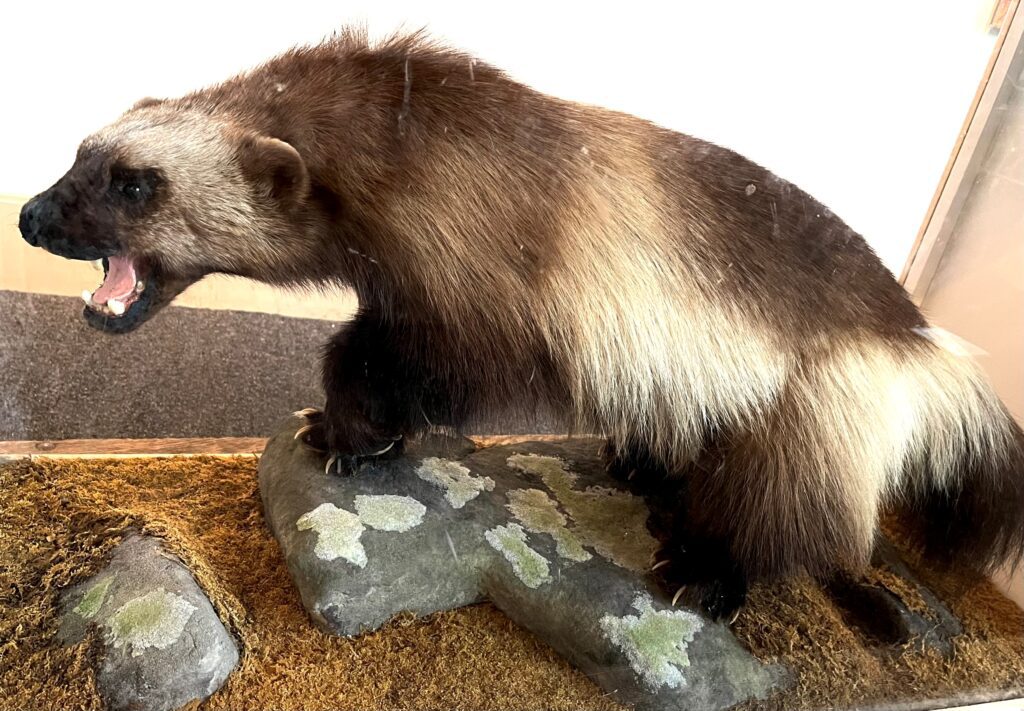
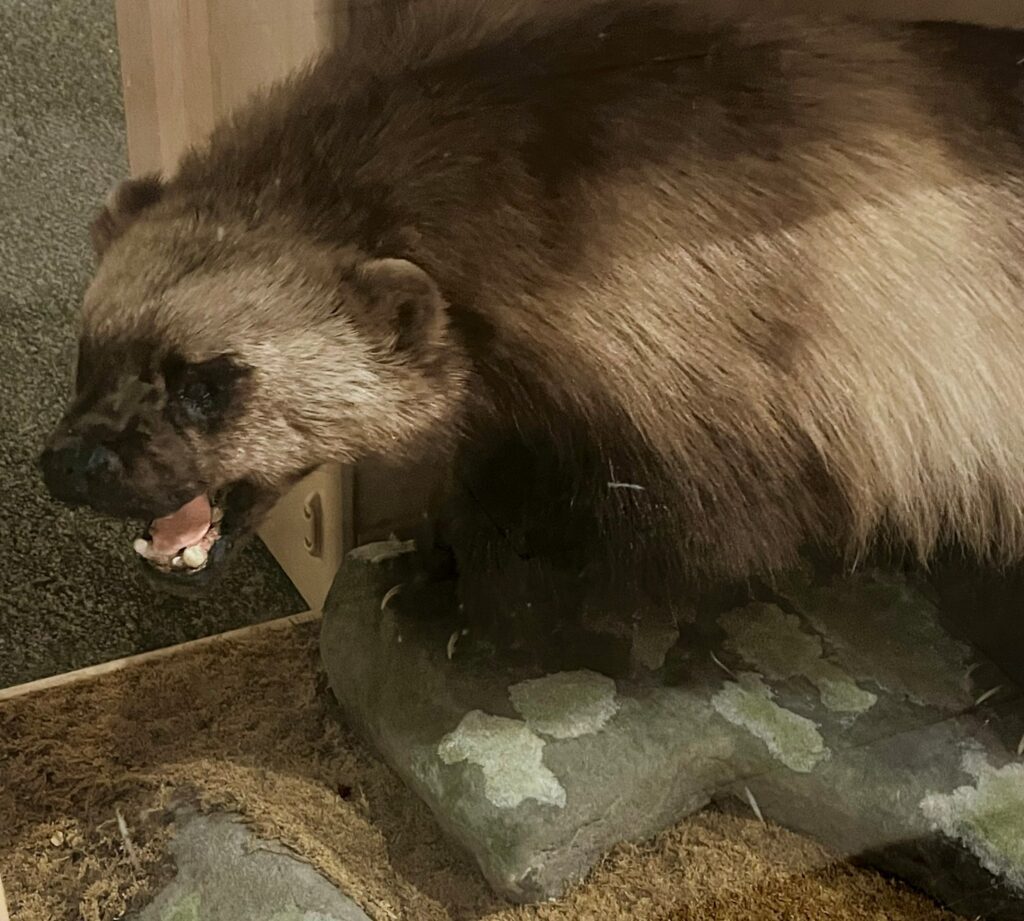
A wolverine taxidermy mount is a popular display in Discovery Basecamp.

Technology has revolutionized the work of wildlife biologists, but among those who study wolverines, long waits for field-collected information about these large members of the weasel family still occur. Because wolverines are known to patrol enormous home ranges, Cory Mosby, Furbearer Staff Biologist with Idaho’s Department of Fish and Game, relies upon strategically placed camera traps as effective monitoring tools. As he explained in a recent Zoom interview from his office in Boise, deep snow at high elevations can delay the retrieval of video and photographic evidence for months. “There’s a few places we placed cameras for over-the-winter wolverine studies where we weren’t able to retrieve the devices until July.”

Our discussion of wolverine research occurred just after the species received accolades as the 2023 champion of March Mammal Madness (MMM), the wide-reaching, ten-year-old educational project that masquerades as a tournament mimicking competition, but is in no way affiliated with, the NCAA college basketball tournament. The online event, founded and directed by Professor Katie Hinde of Arizona State University, challenges participants to predict outcomes for a widely branched bracket’s worth of hypothetical combative wildlife encounters. Reference material links on the MMM website encourage fans to make informed decisions, and as the tournament’s hypothetical encounters unfold, additional information about the combatants is shared via timely narrative reports. 

This year, any MMM fan who tracked the wolverine’s six victory championship campaign undoubtedly learned lots of information about this carnivore with solitary ways, a bone-crushing bite, and a fierceness sufficient to intimidate even bears and wolves.

On Zoom, much of Mosby’s information sharing focused on historic wolverine distribution. He explained how, by the 1930s, a species once found across much of the American West and even in sections of several Great Lakes states, was largely extirpated in the lower 48 states by predator control programs, landscape alteration, and unregulated hunting and trapping. However, during the nearly eight decades since, changes in public policies and attitudes eventually created conditions that enabled animals from western Canada to naturally re-colonize portions of four states – north-central Washington, northern and central Idaho, western Montana, and northwestern Wyoming.

In 2010, a proposed listing of these animals under the Federal Endangered Species Act prompted the establishment of the Western States Wolverine Conservation Project, a multi-year investigation in which essential early work, beginning in 2016, involved establishing baseline information about the numbers and movements of the animals under study. 

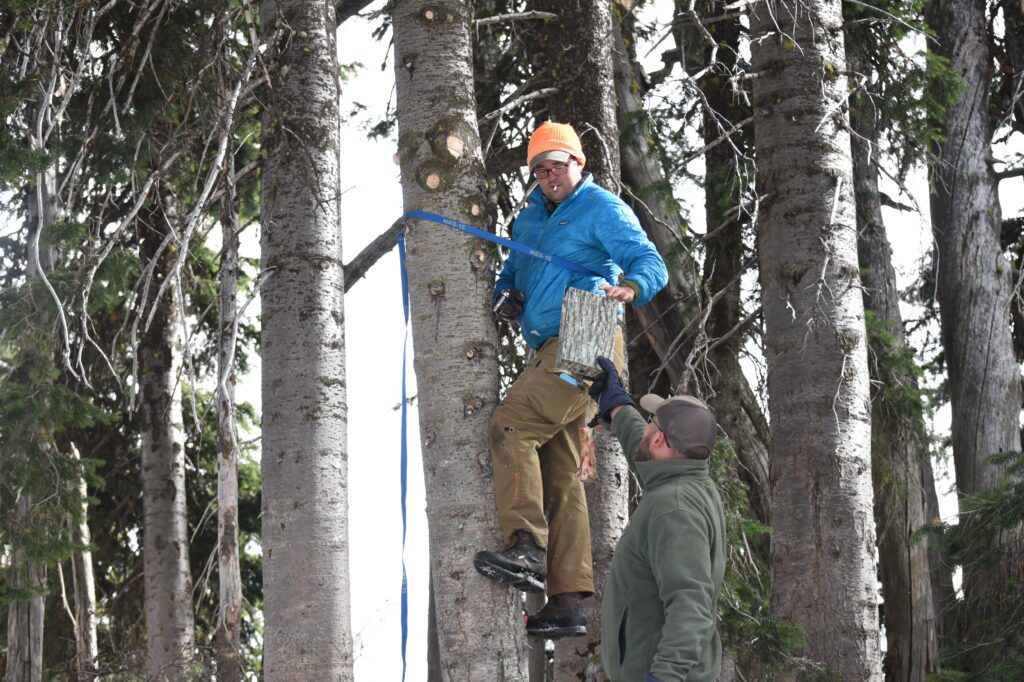
Cory Mosby placing a camera trap as part of wolverine monitoring effort in Idaho’s Centennial Mountains.

When presented with the question, “What do you wish the public knew about wolverines?” Mosby had a ready answer. “This might not align with popular opinion, but I wish more people realized that, as a species, at the moment, wolverines are quite secure. In Idaho today, wolverines occupy all available habitat. The population in the western U.S., the animals I’ve helped study, are on this continent, a southerly extension of a species found around the globe at northerly latitudes in suitable habitat. ‘Holarctic’ is the term that summarizes this enormous distribution.”

Mosby cites a warming climate as a big concern for wolverine populations in southernly latitudes, explaining how the same deep snow deposits that delay camera retrieval in project studies also allow female wolverines to catch sufficient kills as food for kits too young to forage on their own.

The wildlife biologist’s overall advice is to pay attention to both the local situation and the big picture. His career track, he relates, was influenced by the sudden realization of how small forces influence big systems. “I was a pre-med major at the University of Missouri taking lots of biology classes, and in one of them a visiting lecturer gave a presentation about how northern flying squirrels influence the health of entire forests by distributing spores as they feed on fungi. I realized then I wanted to work studying wildlife.”

Patrick McShea is an Educator at Carnegie Museum of Natural History.

Related Content

March Mammal Madness 2023: Learn and Win

March Mammal Madness and Middle School Science Class

World Pangolin Day 2023 – The Mysterious Brain Bone

Carnegie Museum of Natural History Blog Citation Information

Blog author: McShea, Patrick
Publication date: June 15, 2023

Share this post!

  • Share on Twitter Share on Twitter
  • Share on Facebook Share on Facebook
  • Share on Pinterest Share on Pinterest
  • Share on LinkedIn Share on LinkedIn
  • Share on Reddit Share on Reddit
  • Share via Email Share via Email

Filed Under: Blog Tagged With: mammals, Pat McShea, Science News

April 28, 2023 by Erin Southerland

Building Birding Skills

by Patrick McShea
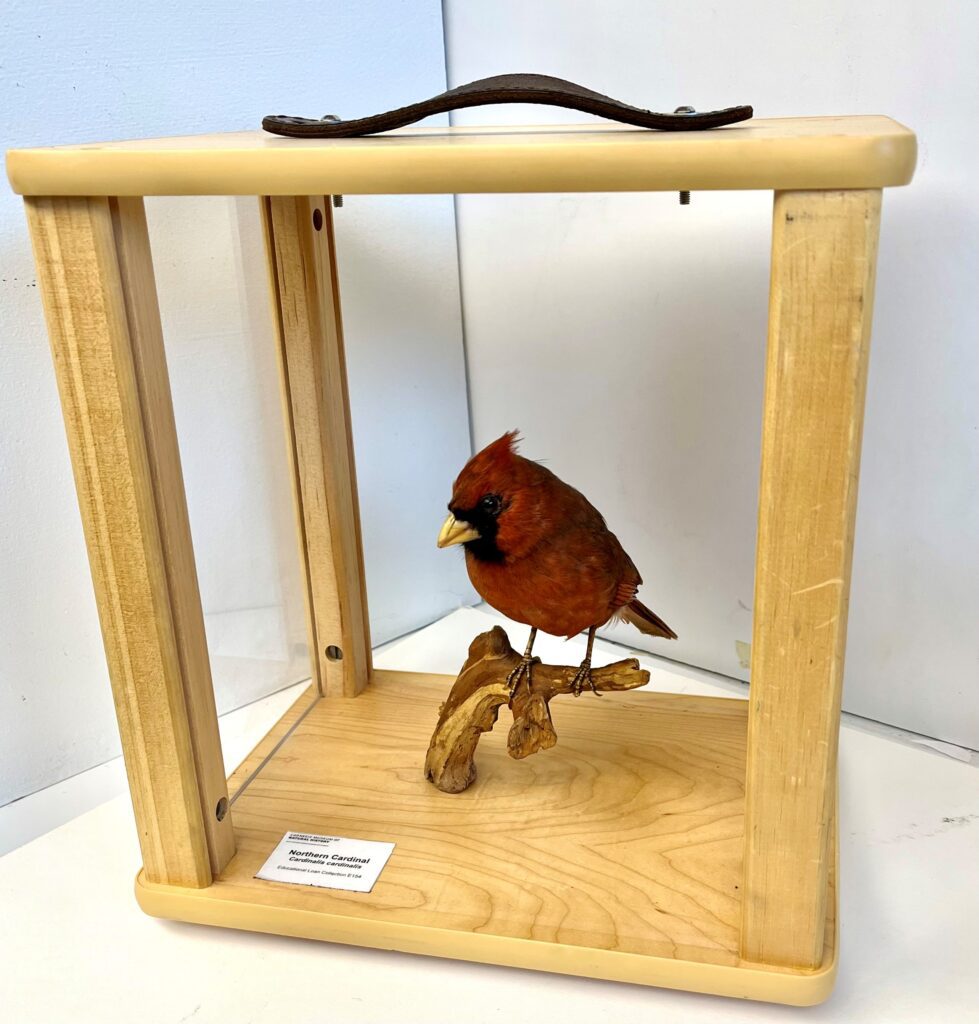
Cardinal from the CMNH Educator Loan Collection.

Today is National Go Birding Day, a designation that prompts questions about how best to become involved in such a do-anywhere activity. As a museum educator, my general advice for anyone seeking to develop bird observational skills is to regularly visit the expansive All About Birds website maintained by The Cornell Lab of Ornithology. 

However, when I stop to consider that many potential birders might lack regular internet access, or how my own life-long interest in birds began before I learned to read, alternate approaches gain importance. In light of these circumstances, recent advice from Nick G. Liadis, Avian Conservation Biologist, and founder of the organization, Bird Lab, has universal relevance.

“I almost always start any educational program by asking the question: Did you see a bird today? The answer is almost always ‘yes’ by most of the participants, even children as young as four-years-old. It’s a great springboard into birding/bird-related conversations. It all unfolds from there.”

Nick, whose bird research experience includes past appointments at Point Reyes Bird Observatory in California, and the Museum’s Powdermill Avian Research Center, was explaining the approach he successfully used last summer when he accepted the challenge of presenting the broad topics of birds and bird migration to the 4 – 13-year-old participants in Art in the Garden, a six-week summer camp at the Borland Garden, a community garden and green space in Pittsburgh’s East Liberty neighborhood.

 “We’d often talk about a bird’s behavior: If it was singing, where was it perched? Had you seen it before etc. Then I’d talk about how different species have different preferences. Some like living next to people. Some like to be on the tops of trees, and some like to be on the ground etc. This helped to reinforce the beautiful fact that birds are everywhere. That observation really resonates with people.”

Nick borrowed encased taxidermy mounts from the Museum’s Educator Loan Collection for use in some camp sessions, but magazine pictures of birds, field guide images, and especially, the taxidermy mounts of the Museum’s Bird Hall, can also stimulate discussion. Nick simply asked campers to report what they noticed about the preserved birds. “Often their observations were about the feathers. But then we’d talk about the beak and the feet. Those observations helped them to connect the bird to a habitat type or a food preference, and follow-up conversations were about how places as specific as backyards, treetops, or even tree trunks met the needs of some birds.”

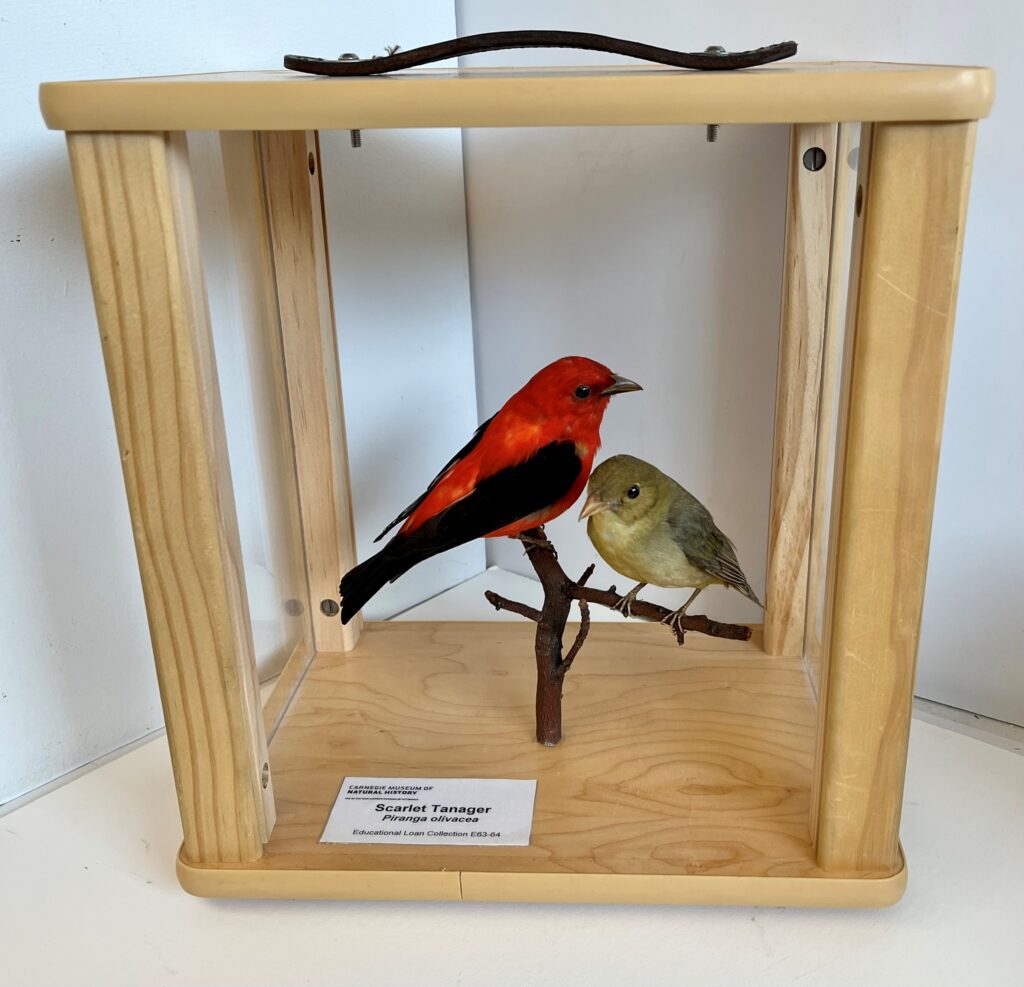
Taxidermy mounts of a male and female Scarlet Tanager.

A story involving a Zoom call provides anecdotal evidence of how well the birding skills of some campers developed under Nick’s guidance last summer. “One of the kids in the camp was on a Zoom call with his grandparents, who happened to be outside. A red bird flew into view and the kid recognized it as a male Scarlet Tanager! He saw the bird as different from the all-red cardinals. He even noted the black wings.”

Paying attention to the number and variety of birds you notice today is a fine way to participate in National Birding Day. The electronic resources of The Cornell Lab of Ornithology will become more useful after any observations you’re able to make. More birding resources are listed below.

Three Rivers Birding Club

Audubon Society of Western Pennsylvania

Erie Bird Observatory

National Aviary

Patrick McShea is an Educator at Carnegie Museum of Natural History.

Related Content

Using iNaturalist in the City Nature Challenge and Beyond

Chimney Swift Conservation

Lights Out for Birds

Carnegie Museum of Natural History Blog Citation Information

Blog author: McShea, Patrick
Publication date: April 29, 2023

Share this post!

  • Share on Twitter Share on Twitter
  • Share on Facebook Share on Facebook
  • Share on Pinterest Share on Pinterest
  • Share on LinkedIn Share on LinkedIn
  • Share on Reddit Share on Reddit
  • Share via Email Share via Email

Filed Under: Blog Tagged With: Birds, City Nature Challenge, Pat McShea

March 7, 2023 by Erin Southerland

March Mammal Madness 2023: Learn and Win

by Patrick McShea

What chance does a giant water bug have in a battle with a wolverine? During the next few days participants in the online tournament known as March Mammal Madness will attempt to predict the outcome for this theoretical encounter plus 31 others. “Play” in this single elimination series of antagonistic animal matches begins with a wild card qualifying battle on March 13, and concludes, four well-spaced rounds of competition later, with a championship match on April 5. This now decade-old annual activity, which was created and continues to be directed by Professor Katie Hinde, of Arizona State University, has a well-earned reputation as a fun interactive educational event. 

The website for March Mammal Madness (MMM) describes the proceedings as “inspired by (but in no way affiliated with or representing) the NCAA College Basketball March Madness Championship Tournament.” Like the basketball tournament, MMM relies upon a branching four-division bracket listing qualifying competitors and their ranking number to both record predictions and track the tournament’s progress. There are, of course, significant bracket differences. In place of the small print note where some sport tournament brackets announce the chart’s purpose as “For Amusement Only,” the MMM document bears the disclaimer, “MMM includes many non-mammal species.” Also, in the front and center position, where an NCAA, media sponsor, or gaming corporation’s logo would normally appear, is instead the MMM guiding motto: “If you’re learning, you’re winning!”

March Mammal Madness logo

The clearest explanation of how the competition unfolds, and how willingness to learn is a condition of fandom, is on the MMM website: 

The organizers take information about each combatant’s weaponry, armor, fight style, temperament/motivation, and any special skills/consideration and estimate a probability of the outcome and then use a random number generator to determine the outcome. This is why there are upsets in the tournament.

Another thing that can happen is if a species has to battle in an ecology that is really bad for it – for example, if a cold adapted species is battling in a tropical forest, it can dangerously overheat- changing the outcome probabilities. Sometimes an animal gets injured or snaps a canine in a previous round that carries over into the next round- just like an injury of a star player totally changes a basketball team’s outcome. Also hiding or running away counts as a forfeit.

In the early rounds the battle location is in the preferred habitat of the better-ranked combatant in the battle, and ecology can play a huge role in what happens. 

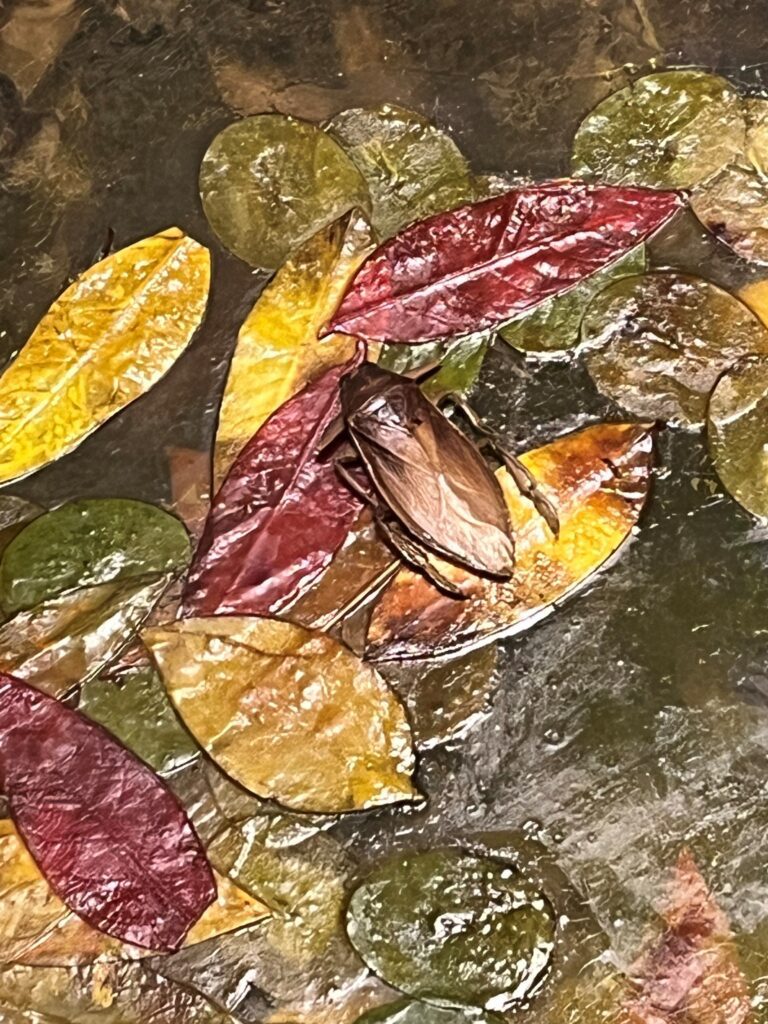
giant water bug museum display

I kept all of this in mind as I considered the first-round water bug versus wolverine battle. On the museum’s second floor, a giant water bug is an invertebrate detail in the Hall of Botany’s bog diorama. On the first floor, an encased wolverine taxidermy mount flanks the interactive space Discovery Basecamp. If both creatures mysteriously came to life and met on a back stairway landing, the insect would certainly be flattened or swallowed whole. Like a sports bettor double-checking a basketball team’s bench depth, foul-shooting percentage, or dependable three-point shooters, I conducted a brief internet search for wolverine vulnerabilities.

wolverine taxidermy mount

Details in a summary of the Western States Wolverine Conservation Project revealed this large member of the weasel family as a species highly sensitive to climate change. The long-clawed and densely furred carnivore, whose common name has been used by various corporations to create brands for action heroes, rugged footwear, and all-terrain vehicles, requires large territories with persistent spring snow cover. In the four U.S. states where resident populations of wolverines are known to occur (Washington, Montana, Idaho, and Montana), locations with heavy spring snow cover provide ample “refrigerated” space for the catching of prey, as well as safe denning sites for pregnant females.

I still picked the wolverine to beat the giant water bug, but I won’t be surprised if it doesn’t happen. Highways were mentioned in some research summaries as barriers to wolverine movements, raising the possibility of a forfeited match. Despite a reputation for ferocity, a no-show wolverine could send a giant water bug to the MMM second round. 

Patrick McShea is an Educator at Carnegie Museum of Natural History.

Related Content

March Mammal Madness and Middle School Science Class

World Pangolin Day 2023 – The Mysterious Brain Bone

Do Any Mammals Lay Eggs?

Carnegie Museum of Natural History Blog Citation Information

Blog author: McShea, Patrick
Publication date: March 7, 2023

Share this post!

  • Share on Twitter Share on Twitter
  • Share on Facebook Share on Facebook
  • Share on Pinterest Share on Pinterest
  • Share on LinkedIn Share on LinkedIn
  • Share on Reddit Share on Reddit
  • Share via Email Share via Email

Filed Under: Blog Tagged With: Education, mammals, Pat McShea, Science News

February 6, 2023 by Erin Southerland

Echoes of Freedom in an Owl’s Call

by Pat McShea
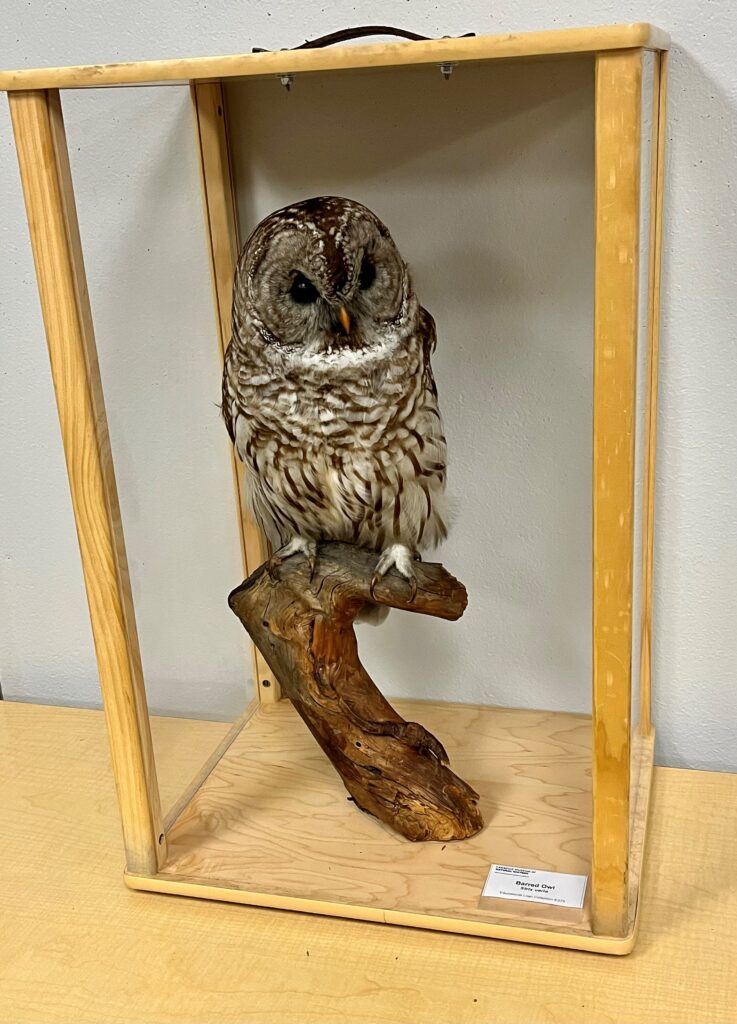
Barred Owl taxidermy mount

“Is that owl real?” Students who approached the museum activity station at a “Dream STEAM” event on Martin Luther King Jr. Day repeated those four words to express curiosity about a 20-inch-high Barred Owl taxidermy mount. The setting was a large meeting room in the Bible Center Church’s Worship, Arts, Recreation, and Ministry Center in Pittsburgh’s Homewood neighborhood. Here, during a busy three-hour morning session, small groups of students ranging from kindergarten to fifth grade rotated with their adult chaperones among activities related to STEAM (Science, Technology, Engineering, Art, and Math) or Black History and Culture.

I was one of three museum representatives who brought the owl and other, less visually striking materials, to enhance an activity we hoped would spark greater interest in science as well as increase knowledge about a heroic Black figure in American History, Harriet Tubman.

Answers of “partially real” to student questions about the owl’s authenticity were provided first, as we shared information about the taxidermy mount’s glass eyes, wire-supported feet, interior foam body, but very real feathers, beak, and talons. Then came an explanation about how in 1849, Harriet Tubman’s expert knowledge of tides, seasons, weather, wildlife, plants, and the stars of the night sky enabled her to escape enslavement on a timber plantation on the Eastern Shore of Maryland, and then safely cross more than 100 miles of forest and wetlands to reach freedom in Philadelphia, Pennsylvania.

Tubman returned to Maryland multiple times during the next ten years to safely lead a total of approximately seventy people in escape from enslavement to freedom, which could sometimes only be guaranteed in places as distant as Canada. When we recounted these courageous actions for the students, the owl assumed a prominent role in our narrative. Tubman used imitations of Barred Owl calls as a code of cautionary signals to the people she physically guided. With the aid of a battery powered bird song player, the students were able to listen to the species’ distinctive barked notes, nine booming syllables that invite translation into the echoing question, “Who Cooks For You? Who Cooks For You All?”

Imitation owl calls from the students followed, spontaneous and solicited, with both types gently critiqued by a reminder that in the dark woods of 1850’s coastal Maryland or Delaware, the skill of the call’s delivery could be a matter of life or death. 

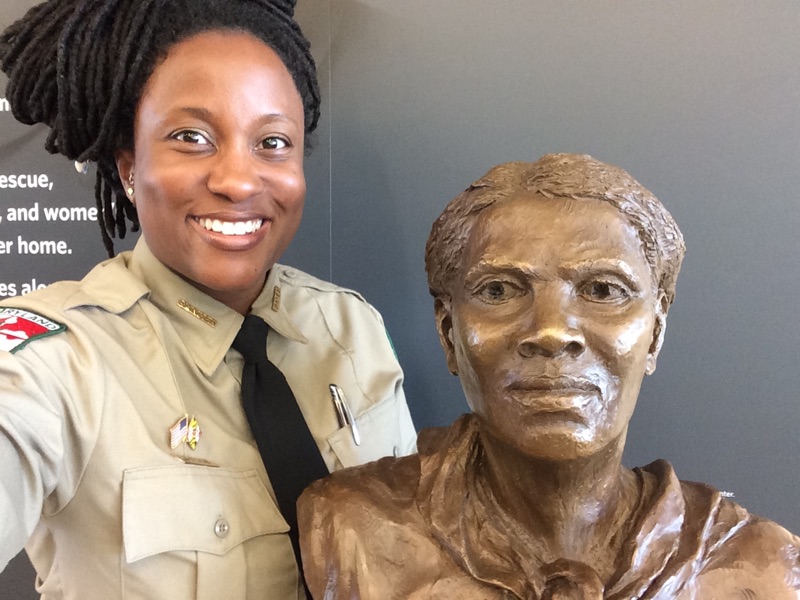
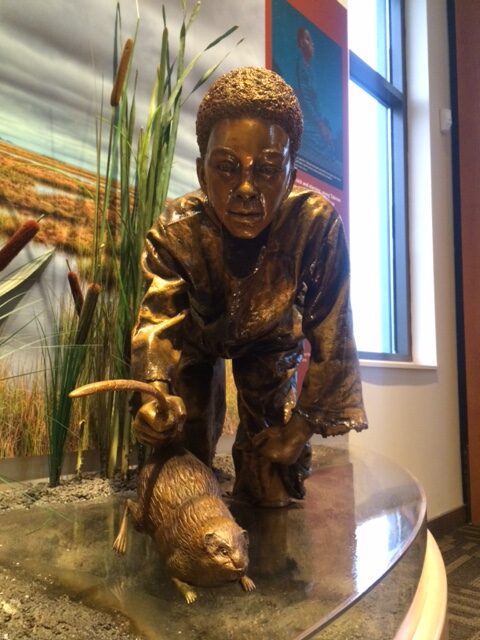
The museum’s activity station also provided opportunities for students to note owl adaptations via pencil drawings, and to examine muskrat pelts as an aid in considering Harriet Tubman’s childhood labor checking traps for the rodents in the marshes of the plantation where she was enslaved. One tabletop display that drew the attention of some students and every adult chaperone credited Ranger Angela Crenshaw, currently Park Manager for Rocks, Susquehanna and Palmer State Parks in Maryland, as the source for much of the activity’s shared information.

Harriet Tubman UGRR State Park and Visitor Center – Ranger Crenshaw with the Bust of Tubman

 A West Virginia native with strong Baltimore roots, Crenshaw presented interpretive programs for over four years as a ranger at Harriet Tubman Underground Railroad State Park and Visitor Center, a 17-arcre site in Dorchester County, Maryland. Last year, the bicentennial anniversary of Tubman’s birth, articles about the historic icon’s naturalist skills in both Audubon and Smithsonian magazines included quotes from Crenshaw. On May 14, a date Pittsburgh Mayor Ed Gainey proclaimed as “Harriet Tubman Day” in the city, Crenshaw joined seven other presenters for a two-hour panel discussion on Zoom about Tubman’s legacy organized by the Dr. Edna B. McKenzie Branch of the Association for the Study of African American Life and History. 

Harriet Tubman UGRR State Park and Visitor Center – Muskrat Exhibit – MD Department of Natural Resources

When a presenter from another organization asked about how Ranger Crenshaw became a reliable source for information about Harriet Tubman, I recalled a published interview during which she described how her earliest days at the then new park forced a deep immersion into the landscape, and lots of reading about American Slavery, the religion of enslaved people, and the Underground Railroad. Among those documents was an 1868 biography of Tubman titled The Moses Of Her People, by Sarah Bradford, and a letter endorsing the book, by another native of Maryland’s Eastern Shore who escaped enslavement, Frederick Douglass. 

Related Content

King’s Dream and Natural History

Feather and Bone Connections to American History

Educator Loan Collection

Carnegie Museum of Natural History Blog Citation Information

Blog author: McShea, Patrick
Publication date: February 6, 2023

Share this post!

  • Share on Twitter Share on Twitter
  • Share on Facebook Share on Facebook
  • Share on Pinterest Share on Pinterest
  • Share on LinkedIn Share on LinkedIn
  • Share on Reddit Share on Reddit
  • Share via Email Share via Email

Filed Under: Blog Tagged With: Birds, Education, Pat McShea

  • « Go to Previous Page
  • Page 1
  • Page 2
  • Page 3
  • Page 4
  • Page 5
  • Interim pages omitted …
  • Page 15
  • Go to Next Page »

sidebar

About

  • Mission & Commitments
  • Directors Team
  • Museum History

Get Involved

  • Volunteer
  • Membership
  • Carnegie Discoverers
  • Donate
  • Employment
  • Events

Bring a Group

  • Groups of 10 or More
  • Birthday Parties at the Museum
  • Field Trips

Powdermill

  • Powdermill Nature Reserve
  • Powdermill Field Trips
  • Powdermill Staff
  • Research at Powdermill

More Information

  • Image Permission Requests
  • Science Stories
  • Accessibility
  • Shopping Cart
  • Contact
  • Visitor Policies
Stay in the loop! Sign up for our newsletter(s).
One of the Four Carnegie Museums | © Carnegie Institute | Privacy Policy | Terms of Use | Accessibility
Rad works here logo