• Skip to primary navigation
  • Skip to main content
  • Skip to primary sidebar

Carnegie Museum of Natural History

One of the Four Carnegie Museums of Pittsburgh

  • Visit
    • Buy Tickets
    • Visitor Information
    • Exhibitions
    • Events
    • Dining at the Museum
    • Celebrate at the Museum
    • Powdermill Nature Reserve
    • Event Venue Rental
    • Gift Cards
  • Learn
    • Field Trips
    • Educator Information
    • Programs at the Museum
    • Bring the Museum to You
    • Guided Programs FAQ
    • Programs Online
    • Climate and Rural Systems Partnership
  • Research
    • Scientific Sections
    • Science Stories
    • Science Videos
    • Senior Science & Research Staff
    • Museum Library
    • Science Seminars
    • Scientific Publications
    • Specimen and Artifact Identification
  • About
    • Mission & Commitments
    • Directors Team
    • Museum History
  • Tickets
  • Give
  • Shop

Blogs about Pittsburgh

Carnegie Museum of Natural History is in Pittsburgh, Pennsylvania. Many of the museum's collection specimens are from the local area, including our Botany, Invertebrate Paleontology, and Herpetology specimens. Our collections and our community often influence our work, whether that includes researching climate change, air pollution improvements from the closing of steel mills in the city, or invasive species.

August 9, 2016 by wpengine

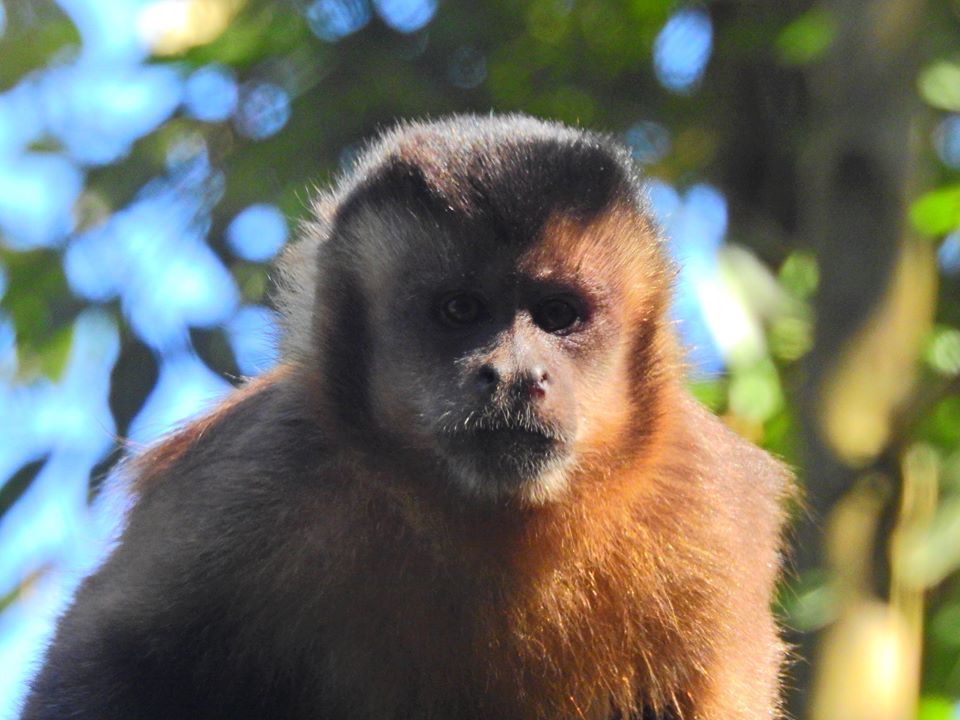
Snapshot from Brazil: black capuchin (Sapajus nigritus)

A Black capuchin
A Black capuchin photographed at Brazil’s first national park – Parque Nacional do Itatiaia with Observatório de Aves – Instituto Butantan.

by Luke DeGroote

Photographed at Brazil’s first national park – Parque Nacional do Itatiaia with Observatório de Aves – Instituto Butantan

Black capuchins are near threatened and declining due to habitat loss, hunting, and pet trade.

Luke DeGroote is an Avian Ecologist and the Bird Banding Program Manager at Powdermill Nature Reserve, the environmental research center of Carnegie Museum of Natural History. Luke is traveling in Brazil this summer to train Brazilian avian researchers band birds and explore new collaborations for the museum.
Filed Under: Blog Tagged With: brazil, Pittsburgh

August 6, 2016 by wpengine

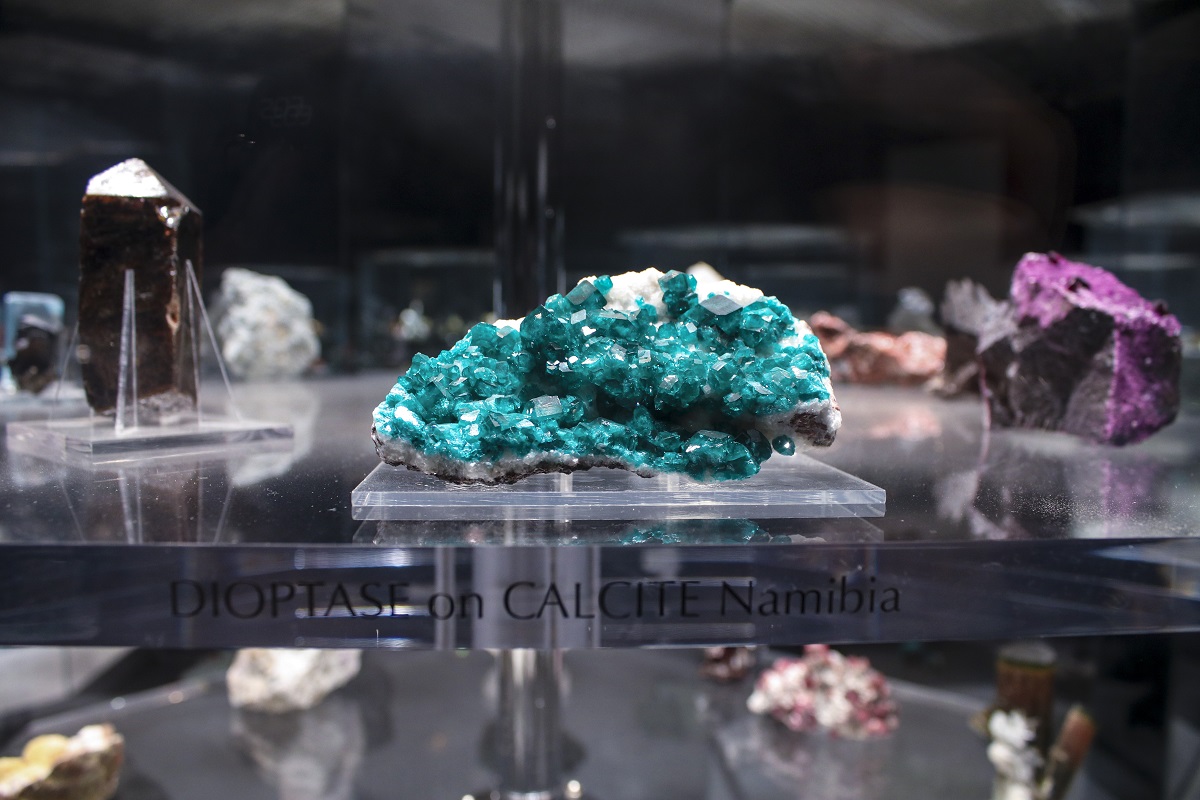
Dioptase on Calcite

Dioptase on Calcite

Dioptase on Calcite found in Namibia on display at Carnegie Museum of Natural History.

(photo by Hayley Pontia) 

Filed Under: Blog Tagged With: Pittsburgh

August 3, 2016 by wpengine

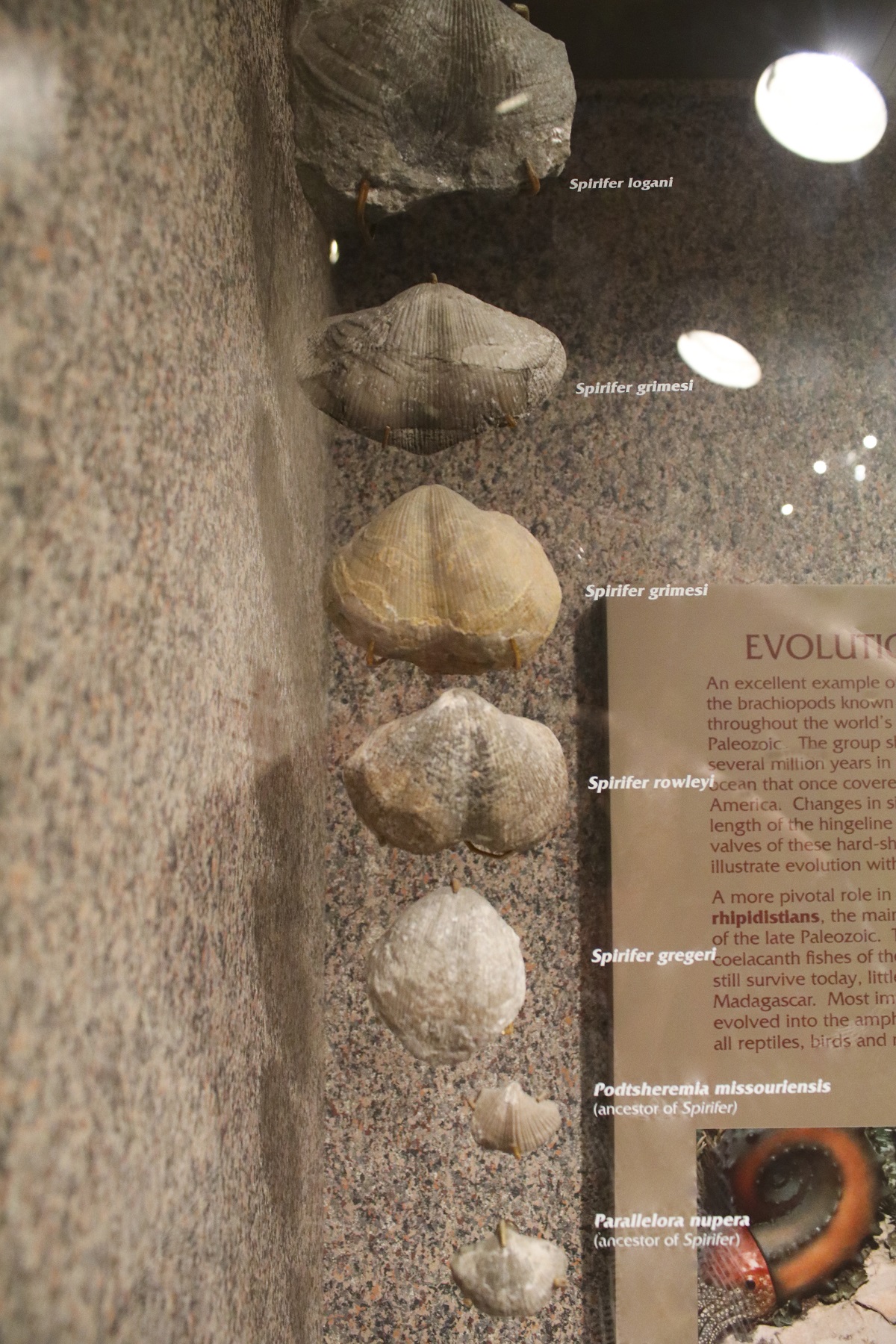
Fossilized shells on display

Fossilized shells on display in Benedum Hall of Geology at Carnegie Museum of Natural History

Fossilized shells on display in Benedum Hall of Geology at Carnegie Museum of Natural History in Pittsburgh.

(photo by Hayley Pontia) 

Filed Under: Blog Tagged With: Benedum Hall of Geology, fossils, geology, Pittsburgh, shells

August 2, 2016 by wpengine

Polyphemus Moth Rearing

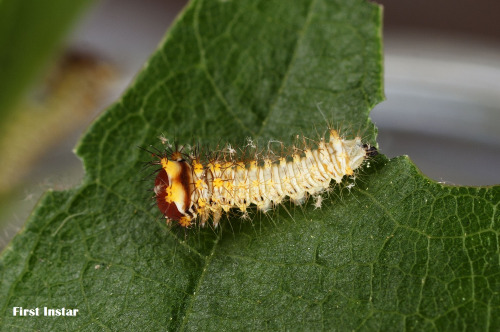
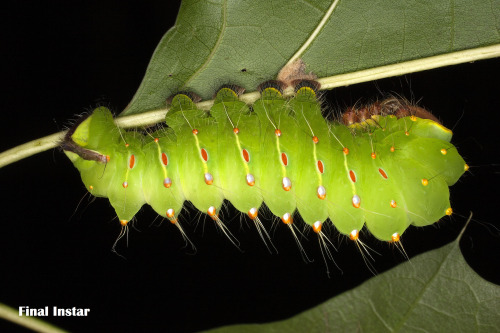
larval (caterpillar) stage of the Polyphemus moth

by Vanessa Verdecia

Recently, a member of the public dropped off some tiny caterpillars at Carnegie Museum of Natural History’s Section of Invertebrate Zoology for identification. Our staff identified them as Polyphemus moth caterpillars (Antheraea polyphemus) and have been rearing the caterpillars and taking pictures as they grow in order to document the different stages.

These are images of the larval (caterpillar) and pupal (pupa and cocoon) stages of the Polyphemus moth, which is in the family Saturniidae. These Polyphemus caterpillars go through five instars after they hatch from the egg. Instars are the stages between each molting of the caterpillar as it grows. Included in this set of images is a picture of the first instar, which is about 3mm long and a picture of the last instar which is significantly bigger—about 6 or 7cm, depending on how far it is stretched while eating.

larval (caterpillar) stage of the Polyphemus moth

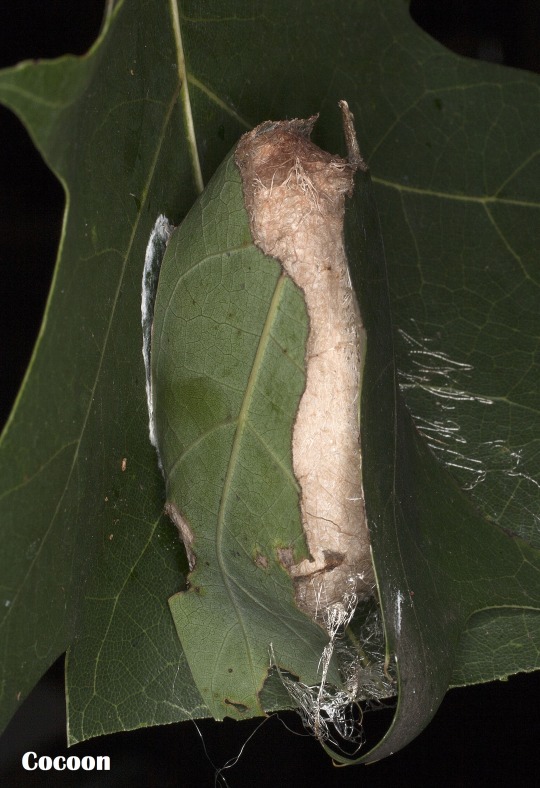
The third picture is of one of the cocoons made by these caterpillars.  Inside of each cocoon is a dark brown pupa which the adult moth will come out of. Some species like the Polyphemus moth spin a cocoon, but there are species that don’t. Their pupae are usually formed underground for protection during the winter.

The adult Polyphemus moths should eclose next year, around May or June—so they will spend the winter in the pupal stage.  This is a species that occurs here in Pittsburgh, and people could be seeing fully grown caterpillars around this time of the year.

This culture was reared on oak leaves, but they like many other kinds of host plants, including: apple, ash, birch, dogwood, elm, hazel, hickory, maple, rose, and willow.  It is visible in the image how the caterpillar spun its cocoon in the oak leaf. In its natural habitat, this cocoon would drop off the tree in the fall and over-winter in the leaf litter on the ground.

cocoon of the Polyphemus moth


Vanessa Verdecia is a collection assistant in the museum’s Invertebrate Zoology Section.

Museum employees are encouraged to blog about their unique experiences and knowledge gained from working at the museum.

Filed Under: Blog Tagged With: Invertebrate Zoology, Pittsburgh

July 29, 2016 by wpengine

A Blast of Pittsburgh’s History

Hillside explosion above a Pittsburgh river boat
Photo by Darrell Sapp/Post-Gazette

by Albert Kollar 

The recent blasting (not the 4th fireworks) of rocks onto the railroad tracks along West Carson Street is one of the great geology stories of Pittsburgh. The large boulder pictured in the July 6, Pittsburgh Post-Gazette story is sedimentary rock formed more than 300 million
years ago when Pittsburgh was situated near the equator during a time of warm, dry, and wet climate.

The landscape was a broad coastal area similar to today’s southern United States at New Orleans. The rivers back then flowed northwest draining out from the rising Appalachian Mountains forming off the east coast of ancestral North America. The salt water sea or coast line at the time was situated west near Columbus, Ohio.

After the Appalachians formed erosion of the massive mountain of rocks eroded down over millions of years to approximately what we see today as the flat top of Mt. Washington or Grandview Avenue.

Then the Ice Age came and helped form the River Valleys of the Allegheny River and the Monongahela River, forming the new Ohio River at the Pittsburgh point. We know from geology that the steep slope sides along the river valleys are unstable and have been for thousands of years.

Once Pittsburgh was established in 1758 with the fall of French Fort Duquesne, civilization, industrialization, and building of the railroads in 1850 and 1900 into the hillside above W. Carson Street, created more destabilization of the hillside. Now more rocks fall.

Albert D Kollar is a geologist at Carnegie Museum of Natural History. Museum employees are encouraged to blog about their unique experiences and knowledge gained from working at the museum.

Filed Under: Blog Tagged With: Albert Kollar, geology, invertebrate paleontology, Pittsburgh

July 21, 2016 by wpengine

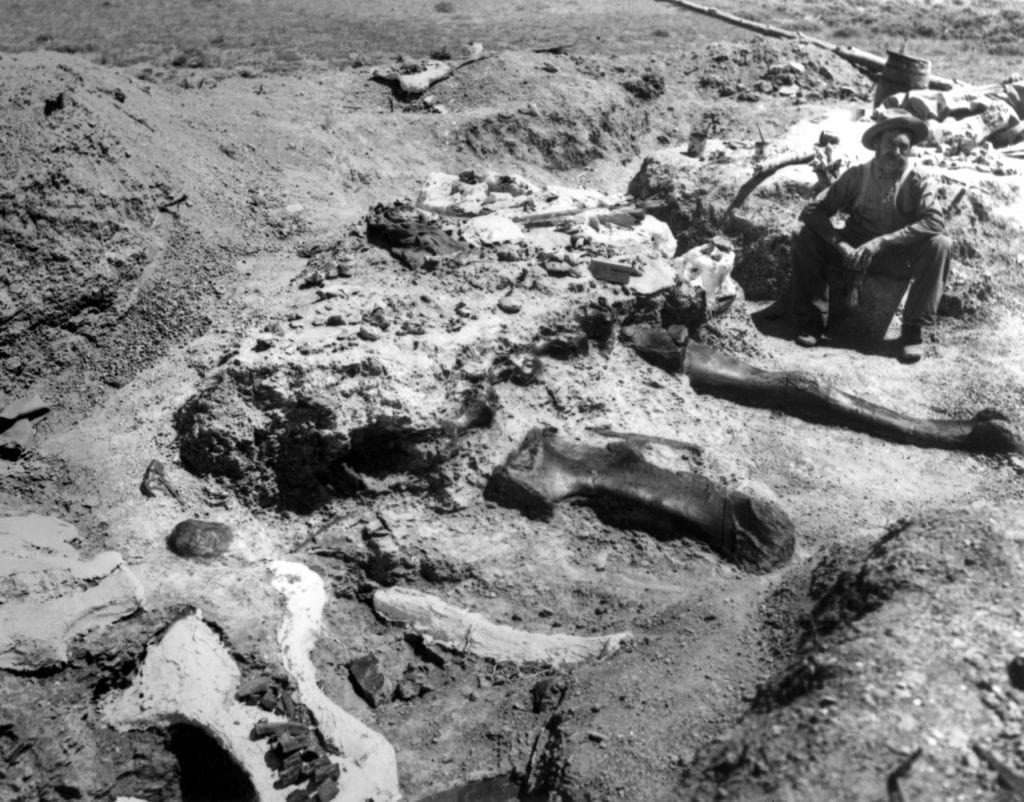
Dig Site in Sheep Creek

man kneeling near a fossil

This picture shows a man at work at a dig site in Sheep Creek, the site in Wyoming where Diplodocus Carnegii was discovered.

Filed Under: Blog Tagged With: dippy, paleontology, Pittsburgh

  • « Go to Previous Page
  • Page 1
  • Interim pages omitted …
  • Page 9
  • Page 10
  • Page 11
  • Page 12
  • Page 13
  • Interim pages omitted …
  • Page 18
  • Go to Next Page »

sidebar

About

  • Mission & Commitments
  • Directors Team
  • Museum History

Get Involved

  • Volunteer
  • Membership
  • Carnegie Discoverers
  • Donate
  • Employment
  • Events

Bring a Group

  • Groups of 10 or More
  • Birthday Parties at the Museum
  • Field Trips

Powdermill

  • Powdermill Nature Reserve
  • Powdermill Field Trips
  • Powdermill Staff
  • Research at Powdermill

More Information

  • Image Permission Requests
  • Science Stories
  • Accessibility
  • Shopping Cart
  • Contact
  • Visitor Policies
Stay in the loop! Sign up for our newsletter(s).
One of the Four Carnegie Museums | © Carnegie Institute | Privacy Policy | Terms of Use | Accessibility
Rad works here logo