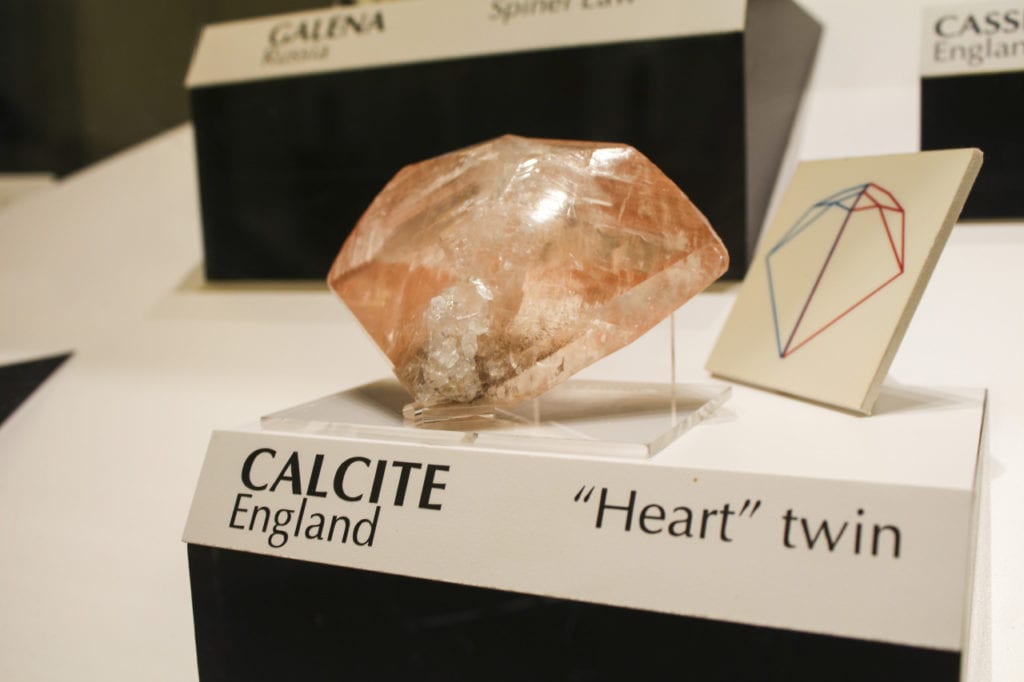
Calcite, sometimes referred to as “heart twin” on display in Hillman Hall of Minerals and Gems. Contact twins occur
when two or more crystals grow in contact with each other.
(Photo by Hayley Pontia)
Carnegie Museum of Natural History
One of the Four Carnegie Museums of Pittsburgh
Carnegie Museum of Natural History is in Pittsburgh, Pennsylvania. Many of the museum's collection specimens are from the local area, including our Botany, Invertebrate Paleontology, and Herpetology specimens. Our collections and our community often influence our work, whether that includes researching climate change, air pollution improvements from the closing of steel mills in the city, or invasive species.
Calcite, sometimes referred to as “heart twin” on display in Hillman Hall of Minerals and Gems. Contact twins occur
when two or more crystals grow in contact with each other.
(Photo by Hayley Pontia)
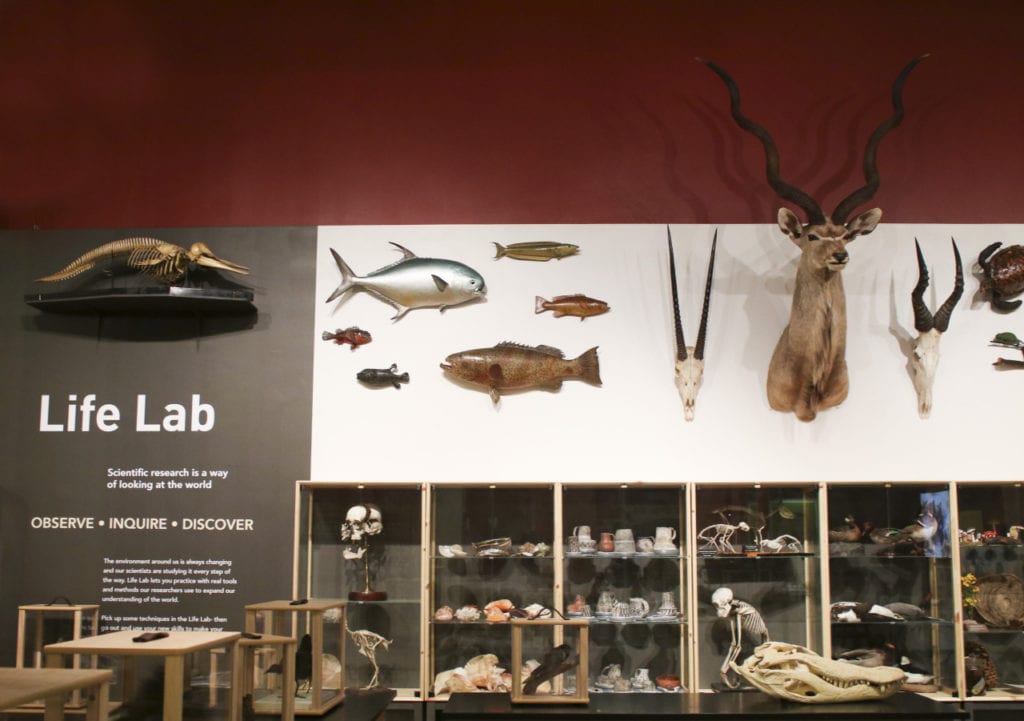
Life Lab at Discovery Basecamp, our new interactive permanent gallery, teaches the importance of scientific research and introduces a way of thinking to many young aspiring scientists.
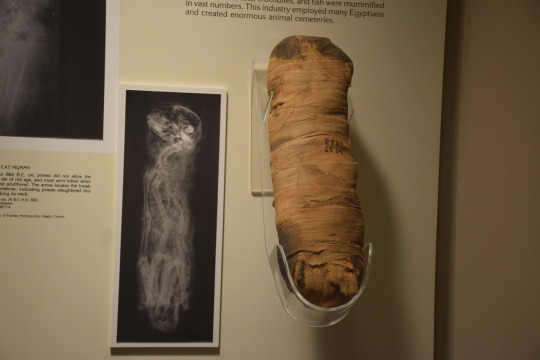
In ancient Egypt, cats were sacred animals. People dedicated mummified cats at the sanctuary of the cat goddess Bastet as offerings. The sanctuary was located in the city of Bubastis where the remains of numerous cat mummies and small cat sculptures have been found.
Cats were also pets, just like they are today, and were sometimes mummified and placed in tombs with their owners. The belief was that by placing cats and their owners in the same tomb the pair could remain together in the Afterlife.
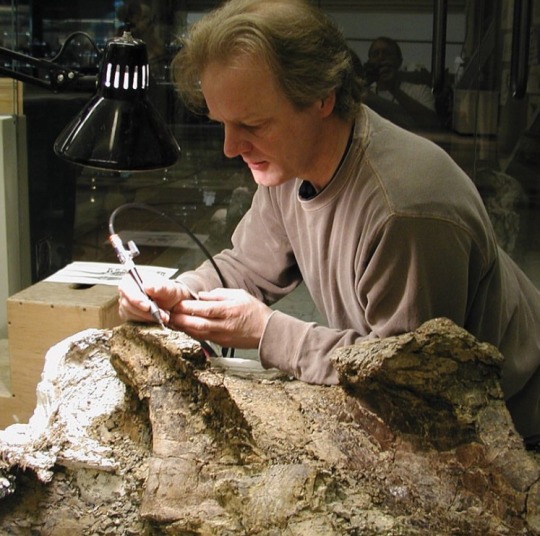
The most amazing thing about the skeletons in our Dinosaurs in Their Time exhibit is that the majority of their bones are the real deal.
The second most amazing thing about those skeletons is that whenever a bone was missing, someone had to create a cast of that bone from scratch.
Dan Pickering is one of those craftsman. Dan, whose been part of the museum’s PaleoLab team since 2005, is an artist, a sculptor by training.
He first used his skills in the exhibit department, but when the overhaul of Dinosaur Hall and its inhabitants became a reality, as Dan puts it, “I wanted a piece of the dinosaur action.”
Pictured above: Dan preparing a giant neck vertebrae of Dreadnoughtus, a super-massive dinosaur from Patagonia excavated and studied by museum dinosaur hunter Matt Lamanna and colleagues.
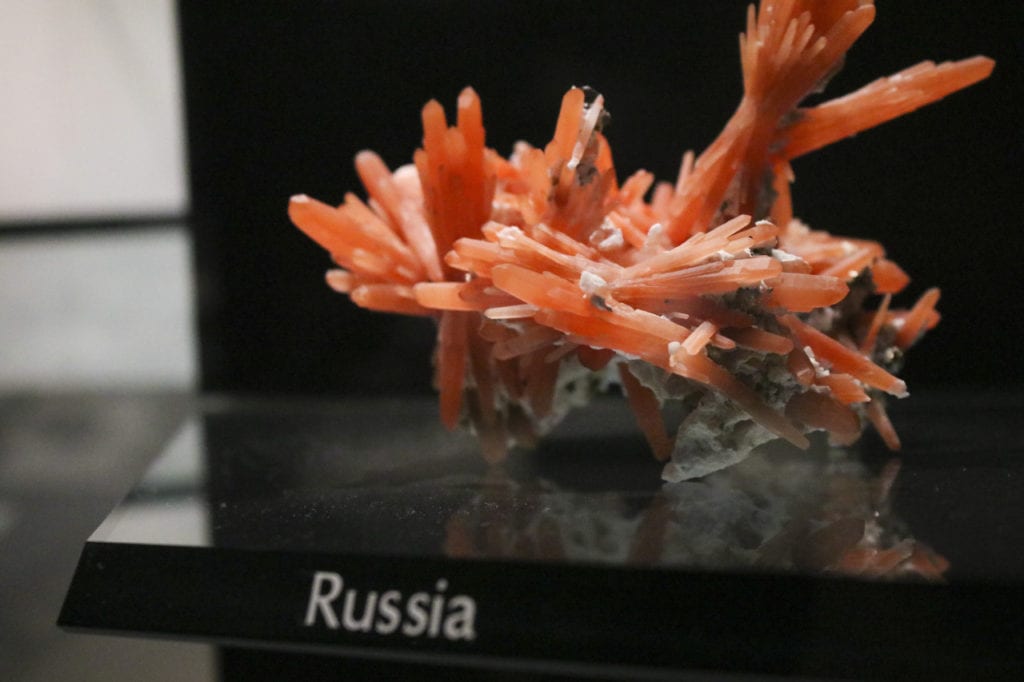
This quartz crystal was found in Russia and has its bright color due to small concentrations of chemical impurities or inclusions of other minerals.
(Photo by Hayley Pontia)
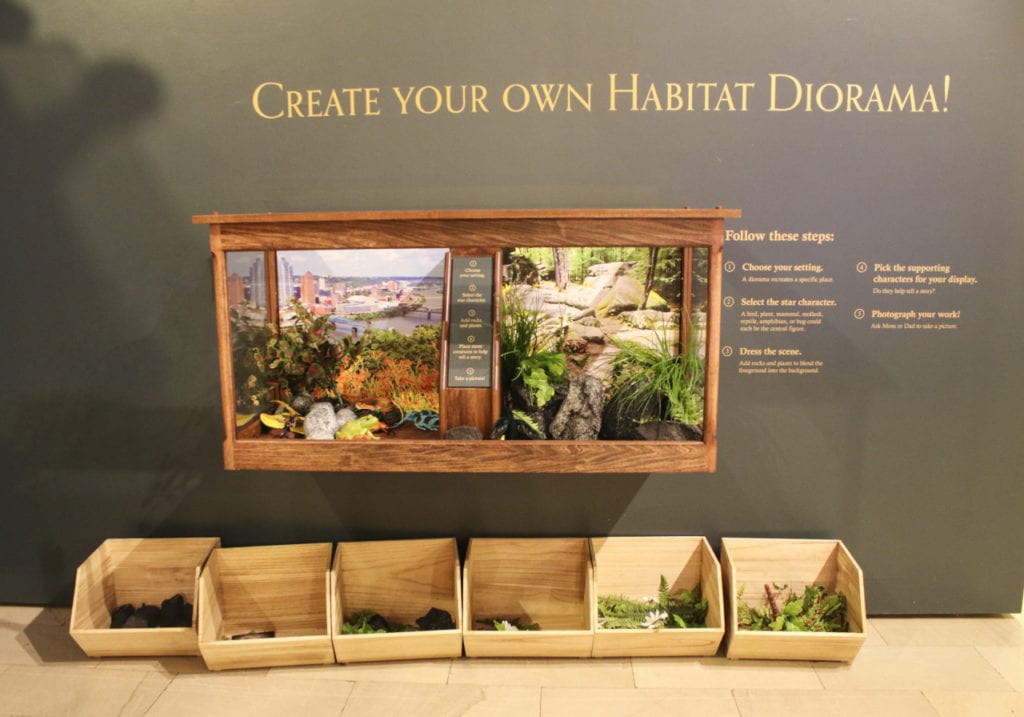
What kind of habitat would you like to live in? A warm beach or a peacful forest? What kind of plants and animals would be there?
An interactive exhibit at Carnegie Museum of Natural History lets visitors create their own habitat replicas after looking at some of the museum’s historic dioramas! Choose a setting and various creatures to
star in a totally unique environmental display.
What would you build?
(Photo by Hayley Pontia)
