A stratigraphic model showing different layers of rock strata in Benedum Hall of Geology at Carnegie Museum of Natural History.
(photo by Hayley Pontia)
Carnegie Museum of Natural History
One of the Four Carnegie Museums of Pittsburgh
Carnegie Museum of Natural History is in Pittsburgh, Pennsylvania. Many of the museum's collection specimens are from the local area, including our Botany, Invertebrate Paleontology, and Herpetology specimens. Our collections and our community often influence our work, whether that includes researching climate change, air pollution improvements from the closing of steel mills in the city, or invasive species.
A stratigraphic model showing different layers of rock strata in Benedum Hall of Geology at Carnegie Museum of Natural History.
(photo by Hayley Pontia)
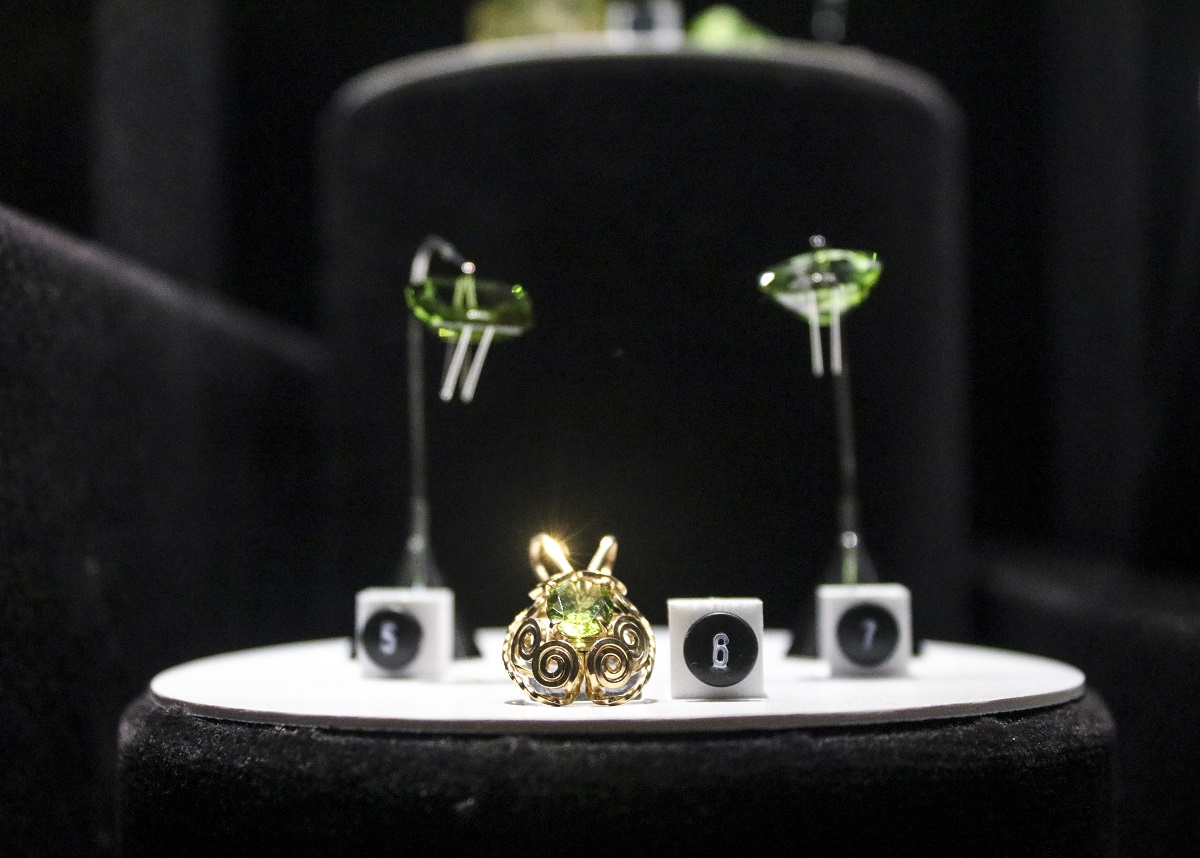
Until recently, peridot, the beautiful yellow-green gem featured in pendant above,
was the only birth stone for the month of August. Now spinel accompanies it.
by Patrick McShea
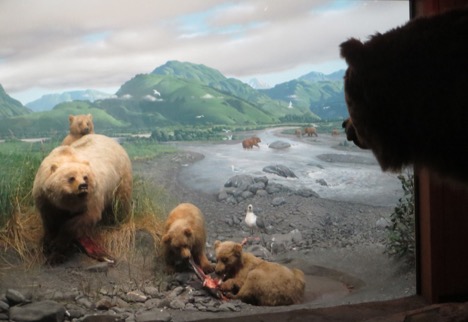
Well planned dioramas support multiple levels of interpretation. At the Alaskan Brown Bear diorama, however, it’s initially difficult to consider any narrative not focused upon these powerful creatures.
The Kodiak Island scene features nine brown bears – four distant bears are painted into the backdrop landscape and taxidermy mounts of an adult female and three cubs fill the diorama’s left foreground. Facing them from a four-foot high rock ledge outside the exhibit glass, a large male bear adds tension to the display.
The noses of the two adult two adult bears are less than 13 feet apart, a narrow zone that is routinely occupied by museum visitors when they read an adjacent label that highlights the potential for a violent encounter. “Male bears routinely prey on cubs. Fiercely protective, mother bears are known to attack and may even kill larger males that come too close.”
This immersive aspect was created during a 1995 renovation that extensively upgraded an exhibit originally dedicated in 1918.
The upgrade also involved the replacement of king salmon with red or sockeye salmon to accurately represent the species whose summer spawning runs draw bears to the stream. The diorama’s immersive zone is the perfect place to consider how the pair of cubs eating a single fish can represent an enormous transfer of nutrients between ocean and forest ecosystems.
When spawning red salmon return to the stream in which they were born, they do so after spending as long as four years at sea. If they manage to avoid bears and other predators, they still die, often far inland, within a few weeks of spawning. Research studies into the ecological impact of salmon runs have charted the movement of stable nitrogen isotopes from salmon tissue to the stems and leaves of streamside vegetation. The bears, in such cycles, are just intermediary processors.
Patrick McShea works in the Education and Visitor Experience department of Carnegie Museum of Natural History. Museum employees are encouraged to blog about their unique experiences of working at the museum.
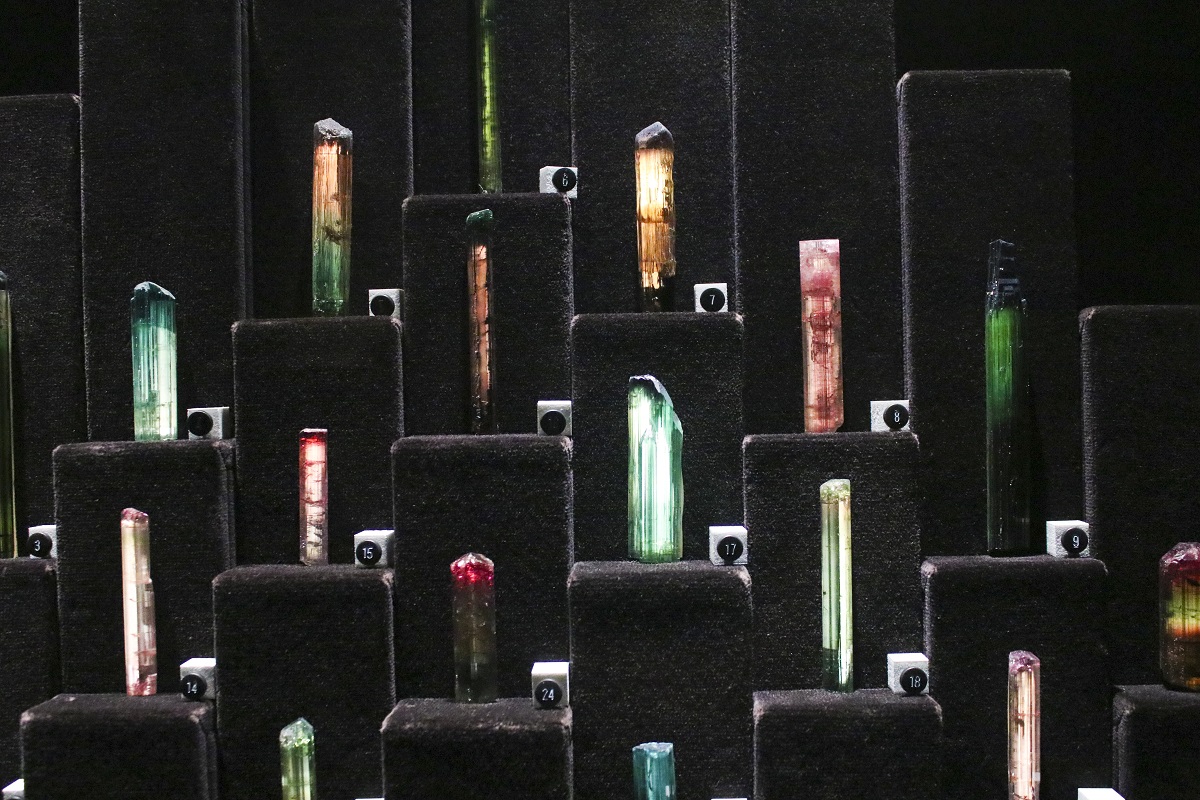
The great pegmatites of Minas Gerais in Brazil are famous for producing the widest variety of colors in tourmaline gemstones. Carnegie Museum of Natural History has a wide variety of them on display in Hillman Hall of Minerals and Gems.
(photo by Hayley Pontia)
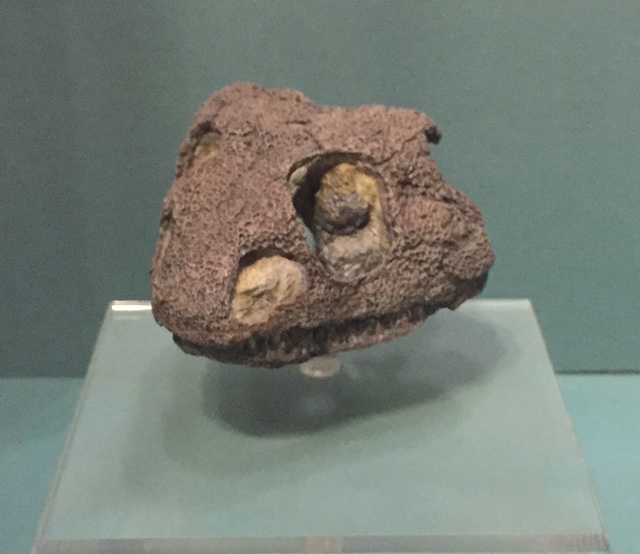
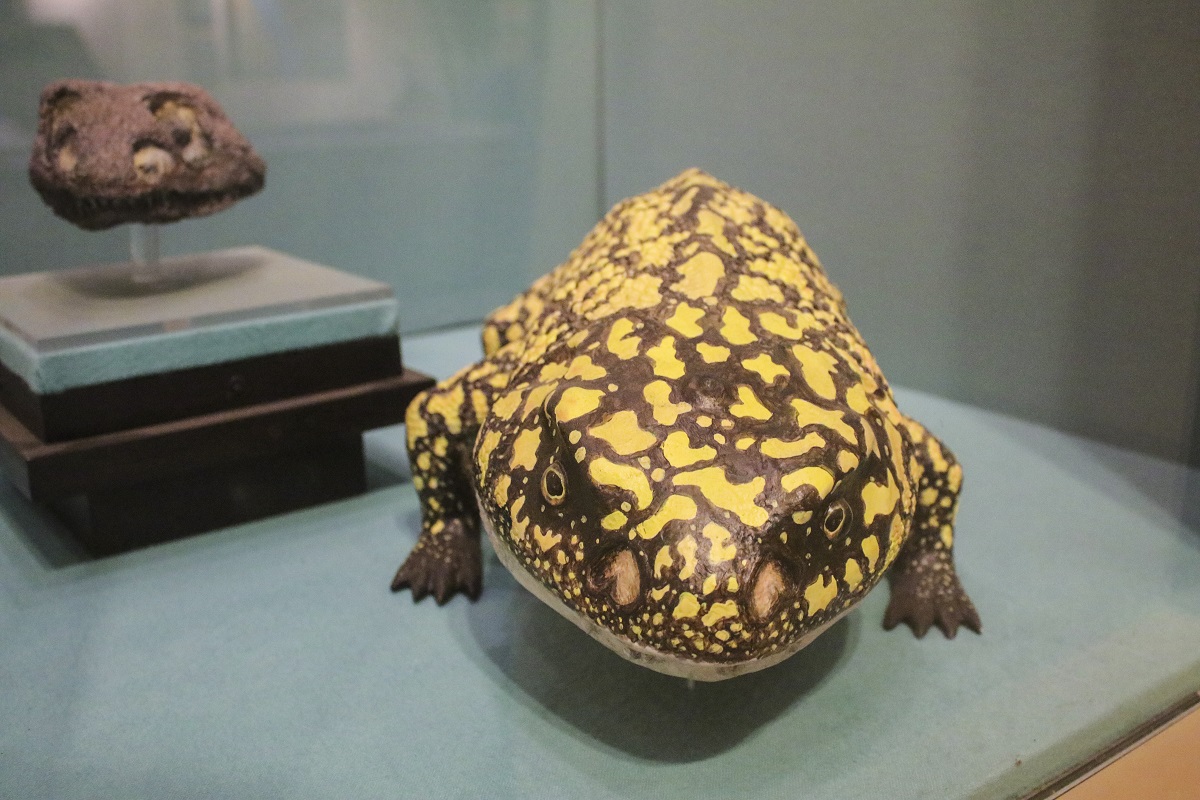
Fedexia striegeli was a member of an extinct amphibian group called trematopids, which lived in the tropical Pittsburgh climate almost 305 million years ago.
The only known specimen of Fedexia is a skull discovered by University of Pittsburgh student Adam Striegel during a geology class field trip in 2004. In 2010, collections manager Amy Henrici, now-retired Vertebrate Paleontology curator Dave Berman, and other museum scientists described the new species.
This fossil provided scientists with important clues that helped them understand more about prehistoric climate change and amphibian evolution. It showed that amphibians began spending more time on land about 305 million years ago — 20 million years earlier than scientists had previously thought!
(photo by Hayley Pontia)
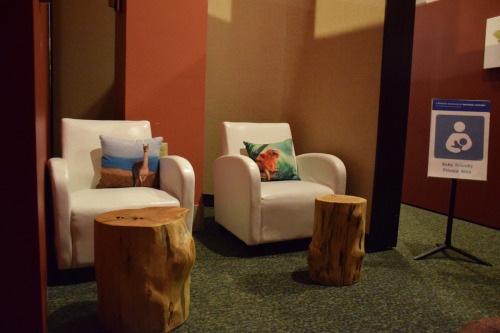
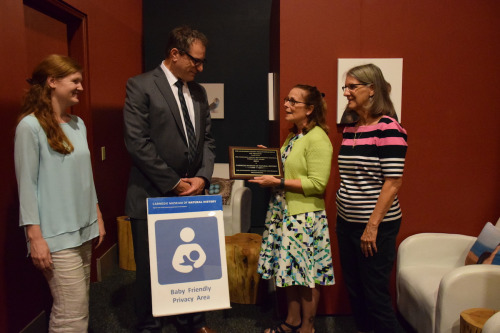
This winter, Carnegie Museum of Natural History installed a private, quiet, and comfortable space for mothers to breastfeed their babies in the museum. With cozy chairs and colorful animal pillows, the space was quickly a well-utilized space for families that was warmly received.
Mothers are welcome to feed, nurse, and care for their children anywhere in the museum, but we felt a private space makes families comfortable and the museum feel more inclusive.
This month, Allegheny County Health Department announced that the museum was among two public places in the Pittsburgh Region that was recognized with a 2016 Breastfeeding Friendly Place Award.
The county’s Breastfeeding Friendly Place Awards recognize workplaces, public places and other sites away from the home that make an extra effort to accommodate breastfeeding mothers.
“It’s important for us to connect to the community,” Museum Director Eric Dorfman said. “Having this sort of space here means that we’re connecting with the community of our visitors and staff by offering them a safe and inviting environment.”
Exhibitions Director Becca Shreckengast said all our guests should feel welcome and comfortable.
“In our signage we invite parents to take care of their children all throughout the museum,” Shreckengast said. “We want to be as welcoming as inviting to parents with young children as possible.”